What Do the Numbers Actually Mean?
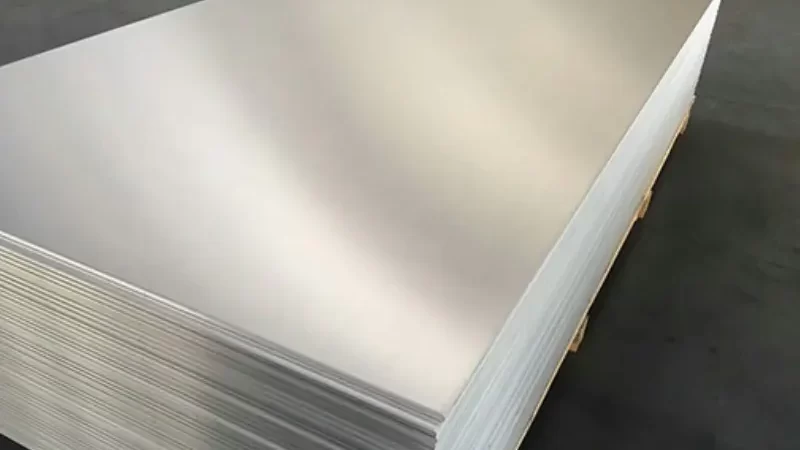
Aluminium alloy numbers are not random. They tell you what metals were mixed into the aluminium. 1050 and 3003 sit in different families. That difference changes everything about how they work, how much they cost, and where they belong.
1050: Nearly Pure Metal
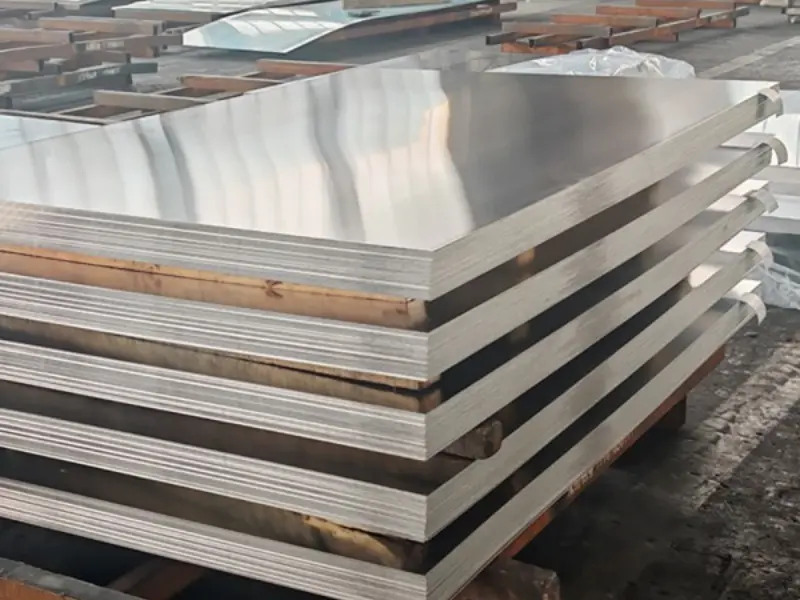
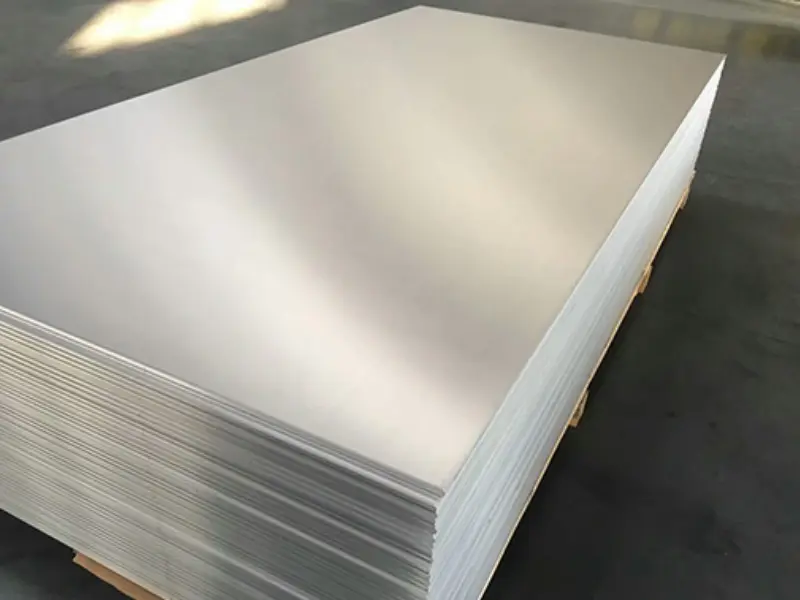
1050 belongs to the 1000 series. It contains 99.5% pure aluminium. The other half percent is mostly iron and silicon. Because it is so pure, 1050 is very soft.
It bends easily. It conducts heat and electricity almost as well as pure aluminium. For it is also the cheapest aluminium sheet you can buy. The downside is strength. 1050 dents easily. It does not like heavy loads.
3003: The Manganese Boost
3003 belongs to the 3000 series. It contains about 1.2% manganese. That small addition makes it roughly 20% stronger than 1050. It still bends well. It still resists corrosion. But it can handle more stress.
It is the most popular general-purpose aluminium alloy in the world. If you walk into a sheet metal shop and ask for “standard aluminium,” they will probably hand you 3003.
Head-to-Head: The Core Differences
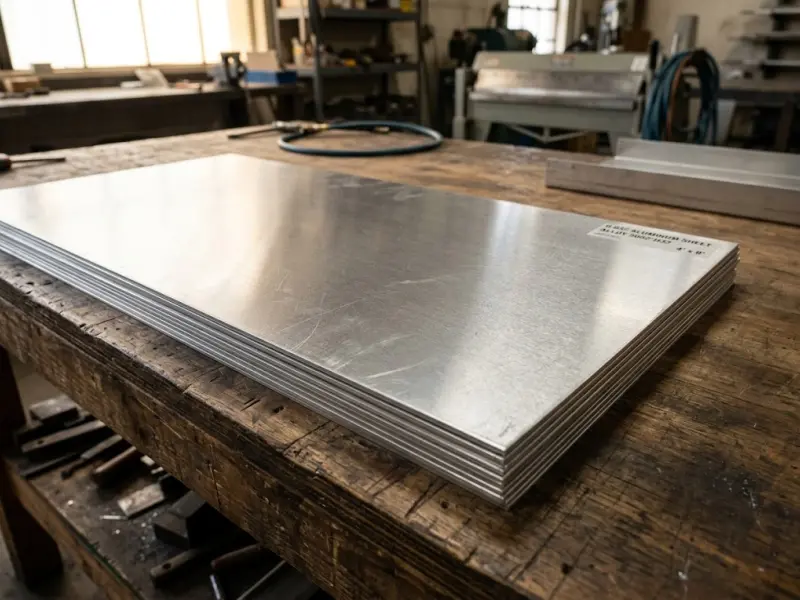
Here is a quick look at how the two alloys stack up across the specs that matter most.
| Property | 1050 | 3003 | Winner |
|---|---|---|---|
| Purity | 99.5% Al | 97% Al | 1050 |
| Tensile strength | 60–90 MPa | 140–180 MPa | 3003 |
| Yield strength | 30–60 MPa | 115–145 MPa | 3003 |
| Elongation | 35–45% | 20–30% | 1050 |
| Hardness | Very soft | Soft to medium | 3003 |
| Corrosion resistance | Excellent | Very good | 1050 (slight edge) |
| Weldability | Excellent | Very good | 1050 |
| Formability | Excellent | Very good | 1050 |
| Heat conductivity | Excellent | Very good | 1050 |
| Cost per kg | Lower | Higher | 1050 |
| Availability | Good | Excellent | 3003 |
Strength Test: Which Alloy Holds More Weight
Strength is where 3003 pulls ahead. If your project needs to carry a load or resist wind, the numbers do not lie.
Tensile Strength
Tensile strength is the force needed to pull the metal apart. 1050 tops out around 90 MPa in hard temper. 3003 H14 reaches 180 MPa. That means 3003 can handle twice the pulling force before it breaks.
Yield Strength
Yield strength is where the metal starts to bend permanently. 1050 yields at roughly 60 MPa. 3003 H14 yields at about 145 MPa. If you build a bracket or a panel that must hold its shape, 3003 is the safer choice.
| Strength Test | 1050 H14 | 3003 H14 | Difference |
|---|---|---|---|
| Tensile strength | 90 MPa | 180 MPa | 3003 is 2× stronger |
| Yield strength | 60 MPa | 145 MPa | 3003 is 2.4× stronger |
| Hardness (Brinell) | 30 HB | 50 HB | 3003 is 67% harder |
Formability: Which One Bends Better
If you need to press, stamp, or fold the metal into complex shapes, 1050 wins. Its purity makes it extremely ductile. It can be drawn into deep cups and tight curves without cracking.
3003 is still very formable. It bends well on a standard brake. But it needs a slightly larger bend radius than 1050. For simple angles, gutters, and panels, the difference is small. For deep-drawn pots, lamp shades, and intricate reflectors, 1050 is the clear choice.
| Forming Task | 1050 Rating | 3003 Rating | Notes |
|---|---|---|---|
| Deep drawing | Excellent | Good | 1050 forms tighter shapes |
| Brake bending | Very good | Very good | Both work fine |
| Roll forming | Very good | Very good | 3003 holds the profile better |
| Spinning | Excellent | Good | 1050 is softer for lathe work |
| Stamping | Excellent | Good | 1050 flows into dies easier |
Corrosion Resistance: Rust Is Not the Enemy
Aluminium does not rust like steel. It forms a thin oxide skin that protects the metal underneath. Both 1050 and 3003 do this well.
1050 has a slight edge because pure aluminium forms a more uniform oxide layer. In clean air and fresh water, 1050 lasts decades without pitting.
3003 is still excellent. The manganese does not hurt corrosion resistance much. In most environments, you will not see a difference. The exception is certain chemicals. 3003 can handle some industrial atmospheres better because the manganese refines the grain structure.
For coastal or marine use, neither alloy is ideal. If salt spray is a factor, you should step up to 5052. But between 1050 and 3003, both survive normal outdoor life equally well.
| Environment | 1050 Life Expectancy | 3003 Life Expectancy |
|---|---|---|
| Indoor dry air | 50+ years | 50+ years |
| Urban outdoor | 30–40 years | 30–40 years |
| Fresh water splash | 25–35 years | 25–35 years |
| Coastal air | 10–15 years | 10–15 years |
| Industrial chemical | 15–20 years | 20–25 years |
Heat and Welding: How They Behave in the Shop
Both alloys are easy to weld. That is one reason they are so popular.
Welding 1050
1050 welds with almost any aluminium filler rod. 1100 filler is common. The welds are soft and ductile. Because the base metal is pure, there is less risk of hot cracking. 1050 is often used for chemical tanks and pipes where weld quality is critical.
Welding 3003
3003 welds best with 1100 or 4043 filler. The welds are slightly stronger than 1050 welds. However, 3003 can show more distortion after welding because it is stiffer. Clamping and tack welding help control this.
Heat Conductivity
1050 conducts heat better than 3003. If you are building a heat sink, a cooking pan, or a heat exchanger, 1050 moves heat faster. The difference is roughly 10 to 15 percent. For most jobs, that gap is small. For precision thermal design, it matters.
| Shop Task | 1050 | 3003 |
|---|---|---|
| TIG welding | Excellent | Very good |
| MIG welding | Excellent | Very good |
| Oxy-fuel welding | Good | Fair |
| Soldering | Good | Fair |
| Heat conduction | 230 W/m·K | 190 W/m·K |
Cost Per Pound: Where Your Money Goes
1050 is cheaper than 3003. The difference is usually 10 to 20 percent at the mill level. For small hobby projects, that gap is tiny. For truckload orders, it adds up.
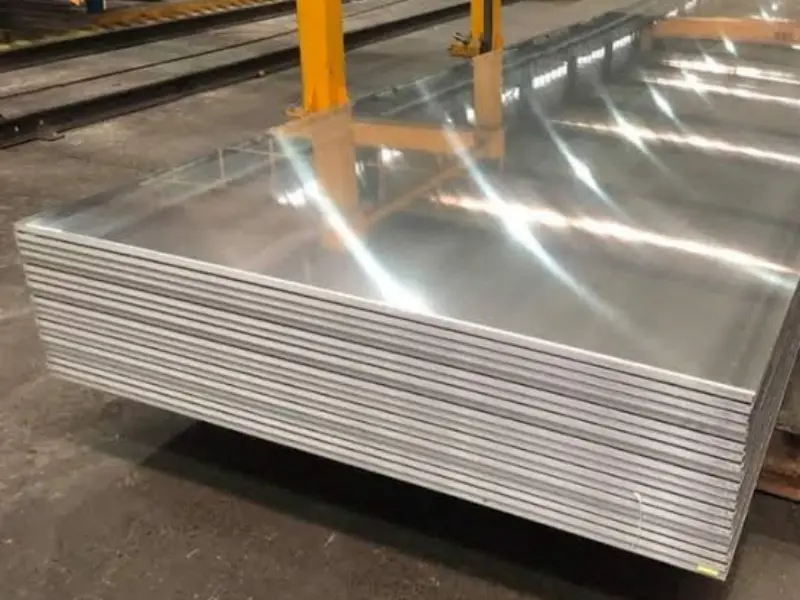
However, 3003 often saves money in the long run. Because it is stronger, you can use thinner sheet and get the same performance. A 1.0 mm 3003 panel may replace a 1.2 mm 1050 panel. The material cost drops. The shipping weight drops. The labour cost stays the same.
| Cost Factor | 1050 | 3003 | Notes |
|---|---|---|---|
| Raw material per kg | Lower | Higher | 10–20% premium for 3003 |
| Strength per kg | Lower | Higher | 3003 gives more strength per dollar |
| Thickness needed for same stiffness | Thicker | Thinner | 3003 can use 15% less metal |
| Total project cost for structural jobs | Often higher | Often lower | 3003 saves on metal and freight |
Temper States: O, H14, and H24 Explained
Temper tells you how the metal was treated after rolling. Both alloys come in the same tempers, but they feel different.
O Temper: Fully Soft
O temper is annealed. It is dead soft. 1050 O is like thick foil. 3003 O is soft but has a little more spring. O temper is used for deep drawing, spinning, and complex forming.
H14: Half Hard
H14 is the most common temper for both alloys. It is stiff enough to stay flat but soft enough to bend. 1050 H14 feels almost like heavy paper. 3003 H14 feels like thin plastic. Both are easy to work with hand tools.
H24: Stress-Relieved
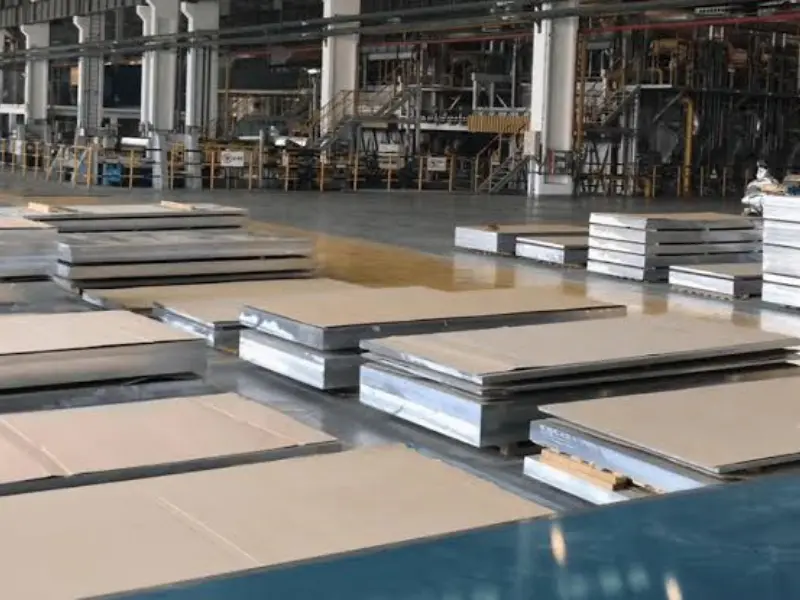
H24 is half hard with a stabilization bake. It has less springback than H14. After you bend it, it stays bent. 3003 H24 is very popular for roofing and gutters because it holds its shape. 1050 H24 is less common because 1050 is usually chosen for maximum softness.
| Temper | 1050 Feel | 3003 Feel | Best Use for 1050 | Best Use for 3003 |
|---|---|---|---|---|
| O | Dead soft, very pliable | Soft but slight spring | Reflectors, lamp shades, deep drawn parts | Complex forming, light panels |
| H12 | Very soft | Soft | Light forming | Trim, easy bends |
| H14 | Soft, easy to tear by hand | Medium, holds shape | Decoration, labels, thin panels | Roofing, gutters, general fabrication |
| H24 | Soft, stable | Medium, very stable | Rarely used | Standing seam, long panels |
| H18 | Stiff, paper-like | Firm, board-like | Flat stock, minimal forming | Rigid panels, structural covers |
Thickness and Sheet Sizes
Both alloys come in the same standard sizes. Thickness choice depends on the job, not the alloy.
| Thickness (mm) | Thickness (inch) | 1050 Best For | 3003 Best For |
|---|---|---|---|
| 0.20 | 0.008 | Labels, foil, decorative overlay | Not common |
| 0.30 | 0.012 | Light reflectors, craft metal | Ceiling tiles |
| 0.50 | 0.020 | Signs, tags, thin panels | Gutters, soffits |
| 0.80 | 0.031 | Reflectors, decorative panels | Roofing, wall panels |
| 1.00 | 0.039 | Cooking pans, heat sinks | Medium structural panels |
| 1.50 | 0.059 | Thick reflectors, chemical tanks | Heavy panels, guards |
| 2.00 | 0.079 | Plate stock, machining blanks | Structural plate, brackets |
| 3.00 | 0.118 | Heavy plate, spun parts | Load-bearing plate |
Standard sheet sizes are 48 by 96 inches, 48 by 120 inches, and 60 by 120 inches. Both alloys are stocked in these dimensions. Custom cutting is available from most suppliers.
Applications: Where Each Alloy Wins
The best way to choose is to match the alloy to the job. Here is where each one shines.
Where 1050 Wins
- Heat sinks and cooling fins – conducts heat better than 3003
- Cooking pots and pans – pure aluminium is food-safe and heats evenly
- Lamp reflectors and light fixtures – soft metal spins into smooth curves
- Chemical storage tanks – pure aluminium resists many acids
- Electrical bus bars – high conductivity moves current with less loss
- Decorative trim and gift items – easy to emboss and stamp
- Insulation facing – thin 1050 foil wraps pipes and ducts
- Nameplates and labels – easy to etch and print
- Art and sculpture – soft metal bends into organic shapes
- Packaging foil – 1050 is the base for most household foil
Where 3003 Wins
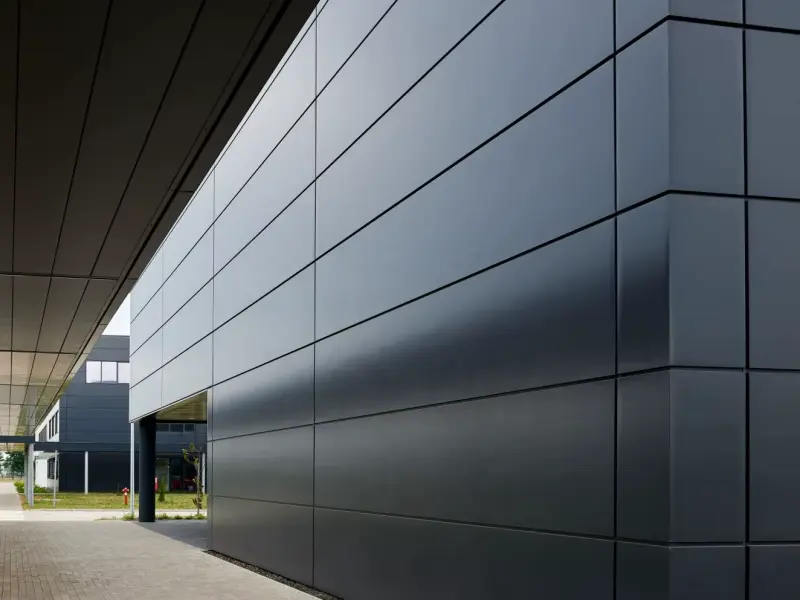
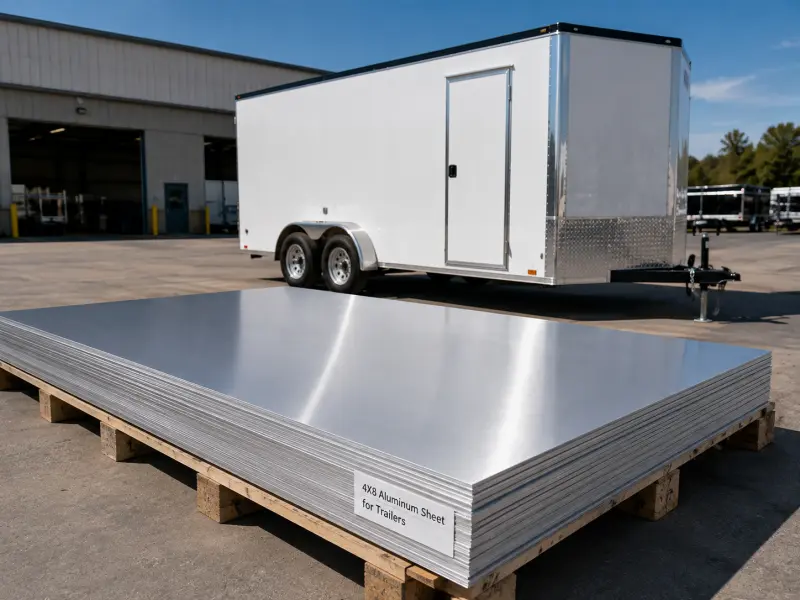
- Roofing and fascia – strong enough for wind loads
- Gutters and downspouts – holds water weight without sagging
- Truck and trailer siding – resists road vibration
- Fuel tanks – stronger than 1050 for the same thickness
- Sign blanks and traffic panels – resists denting from stones
- Appliance panels – holds shape on washer and dryer skins
- Furniture frames – strong enough for chairs and tables
- HVAC ductwork – rigid enough for long spans
- Storage tanks – stronger welds and less distortion
- General fabrication – the default when you are not sure
Product Types: Sheets, Coils, and More
Both alloys come in many forms. The form matters as much as the alloy.
Mill Finish Sheets
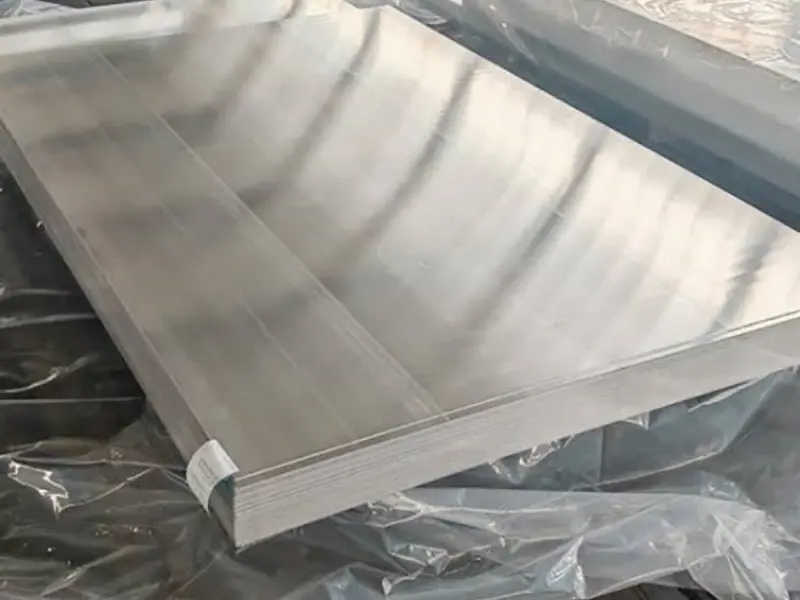
Bare aluminium with a dull silver look. This is the cheapest option. 1050 mill finish is common for reflectors and chemical equipment. 3003 mill finish is common for roofing and gutters that will be painted later.
Painted and Color-Coated
Factories apply PE or PVDF paint to the sheet. 3003 holds paint slightly better because its surface is less reactive. 1050 can be painted but may need a special primer. Most colour-coated roofing uses 3003 as the base.
Anodized
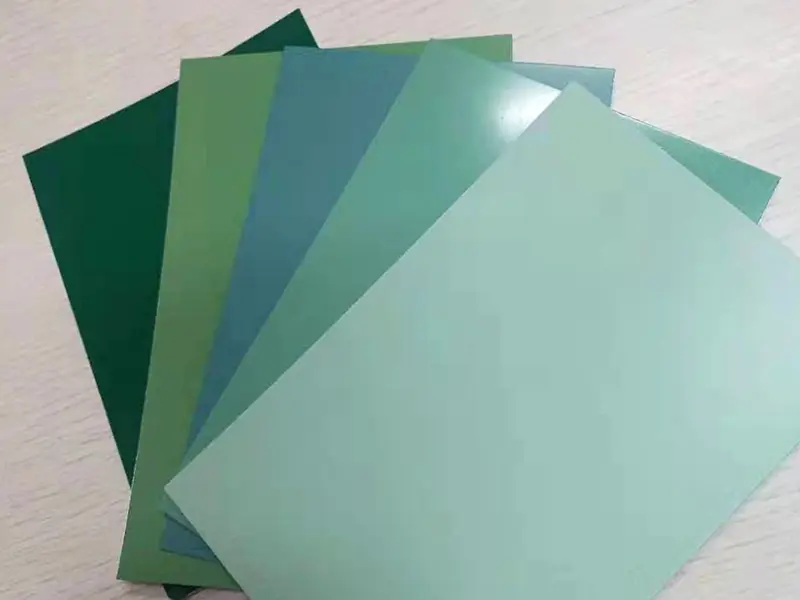
Anodizing grows a hard oxide layer. 1050 anodizes to a very clear, bright finish because it is so pure. 3003 anodizes well but can show slight streaks because of the manganese. For decorative trim and nameplates, 1050 is the favourite.
Embossed and Tread
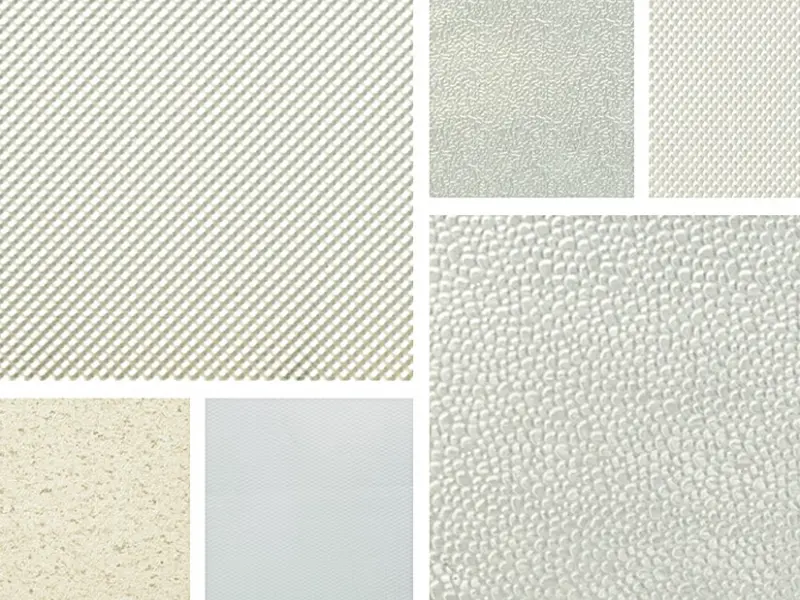
Stucco or diamond patterns add stiffness. 3003 is more common for tread plate because it is stronger. 1050 is rarely used for tread because it dents too easily.
| Product Type | 1050 Common Use | 3003 Common Use | Why |
|---|---|---|---|
| Mill finish sheet | Reflectors, chemical tanks | Roofing, gutters, general fab | 1050 for purity, 3003 for strength |
| Painted sheet | Rare | Roofing, cladding, signs | 3003 holds paint better |
| Anodized sheet | Nameplates, trim, reflectors | Appliance fronts, trim | 1050 gives brighter anodize |
| Tread plate | Rare | Walkways, ramps, floors | 3003 is stronger |
| Perforated sheet | Filters, screens | Vents, guards, filters | Both work, 3003 for structural |
| Coil stock | Foil, thin strip | Gutters, roll-formed trim | 3003 holds profile better |
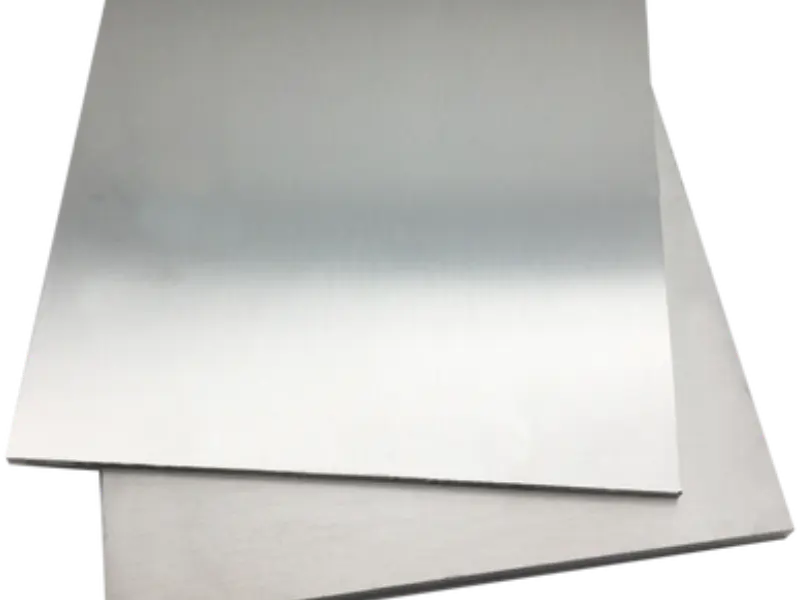
When to Choose 1050
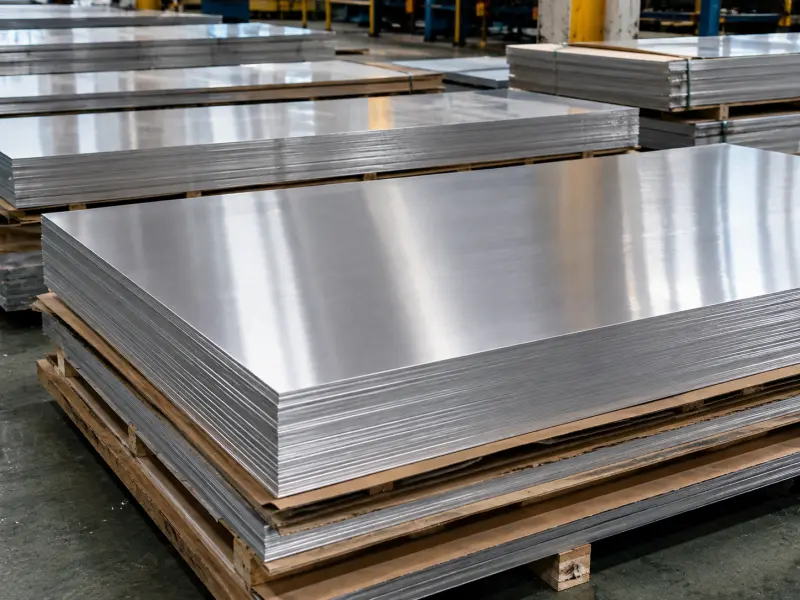
Pick 1050 when these factors matter most:
- You need the highest possible heat or electrical conductivity
- You are deep drawing, spinning, or stamping complex shapes
- The metal will touch food or chemicals and purity is critical
- You are anodizing for a bright, clear decorative finish
- The part carries almost no load and cost is the main driver
- You need very soft metal for hand forming or craft work
When to Choose 3003
Pick 3003 when these factors matter most:
- The part must hold its shape under wind, weight, or impact
- You are building roofing, gutters, or structural panels
- You need a good all-rounder that welds, bends, and lasts
- The project is large and saving metal thickness cuts freight costs
- You want the most widely stocked alloy for fast delivery
- The part will be painted and needs good paint adhesion
The Verdict: Which Is Better?
Neither alloy is perfect for everything. The answer depends on what you are building.
For Indoor Decoration
1050 wins. It is softer, cheaper, and anodizes brighter. If you are making trim, reflectors, or art pieces that hang on a wall, 1050 is the smarter buy.
For Roofing and Gutters
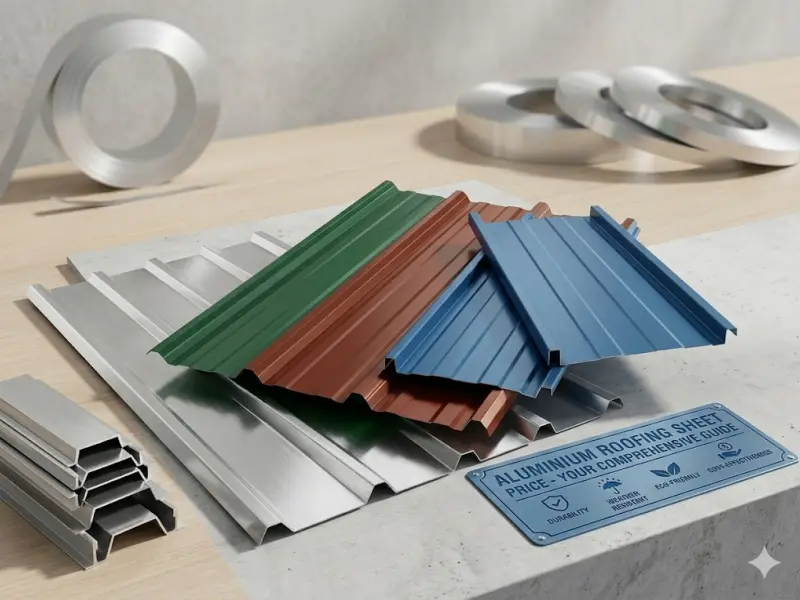
3003 wins. It is stronger. It holds its shape in wind. For it takes paint well. A 1050 gutter would sag and dent within a year. A 3003 gutter lasts decades.
For Food Contact
1050 wins by a small margin. Both are food-safe, but pure aluminium is the traditional choice for cookware. It heats more evenly and has no alloying elements to worry about.
For Marine Use
Neither wins. If salt water is involved, step up to 5052. But if forced to choose, 3003 is slightly better because it is stronger and handles mechanical stress better.
For Budget Projects
1050 wins on raw material cost. But check your total project cost. If 3003 lets you use thinner sheet, it may end up cheaper overall.
| Project Type | Better Alloy | Why |
|---|---|---|
| Roof and gutter | 3003 | Strength and stiffness |
| Cooking pan | 1050 | Heat conduction and purity |
| Traffic sign | 3003 | Impact resistance |
| Lamp reflector | 1050 | Softness and brightness |
| Chemical tank | 1050 | Corrosion resistance to acids |
| Appliance panel | 3003 | Dent resistance |
| Heat sink | 1050 | Thermal conductivity |
| General fabrication | 3003 | Availability and all-round performance |
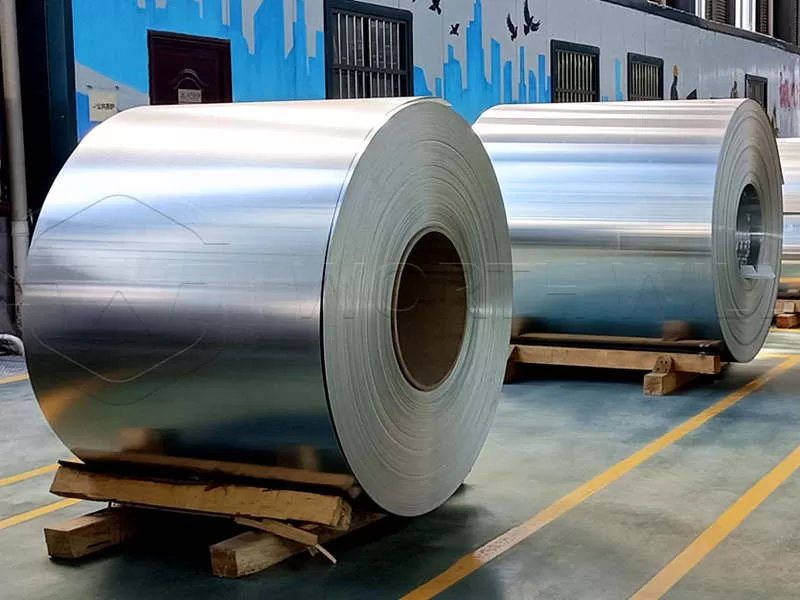
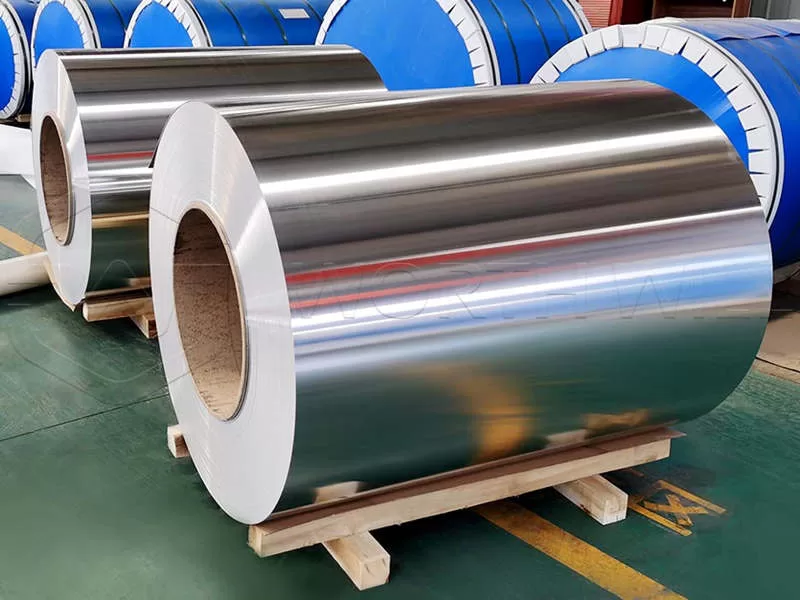
When selecting aluminum for your project, two commonly considered grades are 3003 and 1050. Both of these alloys are widely used in various industries, but they each have unique properties that make them suitable for different applications.
1. Composition
- 1050 Aluminum: This alloy is part of the 1000 series, which means it is essentially pure aluminum, containing about 99.5% aluminum content. The high aluminum content gives 1050 aluminum excellent corrosion resistance and high electrical conductivity. However, it has relatively low strength compared to other aluminum alloys.
- 3003 Aluminum: 3003 aluminum is an alloy that contains approximately 1.2% manganese and 98% aluminum. The addition of manganese improves its strength and corrosion resistance, making it stronger than 1050 aluminum while still maintaining good workability.
2. Strength and Hardness
- 1050 Aluminum: While 1050 is known for its excellent ductility, it has lower strength compared to other aluminum alloys. This makes it suitable for applications where forming and bending are more critical than structural integrity.
- 3003 Aluminum: With the addition of manganese, 3003 aluminum offers increased strength and hardness over 1050. This makes it more suitable for applications where moderate strength is required while still offering good formability.
3. Corrosion Resistance
- 1050 Aluminum: One of the main advantages of 1050 aluminum is its excellent corrosion resistance, particularly in environments where resistance to chemicals and moisture is essential. Its high purity makes it an ideal choice for chemical processing, food packaging, and applications where corrosion resistance is paramount.
- 3003 Aluminum: Although 3003 aluminum also has excellent corrosion resistance, it is slightly lower than that of 1050 due to the presence of manganese. However, 3003 still performs well in most environments, including those exposed to moisture and chemicals.
4. Formability and Workability
- 1050 Aluminum: Known for its excellent formability, 1050 aluminum is easy to bend, shape, and draw. Its high ductility makes it ideal for applications that require complex forming, such as in manufacturing cookware, lighting fixtures, and heat exchangers.
- 3003 Aluminum: 3003 aluminum also offers good formability, although it is slightly harder to work with than 1050 due to its increased strength. It can still be easily bent, shaped, and welded, making it a versatile option for a wide range of applications.
5. Electrical Conductivity
- 1050 Aluminum: With its high purity, 1050 aluminum offers excellent electrical conductivity. This makes it a preferred choice for electrical applications, such as bus bars, conductor strips, and other components where conductivity is critical.
- 3003 Aluminum: While 3003 aluminum also has good electrical conductivity, it is lower than that of 1050. For applications where conductivity is less of a concern, 3003 may still be a viable option.
6. Applications
- 1050 Aluminum: Due to its high purity and excellent formability, 1050 aluminum is commonly used in:
- Electrical components and conductors
- Chemical and food processing equipment
- Heat exchangers and radiators
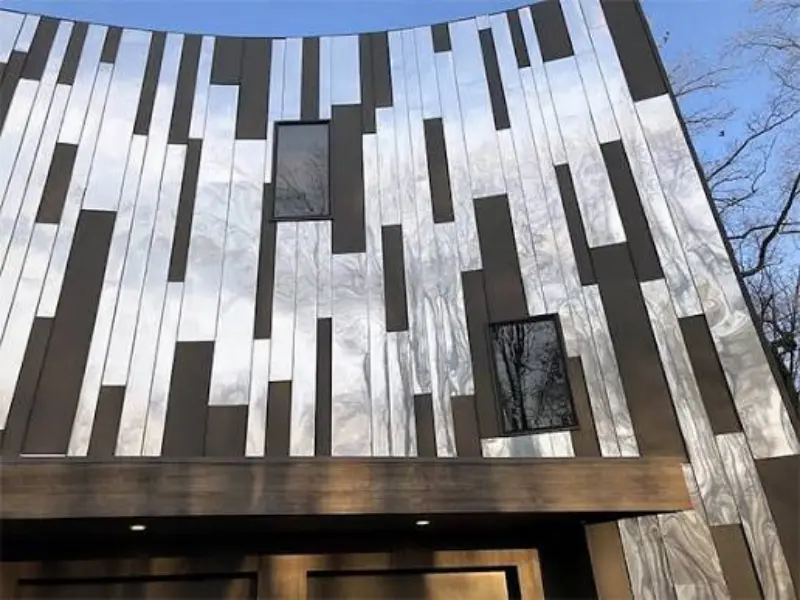
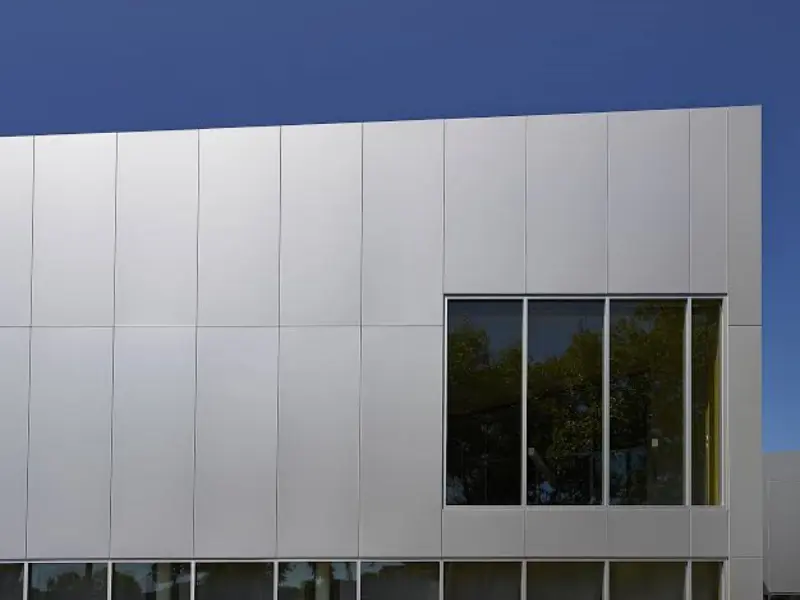
- Architectural applications, such as decorative elements and facades
- 3003 Aluminum: The increased strength and good corrosion resistance of 3003 aluminum make it suitable for:
- Cooking utensils and kitchen equipment
- Roofing, siding, and gutters
- Storage tanks and pressure vessels
- HVAC systems and heat exchangers
7. Cost
- 1050 Aluminum: As a high-purity aluminum alloy, 1050 is generally more affordable than 3003. Its cost-effectiveness makes it an attractive option for projects that do not require enhanced strength or durability.
- 3003 Aluminum: While 3003 aluminum is slightly more expensive due to its alloying elements, its improved strength and versatility may justify the higher cost for applications that demand these qualities.
Which is Better: Aluminum 3003 or 1050?
When deciding between 1050 and 3003 aluminum, the choice ultimately depends on the specific requirements of your project.
If you need a material with high formability, excellent corrosion resistance, and good electrical conductivity at a lower cost, 1050 aluminum may be the better option. On the other hand, if your application requires greater strength, moderate corrosion resistance, and still good workability, 3003 aluminum is likely the better choice.
By understanding the differences between these two aluminum alloys, you can make an informed decision that aligns with your project’s needs and budget.
Frequently Asked Questions
Is 1050 food safe?
Yes. 1050 is commercially pure aluminium. It meets food contact standards in most countries. It is commonly used for cooking pots, foil, and food processing equipment.
Can I weld 1050 to 3003?
Yes. Use 1100 or 4043 filler rod. The weld will have properties closer to 1050 because the filler dilutes the 3003 base metal. The joint will be ductile and corrosion resistant.
Which alloy is better for painting?
3003 is better. The manganese in 3003 creates a surface that bonds more reliably with paint primers. 1050 can be painted but may need an etching primer for good adhesion.
Does 3003 cost more than 1050?
Yes. 3003 typically costs 10 to 20 percent more per kilogram. However, because it is stronger, you may need less metal for the same job. The total project cost is often similar or lower with 3003.
Can 1050 be used for roofing?
It can, but it is not recommended. 1050 is too soft. It will oil can in heat, dent in hail, and sag under snow load. For roofing, 3003 is the minimum. 5052 is even better for harsh climates.
Which alloy anodizes better?
1050 anodizes to a clearer, brighter finish. The pure aluminium creates a uniform oxide layer. 3003 anodizes well but may show faint streaks due to the manganese content. For decorative anodizing, 1050 is preferred.
Is 3003 stronger than 1050?
Yes. 3003 is roughly twice as strong as 1050 in both tensile and yield strength. It is also harder and more dent resistant. The trade-off is slightly less ductility.
What temper is best for bending?
For 1050, O temper is best for tight bends and complex shapes. For 3003, H14 or H24 is best for general brake work. H24 is preferred when you want the metal to stay bent without springback.
Can I use 1050 for signs?
Yes, for indoor signs and small tags. For outdoor signs that face wind and weather, 3003 or 5052 is better. 1050 dents too easily for large exposed panels.
Which alloy is more recyclable?
Both are 100% recyclable. Aluminium can be melted and reused infinitely without losing quality. There is no environmental advantage of one over the other.