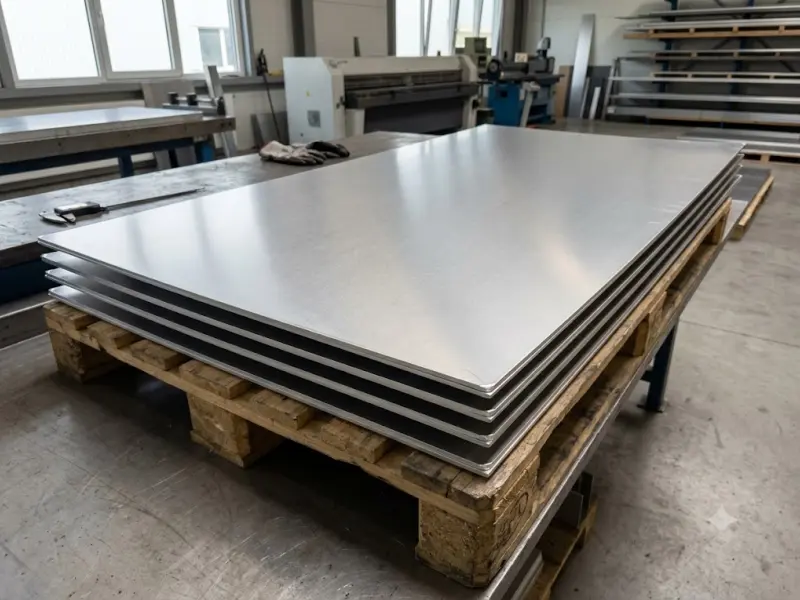
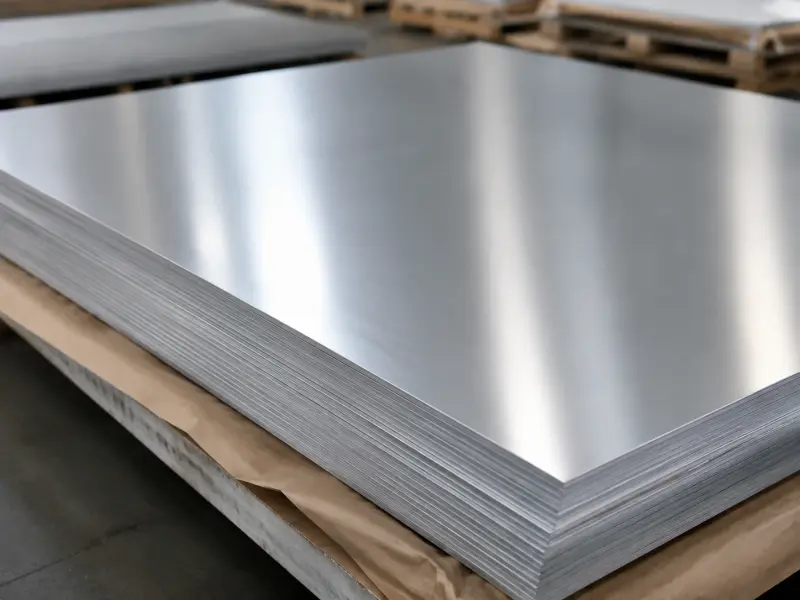
An aluminium flat sheet is a thin, rectangular piece of metal with a smooth surface and uniform thickness.
Manufacturers roll aluminium ingots through mills until they reach the desired gauge. The result is a lightweight panel that bends, cuts, and welds with ease.
People often call it aluminium sheet metal or simply flat aluminium. It sits between foil and plate on the thickness scale. Most flat sheets run from 0.2 mm up to 6 mm thick. Anything thicker usually moves into plate territory.
The flat shape matters. Unlike coils or rolls, a flat sheet arrives ready to use. You do not need to unroll or flatten it. This saves time in workshops and on job sites.
Why Choose Aluminium Flat Sheet Over Other Metals?
Steel is strong, but it is heavy. It rusts without paint or coating. Copper looks great, yet it costs more and stains over time. Aluminium sits in the middle. It offers enough strength for most jobs while keeping weight low.
Here is a quick look at how aluminium flat sheet stacks up:
| Feature | Aluminium Flat Sheet | Mild Steel Sheet | Stainless Steel Sheet |
|---|---|---|---|
| Weight | Very light | Heavy | Moderate |
| Corrosion resistance | Excellent (natural oxide layer) | Poor without coating | Excellent |
| Cost per kg | Low to moderate | Low | High |
| Ease of cutting | Very easy | Moderate | Hard |
| Weldability | Good | Good | Good |
| Conductivity | High | Low | Low |
For projects where weight and rust matter, aluminium flat sheet wins. That is why builders, marine engineers, and car makers use it so often.
Alloy Families for Aluminium Flat Sheet
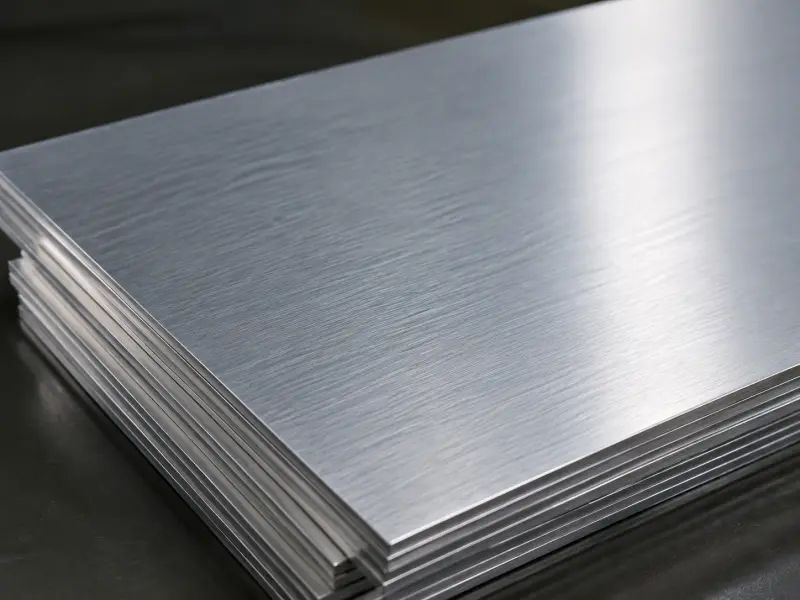
Not all flat sheets are the same. The alloy changes everything. Aluminium grades sit in series from 1000 to 8000. Each series uses different elements. These elements change strength, flexibility, and rust resistance.
1000 Series: Pure Aluminium Flat Sheet
The 1000 series is almost pure aluminium. It contains 99% or more aluminium. This makes it soft, easy to shape, and very resistant to corrosion.
| Grade | Key Trait | Common Uses |
|---|---|---|
| 1050 | High purity, excellent ductility | Signs, decorative panels, electrical work |
| 1060 | Slightly higher purity than 1050 | Heat sinks, reflectors, chemical equipment |
| 1100 | Good formability, weldable | Food packaging, cooking utensils, roofing |
These grades work well when you need to bend or press the metal into shape. They are not strong, so avoid heavy load-bearing jobs.
3000 Series: Manganese Alloy Flat Sheet
Manganese makes these sheets stronger than pure aluminium. They still bend easily. They also resist rust in normal air and water.
| Grade | Key Trait | Common Uses |
|---|---|---|
| 3003 | Good strength, excellent formability | Roofing, siding, fuel tanks, cooking pans |
| 3004 | Higher strength than 3003 | Beverage cans, storage tanks |
| 3105 | Good paint adhesion | Building panels, appliances, signage |
Grade 3003 is the most popular in this group. It costs less than 5000 or 6000 series, yet it handles most general fabrication tasks.
5000 Series: Marine-Grade Flat Sheet
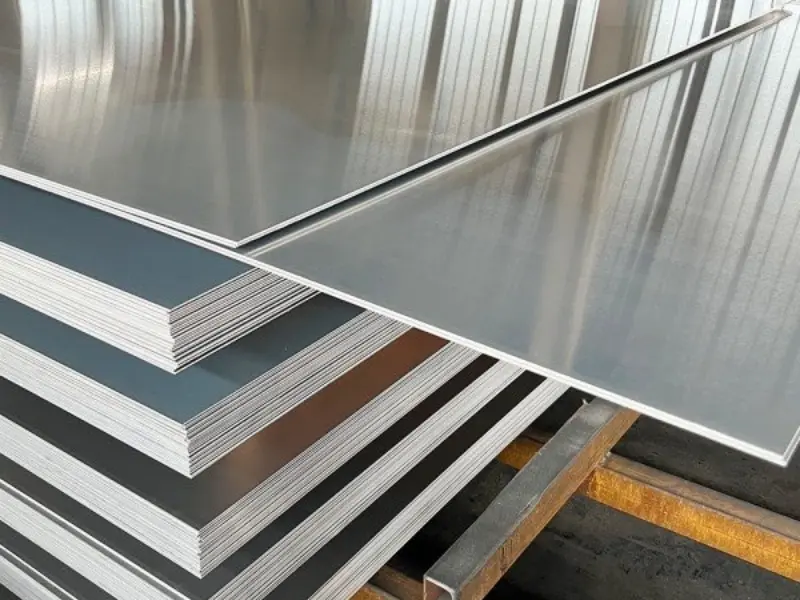
Magnesium is the main additive here. These sheets resist saltwater better than almost any other aluminium grade. They are popular near oceans and in chemical plants.
| Grade | Key Trait | Common Uses |
|---|---|---|
| 5052 | Highest strength among non-heat-treatable grades | Boat hulls, tanks, pressure vessels, signs |
| 5083 | Excellent weldability, high strength | Shipbuilding, offshore structures, rail cars |
| 5754 | Good corrosion resistance, medium strength | Automotive panels, flooring, tread plate |
| 5005 | Easy to form and anodise | Architectural facades, curtain walls |
If your project sits near the sea or faces harsh weather, a 5000 series aluminium flat sheet is a smart pick.
6000 Series: Structural Flat Sheet
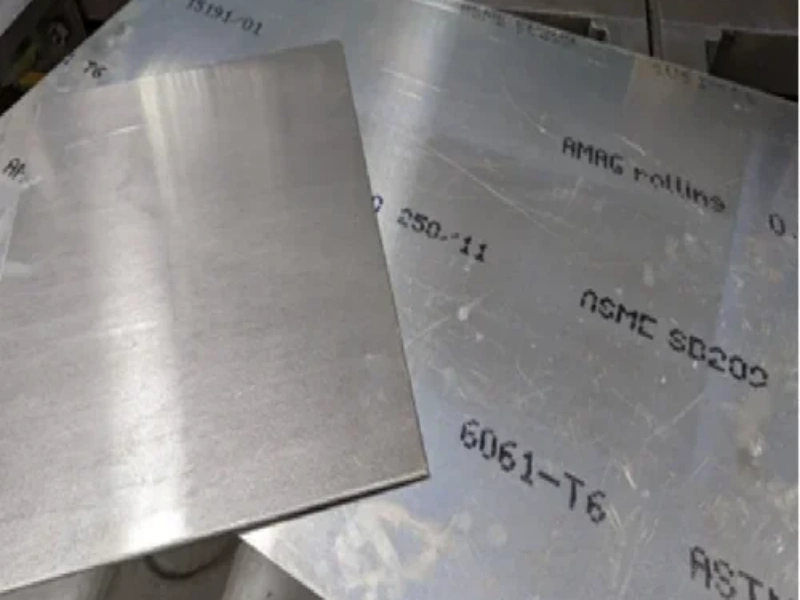
These alloys mix magnesium and silicon. They respond well to heat treatment. After treatment, they gain strength while staying workable.
| Grade | Key Trait | Common Uses |
|---|---|---|
| 6061 | Good strength, machinable, weldable | Structural frames, pipelines, bike parts |
| 6063 | Smooth surface, great for extrusion | Window frames, door frames, trim |
| 6082 | High strength, good corrosion resistance | Bridges, cranes, transport structures |
Grade 6061 is the workhorse of this family. It balances cost, strength, and ease of use. Many machine shops keep 6061 flat sheet in stock at all times.
7000 Series: High-Strength Flat Sheet
Zinc gives these alloys extreme strength. Some 7000 series grades match or beat steel in strength-to-weight ratio. They cost more and are harder to form.
| Grade | Key Trait | Common Uses |
|---|---|---|
| 7075 | Very high strength, good fatigue resistance | Aircraft wings, military gear, sports equipment |
| 7050 | Tough, stress-corrosion resistant | Aerospace structures, heavy-duty parts |
These sheets suit jobs where every gram matters. Think aircraft, race cars, and high-performance machinery.
Temper Matters: What Do H14, H32, and T6 Mean?
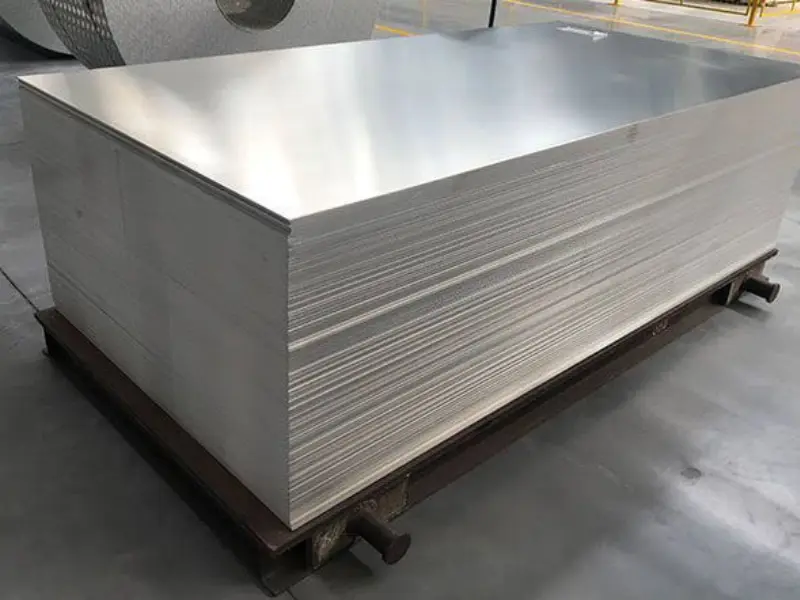
The alloy tells you what is in the metal. The temper tells you how hard it is. Temper codes appear right after the grade number. They change how the sheet behaves during cutting, bending, and welding.
| Temper Code | What It Means | Typical Behaviour |
|---|---|---|
| O | Fully annealed (soft) | Very easy to bend, low strength |
| H12 | Strain-hardened, quarter hard | Better strength than O, still flexible |
| H14 | Strain-hardened, half hard | Good balance of strength and formability |
| H22 | Strain-hardened and partly annealed | More formable than H14 |
| H32 | Strain-hardened and stabilised | Great for forming, stable properties |
| T4 | Solution heat-treated and naturally aged | Medium strength, good formability |
| T6 | Solution heat-treated and artificially aged | High strength, harder to bend |
Example: 5052-H32 is a common marine sheet. It bends well and resists salt. 6061-T6 is much stronger, but you need larger bend radii to avoid cracking.
Thickness & Standard Sizes for Aluminium Flat Sheet
Flat sheets come in many sizes. Thickness is the first thing buyers check. Width and length follow.
| Thickness Range | Common Uses | Notes |
|---|---|---|
| 0.2 mm – 0.5 mm | Labels, tags, light cladding, craft work | Very flexible, easy to cut with hand tools |
| 0.6 mm – 1.0 mm | Signage, roofing, appliance panels | Good balance of weight and stiffness |
| 1.2 mm – 2.0 mm | Structural panels, tanks, vehicle parts | Can handle moderate loads |
| 2.5 mm – 4.0 mm | Heavy-duty fabrication, marine floors, machinery guards | Requires power tools for cutting |
| 5.0 mm – 6.0 mm | Bridges, heavy frames, armour plating | Near plate territory, very rigid |
Standard sheet sizes vary by supplier. Common stock sizes include:
- 1000 mm × 2000 mm
- 1200 mm × 2400 mm
- 1250 mm × 2500 mm
- 1500 mm × 3000 mm
Custom cutting is widely available. Many suppliers offer laser, waterjet, or shear cutting to your exact size.
Surface Finishes You Can Order
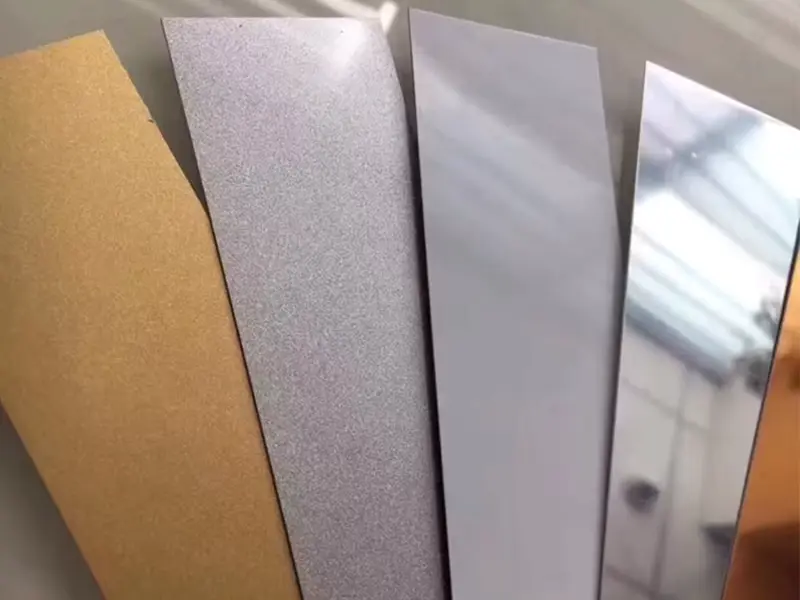
The raw mill finish is silver-grey and slightly reflective. For many jobs, this is fine. But sometimes you need something different.
| Finish Type | Appearance | Best For |
|---|---|---|
| Mill finish | Smooth, slightly reflective | General fabrication, hidden parts |
| Anodised | Hard, coloured oxide layer | Architecture, electronics, decorative trim |
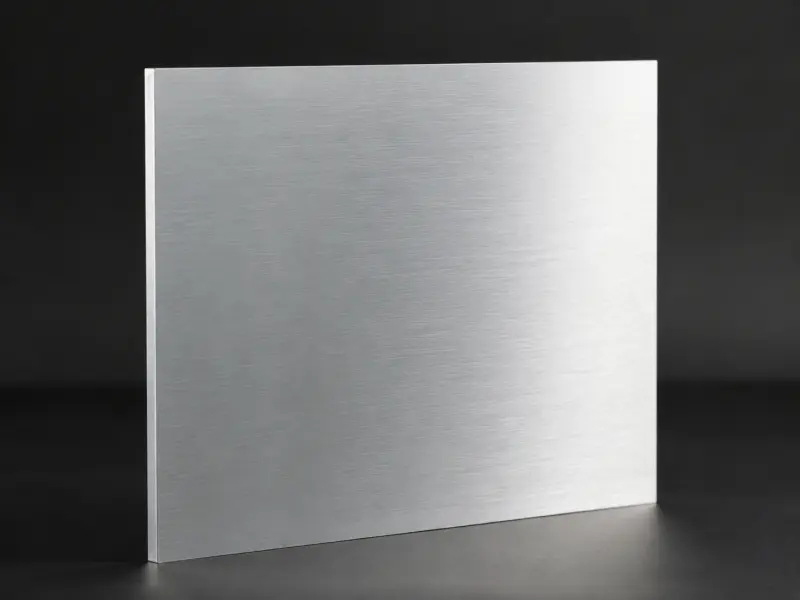
| Brushed | Satin, directional grain | Appliances, interior design, signage |
| Polished | Mirror-like | Reflectors, decorative panels, luxury goods |
| Powder-coated | Any colour, matte or gloss | Outdoor cladding, signage, consumer goods |
| Embossed | Textured pattern | Flooring, anti-slip surfaces, wall panels |
| Perforated | Holes in pattern | Acoustic panels, filters, ventilation grilles |
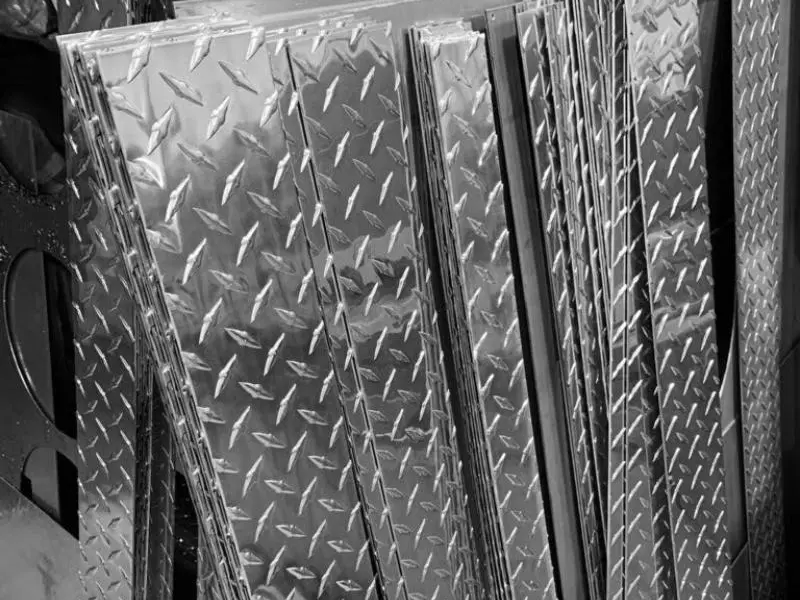
| Chequered / Tread | Diamond or bar pattern | Ramps, stairs, walkways, truck beds |
Anodising is popular because it thickens the natural oxide layer. This adds scratch resistance and allows dyeing in black, gold, blue, or other colours.
Aluminium flat sheet appears in more places than most people realise. Its mix of light weight, rust resistance, and easy shaping makes it a go-to material.
Where Industries Use Aluminium Flat Sheet
Construction & Architecture
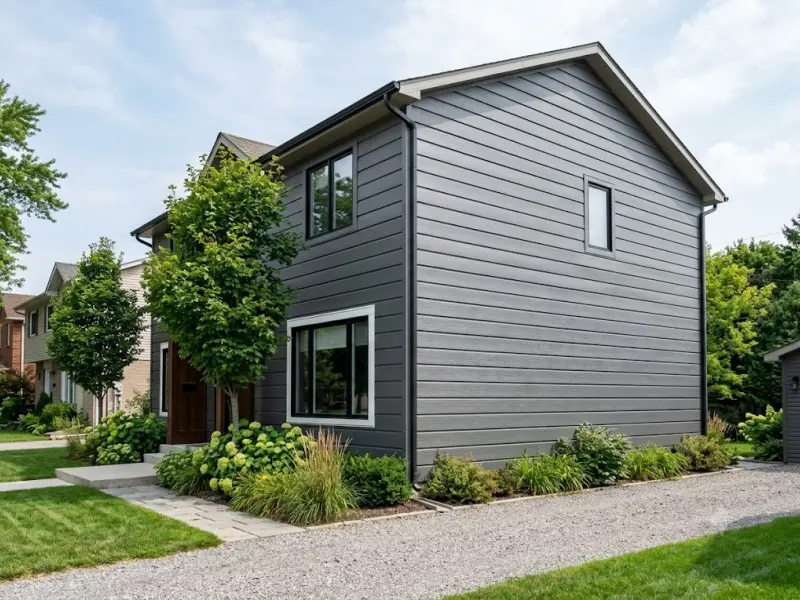
- Wall cladding and curtain walls
- Roofing and gutter systems
- Ceiling panels and soffits
- Window frames and door panels
- Column covers and decorative screens
- HVAC ductwork and casings
Architects like the clean look of anodised or powder-coated flat sheet. It lasts decades with little maintenance.
Marine & Offshore
- Boat hulls and decks
- Bulkheads and partitions
- Fuel and water tanks
- Dock structures and gangways
- Offshore platform components
Saltwater destroys most metals. Marine-grade 5052 and 5083 flat sheets handle it far better than steel.
Automotive & Transport
- Body panels and bonnets
- Interior trim and dashboards
- Trailer sides and floors
- Rail car panels
- Aircraft fuselage skins
Cutting weight improves fuel efficiency. Every kilogram saved in a vehicle body helps reduce emissions.
Industrial & Manufacturing
- Machine guards and enclosures
- Tooling plates and fixtures
- Storage tanks and pressure vessels
- Conveyor systems
- Signs and nameplates
Workshops love how easy it is to cut, drill, and weld aluminium flat sheet. It machines faster than steel, which saves time and tool wear.
Food & Beverage
- Cooking pots and pans
- Beverage cans and caps
- Food packaging trays
- Brewery tanks and vats
- Kitchen splashbacks
Aluminium does not rust. It is also non-toxic. This makes it safe for food contact.
Electrical & Electronics
- Busbar conductors
- Heat sinks
- Electrical enclosures
- LED panel backplates
- Battery housings
The metal conducts electricity and heat well. It is lighter than copper, so power companies use it for long-distance lines.
Alloy Showdown: Picking the Right Flat Sheet for the Job
With so many grades, how do you choose? Here is a side-by-side look at the most common options.
| Property | 1050 Flat Sheet | 3003 Flat Sheet | 5052 Flat Sheet | 6061 Flat Sheet | 7075 Flat Sheet |
|---|---|---|---|---|---|
| Strength | Low | Low-Medium | Medium | Medium-High | Very High |
| Formability | Excellent | Excellent | Very Good | Good | Poor |
| Weldability | Good | Good | Excellent | Excellent | Poor |
| Corrosion resistance | Good | Good | Excellent | Good | Moderate |
| Machinability | Fair | Fair | Fair | Good | Excellent |
| Heat treatable | No | No | No | Yes | Yes |
| Typical price | $ | $ | $$ | $$ | $$$ |
| Best use | Signs, decoration | Roofing, general | Marine, outdoor | Structural, frames | Aerospace, high stress |
Quick guide:
- Need to bend complex shapes? → 1050 or 3003
- Work near the ocean? → 5052 or 5083
- Need structural strength? → 6061-T6
- Building aircraft parts? → 7075-T6
- Tight budget? → 1050 or 3003
Quality Checks Before You Buy
Not all suppliers deliver the same quality. Ask these questions before you place an order:
- What is the exact alloy and temper?
- Is the thickness tolerance within your project limits?
- Does the surface meet your finish needs?
- Are there mill test certificates available?
- Can the supplier cut to your exact size?
- What is the lead time for delivery?
A reliable supplier provides material certificates. These show chemical composition and mechanical test results. Keep them for your records.
Flat Sheet vs. Plate vs. Coil: Know the Difference
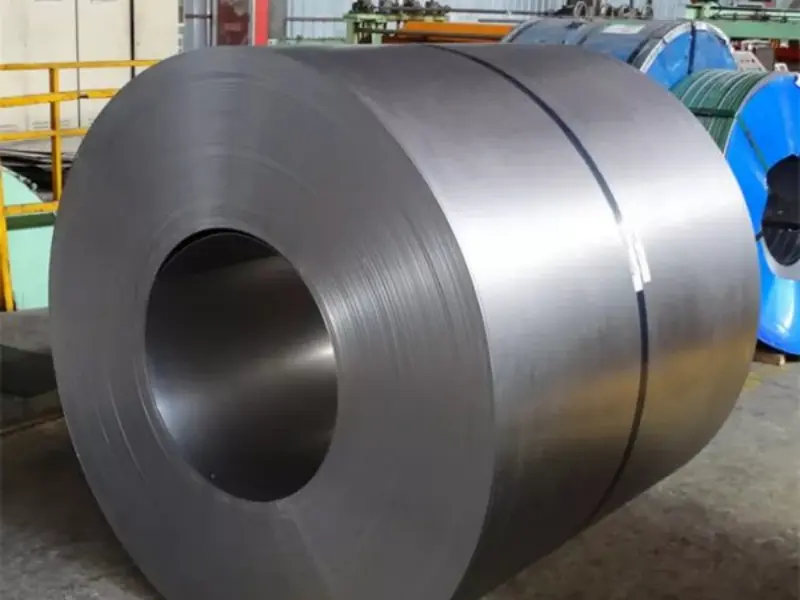
Buyers sometimes confuse these three forms. They are not the same.
| Form | Thickness | Shape | Typical Use |
|---|---|---|---|
| Flat sheet | 0.2 mm – 6.0 mm | Flat, rectangular panel | Fabrication, cladding, panels |
| Plate | 6.0 mm and up | Flat, rectangular panel | Heavy structures, machining, tooling |
| Coil | 0.2 mm – 3.0 mm | Rolled into a large spool | Stamping, continuous production |
Flat sheet is ready to use. You do not need a de-coiler. Plate needs saws or heavy mills. Coil suits factories with automated feed lines.
How to Cut, Bend & Join Aluminium Flat Sheet
Working with aluminium flat sheet is straightforward. You do not need special skills, just the right tools.
Cutting Methods
| Method | Best Thickness | Notes |
|---|---|---|
| Hand shears | Up to 1.0 mm | Good for small jobs, quick cuts |
| Bench shear | Up to 2.0 mm | Clean, straight edges |
| Jigsaw with metal blade | Up to 3.0 mm | Good for curves and shapes |
| Circular saw with carbide blade | 2.0 mm – 6.0 mm | Fast, but watch for burrs |
| Laser cutting | Any thickness | Precision, complex shapes, no tool wear |
| Waterjet cutting | Any thickness | No heat damage, great for thick sheets |
Bending Tips
- Use a brake press or folder for clean angles.
- Increase bend radius for harder tempers like T6.
- 5052-H32 bends well with a radius about twice the thickness.
- 6061-T6 needs a larger radius, roughly three to four times the thickness, to avoid cracking.
Welding Notes
- TIG and MIG both work on aluminium.
- Clean the surface with a stainless-steel brush first.
- Use 4043 or 5356 filler wire.
- 5052 welds easily. 6061 welds well too. 7075 is tricky and often avoided for welded joints.
Frequently Asked Questions
What is the most common aluminium flat sheet grade?
Grade 3003 is the most common for general use. It balances cost, strength, and ease of forming. For marine work, 5052 is the top choice.
Can aluminium flat sheet be used outdoors?
Yes. Aluminium forms a natural oxide layer that protects it from rain and sun. For coastal areas, choose 5052 or 5083 for extra salt resistance. Powder coating or anodising adds even more protection.
How do I stop aluminium flat sheet from scratching?
Use protective film during handling. Store sheets flat and separate them with soft spacers. For finished parts, anodising or powder coating creates a hard surface that resists scratches.
Is aluminium flat sheet recyclable?
Yes. Aluminium can be recycled again and again without losing quality. Recycling uses only about 5% of the energy needed to make new aluminium. This makes it a sustainable choice for green building projects.
What is the difference between H32 and H34 temper?
Both are strain-hardened and stabilised. H34 is harder than H32. H32 bends more easily. H34 offers slightly higher strength but less formability. Choose H32 for forming jobs. Choose H34 when you need a bit more stiffness.
Can I paint aluminium flat sheet?
Yes, but you should prepare the surface first. Clean off grease and oxide. Use an etch primer or conversion coating. Then apply your topcoat. Powder coating is often better than wet paint for outdoor durability.
Which is cheaper, 5052 or 6061 flat sheet?
5052 usually costs less than 6061. The exact price depends on thickness, size, and market conditions. 6061-T6 costs more because of the heat treatment process.
How thick should my aluminium flat sheet be?
It depends on the load. For wall cladding, 1.0 mm to 2.0 mm is common. For tanks and structural panels, 3.0 mm to 5.0 mm works better. Always check engineering specs for load-bearing applications.
Does aluminium flat sheet conduct electricity?
Yes. Pure aluminium grades like 1050 and 1100 conduct very well. Alloy grades conduct slightly less, but still better than most metals except copper. This is why busbars and heat sinks use aluminium.
Can I weld 7075 aluminium flat sheet?
You can, but it is not recommended. 7075 tends to crack after welding. For welded structures, use 5052 or 6061 instead. If you must use 7075, consider mechanical fastening like rivets or bolts.
Aluminium Flat Sheet | Grades 1050 3003 5052 6061
Aluminium flat sheet is one of the most useful materials in modern industry. It comes in many alloys, tempers, and finishes. Each type serves a different purpose. Pure grades like 1050 suit signs and decoration. Manganese grades like 3003 handle roofing and general work. Marine grades like 5052 fight saltwater corrosion. Structural grades like 6061 carry real loads.
Choosing the right sheet means looking at alloy, temper, thickness, and finish. It also means matching the metal to your environment and fabrication method. With the right choice, aluminium flat sheet lasts for decades with almost no upkeep.
If you need help picking a grade or size, talk to a supplier with mill certifications and custom cutting services. They can guide you to the exact sheet your project needs.