Aluminum Plate
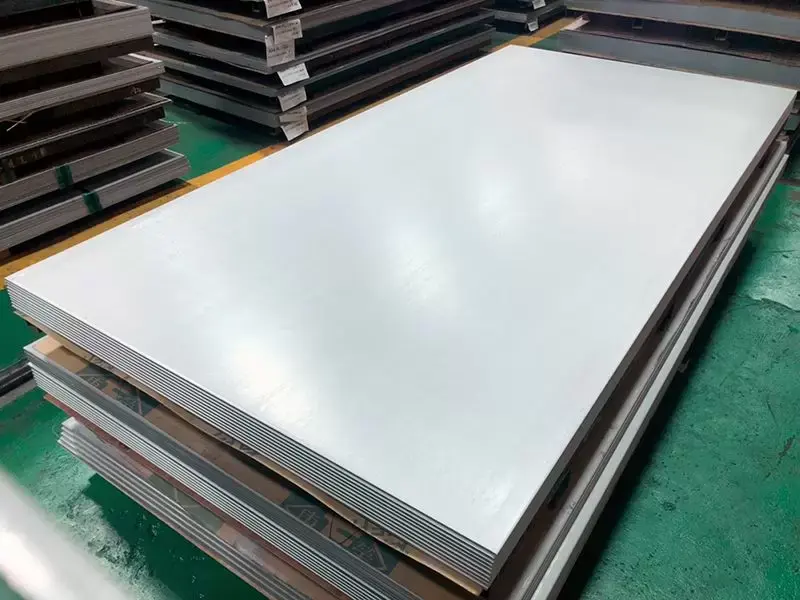
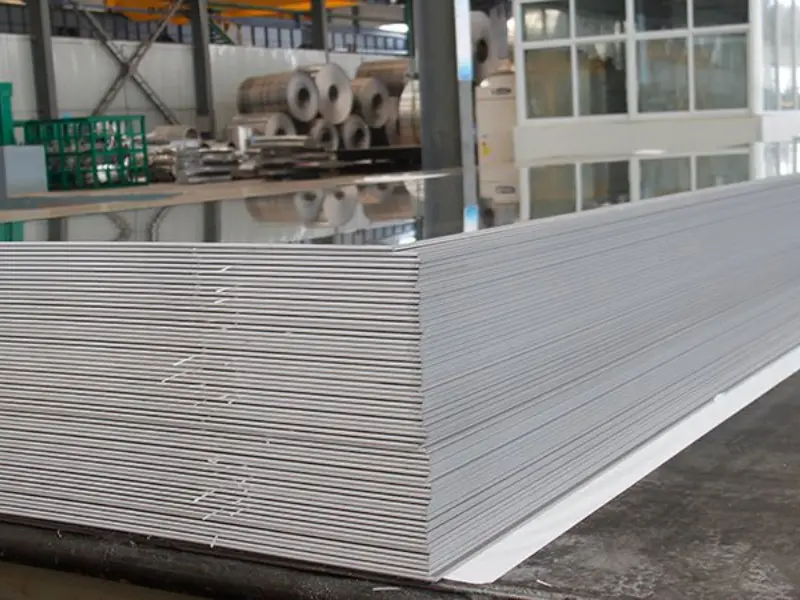
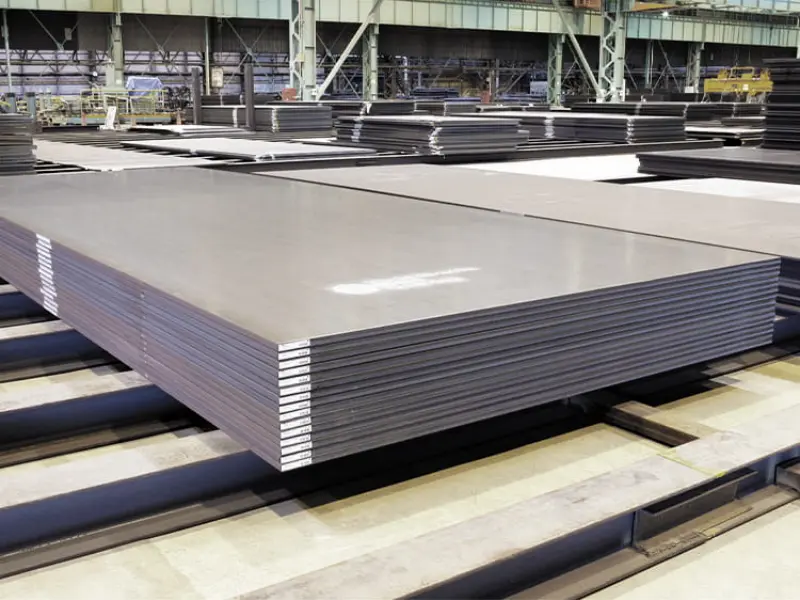
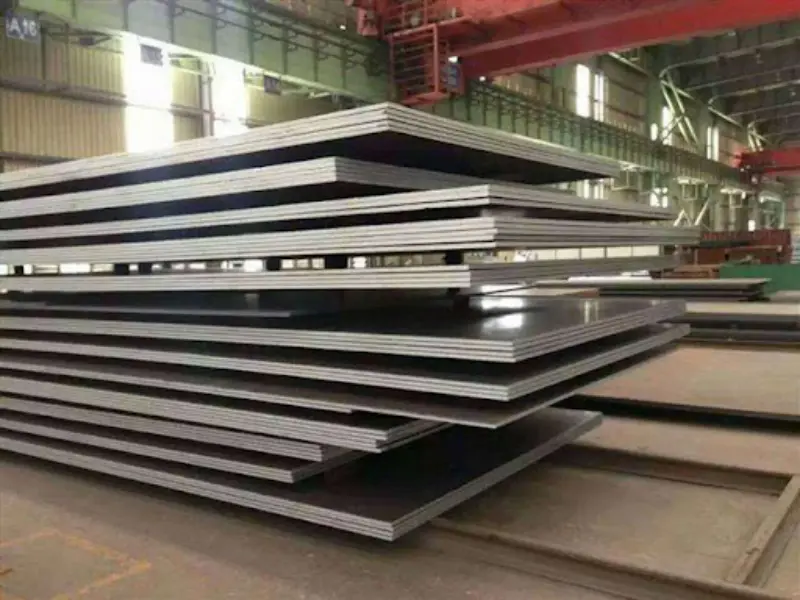
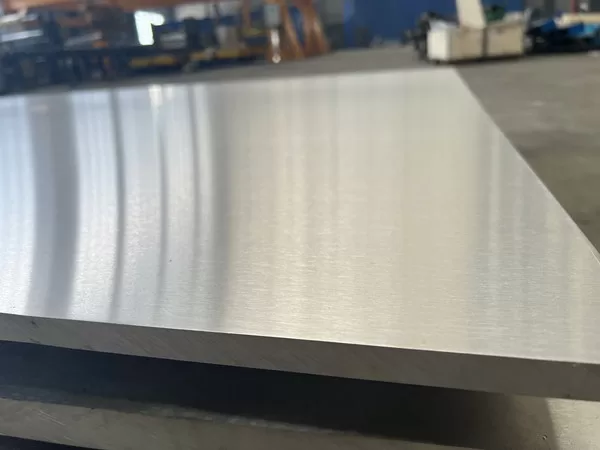
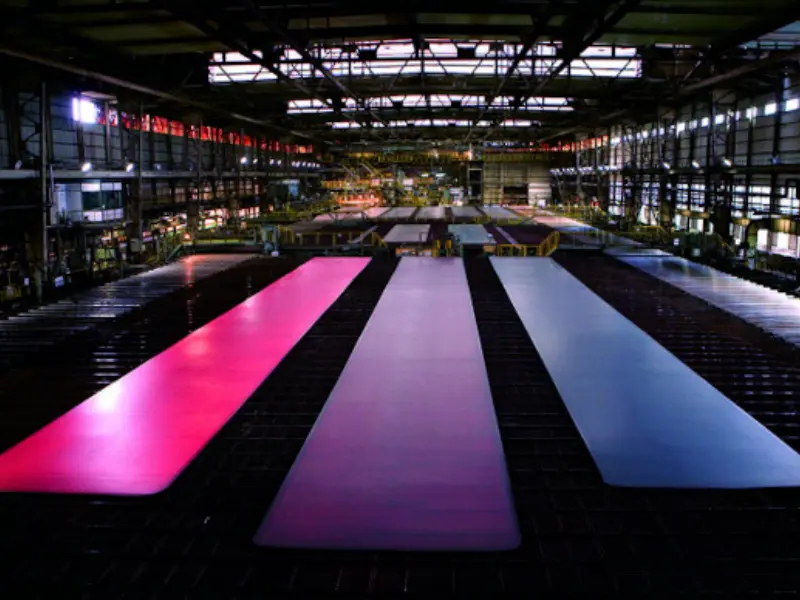
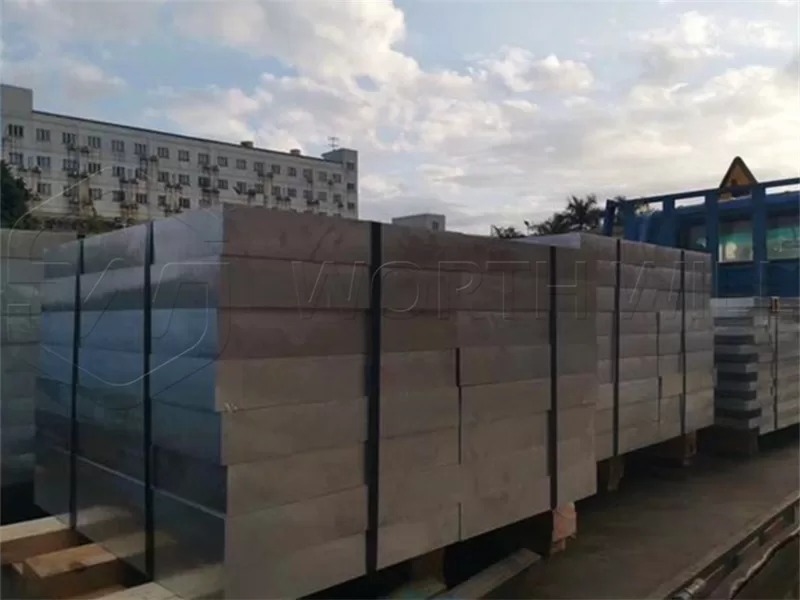
Aluminum plate is an aluminum material, with high strength and good performance. It’s popular in our life and widely used in many different industries, such as construction and mechanical etc. We also call it aluminum sheet or aluminum panel.
| Product | Aluminum Plate |
| Thin plate | 0.15-1.5mm |
| Regular plate | 1.5-6.0mm |
| Medium plate | 6.0-25.0mm |
| Thick plate | 25-200mm |
| Delivery | Within 30 days |
| MOQ | 2-4 tons |
Alloy Comparison for Common Needs
| Need | Best Alloy | Why |
|---|---|---|
| Highest strength | 7075-T651 | Zinc alloyed, ~503 MPa tensile |
| Best weldability | 5083 / 6061 | Both weld well with standard filler |
| Marine environment | 5083 / 5052 | Excellent saltwater resistance |
| Easiest to machine | 2024-T351 / 6061-T651 | Clean chip formation |
| Lowest cost | 3003 / 5052 | Common, widely available |
| Cryogenic use | 5083-O / H116 | Maintains toughness at low temp |
| Tooling / mold base | Tooling plate (6061 cast) | Flat, stress-free, stable |
| Aerospace structure | 2024 / 7075 | High strength-to-weight ratio |
Thickness Ranges by Application
Plate thickness is typically measured in millimeters or inches. Common ranges by end use:
| Thickness Range | Typical Application |
|---|---|
| 6–12 mm | General fabrication, brackets, frames |
| 12–25 mm | Structural components, vehicle armor |
| 25–50 mm | Tooling plate, mold base, pressure vessel |
| 50–100 mm | Heavy aerospace structure, die blocks |
| 100–200 mm | Large mold bases, thick aerospace parts |
| 200 mm+ | Special aerospace and defense applications |
Temper Explained: O, T6, H32, and More
Temper describes the mechanical condition of the aluminum after processing. It affects hardness, strength, and ductility.
| Temper Code | Meaning | Typical Use |
|---|---|---|
| O | Fully annealed, softest | Forming, deep drawing |
| H32 | Strain hardened + stabilized | Marine, general sheet |
| H116 | Strain hardened, corrosion resistant | Shipbuilding |
| T4 | Solution heat treated, naturally aged | Moderate strength, good formability |
| T6 | Solution heat treated, artificially aged | High strength structural |
| T651 | T6 + stress relieved by stretching | Machined parts, aerospace plate |
| T7351 | Overaged, better stress corrosion resistance | Aerospace, tooling |
For plate used in machining, T651 and T7351 are preferred because stress-relieving by stretching reduces distortion during cutting.
Surface Finish Options
| Finish | Description | Use |
|---|---|---|
| Mill finish | As-rolled, no treatment | Fabrication input |
| Anodized | Electrochemical oxide layer | Corrosion protection, appearance |
| Painted / powder coated | Color coating | Architectural, consumer goods |
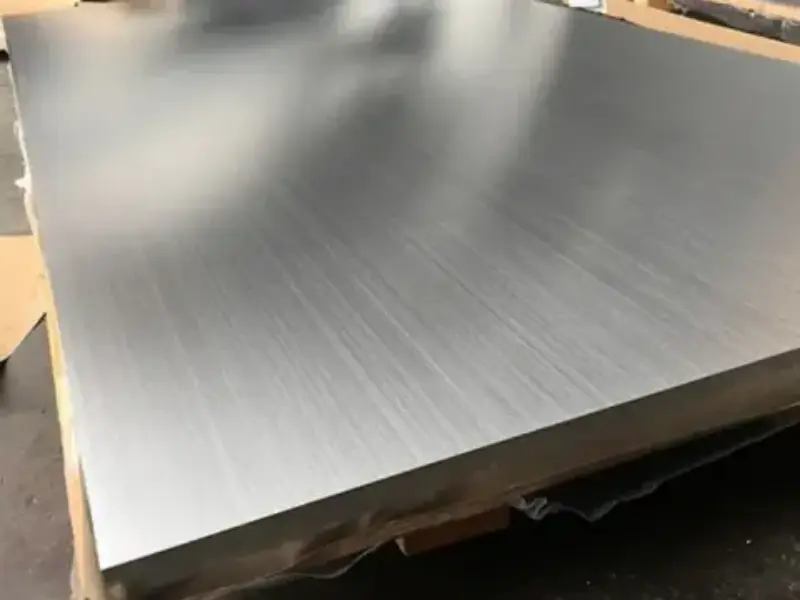
| Brushed | Mechanical abrasion pattern | Decorative panels |
| Polished | Mirror-like surface | Reflectors, cosmetic parts |
| Chromate conversion | Chemical film, good adhesion base | Pre-paint treatment, aerospace |
Benefits of aluminum plate
- High strength
- Good performance
- Light weight
- Good ductility
- Corrosion resistance
- Easily process
- Recyclable
- No rust
- Environmentally friendly
Size and Tolerance Reference
Standard mill sizes for aluminum plate vary by producer but common dimensions include:
| Dimension | Common Range |
|---|---|
| Thickness | 6 mm – 200+ mm |
| Width | 1,000 mm – 3,000 mm |
| Length | 1,000 mm – 12,000 mm |
| Flatness (standard) | ±0.5 mm per meter |
| Flatness (precision) | ±0.1 mm per meter |
Custom sizes are available from most mills. Cutting services (waterjet, plasma, laser, saw) are offered by most distributors for order-ready pieces.
Application
Due to the high-quality of aluminum plate, many different fields’ workers choose the aluminum material to produce their products.
- Solar reflector: The aluminum plate has a strong reflection property of light, and reflects ultraviolet rays better than other metals such as silver.
- Building exterior: Aluminum panels have good thermal insulation properties and fire resistance, and meet the requirements of all exterior walls in modern decoration.
- Indoor decorations: It is also easy to process and form, and is convenient for welding. The appearance of aluminum plate is changeable, which can fully meet the aesthetics and needs of various people in life.
- Household appliance: In our daily life, the household appliances we use, including refrigerators, microwave ovens, washing machine cylinders and kitchen utensils, etc., all need aluminum plates.
- Aerospace: In the aerospace industry, aluminum sheets are used in aircraft components and spacecraft components.
- Mold making: Molds made of aluminum plates have significant advantages over molds made of steel plates.
- Transportation: Some of transportation we used in our daily life, such as trains, buses, and cars, also adopt aluminum plates.
Product details
Alloy: 1 series, 3series, 5series, 6series, 7series, 8 series
Tamper: Various
Thickness: 0.2-400mm
Width:200-2650
Length: Under 11900
Applications by Industry
Aerospace & Defense
- Aircraft fuselage skins and frames
- Wing spars and ribs
- Missile body structures
- Armored vehicle panels
- Satellite structural components
Marine & Offshore
- Ship hulls and decks
- Offshore platform structures
- Submarine components
- LNG containment tanks
- Boat transoms and bulkheads
Transportation
- Truck trailer flooring (tread plate)
- Rail car bodies
- Automotive chassis parts
- Bus body panels
- Tank trailers
Construction & Architecture
- Curtain wall panels
- Structural frames
- Bridge decking
- Facade cladding
- Mezzanine flooring
Industrial & Manufacturing
- Pressure vessels
- Heat exchanger tube sheets
- Chemical storage tanks
- Machine bases and frames
- Conveyor components
Tooling & Mold Making
- Injection mold bases
- Vacuum forming tools
- Jigs and fixtures
- CMM reference plates
- Semiconductor process equipment
What Makes Aluminum Plate Different from Sheet and Foil?
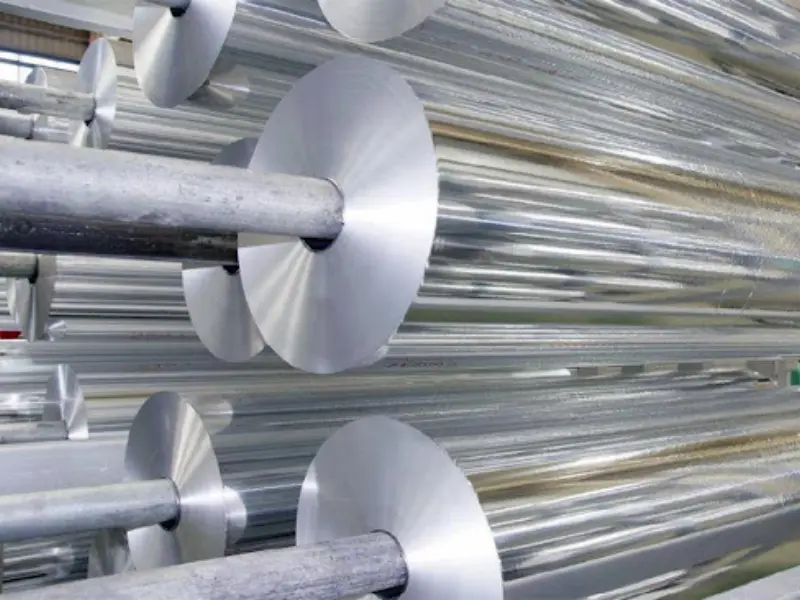
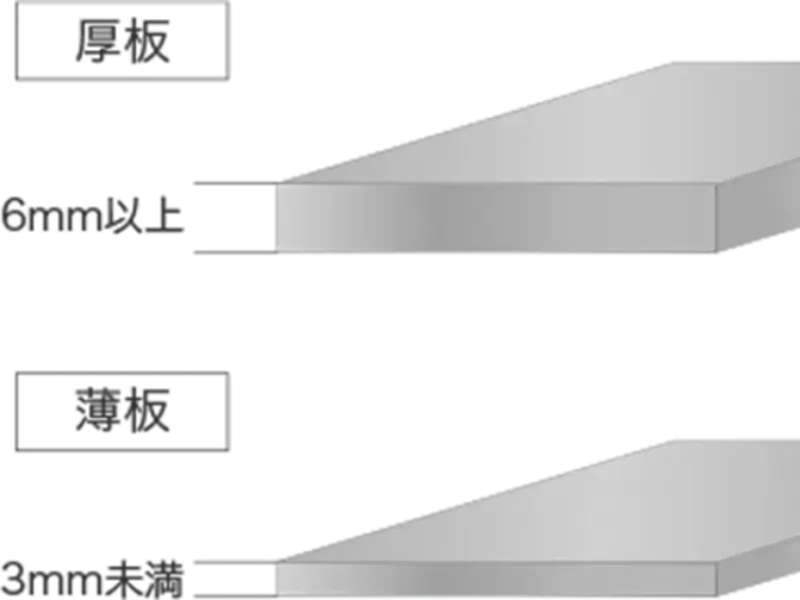
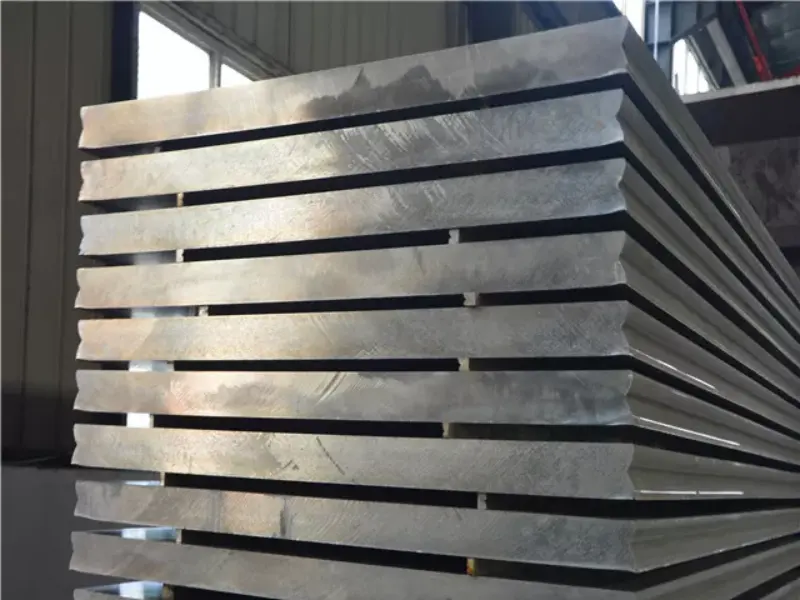
Aluminum plate refers to flat-rolled aluminum with a thickness of 6 mm (0.25 inch) or more. Below that, the material is classified as sheet. Foil sits at the thinnest end, under 0.2 mm. This distinction matters because plate is used where structural strength and load-bearing capacity are needed — not just as a covering or lining.
Plate is heavier, stiffer, and machined more often than sheet. It is cut, drilled, welded, and formed into structural parts. That is why aerospace frames, ship hulls, pressure vessels, and industrial tooling all rely on aluminum plate.
Alloy Categories: Which Group Fits Your Application?
Aluminum plate is produced across multiple alloy series. Each series has a different base composition and a different strength-to-weight profile.
| Series | Main Alloying Element | Strength Level | Key Trait |
|---|---|---|---|
| 1xxx | Pure aluminum (≥99%) | Low | Best corrosion resistance, high conductivity |
| 2xxx | Copper | Very high | Aerospace grade, heat treatable |
| 3xxx | Manganese | Low-medium | Good formability, moderate corrosion resistance |
| 5xxx | Magnesium | Medium-high | Excellent marine corrosion resistance |
| 6xxx | Magnesium + Silicon | Medium-high | Good weldability, all-purpose structural |
| 7xxx | Zinc | Highest | Aerospace and defense, premium strength |
Alloy Categories: Which Group Fits Your Application?
Aluminum plate is produced across multiple alloy series. Each series has a different base composition and a different strength-to-weight profile.
Common Alloys in Detail
2024 Aluminum Plate
2024 is a copper-alloyed plate known for high fatigue resistance. It is used in aircraft fuselages and wing structures where repeated stress cycles are common. It is not as weldable as 6xxx alloys but machines cleanly.
| Property | Value |
|---|---|
| Tensile Strength (T3) | ~483 MPa |
| Yield Strength (T3) | ~345 MPa |
| Density | 2.78 g/cm³ |
| Temper | T3, T4, T351 |
The 2024 Aluminum Plate
2024 is a copper-alloyed plate known for high fatigue resistance. It is used in aircraft fuselages and wing structures where repeated stress cycles are common. It is not as weldable as 6xxx alloys but machines cleanly.
5052 Aluminum Plate
5052 is a magnesium-alloyed plate with excellent resistance to saltwater and industrial chemicals. It does not respond to heat treatment but can be work-hardened. Marine builders and chemical storage tank manufacturers use it regularly.
| Property | Value |
|---|---|
| Tensile Strength (H32) | ~228 MPa |
| Yield Strength (H32) | ~193 MPa |
| Density | 2.68 g/cm³ |
| Temper | H32, H34, O |
The 5052 Aluminum Plate
5052 is a magnesium-alloyed plate with excellent resistance to saltwater and industrial chemicals. It does not respond to heat treatment but can be work-hardened. Marine builders and chemical storage tank manufacturers use it regularly.
6061 Aluminum Plate
6061 is the most versatile alloy in the 6xxx series. It offers a good balance of strength, corrosion resistance, and weldability. T651 is the most common temper for plate — it means the material is solution heat-treated and stress-relieved by stretching.
| Property | Value |
|---|---|
| Tensile Strength (T651) | ~310 MPa |
| Yield Strength (T651) | ~276 MPa |
| Density | 2.70 g/cm³ |
| Temper | T6, T651, O |
6061 Aluminum Plate
6061 is the most versatile alloy in the 6xxx series. It offers a good balance of strength, corrosion resistance, and weldability. T651 is the most common temper for plate — it means the material is solution heat-treated and stress-relieved by stretching.
7075 Aluminum Plate
7075 is one of the strongest aluminum alloys available. Zinc is the primary alloying element. It is used in aerospace structural components, military equipment, and high-performance sporting goods. It is harder to weld than 6061 but offers roughly double the yield strength.
| Property | Value |
|---|---|
| Tensile Strength (T651) | ~503 MPa |
| Yield Strength (T651) | ~434 MPa |
| Density | 2.81 g/cm³ |
| Temper | T6, T651, T7351 |
For 7075 Aluminum Plate
7075 is one of the strongest aluminum alloys available. Zinc is the primary alloying element. It is used in aerospace structural components, military equipment, and high-performance sporting goods. It is harder to weld than 6061 but offers roughly double the yield strength.
5083 Aluminum Plate
5083 is the standard alloy for shipbuilding and cryogenic applications. It keeps its strength at very low temperatures, which makes it suitable for LNG storage tanks and offshore structures.
| Property | Value |
|---|---|
| Tensile Strength (H116) | ~303 MPa |
| Yield Strength (H116) | ~214 MPa |
| Density | 2.66 g/cm³ |
| Temper | H116, H321, O |
Classification of aluminum plate
Product Types: More Than Just Flat Plate
Standard Flat Plate
This is the basic form — flat, uniform thickness, cut to length or supplied as mill-size sheets. Used across industries as a starting blank for fabrication. Available in all major alloys and tempers.
Tooling Plate (Cast Plate)
Tooling plate is a special product. It is cast and then rolled or machined to very tight flatness tolerances. It does not follow standard wrought temper codes. Common brand names include Mic-6 and ATP-5. It is used for jigs, fixtures, mold bases, and precision machine components.
| Feature | Tooling Plate | Standard Plate |
|---|---|---|
| Flatness tolerance | ±0.05 mm | ±0.5 mm or more |
| Residual stress | Very low | Higher |
| Machinability | Excellent | Good |
| Base alloy | 5083 / 6061 variant | Varies |
| Cost | Higher | Standard |
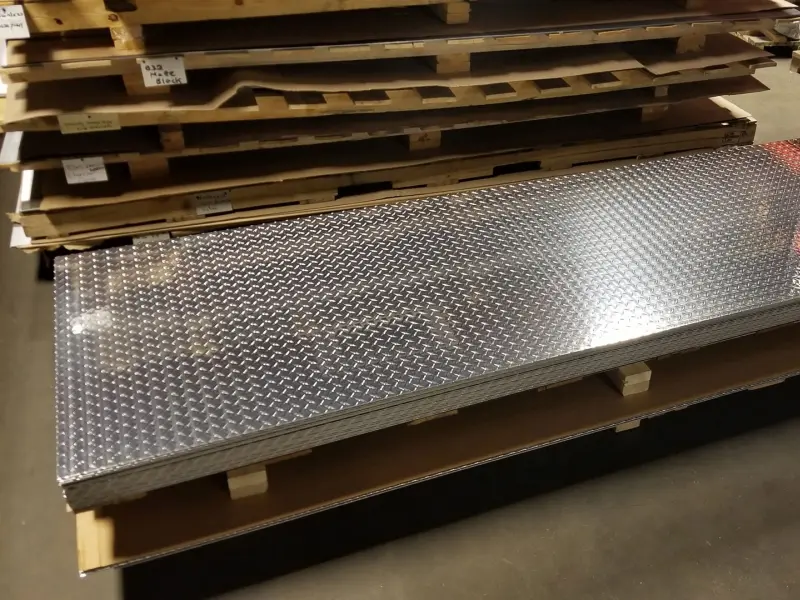
Tread Plate (Diamond Plate)
Tread plate has a raised pattern — usually a diamond or bar pattern — rolled into one surface. It provides grip in flooring, ramps, and vehicle surfaces. Common alloys are 3003 and 5052.
| Pattern | Common Alloy | Thickness Range | Use |
|---|---|---|---|
| Diamond | 3003-H22 | 3–6 mm | Flooring, stairs |
| Bar (5-bar) | 5052-H32 | 3–8 mm | Truck beds, ramps |
| Tear drop | 1100-H14 | 2–5 mm | Decorative, light duty |
Clad Plate
Clad plate is a composite product — a core alloy bonded to one or two outer cladding layers. The cladding is usually pure aluminum (1xxx) for corrosion protection. The core provides strength. This is common in aerospace fuel tanks and chemical equipment.
Perforated Plate
Perforated plate has holes punched or drilled in a regular pattern. It is used in filtration, ventilation panels, speaker grilles, and architectural screens. Hole size, spacing, and open area percentage are the key specs.
Precision Ground Plate
This plate is ground on one or both faces to achieve very tight thickness tolerance and surface finish. Used in semiconductor equipment, optical benches, and metrology applications.
Wholesale aluminum sheet factory
Our factory is located in the industrial agglomeration area in central Henan. It’s one of the few foreign trade companies that produces aluminum products with its own factory.
We are committed to providing high-quality products and comprehensive services, and become partners with more foreign friends. Going to the international market, Worthwill is working hard.
Aluminum sheet exporter
We have three years of experience in foreign business. Many of our customers are very satisfied with our aluminum products. If you have any needs, please contact us. We will provide the best products and service.
2024 vs 6061 vs 7075: A Direct Comparison
These three alloys are the most commonly compared when selecting structural aluminum plate.
| Property | 2024-T351 | 6061-T651 | 7075-T651 |
|---|---|---|---|
| Tensile Strength | 483 MPa | 310 MPa | 503 MPa |
| Yield Strength | 345 MPa | 276 MPa | 434 MPa |
| Elongation | 15% | 12% | 11% |
| Weldability | Poor | Excellent | Poor |
| Machinability | Good | Good | Good |
| Corrosion Resistance | Fair | Good | Fair |
| Relative Cost | Medium-High | Low-Medium | High |
| Best Use | Aerospace fatigue | All-purpose structural | Max strength aerospace |
For general fabrication, 6061-T651 is the default choice — it welds, machines, and anodizes well at a reasonable price. For the highest strength with minimum weight, 7075-T651 is worth the premium. 2024 is the choice where fatigue life is the primary concern.
Worthwill Aluminum Plate Team
FAQ
What are aluminum sheets used for?
According to the different aluminum composition, each series of aluminum plate apply on different fields.
1 series: The 1 series aluminum plate contains the most aluminum. It’s applicable in items that do not require high strength.
3 series: 3 series aluminum sheet, also known as anti-rust aluminum sheet. And it’s routinely used in humid environments such as refrigerators and air conditioners.
5 series: 5 series aluminum sheet with low density, high tensile strength and high elongation. It is often apply on conductors, cooking utensils, architectural decoration and so on.
6 series: 6 series aluminum sheet with good work ability and ductility. We often adopt it to build aircraft, automobile etc.
8 series: The 8 series aluminum plate is apply on the radiator.
What’s the difference between aluminum sheet and plate?
In the aluminium industry market, we generally see and come into contact with aluminium sheets with relatively thin thicknesses. They have high use value in household appliances, automobile bodies and construction. At the same time, it’s easy to process. Our company will carry out color coating process on the surface, so that it can show various colors such as gold and blue. And it can also be made into an aluminium plate that imitates the texture of wood and stone.
Aluminium sheets are mainly used in heavy industries, such as aerospace and military industries. These industries require extremely high strength and durability of aluminium sheets.
Our company provides various forms of aluminum products to meet the different needs of customers. Contact us for more information.
What is the minimum thickness for aluminum plate?
Plate starts at 6 mm (0.25 inch). Below that, the product is classified as aluminum sheet. Some specifications use 4.5 mm as the cutoff, but 6 mm is the most widely accepted standard.
Can aluminum plate be welded?
Most aluminum plate alloys can be welded, but the ease varies. 5xxx and 6xxx alloys weld well with MIG or TIG processes using the correct filler (4043 or 5356). 2xxx and 7xxx alloys are harder to weld and can be prone to cracking without special procedures. Post-weld heat treatment restores some of the strength lost in the heat-affected zone.
What does T651 mean on aluminum plate?
T6 means the plate is solution heat-treated and artificially aged to peak strength. The “51” suffix means it has been stress-relieved by stretching after heat treatment. This reduces internal residual stress, which matters when the plate will be machined. Without stress relief, machined parts can warp as material is removed.
How is aluminum plate cut?
Common cutting methods include:
- Sawing — for straight cuts, fast and low-cost
- Waterjet — for complex shapes, no heat-affected zone
- Plasma cutting — for faster cuts on thicker plate
- Laser cutting — for thin-to-medium plate with tight tolerances
- Milling — for precision machining of features and faces
What is the difference between tooling plate and standard plate?
Standard plate is wrought and rolled. Tooling plate is typically cast or specially processed to achieve very low residual stress and high flatness. It does not warp during machining. Standard plate is less expensive but may move when cut.
Which alloy is best for marine use?
5083 is the standard choice for marine structural applications. It has excellent resistance to saltwater corrosion and maintains strength at low temperatures. 5052 is used for lighter marine applications such as fuel tanks and boat hulls where forming is needed.
Does aluminum plate need surface treatment?
It depends on the environment. Bare mill-finish aluminum forms a natural oxide layer that provides moderate corrosion protection. For harsh environments (marine, chemical, outdoor), anodizing or painting adds significant protection. For appearance-critical applications, brushing or polishing is applied after fabrication.
What is the weight of aluminum plate?
Aluminum weighs approximately 2.70 g/cm³ on average (varies slightly by alloy). A 1,000 × 2,000 mm plate at 10 mm thickness weighs about 54 kg. Compare this to steel at 2.84 times heavier per equivalent volume — aluminum plate offers significant weight savings in structural applications.