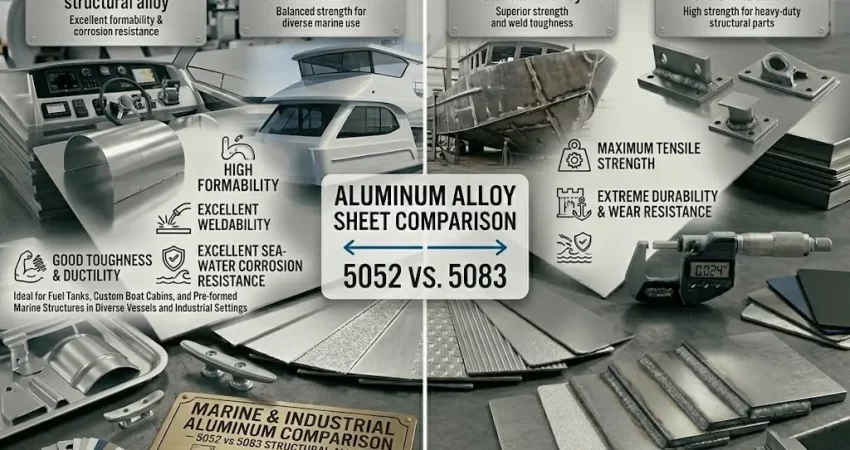
When selecting aluminum for a project, choosing the right alloy can significantly impact the material’s performance and longevity. Among the various aluminum alloys, 5052 and 5083 are two popular options that are often compared due to their similar properties.
Composition and Alloying Elements
5052 Aluminum Alloy The 5052 alloy is primarily composed of aluminum with magnesium as its main alloying element, along with small amounts of chromium. The magnesium content (around 2.5%) provides good strength and corrosion resistance, making it one of the most widely used aluminum alloys.
5083 Aluminum Alloy The 5083 alloy also contains magnesium, but at a higher percentage (4.0% – 4.9%), along with traces of manganese and chromium. This higher magnesium content gives 5083 superior strength and corrosion resistance compared to 5052.
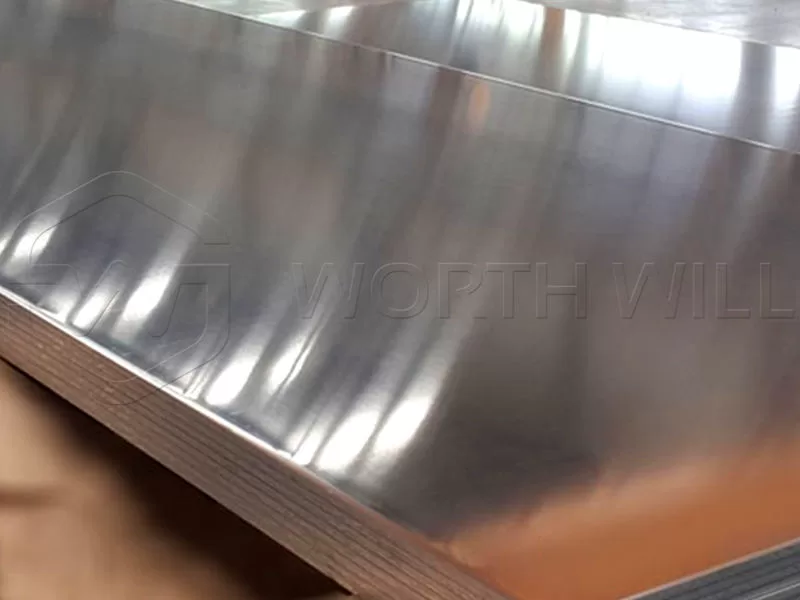
Key Differences
Strength
- 5052: While 5052 aluminum offers good strength, it is generally considered a medium-strength alloy. It is strong enough for most general-purpose applications but is not the best choice for heavy-duty or high-stress environments.
- 5083: On the other hand, 5083 aluminum is known for its high strength. It is often used in applications where greater load-bearing capacity is needed, such as in the marine and aerospace industries.
Weldability
- 5052: 5052 aluminum is highly weldable, making it easy to work with for projects that require joining. It maintains good mechanical properties after welding, making it a reliable choice for fabrications.
- 5083: While 5083 aluminum is also weldable, it requires more care during the welding process due to its higher strength. However, it still offers excellent post-weld strength and is commonly used in welded structures in demanding environments.
Corrosion Resistance
- 5052: Both 5052 and 5083 alloys have excellent corrosion resistance, but 5052 is particularly well-suited for environments that involve exposure to saltwater, moisture, and other corrosive elements. It’s often used for marine applications, tanks, and pressure vessels.
- 5083: 5083 aluminum takes corrosion resistance to the next level, especially in extreme environments like seawater and industrial chemicals. This makes it a preferred choice for shipbuilding, offshore platforms, and other harsh conditions where long-term durability is critical.
Formability
- 5052: One of the strengths of 5052 aluminum is its excellent formability. It can be easily bent, rolled, and shaped without cracking, making it ideal for applications that require complex shapes and designs.
- 5083: Although 5083 aluminum is formable, its higher strength makes it less pliable than 5052. It can still be shaped, but it may require more effort and specialized equipment.
Heat Treatment
- 5052: 5052 aluminum is a non-heat-treatable alloy, meaning that its mechanical properties cannot be altered through heat treatment processes. Its strength is achieved through cold working.
- 5083: Like 5052, 5083 is also a non-heat-treatable alloy. It gains its strength through cold working and retains its properties even when exposed to high temperatures.
Common Applications


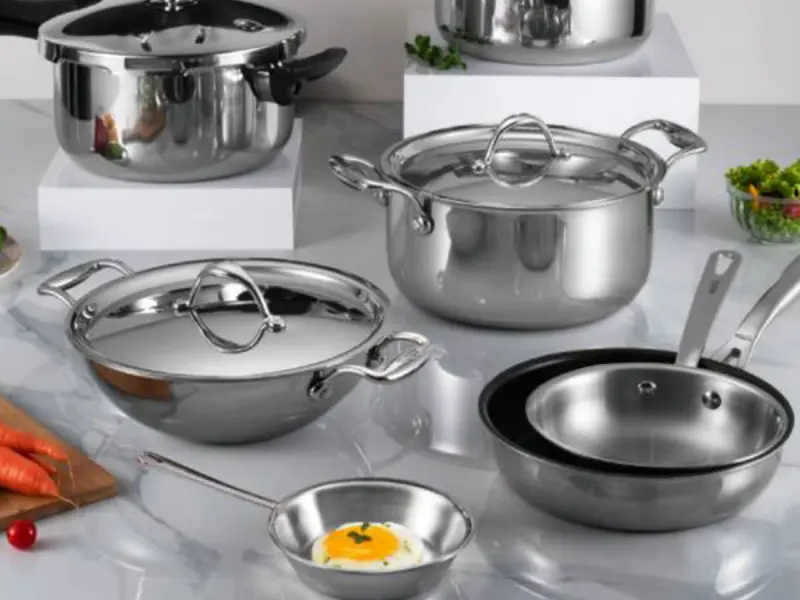
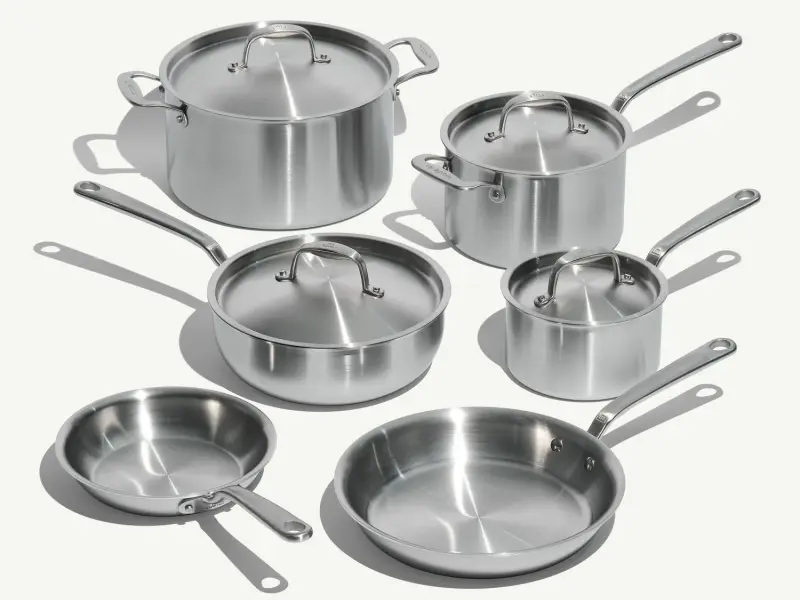
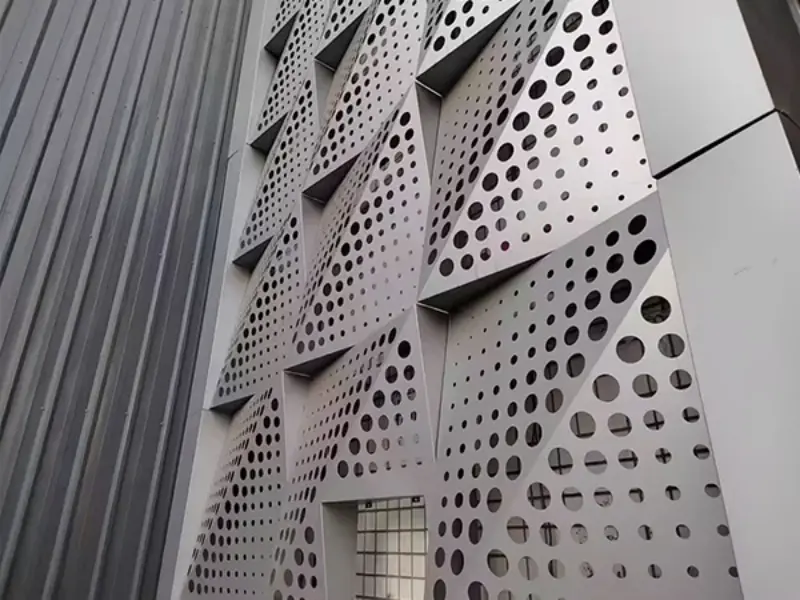
- 5052 Aluminum Applications:
- Marine components (boat hulls, fuel tanks)
- Pressure vessels
- Automotive panels
- Household appliances
- General sheet metal work
- 5083 Aluminum Applications:
- Shipbuilding (hulls, decks, bulkheads)
- Offshore structures
- Cryogenic storage tanks
- Heavy-duty transportation (trucks, trailers)
- High-stress industrial applications
Chemical Composition Comparison
The main reason these two metals behave differently is their chemical makeup. 5083 aluminum contains more magnesium and manganese than 5052 aluminum.
| Element | 5052 Aluminum Content (%) | 5083 Aluminum Content (%) |
|---|---|---|
| Magnesium (Mg) | 2.2−2.8% | 4.0−4.9% |
| Manganese (Mn) | 0.10% max | 0.4−1.0% |
| Chromium (Cr) | 0.15−0.35% | 0.05−0.25% |
| Iron (Fe) | 0.40% max | 0.40% max |
| Silicon (Si) | 0.25% max | 0.40% max |
Mechanical Properties: Strength and Hardness
Strength is a major factor when choosing between 5052 and 5083. Generally, 5083 aluminum is the stronger of the two. It is designed for heavy-duty structural use.
| Property | 5052-H32 | 5083-H116 |
|---|---|---|
| Tensile Strength | 210−260MPa | 305−385MPa |
| Yield Strength | 160−190MPa | 215−285MPa |
| Elongation | 12−18% | 10−15% |
| Brinell Hardness | 60HB | 95HB |
5052 Aluminum Sheet: The Versatile Choice
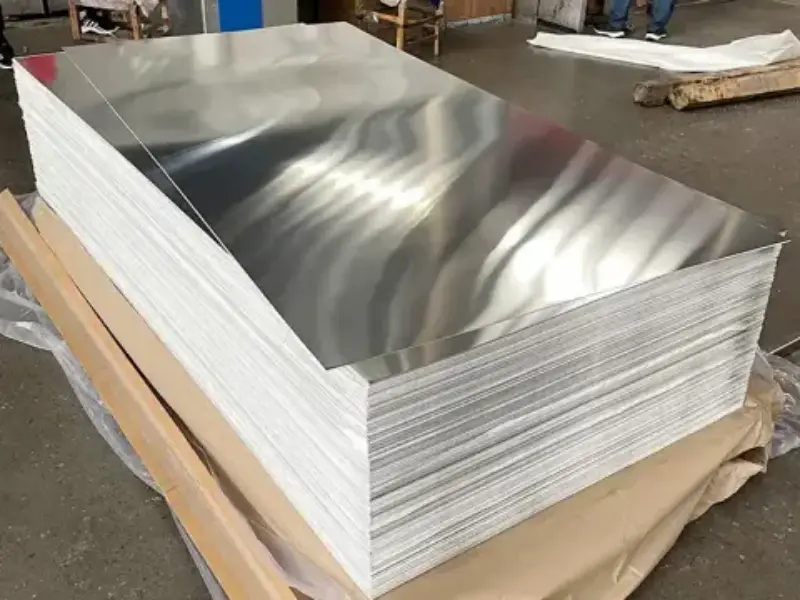
5052 aluminum is often called “the workhorse” of the aluminum alloys. It has a great balance of strength and formability.
Key Characteristics of 5052
This alloy is very easy to bend and shape. If you need to fold a metal sheet into a box or a tray, 5052 is the best choice. It has excellent fatigue strength, meaning it can handle vibrations without cracking.
Common Tempers for 5052
5052-H34: Half-hard, offering a bit more stiffness.
5052-O: The softest state, very easy to form.
5052-H32: Quarter-hard, the most common for general sheet metal work.
5083 Aluminum Sheet: The Marine Powerhouse
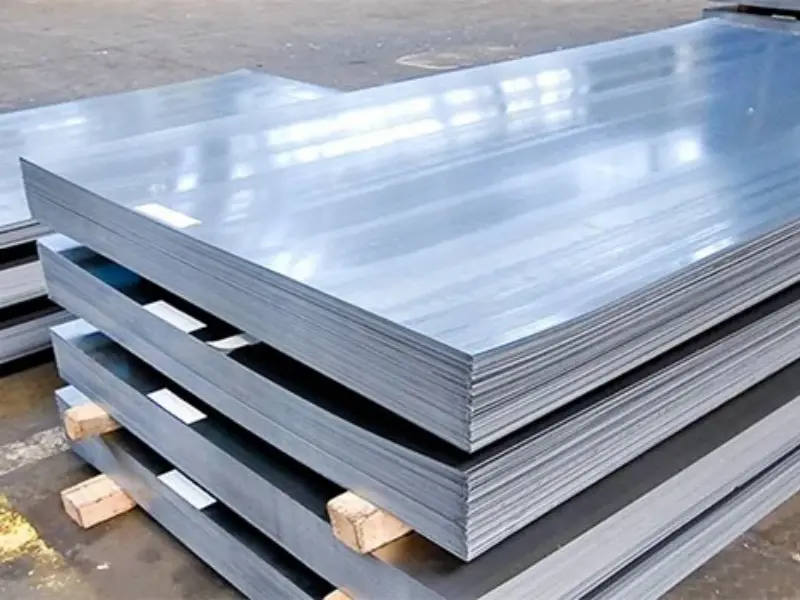
If 5052 is the workhorse, then 5083 aluminum is the athlete. It is famous for its exceptional performance in extreme environments.
Key Characteristics of 5083
This alloy is primarily known as “Marine Grade.” It maintains its strength even after welding. It is one of the few alloys that can handle extremely low temperatures (cryogenic) without becoming brittle.
Common Tempers for 5083
5083-H321: Specifically processed to prevent intergranular corrosion.
5083-H111: Used for extruded profiles.
5083-H116: High corrosion resistance for marine hulls.
Comparing Formability and Weldability
When comparing 5052 and 5083, we must look at how easy they are to work with in a factory.
Weldability
Both alloys are excellent for welding. You can use MIG or TIG welding on both. However, 5083 aluminum is preferred for structural welds. It loses very little strength at the weld joint compared to other alloys.
Formability
5052 aluminum wins in the category of bending. It can be bent into tight radiuses without cracking. 5083 aluminum is much stiffer. If you try to bend a thick 5083 plate too sharply, it might develop small cracks on the outside of the bend.
Product Types and Dimensions
We provide these alloys in many different formats to fit your industrial needs.
| Product Type | 5052 Availability | 5083 Availability |
|---|---|---|
| Thin Sheet | 0.5mm−3.0mm | Not common in thin gauges |
| Standard Plate | 3.0mm−12.0mm | 6.0mm−50.0mm |
| Thick Plate | Up to 200mm | Up to 300mm |
| Checkered Plate | Yes (Tread plate) | Yes (For ship decks) |
| Aluminum Coil | Width up to 2000mm | Width up to 2200mm |
Corrosion Resistance in Seawater
One of the biggest reasons to choose the 5000 series is for marine use. But there is a difference in how they handle salt.
5052 aluminum is very good for marine environments but is typically used for parts above the waterline. It works well for cabin structures and interior fittings.
5083 aluminum is the king of the sea. It is designed for parts below the waterline. It can sit in salt water for years without significant pitting or surface damage.
Cost Analysis: Which is More Budget-Friendly?
In general, 5052 aluminum is more affordable than 5083 aluminum.
- 5052: Lower magnesium content and easier manufacturing lead to a lower price per kilogram.
- 5083: Higher alloy content and specialized processing (like the H116 temper) make it a premium product.
Choosing Between 5052 and 5083
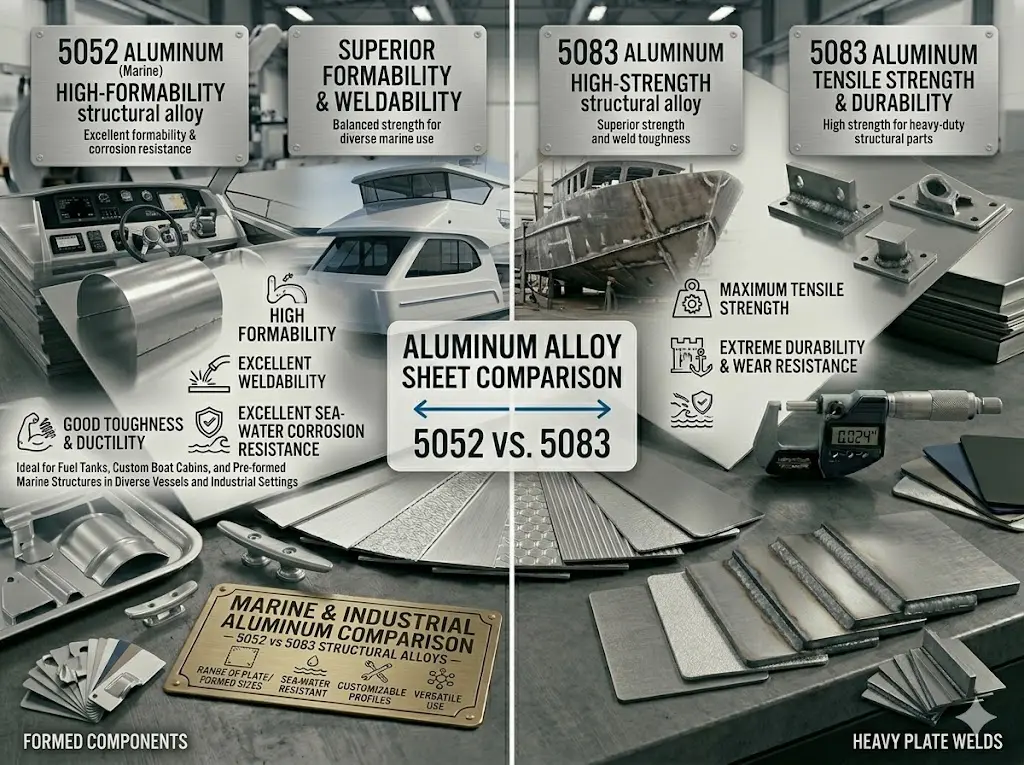
When deciding between 5052 and 5083 aluminum, consider the specific requirements of your project:
- If you need a material with excellent formability, good corrosion resistance, and moderate strength, 5052 is a great choice. It’s ideal for applications that require complex shaping or where cost is a consideration.
- If your project demands high strength, exceptional corrosion resistance, and the ability to withstand extreme environments, 5083 is the better option. It’s particularly well-suited for marine, industrial, and heavy-duty applications.
The Differences Between 5052 and 5083 Aluminum Alloys
Both 5052 and 5083 aluminum alloys offer excellent performance, but their differences in strength, corrosion resistance, and formability make them suitable for different applications. By understanding these key distinctions, you can select the right alloy that will meet the specific demands of your project, ensuring durability and efficiency in the long run.
Frequently Asked Questions
General FAQ on 5052 and 5083
Can I substitute 5052 for 5083?
It depends on the project. If you are building a small decorative part, yes. If you are building a pressure vessel or a ship hull, no. You need the extra strength and specific corrosion ratings of 5083 for safety.
Is 5052 harder than 5083?
No. 5083 aluminum has a higher Brinell hardness. It resists surface scratches and dents better than 5052.
Are they magnetic?
No. Like almost all aluminum alloys, both 5052 and 5083 are non-magnetic. This makes them useful for sensitive electronic enclosures.
Fabrication FAQ
Which alloy is better for CNC machining?
Neither is “great” for high-speed machining because they are a bit “gummy.” However, 5083 aluminum is slightly better because it is harder. For the best machining, you might look at the 6061 or 7075 series.
Do I need to heat treat these alloys after welding?
No. These alloys are non-heat-treatable. They regain some strength naturally through aging, but they do not require an oven process like the 6061 alloy does.
Can I anodize both alloys?
Yes. Both take anodizing well. 5052 aluminum gives a very clean, clear finish. 5083 aluminum can also be anodized, but because of the high magnesium, the color might be slightly different or more matte.
Marine and Environment FAQ
Why is 5083 called “Marine Grade”?
It specifically resists “exfoliation corrosion” and “intergranular corrosion.” These are types of decay that happen to metal when it is constantly soaked in salt water. 5083 is chemically stable in these conditions.
Can 5052 be used for fuel tanks?
Yes, it is the standard material for fuel tanks in the automotive and trucking industries. It handles the weight of the fuel well and does not react with the gasoline or diesel.
Does 5083 work in the cold?
Yes, it is excellent for cryogenic temperatures. While some metals become brittle and break like glass when frozen, 5083 actually gets slightly stronger in extremely cold temperatures.