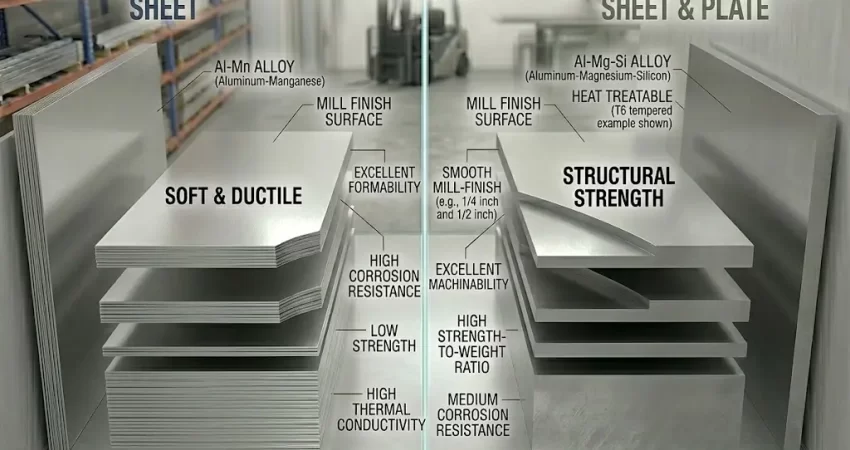
Aluminum is a versatile material used in a variety of industries, from construction and automotive to aerospace and packaging. Among the many aluminum alloys available, 3003 and 6061 are two of the most commonly used.
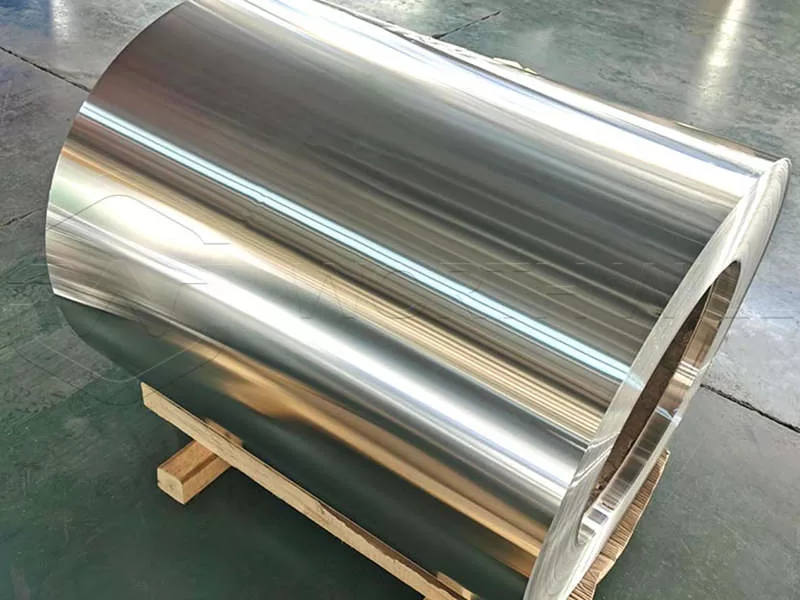
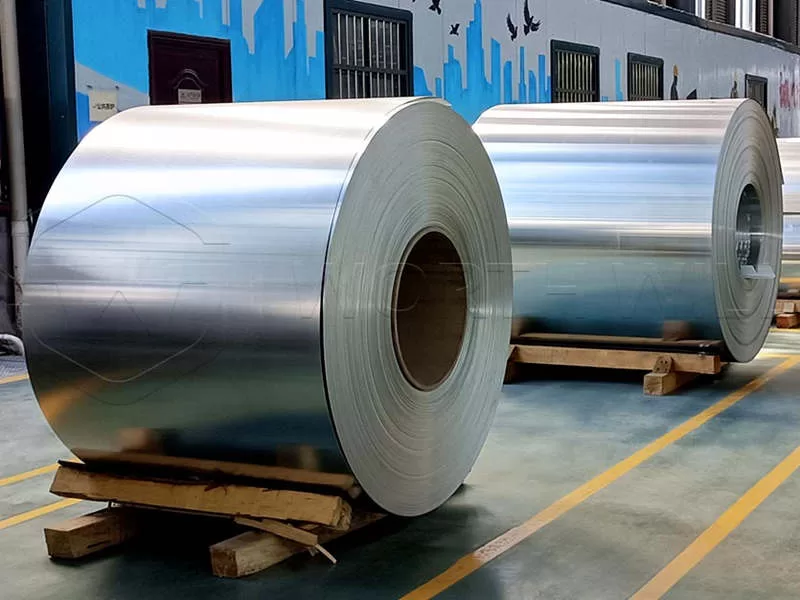
- 3003 Aluminum: This alloy is composed of approximately 1.2% manganese and 98% aluminum. The addition of manganese enhances its corrosion resistance and gives it moderate strength. 3003 is often referred to as a general-purpose aluminum alloy due to its excellent workability and formability.
- 6061 Aluminum: 6061 is a heat-treatable alloy that contains magnesium (around 1%) and silicon (about 0.6%) as its primary alloying elements. These additions give 6061 aluminum higher strength and improved machinability compared to 3003. The heat treatment process further enhances its mechanical properties, making it a popular choice in structural applications.
- 3003 Aluminum: 3003 is known for its moderate strength, making it ideal for applications that do not require high structural integrity. It has good ductility, which allows it to be easily bent, formed, and welded. However, it is not suitable for applications that demand high strength.
- 6061 Aluminum: 6061 is significantly stronger than 3003, thanks to its heat-treatable nature and alloying elements. It is commonly used in structural applications where strength and durability are critical. 6061 aluminum can also be anodized to further increase its hardness and wear resistance.
- 3003 Aluminum: This alloy is highly resistant to corrosion, particularly in environments with high moisture content. Its resistance to corrosion makes it suitable for applications in marine environments, food processing, and chemical storage.
- 6061 Aluminum: While 6061 aluminum also has good corrosion resistance, especially when anodized, it is not as resistant as 3003 in highly corrosive environments. However, it performs well in typical atmospheric conditions and is often used in outdoor structural applications.
- 3003 Aluminum: One of the standout features of 3003 aluminum is its excellent formability. It can be easily bent, shaped, and deep-drawn without cracking, making it a preferred choice for manufacturing processes that require complex shapes, such as in the production of cooking utensils, chemical equipment, and HVAC systems.
- 6061 Aluminum: 6061 aluminum is not as easily formable as 3003, particularly in its heat-treated state. However, it is still highly machinable and can be easily welded, cut, and drilled. Its workability is enhanced when it is in the annealed (softened) condition, but it may require more effort than 3003 for complex forming.
3003 Aluminum: Due to its combination of corrosion resistance, formability, and moderate strength, 3003 is widely used in applications such as:
Cooking utensils and kitchen equipment
Chemical and food processing equipment
Roofing, siding, and gutters
Heat exchangers and radiators
Storage tanks and pressure vessels
6061 Aluminum: The strength and machinability of 6061 make it suitable for more demanding applications, such as:
Structural components in construction and architecture
Aircraft and automotive parts
Marine fittings and hardware
Bicycle frames and other sporting equipment
High-stress mechanical components, such as pipes and couplings
- 3003 Aluminum: Generally, 3003 aluminum is more affordable than 6061 due to its simpler composition and processing requirements. This makes it an economical choice for projects that do not require the high strength of 6061.
- 6061 Aluminum: 6061 tends to be more expensive due to its enhanced properties and the additional processing involved in its heat treatment. However, its superior strength and versatility often justify the higher cost for applications that demand greater performance.
Chemical Composition Comparison
The chemical mix determines how the metal behaves when you cut, weld, or bend it.
| Element | 3003 Aluminum (%) | 6061 Aluminum (%) |
|---|---|---|
| Manganese (Mn) | 1.0−1.5% | 0.15% max |
| Magnesium (Mg) | Not present | 0.8−1.2% |
| Silicon (Si) | 0.6% max | 0.4−0.8% |
| Copper (Cu) | 0.05−0.20% | 0.15−0.40% |
| Chromium (Cr) | Not present | 0.04−0.35% |
| Iron (Fe) | 0.7% max | 0.7% max |
Mechanical Properties: Strength vs. Flexibility
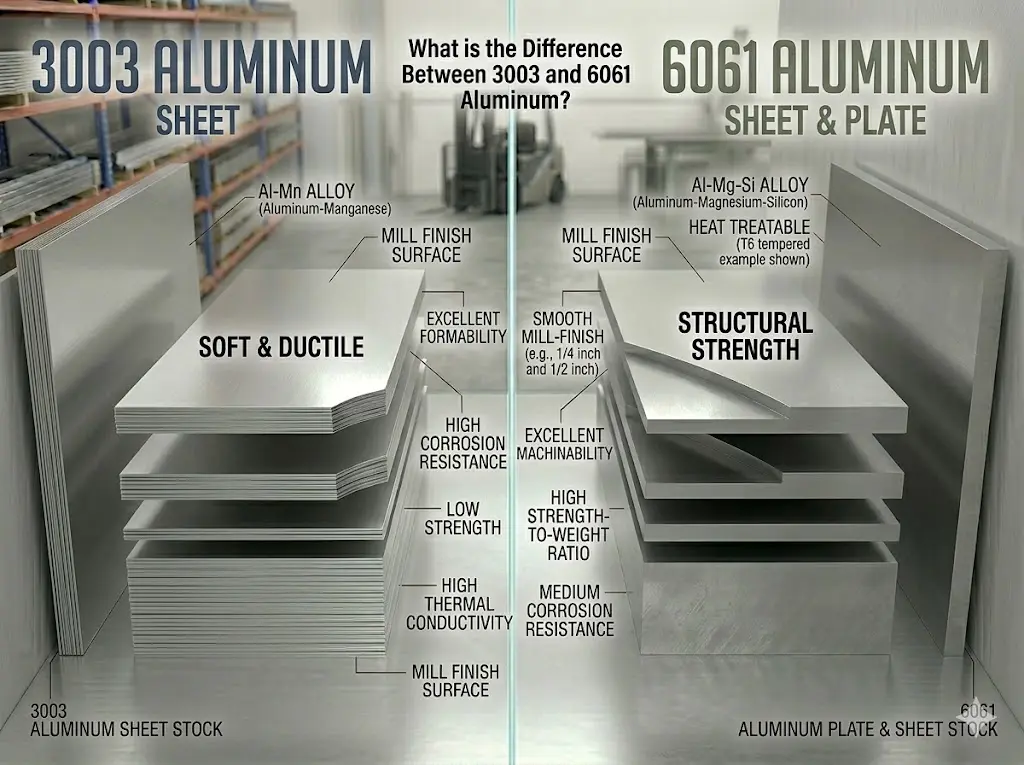
Strength is where these two alloys differ the most. If your project needs to hold a lot of weight, you usually choose 6061. If you need to wrap the metal around a curved object, you choose 3003.
| Property | 3003-H14 (Common) | 6061-T6 (Common) |
|---|---|---|
| Tensile Strength | 145−185MPa | 290−310MPa |
| Yield Strength | 125−145MPa | 240−275MPa |
| Hardness (Brinell) | 40HB | 95HB |
| Elongation at Break | 8−10% | 12−17% |
The Importance of Temper and State
The “state” of the aluminum is written after the alloy number. It tells you how the metal was treated at the factory.
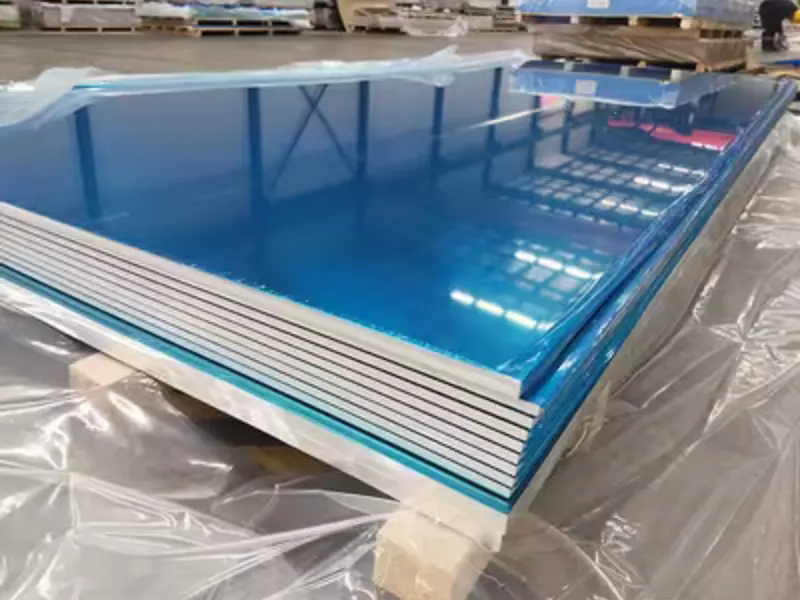
3003 Common States
3003-H14: This is “half-hard.” It is the most common state for sheets used in air conditioning or kitchens.
3003-O: This is the annealed or “soft” state. It is very easy to bend.
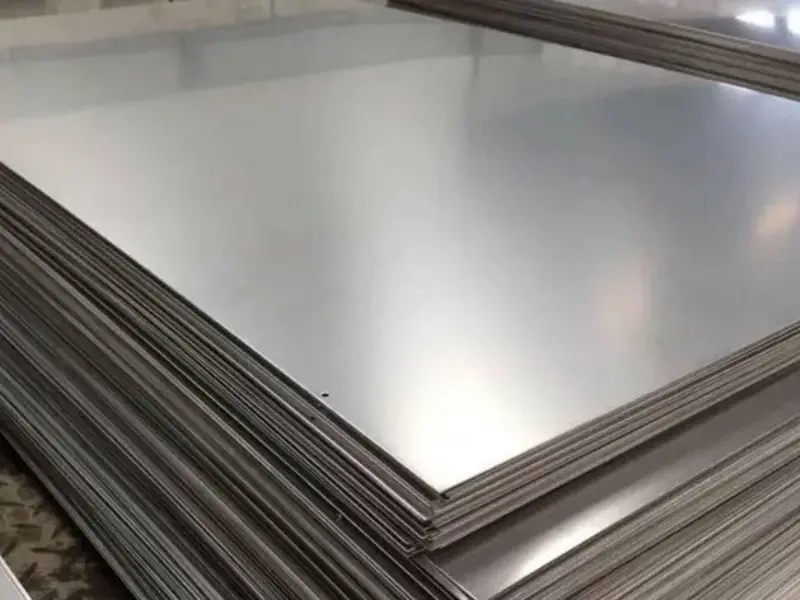
6061 Common States
6061-T6: This is the standard state for structural use. It has been artificially aged in an oven to reach maximum strength.
6061-O: Soft state, used when the metal needs a lot of shaping before being heat-treated.
6061-T4: Solution heat-treated and naturally aged. It is moderately strong.
Common Product Types and Formats
You can buy these alloys in many different shapes. However, some shapes are more common for one alloy than the other.
3003 Product Types
- Aluminum Sheets: Very thin sheets for wrapping or cladding.
- Aluminum Coils: Large rolls used in factory production lines.
- Tread Plate: Often called “checkered plate,” used for decoration or non-slip surfaces.
6061 Product Types
- Aluminum Plates: Thick pieces used for machinery parts.
- Structural Angles and Channels: Used for building frames.
- Seamless Tubes: Used for bicycle frames and high-pressure pipes.
- Extruded Bars: Square or round bars used for CNC machining.
Application Fields for 3003 Aluminum
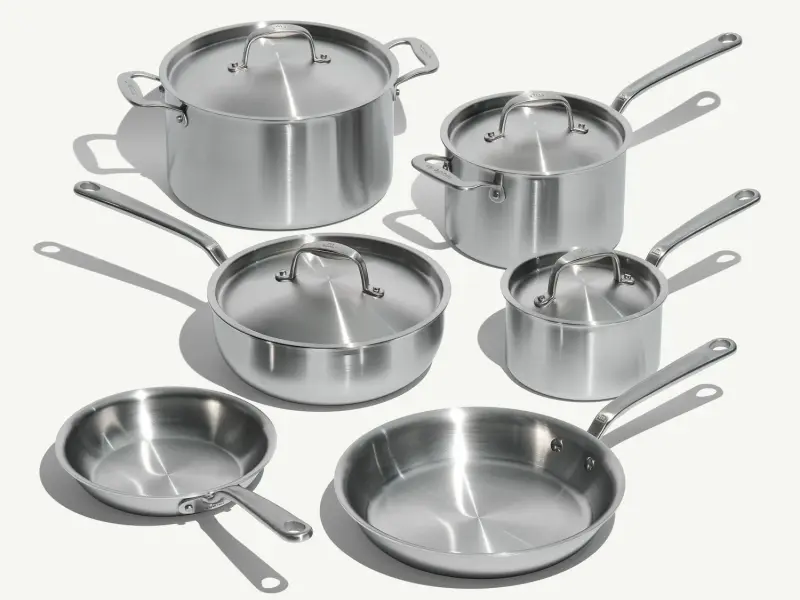
Because 3003 aluminum is easy to mold and resists chemicals, it is found in many places around the house and in light industry.
- Cooking Equipment: Pots, pans, and baking sheets.
- HVAC Systems: Evaporator coils and heat exchangers in air conditioners.
- Chemical Tanks: Storage for liquids because it does not react easily.
- Food Packaging: Trays and containers that need to be stamped into shape.
- Roofing and Siding: Corrugated sheets for barns and warehouses.
- Home Decor: Trim and decorative panels.
Application Fields for 6061 Aluminum
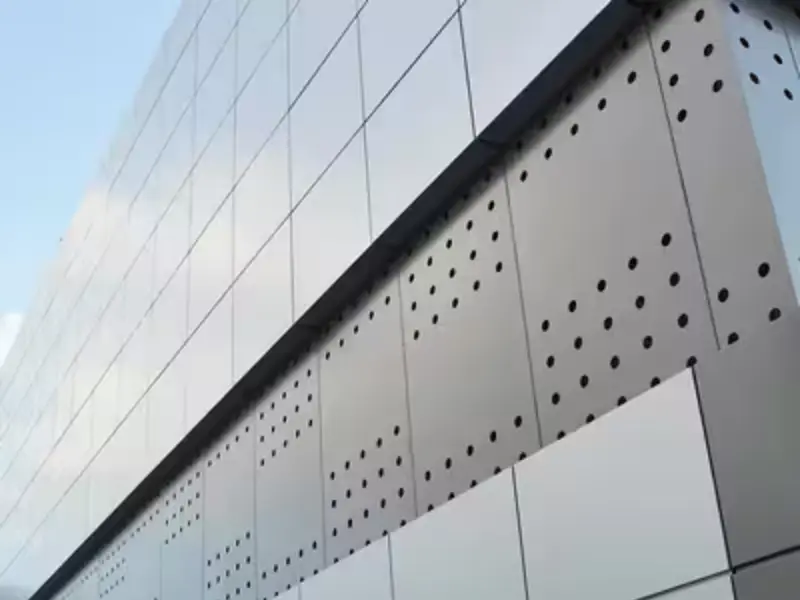
6061 aluminum is for things that must stay straight and strong under pressure.
- Aerospace: Frames for small airplanes and wings.
- Marine Engineering: Boat hulls and docks (it resists salt water well).
- Transportation: Chassis for trucks, trailers, and train cars.
- Bicycle Frames: High-end mountain and road bikes.
- Machinery Parts: Brackets, jigs, and fixtures for factory robots.
- Pipelines: High-pressure hydraulic systems.
Detailed Comparison of Key Features
Weldability
Both are easy to weld. You can use MIG or TIG welding. However, 3003 aluminum is slightly easier because it does not crack as easily when cooling. When you weld 6061 aluminum, the heat from the torch makes the metal softer near the weld. You might need to heat-treat it again to get the strength back.
Corrosion Resistance
Both have very good resistance to rust. 3003 aluminum has slightly better resistance to chemical corrosion. 6061 aluminum is better for marine (sea) environments because of its magnesium content.
Formability and Bending
3003 aluminum is the winner here. You can bend it into tight shapes without it snapping. 6061-T6 is very stiff. If you try to bend a thick 6061 bar 90 degrees, it might snap or crack at the corner.
Cost and Price
3003 aluminum is usually cheaper. It is easier to produce and has fewer expensive ingredients. 6061 aluminum costs more because of the silicon and magnesium, and the cost of the “T6” heat treatment process.
Dimensions and Availability
| Specification | 3003 Range | 6061 Range |
|---|---|---|
| Typical Thickness | 0.2mm−6.0mm | 1.0mm−200mm |
| Standard Width | 1000mm,1220mm,1500mm | Up to 2500mm |
| Surface Finish | Mill finish, Brushed, Stucco | Mill, Polished, Anodized |
What is the Difference Between 3003 and 6061 Aluminum?
When choosing between 3003 and 6061 aluminum, it’s essential to consider the specific requirements of your project.
If you need an alloy with excellent formability and corrosion resistance at a lower cost, 3003 aluminum is a great choice. On the other hand, if your project demands higher strength, machinability, and durability, 6061 aluminum is likely the better option.
Frequently Asked Questions
Comparison FAQ
Can I use 3003 instead of 6061 for a trailer frame?
No. 3003 is too soft. A trailer frame made of 3003 would bend and fail under a heavy load. You should use 6061-T6 for structural frames.
Is 6061 more expensive than 3003?
Yes. Typically, 6061 costs about 10% to 25% more per pound than 3003. This is due to the alloy elements and the heat treatment process.
Which one is better for CNC machining?
6061 aluminum is much better for machining. It is hard, so the cutting tool creates clean “chips.” 3003 is soft and “gummy,” which can clog the cutting tool.
Technical FAQ
Does 3003 aluminum rust?
Technically, aluminum does not “rust” like iron, but it can corrode. 3003 is very resistant to environmental corrosion. It forms a protective layer that stops it from decaying.
What does the T6 mean in 6061-T6?
The “T” stands for Thermal Treatment. The “6” means it was solution heat-treated and then artificially aged in an oven. This gives the metal its highest possible strength.
Can I bend 6061-T6?
You can do a large radius bend. But for sharp, small bends, 6061-T6 will likely crack. If you need to do a sharp bend, use 6061-O (soft state) and then heat-treat it later.
Use Case FAQ
Which alloy is best for a fuel tank?
3003 aluminum is the standard for fuel tanks. It is easy to weld and can be stamped into the correct shape easily.
Is 6061 good for salt water?
Yes. 6061 has excellent resistance to salt water. It is a common choice for boat masts, docks, and underwater equipment.
Can I anodize both of these alloys?
Yes. Both can be anodized. However, 6061 aluminum usually looks better after anodizing. It takes color more evenly. Anodized 3003 can sometimes look a bit “cloudy” or dull.
How to Choose the Right Alloy
- Check the Load: Does it need to hold weight? Choose 6061.
- Check the Shape: Does it have complex curves? Choose 3003.
- Check the Environment: Is it in a kitchen or chemical plant? Choose 3003. Is it on a boat or airplane? Choose 6061.
- Check the Budget: If strength doesn’t matter, choose 3003 to save money.