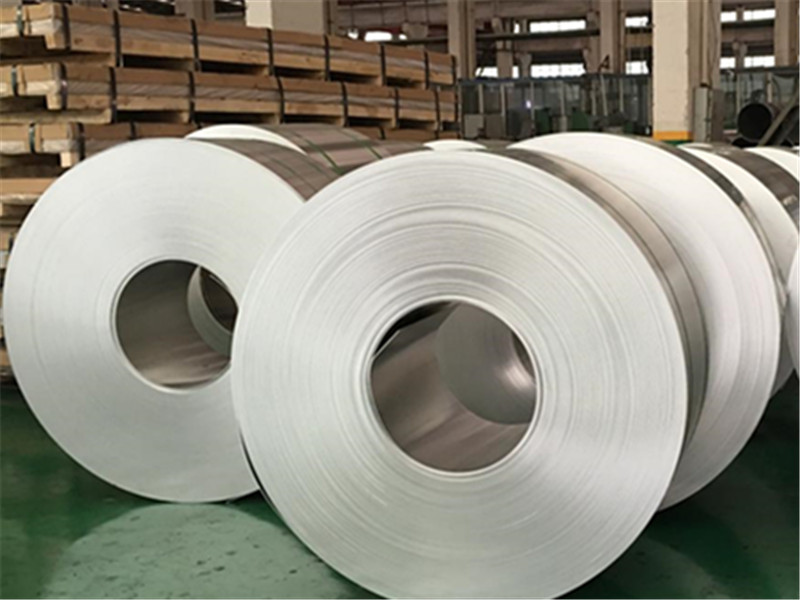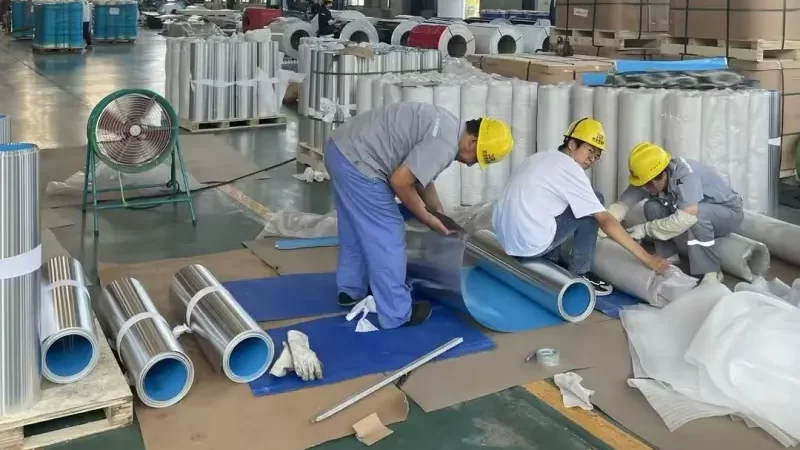
Aluminum coil for thermal insulation is one of the aluminum coils. It has good thermal insulation properties.
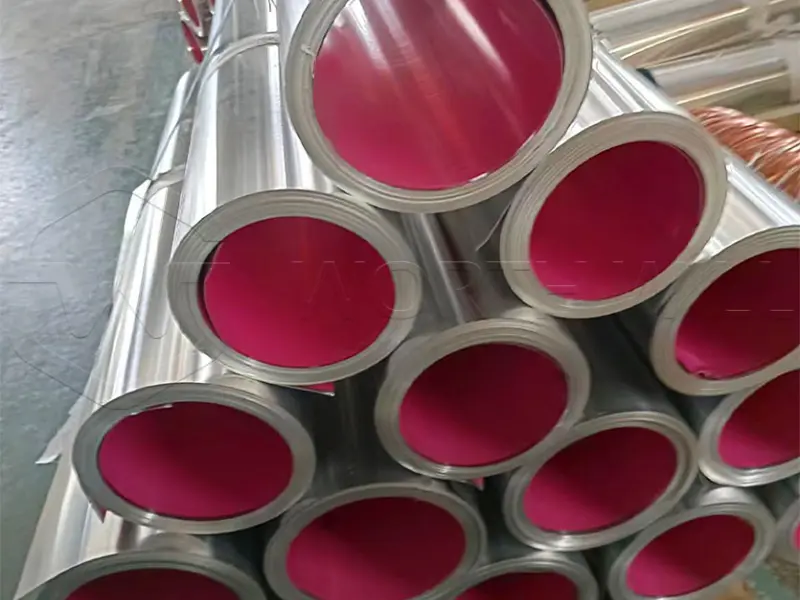
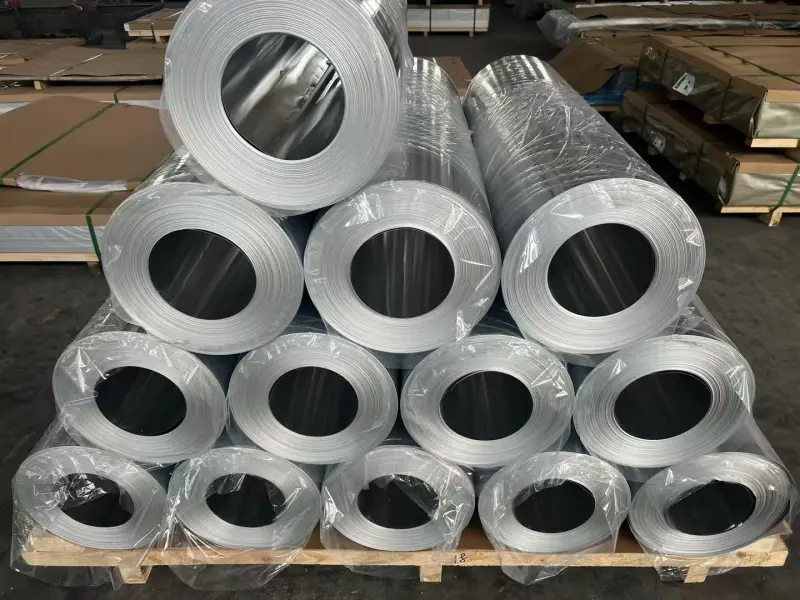
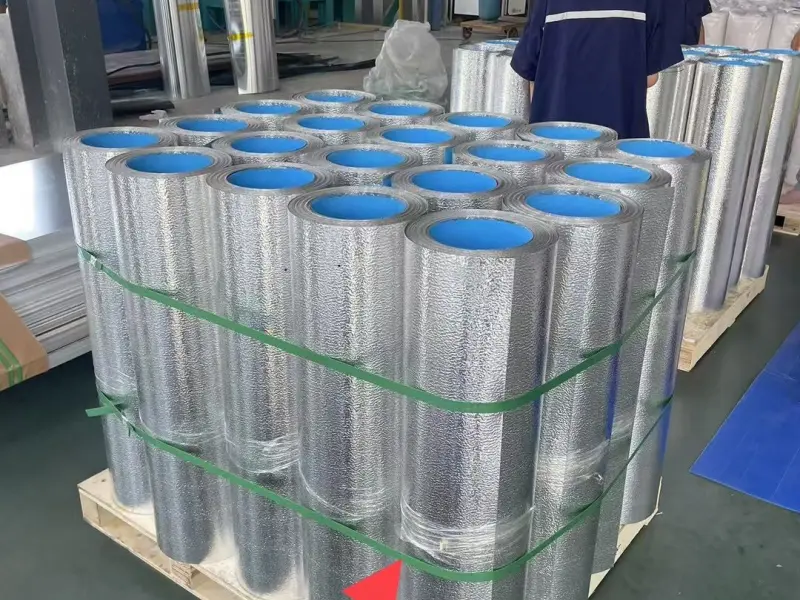
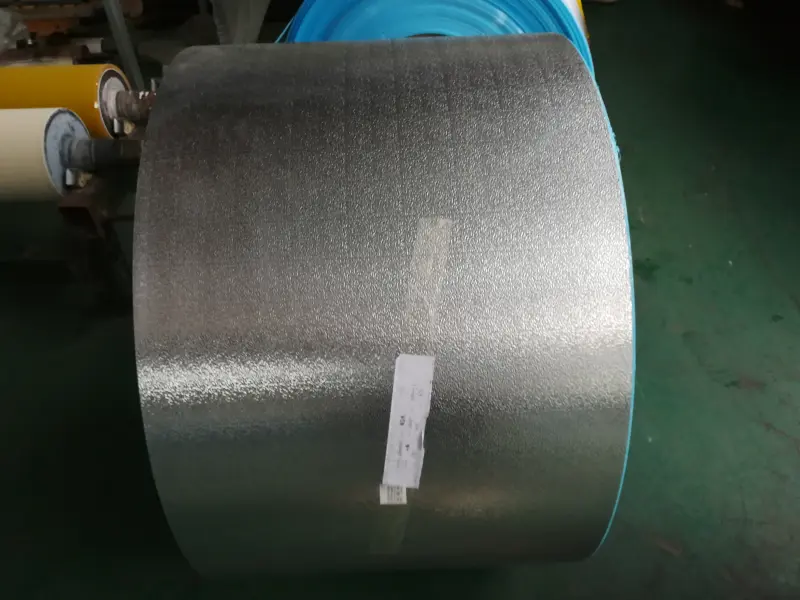
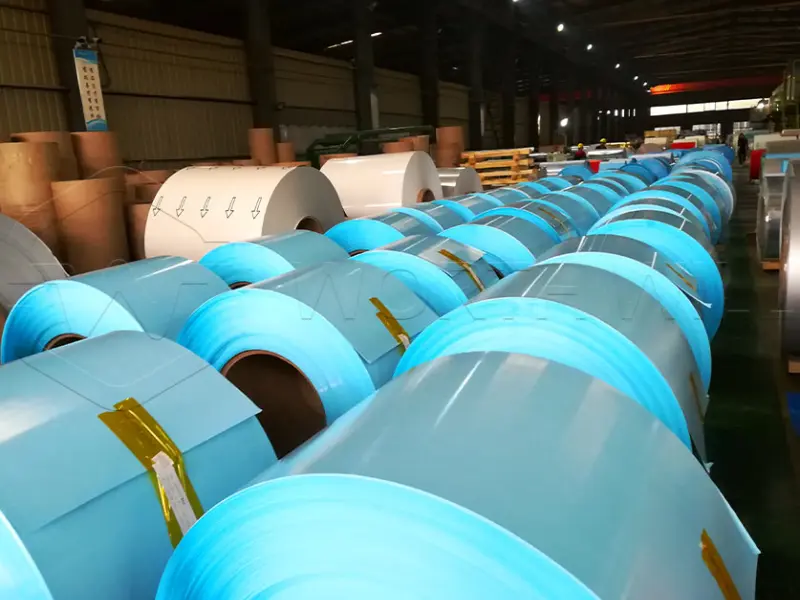
Aluminum coil for thermal insulation is widely used in pipelines, tanks, refrigeration systems, power plants, construction projects, and industrial equipment. The material helps reduce heat loss, improve energy efficiency, and protect insulation layers from moisture and corrosion.
Compared with steel and other metal materials, aluminum insulation coil is lightweight, corrosion resistant, and easy to install. Different alloys, thicknesses, tempers, and surface finishes are available for different insulation applications.
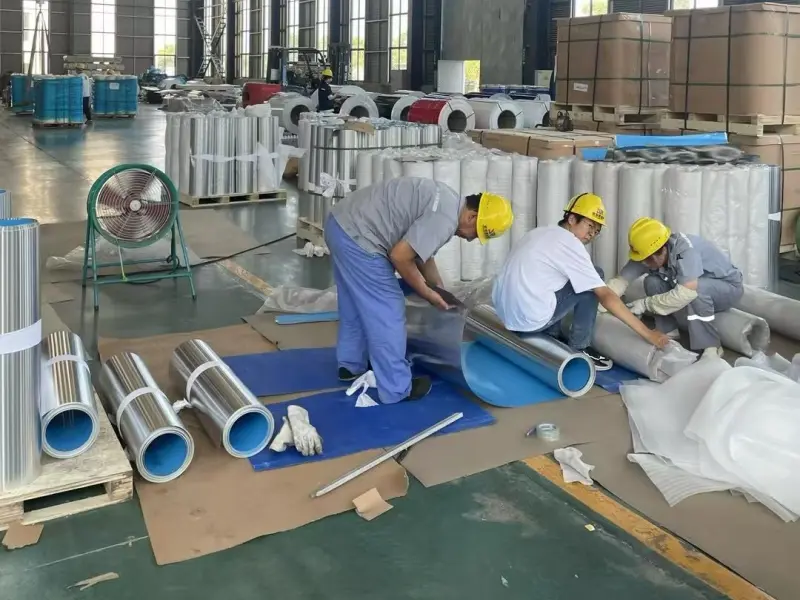
Why Aluminum Coil Is Used for Thermal Insulation
Aluminum coil is one of the most common materials for insulation cladding.
Main Advantages
| Feature | Benefit |
|---|---|
| Lightweight | Easy transportation and installation |
| Corrosion resistance | Longer outdoor lifespan |
| Good flexibility | Easy bending and wrapping |
| Smooth surface | Clean appearance |
| Weather resistance | Suitable for outdoor use |
| Low maintenance | Reduced long-term cost |
These features make aluminum insulation coil suitable for industrial and commercial projects.
Common Aluminum Alloys for Thermal Insulation


Different alloys provide different performance levels.
Alloy Comparison Table
| Alloy | Strength | Corrosion Resistance | Common Application |
|---|---|---|---|
| 1050 Aluminum | Medium | Good | Pipe insulation |
| 1060 Aluminum | Medium | Good | HVAC systems |
| 3003 Aluminum | Higher | Better | Industrial insulation |
| 3105 Aluminum | Good | Better | Outdoor insulation |
| 5052 Aluminum | High | Excellent | Marine and coastal areas |
3003 aluminum coil is one of the most popular materials for insulation jacketing.
Common Temper States
Temper affects hardness and workability.
Temper Comparison
| Temper | Features | Typical Use |
|---|---|---|
| O | Soft and flexible | Curved pipelines |
| H14 | Semi-hard | Standard insulation |
| H16 | Harder surface | Outdoor equipment |
| H24 | Better strength | Large tanks |
Standard Thickness Options
Different insulation projects require different thicknesses.
Thickness Comparison
| Thickness | Common Application |
|---|---|
| 0.3 mm | Small pipes |
| 0.5 mm | HVAC systems |
| 0.6 mm | Industrial pipelines |
| 0.8 mm | Storage tanks |
| 1.0 mm | Outdoor equipment |
Thin aluminum coils are easier to bend. Thick coils provide stronger protection.
Common Width and Coil Sizes
Aluminum insulation coil is available in different widths.
Standard Width Options
| Width | Application |
|---|---|
| 300 mm | Small pipe wrapping |
| 500 mm | HVAC insulation |
| 1000 mm | Tank insulation |
| 1200 mm | Industrial equipment |
| Custom width | OEM projects |
Custom sizes are available for large insulation systems.
Surface Types of Insulation Aluminum Coil

Different surface finishes provide different performance.
Common Surface Finishes
| Surface Type | Features |
|---|---|
| Mill finish | Natural aluminum surface |
| Stucco embossed | Better rigidity |
| Polysurlyn moisture barrier | Anti-moisture protection |
| Color coated | Decorative appearance |
Stucco Embossed Aluminum Coil for Insulation
Stucco embossed aluminum has textured patterns on the surface.
Main Advantages
- Better strength
- Improved rigidity
- Reduced surface scratches
- Decorative appearance
- Easier handling
Stucco embossed aluminum coil is common for pipeline insulation systems.
Polysurlyn Moisture Barrier Aluminum Coil

Polysurlyn moisture barrier (PSMB) aluminum coil has a protective layer on the back side.
Benefits of PSMB Aluminum
| Feature | Benefit |
|---|---|
| Moisture resistance | Reduces corrosion |
| Better adhesion | Improved durability |
| Long service life | Suitable for outdoor use |
Aluminum Coil for Pipe Insulation

Pipe insulation is one of the largest applications for aluminum insulation coil.
Common Applications
- Oil pipelines
- Steam pipes
- HVAC systems
- Refrigeration pipelines
- Chemical processing lines
Aluminum jacketing protects insulation materials from weather and physical damage.
Aluminum Coil for Tank Insulation
Storage tanks often require external insulation protection.
Recommended Specifications
| Tank Size | Recommended Thickness |
|---|---|
| Small tanks | 0.5 mm |
| Medium tanks | 0.6 mm |
| Large industrial tanks | 0.8–1.0 mm |
Thicker coils provide better impact resistance.
Aluminum Coil for HVAC Systems
HVAC insulation systems use lightweight aluminum cladding.
Why Aluminum Works Well for HVAC
- Easy installation
- Lightweight material
- Corrosion resistance
- Good appearance
- Long service life
1060 and 3003 aluminum are common choices for HVAC insulation.
Indoor vs Outdoor Insulation Aluminum Coil
Outdoor applications need stronger protection.
Comparison Table
| Feature | Indoor Use | Outdoor Use |
|---|---|---|
| Corrosion resistance | Standard | Higher |
| Surface treatment | Mill finish | PSMB or embossed |
| Lifespan | 5–10 years | 10–20 years |
Outdoor systems usually require better moisture protection.
Aluminum Coil vs Galvanized Steel for Insulation
Many buyers compare aluminum and steel insulation materials.
Material Comparison
| Feature | Aluminum Coil | Galvanized Steel |
|---|---|---|
| Weight | Lighter | Heavier |
| Corrosion resistance | Better | Medium |
| Installation | Easier | Harder |
| Lifespan | Longer | Shorter in humid areas |
Common Applications of Thermal Insulation Aluminum Coil
Main Applications
- Industrial pipelines
- Refrigeration systems
- HVAC duct insulation
- Chemical plants
- Power stations
- LNG projects
- Storage tanks
- Marine insulation
- Construction projects
- Food processing equipment
The material helps improve energy efficiency and reduce maintenance costs.
Color Coated Aluminum Coil for Insulation
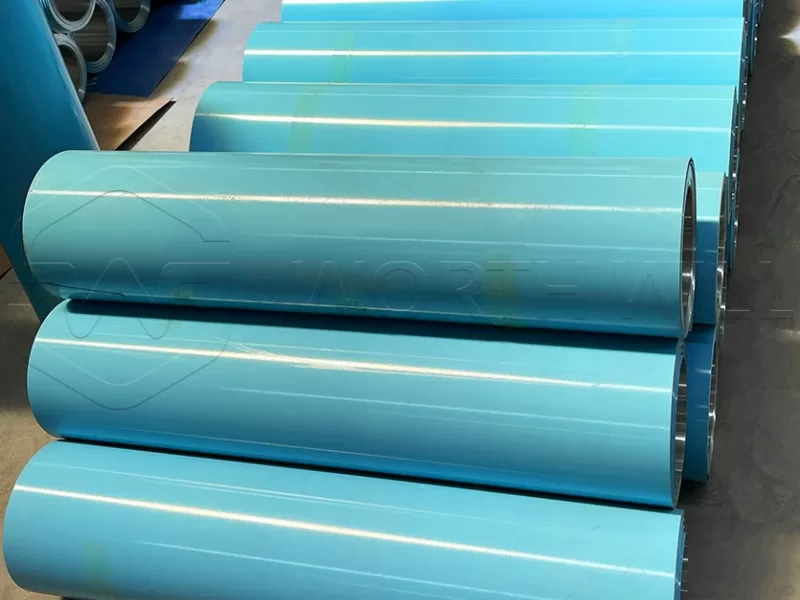
Some projects require decorative insulation systems.
Popular Colors
| Color | Common Use |
|---|---|
| Silver | Industrial insulation |
| White | HVAC systems |
| Blue | Commercial projects |
| Gray | Outdoor equipment |
Color coated aluminum also improves appearance.
Choosing the Right Aluminum Coil for Thermal Insulation
Different projects require different specifications.
Selection Guide
| Application | Recommended Alloy | Surface Type |
|---|---|---|
| HVAC ducting | 1060 | Mill finish |
| Industrial pipeline | 3003 | Stucco embossed |
| Outdoor tank | 5052 | PSMB |
| Coastal projects | 5052 | Moisture barrier |
Correct material selection improves durability and performance.
Common Problems With Low-Quality Aluminum Coil
Poor-quality aluminum coil may create installation and durability problems.
Common Issues
- Surface cracking
- Poor flatness
- Uneven thickness
- Weak corrosion resistance
- Moisture damage
Reliable suppliers provide better quality control and stable thickness tolerance.
Tips for Better Insulation Installation
Proper handling improves performance.
Helpful Suggestions
- Store coils in dry conditions
- Avoid surface scratches
- Use proper fastening systems
- Select correct thickness
- Choose moisture barrier for outdoor projects
Good installation extends service life.
Popular Product Types and Varieties
Not all insulation projects are the same. We offer different types of aluminum coil for thermal insulation to suit different environments.
Plain Aluminum Insulation Coil
This is the most basic form. It has a smooth, shiny finish. It is very reflective and easy to clean. Most people use this for indoor piping where the appearance needs to be neat and professional.
Stucco Embossed Aluminum Coil
This version has a textured surface, often called an “orange peel” pattern. The embossing makes the metal stiffer. It also helps hide scratches and dents that might happen during installation. It is very popular for large tanks and outdoor equipment.
Polykraft Laminated Aluminum Coil
Inside this coil, there is a layer of kraft paper and a thin plastic film. It prevents the wet insulation from touching the aluminum. This stops a chemical reaction called “galvanic corrosion,” which can destroy the metal over time.
Color Coated Insulation Coil
Sometimes, aluminum is painted with a PE or PVDF coating. This is common in food factories where different pipes need different colors (like blue for cold water and red for hot steam). It also adds an extra layer of protection against acid rain or chemicals.
Technical Specifications for Insulation Coils
When choosing your material, you need to look at the alloy and the thickness.
| Specification | Details and Range |
|---|---|
| Common Alloys | 1050,1060,1100,3003,5052 |
| Temper (State) | O,H14,H16,H24 |
| Thickness Range | 0.2mm to 1.5mm |
| Standard Width | 1000mm,1200mm,1220mm |
| Core Diameter | 150mm,405mm,505mm |
| Surface Finish | Mill Finish, Embossed, Laminated |
Comparing Aluminum with Other Materials
Why should you use aluminum coil for thermal insulation instead of stainless steel or galvanized steel? Here is a quick comparison.
| Feature | Aluminum Coil | Stainless Steel | Galvanized Steel |
|---|---|---|---|
| Weight | Very Light (2.71g/cm3) | Heavy (7.9g/cm3) | Heavy (7.8g/cm3) |
| Rust Resistance | Excellent | Superior | Moderate (Can rust) |
| Reflectivity | Very High (90−95%) | Moderate | Low |
| Cost | Mid-range | Very High | Lowest |
| Workability | Easy to cut and bend | Very Hard | Moderate |
Alloy Types and Their Best Uses
The “Alloy” tells you what other metals are mixed with the aluminum. For aluminum coil for thermal insulation, we mainly use three series.
The 1000 Series (Pure Aluminum)
Alloys like 1060 are nearly 99.6% pure. They are very soft and easy to wrap around small pipes. This is the most common choice for general insulation because it is affordable and reflects heat very well.
The 3000 Series (Manganese Alloy)
3003 aluminum is about 20% stronger than the 1000 series. If your project is in a windy area or near a busy road where people might bump into the pipes, 3003 is a better choice. It resists dents much better.
The 5000 Series (Magnesium Alloy)
5052 is used for marine environments. If your factory is near the ocean, the salt in the air will eat through normal metal. 5052 is famous for resisting salt-water corrosion.
Key Application Fields
The aluminum coil for thermal insulation is used in many different industries. Here are the most common areas:
- Oil and Gas: Wrapping long pipelines that carry hot oil or gas across the country.
- Chemical Plants: Protecting the insulation on large chemical storage tanks.
- HVAC Systems: Used in air conditioning ducts to prevent energy loss in large buildings.
- Power Plants: Insulation for boilers and steam pipes that operate at very high temperatures.
- Food and Beverage: Providing a clean, silver finish on pipes in breweries and dairies.
- Construction: Used in roofs and walls to keep buildings cool in the summer and warm in the winter.
Benefits of Using Aluminum for Insulation
Using aluminum coil for thermal insulation offers several advantages for engineers and building owners:
- Long Life: Aluminum creates its own protective layer. It can last for 20 to 30 years without needing a lot of maintenance.
- Fire Safety: Aluminum is a non-combustible material. It does not burn or release toxic smoke during a fire.
- Cleanliness: The smooth surface does not trap dust or bacteria. This is why it is preferred in hospitals and food factories.
- Recyclable: Aluminum is 100% recyclable. When a building is torn down, the aluminum can be sold and melted down to make new products.
How to Install Insulation Aluminum Jacketing
Installing aluminum coil for thermal insulation requires a few basic steps:
- Measure and Cut: The coil is unrolled and cut to match the circumference of the pipe, plus an extra 50mm for overlapping.
- Wrapping: The metal is wrapped tightly around the insulation material (like mineral wool).
- Securing: Stainless steel bands or aluminum rivets are used to hold the jacket in place.
- Sealing: For outdoor pipes, a sealant or specialized tape is used on the joints to keep rain out.
FAQ
What is aluminum coil for thermal insulation?
It is a rolled aluminum material used to cover insulation systems on pipes, tanks, and industrial equipment.
Which aluminum alloy is best for insulation?
3003 aluminum is one of the most common alloys because of its good corrosion resistance and workability.
What thickness is commonly used for insulation aluminum coil?
0.5 mm to 0.8 mm has wide applications for pipelines and tank insulation.
What is stucco embossed aluminum coil?
It is aluminum coil with a textured surface that improves rigidity and reduces scratches.
What is polysurlyn moisture barrier aluminum?
It is aluminum coil with a moisture-resistant protective layer on the back side.
Can aluminum insulation coil be used outdoors?
Yes. Aluminum coil has good weather resistance and long outdoor lifespan.
Why is aluminum better than galvanized steel for insulation?
Aluminum is lighter, more corrosion resistant, and easier to install.
What Is Aluminum Coil For Thermal Insulation? | Types & Uses
Aluminum coil for thermal insulation is widely used in industrial, commercial, and construction projects. Different alloys, tempers, thicknesses, and surface finishes provide solutions for pipelines, tanks, HVAC systems, and outdoor equipment.
3003 aluminum coil is commonly used for insulation jacketing because it offers good flexibility and corrosion resistance. 5052 aluminum is suitable for marine and outdoor environments that require stronger protection.
Choosing the correct insulation aluminum coil improves energy efficiency, durability, and long-term performance.
Information of thermal insulation aluminum coils
Light aluminum coil for thermal insulation is also a new type of building material product. Specification thickness ranging from 0.28-1mm, can be selected according to different requirements. Mainly used in aluminum gussets, aluminum-plastic panels, etc.
There are many series of aluminum coils for thermal insulation, of which series 1 is industrial pure aluminum, the aluminum content can reach more than 99%, and it cannot be strengthened by heat treatment. Pure aluminum has a silver-white surface, and its density decreases with increasing purity or temperature.
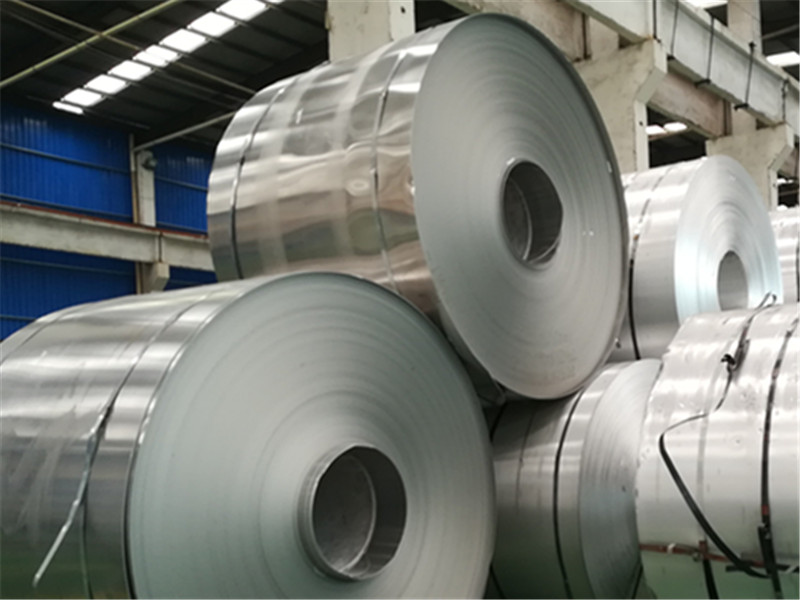
Production process of thermal insulation aluminum coils
The production process of thermal insulation aluminum coils is relatively simple, the technology is relatively mature, and the price is much cheaper than other high-grade alloy aluminum sheets. Aluminum coils have good elongation and tensile strength, can meet conventional processing requirements, and have high form-ability.
The aluminum coil for thermal insulation has high plasticity, corrosion resistance, electrical conductivity and thermal conductivity. However, the strength is low and cannot be strengthened by heat treatment. The machinability is not good, and it is easy to withstand various pressure processing, extension and bending.