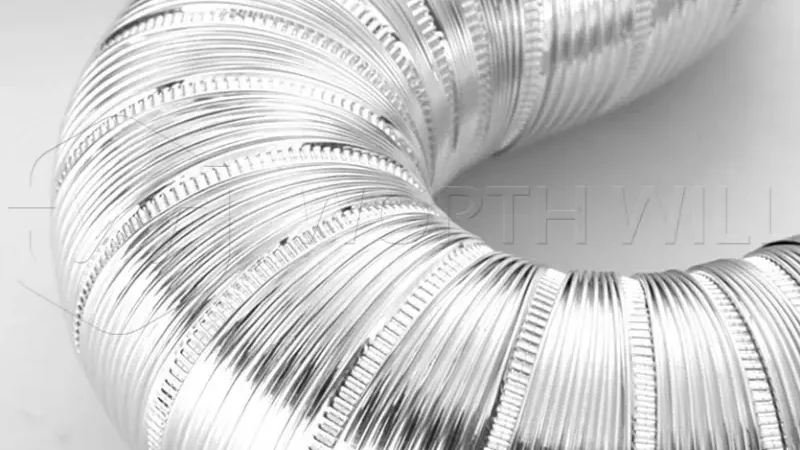
Laminated aluminium foil is produced by bonding aluminum foil to one or more substrate materials. The layers form a strong and flexible barrier sheet used for packaging and protection.

Main Features
- High moisture and oxygen barrier
- Good heat resistance
- Lightweight and flexible
- Printable surface
- Corrosion-resistant
- Suitable for food contact
Types
Laminated Foil with PET
A structure combining aluminium foil + PET film, offering good stiffness and high temperature resistance.
Use: food packaging, retort pouches, cosmetic sachets.
Laminated Foil with PE
A soft laminated foil made of aluminium foil + PE film, flexible and heat-sealable.
Use: bags, medicine packaging, dairy packaging.
Paper Laminated Aluminium Foil
Aluminium laminated with paper for extra strength and printability.
Use: cigarette packaging, labels, household packaging.
Multi-layer Laminated Foil
Three to five layers: PET + aluminium + PE / CPP / adhesive.
Use: heavy-duty bags, liquid packaging, industrial insulation.
Specifications and Technical Data
Basic Specifications Table
| Item | Range |
|---|---|
| Thickness | 0.006 mm – 0.2 mm |
| Width | 100 mm – 1600 mm |
| Alloy Options | 8011, 1235, 3003, 8079 |
| Temper | O, H14, H16 |
| Structure | AL+PE, AL+PET, Paper+AL, Multi-layer |
Advantages
- Excellent barrier performance
- Protects against UV light
- Keeps product fresh longer
- Suitable for long-distance transport
- Printable and customizable
- Strong but lightweight
- Cost-effective material
Production Process
1. Aluminium Foil Rolling
Pure aluminium or alloy foil is rolled to required thickness.
2. Surface Treatment
Ensures better bonding with films.
3. Dry Lamination or Extrusion Lamination
The aluminium layer is bonded with PET, PE, or paper.
4. Curing and Stabilizing
Makes the layers strong and uniform.
5. Slitting and Packaging
The laminated foil is cut to required width and packed for shipment.
Applications
Laminated aluminium foil is used across many industries:
Food Packaging
- Coffee bags
- Snack packaging
- Dairy product packaging
- Ready-to-eat meals
- Beverage pouches
Pharmaceutical Packaging
- Medicine sachets
- Strip packs
- Blister packaging
Industrial Uses
- Thermal insulation
- Cable wrapping
- HVAC ducts
- Vapor barrier material
Household & Daily Use
- Kitchen packaging
- Decorative laminates
- Labels and tags
Common Structures Table
| Laminated Structure | Features | Use |
|---|---|---|
| AL + PE | Flexible, heat-sealable | Food and medicine bags |
| AL + PET | High strength, glossy | Premium packaging |
| Paper + AL | Printable, strong | Cigarette & label packaging |
| PET + AL + PE | Heavy barrier | Liquid packaging |
How to Choose the Right Laminated Aluminium Foil
When selecting laminated aluminum foil, consider:
Material Requirements
- Do you need heat sealing?
- Do you need high stiffness?
Barrier Performance
- Moisture barrier
- Light protection
- Oxygen resistance
Product Type
- Food
- Medical
- Industrial insulation
Printing Requirements
Some structures offer better printing quality.
FAQ
Is laminated aluminum foil safe for food contact?
Yes, most laminated structures comply with food-grade regulations.
Can laminated aluminum foil be customized?
Yes, thickness, width, color, and structure can be customized.
Is it recyclable?
Some types are recyclable, depending on the number of layers.
What alloys are commonly used?
8011, 8079, 1235, and sometimes 3003 for higher strength.
What Is Laminated Aluminium Foil?
Laminated aluminum foil is an excellent barrier material in packaging, insulation, and industrial applications. Its durability, lightweight nature, and strong protection make it ideal for many industries. Choosing the right laminated structure ensures safety, performance, and cost-effectiveness.