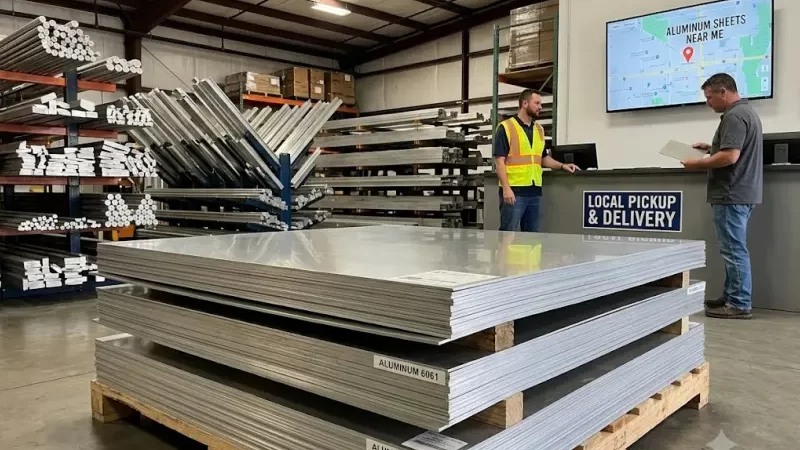
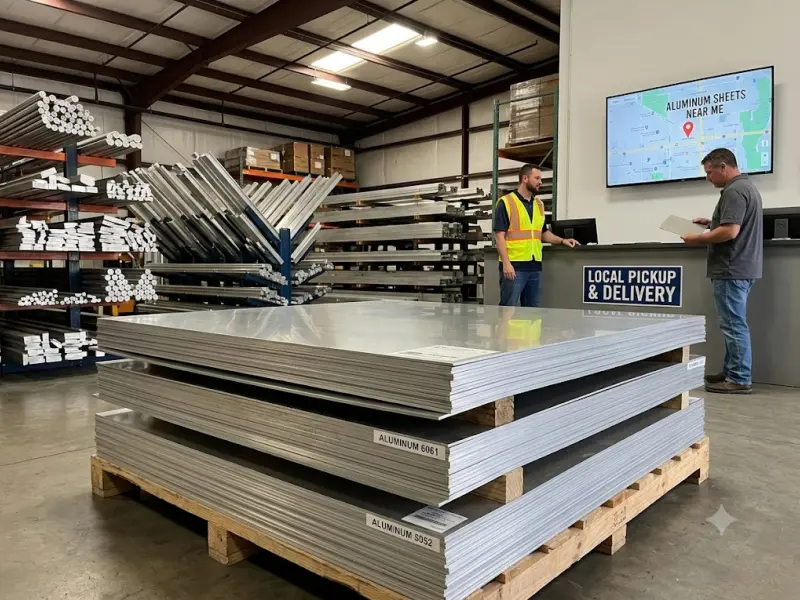
Why Aluminum Sheets Remain a Top Choice for Builders and Makers
Aluminum Sheets Near Me offer a rare mix of lightness and strength. A 4×8 aluminum sheet weighs far less than steel of the same size.
That matters when you haul material in a pickup truck or lift it onto a roof by hand. Rust is another reason people choose this metal.
Unlike iron, aluminum forms a natural oxide layer. That layer blocks moisture and keeps the surface clean for years.
Cost plays a role too. While some grades cost more than basic steel, you save money long term. For you skip painting.
You skip heavy rust treatments. You also cut faster and weld with less heat. For hobbyists, contractors, and factory buyers, these savings add up fast.
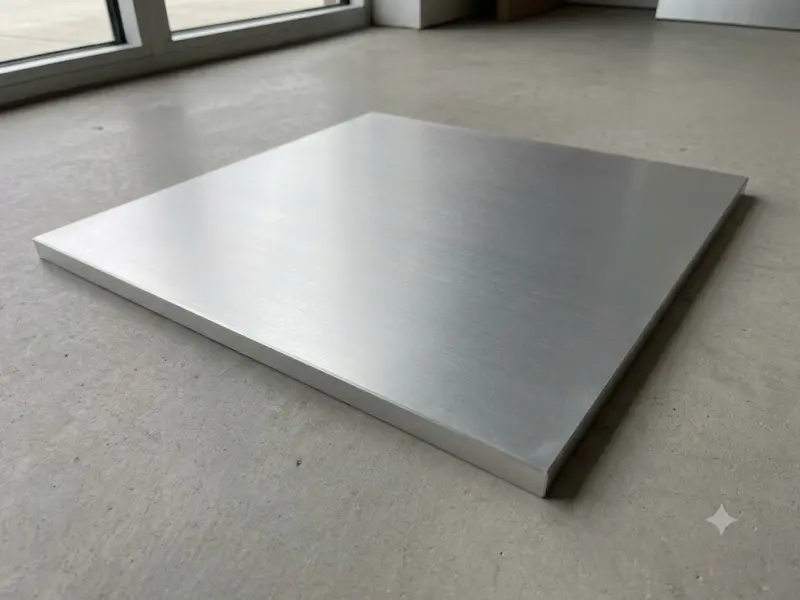
Common Aluminum Sheet Types You Can Find Locally
Not every sheet looks or performs the same. Local suppliers stock a wide range. Knowing the difference helps you walk into a yard and ask for the right item by name.
Standard Flat Sheets
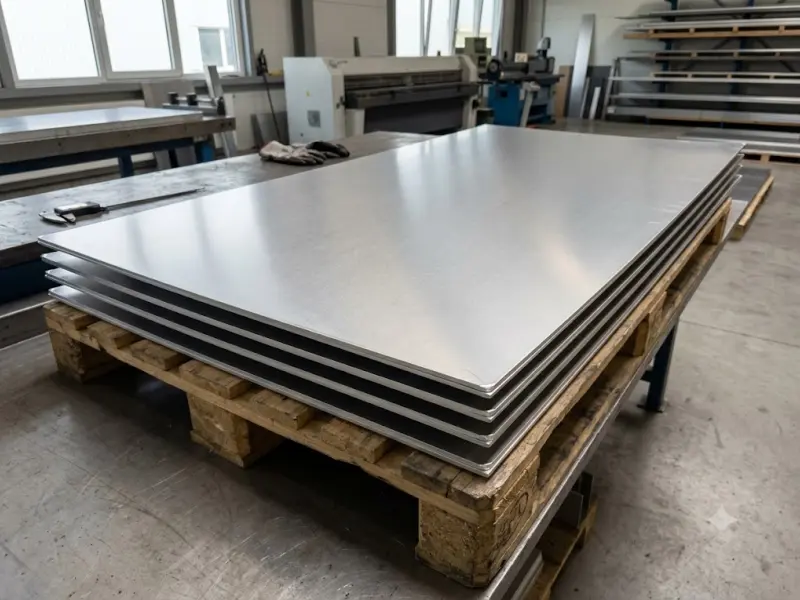
Flat aluminum sheets are the most common form. They come in standard sizes like 4×8, 4×10, and 5×10 feet. Thickness ranges from thin foil-like rolls up to heavy plate. You will see grades like 3003, 5052, and 6061 in this category. These sheets work for everything from signs to structural panels.
Diamond Plate Aluminum Sheets
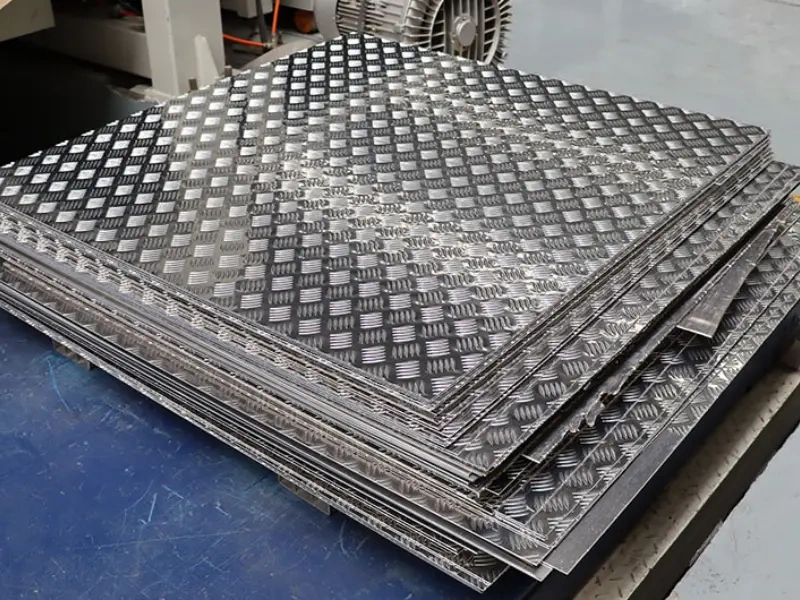
Diamond plate sheets have a raised pattern. The bumps add grip and hide scratches. You often see them on trailer floors, toolboxes, and step treads. The most common alloy for this pattern is 3003. Some yards also stock 6061 diamond plate for heavier loads. If you search for “diamond plate aluminum sheets near me,” call ahead. Not every branch keeps this pattern in stock.
Corrugated Aluminum Sheets
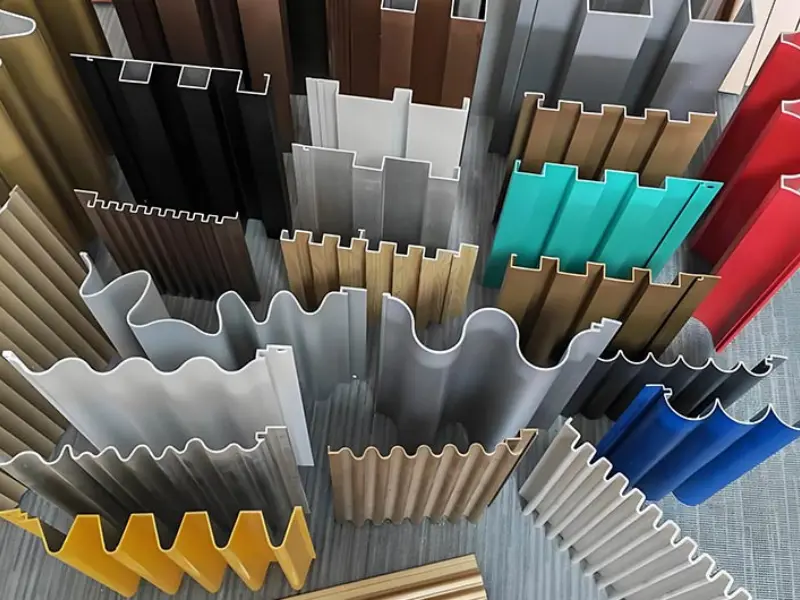
Corrugated sheets have ridges that run lengthwise. The waves add stiffness without adding weight. Roofers love them because water runs off fast. You will also find them on siding for barns and sheds. Most corrugated stock uses 3003 or a similar soft alloy. That softness makes it easy to curve over an arched roofline.
Anodized and Brushed Finishes
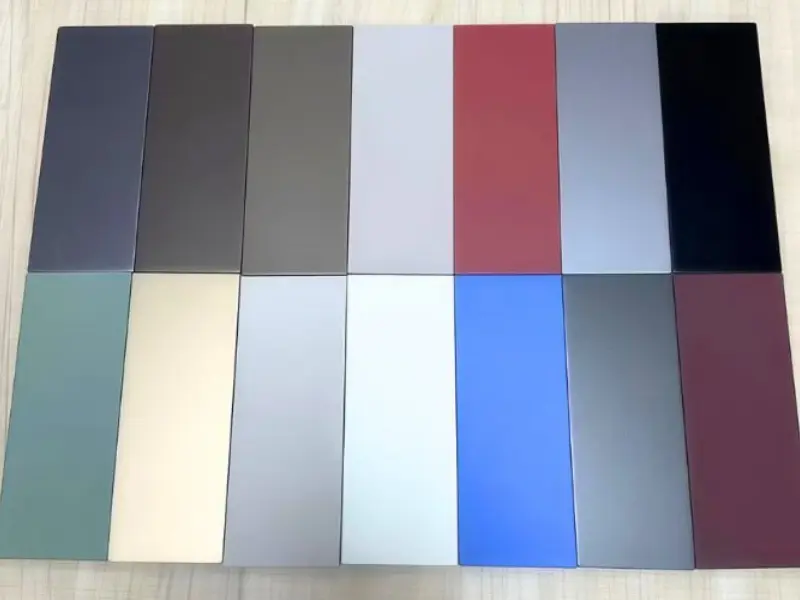
Some jobs need more than bare metal. Anodized aluminum sheets carry a hard, colored surface layer. The anodizing process thickens the natural oxide coat. That makes the sheet tougher and gives it a sleek look. You can find black, clear, bronze, and gold tones.
Brushed aluminum sheets have fine lines scratched into the surface. The look is modern and hides fingerprints. Designers use brushed sheets for wall panels, elevator interiors, and display cases. If you want “anodized aluminum sheets near me” or “brushed aluminum sheets near me,” check specialty metal shops. Big box stores rarely carry these finishes.
Painted and Colored Options

Painted aluminum sheets arrive pre-coated at the mill. The paint is baked on, so it sticks better than a DIY spray job. White and beige are common for siding. Bright colors show up in signage and architectural accents. When you look for “painted aluminum sheets near me” or “colored aluminum sheets near me,” ask about the paint warranty. Coastal areas need thicker paint films to fight salt.
Composite and Specialty Sheets
Aluminum composite sheets sandwich a plastic core between two thin metal skins. They are rigid, flat, and light. You see them on modern building facades and large billboards. Race car builders also use thin aluminum sheets for body panels. If you need “race car aluminum sheets near me,” ask for 5052 or 6061 in thin gauges. These alloys bend well and hold their shape at speed.
Alloy Breakdown: Picking the Right Grade for Your Job
The alloy number tells you what metals mix with the aluminum. That mix changes strength, rust resistance, and price. Here is a simple guide to the grades you will see at local suppliers.
1000 Series: Pure Aluminum
1100 is the most common pure grade. It is soft, easy to form, and highly resistant to chemicals. You will find it in chemical tanks, food handling gear, and decorative trim. It is not strong, so do not use it for load-bearing parts.
3000 Series: Manganese Alloys
3003 is the workhorse of the sheet world. Manganese adds a small strength boost over 1100. It bends easily, resists rust in normal air, and costs less than 5000 or 6000 grades. Roofers, HVAC crews, and food equipment makers all rely on 3003. It is the top choice when you need “aluminum flat sheets near me” for general work.
5000 Series: Magnesium Alloys
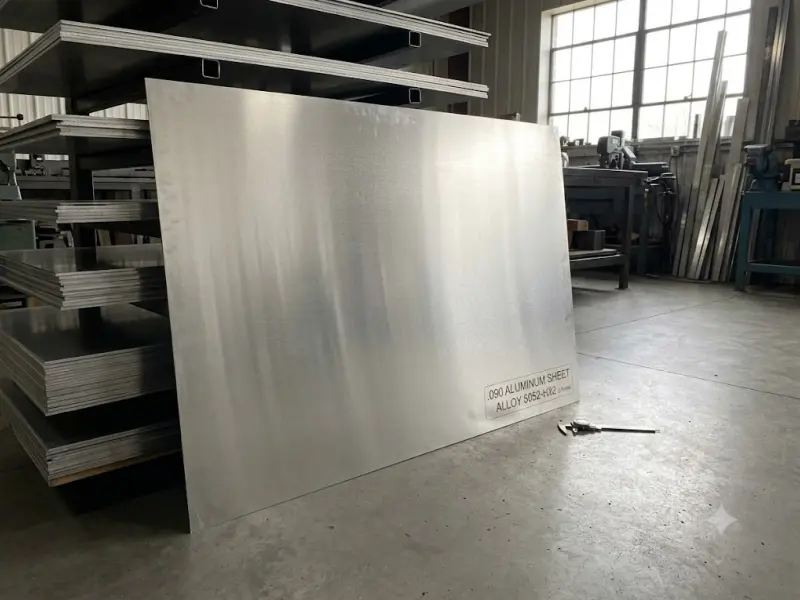
5052 and 5083 sit in this group. Magnesium gives these alloys excellent saltwater resistance. 5052 is stronger than 3003 and handles fatigue well. Boat builders, fuel tank makers, and coastal contractors prefer it. 5083 is even tougher and appears in ship hulls and armor plating. If you search for “marine grade aluminum sheets near me,” you are likely looking for 5052 or 5083.
6000 Series: Structural Strength
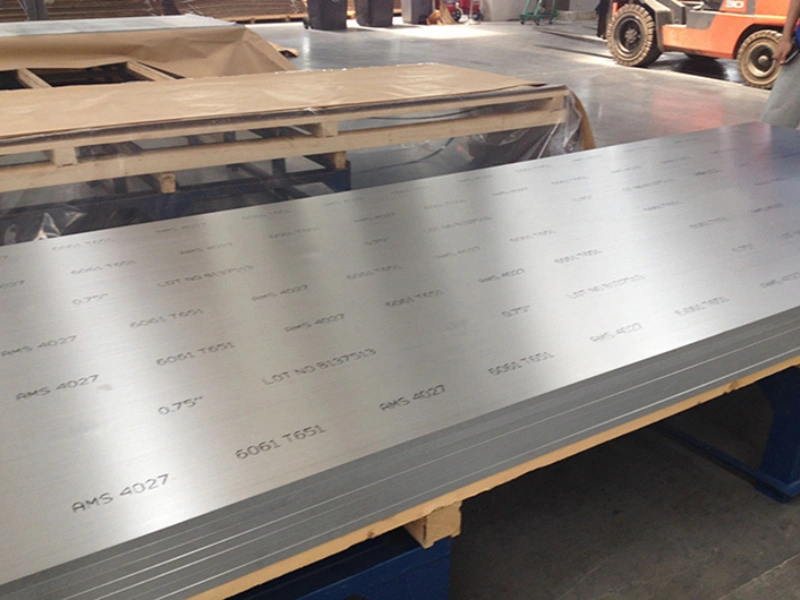
6061 mixes magnesium and silicon. Heat treatment pushes its strength far above 3003 or 5052. It machines well, takes threads nicely, and holds tight tolerances. You will see it in bike frames, electrical housings, and structural brackets. 6063 is a cousin with a smoother surface. It shows up in window and door frames.
7000 Series: Aerospace Grade
7075 contains zinc. It is one of the strongest aluminum alloys on the market. The strength-to-weight ratio rivals some steels. However, it costs more and forms with difficulty. You will find it in aircraft wings, military gear, and high-end automotive parts. For most local buyers, 7075 is overkill. Stick with 6061 unless an engineer specs 7075.
| Alloy Series | Main Element | Key Trait | Best For |
|---|---|---|---|
| 1000 | None (pure) | Soft, chemical resistant | Food gear, decorative trim |
| 3000 | Manganese | Easy to bend, low cost | Roofing, ducts, signs |
| 5000 | Magnesium | Saltwater resistant | Boats, tanks, coastal siding |
| 6000 | Mg + Silicon | Strong, machinable | Frames, brackets, pipelines |
| 7000 | Zinc | Ultra high strength | Aircraft, racing, military |
Temper Matters: What H14, H32, and T6 Really Mean
Alloy is only half the story. Temper tells you how the metal was treated after rolling. The same alloy can act soft or stiff depending on temper.
- O temper: Fully soft. Easy to bend and deep draw. Use this when you need extreme forming.
- H14: Strain hardened. 3003-H14 is common for general sheet work. It holds shape better than O but still bends around corners.
- H32: Strain hardened and stabilized. 5052-H32 offers a great mix of strength and formability. It is the standard temper for marine sheet.
- T6: Solution heat treated and artificially aged. 6061-T6 is strong and rigid. It springs back more when bent, so use a larger bend radius.
| Temper | Process | Feel | Typical Use |
|---|---|---|---|
| O | Annealed | Very soft | Deep drawing, complex shapes |
| H14 | Cold worked | Medium soft | General fabrication, roofing |
| H32 | Cold worked + stabilized | Medium firm | Marine panels, fuel tanks |
| T6 | Heat treated | Very stiff | Structural parts, machined components |
Thickness and Gauge: A Quick Reference
Sheet thickness is listed in gauge, inches, or millimeters. In the aluminum world, a higher gauge means a thinner sheet. Do not mix this up with steel gauge. The numbers do not match.
| Gauge | Thickness (inches) | Thickness (mm) | Common Use |
|---|---|---|---|
| 30 | 0.010 | 0.25 | Foil liners, craft work |
| 26 | 0.016 | 0.40 | Flashing, light trim |
| 24 | 0.020 | 0.51 | Ducts, small panels |
| 22 | 0.025 | 0.64 | Signs, decorative work |
| 20 | 0.032 | 0.81 | General purpose panels |
| 18 | 0.040 | 1.02 | Cabinets, enclosures |
| 16 | 0.051 | 1.29 | Roofing, trailer siding |
| 14 | 0.064 | 1.63 | Walkways, heavy covers |
| 12 | 0.081 | 2.05 | Structural panels, guards |
| 10 | 0.102 | 2.59 | Tool bases, load plates |
| 7 | 0.144 | 3.67 | Thick plate, machining stock |
If you need a 4×8 aluminum sheet, weight grows fast with thickness. A 16-gauge 4×8 sheet weighs roughly 34 pounds. A 10-gauge sheet of the same size weighs about 67 pounds. Plan your transport before you buy.

Aluminum Sheet vs. Other Metals: Side-by-Side Comparison
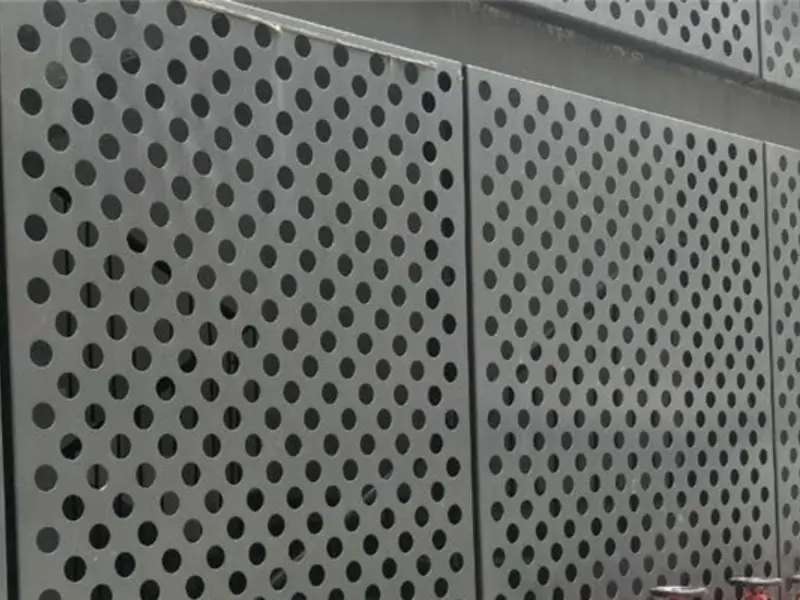
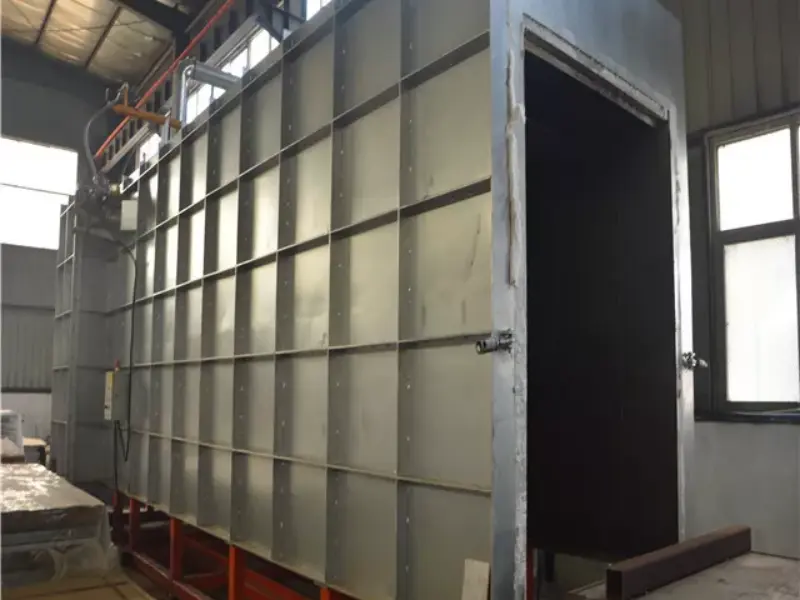
Buyers often wonder if they should switch to steel or stainless. Here is how aluminum stacks up.
| Factor | Aluminum Sheet | Steel Sheet | Stainless Steel |
|---|---|---|---|
| Weight | Very light | Heavy | Heavy |
| Rust Resistance | Excellent (natural oxide) | Poor (needs paint) | Excellent |
| Strength per Pound | High | Moderate | Moderate |
| Cost per Sheet | Moderate | Low | High |
| Ease of Cutting | Very easy | Moderate | Hard |
| Weldability | Good | Good | Good |
| Bendability | Excellent in soft alloys | Moderate | Stiff |
| Magnetic | No | Yes | Yes |
For outdoor projects where weight matters, aluminum wins. For pure brute strength on a tight budget, steel is hard to beat. Stainless steel fills the niche where both rust resistance and a polished look matter, but you will pay more.
Where to Use Aluminum Sheets: Real-World Applications
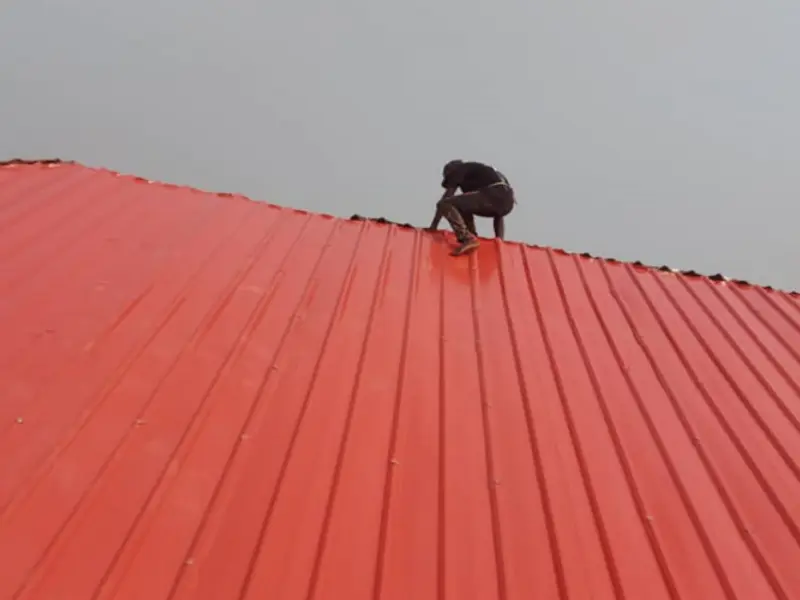
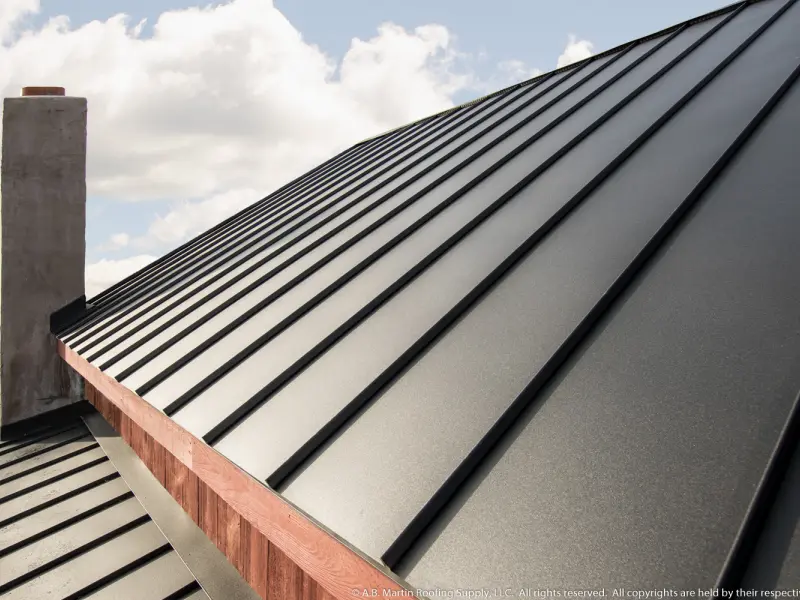
Aluminum sheets show up in more places than most people realize. Here is a quick list of common jobs:
- Roofing and siding: Corrugated and flat sheets cover barns, sheds, and modern homes. They reflect heat and lower cooling bills.
- Trailers and trucks: Diamond plate sheets line floors and walls. They resist dents and provide grip under wet boots.
- Marine craft: 5052 sheets form boat hulls, decks, and fuel tanks. Salt spray does not eat this alloy alive.
- Food service: 3003 sheets make cooking pans, storage tanks, and prep tables. The metal meets food-grade standards.
- Signage and displays: Painted and brushed sheets carry logos and art. They stay bright for years without rust stains.
- Automotive and racing: Thin 5052 or 6061 panels shape bodywork. The low weight helps acceleration and handling.
- Electrical enclosures: 6061-T6 sheets form boxes that shield gear. The metal is non-magnetic and conducts heat away.
- Architectural facades: Composite and anodized sheets clad tall buildings. They look sharp and need little upkeep.
- HVAC systems: Ductwork and vent housings use 3003. It forms tight corners and resists corrosion from condensation.
- Aerospace: 7075 and 6061 sheets appear in wings and fuselage skins. Every pound saved means more payload or fuel range.
How to Buy Aluminum Sheets Near Me Without Overpaying
Local prices vary. Here are tips to get a fair deal when you visit a supplier.
Call ahead with specs. Know your alloy, temper, thickness, and size before you dial. A vague request wastes time and opens the door to upsells.
Ask about drops and remnants. Many shops sell leftover pieces at a discount. If your project is small, a drop can cut your cost in half.
Check for mill certs on structural jobs. If you are building something that carries weight, ask for a mill test report. It proves the alloy and temper match your order.
Compare per-pound pricing. Some yards quote per sheet. Others quote per pound. Do the math to see who offers the better deal.
Think about finish. Bare sheet costs less than anodized or painted. If you plan to paint it yourself, skip the pre-finished stock and save money.
Bring a trailer or truck with straps. A stack of 4×8 sheets slides easily. Ratchet straps keep your load safe and prevent bent corners.
Frequently Asked Questions
How much is one sheet of aluminium?
Prices shift with alloy, thickness, and local demand. A thin 4×8 sheet of 3003 in a common gauge might run between $80 and $150 at a local yard. Thick plate or aerospace grades like 7075 can cost several times more. Always call two or three local suppliers for a current quote.
What is the cheapest type of aluminum sheet?
3003-H14 is usually the most budget-friendly option. It is widely stocked, easy to produce, and meets the needs of many general projects. If you need bare metal for a roof, sign, or duct, 3003 is your best bet for low cost.
How strong is a 3mm aluminium sheet?
A 3mm sheet sits close to 11 gauge. In 6061-T6 temper, it can handle serious loads. In 3003-H14, it is softer and better for panels that do not bear weight. Alloy matters just as much as thickness. A 3mm 6061 sheet is far stronger than a 3mm 3003 sheet.
Why are aluminum sheets so expensive?
Raw bauxite mining and energy-heavy refining push the base cost up. Alloying elements like magnesium and zinc add more. Then there is rolling, heat treating, and shipping. When you buy locally, you also pay for storage and handling. Still, the long life and low upkeep of aluminum often make it cheaper over time than painted steel.
Where can I find black aluminum sheets near me?
Black aluminum usually means either painted or anodized stock. Not every yard carries it. Try architectural metal suppliers or sign shops. You can also buy bare sheet and powder coat it locally for a custom black finish.
Are aluminum foil sheets the same as metal sheets?
No. Foil sheets are extremely thin, often below 0.2 mm. They bend by hand and tear under stress. Standard metal sheets start around 0.5 mm and go up. If you need structure, ask for sheet metal, not foil.
Can I use aluminum roofing sheets near the ocean?
Yes, but pick the right alloy. 5052 or 5083 handle salt air far better than 3003. Also, use proper fasteners. Dissimilar metals can cause galvanic corrosion where steel screws touch aluminum.
What is the difference between aluminum siding sheets and composite sheets?
Siding sheets are solid metal. Composite sheets have a plastic core between two thin aluminum skins. Composite is lighter and flatter over long spans. Solid siding is tougher against impacts and easier to repair with a simple patch.