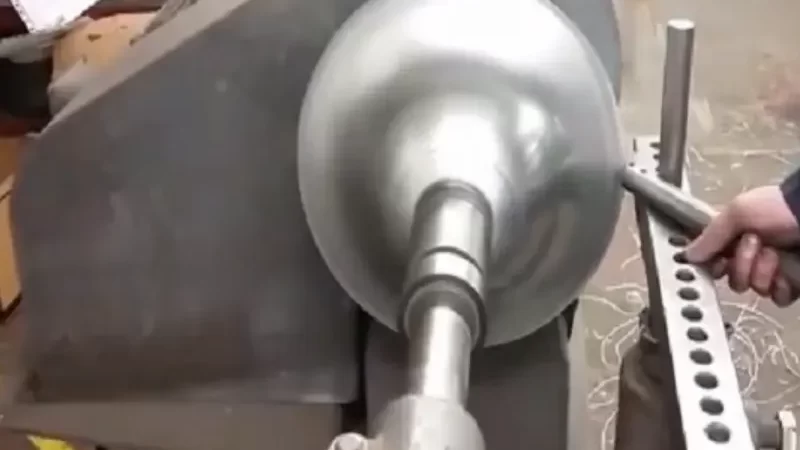
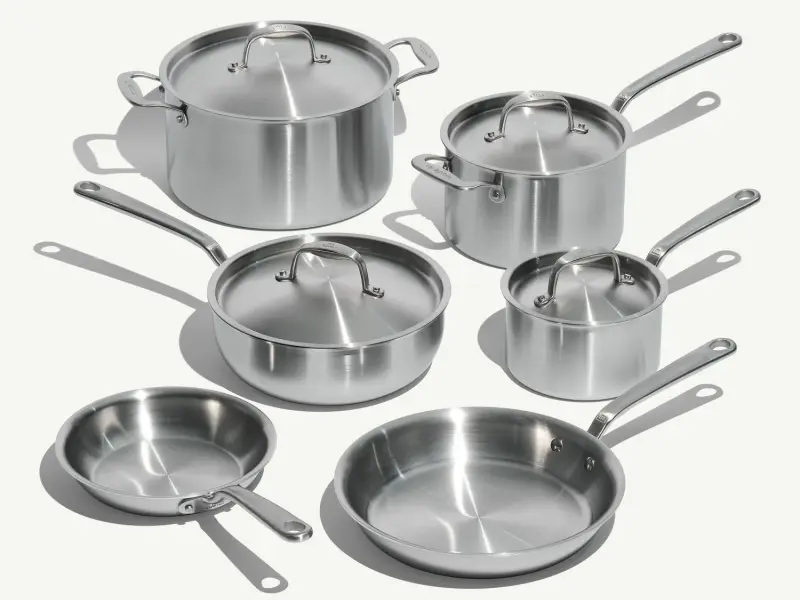
Every great meal starts with a great pan. In the world of kitchenware, the quality of the raw material determines the quality of the final product. Using a high-quality aluminum circle for cookware manufacturing is the first step for any factory producing pots, pans, and pressure cookers.
Aluminum is the favorite metal for chefs and home cooks alike. It heats up quickly and evenly.
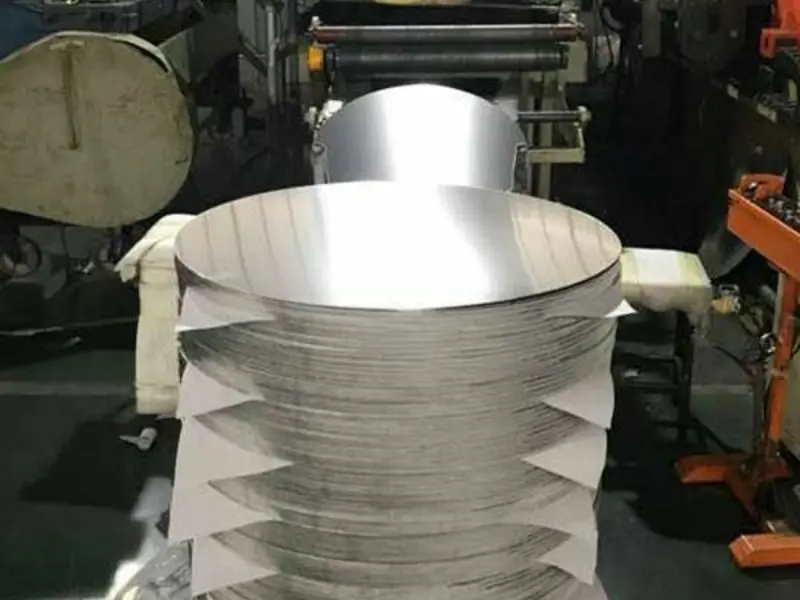
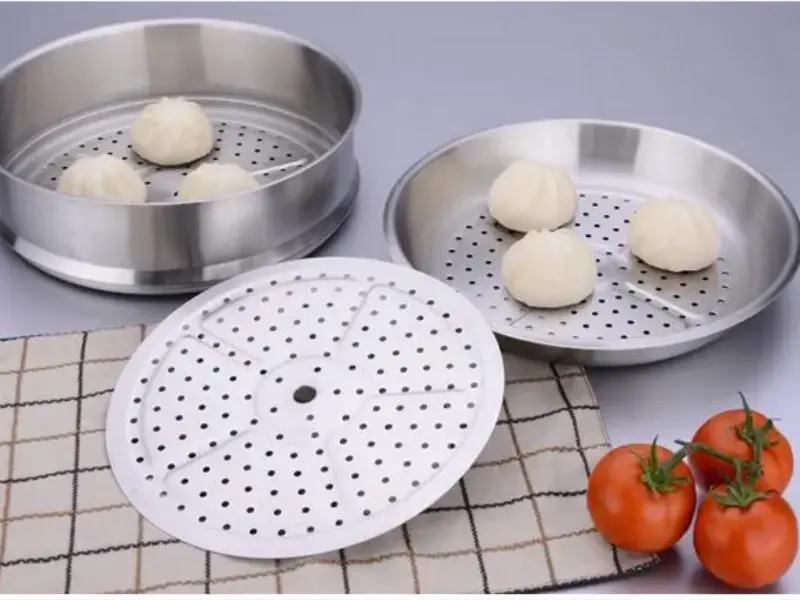
Technical Specifications: Alloys and Tempers
Cookware requires specific types of aluminum that can withstand heat and deep drawing. We provide various alloys tailored to different manufacturing methods like pressing or spinning.
Material Data Table
| Alloy Grade | Common Temper | Thickness Range | Best Usage |
| 1050 / 1060 | O, H12, H14 | $0.3mm – 6.0mm$ | General pans and pots; high purity. |
| 1100 | O, H14 | $0.5mm – 5.0mm$ | Complex shapes; excellent workability. |
| 3003 | O, H14, H16 | $0.8mm – 6.5mm$ | Non-stick pans; higher strength. |
| 5052 | H32, H34 | $1.0mm – 4.0mm$ | High-end pressure cookers; corrosion resistant. |
Technical Specifications and Alloy Types


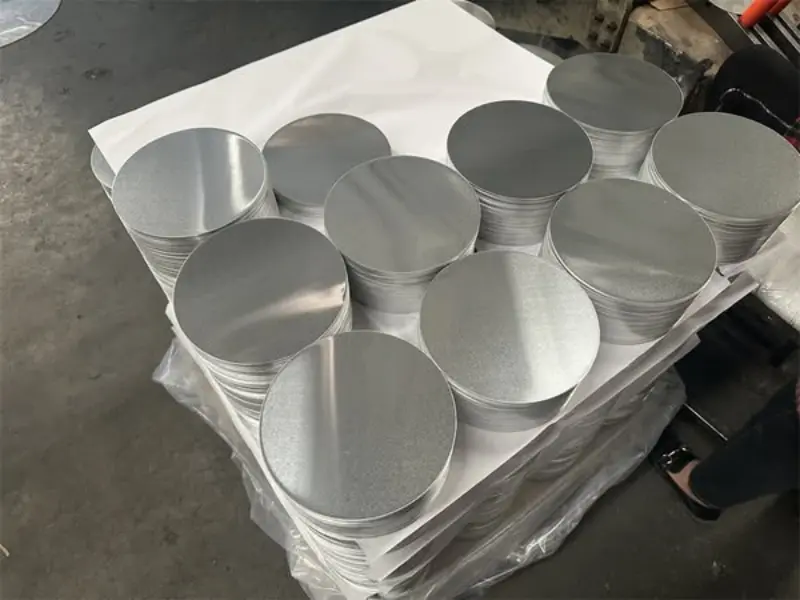
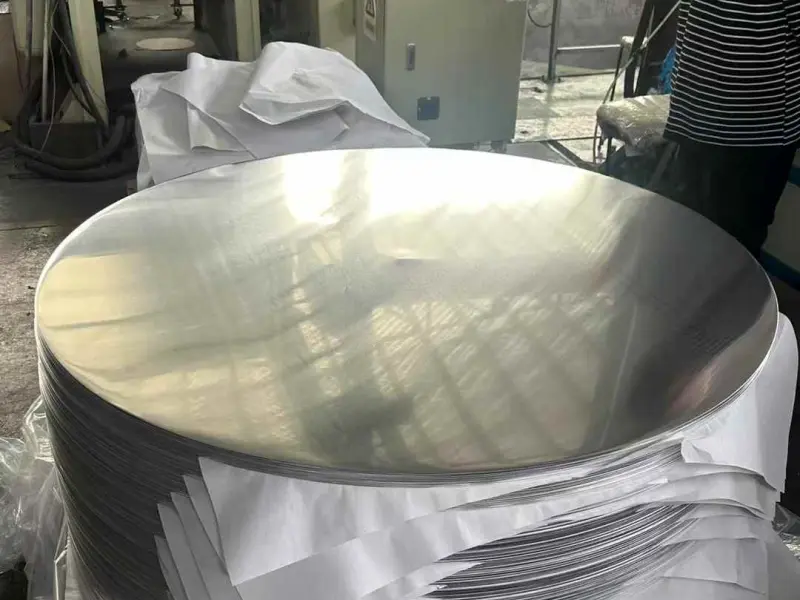
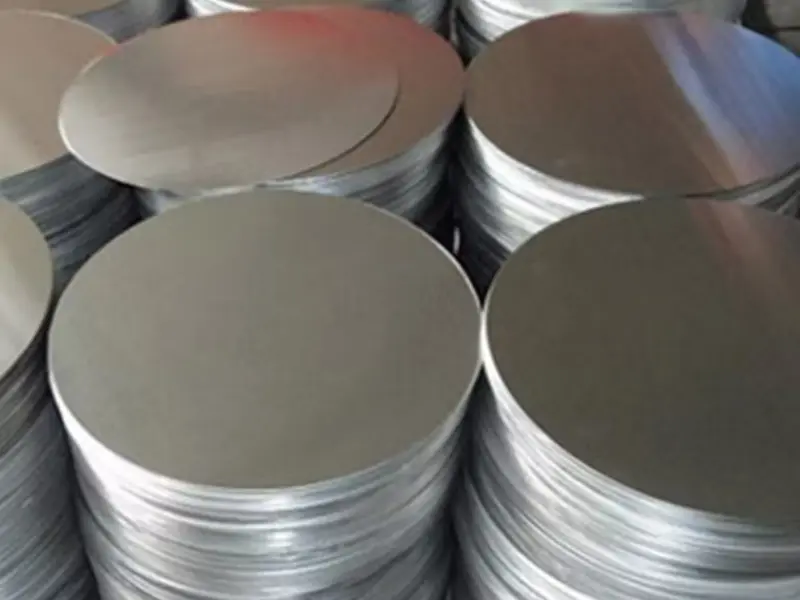
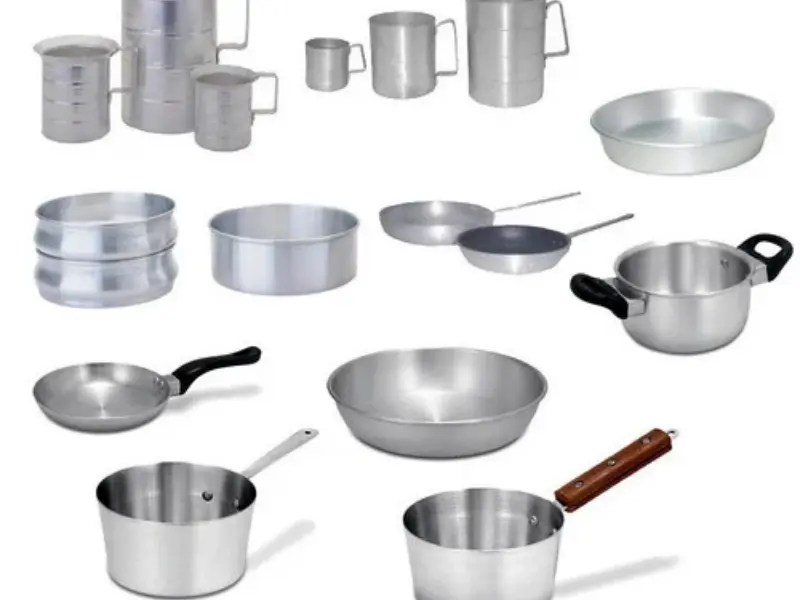
The performance of a frying pan depends on the chemistry of the metal. Different alloys offer different levels of strength and heat conductivity.
Common Aluminum Alloys for Cookware
| Alloy Series | Purity / Composition | Best For | Features |
|---|---|---|---|
| Alloy 1050 | 99.50% Pure | Economical pots and basins | Excellent conductivity; very soft. |
| Alloy 1100 | 99.00% Pure | General kitchenware | Good corrosion resistance; easy to form. |
| Alloy 3003 | Aluminum + Manganese | Professional pans | Stronger than pure aluminum; very durable. |
| Alloy 5052 | Aluminum + Magnesium | High-end cookware | High strength; used for lid handles or specialized pans. |
Digital Specs for Manufacturing
When ordering aluminum circle for cookware manufacturing, you must define the exact size. Below are the standard industrial ranges:
| Property | Range of Values |
|---|---|
| Thickness | 0.3mm to 10.0mm |
| Diameter | 100mm to 1500mm |
| Temper (Hardness) | O (Soft), H12, H14, H16, H18 |
| Surface Finish | Bright, Clean, No scratches |
Understanding DC vs. CC Quality
There are two main ways to produce an aluminum circle for cookware manufacturing. Choosing between them is vital for your factory’s success.
DC (Direct Casting) Quality
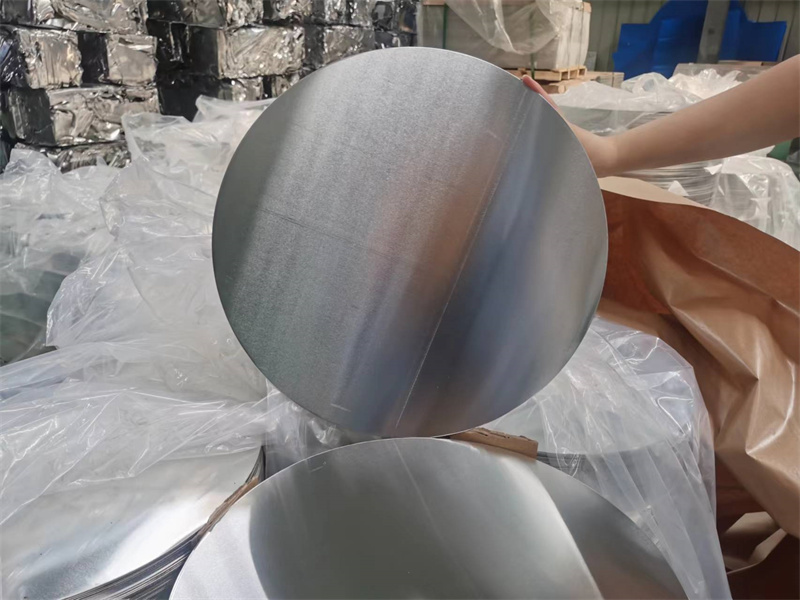
DC circles are made by casting large ingots and then hot-rolling them.
- Pros: They have a very fine grain structure. This makes them perfect for “deep drawing.” If you are making a tall stockpot, you need DC quality so the metal does not crack.
- Surface: Very smooth, ideal for high-end polishing or coating.
CC (Continuous Casting) Quality
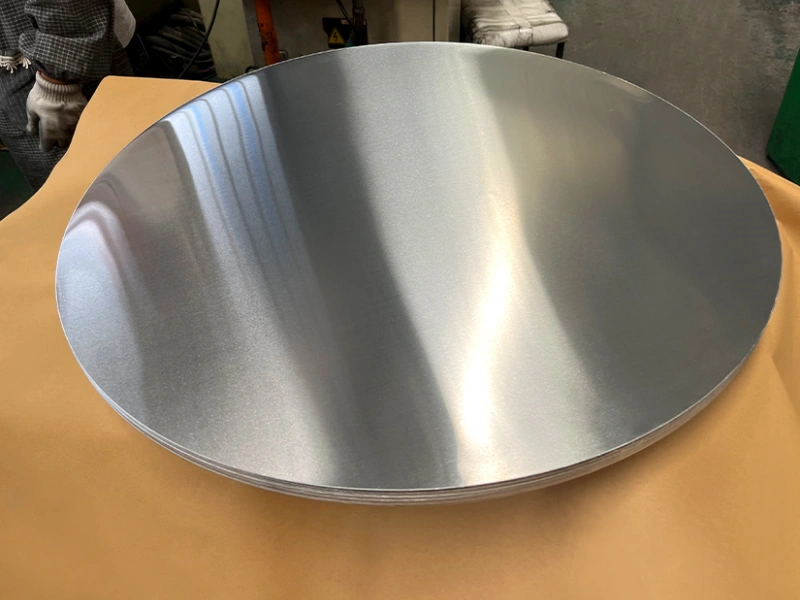
CC circles are made by rolling liquid metal directly into a coil.
- Pros: They are cheaper to produce.
- Best Use: They are perfect for flat items like pizza pans, shallow frying pans, or basins. They are not recommended for very deep pots because they might break during the stretching process.
Different Product Types and Varieties
The market for aluminum circle for cookware manufacturing offers many specialized versions to attract different types of customers.
WORTHWILL
Different Product Types and Varieties
Non-Stick Coating Circles
These circles are specially cleaned and treated so that Teflon or Ceramic coatings stick to them perfectly. They have uses to make the world-famous “non-stick” pans.
Anodized Aluminum Circles
Anodizing is a process that makes the surface of the aluminum very hard and scratch-resistant. These circles are used for “Hard Anodized” cookware sets, which are popular for being extremely tough and dark grey in color.
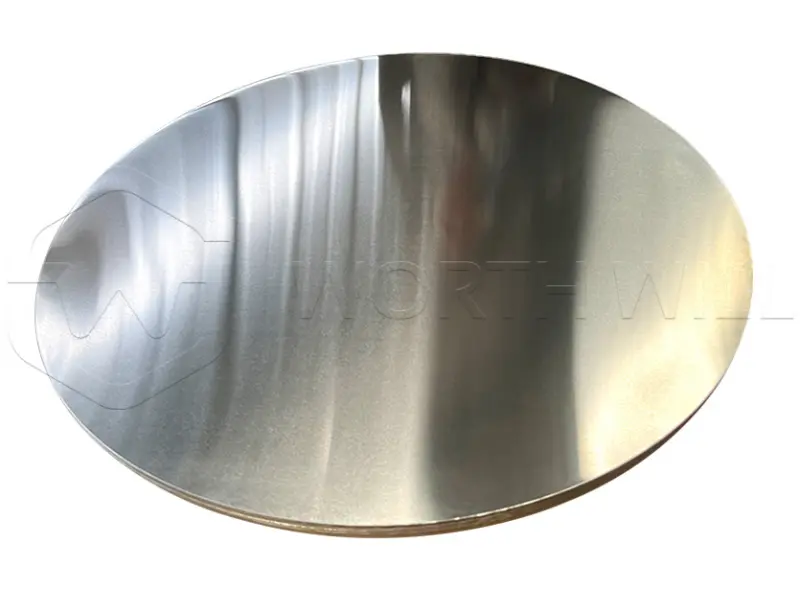


Polished or Brushed Circles
Some manufacturers prefer a “mirror finish.” This is popular for traditional Indian or Middle Eastern cookware.
Colored Aluminum Circles
Using specialized paints or anodizing, circles can be made in red, blue, or gold. This is used for decorative kitchenware or gift sets.
Why Use Aluminum Circle for Cookware Manufacturing?
Aluminum is the “gold standard” for professional and household kitchens. Here is why manufacturers choose our aluminum circles:
- Uniform Heat Distribution: Aluminum prevents “hot spots” that burn food.
- Deep Drawing Quality: Our circles do not crack or create “orange peel” textures during pressing.
- Surface Quality: Every disk has a clean, smooth finish, perfect for applying non-stick coatings or polishing.
- Lightweight: It makes large pots easier for consumers to handle.
Round Aluminum Blanks for Different Cookware Types
Aluminum Circle for Frying Pans
Requirements:
- Uniform thickness
- Good heat transfer
- Stable deep drawing
Common specification:
| Alloy | Thickness |
|---|---|
| 1060 | 0.8-2.0 mm |
| 3003 | 1.0-2.5 mm |
Aluminum Circle for Rice Cookers
Requirements:
- Smooth surface
- Excellent forming performance
- Food-grade quality
Common alloys:
- 1050
- 1060
Aluminum Circle for Pressure Cookers
Requirements:
- Higher strength
- Good deformation resistance
Recommended alloy:
- 3003
Aluminum Circle for Kettles
Requirements:
- Excellent spinning performance
- Consistent grain structure
Recommended alloys:
- 1050
- 1060
Aluminum Circle for Stock Pots
Requirements:
- Larger diameters
- Stable mechanical properties
Common thickness:
- 1.5 mm
- 2.0 mm
- 3.0 mm
Production Methods
DC Aluminum Circle
Produced from direct cast material.
Advantages:
- Stable quality
- Suitable for deep drawing
- Better consistency
CC Aluminum Circle
Produced from continuous casting coils.
Advantages:
- Competitive price
- Large production volume
Suitable for:
- Standard cookware production
Quality Inspection Standards
Manufacturers often inspect:
| Inspection Item | Purpose |
|---|---|
| Diameter Tolerance | Dimensional accuracy |
| Thickness Tolerance | Consistent forming |
| Surface Quality | Appearance control |
| Mechanical Properties | Production stability |
| Flatness | Easy processing |
| Edge Quality | Reduced waste |
Strict inspection helps improve production efficiency and final cookware quality.
Different Types of Aluminum Circles
Depending on your final product, you may need different “grades” or “finishes” of aluminum disks.
1. Standard Mill Finish Circles
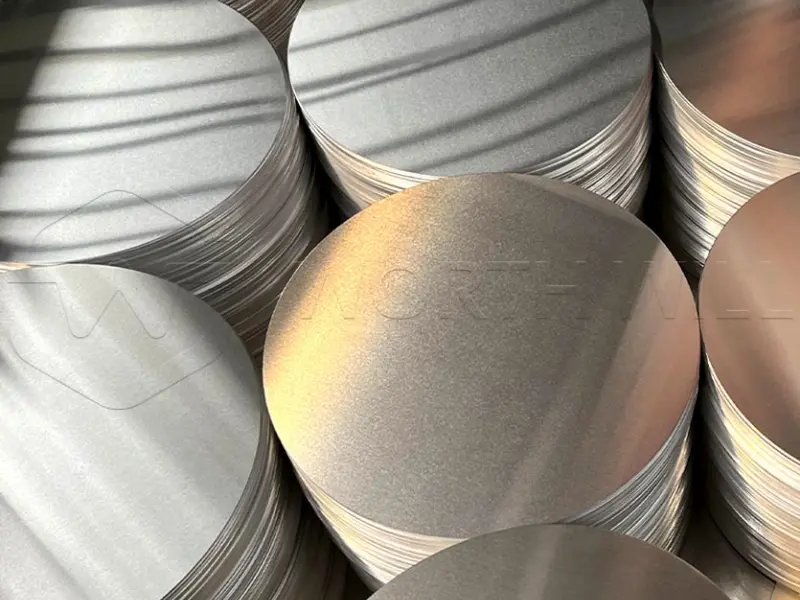
These are the most common. They have a metallic shine and are used for standard pots. They are perfect for further coating or anodizing.
2. Non-Stick Coating Circles
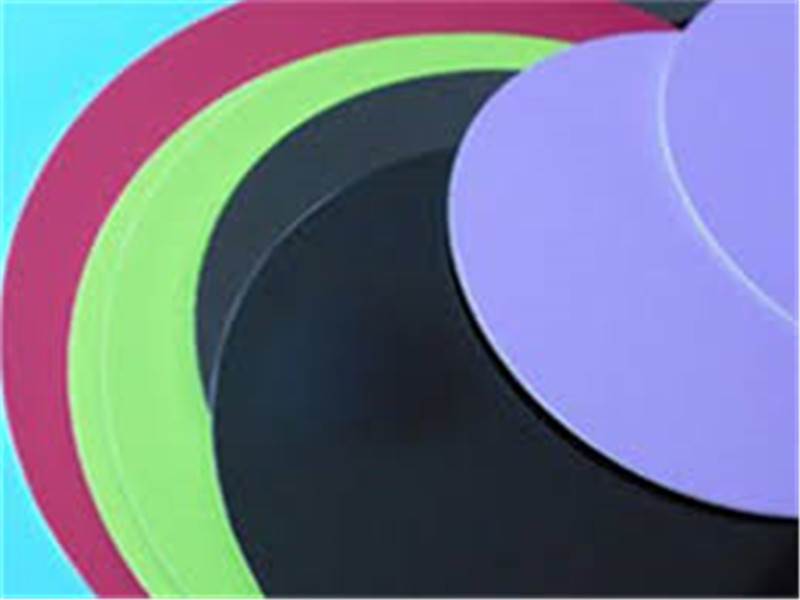
We provide circles that are specially cleaned and treated to ensure that Teflon or ceramic coatings stick perfectly to the surface.
3. Anodized Aluminum Disks
These are used for premium cookware. The anodizing process makes the surface harder and more resistant to scratches.
Digital Specifications for Factory Buyers
When ordering aluminum circle for cookware manufacturing, precision is key. We offer a wide range of sizes to minimize material waste in your factory.
Size and Tolerance Table
| Property | Value Range |
| Diameter | $100mm$ to $1500mm$ |
| Thickness Tolerance | $\pm 0.02mm$ |
| Diameter Tolerance | $\pm 1.0mm$ |
| Surface Finish | Mill Finish, Oil-Free, No Scratches |
Primary Applications in the Industry
Our aluminum disks are versatile. They are found in professional kitchens and home pantries worldwide.
Domestic Kitchenware
- Frying Pans: Lightweight and easy to move.
- Stock Pots: Large sizes with high thickness for slow cooking.
- Saucepan: Excellent for sensitive temperature control.
Professional and Industrial Tools
- Pressure Cookers: Made from high-strength 3003 or 5052 alloys.
- Pizza Trays: Thin circles with high thermal conductivity.
- Canteens and Kettles: Durable and food-safe.
Comparison: Aluminum vs. Stainless Steel
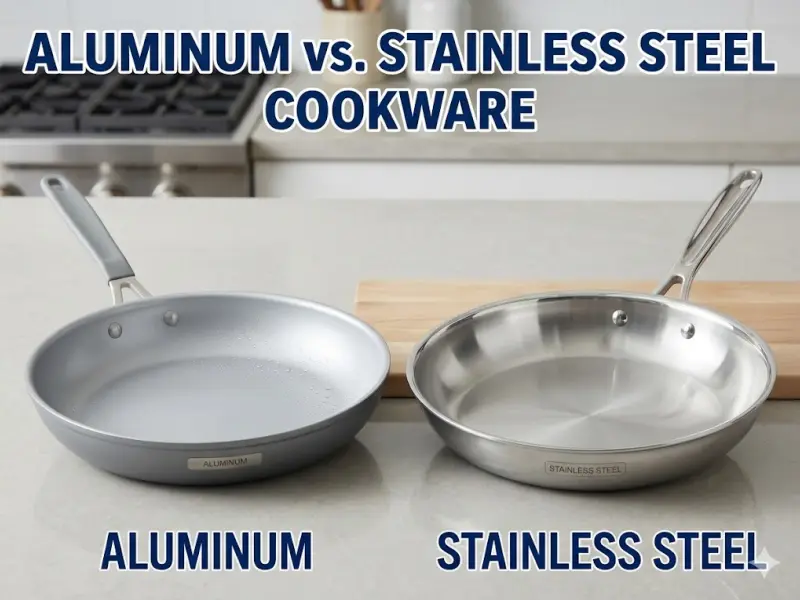
Many manufacturers compare aluminum circles with stainless steel. Here is why aluminum remains a leader.
| Feature | Aluminum Circle | Stainless Steel Circle |
| Heat Conductivity | Excellent (Fast) | Poor (Slow) |
| Weight | Very Light | Heavy |
| Price | Affordable | Expensive |
| Production Ease | Easy to spin and shape | Hard; requires heavy machines |
Quality Control in Manufacturing
To ensure the best results for aluminum circle for cookware manufacturing, we follow strict quality protocols.
- Grain Size Control: We ensure a fine grain structure. This prevents “earing” (uneven edges) during the deep drawing process.
- Surface Inspection: We guarantee no oil stains, scratches, or oxidation marks.
- Flatness Test: Every disk must be perfectly flat to ensure even heating in the final pan.
Key Applications in the Cookware Industry
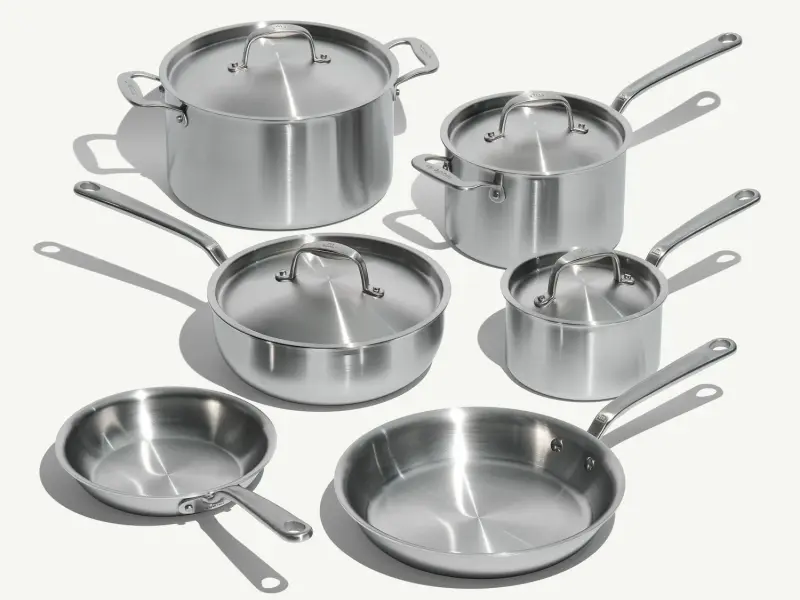
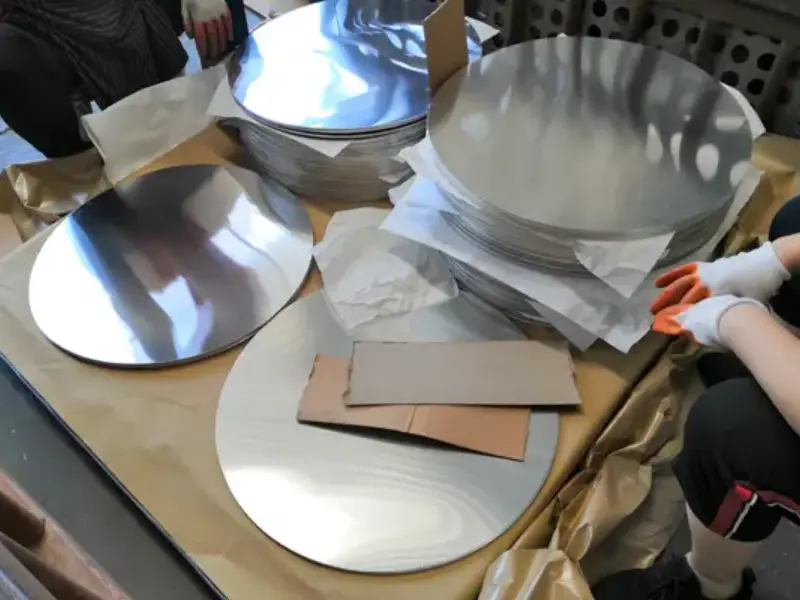
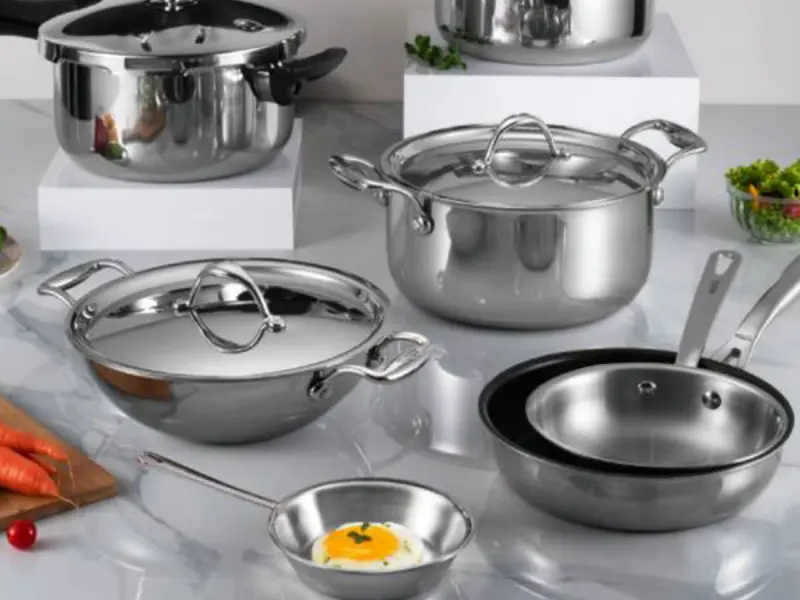
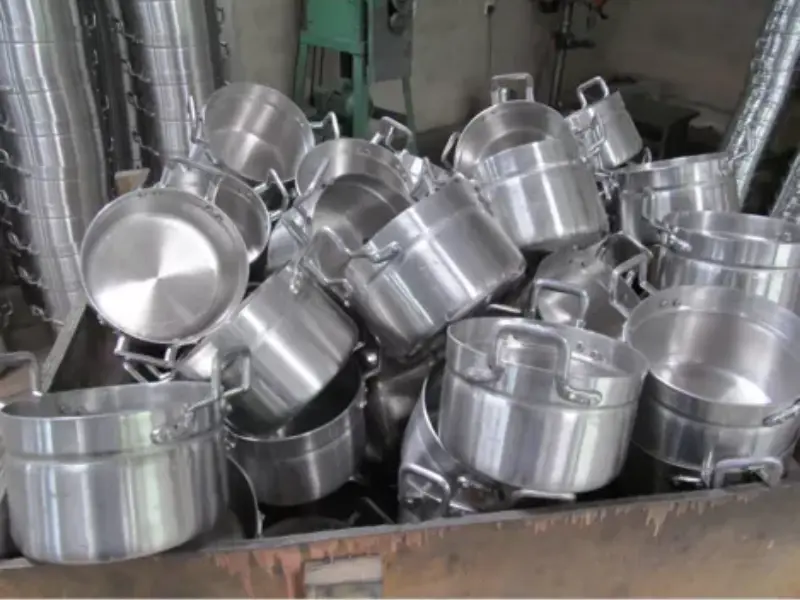
The aluminum circle for cookware manufacturing has uses for a massive variety of products found in every home.
Professional Kitchenware
- Frying Pans: Usually made from thick Alloy 3003 for even heat.
- Stockpots: Tall pots made from DC quality circles to ensure height without breaking.
- Pressure Cookers: Require very thick aluminum to handle the internal steam pressure.
Baking and Small Items
- Pizza Trays: Thin, wide circles that heat up quickly for a crispy crust.
- Cake Pans: Soft Alloy 1100 circles that are easy to mold into different shapes.
- Mixing Bowls: Lightweight and durable for daily kitchen use.
Electrical Appliances
- Rice Cooker Inner Pots: High-precision circles that must fit perfectly inside the machine.
- Electric Kettles: The bottom heating plate often uses a high-purity aluminum circle.
Comparison: Aluminum vs. Stainless Steel Cookware
Why do factories choose aluminum circle for cookware manufacturing instead of stainless steel?
| Feature | Aluminum Circles | Stainless Steel |
|---|---|---|
| Heat Conductivity | Excellent (Heats instantly) | Poor (Creates hot spots) |
| Weight | Lightweight (Easy to handle) | Heavy |
| Cost | Affordable | Expensive |
| Manufacturing | Easy to mold and spin | Difficult; requires heavy machines |
| Corrosion | Good (with coating/anodizing) | Excellent |
Why Aluminum Circles Are Widely Used in Cookware Production
The cookware industry requires materials that can withstand forming operations such as:
- Deep drawing
- Spinning
- Stamping
- Press forming
- Impact extrusion
Aluminum circles are suitable for these processes because of their stable mechanical properties and excellent surface quality.
| Property | Importance for Cookware |
|---|---|
| Thermal Conductivity | Faster and more even heating |
| Formability | Easy deep drawing |
| Lightweight | Easier handling |
| Corrosion Resistance | Longer service life |
| Surface Quality | Better appearance |
| Recyclability | Sustainable manufacturing |
Common Aluminum Alloys Used for Cookware Circles
Different cookware products require different aluminum grades.
1050 Aluminum Circle
1050 aluminum contains a high percentage of pure aluminum.
Typical characteristics:
- Excellent ductility
- Good corrosion resistance
- Easy forming
- Smooth surface
Suitable products:
Lightweight pans
Small cookware
Kitchen utensils
| Alloy | Aluminum Content |
|---|---|
| 1050 | 99.5% |
1060 Aluminum Circle
1060 aluminum is one of the most popular materials for cookware manufacturing.
Characteristics:
- Excellent deep drawing performance
- High thermal conductivity
- Stable processing quality
Common products:
- Rice cooker liners
- Frying pans
- Cooking pots
| Property | Value |
|---|---|
| Aluminum Content | 99.6% |
| Formability | Excellent |
| Thermal Conductivity | Excellent |
1070 Aluminum Circle
1070 alloy provides higher purity than 1060.
Preferred for:
- Premium cookware
- High thermal conductivity products
- Specialized kitchen equipment
3003 Aluminum Circle
3003 aluminum contains manganese, which increases strength.
Features:
- Better strength than 1000 series
- Good corrosion resistance
- Excellent forming capability
Typical products:
- Pressure cookers
- Non-stick cookware
- Heavy-duty pots
| Alloy | Main Element |
|---|---|
| 3003 | Manganese |
Temper Selection for Cookware Manufacturing
The temper affects forming performance.
O Temper Aluminum Circle
O temper is fully annealed.
Characteristics:
- Soft material
- Excellent deep drawing
- Lowest cracking risk
Preferred for:
- Deep cookware products
- Pressure cooker bodies
- Large cooking pots
H12 Temper
Provides moderate strength while maintaining workability.
Suitable for:
- Medium-depth products
- General cookware
H14 Temper
Offers higher hardness.
Used for:
- Shallow cookware
- Kitchen accessories
- Decorative products
Popular Diameter Range
Cookware manufacturers require many different circle sizes.
| Diameter (mm) | Typical Product |
|---|---|
| 80 | Small lids |
| 100 | Cups |
| 120 | Small cookware |
| 150 | Saucepans |
| 180 | Frying pans |
| 200 | Rice cookers |
| 250 | Stock pots |
| 300 | Large cookware |
| 350 | Commercial pots |
| 400 | Industrial cookware |
| 500 | Large kitchen equipment |
| 600 | Custom cookware |
Custom diameters can be supplied according to drawings.
Thickness Options for Different Cookware Products
Thickness directly affects durability and heat distribution.
| Thickness (mm) | Product Type |
|---|---|
| 0.4 | Lids |
| 0.5 | Light kitchenware |
| 0.6 | Small pans |
| 0.8 | Frying pans |
| 1.0 | Saucepans |
| 1.2 | Rice cookers |
| 1.5 | Pressure cookers |
| 2.0 | Heavy cookware |
| 3.0 | Commercial cookware |
| 4.0 | Industrial kitchen equipment |
Surface Quality Requirements
High-quality cookware requires excellent surface finish.
Mill Finish Surface
Characteristics:
- Natural aluminum appearance
- Cost-effective
- Easy processing
Fine Surface Finish
Suitable for:
- Anodized cookware
- Premium kitchen products
- Decorative cookware
High Cleanliness Surface
Used in:
- Food-grade products
- High-end cookware manufacturing
Deep Drawing Aluminum Circle vs Spinning Aluminum Circle
Different production methods require different material properties.
| Item | Deep Drawing Circle | Spinning Circle |
|---|---|---|
| Forming Method | Press forming | Rotational forming |
| Material Softness | Higher | Medium |
| Typical Products | Pots | Kettles |
| Crack Resistance | Excellent | Good |
| Surface Requirement | High | Medium |
1060 vs 3003 Aluminum Circle for Cookware
These are the two most common materials in cookware production.
| Property | 1060 | 3003 |
|---|---|---|
| Strength | Medium | Higher |
| Formability | Excellent | Very Good |
| Cost | Lower | Slightly Higher |
| Corrosion Resistance | Excellent | Excellent |
| Deep Drawing Performance | Excellent | Good |
| Commercial Cookware | Good | Better |
For general cookware production, 1060 is often selected.
For stronger cookware products, 3003 is frequently preferred.
Packaging for Export
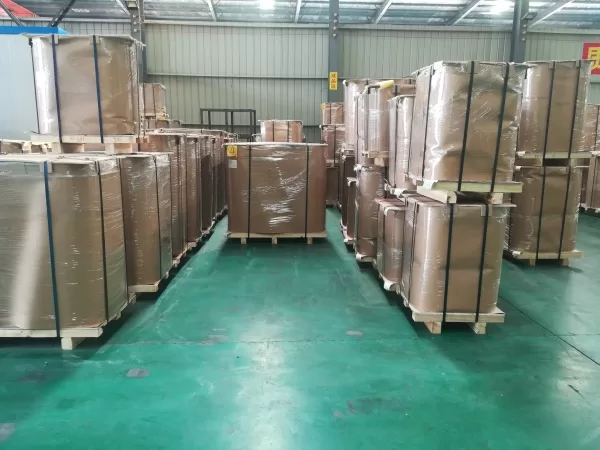
To ensure safe transportation, aluminum circles are usually packed with:
- Wooden pallets
- Plastic protective film
- Moisture-proof paper
- Steel strip reinforcement
Export packaging helps reduce damage during shipping and storage.
Quality Control: What to Look For
To produce the best pans, you must check the quality of your aluminum circle for cookware manufacturing before production begins.
- Grain Size: If the metal grains are too large, the pan will have an “orange peel” surface after stretching. A good supplier ensures a fine grain size.
- No Burrs: The edges of the circle must be smooth. Sharp edges can damage the factory’s machines or injure workers.
- Oil-Free Surface: The metal must be clean. If there is oil on the circle, the paint or non-stick coating will peel off later.
- Flatness: The disks must be perfectly flat so they sit correctly in the deep-drawing press.
Frequently Asked Questions (FAQ)
What is the best alloy for non-stick pans?
Alloy 3003 is usually the best. It is slightly stronger than 1050, making it more durable for daily use.
Can I get a custom diameter?
Yes. We have hundreds of molds for diameters ranging from $100mm$ to $1200mm$. We can also create custom molds for your specific pot size.
How are the circles packaged for shipping?
We use strong wooden pallets. Every stack is wrapped in plastic and secured with steel bands to prevent movement during sea freight.
Which alloy is best for deep drawing?
Alloy 1050 and Alloy 3003 in the O (Soft) temper are the best. They are flexible and into tall shapes without tearing.
What thickness should a frying pan be?
Most high-quality frying pans use circles with a thickness between 2.5mm and 4.0mm. Thicker pans distribute heat better and do not warp.
Is aluminum cookware safe?
Yes. Modern aluminum cookware is usually anodized or coated with non-stick layers. This prevents the aluminum from reacting with acidic foods like tomatoes.
Can aluminum circles be used for induction stoves?
Pure aluminum does not work on induction stoves. However, manufacturers often add a stainless steel plate to the bottom of the aluminum pan to make it compatible with induction