What Makes 5052 H32 a Favorite Across Industries?
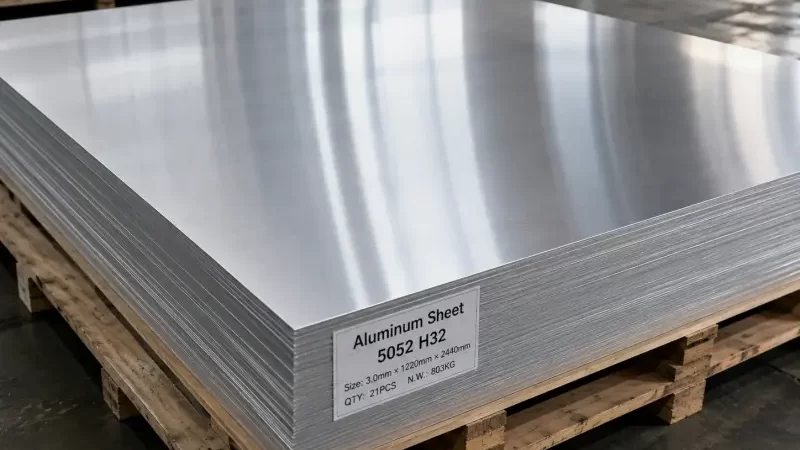
Aluminum 5052 H32 is one of the most requested grades in metal distribution yards. It blends strength, corrosion resistance, and formability in a way that few other alloys match.
The 5052 base metal contains magnesium. That gives it muscle. The H32 temper adds stability. That gives it predictability. Together they create a sheet that survives salt air, takes paint well, and still bends without cracking.
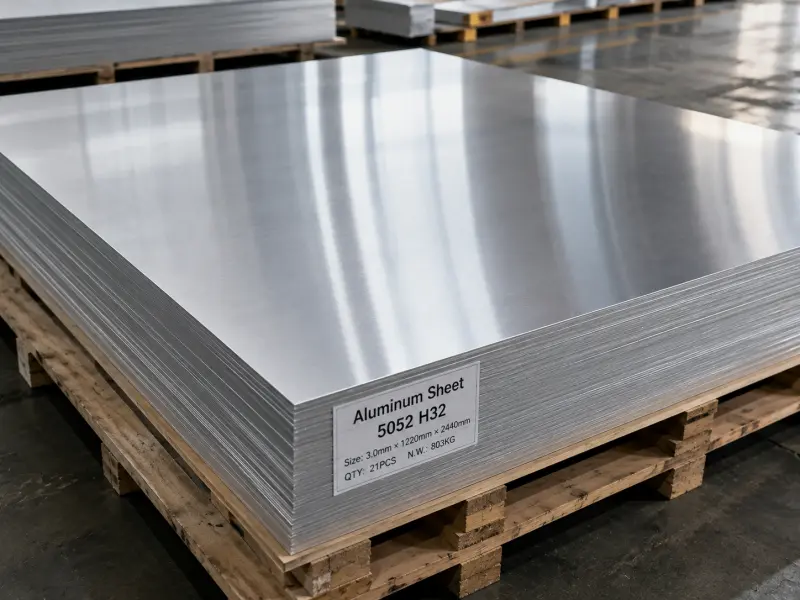
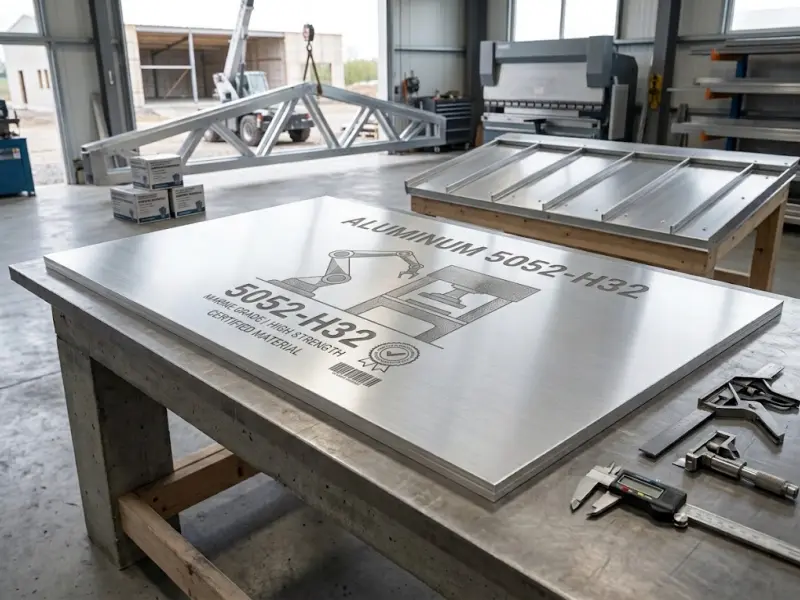
You will find this alloy on boats, road signs, fuel tanks, and architectural panels.
It is not as strong as heat-treated 6061, but it welds easier.
It is stronger than 3003, but it still forms on a brake. For buyers who need one metal to handle many jobs, Aluminum 5052 H32 is often the answer.
The Alloy Recipe: What 5052 Really Is
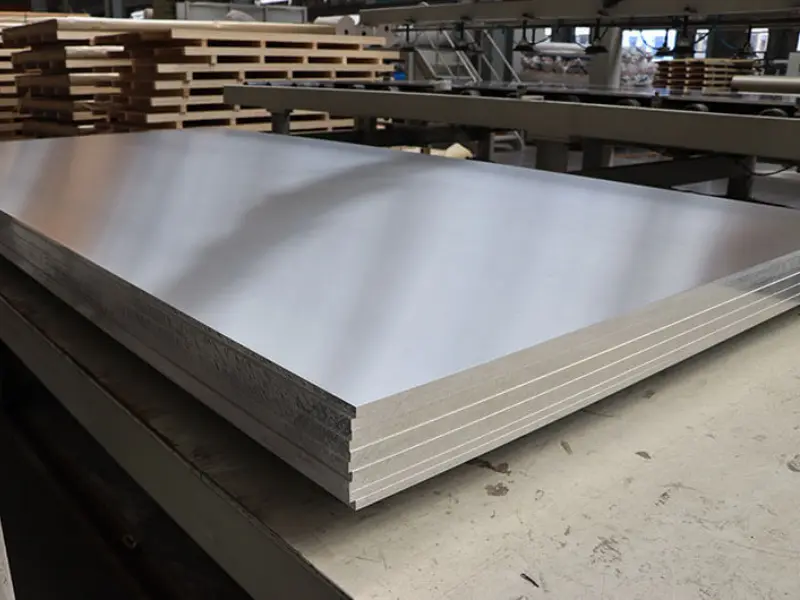
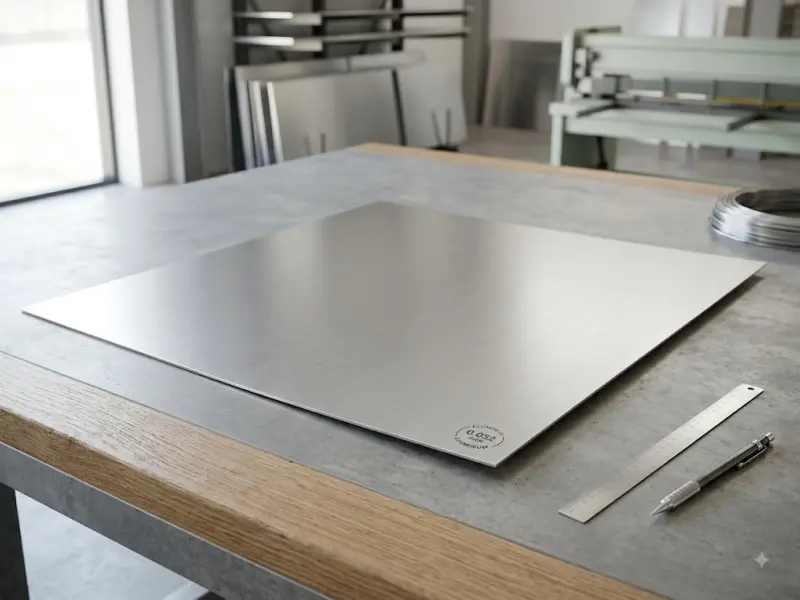
The 5052 designation is not a brand name. It is a chemical recipe. The Aluminum Association defines it as an aluminum-magnesium alloy.
Magnesium makes up about 2.2 to 2.8 percent of the mix. Chromium sits at roughly 0.15 to 0.35 percent. Iron, silicon, copper, and zinc are held to very low levels. This clean mix is why 5052 resists corrosion so well.
Because it is not heat-treatable, 5052 gets its strength from cold working. Rolling, stretching, and pressing make it harder. The H32 temper is the sweet spot where the metal is strong but still workable.
| Element | Typical Range | Role |
|---|---|---|
| Aluminum | Balance | Base metal |
| Magnesium | 2.2–2.8% | Strength and corrosion resistance |
| Chromium | 0.15–0.35% | Grain control, corrosion boost |
| Iron | Max 0.40% | Kept low to protect ductility |
| Silicon | Max 0.25% | Kept low to protect weldability |
| Copper | Max 0.10% | Kept low to prevent corrosion |
| Zinc | Max 0.10% | Kept low for marine safety |
What H32 Temper Means in Simple Terms
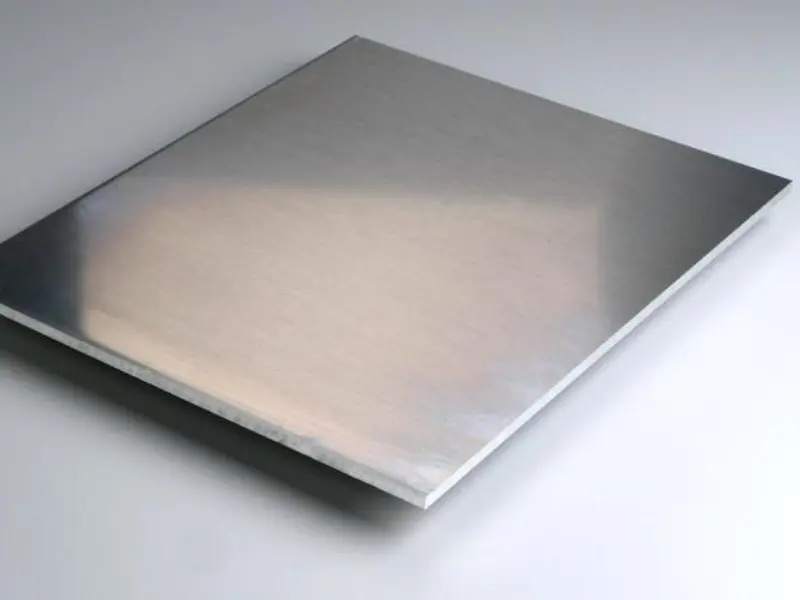
Temper describes how the metal was treated after the final rolling pass. H32 is a strain-hardened and stabilized condition. Here is how that breaks down.
The H stands for strain hardened. The metal was rolled thinner than its final gauge, which made it harder.
The 3 means it is quarter-hard. It still has plenty of bend left in it. The 2 means it was stabilized with a low-temperature heat treatment. That removes internal stress so the sheet does not warp later when you cut or weld it.
In practical terms, H32 is harder than annealed O temper but softer than H34 or H36. It is the most common temper for 5052 sheet because it balances stiffness with formability.
| Temper | Hardness Level | Bendability | Best Use |
|---|---|---|---|
| O | Fully annealed | Excellent | Deep drawing, complex shapes |
| H32 | Quarter hard, stabilized | Very good | General fabrication, marine, signs |
| H34 | Half hard, stabilized | Good | Structural panels, less forming |
| H36 | Three-quarter hard | Moderate | Rigid parts, minimal bending |
| H38 | Fully hard | Low | Flat panels, spring applications |
| H112 | Strain hardened, low temp | Good | Plate stock, less precise control |
Key Properties Buyers Care About
Before you place an order, you want hard numbers. Here is how Aluminum 5052 H32 performs on standard tests.
| Property | Typical Value | Notes |
|---|---|---|
| Density | 2.68 g/cm³ | Light, about one-third of steel |
| Tensile strength | 230–280 MPa | Stronger than 3003, softer than 6061 |
| Yield strength | 190–240 MPa | Where permanent bending starts |
| Elongation | 12–18% | Good ductility for forming |
| Shear strength | 150–170 MPa | Important for punched holes |
| Hardness (Brinell) | 60–75 HB | Resists surface dents |
| Melting point | 607–650°C | Safe for normal welding |
| Thermal conductivity | 138 W/m·K | Good heat spread |
| Electrical conductivity | 35% IACS | Lower than pure aluminum |
5052 H32 vs 3003 H14: The Everyday Debate
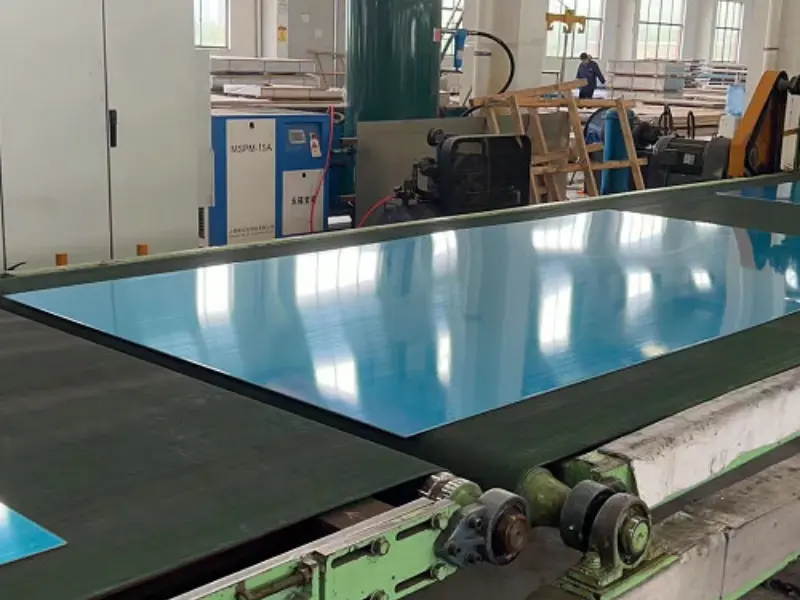
These two alloys compete for the same jobs. Knowing where each wins saves money and prevents failures.
3003 is a manganese alloy. It is softer and cheaper. For it forms into tighter bends than 5052. It is the default for general sheet metal, gutters, and roofing in mild climates.
5052 H32 adds magnesium. That makes it roughly 40 percent stronger than 3003 H14. It also resists saltwater corrosion far better. If your project lives near the ocean or handles chemicals, 5052 is the safer bet. The trade-off is a slightly larger bend radius and a higher price per pound.
| Factor | 3003 H14 | 5052 H32 |
|---|---|---|
| Tensile strength | ~140–180 MPa | ~230–280 MPa |
| Yield strength | ~115–145 MPa | ~190–240 MPa |
| Salt spray resistance | Good | Excellent |
| Formability | Excellent | Very good |
| Weldability | Very good | Good (use 5356 filler) |
| Typical cost | Lower | 15–25% higher |
| Best climate | Inland, temperate | Coastal, marine, industrial |
5052 H32 vs 6061 T6: Strength vs Workability
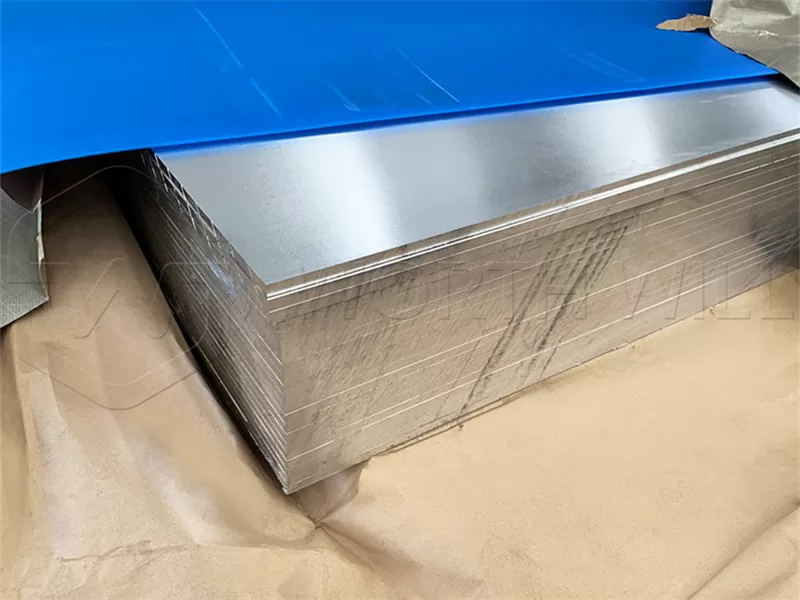
6061 T6 is the king of structural aluminum. It is heat-treated to very high strength. But that strength comes with drawbacks.
6061 T6 is much harder to bend. Tight bends can crack the metal. It also needs 4043 or 5356 filler rod and careful heat control when welding. 5052 H32 is softer, more forgiving, and easier to form into curves and boxes. It welds cleanly with 5356 rod.
If you need brackets, frames, or load-bearing beams, 6061 T6 is the choice. If you need tanks, hulls, or panels that must be shaped in the field, Aluminum 5052 H32 is the better fit.
| Factor | 5052 H32 | 6061 T6 |
|---|---|---|
| Tensile strength | ~230–280 MPa | ~290–310 MPa |
| Yield strength | ~190–240 MPa | ~240–275 MPa |
| Bendability | Very good | Poor |
| Weldability | Good | Good (requires skill) |
| Corrosion resistance | Excellent | Good |
| Heat treatable | No | Yes |
| Best use | Tanks, marine, signs | Structural, machine parts |
5052 H32 vs 5083 H321: Marine Cousins
5083 is another magnesium alloy. It is even stronger than 5052 and is rated for marine hulls and pressure vessels. However, 5083 is harder to form and more expensive.
For small boats, trailer parts, and architectural trim, 5052 H32 delivers enough strength at a lower cost. For large ship hulls and cryogenic tanks, 5083 H321 is the code-required upgrade.
| Factor | 5052 H32 | 5083 H321 |
|---|---|---|
| Tensile strength | ~230–280 MPa | ~270–350 MPa |
| Yield strength | ~190–240 MPa | ~210–280 MPa |
| Formability | Very good | Moderate |
| Cost | Medium | Higher |
| Typical use | Small craft, panels, tanks | Ship hulls, LNG tanks, armor |
Thickness Guide: From Thin Sheet to Thick Plate
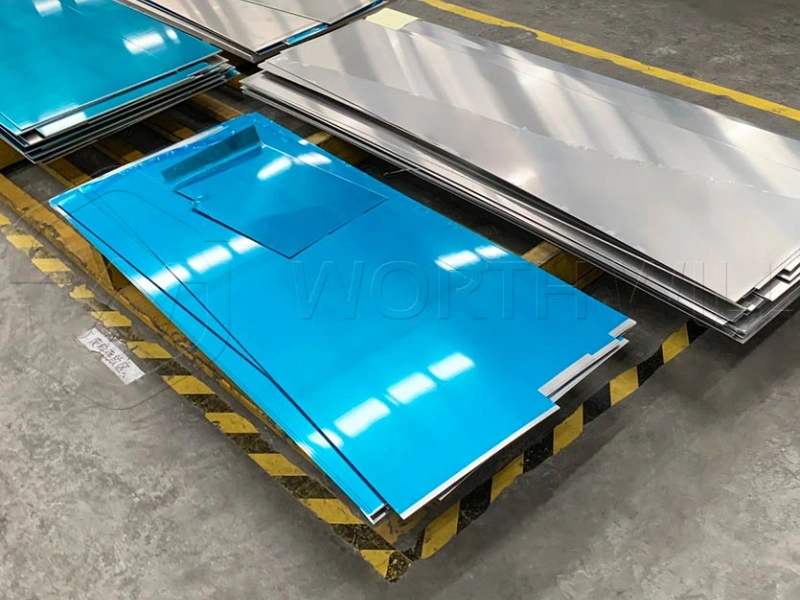
Aluminum 5052 H32 is available in a wide range of thicknesses. The industry calls anything up to 0.249 inches sheet. Above that is plate.
| Thickness (inches) | Thickness (mm) | Weight per sq ft | Common Form | Typical Use |
|---|---|---|---|---|
| 0.032 | 0.81 | 0.46 lbs | Sheet | Signs, trim, light panels |
| 0.040 | 1.02 | 0.57 lbs | Sheet | Enclosures, decorative panels |
| 0.063 | 1.60 | 0.90 lbs | Sheet | Brackets, marine panels |
| 0.080 | 2.03 | 1.14 lbs | Sheet | Heavy panels, guards |
| 0.125 | 3.18 | 1.78 lbs | Sheet / Plate | Structural panels, tanks |
| 0.188 | 4.78 | 2.67 lbs | Plate | Thick guards, marine fittings |
| 0.250 | 6.35 | 3.56 lbs | Plate | Manways, heavy brackets |
| 0.375 | 9.53 | 5.34 lbs | Plate | Pressure vessel parts |
| 0.500 | 12.70 | 7.12 lbs | Plate | Thick structural bases |
The most popular stock sizes for sheet are 48 by 96 inches, 48 by 120 inches, and 60 by 120 inches. Plate is often stocked at 48 by 144 inches or 60 by 144 inches.
Standard Sizes That Ship Fast
Most distributors keep Aluminum 5052 H32 in standard dimensions. Custom cutting is widely available but adds lead time.
| Width (inches) | Length (inches) | Thickness Range | Typical Use |
|---|---|---|---|
| 48 | 96 | 0.032–0.125 | General fabrication |
| 48 | 120 | 0.032–0.125 | Roofing, long panels |
| 60 | 120 | 0.040–0.188 | Wide panels, marine |
| 48 | 144 | 0.125–0.500 | Plate stock, heavy parts |
| 60 | 144 | 0.125–0.500 | Industrial plate |
Perforated Sheet
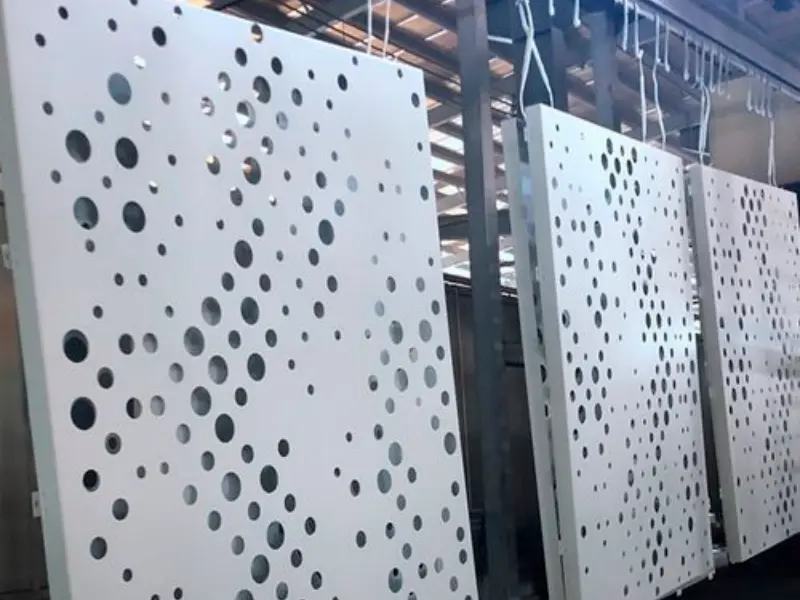
Round, square, or slotted holes are punched through the metal. Perforated 5052 H32 is used for screens, vents, and filters where corrosion resistance matters.
Expanded Metal
A knife cuts and stretches the sheet into a mesh. No material is removed. Expanded 5052 H32 works for grilles, guards, and safety barriers.
Precision Blanks
Pre-cut squares, rectangles, and circles save time in CNC shops. Blanks are often sold with protective film to prevent scratches during handling.
| Product Type | Surface | Key Benefit | Best For |
|---|---|---|---|
| Flat sheet | Mill or painted | Versatile, easy to shear | General fabrication |
| Coil | Mill | Continuous feed | Roll forming, stamping |
| Tread plate | Diamond pattern | Slip resistant | Walkways, ramps, floors |
| Perforated | Holes | Airflow, filtration | Vents, screens, guards |
| Expanded | Mesh | Light, strong | Grilles, safety barriers |
| Blanks | Any | Ready to machine | CNC shops, small parts |
Product Types: More Than Just Flat Sheet
Manufacturers and distributors offer 5052 H32 in many forms. Each one suits a different workflow.
Flat Sheet and Plate
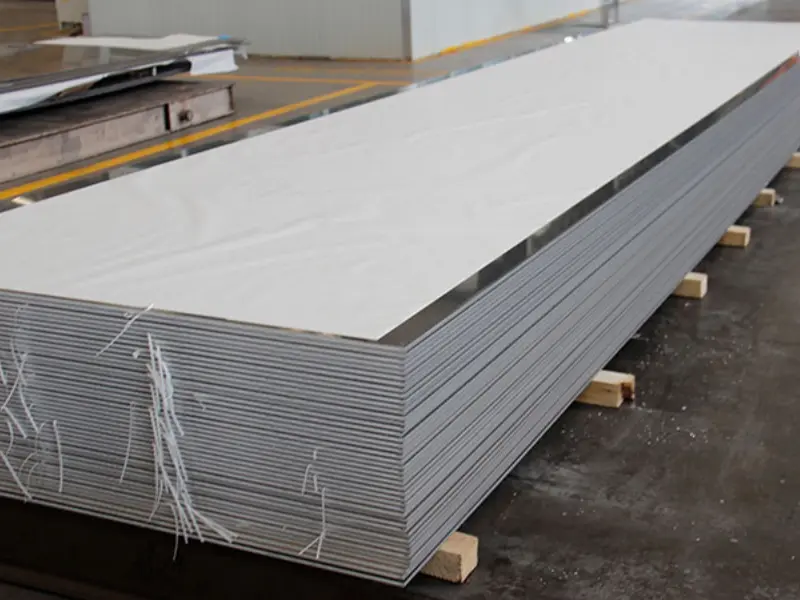
This is the baseline. Mill finish or painted sheets arrive flat on a pallet. Fabricators shear, bend, and weld them into final parts. Thickness ranges from 0.032 inches up to several inches.
Coil and Strip
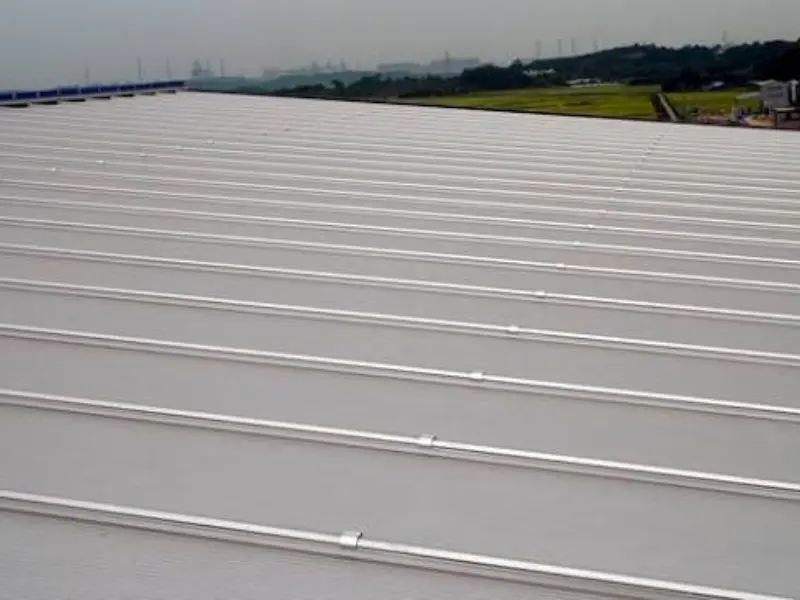
Coiled sheet allows roll formers and stamping presses to run continuously. Slit coil is common for trim, flashing, and long runs of roofing. Widths from 12 inches to 60 inches are standard.
Tread Plate (Diamond Plate)
Raised diamond patterns are pressed into the surface. Tread plate in 5052 H32 is popular for truck beds, loading ramps, and walkway surfaces. The pattern adds slip resistance and hides scratches.
Surface Finishes: Raw, Painted, and Beyond
The surface treatment changes how the metal looks and how long it stays that way.
Mill Finish
Bare aluminum with a dull silver look. Mill finish is the cheapest option. It will oxidize slightly over time but will not rust. It is common for hidden parts, weld-ready panels, and paint prep.
Color-Coated
PE or PVDF paint is applied at the factory. 5052 H32 holds paint better than many alloys because its surface chemistry is clean. Painted sheets are popular for architectural panels, signage, and marine trim where color coding matters.
Anodized
Anodizing grows a hard oxide layer. Clear anodizing keeps the metallic look. Color anodizing adds bronze or black tones. 5052 anodizes well, though the finish is slightly less uniform than on 6061. It is common for decorative trim and nameplates.
Tread and Embossed
Stucco embossed 5052 H32 adds stiffness and hides fingerprints. Tread plate adds grip. Both finishes are functional rather than purely cosmetic.
| Finish | Appearance | Maintenance | Best Application |
|---|---|---|---|
| Mill finish | Dull silver | None | Hidden parts, paint prep |
| PE painted | Solid color | Very low | Budget architectural |
| PVDF painted | Solid color | Very low | Premium exterior panels |
| Clear anodized | Metallic sheen | Low | Decorative trim |
| Color anodized | Bronze, black | Low | Nameplates, accents |
| Tread plate | Diamond texture | Very low | Floors, ramps |
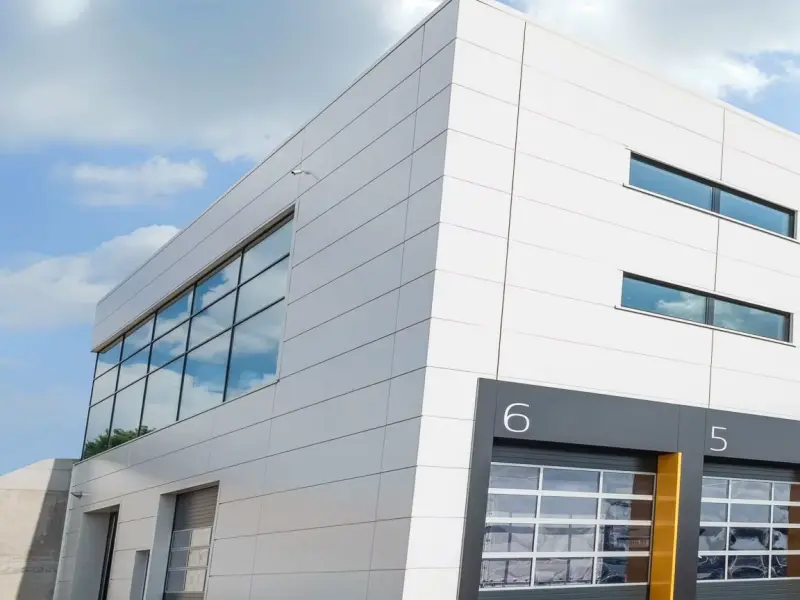
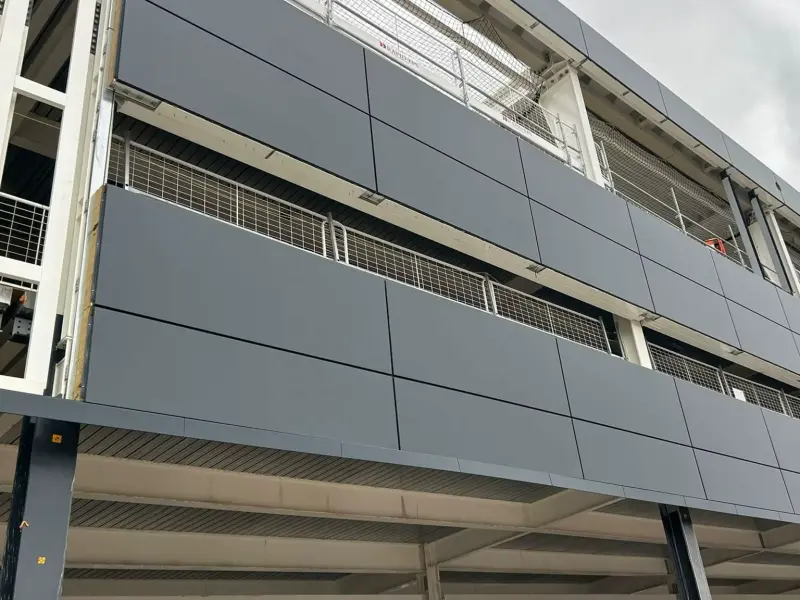
Where Industries Put 5052 H32 to Work
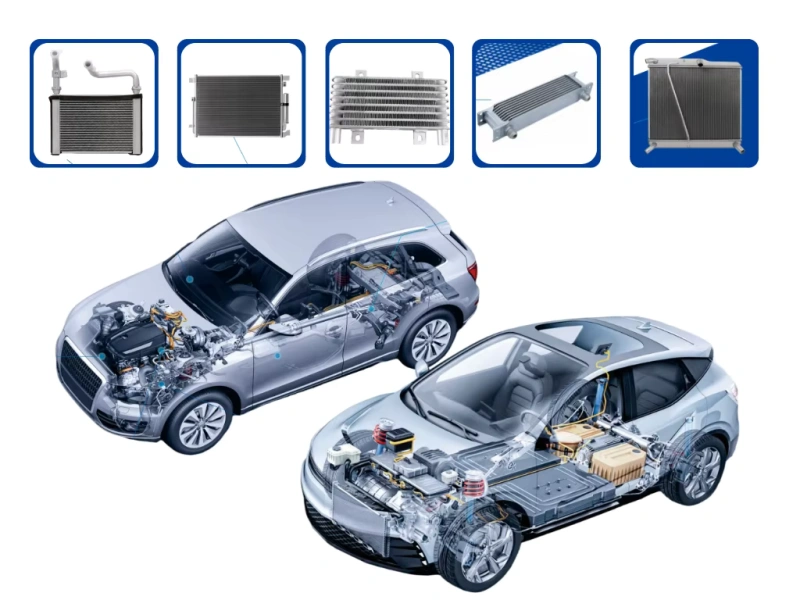
This alloy shows up in more places than you might expect. Here are the top applications:
Sound equipment chassis – dampens vibration and resists tour wear
Boat hulls and decks – resists saltwater without heavy paint systems
Fuel tanks – welds tight and resists corrosion from ethanol blends
Road and traffic signs – strong enough for wind loads, light enough for easy install
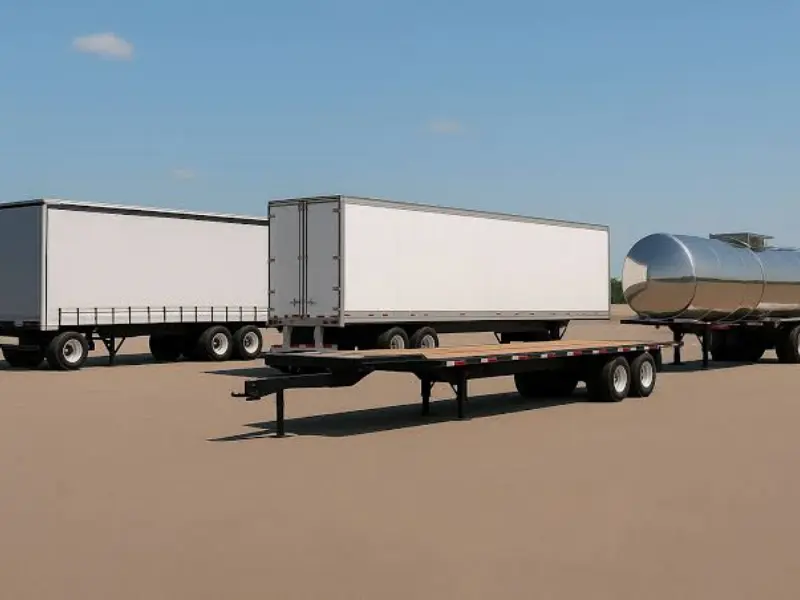
Truck and trailer bodies – tread plate floors resist road salt
Aircraft and aerospace parts – non-critical panels and brackets
Architectural facades – painted panels hold color near the ocean
Pressure vessels – chemical tanks and cryogenic containers
Electrical enclosures – non-magnetic and corrosion resistant
Food processing equipment – meets hygiene standards with proper finish
Robotics and automation frames – light weight reduces motor load
Medical device housings – anodized for clean, sterile surfaces
Welding 5052 H32: What You Need to Know
This alloy welds well with the right filler. Use 5356 aluminum-magnesium rod for MIG or TIG. Avoid 4043. The silicon in 4043 can cause cracking in 5052 joints.
Keep heat input moderate. 5052 is not heat-treatable, so overheating does not help strength. It only warps the panel. Preheat is rarely needed for sheet under 0.125 inches. For thick plate, a gentle preheat to 100°C helps.
After welding, the heat-affected zone loses some hardness. If strength is critical, design the weld area to handle lower yield or use a thicker gauge.
Machining and Cutting Tips
5052 H32 machines differently than 6061. It is gummier. It tends to build up on the tool edge.
Use sharp carbide tools with high rake angles. Flood coolant helps prevent chip welding. For drilling, use parabolic flute drills designed for aluminum.
Shearing and punching work well because the alloy is ductile. Tread plate may need a larger punch clearance because the raised pattern affects how the metal flows.
Cost Factors: What Moves the Price
Not all Aluminum 5052 H32 costs the same. Several variables affect the invoice.
| Factor | Low Cost Option | High Cost Option | Price Impact |
|---|---|---|---|
| Thickness | 0.032″ sheet | 0.500″ plate | +300% or more |
| Size | Standard 4×8 sheet | Custom cut per piece | Cutting fees apply |
| Finish | Mill finish | PVDF painted | +20–50% |
| Quantity | Full plate/sheet bundle | One or two pieces | +20–30% premium |
| Certification | Commercial grade | ASTM B209, AMS 4015 | Slight upcharge |
| Tread or embossed | Flat sheet | Tread plate | +10–20% |
Quality Standards and Certifications
Reputable suppliers certify their metal. Here are the common standards.
| Standard | Region | Focus |
|---|---|---|
| ASTM B209 | USA | Sheet and plate specs, mechanical properties |
| AMS 4015 | Aerospace | 5052 H32 sheet, strict alloy control |
| AMS 4016 | Aerospace | 5052 H32 plate |
| EN 485-2 | Europe | Tensile strength, tolerances |
| GB/T 3880 | China | Thickness, width, flatness |
| JIS H4000 | Japan | Sheet and plate quality |
Always ask for a mill test certificate if your project requires traceability. This document proves the alloy, temper, and mechanical properties match your order.
Frequently Asked Questions
What does H32 mean in aluminum 5052?
H32 means the metal is strain hardened to quarter-hard and then stabilized with a low heat treatment. It is stronger than annealed O temper but still bends well.
Can you bend 5052 H32 aluminum?
Yes. It bends very well on a standard brake. The recommended inside bend radius is about one to two times the material thickness. It is not as soft as 3003, so do not try zero-radius bends.
Is 5052 H32 marine grade?
It is widely used in marine environments. It resists saltwater corrosion better than 3003 or 6061. However, for hulls on large commercial vessels, 5083 H321 is often the code-required grade. For small boats, docks, and marine hardware, 5052 H32 is excellent.
What filler rod should I use to weld 5052 H32?
Use 5356 aluminum-magnesium filler rod. Do not use 4043. The silicon in 4043 can cause cracks in 5052 joints.
How does 5052 H32 compare to 3003 H14?
5052 H32 is roughly 40 percent stronger and far more resistant to saltwater. 3003 H14 is softer, cheaper, and forms tighter bends. Use 3003 for inland gutters and trim. Use 5052 for coastal and chemical exposure.
What thicknesses are available in 5052 H32?
Sheet ranges from 0.032 inches up to 0.249 inches. Plate starts at 0.250 inches and goes up to several inches thick. Coil is available in thinner gauges down to about 0.016 inches.
Can 5052 H32 be anodized?
Yes. It anodizes well, though the finish may be slightly less uniform than on 6061. Clear and color anodizing are both common. It is a popular choice for decorative trim and nameplates.
Is 5052 H32 food safe?
Yes, with the right surface finish. Bare 5052 is non-toxic. For food contact surfaces, use a smooth mill finish or anodized layer. Avoid deep scratches where bacteria could hide.
What is the difference between 5052 H32 and H34?
H32 is quarter-hard. H34 is half-hard. H34 is stronger and stiffer but harder to bend. H32 is the more common choice for general fabrication because it offers a better balance of strength and formability.
Can I use 5052 H32 for structural loads?
It can handle moderate loads in tanks, panels, and brackets. For heavy structural beams and frames, 6061 T6 or 5083 H321 are better choices because they offer higher yield strength.