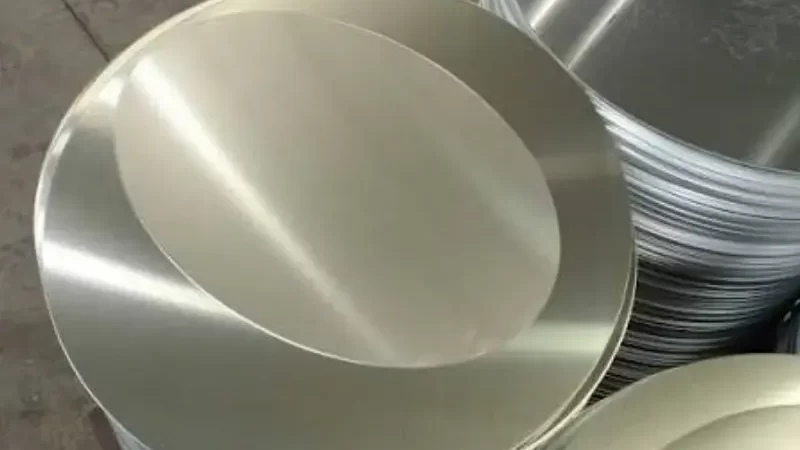
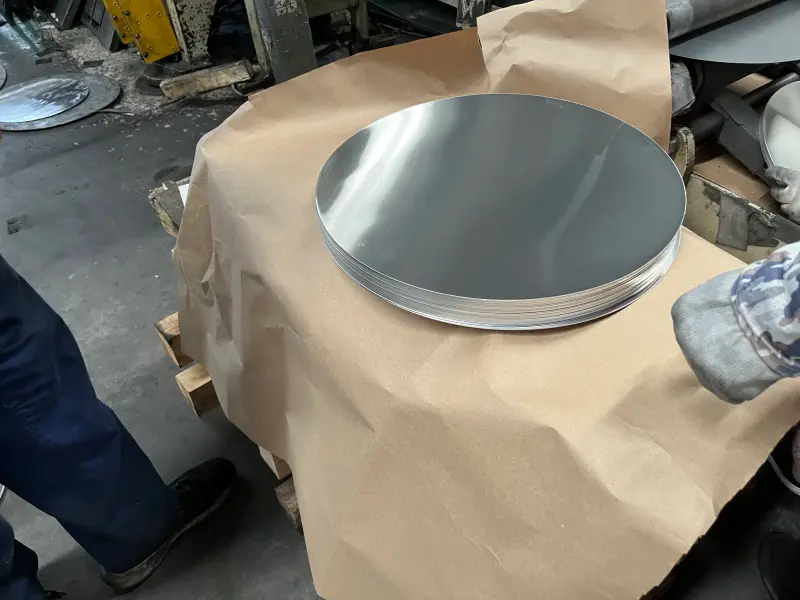
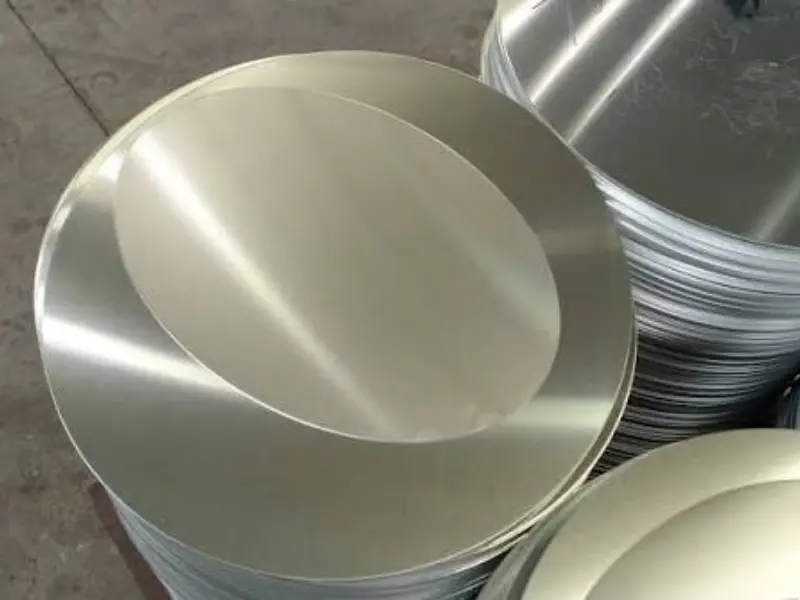
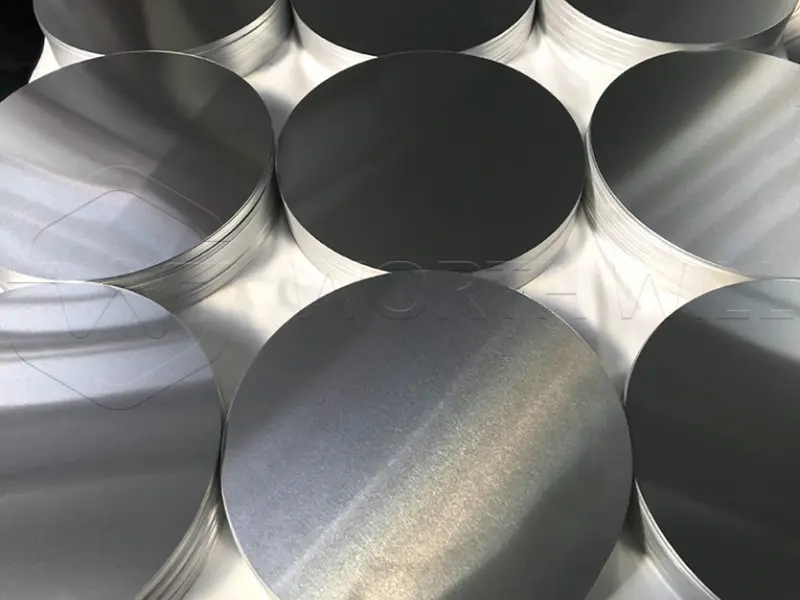
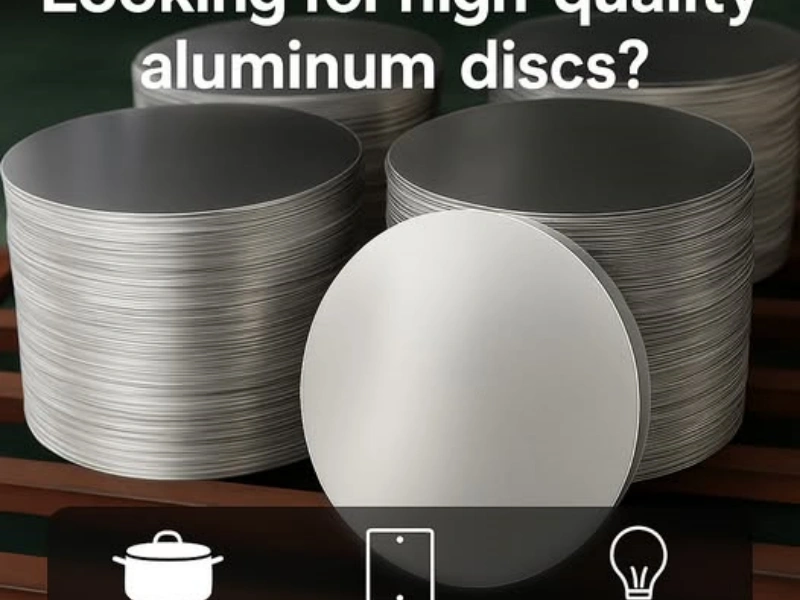
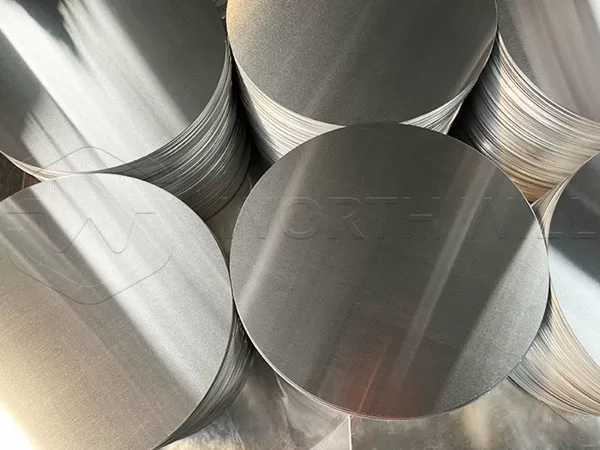
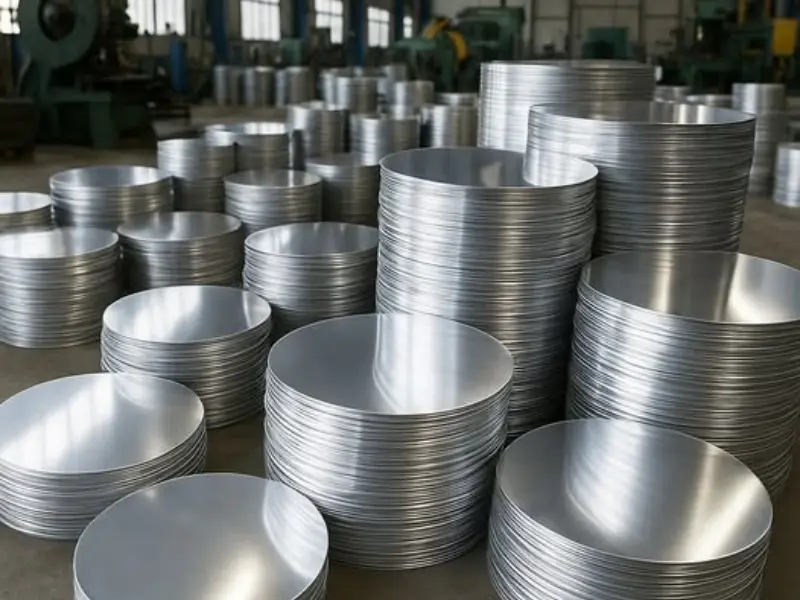
Aluminum Circle Manufacturers are round aluminum blanks made from aluminum sheet or coil. They are used in cookware, lighting, traffic signs, road signs, pressure vessels, packaging, decoration, and many other products.
Choosing the right aluminum circle manufacturers is important when the order requires stable diameter, even thickness, good surface quality, and reliable forming performance.
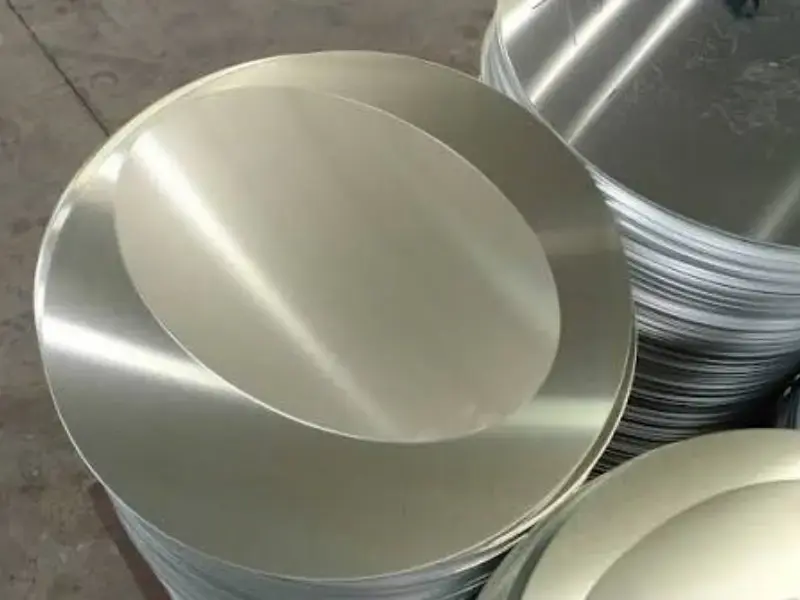
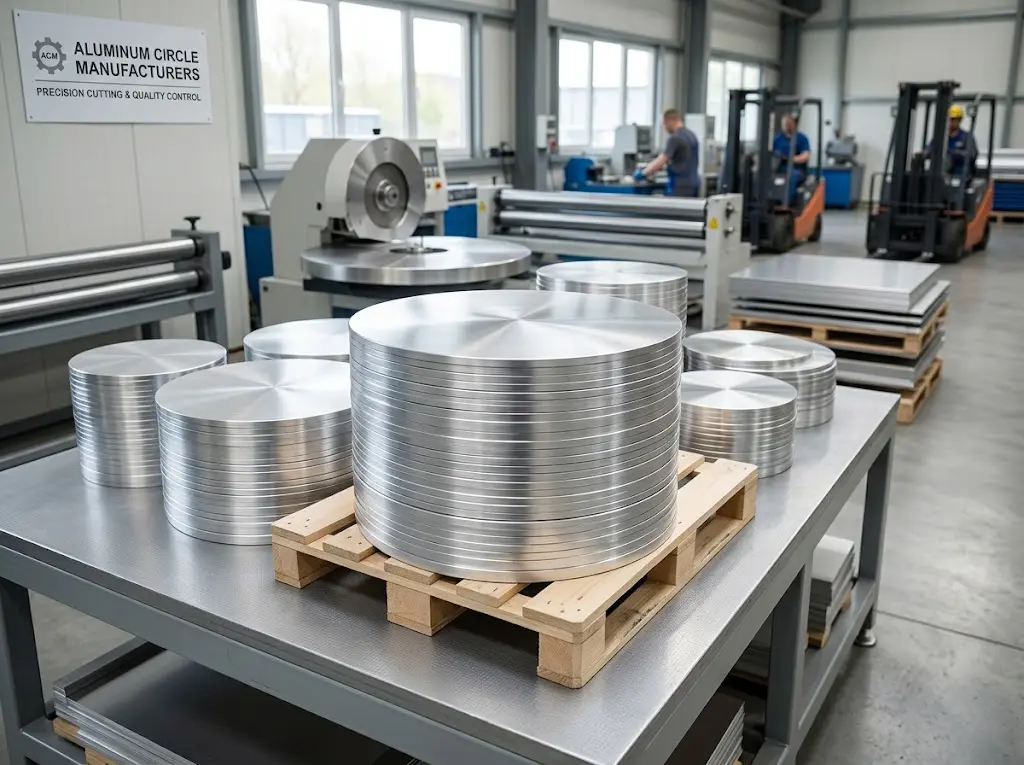
An aluminum circle is a simple product, but the production details matter. Alloy, temper, diameter, thickness, blanking method, edge quality, and surface finish can all affect the final result.
For buyers, it is useful to compare these details before placing a bulk order.
What Is an Aluminum Circle?
An aluminum circle is a round piece of aluminum cut from a sheet or coil.
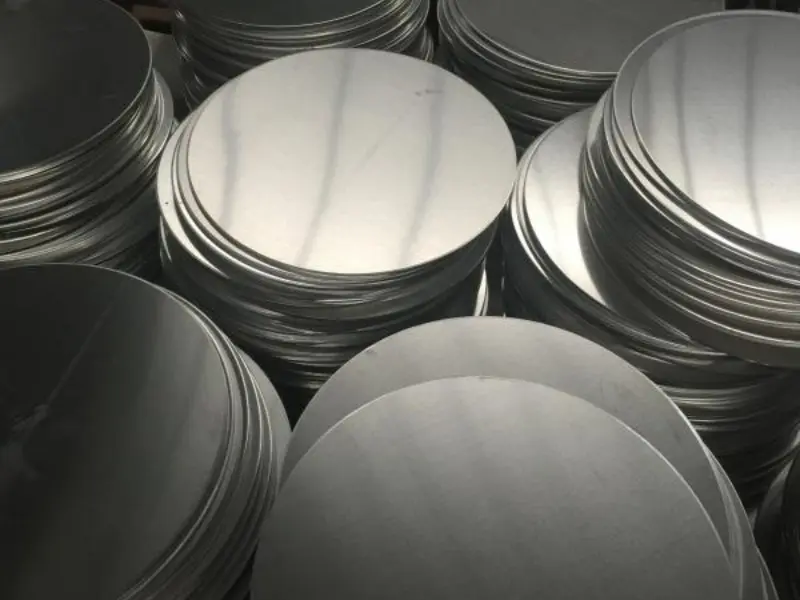
The basic production route is:
Aluminum Coil → Leveling → Blanking → Circle → Edge Inspection → Surface Inspection → Packing
Some manufacturers use stamping or punching equipment to produce the round blanks. Others use cutting equipment designed for high-volume production.
The finished circles can be supplied with different diameters and thicknesses.
| Item | Common Options |
|---|---|
| Alloy | 1050, 1060, 1070, 1100, 3003, 3004, 5052 |
| Temper | O, H12, H14, H16, H18 |
| Diameter | 80–1000+ mm |
| Thickness | 0.3–6.0 mm |
| Surface | Mill finish, anodized, polished |
| Shape | Round |
| Edge | Smooth or standard blanked edge |
| Application | Cookware, lighting, signs, etc. |
Exact ranges depend on the manufacturer’s equipment and production requirements.
Common Aluminum Circle Sizes
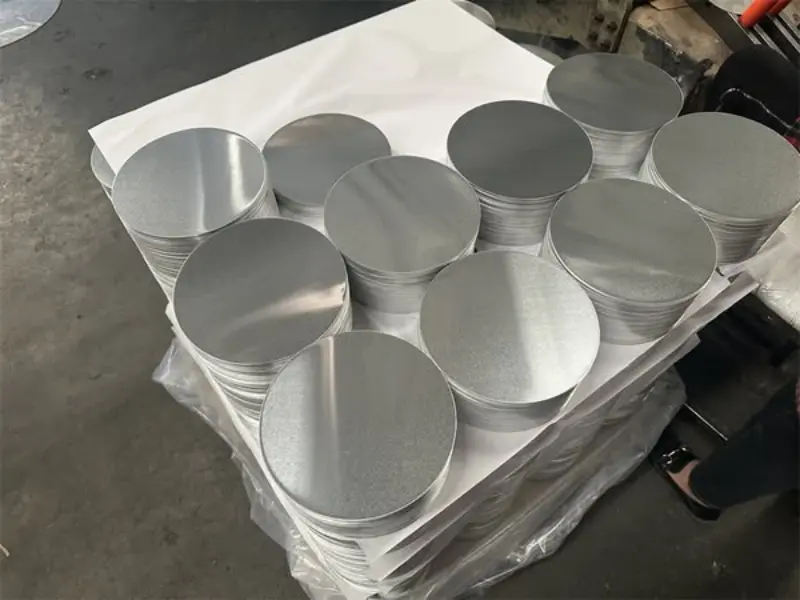
Diameter is one of the first specifications buyers provide.
| Diameter | Typical Product Direction |
|---|---|
| 80 mm | Small components |
| 100 mm | Small cookware parts |
| 120 mm | Lighting and household products |
| 150 mm | Small cookware |
| 180 mm | Cookware and utensils |
| 200 mm | Pans and containers |
| 220 mm | Cookware |
| 250 mm | Frying pans |
| 300 mm | Large cookware |
| 350 mm | Large pans |
| 400 mm | Industrial products |
| 500 mm | Large formed components |
| 600 mm+ | Industrial applications |
Custom diameters can be produced according to the customer’s drawing or production requirements.
Aluminum Circle Thickness Options
Aluminum Circle Manufacturers Thickness affects forming, weight, rigidity, and the final product.
| Thickness | Typical Use |
|---|---|
| 0.30 mm | Light components |
| 0.40 mm | Lighting and decoration |
| 0.50 mm | Small household products |
| 0.60 mm | Cookware and general forming |
| 0.80 mm | Cookware and lighting |
| 1.00 mm | Pans and containers |
| 1.20 mm | Formed products |
| 1.50 mm | Heavy cookware |
| 2.00 mm | Industrial components |
| 3.00 mm+ | Heavy-duty applications |
A thicker blank is not always better. The correct thickness depends on the forming process and finished product.
Popular Aluminum Alloys for Circles
Different alloys provide different levels of formability and strength.
| Alloy | Common Temper | Main Feature |
|---|---|---|
| 1050 | O, H12, H14 | High purity and good forming |
| 1060 | O, H12, H14 | Excellent conductivity |
| 1070 | O | High aluminum content |
| 1100 | O, H14 | Good formability |
| 3003 | O, H12, H14 | Good balance of strength and forming |
| 3004 | O, H14 | Higher strength |
| 5052 | O, H32 | Higher strength and corrosion resistance |
The alloy should be selected according to the final product rather than price alone.
1050 Aluminum Circles
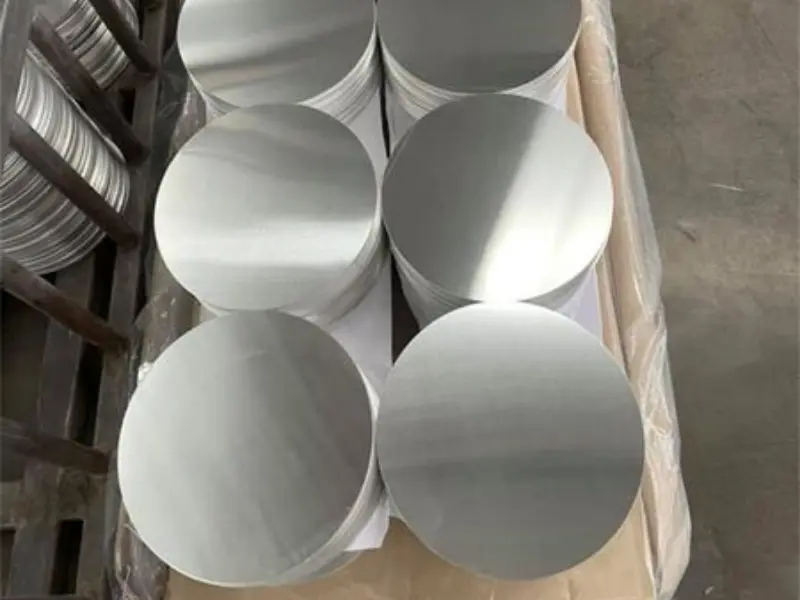
1050 aluminum is commonly used for applications that require high formability.
It can be used for:
- Cookware components
- Lighting reflectors
- Decorative parts
- Electrical products
- Heat-related components
- General stamping
1050-O is relatively soft and can be suitable for deep forming.
1060 Aluminum Circles
1060 provides high aluminum content and good electrical and thermal conductivity.
Common applications include:
→ Lighting products
→ Reflectors
→ Heat transfer components
→ Electrical applications
→ Decorative products
→ General stamped parts
It is a useful choice when formability and conductivity are more important than high strength.
1100 Aluminum Circles
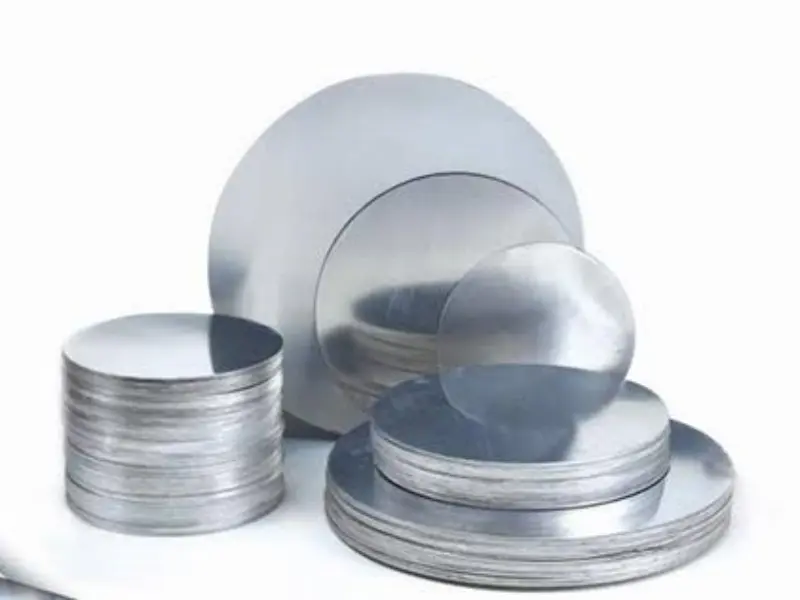
1100 is another common choice for aluminum circle production.
It offers good corrosion resistance and forming performance.
It can be used for:
Industrial products
Cookware
Lighting
Kitchen equipment
Decorative components
General stamping
3003 Aluminum Circles
3003 contains manganese and provides higher strength than many 1xxx series alloys.
It is widely considered for cookware and formed products.
Typical applications include:
- Frying pans
- Sauce pans
- Kitchen utensils
- Food containers
- Lighting components
- Industrial parts
3003 offers a useful balance between strength and formability.
3004 Aluminum Circles
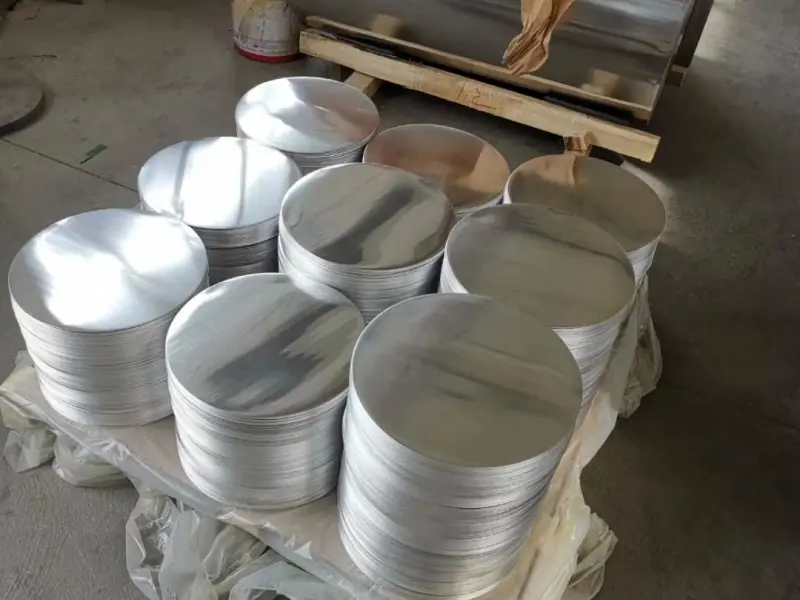
3004 provides higher strength and can be used for products that need more mechanical performance.
Applications may include:
→ Cookware
→ Food containers
→ Industrial vessels
→ Lighting products
→ Formed components
The selected temper should match the forming process.
5052 Aluminum Circles
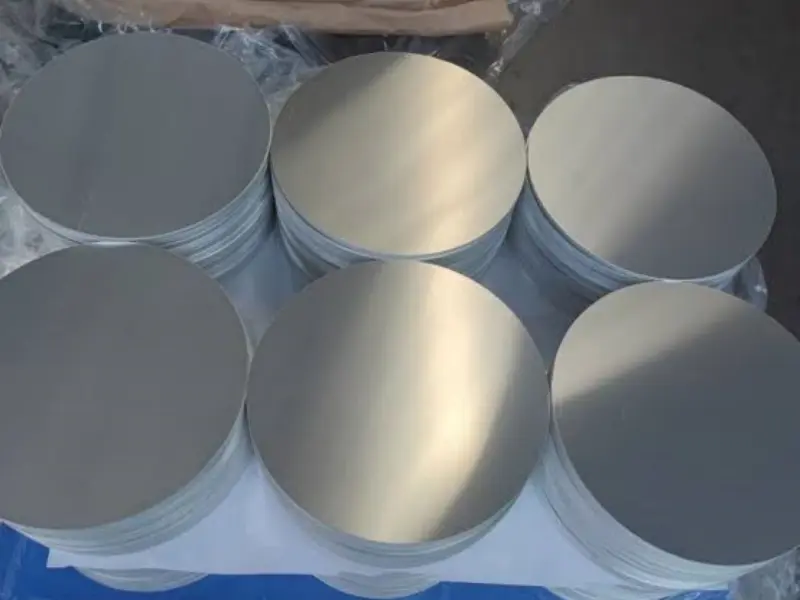
5052 is a higher-strength aluminum alloy with good corrosion resistance.
It can be considered for:
- Industrial components
- Marine-related products
- Heavy-duty containers
- Equipment parts
- Transportation components
5052 is stronger than many 1xxx series alloys, but it may require different forming conditions.
Choosing the Right Temper
Temper affects the hardness and forming behavior of the aluminum circle.
| Temper | General Condition | Forming |
|---|---|---|
| O | Annealed | Excellent |
| H12 | 1/4 hard | Good |
| H14 | 1/2 hard | Moderate |
| H16 | 3/4 hard | Lower |
| H18 | Full hard | Limited |
| H32 | Stabilized | Moderate |
For deep drawing, softer material is often preferred.
For products requiring higher strength, a harder temper may be selected.
The manufacturer should confirm the temper according to the customer’s forming process.
Aluminum Circles for Cookware
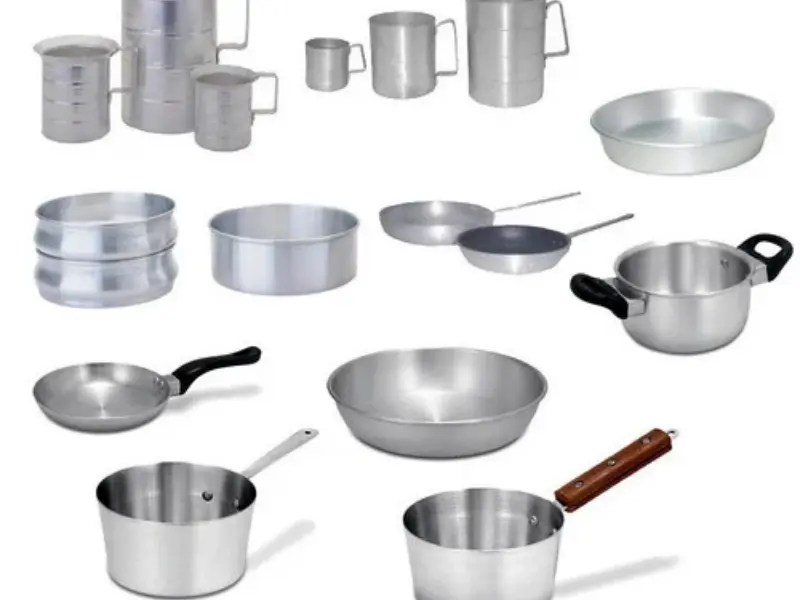
Cookware is one of the most important applications for aluminum circles.
The round blank is placed into a forming machine and shaped into the final product.
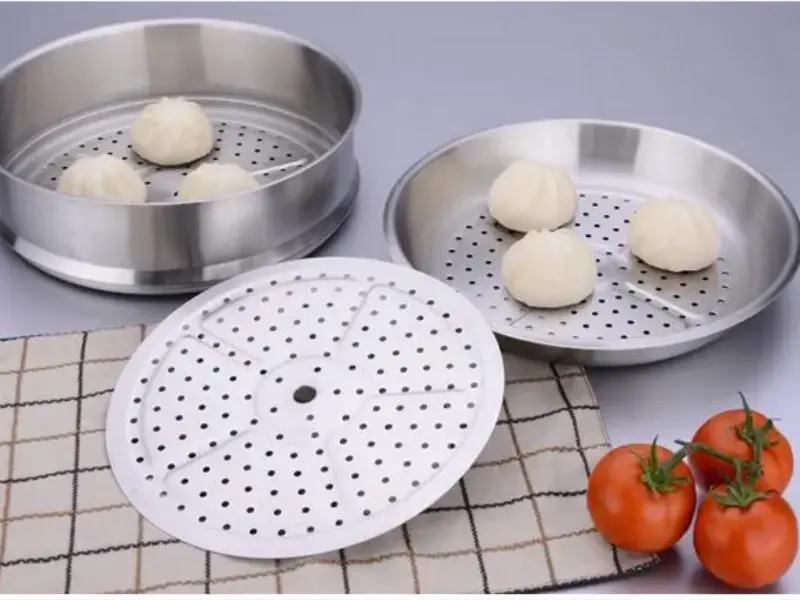
A typical process is:
Aluminum Circle
↓
Deep Drawing
↓
Pan Body
↓
Trimming
↓
Surface Treatment
↓
Final Cookware
Common products include:
- Frying pans
- Sauce pans
- Soup pots
- Cooking pots
- Pizza pans
- Baking trays
- Food containers
3003 and 3004 are common choices for many cookware applications.
Aluminum Circles for Frying Pans
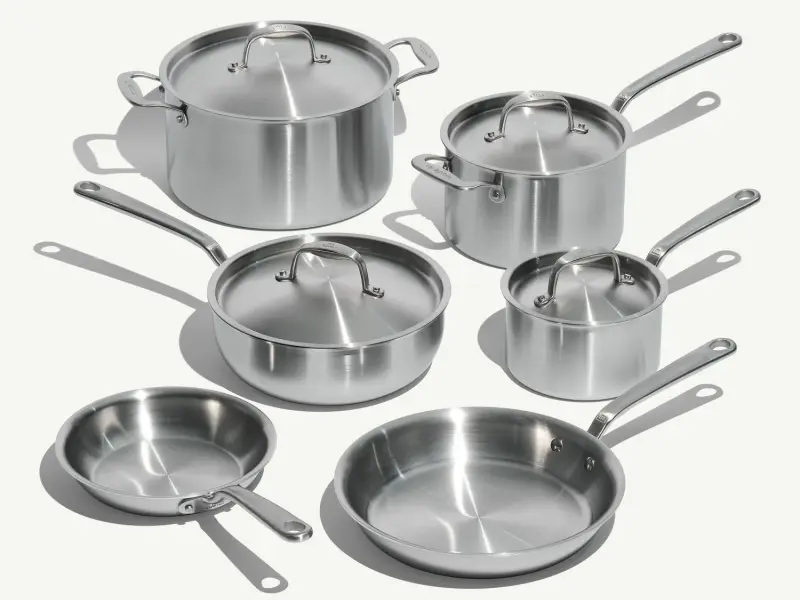
Frying pan production requires good forming performance.
The circle needs to withstand:
- Deep drawing
- Sidewall forming
- Bottom forming
- Trimming
- Surface treatment
A typical specification may look like:
| Item | Example |
|---|---|
| Alloy | 3003 |
| Temper | O |
| Diameter | 300 mm |
| Thickness | 2.0 mm |
| Surface | Mill finish |
| Application | Frying pan |
The actual specification depends on the pan design.
Aluminum Circles for Pots
Large circles can be used to manufacture cooking pots.
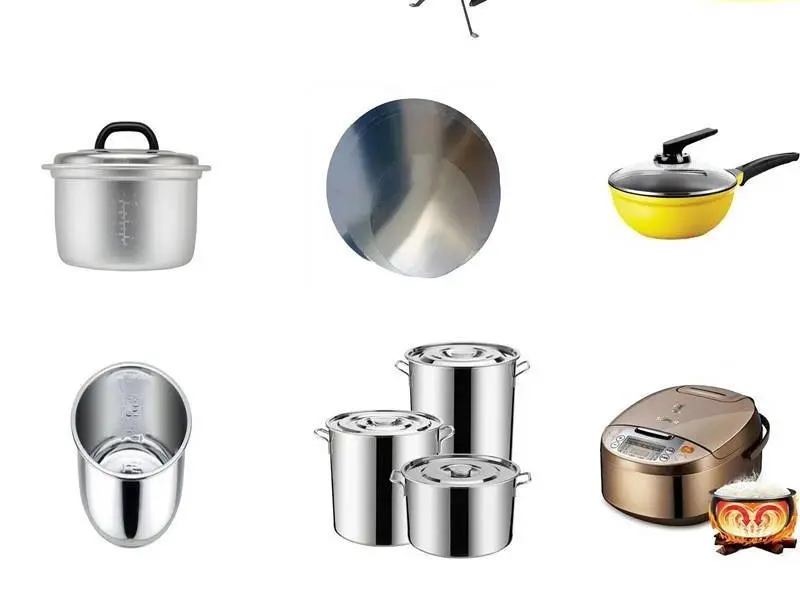
The required diameter and thickness depend on the finished pot size.
For deep-drawn cookware, the blank should have consistent thickness and good ductility.
A stable material helps reduce problems such as:
- Cracks
- Wrinkles
- Uneven walls
- Surface marks
- Excessive trimming
Aluminum Circles for Lighting
Aluminum circles are also widely used in lighting.
The material can be formed into reflectors and other components.
Applications include:
→ LED lights
→ Street lights
→ Industrial lights
→ Downlights
→ Reflectors
→ Lampshades
1060 and 1070 can be considered where high reflectivity and conductivity are important.
Aluminum Circles for Reflectors
Reflectors need a smooth and consistent surface.
The aluminum may be:
- Polished
- Anodized
- Bright finished
- Specially coated
The surface requirement should be specified before production.
For reflector applications, surface scratches and dents can affect the final appearance.
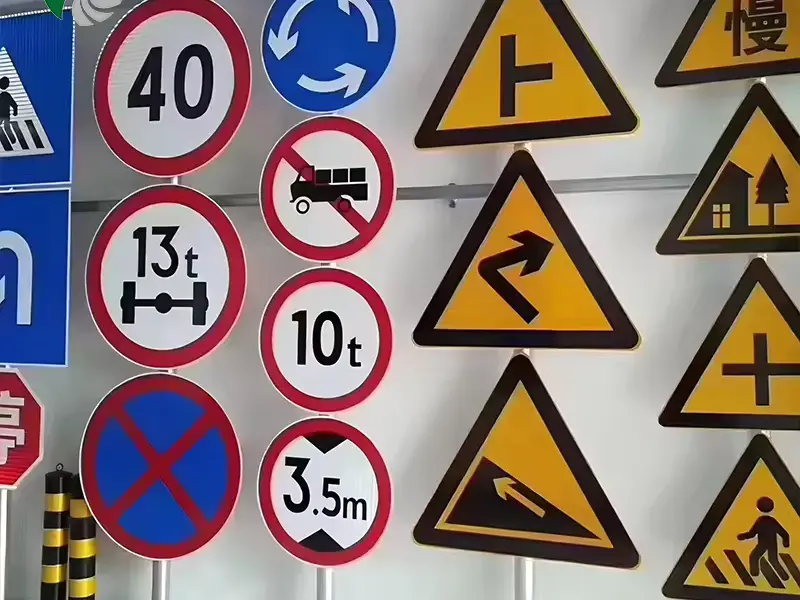
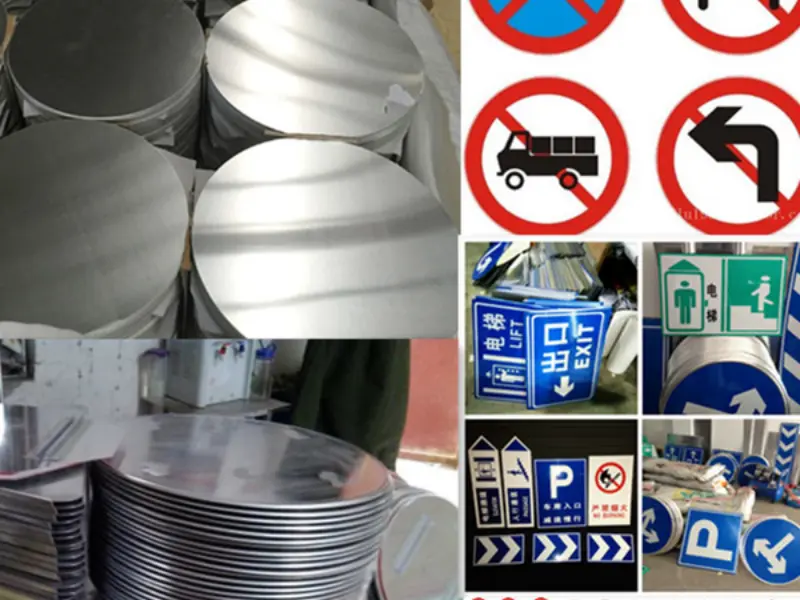
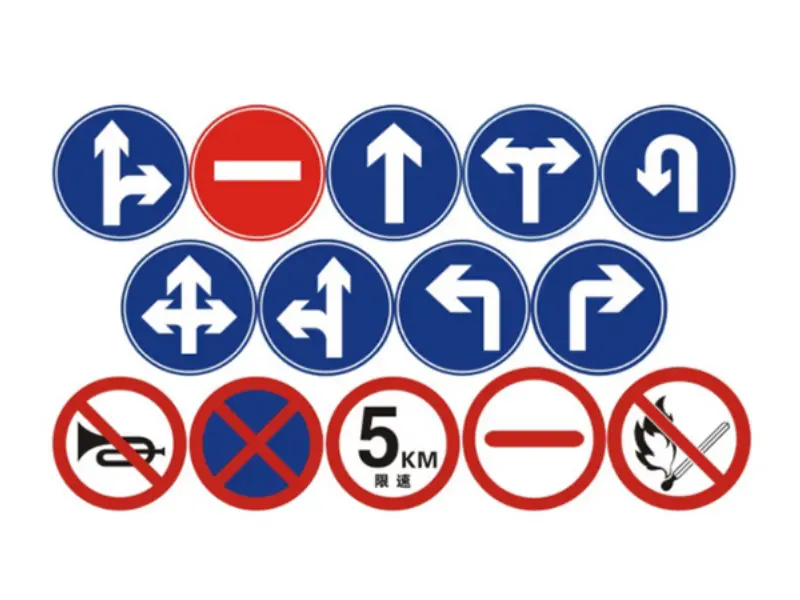
Aluminum Circles for Traffic Signs
Aluminum circles can be used as blanks for round traffic signs.
They offer:
- Low weight
- Corrosion resistance
- Easy processing
- Good outdoor performance
- Easy printing or coating
5052 and 3003 may be selected depending on the required strength and forming method.
Aluminum Circles for Road Signs

Road signs can use round or specially shaped aluminum blanks.
The surface can then be prepared for reflective film or printing.
The production route may be:
Aluminum Sheet → Circle Blank → Surface Preparation → Printing/Film → Sign
For outdoor signage, corrosion resistance and surface quality are important.
Aluminum Circles for Pressure Products
Some formed aluminum products require round blanks.
These may include:
- Containers
- Covers
- Vessels
- Industrial components
The alloy and temper must be selected according to the forming and safety requirements.
For pressure-related products, the material specification should be confirmed against the applicable standard before production.
Aluminum Circle Surface Finishes
The surface can change the appearance and final use of the product.
Mill Finish
This is the normal unfinished aluminum surface.
It is widely used for cookware, industrial forming, and general manufacturing.
Polished Aluminum Circle
Polished circles have a brighter surface.
They may be used for:
- Reflectors
- Decorative products
- Lighting
- Interior components
Anodized Aluminum Circle
Anodizing creates a protective oxide layer.
It can improve surface appearance and provide different decorative finishes.
Coated Aluminum Circle
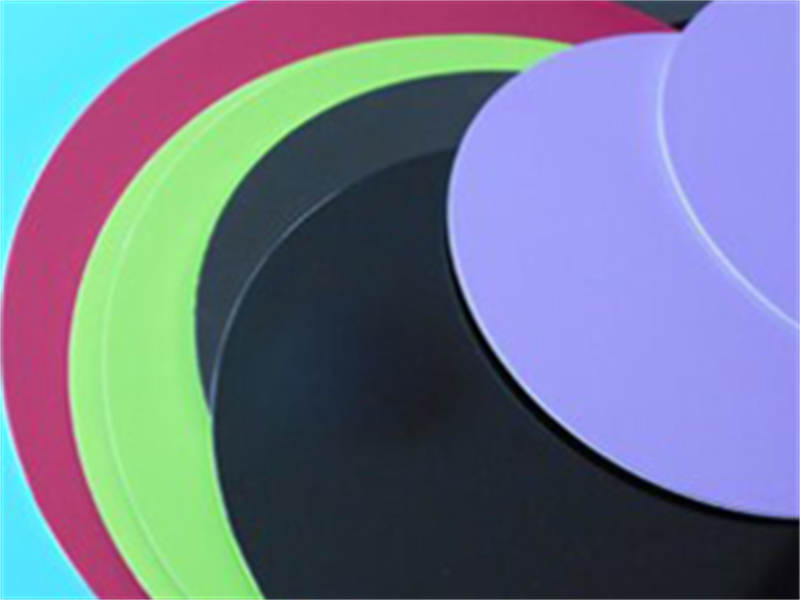
A coated surface can provide a specific color or additional surface protection.
The coating should be compatible with the forming process.
Aluminum Circle Blanking Methods
Manufacturers can use different methods to produce round blanks.
Stamping
Stamping is suitable for high-volume production.
The process is fast and can provide consistent dimensions.
Punching
Punching can be used for various diameters and production quantities.
Cutting
Cutting methods can be used for customized shapes and sizes.
For large-volume standard circles, dedicated blanking equipment is usually more efficient.
Aluminum Circle Edge Quality
The edge is an important part of a circle blank.
Poor edge quality can create problems during forming.
A good aluminum circle should have:
- Consistent diameter
- Clean edge
- Limited burr
- No serious deformation
- Good flatness
For deep-drawing applications, edge quality deserves special attention.
Deep Drawing Aluminum Circles
Deep drawing is a common process for aluminum circles.
The blank is pressed into a die to create a three-dimensional product.
The process depends on:
Blank Diameter
↓
Blank Thickness
↓
Alloy
↓
Temper
↓
Die Design
↓
Drawing Speed
↓
Lubrication
↓
Finished Product
A material with good formability can reduce cracking and production problems.
Aluminum Circle vs Aluminum Disc
In many markets, an aluminum circle refers specifically to a round blank intended for forming.
An aluminum disc can be a broader term for a round aluminum component.
When buying, it is better to specify:
- Diameter
- Thickness
- Alloy
- Temper
- Surface
- Application
This avoids confusion between different products.
Aluminum Circle vs Aluminum Sheet
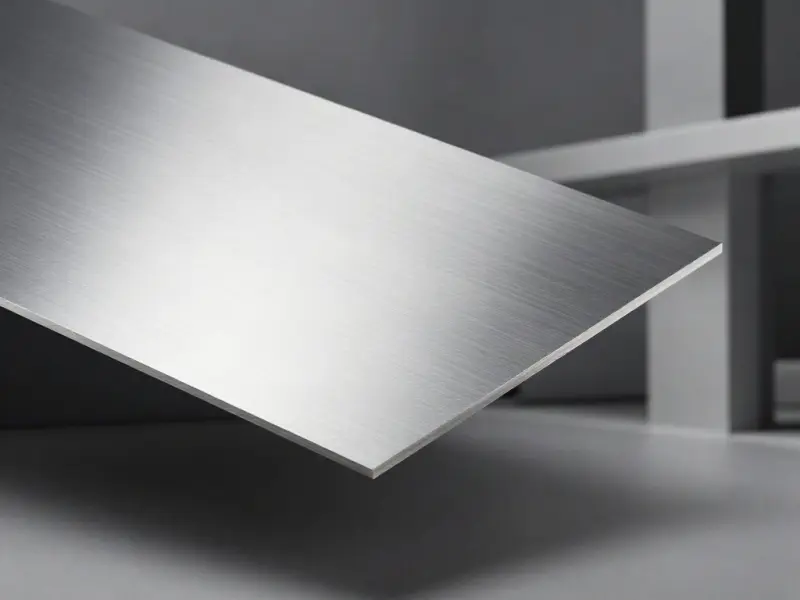
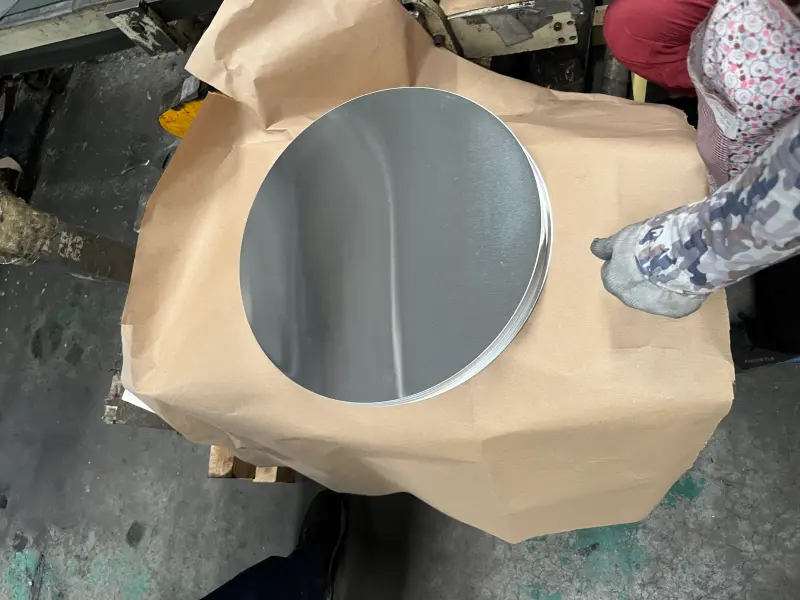
| Feature | Aluminum Circle | Aluminum Sheet |
|---|---|---|
| Shape | Round | Rectangular |
| Main process | Stamping / blanking | Cutting / fabrication |
| Cookware | Very suitable | Requires cutting |
| Material waste | Lower for round products | Depends on nesting |
| Custom diameter | Available | Requires cutting |
| High-volume round parts | Efficient | Additional processing |
For a product that is already round, buying circles can reduce cutting work and material waste.
Aluminum Circle vs Aluminum Plate
| Feature | Circle | Plate |
|---|---|---|
| Shape | Round | Usually rectangular |
| Thickness | Thin to thick | Usually thicker |
| Typical use | Cookware and formed parts | Industrial structures |
| Forming | Common | Depends on alloy |
| Size | Diameter | Length × width |
The terms can overlap at certain thicknesses, so the actual specification should always be confirmed.
Aluminum Circle Size Selection
The correct diameter depends on the finished product.
For a deep-drawn pan, the starting blank is normally larger than the final pan diameter because material is needed for the sidewall and trimming.
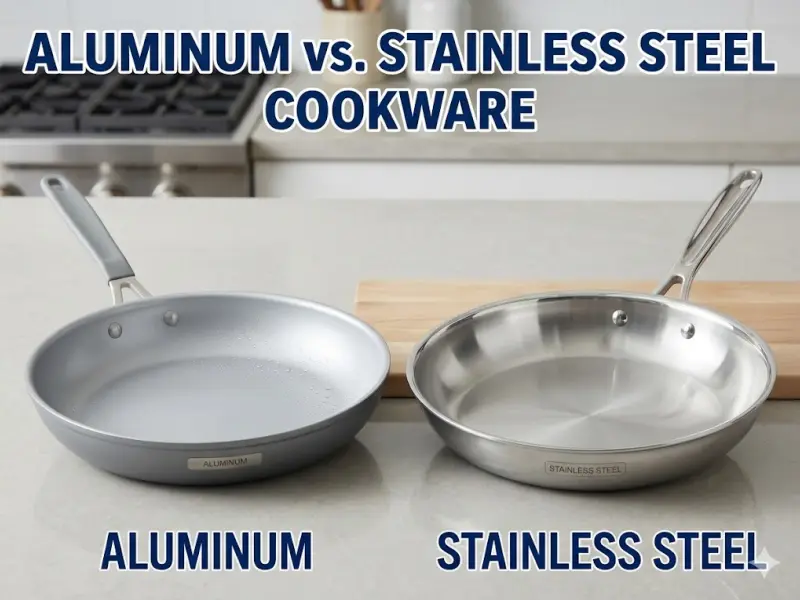
For example:
Small Pan
→ Smaller blank
Medium Frying Pan
→ Medium blank
Large Pot
→ Larger blank
The required blank diameter should normally be calculated from the product drawing and forming process.
Aluminum Circle Thickness Selection
Thickness is another important factor.
A general selection may look like:
0.3–0.5 mm
→ Lighting and light components
0.6–1.0 mm
→ Small formed products
1.0–2.0 mm
→ Cookware and containers
2.0–3.0 mm
→ Heavy cookware and industrial products
3.0 mm+
→ Heavy-duty components
These are general ranges, not universal specifications.
Aluminum Circle Tolerance
Diameter and thickness tolerances should be agreed before production.
A specification can include:
| Item | Example |
|---|---|
| Diameter | 300 mm |
| Diameter tolerance | ±0.5 mm |
| Thickness | 1.5 mm |
| Thickness tolerance | According to agreed standard |
| Flatness | Customer requirement |
| Edge | Smooth blanked edge |
For high-volume forming, consistent dimensions are especially important.
Aluminum Circle Quality Control
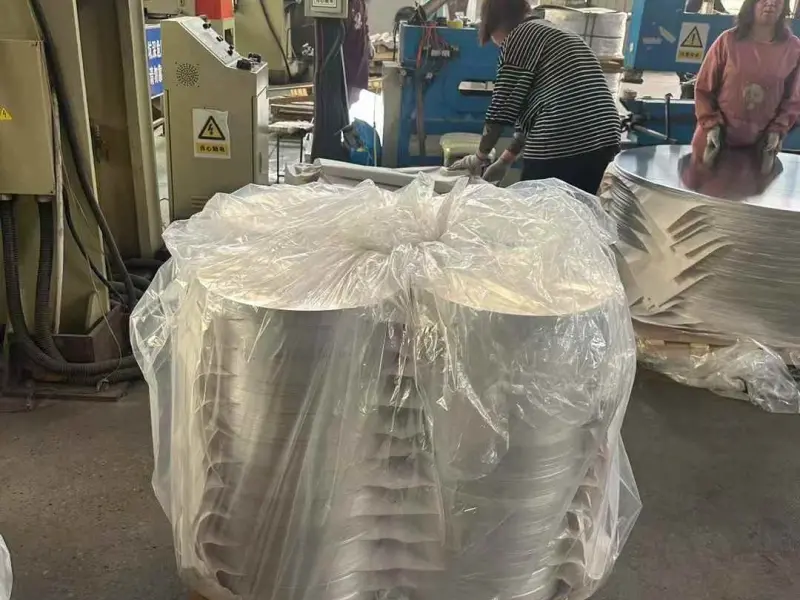
Professional aluminum circle manufacturers normally check the material at different stages.
Typical inspections include:
→ Alloy
→ Temper
→ Thickness
→ Diameter
→ Flatness
→ Edge condition
→ Surface appearance
→ Quantity
→ Packaging
For cookware and deep-drawing products, customers may also request forming tests.
How to Choose Aluminum Circle Manufacturers
Price is important, but it should not be the only factor.
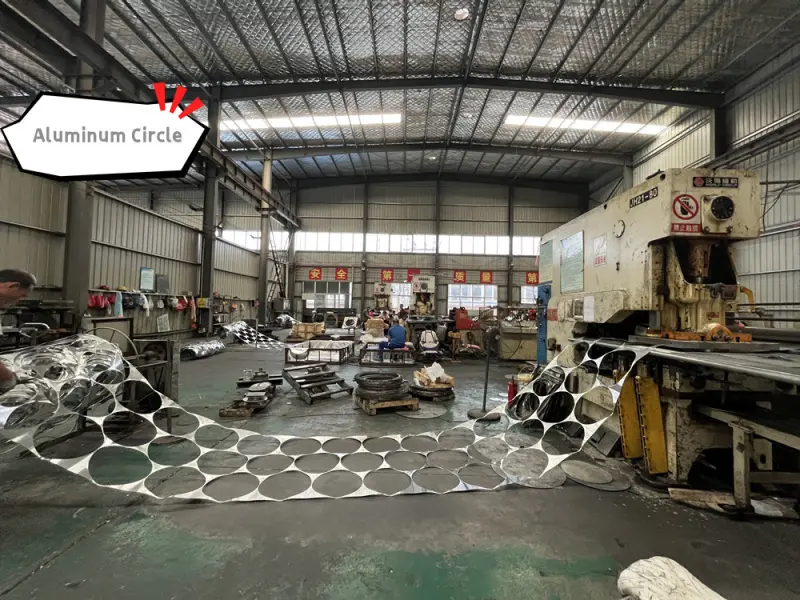
When comparing suppliers, consider:
- Aluminum alloy options
- Diameter range
- Thickness range
- Production capacity
- Blanking equipment
- Forming performance
- Surface quality
- Dimensional tolerance
- Packaging
- Quality inspection
- Sample service
- Custom production
- Delivery capability
A manufacturer with suitable equipment can often provide more consistent results for large orders.
What Should Be Included in an Inquiry?
A clear inquiry can help the manufacturer calculate the price quickly.
| Specification | Example |
|---|---|
| Product | Aluminum Circle |
| Alloy | 3003 |
| Temper | O |
| Diameter | 300 mm |
| Thickness | 1.5 mm |
| Surface | Mill finish |
| Edge | Standard blanked |
| Quantity | 10 tons |
| Application | Cookware |
| Packing | Wooden pallets |
If the circles will be deep drawn, the buyer should also provide the final product drawing when possible.
The price can change according to several factors.
Aluminum Circle Price Factors
Aluminum market price
↓
Alloy
↓
Temper
↓
Thickness
↓
Diameter
↓
Surface finish
↓
Tolerance
↓
Order quantity
↓
Packaging
↓
Shipping
Large quantities may receive a better unit price because production and setup costs can be spread across more pieces.
Custom sizes may also have different pricing from standard sizes.
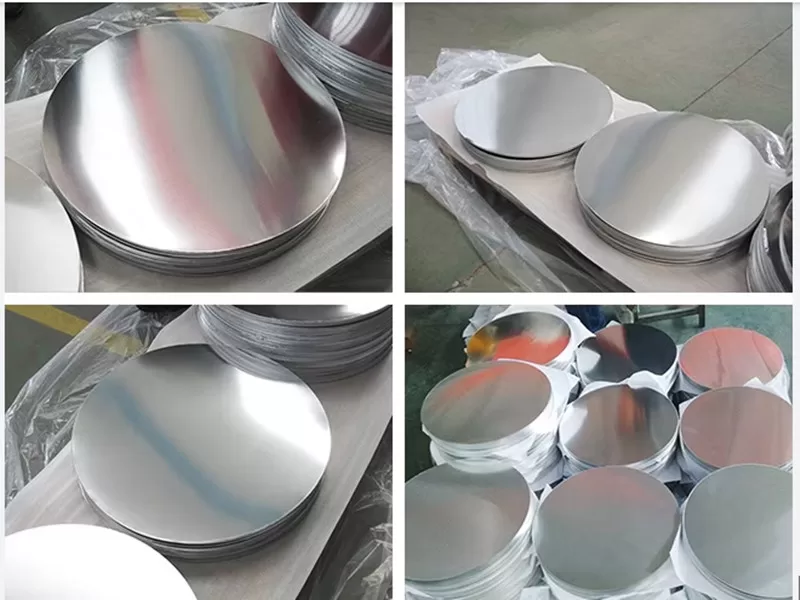
Custom Aluminum Circles
Not every project uses standard sizes.
Custom aluminum circles can be produced according to:
Diameter + Thickness + Alloy + Temper + Surface + Tolerance
Examples include:
- 150 mm × 1.0 mm
- 200 mm × 1.2 mm
- 250 mm × 1.5 mm
- 300 mm × 2.0 mm
- 350 mm × 2.0 mm
- 400 mm × 2.5 mm
- 500 mm × 3.0 mm
The manufacturer can confirm whether the requested size is suitable for existing tooling or requires new tooling.
Aluminum Circle Manufacturers for Wholesale Orders
Wholesale buyers may require thousands or even millions of pieces.
For these orders, production consistency becomes important.
A supplier should be able to control:
- Diameter
- Thickness
- Alloy
- Temper
- Flatness
- Edge quality
- Quantity
- Packaging
For repeated orders, keeping the same material specification can help maintain stable production.
Packaging of Aluminum Circles
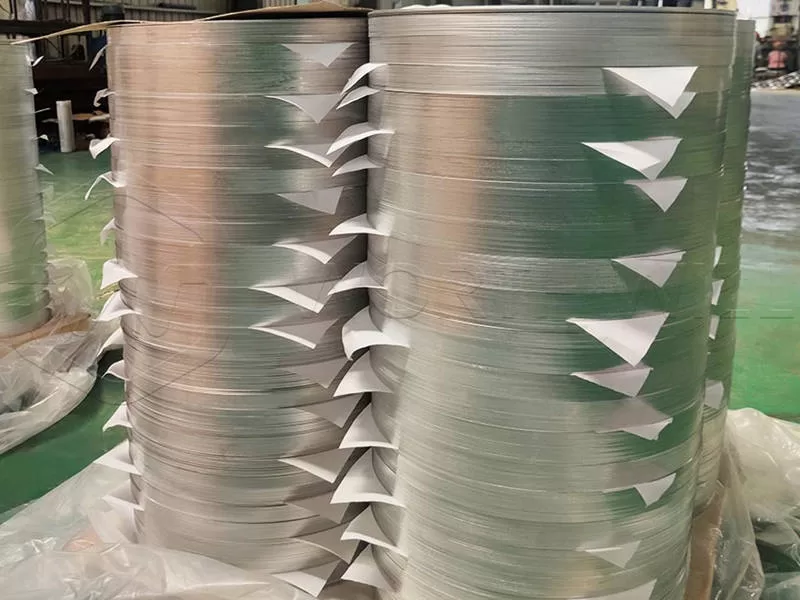
Proper packaging prevents scratches, moisture, and deformation.
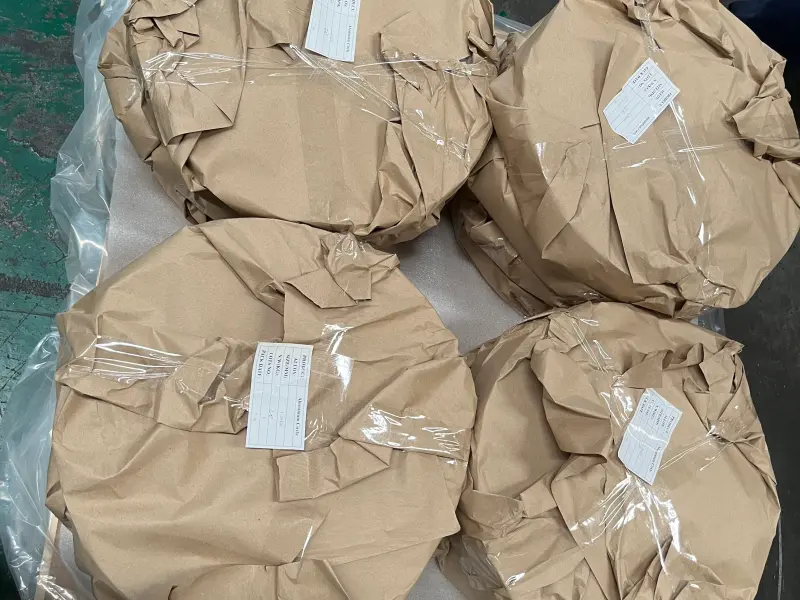
Common packaging methods include:
- Wooden pallets
- Wooden boxes
- Kraft paper
- Waterproof paper
- Plastic film
- Edge protection
- Steel straps
For polished or decorative circles, individual protection may be needed.
For export orders, packaging should also be suitable for long-distance transportation.
Aluminum Circle Manufacturers for Export
International buyers may need more than the product itself.
A reliable supplier should be able to provide suitable export documentation and shipping support.
The order may include:
- Commercial invoice
- Packing list
- Material certificate
- Inspection report
- Certificate of origin
- Shipping documents
The exact documents depend on the destination country and buyer’s requirements.
Common Aluminum Circle Products
Manufacturers can supply several types according to the final application.
Plain Aluminum Circle
→ Cookware
→ Stamping
→ General fabrication
Deep Drawing Aluminum Circle
→ Frying pans
→ Pots
→ Containers
→ Formed components
Polished Aluminum Circle
→ Lighting
→ Reflectors
→ Decoration
Anodized Aluminum Circle
→ Decorative components
→ Architectural products
→ Lighting
Embossed Aluminum Circle
→ Special decorative products
→ Industrial components
Coated Aluminum Circle
→ Decorative products
→ Custom-color components
High-Strength Aluminum Circle
→ Industrial products
→ Transportation components
→ Heavy-duty fabrication
Quick Selection Guide
For cookware
→ 1050 / 1100 / 3003 / 3004
→ O temper
→ 0.8–2.5 mm
→ Deep drawing
For frying pans
→ 3003 / 3004
→ O or suitable soft temper
→ 1.0–2.5 mm
For lighting reflectors
→ 1050 / 1060 / 1070
→ O / H14
→ Bright or polished surface
For traffic signs
→ 3003 / 5052
→ Suitable temper
→ Smooth surface
For industrial components
→ 3003 / 5052 / 6061
→ Application dependent
→ Custom thickness
For decorative products
→ 1050 / 1060 / 3003
→ Mill, polished, anodized, or coated
Final Guide to Aluminum Circle Manufacturers
A good aluminum circle manufacturer should be able to provide more than a round piece of aluminum.
The important factors are:
Alloy → Temper → Diameter → Thickness → Surface → Tolerance → Forming Performance → Quality → Packaging

For cookware, formability is often the first consideration.
For lighting, surface quality and reflectivity can be more important.
With industrial products, strength and dimensional accuracy may have greater importance.
For high-volume orders, stable production and consistent quality can directly affect the buyer’s manufacturing efficiency.
Before requesting a quotation, provide a clear specification such as:
3003-O × 300 mm diameter × 1.5 mm thickness × Mill Finish × 10 tons
For a customized product, a drawing or finished-product sample can help the manufacturer recommend the right alloy, temper, diameter, and thickness.
Choosing the right material at the beginning can reduce forming problems, material waste, and production costs later.
FAQ About Aluminum Circles
What are aluminum circles used for?
They have uses for cookware, lighting reflectors, signs, containers, decorative products, and industrial components.
Which alloy is best for cookware?
3003 and 3004 are common choices for many cookware products. 1050 and 1100 can also be used for applications that require good formability.
Which aluminum alloy is best for deep drawing?
There is no universal answer. 1050, 1060, 1100, and suitable 3003 grades can provide good forming performance depending on the product design.
What is the common aluminum circle thickness?
Common thicknesses range from about 0.5 mm to 3 mm, although thinner and thicker products are available.
What diameter aluminum circles can you manufacture?
The available diameter depends on the production equipment and tooling. Standard products may range from small circles to circles above 1000 mm.
Can aluminum circles be customized?
Yes. Diameter, thickness, alloy, temper, surface finish, tolerance, and packaging can be customized.
Can aluminum circles be used for frying pans?
Yes. Aluminum circles are commonly used as blanks for frying pans and other cookware.
What is a deep drawing aluminum circle?
It is a round aluminum blank selected specifically for a deep-drawing process. It needs suitable formability and dimensional consistency.
What is the difference between 1050 and 3003 aluminum circles?
1050 generally offers higher formability and aluminum content, while 3003 provides higher strength while maintaining good forming performance.
Is 5052 suitable for aluminum circles?
Yes, particularly for applications that require higher strength and corrosion resistance. The forming process should be checked before choosing the alloy and temper.
Can aluminum circles be anodized?
Yes. Suitable aluminum circles can receive anodizing for improved surface appearance and protection.
Can aluminum circles be polished?
Yes. Polished surfaces can be supplied for applications such as lighting reflectors and decorative products.
Can I order a sample?
Sample availability depends on the supplier and product specification. A sample is useful for checking diameter, thickness, surface, and forming performance.
What information is needed for a quotation?
The most useful information is alloy, temper, diameter, thickness, surface finish, quantity, application, and packaging requirement.
How can I reduce aluminum circle costs?
Standard sizes, standard alloys, larger order quantities, and simple surface requirements can often help reduce production costs.