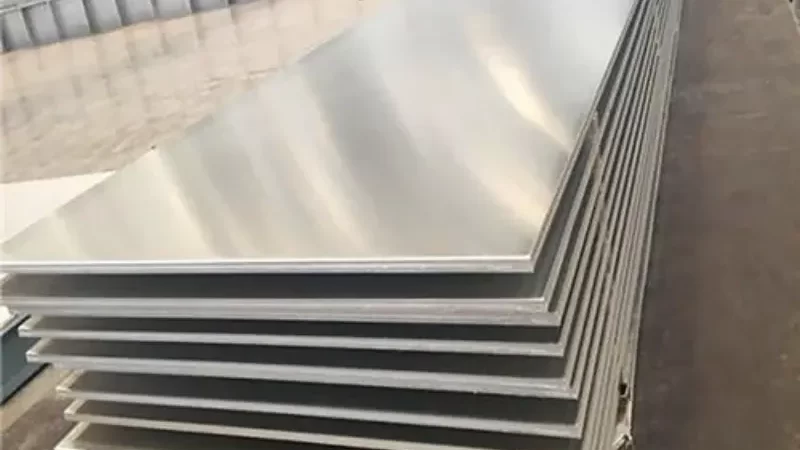
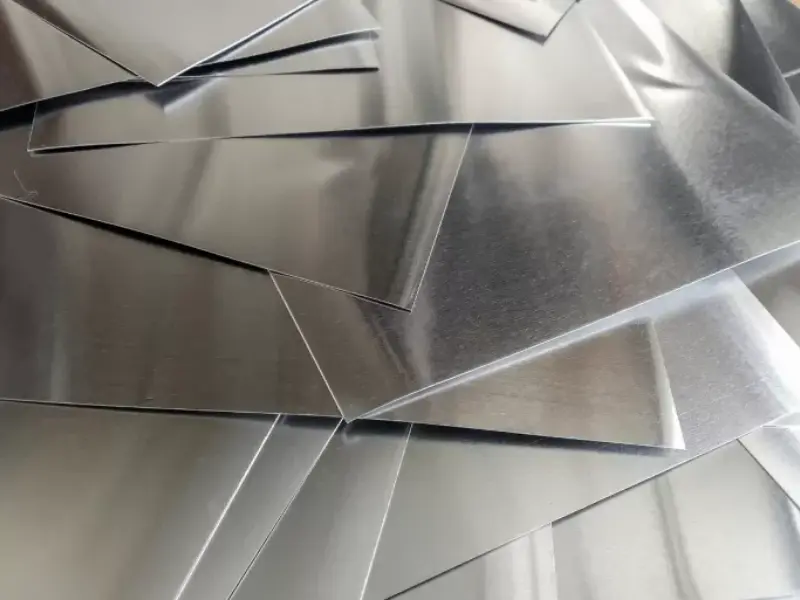
A 0.5 mm aluminium sheet is a thin, flat piece of aluminium metal. It measures half a millimetre in thickness. This is about the same thickness as a standard credit card. The sheet weighs roughly 1.35 kg per square metre. This makes it one of the lightest metal sheet options on the market.
Many industries choose this thickness because it offers a good balance. It is thin enough to bend and shape with hand tools. Yet it is strong enough to hold its form in most indoor and sheltered outdoor settings. The material also resists rust, which is a major advantage over steel.
Why Choose 0.5 mm Thickness?
Weight and Handling
At 0.5 mm, the sheet is easy to carry. One person can handle a full sheet without strain. This cuts labour costs on site. It also reduces shipping fees when ordering in bulk.
Flexibility for Forming
This gauge works well for bending, stamping, and deep drawing. Fabricators can create complex shapes without cracking the metal. This is useful for panels, enclosures, and decorative parts.
Cost Efficiency
Thinner sheets use less raw material. This keeps the price per square metre low. For large surface areas, the savings add up quickly.
Surface Area Coverage
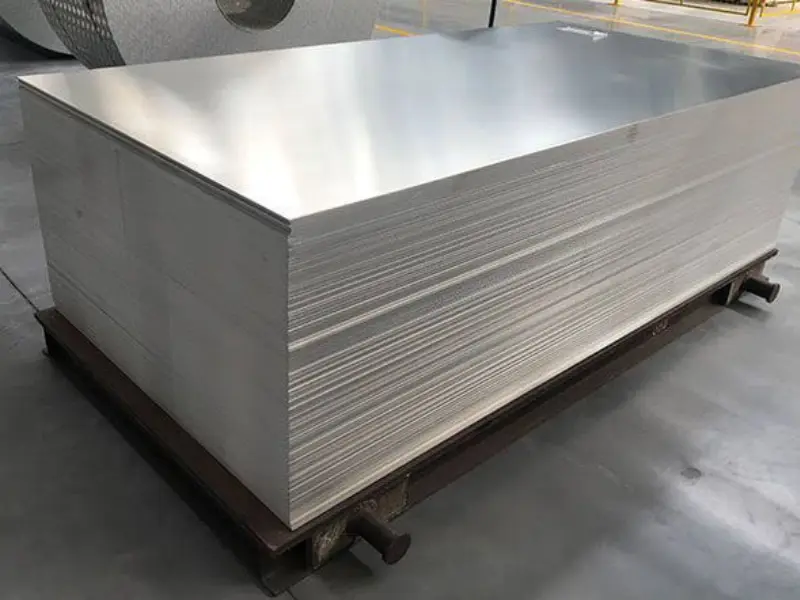
A standard sheet size of 1220 mm x 2440 mm covers nearly three square metres. At 0.5 mm, the total weight stays under 4 kg per sheet. This is ideal for wall cladding, signage, and lightweight structures.
Alloy Types for 0.5 mm Aluminium Sheets
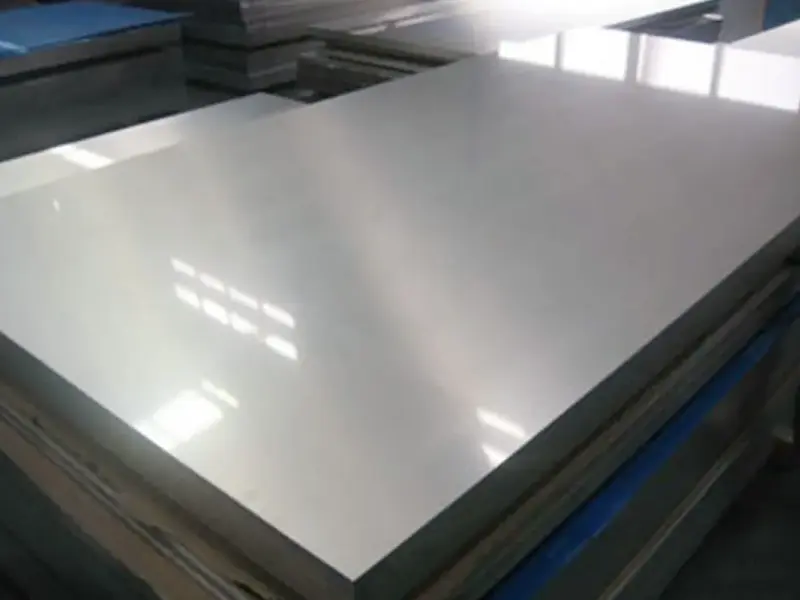
Not all aluminium sheets are the same. The alloy number tells you what other metals are mixed with the aluminium. Each blend gives different properties. Below is a breakdown of the most common alloys sold at 0.5 mm thickness.
Pure Aluminium Grades: 1050, 1060, and 1100
These grades contain 99% or more aluminium. They are soft, easy to bend, and highly reflective.
| Feature | 1050 | 1060 | 1100 |
|---|---|---|---|
| Aluminium Content | 99.5% | 99.6% | 99.0% |
| Main Alloy Element | None | None | None |
| Tensile Strength | 70 – 100 MPa | 70 – 100 MPa | 90 – 130 MPa |
| Formability | Excellent | Excellent | Very Good |
| Corrosion Resistance | Very Good | Very Good | Excellent |
| Typical Temper | O, H14, H24 | O, H14, H18 | O, H14 |
| Common Uses | Reflectors, cookware, chemical tanks | Sublimation blanks, lighting, packaging | Food handling, chemical equipment, roofing |
Key Point: 1050 and 1060 are nearly identical in performance. 1100 offers slightly better strength while keeping the same ease of work. All three are non-heat-treatable. Their strength comes only from cold working.
Manganese Alloy: 3003
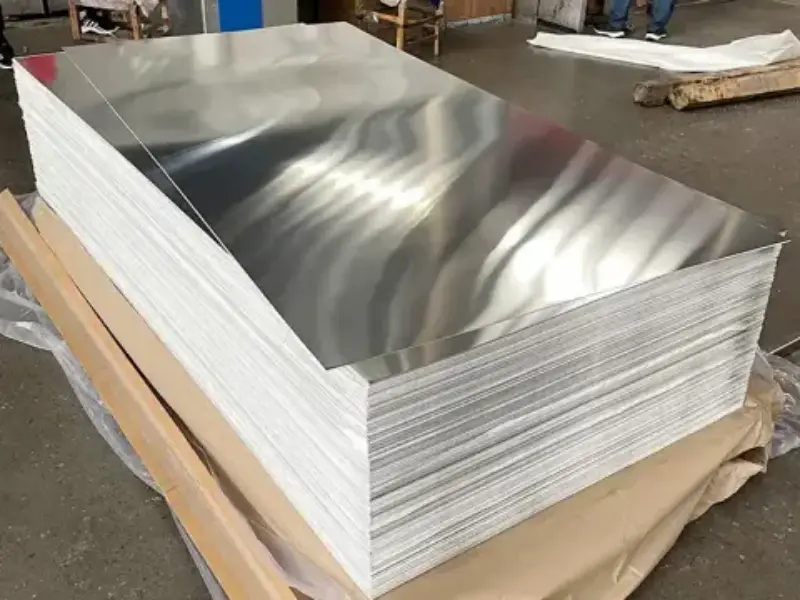
3003 is the most widely used general-purpose alloy. Manganese is added at about 1.0% to 1.5%. This gives it roughly 20% more strength than the 1000 series.
| Property | Value |
|---|---|
| Main Alloy Element | Manganese (1.0 – 1.5%) |
| Tensile Strength (H14) | 140 – 180 MPa |
| Yield Strength (H14) | 115 – 150 MPa |
| Elongation | 8% – 16% |
| Density | 2.73 g/cm³ |
| Heat Treatable | No |
| Weldability | Good |
| Typical Temper | O, H12, H14, H16, H18, H22, H24 |
Common Applications:
- Heat exchanger fins
- Cooking utensils and rice cooker liners
- Building facade panels
- Chemical storage tanks
- Mobile phone casings
- Roofing and gutter systems
Why It Stands Out: 3003 sits in the sweet spot between cost and performance. It is stronger than pure aluminium but still easy to form. It also resists corrosion in damp environments better than 1000 series grades.
Magnesium Alloy: 5052
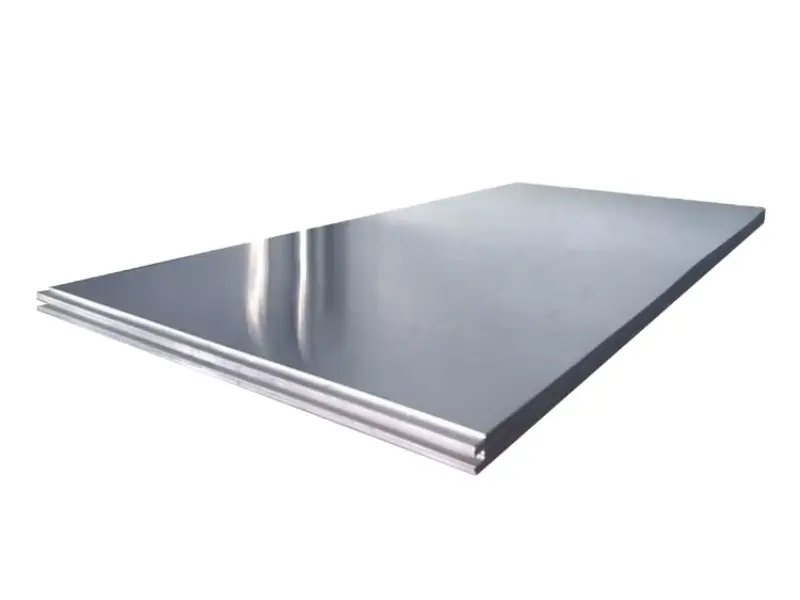
5052 belongs to the 5000 series. Magnesium is the main alloying element, at 2.2% to 2.8%. This gives it much better strength and saltwater resistance.
| Property | Value |
|---|---|
| Main Alloy Element | Magnesium (2.2 – 2.8%) |
| Tensile Strength (H32) | 230 – 280 MPa |
| Yield Strength (H32) | 190 – 240 MPa |
| Elongation | 12% – 18% |
| Brinell Hardness | 60 HB |
| Density | 2.68 g/cm³ |
| Heat Treatable | No |
| Weldability | Excellent |
| Typical Temper | O, H32, H34, H36, H38 |
Common Applications:
- Boat hulls and marine decking
- Fuel tanks and oil lines
- Electronic enclosures
- Pressure vessels
- Truck and trailer panels
- Architectural trim in coastal areas
Why It Stands Out: 5052 is often called marine-grade aluminium. It resists salt spray better than almost any non-heat-treatable alloy. The H32 temper allows 90-degree bends without cracking. This makes it a top pick for sheet metal work.
Structural Alloy: 6061
6061 is a heat-treatable alloy. It contains both magnesium and silicon. After heat treatment to T6 temper, it becomes one of the strongest standard sheet grades.
| Property | Value |
|---|---|
| Main Alloy Elements | Magnesium (0.8 – 1.2%), Silicon (0.4 – 0.8%) |
| Tensile Strength (T6) | 290 – 310 MPa |
| Yield Strength (T6) | 240 – 280 MPa |
| Brinell Hardness | 93 – 95 HB |
| Density | 2.70 g/cm³ |
| Heat Treatable | Yes |
| Machinability | Very Good |
| Typical Temper | O, T4, T6, T651 |
Common Applications:
- Aerospace structural parts
- Bicycle frames
- Bridge components
- Automotive chassis parts
- Industrial machinery frames
- Precision tooling plates
Why It Stands Out: 6061-T6 offers roughly twice the strength of 5052-H32. It machines cleanly and holds tight tolerances. The trade-off is lower bendability in T6 temper. For bending, T4 or O temper is preferred.
Side-by-Side Alloy Comparison at 0.5 mm
| Comparison Point | 1050 | 3003-H14 | 5052-H32 | 6061-T6 |
|---|---|---|---|---|
| Strength | Low | Medium | Medium-High | High |
| Bendability | Excellent | Very Good | Very Good | Fair (T6) / Good (O) |
| Corrosion Resistance | Very Good | Good | Excellent | Good |
| Saltwater Resistance | Poor | Poor | Excellent | Moderate |
| Weldability | Good | Good | Excellent | Good (needs filler) |
| Machinability | Poor | Poor | Poor | Very Good |
| Weight per m² | ~1.35 kg | ~1.37 kg | ~1.34 kg | ~1.35 kg |
| Price Level | Lowest | Low | Medium | Higher |
| Best For | Reflectors, simple forming | General sheet metal | Marine, outdoor | Structural, machined parts |
Temper Designations Explained
The letters and numbers after the alloy tell you how the metal was treated. This changes hardness and strength.
| Temper | Meaning | Effect on 0.5 mm Sheet |
|---|---|---|
| O | Annealed (soft) | Maximum bendability, lowest strength |
| H12 | Quarter hard | Slight strength gain, still easy to form |
| H14 | Half hard | Good balance for general use |
| H16 | Three-quarter hard | Higher strength, less formable |
| H18 | Full hard | Maximum cold-worked strength |
| H22 | Quarter hard, strain hardened and annealed | Better formability than H12 |
| H24 | Half hard, strain hardened and annealed | Stable properties, good for deep drawing |
| H32 | Quarter hard, strain hardened and stabilized | Common for 5052, excellent for bending |
| T4 | Solution heat treated and naturally aged | Medium strength, better formability than T6 |
| T6 | Solution heat treated and artificially aged | Maximum strength, harder to bend |
Practical Tip: If you need to bend 6061, order it in T4 temper or O temper. Bend first, then heat treat to T6 if extra strength is required.
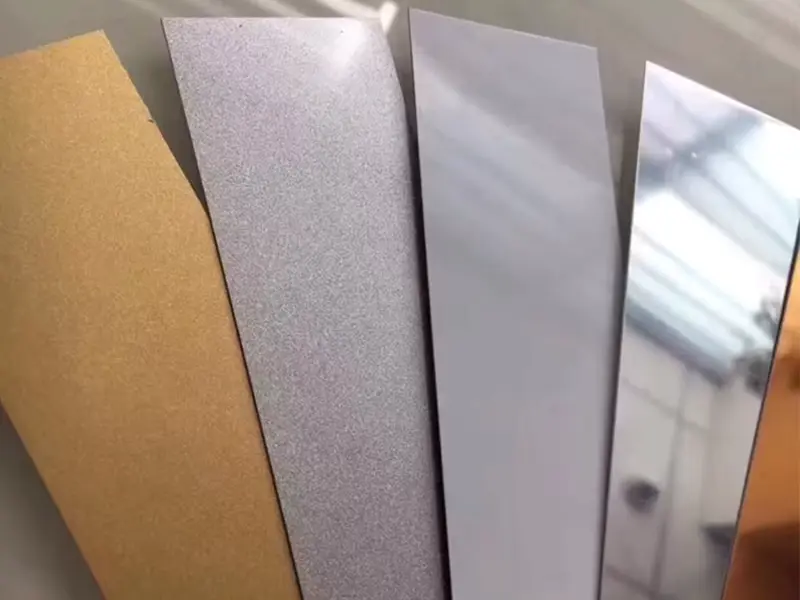
Surface Finishes Available
The look and performance of a 0.5 mm sheet can change based on surface treatment.
| Finish Type | Description | Best Use |
|---|---|---|
| Mill Finish | As-rolled, slightly dull | Industrial parts, hidden panels |
| Brushed Finish | Fine parallel lines, satin look | Decorative panels, appliances |
| Polished Finish | Mirror-like shine | Reflectors, display cases |
| Anodized | Electrochemical oxide layer | Outdoor use, corrosion protection, colour options |
| Powder Coated | Painted and baked | Custom colours, UV protection |
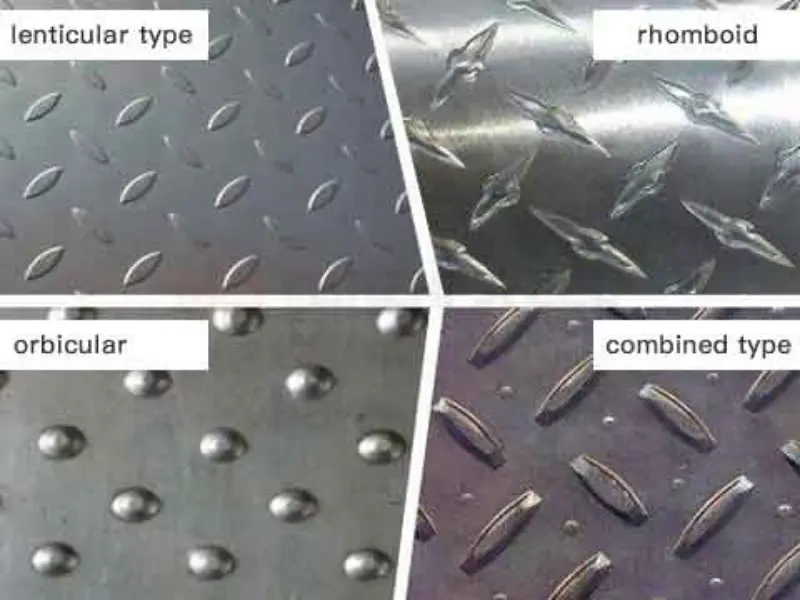
| Embossed / Stucco | Textured pattern | Anti-slip, decorative cladding |
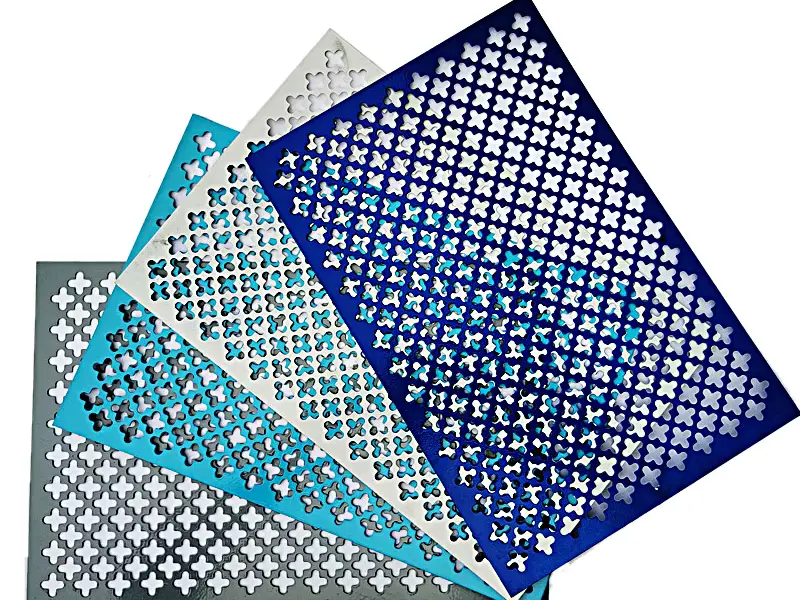
| Perforated | Holes punched in patterns | Ventilation, screens, acoustic panels |
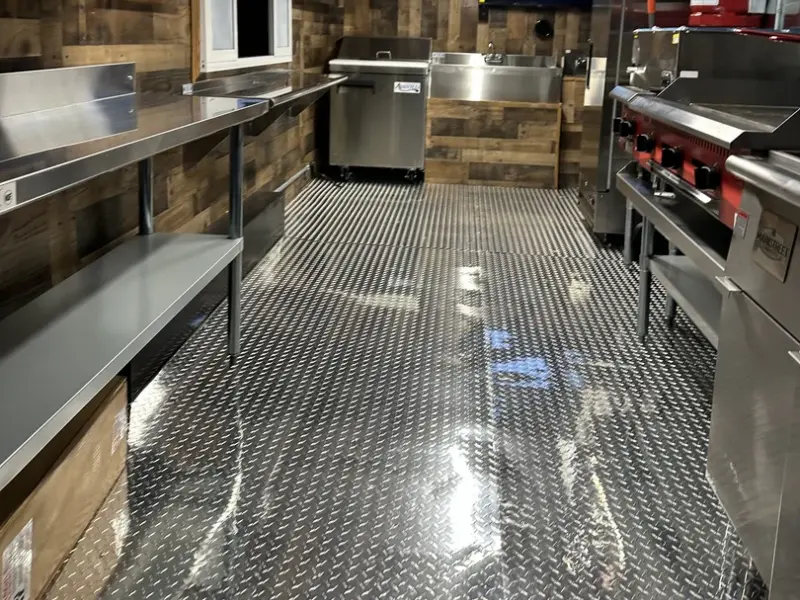
| Chequered / Tread | Diamond or 5-bar pattern | Flooring, ramps, walkways |
Standard Sizes and Tolerances
| Parameter | Typical Range |
|---|---|
| Thickness | 0.5 mm (±0.03 mm tolerance) |
| Width | 1000 mm, 1220 mm, 1250 mm, 1500 mm |
| Length | 2000 mm, 2440 mm, 3000 mm, 6000 mm |
| Coil Inner Diameter | 405 mm, 505 mm |
| Coil Outer Diameter | Up to 1500 mm |
| Flatness Tolerance | ±3 mm per metre |
| Weight per Sheet (1220×2440 mm) | ~4.0 kg |
Custom Cutting: Most suppliers offer cut-to-length and cut-to-width services. This reduces waste and saves time on site.
Weight Reference Table
Knowing the weight helps with shipping and structural planning.
| Sheet Size | Alloy | Weight (Approx.) |
|---|---|---|
| 1000 mm × 2000 mm × 0.5 mm | 1050 | ~2.7 kg |
| 1220 mm × 2440 mm × 0.5 mm | 3003 | ~4.1 kg |
| 1500 mm × 3000 mm × 0.5 mm | 5052 | ~6.0 kg |
| 1250 mm × 2500 mm × 0.5 mm | 6061 | ~5.2 kg |
Weights calculated using standard densities. Actual weight may vary by ±2% depending on exact alloy composition.
Key Applications by Industry
Construction and Architecture
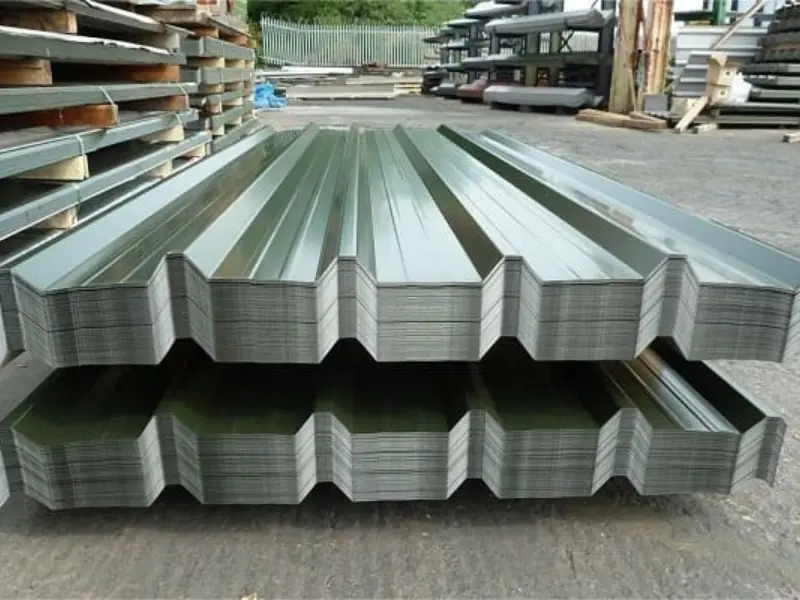
- Curtain wall panels
- Ceiling tiles and suspended grids
- Column covers and trim
- Flashing and soffits
- Decorative screens
Automotive and Transport
- Interior trim panels
- Heat shields
- Battery enclosure liners
- Trailer siding
- Bus and train interior fittings
Marine and Offshore
- Small boat hull plating
- Deck covering
- Cabin interior panels
- Fuel tank walls
- Ladder rungs and gangways
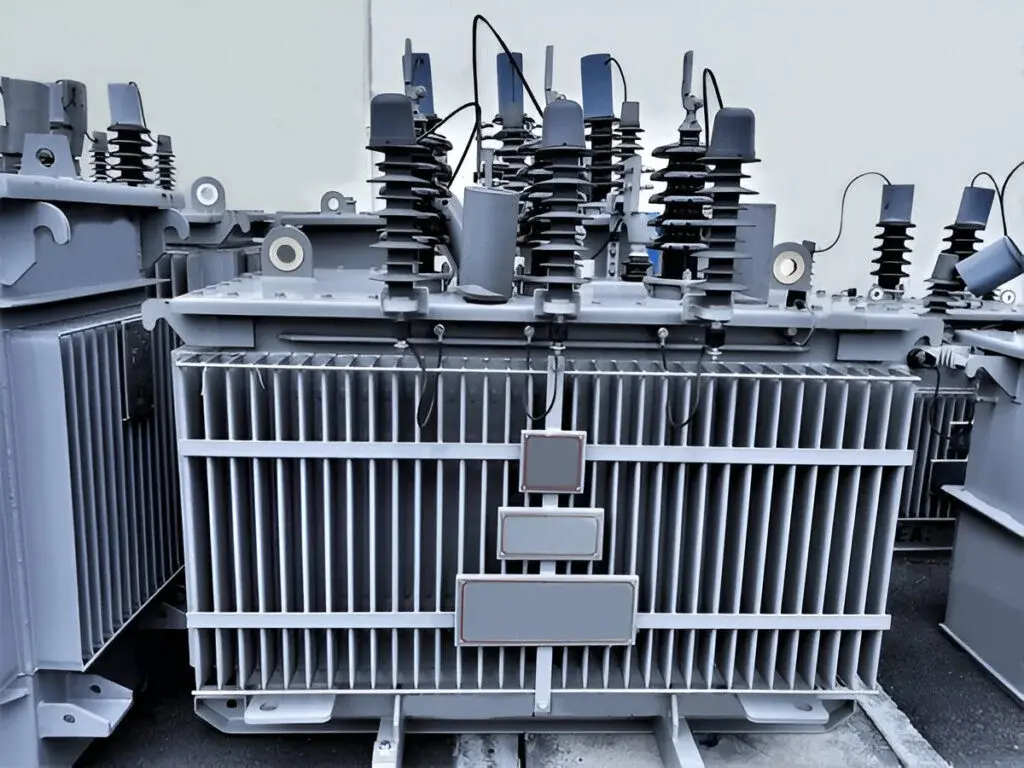
Electronics and Electrical
- LED heat sinks (thin sections)
- Shielding enclosures
- Chassis for small devices
- Circuit board backing
- Transformer windings (in coil form)
Food and Chemical Processing
- Work surfaces and splashbacks
- Tank linings
- Conveyor belt skirts
- Packaging foils (in thinner gauges)
- Brewing equipment panels
Signage and Display
- Sublimation printing blanks
- Shop front lettering
- Exhibition stands
- Point-of-sale displays
- Road and traffic signs
How 0.5 mm Compares to Other Thicknesses
| Thickness | Weight per m² | Best For | Drawbacks |
|---|---|---|---|
| 0.3 mm | 0.81 kg | Flexible packaging, very light shields | Too flimsy for structural use |
| 0.5 mm | 1.35 kg | Balanced use, forming, cladding | Not for heavy loads without support |
| 0.8 mm | 2.16 kg | Stiffer panels, outdoor signs | Harder to bend by hand |
| 1.0 mm | 2.70 kg | Structural brackets, machine guards | Higher cost, more weight |
| 1.5 mm | 4.05 kg | Load-bearing panels, tanks | Requires power tools for cutting |
| 2.0 mm | 5.40 kg | Heavy-duty structures, flooring | Significant weight increase |
Verdict: 0.5 mm is the go-to choice when you need a thin, workable sheet that still holds shape. It is the thinnest gauge that most fabricators trust for general-purpose panels.
5052 vs 6061: Which Should You Pick?
These two alloys are often compared because both are strong and widely available. But they serve different needs.
| Factor | 5052-H32 | 6061-T6 |
|---|---|---|
| Main Advantage | Best corrosion resistance | Highest strength |
| Bending | Easy 90-degree bends | Needs larger radius or softer temper |
| Welding | Excellent, no post-weld heat needed | Good, but may weaken near weld |
| Machining | Gummy, tends to clog tools | Clean chips, excellent finish |
| Marine Use | Ideal | Acceptable with coating |
| Price | Lower | Higher |
| Surface Appearance | Bright, silvery | Darker, sometimes greyish after T6 |
Choose 5052 if your project faces moisture, salt, or chemicals. It is the safer bet for outdoor and marine work.
Choose 6061 if you need maximum strength and plan to machine or mill the part. It is the standard for structural frames and precision components.
3003 vs 5052: When to Use Which?
These two are both non-heat-treatable and popular for sheet metal. The choice often comes down to environment and budget.
| Factor | 3003-H14 | 5052-H32 |
|---|---|---|
| Strength | Lower | Higher |
| Cost | Cheaper | Moderate |
| Corrosion in Fresh Water | Good | Very Good |
| Corrosion in Salt Water | Poor | Excellent |
| Deep Drawing | Slightly better | Very good |
| Typical Use | Indoor panels, utensils, roofing | Outdoor, marine, fuel tanks |
Rule of Thumb: If the sheet will stay dry, 3003 saves money. If it might get wet or face salt, 5052 is worth the extra cost.
Buying Tips for 0.5 mm Aluminium Sheets
Check the Alloy Certificate
Ask for a Mill Test Certificate (MTC). This document shows the exact chemical makeup and mechanical test results. It proves the sheet meets standards like ASTM B209 or EN 573.
Verify Thickness Tolerance
At 0.5 mm, even a small variance matters. Standard tolerance is ±0.03 mm. For precision work, request a tighter tolerance if available.
Consider the Coil vs Sheet Option
Coils are better for high-volume, continuous production. They feed straight into roll forming or stamping machines. Cut sheets are better for low-volume or one-off projects.
Think About Surface Protection
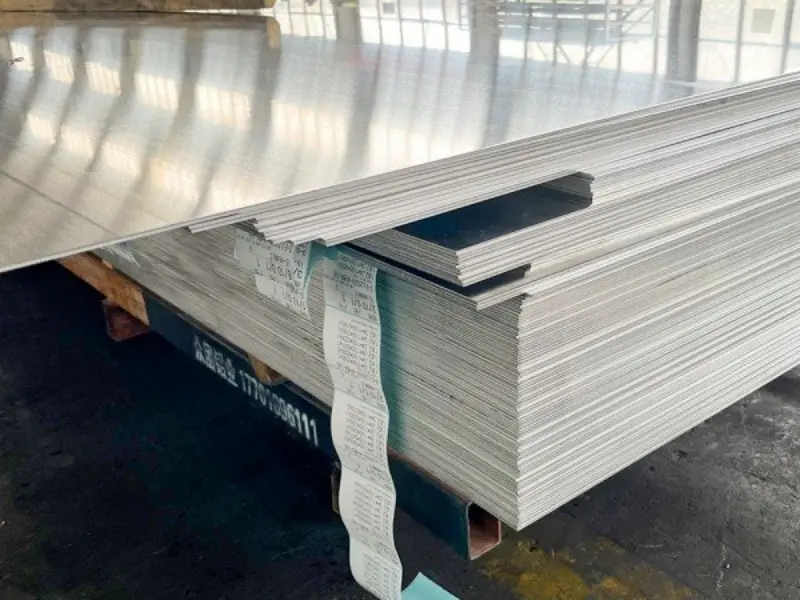
Thin sheets scratch easily during transport. PE film coating on one or both sides prevents damage. This is especially important for brushed or polished finishes.
Plan for Thermal Expansion
Aluminium expands about 23 µm per metre per degree Celsius. In long panels, allow for movement at joints. This prevents buckling in hot weather.
Fabrication Notes for 0.5 mm Gauge
Cutting
- Hand tools: Tin snips work for straight cuts and gentle curves.
- Power shears: Fast and clean for straight lines.
- Laser cutting: Best for complex shapes, minimal heat distortion.
- Water jet: No heat affected zone, ideal for alloys sensitive to heat.
Bending
- Use a press brake with a die width at least 6 times the thickness.
- For 0.5 mm, a 3 mm die opening is common.
- Bend radius should be at least equal to the thickness to avoid cracking.
Welding
- TIG welding with argon shielding gas gives the cleanest results.
- For 6061, use 4043 or 5356 filler rod.
- For 5052, use 5356 filler rod.
- Keep heat input low to prevent burn-through on thin material.
Drilling and Punching
- Use sharp, high-speed steel or carbide bits.
- Clamp the sheet firmly to prevent vibration and burrs.
- Punching is faster than drilling for holes under 20 mm diameter.
Frequently Asked Questions
What does H32 temper mean?
H32 means the sheet has been strain-hardened to a quarter-hard state and then stabilized by low-temperature heat treatment. This gives a good mix of strength and formability. It is the most common temper for 5052 sheet.
Can I use 0.5 mm aluminium sheet for roofing?
Yes, but with care. It works well for decorative soffits, fascia, and sheltered canopy roofs. For full exposure to wind and foot traffic, a thicker gauge such as 0.8 mm or 1.0 mm is safer.
Is 0.5 mm sheet easy to dent?
It can dent if hit with force. For impact-prone areas, consider 5052-H32 or 6061-T6 rather than softer grades like 1050-O. Backing the sheet with a rigid substrate also helps.
How do I clean and maintain the surface?
Use mild soap and water. Avoid abrasive pads that scratch the finish. For anodized sheets, re-wax every few years to maintain water beading. Do not use strong alkaline cleaners on bare aluminium.
Can 0.5 mm sheet be anodized?
Yes. All the alloys listed here can be anodized. 1000 and 5000 series give the brightest finish. 6061 anodizes well but may show a slightly darker tone. 3003 can show a mottled look if manganese content is high.
What is the lead time for custom sizes?
Standard stock sizes ship within a few days. Custom cutting and special alloys may take 2 to 4 weeks. Large orders or special tempers can extend this further. Always confirm with your supplier.
Does 0.5 mm aluminium sheet rust?
Aluminium does not rust like iron. It forms a thin oxide layer that protects the metal underneath. In very salty or acidic environments, pitting can occur over time. Anodizing or painting prevents this.
Which alloy is best for food contact?
1050, 1060, 1100, and 3003 are all safe for food contact. They are non-toxic and resist corrosion from acids in foods. Ensure the surface is smooth and free from lubricants or coatings not rated for food use.
How much does a 0.5 mm aluminium sheet cost?
Prices vary by alloy, temper, finish, and order volume. As a rough guide:
| Alloy | Price Range (per kg) |
|---|---|
| 1050 / 1060 | $2.00 – $2.80 |
| 3003 | $2.20 – $3.00 |
| 5052 | $2.50 – $3.50 |
| 6061 | $2.80 – $4.00 |
Prices are indicative and subject to market fluctuations. Bulk orders and long-term contracts often secure lower rates.
Can I paint 0.5 mm aluminium sheet?
Yes. Clean the surface with a degreaser first. Apply an etch primer or conversion coating. Then use a high-quality exterior paint. Powder coating is more durable than wet paint for outdoor use.
Standards and Certifications
| Standard | Description |
|---|---|
| ASTM B209 | Standard for aluminium and aluminium-alloy sheet and plate |
| EN 485 | European standard for sheet, strip, and plate dimensions |
| EN 573 | European standard for alloy composition |
| ISO 6361 | Wrought aluminium sheets, strips, and plates |
| EN 10204 3.1 | Mill test certificate type |
Always request certification if your project requires traceability or compliance with building codes.
Choosing the Right 0.5 mm Aluminium Sheet
| Your Need | Recommended Alloy | Recommended Temper |
|---|---|---|
| Lowest cost, simple forming | 1050 or 1060 | O or H14 |
| General purpose, indoor use | 3003 | H14 or H24 |
| Outdoor, marine, or chemical exposure | 5052 | H32 |
| Structural strength, machining | 6061 | T6 (or T4 if bending first) |
| Decorative, reflective surface | 1050 or 1085 | H18 or polished |
| Food-safe application | 1100 or 3003 | O or H14 |