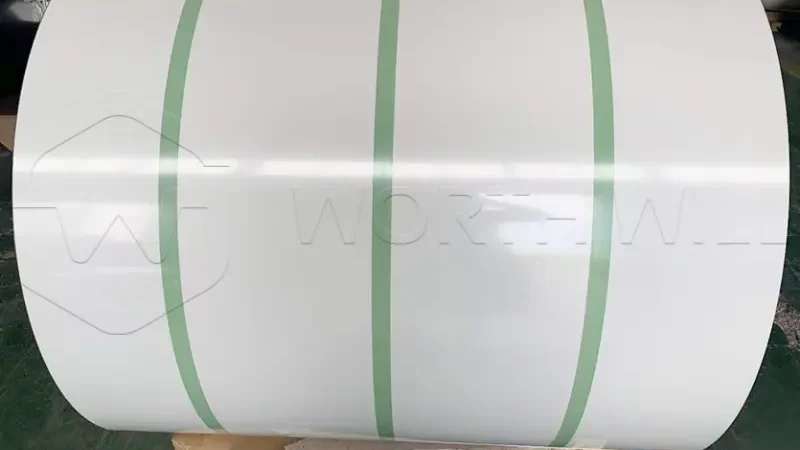
PVDF vs PE Coating Aluminum Coil: Coated aluminum coils are essential materials in modern construction and manufacturing. When choosing between PVDF and PE coating aluminum coil, understanding the differences helps you make the right decision for your project.
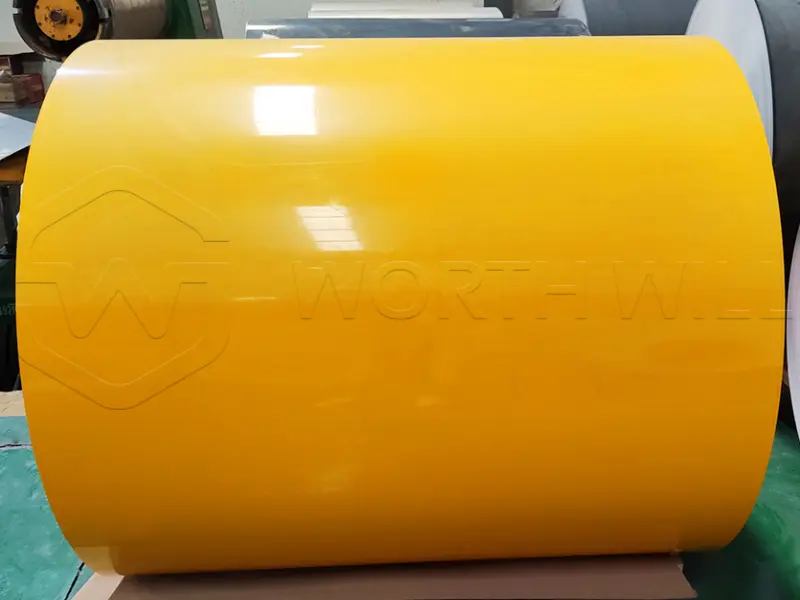
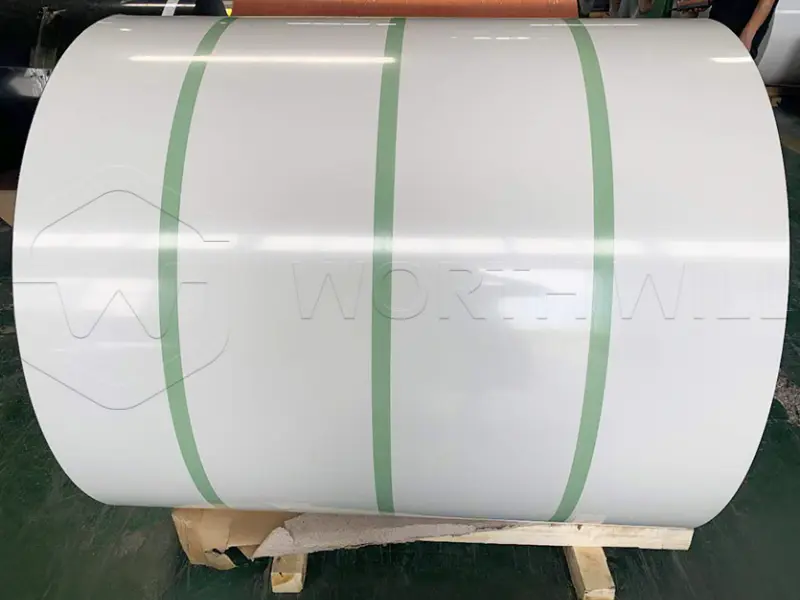
PE Coating Aluminum Coil Alloy Types
Different alloy compositions suit various applications:
| Alloy Type | Composition | Best For |
|---|---|---|
| 1100 | 99% Aluminum | General purpose, good formability |
| 3003 | Al-Mn alloy | Roofing, moderate strength |
| 3004 | Al-Mn-Mg alloy | Building panels, better corrosion resistance |
| 5005 | Al-Mg alloy | Architectural applications, excellent finish |
PE Coating Temper States
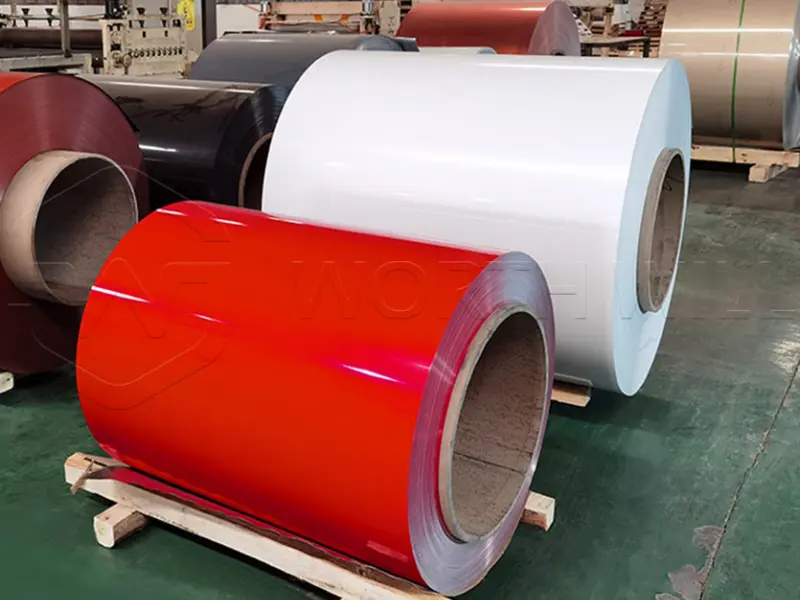
The temper state affects the mechanical properties of PE coating aluminum coil:
- H14: Quarter hard, suitable for moderate forming
- H16: Half hard, better strength for structural use
- H18: Full hard, maximum strength with limited formability
- H24: Strain hardened and partially annealed, good balance
- O: Annealed, softest state for complex forming
What is PE Coating Aluminum Coil?
PE (Polyester) coating aluminum coil features a polyester-based paint system applied to aluminum substrate. This coating type is popular for general construction projects due to its cost-effectiveness and reliable performance. PE coating provides good color retention and weather resistance for most standard applications.
| PE Coating Specifications | Standard Range |
|---|---|
| Coating Thickness | 18-25 microns |
| Service Life | 5-10 years |
| Color Retention | Good (ΔE < 5) |
| Gloss Retention | 60-70% after 5 years |
| Temperature Resistance | -20°C to 80°C |
What is PVDF Coating Aluminum Coil?
PVDF (Polyvinylidene Fluoride) coating aluminum coil represents premium quality in coated metal products. This fluoropolymer-based coating delivers exceptional durability and weather resistance. PVDF coating aluminum coil is the preferred choice for high-end architectural projects requiring long-term performance.
| PVDF Coating Specifications | Standard Range |
|---|---|
| Coating Thickness | 25-30 microns |
| Service Life | 20-30 years |
| Color Retention | Excellent (ΔE < 2) |
| Gloss Retention | 85-90% after 10 years |
| Temperature Resistance | -40°C to 120°C |
PVDF Coating Aluminum Coil Alloy Options
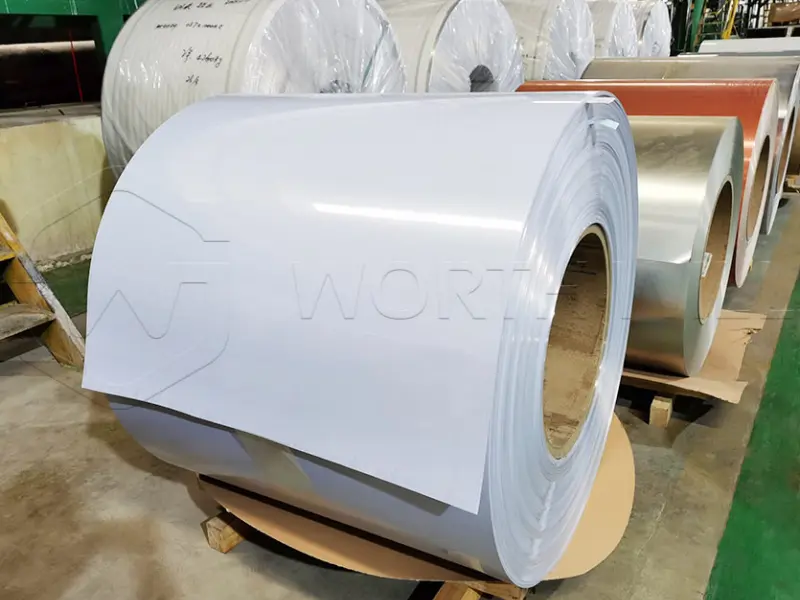
Premium alloys for demanding applications:
| Alloy Grade | Properties | Applications |
|---|---|---|
| 3003-H24 | Good formability, corrosion resistant | Curtain walls, roofing |
| 3004-H24 | Higher strength, excellent durability | Exterior cladding |
| 5005-H24 | Superior surface finish | High-end facades |
| 5052-H24 | Excellent corrosion resistance | Coastal environments |
PVDF vs PE Coating: Direct Comparison
Performance Comparison Table
| Property | PE Coating | PVDF Coating |
|---|---|---|
| Weather Resistance | Good | Excellent |
| UV Stability | Moderate | Superior |
| Chemical Resistance | Fair | Excellent |
| Chalk Resistance | Moderate | Outstanding |
| Color Fade Resistance | Good | Excellent |
| Scratch Resistance | Good | Very Good |
| Cost | Lower | Higher |
| ROI Period | Short-term | Long-term |
Durability and Lifespan
PE coating aluminum coil typically maintains acceptable appearance for 5-10 years in normal environments. The coating may show signs of fading and chalking after extended exposure to harsh weather conditions.
PVDF coating aluminum coil offers superior longevity, maintaining its appearance for 20-30 years even in challenging environments. The fluoropolymer chemistry provides exceptional resistance to UV radiation, acid rain, and industrial pollutants.
Cost Analysis
| Cost Factor | PE Coating | PVDF Coating |
|---|---|---|
| Initial Material Cost | $$100-150/coil | $$200-300/coil |
| Installation Cost | Standard | Standard |
| Maintenance Cost (10 years) | $$50-100 | $$10-20 |
| Replacement Frequency | 10-15 years | 25-30 years |
| Total Cost of Ownership | Moderate | Lower long-term |
Technical Specifications Comparison
Thickness Options
Both PE and PVDF coating aluminum coil are available in various thicknesses:
| Thickness (mm) | Weight (kg/m²) | Common Use |
|---|---|---|
| 0.30 | 0.81 | Ceiling panels, light duty |
| 0.40 | 1.08 | Interior applications |
| 0.50 | 1.35 | Standard roofing, wall panels |
| 0.70 | 1.89 | Heavy-duty cladding |
| 1.00 | 2.70 | Structural applications |
| 1.20 | 3.24 | High-strength requirements |
Width and Length Specifications
| Dimension | Standard Range | Custom Options |
|---|---|---|
| Width | 1000mm, 1200mm, 1250mm, 1500mm | Up to 1800mm |
| Length (coil) | Continuous coil | Cut to length available |
| Inner Diameter | 405mm, 505mm, 508mm | Custom ID available |
| Outer Diameter | Up to 1500mm | Depends on thickness |
| Coil Weight | 2-5 tons | Custom weights |
Color Options and Finishes
Standard Color Systems
Both PE and PVDF coating aluminum coil offer extensive color choices:
- RAL Color System: 200+ standard colors
- Pantone Matching: Custom color matching available
- Metallic Colors: Silver, gold, bronze, copper
- Special Effects: Pearlescent, iridescent finishes
- Wood Grain: Natural wood texture patterns
- Stone Pattern: Marble, granite effects
Surface Finish Types
| Finish Type | Gloss Level (GU) | Appearance |
|---|---|---|
| High Gloss | 80-95 | Mirror-like, reflective |
| Medium Gloss | 50-70 | Semi-reflective |
| Matte | 10-30 | Non-reflective, soft |
| Textured | Varies | Embossed patterns |
Application Areas
PE Coating Aluminum Coil Applications
PE coating aluminum coil suits budget-conscious projects with moderate performance requirements:
- General construction buildings
- Residential roofing systems
- Interior wall panels and partitions
- Warehouse and factory buildings
- Agricultural structures
- Temporary structures and shelters
- Garage doors and shutters
- Gutters and downspouts
- Light commercial signage
- Interior ceiling systems
PVDF Coating Aluminum Coil Applications
PVDF coating aluminum coil excels in demanding environments requiring premium performance:
- High-rise building facades
- Airport terminals and transportation hubs
- Commercial curtain wall systems
- Coastal area construction projects
- Industrial facilities with chemical exposure
- Premium residential developments
- Iconic architectural landmarks
- Hospital and healthcare facilities
- Educational institution buildings
- Government and municipal buildings
Environmental Performance
Weather Resistance Ratings
| Environmental Factor | PE Coating | PVDF Coating |
|---|---|---|
| Salt Spray Resistance | 1000 hours | 3000+ hours |
| Humidity Resistance | Good | Excellent |
| Acid Rain Resistance | Moderate | Excellent |
| Industrial Pollution | Fair | Excellent |
| Coastal Environment | Moderate | Excellent |
| Desert Climate | Good | Excellent |
Temperature Performance
PE coating aluminum coil performs adequately in moderate temperature ranges but may experience accelerated degradation in extreme conditions. The coating remains stable between -20°C and 80°C.
PVDF coating aluminum coil demonstrates superior temperature stability, maintaining integrity from -40°C to 120°C. This wider range makes PVDF suitable for extreme climate zones and applications with significant temperature fluctuations.
Quality Standards and Certifications
International Standards Compliance
| Standard | PE Coating | PVDF Coating |
|---|---|---|
| ASTM B209 | ✓ | ✓ |
| EN 485 | ✓ | ✓ |
| AAMA 2605 | – | ✓ |
| AAMA 2604 | ✓ | – |
| ISO 9001 | ✓ | ✓ |
| ISO 14001 | ✓ | ✓ |
Testing Requirements
Both PE and PVDF coating aluminum coil undergo rigorous quality testing:
- Adhesion Test: Cross-hatch or pull-off testing
- Flexibility Test: T-bend testing for coating integrity
- Impact Resistance: Falling weight impact testing
- Salt Spray Test: Corrosion resistance verification
- Accelerated Weathering: QUV or xenon arc testing
- Color Measurement: Spectrophotometer analysis
Manufacturing Process Comparison
Coating Application Methods
| Process Step | PE Coating | PVDF Coating |
|---|---|---|
| Surface Preparation | Chemical cleaning | Enhanced cleaning |
| Pretreatment | Chromate/chrome-free | Chrome-free conversion |
| Primer Application | Single layer | Double layer |
| Topcoat Application | Single pass | Multiple passes |
| Curing Temperature | 200-230°C | 230-250°C |
| Curing Time | 40-60 seconds | 60-90 seconds |
Maintenance Requirements
PE Coating Aluminum Coil Maintenance
Regular maintenance extends the life of PE coating aluminum coil:
- Clean surfaces every 6 months in normal environments
- Inspect for scratches or damage annually
- Remove dirt and pollutants with mild detergent
- Rinse thoroughly with clean water
- Avoid abrasive cleaning materials
- Touch up minor damage promptly
PVDF Coating Aluminum Coil Maintenance
PVDF coating aluminum coil requires minimal maintenance:
- Annual cleaning in most environments
- Self-cleaning properties reduce dirt accumulation
- Simple water rinse often sufficient
- Resistant to most common cleaning chemicals
- Minimal touch-up requirements
- Longer intervals between maintenance cycles
Product Selection Guide
When to Choose PE Coating Aluminum Coil
Select PE coating aluminum coil for these scenarios:
- Budget Constraints: Lower initial investment required
- Short-term Projects: 5-10 year project lifespan
- Interior Applications: Protected from harsh weather
- Moderate Climate: Stable weather conditions
- Standard Requirements: Basic performance needs
- Easy Replacement: Accessible for future updates
When to Choose PVDF Coating Aluminum Coil
Choose PVDF coating aluminum coil for these situations:
- Premium Projects: High-end architectural applications
- Long-term Investment: 20-30 year performance expectation
- Harsh Environments: Coastal, industrial, or extreme climates
- Low Maintenance: Minimal upkeep requirements
- Color Retention: Appearance preservation critical
- Brand Image: Premium quality representation
Technical Data Sheets
Mechanical Properties Comparison
| Property | PE Coating (3003-H24) | PVDF Coating (3003-H24) |
|---|---|---|
| Tensile Strength | 145-185 MPa | 145-185 MPa |
| Yield Strength | 115-145 MPa | 115-145 MPa |
| Elongation | 2-10% | 2-10% |
| Hardness | 40-50 HB | 40-50 HB |
| Coating Hardness | 2H-3H | 3H-4H |
Chemical Composition
| Element | 3003 Alloy % | 5005 Alloy % |
|---|---|---|
| Aluminum | 96.8-99.0 | 97.0-98.2 |
| Manganese | 1.0-1.5 | 0.2 max |
| Magnesium | 0.05 max | 0.5-1.1 |
| Copper | 0.05-0.20 | 0.2 max |
| Iron | 0.7 max | 0.7 max |
| Silicon | 0.6 max | 0.3 max |
| Zinc | 0.1 max | 0.25 max |
PVDF vs PE Coating Aluminum Coil
PVDF vs PE Coating Aluminum Coil Both PE and PVDF coating aluminum coil serve important roles in modern construction and manufacturing. PE coating aluminum coil offers cost-effective solutions for standard applications with moderate performance requirements. PVDF coating aluminum coil delivers premium performance for demanding projects requiring exceptional durability and longevity.
Your choice between PVDF vs PE coating aluminum coil depends on project requirements, budget considerations, environmental conditions, and expected lifespan. Consider total cost of ownership rather than initial price alone. For premium architectural projects in challenging environments, PVDF coating aluminum coil provides superior value despite higher initial costs. For standard construction with budget constraints, PE coating aluminum coil delivers reliable performance at competitive prices.
Frequently Asked Questions
Can PE coating be upgraded to PVDF coating? A: No, coating systems cannot be changed after application. Choose the appropriate coating type during initial specification.
How do I identify PE vs PVDF coating? A: Check product specifications and certifications. PVDF typically meets AAMA 2605 standards, while PE meets AAMA 2604.
Which coating is better for coastal areas? A: PVDF coating aluminum coil performs significantly better in coastal environments due to superior corrosion and salt spray resistance.
Is the color range different between PE and PVDF? A: Both offer similar color ranges, but PVDF maintains color appearance much longer with less fading.
What is the price difference? A: PVDF coating aluminum coil typically costs 50-100% more initially but offers better long-term value through extended lifespan and lower maintenance costs.