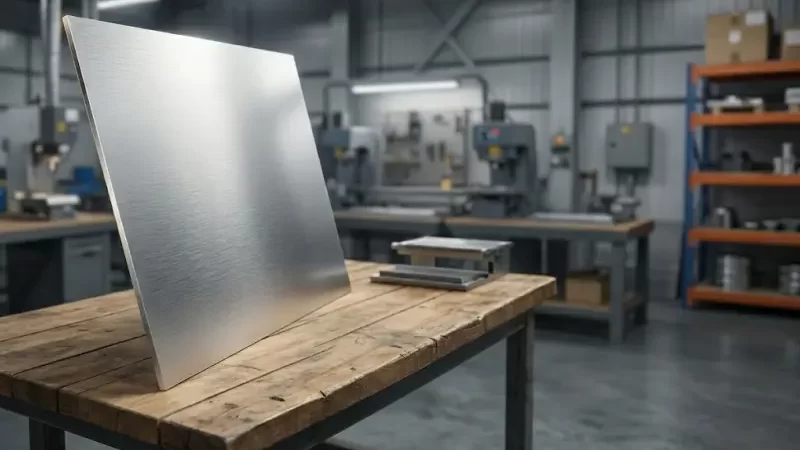
Looking for top-notch aluminum sheet options to enhance your projects?
Dive into our comprehensive range of aluminum sheet solutions, including the highly sought-after 505 2 and 3003 aluminum sheets.
At our factory, we specialize in providing customized aluminum sheet to your specific needs, whether you’re a wholesaler, retailer, or part of the manufacturing industry.
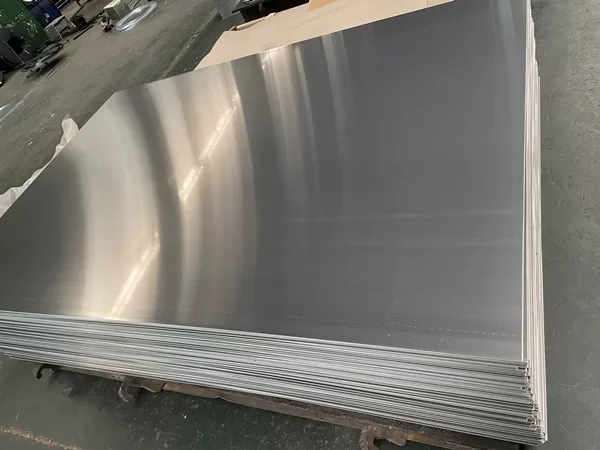
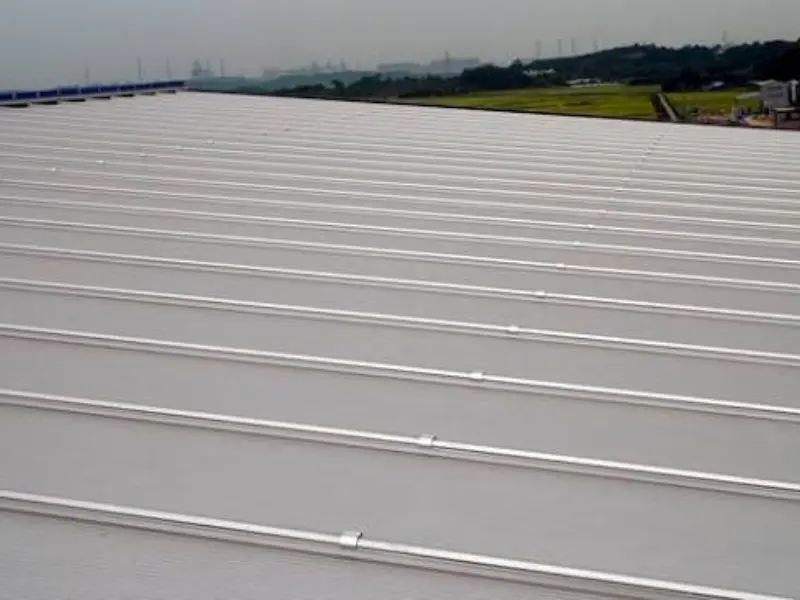
Unparalleled Quality: 5052 Aluminum Sheet
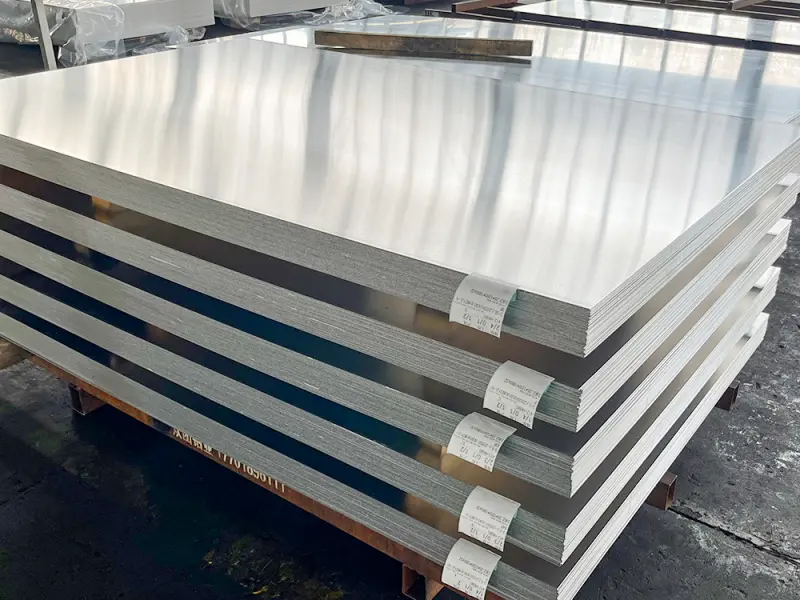
When it comes to durability and corrosion resistance, our 5052 aluminum sheet stands out as a top choice. Engineered to meet stringent quality standards, our 5052 aluminum sheet is perfect for applications requiring strength, formability, and excellent weldability. From automotive parts to marine components, our factory-produced 5052 aluminum sheet ensures optimal performance and longevity in diverse environments.
Versatile Performance: 3003 Aluminum Sheet
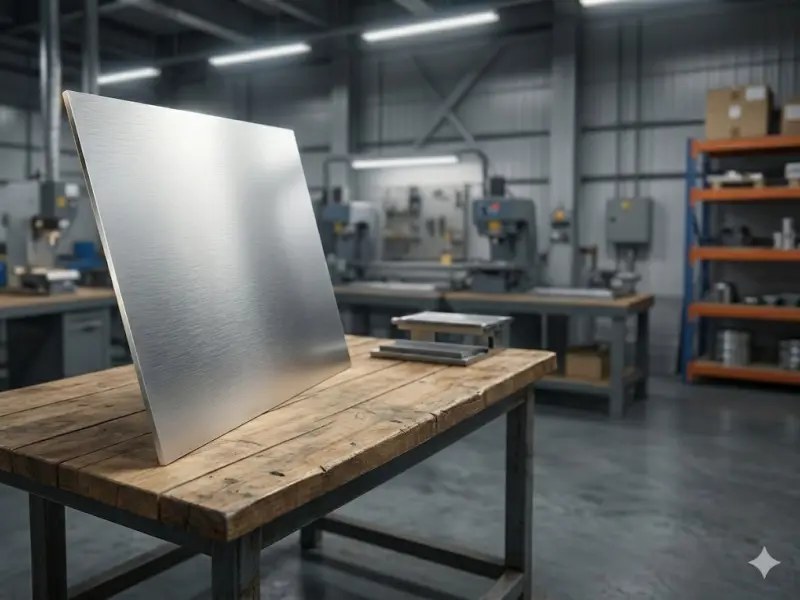
For projects that demand versatility and reliability, our 3003 aluminum sheet delivers exceptional performance. Renowned for its excellent formability, weldability, and corrosion resistance. Our 3003 aluminum sheet is a preferred choice for various applications, including roofing, insulation, and decorative purposes. Count on our factory to provide customized solutions that meet your unique specifications and requirements.
Customized Solutions for Your Needs
At our factory, we understand that every project is unique, which is why we offer customized aluminum sheet solutions to cater to your specific needs.
Whether you require custom dimensions, surface finishes, or alloy compositions, our team of experts can offer exceed your expectations. From small-scale orders to bulk wholesale purchases, we have service and high-quality products to our valued customers.
Wholesale Opportunities Available
As a leading aluminum sheet supplier, we offer wholesale opportunities for businesses looking to source quality products at competitive prices. Benefit from our extensive inventory, efficient production processes, and reliable logistics network to streamline your supply chain and maximize cost savings.
Whether you’re a distributor, manufacturer, or retailer, partnering with us for wholesale aluminum sheet purchases ensures access to premium products and unparalleled customer service.
Experience the Difference with Our Aluminum Sheet
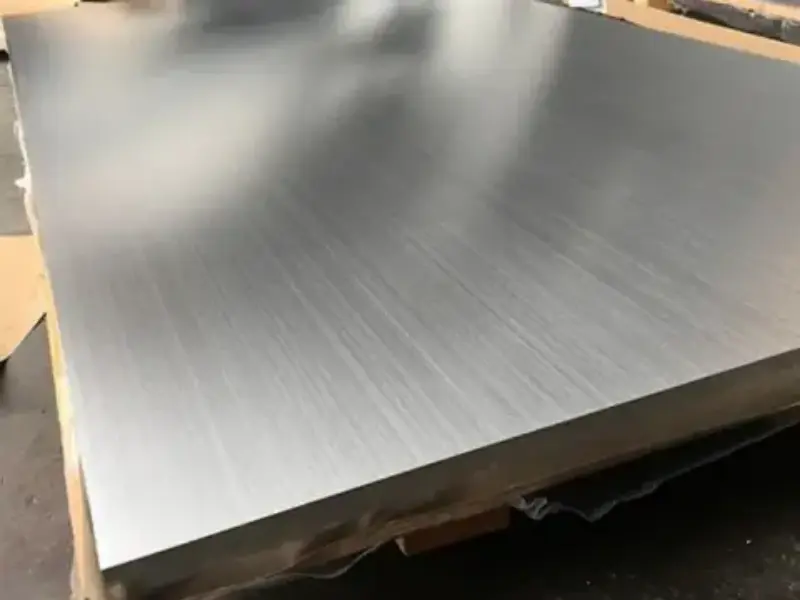
Experience the difference that quality aluminum sheet can make in your projects. From 5052 to 3003 varieties, our factory-produced aluminum sheets offer unmatched performance, durability, and versatility for a wide range of applications. Whether you’re in the automotive, construction, or aerospace industry, our customized solutions are tailored to meet your specific needs and specifications.
Get in Touch Today
Ready to elevate your projects with top-quality aluminum sheet solutions? Contact us today to discuss your requirements and explore the possibilities with our extensive range of aluminum sheet products. With our commitment to quality, customization, and customer satisfaction, we’re your trusted partner for all your aluminum sheet needs.
Complete Guide to Aluminum Sheet Metal Types for Different Applications
Aluminum sheet metal is one of the most widely used metal materials in construction, transportation, manufacturing, and industrial projects.
Different aluminum sheet metal types have different properties. The alloy, temper, thickness, and surface finish determine the final performance.
Choosing the right aluminum sheet is important because different projects require different levels of strength, corrosion resistance, formability, and durability.
Common factors include:
- Aluminum alloy
- Temper condition
- Sheet thickness
- Surface treatment
- Application environment
This guide explains different aluminum sheet metal types and how to select the best option for your project.
How Aluminum Sheet Metal Is Classified
Aluminum sheet metal can be classified in several ways.
| Classification | Examples |
|---|---|
| Alloy Series | 1000, 3000, 5000, 6000 series |
| Temper | O, H14, H24, H32, T6 |
| Surface | Mill finish, anodized, painted, embossed |
| Thickness | Thin sheet to heavy plate |
| Application | Construction, marine, automotive |
Each classification affects the performance and cost of the material.
Aluminum Sheet Metal Types by Alloy Series
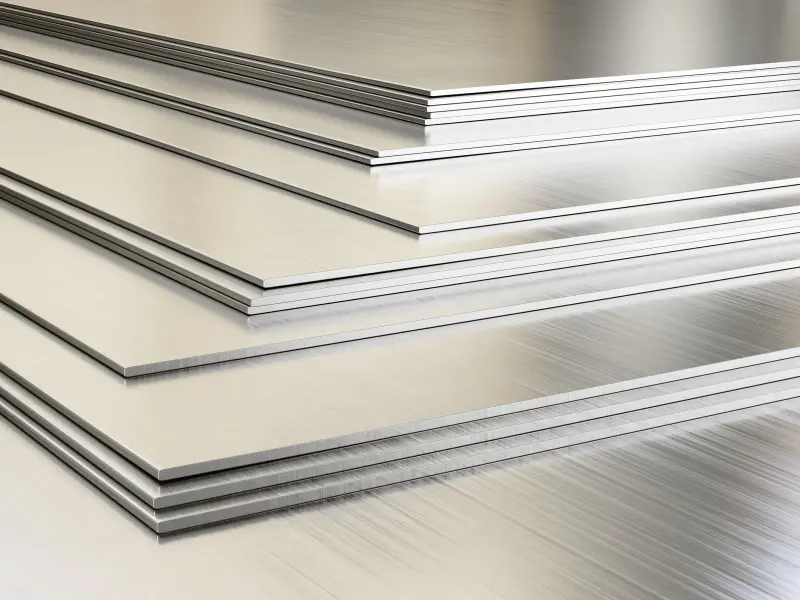
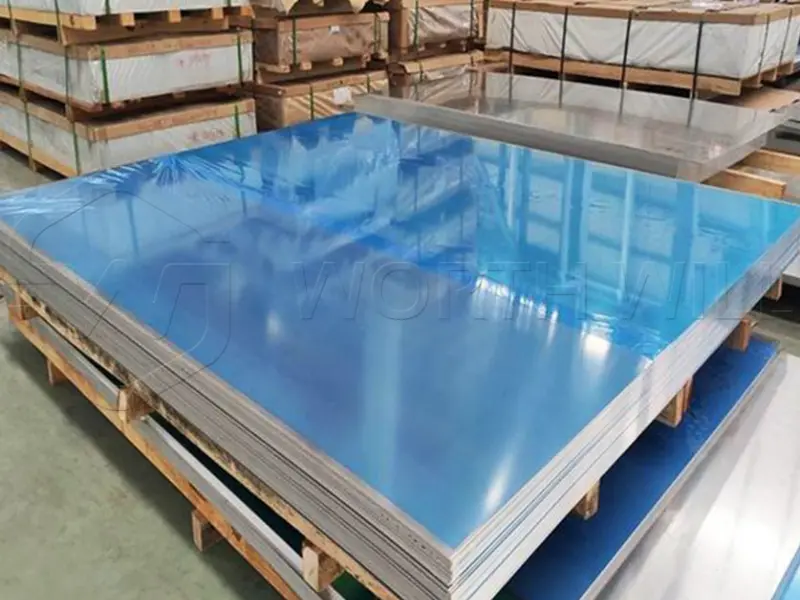
1000 Series Aluminum Sheet
1000 series aluminum contains very high aluminum content.
Common grades:
- 1050 aluminum sheet
- 1060 aluminum sheet
- 1100 aluminum sheet
Main Features
- Excellent corrosion resistance
- High electrical conductivity
- Easy forming
- Smooth surface
Common Applications
- Food equipment
- Chemical containers
- Decorative panels
- Reflectors
- Electrical applications
| Alloy | Aluminum Content | Main Advantage |
|---|---|---|
| 1050 | 99.5% | Excellent purity |
| 1060 | 99.6% | Good surface quality |
| 1100 | 99.0% | Better strength |
3000 Series Aluminum Sheet
3000 series aluminum uses manganese as the main alloy element.
The most popular grade is:
- 3003 aluminum sheet
Features
- Better strength than 1000 series
- Good corrosion resistance
- Excellent workability
Applications
- Roofing
- Wall panels
- Heat exchangers
- Kitchen equipment
- Storage tanks
3003 aluminum sheet is one of the most common choices for general industrial applications.
5000 Series Aluminum Sheet
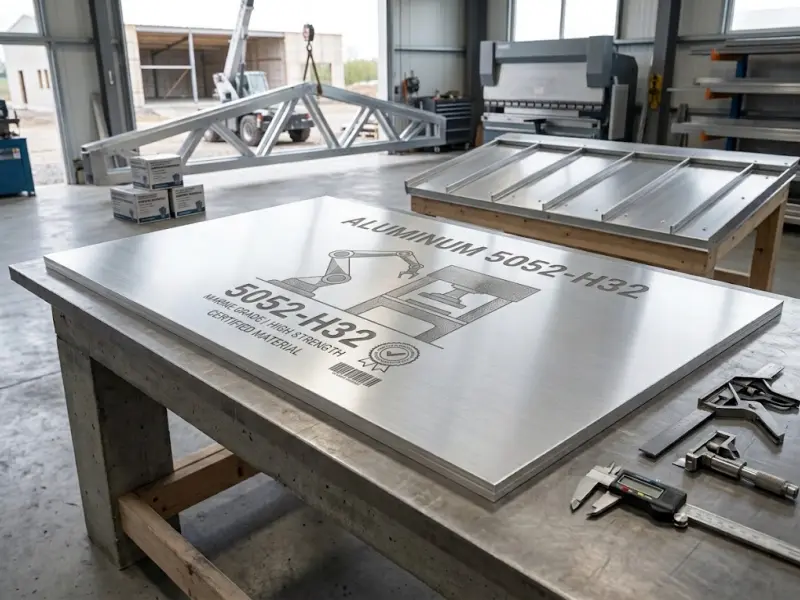
5000 series aluminum contains magnesium.
Popular grades include:
- 5052 aluminum sheet
- 5083 aluminum plate
- 5754 aluminum sheet
Advantages
- High corrosion resistance
- Good welding performance
- Higher strength
Applications
- Marine equipment
- Shipbuilding
- Vehicle parts
- Pressure vessels
- Outdoor structures
| Alloy | Best Feature | Application |
|---|---|---|
| 5052 | Corrosion resistance | Marine, vehicles |
| 5083 | High strength | Shipbuilding |
| 5754 | Good forming | Automotive |
6000 Series Aluminum Sheet
6000 series aluminum contains magnesium and silicon.
Common grades:
- 6061 aluminum sheet
- 6063 aluminum sheet
Features
- High strength
- Good machining performance
- Heat treatable
Applications
- Structural parts
- Machinery
- Frames
- Aerospace components
6061 aluminum sheet is often selected when strength is more important than cost.
The temper shows the hardness and mechanical condition of aluminum.
O Temper Aluminum Sheet
O temper means annealed aluminum.
Features:
- Soft
- Excellent forming ability
- Easy bending
Applications:
- Deep drawing products
- Kitchen products
- Decorative parts
H14 is a semi-hard temper.
Features:
- Balanced strength
- Good forming ability
- Smooth surface
Applications:
- Sign panels
- Decoration
- General fabrication
H24 Aluminum Sheet
H24 provides improved strength after work hardening.
Applications:
- Roofing
- Wall cladding
- Industrial panels
H32 is widely used for outdoor applications.
Advantages:
- Good strength
- Good corrosion resistance
Applications:
- Marine products
- Transportation
- Construction
T6 is a heat-treated condition.
Features:
- High strength
- Excellent mechanical performance
Applications:
- Structural components
- Engineering projects
Aluminum Sheet Metal Types by Surface Finish
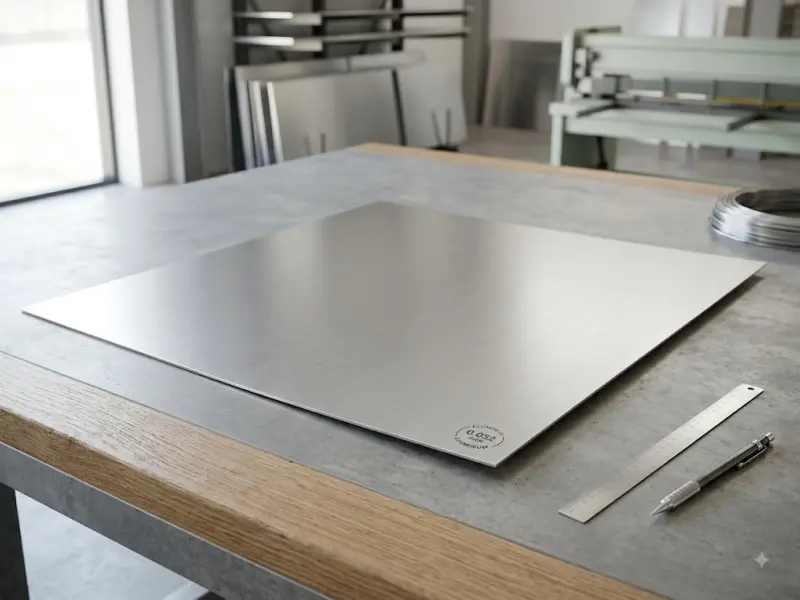
Surface finish changes both appearance and performance.
Mill Finish Aluminum Sheet
Anodized Aluminum Sheet
Painted Aluminum Sheet
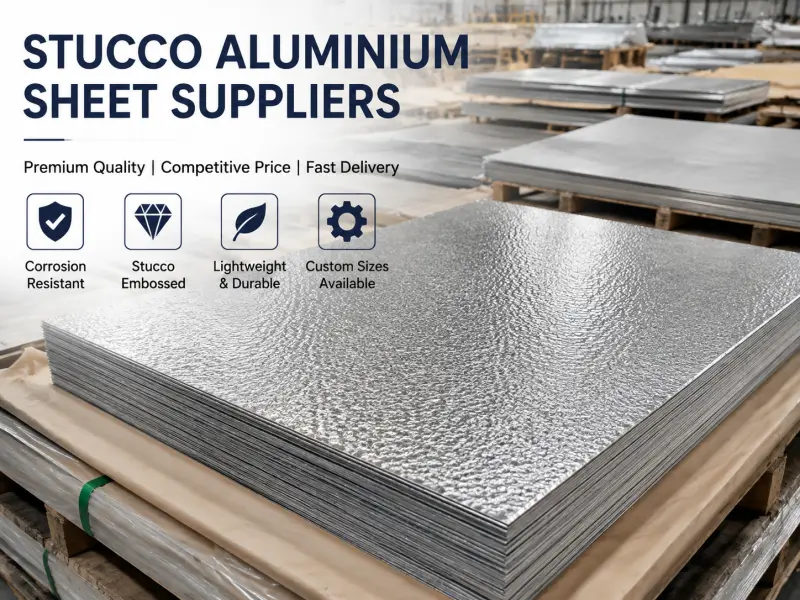
Embossed Aluminum Sheet
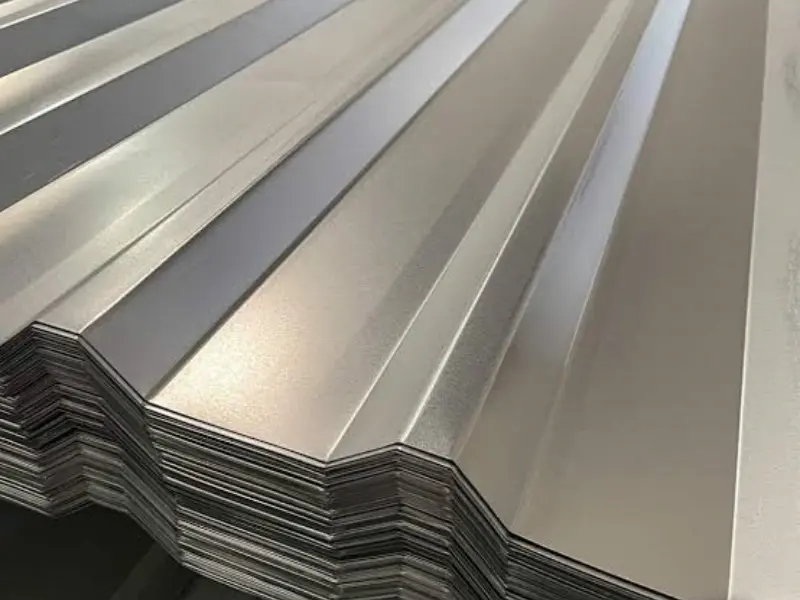
Aluminum Sheet Metal Types by Thickness
Thickness selection depends on strength requirements.
| Thickness | Application |
|---|---|
| 0.2-0.5 mm | Decoration, electronics |
| 0.6-1.5 mm | Panels, signs |
| 2-3 mm | Construction |
| 4-6 mm | Transportation |
| 8-20 mm | Industrial plates |
Aluminum Sheet Metal Comparison
3003 vs 5052 Aluminum Sheet
| Feature | 3003 | 5052 |
|---|---|---|
| Strength | Medium | Higher |
| Corrosion Resistance | Good | Excellent |
| Welding | Good | Excellent |
| Marine Use | Limited | Excellent |
| Cost | Lower | Higher |
Choose 3003 for general applications.
Choose 5052 for outdoor and marine environments.
Aluminum Sheet vs Steel Sheet
| Feature | Aluminum | Steel |
|---|---|---|
| Weight | Light | Heavy |
| Corrosion Resistance | Excellent | Requires coating |
| Installation | Easy | More difficult |
| Maintenance | Low | Higher |
The luminum is preferred when weight reduction is important.
Aluminum Sheet vs Stainless Steel
| Feature | Aluminum | Stainless Steel |
|---|---|---|
| Weight | Lower | Higher |
| Cost | Lower | Higher |
| Corrosion Resistance | Excellent | Excellent |
| Machining | Easier | Harder |
Applications of Aluminum Sheet Metal
Construction Industry
Used for:
- Roofing panels
- Curtain walls
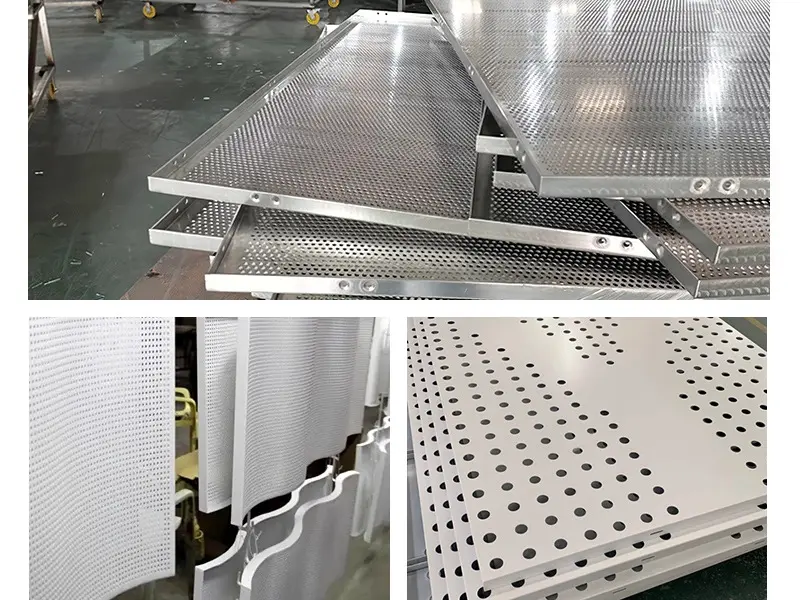
- Ceiling systems
- Wall cladding
- Decorative panels
Transportation Industry
Applications:
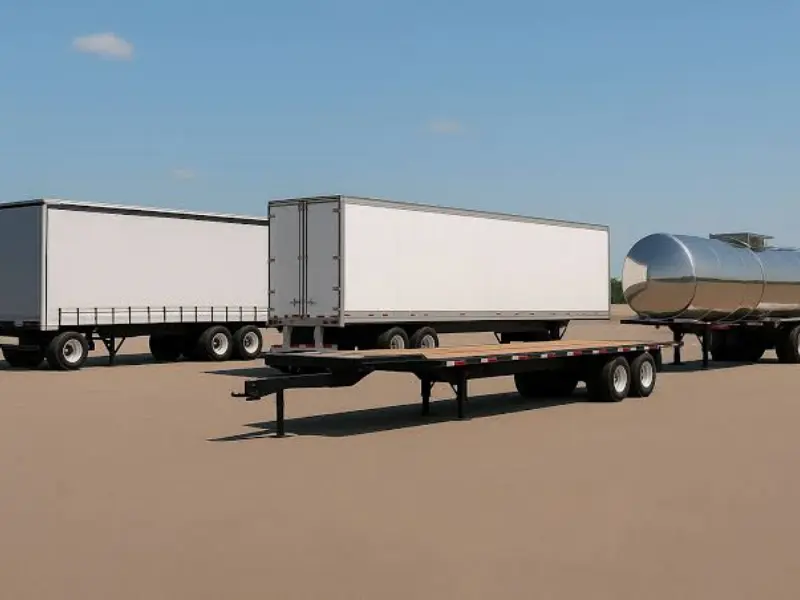
- Truck bodies
- Trailer panels
- Vehicle components
- Railway parts
Marine Industry
Used for:
- Boat structures
- Ship decks
- Marine equipment
5052 and 5083 aluminum are commonly selected.
Industrial Applications
Including:
- Machinery covers
- Equipment panels
- Storage tanks
- Manufacturing parts
Electrical Industry
Applications:
- Transformer parts
- Heat sinks
- Electrical enclosures
Factors Affecting Aluminum Sheet Metal Price
| Factor | Effect |
|---|---|
| Alloy | Medium |
| Thickness | High |
| Surface Finish | Medium |
| Order Quantity | High |
| Market Aluminum Price | High |
Buying directly from aluminum sheet metal suppliers can reduce costs.
How to Choose the Right Aluminum Sheet Metal
Before purchasing, consider:
Application Environment
Indoor and outdoor projects require different materials.
Required Strength
Heavy-duty applications need stronger alloys.
Corrosion Conditions
Marine and coastal projects require corrosion-resistant aluminum.
Fabrication Method
Consider:
- Cutting
- Welding
- Bending
- Machining
Why Choose Professional Aluminum Sheet Metal Suppliers
A reliable supplier should provide:
- Stable quality
- Complete alloy options
- Custom sizes
- Thickness control
- Surface treatment
- Export experience
Professional manufacturers can provide solutions for different industries.
The Core Classification of Aluminum Sheets
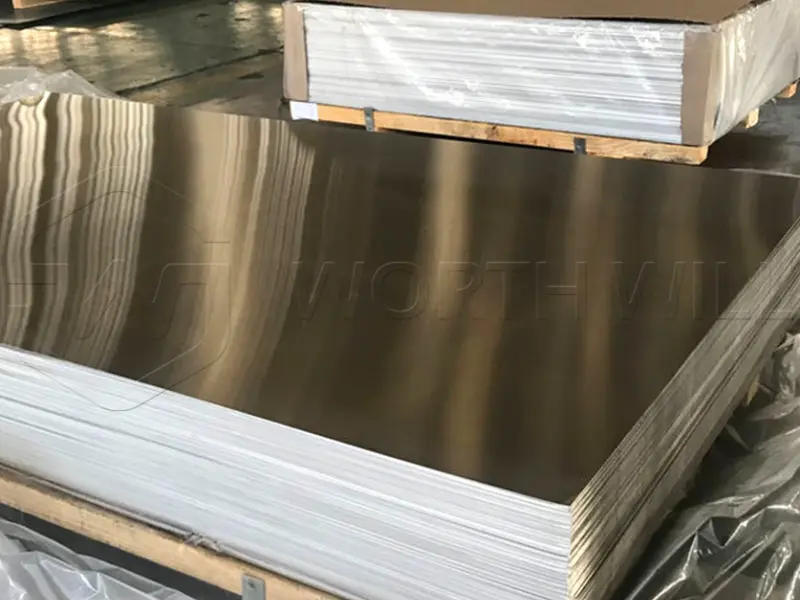
Before we dive into specific numbers, we must look at the two main branches of aluminum sheets. The metal is usually grouped by its chemical makeup.
Pure Aluminum vs. Alloyed Aluminum
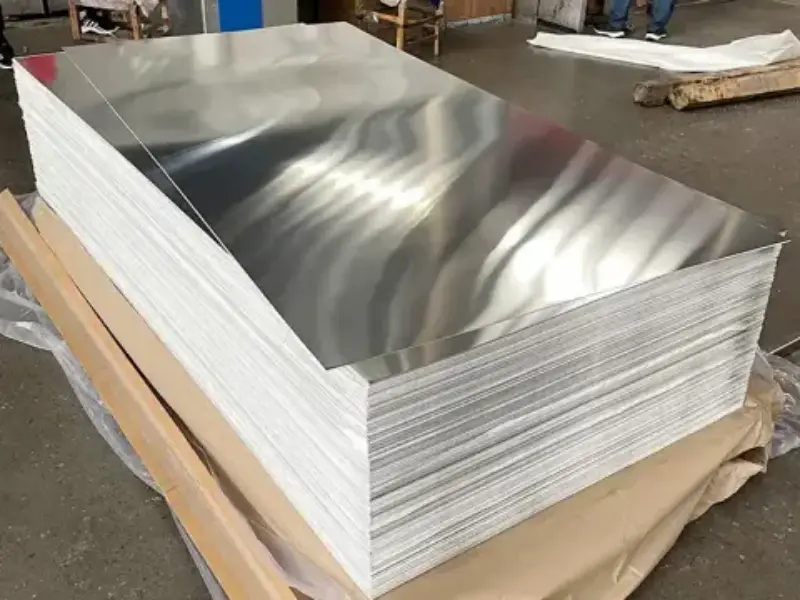
- Pure Aluminum (1000 Series): This contains more than 99% aluminum. It is very soft and easy to bend. It resists corrosion better than almost any other type.
- Alloyed Aluminum (2000-8000 Series): Manufacturers mix aluminum with other metals like magnesium, manganese, or zinc. This makes the sheets stronger, harder, or more heat-resistant.
Decoding the Alloy Series: From 1000 to 7000
Each alloy has a four-digit number. This number tells you what is inside the metal. Below, we break down the most popular Aluminum Sheet Metal Types found in factories today.
The Path of Alloy Selection
Raw Aluminum Ingot → Addition of Alloying Elements → Heat Treatment → Finishing → Final Product
1000 Series: The Specialist for Conductivity
- Common Grade: 1050, 1060, 1100.
- Main Element: Pure Aluminum.
- Best Use: This type is great for electrical parts. It is also used for chemical tanks because it does not react easily with other substances. It has a very bright, reflective surface.
3000 Series: The King of Everyday Use
- Common Grade: 3003, 3105.
- Main Element: Manganese.
- Best Use: This is the most popular general-purpose aluminum. It is roughly 20% stronger than the 1000 series. You will see it in cookware, roofing, and siding.
5000 Series: The Marine Grade Champion
- Common Grade: 5052, 5083, 5754.
- Main Element: Magnesium.
- Best Use: These sheets are “marine grade.” They can handle salt water without rusting. They are very strong and are used for fuel tanks, boat hulls, and truck bodies.
6000 Series: The Structural Workhorse
- Common Grade: 6061, 6063.
- Main Element: Magnesium and Silicon.
- Best Use: These sheets are heat-treatable. They are very strong and are used for structural frames, bridge parts, and heavy machinery.

Dimensions and Digital Specs: What You Need to Know
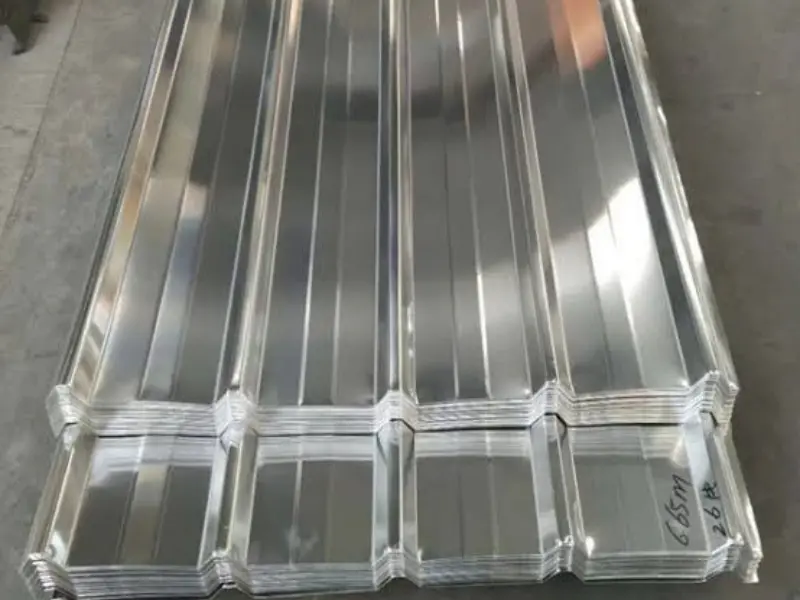
When you order Aluminum Sheet Metal Types, you need to specify the size. The industry uses both metric and imperial measurements.
Standard Sheet Sizes Table
| Feature | Standard Option (Imperial) | Standard Option (Metric) |
|---|---|---|
| Common Widths | 36″, 48″, 60″ | 1000mm, 1220mm, 1500mm |
| Common Lengths | 96″, 120″, 144″ | 2000mm, 2440mm, 3000mm |
| Common Thickness | 0.025″ to 0.250″ | 0.5mm to 6.0mm |
Understanding the Gauge System
Many suppliers use “Gauge” to describe thickness. A higher gauge number means a thinner sheet.
| Gauge Number | Thickness in Inches | Thickness in Millimeters |
|---|---|---|
| 8 Gauge | 0.1285″ | 3.26mm |
| 10 Gauge | 0.1019″ | 2.58mm |
| 12 Gauge | 0.0808″ | 2.05mm |
| 16 Gauge | 0.0508″ | 1.29mm |
| 20 Gauge | 0.0320″ | 0.81mm |
| 24 Gauge | 0.0201″ | 0.51mm |
Temper and Hardness: The H and T States
The “Temper” describes how the metal was processed after it was rolled. It is just as important as the alloy.
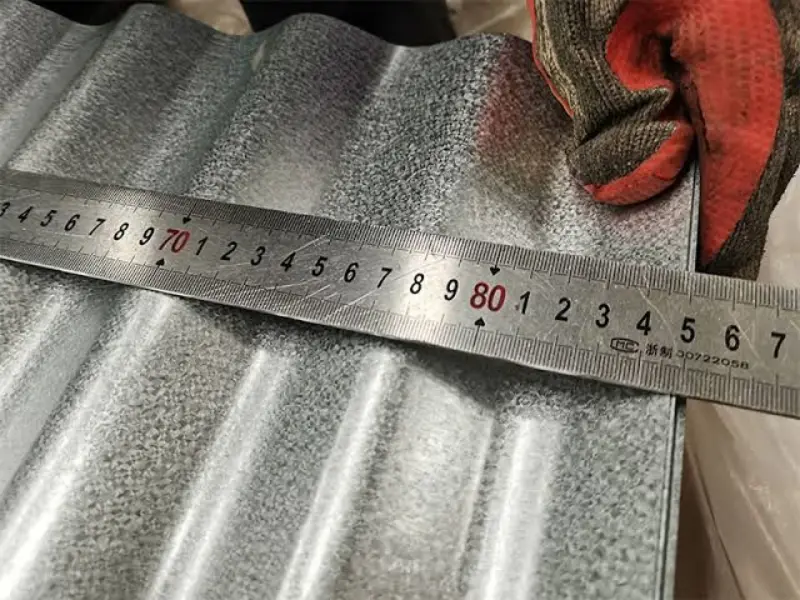
Strain Hardened States (H)
These are used for the 1000, 3000, and 5000 series.
- H14: Half-hard. A good balance of strength and bending ability.
- H24: Half-hard and partially annealed. Very stable for manufacturing.
- H32: Stabilized. Common for 5052 alloy sheets.
Heat Treated States (T)
These are used for the 2000, 6000, and 7000 series.
- T4: Solution heat-treated and naturally aged.
- T6: Solution heat-treated and artificially aged. This provides the highest strength for 6061 aluminum.
Direct Comparison: Choosing the Best Sheet
If you are not sure which alloy to pick, use this comparison table to see the differences.
Performance Comparison Matrix
| Feature | 3003 (Standard) | 5052 (Marine) | 6061 (Structural) |
|---|---|---|---|
| Strength | Medium | Medium-High | High |
| Corrosion Resistance | Very Good | Excellent | Good |
| Bending/Forming | Excellent | Very Good | Poor (May crack) |
| Welding | Excellent | Excellent | Good |
| Typical Cost | Lower | Medium | Higher |
Where Aluminum Metals Perform Their Best
Different industries require different Aluminum Sheet Metal Types. Here is where these metals work the hardest.
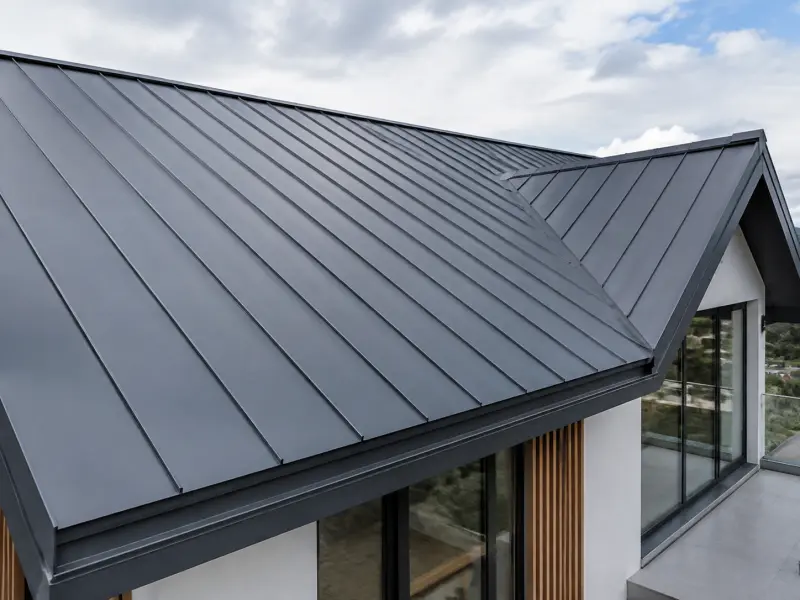
Architecture and Building Exteriors
- Roofing Sheets: Usually 3003 or 3105 alloy. They are light and protect against rain.
- Wall Cladding: Large flat sheets used to make modern buildings look sleek.
- Gutters and Downspouts: Thin, flexible sheets that are easy to shape into channels.
The World of Transportation
- Boat Building: 5083 or 5052 sheets are essential for salt-water environments.
- Car Bodies: Manufacturers use 6000 series sheets to make cars lighter and save fuel.
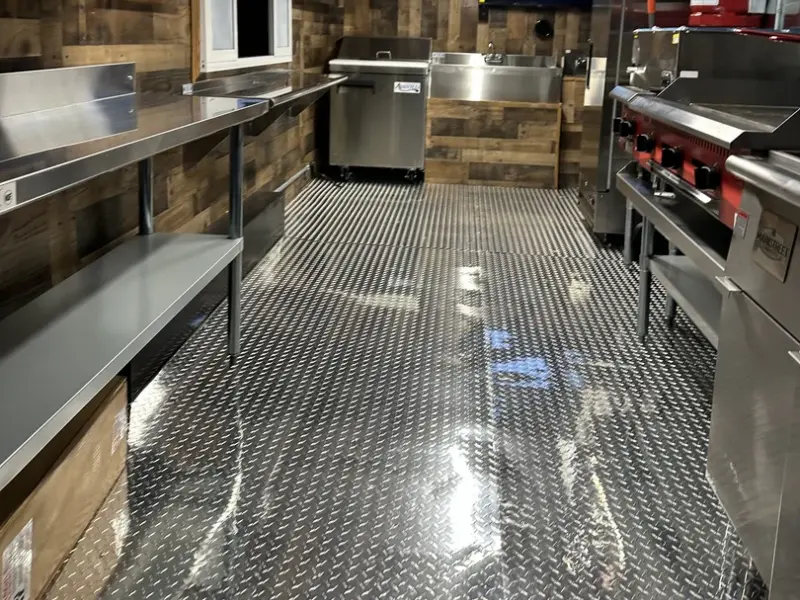
- Trailer Flooring: Tread plate (diamond pattern) sheets provide a non-slip surface for trucks.
Industrial and Consumer Goods
- Cooking Utensils: 3003 aluminum is great for pots and pans because it heats up quickly.
- Signage: Road signs and billboards use 5052 or 3003 because they don’t rust when left outside.
- Electronic Housings: Laptop cases and phone frames often use 6000 series aluminum for a premium feel.
Specialized Surface Treatments
Aluminum doesn’t have to be just a plain grey sheet. We can change the surface to make it look better or last longer.
The Transformation Process
Plain Mill Finish → Surface Cleaning → Treatment Choice (Anodizing, Painting, or Embossing)
Common Finish Types
- Mill Finish: The raw metal exactly as it comes from the rolling mill. It is shiny but can have small marks.
- Anodized: An electrochemical process that makes the surface harder and adds color (like gold, black, or blue).
- Prepainted (Color Coated): A layer of paint is baked onto the sheet. This is very popular for modern house siding.
- Brushed Finish: The metal is rubbed to create a texture of fine lines. It looks very modern and high-tech.
- Stucco Embossed: A pattern is pressed into the sheet to make it look like orange peel. This hides scratches and wear.
How to Calculate the Weight of an Aluminum Sheet

Knowing the weight is vital for shipping and installation. Aluminum is much lighter than steel.
The Weight Formula
W=L×W×T×Density
- W = Total Weight
- L = Length
- W = Width
- T = Thickness
- Density for aluminum is approximately 2.71 g/cm3 (or 0.098 lb/in3).
Weight Calculation Example
Let’s find the weight of a 4×8 sheet (48″×96″) that is 0.125″ thick.
48×96×0.125×0.098=56.45 lbs
One sheet of this size weighs roughly 56.5 pounds.
Practical Selection Guide
To pick the right metal, follow these simple steps:
- Check the Strength: Do you need it to hold a heavy load? (Choose 6061).
- Check the Environment: Will it be near the ocean? (Choose 5052).
- Check the Shape: Do you need to bend it into a complex shape? (Choose 3003).
- Check the Finish: Does it need to look beautiful? (Choose Anodized or Brushed).
FAQ
What are the most common aluminum sheet metal types?
The most common types include 1050, 1060, 3003, 5052, and 6061 aluminum sheets.
Which aluminum sheet is best for outdoor use?
5052 aluminum sheet is commonly recommended because of its excellent corrosion resistance.
What is the difference between 3003 and 5052 aluminum sheet?
3003 provides good performance at a lower cost, while 5052 offers higher strength and better corrosion resistance.
Which aluminum sheet is best for marine applications?
5052 and 5083 aluminum are widely used for marine projects.
What thickness aluminum sheet should I use?
The correct thickness depends on the application. Thin sheets are suitable for decoration, while thicker sheets are used for structures.
Can aluminum sheet metal be painted?
Yes. Aluminum sheets can be coated with PVDF, PE, or powder coating.
Is aluminum sheet metal stronger than steel?
Steel is generally stronger, but aluminum provides a better strength-to-weight ratio.
Does aluminum sheet metal rust?
Aluminum does not rust like steel. It forms a natural oxide layer that protects the surface.
What aluminum alloy is easiest to bend?
1000 and 3000 series aluminum usually provide excellent forming ability.
How do I choose an aluminum sheet supplier?
Look for manufacturers with quality control, alloy options, customization ability, and export experience.