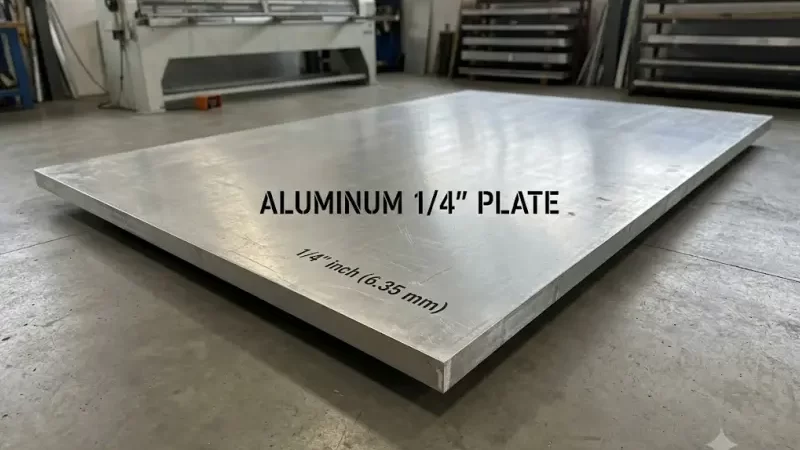
A 1/4 aluminum plate measures 0.250 inches thick. That equals 6.35 millimetres. This thickness sits at the boundary between sheet and plate.
It is thick enough for structural loads. Yet it is thin enough to cut and machine with standard shop tools. Many buyers choose 1/4 inch plate when they need strength without the weight of steel.
A 4×8 sheet of 1/4 plate weighs about 56 pounds. The exact weight depends on the alloy. 3003 is slightly heavier than 5052. 6061 sits in the middle. This weight is roughly one-third of the same size steel plate. That makes aluminum plate popular for transport and marine work where every pound matters.
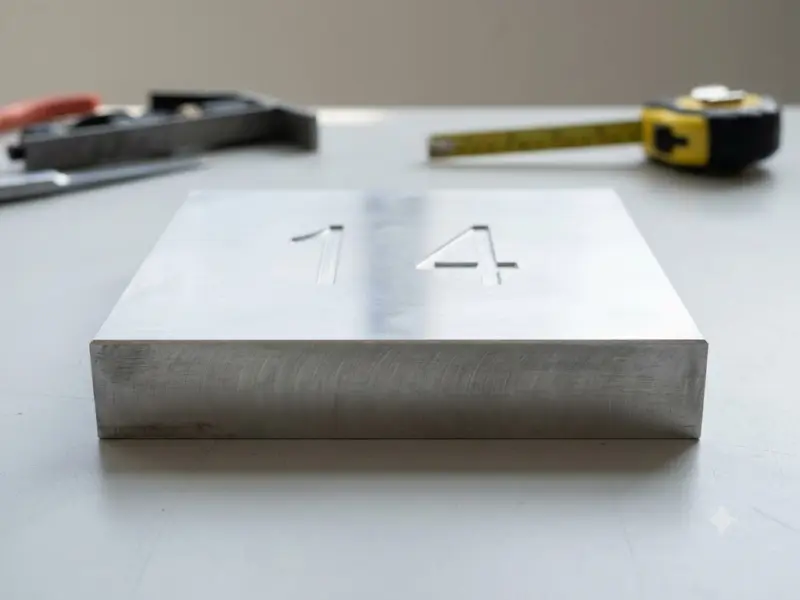
Weight of 1/4 Aluminum Plate by Alloy
| Alloy | Density | Weight per sq ft | Weight of 4×8 sheet |
|---|---|---|---|
| 3003-H14 | 2.73 g/cm³ | ~3.66 lbs | ~117 lbs |
| 5052-H32 | 2.68 g/cm³ | ~3.50 lbs | ~112 lbs |
| 6061-T651 | 2.70 g/cm³ | ~3.66 lbs | ~117 lbs |
| 6061-T6 | 2.70 g/cm³ | ~3.53 lbs | ~113 lbs |
| 7075-T651 | 2.81 g/cm³ | ~3.80 lbs | ~122 lbs |
Quick Rule: Aluminum weighs about 1/3 of steel. A 1/4 steel plate weighs roughly 10 pounds per square foot. A 1/4 aluminum plate weighs about 3.5 to 3.7 pounds per square foot.
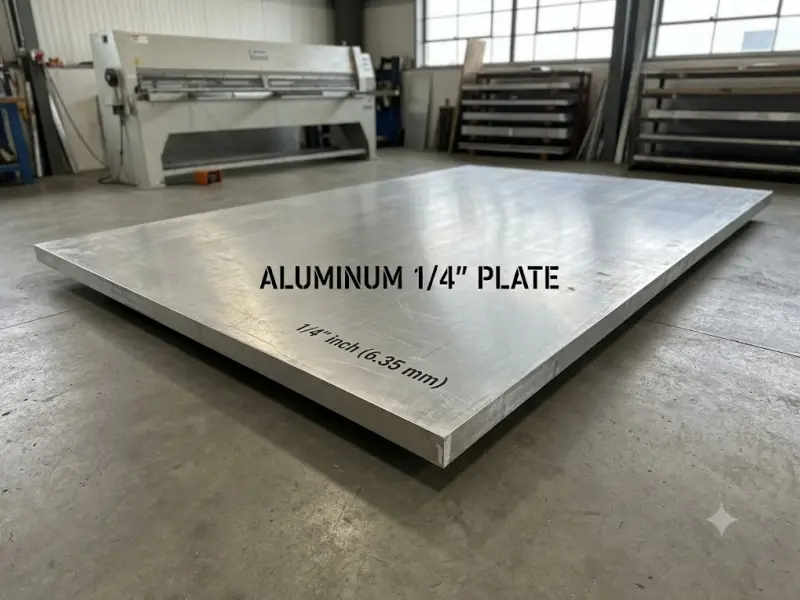
Alloy Types for 1/4 Aluminum Plate
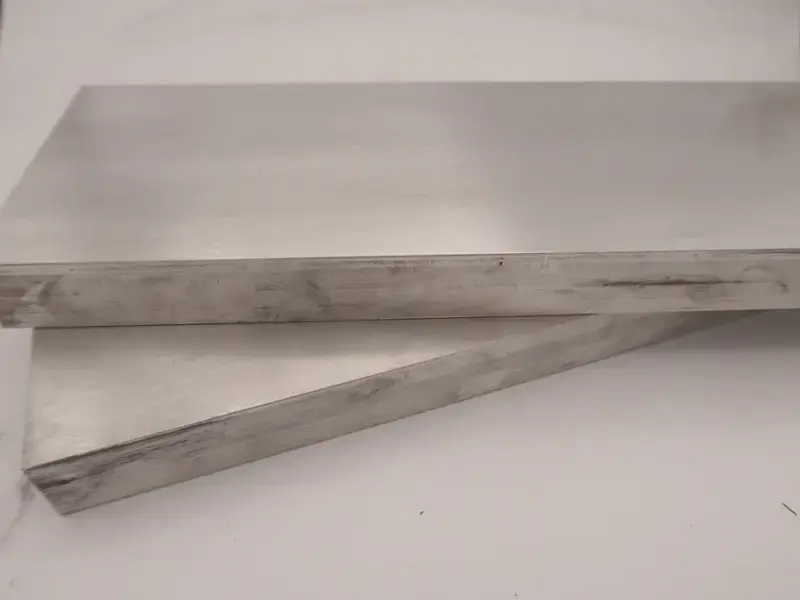
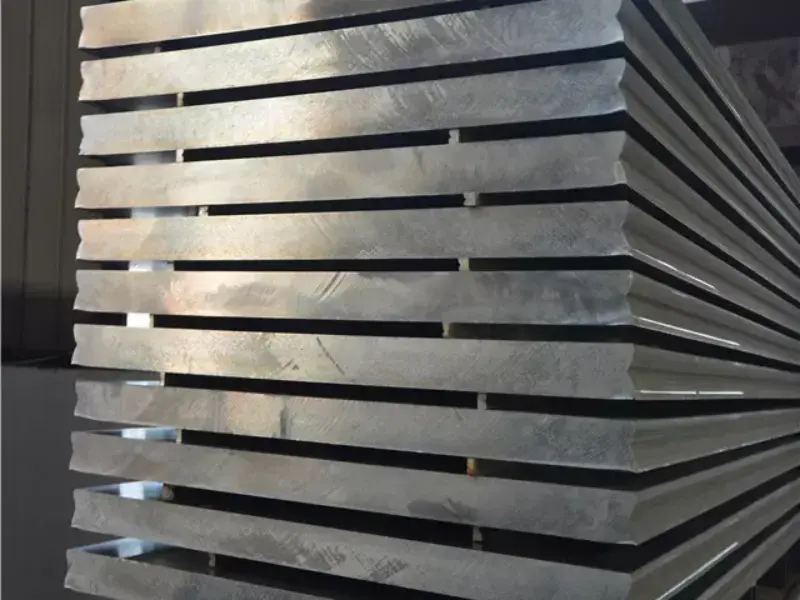
The alloy changes how the plate behaves under load, in water, and when machined.
3003-H14: The General-Purpose Plate
| Property | Value |
|---|---|
| Main Element | Manganese (1.0 – 1.5%) |
| Temper | H14 (half hard) |
| Tensile Strength | 22,000 psi |
| Yield Strength | 21,000 psi |
| Brinell Hardness | 40 |
| Best For | Decorative trim, fuel tanks, food handling, trailer siding |
Why It Sells: 3003 is the most affordable 1/4 plate option. It welds easily and takes a bright finish. Good for projects where strength is not the top concern. Many trailer makers and food equipment builders use this grade.
5052-H32: The Marine Standard
| Property | Value |
|---|---|
| Main Element | Magnesium (2.2 – 2.8%) |
| Temper | H32 |
| Tensile Strength | 33,000 psi |
| Yield Strength | 28,000 psi |
| Brinell Hardness | 60 |
| Best For | Boat hulls, fuel tanks, marine hardware, chemical equipment |
Why It Sells: 5052 resists salt water better than any other common non-heat-treatable alloy. The H32 temper allows forming without cracking. At 1/4 inch, this plate handles heavy marine loads. It is the go-to grade for boat builders and dock constructors.
6061-T6: The Structural Workhorse
| Property | Value |
|---|---|
| Main Elements | Magnesium + Silicon |
| Temper | T6 (heat treated and aged) |
| Tensile Strength | 45,000 psi |
| Yield Strength | 40,000 psi |
| Brinell Hardness | 95 |
| Best For | Structural framing, base plates, gussets, automotive parts, machinery |
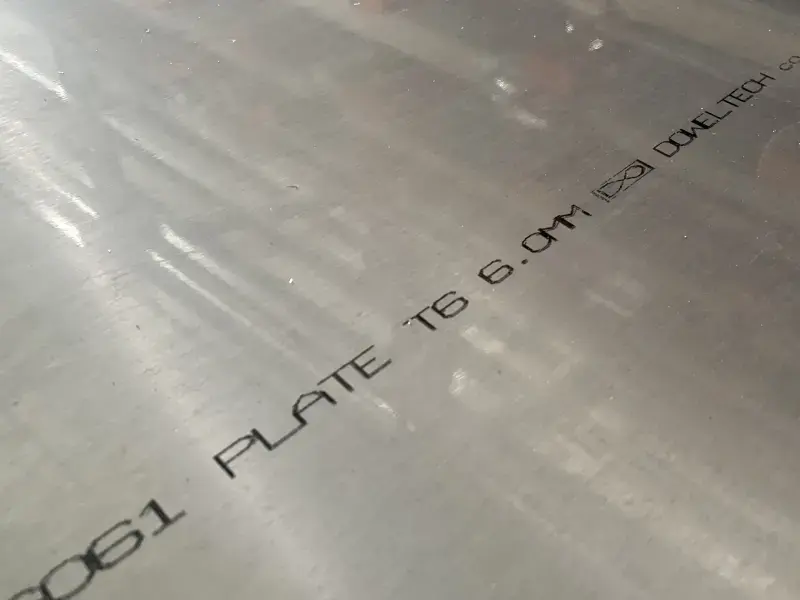
Why It Sells: 6061-T6 is the most widely used aluminum plate grade. It machines cleanly. It welds well with 4043 or 5356 filler. The T6 temper gives it roughly twice the strength of 5052-H32. At 1/4 inch, it replaces steel in many structural jobs.
6061-T651: The Stress-Relieved Version
| Property | Value |
|---|---|
| Temper | T651 (T6 plus stress relief by stretching) |
| Flatness | Better than T6 |
| Machining | Excellent, minimal warping |
| Best For | CNC machining, tooling plates, precision parts |
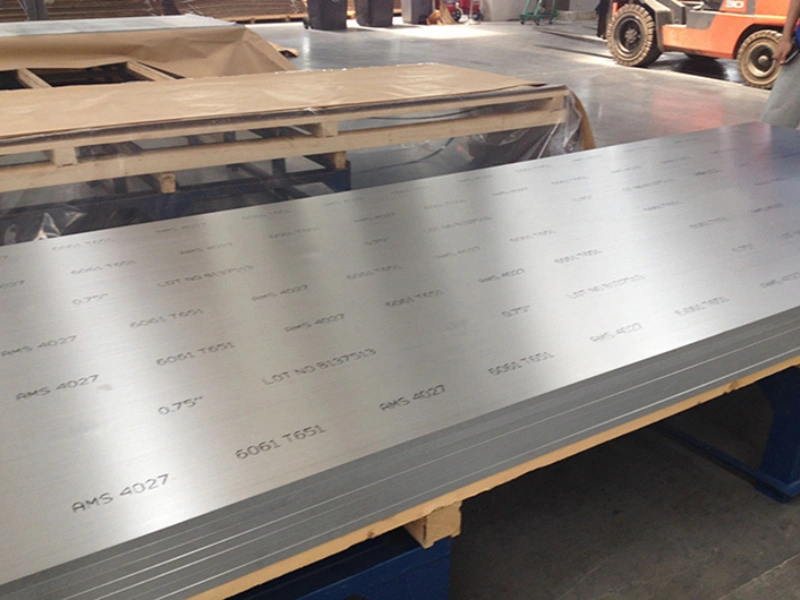
Why It Sells: CNC shops prefer T651 because it stays flat during milling. T6 can warp when material is removed. T651 solves this problem. The price is slightly higher but the savings in setup time pay back quickly.
7075-T651: The Aerospace Grade
| Property | Value |
|---|---|
| Main Element | Zinc (5.1 – 6.1%) |
| Temper | T651 |
| Tensile Strength | 73,000 – 83,000 psi |
| Yield Strength | 63,000 – 73,000 psi |
| Best For | Aircraft wings, landing gear, military parts, high-stress structures |
Trade-Off: 7075 is very strong but less corrosion resistant than 5052 or 6061. It also costs more. For most industrial jobs, 6061-T6 is strong enough. Save 7075 for aerospace and defense work.
Alloy Comparison at 1/4 Inch Thickness
| Feature | 3003-H14 | 5052-H32 | 6061-T6 | 6061-T651 | 7075-T651 |
|---|---|---|---|---|---|
| Strength | Low | Medium | High | High | Very High |
| Corrosion Resistance | Good | Excellent | Good | Good | Moderate |
| Saltwater Use | Poor | Excellent | Moderate | Moderate | Poor |
| Machinability | Poor | Poor | Very Good | Excellent | Good |
| Weldability | Good | Excellent | Good | Good | Fair |
| Formability | Very Good | Good | Fair | Fair | Poor |
| Price | Lowest | Medium | Higher | Higher | Highest |
| Best For | Trim, tanks, siding | Marine, boats, docks | Frames, machinery | CNC plates, tooling | Aircraft, defense |
Standard Sizes for 1/4 Aluminum Plate
| Size | Dimensions | Weight Range | Common Use |
|---|---|---|---|
| 1×1 ft | 12″ × 12″ | ~3.5 – 3.7 lbs | Small brackets, samples |
| 1×2 ft | 12″ × 24″ | ~7.0 – 7.4 lbs | Gussets, small panels |
| 2×2 ft | 24″ × 24″ | ~14.0 – 14.8 lbs | Machine bases, covers |
| 2×4 ft | 24″ × 48″ | ~28.0 – 29.6 lbs | Medium panels, doors |
| 4×4 ft | 48″ × 48″ | ~56.0 – 59.2 lbs | Large covers, platforms |
| 4×8 ft | 48″ × 96″ | ~112.0 – 118.4 lbs | Full sheets, walls, floors |
| 4×10 ft | 48″ × 120″ | ~140.0 – 148.0 lbs | Long panels, trailer sides |
| 5×10 ft | 60″ × 120″ | ~175.0 – 185.0 lbs | Large structural panels |
Custom Cutting: Most suppliers offer cut-to-size service. This reduces waste and saves machining time.
1/4 Plate vs Other Thicknesses
| Thickness | Weight per sq ft | Strength Level | Best Use | Price Level |
|---|---|---|---|---|
| 1/8″ (0.125″) | ~1.76 lbs | Medium | Light structural, covers | Lower |
| 3/16″ (0.190″) | ~2.66 lbs | Medium-High | Skid plates, heavier covers | Low-Medium |
| 1/4″ (0.250″) | ~3.5 – 3.7 lbs | High | Structural framing, bases | Medium |
| 3/8″ (0.375″) | ~5.3 lbs | Very High | Heavy machinery, tanks | Medium-High |
| 1/2″ (0.500″) | ~7.1 lbs | Very High | Load-bearing frames, molds | Higher |
| 3/4″ (0.750″) | ~10.6 lbs | Extreme | Marine decks, armor, presses | High |
| 1″ (1.000″) | ~14.2 lbs | Extreme | Aerospace, heavy dies, tooling | Highest |
Verdict: 1/4 inch is the sweet spot for most structural aluminum work. It is thick enough to carry real loads. It is thin enough to cut, drill, and machine without special heavy equipment.
1/4 Aluminum Plate vs 1/4 Steel Plate
| Factor | 1/4″ Aluminum Plate (6061-T6) | 1/4″ Steel Plate (A36) |
|---|---|---|
| Weight per sq ft | ~3.66 lbs | ~10.2 lbs |
| Weight of 4×8 sheet | ~117 lbs | ~326 lbs |
| Tensile Strength | 45,000 psi | 58,000 – 80,000 psi |
| Corrosion Resistance | Excellent, no rust | Poor, rusts without protection |
| Machinability | Very Good | Moderate |
| Weldability | Good (TIG/MIG) | Good (MIG/stick) |
| Cost per lb | Higher | Lower |
| Cost per 4×8 sheet | ~$140 – $220 | ~$100 – $160 |
| Life Cycle Cost | Lower (no painting) | Higher (maintenance) |
Verdict: Steel is stronger per pound but much heavier. Aluminum wins when weight savings and corrosion resistance matter. Over a 10-year life, aluminum often costs less because it needs no painting or rust repair.
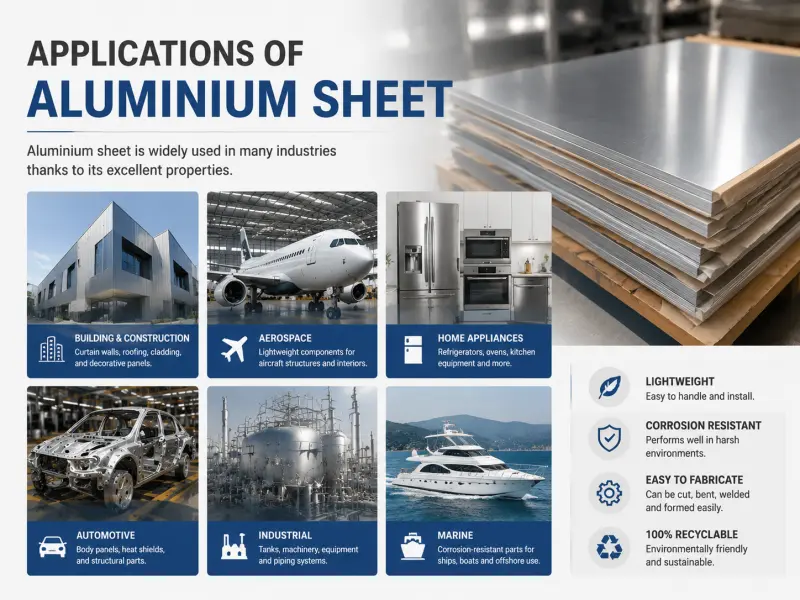
Applications by Industry
Marine and Shipbuilding
- Boat hull plating and transoms
- Deck flooring and bulkheads
- Fuel and water tanks
- Dock platforms and gangways
- Jet ski trailers
- Fishing boat decks
Automotive and Transport
- Truck bed liners and floors
- Trailer frames and panels
- RV structural supports
- Race car chassis parts
- Bus sidewalls and floors
- Rail car flooring
Construction and Structural
- Bridge decking and walkways
- Mezzanine floors
- Load-bearing panels
- Stair treads and platforms
- Column base plates
- Crane outrigger pads
Industrial Machinery
- Machine bases and beds
- Jigs and fixtures
- Press platens
- Conveyor frames
- Robot mounting plates
- CNC table tops
Aerospace and Defense
- Aircraft wing ribs
- Fuselage frames
- Landing gear components
- Seat tracks
- Avionics enclosures
- Military vehicle armor (thicker sections)
Tooling and Molds
Checking fixtures
Injection mold bases
Die plates
Forming blocks
EDM electrode holders
Precision fixture plates
Machining 1/4 Aluminum Plate
| Operation | Tool Type | Speed (SFM) | Feed Rate |
|---|---|---|---|
| Milling | Carbide end mill | 800 – 1,200 | 0.005 – 0.010″ per tooth |
| Drilling | Carbide drill | 200 – 400 | 0.003 – 0.008″ per rev |
| Tapping | High-speed steel | 50 – 100 | Standard tap drill |
| Turning | Carbide insert | 600 – 1,000 | 0.005 – 0.015″ per rev |
Tip: 6061-T651 machines better than T6 because it is stress-relieved. For tight tolerances, order T651. Use coolant or mist to prevent chip welding.
Cutting 1/4 Aluminum Plate
| Method | Best For | Result |
|---|---|---|
| Circular saw with carbide blade | Straight cuts, fast | Clean edge, some burr |
| Band saw | Thick stacks, production | Very clean, straight |
| Jigsaw with metal blade | Curves, internal cuts | Moderate finish |
| Water jet | Complex shapes, no heat | Perfect edge, no distortion |
| Plasma cutter | Thick plate, fast | Good cut, some dross |
| CNC router | Large panels, holes | Smooth, accurate |
| Shear | Thin to medium sheets | Fast, slight burr |
Safety Note: Wear safety glasses and gloves. Chips from 1/4 plate are large and hot. Use cutting fluid to extend blade life.
Welding 1/4 Aluminum Plate
| Method | Best Alloy | Filler Wire | Notes |
|---|---|---|---|
| TIG (GTAW) | All | 4043 or 5356 | Best control, clean welds |
| MIG (GMAW) | 3003, 5052, 6061 | 4043 or 5356 | Faster, good for long seams |
| Stick (SMAW) | 6061 | Special aluminum rods | Field repair, less common |
Prep Steps:
- Bevel the joint to 60–70 degrees for full penetration.
- Clean with stainless steel brush.
- Remove oxide with acetone.
- Preheat 1/4 plate to 150–200°F if welding in cold shop.
- Use argon shielding gas.
- Keep heat input steady to avoid distortion.
Price Guide for 1/4 Aluminum Plate
Prices vary by alloy, size, and supplier location. Below is a rough guide for 2026.
| Alloy | Size | Price Range (per sheet) |
|---|---|---|
| 3003-H14 | 4×8 ft | $95 – $150 |
| 5052-H32 | 4×8 ft | $120 – $190 |
| 6061-T6 | 4×8 ft | $140 – $220 |
| 6061-T651 | 4×8 ft | $150 – $230 |
| 7075-T651 | 4×8 ft | $280 – $420 |
Prices are estimates for mill finish. Brushed, anodized, or precision-milled surfaces cost more. Call your local supplier for today’s price.
Quality Checks When Buying
| Check | What to Look For | Pass/Fail |
|---|---|---|
| Thickness gauge | Within ±0.005″ of 0.250″ | Pass |
| Flatness | No waves or buckles over 4 ft | Pass |
| Surface | No deep scratches, dents, or oil | Pass |
| Alloy stamp | Marked on sheet or MTC provided | Pass |
| Certification | ASTM B209, AMS-QQ-A-250 | Pass |
| Edge condition | Clean cut, no tearing | Pass |
Storage and Handling Tips
- Store flat on a rack or pallet. Do not lean against walls.
- Keep indoors, away from moisture and salt air.
- Use a forklift or crane for 4×8 sheets. Two people can carry smaller pieces.
- Separate different alloys to avoid mix-ups.
- Cover with a tarp if storing for more than a month.
Frequently Asked Questions
How much does a 1/4 aluminum plate weigh?
A 1/4 inch aluminum plate weighs about 3.5 to 3.7 pounds per square foot depending on alloy. A 4×8 sheet weighs roughly 112 to 118 pounds. 5052 is the lightest at about 3.5 lbs/sq ft. 3003 and 6061 are slightly heavier at about 3.66 lbs/sq ft.
What is the difference between 6061-T6 and 6061-T651 plate?
T6 is solution heat treated and artificially aged. T651 is the same but with an extra stress-relief step. The plate is stretched after heat treatment. This removes internal stress. T651 stays flatter during machining. T6 may warp when milled. For CNC work, choose T651.
Can I bend 1/4 aluminum plate?
Yes, but it needs heavy equipment. A press brake with at least 50-ton capacity is recommended. 3003-H14 bends easiest. 5052-H32 needs a larger radius. 6061-T6 is hardest to bend. Use a bend radius of at least 2× thickness for 3003, 3× for 5052, and 4× for 6061.
Is 1/4 aluminum plate good for a boat deck?
Yes, if you use the right alloy. 5052-H32 is the best choice for marine decks. It resists salt water and handles foot traffic. 5083-H116 is even better for heavy marine use but costs more. Avoid 3003 and 6061 for saltwater exposure unless coated.
What is the best alloy for welding 1/4 plate?
5052-H32 welds easiest with excellent results. 6061-T6 welds well but may lose some strength near the weld. Use 5356 filler wire for 5052. Use 4043 or 5356 for 6061. Preheat thick sections to reduce cracking risk.
How do I cut 1/4 aluminum plate at home?
A circular saw with a carbide-tipped blade works for straight cuts. Use a slow feed speed and cutting fluid. A jigsaw with a metal blade handles curves. For cleanest cuts, use a band saw or take it to a metal shop with a shear.
Can 1/4 aluminum plate be anodized?
Yes. 6061 anodizes very well. 5052 anodizes but the finish is slightly duller. 3003 can anodize but the result is gray and mottled. For decorative anodizing, 6061 or 5005 are best. For hard anodizing (Type III), 6061 is the top choice.
What is stronger: 1/4 aluminum or 1/4 steel?
Steel is stronger. A36 steel has about 58,000 psi tensile strength. 6061-T6 aluminum has about 45,000 psi. But aluminum weighs one-third as much. On a strength-to-weight basis, 6061-T6 beats mild steel. For jobs where weight matters, aluminum wins.
Where can I buy 1/4 aluminum plate near me?
Search “aluminum plate 1/4 near me” to find local metal yards. Most carry 6061-T6 and 5052-H32 in stock. 3003 and 7075 may need to be ordered. Call ahead to confirm stock and ask about cut-to-size service.
What standards should 1/4 aluminum plate meet?
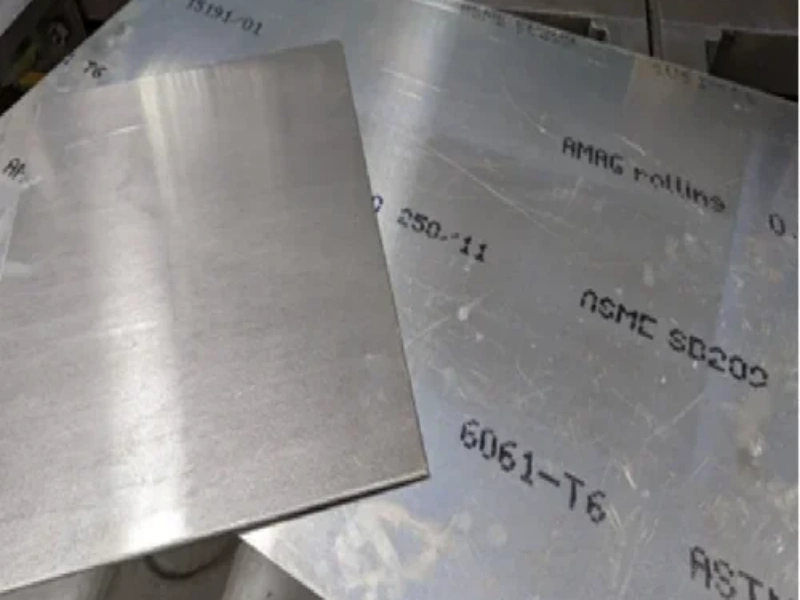
Common standards include ASTM B209, AMS-QQ-A-250/11 for 6061, and AMS-QQ-A-250/8 for 5052. For aerospace, look for AMS-4027. Always request a Mill Test Certificate (MTC) to prove the alloy and temper.
Choosing the Right 1/4 Plate for Your Job
| Your Project | Recommended Alloy | Recommended Temper | Notes |
|---|---|---|---|
| Boat deck or dock | 5052-H32 | H32 | Best salt resistance |
| Truck bed or trailer | 5052-H32 or 6061-T6 | H32 or T6 | Balance of strength and weight |
| Machine base or frame | 6061-T6 | T6 or T651 | High strength, easy to machine |
| CNC machined part | 6061-T651 | T651 | Flat, stable during cutting |
| Aircraft component | 7075-T651 | T651 | Maximum strength |
| Food equipment tank | 3003-H14 | H14 | Low cost, food safe |
| Decorative trim or cover | 3003-H14 | H14 | Bright finish, easy to form |
| Structural walkway | 6061-T6 | T6 | Load-bearing, weldable |