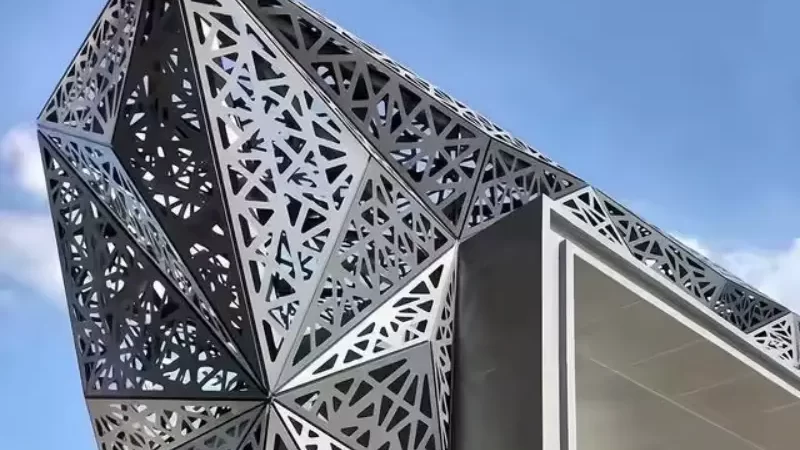
Finding the right aluminum curtain wall manufacturers is the most important step for any modern construction project. An aluminum curtain wall system provides the “skin” of the building, protecting it from the weather while creating a beautiful, modern look.
As professional aluminum curtain wall manufacturers, we specialize in high-performance aluminum alloy curtain wall solutions. We provide everything from the aluminum curtain wall profile to complete unitized aluminum curtain wall systems for skyscrapers.
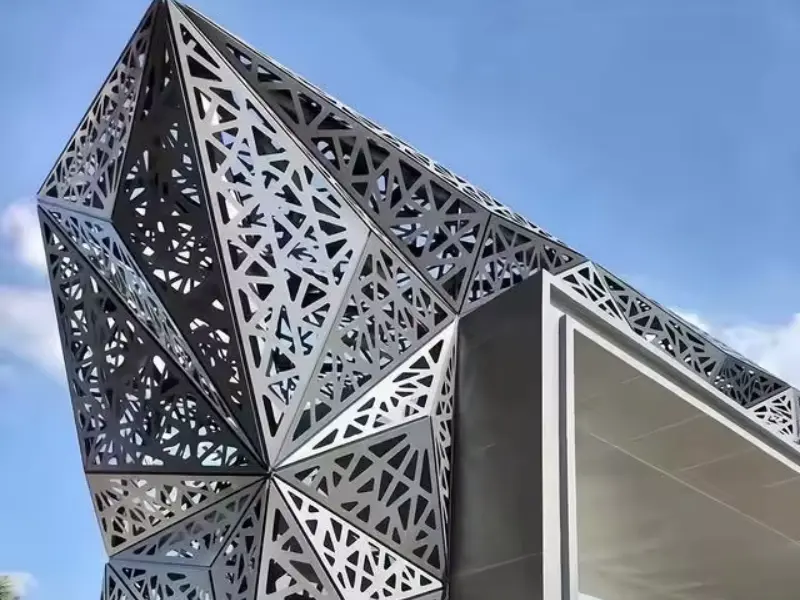
Why Aluminum is the Best Choice for Curtain Walls
Leading aluminum curtain wall manufacturers prefer using aluminum alloy because it is lightweight, strong, and does not rust.
- Durability: It lasts for decades even in harsh weather.
- Design Flexibility: Can be shaped into complex aluminum curtain wall sections.
- Recyclability: Aluminum is an eco-friendly material.
- Weight: It is much lighter than steel, reducing the load on the building structure.
Types of Aluminum Curtain Wall Systems
As experienced aluminum curtain wall manufacturers, we offer different system types to meet your specific project needs.
1. Stick-Built Curtain Wall System
It is very flexible and cost-effective for smaller buildings.
2. Unitized Aluminum Curtain Wall
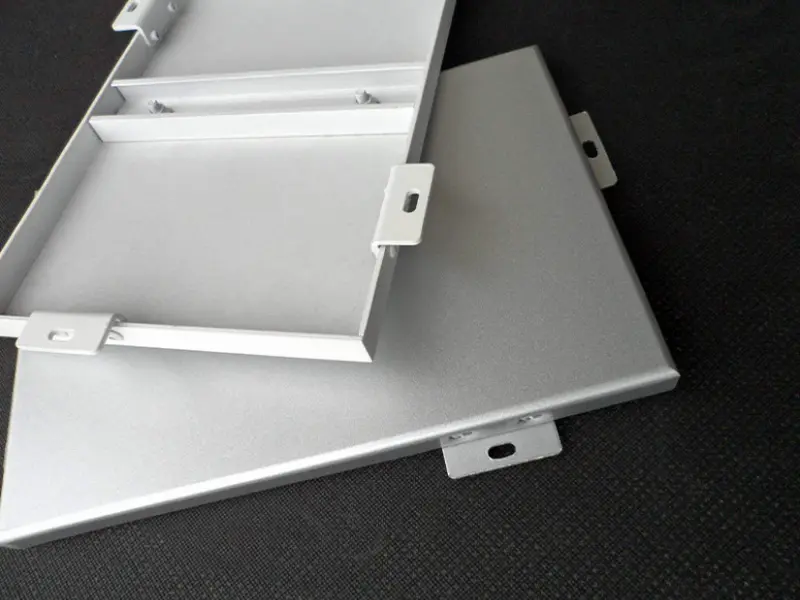
In this system, large units are pre-assembled and glazed in our factory. These units are then shipped to the site and hung onto the building.
High Quality: Better seals and joints because it is made in a controlled factory environment.
Fast Installation: Reduces labor time on-site.
3. Glazed Aluminum Curtain Wall
Comparison of Curtain Wall Types
| Feature | Stick-Built System | Unitized System |
|---|---|---|
| Assembly Location | On-site | Factory-prepped |
| Installation Speed | Moderate | Very Fast |
| Shipping Cost | Lower (compact parts) | Higher (large units) |
| Best For | Low-rise buildings | High-rise towers |
| Quality Control | Good | Superior |
Technical Specifications for Aluminum Profiles
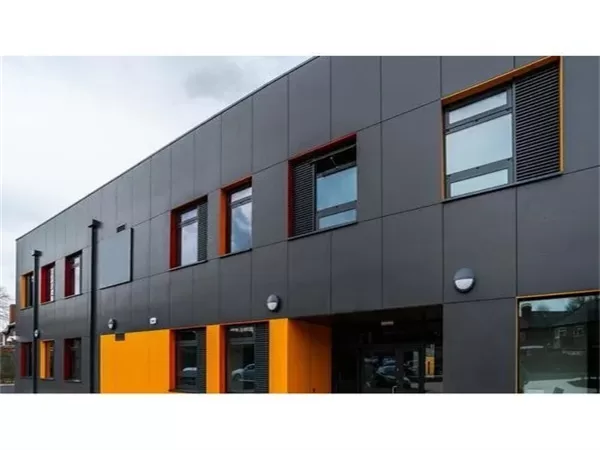
Quality aluminum curtain wall manufacturers must follow strict technical standards. We use premium alloys to ensure structural safety.
Alloy and Temper Specifications
| Material Component | Standard Grade | High-Strength Grade |
|---|---|---|
| Aluminum Alloy | 6063 | 6061 |
| Temper State | T5 | T6 |
| Tensile Strength | ≥160 MPa | ≥260 MPa |
| Elongation | ≥8% | ≥10% |
| Hardness | ≥8 Webster | ≥15 Webster |
Profile Dimensions (Digital Specs)
| Profile Type | Depth Range (mm) | Face Width (mm) | Thickness (mm) |
|---|---|---|---|
| Main Mullion | 120 mm−250 mm | 50 mm−65 mm | 2.5 mm−5.0 mm |
| Horizontal Transom | 50 mm−160 mm | 50 mm−65 mm | 2.0 mm−3.0 mm |
| Pressure Plate | 15 mm−25 mm | 50 mm | 1.5 mm−2.5 mm |
Aluminum Storefront vs. Curtain Wall
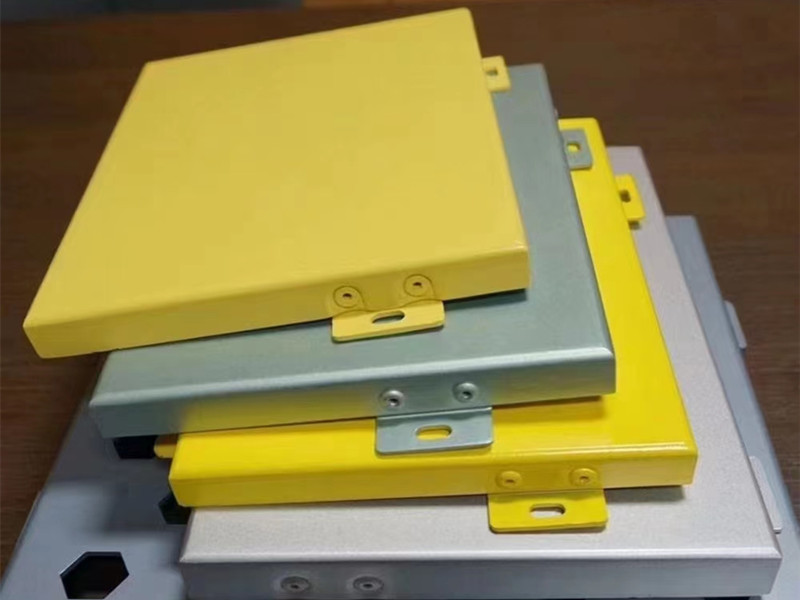
Many clients ask aluminum curtain wall manufacturers about the difference between a storefront and a curtain wall. While they look similar, their performance is very different.
| Feature | Aluminum Storefront | Aluminum Curtain Wall |
|---|---|---|
| Structural Support | Supported by floor/slab | Hangs from the building |
| Max Height | Usually ground floor (<12 feet) | Unlimited height |
| Water Drainage | Weep holes at bottom | Internal drainage per floor |
| Thermal Performance | Standard | High (Thermal breaks) |
Surface Finishing Options
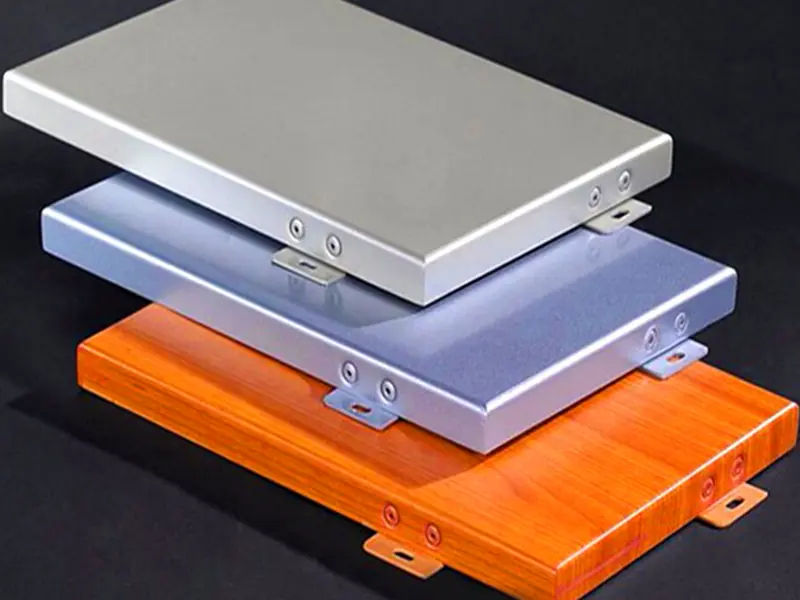
To protect the aluminum curtain wall frame, we offer several high-quality surface treatments:
- Anodized Aluminum Curtain Wall: Provides a natural metallic look that is extremely hard and scratch-resistant.
- Powder Coating: Available in thousands of RAL colors. It provides a thick, protective layer.
- PVDF Coating: The best choice for coastal areas. It resists UV rays and salt spray for over 20 years.
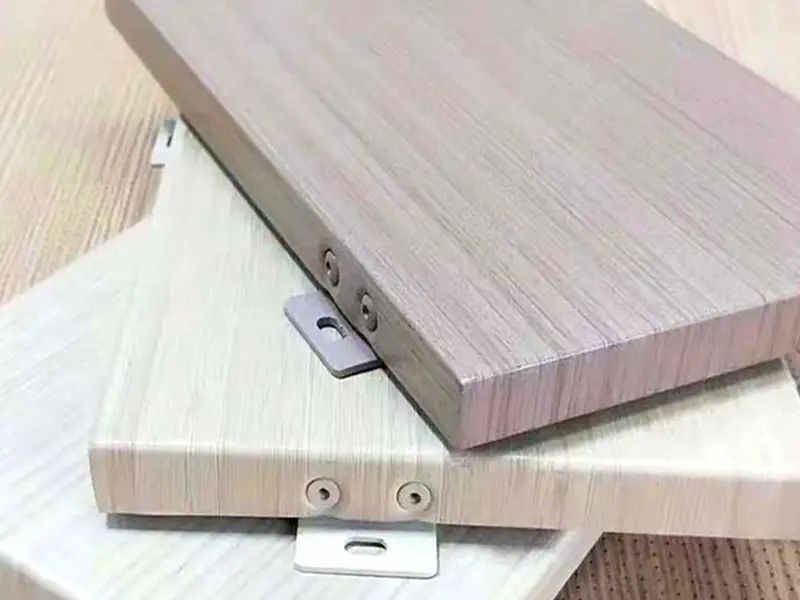
- Wood Grain Finish: Gives the appearance of wood with the strength of aluminum.
Key Applications of Aluminum Curtain Walls
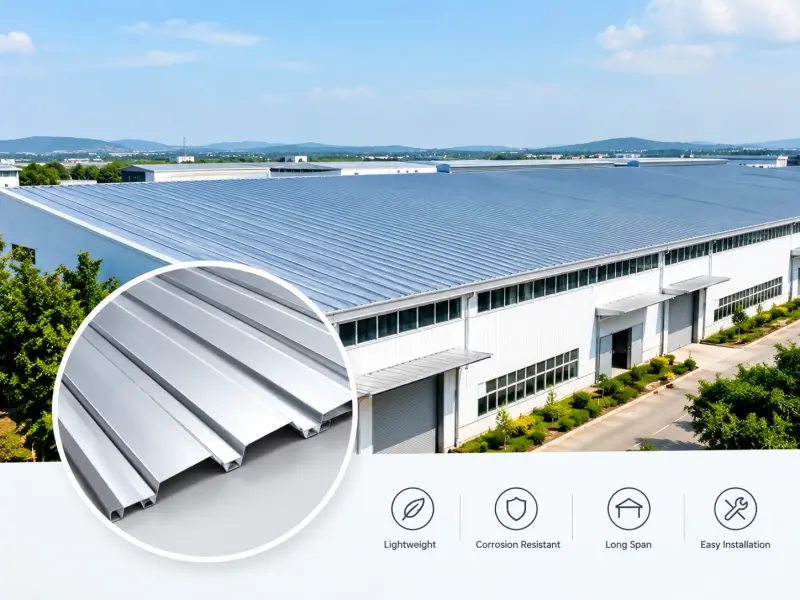
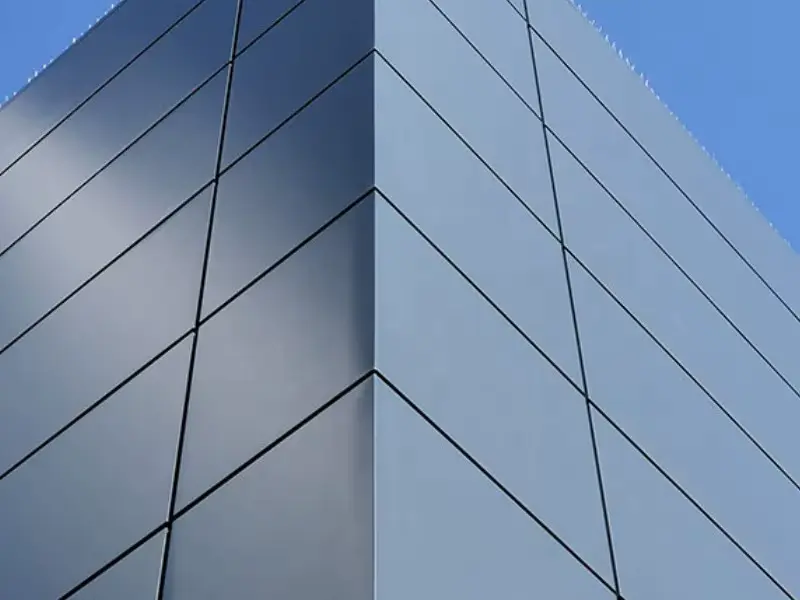
- Commercial Offices: Create professional, high-light work environments.
- Shopping Centers: Large aluminum glass curtain walls are used for storefronts and atriums.
- Hotels & Resorts: Floor-to-ceiling views for guest rooms and lobbies.
- Public Infrastructure: Airports, train stations, and hospitals.
- Residential Skyscrapers: High-end apartments using unitized aluminum curtain walls.
Choosing the Best Aluminum Curtain Wall Manufacturers
When selecting a partner, you should look for several key factors:
- Manufacturing Precision: The aluminum curtain wall section must be cut and punched with CNC accuracy.
- Design Support: We provide an aluminum curtain wall design guide manual and CAD drawings for your engineers.
- Testing & Certification: Our systems are tested for wind pressure, air infiltration, and water resistance.
- Global Logistics: We can ship aluminum curtain wall details and components to the US, Europe, and Southeast Asia.
Aluminum Curtain Wall Manufacturers
Aluminum curtain walls have uses on modern commercial and architectural buildings. They provide a clean exterior appearance while allowing architects to create large glass areas, metal panels, and different façade designs.
As an aluminum curtain wall manufacturer, a supplier may provide more than aluminum sheets. A complete curtain wall project can include aluminum profiles, panels, frames, brackets, glass systems, fasteners, insulation components, and surface finishes.
Different buildings require different curtain wall systems. A small office building may use a stick-built system, while a large high-rise project may use a unitized curtain wall system.
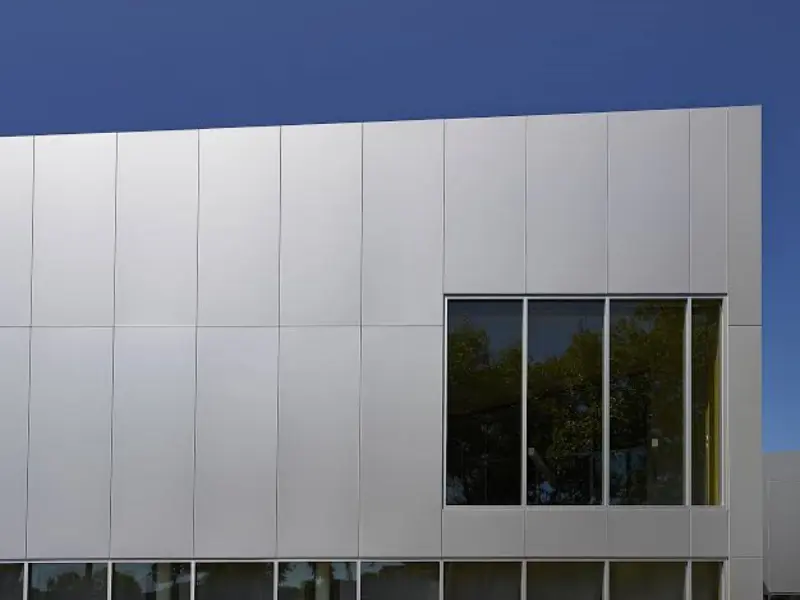
Material selection is also important.
The aluminum alloy, temper, thickness, profile size, panel type, coating, and installation method should match the project requirements.
A simple selection process is:
Building → Curtain Wall System → Aluminum Profile → Panel/Glass → Alloy → Temper → Thickness → Finish → Size → Quantity
What Is an Aluminum Curtain Wall?
An aluminum curtain wall is a lightweight exterior wall system that is attached to the main structure of a building.
It does not normally act as the main structural wall of the building.
The system can include:
- Aluminum mullions
- Aluminum transoms
- Aluminum panels
- Glass panels
- Brackets
- Anchors
- Fasteners
- Gaskets
- Thermal breaks
- Insulation
- Sealants
- Decorative covers
The aluminum frame supports the façade components and transfers applicable loads back to the building structure.
The exact design depends on the building height, wind conditions, panel size, glass type, thermal requirements, and local building codes.
How Aluminum Curtain Wall Systems Work
Building Structure → Anchoring System → Aluminum Frame → Glass/Metal Panel → Sealing → Exterior Finish
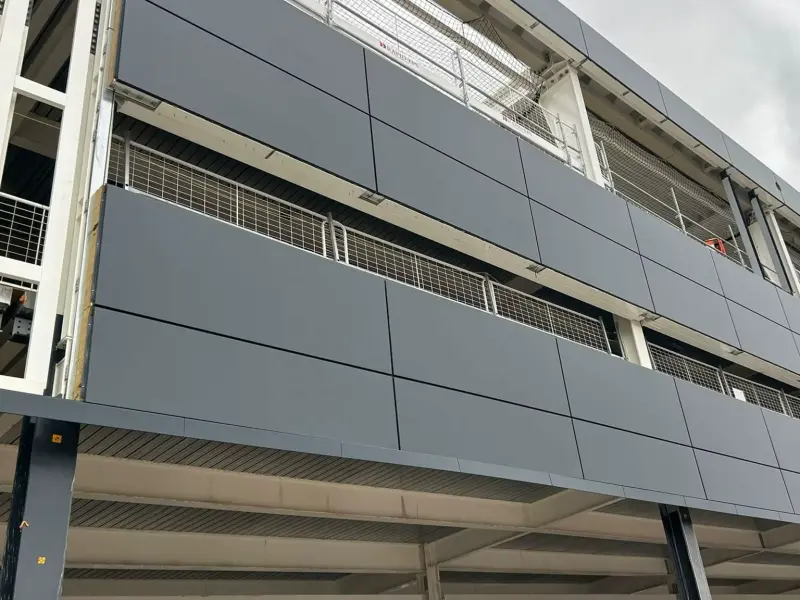
The aluminum frame creates the basic grid.
Glass or aluminum panels are then installed into the frame.
The system has designed with drainage paths and seals to help manage rainwater and air movement.
For large commercial projects, engineering calculations and project-specific drawings are normally required before production.
Main Types of Aluminum Curtain Wall Systems
Different curtain wall systems are designed for different construction methods.
Stick-Built Curtain Wall
A stick-built system is assembled at the construction site.
Vertical mullions and horizontal transoms have installed first. Glass and panels are then installed into the frame.
It is commonly considered for:
- Low-rise buildings
- Medium-rise offices
- Smaller commercial projects
- Projects with many custom dimensions
The system can provide flexibility during installation.
Unitized Curtain Wall
A unitized curtain wall has assembled into large panels in a factory.
The completed units have then transported to the construction site and installed onto the building structure.
Typical applications include:
- High-rise buildings
- Large commercial buildings
- Office towers
- Hotels
- Residential towers
Factory assembly can help improve production consistency and reduce some site installation work.
Semi-Unitized Curtain Wall
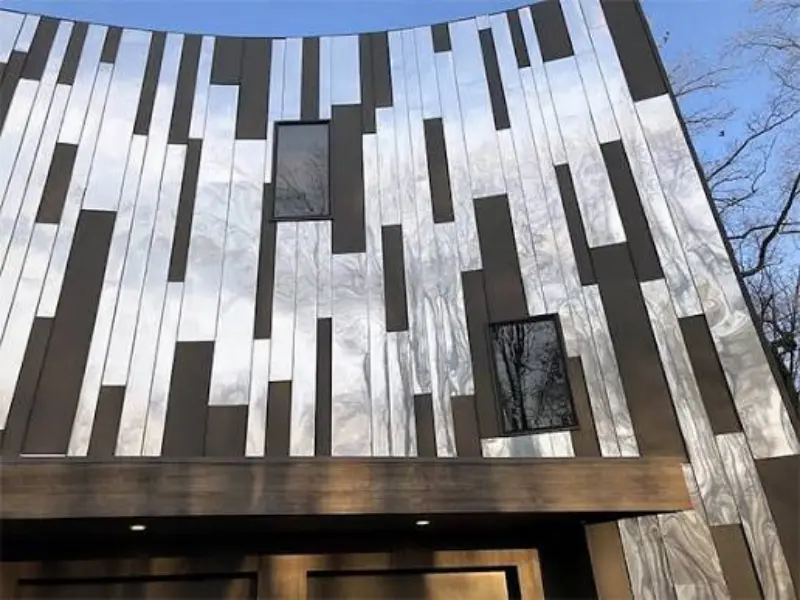
Semi-unitized systems combine characteristics of stick-built and unitized systems.
They can be useful for projects where some factory assembly is preferred while certain components are installed on site.
Stick-Built vs Unitized Curtain Wall
| Feature | Stick-Built | Unitized |
|---|---|---|
| Main assembly | Site | Factory |
| Transportation | Smaller components | Large panels |
| Site work | More | Less |
| Custom adjustment | Flexible | More controlled |
| Large high-rise projects | Possible | Commonly considered |
| Factory quality control | Lower proportion | Higher proportion |
| Initial system planning | Moderate | More detailed |
The right system depends on building design, project schedule, transportation, labor, and installation conditions.
Aluminum Curtain Wall Materials
Aluminum has uses because it offers a useful combination of low density, corrosion resistance, formability, and surface finishing options.
Common aluminum products include:
- Extruded aluminum profiles
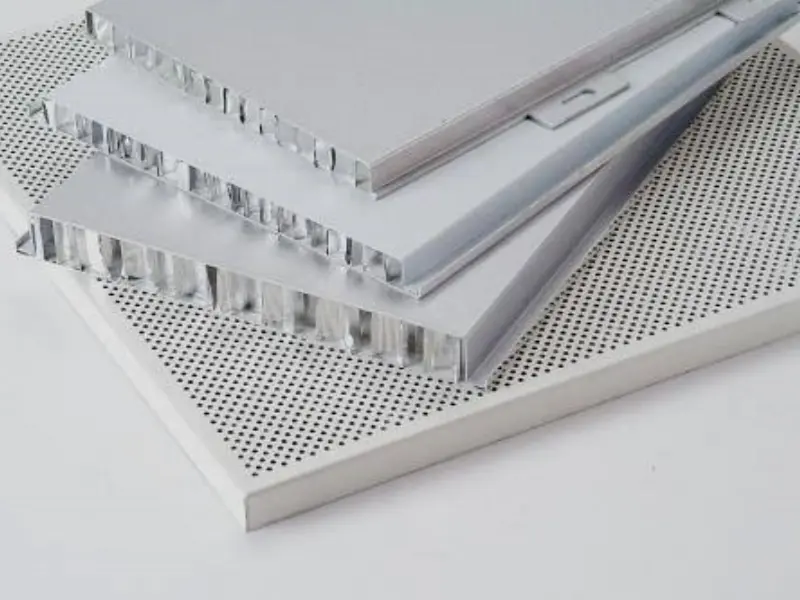
- Aluminum curtain wall panels
- Aluminum composite panels
- Solid aluminum panels
- Aluminum sheets
- Aluminum cover plates
- Aluminum trims
The material specification has confirmed before production.
Common Aluminum Alloys
Different alloys have applications for different curtain wall components.
6063 Aluminum
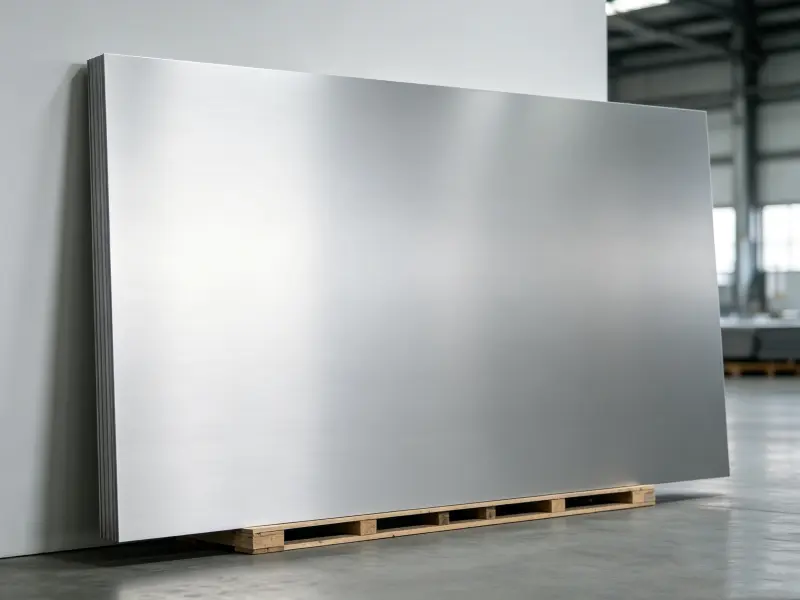
6063 has widely associated with architectural extrusion applications.
It offers good extrudability and surface finishing characteristics.
It can be used for:
- Mullions
- Transoms
- Frames
- Decorative profiles
- Window and door profiles
6061 Aluminum
6061 offers higher strength than 6063 in many conditions.
It has considered for components where mechanical strength is more important.
6060 Aluminum
6060 has another extrusion alloy used for architectural profiles.
It provides good extrusion performance and surface finishing potential.
3003 Aluminum
It provides a practical balance of strength, formability, and corrosion resistance.
3105 Aluminum
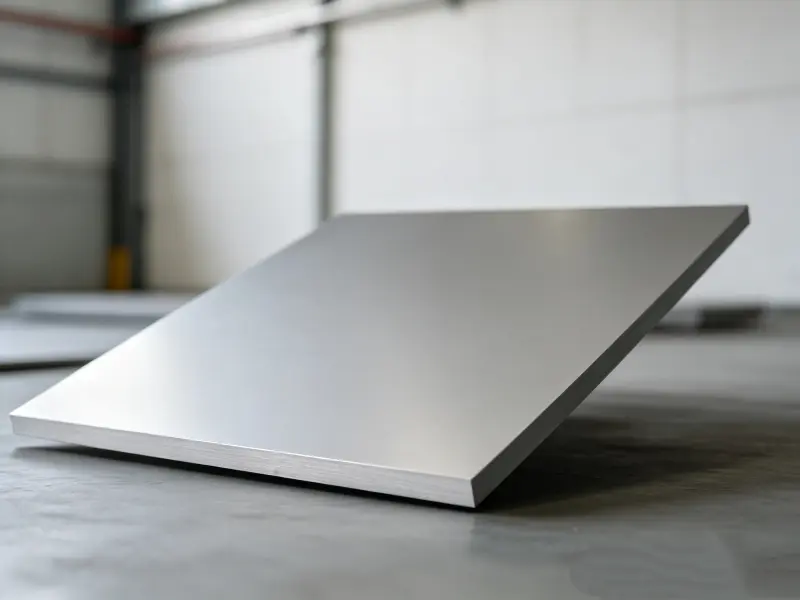
3105 has commonly considered for coated aluminum sheet products.
It has uses for decorative and architectural panel applications.
5052 Aluminum
5052 provides higher strength and good corrosion resistance.
It has considered for applications where the panel requires additional mechanical strength.
Aluminum Alloy Comparison
| Alloy | Main characteristic | Possible curtain wall use |
|---|---|---|
| 6060 | Good extrusion performance | Architectural profiles |
| 6063 | Excellent architectural extrusion | Mullions and frames |
| 6061 | Higher strength | Special structural components |
| 3003 | Good formability | Aluminum panels |
| 3105 | Coated sheet applications | Cladding panels |
| 5052 | Higher sheet strength | Solid aluminum panels |
The actual alloy has selected according to engineering requirements and the manufacturing process.
Aluminum Temper Options
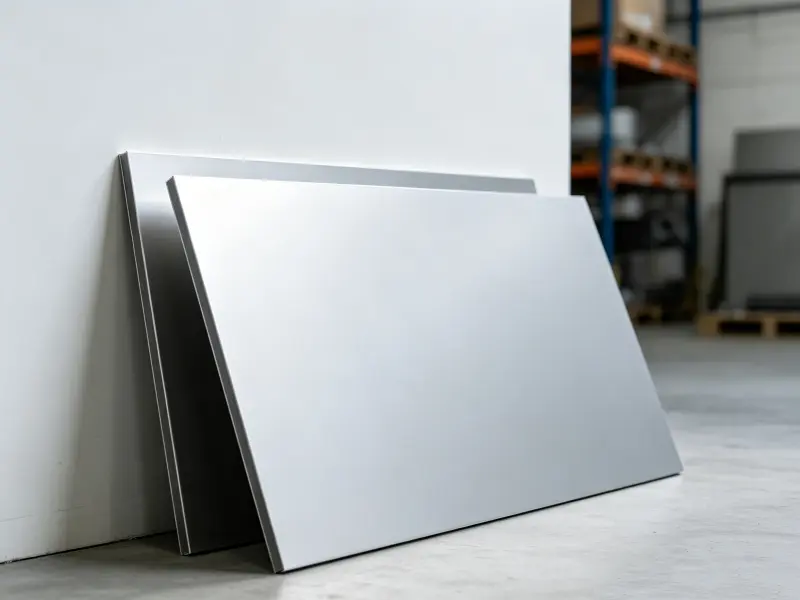
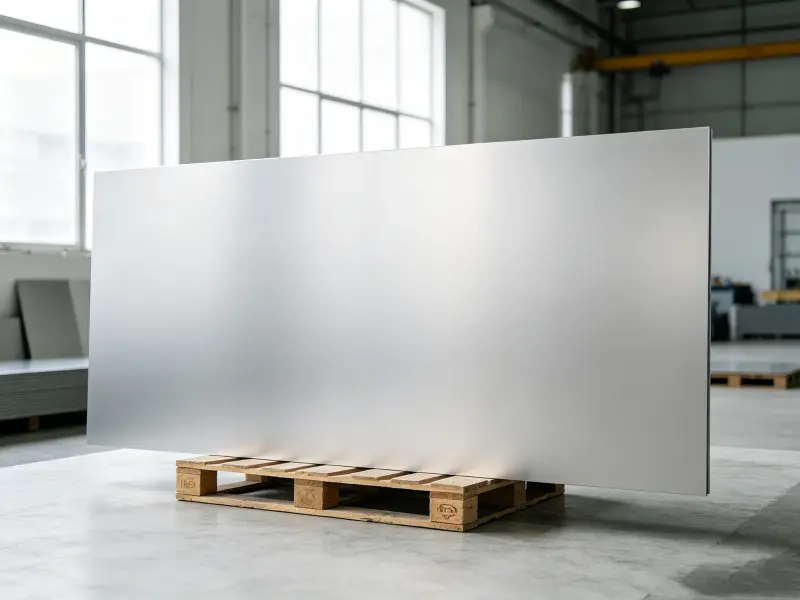
The temper affects mechanical properties and forming performance.
For extruded profiles, common tempers can include:
- T5
- T6
By aluminum sheets, common conditions can include:
- O
- H12
- H14
- H16
- H18
- H24
- H32
For example:
6063-T5 aluminum profile
or:
6063-T6 aluminum profile
For sheet products:
3003-H14 aluminum panel
or:
5052-H32 solid aluminum panel
The final specification should follow the project drawing and applicable standards.
Aluminum Curtain Wall Profile Sizes
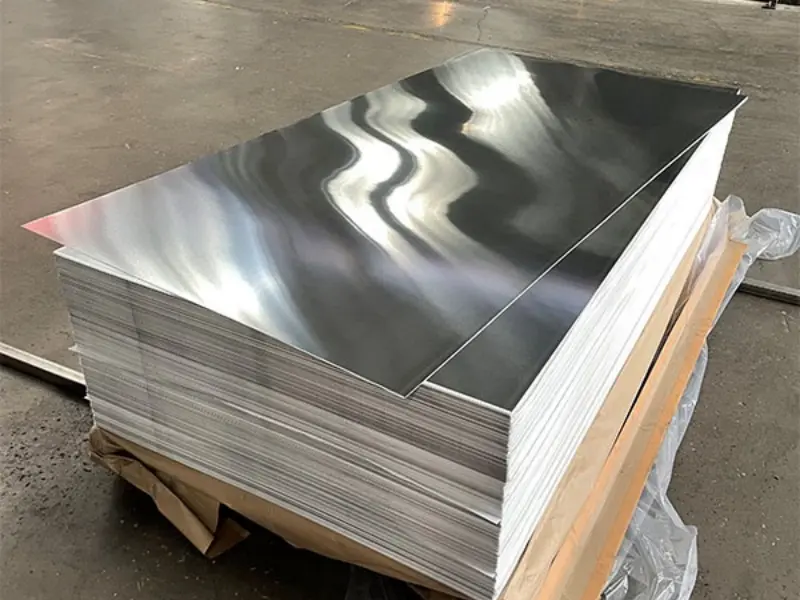
The profile depth may vary according to design requirements.
Common examples may include:
| Profile depth | Possible use |
|---|---|
| 50 mm | Small systems |
| 60 mm | Light curtain wall |
| 65 mm | General architectural use |
| 75 mm | Medium systems |
| 100 mm | Larger façade systems |
| 120 mm | High-performance systems |
| 150 mm+ | Special projects |
These dimensions are examples only.
The required profile depth depends on wind load, span, glass weight, panel weight, deflection limits, and engineering calculations.
Aluminum Curtain Wall Panel Thickness
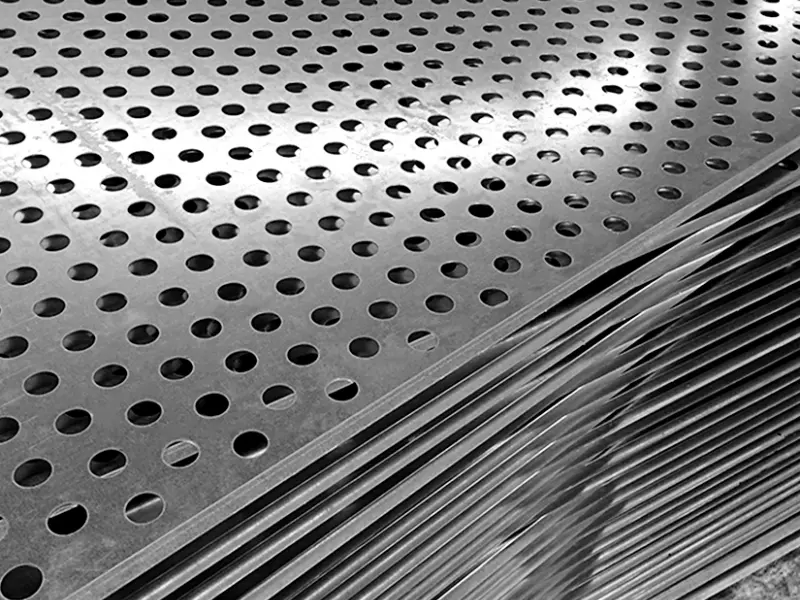
Solid aluminum panels have supplied in different thicknesses.
| Thickness | Possible application |
|---|---|
| 1.0 mm | Lightweight decorative panels |
| 1.2 mm | Interior or light façade use |
| 1.5 mm | General architectural panels |
| 2.0 mm | Exterior cladding |
| 2.5 mm | Larger façade panels |
| 3.0 mm | Heavy-duty architectural panels |
| 4.0 mm | Special applications |
A thicker panel is not automatically the best choice.
Panel size, support spacing, wind pressure, forming method, and fixing system must also be considered.
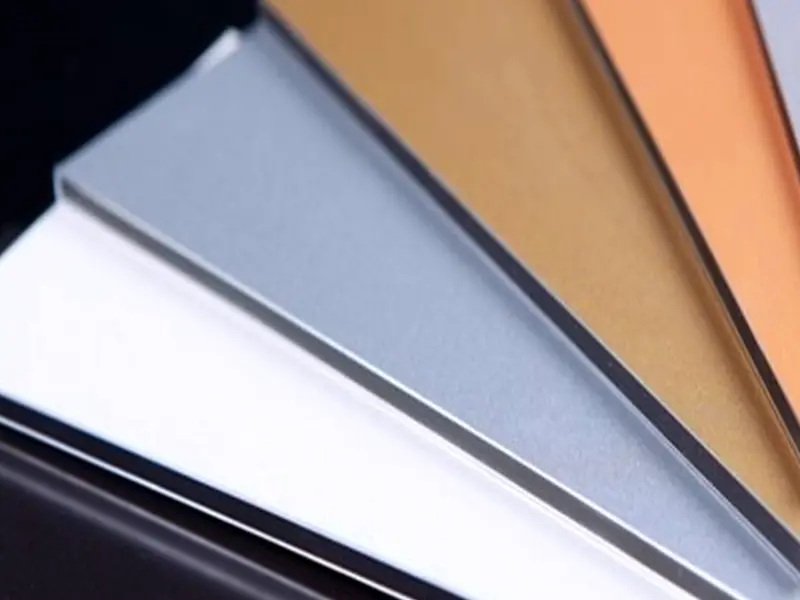
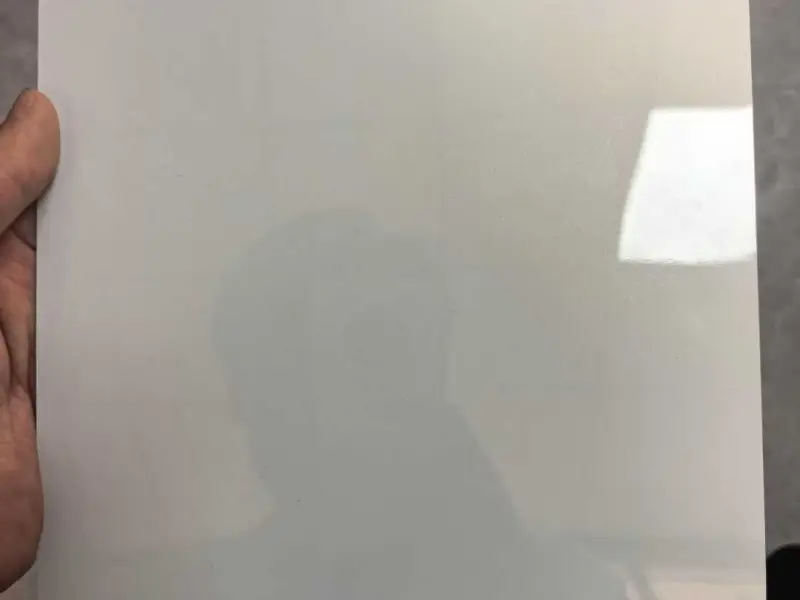
Solid Aluminum Panel vs Aluminum Composite Panel
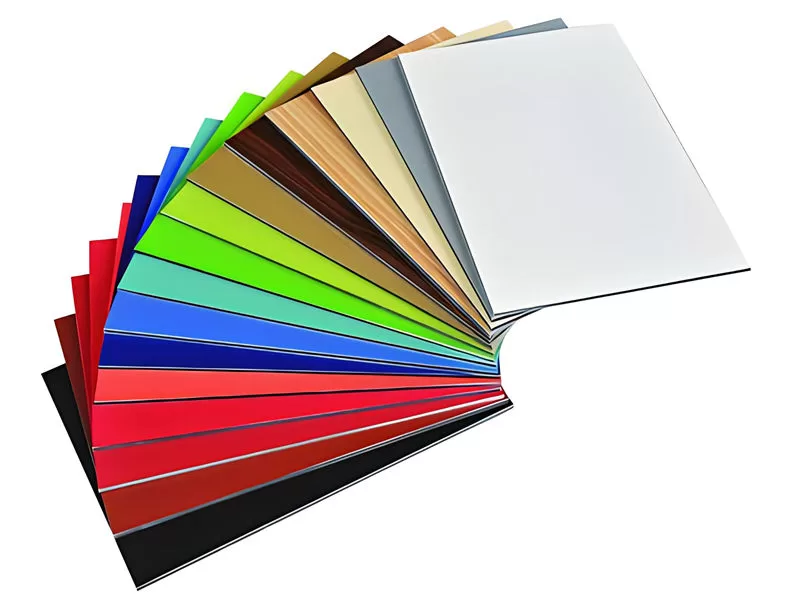
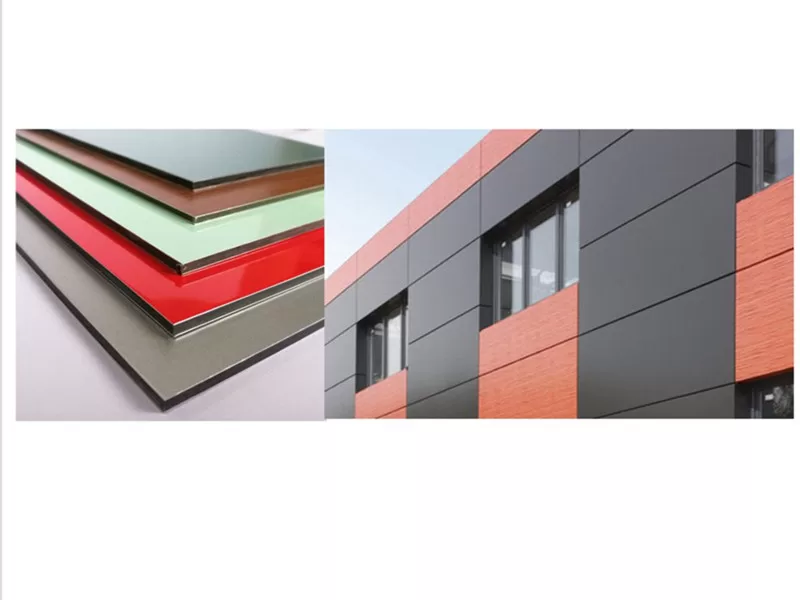
These are two different façade products.
| Feature | Solid Aluminum Panel | Aluminum Composite Panel |
|---|---|---|
| Construction | Solid aluminum | Multiple layers |
| Weight | Higher | Lower |
| Rigidity | High | Depends on core |
| Processing | Cutting and forming | Cutting and folding |
| Application | Premium façade | Wide architectural use |
| Thickness | Often 1.5–4 mm | Multiple-layer structure |
The choice depends on the building design and project specification.
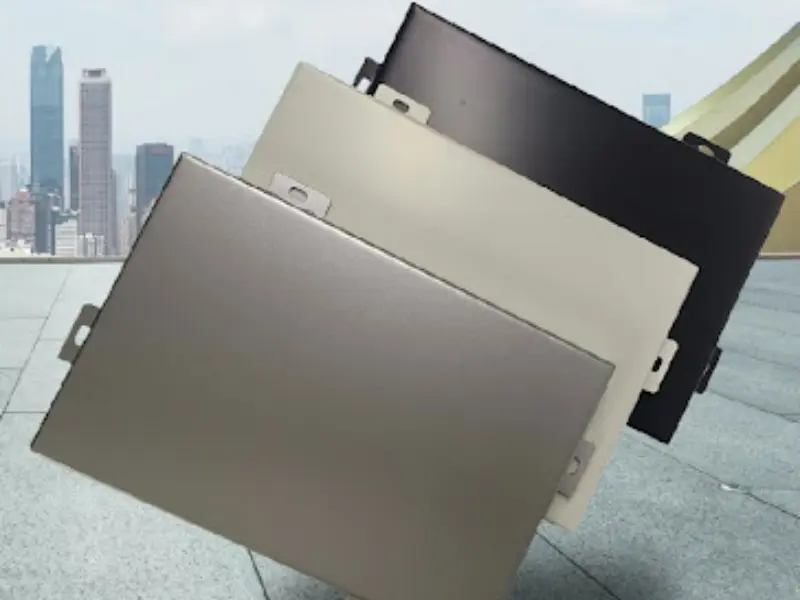
Aluminum Curtain Wall Surface Finishes
The surface finish has a major effect on appearance and durability.
Common options include:
- Mill finish
- Anodized
- Powder coated
- PE coated
- PVDF coated
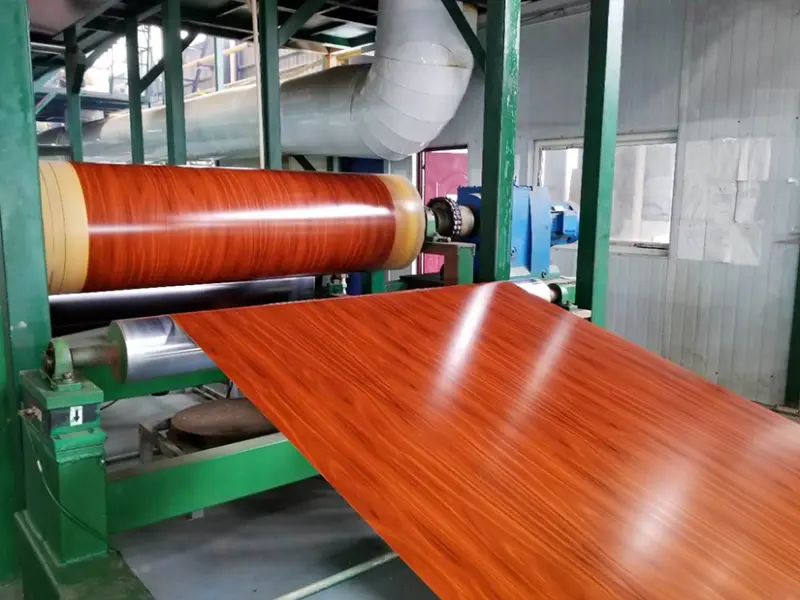
- Wood grain finish
- Metallic finish
- Brushed finish
Anodized Aluminum
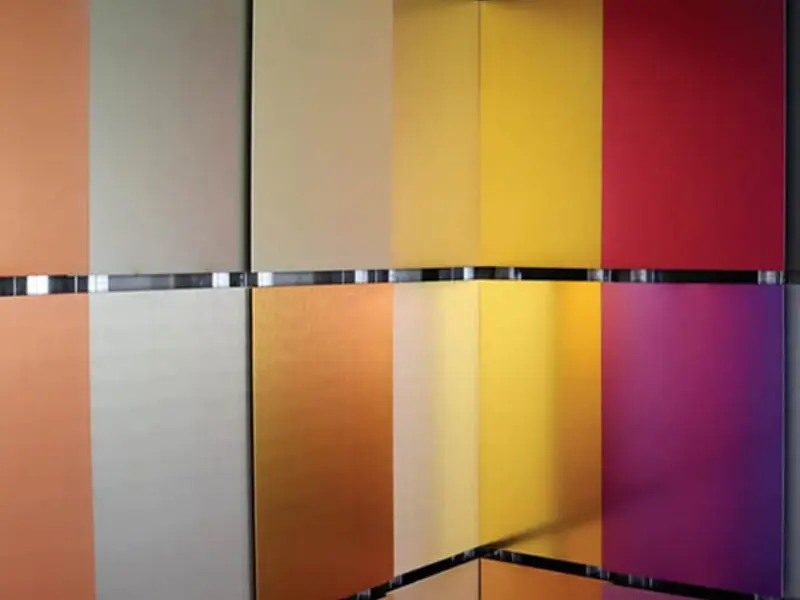
Anodizing creates a controlled oxide layer on the aluminum surface.
It can provide a metallic appearance and has applications for architectural profiles.
Common anodized colors include:
- Silver
- Champagne
- Bronze
- Dark bronze
- Black
Powder Coated Aluminum
Powder coating provides a wide range of colors and surface textures.
It can be used for profiles and panels.
Common options include:
- Smooth
- Matte
- Satin
- Fine texture
- Custom colors
PVDF Coated Aluminum
PVDF coating has widely considered for exterior architectural applications where weather resistance and long-term appearance are important.
It has supplied in many colors and metallic effects.
For large façades, the coating specification confirmed before production.
Wood Grain Aluminum Curtain Wall
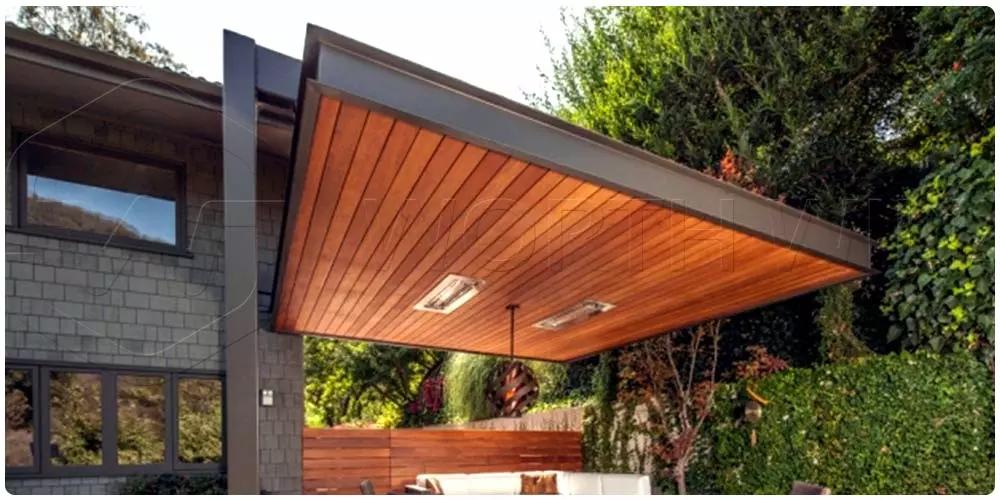
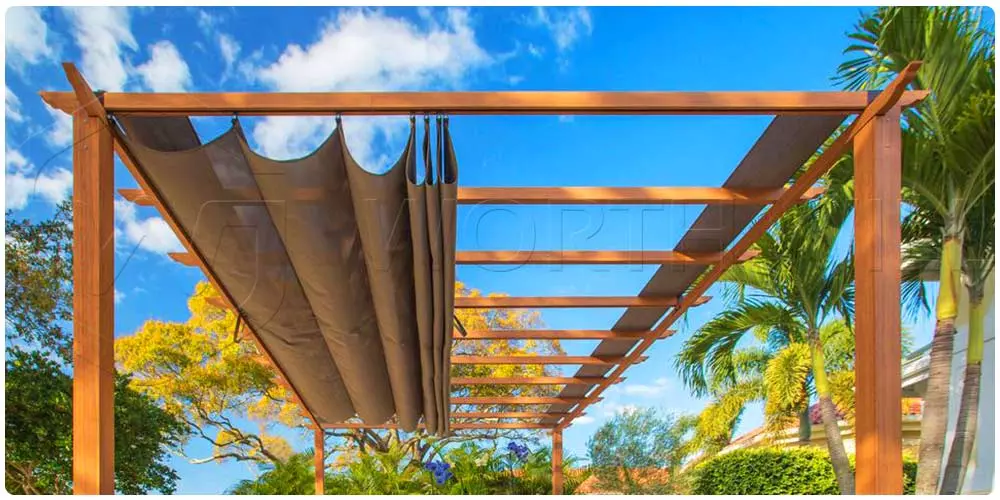
Wood-look aluminum can create a natural appearance without using real timber as the main façade material.
Common wood patterns include:
- Oak
- Walnut
- Teak
- Cherry
- Maple
- Cedar
- Mahogany
- Dark wood
Wood grain aluminum can be used for:
- Hotel façades
- Residential buildings
- Interior walls
- Decorative screens
- Commercial entrances
- Feature walls
Brushed Aluminum Curtain Wall Panels
Brushed aluminum has a directional surface texture.
It can provide a modern industrial appearance.
Common applications include:
- Commercial façades
- Elevator areas
- Interior walls
- Retail stores
- Hotel decoration
- Office interiors
The brushing direction has confirmed when multiple panels are installed together.
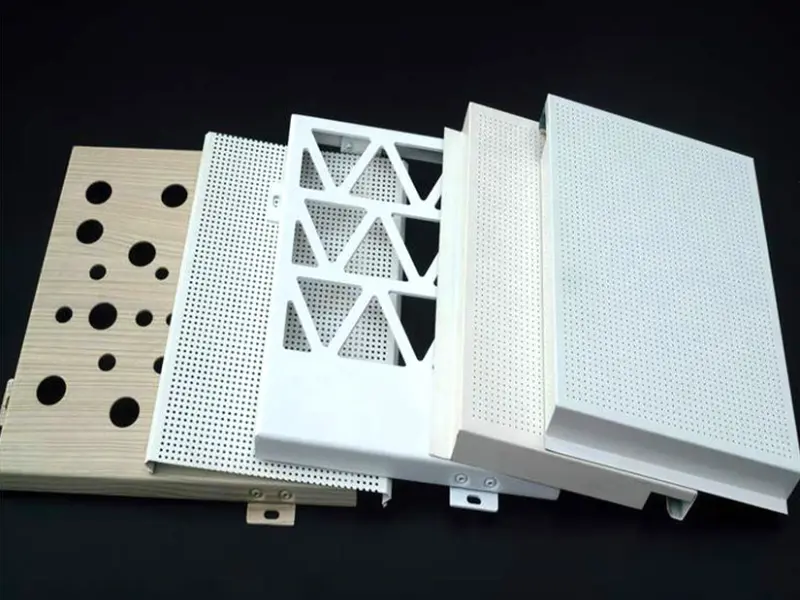
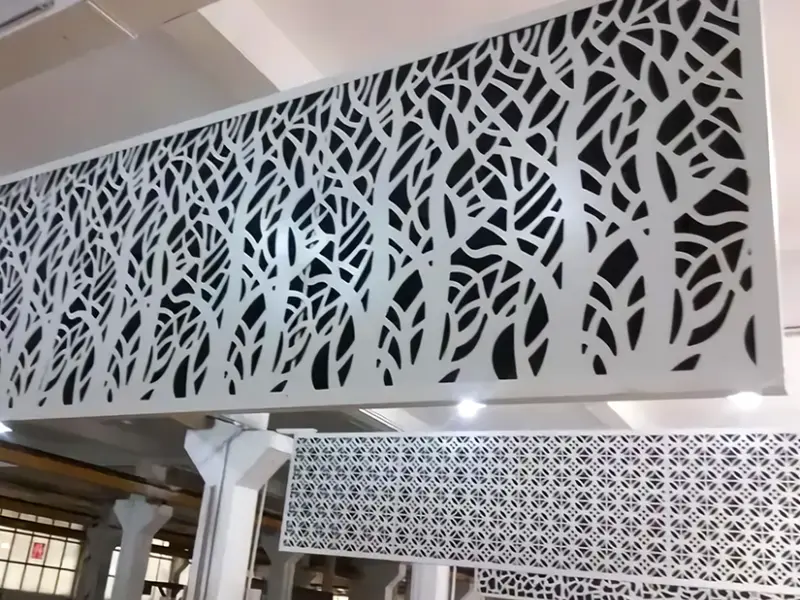
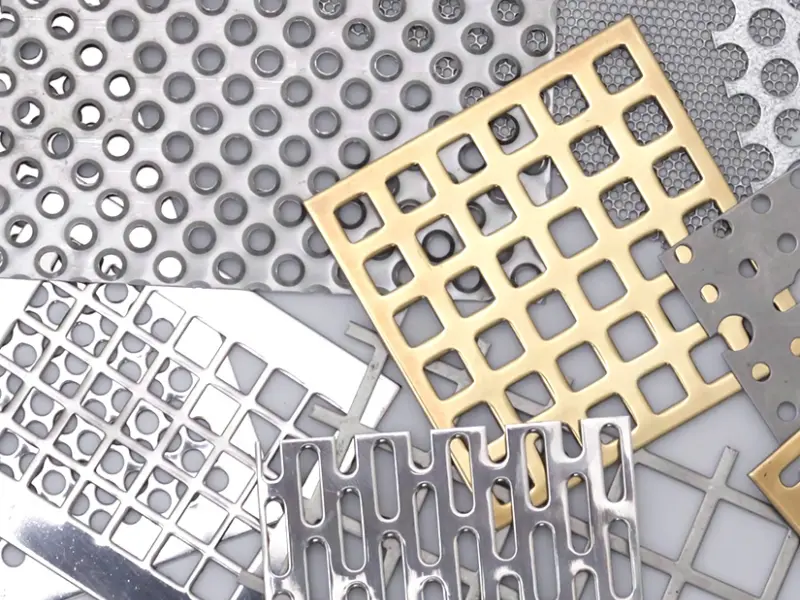
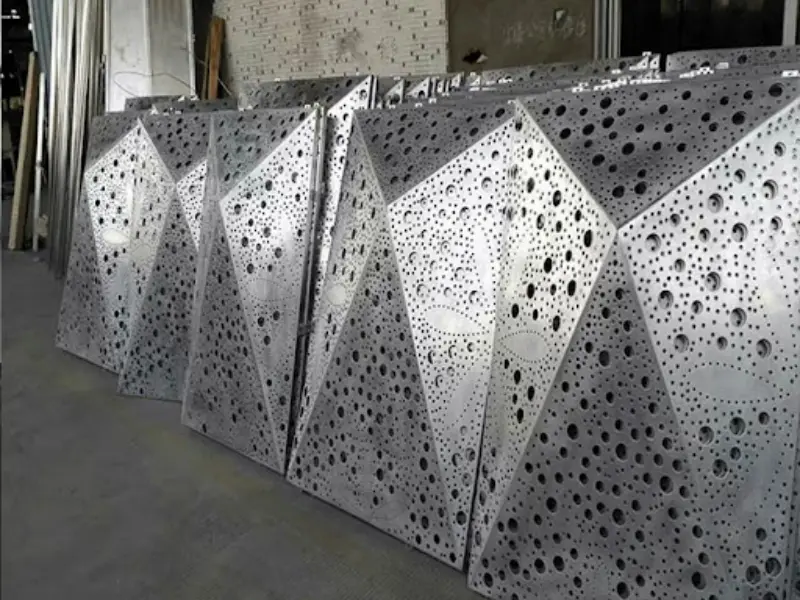
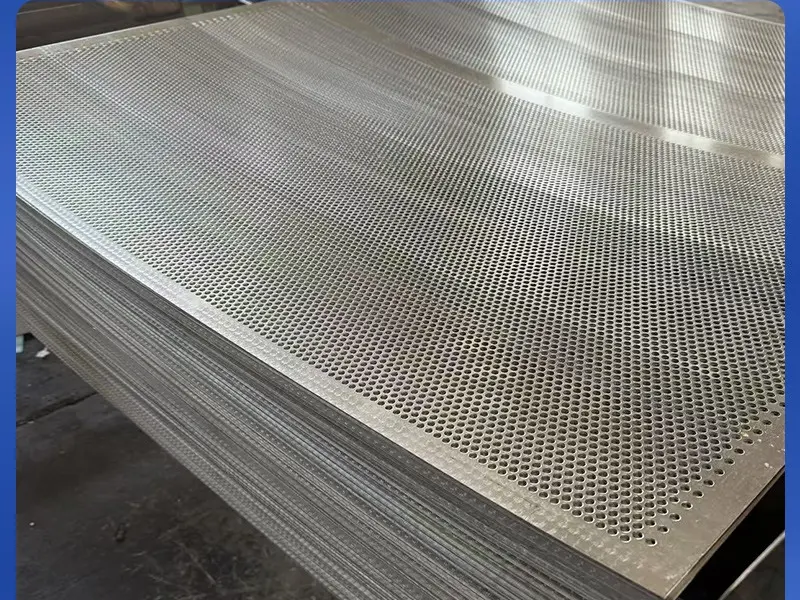
Perforated Aluminum Curtain Wall Panels
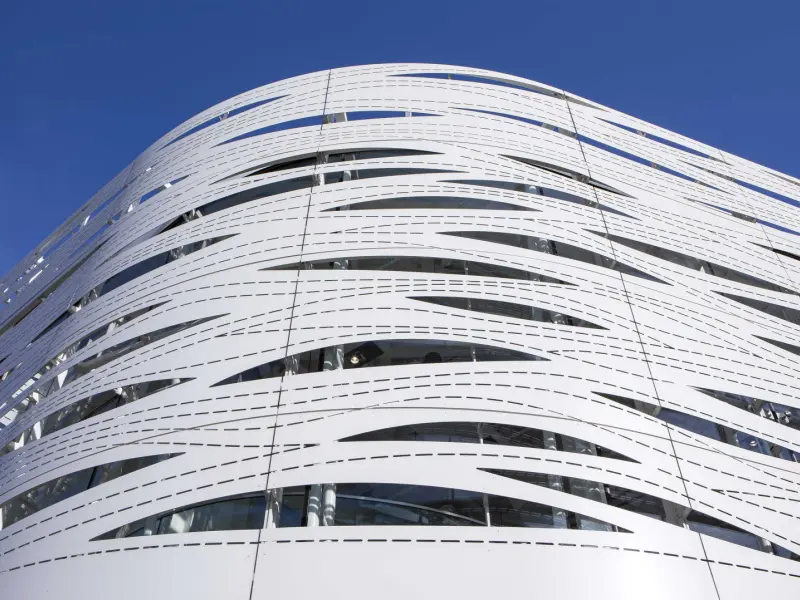
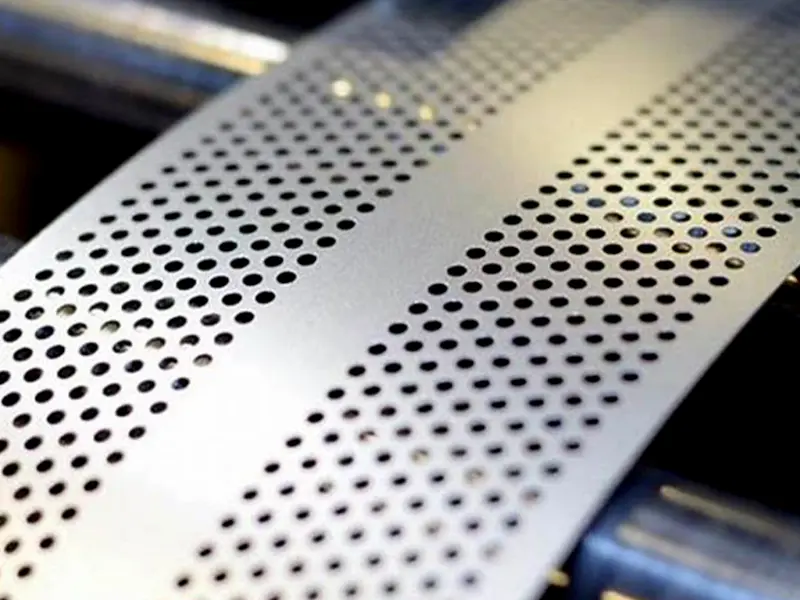
Perforated panels contain a pattern of holes.
Hole shape and opening ratio can be customized.
Possible patterns include:
- Round holes
- Square holes
- Rectangular holes
- Hexagonal holes
- Slotted holes
- Custom patterns
Perforated aluminum panels can be used for:
- Decorative façades
- Sun shading
- Ventilation screens
- Parking buildings
- Privacy screens
- Interior partitions
Expanded Aluminum Curtain Wall Panels
Expanded aluminum uses a mesh-like structure created by cutting and stretching the sheet.
It can provide a lightweight decorative screen.
Applications include:
- Building façades
- Balcony screens
- Parking structures
- Sunshade systems
- Interior decoration
The opening size and mesh pattern can be customized.
Aluminum Curtain Wall Glass Options
Curtain wall systems can combine aluminum frames with different glass products.
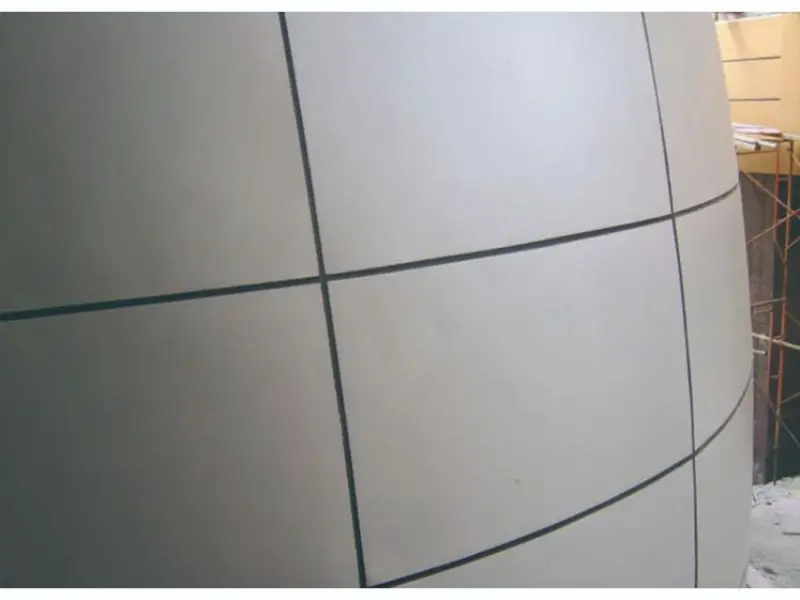
Common glass options include:
- Clear glass
- Low-E glass
- Tinted glass
- Reflective glass
- Laminated glass
- Tempered glass
- Insulating glass
- Double glazing
- Triple glazing
The aluminum frame must be designed to match the selected glass thickness and weight.
Double-Glazed Curtain Wall
Double glazing uses two glass panes with a sealed cavity between them.
It can provide better thermal and acoustic performance than single glazing.
A typical system may include:
Glass → Spacer → Sealed Air/Argon Space → Glass → Aluminum Frame
The actual thermal performance depends on the complete system rather than glass thickness alone.
Triple-Glazed Curtain Wall
Triple glazing adds another glass layer.
It can provide higher thermal performance in suitable climates and building designs.
However, it also increases weight and may require a stronger frame system.
Therefore, the aluminum profile should be selected together with the glass specification.
Applications of Aluminum Curtain Walls
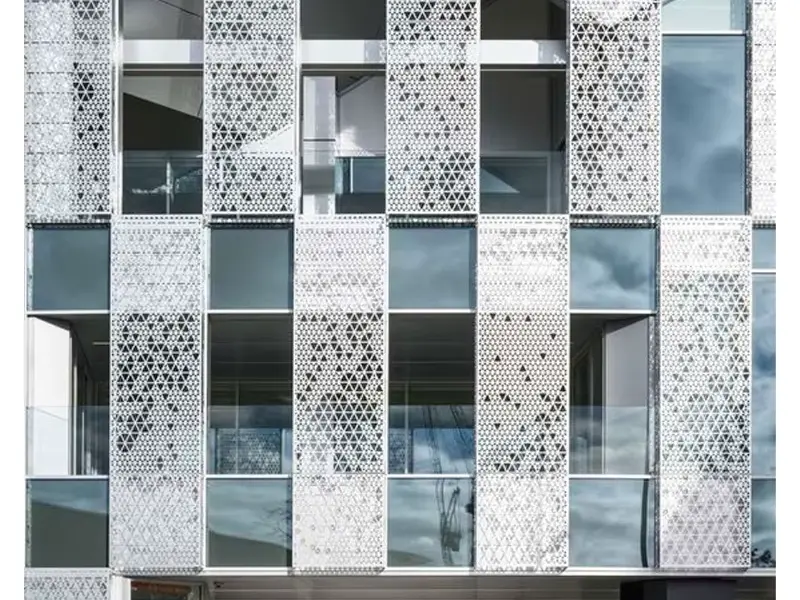
Aluminum curtain walls have applications in many building types.
- Office buildings
- Commercial centers
- Hotels
- Shopping malls
- Airports
- Hospitals
- Schools
- Universities
- Apartment buildings
- High-rise towers
- Exhibition centers
- Banks
- Retail stores
- Government buildings
- Industrial offices
- Transportation buildings
- Residential developments
The façade design can combine glass, solid aluminum panels, perforated panels, and decorative profiles.
Curtain Walls for High-Rise Buildings
High-rise buildings require careful consideration of wind pressure and panel movement.
The system may require:
- Deeper mullions
- Stronger anchors
- Larger glass panels
- Unitized panels
- Thermal breaks
- Drainage systems
- Structural calculations
The final design has reviewed by qualified façade engineers according to local building requirements.
Curtain Walls for Commercial Buildings
Commercial buildings often focus on appearance, natural light, thermal performance, and maintenance.
Aluminum curtain walls can provide large glass areas while allowing different panel designs.
A typical commercial façade may use:
Aluminum Frame + Low-E Glass + Solid Aluminum Panel + PVDF Finish
This combination allows different materials to be integrated into one façade.
Curtain Walls for Hotels
Hotels often require a more decorative exterior.
Possible solutions include:
- Silver anodized profiles
- Dark aluminum frames
- Wood grain panels
- Bronze finishes
- Metallic PVDF panels
- Large glass areas
Interior and exterior aluminum products have coordinated for a consistent architectural style.
Curtain Walls for Shopping Centers
Shopping centers may use large façade systems with different colors and materials.
Applications include:
- Main entrances
- Storefront areas
- Large exterior walls
- Advertising zones
- Decorative screens
- Canopies
Custom aluminum panels can help create unique façade designs.
Curtain Wall vs Window Wall
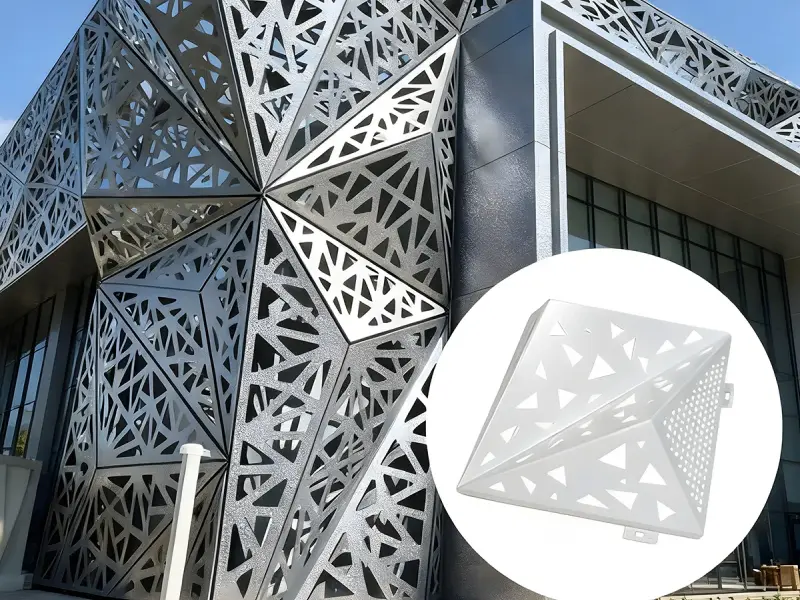
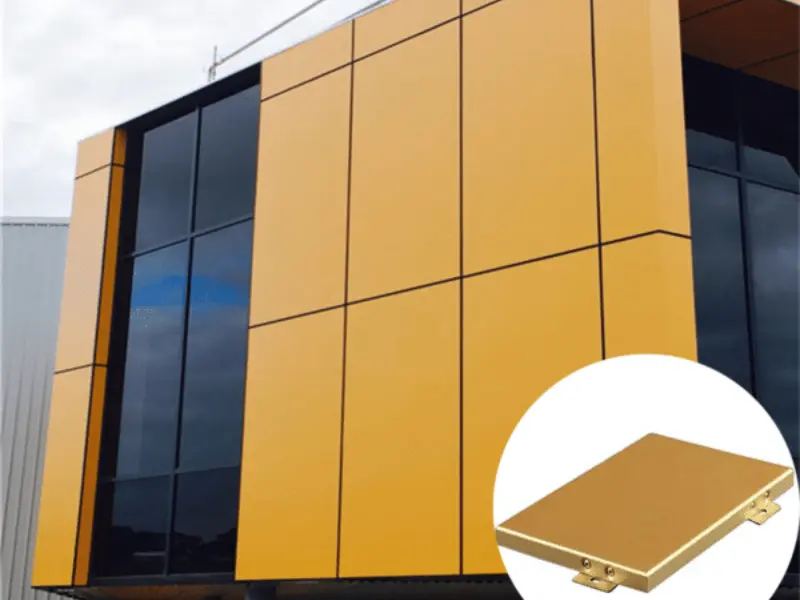
These systems are not the same.
| Feature | Curtain Wall | Window Wall |
|---|---|---|
| Building position | Exterior façade | Between floor slabs |
| System scale | Large façade | Floor-by-floor |
| Glass area | Often large | Large |
| Structural relationship | Attached to structure | Installed between slabs |
| Typical projects | Offices and towers | Residential towers |
The appropriate system depends on the building structure and architectural design.
Curtain Wall vs Storefront
Storefront systems are commonly used for lower-rise applications.
Curtain walls are generally designed for larger building façades and greater performance requirements.
| Feature | Curtain Wall | Storefront |
|---|---|---|
| Building height | More flexible | Often low-rise |
| Structural performance | Higher system requirements | Simpler |
| Glass area | Large | Large |
| Thermal design | More complex | Varies |
| Application | Building façade | Shops and entrances |
Aluminum Curtain Wall vs Steel Curtain Wall
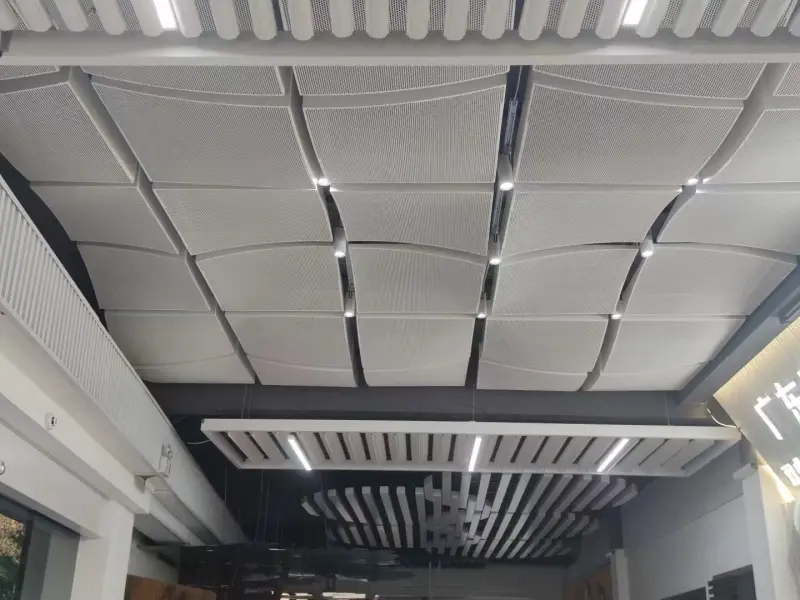
Aluminum has uses because it is lightweight and easy to extrude into complex profiles.
| Feature | Aluminum | Steel |
|---|---|---|
| Weight | Lower | Higher |
| Extrusion | Excellent | Limited |
| Corrosion resistance | Good | Requires protection |
| Surface options | Many | Many |
| Thermal conductivity | Higher | Lower |
| Architectural profiles | Highly flexible | More limited |
The choice depends on structural requirements, weight, thermal design, and architectural goals.
Thermal Break Aluminum Curtain Wall
Thermal breaks have uses to reduce direct heat transfer through the aluminum frame.
A typical profile can include:
Exterior Aluminum → Thermal Barrier → Interior Aluminum
This design can improve the thermal performance of the frame.
The exact thermal performance depends on the profile, glass, seals, insulation, and installation details.
Air and Water Management
A curtain wall needs to manage air and water movement.
Important components can include:
- Gaskets
- Sealants
- Pressure chambers
- Drainage channels
- Weep holes
- Flashing
- End dams
The exact design depends on the curtain wall system.
For large projects, water penetration testing may be included in quality control.
Aluminum Curtain Wall Manufacturing Process
A typical production process may include:
Aluminum Billet → Extrusion → Heat Treatment → Cutting → Machining → Surface Treatment → Assembly → Inspection → Packing
For aluminum panels, the process may be:
Aluminum Coil/Sheet → Cutting → Forming → Surface Treatment → CNC Processing → Inspection → Packing
For unitized curtain wall systems, additional factory assembly is required.
What Does an Aluminum Curtain Wall Manufacturer Provide?
A manufacturer may provide individual components or complete systems.
Possible services include:
- Aluminum extrusion
- Aluminum sheet processing
- Panel fabrication
- CNC cutting
- Drilling
- Punching
- Bending
- Anodizing
- Powder coating
- PVDF coating
- Wood grain finishing
- Assembly
- Custom packaging
For large projects, engineering support and shop drawings may also be required.
Custom Aluminum Curtain Wall Profiles
Not every building uses a standard profile.
- Special mullion depths
- Unique façade shapes
- Hidden drainage
- Custom decorative covers
- Large glass sizes
- Special thermal breaks
The manufacturer may need a CAD drawing or profile sample before production.
Quality Control
Quality control should cover both the aluminum material and finished components.
Important inspection points include:
- Alloy
- Temper
- Profile dimensions
- Wall thickness
- Straightness
- Surface quality
- Color
- Coating thickness
- Adhesion
- Cutting accuracy
- Hole position
- Assembly dimensions
- Glass compatibility
- Packaging
For major projects, samples have approved before mass production.
Curtain Wall Aluminum Thickness and Engineering
Aluminum thickness should not be selected from a simple product table alone.
For profiles, wall thickness can vary according to the extrusion design.
For panels, thickness depends on:
- Panel size
- Support spacing
- Wind load
- Fixing method
- Panel shape
- Stiffeners
- Building height
Engineering calculations are necessary for project-specific specifications.
How to Choose an Aluminum Curtain Wall Manufacturer
A buyer can compare suppliers using several practical points.
Material Capability
Check whether the supplier can provide the required aluminum alloys, profiles, sheets, and finishes.
Surface Treatment
Confirm whether the manufacturer can provide:
- Anodizing
- Powder coating
- PVDF
- Wood grain
- Custom colors
Custom Processing
For complex projects, ask about CNC cutting, drilling, bending, assembly, and custom profiles.
Project Experience
Ask for product drawings, samples, technical data, and previous project information where available.
Quality Control
Confirm how the supplier checks dimensions, coating, surface quality, and finished components.
Manufacturer vs Aluminum Trader
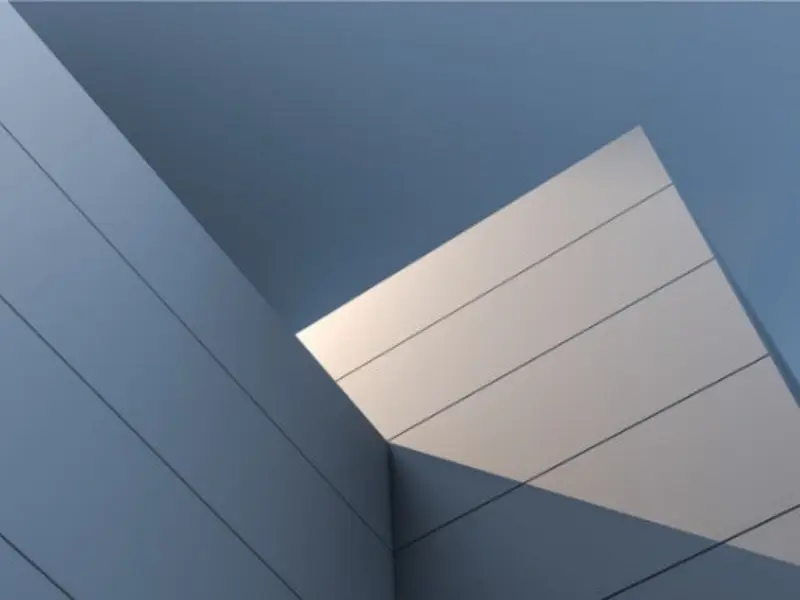
The two business models can be different.
| Feature | Manufacturer | Trader |
|---|---|---|
| Production control | Direct | Depends on factory |
| Customization | Often stronger | Depends on supplier |
| Factory inspection | Direct | May require coordination |
| Communication | Technical | Commercial |
| Small orders | Depends | May be flexible |
| Large projects | Suitable with capacity | Depends on factory network |
A trader can still provide useful sourcing services.
For large custom curtain wall projects, buyers should understand who actually manufactures the material.
How to Request a Curtain Wall Quotation
A complete inquiry can follow this structure:
Project → System → Profile → Alloy → Temper → Glass/Panel → Size → Finish → Quantity → Destination
Example:
| Item | Example |
|---|---|
| System | Unitized curtain wall |
| Profile | 6063-T5 |
| Mullion depth | 120 mm |
| Panel size | 1500 × 3500 mm |
| Glass | Double glazing |
| Panel | 2.5 mm solid aluminum |
| Finish | PVDF |
| Color | Custom |
| Quantity | 2,000 m² |
| Destination | Project location |
The actual specification should be based on the engineering drawings.
Factors That Affect Curtain Wall Cost
The final price depends on the complete system.
Important factors include:
- Aluminum alloy
- Profile weight
- Profile design
- Panel thickness
- Glass type
- Glass thickness
- Surface finish
- Thermal break
- Hardware
- Gaskets
- Sealants
- CNC processing
- Assembly
- Packaging
- Project quantity
- Shipping
Comparing suppliers only by the price per kilogram can be misleading.
A complete system has compared by the final specification and scope of supply.
Packaging and Export Shipping
Curtain wall components require careful packaging.
Aluminum profiles may be packed in bundles.
Panels may use:
- Protective film
- Foam
- Cartons
- Pallets
- Wooden cases
Unitized curtain wall panels require special protection because their size and glass surfaces make them more sensitive to handling.
Export packaging should be selected according to transportation conditions.
A Practical Selection Flow
For a new building project, the selection process can be:
Building Type → Building Height → Curtain Wall System → Wind Requirement → Glass/Panel Design → Aluminum Profile → Alloy/Temper → Surface Finish → Fabrication → Inspection → Installation
This approach is more useful than selecting a product only by appearance.
Frequently Asked Questions (FAQ)
1. What is the standard thickness of an aluminum curtain wall profile?
For structural mullions, the thickness usually ranges from 2.5 mm to 5.0 mm depending on the height of the building and wind loads.
2. Is aluminum better than steel for curtain walls?
Yes, for most projects. Aluminum is 1/3 the weight of steel, making it easier to install. It also has much better natural resistance to corrosion.
3. Can you customize the aluminum curtain wall section?
Absolutely. As custom aluminum curtain wall manufacturers, we can create new extrusion dies to match your specific architectural design.
4. How do you ensure the system is waterproof?
We use a “pressure-equalized” design. This uses a system of gaskets and internal drainage channels to ensure that any water that enters is immediately channeled back to the outside.
What do aluminum curtain wall manufacturers produce?
Manufacturers may produce aluminum profiles, curtain wall panels, frames, trims, brackets, and complete assembled curtain wall units. The available scope depends on the factory.
What aluminum alloy is commonly used for curtain wall profiles?
6063 is widely used for architectural aluminum extrusion because it offers good extrusion and finishing characteristics. Other alloys may be selected for specific strength or sheet applications.
What is 6063-T5 aluminum used for?
6063-T5 is commonly used for architectural extrusions such as curtain wall profiles, window frames, door frames, and decorative aluminum sections.
What is the difference between a stick-built and unitized curtain wall?
A stick-built system is mainly assembled on site. A unitized system is assembled into larger panels in a factory and then installed on the building.
What thickness should an aluminum curtain wall panel have?
There is no single thickness for every project. Solid panels may use approximately 1.0–4.0 mm material, depending on panel size, support structure, wind load, and design.
Can aluminum curtain wall profiles be customized?
Yes. Custom extrusion profiles can be developed according to technical drawings, project requirements, and production conditions.
Can curtain wall aluminum be powder coated?
Yes. Powder coating is one of the common surface treatment options for architectural aluminum.
Is PVDF coating suitable for exterior curtain walls?
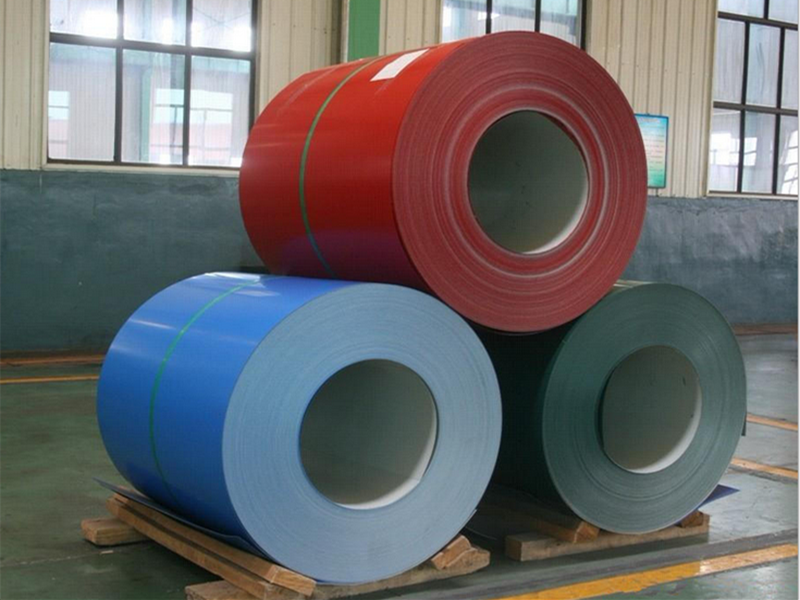
PVDF coating can be considered for exterior architectural applications where weather resistance and long-term appearance are important. The complete coating specification should be confirmed for the project.
Can aluminum curtain walls use wood grain finishes?
Yes. Wood-look aluminum can be used when the project needs a timber-style appearance with an aluminum base.
Can curtain walls use perforated aluminum panels?
Yes. Perforated aluminum can be integrated into façade designs for decoration, screening, shading, and ventilation.
What information is needed for a curtain wall quotation?
The supplier normally needs project drawings or specifications, system type, profile dimensions, glass or panel requirements, finish, quantity, and delivery location.
Do aluminum curtain wall manufacturers provide installation?
Some suppliers provide installation support or project assistance, while others only manufacture and supply the materials. This should be confirmed before ordering.
How do I choose a curtain wall manufacturer?
Compare material capability, profile production, surface treatment, custom processing, quality control, technical support, production capacity, packaging, and project requirements.
What is the difference between curtain wall and storefront?
Curtain wall systems are generally designed for larger exterior façades and can handle more demanding building conditions. Storefront systems are commonly used for lower-rise entrances and commercial openings.