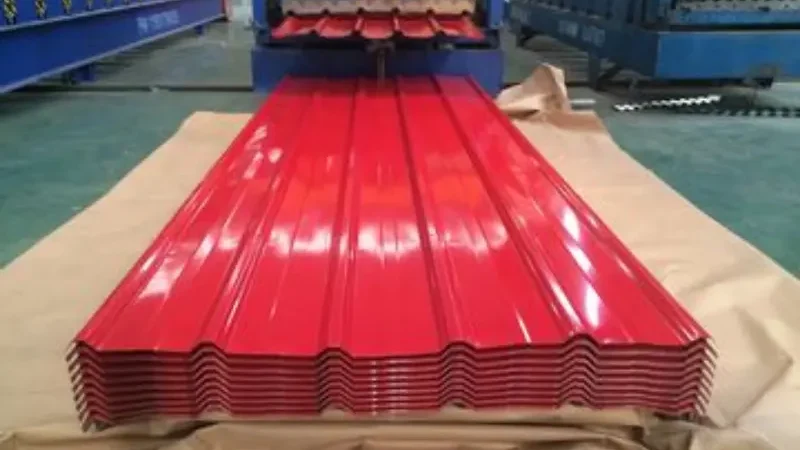
An aluminium sheet for roof is a popular roofing material used in residential, commercial, and industrial buildings.
Compared with traditional roofing materials, aluminum roofing sheets offer light weight, corrosion resistance, long service life, and low maintenance.
Aluminum roofing sheets are widely used in factories, warehouses, houses, agricultural buildings, and modern architecture.
What Is an Aluminum Roofing Sheet?
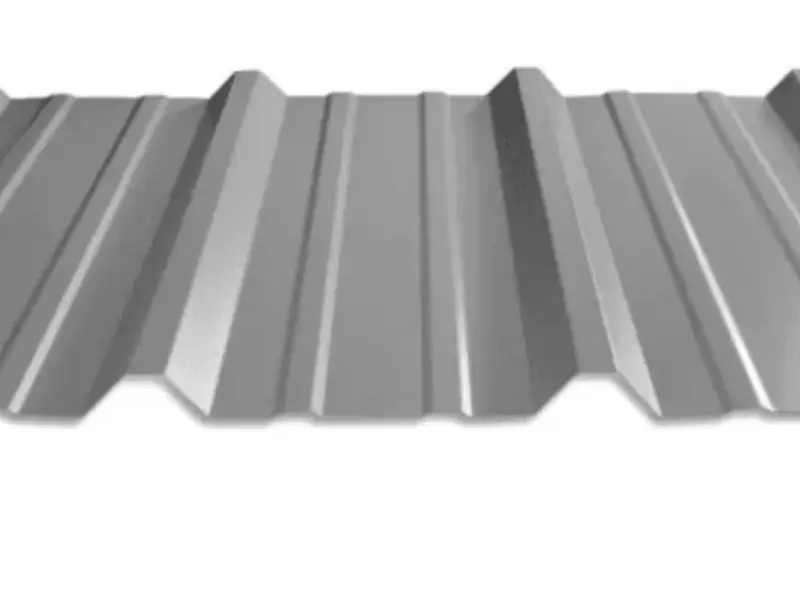
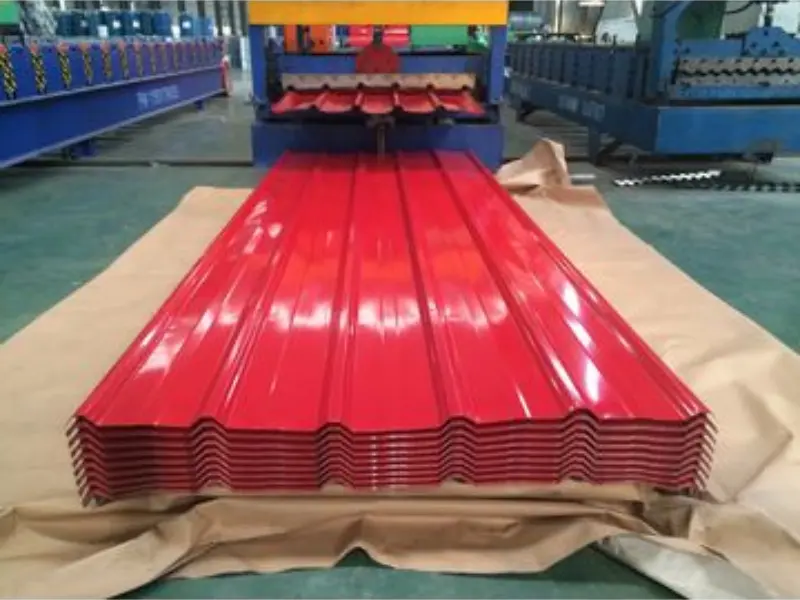
An aluminum roofing sheet is a flat or profiled aluminum sheet designed for roof covering.
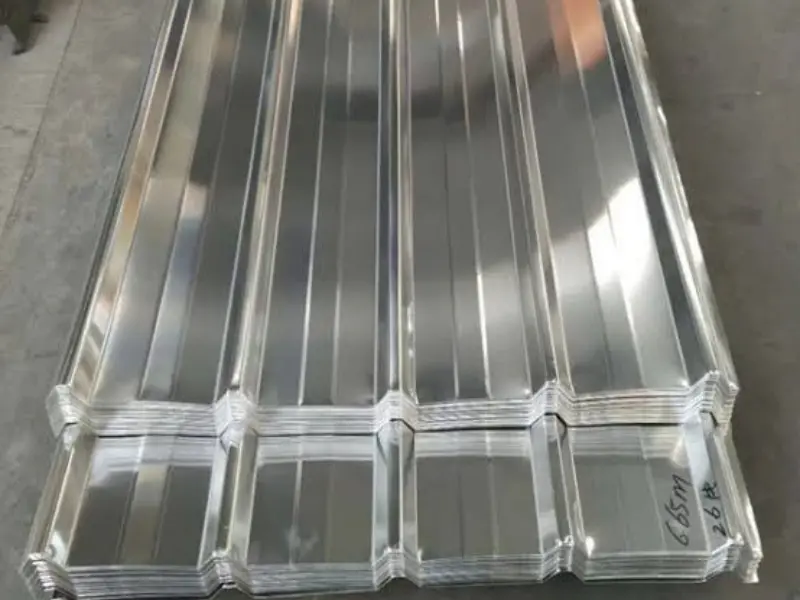
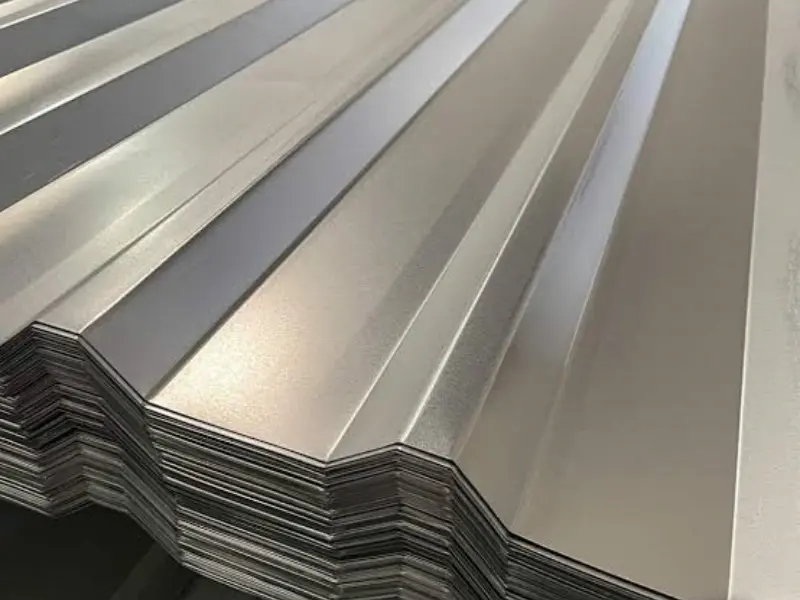
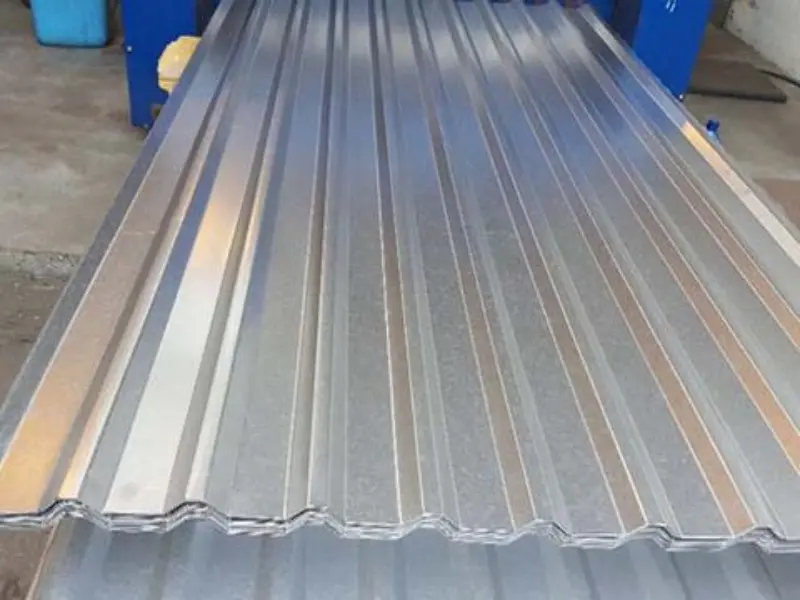
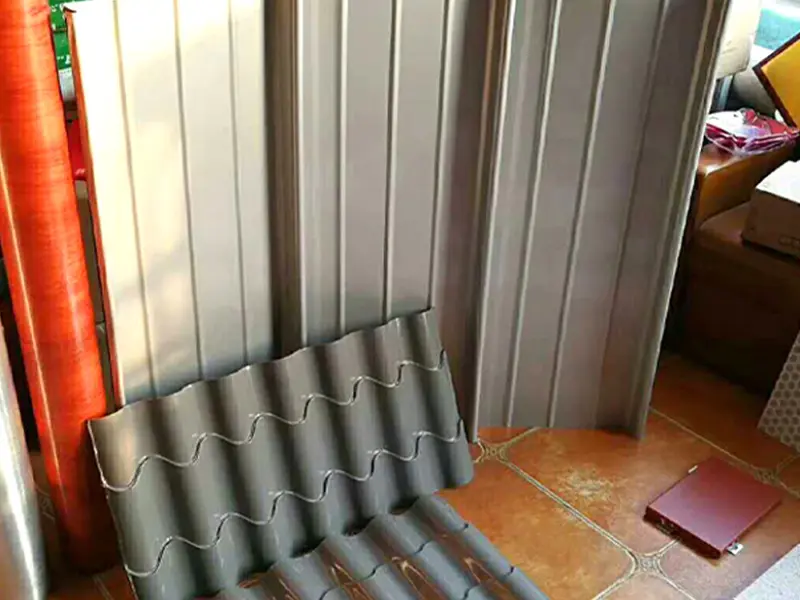
It can be supplied as corrugated sheets, trapezoidal sheets, or standing seam panels.
Main features:
- Lightweight and strong
- Rust-proof and weather resistant
- Easy to install
- Recyclable and eco-friendly
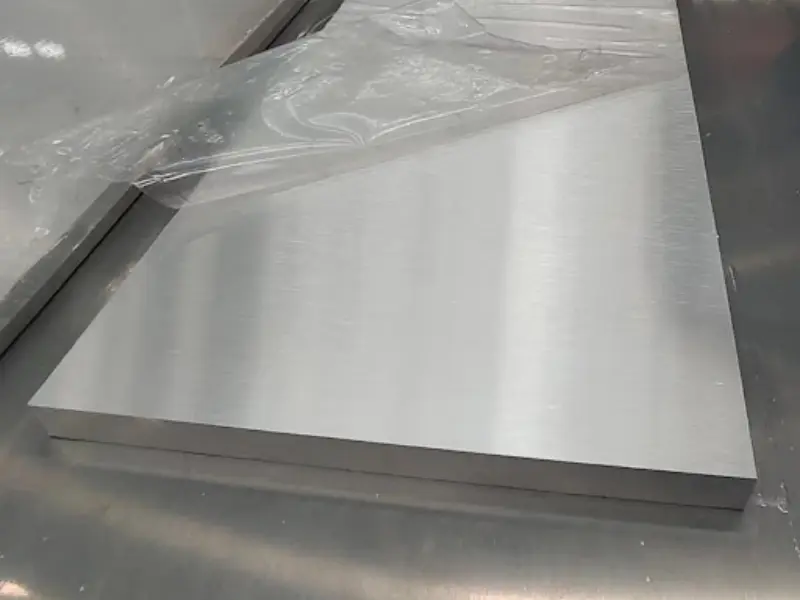
Is Aluminium Sheet Good for Roofing?

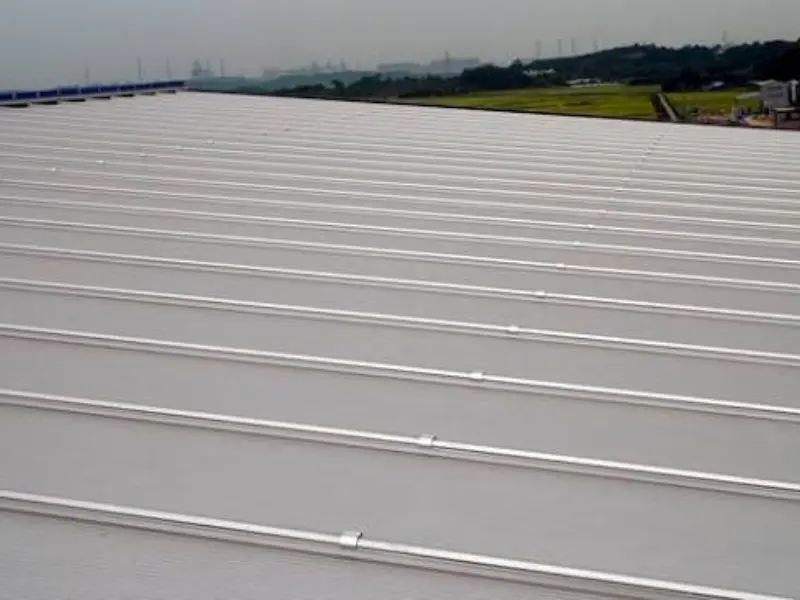
Yes, aluminium sheet is very good for roofing, especially in areas with high humidity, coastal climates, or strong sunlight.
Key Benefits
- Does not rust like steel
- Reflects heat and reduces indoor temperature
- Long lifespan (30–50 years)
- Suitable for residential and industrial roofs
Aluminium Roofing Sheet: Types & Uses
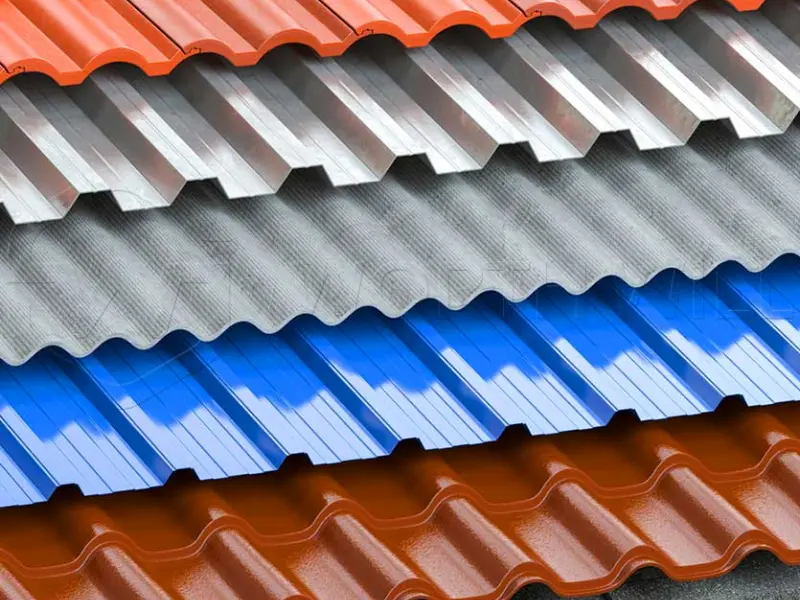
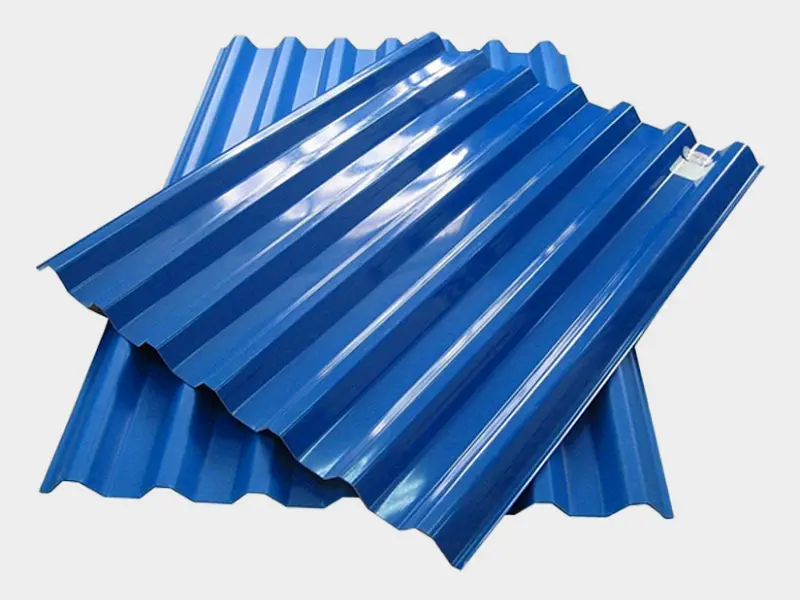
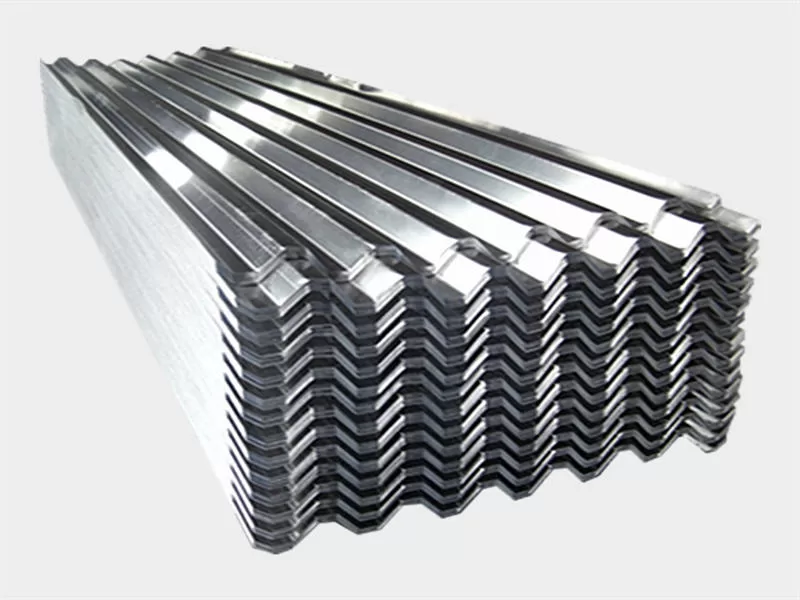
Corrugated Aluminum Roofing Sheets
- Traditional wave profile
- Easy installation
- Common for warehouses and houses
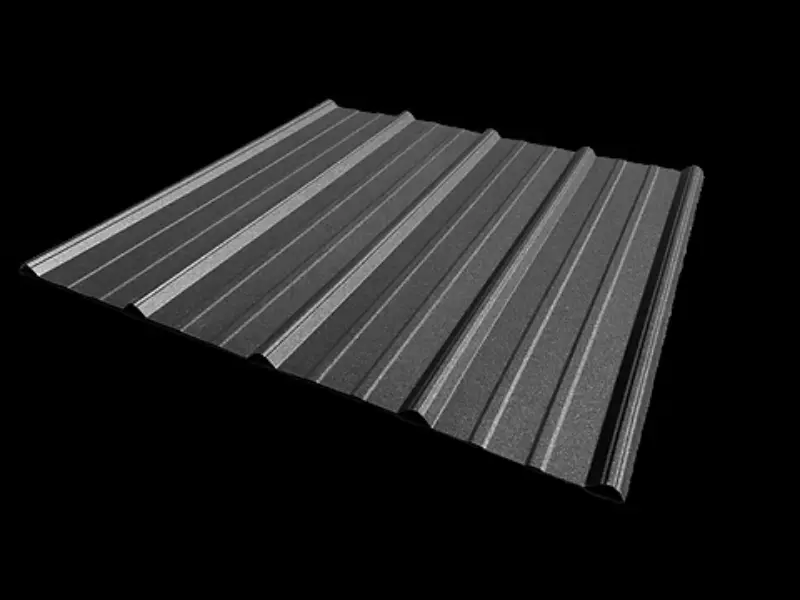
Trapezoidal Aluminum Roofing Sheets
- High strength and load capacity
- Modern appearance
- Suitable for industrial roofs
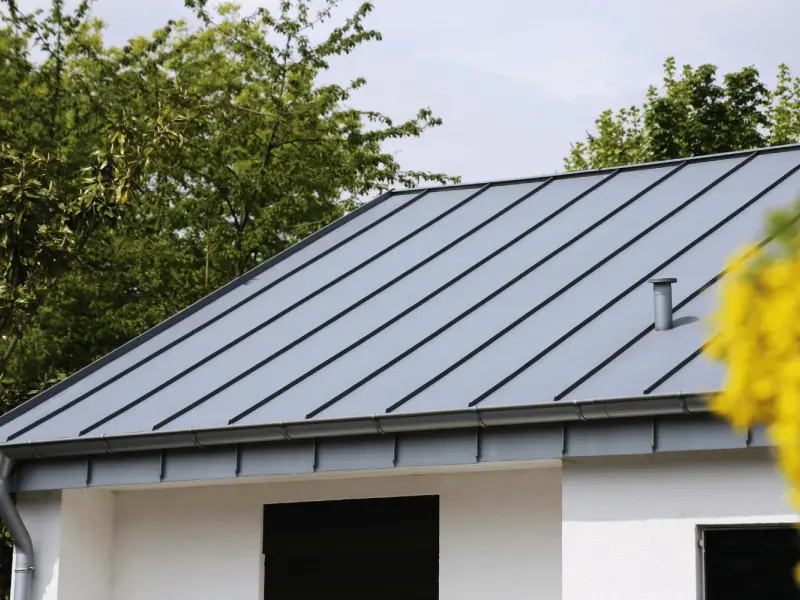
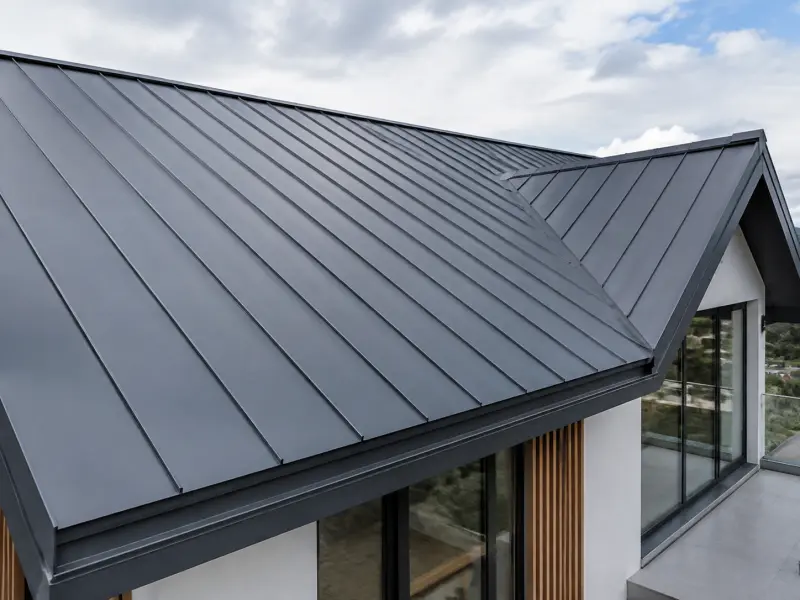
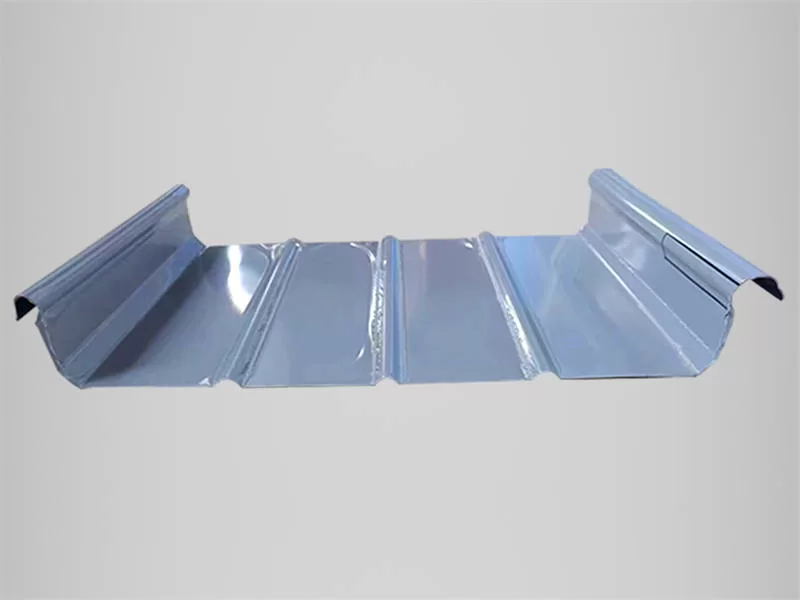
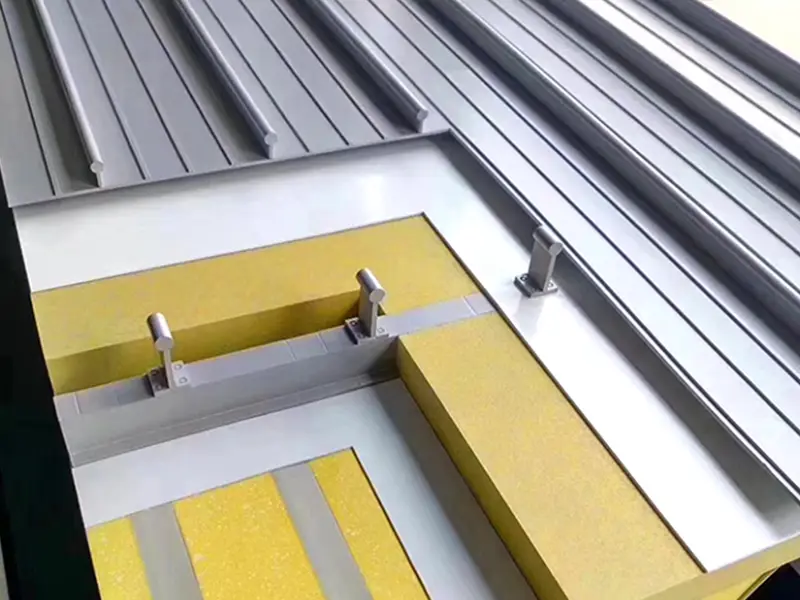
Standing Seam Aluminum Roof Panels
- Hidden fasteners
- Excellent waterproof performance
- Used in high-end buildings
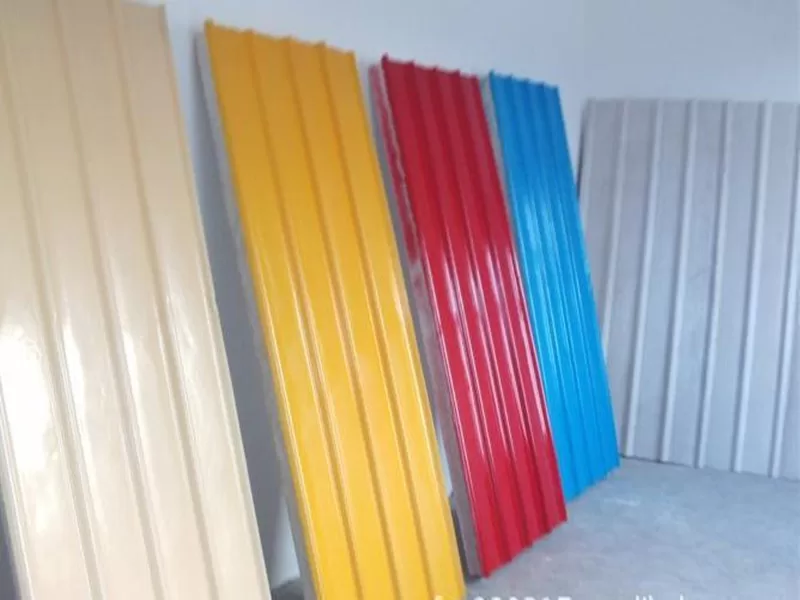
Prepainted Aluminum Sheets Used for Roofing
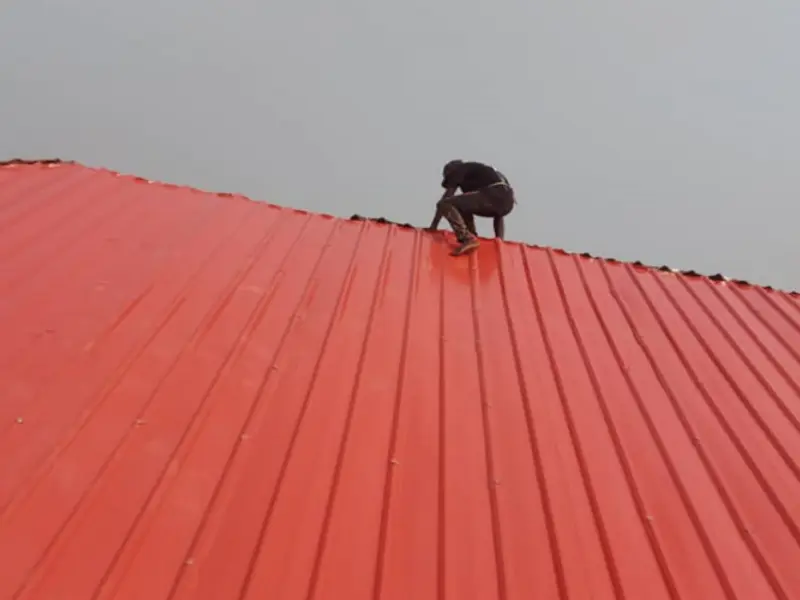
Prepainted aluminum roofing sheets are coated with PE, SMP, or PVDF paint to improve appearance and durability.
Advantages:
Attractive finish
Multiple color options
UV resistance
Better corrosion protection
Common Coating Types
| Coating | Durability | Application |
|---|---|---|
| PE | Standard | Residential roofs |
| SMP | Medium | Commercial buildings |
| PVDF | High | Coastal & harsh environments |
Standard Specifications of Aluminum Roofing Sheets
Thickness Options
| Thickness | Common Use |
|---|---|
| 0.4 mm | Residential roofing |
| 0.5 mm | Commercial roofing |
| 0.6–0.9 mm | Industrial roofing |
Common Width & Length
| Item | Size |
|---|---|
| Effective width | 750–1000 mm |
| Length | Custom cut |
| Profile height | 18–35 mm |
Aluminium Roofing Sheet Price per Sq Ft
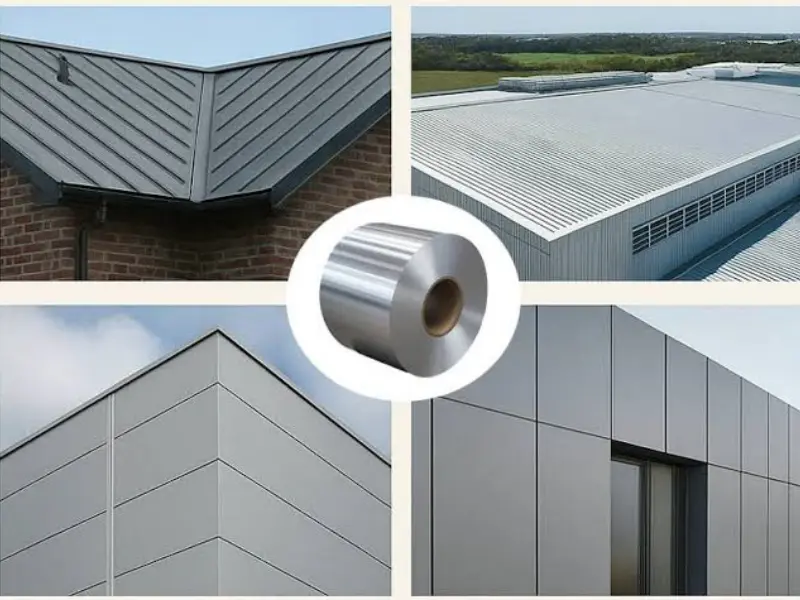
The price of aluminium roofing sheet per sq ft depends on:
Market aluminum price
Thickness
Alloy type
Coating
Estimated Price Range
| Type | Price per sq ft (USD) |
|---|---|
| Bare aluminum sheet | 2.0 – 3.5 |
| Prepainted aluminum sheet | 3.5 – 6.0 |
| Standing seam panels | 6.0 – 10.0 |
Prices vary by region and order quantity.
What Is the Current Price of an Aluminium Roofing Sheet?
The current aluminum roofing sheet price changes with:
- Global aluminum ingot price
- Energy cost
- Coating type
For accurate pricing, it is recommended to request a custom quotation based on specification and quantity.
Aluminum Roof vs Metal Roof
Many people ask about aluminum roof vs metal roof.
| Item | Aluminum Roof | Steel Roof |
|---|---|---|
| Weight | Very light | Heavier |
| Corrosion resistance | Excellent | Needs coating |
| Lifespan | 30–50 years | 20–30 years |
| Maintenance | Low | Medium |
Aluminum roofs perform better in coastal and humid environments.
Is an Aluminum Roof Cheaper Than Shingles?
Initial cost:
- Aluminum roof: higher upfront cost
- Asphalt shingles: lower initial price
Long-term cost:
- Aluminum roof lasts much longer
- Lower maintenance and replacement cost
Over time, aluminum roofing can be more cost-effective than shingles.
What Are the Disadvantages of Using an Aluminium Roofing Sheet?
Despite many advantages, aluminum roofing sheets also have limitations:
- Higher initial cost than steel
- Can dent under heavy impact
- Requires skilled installation
These issues can be reduced by choosing proper thickness and quality material.
Applications of Aluminum Roofing Sheets
Residential Buildings
- Houses
- Villas
- Apartments
Commercial Buildings
- Shopping centers
- Office buildings
- Schools
Industrial Use
Workshops
Factories
Warehouses
Why Choose Aluminum Sheets for Roofing?
Aluminum roofing sheets offer:
- Excellent weather resistance
- Energy efficiency
- Modern appearance
- Long service life
They are suitable for both new construction and roof renovation projects.
Installation and Maintenance
Installation Tips
- Use proper fasteners
- Allow thermal expansion
- Ensure waterproof sealing
Maintenance
- Occasional cleaning
- Minimal inspection
- No repainting needed
Durable and Lightweight Aluminum Roofing Sheet Solutions
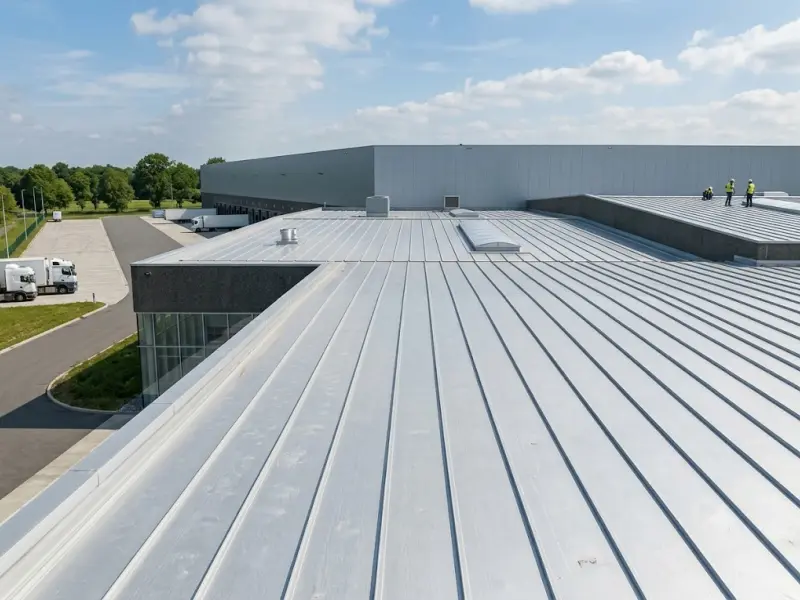
An aluminium sheet for roof is a reliable and durable roofing solution for modern buildings.
With lightweight structure, corrosion resistance, and long lifespan, aluminum roofing sheets are widely used across residential, commercial, and industrial sectors.
Choosing the right type, thickness, and coating ensures better performance and long-term value.
Aluminium Sheet for Roof
Aluminium sheet for roof keeps buildings dry for decades. It is light, strong, and rust-free. Roofers like it because it installs fast. Owners like it because it lasts.
Why Roofers Pick Aluminium Sheet for Roof
Aluminium has a natural oxide layer. That layer forms in minutes. It seals the metal against rain and salt. Steel needs paint to do the same job. Aluminum does it on its own.
Other practical wins:
- Very low weight — about one third that of steel
- No rust under scratches — the oxide layer re-forms
- Easy to cut on site with a circular saw
- Full recycling value at end of life
- Good heat reflection — keeps attics cooler
- Long service life — 30 to 50 years in most places
A light roof also means less load on trusses and walls. That can save money on the frame.
Product Types You Can Order
Suppliers stock many profiles. Each one fits a certain roof shape and budget. Below are the main families, with the numbers that matter.
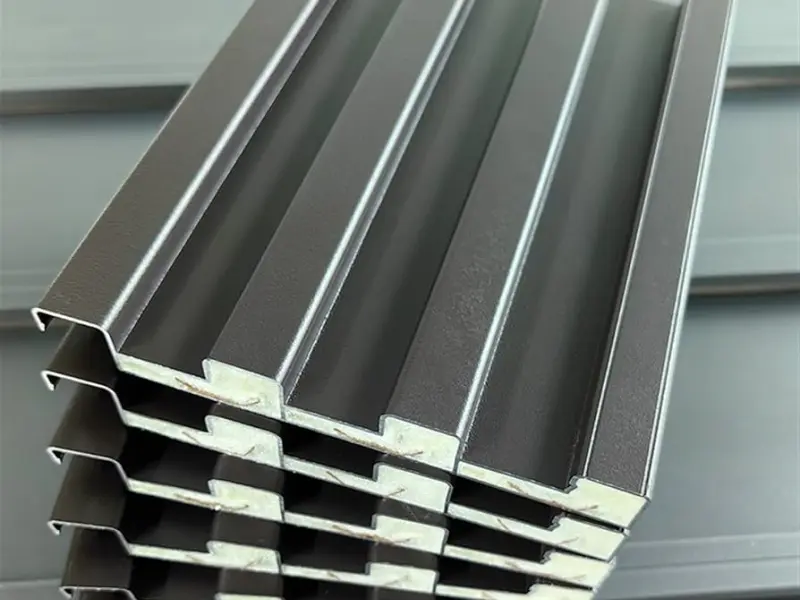
Standing Seam Aluminium Sheet
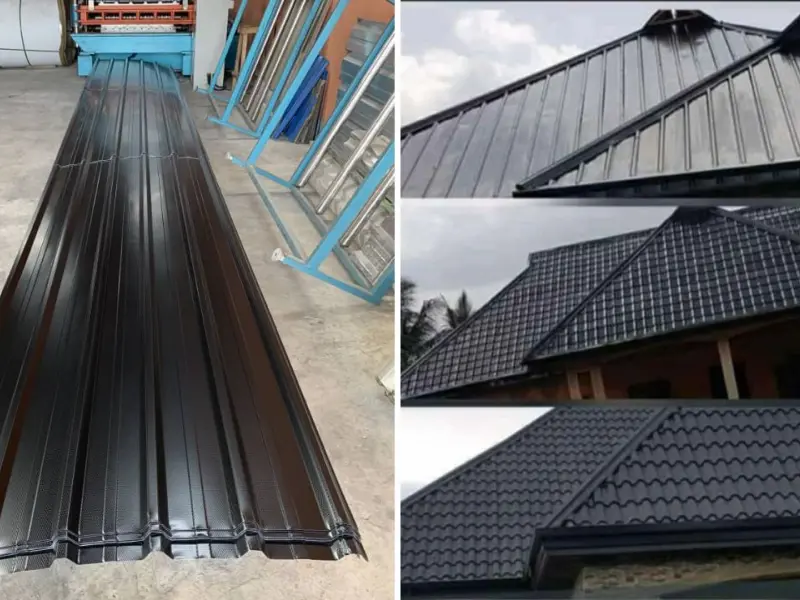
Two raised ribs lock together along the panel edge. No screws cross the water path. That keeps leaks rare.
Panels run 0.7 mm to 1.2 mm thick. Width is often 300 mm to 500 mm. Length can reach 12 m in one piece. Slope as low as 3 degrees works with a proper seal.
Best for: airports, offices, schools, modern homes
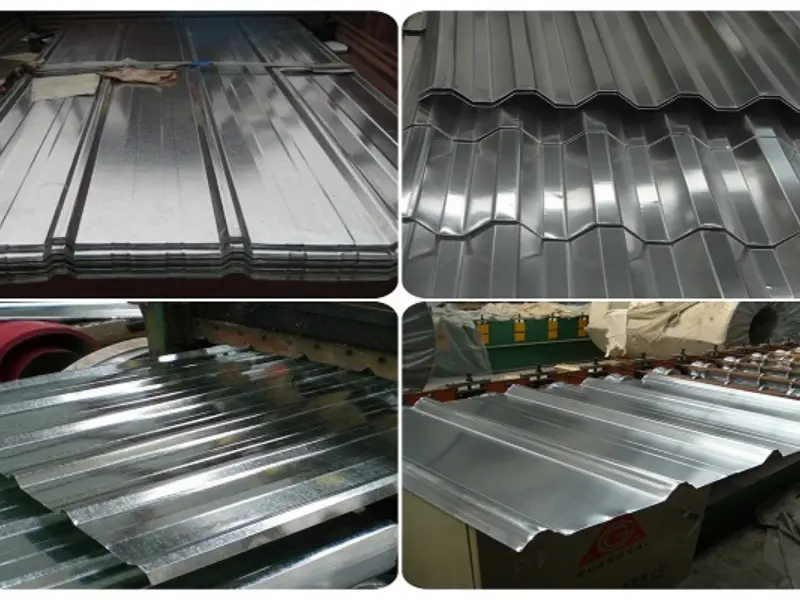
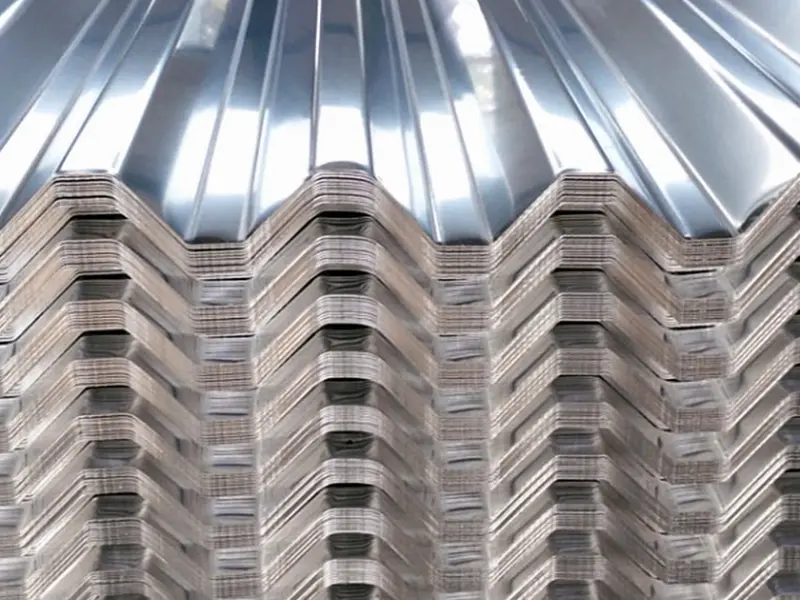
Corrugated Aluminium Sheet
Waves run across the sheet. The shape adds stiffness. It also sheds water fast. It is the cheapest profile per square meter.
Thickness sits at 0.5 mm to 1.0 mm. Rib height is 18 mm to 50 mm. Sheet width is 0.8 m to 1.2 m. Length is cut to fit the rafter.
Best for: barns, sheds, workshops, storage yards
Trapezoidal Aluminium Roof Sheet
Flat pans with angled sides. Wider cover than corrugated. Fewer sheets mean fewer joints. It fits both walls and roofs.
Thickness runs 0.5 mm to 1.2 mm. Rib height is 25 mm to 45 mm. Cover width is 1.0 m to 1.15 m. Span can reach 3 m with supports at each rib.
Best for: warehouses, factories, big-box retail
Aluminium Shingle Sheet
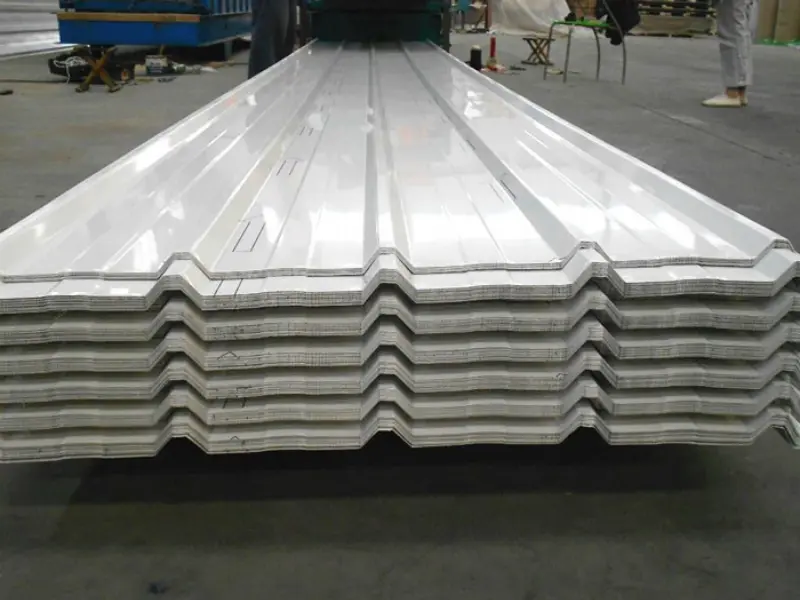
Stamped panels that copy slate or cedar. Each piece overlaps the next. The look suits homes and hotels. Weight stays far below real tile.
Thickness is 0.5 mm to 0.8 mm. Panel size is about 300 mm x 400 mm. Wind rating often hits 190 km/h when clipped correctly.
Best for: homes, resorts, heritage-style builds
Aluminium Sandwich Roof Panel
Two aluminium skins with foam or rock wool inside. One product does roof, insulation, and ceiling. Build time drops a lot.
Total thickness is 50 mm to 150 mm. Skin is 0.4 mm to 0.7 mm. Core density is 40 kg/m3 to 120 kg/m3. U-value can go below 0.25 W/m2K.
Best for: cold stores, clean rooms, food plants
Aluminium Perforated Roof Sheet
Small holes give shade, air flow, and sound control. Often used as an outer screen over a solid deck. It also hides rooftop gear.
Thickness is 0.5 mm to 1.5 mm. Hole size is 3 mm to 12 mm. Open area is 20% to 50%.
Best for: car parks, plant rooms, sunshades
Alloys Used for Roofing
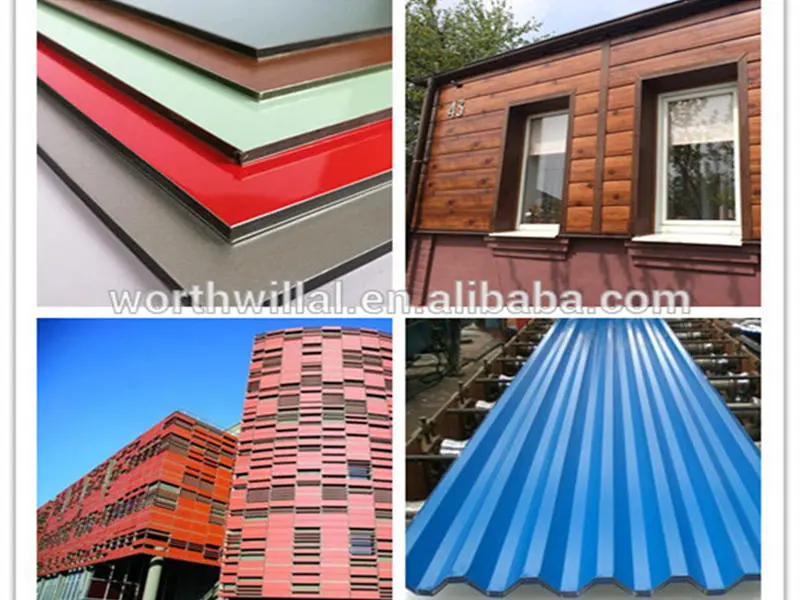
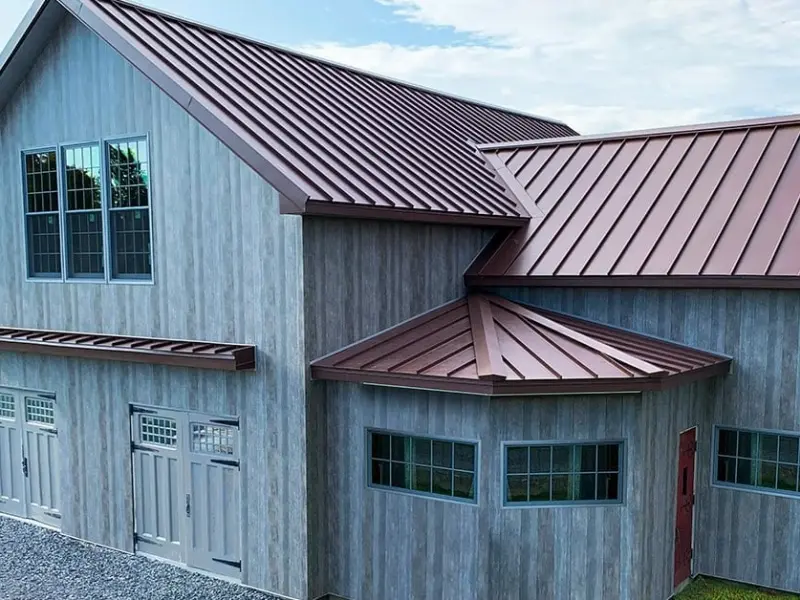
The alloy sets strength, forming, and corrosion life. Four grades cover almost every roof job.
| Alloy | Main Element | Strength | Corrosion | Typical Roof Use |
|---|---|---|---|---|
| 1100 | None (99% pure) | Low | Good | Trim, flashing, indoor |
| 3003 | Manganese | Medium | Good | General roofing |
| 5005 | Magnesium | Medium | Very good | Facades, coastal roofs |
| 5052 | Magnesium | High | Excellent | Marine, harsh sites |
| 6061 | Mg + Silicon | Very high | Good | Frames, supports, gutters |
1100 Grade in Plain Words
Soft and easy to bend. Not for wide unsupported spans. Used for edge trim and small repair pieces.
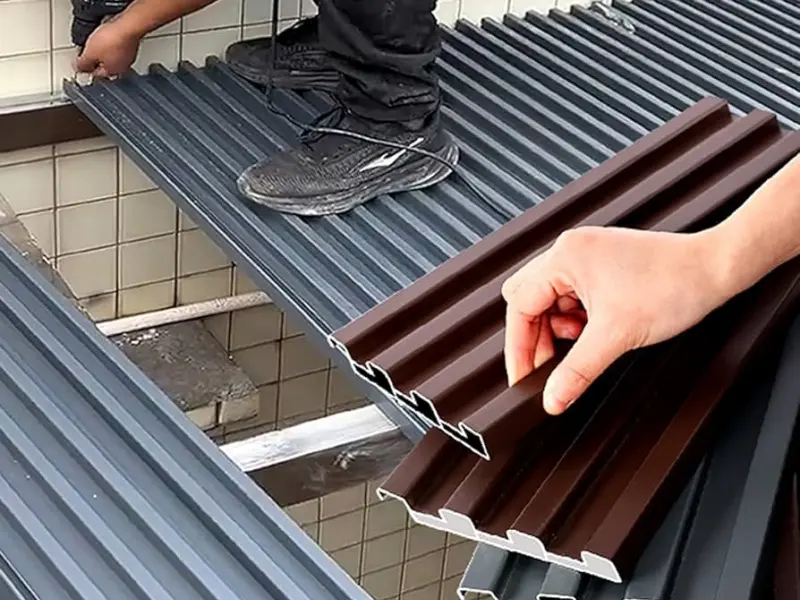
3003 Grade in Plain Words
The workhorse. Cheap and strong enough for most roofs. Holds paint well. Works in normal inland weather.
5005 Grade in Plain Words
Adds magnesium for better weather fight. A good step up for humid towns. Keeps a clean finish longer.
5052 Grade in Plain Words
The coastal pick. Fights salt spray and acid rain. Costs more but saves repairs near the sea.
6061 Grade in Plain Words
Too stiff for long panels. Used for rails, brackets, and gutters. Strong where it counts.
Temper and Hardness
Temper tells you how hard the sheet is. It changes how the metal bends.
| Temper | Hardness | Forming Ease | Where It Fits |
|---|---|---|---|
| O | Soft | Very easy | Curved roofs, deep folds |
| H14 | Half hard | Easy | Standard panels |
| H24 | Half hard | Easy | Painted roof sheets |
| H32 | Quarter hard | Medium | Light shapes |
| T6 | Hard | Hard | Frames and trims |
Soft O temper bends around curves. Half hard H14 and H24 cover most roofs. Hard T6 stays flat and stiff.
Thickness and Gauge Chart
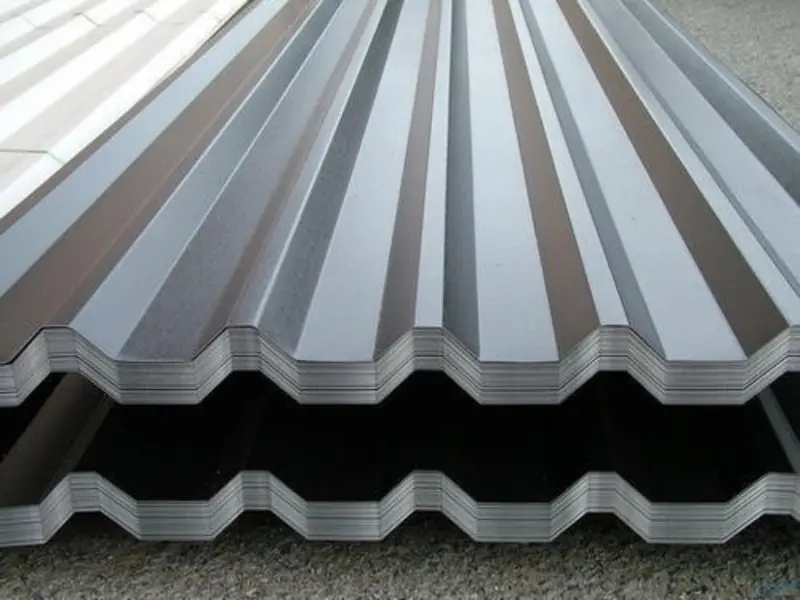
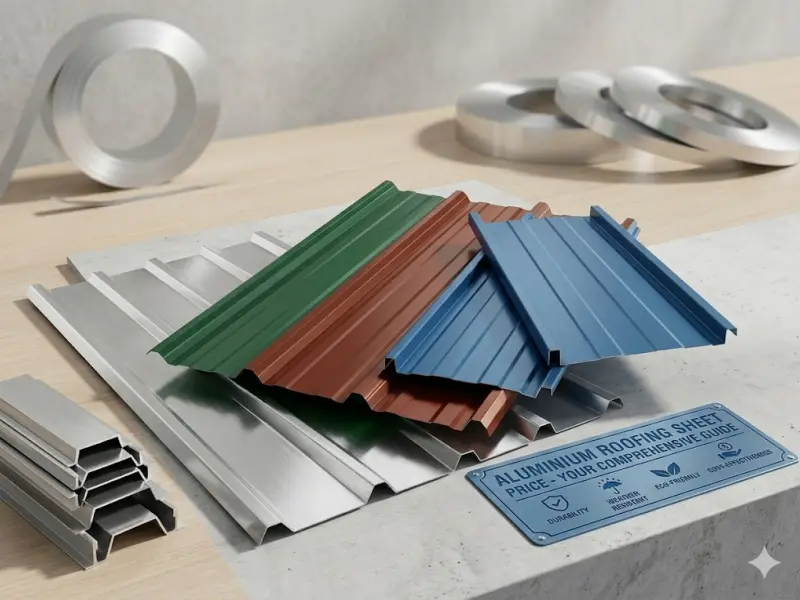
Thicker sheet spans farther. It also costs more and weighs more.
| Thickness | Gauge | Weight / m2 | Rafter Spacing | Common Job |
|---|---|---|---|---|
| 0.5 mm | 30 | 1.35 kg | 1.0 m | Sheds, awnings |
| 0.6 mm | 28 | 1.62 kg | 1.2 m | Homes |
| 0.7 mm | 27 | 1.89 kg | 1.4 m | Homes, shops |
| 0.8 mm | 26 | 2.16 kg | 1.6 m | Commercial |
| 1.0 mm | 25 | 2.70 kg | 2.0 m | Industrial |
| 1.2 mm | 24 | 3.24 kg | 2.4 m | Snow zones |
| 1.5 mm | 22 | 4.05 kg | 3.0 m | Coastal, cyclone |
| 2.0 mm | 20 | 5.40 kg | 3.5 m | Structural deck |
Rule of thumb: go one size thicker in snow or cyclone areas.
Surface Finishes and Coatings
The coating is the first line of defense. It blocks UV, salt, and dirt.
| Finish | Life Outdoors | Salt Fight | Cost Level |
|---|---|---|---|
| Mill finish | 1–3 years | Poor | Lowest |
| Polyester paint | 10–15 years | Fair | Low |
| Polyurethane | 15–20 years | Good | Medium |
| PVDF | 20–30 years | Excellent | High |
| Anodized | 15–25 years | Very good | High |
| Powder coat | 15–20 years | Good | Medium |
Thicker coats last longer. A 25 micron PVDF coat outlasts a 15 micron one by years.
Aluminium vs Other Roof Metals
Aluminium Against Steel
| Point | Aluminium | Steel |
|---|---|---|
| Weight | 2.7 g/cm3 | 7.8 g/cm3 |
| Rust | No | Yes |
| Paint need | Low | High |
| Strength | Lower | Higher |
| Cost | Medium | Low |
| Life | 30–50 years | 20–30 years |
Steel wins on raw strength and price. Aluminium wins on weight and upkeep.
Aluminium Against Copper
| Point | Aluminium | Copper |
|---|---|---|
| Weight | Light | Heavy |
| Color | Any | Ages green |
| Cost | Low–mid | Very high |
| Life | 30–50 years | 70+ years |
| Theft risk | Low | High |
Copper looks rich and lasts longer. Aluminium costs far less and is safer on site.
Aluminium Against Zinc
| Point | Aluminium | Zinc |
|---|---|---|
| Weight | Light | Heavy |
| Forming | Easy | Medium |
| Life | 30–50 years | 50+ years |
| Price | Lower | Higher |
| Look | Paired with paint | Natural gray |
Zinc gives a soft gray patina. Aluminium gives you color choices.
Applications Across Industries
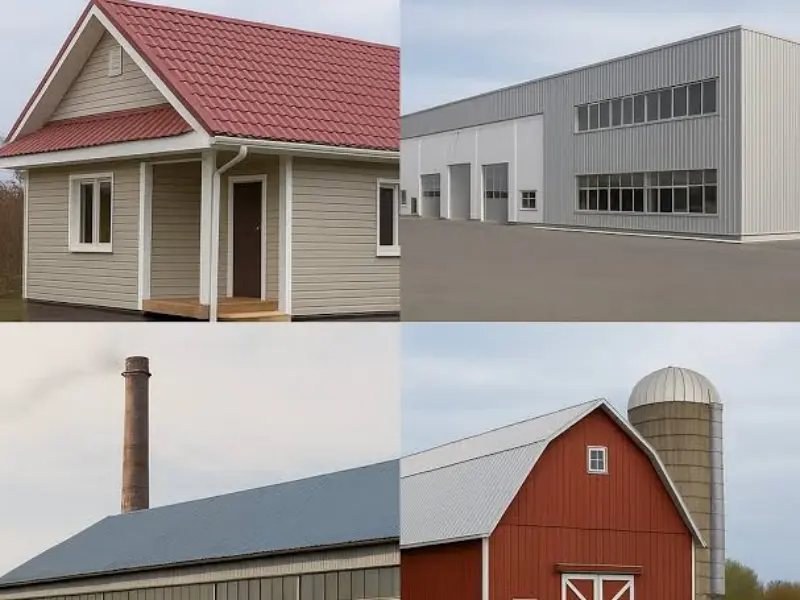
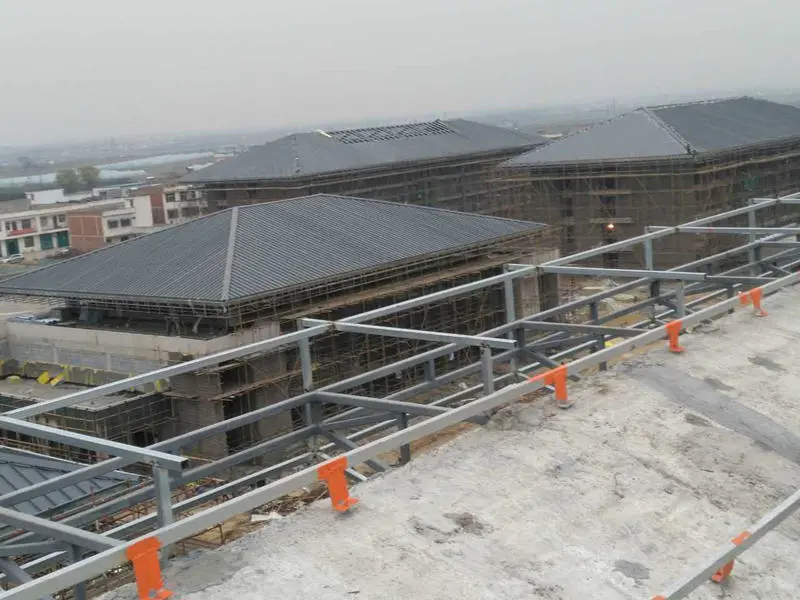
- Housing — pitched roofs, porch covers, dormers
- Farms — barns, silos, grain stores, poultry sheds
- Factories — workshops, warehouses, plant rooms
- Retail — shopping centers, canopies, walkways
- Transport — bus shelters, rail depots, ports
- Energy — solar mounting decks, battery rooms
- Food — cold stores, dairy plants, bottling lines
- Public — schools, clinics, sports halls
- Tourism — resorts, cabins, beach bars
- Rural — water tanks, carports, equipment sheds
Coastal, Snow, and Desert Notes
Coastal Sites
Salt eats cheap metal fast. Use 5052 alloy with PVDF. Use stainless fixings. Rinse the roof twice a year.
Snow Load Sites
Snow sits heavy. Use 1.2 mm or thicker. Keep rafter spacing tight. Add snow guards above doors.
Desert Sites
Sun and heat rule here. A light color reflects rays. A reflective finish cuts attic heat by 10–20 degrees.
Industrial Sites
Chemicals in the air attack metal. Choose 5052 with a thick coat. Wash the roof after any spill.
Fixing Methods at a Glance
| Method | Sheet Type | Speed | Leak Risk |
|---|---|---|---|
| Screw + washer | Corrugated | Fast | Medium |
| Concealed clip | Standing seam | Medium | Low |
| Batten cap | Shingle | Slow | Low |
| Adhesive bond | Sandwich | Medium | Low |
| Rivet | Repair work | Fast | Medium |
Always use aluminium or stainless screws. Mixed metals cause corrosion.
Cost Guide
| Item | Price Range (per m2) |
|---|---|
| Corrugated 0.5 mm | $9–13 |
| Corrugated 0.7 mm | $12–17 |
| Standing seam 0.8 mm | $18–26 |
| Sandwich panel 50 mm | $22–32 |
| Shingle style | $25–38 |
| Installing labor | 40–60% of total |
Prices shift with alloy, coating, and order size. Bulk orders cut unit cost by 10–20%.
Buying Checklist
- Confirm the alloy and temper in writing
- Ask for the coating thickness in microns
- Check the warranty on color fade
- Request a span table for your rafter gap
- Get a sample and view it in daylight
- Confirm fixing type and metal match
- Plan spare sheets for future repair
- Keep the batch number for reorders
FAQ
General Questions
What is an aluminium sheet for roof?
It is a thin aluminium panel used to cover a roof. It comes flat, corrugated, or in a locked seam shape.
How long does it last?
Most roofs last 30 to 50 years. Poor coatings can fail sooner.
Material Questions
Which alloy is best near the sea?
5052 is the best choice. It fights salt spray well.
Does aluminium rust?
No. It forms a gray oxide layer that protects the metal.
Fitting Questions
Can I walk on the roof?
Yes, with care. Use soft shoes. Step on the ribs, not the flat pans.
Do I need special screws?
Yes. Use aluminium or stainless steel. Never mix with plain steel.
Cost Questions
Is it cheaper than tile?
Yes, in most markets. Tile costs more per square meter.
Does paint add much to the price?
PVDF adds 30 to 50 percent. It also adds many years of color life.
Weather Questions
Is it noisy in the rain?
A bit more than tile. Insulation and a solid deck cut the sound.
Will hail dent it?
Soft 0.5 mm sheets can dent. Use 0.8 mm or thicker in hail zones.