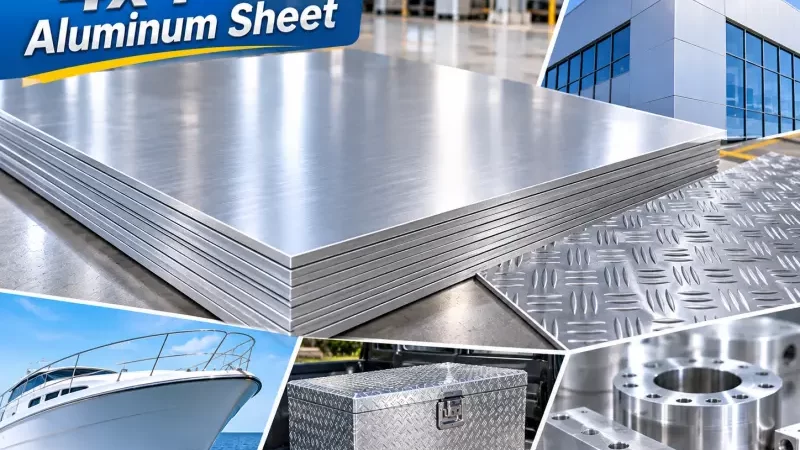
A 4×4 aluminum sheet is a flat aluminum plate with a standard size of 4 feet by 4 feet. It measures 48 inches by 48 inches, or approximately 1219 mm by 1219 mm.
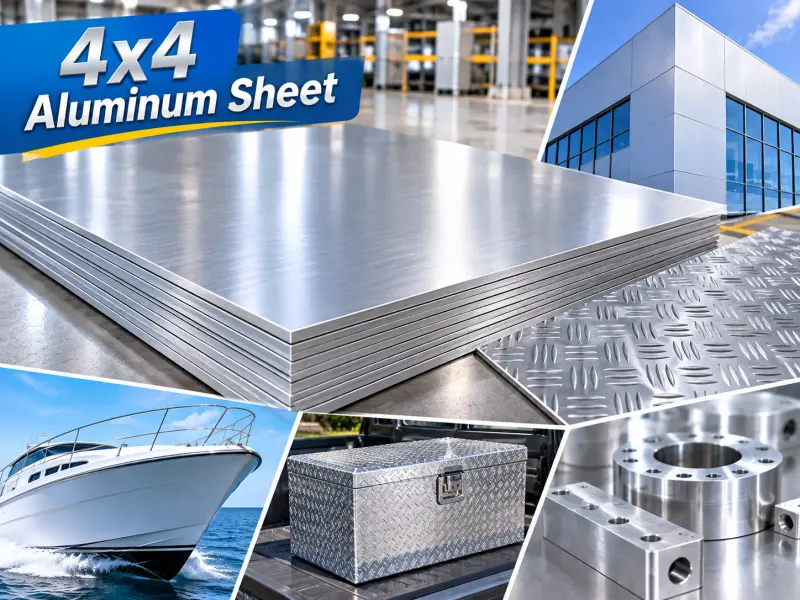
This size is suitable for many fabrication, construction, transportation, and industrial projects. It is easier to handle than some larger sheets and can be cut into smaller panels for different applications.
A 4×4 aluminum sheet is available in different alloys, tempers, thicknesses, and surface finishes.
Buyers can choose from 1050, 1060, 3003, 5052, and 6061 aluminum, depending on the required strength, corrosion resistance, and processing performance.
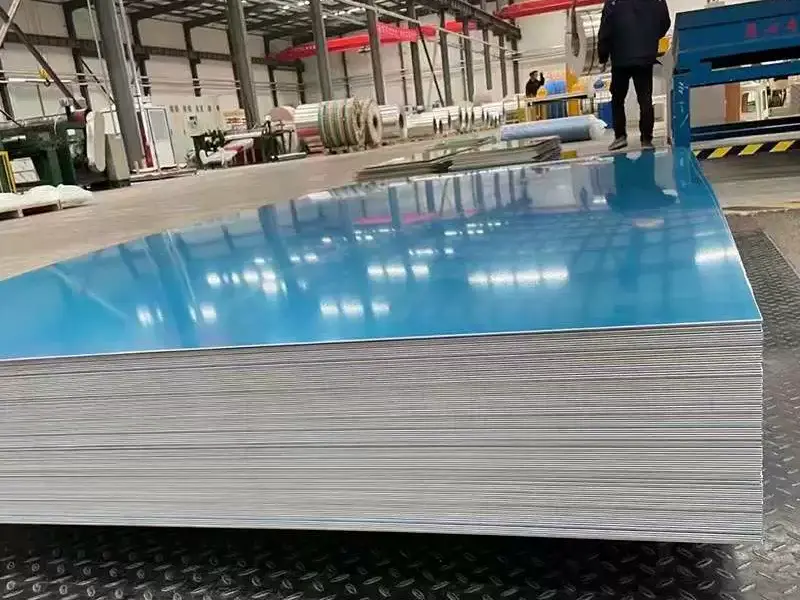
Whether you need a thin aluminum sheet for decoration or a thicker plate for structural parts, choosing the correct specification is important.
What Is a 4×4 Aluminum Sheet?
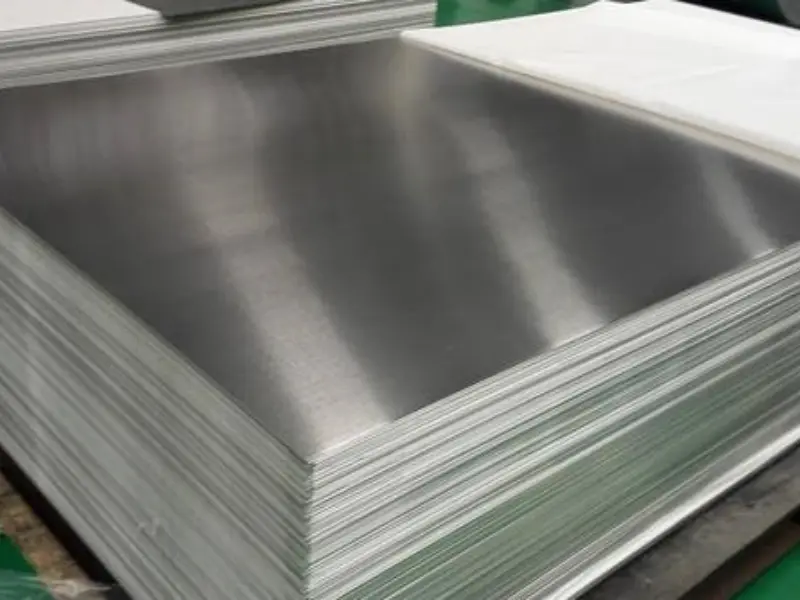
A 4×4 aluminum sheet is an aluminum flat product measuring 4 feet in width and 4 feet in length.
It is a convenient size for workshops, manufacturers, contractors, and distributors. The sheet can be used as a finished panel or cut into smaller pieces.
Standard 4×4 Aluminum Sheet Dimensions
| Measurement | Size |
|---|---|
| Length | 4 ft |
| Width | 4 ft |
| Length in inches | 48 in |
| Width in inches | 48 in |
| Length in millimeters | 1219.2 mm |
| Width in millimeters | 1219.2 mm |
| Surface area | 16 sq ft |
| Surface area | Approximately 1.486 sq m |
The actual finished size may vary slightly depending on the production and cutting tolerance.
Why Choose a 4×4 Aluminum Sheet?
A 4×4 sheet offers a useful balance between panel size and handling convenience.
Its main benefits include:
- Easy to transport and store.
- Suitable for small and medium fabrication projects.
- Can be cut into different panel sizes.
- Available in many aluminum alloys.
- Suitable for indoor and outdoor applications.
- Available in plain, brushed, embossed, and coated finishes.
- Can be supplied in different thicknesses.
For projects that do not require a full 4×8 sheet, a 4×4 panel can help reduce material waste.
4×4 Aluminum Sheet Thickness Options
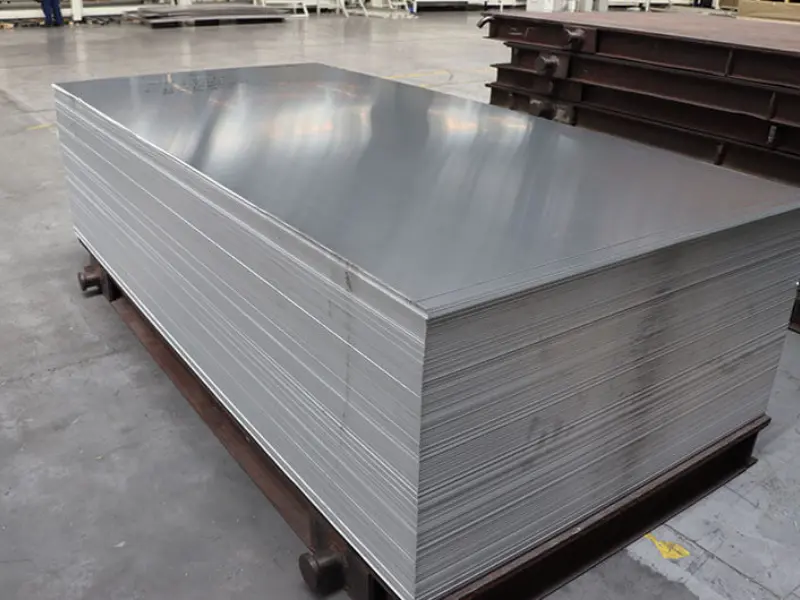
Thickness is one of the most important factors when selecting an aluminum sheet. It affects weight, rigidity, strength, and forming performance.
A thin sheet is suitable for decorative panels and lightweight covers. A thicker sheet is better for demanding fabrication work.
Common 4×4 Aluminum Sheet Thicknesses
| Thickness (Inches) | Thickness (mm) | Typical Application |
|---|---|---|
| 0.020″ | 0.508 mm | Light decorative panels |
| 0.025″ | 0.635 mm | Signs and covers |
| 0.032″ | 0.813 mm | General sheet fabrication |
| 0.040″ | 1.016 mm | Interior panels |
| 0.050″ | 1.270 mm | Equipment covers |
| 0.063″ | 1.600 mm | General industrial use |
| 0.080″ | 2.032 mm | Enclosures and panels |
| 0.090″ | 2.286 mm | Fabricated components |
| 0.100″ | 2.540 mm | Medium-duty applications |
| 0.125″ | 3.175 mm | Machine parts and brackets |
| 0.160″ | 4.064 mm | Industrial fabrication |
| 0.190″ | 4.826 mm | Heavy-duty panels |
| 0.250″ | 6.350 mm | Thick aluminum plate |
These are common reference sizes. Availability depends on the alloy, temper, and supplier’s production range.
Thin 4×4 Aluminum Sheet
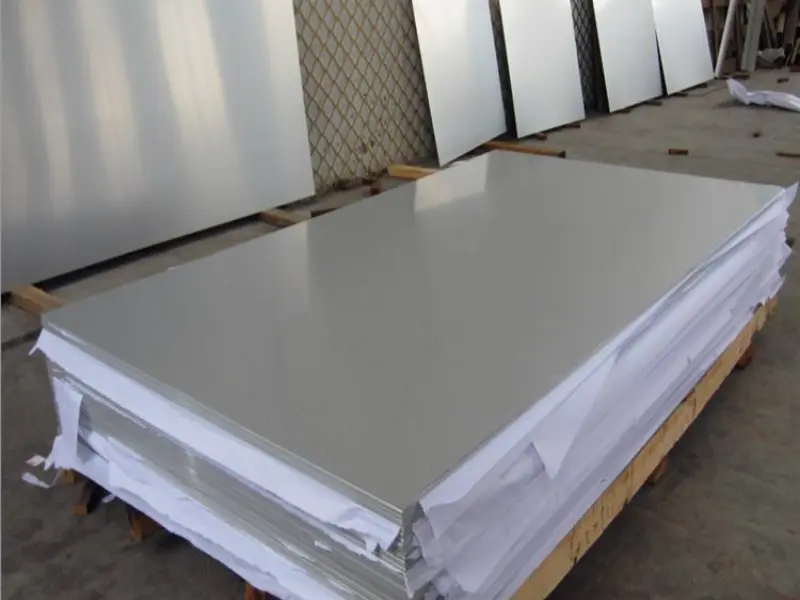
Thin aluminum sheets are easy to cut, bend, and shape. They are often used for lightweight applications.
Common thicknesses include:
- 0.020 inch
- 0.025 inch
- 0.032 inch
- 0.040 inch
- 0.050 inch
Typical applications include:
- Decorative wall panels.
- Electrical covers.
- Signs and displays.
- Interior trim.
- Lightweight equipment housings.
- General sheet metal fabrication.
Medium Thickness Aluminum Sheet
Medium-thickness sheets provide a balance between weight and rigidity.
Common options include 0.063 inch, 0.080 inch, 0.090 inch, and 0.100 inch.
They can be used for:
- Equipment enclosures.
- Vehicle interior panels.
- Machine covers.
- Industrial cabinets.
- Protective panels.
- General fabrication projects.
Thick 4×4 Aluminum Plate
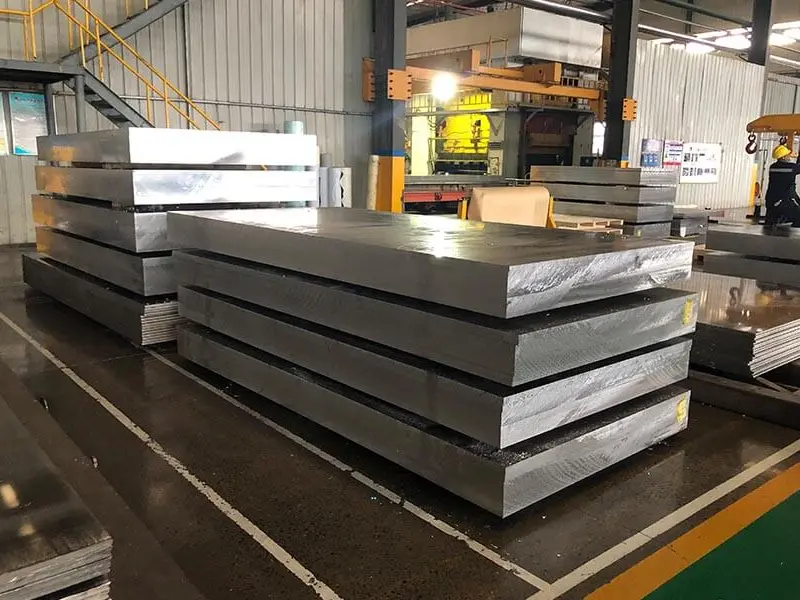
For projects that need greater rigidity and material thickness, aluminum plate is a suitable option.
Common plate thicknesses include:
| Thickness | Millimeters | Possible Use |
|---|---|---|
| 1/8″ | 3.175 mm | Brackets and panels |
| 3/16″ | 4.763 mm | Machine components |
| 1/4″ | 6.350 mm | Structural fabrication |
| 5/16″ | 7.938 mm | Heavy-duty parts |
| 3/8″ | 9.525 mm | Industrial plates |
| 1/2″ | 12.700 mm | Machined components |
The final thickness should be selected according to the load, design, and machining requirements.
Aluminum Alloys for 4×4 Aluminum Sheets
Different aluminum alloys have different properties. Some offer good corrosion resistance and formability. Others provide higher strength and better machining performance.
The most suitable alloy depends on the final application.
1050 Aluminum Sheet
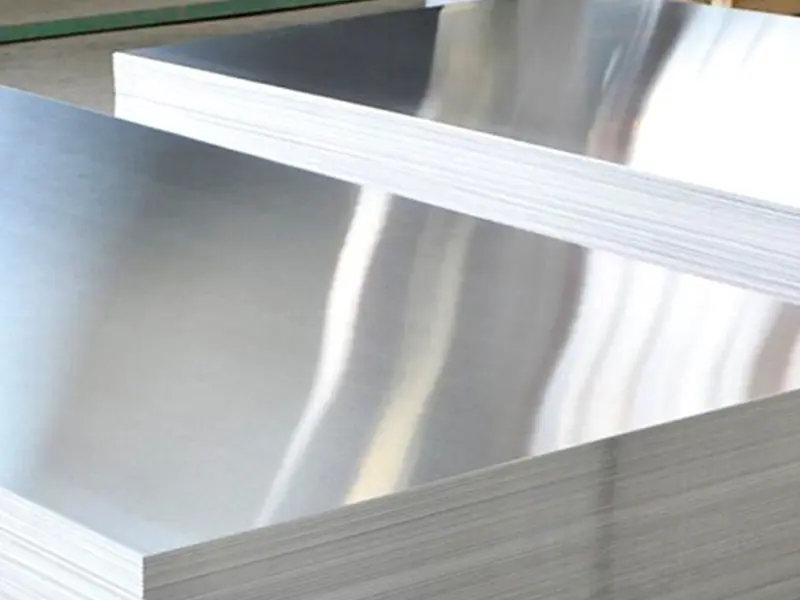
1050 aluminum is a commercially pure aluminum grade with high aluminum content. It has good corrosion resistance and electrical and thermal conductivity.
It is suitable for applications that need good formability and a clean surface.
Common uses include:
- Decorative panels.
- General sheet metal work.
- Reflective components.
- Electrical applications.
- Chemical equipment parts.
Common temper options include O, H12, H14, and H24, depending on product requirements.
1060 Aluminum Sheet
1060 aluminum sheet is another high-purity aluminum option. It offers good corrosion resistance, conductivity, and workability.
It is commonly used for:
- Electrical components.
- Lighting reflectors.
- Decorative parts.
- General industrial products.
- Chemical processing applications.
3003 Aluminum Sheet
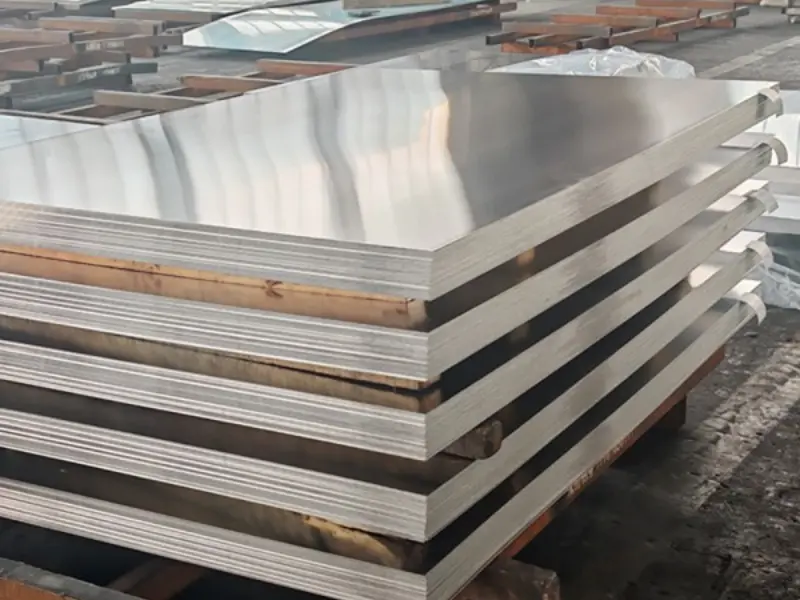
3003 aluminum contains manganese as its main alloying element. It provides better strength than common 1xxx series aluminum while maintaining good formability and corrosion resistance.
Typical applications include:
- Kitchen equipment.
- Storage tanks.
- HVAC components.
- Building panels.
- Fuel and fluid-related equipment.
- General fabrication.
Common tempers include O, H14, H16, and H24.
5052 Aluminum Sheet
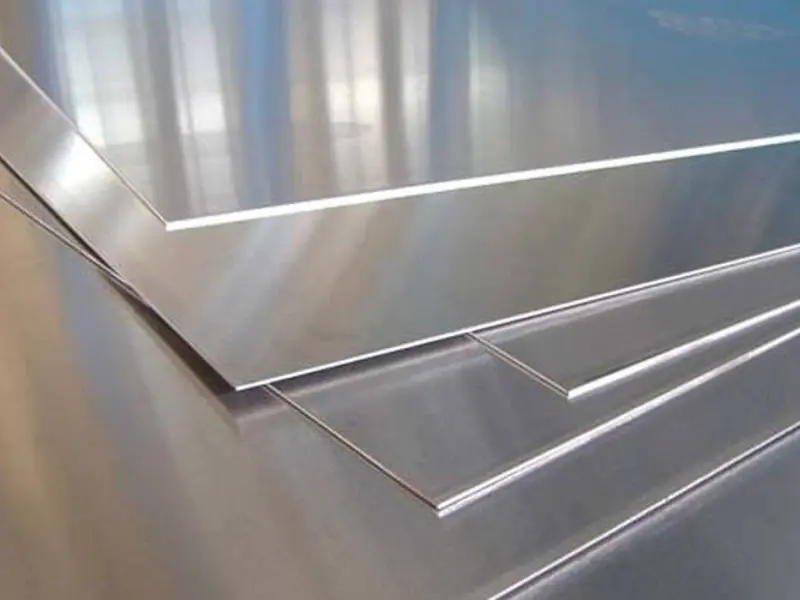
5052 aluminum is a popular choice for applications that need good corrosion resistance and higher strength than 3003.
It contains magnesium as its main alloying element.
It is often selected for:
- Marine panels.
- Vehicle body components.
- Fuel tanks.
- Industrial enclosures.
- Boat parts.
- Outdoor equipment.
Common tempers include O, H32, H34, and H36.
6061 Aluminum Sheet and Plate
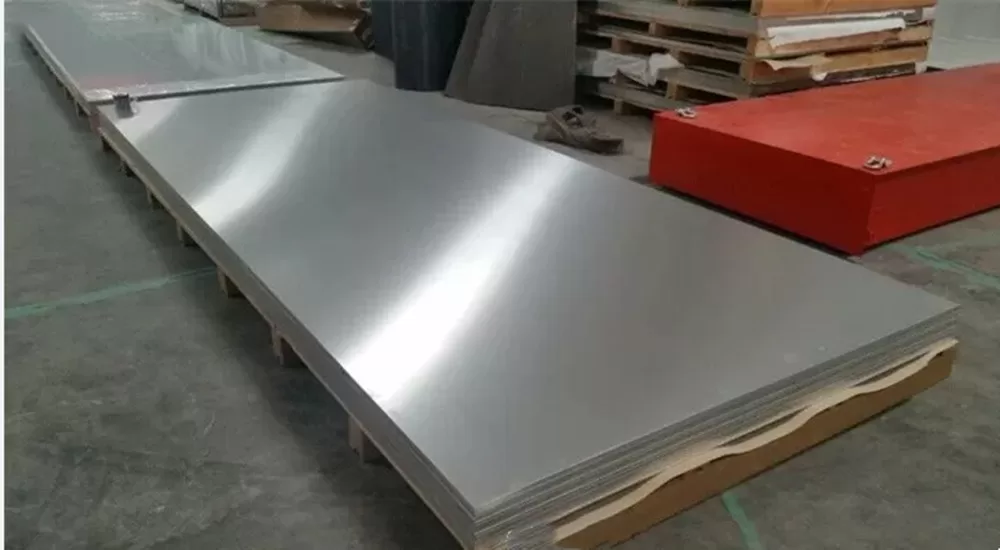
6061 aluminum is a heat-treatable alloy. It offers good strength, machinability, and general corrosion resistance.
It is suitable for more demanding fabrication and machining projects.
Common applications include:
- Machine parts.
- Mounting plates.
- Industrial brackets.
- Equipment frames.
- Structural components.
- CNC-machined parts.
Common tempers include T4 and T6, with 6061-T6 being a widely used condition.
Alloy Comparison for 4×4 Aluminum Sheets
| Alloy | Main Advantage | Typical Application | Common Temper |
|---|---|---|---|
| 1050 | High purity and formability | Reflectors and decoration | O, H14 |
| 1060 | Conductivity and corrosion resistance | Electrical parts | O, H14 |
| 3003 | Good formability and strength | HVAC and tanks | O, H14, H24 |
| 5052 | Corrosion resistance and strength | Marine and vehicles | O, H32 |
| 6061 | Strength and machinability | Industrial components | T4, T6 |
Not every alloy is available in every thickness or temper. Confirm the required mechanical properties with the supplier before ordering.
Different Types of 4×4 Aluminum Sheets
A 4×4 aluminum sheet can be supplied in different surface and product types. These options help meet different functional and visual requirements.
Plain Aluminum Sheet
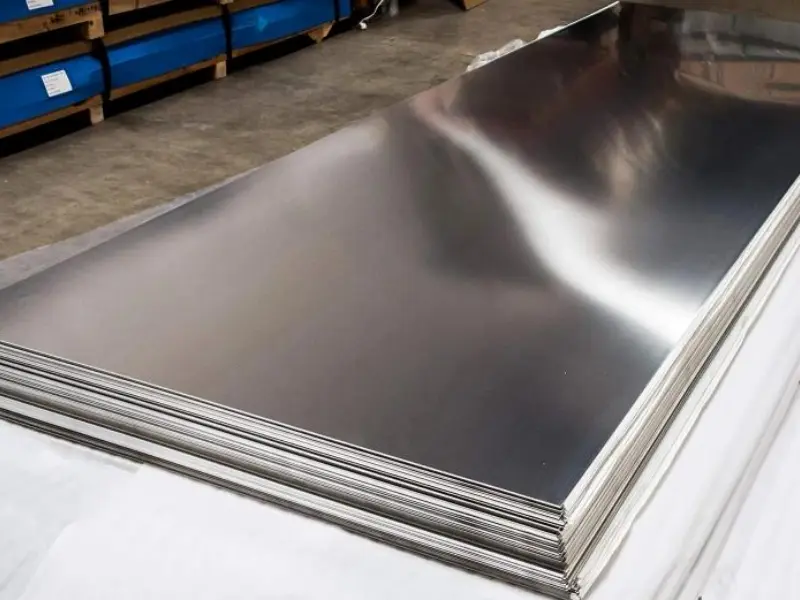
Plain aluminum sheet has a natural aluminum surface. It is suitable for cutting, bending, welding, and general fabrication.
It is commonly used by manufacturers that need a basic aluminum panel for further processing.
Available alloy options may include 1050, 1060, 3003, 5052, and 6061.
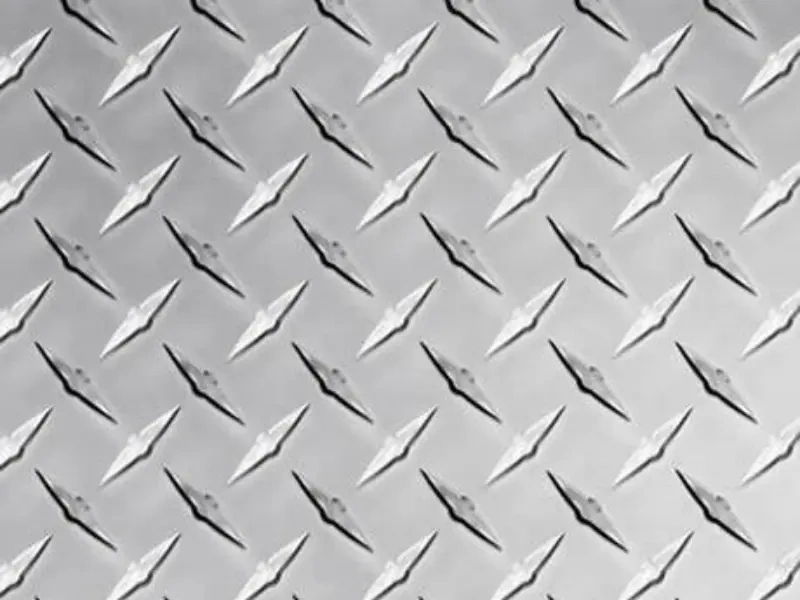
4×4 Aluminum Checker Plate
Aluminum checker plate has raised patterns on one side. These patterns improve surface grip and give the sheet a distinctive appearance.
Common patterns include:
- One-bar pattern.
- Two-bar pattern.
- Three-bar pattern.
- Five-bar pattern.
- Diamond pattern.
Typical applications include:
- Vehicle flooring.
- Workshop floors.
- Stair treads.
- Toolboxes.
- Truck steps.
- Industrial platforms.
Common alloy choices include 3003 and 5052, depending on the required performance.
4×4 Brushed Aluminum Sheet
Brushed aluminum sheet has a directional surface texture. It offers a modern metallic appearance.
It is often used in decorative and architectural projects.
Common applications include:
- Elevator panels.
- Interior decoration.
- Furniture panels.
- Display equipment.
- Appliance panels.
- Signage.
4×4 Embossed Aluminum Sheet
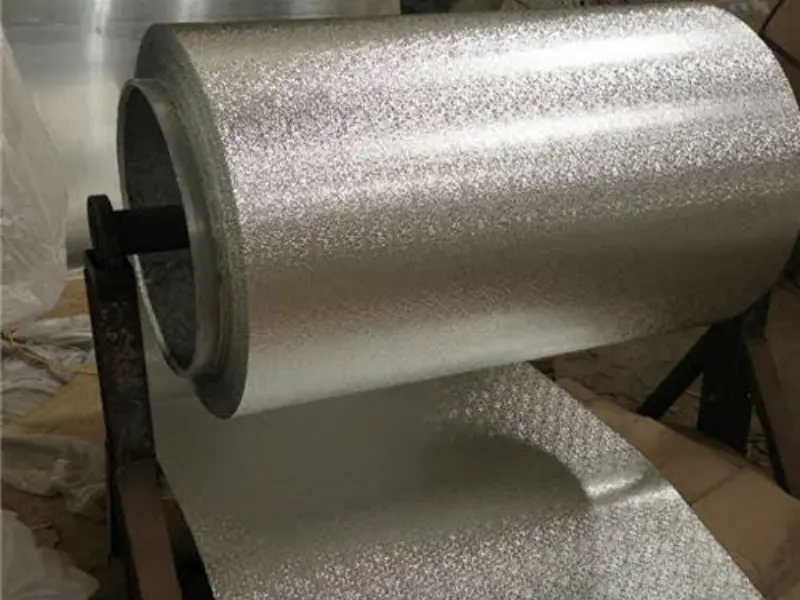
Embossed aluminum sheet has a raised surface pattern. It can improve appearance and provide a textured finish.
Common types include stucco embossed and other customized patterns.
Typical applications include:
- Refrigeration equipment.
- Insulation jacketing.
- Interior decoration.
- Building panels.
- Appliance surfaces.
4×4 Anodized Aluminum Sheet
Anodized aluminum sheet has an electrochemically formed oxide layer on its surface.
The anodized finish improves surface durability and provides different color options.
Common colors include:
- Silver.
- Black.
- Gold.
- Bronze.
- Champagne.
It is suitable for decorative panels, architectural components, and electronic products.
4×4 Color Coated Aluminum Sheet
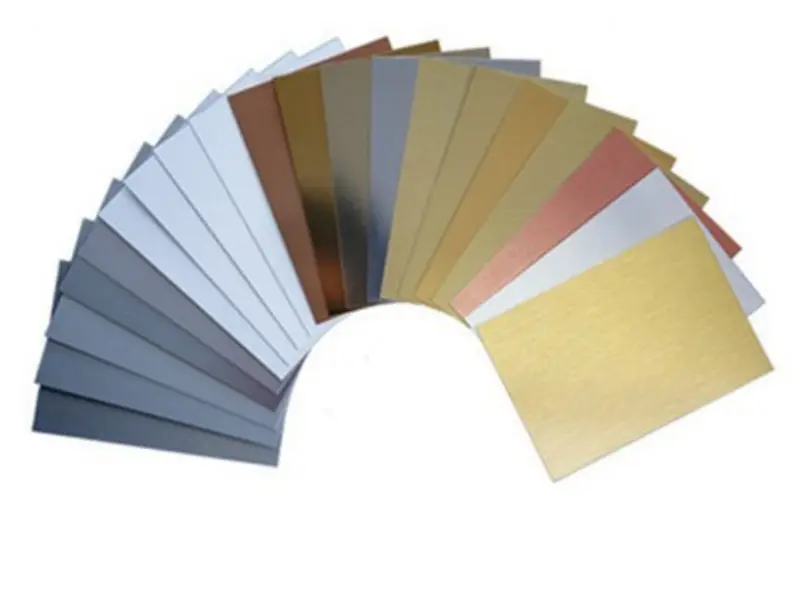
Color coated aluminum sheet has a painted surface. Common coating systems include polyester (PE) and polyvinylidene fluoride (PVDF).
| Coating Type | Main Feature | Typical Application |
|---|---|---|
| PE | General decorative coating | Interior panels |
| PVDF | Good weather resistance | Exterior cladding |
| Customized coating | Project-specific appearance | Special panels |
The coating system should be selected according to the intended environment and durability requirements.
4×4 Perforated Aluminum Sheet
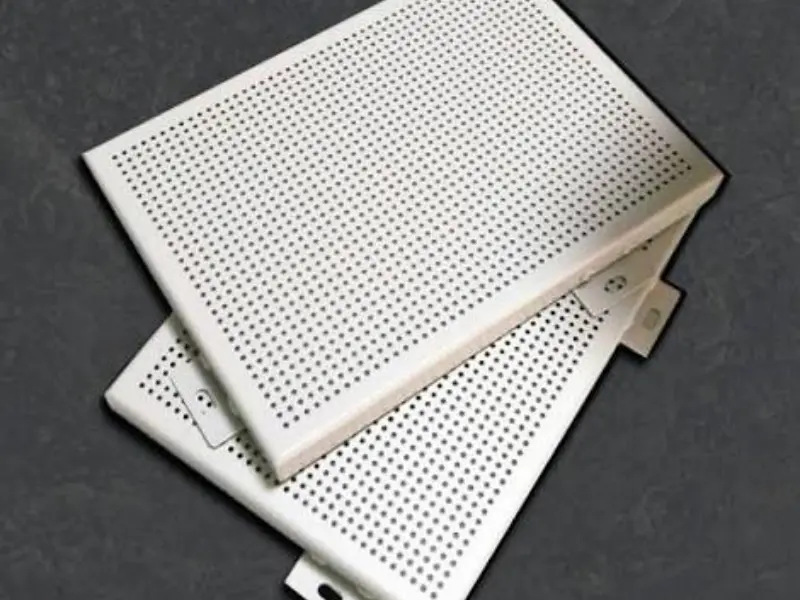
Perforated aluminum sheet contains regularly arranged holes. Hole diameter, spacing, and pattern can be customized.
Common applications include:
- Ventilation panels.
- Speaker covers.
- Architectural screens.
- Machine guards.
- Decorative partitions.
- Filtration components.
4×4 Aluminum Tread Plate
Aluminum tread plate is designed for applications that need a textured surface.
It is available in different alloys and thicknesses. The pattern and base thickness should be confirmed before ordering.
Where Are 4×4 Aluminum Sheets Used?
The 4×4 size is suitable for many industries. It can be used as a finished panel or processed into smaller components.
Construction and Architecture
Aluminum sheets are widely used in building projects because they are lightweight and easy to process.
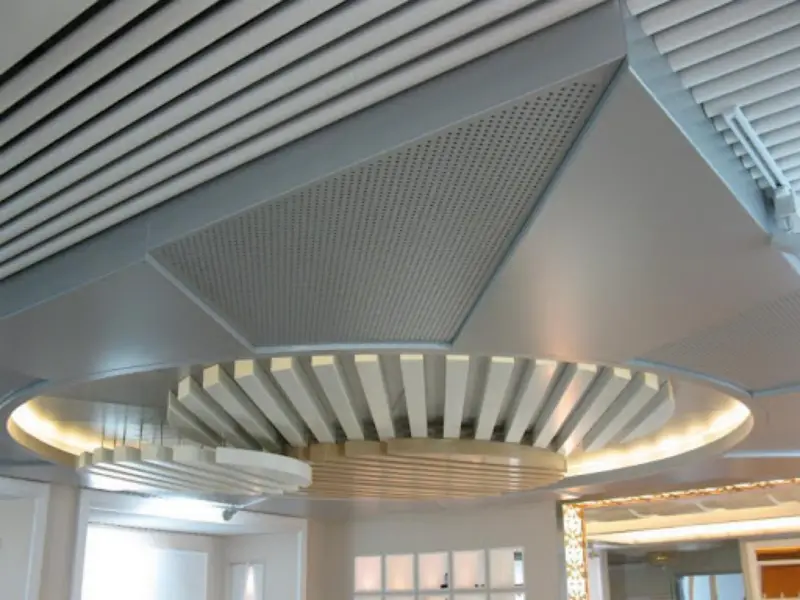
Common applications include:
- Wall cladding panels.
- Ceiling panels.
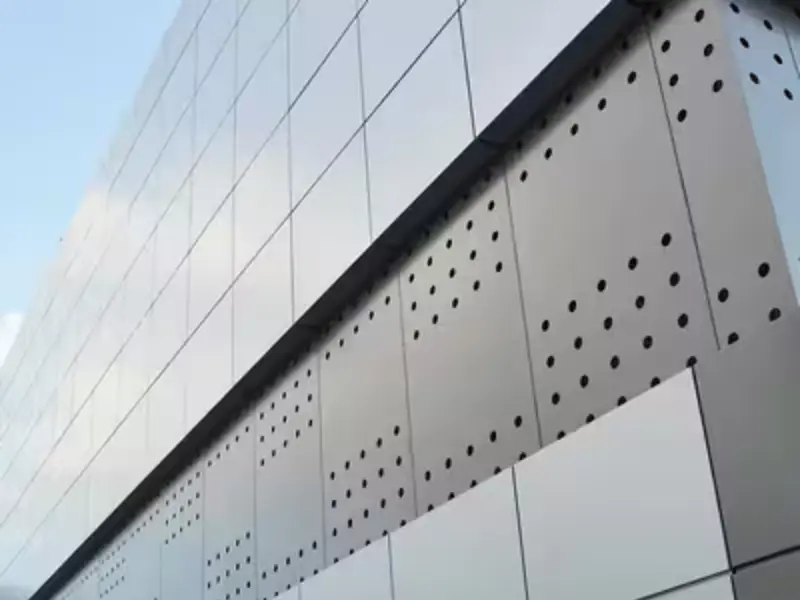
- Decorative facades.
- Door and window components.
- Interior partitions.
- Building trim.
- Signboards.
For outdoor applications, buyers should consider alloy, coating, thickness, and local environmental conditions.
Automotive and Transportation
Aluminum is used in vehicle manufacturing to reduce weight and support different fabrication requirements.
A 4×4 sheet may be cut into smaller parts for:
- Vehicle interior panels.
- Trailer components.
- Truck body covers.
- Toolboxes.
- Protective plates.
- Custom vehicle accessories.
5052 aluminum is often considered for formed components that need good corrosion resistance.
Marine Applications
Marine environments require careful material selection because saltwater and moisture can increase corrosion risks.
5052 aluminum is commonly used for selected marine components.
Possible applications include:
- Boat panels.
- Deck components.
- Storage covers.
- Marine equipment housings.
- Interior boat panels.
The alloy and surface protection should be selected for the actual marine environment.
Industrial Equipment and Machinery
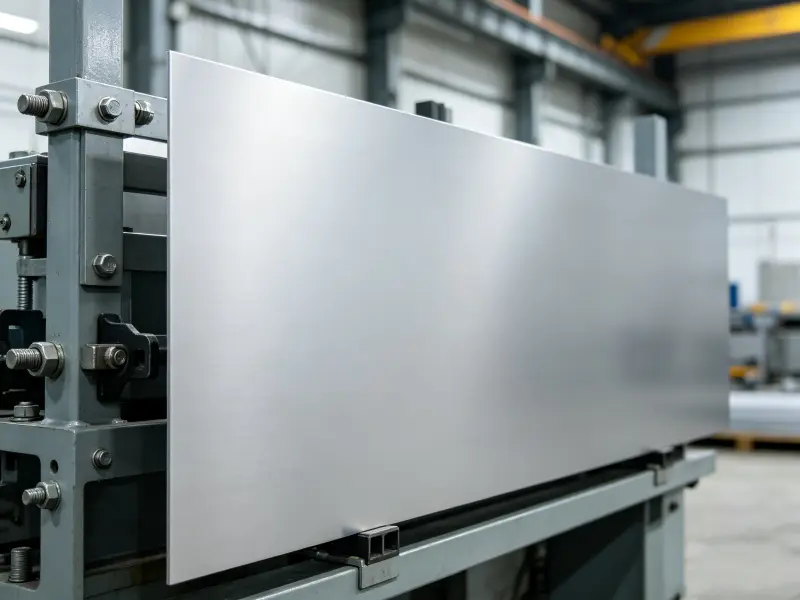
4×4 aluminum sheets can be cut and machined into different industrial parts.
Typical applications include:
- Machine covers.
- Equipment panels.
- Mounting plates.
- Electrical cabinets.
- Protective enclosures.
- Industrial brackets.
- CNC-machined components.
6061 aluminum is often selected when strength and machinability are important.
Electrical and Electronic Products
Aluminum offers good thermal and electrical conductivity. It is used in many electrical and electronic applications.
Examples include:
- Electrical cabinet panels.
- Heat dissipation components.
- Lighting reflectors.
- Equipment housings.
- Electronic mounting plates.
- Control panel covers.
Home Decoration and Furniture
Aluminum sheets can also be used for furniture and decorative products.
Common applications include:
- Cabinet panels.
- Furniture trim.
- Decorative wall panels.
- Kitchen equipment.
- Shelving components.
- Display stands.
Brushed, anodized, and color coated finishes are popular choices for these projects.
4×4 Aluminum Sheet vs. 4×8 Aluminum Sheet
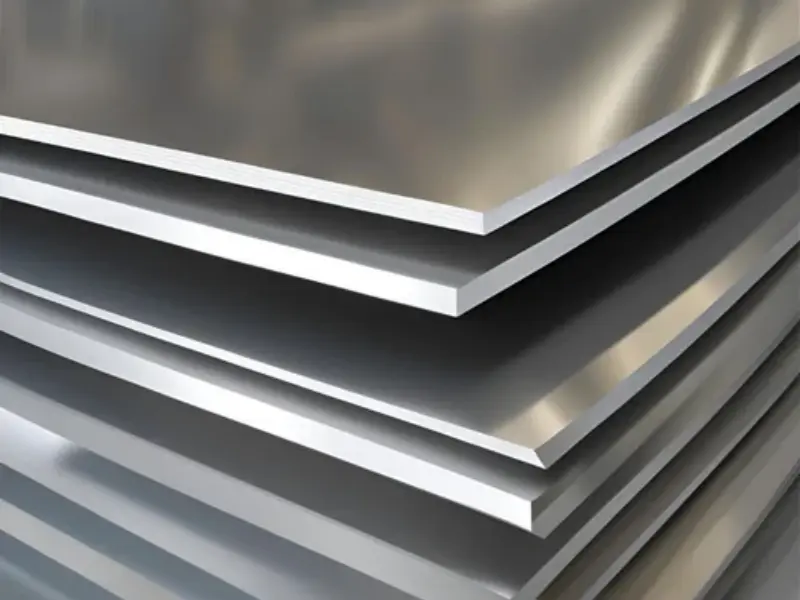
Both 4×4 and 4×8 aluminum sheets are common sizes. The best option depends on the project dimensions, transportation, and material waste.
A 4×8 sheet measures 48 inches by 96 inches. It has twice the surface area of a 4×4 sheet.
| Feature | 4×4 Aluminum Sheet | 4×8 Aluminum Sheet |
|---|---|---|
| Dimensions | 48″ × 48″ | 48″ × 96″ |
| Metric size | 1219 × 1219 mm | 1219 × 2438 mm |
| Surface area | 16 sq ft | 32 sq ft |
| Handling | Easier for many small projects | Requires more handling space |
| Cutting | Suitable for smaller panels | Suitable for larger panels |
| Storage | More compact | Requires more storage length |
| Typical use | Small and medium parts | Large panels and cladding |
When Should You Choose 4×4 Aluminum Sheet?
Choose a 4×4 panel when:
- The finished part is relatively small.
- The workshop has limited storage space.
- The project needs manageable sheet sizes.
- You want to reduce unnecessary cutting waste.
- The finished product can be made from smaller panels.
When Is 4×8 Aluminum Sheet Better?
A 4×8 sheet may be more suitable when:
- You need larger wall panels.
- The finished part is long or wide.
- You want fewer joints.
- Your cutting plan uses a larger sheet efficiently.
- The production line can handle larger panels.
The best choice should be based on a cutting layout rather than sheet size alone.
How Much Does a 4×4 Aluminum Sheet Weigh?
The weight of a 4×4 aluminum sheet depends mainly on its thickness and alloy density.
For a simple estimate, the sheet area is approximately 1.486 square meters. Using a typical aluminum density of 2,700 kg/m³, the estimated weight can be calculated as:
Weight = Length × Width × Thickness × Density
The following table provides approximate weights for common thicknesses.
| Thickness | Approximate Weight per 4×4 Sheet |
|---|---|
| 0.5 mm | 2.01 kg |
| 0.8 mm | 3.21 kg |
| 1.0 mm | 4.01 kg |
| 1.2 mm | 4.81 kg |
| 1.5 mm | 6.02 kg |
| 2.0 mm | 8.02 kg |
| 2.5 mm | 10.03 kg |
| 3.0 mm | 12.04 kg |
| 4.0 mm | 16.05 kg |
| 5.0 mm | 20.06 kg |
| 6.0 mm | 24.08 kg |
These figures are estimates. Actual weight may vary with alloy density, thickness tolerance, and finished dimensions.
Surface Finishes Available for 4×4 Aluminum Sheets
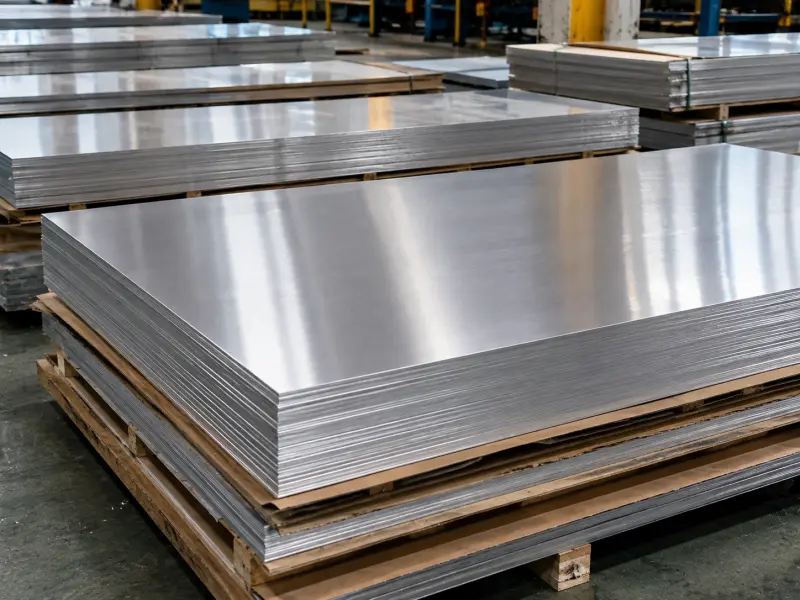
Surface finish affects both appearance and performance. Buyers should select a finish based on the working environment and final product design.
| Surface Finish | Main Characteristics | Common Applications |
|---|---|---|
| Mill finish | Natural aluminum surface | General fabrication |
| Brushed | Directional texture | Decoration |
| Anodized | Protective oxide layer | Architecture and electronics |
| Polished | Smooth reflective surface | Decorative products |
| Stucco embossed | Textured pattern | Insulation and appliances |
| Diamond pattern | Raised tread design | Flooring and transport |
| Painted | Colored protective coating | Cladding and panels |
| Perforated | Custom hole patterns | Ventilation and screens |
Custom surface treatments can be discussed according to project requirements.
Cutting and Processing 4×4 Aluminum Sheets

Aluminum sheets have processed using different methods. The best method depends on the alloy, thickness, and required edge quality.
Common Processing Methods
Laser Cutting → CNC Machining → Shearing → Bending → Drilling → Welding → Surface Treatment
| Processing Method | Main Purpose |
|---|---|
| Laser cutting | Accurate shapes and openings |
| Shearing | Straight-line cutting |
| CNC machining | Precision parts |
| Bending | Formed panels and brackets |
| Drilling | Holes and mounting points |
| Welding | Joining aluminum components |
| Anodizing | Surface protection and appearance |
| Painting | Color and surface protection |
Some alloys are easier to bend or machine than others. For example, 5052 has often selected for forming, while 6061-T6 is commonly used for machining.
How to Choose the Right 4×4 Aluminum Sheet
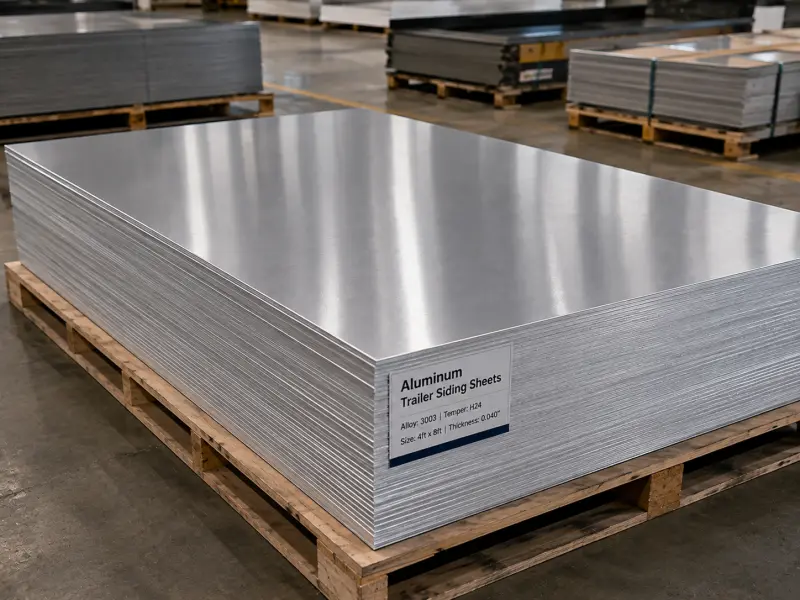
Choosing the correct aluminum sheet requires more than checking the dimensions.
Buyers should consider the application, strength requirements, working environment, and processing method.
Select the Alloy According to the Application
| Application | Suggested Alloy |
|---|---|
| General decoration | 1050 or 1060 |
| Kitchen and HVAC products | 3003 |
| Marine components | 5052 |
| Vehicle panels | 5052 |
| Machined industrial parts | 6061 |
| General sheet fabrication | 3003 or 5052 |
These are common starting points. Final selection depends on the required mechanical properties and manufacturing process.
Confirm the Thickness
Consider the following points:
- Required panel rigidity.
- Expected load.
- Cutting and bending requirements.
- Installation method.
- Weight limitations.
- Final product dimensions.
Do not select a thicker sheet without considering the additional weight and material cost.
Check the Surface Requirements

For decorative projects, brushed, polished, and anodized finishes may be suitable.
For outdoor building panels, the coating system and weather resistance are important.
With flooring and steps, a checker or tread pattern may be more appropriate.
Confirm the Product Standards
For bulk orders, buyers should confirm:
- Alloy designation.
- Temper.
- Thickness tolerance.
- Width and length tolerance.
- Mechanical properties.
- Surface quality.
- Applicable product standard.
- Inspection and certification requirements.
Ordering 4×4 Aluminum Sheets for Wholesale Projects
Manufacturers, fabricators, and distributors often require customized aluminum sheets in regular quantities.
A supplier may offer different alloys, thicknesses, and surface finishes according to the order.
Information Needed for a Quotation
| Required Information | Example |
|---|---|
| Product | 4×4 aluminum sheet |
| Alloy | 5052 |
| Temper | H32 |
| Thickness | 0.125 inch |
| Size | 48″ × 48″ |
| Surface | Mill finish |
| Quantity | Project requirement |
| Application | Vehicle panels |
| Destination | Country or port |
If you are not sure which alloy or temper to choose, describe the application and processing requirements. The supplier can help recommend a suitable specification.
Packaging and Shipping
Aluminum sheets have protected during storage and transportation.

Common packaging methods include:
- Protective film on the surface.
- Paper or plastic interleaving.
- Moisture-resistant wrapping.
- Wooden pallets.
- Strong export cartons or crates.
- Edge protection for larger orders.
Packaging details have confirmed before shipment, especially for polished, brushed, anodized, or painted surfaces.
Frequently Asked Questions About 4×4 Aluminum Sheets
What Is the Actual Size of a 4×4 Aluminum Sheet?
A standard 4×4 aluminum sheet measures 48 inches by 48 inches. This is approximately 1219.2 mm by 1219.2 mm.
Is 4×4 Aluminum Sheet Available in Different Thicknesses?
Yes. Common thicknesses range from thin sheets around 0.020 inch to thicker aluminum plates of 1/4 inch or more. Availability depends on the alloy and supplier.
What Is the Best Alloy for a 4×4 Aluminum Sheet?
There is no single best alloy for every application. 3003 is suitable for many general forming projects, 5052 is popular for marine and vehicle components, and 6061 has often selected for machining and stronger industrial parts.
How Much Does a 4×4 Aluminum Sheet Weigh?
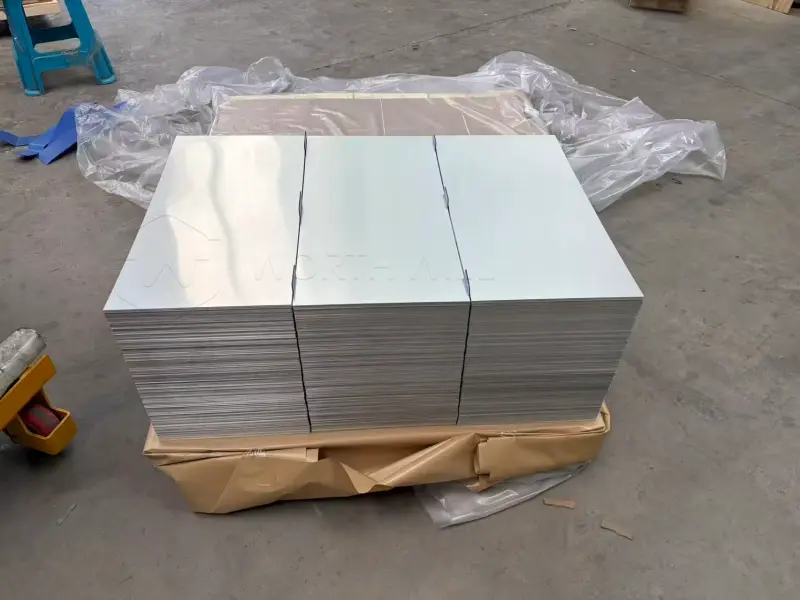
Weight depends on thickness and alloy. A 4×4 sheet measuring 1 mm thick weighs approximately 4.01 kg when using a typical aluminum density of 2,700 kg/m³.
Can I Buy 4×4 Aluminum Sheet in 5052 H32?
Yes. 5052-H32 is a common aluminum sheet specification. It has used in marine, transportation, industrial, and general fabrication applications.
What Is the Difference Between 4×4 and 4×8 Aluminum Sheets?
A 4×4 sheet measures 48 × 48 inches, while a 4×8 sheet measures 48 × 96 inches. The 4×8 sheet has twice the surface area and is more suitable for larger panels.
Is 4×4 Aluminum Sheet Suitable for Outdoor Use?
Yes, when the correct alloy and surface treatment are selected. 5052 has often used in outdoor and marine-related applications. Coated or anodized surfaces may provide additional protection depending on the environment.
Can 4×4 Aluminum Sheets Be Cut to Custom Sizes?

Yes. Aluminum sheets have cut by shearing, laser cutting, sawing, or CNC machining. The best method depends on thickness, alloy, and dimensional requirements.
What Is the Difference Between Aluminum Sheet and Aluminum Plate?
The terms usually refer to different thickness ranges, but definitions can vary by industry and standard. Aluminum sheet is generally thinner, while aluminum plate is thicker and used for more demanding fabrication and machining.
Can 4×4 Aluminum Checker Plate Be Customized?
Yes. Checker plate has supplied in different alloys, thicknesses, and surface patterns. Buyers should confirm the base thickness and pattern requirements when ordering.
Is 5052 Aluminum Better Than 3003 Aluminum?

5052 generally offers higher strength and good corrosion resistance, making it suitable for marine and transportation applications. 3003 is often easier to form and is commonly used for general sheet fabrication, HVAC, and kitchen equipment.
Can I Order 4×4 Aluminum Sheets in Bulk?
Yes. Bulk orders have arranged according to alloy, temper, thickness, surface finish, and quantity. Contact the supplier with your specifications to confirm production availability and delivery time.
Find the Right 4×4 Aluminum Sheet for Your Project
A 4×4 aluminum sheet is a practical size for many industrial, construction, transportation, and decorative applications.
Buyers can choose from plain aluminum sheets, checker plates, brushed panels, embossed sheets, anodized sheets, color coated products, and perforated aluminum panels.
The most suitable product depends on the required alloy, temper, thickness, surface finish, and processing method.
Whether you need 1050 aluminum for decorative panels, 3003 for general fabrication, 5052 for marine components, or 6061 for machined parts, selecting the right specification can help improve production efficiency and product performance.
Contact us with your required size, alloy, temper, thickness, and quantity to get a suitable 4×4 aluminum sheet solution.
Error: Contact form not found.