
3003, 5052, And 6061 Aluminum Tread Plate
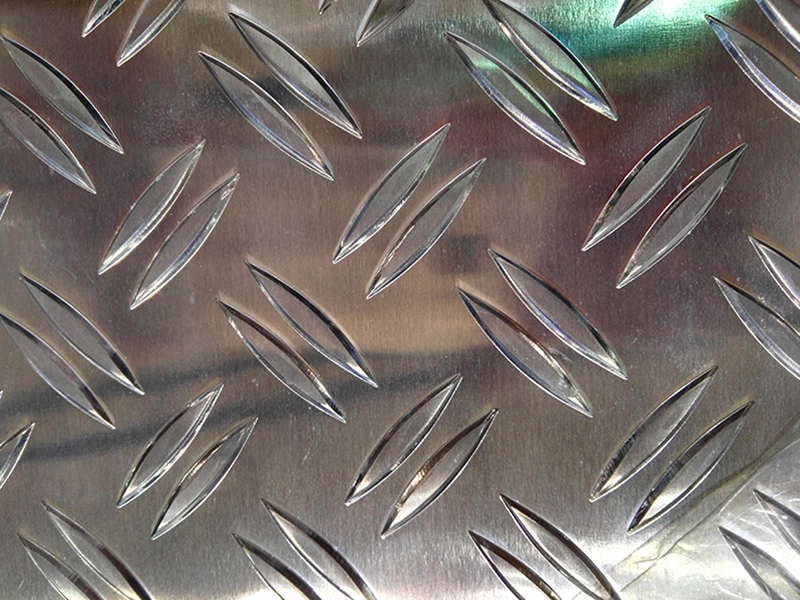
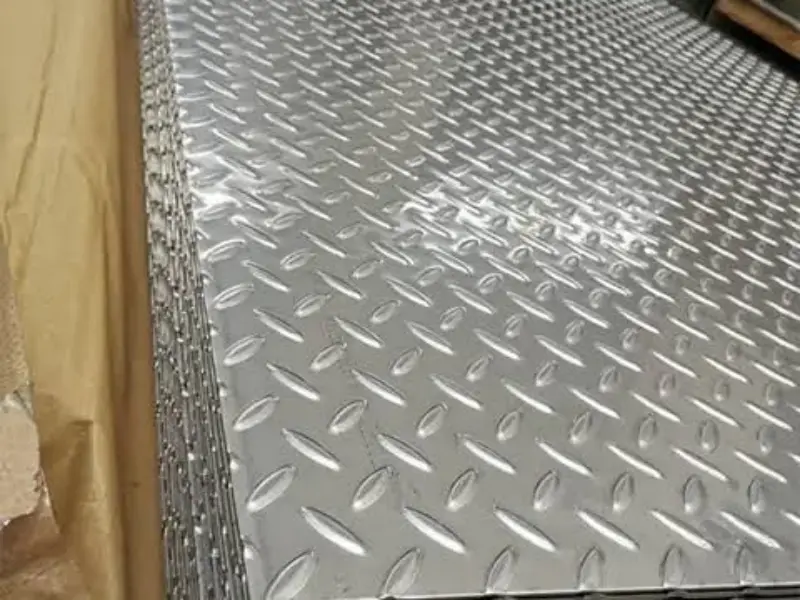
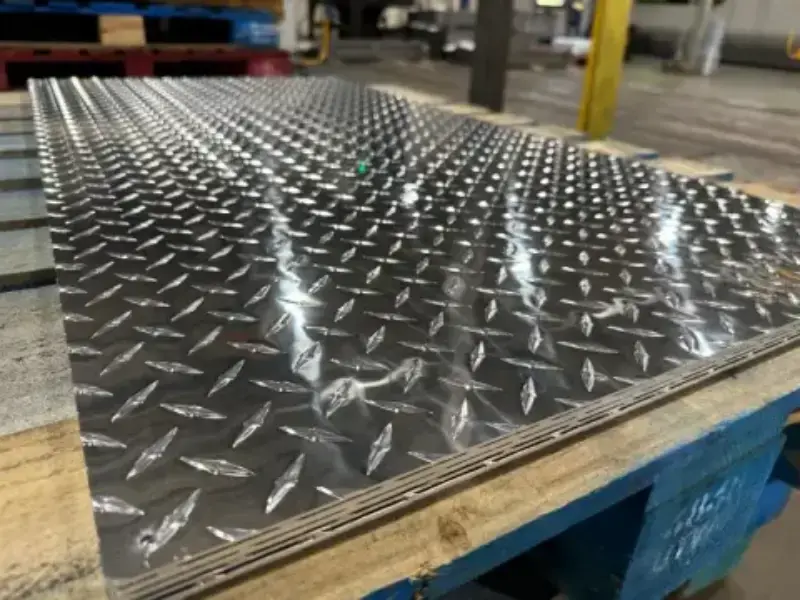
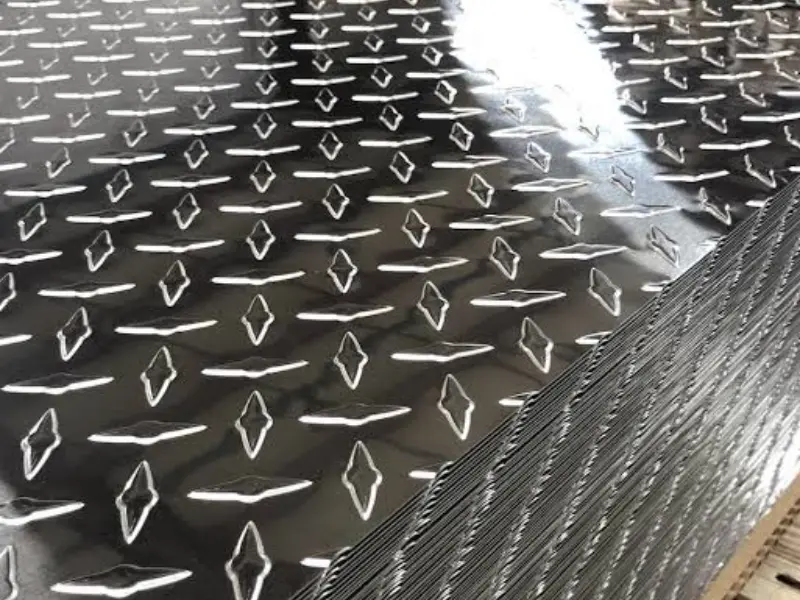
Aluminum tread plate is also known as aluminum checkered plate. It has two sides include one side is smooth, the other side has raised patterns. We generally leave the patterned side in outside. Due to the special patterns, the tread plate is widely used to make walkways and ramps. Sometimes, it’s also used to decorate.

At present, with the development of technology, there are various types of aluminum tread plate. Except various patterns, aluminum alloy and temper is also various. Take some common aluminum alloy tread plate as an example.
Understanding the Core Alloys: 3003 vs. 5052 vs. 6061
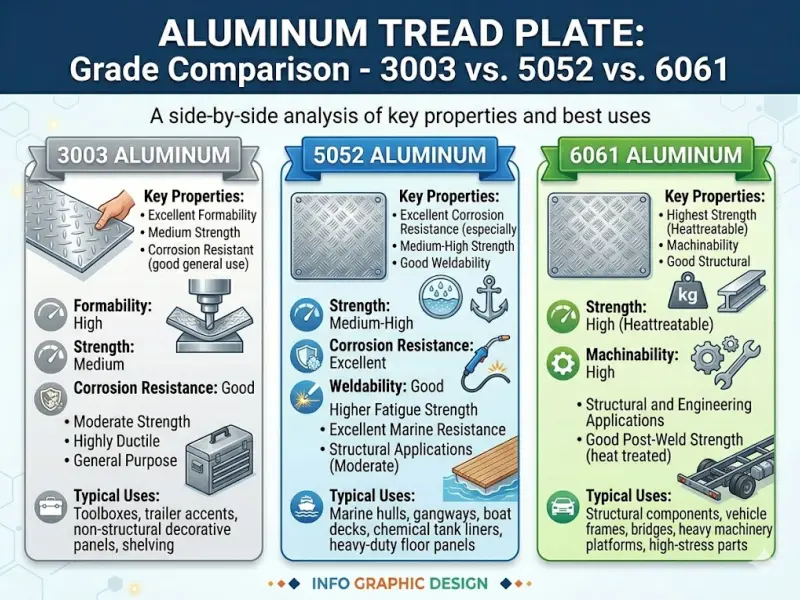
Not all tread plates are created equal. The alloy you choose determines how the metal reacts to salt water, heavy weights, and welding.
1.1 The Versatile 3003 Aluminum Tread Plate
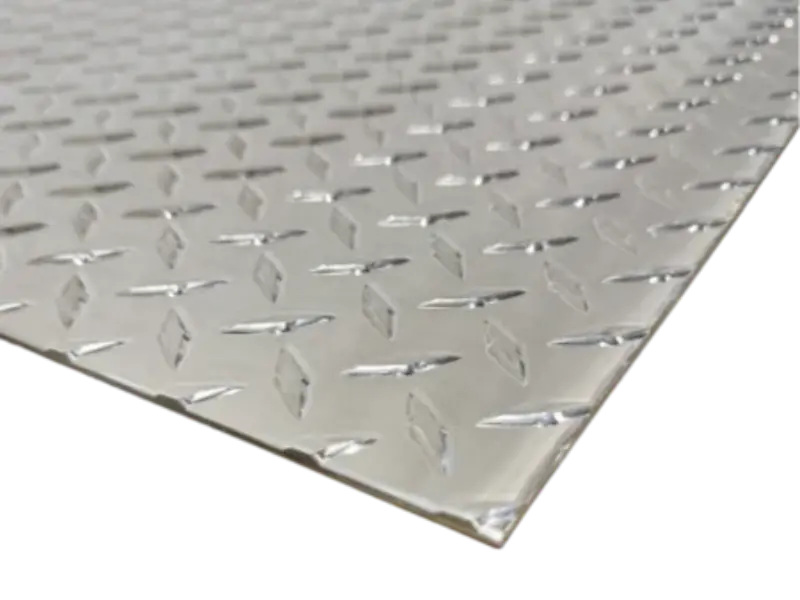
The 3003 aluminum tread plate is the most common commercial grade. It is an aluminum-manganese alloy. It is famous for its excellent workability and corrosion resistance and the “all-rounder” for decorative and light-duty functional use.
1.2 The Marine-Grade 5052 Aluminum Tread Plate

If you work near the ocean or in chemical plants, 5052 aluminum tread plate is the standard. It contains magnesium, which makes it much stronger than 3003. It resists salt-water corrosion like a pro.
1.3 The Structural Powerhouse: 6061 Aluminum Tread Plate

For heavy machinery and structural floors, 6061 aluminum tread plate is the winner. This is a heat-treated alloy containing magnesium and silicon. It is significantly harder and has uses where load-bearing capacity is the priority.
| Feature | 3003 Alloy | 5052 Alloy | 6061 Alloy |
|---|---|---|---|
| Main Element | Manganese (Mn) | Magnesium (Mg) | Magnesium & Silicon (Mg2Si) |
| Strength | Low to Medium | Medium to High | Very High |
| Corrosion Resistance | Good | Excellent (Marine) | Good |
| Weldability | Excellent | Excellent | Good |
| Machinability | Good | Fair | Excellent |
| Common Temper | H14,H22,H24 | H32,H34,H112 | T4,T6 |
2. Digital Specifications and Geometric Details
Precision is key in manufacturing. We offer a wide range of thicknesses and pattern heights to meet international standards.
2.1 Dimensional Range for Global Export
We provide customized cutting and standard mill sizes. Our rolling mills ensure that the “base thickness” is accurate to within microns.
| Specification | Metric Range (mm) | Imperial Range (inch) |
|---|---|---|
| Base Thickness | 1.0 mm – 10.0 mm | 0.045″ – 0.40″ |
| Standard Width | 914 mm, 1000 mm, 1219 mm, 1500 mm | 36″,48″,60″ |
| Standard Length | 2000 mm, 2438 mm, 3048 mm | 80″,96″,120″ |
| Tread Height | 0.8 mm – 1.5 mm | 0.031″ – 0.059″ |
2.2 Popular Patterns for Anti-Slip Surfaces
The pattern on the plate is not just for looks; it provides the grip needed for safety.
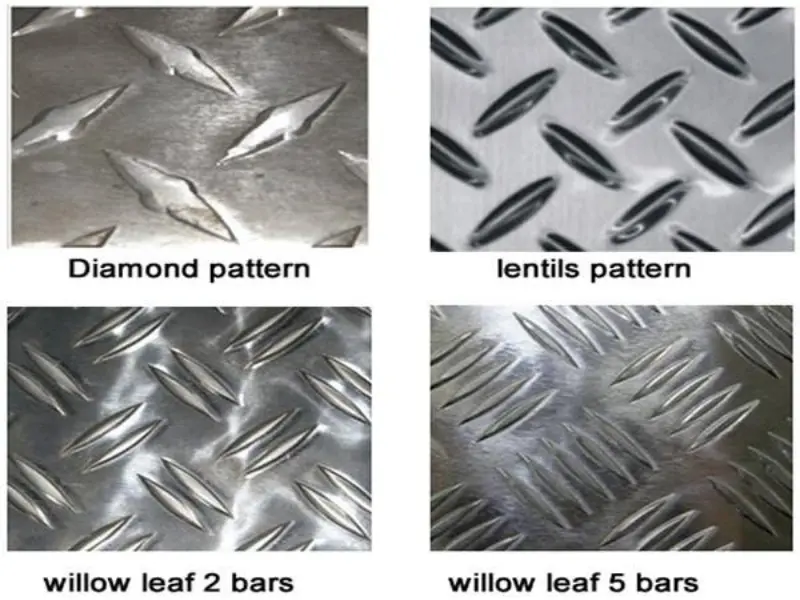
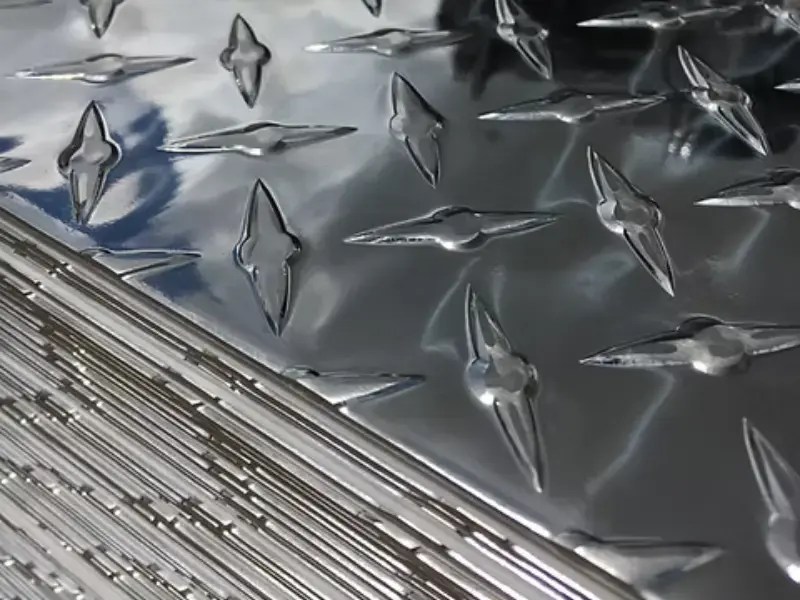
- 1-Bar (Large Diamond): Clean look, popular in the USA.
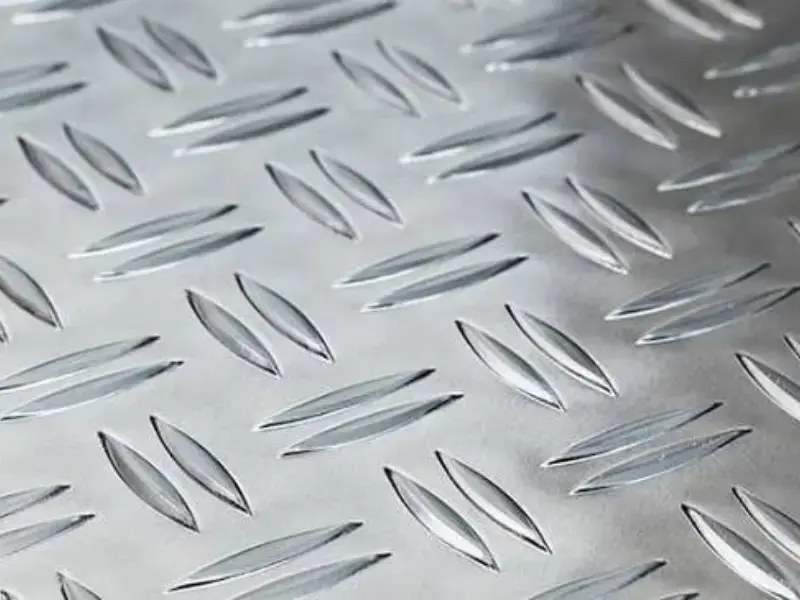
- 3-Bar: Often used in decorative architecture.
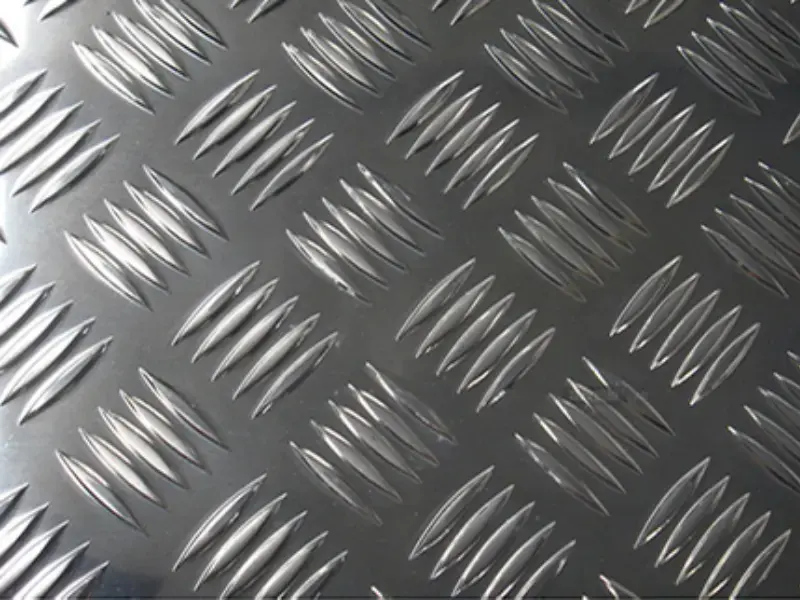
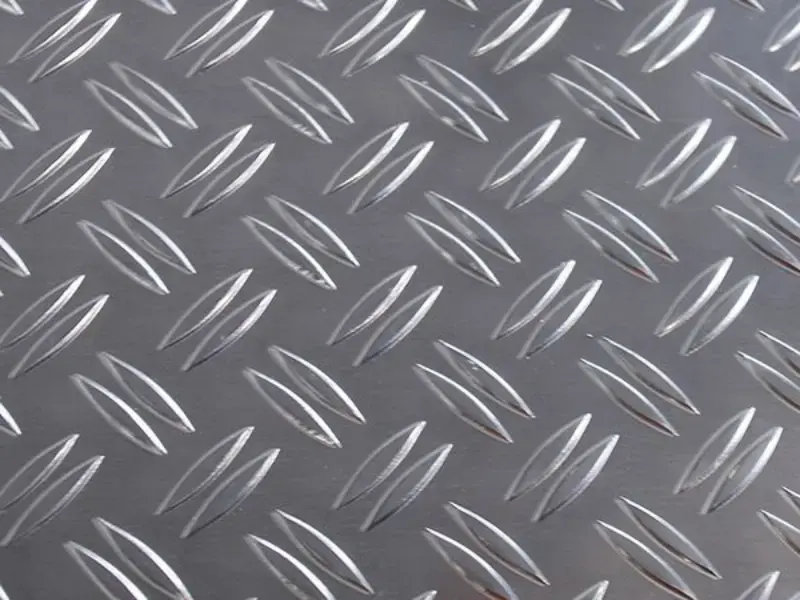
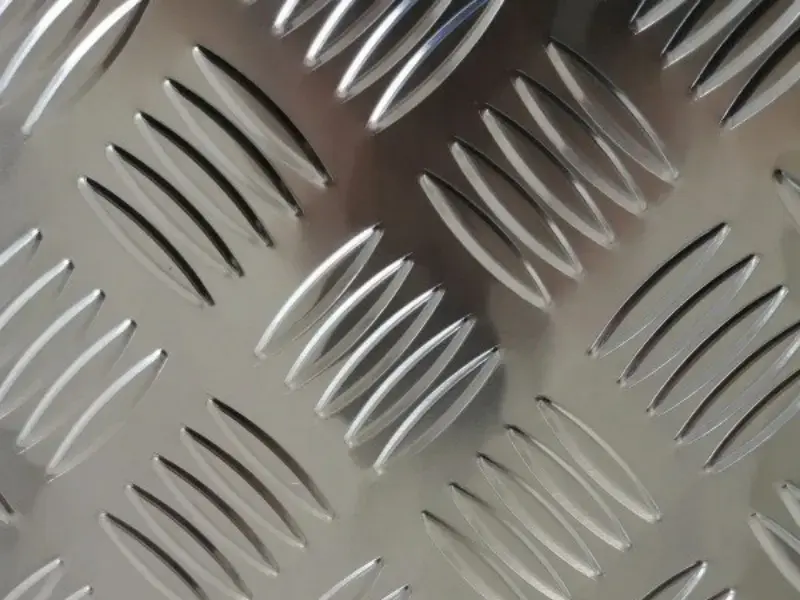
- 5-Bar (Willow Leaf): The most popular pattern in Europe and Asia for industrial flooring.

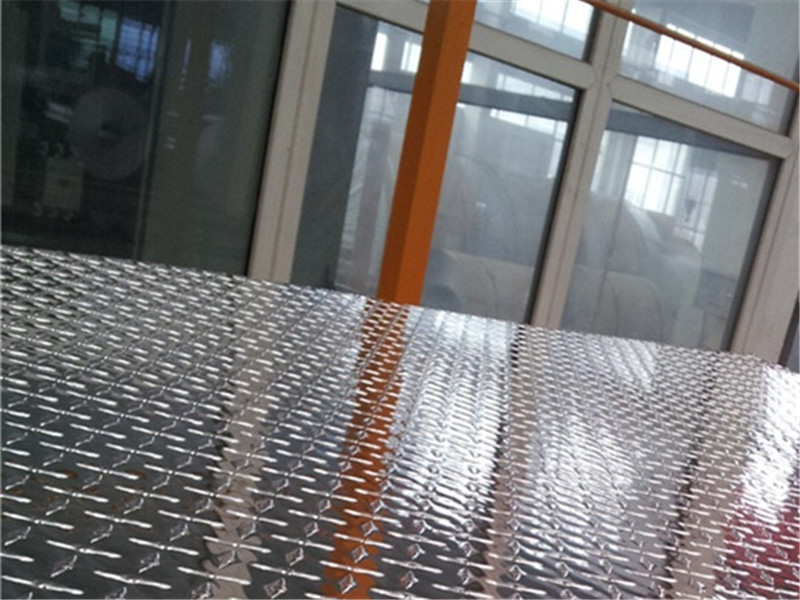
3003 H14: 3000 series aluminum alloy belongs to Al-Mn aluminum alloy. Due the series aluminum alloy don’t rust, it’s also known as anti-rust aluminum alloy. 3003 aluminum alloy is essentially commercially pure aluminum with the addition of Mn, which increases strength some 20% over 1100. In addition, it has excellent corrosion resistance and work-ability, but we can’t adopt heat treatment to enhance its strength. 3003 H14 has shiny bright finish. And it’s softer and easier to shape.
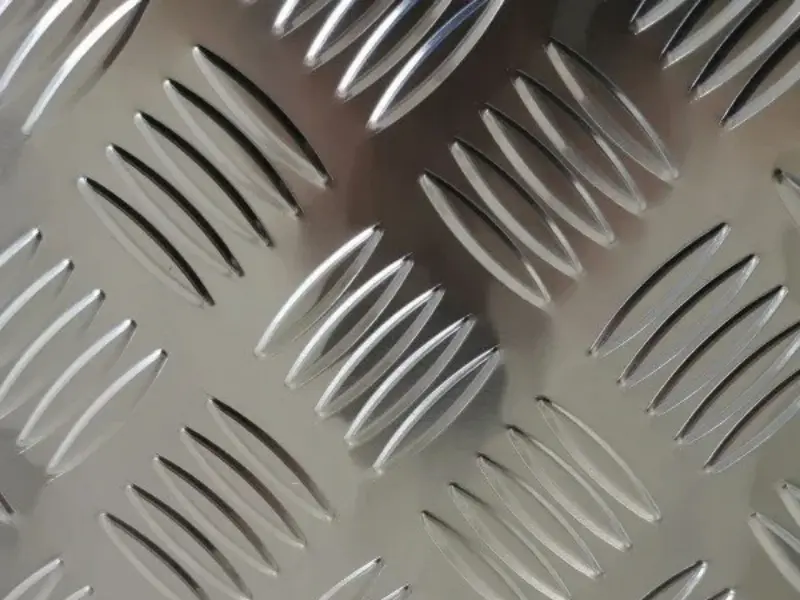
5052 H32: 5000 series aluminum alloy belongs to Al-Mg aluminum alloy. Similar to 3000 series aluminum alloy, it’s also not rust, and can not be strengthened by heat treatment.
The aluminum alloy has three characteristic: good resistance performance, good welding performance and good weld-ability
6061 T6: 6000 series aluminum alloy is mainly Mg and Si. It offers a wide range of mechanical properties and corrosion resistance. It’s easily fabricated and has good form-ability. The 6061 T6 alloy has a dull or shiny finish. And it’s harder and more durable.
3. Why Our Factory Stands Out: Speed, Accuracy, and Effectiveness
In a competitive market, you don’t just need a supplier; you need a partner. Our production line is built on three pillars:
3.1 Rapid Production Cycles
We understand that time is money. Our factory uses automated rolling lines that can produce over 5000 tons of 3003, 5052, and 6061 aluminum tread plate per month. We maintain a large stock of standard sizes for immediate shipping.
3.2 Accuracy in Every Cut
Using German-engineered leveling and cutting machines, we ensure that every sheet is perfectly flat. There are no burrs on the edges, and the diagonal measurements are exact. This makes your installation process much faster.
3.3 Effective Quality Control
Every batch undergoes a “Tension Leveling” process. This removes the internal stress of the metal, ensuring that when you cut the plate, it does not warp or bend.
4. Market Comparison: Why Choose Us Over Others?
Many factories offer low prices, but they compromise on the “Actual Thickness” or the alloy purity. Here is how we compare:
| Comparison Factor | Our Factory | Standard Competitors |
|---|---|---|
| Thickness Tolerance | Precise (±0.02 mm) | Often thin (±0.10 mm) |
| Surface Finish | Bright, oil-free, no black spots | Dull or greasy surface |
| Alloy Purity | Certified Grade A Ingots | Often uses recycled scrap |
| Delivery Time | 7−15 days for standard | 30−45 days |
| Long-term Trust | 15+ years of export history | New trading companies |
| Pricing | Fair and Transparent | Hidden “extra” fees |
5. Extensive Application Fields: Where to Use Tread Plate
Our 3003, 5052, and 6061 aluminum tread plates are found in almost every industry.
5.1 Transportation and Vehicles
- Truck Bed Floors: Heavy-duty protection for hauling gear.
- Trailer Fenders: Resists road salt and prevents stone chips.
- Emergency Vehicles: Non-slip steps for fire trucks and ambulances.
5.2 Marine and Offshore
- Boat Decks: Specifically using 5052 alloy to prevent salt corrosion.
- Dock Walkways: Provides safety for passengers in wet conditions.
- Ship Stairs: Lightweight but strong enough for crew traffic.
5.3 Architectural and Industrial
- Elevator Interiors: Adds a modern, industrial look while protecting walls.
- Warehouse Flooring: Handles heavy forklift traffic without wearing down.
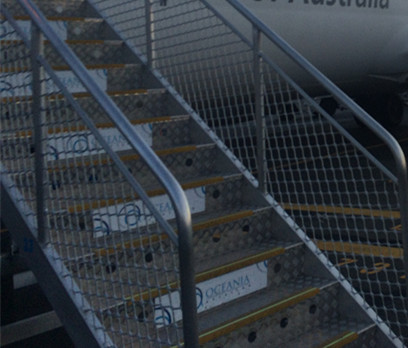
- Stair Treads: Essential for safety in factories and public buildings.
6. Technical Deep Dive: Mechanical Properties
For engineers and architects, the numbers matter. Here is the mechanical breakdown of our most popular tempers.
| Alloy & Temper | Yield Strength (MPa) | Tensile Strength (MPa) | Elongation (%) |
|---|---|---|---|
| 3003-H22 | ≥115 | 145−185 | ≥8 |
| 5052-H32 | ≥190 | 210−260 | ≥10 |
| 6061-T6 | ≥240 | ≥290 | ≥8 |
Note: Data is based on standard test thicknesses of 3.0 mm.
7. Our Commitment to Quality and Long-term Partnership
We have worked with clients in North America, Europe, and Southeast Asia for over a decade. We don’t just sell aluminum; we help our clients grow.
7.1 Decades of Production Experience
With over 20 years in the aluminum industry, we have seen every challenge. We know how to adjust the rolling process for different climates and applications. Our experience means fewer mistakes and better products for you.
7.2 Professional Packaging for Long Voyages
Shipping aluminum across the ocean requires care.
- Plastic Film: Every sheet is separated by paper or covered in film.
- Desiccant: We add moisture-absorbers to prevent “white rust.”
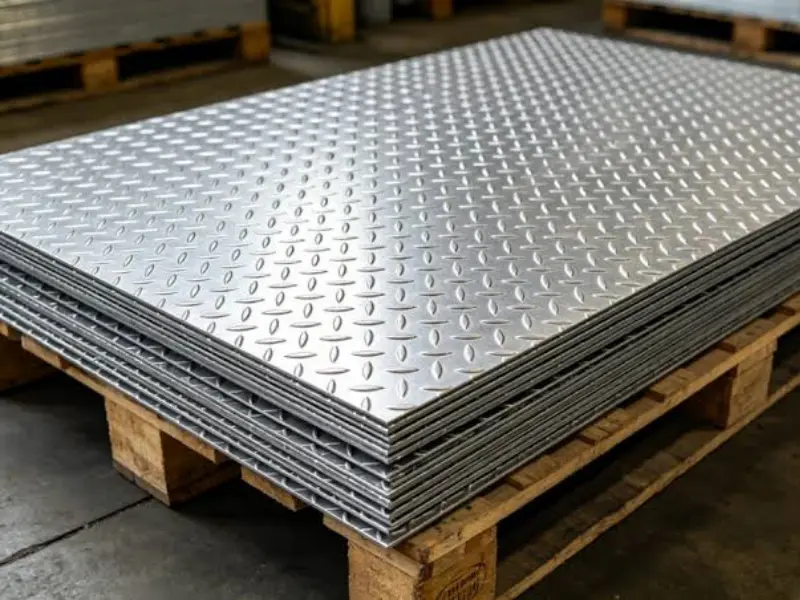
- Wooden Pallets: Strong, fumigated pallets that can handle forklift movement.
7.3 Fair Pricing Strategy
We believe in “Fair Price for High Quality.” We do not aim to be the “cheapest” by using low-grade scrap. Instead, we offer the best value by providing a product that lasts longer and performs better.
How to Order the Right Tread Plate
When you contact us, please provide the following “Digital Specs” so we can give you an accurate quote:
- Alloy: Do you need 3003 (standard), 5052 (marine), or 6061 (structural)?
- Base Thickness: (excluding the pattern height).
- Sheet Size: Width x Length.
- Pattern: 5-bar or 1-bar.
- Quantity: We support both small trial orders and large container shipments.
Final Thoughts
Choosing the right 3003, 5052, and 6061 aluminum tread plate is about safety and longevity. Our factory is dedicated to providing sheets that are accurate, durable, and delivered on time.
Contact our sales team today for a free technical consultation and a competitive quote. Let us show you why we have been the industry leader for years.
3003, 5052 and 6061 Aluminum Tread Plate
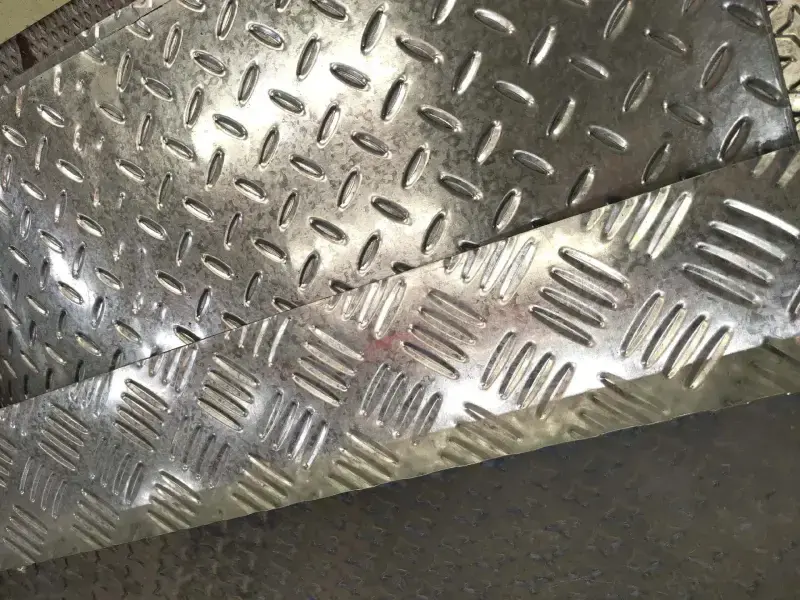
Aluminum tread plate is the raised-pattern plate you see on truck beds, stair treads, loading ramps, and toolboxes. The pattern gives grip underfoot, and the aluminum base keeps the plate light and rust-free. Three alloys cover most orders: 3003, 5052, and 6061.
What Is Aluminum Tread Plate
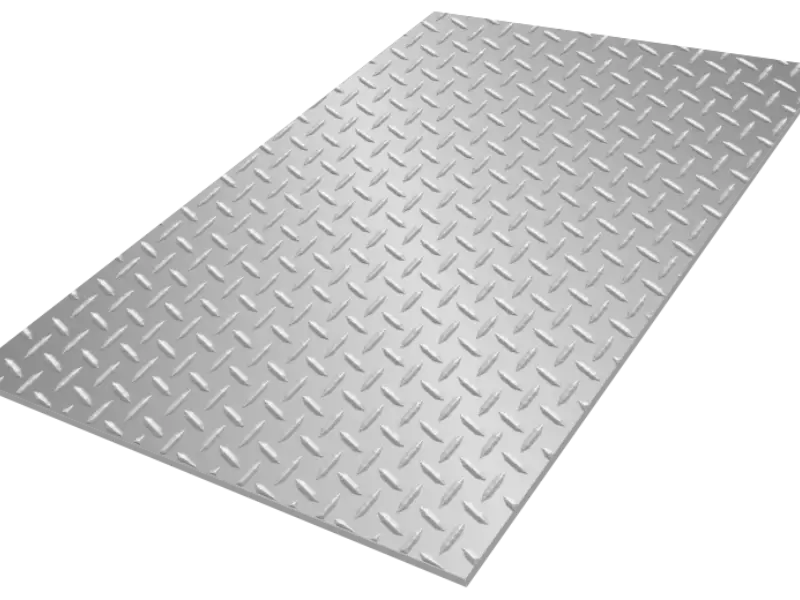
Aluminum tread plate is a metal plate with a raised pattern pressed into one face. The other face stays flat. The pattern is rolled in at the mill, so it is part of the metal and will not peel off.
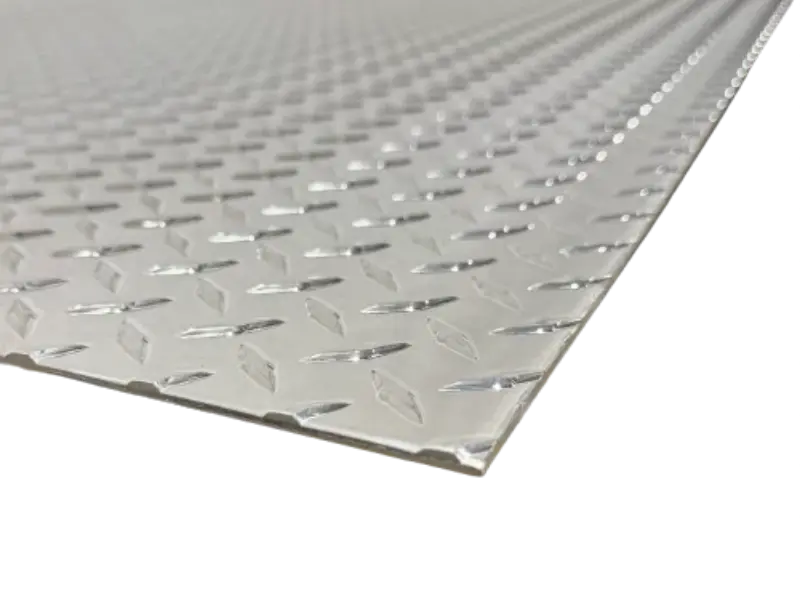
Many buyers use different names for the same product. Tread plate, diamond plate, and checkered plate all describe this material. The name changes by region, but the product is the same.
Names You May See
| Name | Common Use of the Term |
|---|---|
| Tread plate | Technical and industrial listings |
| Diamond plate | Common in North America |
| Checkered plate | Common in Europe and many export markets |
| Chequer plate | British spelling of checkered plate |
Core Traits of Aluminum Tread Plate
- Raised pattern gives better grip than a flat sheet
- Light weight compared to steel tread plate
- Does not rust like carbon steel
- Hides small scratches better than smooth plate
- Easy to cut, drill, and weld with standard shop tools
Quick Look at the Three Alloys
Each alloy fits a different type of job. This table gives the fast version.
| Alloy | Typical Temper | Best Known For | Typical Use |
|---|---|---|---|
| 3003 | H22 / H24 | Low cost and easy forming | Truck bodies, toolboxes, light flooring |
| 5052 | H32 / H34 | Strong corrosion resistance | Marine decks, fuel tank covers, wet areas |
| 6061 | T651 | High strength | Stair treads, platforms, heavy-duty ramps |
3003 is the budget pick. 5052 is the choice for wet or salty places. 6061 is the strongest of the three and suits heavy loads.
Chemical Makeup of Each Alloy
The main alloying element explains the difference in behavior.
| Alloy | Main Alloying Elements | What They Do |
|---|---|---|
| 3003 | Manganese (1.0 – 1.5%) | Adds strength without hurting formability |
| 5052 | Magnesium (2.2 – 2.8%), chromium | Adds strength and salt resistance |
| 6061 | Magnesium and silicon | Allows heat treatment for high strength |
3003 and 5052 are work-hardened alloys. They gain strength from rolling. 6061 is a heat-treatable alloy. It gains strength from a heating and aging process, which is what the T6 and T651 tempers mean.
Temper Guide for Tread Plate
Temper tells you how hard the plate is and how it was made.
| Temper | Alloy | Meaning in Simple Terms |
|---|---|---|
| H22 / H24 | 3003 | Strain hardened, then partly annealed, medium hardness |
| H32 / H34 | 5052 | Strain hardened and stabilized, medium to firm |
| T651 | 6061 | Heat treated, aged, and stretched to relieve stress |
The “51” in T651 means the plate was stretched after heat treatment. This reduces internal stress and helps the plate stay flat when it is cut or machined.
Side-by-Side Comparison
This is the main table most buyers want to see.
| Factor | 3003 | 5052 | 6061 T651 |
|---|---|---|---|
| Strength | Moderate | Higher | Highest |
| Corrosion resistance | Good | Excellent | Good |
| Saltwater performance | Fair | Very good | Fair to good |
| Formability and bending | Very good | Good | Limited |
| Weldability | Good | Very good | Good, with strength loss near weld |
| Machinability | Fair | Fair | Very good |
| Relative cost | Lowest | Moderate | Moderate to higher |
No alloy wins every row. The best choice depends on what the plate has to do.
Reference Strength Values
| Alloy and Temper | Typical Tensile Strength |
|---|---|
| 3003-H14 sheet reference | 150 – 180 MPa |
| 5052-H32 sheet reference | 210 – 260 MPa |
| 6061-T6 reference | 290 – 310 MPa |
These are general reference figures. Tread plate values can vary with thickness and pattern, so ask the supplier for a data sheet if the load is critical.
Thickness and Weight Chart
Tread plate thickness is usually quoted as the base plate thickness, not counting the raised pattern. The pattern adds a little extra weight.
| Base Thickness (mm) | Base Thickness (in) | Approx. Weight (kg/m²) | Typical Use |
|---|---|---|---|
| 2.0 | 0.079 | 6.1 | Toolbox lids, light panels |
| 2.5 | 0.098 | 7.5 | Truck bodies, light flooring |
| 3.0 | 0.118 | 8.8 | Standard flooring, steps |
| 4.0 | 0.157 | 11.5 | Heavy-duty floors, ramps |
| 5.0 | 0.197 | 14.3 | Industrial platforms |
| 6.0 | 0.236 | 17.0 | Heavy equipment decks |
Weights are approximate and depend on the pattern. Use them for planning, then confirm the final weight with the supplier.
Which Thickness Goes With Which Alloy
| Alloy | Common Thickness Range | Notes |
|---|---|---|
| 3003 | 1.5 – 4.0 mm | Most popular for thin to medium plate |
| 5052 | 2.0 – 6.0 mm | Common for marine and structural use |
| 6061 | 3.0 – 8.0 mm and above | Chosen when strength drives the design |
Standard Plate Sizes
| Width (mm) | Length (mm) | Imperial Equivalent |
|---|---|---|
| 1220 | 2440 | 4 x 8 ft |
| 1220 | 3050 | 4 x 10 ft |
| 1500 | 3000 | About 5 x 10 ft |
| 1500 | 6000 | Long runs for large floors |
| Custom | Custom | Cut to project size |
Coil form is also made, mainly in 3003 and 5052, for buyers who run roll-fed cutting lines.
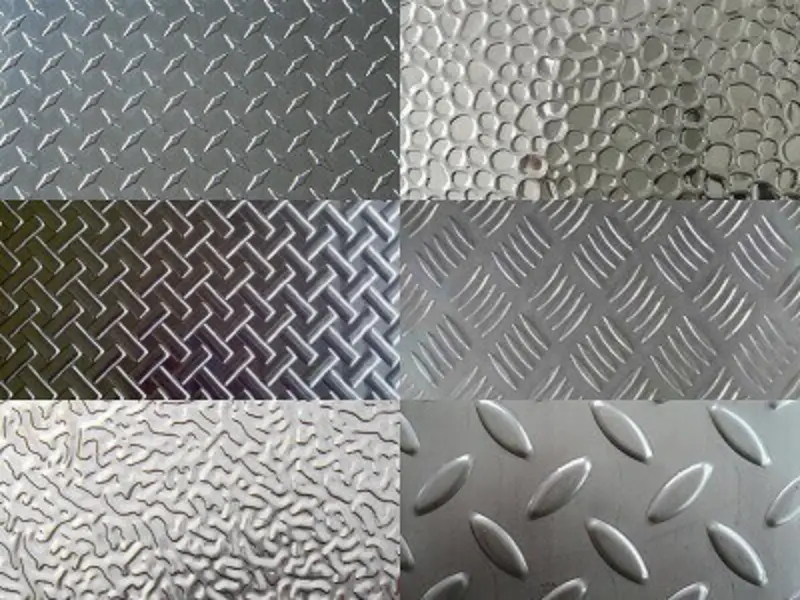
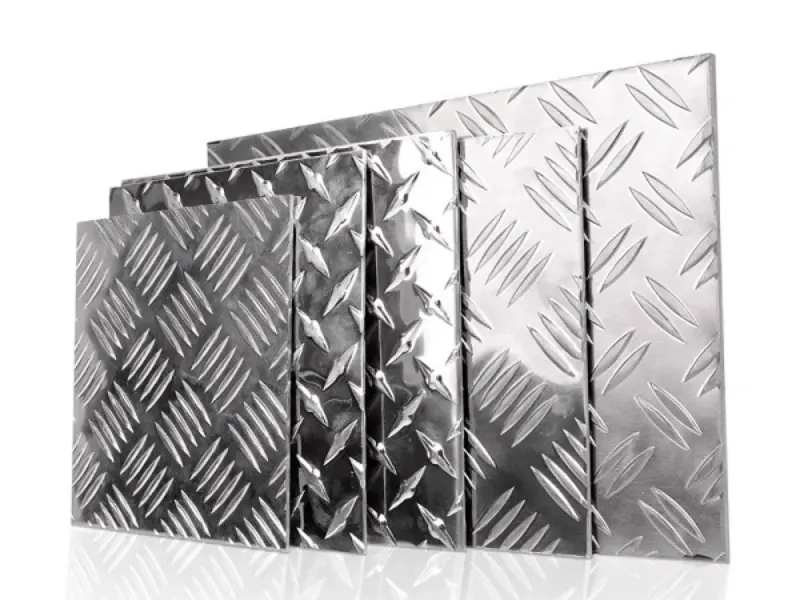
Pattern Types
The pattern changes how the plate looks and how it grips. Here are the most common styles.
| Pattern | Description | Best For |
|---|---|---|
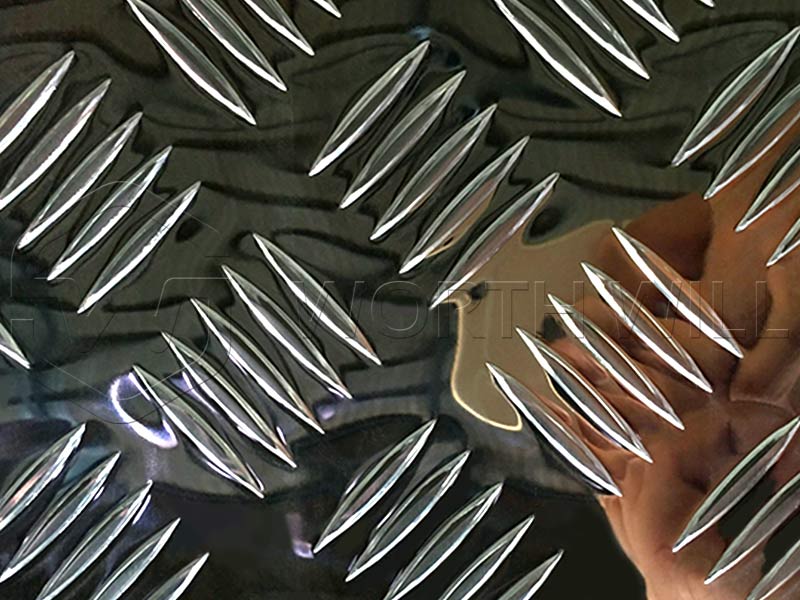
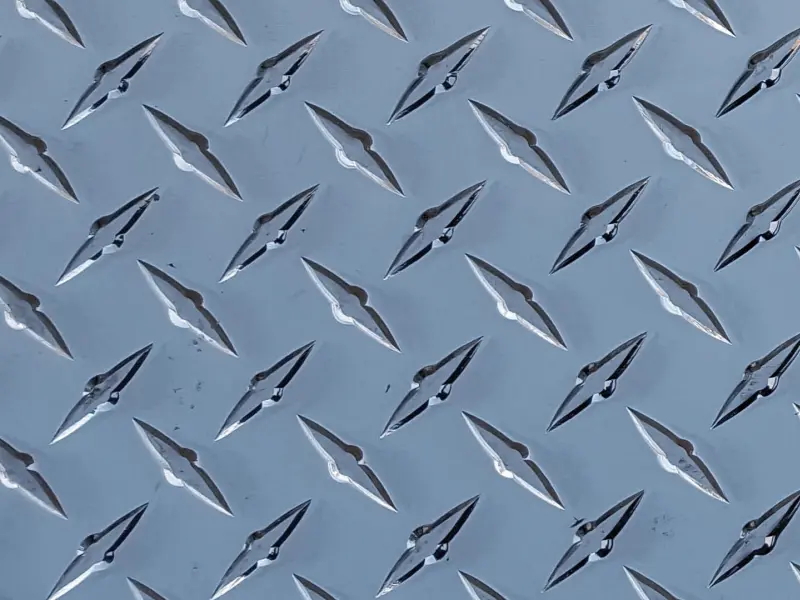
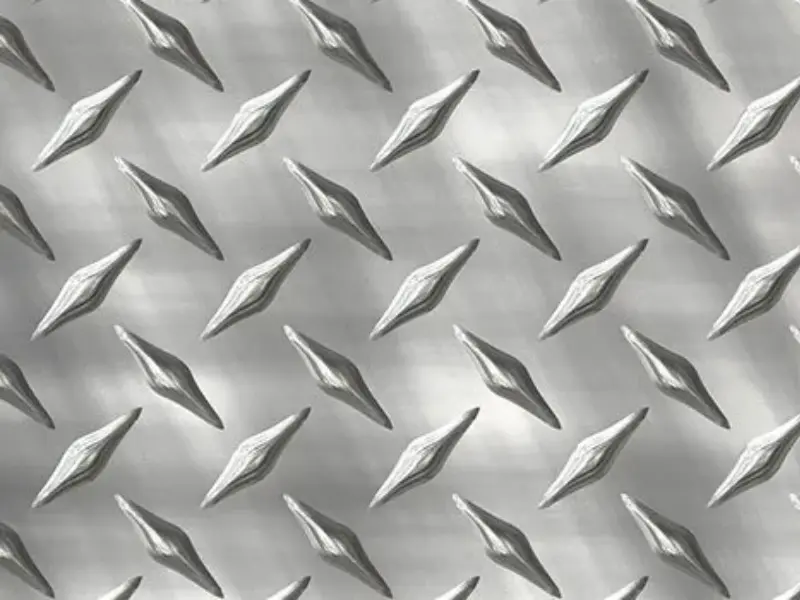
| Five-bar | Five raised bars in a repeating group | General flooring, the most common choice |
| Three-bar | Three raised bars per group | Lighter-duty walkways and trim |
| One-bar | Single raised bar in a staggered layout | Narrow walkways and light uses |
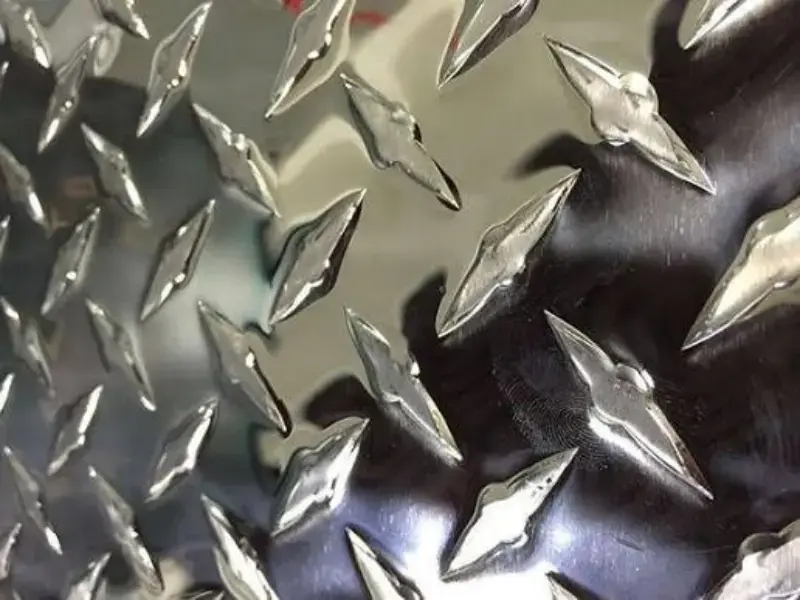
| Diamond | Small raised diamonds across the surface | Decorative panels and toolboxes |
Why Five-Bar Is So Popular
- Grip works from many walking directions
- Water and dirt drain more easily than from a flat surface
- Easy to find in stock across most alloys and sizes
- Looks familiar to buyers and installers
Product Types
Tread plate is sold in several forms. The right one depends on your project and finish needs.
Mill Finish Tread Plate
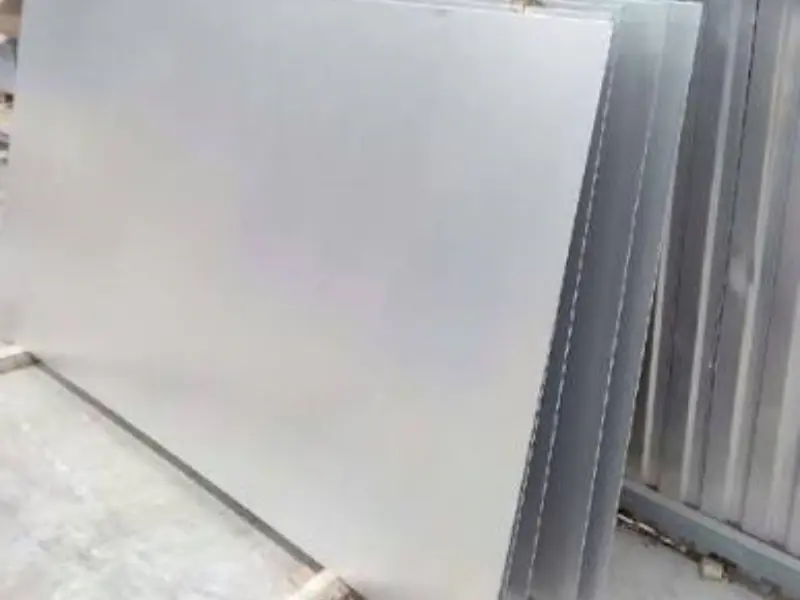
The plain, unpolished plate straight from the mill.
Can be painted or powder coated later
Lowest cost option
Common in truck beds, trailers, and shop floors
Anodized Tread Plate
Plate with a hard oxide layer on the surface.
- Resists scratches and corrosion better than mill finish
- Available in natural or colored tones
- Common in architectural and visible decorative uses
Painted or Coated Tread Plate

Plate finished with a baked-on paint layer.
Costs more than mill finish
Wide color choice for vehicles and equipment
Adds UV protection outdoors
Polished Tread Plate
Plate with a brighter, smoother surface on the raised pattern.
- Shiny look for display and trim
- Often used on toolboxes, trailers, and fittings
- Needs more care to keep its shine
Pre-Cut Tread Plate
Plate cut to the exact size you need before shipping.
- Saves cutting time and material waste
- Good for repeat production
- Holes and bends can be added on request
Tread Plate Coil
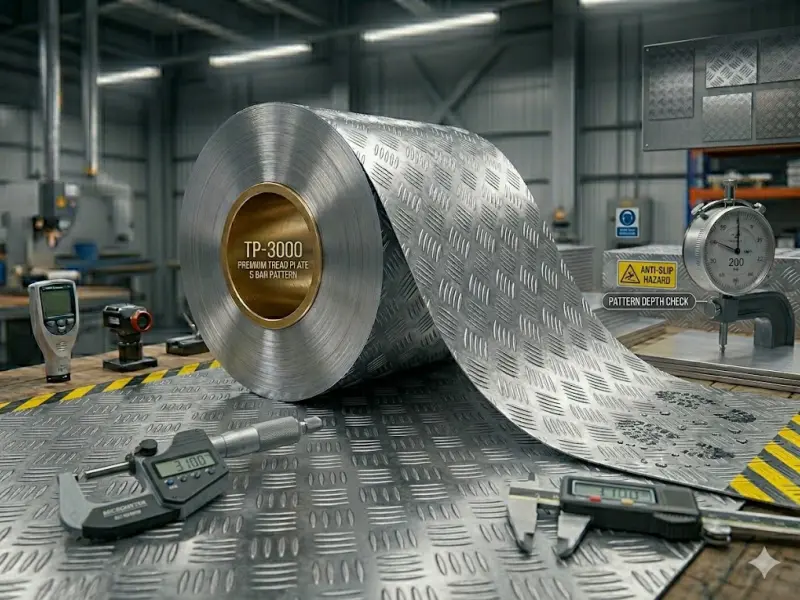
Continuous rolls for automated lines.
Common for manufacturers making their own parts
Sold by weight
Cuts handling time on large runs
3003 vs 5052 Tread Plate
These two are the most common pair for general buyers.
| Factor | 3003 Tread Plate | 5052 Tread Plate |
|---|---|---|
| Price | Lower | Slightly higher |
| Strength | Moderate | Higher |
| Corrosion resistance | Good | Excellent |
| Bending | Very good | Good |
| Best for | Dry or mild settings, trailers, toolboxes | Wet, coastal, and marine settings |
→ Building a toolbox or a trailer floor on a budget? 3003 usually does the job. → Working near salt water or in a wet area? 5052 is the safer choice. → Need more strength without moving to a heat-treated alloy? 5052 gives a clear step up.

5052 vs 6061 Tread Plate
This pair comes up when strength becomes the main concern.
| Factor | 5052 Tread Plate | 6061 T651 Tread Plate |
|---|---|---|
| Strength | Higher than 3003 | Highest of the three |
| Corrosion resistance | Excellent | Good |
| Bending and forming | Good | Limited, can crack on tight bends |
| Welding | Very good | Good, but weld zone loses some strength |
| Machining | Fair | Very good |
| Best for | Marine decks, wet areas, tank covers | Stair treads, platforms, heavy ramps |
6061 is the better choice when the plate carries heavy loads and does not need sharp bends. 5052 is better when the plate will be welded and exposed to moisture.
Choosing Between 5052 and 6061
→ Heavy platform with little bending? 6061 T651 is a strong fit. → Marine deck or wet environment? 5052 holds up better against corrosion. → Need to bend the plate into shapes? 3003 or 5052 are easier to form. → Plan to machine the plate into parts? 6061 machines more cleanly.
3003 vs 6061 Tread Plate
| Factor | 3003 | 6061 T651 |
|---|---|---|
| Cost | Lowest | Higher |
| Strength | Moderate | Much higher |
| Formability | Very good | Limited |
| Common thickness | 1.5 – 4.0 mm | 3.0 – 8.0 mm and above |
| Typical use | Light to medium duty | Heavy duty and structural |
The gap between these two is wide. Many buyers start with 3003 for general work and step up to 6061 only when the load requires it.
Aluminum Tread Plate vs Steel Checkered Plate
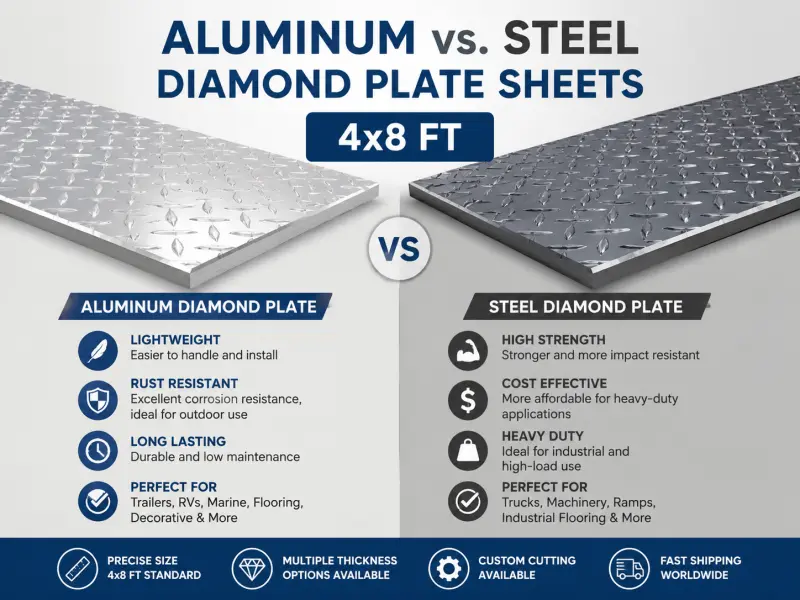
Some projects weigh aluminum against steel before ordering.
| Factor | Aluminum Tread Plate | Steel Checkered Plate |
|---|---|---|
| Weight | Roughly one-third of steel | Much heavier |
| Rust | Does not rust | Rusts without coating |
| Strength | Lower | Higher |
| Cost per kg | Higher | Lower |
| Cutting and handling | Easier | Harder |
Aluminum wins on weight and corrosion. Steel wins on raw strength and price per kilogram. For trailers and vehicles, the weight savings often outweigh the price gap.
Tread Plate vs Flat Sheet
| Factor | Tread Plate | Flat Sheet |
|---|---|---|
| Slip resistance | High | Low |
| Hides scratches | Better | Shows scratches more |
| Weight | Slightly heavier for the same base thickness | Lighter |
| Cleaning | Needs a bit more effort around the pattern | Easy to wipe |
| Best for | Floors, steps, ramps | Panels, covers, trim |
Applications

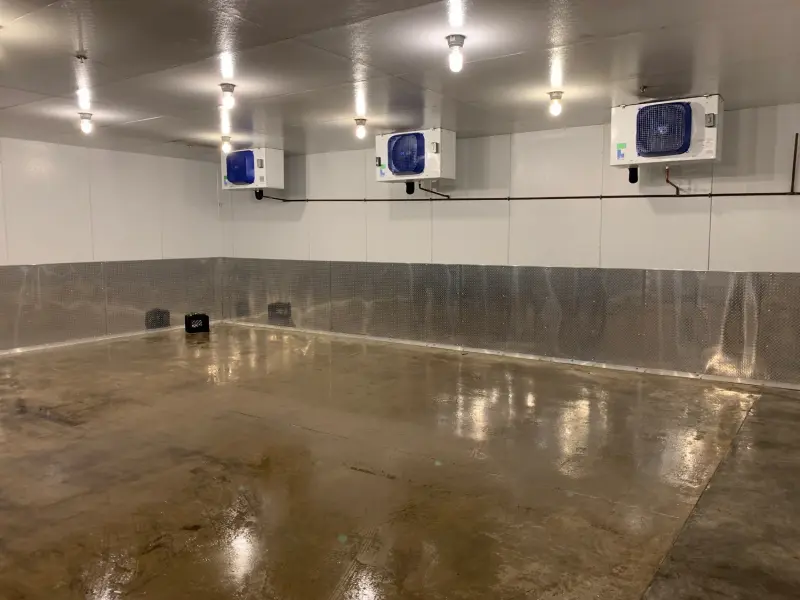
Aluminum tread plate is used across many industries.
- Truck beds and trailer floors
- Toolboxes and storage boxes
- Loading ramps and dock plates
- Stair treads and walkways
- Marine decks and boat steps
- Industrial platforms and catwalks
- Ambulance and fire truck compartments
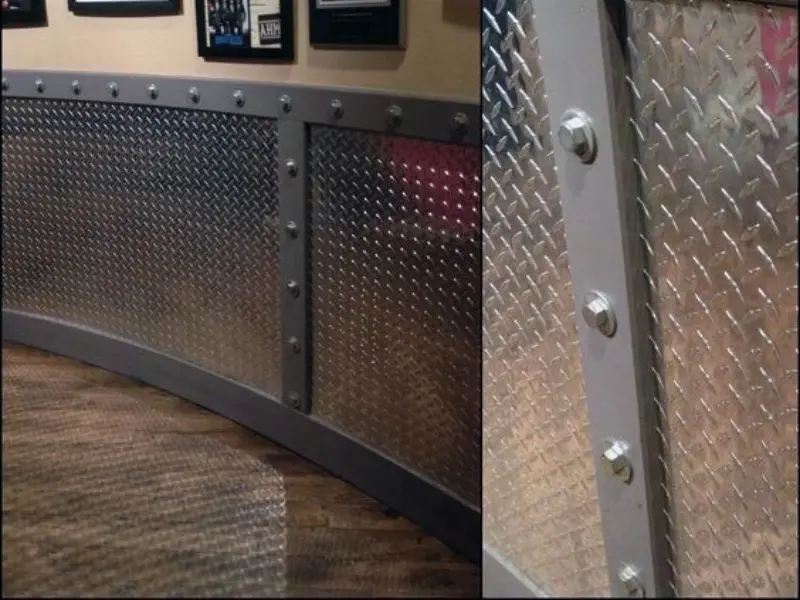
- Equipment guards and wall protection
- Garage and workshop floor covers
- Fuel tank covers and step plates
Applications by Alloy
| Alloy | Best-Fit Applications |
|---|---|
| 3003 | Toolboxes, trailer panels, light truck floors, wall protection |
| 5052 | Marine decks, boat steps, fuel tank covers, wet-area flooring |
| 6061 | Stair treads, heavy ramps, industrial platforms, equipment decks |
Why Buyers Choose Aluminum Tread Plate
Good Grip Without Extra Coatings
The raised pattern gives traction on its own. No sprayed grit or added strips are needed.
Light and Easy to Handle
A tread plate floor weighs far less than a steel floor. That helps with fuel savings in vehicles and with easier installation.
Long Service Life

Aluminum does not rust, so plates last for years in outdoor and wet conditions.
Easy to Fabricate
Standard saws, shears, and drills work on tread plate. Welding is simple with the right filler wire.
Cutting and Installation Tips
- Use blades made for aluminum to avoid rough edges
- Deburr cut edges for safe handling
- Pre-drill holes before fastening to avoid cracking the pattern
- Use gaskets or tape between aluminum and steel to prevent galvanic corrosion
- Seal edges on outdoor floors to keep water from collecting underneath
Cleaning and Maintenance
- Sweep or hose off dirt regularly so the pattern stays clear
- Use mild soap and water for normal cleaning
- Avoid strong alkaline cleaners, which can stain aluminum
- Check fasteners and seams now and then on installed floors
Packaging and Delivery
Tread plate is packed to protect both the pattern and the flat face.
- Paper or film between plates to prevent scratches
- Wood pallets or crates with edge protection
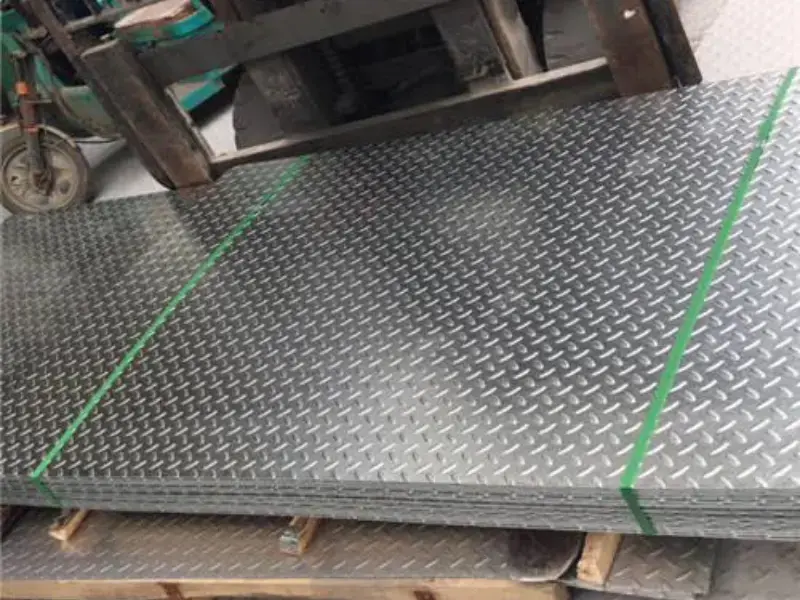
- Steel strapping for heavy plate
- MOQ and lead time depend on alloy, thickness, pattern, and size
Frequently Asked Questions
What is the difference between 3003, 5052, and 6061 tread plate?
3003 is the low-cost, easy-to-form option. 5052 offers better corrosion resistance and strength. 6061 is the strongest of the three and suits heavy-load uses.
Which alloy is best for a trailer floor?
3003 works for light and medium loads. For heavy loads or wet climates, many buyers choose 5052, or 6061 for very heavy-duty floors.
Is 6061 tread plate good for marine use?
It can be used, but 5052 usually performs better in salt water because of its stronger corrosion resistance.
What thickness should I choose for a walkway?
3.0 mm is a common choice for standard walkways. Heavier traffic or equipment may call for 4.0 mm or more.
Can aluminum tread plate be bent?
Yes, especially 3003 and 5052. 6061 T651 is harder to bend and can crack if the bend is too tight.
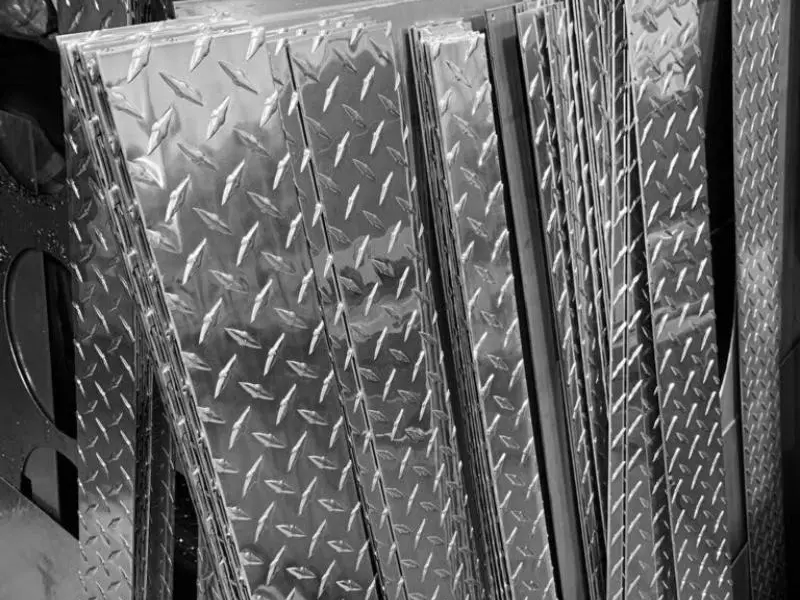
Is tread plate the same as diamond plate?
Yes. Tread plate, diamond plate, and checkered plate are different names for the same type of raised-pattern plate.