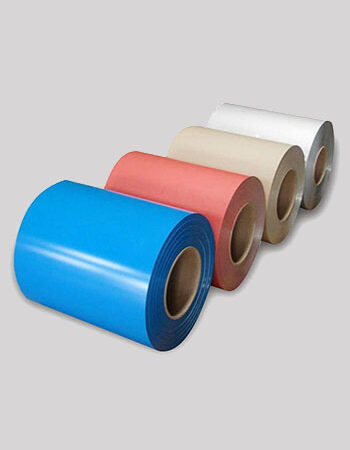
Difference Between PE and PVDF Coated Aluminum Coil
PE and PVDF coated aluminum coil both belong to the color coated aluminum coil. The two coated aluminum coil are the most commonly used on the market. However, from the product name, we can know that they are different in some aspects. The aspects include specifications, applications, and raw coating material. Let’s talk about the difference between them in detail.

PVDF Coated Aluminum Coil: The surface of PVDF-coated aluminum coil is polyvinylidene fluoride. It contains more than 75% PVDF. The coil has good weather resistance, impact resistance, UV resistance, sound and heat resistance, colorful, smooth and beautiful. Its life is about 20 years. And it’s mainly suitable for exterior decoration.
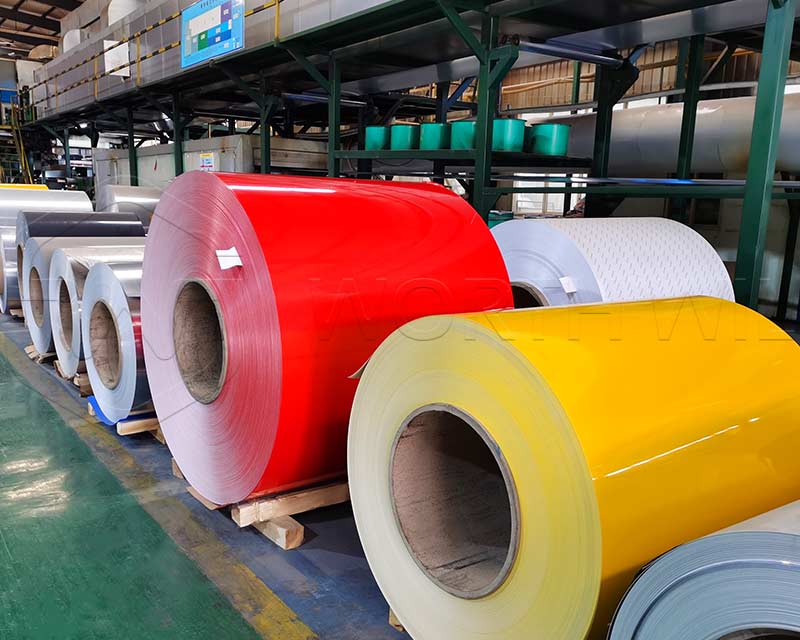
PE Coated Aluminum Coil: The surface of PE coated aluminum coil is nontoxic low-density polyethylene. The coating of the aluminum sheet is polyester coating with UV resistance. Its life is about 15 years. And it’s mainly used for interior decoration and advertisement boards.
PE and PVDF Coated Aluminum Coil Price
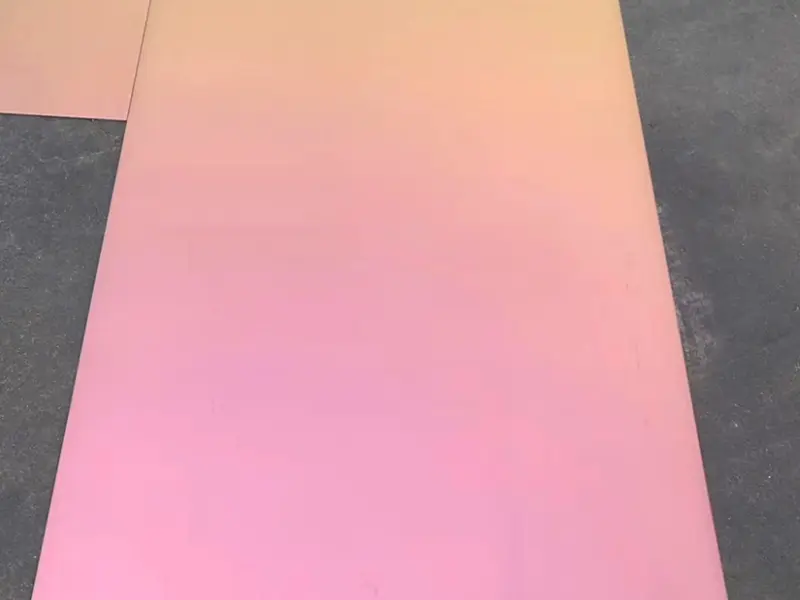
The price of PVDF-coated aluminum coil and the price of PE-coated aluminum coil is different. There are many factors that can effect the price.
Such as aluminum ingot, coating thickness and other specification.
No matter what kind of influencing factor, in the market, the price of PVDF aluminum coil is higher than that of PE aluminum coil. Contact us for more information about the price.
Difference Between PE and PVDF Coated Aluminum Coil
Prepainted aluminum coil has widely used in building facades, roofing systems, ceilings, gutters, and decorative panels. It offers a wide choice of colors, surface finishes, and aluminum specifications.
Two common coating options are PE and PVDF. Both can provide color and surface protection, but they have different performance characteristics.
The main difference between PE and PVDF coated aluminum coil is the coating system. PE coatings have often selected for general decorative applications and projects with tighter budgets. PVDF coatings have often preferred for exterior building products that need strong color retention and long-term weather resistance.
Choosing the right coating depends on the building location, service conditions, design requirements, and expected maintenance costs.
What Is PE Coated Aluminum Coil?
PE coated aluminum coil has aluminum coil coated with a polyester-based paint system. PE stands for polyester in this context.
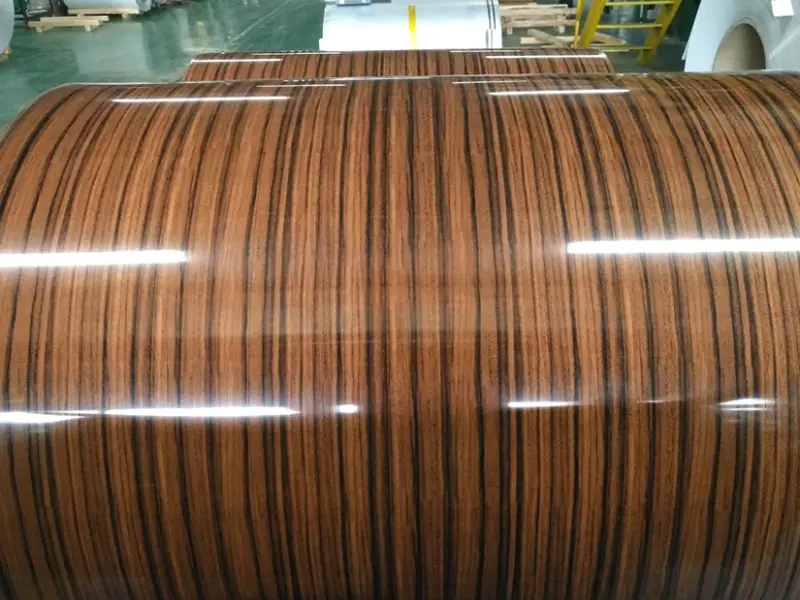
The coating has applied to the aluminum surface and cured during a controlled production process. The finished coil can then be used to manufacture roofing sheets, ceiling panels, decorative components, and other building products.
PE coated aluminum coil is popular because it offers a wide range of colors and finishes. It is also a practical option for many indoor applications and selected exterior products.
Main Features of PE Coated Aluminum Coil
| Feature | Description |
|---|---|
| Coating type | Polyester-based coating |
| Main advantage | Good decorative performance |
| Color options | Wide range of standard and custom colors |
| Surface options | Glossy, matte, textured, and other finishes |
| Processing | Suitable for many roll-forming and bending applications |
| Typical use | Interior decoration and selected exterior products |
| Cost level | Often lower than comparable PVDF systems |
| Weather resistance | Depends on the coating formulation and exposure conditions |
PE coated aluminum coil is a practical choice when appearance, processing performance, and initial cost are important.
However, not all PE coatings have the same quality. Buyers should compare the coating specification, paint system, test results, and intended application.
What Is PVDF Coated Aluminum Coil?
PVDF coated aluminum coil uses a coating system based on polyvinylidene fluoride. PVDF coatings have widely used in architectural applications because of their weathering performance.
They have designed to resist outdoor exposure, including sunlight, rain, and temperature changes. Suitable PVDF systems can help maintain color and gloss over long periods.
PVDF coated aluminum coil has commonly selected for exterior building products where appearance and durability are important.
Main Features of PVDF Coated Aluminum Coil
| Feature | Description |
|---|---|
| Coating type | PVDF-based coating system |
| Main advantage | Strong weathering performance |
| Color stability | Designed for long-term outdoor appearance |
| Surface options | Glossy, matte, metallic, and custom finishes |
| Typical use | Exterior facades, cladding, and roofing |
| Initial cost | Often higher than standard PE systems |
| Maintenance | May reduce repainting needs when correctly specified |
| Service performance | Depends on the full coating system and environment |
PVDF coated aluminum coil has often considered for commercial buildings, public buildings, and architectural projects with long service expectations.
The term PVDF alone does not guarantee a specific service life. Buyers should confirm the resin system, paint manufacturer, coating construction, warranty conditions, and test results.
PE vs. PVDF Coated Aluminum Coil: Main Differences
The choice between PE and PVDF depends on more than the paint price. Buyers should compare weather resistance, color retention, application, maintenance, and total project cost.
Quick Comparison Table
| Comparison Item | PE Coated Aluminum Coil | PVDF Coated Aluminum Coil |
|---|---|---|
| Coating base | Polyester | Polyvinylidene fluoride |
| Common priority | Decorative performance and cost | Long-term exterior performance |
| Outdoor weathering | Suitable for selected exterior uses | Commonly preferred for demanding exterior uses |
| Color retention | Depends on formulation and exposure | Generally strong in suitable architectural systems |
| Gloss retention | Depends on coating quality | Generally designed for long-term gloss stability |
| Chemical resistance | Varies by formulation | Often strong in suitable PVDF systems |
| Flexibility | Depends on paint system and processing | Depends on formulation and coating construction |
| Typical project | Ceilings, interiors, general decoration | Facades, exterior cladding, architectural panels |
| Initial price | Often lower | Often higher |
| Selection priority | Budget and decorative needs | Weathering performance and lifecycle value |
These are general comparisons. Actual performance depends on the coating formulation, paint quality, pretreatment, aluminum substrate, and exposure conditions.
Which Coating Offers Better Weather Resistance?
PVDF has often selected for exterior architectural aluminum because suitable PVDF systems offer strong resistance to weathering and color change.
PE coatings have uses for outdoors, but their long-term performance depends heavily on the specific formulation and environmental conditions.
For a building in a hot, sunny, coastal, or industrial environment, buyers should review the coating’s test data and warranty conditions before making a decision.
Which Coating Is More Cost-Effective?
PE coated aluminum coil often has a lower initial purchase price. It can be suitable for projects where decorative performance and budget are the main priorities.
PVDF coated aluminum coil may cost more at the beginning. However, it can offer better long-term value for buildings where repainting, maintenance, or visible color changes would be expensive.
The most cost-effective option is the one that meets the project’s service requirements at an acceptable total cost.
Coating Thickness and Paint System
Coating thickness is an important part of coated aluminum coil specifications. It affects surface protection, appearance, and compliance with the selected coating system.
Buyers should distinguish between the primer, topcoat, back coat, and total dry film thickness.
Typical Coating Thickness Reference
The following values are indicative examples. Actual requirements depend on the paint system, manufacturer, project specification, and applicable standard.
| Coating System | Indicative Topcoat Thickness | Typical Consideration |
|---|---|---|
| PE polyester | About 15–25 μm | General decorative and selected exterior uses |
| PVDF architectural system | About 20–30 μm | Exterior applications requiring weathering performance |
| Primer | About 5–8 μm | Adhesion and corrosion protection support |
| Back coat | About 5–10 μm | Protection of the reverse side |
These ranges are not universal acceptance limits. Some products use different coating constructions.
When requesting a quotation, specify whether the required thickness refers to the topcoat alone or the total coating system.
Single-Coat, Two-Coat, and Three-Coat Systems
Different paint systems may be used according to the intended application.
Single-coat system
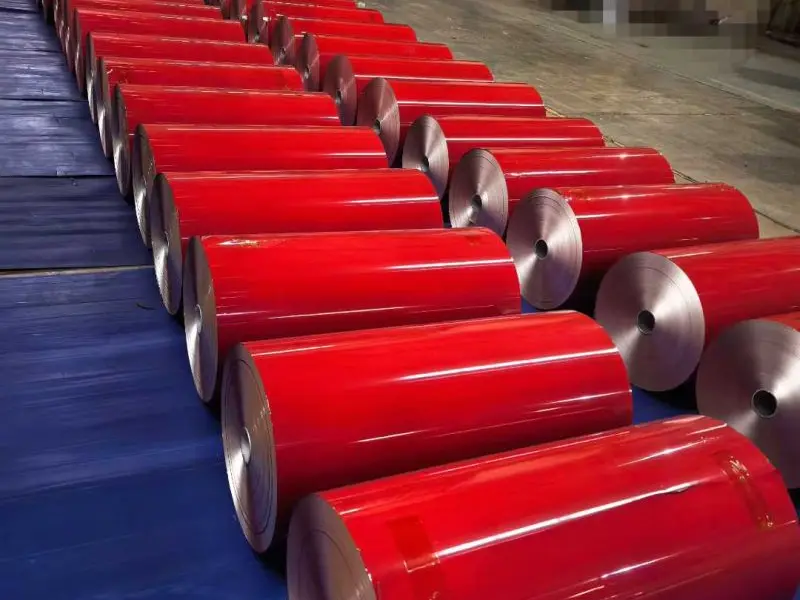
A single-coat system uses one main coating layer. It may be suitable for some general-purpose products, depending on the manufacturer’s specification.
Two-coat system
A two-coat system commonly includes a primer and a topcoat. It can provide a balance of adhesion, protection, and appearance.
Three-coat system
A three-coat system may include a primer, topcoat, and clear coat or another specified layer. It has selected for certain architectural finishes and demanding project requirements.
The number of coating layers alone does not determine quality. The resin system, coating thickness, pretreatment, curing, and test performance are also important.
Aluminum Alloy Options for PE and PVDF Coated Coil
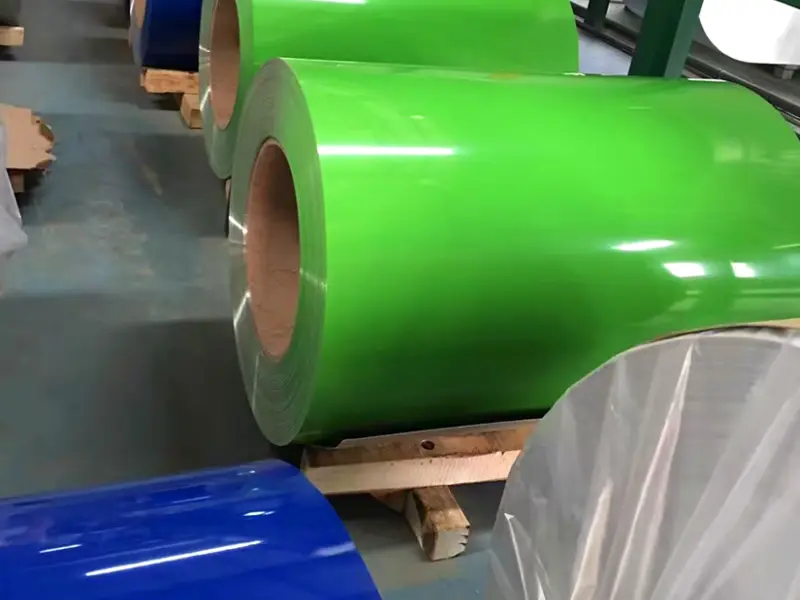
Both PE and PVDF coatings can be applied to suitable aluminum substrates. The alloy has selected according to forming requirements, strength, corrosion resistance, and final application.
Common Aluminum Alloys
| Aluminum Alloy | General Characteristics | Typical Applications |
|---|---|---|
| 1050 | High aluminum content and good formability | Selected decorative panels and simple formed products |
| 1060 | High purity and good formability | General decorative products |
| 1100 | Good formability and corrosion resistance | Architectural and general-purpose components |
| 3003 | Good formability and corrosion resistance | Roofing, ceilings, and formed building products |
| 3105 | Commonly used for building products | Roofing sheets, cladding, and gutters |
| 5052 | Higher strength than many common 1xxx grades | Selected panels and components requiring greater strength |
The suitable alloy depends on the application. A roofing coil, a flat decorative panel, and a deeply formed component may require different material properties.
For large architectural projects, confirm the alloy designation and mechanical properties in the technical specification.
3003 vs. 3105 for Coated Aluminum Coil
3003 and 3105 are both considered for coated aluminum building products.
| Feature | 3003 Aluminum | 3105 Aluminum |
|---|---|---|
| Alloy family | Aluminum-manganese | Aluminum-manganese |
| General use | General formed products | Building and construction products |
| Formability | Good in suitable tempers | Good in suitable tempers |
| Corrosion resistance | Good in suitable environments | Good in suitable environments |
| Common applications | Roofing and ceiling products | Roofing, cladding, and gutters |
The best choice depends on the required mechanical properties, product design, and available material specifications.
Aluminum Temper and Mechanical Properties

Temper describes the condition of the aluminum after processing. It affects strength, hardness, and forming behavior.
Common temper designations for coated aluminum coil may include:
| Temper | General Meaning | Selection Notes |
|---|---|---|
| O | Annealed and relatively soft | Useful when high formability is required |
| H14 | Strain-hardened to a specified strength level | Considered for products requiring moderate strength |
| H24 | Strain-hardened and partially annealed | Used in selected formed building products |
| H26 | A harder condition than H24 within the relevant alloy system | Considered where greater strength is needed |
The actual mechanical properties depend on the alloy and applicable standard. Not every alloy is available in every temper.
For roll-formed roofing, bending, or deep forming, buyers should confirm that the selected temper is suitable for the production process.
Aluminum Coil Thickness and Width Options
The aluminum substrate thickness affects stiffness, weight, forming performance, and material cost.
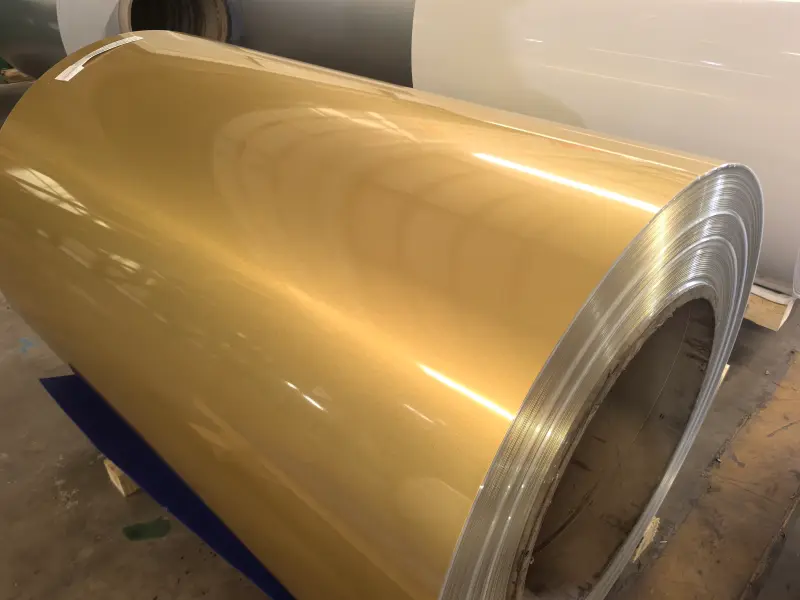
The correct thickness depends on the final product. A ceiling panel may require a different specification from a roofing sheet or an exterior cladding panel.
Typical Aluminum Substrate Thickness
| Product Type | Indicative Thickness | Common Use |
|---|---|---|
| Thin decorative coil | 0.20–0.30 mm | Interior panels and selected decorative products |
| General coated coil | 0.30–0.50 mm | Ceilings, cladding, and formed components |
| Roofing coil | 0.40–0.80 mm | Metal roofing sheets and profiles |
| Stronger cladding panels | 0.50–1.00 mm | Selected exterior panel systems |
| Custom heavy-gauge coil | 1.00 mm and above | Special applications requiring greater thickness |
These values are general examples, not universal standards. The final thickness should match the design load, support spacing, forming method, and local building requirements.
Common Coil Width Options
| Width Category | Indicative Width | Potential Application |
|---|---|---|
| Narrow coil | 100–300 mm | Trims and narrow profiles |
| Medium coil | 300–800 mm | Selected formed components |
| Wide coil | 800–1,250 mm | Roofing and cladding production |
| Extra-wide coil | Above 1,250 mm | Specialized production lines, where available |
Actual widths depend on the manufacturer’s equipment and product range.
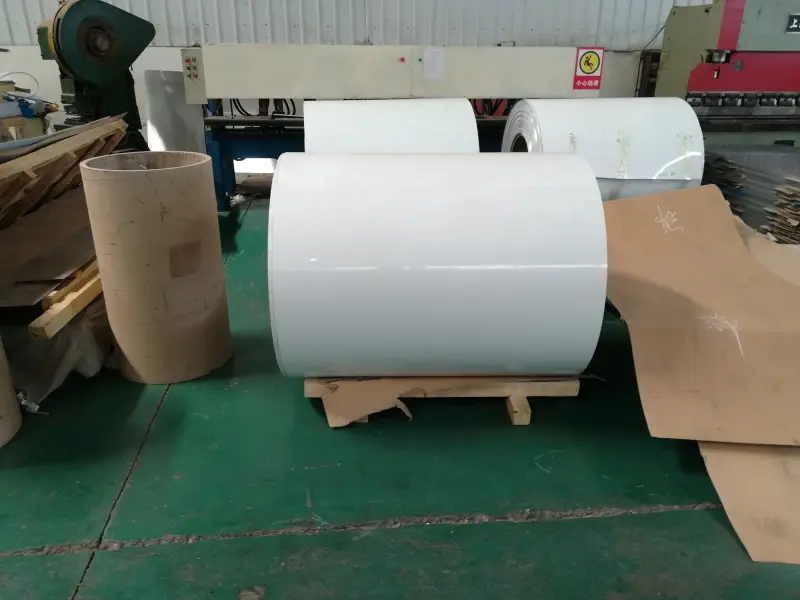
Buyers should provide the required finished width, forming machine details, and acceptable tolerances when requesting a quotation.
Surface Finishes for PE and PVDF Coated Aluminum Coil
The surface finish affects the appearance of a building. It can also influence cleaning requirements and how visible minor surface marks may be.
Glossy Coated Aluminum Coil
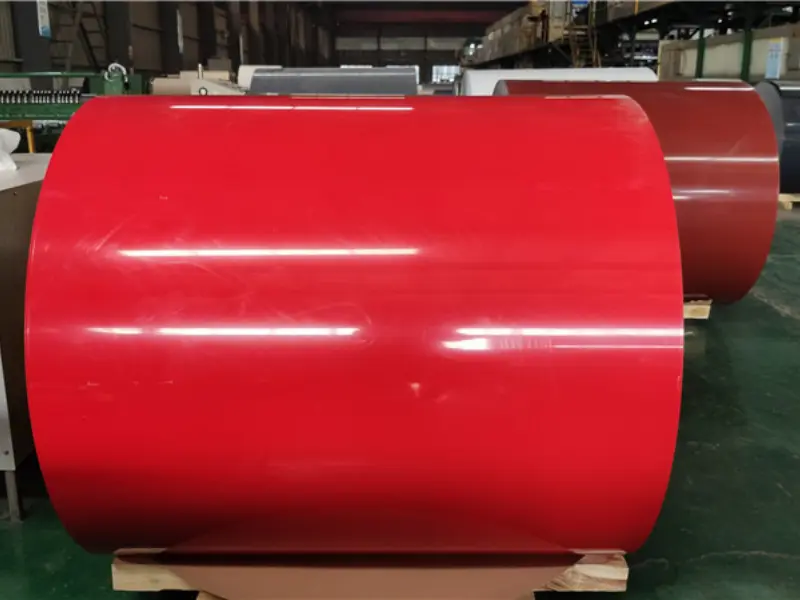
Glossy finishes provide a bright and reflective appearance. They are used in selected ceilings, decorative panels, and architectural products.
Potential applications include:
- Commercial interiors
- Decorative wall panels
- Signage panels
- Selected roofing products
The final gloss level should be specified in the quotation because different paint systems can produce different visual results.
Matte Coated Aluminum Coil
Matte finishes provide a softer appearance with less reflection than high-gloss surfaces.
Common applications include:
- Modern building facades
- Interior wall panels
- Office ceilings
- Contemporary residential projects
Matte finishes can help achieve a clean architectural style. However, surface cleaning and scratch visibility depend on the exact coating and texture.
Metallic and Brushed-Look Finishes

Metallic finishes create a visual effect similar to metal grain or brushed surfaces. Some products use special paint formulations to achieve this appearance.
Applications include:
- Decorative cladding
- Feature walls
- Retail interiors
- Commercial building details
A brushed-look painted finish is not the same as mechanically brushed bare aluminum. Buyers should confirm the actual surface structure.
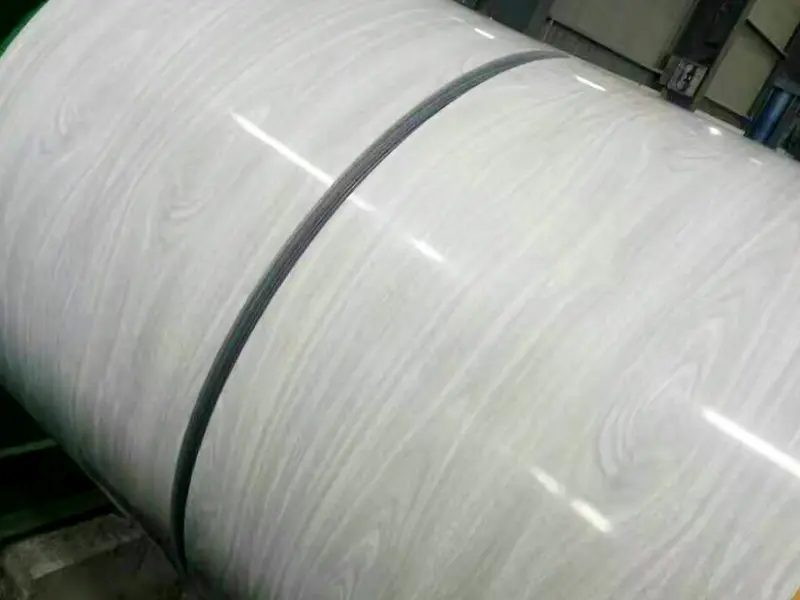
Wood-Grain and Stone-Look Coated Aluminum Coil
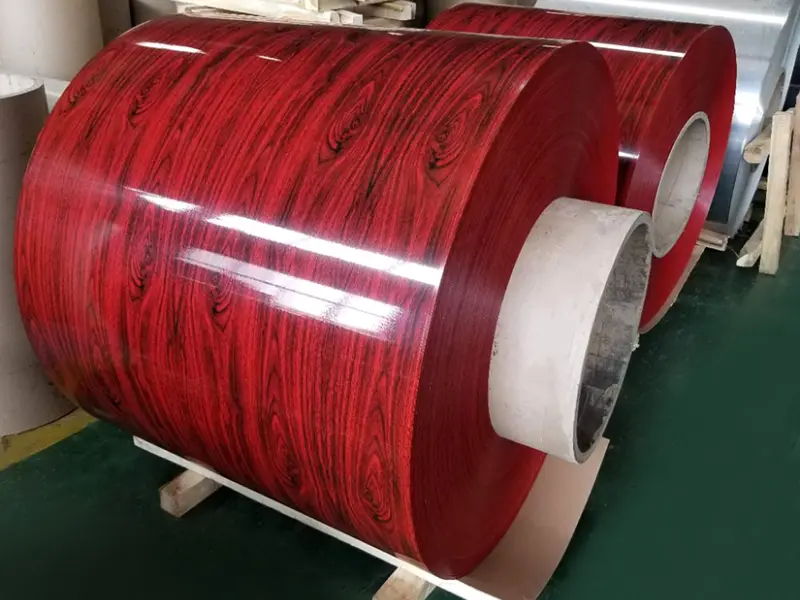
Special printing or coating processes can create decorative patterns that resemble wood or stone.
Potential applications include:
- Residential facade accents
- Decorative soffits
- Commercial interiors
- Selected exterior cladding systems
For exterior use, confirm that the decorative coating system is designed for the expected weather exposure.
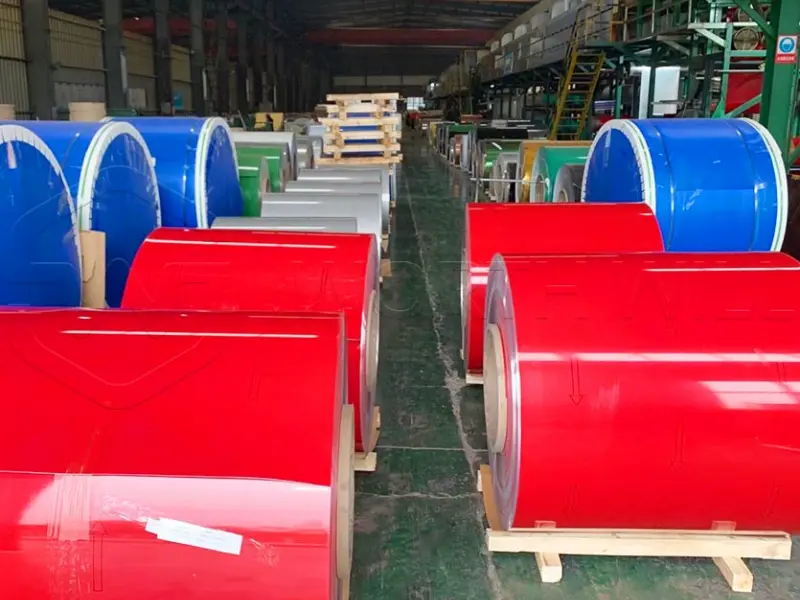
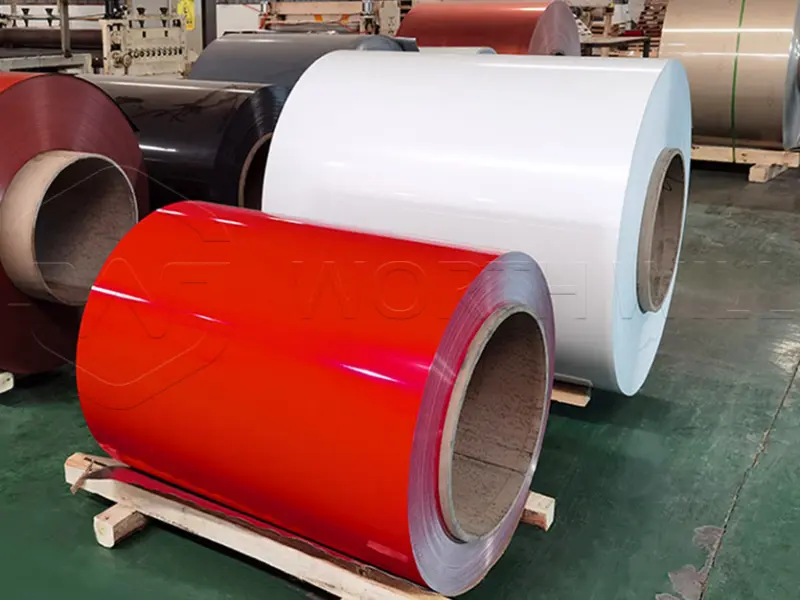
Common Color Options
| Color or Finish | Typical Design Use |
|---|---|
| White | Ceilings, facades, and general building products |
| Silver | Industrial and modern architectural designs |
| Black | Contemporary facades and trims |
| Gray | Commercial buildings and exterior panels |
| Red | Selected roofing and decorative projects |
| Blue | Industrial and commercial buildings |
| Green | Roofing and selected architectural designs |
| Custom RAL color | Projects requiring a specified color match |
RAL references can help communicate color requirements, but actual appearance may vary with gloss, coating formulation, lighting, and production batch.
Applications of PE Coated Aluminum Coil
PE coated aluminum coil is often selected for products where decorative performance, processing, and initial cost are important.
Interior Decoration
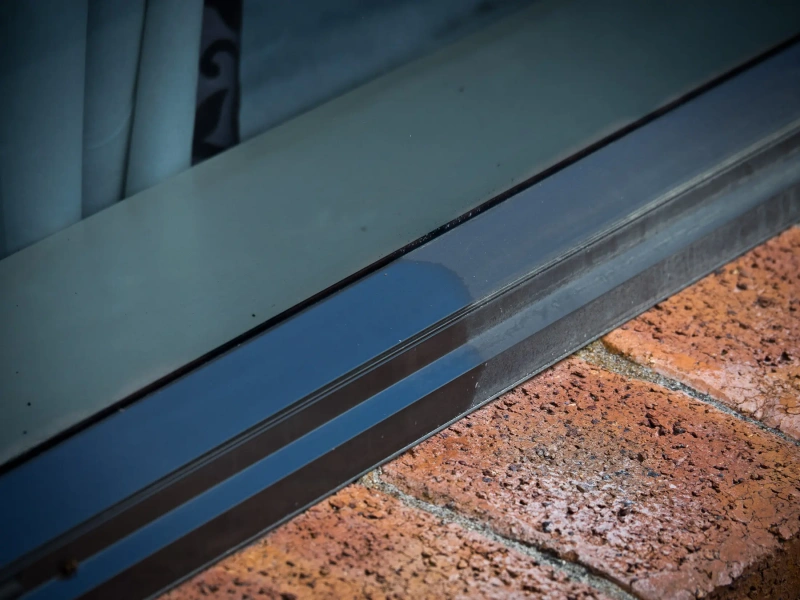
PE coated coil can be used to manufacture:
- Aluminum ceiling panels
- Decorative wall panels
- Interior trims
- Partition components
- Ceiling suspension system parts
For indoor products, the main selection factors may include color, surface appearance, forming performance, and cost.
General Building Products
Depending on the coating specification and environment, PE coated aluminum coil may be used for:
- Selected roofing sheets
- Gutters and downspouts
- Soffits
- Decorative flashing
- Window and door components
- Signage panels
Outdoor use should be evaluated according to the coating’s weathering performance and the project’s expected service conditions.
Appliances and Decorative Components

Suitable coated aluminum coil can also be considered for certain appliance parts and decorative components.
Potential applications include:
- Appliance trim
- Decorative covers
- Equipment panels
- Selected enclosure components
The coating must be compatible with the forming process and the service conditions of the finished product.
Applications of PVDF Coated Aluminum Coil
PVDF coated aluminum coil is commonly chosen for exterior architectural products that require good long-term color and gloss retention.
Building Facades and Wall Cladding
PVDF coated aluminum coil is used in suitable facade and cladding systems.

Applications include:
- Commercial building facades
- Office buildings
- Shopping centers
- Public buildings
- Exterior decorative panels
For these projects, buyers should confirm the coating specification, substrate properties, fire and building-code requirements of the complete system, and installation details.
Roofing and Exterior Architectural Products
PVDF coated aluminum coil may be selected for roofing and exterior components exposed to sunlight, rain, and changing temperatures.
Typical products include:
- Standing-seam roofing panels
- Exterior metal roofing sheets
- Roof-edge trims
- Exterior soffits
- Architectural flashings
The roofing system must also meet local requirements for wind loads, drainage, corrosion exposure, and installation.
Coastal and High-Exposure Projects
Coastal projects may expose aluminum products to salt and moisture. Industrial areas may also contain airborne pollutants.
For these environments, buyers should review the complete coating and pretreatment system, the aluminum substrate, and any project-specific corrosion requirements.
PVDF may be a suitable option, but the coating name alone does not guarantee performance in every environment.
PE vs. PVDF: Which Is Better for Different Projects?
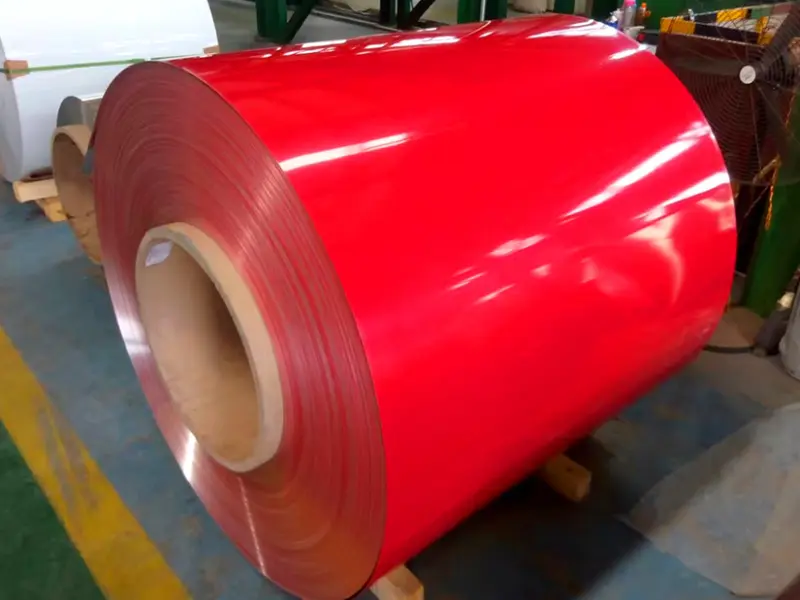
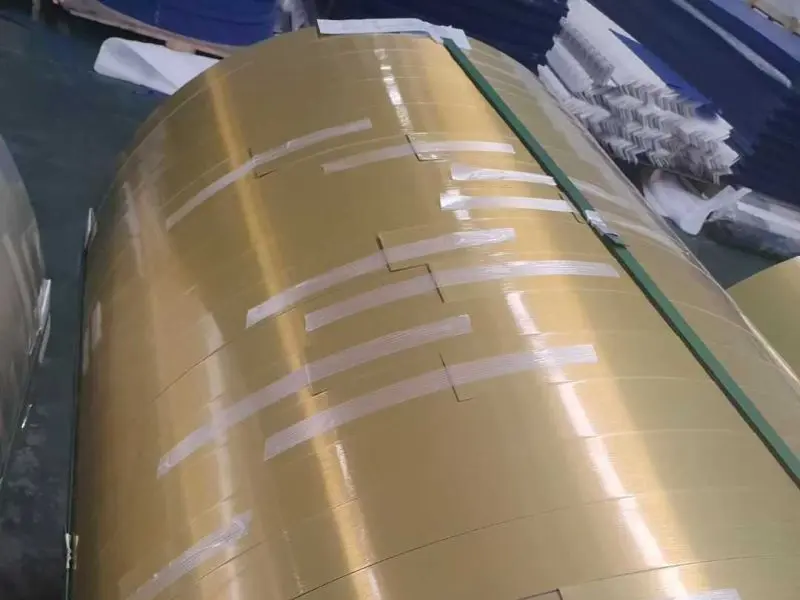
The best coating depends on the expected service conditions and the value of long-term appearance.
| Project | Coating to Consider | Main Reason |
|---|---|---|
| Interior ceiling | PE | Decorative performance and cost |
| Retail display panel | PE or another suitable system | Color and appearance |
| General decorative panel | PE | Flexible design options |
| Commercial facade | PVDF | Long-term exterior appearance |
| Architectural cladding | PVDF | Weathering performance |
| Exterior roofing | PE or PVDF, depending on requirements | Exposure and expected service life |
| Coastal building | A suitable PVDF or other tested system | Requires project-specific corrosion evaluation |
| High-profile public building | PVDF may be preferred | Appearance retention and maintenance planning |
This table is a starting point. The final choice should be based on the coating specification, actual environment, warranty, and total project requirements.
PE and PVDF Coated Aluminum Coil: Initial Cost vs. Lifecycle Cost
Initial material price is important, but it does not show the full cost of a building product.
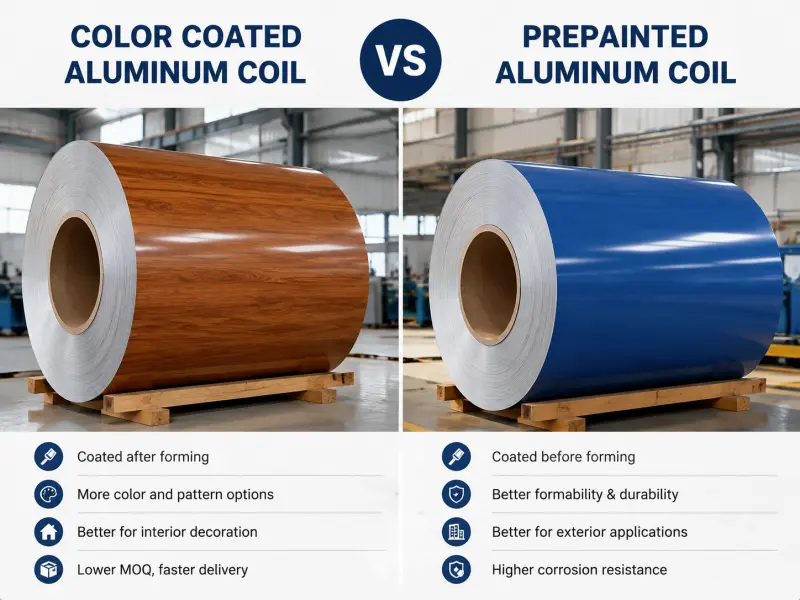
A lower-priced coating may be suitable for a short-term or interior application. A higher-performance coating may be more economical over time when appearance retention and maintenance are important.
Factors That Affect the Price
| Factor | How It Affects Cost |
|---|---|
| Aluminum alloy | Different alloys may have different material costs |
| Substrate thickness | More aluminum generally increases material cost |
| Coil width | Affects production and processing requirements |
| Coating system | Resin, paint quality, and coating construction affect price |
| Color | Special colors may require additional production controls |
| Gloss and texture | Special finishes may affect production cost |
| Order quantity | Volume can affect pricing and setup costs |
| Quality requirements | Tighter tolerances and additional testing may add cost |
| Packaging | Export packaging requirements can affect the quotation |
| Delivery | Freight, destination, and delivery terms affect total landed cost |
For an accurate comparison, request quotations for the same alloy, substrate thickness, width, color, coating specification, and order quantity.
How to Compare Total Project Cost
Before choosing a coating, consider:
- Initial purchase price
- Expected service conditions
- Cleaning and maintenance requirements
- Potential repainting or replacement costs
- Warranty coverage
- Cost of access equipment for maintenance
- Expected appearance over the project period
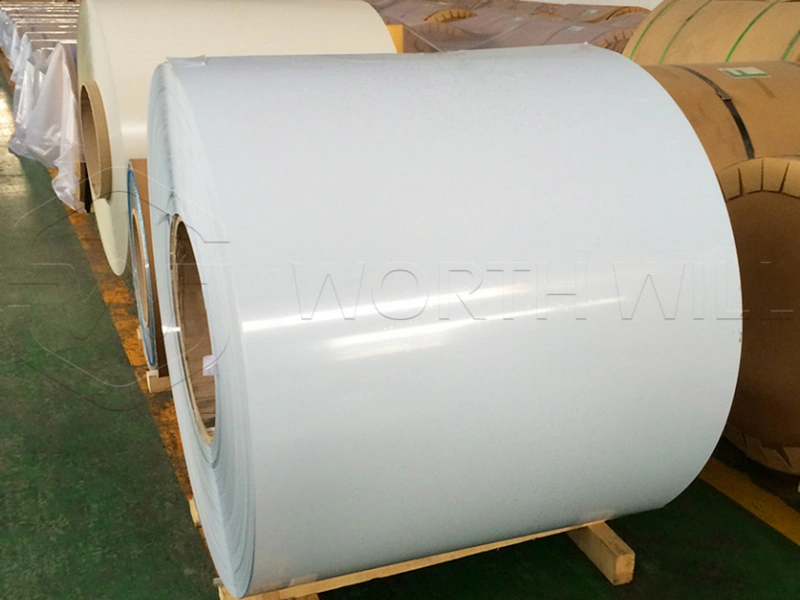
Do not assume that PVDF is always the lowest-cost choice over time. Its value depends on the building, the environment, and the quality of the coating system.
Manufacturing Process of Prepainted Aluminum Coil
The coating process has a direct effect on the final product’s surface quality and performance.
A typical production process includes the following stages:
Aluminum coil preparation → Cleaning and pretreatment → Primer coating, where specified → Topcoat application → Curing → Cooling → Inspection → Recoiling → Packaging
Cleaning and Pretreatment
The aluminum surface is cleaned to remove oil and other contaminants. A suitable pretreatment system is then applied to support coating adhesion and corrosion performance.
Poor surface preparation can reduce coating performance even when the paint itself is of good quality.
Primer and Topcoat Application

The coating layers are applied according to the selected paint system. Each layer has a specific role.
The primer supports adhesion and contributes to protection. The topcoat provides the main color and surface performance.
Some systems may include an additional coating layer.
Curing and Quality Inspection
The coating is cured under controlled production conditions. The curing process must match the paint manufacturer’s requirements.
Quality checks may include:
- Coating thickness
- Color consistency
- Gloss level
- Adhesion
- Surface appearance
- Bending performance
- Relevant chemical or weathering tests
The exact test plan depends on the project specification and applicable standards.
How to Choose a Reliable Coated Aluminum Coil Supplier

A reliable supplier should provide clear specifications and consistent production quality.
When comparing PE and PVDF coated aluminum coil suppliers, consider the following points.
Technical Documentation
Ask for:
- Aluminum alloy and temper
- Substrate thickness and tolerance
- Coil width and tolerance
- Coating type and paint manufacturer
- Topcoat and total coating thickness
- Pretreatment details
- Relevant test reports
- Warranty terms, where available
These details help buyers compare products on an equal basis.
Samples and Color Approval
For projects that require a specific color, request a sample or color reference before mass production.
Confirm:
- Color code
- Gloss level
- Surface texture
- Sample approval process
- Acceptable batch variation
A color code alone may not fully describe the required appearance.
Packaging and Export Requirements
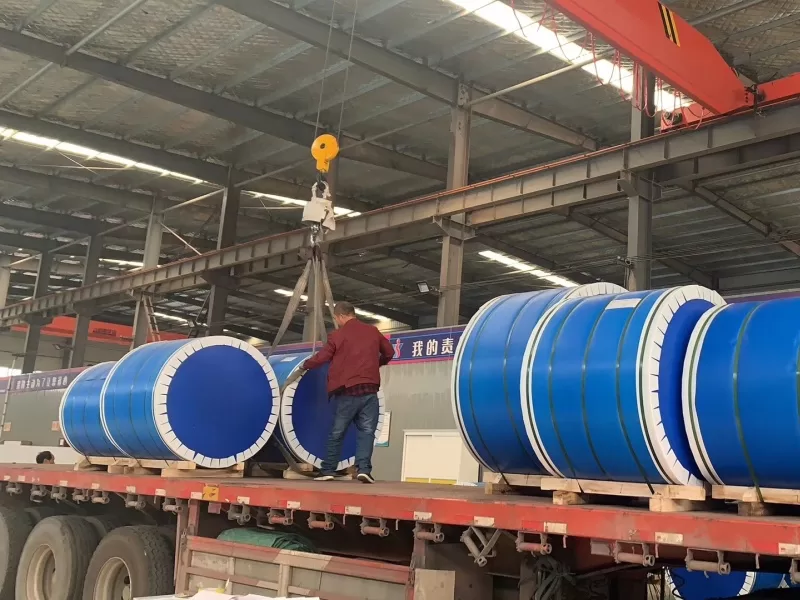
Coated aluminum coil should be protected against scratches, moisture, and handling damage.
Discuss the following items before ordering:
- Coil protection
- Edge protection
- Moisture-resistant packaging
- Pallet or cradle requirements
- Coil labels
- Shipping marks
- Container loading method
For export orders, confirm the destination, delivery terms, and required documents.
Common Buying Mistakes to Avoid
Choosing a coating based only on its name or price can create problems later.
Avoid these common mistakes:
- Selecting PE for a demanding exterior application without checking weathering data.
- Assuming every PVDF product has the same coating quality.
- Comparing prices for different aluminum thicknesses.
- Ignoring alloy and temper.
- Confusing topcoat thickness with total coating thickness.
- Choosing a color without confirming gloss and texture.
- Accepting a warranty without reviewing its conditions.
- Ignoring the building’s coastal, industrial, or high-UV environment.
- Ordering a large quantity before approving a sample for a critical project.
A complete specification helps reduce purchasing risks and makes supplier quotations easier to compare.
Frequently Asked Questions About PE and PVDF Coated Aluminum Coil
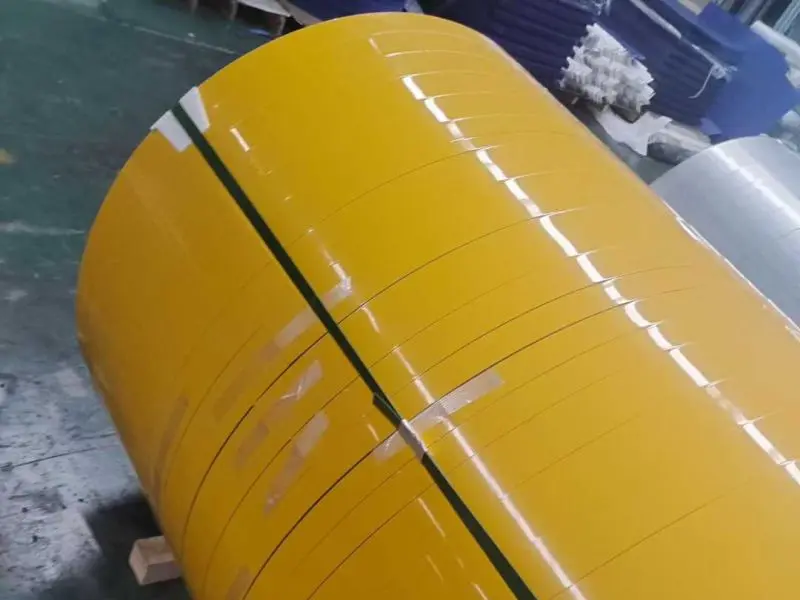

What Is the Main Difference Between PE and PVDF Coated Aluminum Coil?
PE coated aluminum coil uses a polyester-based coating system. PVDF coated aluminum coil uses a polyvinylidene fluoride-based system. PE is often selected for decorative products and cost-sensitive projects, while PVDF is commonly used for exterior architectural applications that require strong weathering performance.
Is PVDF Better Than PE for Outdoor Use?
PVDF is often preferred for demanding exterior architectural applications because suitable systems can offer better long-term color and gloss retention. However, the final result depends on the coating formulation, pretreatment, substrate, environment, and installation.
Is PE Coated Aluminum Coil Suitable for Roofing?
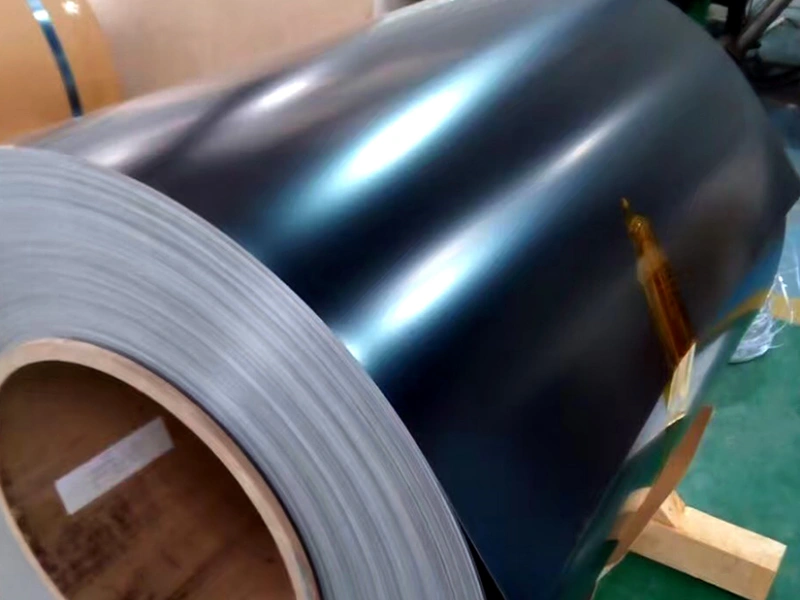
PE coated aluminum coil can be suitable for some roofing products. The decision depends on the coating specification, exposure conditions, and expected service life. For demanding exterior projects, compare the weathering data and warranty before choosing PE or PVDF.
How Thick Is PVDF Coating on Aluminum Coil?
Some architectural PVDF systems use a topcoat thickness in the approximate range of 20–30 μm. Actual requirements vary by manufacturer and project specification. Confirm whether the stated value refers to the topcoat or the complete coating system.
How Thick Is PE Coating on Aluminum Coil?
A PE polyester topcoat may use an indicative thickness of about 15–25 μm in some products. The required thickness depends on the paint system, intended application, and supplier specification.
Which Aluminum Alloy Is Used for Coated Aluminum Coil?
Common options include 1050, 1060, 1100, 3003, 3105, and selected 5xxx series alloys. The correct grade depends on strength, formability, corrosion requirements, and the finished product.
Can PE and PVDF Coatings Be Applied to the Same Aluminum Alloy?
Yes. Suitable aluminum substrates may be available with either PE or PVDF coating systems. The alloy, temper, pretreatment, and coating specification should be selected according to the final application.
Does PVDF Coated Aluminum Coil Cost More?
PVDF coated aluminum coil often has a higher initial price than comparable PE coated coil. However, the actual difference depends on the coating system, substrate thickness, color, order quantity, and supplier. Compare quotations with matching specifications.
Which Coating Is Better for Coastal Buildings?
Coastal projects require careful evaluation because salt, moisture, and airborne contaminants can affect the full building system. A suitable PVDF coating may be considered, but buyers should confirm the complete coating system, pretreatment, substrate, and project-specific corrosion requirements.
Can Coated Aluminum Coil Be Bent and Roll-Formed?
Many coated aluminum coils are designed for bending and roll forming. Performance depends on the alloy, temper, coating flexibility, thickness, and forming radius. Confirm the required forming conditions with the supplier and test the material where necessary.
Can Suppliers Provide Custom Colors and Finishes?

Many suppliers offer standard colors, RAL-based color matching, glossy and matte finishes, metallic effects, and selected decorative patterns. Availability depends on the production line, paint system, minimum order quantity, and color approval process.
What Information Is Needed for a Coated Aluminum Coil Quotation?
Provide the alloy, temper, substrate thickness, coil width, coating type, color, finish, quantity, application, and destination. Also state any required coating thickness, quality standard, testing, packaging, and warranty conditions.
Request a Quote for PE or PVDF Coated Aluminum Coil
Choosing between PE and PVDF coated aluminum coil starts with understanding the project’s actual requirements.

PE may be suitable for decorative products and cost-sensitive applications. PVDF has often considered for exterior architectural products where long-term color stability and weathering performance are important.
To receive a relevant quotation, prepare the following details:
- Coating type: PE or PVDF
- Aluminum alloy: 1050, 1060, 1100, 3003, 3105, or another specified grade
- Temper: O, H14, H24, H26, or another required condition
- Substrate thickness: Required aluminum thickness
- Coating thickness: Topcoat or total coating system
- Coil width: Required width and tolerance
- Color and finish: RAL reference, gloss, texture, or sample
- Application: Roofing, cladding, ceilings, gutters, or decorative panels
- Quantity: Trial order or production volume
- Destination: Country or port of delivery
A complete request helps the supplier recommend a suitable product and prepare a more accurate offer.
Error: Contact form not found.