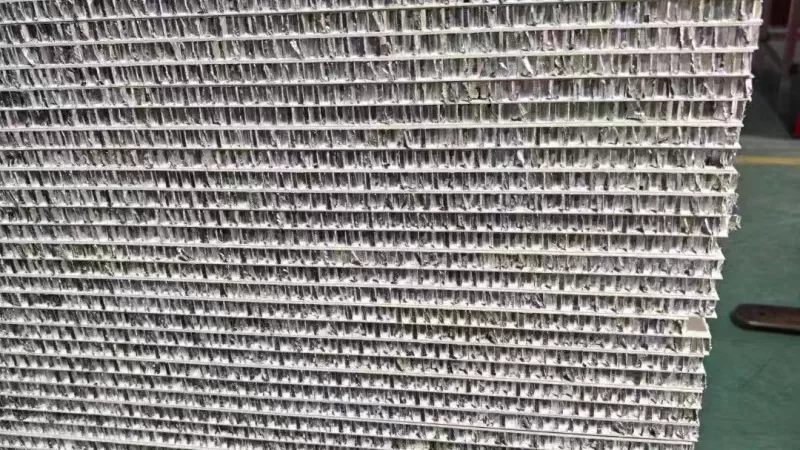
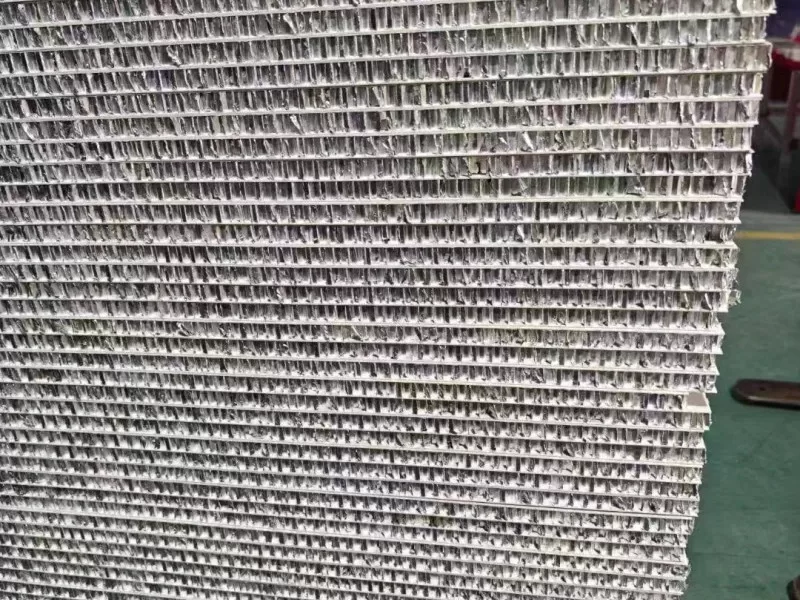
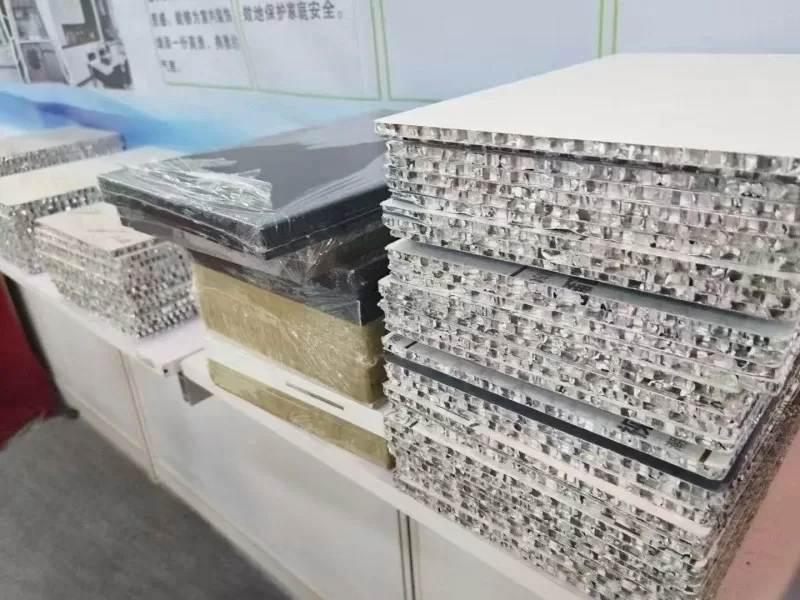
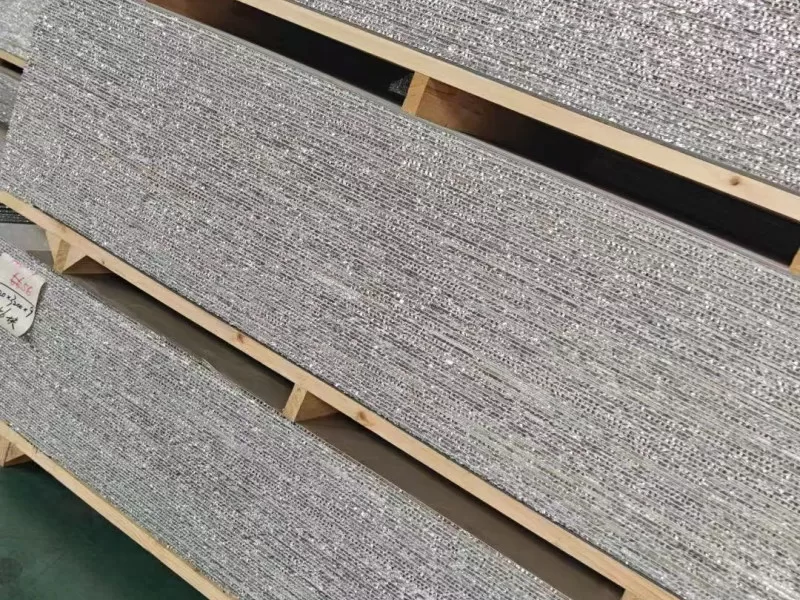
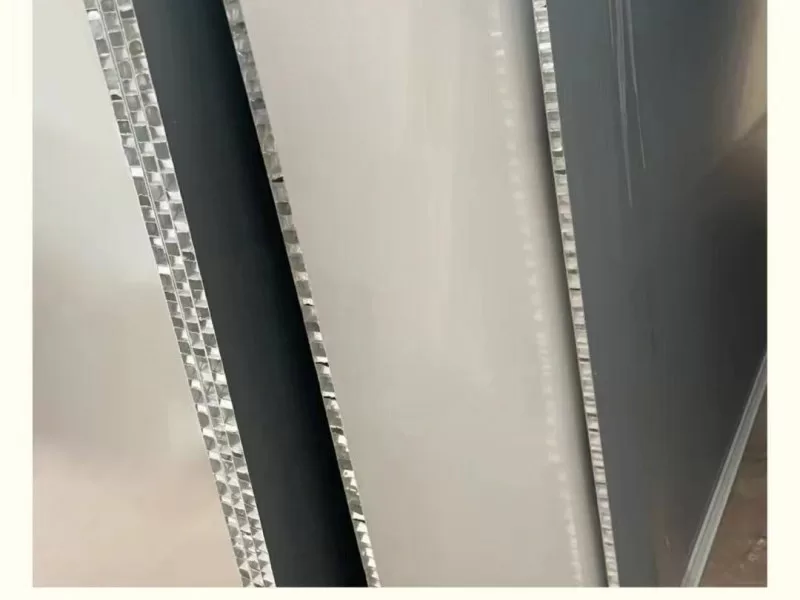
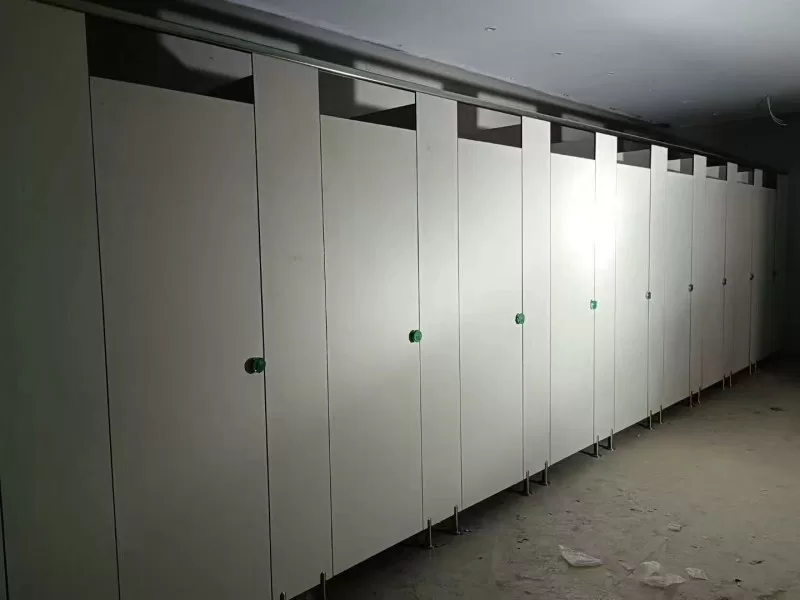
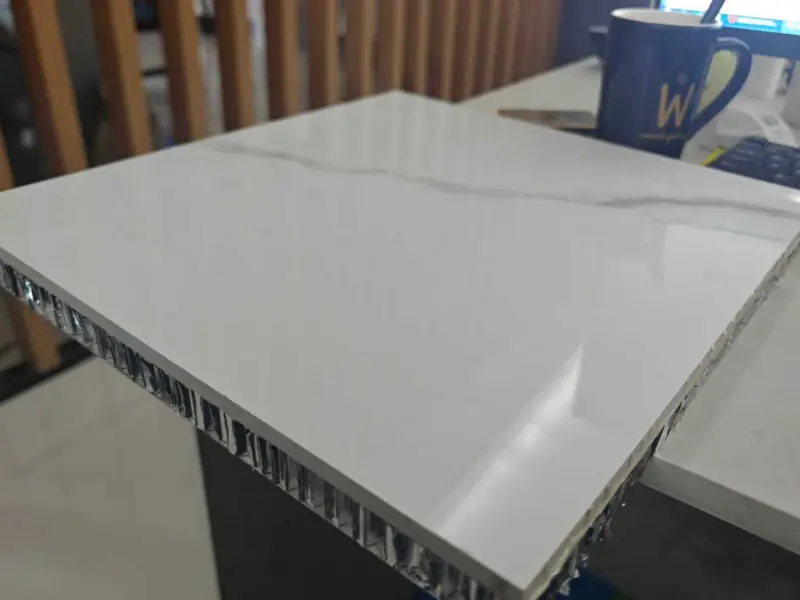
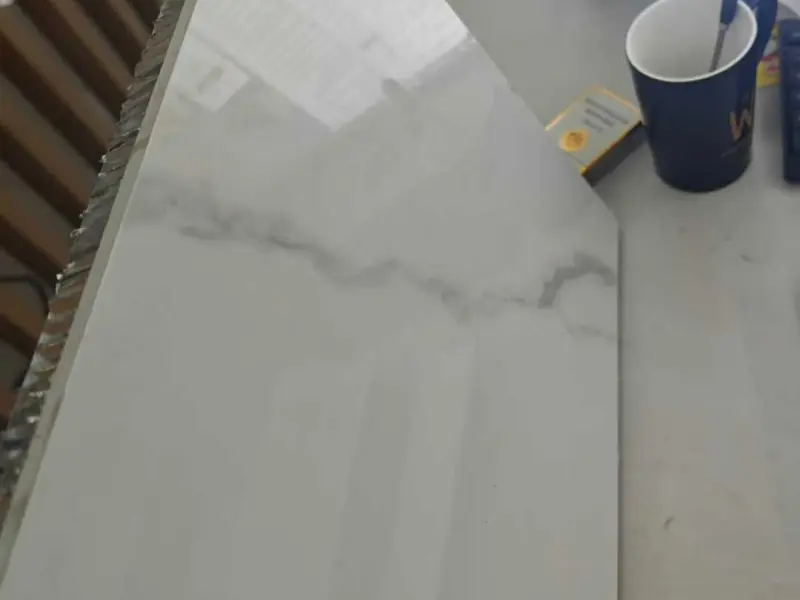
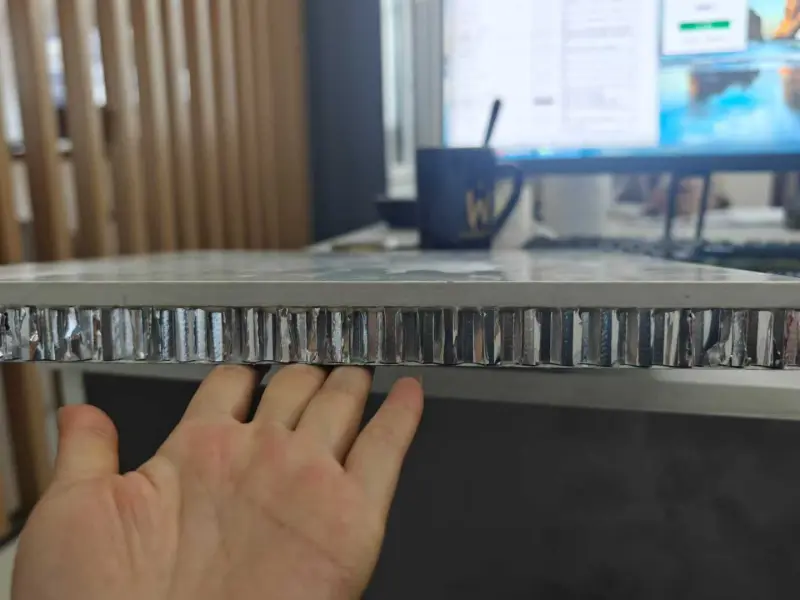
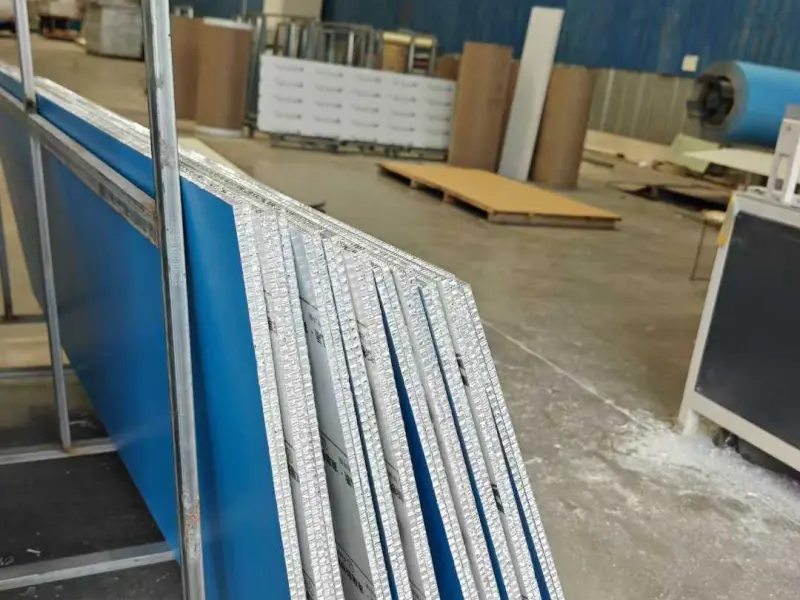
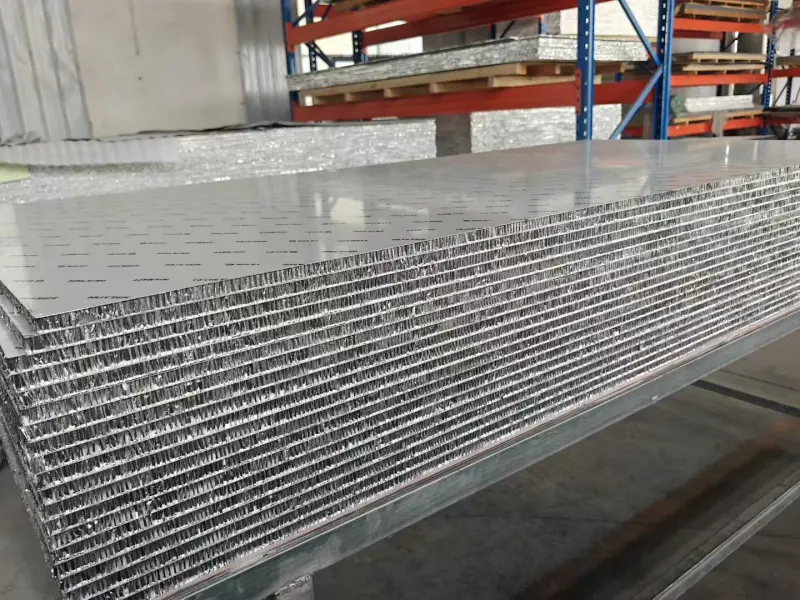
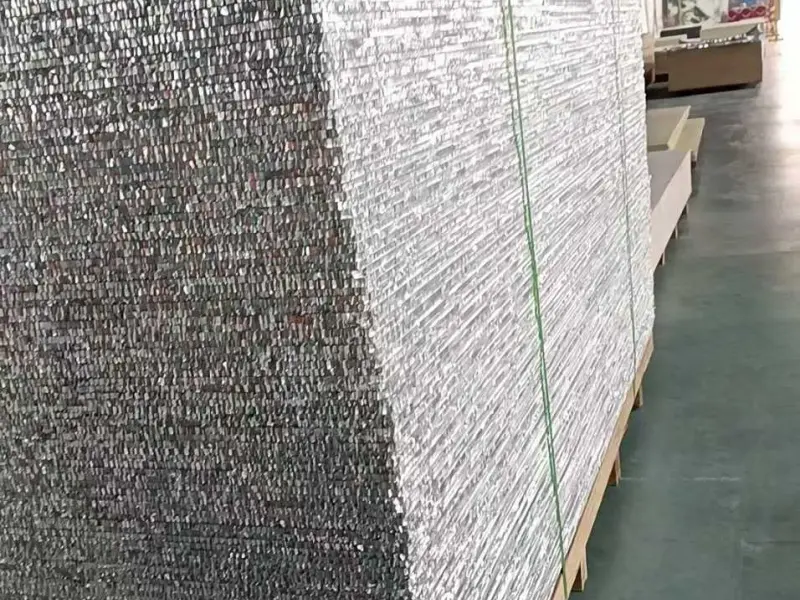
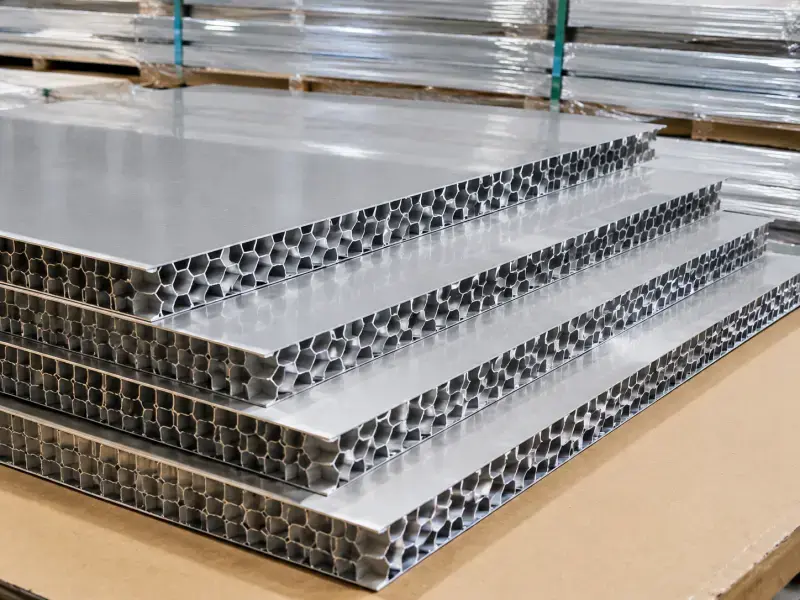
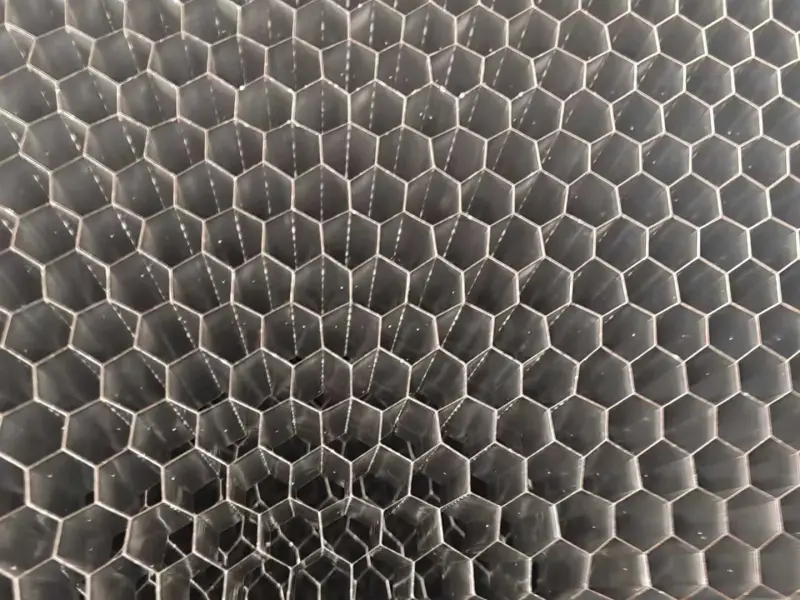
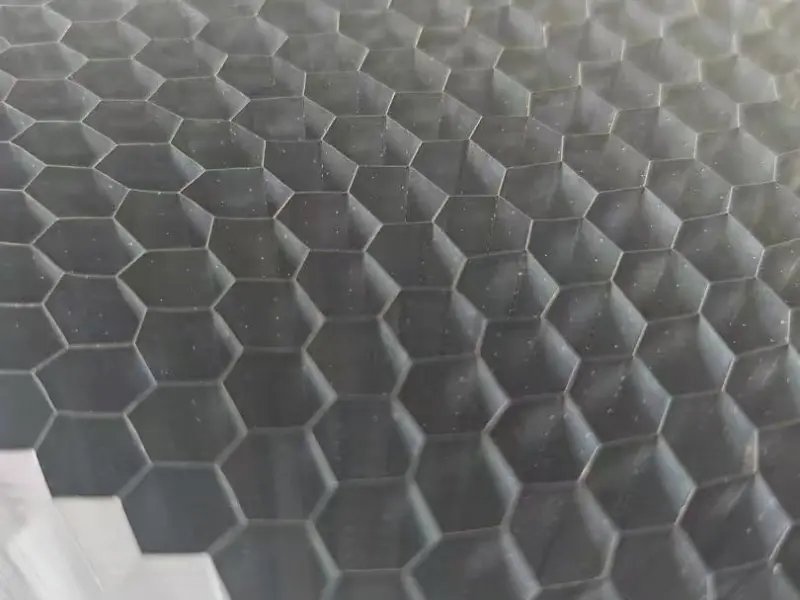
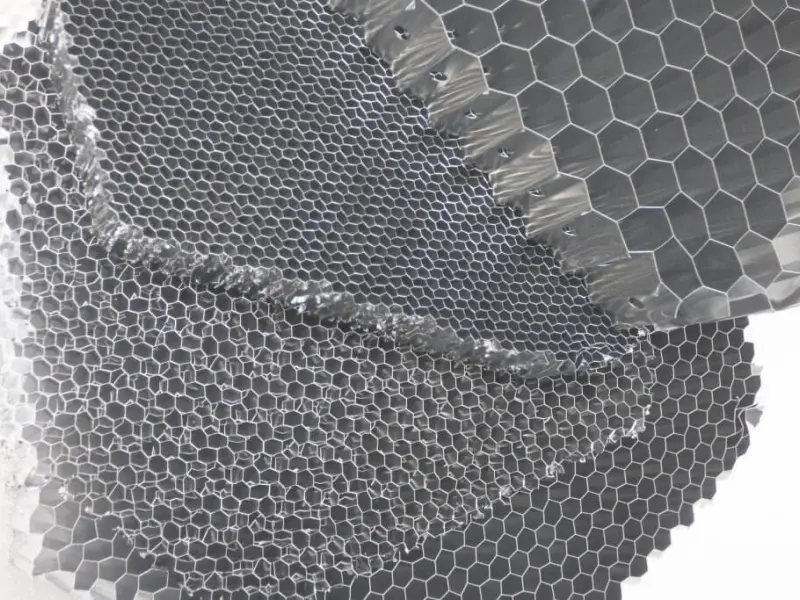
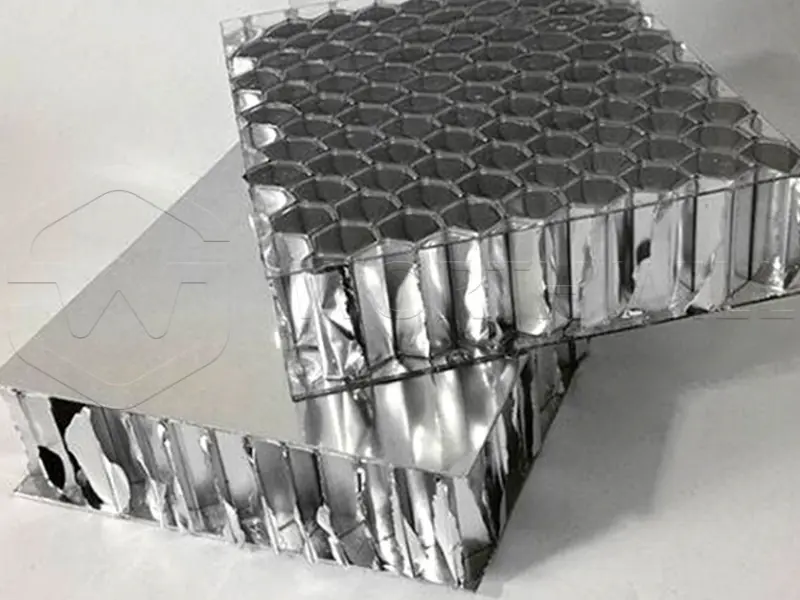
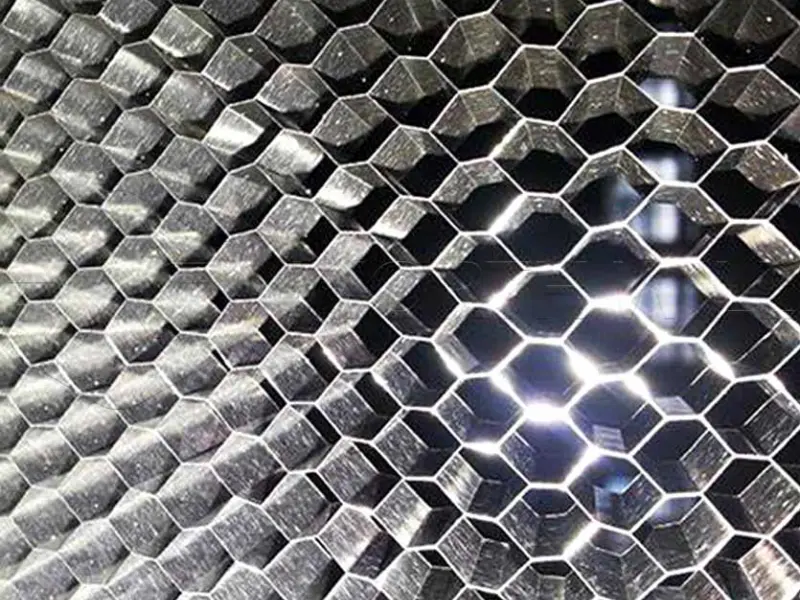
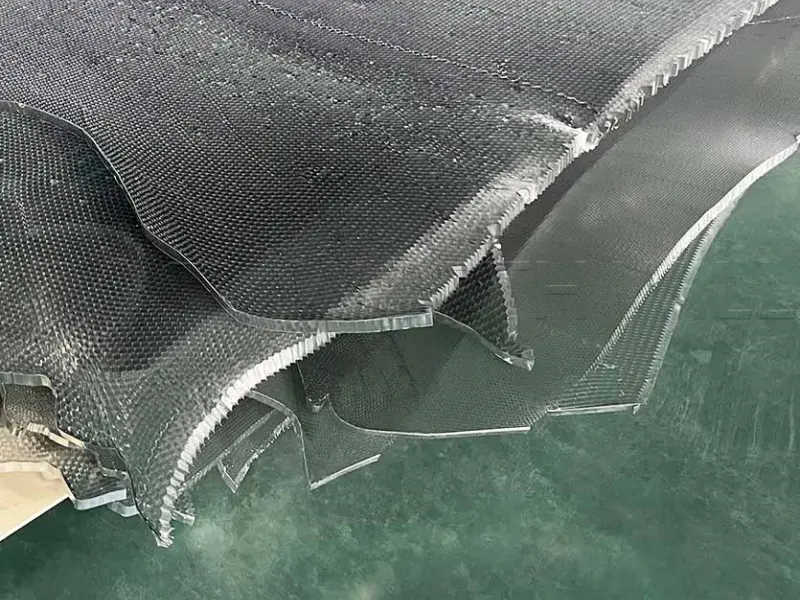
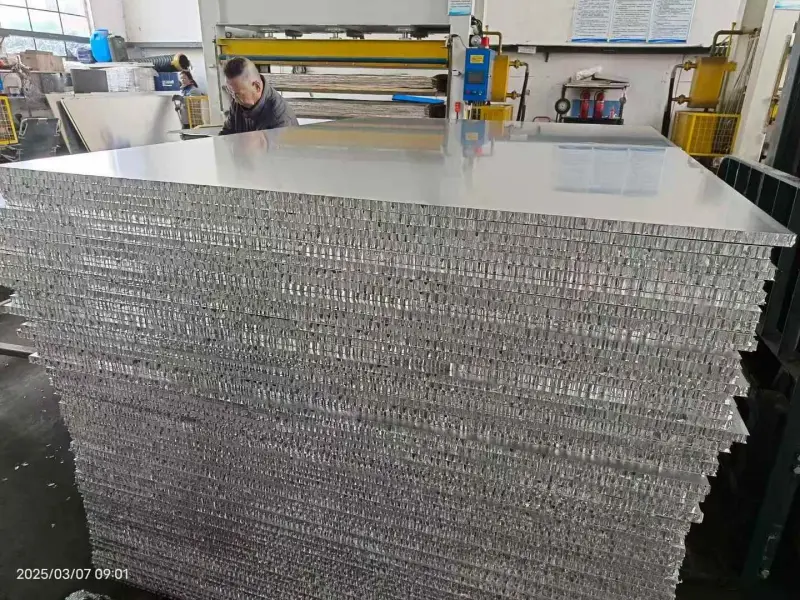
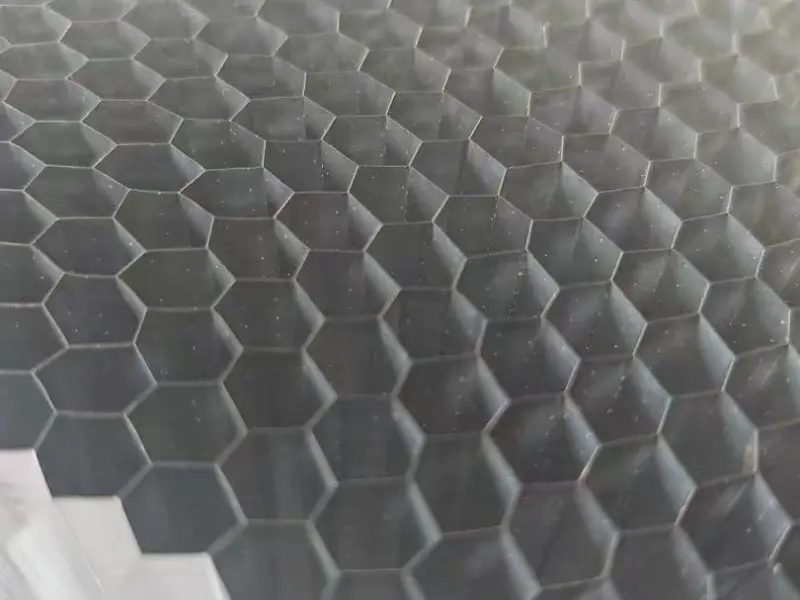
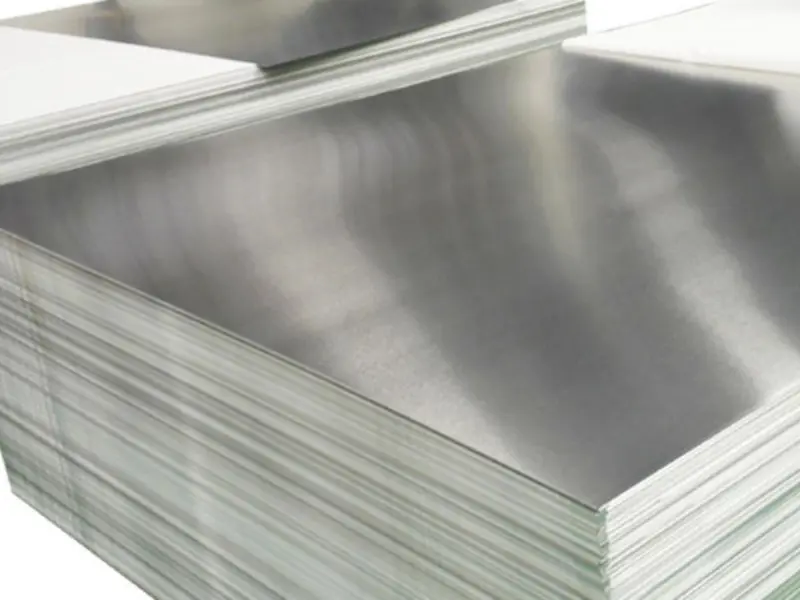
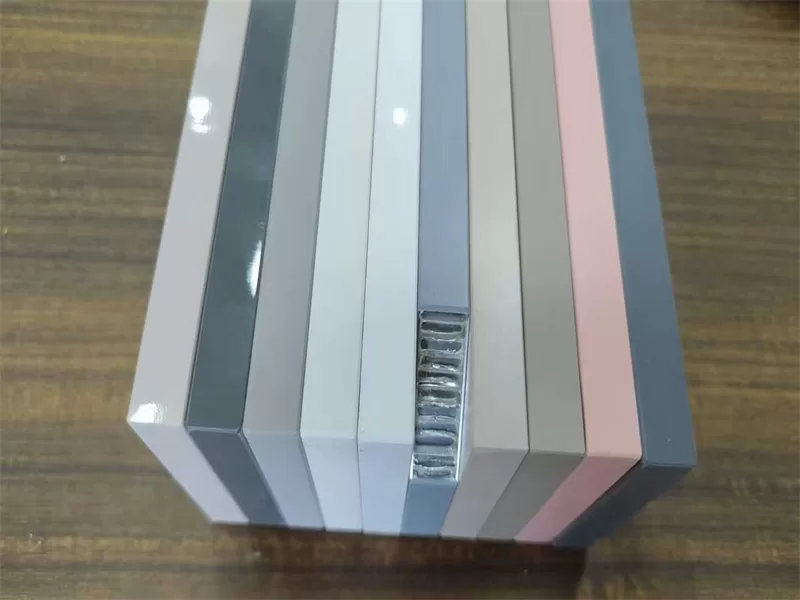
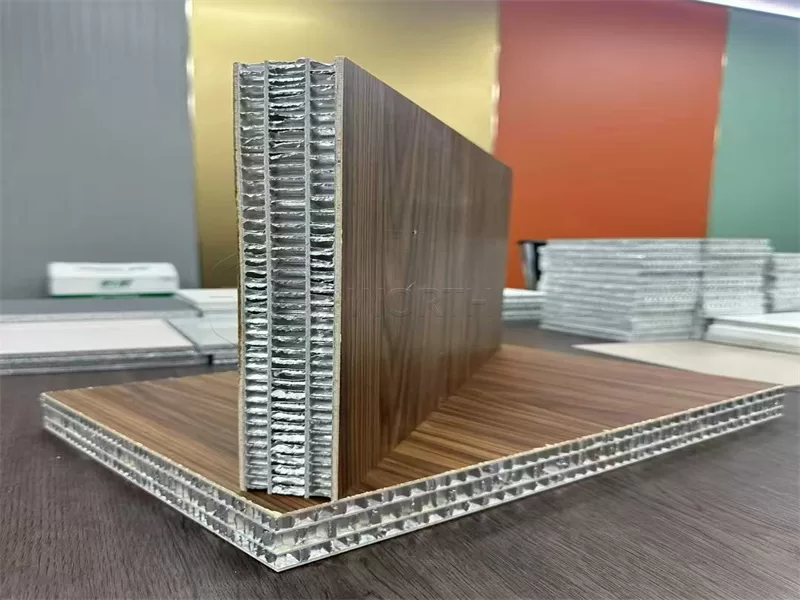
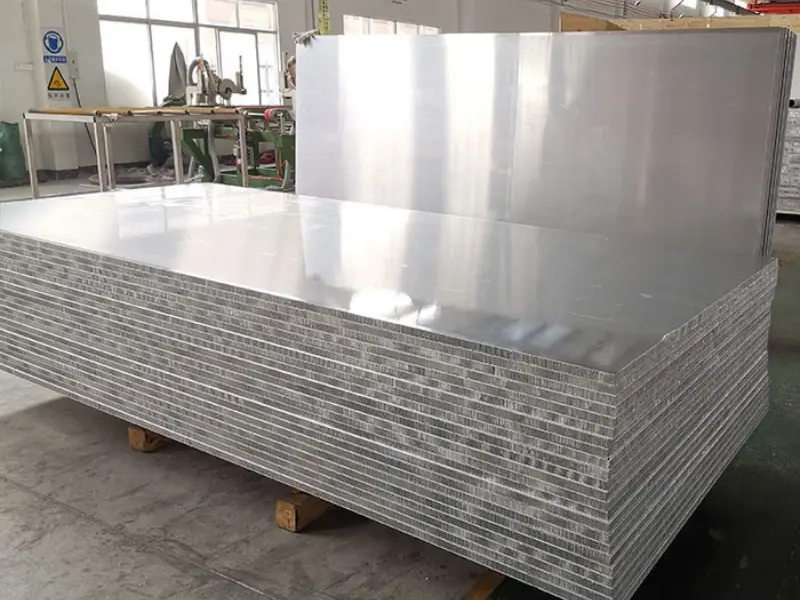
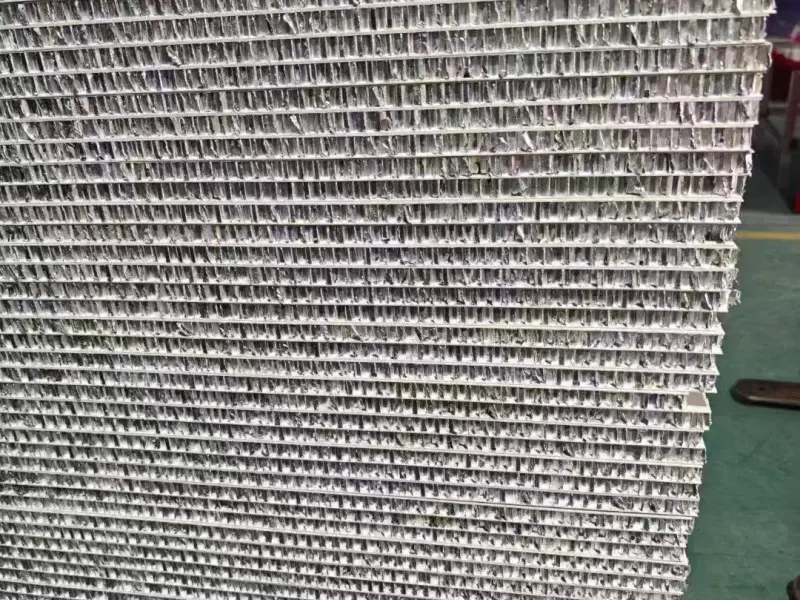
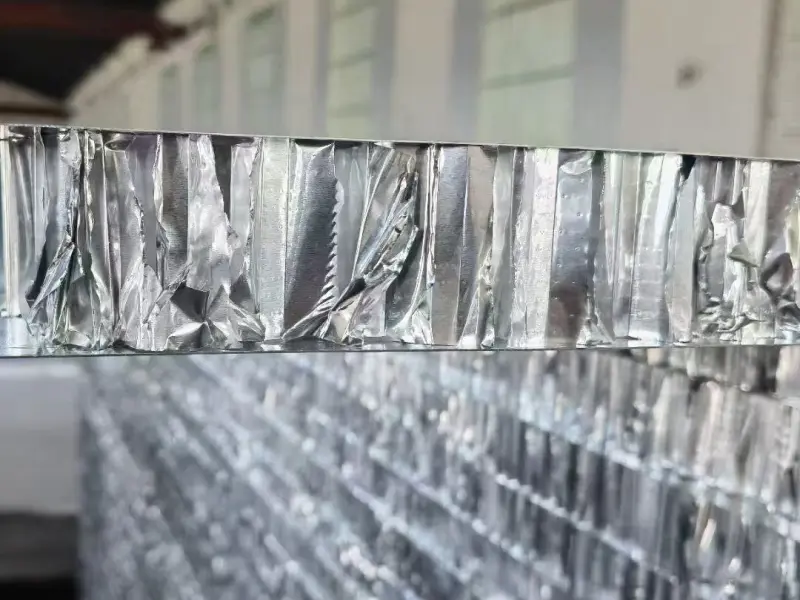
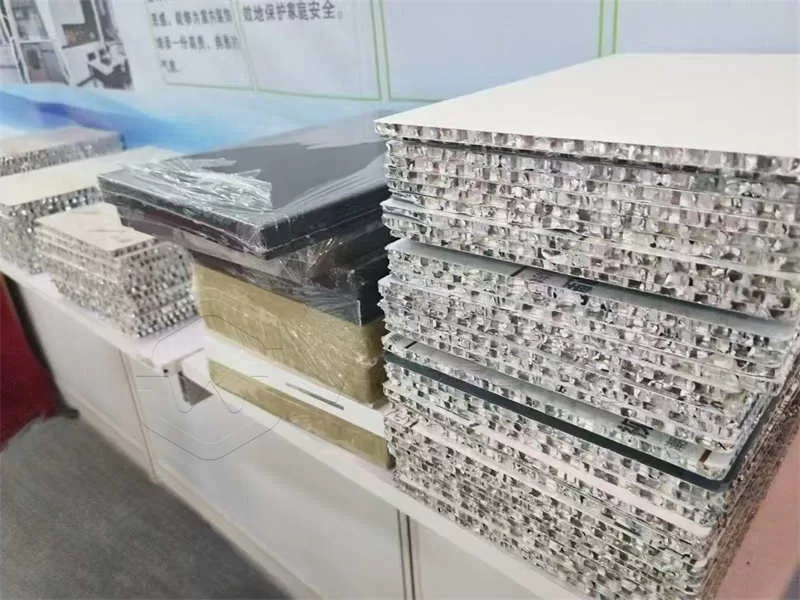
Aluminium honeycomb is a fascinating material, known for its incredible strength and light weight. It looks like a bee’s honeycomb, but it’s made from thin sheets of aluminium. This unique structure makes it a top choice for many industries.
Understanding Aluminium Honeycomb
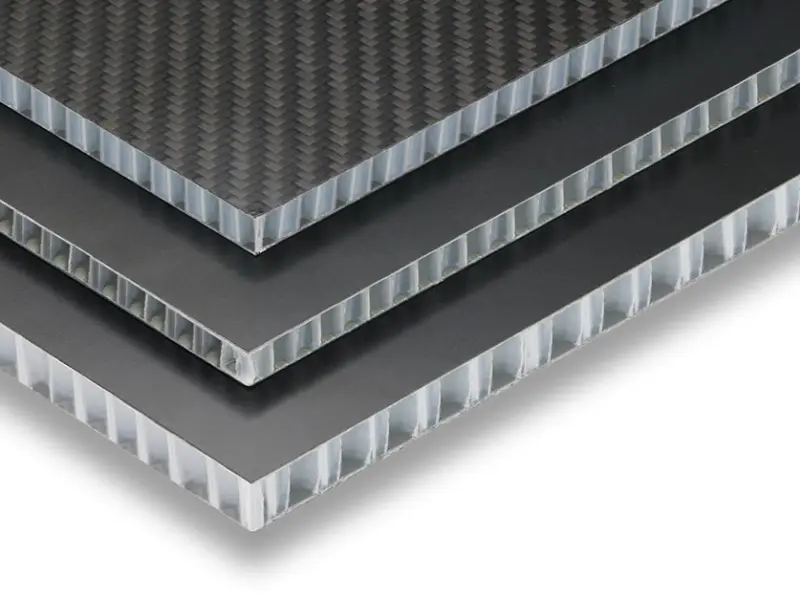
B It’s a core material, often used in sandwich panels. Imagine two strong, thin outer layers (skins) with a lightweight, structured core in between. That core is the aluminium honeycomb.
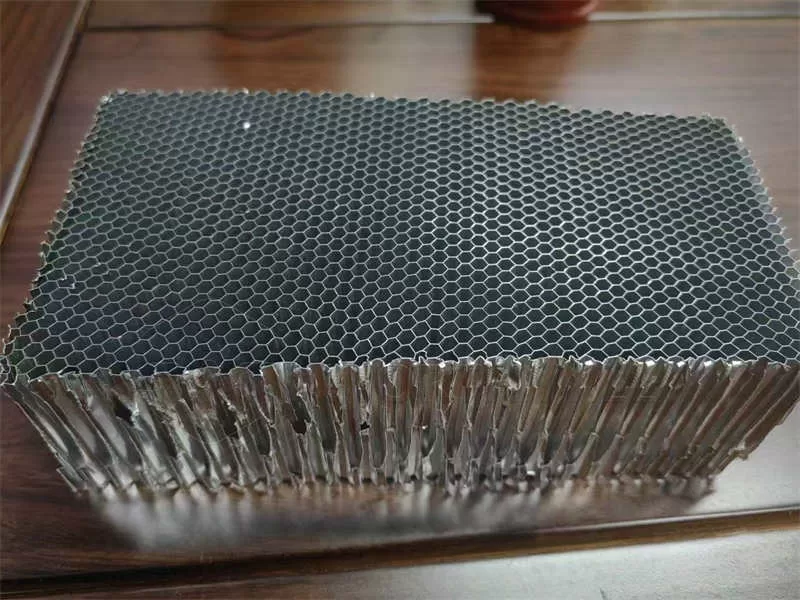
Its hexagonal cells provide excellent stiffness and strength, yet they use very little material. This makes aluminium honeycomb panels much lighter and stronger than solid panels of the same thickness.
The Manufacturing Process: How Aluminium Honeycomb is Made
The creation of aluminium honeycomb involves several precise steps. It’s a mix of careful bonding and stretching to form the perfect hexagonal pattern.
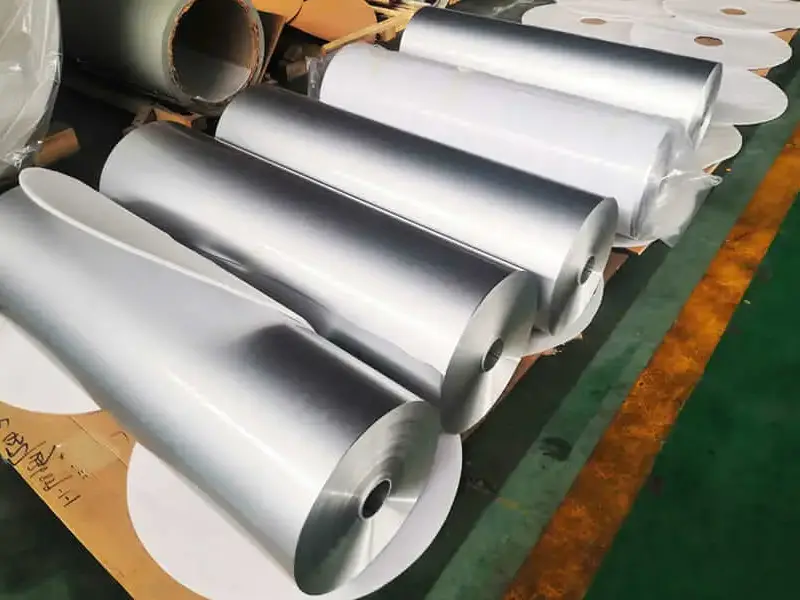
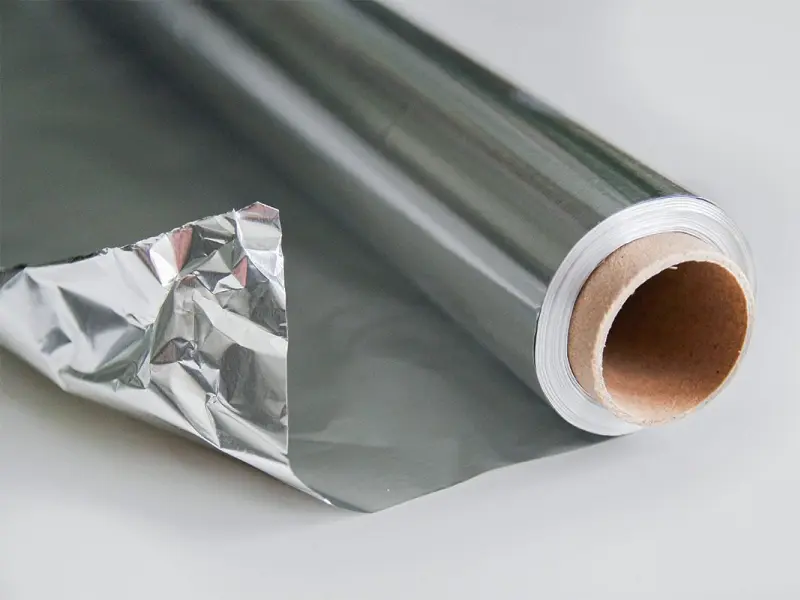
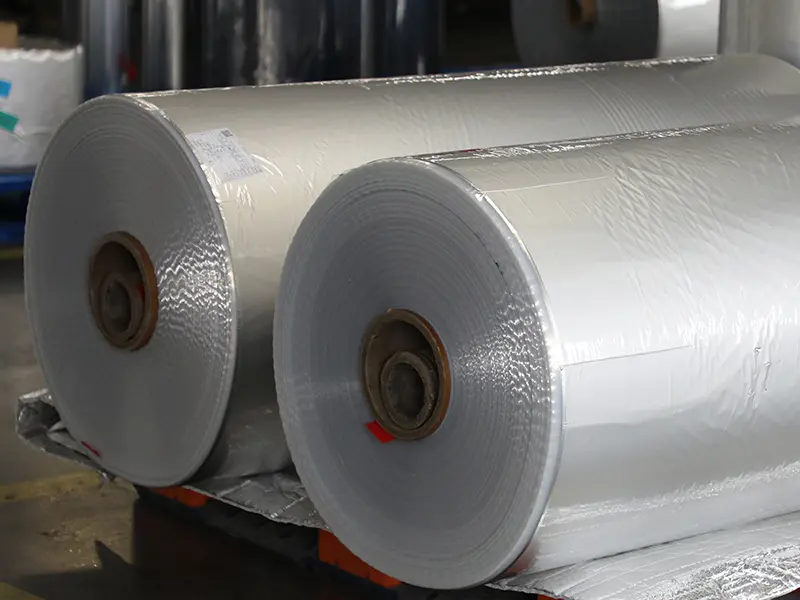
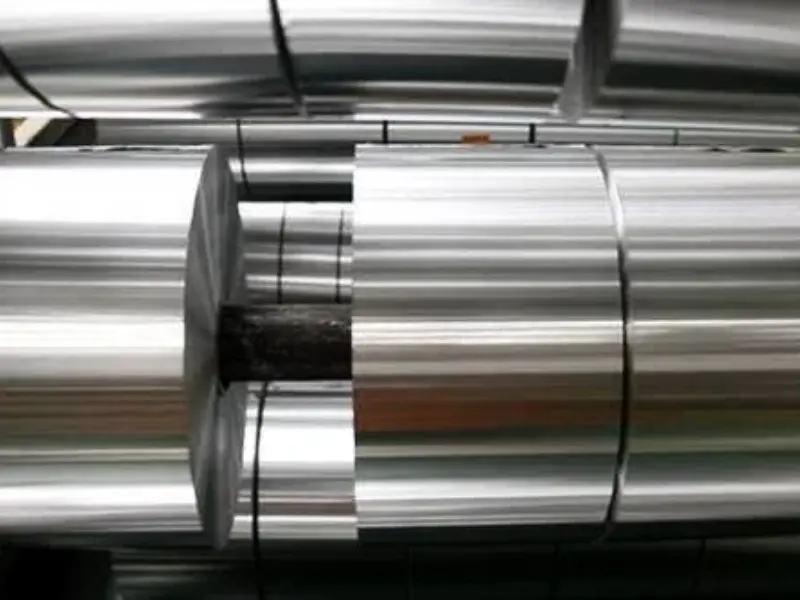
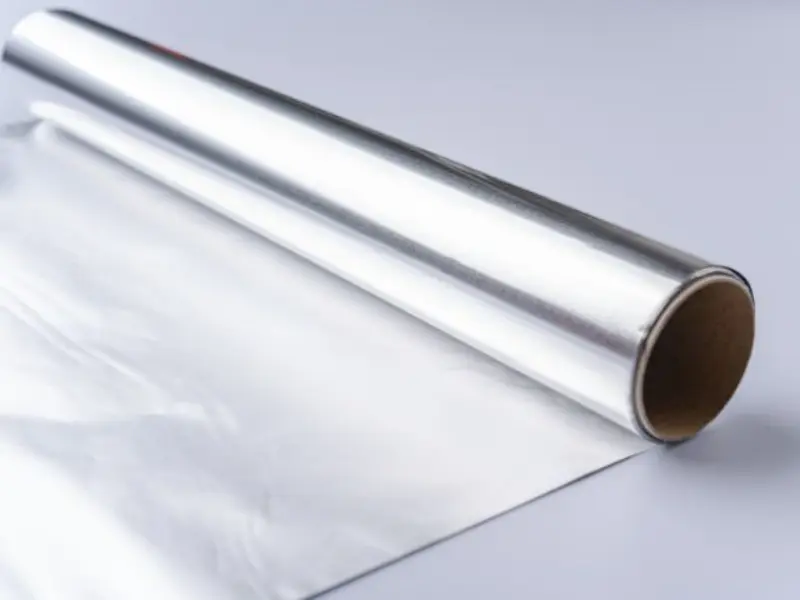
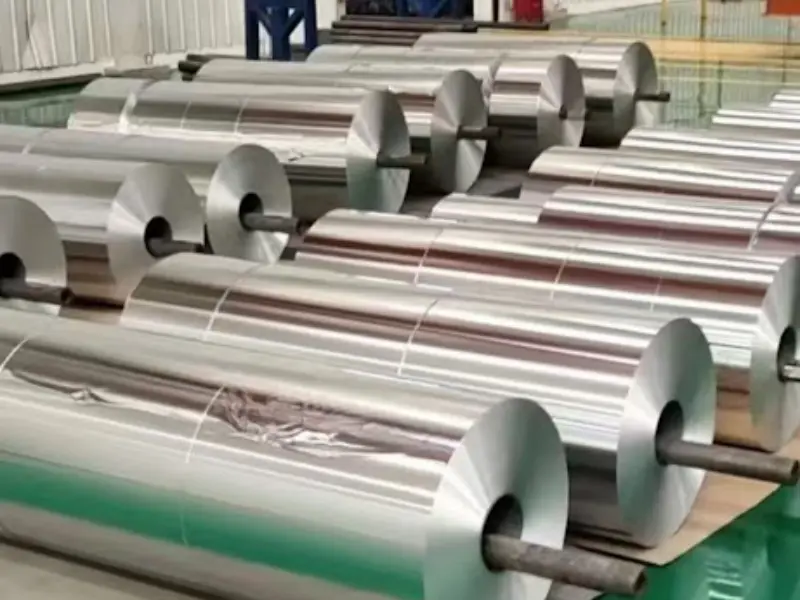
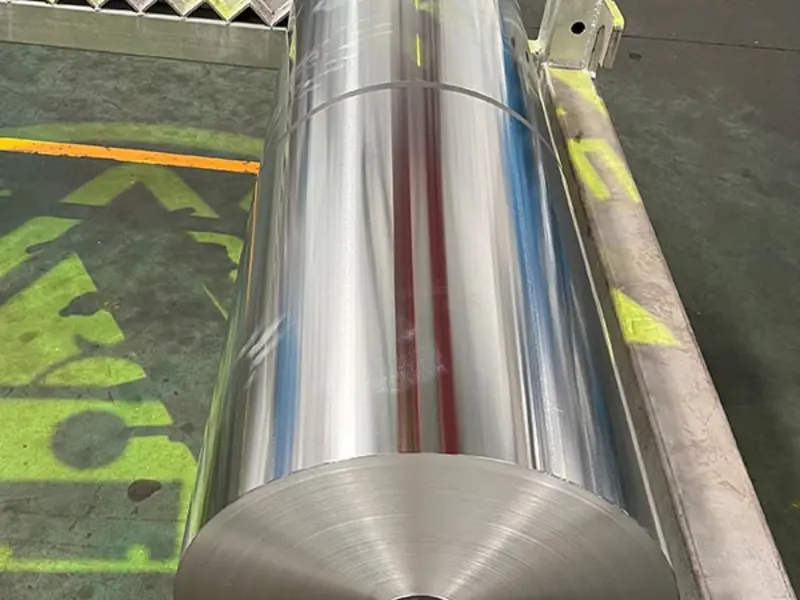
Preparing Aluminium Foil: The journey begins with high-quality aluminium foil. This foil is very thin, often just a few tenths of a millimeter thick. The choice of aluminium alloy is important here, usually 3003 or 5052 series, known for their strength and corrosion resistance.
Applying Adhesive and Stacking: This careful alignment is key to forming the honeycomb structure.
Bonding and Pressing: At this stage, the block is solid, not yet honeycombed.
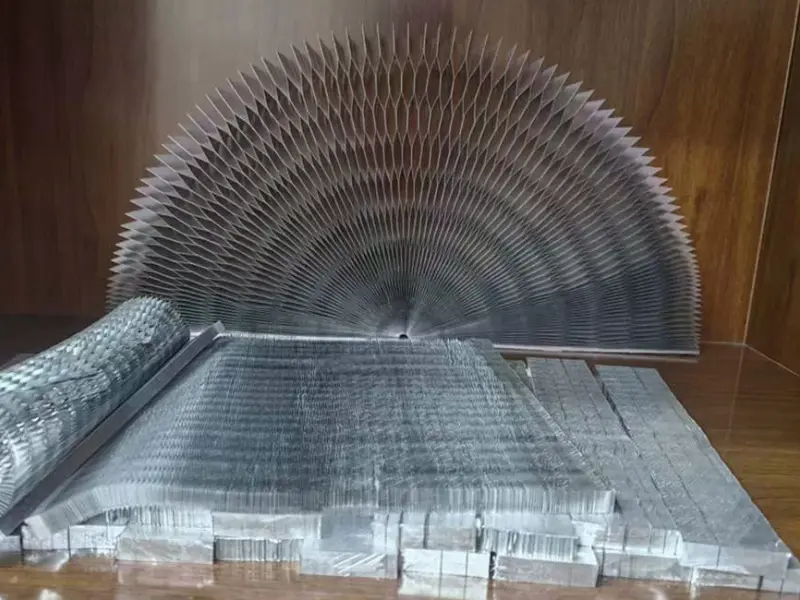
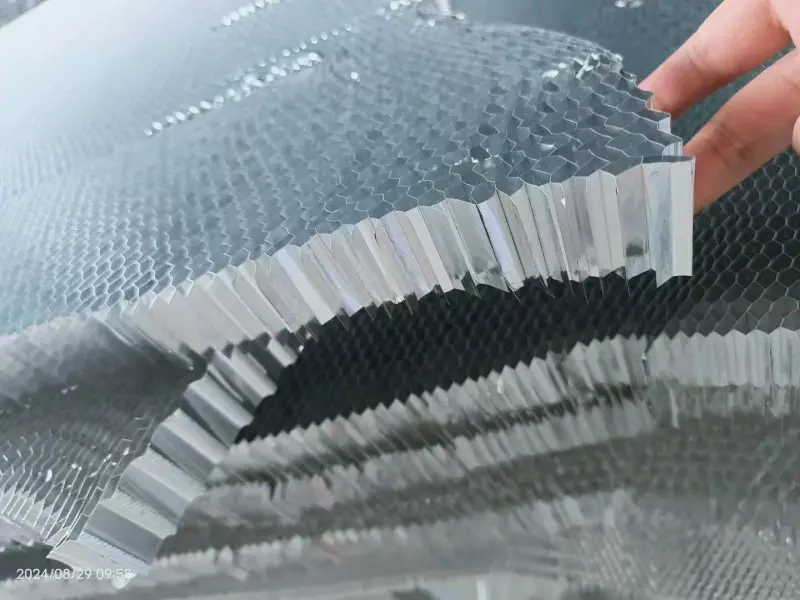
Expansion (The Magic Step): This is where the magic happens. As it expands, the unglued parts of the foil separate and stretch, forming the distinctive hexagonal cells. It’s like pulling an accordion open.This step requires precision to ensure uniform cell size and shape.
Slicing and Cutting: These sheets are now ready for further processing or use. The thickness of the final honeycomb core can vary greatly, depending on its intended application.
Curing and Finishing: Sometimes, the expanded honeycomb sheets undergo a final curing process to fully strengthen the adhesive bonds.
Aluminium Honeycomb Specifications
Aluminium honeycomb comes in various specifications to meet different industrial needs. Understanding these specifications is crucial for choosing the right material for your project.
Specification
Description
Common Ranges/Types
Classification
Aluminium honeycomb can be classified by its cell size, foil thickness, and whether it’s perforated or non-perforated. Perforated honeycomb allows air or gas to flow through.
Cell sizes from 1.8mm to 25mm. Perforated, Non-perforated.
Thickness
This refers to the overall height of the honeycomb core. It’s a key factor in the panel’s stiffness and strength.
From 3mm to 300mm (or more for special orders).
Alloy
The type of aluminium alloy used affects the honeycomb’s properties, such as strength, formability, and corrosion resistance.
Commonly 3003 series (standard strength) or 5052 series (higher strength, better corrosion).
Packaging
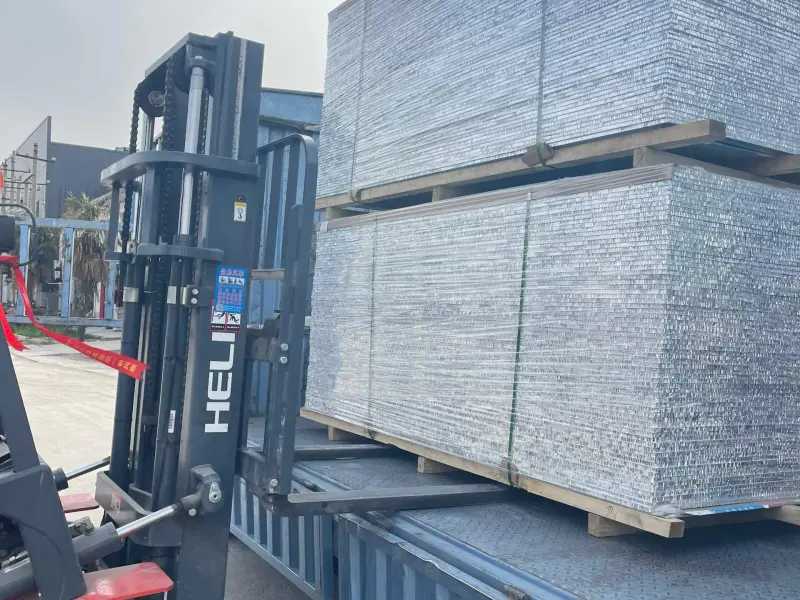
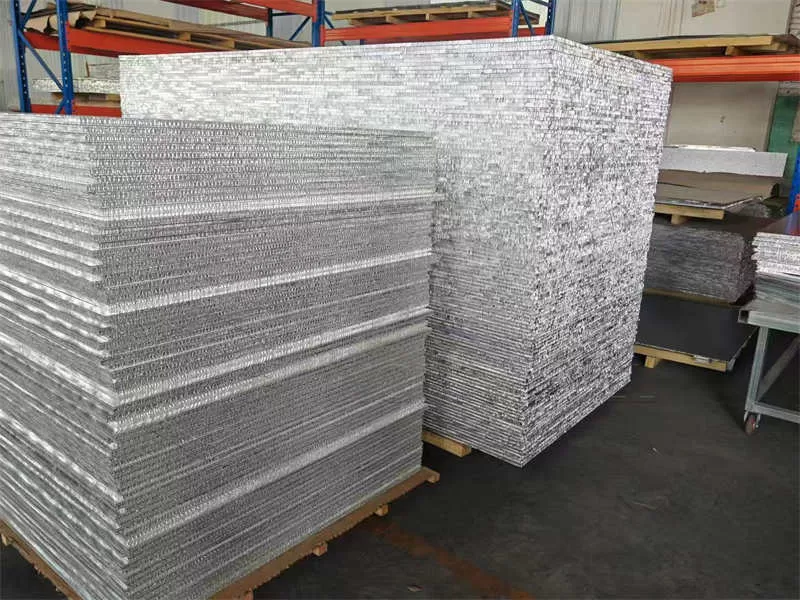
How the honeycomb is packed for shipping and storage depends on its form. Expanded sheets are usually laid flat. Unexpanded blocks are more compact.
Flat on pallets, in wooden crates, or specialized containers.
Key Features of Aluminium Honeycomb
The unique structure of aluminium honeycomb gives it several outstanding features:
Lightweight: It has a very high strength-to-weight ratio, making it ideal for applications where weight saving is critical.
High Strength and Stiffness: The hexagonal cell structure provides excellent rigidity and resistance to crushing and shearing forces.
Corrosion Resistance: Made from aluminium alloys, it naturally resists rust and corrosion.
Fire Retardant: Aluminium is non-combustible, offering good fire safety properties for many applications.
Sound Damping: The honeycomb structure can help absorb sound, making it useful in acoustic panels.
Thermal Conductivity: Aluminium is a good conductor of heat, which can be useful in certain applications, though the honeycomb structure itself provides some insulation due to trapped air.
Applications of Aluminium Honeycomb
Aerospace Industry: Critical for aircraft floors, interior panels, luggage compartments, and wing structures due where every kilogram matters.
Automotive Industry: Used in racing cars, electric vehicles, and high-performance cars for chassis components, energy absorption, and structural panels.
Marine Sector: Ideal for boat hulls, decks, and interior panels, offering light weight and resistance to saltwater environments.
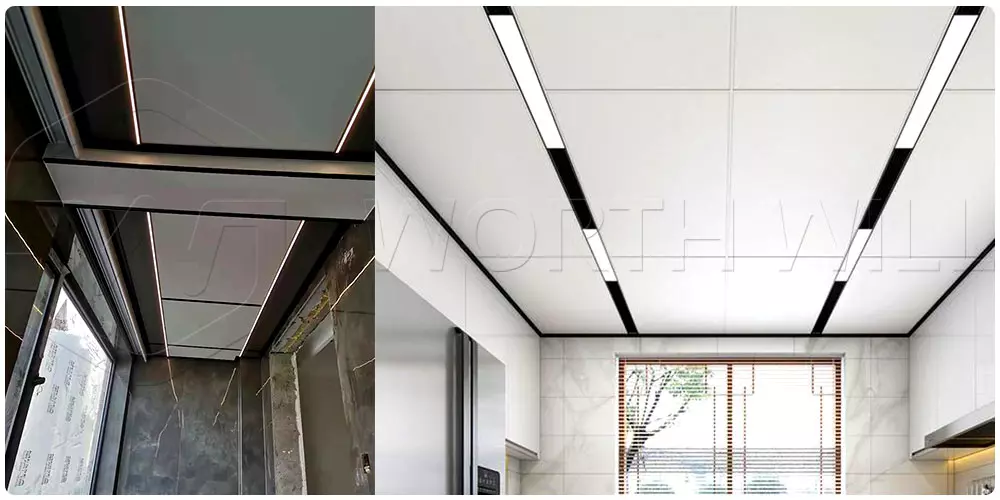
Construction and Architecture: Found in building facades, cleanroom panels, partition walls, and raised floors due to its flatness and strength.
Rail Transport: Utilized in train interiors, doors, and flooring, contributing to lighter, more energy-efficient trains.
Clean Rooms: Used for wall and ceiling panels in controlled environments where contamination must be minimized.
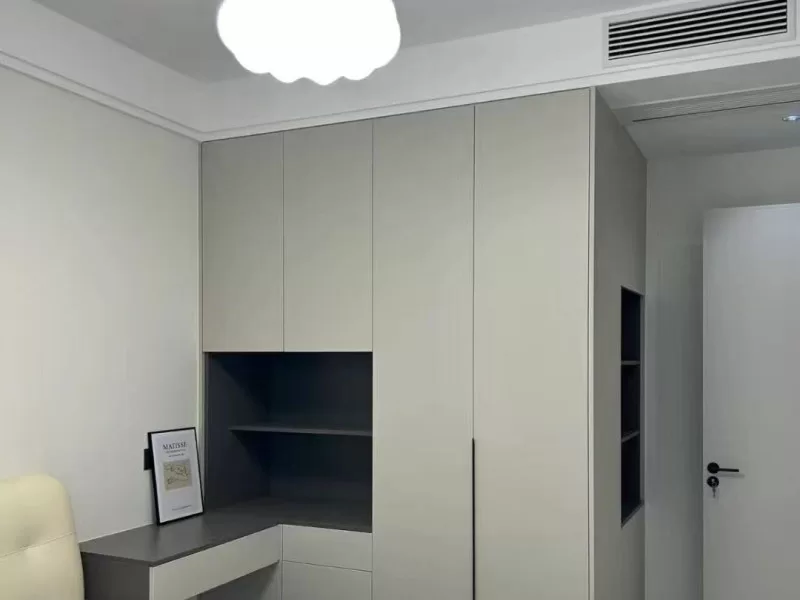
Furniture and Design: Modern furniture often incorporates aluminium honeycomb for lightweight yet strong tabletops and panels.
Industrial Equipment: Used in machine beds, tooling, and other applications requiring precision and stability.
How Aluminium Honeycomb is Made
Step-by-Step Manufacturing Process:
Material Selection – Choosing the right aluminium alloy.
Foil Preparation – Unrolling and cleaning aluminium sheets.
Adhesive Application – Applying epoxy or phenolic resin.
Stacking & Bonding – Layering sheets in a staggered pattern.
Expansion – Stretching the bonded block to form hexagonal cells.
Curing – Heating to strengthen the structure.
Cutting & Finishing – Trimming to required dimensions.
Key Benefits:
Lightweight yet strong Excellent energy absorption Corrosion-resistant Customizable in size and shape
How to Make Aluminium Honeycomb
A Practical Introduction to Aluminium Honeycomb Production
Aluminium honeycomb is a lightweight core material with many connected hexagonal cells. It has used to make strong but light sandwich panels. The core has usually placed between two face sheets, such as aluminum sheets, fiberglass panels, steel sheets, wood veneer, or composite skins.
The hexagonal structure is the key feature. It uses less metal than a solid sheet but can provide good stiffness, compression strength, and energy absorption. This makes it useful for aerospace parts, transport panels, building materials, furniture, marine interiors, cleanrooms, doors, and industrial equipment.
Making aluminium honeycomb requires accurate foil processing, adhesive bonding, expansion, curing, cutting, and inspection. The final core quality depends on the aluminum alloy, foil thickness, cell size, core density, adhesive quality, and production control.
Basic production route → Aluminum foil preparation → Adhesive printing → Stacking → Curing → Block cutting → Expansion → Stabilizing → Final inspection and packing.
What Is Aluminium Honeycomb?
Aluminium honeycomb is made from thin aluminum foil bonded in a repeated pattern. After the bonded foil stack is expanded, it forms a series of hexagonal cells.
The structure looks similar to a natural honeycomb. It has a high strength-to-weight ratio and can support thin surface sheets over a large area.
Main Parts of an Aluminium Honeycomb Core
Part
Material
Main Function
Aluminum foil
Thin aluminum strip or coil
Forms the cell walls
Adhesive
Structural adhesive
Bonds foil layers at selected points
Honeycomb cell
Expanded hexagonal structure
Reduces weight and adds support
Node
Bonded connection point
Holds the core structure together
Core block
Unexpanded bonded foil stack
Used before expansion
Expanded core
Open cell structure
Ready for panel production
The core has supplied in unexpanded blocks, expanded slices, sheets, or finished honeycomb panels.
Why Aluminium Honeycomb Is Used
Aluminium honeycomb helps manufacturers reduce weight without losing too much stiffness. It has often selected where a solid aluminum plate would be too heavy.
Main Benefits
Low weight
High stiffness for its weight
Good compression strength
Good flatness support for face sheets
Suitable for large panels
Good corrosion resistance with the right alloy
Easy to cut into different thicknesses
Suitable for bonding and lamination
Can improve sound and vibration control
Recyclable aluminum material
Available in different cell sizes and densities
Aluminium Honeycomb Performance Overview
Feature
General Performance
Weight
Very low
Stiffness-to-weight ratio
High
Compression support
Good
Flatness support
Good
Corrosion resistance
Depends on alloy and treatment
Fire behavior
Aluminum is non-combustible
Formability
Depends on foil and core design
Custom options
Wide range
Aluminium honeycomb is not usually used alone as a visible surface. It has normally combined with face sheets to make a sandwich panel.
How Aluminium Honeycomb Works Inside a Panel
A honeycomb panel has two face sheets with a lightweight core between them. The face sheets carry tension and compression loads. The honeycomb core keeps the face sheets apart and supports the panel shape.
Typical Honeycomb Panel Structure
Layer
Common Material
Purpose
Front skin
Aluminum, fiberglass, steel, stone veneer
Visible surface and load support
Adhesive film or glue
Structural adhesive
Bonds skin to core
Aluminum honeycomb core
Expanded aluminum cells
Creates stiffness with low weight
Adhesive film or glue
Structural adhesive
Bonds rear skin to core
Back skin
Aluminum, fiberglass, steel, or laminate
Rear support and protection
A thicker honeycomb core can increase panel stiffness without adding much weight. However, the correct design must consider panel size, skin thickness, support spacing, load, and installation method.
Raw Materials Used to Make Aluminium Honeycomb
The quality of the raw material affects the final cell shape and core strength.
Aluminum Foil
Aluminum foil is the main material. It is usually supplied in thin coils. The foil must have stable thickness, clean surface quality, and suitable mechanical properties.
Adhesive
The adhesive bonds the foil strips at controlled points. The adhesive must have suitable strength, curing performance, and temperature resistance for the final application.
Protective Treatment
Some honeycomb cores use corrosion-resistant treatment or surface coating. This can be important for marine, transport, humid, or industrial environments.
Common Raw Material List
Material
Why It Is Needed
Aluminum foil coil
Creates cell walls
Adhesive
Creates bonded nodes
Cleaning material
Removes oil and dust
Surface treatment chemical
Improves adhesion if required
Release paper
Supports processing in some systems
Protective film
Protects finished core
Packaging material
Prevents crush damage in transport
Aluminium Alloy Options for Honeycomb Core
The alloy affects foil strength, corrosion resistance, forming performance, and final cost.
Common Alloys Used for Aluminium Honeycomb
Alloy
Main Features
Typical Application
1050
High aluminum content and good formability
General lightweight core
1060
Good corrosion resistance and easy processing
Decorative and general panels
1100
Good formability and corrosion resistance
General honeycomb core
3003
Better strength than 1000 series
Building and industrial panels
3004
Good strength and forming performance
Selected panel applications
5052
Good strength and corrosion resistance
Marine and transport use
5056
Higher strength for special honeycomb structures
Aerospace and high-performance panels
5057
Good strength and processing performance
Selected transport and industrial core
3003 Aluminium Honeycomb
3003 aluminum contains manganese. It provides better strength than many 1000 series alloys while keeping good corrosion resistance.
It is often used for:
Building panels
Ceiling panels
Furniture panels
Doors
Cleanroom walls
Decorative sheets
General industrial structures
5052 Aluminium Honeycomb
5052 aluminum contains magnesium. It offers good corrosion resistance and useful mechanical strength.
It is often selected for:
Marine interiors
Vehicle panels
Railway systems
Coastal building projects
Equipment enclosures
Industrial panels
5056 Aluminium Honeycomb
5056 aluminum has used when higher strength is required. It has often associated with demanding honeycomb structures, including selected aerospace and transport applications.
For high-performance projects, buyers should confirm the required mechanical properties, surface treatment, testing standard, and application conditions.
Foil Temper Conditions
The temper describes the hardness condition of aluminum foil. The correct temper helps control foil handling, adhesive bonding, expansion, and core strength.
Common Temper Options
Temper
General Condition
Typical Use
O
Soft and fully annealed
Flexible and easy-to-expand core
H14
Half hard
General industrial honeycomb
H16
Three-quarter hard
Stronger core structures
H18
Hard condition
Rigid foil applications
H19
Extra hard condition
Selected high-strength core designs
Soft foil is easier to process and expand. Harder foil can provide higher cell wall stiffness, but it may require more controlled processing.
Aluminum Foil Thickness for Honeycomb Core
Foil thickness is one of the main factors in honeycomb core design. Thin foil reduces weight. Thicker foil can improve compression strength and core durability.
Common Foil Thicknesses
Foil Thickness
General Core Type
Typical Use
0.025 mm to 0.030 mm
Very light core
Decorative and low-load panels
0.035 mm to 0.040 mm
Standard light core
Furniture and interior panels
0.050 mm to 0.060 mm
General core
Building and transport panels
0.070 mm to 0.080 mm
Stronger core
Doors and industrial products
0.100 mm and above
Heavy-duty core
High-load panels and special structures
The foil thickness should not be selected only by price. Thin foil may reduce material cost but can affect handling strength and compression performance.
Honeycomb Cell Size Options
Cell size refers to the width of the hexagonal cell. Smaller cells provide more support points. Larger cells reduce weight and may lower material consumption.
Common Cell Sizes
Cell Size
General Characteristic
Typical Use
3 mm
Fine structure and high support density
Decorative panels and precision products
4 mm
Strong and stable cell pattern
General panel systems
5 mm
Balanced strength and weight
Doors and wall panels
6 mm
Common industrial option
Honeycomb panels and ceilings
8 mm
Lower density structure
Large wall panels
10 mm
Lightweight core
Furniture and transport interiors
12 mm
Light core with larger cells
Non-structural panel use
15 mm to 20 mm
Large cell core
Special low-weight designs
Small Cell vs Large Cell Comparison
Feature
Small Cell Core
Large Cell Core
Support density
Higher
Lower
Surface stability
Better
Moderate
Weight
Higher
Lower
Compression performance
Often higher
Depends on foil and density
Cost
May be higher
May be lower
Best use
Fine panels and higher-load surfaces
Large lightweight panels
Core Thickness Options
Core thickness is different from foil thickness. The core thickness is the height of the expanded honeycomb structure.
Typical Core Thicknesses
Core Thickness
Typical Application
3 mm to 5 mm
Thin decorative panels
6 mm to 10 mm
Doors, ceilings, furniture
12 mm to 15 mm
Interior wall panels
20 mm to 25 mm
General honeycomb panels
30 mm to 50 mm
Transport and industrial panels
60 mm to 100 mm
Large structural or special panels
A thicker core can improve panel stiffness. The complete panel must still be designed with suitable skin thickness, bonding method, and support system.
Main Methods Used to Make Aluminium Honeycomb
There are several production methods. The most common commercial process uses adhesive bonding and expansion.
Adhesive Bonding and Expansion Method
This method begins with aluminum foil strips or foil sheets. Adhesive has applied in regular lines. The foils have stacked, cured, cut into blocks, and expanded.
This process has widely used because it can produce consistent hexagonal cells.
Corrugated Foil Method
In the corrugated foil method, aluminum foil has shaped into a corrugated form and then bonded together. It can create cellular structures but may have a different cell design from traditional expanded honeycomb.
Welded Honeycomb Method
Some specialized honeycomb structures use welding instead of adhesive bonding. This has used for high-temperature or special industrial applications.
However, welded core production requires more specialized equipment and process control.
Honeycomb Manufacturing Method Comparison
Method
Main Feature
Typical Use
Adhesive bonding and expansion
Common hexagonal core method
Building, furniture, transport
Corrugated foil bonding
Alternative cellular structure
Special panels and lightweight systems
Welded honeycomb
No adhesive at bonded joints
High-temperature or special use
Formed metal core
Custom cell shape
Industrial and engineering products
Step-by-Step Process: How to Make Aluminium Honeycomb
Step One: Select the Aluminum Foil
Choose aluminum foil based on the final product requirements.
Key points include:
Alloy grade
Temper
Foil thickness
Coil width
Surface cleanliness
Corrosion resistance
Required core density
Final panel use
Example Foil Selection
Application
Suggested Alloy
Typical Foil Range
Decorative wall panel
3003
0.035 mm to 0.050 mm
Furniture panel
3003 or 1100
0.035 mm to 0.060 mm
Ceiling panel
3003
0.040 mm to 0.060 mm
Marine interior panel
5052
0.050 mm to 0.080 mm
Transport panel
5052 or 5056
0.050 mm to 0.100 mm
High-strength core
5056
Based on project requirements
The exact choice has confirmed through product testing and project requirements.
Step Two: Clean the Foil Surface
The foil surface should be clean before adhesive application. Oil, dust, moisture, and surface contamination can reduce bonding quality.
Basic Cleaning Targets
Remove rolling oil
Remove dust
Remove moisture
Reduce surface contamination
Prepare the foil for adhesive bonding
Industrial cleaning may include degreasing, drying, surface treatment, or controlled cleaning systems.
Step Three: Apply Adhesive in Repeated Lines
Adhesive is applied to the foil in a repeating pattern. The spacing between adhesive lines will influence the final honeycomb cell size.
The adhesive application must be consistent. Uneven adhesive lines can cause irregular cell formation during expansion.
Adhesive Pattern Factors
Factor
Effect on Final Core
Adhesive line spacing
Determines cell size
Adhesive width
Affects bond area
Adhesive amount
Affects node strength
Adhesive consistency
Affects cell uniformity
Drying time
Affects stacking quality
Curing temperature
Affects bond performance
The adhesive type has selected based on the final use. Some applications need general industrial adhesive. Others need flame-retardant, heat-resistant, marine-grade, or high-strength systems.
Step Four: Stack the Foil Layers
After adhesive application, the foil layers have stacked carefully. The adhesive pattern is offset from one foil layer to the next.
This offset is what allows the foil stack to open into hexagonal cells after expansion.
Stacking Quality Checks
Correct foil alignment
Even adhesive pattern
Stable layer spacing
No trapped dust
No wrinkles
No damaged foil edges
Correct stack pressure
Correct stack height
A poorly aligned stack can create distorted cells and uneven core expansion.
Step Five: Cure the Bonded Foil Block
The foil stack has cured under controlled pressure and temperature. This creates a bonded block.
The curing process depends on the adhesive system. Follow the adhesive supplier’s technical instructions for temperature, pressure, and time.
Why Curing Is Important
Curing Condition
Possible Result
Correct curing
Stable bonded nodes
Under-curing
Weak bonding and cell failure
Over-curing
Brittle adhesive or foil distortion
Uneven pressure
Inconsistent bonding
Uneven temperature
Variable core strength
The bonded block should cool and stabilize before cutting or expansion.
Step Six: Cut the Honeycomb Block
After curing, the bonded block is cut into slices. The cut direction and slice thickness determine the final core thickness after expansion.
Cutting Options
Cutting Method
Main Use
Band saw cutting
General honeycomb block cutting
Precision saw cutting
Controlled thickness products
CNC cutting
Custom shapes and special profiles
Waterjet cutting
Selected finished core or panel shapes
The cutting edge should be clean. Rough cutting can crush cells or create uneven core thickness.
Step Seven: Expand the Core
The cut block has expanded in a controlled direction. The bonded points open into hexagonal cells.
Expansion has done manually for small samples or with mechanical expansion equipment for commercial production.
Expansion Control Points
Expansion direction
Expansion force
Cell size accuracy
Uniformity across the core
Core thickness
Cell wall damage
Bond node condition
Final panel size
Expansion rule → Pull the core evenly. Uneven force can create distorted cells and weak areas.
Step Eight: Stabilize the Expanded Honeycomb
The expanded core may need to be stabilized before panel bonding. This can include drying, trimming, coating, or temporary fixing.
The goal is to keep the cells open and uniform.
Stabilization Checks
Check
Why It Matters
Cell shape
Supports panel consistency
Core thickness
Affects final panel thickness
Cell opening
Helps face-sheet bonding
Core flatness
Supports panel flatness
Edge condition
Helps trimming and installation
Bond strength
Supports long-term performance
Step Nine: Bond the Honeycomb to Face Sheets
To make an aluminium honeycomb panel, the expanded core bonded between two face sheets.
The face sheet may be aluminum, fiberglass, steel, wood veneer, HPL, stone veneer, or decorative laminate.
Common Face Sheet Options
Face Sheet
Typical Product
Aluminum sheet
Facade, ceiling, and wall panel
Pre-painted aluminum
Decorative panel and building cladding
Stainless steel
Kitchen, elevator, and industrial panel
Fiberglass
Transport and marine panel
HPL laminate
Furniture and interior panel
Wood veneer
Decorative furniture panel
Stone veneer
Lightweight stone panel
PVC film
Low-cost interior panel
The adhesive between the core and face sheets have evenly distributed. Poor bonding can cause delamination, uneven surfaces, or reduced panel strength.
Step Ten: Press, Cure, and Finish the Panel
The sandwich panel has pressed under controlled conditions. This helps the face sheets bond evenly to the honeycomb core.
After curing, the panel has trimmed, cut, drilled, routed, folded, coated, or packed.
Common Finishing Services
Cut-to-size panels
CNC cutting
Drilling
Routing
Perforation
Edge sealing
Aluminum frame insertion
Folded edges
Corner cutting
Protective film application
Surface coating
Custom packaging
Types of Aluminium Honeycomb Products
Aluminium honeycomb has supplied as core material or as finished panels.
Unexpanded Aluminium Honeycomb Block
Unexpanded blocks save space during storage and shipping. The customer expands the material before panel production.
Feature
Unexpanded Block
Shipping volume
Low
Storage
Convenient
Processing need
Requires expansion equipment
Best for
Panel manufacturers
Supply form
Bonded foil block
Expanded Aluminium Honeycomb Core
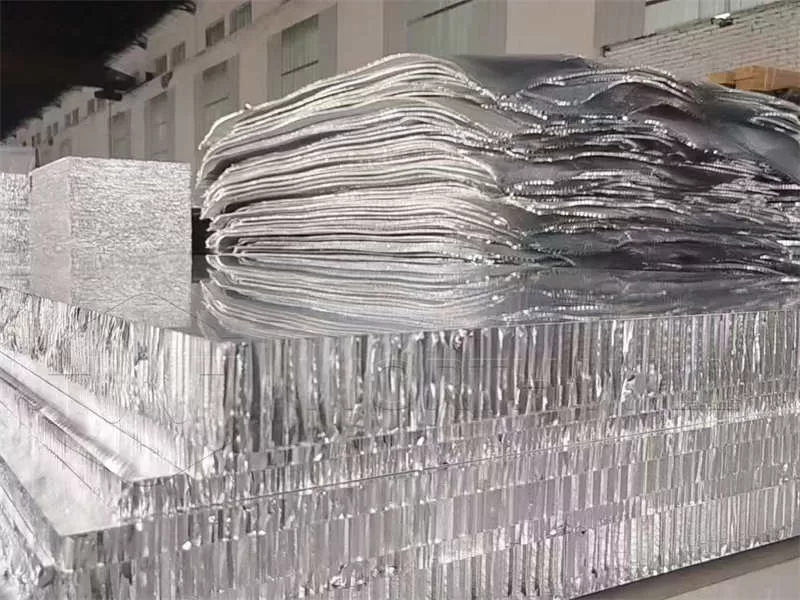
Expanded core is ready for panel lamination. It is usually supplied in sheet form.
Feature
Expanded Core
Cell structure
Open hexagonal cells
Processing need
Ready for panel bonding
Main use
Finished panel production
Shipping volume
Higher than unexpanded block
Custom option
Cell size and thickness
Perforated Aluminium Honeycomb Core
Perforated core has small holes in the cell walls. These holes can allow air movement or resin flow during certain bonding processes.
It may be used for:
Vacuum infusion
Acoustic panels
Composite panels
Aerospace parts
Special industrial products
Treated Aluminium Honeycomb Core
Treated honeycomb may have corrosion-resistant coating or conversion treatment. It is useful in humid, coastal, transport, and marine conditions.
Aluminum Honeycomb Sandwich Panel
A finished panel combines honeycomb core and face sheets. It has supplied with decorative finishes, coatings, holes, frames, and installation systems.
Aluminium Honeycomb Applications
Aluminium honeycomb has used in many industries because it is lightweight and stable.
Building and Architectural Applications
Exterior facade panels
Interior wall panels
Ceiling panels
Soffit panels
Column covers
Elevator wall panels
Partition systems
Decorative cladding
Door panels
Balcony panels
Transportation Applications
Railway interior panels
Subway ceiling panels
Bus wall panels
Truck body panels
Caravan furniture
Vehicle flooring
Aircraft interiors
Ship cabin walls
Yacht furniture
Trailer panels
Furniture and Interior Applications
Lightweight shelves
Cabinet doors
Table tops
Wardrobe panels
Office partitions
Display panels
Retail fixtures
Exhibition stands
Kitchen panels
Industrial Applications
Machine covers
Equipment enclosures
Cleanroom panels
Laboratory partitions
Acoustic panels
Work platforms
Lightweight doors
Safety barriers
Control room panels
Aluminium Honeycomb Compared with Other Core Materials
Aluminium Honeycomb vs Solid Aluminum Plate
Feature
Aluminium Honeycomb
Solid Aluminum Plate
Weight
Much lower
Higher
Stiffness-to-weight ratio
High
Good but heavy
Material use
Efficient
Uses more aluminum
Panel thickness options
Wide
Limited by plate thickness
Large panel handling
Easier
More difficult
Best use
Lightweight sandwich panels
Solid metal parts
The aluminium Honeycomb vs Foam Core
Feature
Aluminium Honeycomb
Foam Core
Core material
Aluminum foil
Polymer foam
Compression support
Good
Depends on foam density
Fire behavior
Aluminum is non-combustible
Depends on foam type
Weight
Low
Low
Recyclability
Metal recovery possible
Depends on foam
Common use
Panels and transport
Insulation and composite panels
Aluminium Honeycomb vs Paper Honeycomb
Feature
Aluminium Honeycomb
Paper Honeycomb
Moisture resistance
Better
Limited
Strength
Higher
Moderate
Fire resistance
Better base material
Limited
Cost
Higher
Usually lower
Surface durability
High
Lower
Typical use
Architectural and industrial panels
Packaging and lightweight furniture
Selecting the Right Honeycomb Core
The best honeycomb core depends on the final panel design.
Key Selection Questions
What is the final application?
Is the panel for indoor or outdoor use?
Is moisture resistance important?
What panel size is needed?
What load will the panel carry?
Is low weight the main requirement?
Does the core need flame-retardant properties?
What face sheet will be used?
Is the panel flat, curved, perforated, or folded?
Is corrosion resistance required?
What is the required quantity?
Quick Selection Table
Project Need
Suggested Core Direction
Decorative interior panel
3003 core with medium cell size
Large wall panel
Lightweight larger-cell core
Door panel
Medium-density core with stable thickness
Marine interior
5052 core with corrosion-resistant treatment
Transport panel
5052 or 5056 core with suitable face sheets
Furniture panel
Light 3003 or 1100 core
Acoustic panel
Perforated core with acoustic design
Heavy-duty industrial panel
Higher-density core and thicker foil
Quality Control During Honeycomb Production
Honeycomb core quality should be checked throughout the production process.
Important Inspection Items
Inspection Item
Why It Matters
Aluminum alloy
Confirms the correct raw material
Foil thickness
Affects core weight and strength
Temper
Affects expansion and stiffness
Adhesive line spacing
Controls cell size
Adhesive bonding
Supports node strength
Cell shape
Confirms uniform expansion
Core thickness
Supports panel accuracy
Density
Affects weight and compression performance
Flatness
Helps face-sheet bonding
Corrosion treatment
Important for humid environments
Cut edge quality
Prevents crushed cells
Packaging quality
Protects core during transport
Common Honeycomb Defects
Defect
Possible Cause
Uneven cell size
Incorrect adhesive spacing or expansion
Crushed cells
Poor handling or cutting
Weak bond nodes
Incorrect curing or adhesive amount
Cell distortion
Uneven expansion force
Core thickness variation
Cutting or expansion issue
Delamination in panel
Poor core-to-skin bonding
Corrosion marks
Poor storage or unsuitable treatment
Edge damage
Weak packaging or rough handling
Storage and Handling of Aluminium Honeycomb
Honeycomb core has crushed if it is handled incorrectly. It has stored in a dry, clean area.
Storage Recommendations
Keep core dry
Store on flat support
Avoid heavy objects on top
Protect edges and corners
Keep expanded core away from impact
Avoid dragging sheets
Use suitable pallets
Keep unexpanded blocks in original packing
Protect treated core from chemical contamination
Check for crush damage before panel bonding
Expanded core should be handled with care. The cell walls are thin and can deform under concentrated pressure.
Information Needed for a Quotation
A clear request helps a supplier provide the correct honeycomb core or panel.
Request for Quotation Checklist
Product type: unexpanded core, expanded core, or finished panel
Aluminum alloy
Temper
Foil thickness
Cell size
Core density
Core thickness
Expanded sheet size
Surface treatment
Face sheet requirement, if panel is needed
Quantity
Application
Required test documents
Packing requirement
Delivery location
Example RFQ Format
Please quote aluminium honeycomb core, 3003 alloy, H14 temper, 0.05 mm foil thickness, 6 mm cell size, 20 mm core thickness, expanded sheet size 1,220 mm × 2,440 mm, for interior wall panel production. Please include export pallet packing and material test documents.
Frequently Asked Questions
What is aluminium honeycomb made from?
Aluminium honeycomb is made from thin aluminum foil bonded in a repeated pattern. After the bonded foil stack has expanded, it forms hexagonal cells.
How is aluminium honeycomb made?
The common method uses aluminum foil, adhesive printing, foil stacking, curing, block cutting, controlled expansion, and final inspection. The expanded core has bonded between face sheets to create a honeycomb panel.
Which alloy is used for aluminium honeycomb?
Common alloys include 1050, 1060, 1100, 3003, 5052, 5056, and 5057. 3003 is common for general panels. 5052 and 5056 may be used for stronger or more corrosion-resistant applications.
What is the best alloy for marine aluminium honeycomb?
5052 and 5056 are common options for marine or transport-related products. The correct choice also depends on surface treatment, face sheets, adhesive, installation environment, and project requirements.
What is the difference between expanded and unexpanded honeycomb core?
Unexpanded honeycomb is a compact bonded foil block. It saves space in shipping. Expanded honeycomb is opened into hexagonal cells and is ready for panel lamination.
What cell size should I choose?
Small cells provide more support and surface stability. Large cells reduce weight. Common sizes include 3 mm, 4 mm, 5 mm, 6 mm, 8 mm, 10 mm, and 15 mm.
Can aluminium honeycomb be cut?
Yes. It can be cut with suitable saws, CNC equipment, waterjet systems, or other controlled methods. The cutting process should avoid crushing the cells.
Can aluminium honeycomb be used outdoors?
Aluminium honeycomb is often used inside a finished panel. Outdoor suitability depends on the aluminum alloy, treatment, face sheet, edge sealing, coating, adhesive, fixing system, and weather exposure.
Is aluminium honeycomb fireproof?
Aluminum is non-combustible. However, the fire performance of a complete honeycomb panel depends on the adhesive, face sheets, coatings, insulation, installation system, and applicable test standard.
Can aluminium honeycomb panels be curved?
Yes. Curved honeycomb panels can be made for columns, vehicle interiors, ceilings, and special architectural designs. The core structure and forming method should be planned before production.
What is the difference between aluminium honeycomb and aluminum composite panel?
Aluminium honeycomb panels use an aluminum cellular core. Aluminum composite panels usually use a mineral or polymer-based core. Honeycomb panels often offer higher stiffness for their weight and can be made in a wider range of thicknesses.
How do I order custom aluminium honeycomb?
Provide the alloy, temper, foil thickness, cell size, core thickness, sheet size, density, quantity, application, treatment requirement, and delivery location.