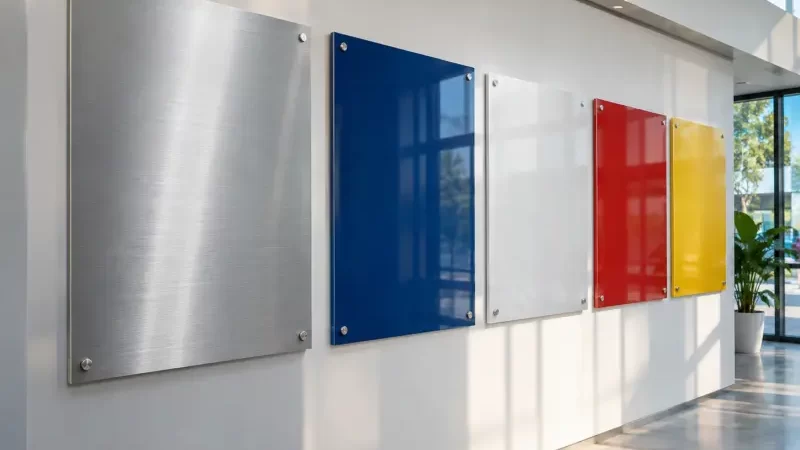
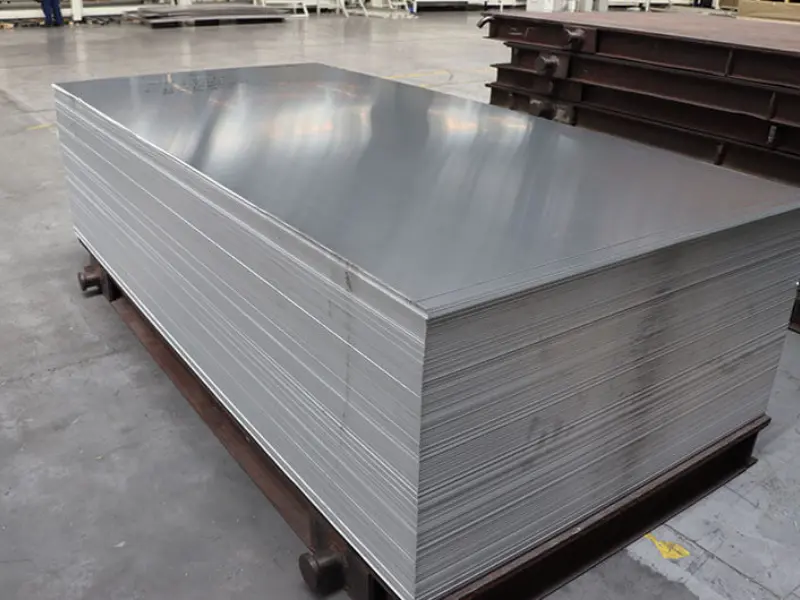
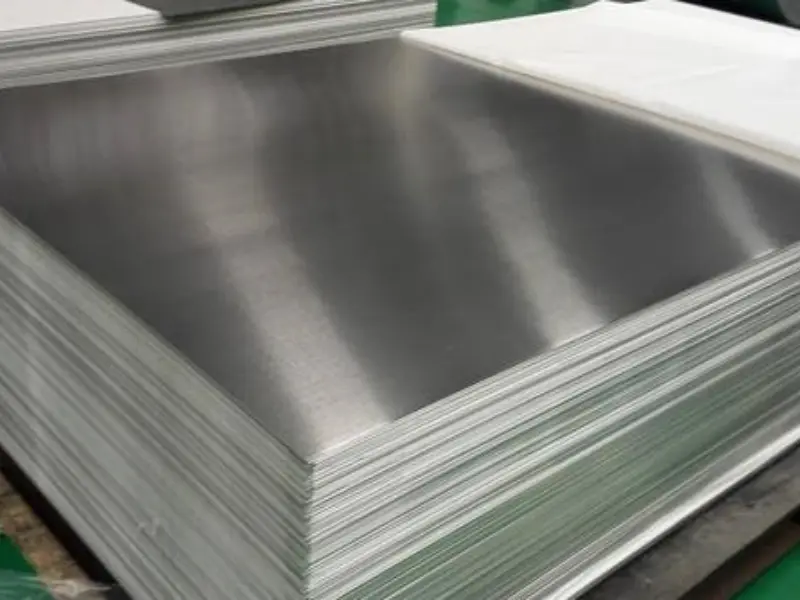
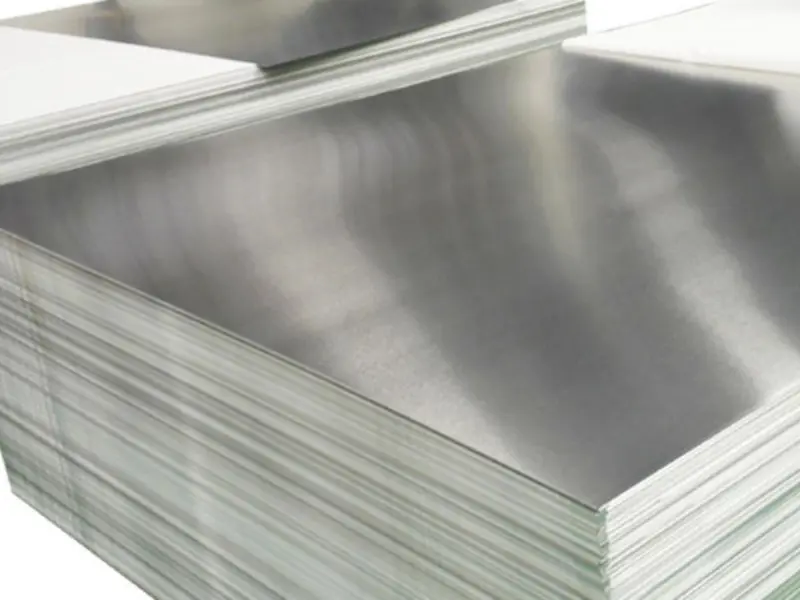
Signage aluminum sheet is widely used in outdoor advertising, road signs, shop signs, display boards, and commercial signage. It offers a smooth surface, low weight, good corrosion resistance, and easy processing. Aluminum sheets can be cut, bent, printed, painted, or coated to meet different sign production needs.
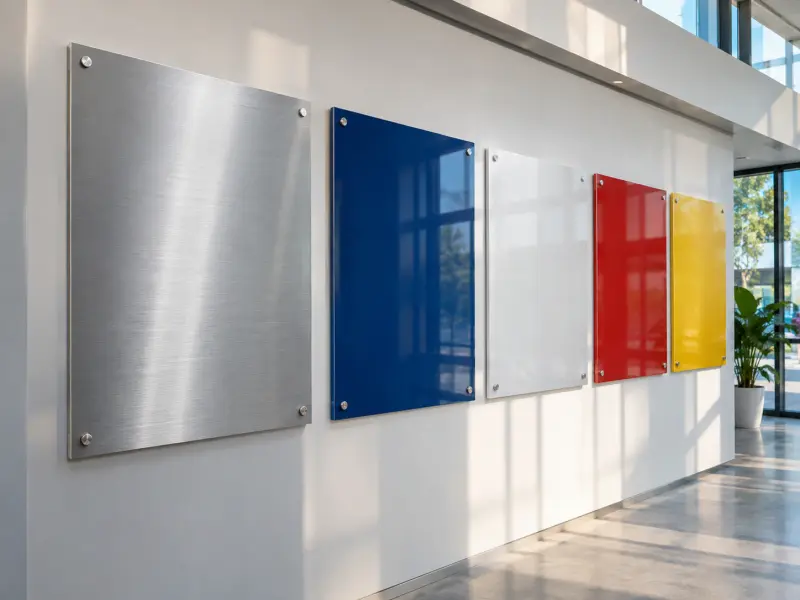
For sign manufacturers, choosing the right aluminum alloy, thickness, temper, and surface finish is important. A small indoor nameplate and a large outdoor traffic sign do not need the same material.
We supply aluminum sheets for signage in different alloys, sizes, thicknesses, and finishes. Common options include 1050, 1060, 1100, 3003, 3105, and 5052 aluminum.
Aluminum Sheet Specifications for Sign Manufacturing
The right specifications depend on the size, location, and production method of the sign.
| Item | Available Options |
|---|---|
| Aluminum alloy | 1050, 1060, 1100, 3003, 3105, 5052 |
| Temper | O, H14, H24, H32, H34 |
| Thickness | 0.3–5.0 mm |
| Width | 500–2000 mm |
| Length | 1000–6000 mm or customized |
| Common sheet sizes | 4×8 ft, 4×10 ft, 5×10 ft |
| Surface | Mill finish, painted, anodized, brushed |
| Coating | PE, PVDF, polyester powder coating |
| Processing | Cutting, bending, punching, printing |
| Packaging | Protective film, wooden pallets |
Specifications depend on the selected alloy, temper, and surface treatment. Custom sizes can be discussed according to project requirements.
Different Types of Aluminum Sheets for Signs
Aluminum signage materials are available in several forms. Each type offers different benefits for printing, fabrication, and outdoor performance.
Mill Finish Aluminum Sheet
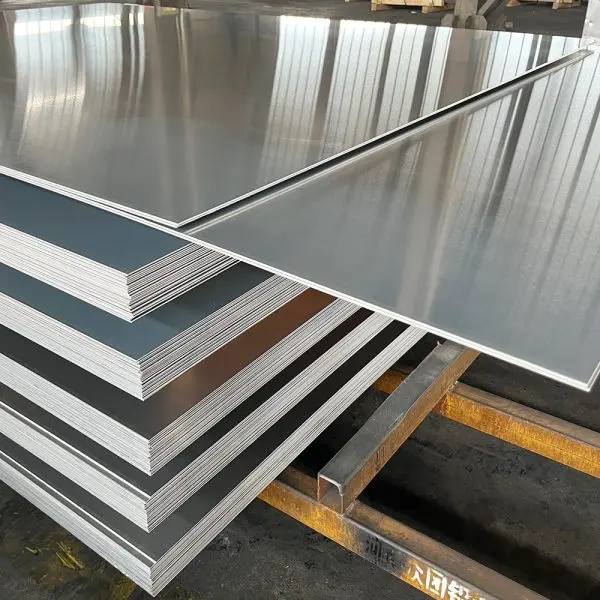
Mill finish aluminum is suitable for sign blanks, painted panels, and fabricated letters. It provides a basic metal surface for further processing. Cleaning and surface preparation are usually required before painting or printing.
Color Coated Aluminum Sheet

Pre-painted aluminum is commonly used for outdoor advertising panels and shop signs. White, black, silver, and custom colors are available. PE and PVDF coatings offer different levels of weather resistance.
Anodized Aluminum Sheet
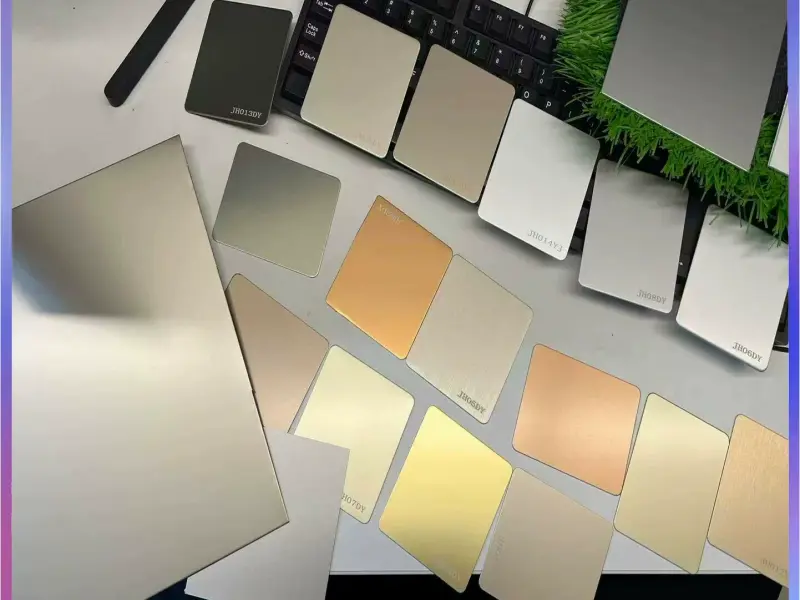
Anodized aluminum has a decorative and protective oxide layer. It is often selected for nameplates, office signs, labels, and premium interior signage.
Reflective Aluminum Sign Blanks

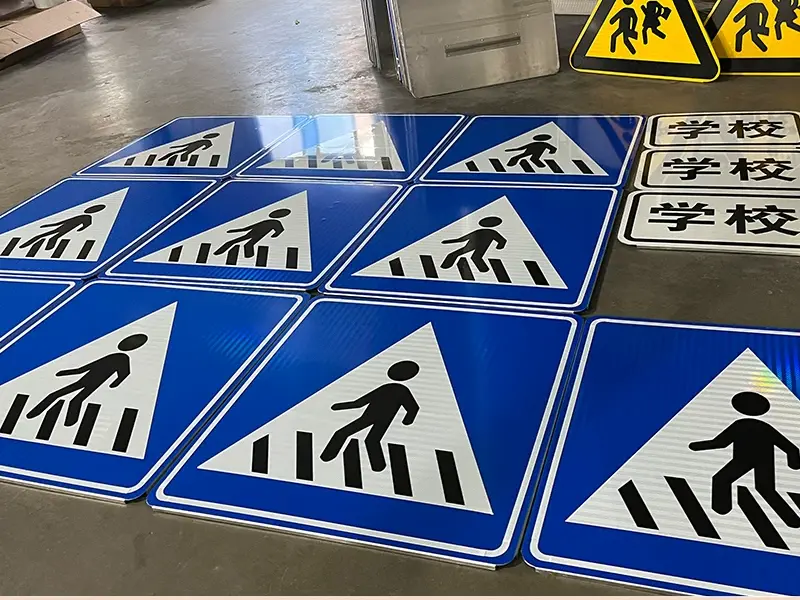
These products combine aluminum substrates with reflective films. They are used for traffic signs, warning signs, and road safety boards. The reflective film grade must match local road-sign standards.
1050, 3003, and 5052 Aluminum for Signage
The alloy affects strength, formability, corrosion resistance, and price. Sign manufacturers often choose materials based on the fabrication process and installation environment.
| Alloy | Main Feature | Typical Sign Application |
|---|---|---|
| 1050 | High purity, easy forming | Indoor signs, printed panels |
| 1060 | Good formability | Decorative signs, small panels |
| 1100 | Easy fabrication | Nameplates, embossed signs |
| 3003 | Higher strength than 1100 | Outdoor advertising boards |
| 3105 | Suitable for coated products | Painted sign panels |
| 5052 | Higher strength, good corrosion resistance | Coastal and demanding outdoor signs |
1050 vs. 3003 Aluminum Sheet
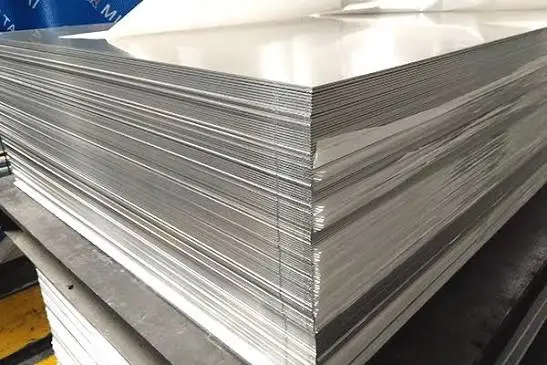
1050 aluminum is a good option for simple signs that require cutting, printing, or light bending. It is easy to process and suitable for many indoor applications.
3003 aluminum contains manganese and offers greater strength. It is often preferred for larger sign panels and outdoor advertising boards.
3003 vs. 5052 Aluminum Sheet
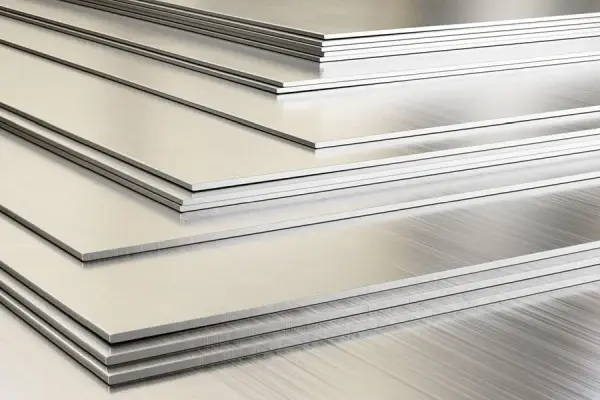
3003 is a practical material for general advertising signs. It balances cost, formability, and strength.
5052 provides higher strength and good resistance to marine environments. It can be considered for coastal signs and demanding outdoor applications.
Which Aluminum Alloy Is Best?
Quick alloy selection guide
What type of sign are you producing?
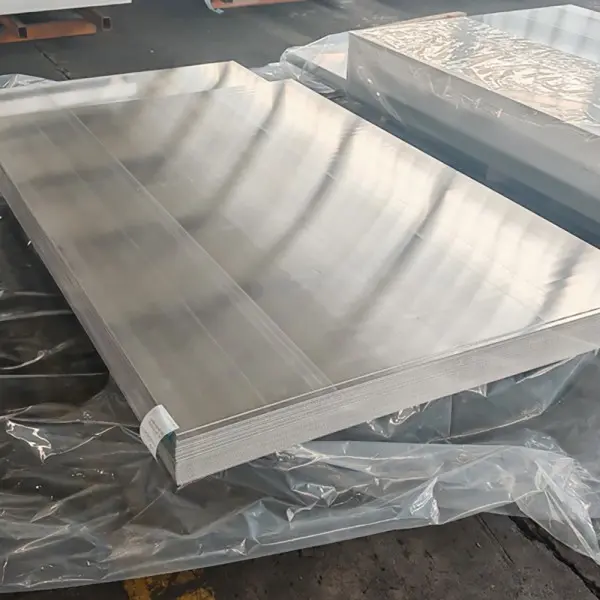

Indoor printed sign
1050 / 1100
Outdoor signboard
3003 / 3105
Coastal installation
5052
Decorative nameplate
1100 / anodized sheet
These are general material suggestions. Final selection should also consider panel size, wind load, mounting method, and local standards.
Popular Aluminum Sheet Thicknesses for Signage
Thickness is one of the most important factors when purchasing aluminum sign sheets. Thin sheets are easier to cut and form, while thicker sheets offer greater rigidity.
| Thickness | Typical Application |
|---|---|
| 0.3 mm | Small labels, decorative panels |
| 0.5 mm | Indoor signs, lightweight displays |
| 0.8 mm | Printed panels, shop signs |
| 1.0 mm | General advertising signs |
| 1.2 mm | Medium-sized signboards |
| 1.5 mm | Outdoor signs, fabricated letters |
| 2.0 mm | Rigid sign panels |
| 3.0 mm | Large signs, structural sign components |
| 4.0–5.0 mm | Heavy-duty fabricated signage |
0.5 mm vs. 1.0 mm Aluminum Sign Sheet

A 0.5 mm sheet is lightweight and suitable for small indoor signs. It is easy to cut but may require backing support.
A 1.0 mm sheet offers better rigidity. It is commonly considered for printed signs, advertising boards, and general commercial signage.
1.5 mm vs. 3.0 mm Aluminum Sheet

A 1.5 mm aluminum sheet is easier to bend and generally costs less per square meter than a 3.0 mm sheet of the same alloy and finish.
A 3.0 mm sheet is heavier and more rigid. It is suitable for larger fabricated signs when the structure requires additional stiffness.
Aluminum Sheet Weight by Thickness
The following values are approximate for aluminum with a density of 2.70 g/cm³.
| Thickness | Weight per m² | 4×8 ft Sheet Weight |
|---|---|---|
| 0.5 mm | 1.35 kg | 4.02 kg |
| 1.0 mm | 2.70 kg | 8.03 kg |
| 1.5 mm | 4.05 kg | 12.05 kg |
| 2.0 mm | 5.40 kg | 16.06 kg |
| 3.0 mm | 8.10 kg | 24.09 kg |
Actual weight may vary slightly by alloy, dimensional tolerance, and coating.
Common Aluminum Sign Sheet Sizes
Standard sheet sizes help sign factories reduce cutting waste and improve production efficiency.
| Sheet Size | Metric Dimensions | Typical Use |
|---|---|---|
| 2×4 ft | 610×1219 mm | Small advertising signs |
| 3×6 ft | 914×1829 mm | Medium display boards |
| 4×8 ft | 1219×2438 mm | General sign manufacturing |
| 4×10 ft | 1219×3048 mm | Long advertising panels |
| 5×10 ft | 1524×3048 mm | Large commercial signs |
| Custom cut | According to drawing | OEM sign blanks |
4×8 Aluminum Sheet for Signs
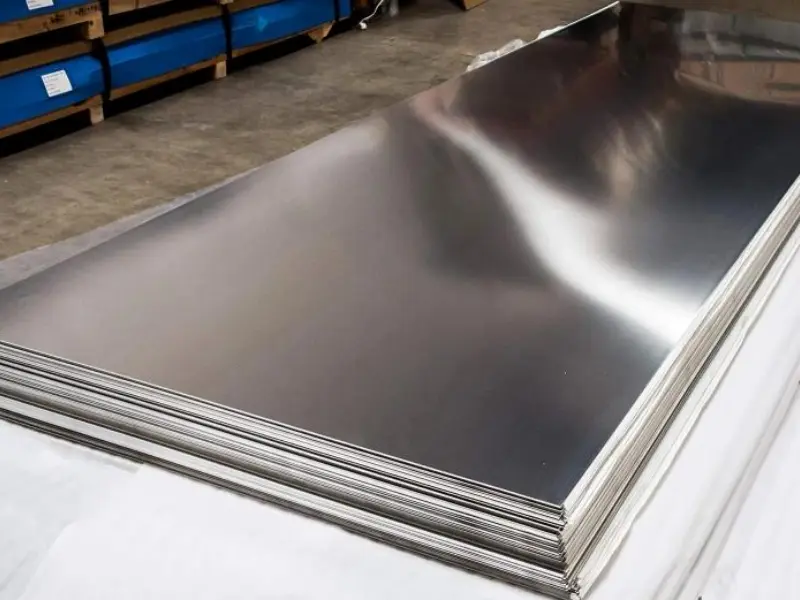
The 4×8 aluminum sheet is one of the most practical sizes for sign manufacturing. It can be cut into smaller panels for shop signs, directional boards, and printed displays.
Common thicknesses include 0.8 mm, 1.0 mm, 1.5 mm, 2.0 mm, and 3.0 mm.
Custom Cut Aluminum Sign Blanks
Custom-cut sheets can reduce waste and save processing time. Buyers can provide drawings, dimensions, hole positions, and surface requirements.
Available processing may include cutting, punching, corner rounding, bending, and protective film application.
Aluminum Sheets for Different Sign Applications
Aluminum is used across many industries because it is lightweight, corrosion-resistant, and suitable for different printing and fabrication methods.
Outdoor Advertising Signs
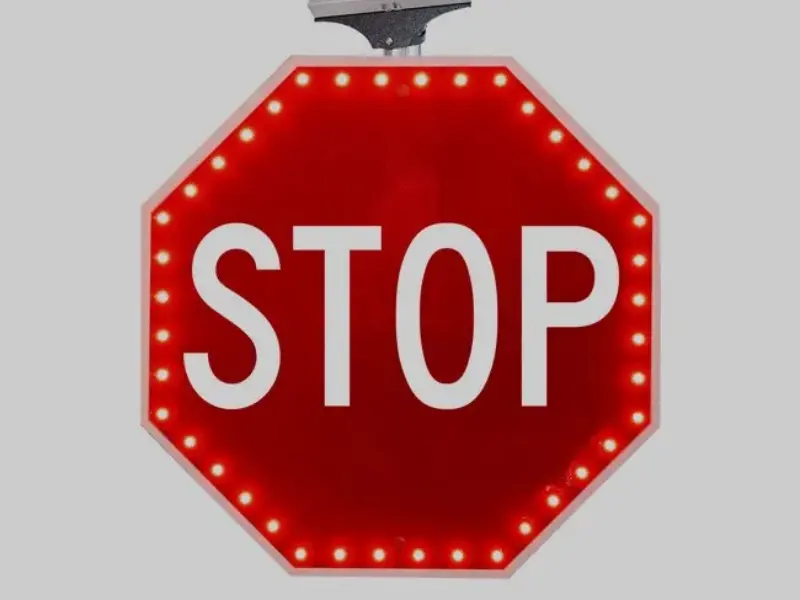
Coated 3003 or 3105 sheets are common options for outdoor advertising panels.
Traffic and Road Signs
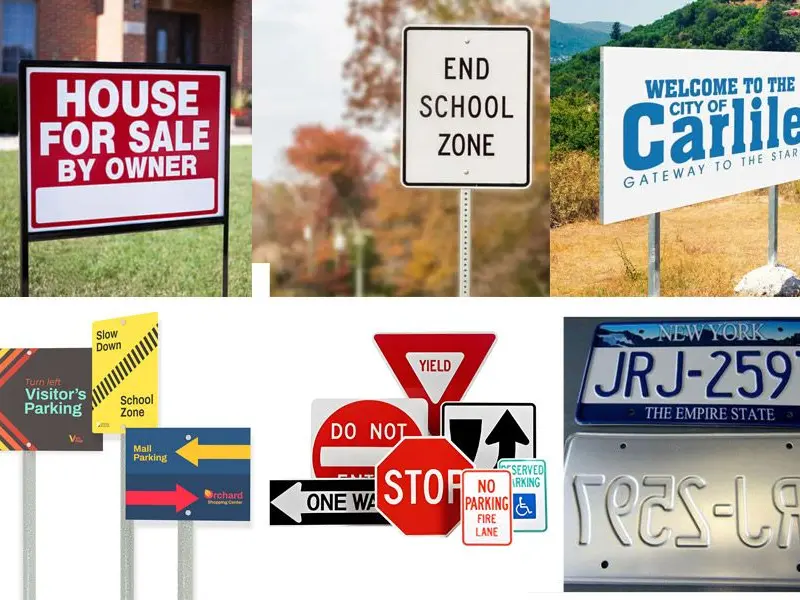
Aluminum substrates are combined with reflective sheeting for road safety applications.
Indoor Directional Signs
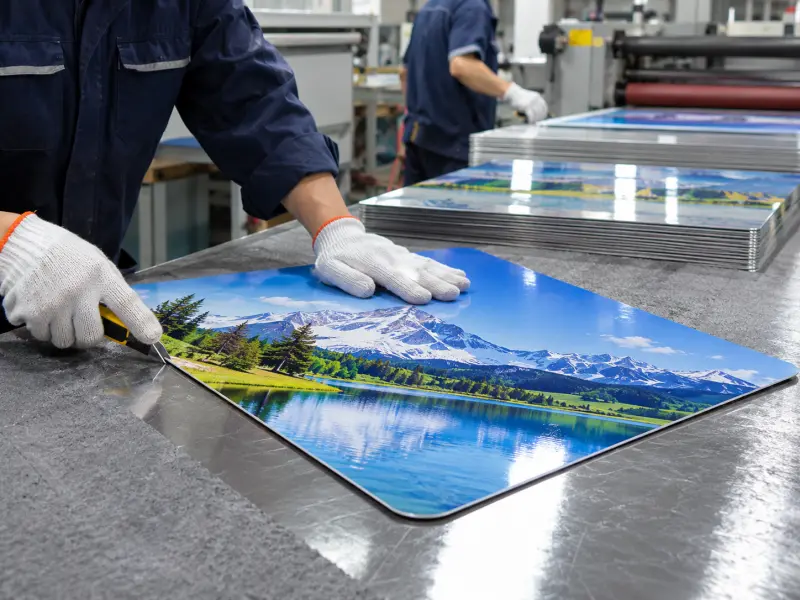
Brushed and anodized aluminum provide a clean finish for office and building signs.
Commercial Signboards
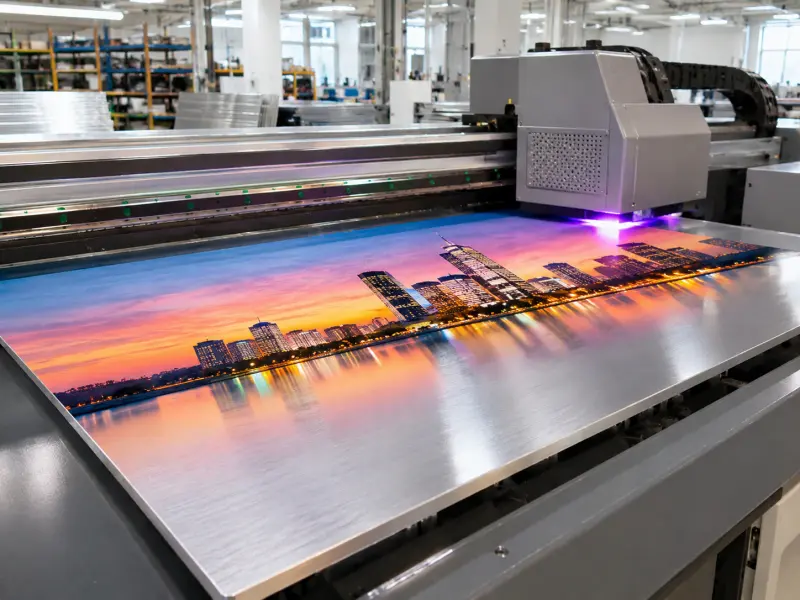
Aluminum panels have printed, painted, or mounted on support frames.
Other common applications include:
- Industrial equipment nameplates and identification plates
- Parking signs and safety warning boards
- Hotel room numbers and door signs
- Retail promotional displays and exhibition panels
- Channel letters and illuminated sign components
- Building identification and wayfinding systems
Aluminum Sheet Temper for Sign Fabrication
Temper describes the mechanical condition of aluminum. It affects hardness, strength, and bending performance.
| Temper | General Characteristics | Common Use |
|---|---|---|
| O | Soft, excellent formability | Deep forming, complex bending |
| H14 | Strain-hardened, half-hard | Flat panels, general signage |
| H24 | Partially annealed to half-hard condition | Coated panels, sign blanks |
| H32 | Stabilized, quarter-hard | 5052 fabricated sign parts |
| H34 | Stabilized, half-hard | Stronger 5052 sign components |
Not every temper is available for every alloy.
H14 vs. H24 Aluminum Sheet
H14 and H24 have both half-hard temper designations, but they are produced through different processing routes.
The H14 is strain-hardened, while H24 is strain-hardened and partially annealed. Both can be suitable for flat sign panels, depending on the alloy and production requirements.
Which Temper Is Better for Bending?
O temper generally provides the highest formability. H14 or H24 may be suitable for moderate bending, depending on alloy, thickness, and bend radius.
For sharp bends or complex shapes, buyers should confirm the minimum bend radius before ordering.
Surface Finishes for Printed and Outdoor Aluminum Signs
Surface treatment affects appearance, printing quality, weather resistance, and maintenance.
| Surface Finish | Main Advantage | Recommended Use |
|---|---|---|
| Mill finish | Economical base material | Painted or fabricated signs |
| White coated | Uniform background | Printed advertising boards |
| Brushed | Decorative metallic texture | Office and retail signs |
| Anodized | Durable oxide surface | Nameplates, interior signs |
| PVDF coated | High weather resistance | Long-term exterior signage |
| PE coated | Cost-effective color finish | General commercial signs |
PE vs. PVDF Coated Aluminum for Signage

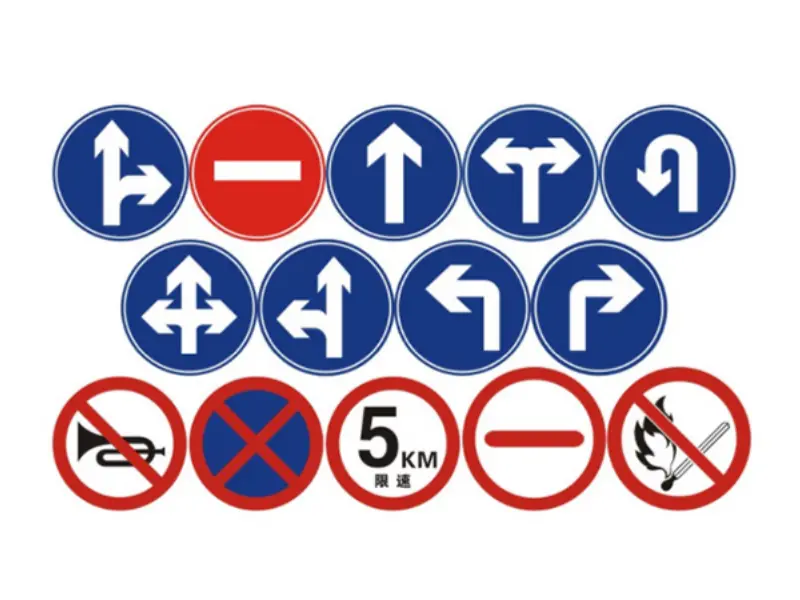
PE-coated aluminum has commonly selected for general advertising boards, indoor displays, and outdoor signs where the coating specification matches the expected service conditions.
PVDF-coated aluminum is suitable for demanding exterior environments where long-term color and weather resistance are important.
| Comparison | PE Coating | PVDF Coating |
|---|---|---|
| Initial cost | Lower | Higher |
| Weather resistance | Depends on grade | Generally higher |
| Color retention | Depends on formulation | Generally better |
| Indoor signage | Suitable | Suitable |
| Outdoor signage | Suitable with correct grade | Preferred for demanding exposure |
| Typical use | Shop signs, advertising panels | Long-life exterior signs |
Coating performance has confirmed through the supplier’s technical data and relevant testing standards.
Aluminum Sheet vs. Aluminum Composite Panel for Signage
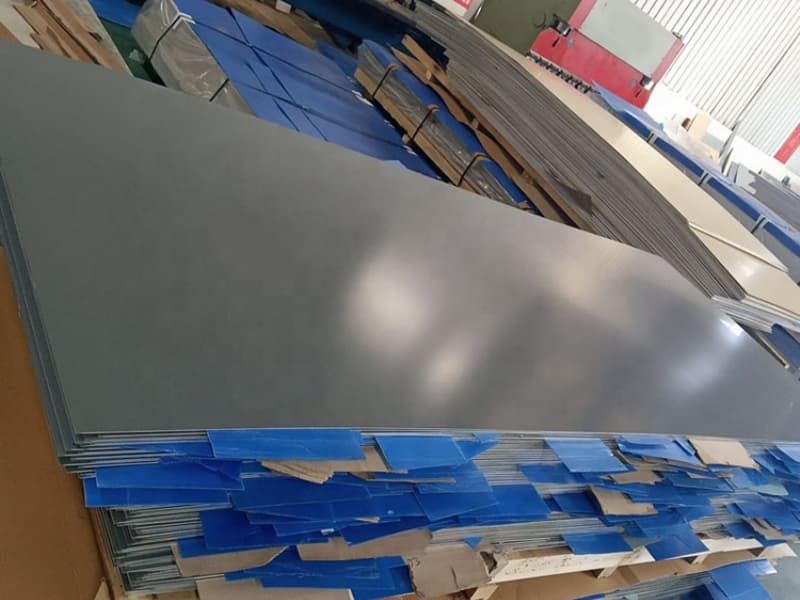
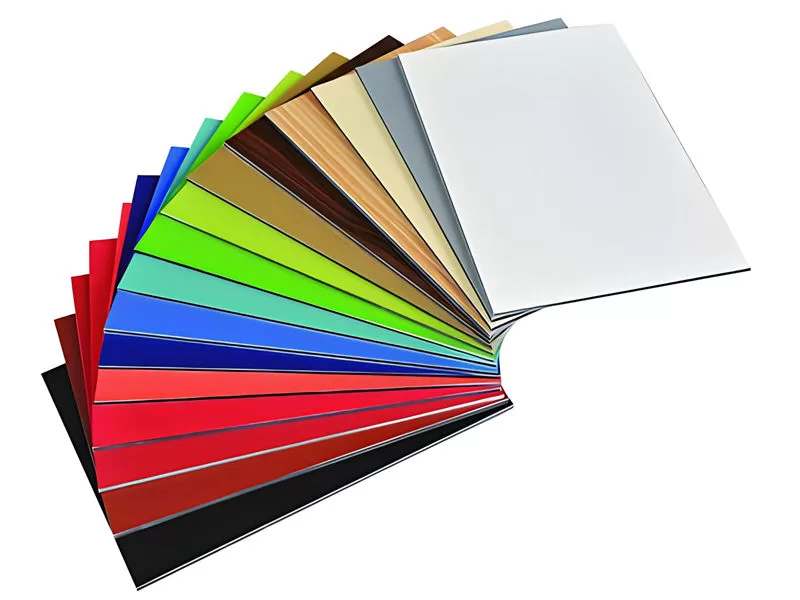
Both solid aluminum sheets and aluminum composite panels (ACP) have used in sign manufacturing. However, their structure and processing methods are different.
| Feature | Solid Aluminum Sheet | Aluminum Composite Panel |
|---|---|---|
| Structure | Single aluminum layer | Two aluminum skins with a core |
| Common thickness | 0.5–3.0 mm | 3–4 mm overall |
| Weight | Depends on thickness | Depends on skins and core |
| Bending | Conventional metal forming | Routing and folding possible |
| Fire performance | Aluminum is noncombustible | Depends strongly on core grade |
| Applications | Sign blanks, letters, road signs | Flat advertising panels, façades |
When Should You Choose Solid Aluminum?
Solid aluminum is suitable for punched, bent, embossed, and fabricated signs. It has also used where a metal substrate is specified.
When Is ACP a Better Option?
ACP can be practical for large, flat advertising panels that need a smooth appearance and a relatively lightweight structure. For building-mounted applications, confirm the required fire classification and local regulations.
How to Choose Aluminum Sheets for Digital Printing
Digital printing has widely used for advertising signs, photographic panels, and display boards.
The substrate must match the printing method.
UV Printing on Aluminum Sheets

UV printing has applied to suitable coated or prepared aluminum surfaces. It has often used for commercial signs, decorative panels, and indoor displays.
Before mass production, test ink adhesion, scratch resistance, and color consistency.
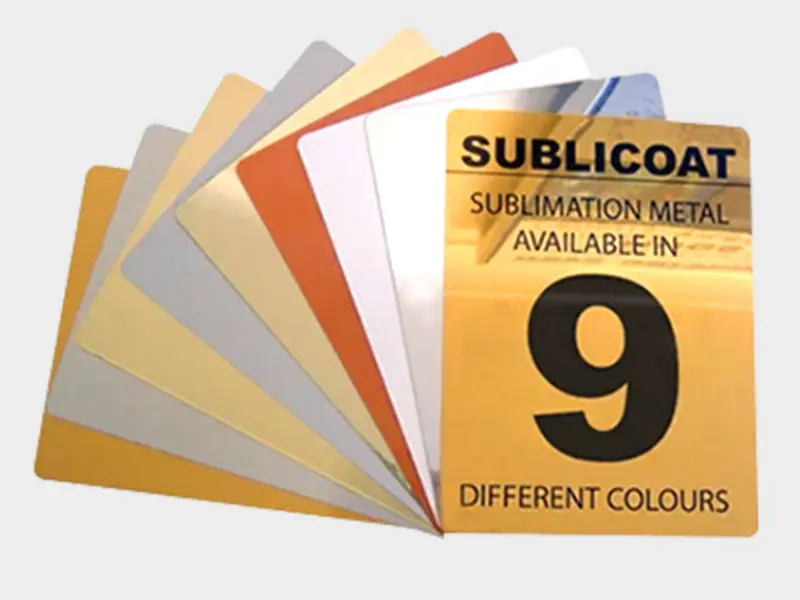
Sublimation Aluminum Sheets

Sublimation printing requires a specially formulated receiving coating. Ordinary mill finish or standard painted aluminum is not automatically suitable for dye sublimation.
Sublimation aluminum has uses for photographic panels, decorative signs, awards, and personalized products.
Screen Printing and Painted Signs
Screen printing has used for industrial labels, warning signs, and repeated sign designs. Surface cleaning and compatible primers or coatings help achieve reliable ink adhesion.
How to Purchase Aluminum Sheets for Sign Manufacturing
For bulk purchases, buyers should confirm both material specifications and processing requirements.
Aluminum Sign Sheet Purchasing Process
Application and installation environment
Choose alloy, temper, and thickness
Confirm size and surface finish
Review samples and technical requirements
Quotation → Production → Inspection → Shipment
What Information Should You Include in an Inquiry?
A complete inquiry helps suppliers prepare an accurate quotation.
| Requirement | Example |
|---|---|
| Product | Aluminum sheet for outdoor signs |
| Alloy | 3003 |
| Temper | H24 |
| Thickness | 1.5 mm |
| Sheet size | 1220×2440 mm |
| Surface | White PE coated |
| Quantity | 3 metric tons |
| Destination | Customer’s delivery port |
Buyers can also specify color codes, protective film, coating thickness, packaging, and inspection requirements.
Quality Inspection and Packaging
Sign manufacturers need consistent sheet quality, especially for printing and visible decorative surfaces.
Important inspection points include:
- Thickness, width, and length tolerance
- Surface flatness and scratches
- Coating adhesion and color consistency
- Edge quality after cutting
- Protective film condition
- Packaging strength and moisture protection
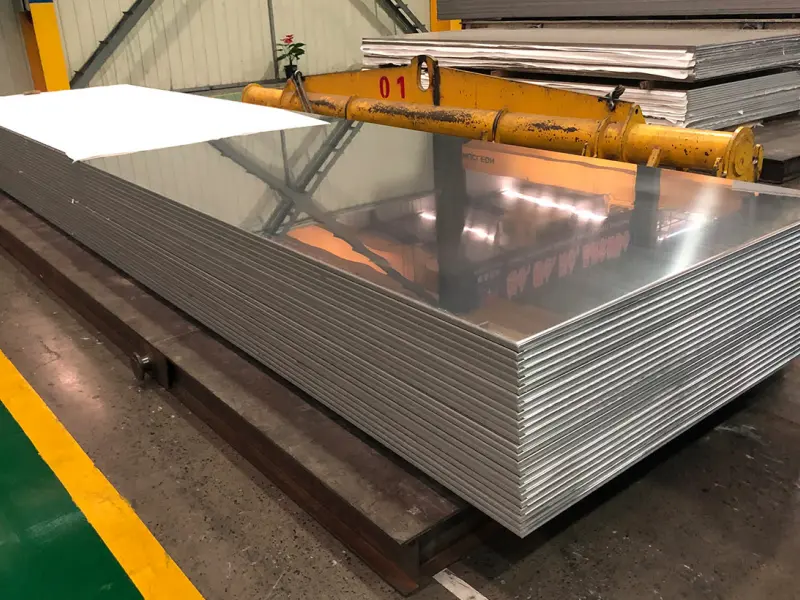
Aluminum sheets have commonly packed with protective materials and secured on wooden pallets. Export packaging should protect sheet surfaces and corners during handling and transportation.
Frequently Asked Questions About Signage Aluminum Sheet
What Is the Best Aluminum Sheet for Outdoor Signs?
3003 and 3105 aluminum sheets are practical options for many outdoor signs. For coastal environments or applications requiring higher strength, 5052 has considered. Coating quality and mounting design are also important.
Is 1 mm Aluminum Sheet Thick Enough for Signs?
A 1 mm sheet can be suitable for small or medium signs with proper support. Larger panels may need greater thickness or additional framing to prevent bending and vibration.
Can Aluminum Sign Sheets Be Printed Directly?
Yes, but the surface must be compatible with the printing method. UV printing, screen printing, and sublimation require different surface preparation or coatings.
What Is the Difference Between 1050 and 3003 Aluminum for Signage?
1050 is easier to form and is suitable for lightweight indoor applications. 3003 has higher strength and has often selected for outdoor advertising boards.
Can You Supply 4×8 Aluminum Sheets for Signs?
The 4×8 ft format is a common size for sign manufacturing. Sheets have supplied in metric dimensions or custom-cut sizes, subject to production availability.
What Is the Best Surface Finish for Outdoor Aluminum Signs?
PE and PVDF coatings are commonly used. The correct choice depends on expected service life, climate, color requirements, and project budget.
Are Aluminum Sign Sheets Rustproof?
Aluminum does not form red rust like carbon steel. It naturally develops a protective oxide layer. However, corrosion can still occur under certain conditions, especially in aggressive environments or where incompatible metals contact the aluminum.
Can Aluminum Sheets Be Bent into Channel Letters?
Yes. Suitable aluminum sheets and strips can be bent for channel letters and fabricated signage. The alloy, temper, thickness, and bend radius should match the forming equipment.
What Is the MOQ for Aluminum Sign Sheets?
Minimum order quantity depends on alloy, size, surface finish, and customization. Standard mill finish sheets may have different minimum quantities from custom color-coated products.
How Much Does Aluminum Sheet for Signage Cost?
The price depends on aluminum market prices, alloy, thickness, sheet dimensions, coating type, order quantity, and shipping requirements. Buyers should request quotations based on exact specifications.
Request a Quote for Signage Aluminum Sheets
We supply aluminum sheets for sign manufacturers, printing companies, advertising material distributors, and commercial signage projects.

Available products include mill finish aluminum sheets, color-coated sheets, anodized panels, and custom-cut sign blanks.
Whether you need lightweight indoor sign materials or durable aluminum sheets for outdoor advertising, we can help you select suitable specifications.
Send us your required alloy, temper, thickness, sheet size, surface finish, quantity, and destination. Contact us for product details, available specifications, and a quotation.