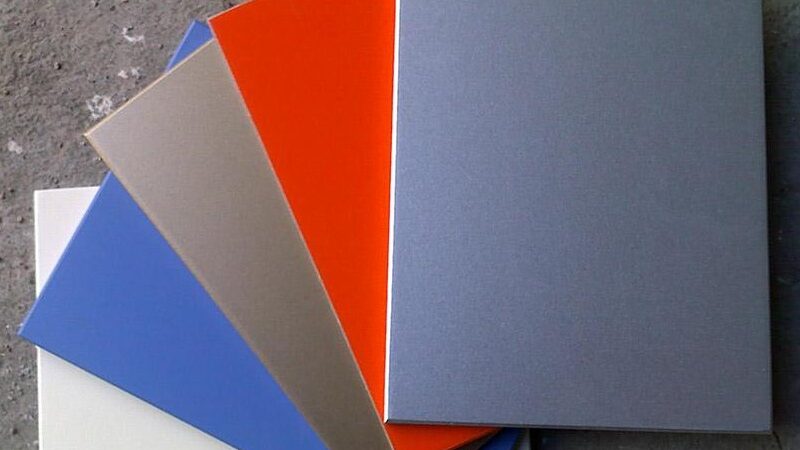
Have you chosen the right color coated aluminum sheet?
Color coated aluminum sheet, also known as color coated aluminum coil, aluminum-magnesium-manganese color-coated sheet, etc. It’s a new type of environmentally friendly aluminum sheet coated with an organic coating and cured at high temperature.
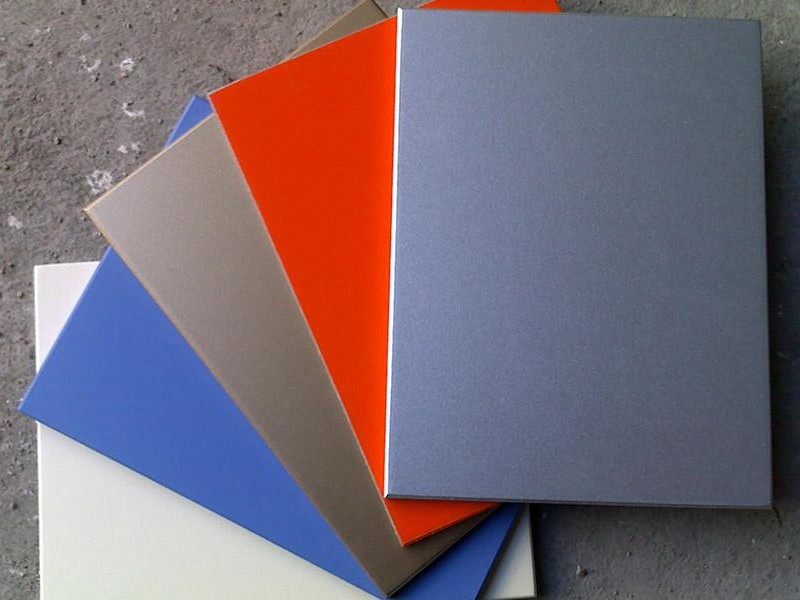
Color coated aluminum panels have the advantages of both aluminum panels and organic materials.
It not only has the advantages of high mechanical strength, good toughness, and easy processing and forming of aluminum plates, but also has good coloring, decoration, and corrosion resistance of organic polymer coating materials.
Color coated aluminum sheets have easily punched, bent, deep drawn, welded and so on. The finished products are practical, decorative, easy to process and durable.
It’s widely used in industrial plants, stations, airports, gymnasiums, commercial buildings, residential buildings and other buildings and home appliance manufacturing industries.
What is the function of color coated aluminum sheet?
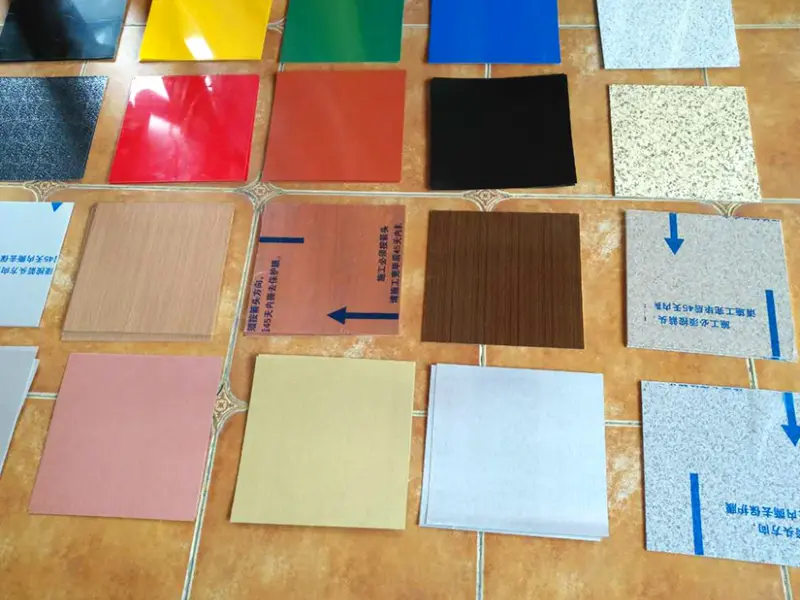
1. Color-coated aluminum sheet has good rectification, corrosion resistance, decoration, and mechanical properties, so it is favored by the market. It’s widely used in architectural decoration, food packaging, electronic appliances, printing, transportation and other fields.
2. Colored aluminum has divided into high-end fluorocarbon color coating and low-end polyester color coating.
3. Color coated aluminum panels will replace color steel tiles. Not only because of its good rust resistance, but also because of its light weight, the pressure on the steel structure is relatively small.
Have You Chosen the Right Color Coated Aluminum Sheet?
Choosing a color coated aluminum sheet is not only about selecting a color. The right product should also match your application, forming process, working environment, and service life requirements.
Different projects need different aluminum alloys, thicknesses, coating systems, and surface finishes. A sheet for roofing may need strong weather resistance. A sheet for interior decoration may focus more on color and appearance. For outdoor wall panels, coating quality and corrosion resistance are especially important.
So, have you chosen the right color coated aluminum sheet for your project?
What Is a Color Coated Aluminum Sheet?
A color coated aluminum sheet is an aluminum sheet with a protective and decorative paint layer on its surface. The coating has usually applied through a continuous roller coating process.
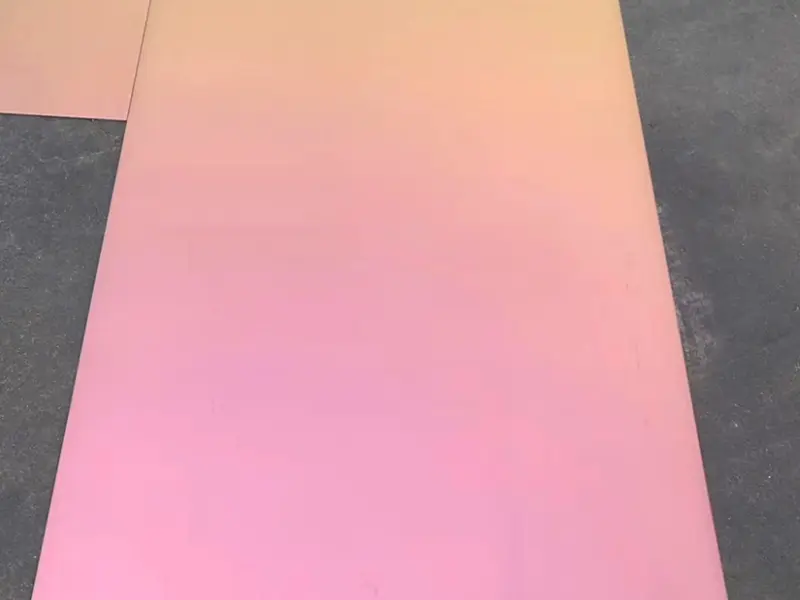
The aluminum base provides low weight, good corrosion resistance, and easy fabrication. The paint layer adds color, surface protection, and weather resistance.
Compared with ordinary mill finish aluminum, color coated products offer more choices for architectural and industrial designs.
Main features include:
- Wide selection of colors and surface finishes
- Lightweight and easy to transport
- Good corrosion resistance
- Smooth and attractive appearance
- Suitable for cutting, bending, and forming
- Available in different alloys and tempers
- Suitable for indoor and outdoor applications
- Custom thickness, width, and coating systems available
Which Color Coated Aluminum Sheet Is Right for Your Application?
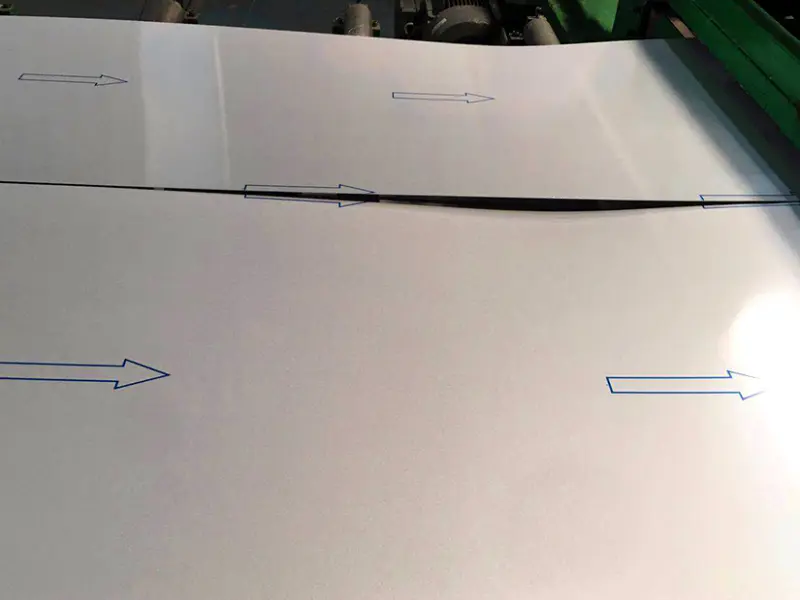
The best product depends on where and how it will be used. A suitable coating for indoor decoration may not provide enough protection for an outdoor roofing project.
Here is a quick guide to common applications.
| Application | Suggested Alloy | Typical Thickness | Recommended Coating |
|---|---|---|---|
| Roofing panels | 3003 / 3105 | 0.5–1.2 mm | PE / PVDF |
| Exterior wall panels | 3003 / 3105 / 5005 | 1.0–3.0 mm | PVDF |
| Ceiling panels | 3003 / 3105 | 0.5–1.0 mm | PE |
| Gutter systems | 3003 / 3105 | 0.6–1.0 mm | PE / PVDF |
| Garage doors | 3003 / 3105 | 0.5–1.2 mm | PE |
| Signboards | 1050 / 3003 / 3105 | 0.5–2.0 mm | PE / PVDF |
| Appliance panels | 1100 / 3003 | 0.4–1.0 mm | PE |
| Interior decoration | 1050 / 3003 / 5005 | 0.5–2.0 mm | PE |
| Aluminum composite panels | 3003 / 3105 | 0.15–0.50 mm | PE / PVDF |
| Insulation jacketing | 3003 / 3105 | 0.4–1.0 mm | PE / PVDF |
These are common reference ranges. Actual specifications should be confirmed according to the design, forming process, and project requirements.
Different Types of Color Coated Aluminum Sheets
Not every color coated aluminum sheet has the same structure or performance. The product has supplied in different coating systems, surface styles, and functional designs.
PE Coated Aluminum Sheet
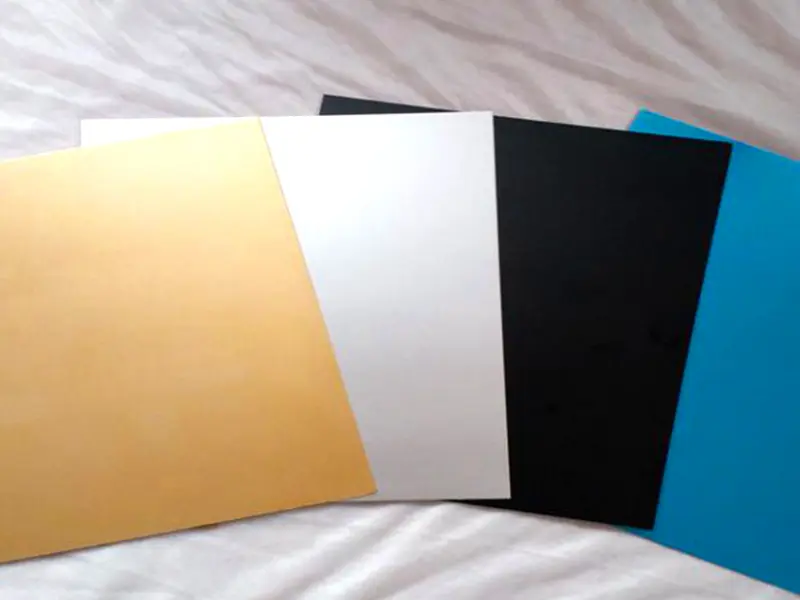
PE stands forpolyester coating. It has widely used for indoor decoration and general building applications.
This coating offers good color selection and a smooth surface. It is also suitable for products that require regular cutting and bending.
Typical applications:
- Indoor ceiling panels
- Interior wall decoration
- Advertising boards
- Furniture panels
- Appliance covers
- General decorative sheets
PE coating is a practical choice when the project has moderate weather exposure and a reasonable cost target.
PVDF Coated Aluminum Sheet
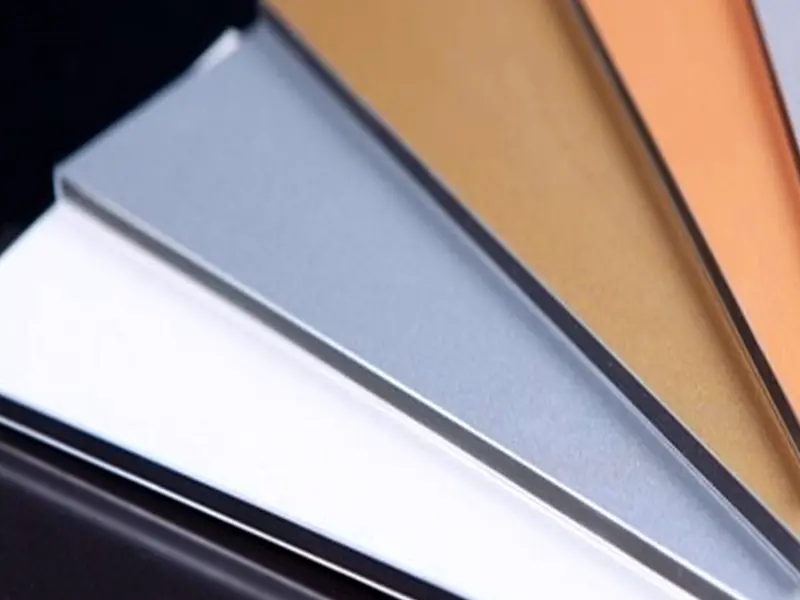
PVDF is a fluorocarbon coating known for its weather resistance and color stability. It has commonly selected for exterior architectural projects.
Compared with standard polyester coatings, PVDF systems are generally better suited to long-term outdoor exposure.
Typical applications:
- Building facades
- Curtain wall decoration
- Exterior wall panels
- Commercial buildings
- Roofing systems
- Outdoor architectural cladding
PVDF is a good option for projects where appearance and coating durability are important over many years.
HDPE Coated Aluminum Sheet
HDPE coating systems are designed for specific decorative or functional requirements. Their properties depend on the coating formulation and manufacturer.
They may be considered for selected building and industrial applications where a thicker or specially designed coating is required.
Before purchasing, buyers should confirm the coating composition, thickness, adhesion, and test results.
Brushed Color Coated Aluminum Sheet

This product combines a brushed aluminum texture with a colored or transparent protective coating.
The surface has fine directional lines. It gives the product a modern metallic appearance.
Common applications:
- Elevator interiors
- Furniture decoration
- Shop fittings
- Appliance panels
- Interior wall decoration
- Display equipment
Mirror Color Coated Aluminum Sheet
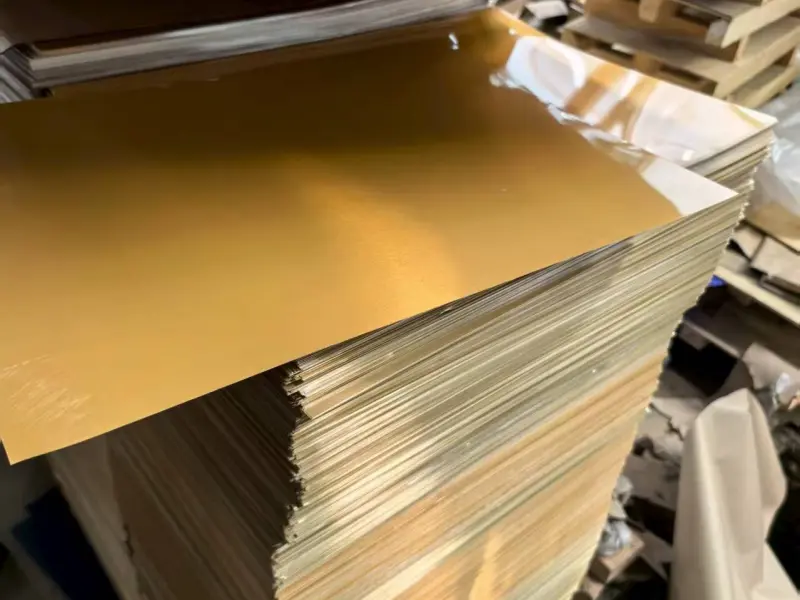
Mirror aluminum has a highly reflective surface. A protective color layer has used to create different decorative effects.
Common choices include gold, silver, black, champagne, and other customized colors.
It has often used for decorative panels, display products, and interior design.
Embossed Color Coated Aluminum Sheet

Embossed aluminum has a raised surface pattern. When combined with a coating, it provides both decoration and surface protection.
Common patterns include stucco, orange peel, and other customized textures.
Typical applications:
- Refrigerator panels
- Interior decoration
- Equipment covers
- Insulation systems
- Decorative wall panels
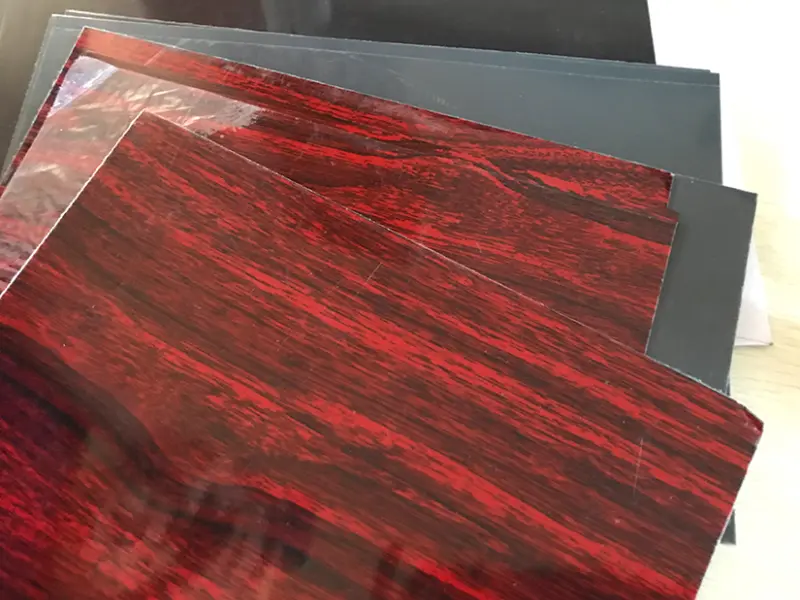
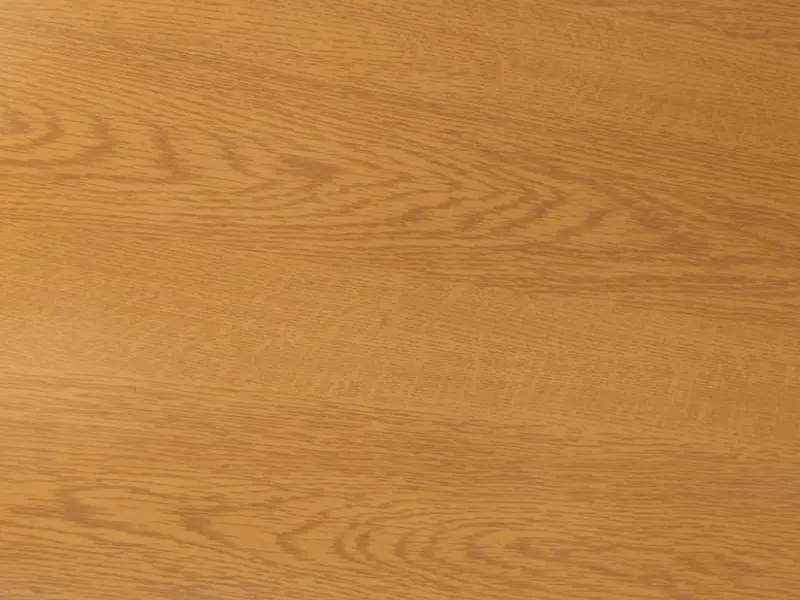
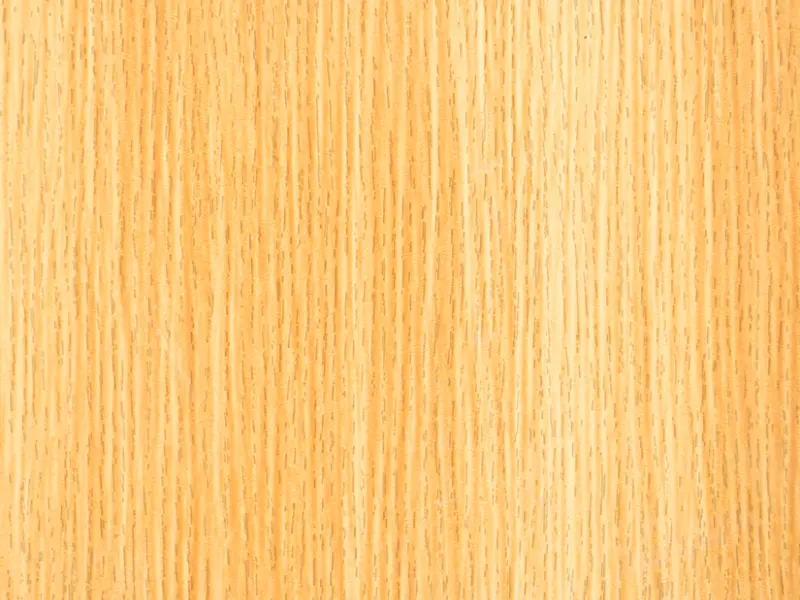
Wood Grain Color Coated Aluminum Sheet
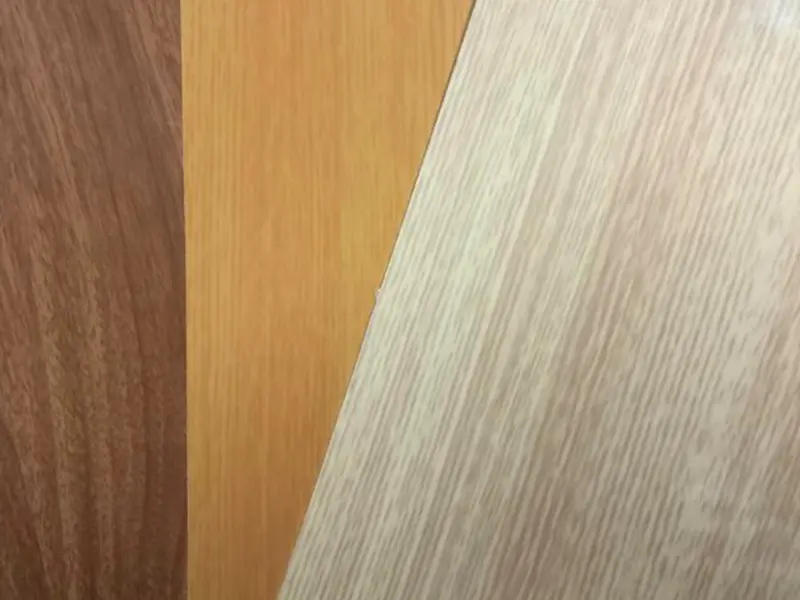
Wood grain aluminum uses a printed or coated pattern to imitate natural wood.
It provides a decorative alternative to real wood while retaining the advantages of aluminum.
Applications include:
- Doors and windows
- Building facades
- Interior wall panels
- Ceiling systems
- Furniture decoration
- Outdoor decorative structures
Stone Grain and Marble Pattern Aluminum Sheet
Stone and marble patterns provide a natural decorative appearance without using heavy stone materials.
They are suitable for projects that need a special visual effect while keeping the structure lightweight.
Matte and High Gloss Color Coated Aluminum Sheet
These two surface types are selected according to the design style.
| Surface Type | Appearance | Common Uses |
|---|---|---|
| Matte | Soft, low-reflection finish | Ceilings and wall panels |
| High gloss | Bright and reflective | Decorative panels |
| Smooth | Flat and uniform | General industrial use |
| Brushed | Fine directional texture | Elevators and furniture |
| Textured | Patterned surface | Decoration and equipment panels |
| Metallic | Metallic visual effect | Premium architectural products |
Which Aluminum Alloy Should You Choose?
The alloy is an important factor in product performance. Different aluminum grades offer different levels of strength, formability, corrosion resistance, and suitability for coating.
A suitable alloy should match the final product and manufacturing process.
1050 and 1060 Aluminum
1050 and 1060 are commercially pure aluminum grades. They offer good corrosion resistance and excellent formability.
They are suitable for decorative panels and applications where complex forming is required.
1100 Aluminum
1100 aluminum offers good workability and corrosion resistance. It has commonly used for general decorative and industrial products.
It has considered for appliance panels, interior decoration, and other formed components.
3003 Aluminum
3003 is an aluminum-manganese alloy. It provides better strength than pure aluminum grades while maintaining good formability.
It has widely used for roofing, wall panels, ceilings, and general building products.
3004 Aluminum
3004 aluminum has higher strength than 3003 in many product conditions. It is suitable for applications that require a stronger sheet and good forming performance.
It has considered for building panels, equipment housings, and selected industrial applications.
3105 Aluminum
3105 is commonly used in painted building products. It offers a useful balance of strength, corrosion resistance, and formability.
Typical applications include roofing, siding, gutters, and architectural panels.
5005 Aluminum
5005 aluminum has often selected for decorative architectural products. It has good corrosion resistance and anodizing performance.
It has used for color coated applications where appearance is important.
5052 Aluminum
5052 is a magnesium-containing alloy with good corrosion resistance and relatively high strength.
It is suitable for stronger panels, marine-related equipment, transportation components, and industrial enclosures.
| Alloy | Main Advantage | Typical Applications |
|---|---|---|
| 1050 | Excellent formability | Decorative panels |
| 1060 | Good corrosion resistance | Interior products |
| 1100 | Easy fabrication | Appliance panels |
| 3003 | Good strength and formability | Roofing and ceilings |
| 3004 | Higher strength | Building and industrial panels |
| 3105 | Suitable for painted building products | Siding and gutters |
| 5005 | Decorative appearance | Architectural panels |
| 5052 | Higher strength and corrosion resistance | Industrial and marine panels |
The final alloy and temper should be selected according to thickness, forming requirements, mechanical properties, and applicable standards.
Aluminum Temper: O, H14, H16, H18, H24 or H26?
The temper affects the mechanical properties of the aluminum base material. It is important to select the right temper before production.
| Temper | General Characteristics | Possible Applications |
|---|---|---|
| O | Soft, high formability | Deep drawing and complex forming |
| H12 | Quarter hard | Light forming |
| H14 | Half hard | General panels and bending |
| H16 | Three-quarter hard | Stronger formed panels |
| H18 | Fully hard | Flat panels and less demanding forming |
| H22 | Strain hardened and partially annealed | Formed building products |
| H24 | Half hard after strain hardening | Roofing and architectural sheets |
| H26 | Three-quarter hard after strain hardening | Panels requiring higher strength |
For products with complex bending or forming, softer tempers may be more suitable. For flat panels and applications requiring higher strength, harder tempers have considered.
The correct choice depends on the alloy and final fabrication process.
How Thick Should a Color Coated Aluminum Sheet Be?
Thickness has a direct effect on strength, weight, forming performance, and cost.
A thin sheet is easier to handle and may reduce material cost. A thicker sheet is often more suitable for larger panels or applications requiring greater rigidity.
| Thickness | Common Product Types | Typical Applications |
|---|---|---|
| 0.20–0.30 mm | Thin coated sheet | Decorative and light-duty products |
| 0.30–0.40 mm | Light building sheet | Ceiling and siding |
| 0.40–0.50 mm | Standard thin sheet | Roofing and decorative panels |
| 0.50–0.70 mm | Medium thickness | Roofing and gutters |
| 0.70–1.00 mm | Stronger sheet | Wall panels and equipment covers |
| 1.00–1.50 mm | Heavy coated sheet | Architectural panels |
| 1.50–2.00 mm | Thick decorative sheet | Signage and formed panels |
| 2.00–3.00 mm | Heavy-duty panel | Industrial and architectural applications |
0.3 mm vs 0.5 mm Color Coated Aluminum Sheet
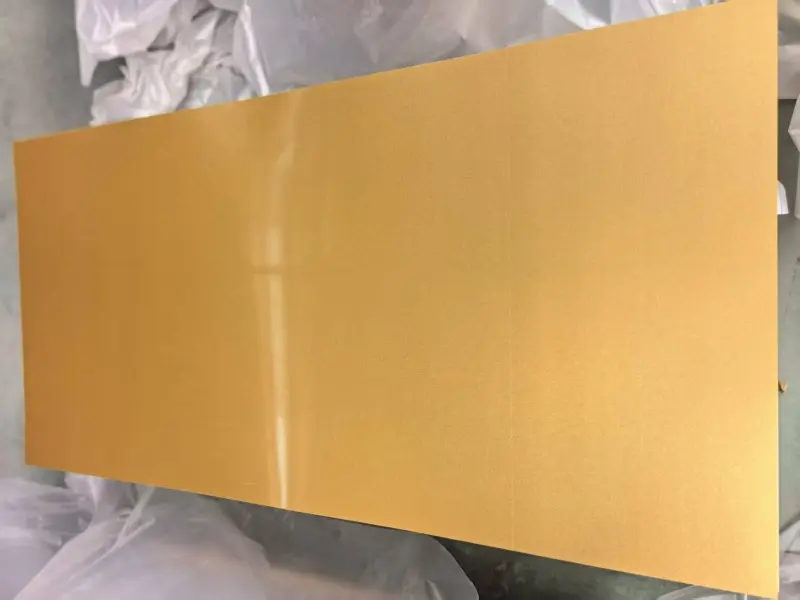
A 0.3 mm sheet is lighter and easier to process. It has often used for lighter panels and some decorative products.
A 0.5 mm sheet provides more rigidity. It has commonly considered for roofing, gutters, and building panels.
0.5 mm vs 1.0 mm Aluminum Sheet
A 0.5 mm product is suitable for many general building applications. A 1.0 mm sheet is more rigid and may be better for larger panels or products that need additional strength.
However, the final selection should also consider support spacing, wind load, panel design, and alloy temper.
What Width and Length Can You Order?
Color coated aluminum sheets have supplied in different sizes according to customer requirements.
Common sheet dimensions include:
| Product Size | Dimensions |
|---|---|
| Small panel | 500 × 1000 mm |
| Standard panel | 1000 × 2000 mm |
| Common sheet | 1000 × 2000 mm |
| Large sheet | 1219 × 2438 mm |
| 4 × 8 ft sheet | 1219 × 2438 mm |
| Extra-wide sheet | Custom width |
| Custom cut sheet | According to drawings |
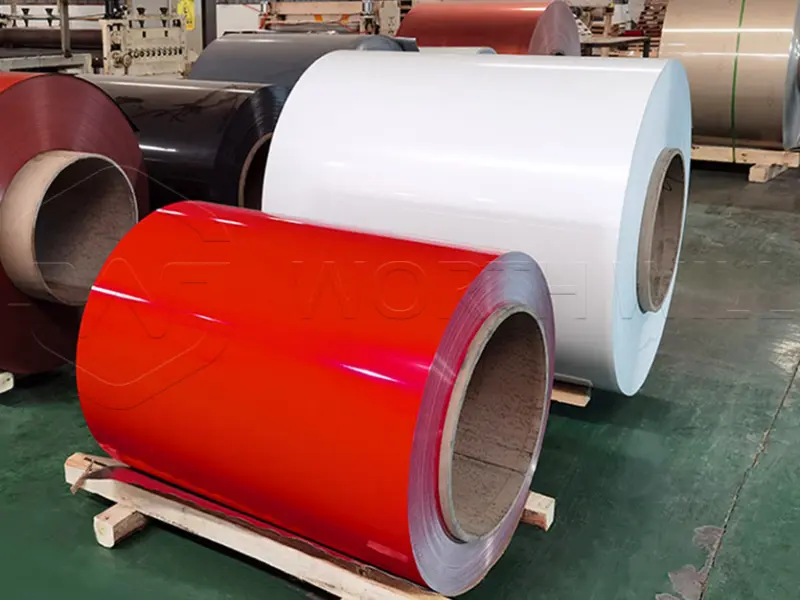
Color coated aluminum can also be supplied in coil form. Buyers can choose between sheets and coils according to their production equipment.
Coil advantages:
- Suitable for continuous processing
- Convenient for roll forming
- Less material handling during production
- Flexible cutting length
- Suitable for roofing and gutter manufacturing
Sheet advantages:
- Convenient for individual panel fabrication
- Suitable for cutting and punching
- Easy to pack and transport in selected sizes
- Suitable for small and medium production runs
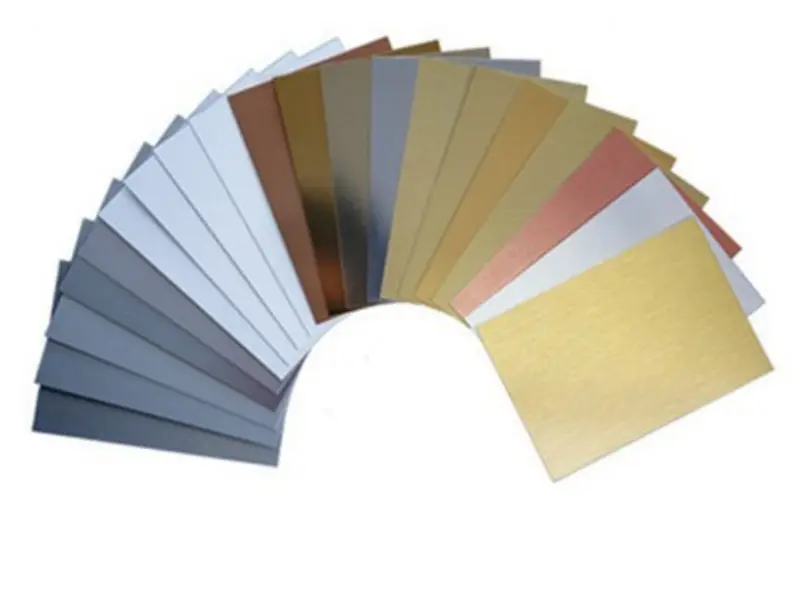
Which Color Should You Choose?
Color is an important part of architectural and product design. The right color should match the building style, surrounding environment, and customer preferences.
Common colors include:
| Color | Typical Applications |
|---|---|
| White | Ceilings, roofing, appliances |
| Black | Facades, signage, decoration |
| Silver | Industrial panels and interiors |
| Grey | Roofing and wall cladding |
| Blue | Industrial buildings and roofing |
| Red | Roofing and decorative panels |
| Green | Roofing and architectural products |
| Brown | Exterior decoration |
| Champagne | Premium interior decoration |
| Gold | Decorative panels and displays |
RAL Color Customization
Customers can choose colors based on RAL color references or approved samples.

Custom color production is useful for:
- Building projects with a fixed color standard
- Brand-specific advertising panels
- Appliance manufacturers
- Architectural decoration
- Wholesale and distribution orders
For large projects, it has recommended to approve a color sample before mass production. This helps reduce differences between batches.
Coating Thickness and Surface Quality: What Should Buyers Check?
Color alone does not determine coating quality. Buyers should also pay attention to coating thickness, adhesion, surface appearance, and weather resistance.
| Inspection Item | What to Check |
|---|---|
| Coating thickness | Confirm the required coating system |
| Color consistency | Check color difference between batches |
| Adhesion | Coating should bond properly to the base |
| Surface appearance | No obvious scratches, bubbles, or paint defects |
| Flexibility | Coating should suit the planned bending process |
| Corrosion resistance | Confirm performance for the working environment |
| Weather resistance | Important for outdoor applications |
PE vs PVDF Coating
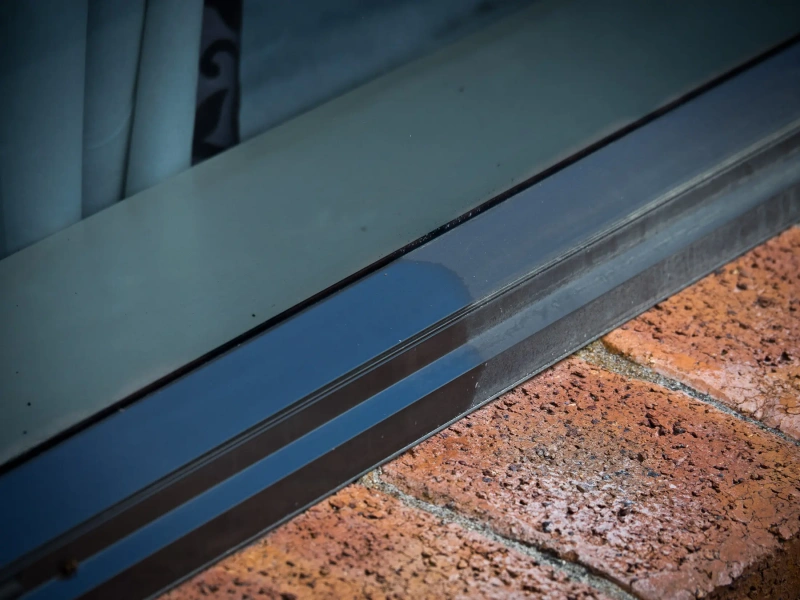

| Comparison | PE Coating | PVDF Coating |
|---|---|---|
| Main use | Indoor and general applications | Outdoor architecture |
| Weather resistance | Moderate | High |
| Color stability | Good for suitable environments | Generally better for long-term exposure |
| Cost | Usually lower | Usually higher |
| Application | Ceilings, decoration, appliances | Facades, roofing, exterior panels |
The coating system should be chosen according to the expected service environment, not only the initial price.
Color Coated Aluminum Sheet vs Color Coated Steel Sheet
Both materials are used in building and industrial products. However, they have different physical properties.
| Comparison | Color Coated Aluminum | Color Coated Steel |
|---|---|---|
| Weight | Lightweight | Heavier |
| Corrosion resistance | Good, depending on alloy and coating | Depends strongly on steel substrate and coating |
| Formability | Good with suitable alloy and temper | Depends on steel grade |
| Transportation | Lower weight can reduce handling load | Higher weight |
| Surface finish | Wide decorative choices | Wide decorative choices |
| Typical uses | Roofing, facades, ceilings | Roofing, walls, industrial buildings |
Aluminum is often preferred when low weight and corrosion resistance are important. Steel may be selected when structural requirements and material cost favor it.
Color Coated Aluminum Sheet vs Anodized Aluminum Sheet

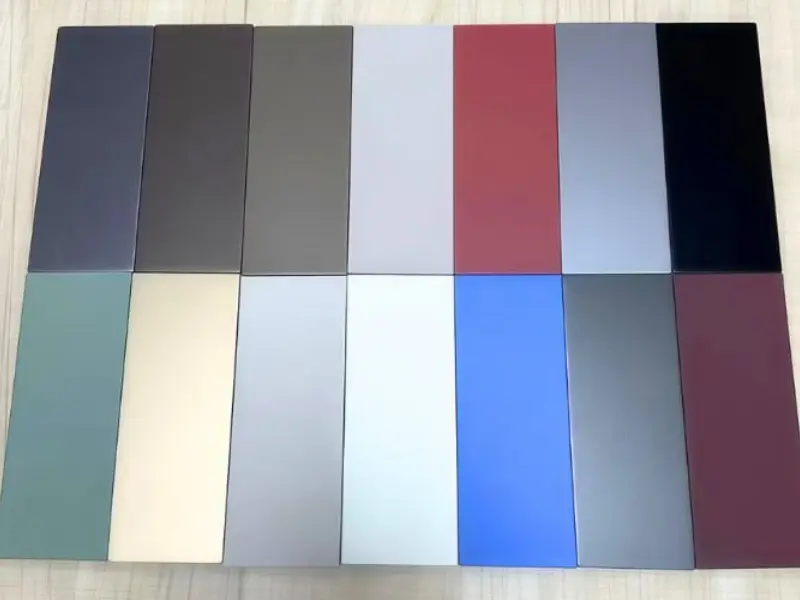
These two products have different surface treatment processes.
| Feature | Color Coated Aluminum | Anodized Aluminum |
|---|---|---|
| Surface treatment | Organic paint coating | Electrochemical oxidation |
| Color options | Wide range of custom colors | Depends on anodizing process |
| Surface appearance | Smooth, matte, gloss, or textured | Metallic appearance |
| Custom patterns | Wood grain, stone, and other designs | More limited |
| Main applications | Roofing, walls, decoration | Architectural and decorative products |
Color coated products are a good choice when customers need specific colors or printed patterns. Anodized aluminum has often selected when a metallic finish is preferred.
Where Are Color Coated Aluminum Sheets Used?
Different product designs have developed for different industries. The following applications represent common market demand.
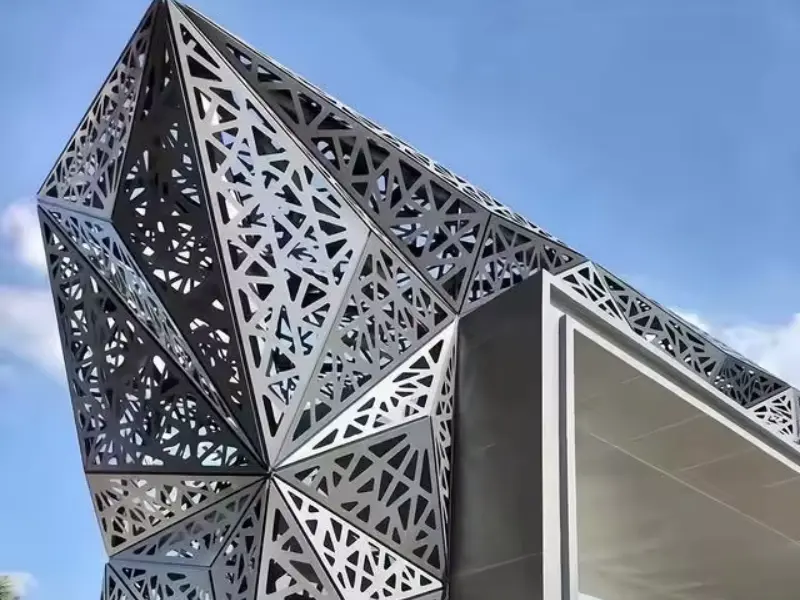
Building and Construction
Commercial building decoration
Metal roofing sheets
Exterior wall cladding
Curtain wall decorative panels
Interior ceiling systems
Gutter and drainage components
Door and window panels
Building partitions
Transportation and Automotive
- Vehicle interior panels
- Trailer body panels
- Truck body components
- Transportation equipment covers
- Lightweight decorative parts
The alloy, thickness, and coating have selected according to the required strength and forming process.
Home Appliances
- Refrigerator exterior panels
- Washing machine covers
- Air conditioner panels
- Kitchen equipment decoration
- Appliance housings
- Small electrical equipment covers
For these products, color consistency, surface quality, and scratch resistance are important.
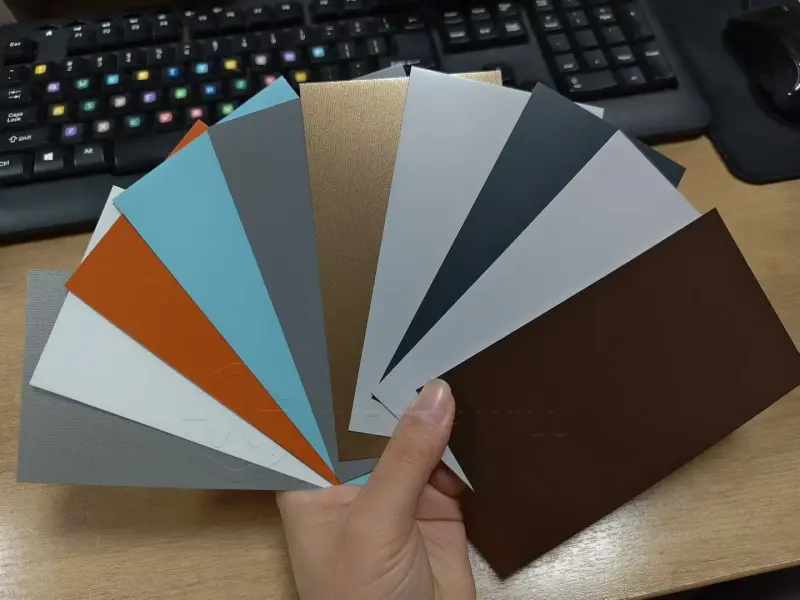
Advertising and Signage
- Outdoor advertising boards
- Shop signs
- Display panels
- Directional signs
- Decorative sign backgrounds
- Custom printed panels
Different colors and surface finishes help manufacturers produce attractive signage products.
Industrial Equipment
- Machine covers
- Electrical cabinet panels
- Equipment enclosures
- Protective covers
- Ventilation equipment panels
- Industrial decoration panels
Insulation and HVAC
- Pipe insulation jacketing
- HVAC duct covering
- Thermal insulation panels
- Air conditioning equipment covers
- Insulated building components
For insulation applications, buyers should consider the operating environment, surface finish, thickness, and compatibility with the insulation system.
How to Choose the Right Product for Your Project

Before placing an order, it is useful to check several important details.
Step 1: Identify the application
Is the sheet for roofing, wall cladding, decoration, appliances, or industrial equipment? The application determines the basic performance requirements.
Step 2: Select the alloy
Choose an alloy according to strength, formability, and corrosion resistance.
For example:
- 3003 or 3105 for many building applications
- 1050 or 1100 for products requiring good formability
- 5005 for selected decorative architectural applications
- 5052 for applications requiring higher strength
Step 3: Confirm the thickness
Check the panel size, support structure, forming process, and mechanical requirements before selecting thickness.
Step 4: Choose the coating system
PE may be suitable for many indoor and general applications. PVDF is often preferred for exterior architectural use.
Step 5: Confirm the color and surface
Choose from standard colors, RAL references, or approved samples. Confirm whether you need matte, gloss, brushed, embossed, or patterned finishes.
Step 6: Confirm fabrication requirements
If the material needs deep drawing, roll forming, bending, punching, or cutting, discuss the process with the supplier before production.
What Information Should You Provide When Requesting a Quote?
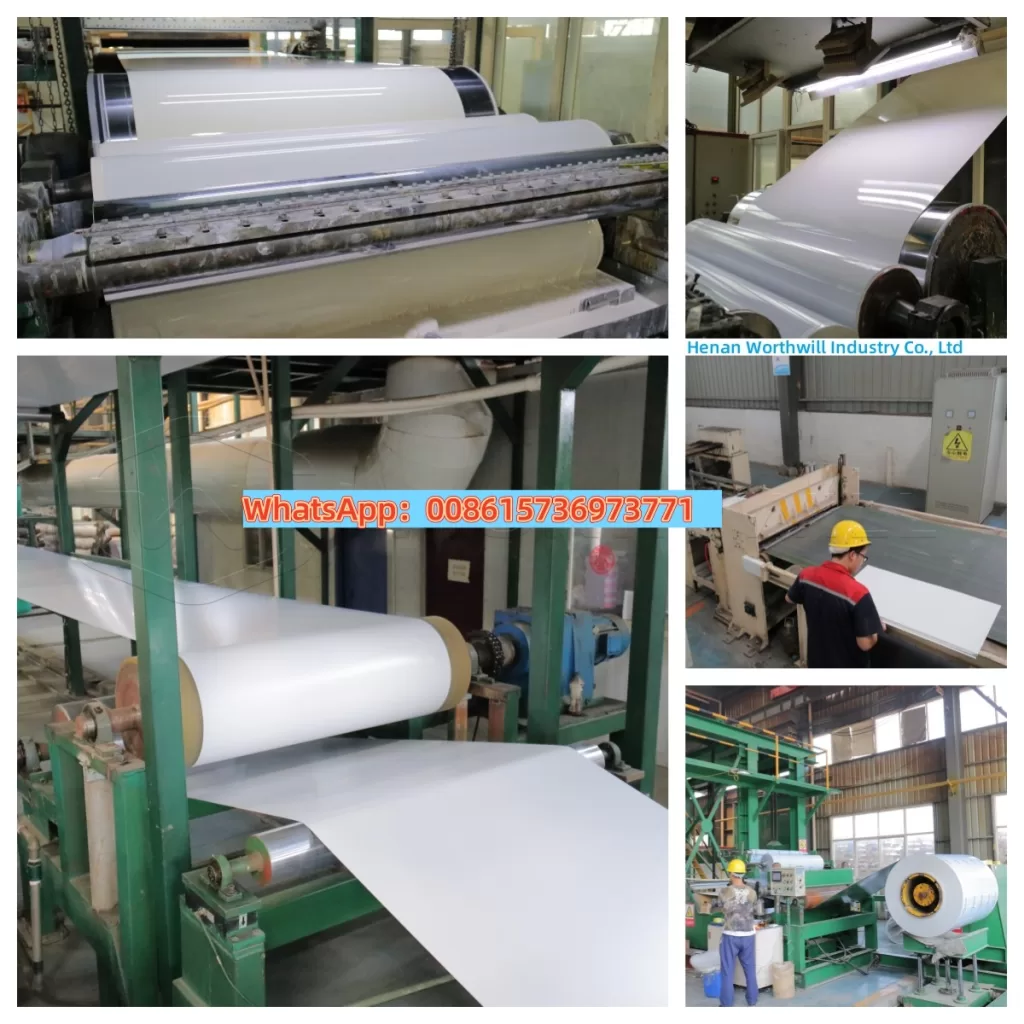
A clear inquiry helps the manufacturer provide a more accurate quotation.
| Required Information | Example |
|---|---|
| Product | Color coated aluminum sheet |
| Alloy | 3003 / 3105 |
| Temper | H14 / H24 |
| Thickness | 0.5 mm |
| Width | 1219 mm |
| Length | 2438 mm |
| Coating | PE / PVDF |
| Coating color | RAL 9003 |
| Surface | Matte / Gloss |
| Application | Roofing / Wall panel |
| Quantity | According to project demand |
| Packaging | Export standard packaging |
If you have technical drawings or a reference sample, you can also provide them for evaluation.
Why Buy Color Coated Aluminum Sheets from a Direct Manufacturer?
Working with a manufacturer can make product customization and production communication easier.
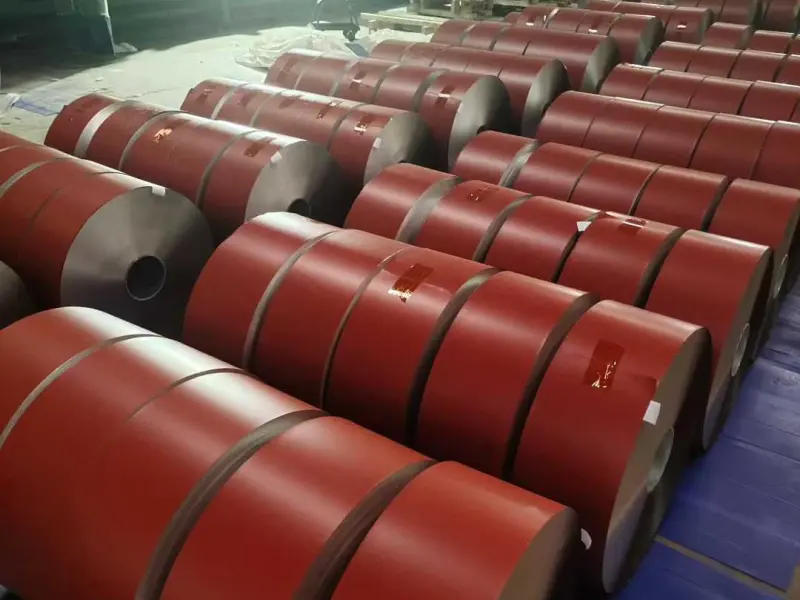
A professional aluminum supplier should be able to help customers confirm the base alloy, temper, thickness, coating system, color, and dimensions before production.
Important points to consider include:
- Product range: Different alloys, tempers, thicknesses, and coating options.
- Custom production: Sheet and coil dimensions according to project requirements.
- Quality inspection: Checks for thickness, coating, color, and surface condition.
- Sample support: Samples can help customers evaluate color and surface quality.
- Export experience: Suitable packaging and shipping arrangements.
- Technical communication: Support with product selection and processing requirements.
For wholesalers, distributors, and project contractors, stable product specifications and consistent quality are important for repeat orders.
Frequently Asked Questions
What is the best alloy for color coated aluminum sheet?
There is no single best alloy for every application. 3003 and 3105 are common choices for building products. 1050 and 1100 offer good formability, while 5052 provides higher strength for selected industrial applications.
Is PE or PVDF coating better?
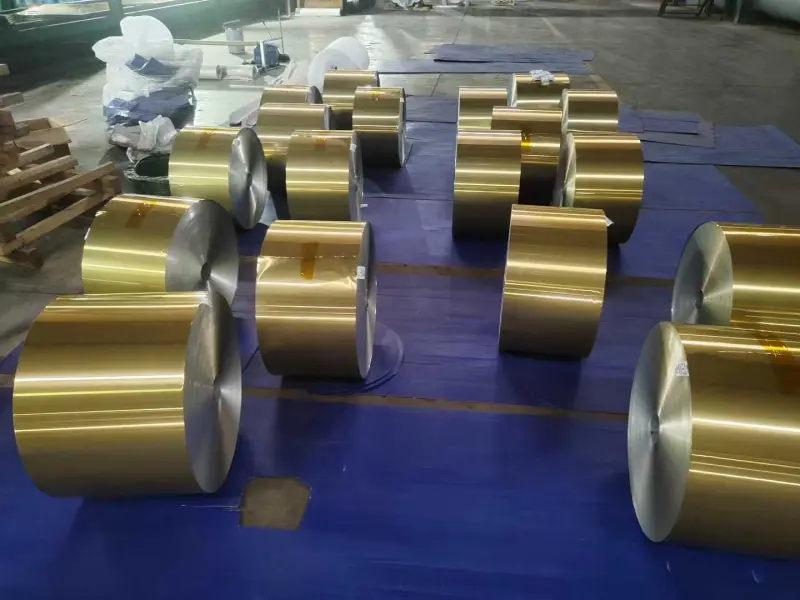
PE coating is suitable for many indoor and general applications. PVDF has generally preferred for outdoor architectural products because of its stronger weather resistance and color stability.
Can color coated aluminum sheets be bent?
Yes. Many color coated aluminum sheets have bent and formed. However, the suitable bending radius depends on alloy, temper, thickness, coating system, and processing conditions. A bending test has recommended before mass production.
What is the standard thickness of color coated aluminum sheet?
Common thicknesses include 0.3 mm, 0.4 mm, 0.5 mm, 0.6 mm, 0.8 mm, 1.0 mm, and 1.5 mm. Custom thicknesses may also be available.
Can I order color coated aluminum in 4 × 8 sheets?
Yes. A common 4 × 8 ft sheet measures approximately 1219 × 2438 mm. Other dimensions have discussed according to production capability.
Can you produce custom RAL colors?

Yes. Many color coated aluminum products have produced according to RAL references or approved samples. For large orders, sample confirmation is recommended.
Is color coated aluminum suitable for outdoor use?
Yes, when the alloy and coating system are suitable for the environment. PVDF-coated aluminum has commonly selected for exterior applications. Coastal and industrial environments may require additional corrosion protection considerations.
Does the coating peel off during bending?
A properly selected coating system should withstand the specified forming process. However, excessive bending or an unsuitable radius may damage the coating. Always confirm the forming requirements before production.
What is the difference between color coated aluminum sheet and coil?
A sheet has cut to a fixed length and is convenient for individual panel fabrication. A coil has supplied in continuous form and is suitable for roll forming, slitting, and continuous production.
How do I prevent color differences between batches?
Use the same color reference, coating specification, and approved sample. For large projects, it is better to arrange production in coordinated batches and confirm color consistency before shipment.
How long does color coated aluminum last outdoors?
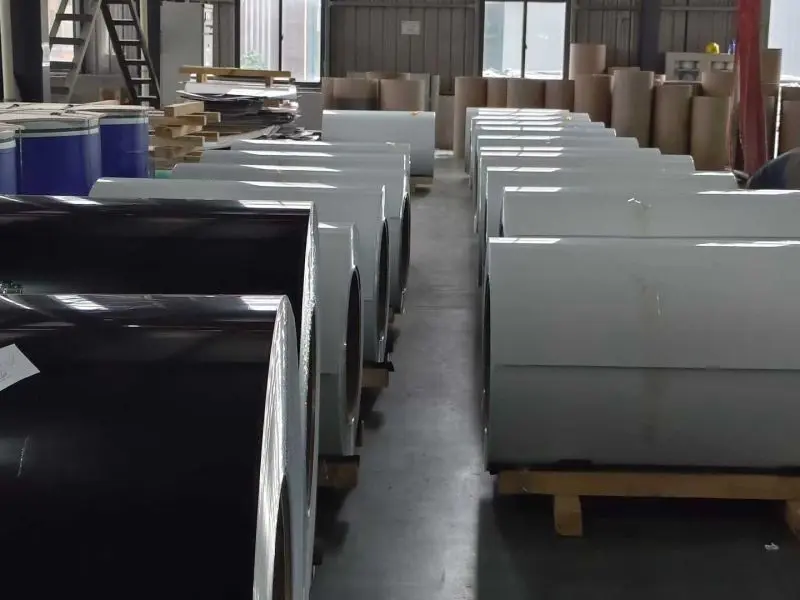
Service life depends on the alloy, coating system, coating quality, installation, climate, and maintenance. A suitable PVDF system may provide long-term outdoor performance, but buyers should request product-specific test data and warranty conditions.
Can color coated aluminum be used for roofing?
Yes. It has widely used for metal roofing, roof panels, gutters, and related building products. The correct thickness and coating have selected according to roof design, weather exposure, and structural requirements.
Have You Found the Right Color Coated Aluminum Sheet?
The right product is a combination of alloy, temper, thickness, coating, color, and application. Choosing only by appearance or price may lead to problems during fabrication or service.
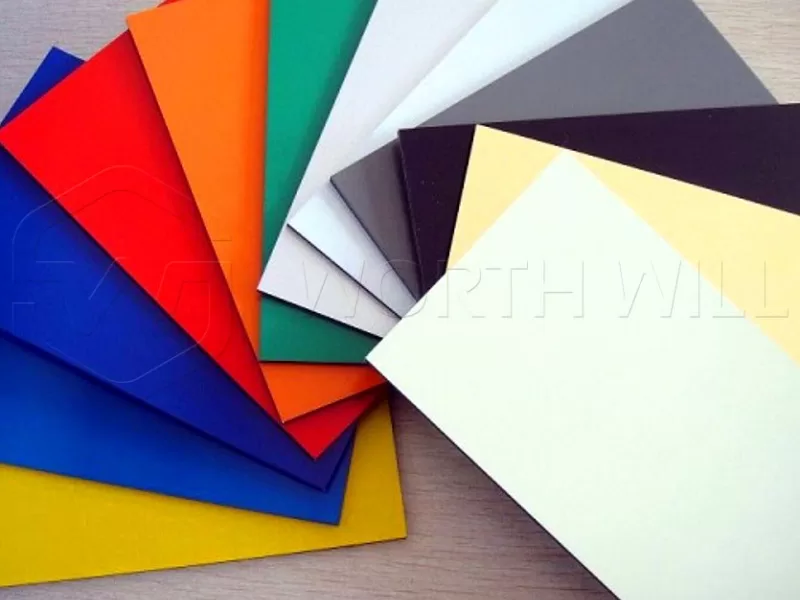
For roofing and exterior wall panels, pay attention to weather resistance and coating quality. By interior decoration and appliances, color consistency and surface appearance may be more important. For industrial products, alloy strength and forming performance checked carefully.
A suitable manufacturer should help you confirm these details before production.
If you are looking for color coated aluminum sheets or coils, prepare your required alloy, temper, thickness, dimensions, coating type, color, and application. This information will make product selection and quotation more accurate.
Error: Contact form not found.