5083 vs 6061 Aluminum Plate Price Comparison: Which Alloy Saves You Money?
5083 vs 6061 Aluminum Plate Price Comparison. Buyers often face a choice between 5083 and 6061 aluminum plate. Both are strong alloys. Both are widely used. But their prices, properties, and best uses differ. Picking the wrong one can raise costs or cause failure.
Quick Overview: 5083 vs 6061
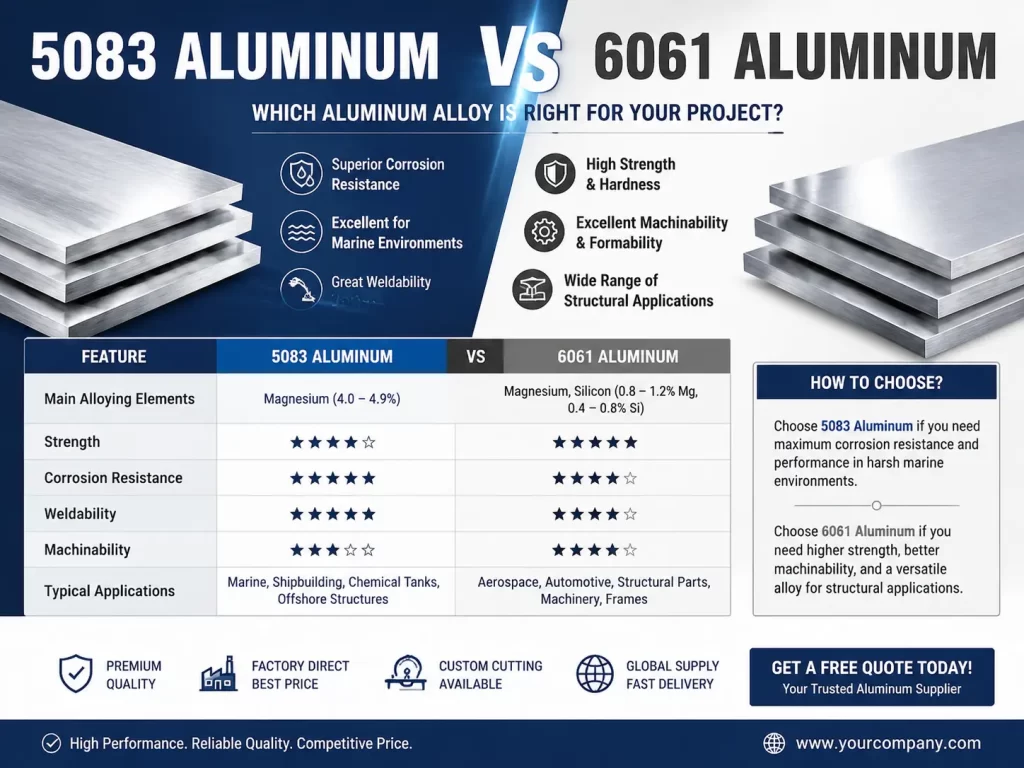
Before diving into prices, let us look at what each alloy offers.
5083 Aluminum Plate
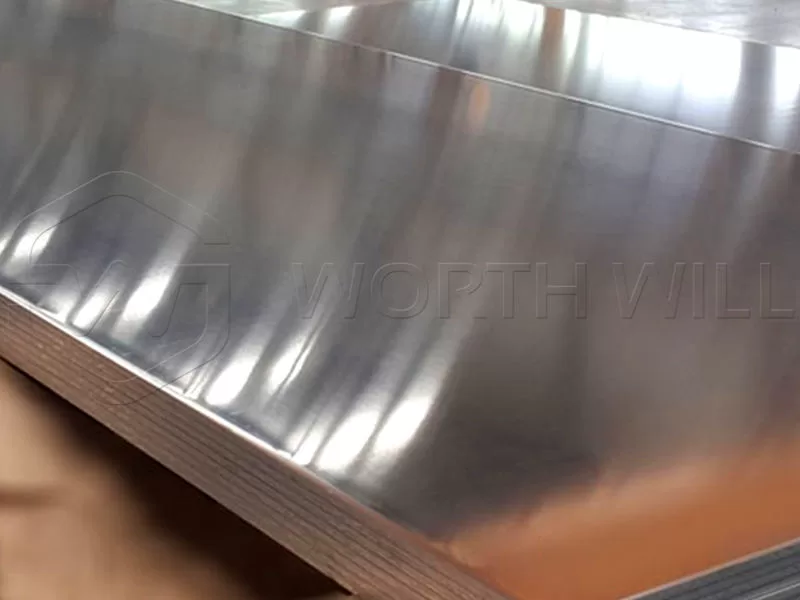
5083 is a 5000-series alloy. Its main element is magnesium. It is not heat-treatable. Strength comes from cold working and strain hardening.
| Property | Value |
|---|---|
| Main Alloying Element | Magnesium (4.0–4.9%) |
| Manganese Content | 0.4–1.0% |
| Tensile Strength (H321) | 305–385 MPa |
| Yield Strength (H321) | 215–275 MPa |
| Elongation | 10–16% |
| Density | 2.66 g/cm³ |
| Corrosion Resistance | Outstanding |
| Weldability | Excellent |
5083 is the top choice for marine and cryogenic use. It resists seawater better than almost any other aluminum alloy. Ship hulls, fuel tanks, and offshore platforms use this alloy.
6061 Aluminum Plate
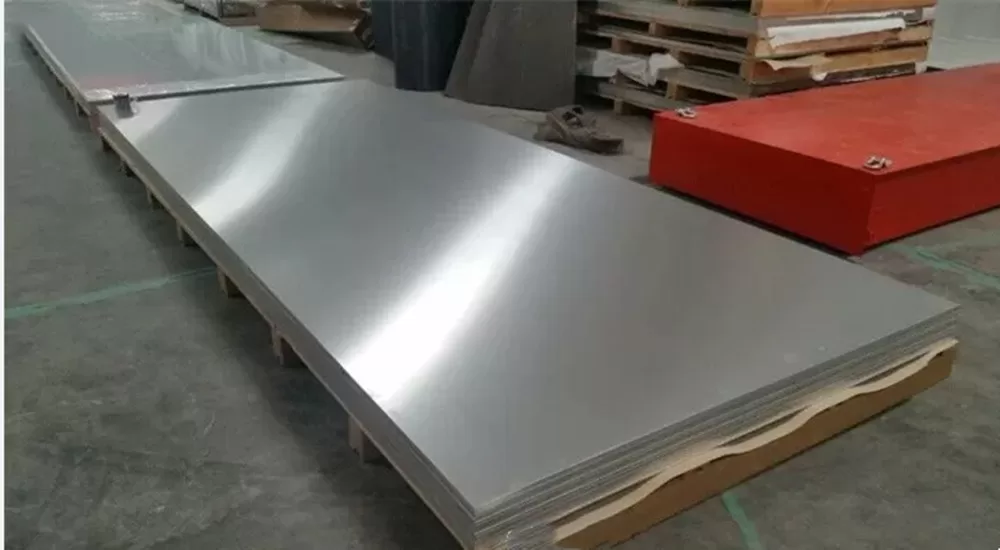
6061 is a 6000-series alloy. It contains magnesium and silicon. It is heat-treatable. Aging after solution treatment creates high strength.
| Property | Value |
|---|---|
| Main Alloying Elements | Mg (0.8–1.2%), Si (0.4–0.8%) |
| Tensile Strength (T6) | 290–310 MPa |
| Yield Strength (T6) | 240–276 MPa |
| Elongation | 8–12% |
| Density | 2.70 g/cm³ |
| Corrosion Resistance | Good |
| Machinability | Excellent |
6061 is the workhorse of structural aluminum. It machines cleanly. It welds reasonably well and offers a good mix of strength, cost, and availability. Frames, brackets, and precision parts use this alloy.
Price Comparison: 5083 vs 6061
Price is the main reason buyers compare these two alloys. Here is what the market shows.
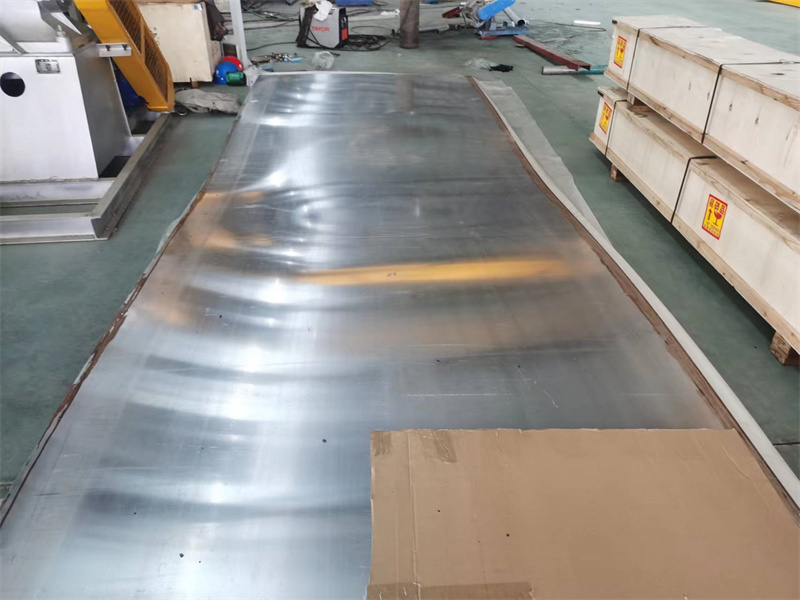
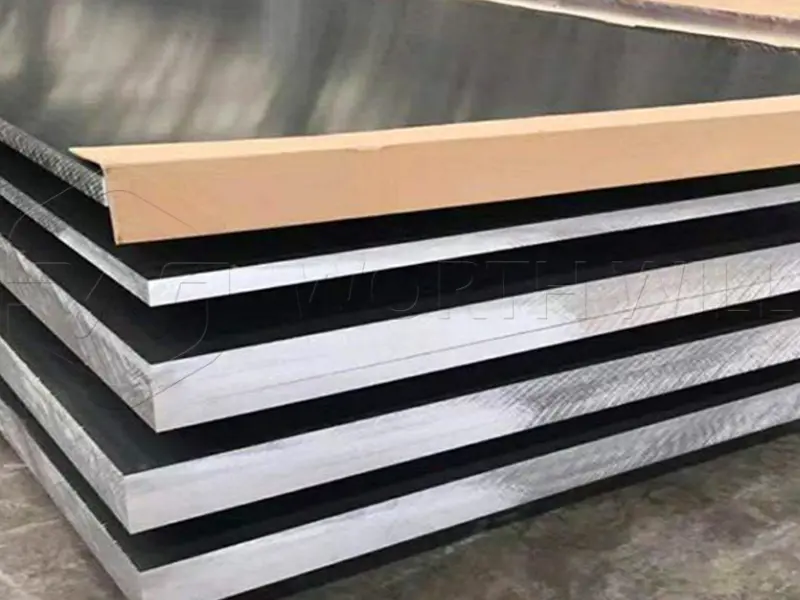
Typical Price Per Kilogram
| Alloy | Temper | Price Range (USD/kg) | Price Range (USD/lb) |
|---|---|---|---|
| 5083 | H116 / H321 | 3.50 – 6.00 | 1.59 – 2.72 |
| 6061 | T6 / T651 | 3.50 – 6.50 | 1.59 – 2.95 |
| 6061 | O (annealed) | 3.00 – 5.50 | 1.36 – 2.50 |
The price ranges overlap. In many cases, 5083 and 6061 cost about the same per kilogram. But the final invoice can differ based on thickness, quantity, and supplier.
Price by Thickness
Thinner plate often costs more per kilogram. It needs more rolling passes. Thicker plate is closer to raw slab, so processing cost is lower.
| Thickness Range | 5083-H321 (USD/kg) | 6061-T651 (USD/kg) | Notes |
|---|---|---|---|
| 2–5 mm | 4.50 – 6.00 | 4.50 – 6.50 | Thin plate, higher per-kg cost |
| 6–12 mm | 3.80 – 5.00 | 3.80 – 5.20 | Standard range, best value |
| 13–25 mm | 3.50 – 4.50 | 3.50 – 4.80 | Thick plate, lower per-kg cost |
| 26–50 mm | 3.50 – 4.20 | 3.50 – 4.50 | Heavy plate, minimal processing |
| Over 50 mm | 3.50 – 4.00 | 3.50 – 4.20 | Near-slab, lowest per-kg cost |
The sweet spot for both alloys is 6 mm to 25 mm. In this range, mills achieve high efficiency. Buyers get the best price per kilogram.
Price by Order Quantity
Order size has a big impact on unit price. Small orders pay retail rates. Large orders unlock mill-direct pricing.
| Quantity | 5083 Price Level | 6061 Price Level | Typical Discount |
|---|---|---|---|
| Under 100 kg | List price + fee | List price + fee | None |
| 100–500 kg | List price | List price | 0% |
| 500–2,000 kg | Slight break | Slight break | 3–8% |
| 2–10 tons | Volume pricing | Volume pricing | 8–15% |
| 10–50 tons | Mill-direct rate | Mill-direct rate | 15–25% |
| Full container (20+ tons) | Lowest rate | Lowest rate | 25–40% |
For one-off jobs under 500 kg, 6061 may be cheaper simply because stock is more common. For bulk marine orders over 10 tons, 5083 often wins on price due to direct mill contracts.
Price by Supplier Type
Where you buy matters as much as what you buy.
| Supplier Type | 5083 Availability | 6061 Availability | Price Level | Best For |
|---|---|---|---|---|
| Online metal retailer | Limited | Good | Highest | Small, urgent orders |
| Local service center | Moderate | Excellent | Mid to high | Regular fabrication |
| Regional distributor | Good | Excellent | Mid | Mid-volume buyers |
| Mill direct (domestic) | Good | Good | Low | Large volume, long lead |
| Import supplier | Excellent | Excellent | Lowest | Bulk orders, planned ahead |
5083 is less common at small retailers. Many stock only 6061. This can push 5083 prices up for small buyers. 6061 is stocked everywhere, so small buyers get better pricing.
Why Prices Differ: Cost Drivers Explained
Several factors push the price of aluminum plate up or down. Understanding them helps you negotiate.
Raw Material Cost
Both alloys start with primary aluminum. The London Metal Exchange (LME) price sets the base. On top of that, alloying elements add cost.
| Cost Factor | 5083 | 6061 |
|---|---|---|
| Magnesium content | Higher (4.0–4.9%) | Lower (0.8–1.2%) |
| Silicon content | None | Moderate (0.4–0.8%) |
| Manganese content | Moderate (0.4–1.0%) | Trace |
| Copper content | None | Low (0.15–0.40%) |
| Raw alloy premium | Higher | Standard |
5083 needs more magnesium. Magnesium costs more than silicon. This gives 5083 a slight raw material premium.
Processing Cost
| Process Step | 5083 | 6061 |
|---|---|---|
| Casting | Standard | Standard |
| Hot rolling | Standard | Standard |
| Cold rolling / finishing | More passes for H321 | Heat treatment for T6 |
| Heat treatment | Not needed | Required |
| Stretching / stress relief | Optional | Required for T651 |
| Testing / certification | Marine certs add cost | Standard mill certs |
5083 needs cold working to reach H321 temper. This takes extra rolling passes. 6061 needs heat treatment and aging. Both add cost. For 6061-T651, stretching after aging adds another step.
Certification and Testing
Marine-grade 5083 often needs classification society approval. DNV, ABS, LR, or BV certificates add cost. Testing includes corrosion, tensile, and ultrasonic inspection.
6061 for general structural use needs standard mill test reports only. These are cheaper. If 6061 is used for aerospace or defense, special certs add cost too.
| Certification Type | 5083 Typical Cost Add | 6061 Typical Cost Add |
|---|---|---|
| Standard mill test report | Included | Included |
| Third-party inspection | 2–5% | 2–5% |
| Classification society (DNV/ABS) | 5–15% | Not typical |
| Aerospace certification | Not typical | 10–25% |
| Full traceability | 3–8% | 3–8% |
Alloy Performance Comparison
Price is only half the story. Performance determines whether the alloy fits your job.
Strength Comparison
| Property | 5083-H321 | 6061-T6 | 6061-T651 |
|---|---|---|---|
| Tensile strength | 305–385 MPa | 290–310 MPa | 290–310 MPa |
| Yield strength | 215–275 MPa | 240–276 MPa | 240–276 MPa |
| Hardness | 75–90 Brinell | 95–105 Brinell | 95–105 Brinell |
| Fatigue strength | 130 MPa | 140 MPa | 140 MPa |
5083-H321 has higher tensile strength. But 6061-T6 has higher yield strength and hardness. For parts that must resist permanent bending, 6061 is better. For parts that need maximum tensile load, 5083 wins.
Corrosion Resistance Comparison
| Environment | 5083-H321 | 6061-T6 |
|---|---|---|
| Fresh water | Outstanding | Good |
| Saltwater / seawater | Outstanding | Moderate |
| Marine atmosphere | Outstanding | Fair |
| Industrial chemicals | Very good | Good |
| Urban outdoor | Excellent | Good |
| Cryogenic (low temp) | Excellent | Good |
5083 is the clear winner in any wet or salty environment. Its magnesium content forms a protective layer. 6061 needs anodizing or coating for marine use.
Weldability Comparison
| Weld Trait | 5083-H321 | 6061-T6 |
|---|---|---|
| MIG welding | Excellent | Good |
| TIG welding | Excellent | Good |
| Post-weld strength | Near base metal | Reduced in HAZ |
| Crack sensitivity | Very low | Moderate |
| Filler wire | ER5356, ER5183 | ER4043, ER5356 |
5083 welds beautifully. The heat-affected zone keeps most of its strength. 6061 loses strength near welds. Post-weld heat treatment can restore it, but that adds cost and time.
Machinability Comparison
| Machining Trait | 5083-H321 | 6061-T6 |
|---|---|---|
| Chip formation | Long, stringy | Short, broken |
| Surface finish | Fair to good | Excellent |
| Tool life | Shorter | Longer |
| Cutting speed | Slower | Faster |
| Dimensional stability | Good | Excellent (T651) |
6061-T6 and T651 machine much better than 5083. CNC shops prefer 6061 for precision parts. 5083 tends to gum up tools and leave rougher surfaces.
Formability Comparison
| Forming Operation | 5083-H321 | 6061-T6 | 6061-O |
|---|---|---|---|
| Bending | Good | Moderate | Excellent |
| Stretch forming | Good | Fair | Very good |
| Deep drawing | Fair | Poor | Good |
| Roll forming | Good | Good | Very good |
5083 in H321 is more formable than 6061-T6. For bent marine panels, 5083 is easier to work. 6061-O is very formable but much softer.
Temper Options and Their Impact on Price
Temper changes both properties and cost. Here are the common tempers for each alloy.
5083 Temper Options
| Temper | Description | Strength Level | Price Factor | Best For |
|---|---|---|---|---|
| O | Annealed, soft | Lowest | Base price | Forming before hardening |
| H112 | Strain hardened from rolling | Low to moderate | Base price | General plate, less critical |
| H116 | Strain hardened, special corrosion treatment | Moderate | +5–10% | Marine, welded structures |
| H321 | Strain hardened and stabilized | High | +10–15% | Marine, structural, pressure vessels |
H321 is the premium temper for 5083. It offers the best combination of strength and corrosion resistance. H116 is similar but slightly less stable. H112 is cheaper but not suitable for critical marine welds.
6061 Temper Options
| Temper | Description | Strength Level | Price Factor | Best For |
|---|---|---|---|---|
| O | Annealed | Lowest | Base price | Forming, bending |
| T4 | Solution treated, naturally aged | Low to moderate | +5% | Forming before final aging |
| T6 | Solution treated, artificially aged | High | +15–20% | General structural, machined parts |
| T651 | T6 plus stress relief stretching | High | +20–25% | Precision machining, tooling |
T651 costs more than T6 because of the extra stretching step. But it is worth it for machined parts. T6 plate can warp during machining. T651 stays flat.
Thickness Ranges and Typical Uses
Both alloys come in many thicknesses. The right thickness depends on the load and environment.
5083 Plate Thickness Guide
| Thickness | Weight (kg/m²) | Typical Use | Common Temper |
|---|---|---|---|
| 3 mm | 7.98 | Small boat hulls, tanks | H321, H116 |
| 4 mm | 10.64 | Boat decks, vehicle panels | H321 |
| 5 mm | 13.30 | Medium boat hulls, bulkheads | H321 |
| 6 mm | 15.96 | Ship hulls, structural framing | H321 |
| 8 mm | 21.28 | Barge hulls, offshore platforms | H321 |
| 10 mm | 26.60 | Heavy marine structures | H321 |
| 12 mm | 31.92 | Pressure vessels, tanks | H321 |
| 15 mm | 39.90 | Thick hull plating | H321 |
| 20 mm | 53.20 | Heavy shipbuilding | H321 |
| 25 mm | 66.50 | Armor, heavy marine | H321 |
| 30–50 mm | 79.80–133.00 | Structural blocks, foundations | H112, H321 |
| Over 50 mm | 133.00+ | Special heavy marine | H112 |
6061 Plate Thickness Guide
| Thickness | Weight (kg/m²) | Typical Use | Common Temper |
|---|---|---|---|
| 3 mm | 8.10 | Light brackets, panels | T6 |
| 4 mm | 10.80 | Frames, trim | T6 |
| 5 mm | 13.50 | Structural brackets | T6 |
| 6 mm | 16.20 | Machine bases, frames | T6, T651 |
| 8 mm | 21.60 | Heavy frames, platforms | T6 |
| 10 mm | 27.00 | Structural plates | T6 |
| 12 mm | 32.40 | Tooling plate, jigs | T651 |
| 15 mm | 40.50 | Mold bases, heavy tooling | T651 |
| 20 mm | 54.00 | Machine beds, large jigs | T651 |
| 25 mm | 67.50 | Press platens, heavy structures | T651 |
| 30–50 mm | 81.00–135.00 | Large structural blocks | T6 |
| Over 50 mm | 135.00+ | Special industrial | T6 |
Standard Sizes and Custom Cutting
Standard Plate Sizes
| Width | Length | Markets |
|---|---|---|
| 1000 mm | 2000 mm | Asia, Europe |
| 1200 mm | 2400 mm | Australia, Middle East |
| 1219 mm | 2438 mm | North America (4 ft × 8 ft) |
| 1250 mm | 2500 mm | Europe, global |
| 1500 mm | 3000 mm | Large industrial |
| 1524 mm | 3048 mm | North America (5 ft × 10 ft) |
| 2000 mm | 4000 mm | Heavy plate, mills |
| 2000 mm | 6000 mm | Extra-large orders |
Custom Cutting Services
Most suppliers offer cutting to size. Options include:
- Shearing for thin plate (under 12 mm)
- Band saw for medium plate (12–50 mm)
- Water jet for thick plate and complex shapes
- Plasma or laser for fast cutting
- CNC machining for precision edges
Custom cutting adds cost. But it reduces waste and handling time. For large projects, cut-to-size delivery often saves money overall.
Applications: Where Each Alloy Wins
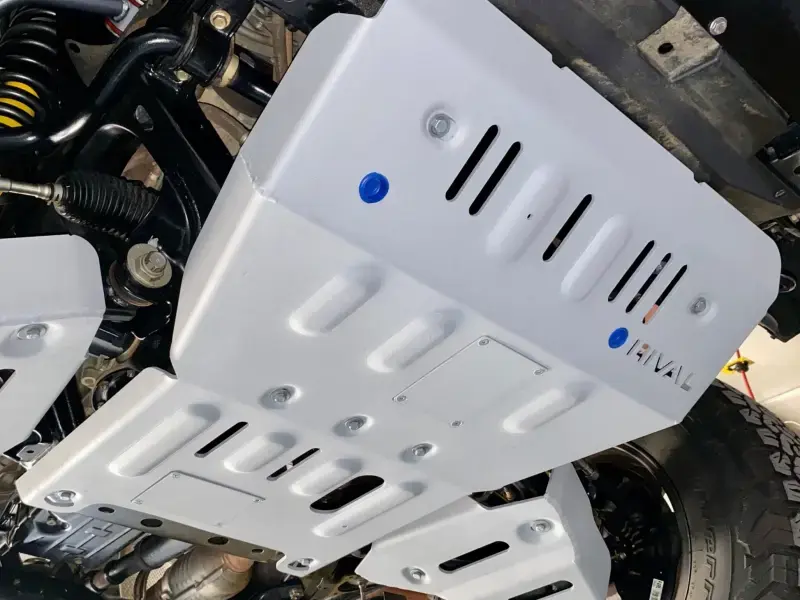
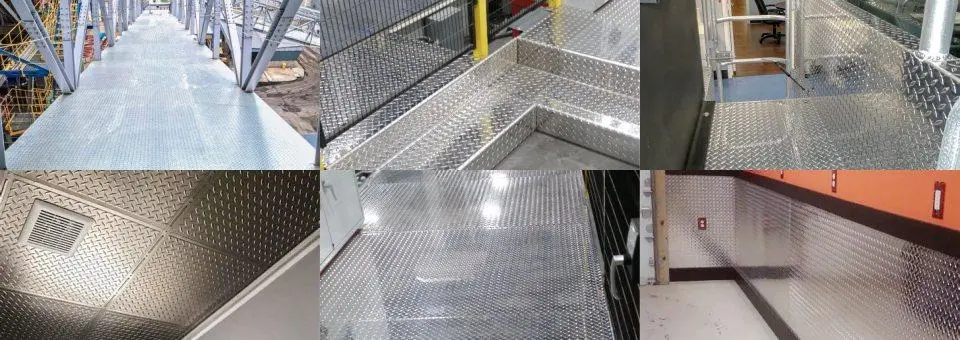
Best Uses for 5083 Aluminum Plate
- Ship and boat hulls
- Offshore platform structures
- Marine fuel and water tanks
- Cryogenic storage vessels
- Welded pressure vessels
- Rail car bodies
- Vehicle armor plating
- Dock and pier structures
- Underwater equipment housings
- Coastal architectural features
Best Uses for 6061 Aluminum Plate
- Structural machine frames
- CNC tooling and jig plates
- Automotive chassis components
- Bicycle frames
- Aerospace structural parts
- Industrial conveyor systems
- Robotics bases and arms
- Architectural framing
- Camera and optical equipment
- Medical device structures
Overlapping Applications
Some jobs can use either alloy. The choice then depends on price, availability, and secondary processing.
| Application | Preferred Alloy | Reason |
|---|---|---|
| General structural framing | 6061-T6 | Lower cost, easier to machine |
| Welded tanks (non-marine) | 6061-T6 | Good weldability, standard certs |
| Marine welded tanks | 5083-H321 | Superior corrosion resistance |
| Heavy load platforms | 6061-T651 | Higher yield strength, stable |
| Coastal walkways | 5083-H321 | Salt resistance, long life |
| Precision machined parts | 6061-T651 | Excellent machinability |
| Formed panels | 5083-O or H321 | Better formability |

How to Get the Best Price
Smart buying lowers your cost. Here are proven strategies.
Buy in Bulk
Mills offer the best prices for full orders. A 20-ton order can cost 30% less per kilogram than a 500-kg order. Combine projects or partner with other buyers to reach volume breaks.
Buy Direct from Mills
Traders add 10% to 30% markup. Contact mills directly for large orders. Lead times are longer. But savings are real.
Choose Standard Sizes
Custom widths and lengths cost more. Standard sizes like 1220×2440 mm or 1500×3000 mm are always cheaper. Order standard sizes and cut in-house if needed.
Avoid Unnecessary Certifications
Marine certs add cost. Do not order DNV-certified plate for a land-based tank. Match the certification to the actual need.
Monitor Metal Markets
Aluminum prices move with the LME. When prices dip, place orders. Some buyers sign quarterly contracts to lock in rates.
Consider Import Options
Imported plate from China or India can be 15% to 30% cheaper. Factor in shipping time and import duties. For planned projects with long lead times, imports save money.
Price Calculation Example
Let us compare two real orders.
Order One: 5083-H321 Marine Plate
| Detail | Value |
|---|---|
| Alloy / Temper | 5083-H321 |
| Thickness | 8 mm |
| Dimensions | 1500 mm × 3000 mm |
| Quantity | 50 sheets |
| Total weight | 1,596 kg |
| Unit price | USD 4.20/kg |
| Material cost | USD 6,703 |
| DNV certification | USD 500 |
| Cutting to size | USD 200 |
| Total | USD 7,403 |
Order Two: 6061-T651 Structural Plate
| Detail | Value |
|---|---|
| Alloy / Temper | 6061-T651 |
| Thickness | 8 mm |
| Dimensions | 1500 mm × 3000 mm |
| Quantity | 50 sheets |
| Total weight | 1,620 kg |
| Unit price | USD 4.00/kg |
| Material cost | USD 6,480 |
| Standard mill cert | Included |
| Cutting to size | USD 200 |
| Total | USD 6,680 |
In this case, 6061-T651 is cheaper by about 10%. But if the job is marine, 5083 is the only safe choice. The extra cost of 5083 is insurance against corrosion failure.
Frequently Asked Questions
Which is cheaper, 5083 or 6061?
They are close in price. 6061 is often slightly cheaper for small orders because it is more widely stocked. 5083 can match or beat 6061 on large marine orders bought direct from mills. The real cost difference comes from certifications and processing, not the alloy itself.
Can I use 6061 instead of 5083 for marine work?
No. 6061 corrodes in seawater. It will pit and fail within months or years. 5083 is specifically made for marine environments. The extra cost of 5083 is far less than the cost of replacing a failed hull.
Why does 5083-H321 cost more than 5083-H112?
H321 receives a special stabilization treatment. This prevents stress corrosion cracking. It is required for welded marine structures. H112 is cheaper but not suitable for critical welds.
Is 6061-T651 worth the extra cost over T6?
Yes, for machined parts. T651 is stress-relieved. It stays flat during machining. T6 can warp when material is removed. The extra cost of T651 saves time and scrap.
Does thickness affect the price per kilogram?
Yes. Thin plate (2–5 mm) costs more per kilogram. It needs more rolling. Thick plate (over 25 mm) is cheaper per kilogram. It is closer to the as-cast slab.
Can I negotiate aluminum plate prices?
Yes. Always ask for a better price on orders over 1,000 kg. Get quotes from three suppliers. Offer a blanket order for regular purchases. Pick up material instead of paying for delivery.
What is the cheapest way to buy 5083 or 6061?
For small orders, buy from a local service center. For medium orders, use a regional distributor. With large orders over 10 tons, buy mill-direct or import. The cheapest per-kilogram price always comes from mill-direct or import on large volumes.
How do I know if a price quote is fair?
Check the LME aluminum price. Add the alloy premium. Add processing and certification costs. Compare quotes from multiple sources. If one quote is 20% lower than others, check for hidden defects or missing certs.
Does surface finish affect price?
Yes. Mill finish is cheapest. Brushed finish adds 10% to 20%. Anodized adds 30% to 100% depending on color and thickness. For structural use, mill finish is standard.
What is the shelf life of aluminum plate?
Aluminum does not degrade in storage. Keep it dry to avoid water staining. Store flat to prevent bending. With proper storage, plate lasts indefinitely.
Conclusion
5083 and 6061 aluminum plate are priced in the same range. The choice between them should not be based on price alone. It should be based on the job.
For marine, offshore, and cryogenic use, 5083 is the only logical choice. Its corrosion resistance is unmatched. The price premium is small compared to the cost of failure.
For structural, machined, and general industrial use, 6061 offers excellent value. It machines well. It is widely available. And costs slightly less in most cases.
Smart buyers look at total project cost, not just per-kilogram price. Consider machining time, welding needs, certification costs, and service life. Sometimes the more expensive alloy saves money over the life of the project.
Get quotes for both. Compare specifications. Test samples if needed. Then choose the alloy that fits your performance needs and your budget.