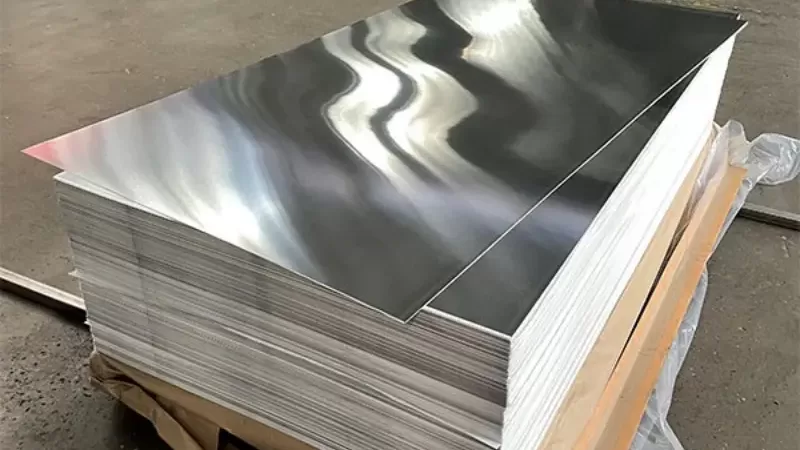
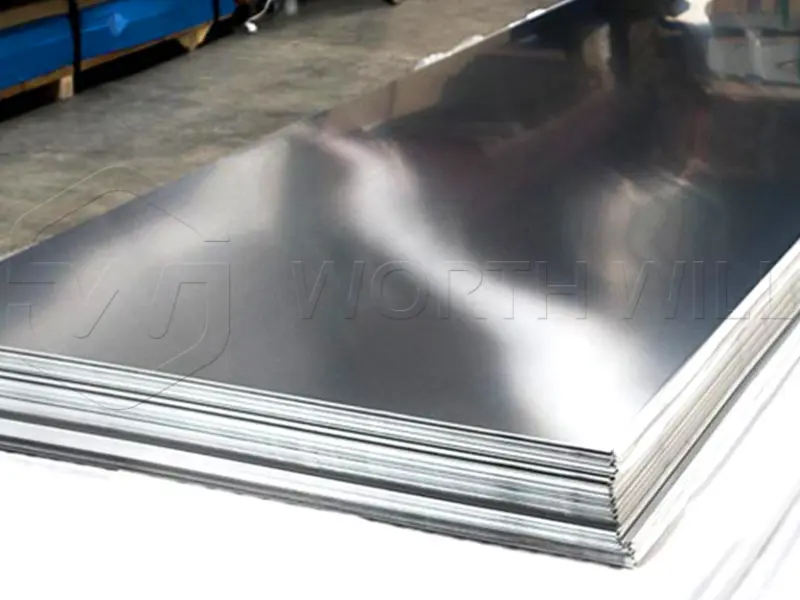
A 4×8 sheet of 1/8 inch aluminum is a standard-sized aluminum panel measuring 4 feet wide by 8 feet long with a thickness of 1/8 inch (3.175 mm). This size is widely used in construction, manufacturing, and DIY projects due to its versatility, ease of handling, and cost-effectiveness. The price of these sheets varies based on alloy type, market conditions, and supplier factors.
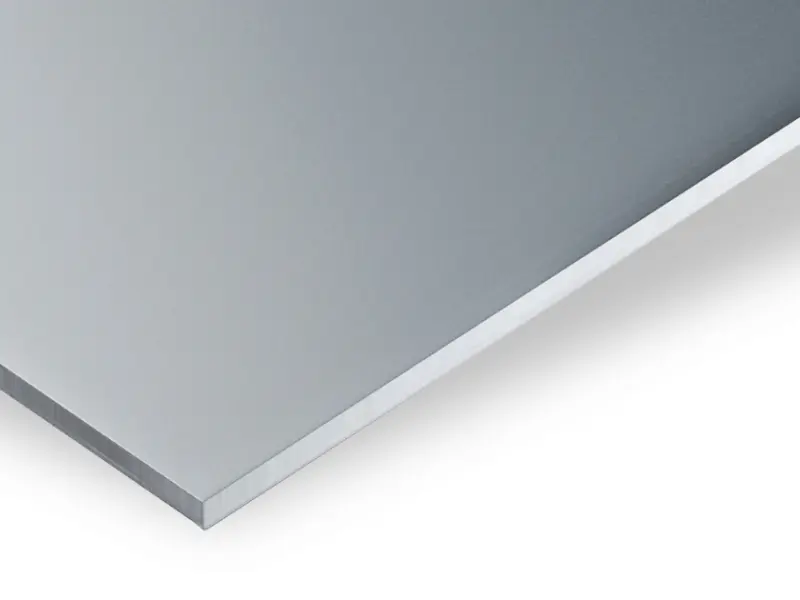
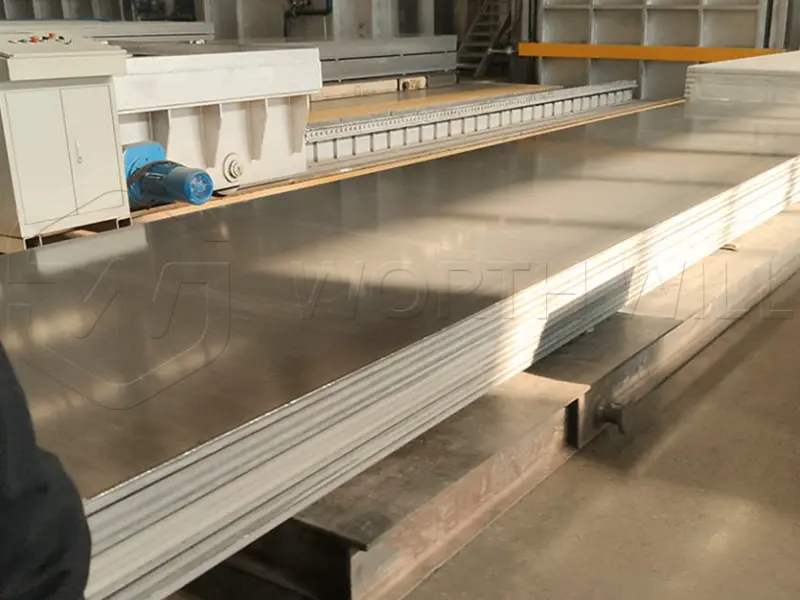
What is a 4×8 Sheet of 1/8 Inch Aluminum?
A 4×8 sheet of 1/8 inch aluminum refers to a flat piece of aluminum metal measuring 4 feet by 8 feet (121.92 cm x 243.84 cm) with a thickness of 1/8 inch (0.125 inches or approximately 3.175 mm). This specific dimension and thickness make it a very common and sought-after product in the metal supply industry.
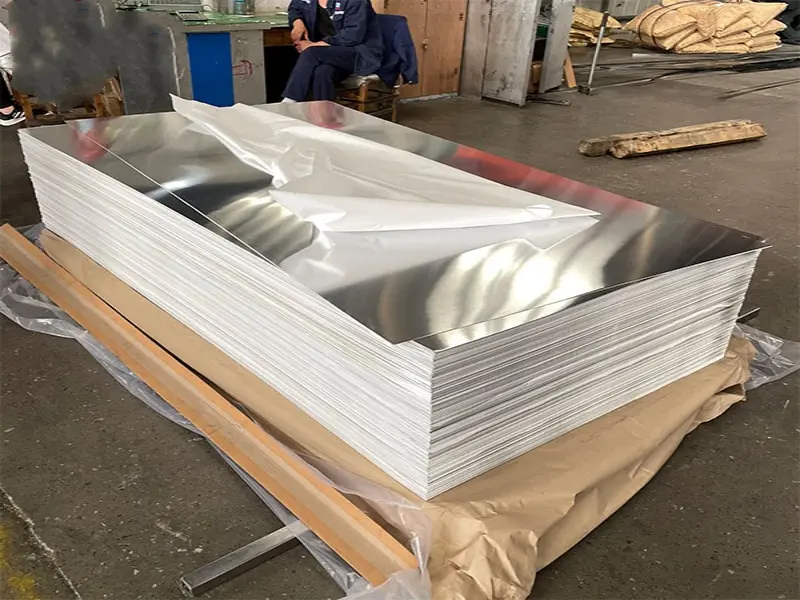
It’s a versatile aluminum plate or aluminum sheet metal that offers a good balance of strength and manageability for many applications.
Why Choose 1/8 Inch Aluminum Sheets?
The 1/8 inch aluminum thickness is popular for several reasons:
- Strength and Rigidity: It’s thick enough to offer significant structural integrity and resistance to bending, making it more robust than thinner gauges.
- Weight: While strong, aluminum is naturally lightweight compared to steel. A 4×8 aluminum plate at 1/8 inch thickness is still manageable for many applications without adding excessive weight.
- Workability: This thickness is generally easy to cut, drill, and form using standard metalworking tools, offering good sheet metal fabrication potential.
- Corrosion Resistance: Aluminum naturally forms a protective oxide layer, making it highly resistant to rust and corrosion, especially important for outdoor or marine environments.
Key Factors Affecting the Price of a 4×8 Sheet of 1/8 Inch Aluminum
The price of a 4×8 sheet of 1/8 inch aluminum isn’t fixed. It can vary significantly based on several factors. Understanding these will help you budget accurately and make informed purchasing decisions.
| Factor | Impact on Price |
|---|---|
| Aluminum Alloy Type | Different aluminum alloys have varying compositions and properties, directly affecting their cost. |
| Global Market Fluctuations | Aluminum is a commodity. Its material cost is tied to global supply and demand, energy prices, and geopolitical events. Prices can change daily or weekly. |
| Supplier Type | Buying from a large distributor or wholesaler often yields better prices than buying from a smaller local retailer, especially for larger quantities. Online suppliers might offer competitive pricing but consider shipping. |
| Quantity Purchased | Most suppliers offer discounts for bulk orders. Buying multiple 4×8 aluminum sheets at once can significantly reduce the aluminum sheet cost per square foot. |
| Finish | The basic “mill finish” (raw aluminum) is the least expensive. Options like anodizing, powder coating, polishing, or brushed finishes add to the cost due to extra processing. |
| Cutting & Fabrication | If you need custom cuts, specific shapes, bending, or drilling services, these will add to the aluminum sheet price. Custom sheet metal fabrication costs vary by complexity. |
| Shipping Costs | Due to its size and weight, shipping a 4×8 aluminum sheet can be a significant expense, especially for long distances. Always factor this into the total 4×8 aluminum sheet cost. |
| Location | Prices can vary geographically due to regional supply chains, local taxes, and transportation costs. |
Common Aluminum Alloys and Their Price Impact
The specific alloy of aluminum plays a major role in its cost per sheet. Here are some of the most common alloys you’ll find for a 4×8 1/8 inch aluminum plate:
| Alloy Type | Key Characteristics | Typical Price Impact |
|---|---|---|
| 3003 Aluminum | Good workability, excellent corrosion resistance, medium strength. Very common for general-purpose applications. | Generally the most affordable and widely available option for a 4×8 1/8 inch aluminum sheet. |
| 5052 Aluminum | Higher strength than 3003, excellent corrosion resistance (especially in marine environments), good formability. | Slightly more expensive than 3003 due to its higher strength and better corrosion resistance. A popular choice for marine and automotive uses. |
| 6061 Aluminum | High strength, good weldability, good corrosion resistance. Often heat-treatable for even greater strength. | Typically the most expensive of these common alloys. Used in structural components, aerospace, and high-stress applications where strength is key. |
Key Factors Affecting Price
- Aluminum Alloy: Different alloys (e.g., 3003, 5052, 6061) have varying costs.
- Market Prices: Global aluminum prices fluctuate due to supply and demand.
- Quantity: Bulk orders often receive discounts.
- Supplier: Prices differ between manufacturers, distributors, and retailers.
- Finish: Mill finish is standard; anodized or coated finishes cost extra.
Price Range for 4×8 Sheet of 1/8 Inch Aluminum
| Alloy | Price Range (Per Sheet) | Common Uses |
|---|---|---|
| 3003 | $150 – $250 | General fabrication, gutters |
| 5052 | $180 – $280 | Marine, automotive parts |
| 6061 | $200 – $320 | Structural applications, frames |
| 2024 | $250 – $400 | Aerospace, high-strength needs |
Note: Prices are estimates and may vary based on location and market conditions.
Technical Specifications of a 4×8 Sheet of 1/8 Inch Aluminum
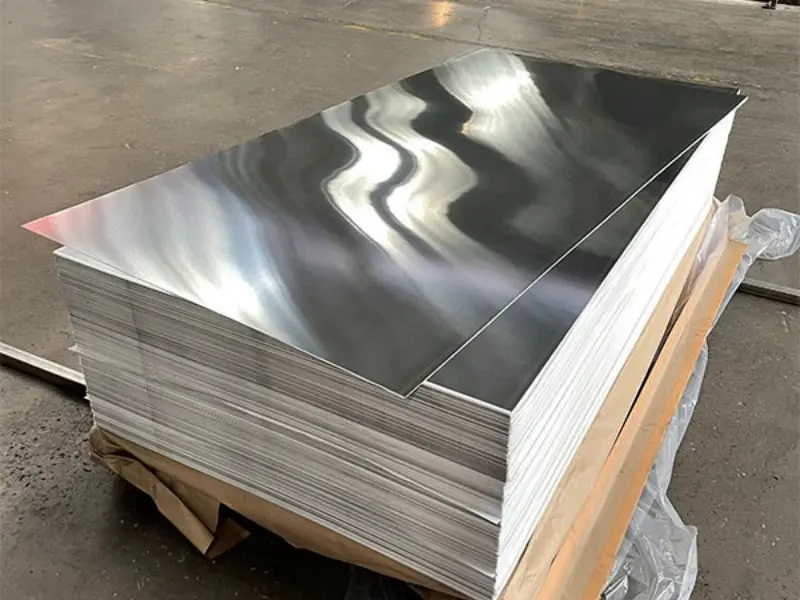
Before looking at prices, you must understand the exact physical measurements and weight of this standard aluminum sheet. These specifications help you calculate shipping costs and determine if the metal meets your structural needs.
Dimensions in Imperial and Metric Units
The label 4×8 refers to the width (w) and length (l) of the metal sheet in feet. The thickness is represented by the variable t.
- Width (w): 4 feet or 48 inches (1219.2 mm)
- Length (l): 8 feet or 96 inches (2438.4 mm)
- Thickness (t): 1/8 inch or 0.125 inches (3.175 mm)
Weight Calculations for Shipping and Handling
Aluminum is famous for being lightweight. To find the exact weight of a 4×8 sheet of 1/8 inch aluminum, we use the physical density of the metal.
The average density (ρ) of aluminum alloys is approximately 0.098 pounds per cubic inch (2.71 g/cm3).
We calculate the total volume (V) first:
Volume (V)=48 in×96 in×0.125 in=576 cubic inches
Next, we calculate the total weight (W):
Weight (W)=576 in3×0.098 lbs/in3=56.45 pounds (25.61 kg)
Knowing that a single sheet weighs roughly 56.45 pounds is critical. It allows you to estimate shipping charges and determine if you can safely transport the sheet in a standard pickup truck.
Physical Dimension and Weight Summary
| Parameter | Imperial Measurement | Metric Measurement |
|---|---|---|
| Width (w) | 48.00 inches | 1219.2 mm |
| Length (l) | 96.00 inches | 2438.4 mm |
| Thickness (t) | 0.125 inches | 3.175 mm |
| Total Volume (V) | 576.00 cubic inches | 9438.8 cm3 |
| Total Weight (W) | 56.45 pounds | 25.61 kg |
Key Drivers of the 4×8 Sheet of 1/8 Inch Aluminum Price
Metal prices are not static. If you request a quote today, the price may be different next month. Several key variables influence the final retail and wholesale prices of aluminum sheets.
London Metal Exchange (LME) Aluminum Prices

Aluminum is a globally traded commodity. The base price of raw aluminum ingot is determined daily on the London Metal Exchange (LME).

If global demand for aluminum increases or supply chains are disrupted, the base LME price goes up. Fabricators and distributors adjust their sheet prices to reflect these global market fluctuations.
Alloy Selection and Raw Materials
Temper and Thermal Processing
Surface Finishing Treatments
Shipping, Logistics, and Order Volume
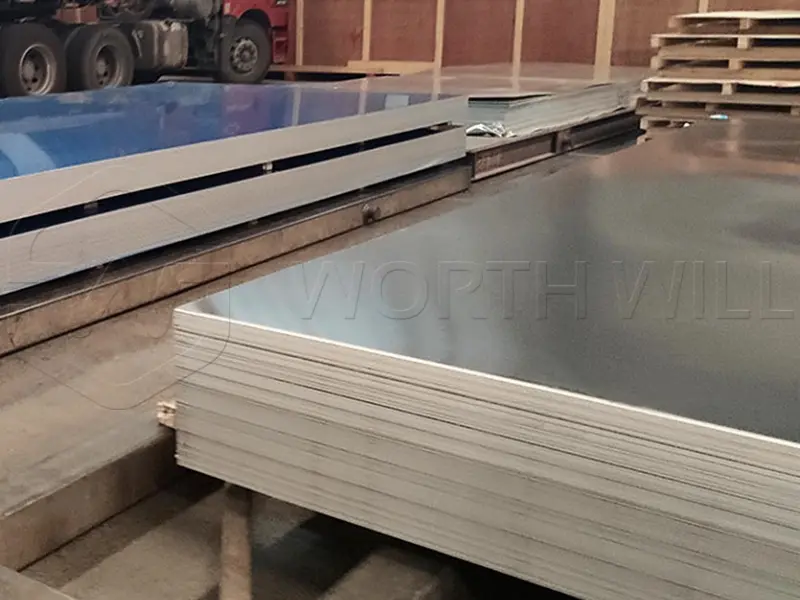
Shipping a flat, rigid 4′×8′ metal plate is expensive. It cannot be folded or rolled, meaning it must ship on a large wooden pallet via freight trucks.
- Freight Cost: Shipping a single sheet can sometimes cost as much as the sheet itself.
- Order Volume: Buying in bulk reduces your price per sheet. Distributors offer substantial discounts when you purchase a full pallet (20 to 50 sheets) rather than a single piece.
Aluminum Alloy Grades and Price Ranges
The specific alloy grade of your sheet is the most important factor in determining the price. Here is a breakdown of the common alloy categories used for 4×8 sheets of 1/8 inch aluminum.
Alloy 1100 and 1050: Pure Utility Grade
These alloys contain more than 99.0% pure aluminum. They are soft, highly ductile, and have excellent thermal and electrical conductivity.
They are very easy to bend and shape but lack high structural strength. Because they contain no complex alloying elements, they are the cheapest option on the market.
- Estimated Price Range: $90 to $130 per sheet.
Alloy 3003: Commercial General-Purpose Grade
The Alloy 3003 is the workhorse of the sheet metal industry. It contains added manganese, which increases its strength by about 20% over pure aluminum.
It is highly work-formable, easily weldable, and possesses great resistance to corrosion. This alloy is the standard choice for general fabrication and utility signs.
- Estimated Price Range: $110 to $150 per sheet.
Alloy 5052: Marine-Grade Premium Aluminum

Alloy 5052 contains magnesium as its primary alloying element. It offers excellent resistance to saltwater, sea air, and harsh industrial environments.
It has much higher fatigue strength than Alloy 3003 and is very rigid. This is the preferred sheet for boats, fuel tanks, and outdoor structural panels.
- Estimated Price Range: $150 to $210 per sheet.
Alloy 6061-T6: High-Strength Structural Grade
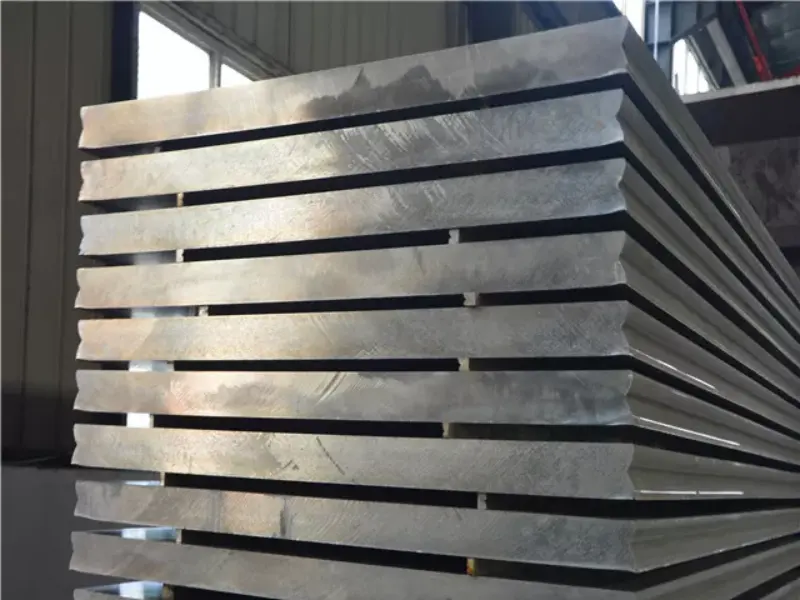
Alloy 6061 contains magnesium and silicon. The T6 temper means it has been heat-treated and artificially aged to achieve maximum strength.
It has excellent structural properties, behaves well when welded, and can be machined easily. It is highly rigid and resists bending. This alloy is ideal for structural frames, heavy-duty brackets, and machined components.
- Estimated Price Range: $180 to $250 per sheet.
Alloy 7075-T6: Ultra-High-Strength Aerospace Grade
This is an aircraft-grade aluminum alloyed primarily with zinc. It offers strength comparable to many steel alloys while remaining lightweight.
It is extremely hard but has low corrosion resistance and is difficult to weld. Because of its complex production and extreme strength, it is highly expensive.
- Estimated Price Range: $320 to $450+ per sheet.
Standard Specifications of Common Alloys
To help you compare the mechanical properties of these materials, we have compiled their key technical data into small, easy-to-read tables.
Mechanical Properties Comparison
| Alloy Grade & Temper | Tensile Strength (MPa) | Yield Strength (MPa) | Brinell Hardness (HB) | Corrosion Resistance |
|---|---|---|---|---|
| 1100−H14 | 125 MPa | 115 MPa | 32 | High |
| 3003−H14 | 150 MPa | 145 MPa | 40 | High |
| 5052−H32 | 230 MPa | 195 MPa | 60 | Outstanding (Marine) |
| 6061−T6 | 310 MPa | 275 MPa | 95 | High |
| 7075−T6 | 570 MPa | 505 MPa | 150 | Low to Moderate |
Chemical Compositions (Major Elements %)
| Alloy Grade | Silicon (Si) | Iron (Fe) | Copper (Cu) | Manganese (Mn) | Magnesium (Mg) | Chromium (Cr) | Zinc (Zn) |
|---|---|---|---|---|---|---|---|
| 1100 | Balance | Balance | 0.05%−0.20% | ≤0.05% | — | — | ≤0.10% |
| 3003 | ≤0.6% | ≤0.7% | 0.05%−0.20% | 1.0%−1.5% | — | — | ≤0.10% |
| 5052 | ≤0.25% | ≤0.40% | ≤0.10% | ≤0.10% | 2.2%−2.8% | 0.15%−0.35% | ≤0.10% |
| 6061 | 0.4%−0.8% | ≤0.7% | 0.15%−0.40% | ≤0.15% | 0.8%−1.2% | 0.04%−0.35% | ≤0.25% |
| 7075 | ≤0.40% | ≤0.50% | 1.2%−2.0% | ≤0.30% | 2.1%−2.9% | 0.18%−0.28% | 5.1%−6.1% |
Additional Costs to Consider
- Cutting Fees: Custom sizing may incur charges.
- Shipping Costs: Weight and distance affect delivery fees.
- Taxes: Sales tax applies in most regions.
- Finish Options: Anodizing or coating adds $20-$100 per sheet.
Applications of 4×8 Aluminum Sheets
- Construction: Roofing, siding, and wall panels.
- Transportation: Truck trailers, vehicle bodies.
- DIY Projects: Furniture, signs, and crafts.
- Industrial: Machine guards, workbenches, enclosures.
Tips for Saving Money
- Compare Suppliers: Check prices from multiple sources.
- Buy in Bulk: Larger orders often reduce the cost per sheet.
- Choose Standard Alloys: 3003 and 5052 are more affordable than 6061 or 2024.
- Avoid Custom Finishes: Mill finish is cheaper than anodized or coated options.
How to Get the Best 4×8 Sheet of 1/8 Inch Aluminum Price
Finding competitive pricing requires a bit of research. Here are some tips:
- Shop Around: Get quotes from multiple metal suppliers, both local and online. Don’t just check one place.
- Specify Your Needs Clearly: Be precise about the alloy, finish, and any cutting or fabrication services you require.
- Consider Quantity: If you have ongoing needs, buying in bulk might save you money per sheet, reducing your overall aluminum sheet cost.
- Check for Discounts: Ask about volume discounts or special offers for new customers.
- Factor in Shipping: Always get a final quote that includes shipping costs to compare apples to apples. Sometimes a slightly higher per-sheet price from a local supplier is cheaper once shipping from an online vendor is added.
- Understand Market Trends: Keep an eye on general aluminum market trends if you’re planning a large purchase, as prices can fluctuate.
Where to Purchase Your Aluminum Sheet
- Local Metal Suppliers: Often offer personalized service, ability to pick up directly (saving shipping), and advice. Good for smaller orders or custom work.
- Online Metal Distributors: Can offer a wider selection and competitive pricing, especially for standard sizes. Shipping costs will apply.
- Industrial Supply Stores: Some larger industrial suppliers or hardware chains might carry common sizes, but selection can be limited.
- Specialty Fabricators: If you need complex custom cuts or bending, a dedicated sheet metal fabrication shop might be your best bet, as they can supply the material and perform the work.
Diverse Product Types in 1/8 Inch Aluminum
A 4×8 sheet of 1/8 inch aluminum is available in several product styles. Each style is processed differently to serve specific visual and structural purposes.
Flat Smooth Sheets
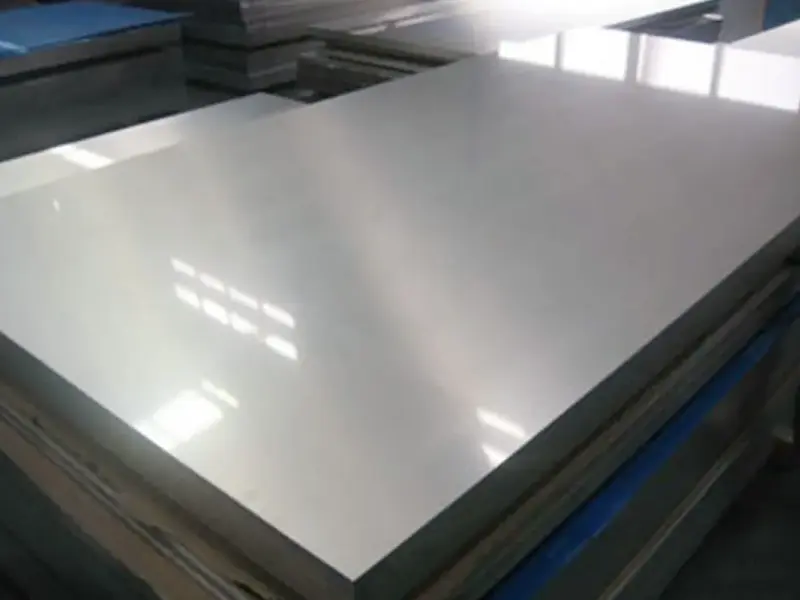
These are standard, flat metal sheets with a smooth surface. They are the most common and versatile product type.
They are usually supplied with a mill finish, but you can request brushed or anodized surfaces. About They are widely used for trailer walls, sign panels, and general metal fabrication.
Diamond Tread Plate (Checker Plate)
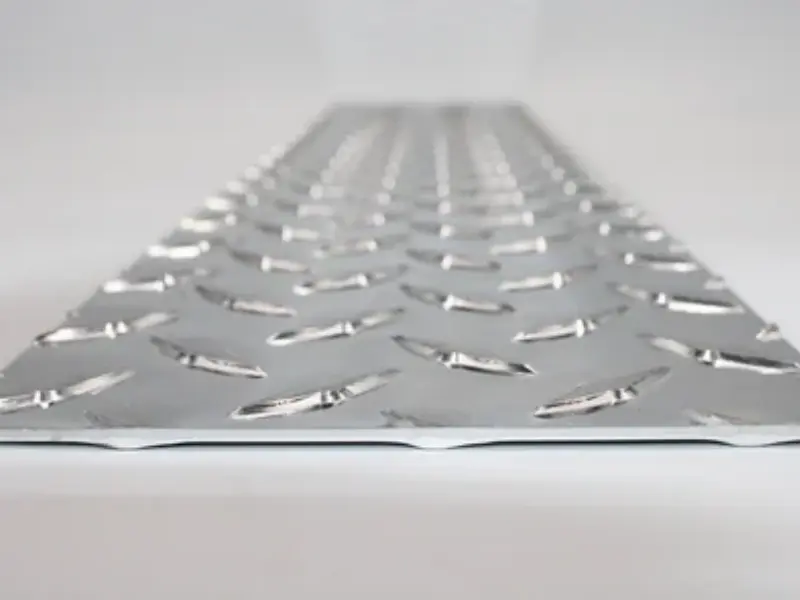
This product features a raised diagonal diamond pattern on one side. The raised pattern provides excellent slip resistance, even when the metal is wet or oily.
It is typically made of Alloy 3003 or Alloy 5052. Tread plates are heavier than smooth sheets of the same base thickness. They are popular for truck toolboxes, ramps, utility trailers, and safety flooring.
Perforated Aluminum Sheets
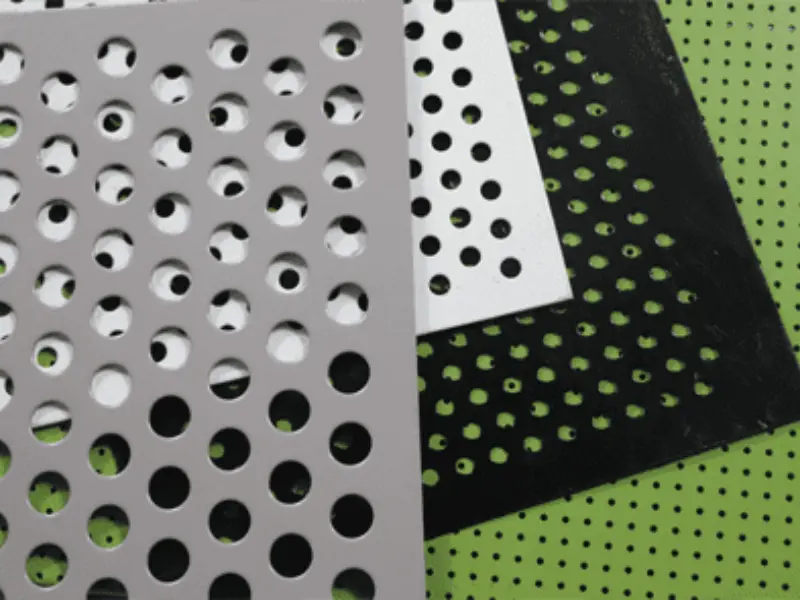
Perforated sheets are punched with a regular pattern of holes. Common patterns include round holes, square slots, and decorative hex shapes.
The holes reduce the weight of the sheet and allow air, light, and sound to pass through. These sheets are ideal for ventilation grilles, architectural screens, ceiling panels, and acoustic dampening.
Prepainted and Color Coated Sheets
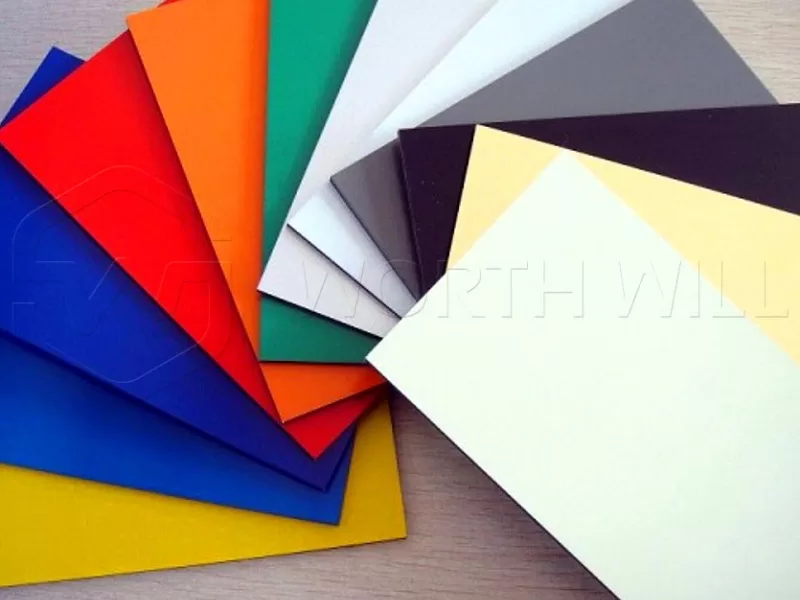
These sheets are finished with a baked-on polyester or PVDF liquid paint.
The most common colors are gloss white and matte black, but custom colors are widely available. Painting protects the aluminum from atmospheric corrosion and eliminates the need for post-fabrication painting. These sheets are standard in the sign-making, retail display, and building cladding industries.
Detailed Price Comparisons
To help you budget your metal purchases, the tables below compare prices across different alloys, surface finishes, and purchase volumes.
Note: The prices shown below are realistic industry estimates. Actual pricing will vary based on current global LME metal rates and your local distributor’s freight terms.
Estimated Price of Smooth 4×8 Sheet (1/8 Inch) by Alloy
| Alloy & Temper Grade | Estimated Price Per Sheet (US $) | Price Per Pound (US $) | Main Benefit |
|---|---|---|---|
| 1100−H14 | $95−$125 | $1.68−$2.21 | Lowest cost, high ductility |
| 3003−H14 | $115−$145 | $2.04−$2.57 | Standard utility, easy welding |
| 5052−H32 | $155−$195 | $2.75−$3.45 | Marine grade, high corrosion resistance |
| 6061−T6 | $185−$245 | $3.28−$4.34 | High strength, structural rigidity |
| 7075−T6 | $330−$430 | $5.85−$7.62 | Extreme aerospace strength |
Price Impact of Surface Finishes (Alloy 5052 Base)
| Surface Finish Type | Cost Premium | Estimated Price per Sheet | Best Application |
|---|---|---|---|
| Mill Finish | None (Base Price) | $155−$195 | Structural parts, hidden components |
| Clear Anodized | $40−$60 Premium | $195−$255 | Exterior architecture, storefronts |
| Brushed Silver | $30−$50 Premium | $185−$245 | Luxury appliance trim, indoor displays |
| Painted Gloss White | $25−$40 Premium | $180−$235 | Sign boards, printed labels, trailers |
Wholesale Discounts by Purchase Volume (Alloy 3003 Base)
| Order Quantity (Sheets) | Discount Rate | Estimated Price Per Sheet | Average Savings |
|---|---|---|---|
| 1−5 Sheets | Retail (Base Price) | $135 | None |
| 6−15 Sheets | 5%−10% Discount | $122 | Save $13 per sheet |
| 16−50 Sheets | 15%−20% Discount | $110 | Save $25 per sheet |
| 51+ Sheets (Full Pallet) | 25%−30% Wholesale | $98 | Save $37 per sheet |
Thickness Comparison: 1/8 Inch vs. Other Popular Sizes
If you are not sure if 1/8 inch (0.125″) is the correct thickness for your project, compare it below with other common structural sheet options.
Thinner Sheet Options
- 0.040 inches (1.02 mm): Extremely light, paper-thin, and easy to bend by hand. Used for license plates, small signs, and cosmetic trim. Very cheap, but offers no structural support.
- 0.063 inches (1/16 inch or 1.60 mm): Highly flexible and lightweight. Commonly used for trailer roofs, small brackets, and retail signs.
- 0.090 inches (2.29 mm): A medium thickness. Stronger than 1/16 inch, but still easy to shape. Used for toolbox lids and protective panels.
Thicker Plate Options
- 0.188 inches (3/16 inch or 4.78 mm): Highly rigid and heavy. It does not bend under manual pressure. Used for heavy-duty truck beds, structural brackets, and boat hulls.
- 0.250 inches (1/4 inch or 6.35 mm): Extremely thick structural plate. It requires heavy hydraulic machinery to bend or punch. Used for structural machinery frames, heavy ramps, and marine construction.
Thickness and Weight Comparison Table
| Nominal Fraction | Decimal Thickness | Metric Equivalent | Sheet Weight (lbs) | Relative Price Factor |
|---|---|---|---|---|
| 1/16 inch | 0.063 inches | 1.60 mm | 28.45 lbs | 0.50× cost of 1/8″ |
| 3/32 inch | 0.090 inches | 2.29 mm | 40.64 lbs | 0.72× cost of 1/8″ |
| 1/8 inch | 0.125 inches | 3.18 mm | 56.45 lbs | 1.00 (Base Standard) |
| 3/16 inch | 0.188 inches | 4.78 mm | 84.89 lbs | 1.50× cost of 1/8″ |
| 1/4 inch | 0.250 inches | 6.35 mm | 112.90 lbs | 2.00× cost of 1/8″ |
Practical Applications of 4×8 1/8 Aluminum Sheets
The combination of lightweight strength and corrosion resistance makes this specific sheet format useful across many industries.
- Trailer and Vehicle Construction: Side walls for enclosed utility trailers, trailer floor skinning, truck bed liners, and customized tractor beds.
- Marine and Boating Industry: Boat hulls, interior deck plating, marine fuel tanks, console brackets, and dock ramps.
- Architecture and Building Cladding: Modern exterior wall panels, column covers, sunshades, interior acoustic panels, and custom metal ceilings.
- Commercial Signage and Billboards: Road traffic signs, large outdoor advertising panels, warning placards, and structural display structures.
- Industrial Machinery Fabrication: Machine guards, electrical cabinet boxes, heavy duty conveyor side rails, and custom toolboxes.
- DIY and Home Workshop Projects: Decorative workbench tops, custom vehicle skid plates, custom shelf units, and architectural garden screens.
How to Get the Best Price on Your Purchase
To minimize costs on your aluminum sheets, use these smart sourcing strategies.
Buy in Full Pallets
If your business regularly uses aluminum sheets, do not buy them one at a time. Shipping a single sheet via LTL (Less-Than-Truckload) freight is highly inefficient.
Buying a full pallet of 20 to 50 sheets dramatically reduces your price per sheet and distributes the fixed freight shipping cost across many units.
Choose Local Pickup over Freight Shipping
If you live near an industrial metal service center or distributor, arrange for local pickup.
You will need a flatbed trailer or a heavy-duty pickup truck equipped with tie-down straps. Eliminating the residential freight delivery charge can save you up to $150 to $300 on a small order.
Order Standard Mill Finishes
Unless your project demands a specific look, choose a standard mill finish sheet.
Avoiding anodizing, painting, or custom brushing treatments keeps the material cost low. If needed, you can paint or coat the fabricated metal parts yourself after cutting and welding are complete.
Ask for “Drops” or Off-Cuts
For smaller projects that do not require a full 4′×8′ plate, ask your local metal distributor for “drops.”
Drops are the leftover, off-cut pieces of metal from larger commercial cutting orders. Metal yards often sell these remnant pieces at massive discounts just to clear their storage space.
FAQ About 4×8 1/8 Aluminum Sheet Price
Here are answers to the most common questions buyers ask when purchasing these sheets.
What is the weight of a 4×8 sheet of 1/8 aluminum?
A standard 4×8 foot sheet of 1/8 inch (0.125″) aluminum weighs approximately 56.45 pounds (25.61 kg). This weight is based on a standard aluminum alloy density of 0.098 pounds per cubic inch.
Different alloys may have tiny variations in weight, but 56.45 pounds is the standard weight used by transport and shipping companies.
Why is alloy 5052 more expensive than alloy 3003?
Alloy 5052 is more expensive because it contains a high percentage of magnesium (around 2.5%). Magnesium increases the metal’s strength and provides outstanding resistance to corrosion, especially in saltwater marine environments.
Alloy 3003 is alloyed with manganese, which is cheaper and less complex to process.
How does the global LME aluminum price affect my retail purchase price?
The global London Metal Exchange (LME) price represents the base raw material cost. If the LME price rises, your distributor pays more for their raw metal stock.
Distributors adjust their selling prices upwards or downwards weekly or monthly to maintain their profit margins relative to LME index shifts.
Is diamond tread plate more expensive than a smooth sheet?
Yes. Diamond tread plate is more expensive than standard smooth sheet.
Embossing the raised diagonal diamond pattern onto the metal sheet requires extra rolling steps during the manufacturing process. These extra steps increase manufacturing wear and energy consumption, which adds a premium to the final price.
Can I cut a 1/8 inch aluminum sheet at home to save on fabrication costs?
Yes, you can cut 1/8 inch aluminum sheet at home using standard woodworking tools.
Use a high-quality circular saw or jigsaw equipped with a non-ferrous carbide-tipped metal blade. Apply a small amount of lubricant (like wax or WD-40) to the blade before cutting to prevent the soft aluminum from melting and clogging the blade teeth. Always wear proper eye and hearing protection.
What is the typical scrap value of a 4×8 sheet of 1/8 aluminum?
The scrap value depends on the current market price of clean scrap aluminum, which usually ranges from $0.40 to $0.80 per pound.
With a total weight of 56.45 pounds, a single clean, unpainted scrap sheet would yield approximately $22.50 to $45.16 at a commercial metal recycling facility.
FAQ Section
Q1: Why does the price vary by alloy?
A: Alloys have different compositions and properties. For example, 6061 is stronger and more expensive than 3003.
Q2: Can I get a discount for bulk orders?
A: Yes, suppliers often offer discounts for large quantities.
Q3: Does the price include cutting or machining?
A: No, cutting and machining are usually additional services with separate fees.
Q4: How does thickness affect the price?
A: Thicker sheets cost more due to increased material usage.
Q5: Where can I buy 4×8 aluminum sheets?
A: Metal suppliers, online retailers, and local hardware stores.
Q6: How do I calculate the weight of a sheet?
A: A 4×8 sheet of 1/8 inch aluminum weighs approximately 100-110 lbs (45-50 kg).