These sections are written to slot into an existing 3003 Aluminum Checkered Plate page.
They avoid repeating applications, FAQ, or general product-type content, and instead add new angles: pattern styles, manufacturing insight, technical comparisons, and buyer guidance.

Checkered Pattern Styles


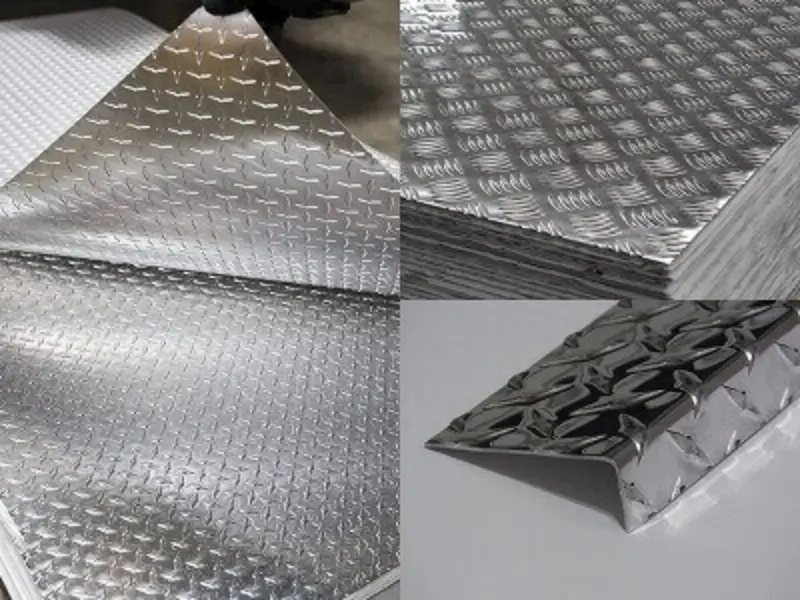
The raised pattern on checkered plate is not one-size-fits-all. Different patterns suit different foot traffic and load conditions.
| Pattern Name | Look | Best For |
|---|---|---|
| Five-Bar (Diamond Bar) | Raised diagonal bars in a repeating set | Most common, general anti-slip flooring |
| One-Bar | Single raised bar per row | Lighter-duty walkways |
| Diamond (Tread) | Small raised diamonds across the surface | Truck beds, trailer flooring |
| Orange Peel | Fine, random raised texture | Light-duty decorative or interior panels |
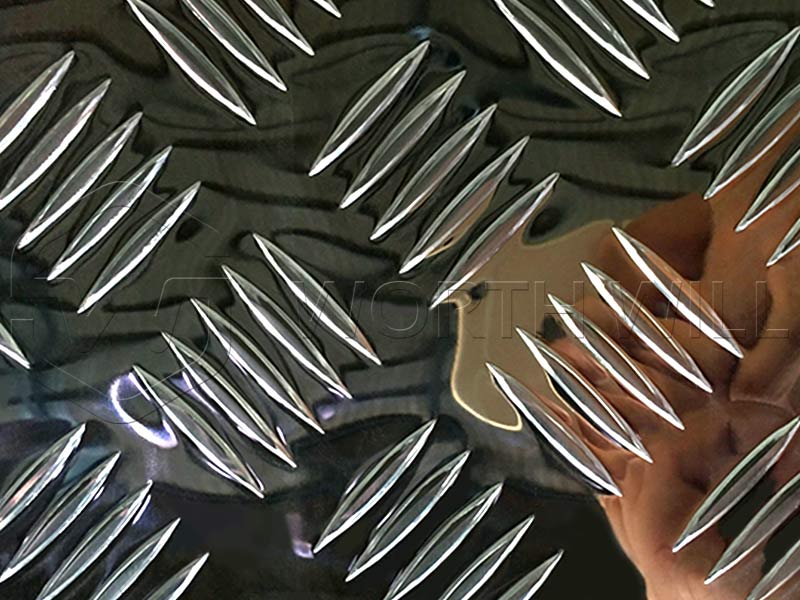
Five-bar pattern remains the industry default for 3003 checkered plate, since it offers strong slip resistance without trapping too much dirt or debris between the raised sections.
Reading a Pattern Spec Sheet
- Bar height is usually listed in millimeters, typically 1mm to 2mm
- Bar spacing affects both grip and cleaning ease
- Deeper patterns grip better but collect more debris
- Shallow patterns clean easier but offer slightly less traction
How 3003 Checkered Plate Is Made
Checkered plate starts as flat 3003 coil, which passes through an embossing roller during the final rolling stage.

The roller presses the raised pattern directly into the metal, rather than adding it afterward.
- Coil is fed through rolling mills to reach base thickness
- An embossing roller stamps the checkered pattern into the surface
- The plate is cut to length after patterning
- Edge trimming and surface inspection follow before packing
This single-pass patterning process is why checkered plate holds its texture evenly across the full sheet, without seams or inconsistent raised areas.
Load and Thickness Considerations
Checkered plate thickness affects how much weight the surface can handle before flexing becomes a problem.
| Thickness (mm) | Suitable Load Range | Typical Setting |
|---|---|---|
| 1.5 – 2.0 | Light foot traffic only | Decorative panels, wall trim |
| 2.5 – 3.0 | Standard foot traffic | Walkways, stair treads, ramps |
| 4.0 – 5.0 | Foot traffic plus light equipment | Workshop floors, loading areas |
| 6.0 and up | Heavier equipment traffic | Industrial platforms, truck flooring |

→ Installing a stair tread or walkway? 2.5mm to 3.0mm covers most standard foot-traffic needs. → Building a workshop floor with rolling carts? Step up to 4.0mm or thicker. → Covering a decorative wall panel? Thinner 1.5mm to 2.0mm keeps weight down.
3003 vs 5052 Checkered Plate


Buyers sometimes weigh 3003 against 5052 when picking checkered plate for a specific job.
| Factor | 3003 Checkered Plate | 5052 Checkered Plate |
|---|---|---|
| Cost | Lower | Slightly higher |
| Strength | Moderate | Higher |
| Corrosion resistance | Good | Excellent, including saltwater |
| Common setting | General flooring, indoor use | Marine decks, outdoor structural use |
3003 remains the standard pick for most indoor and general-purpose checkered plate flooring. 5052 is worth the extra cost for marine decking or outdoor installations facing regular moisture exposure.
Anti-Slip Performance Notes

Checkered plate has chosen specifically for its slip resistance, so it helps to understand what affects that performance in real conditions.
Painted or coated checkered plate can slightly reduce raw grip compared to mill finish
Raised pattern height directly affects grip underfoot
Wet conditions reduce slip resistance more on shallow patterns
Regular cleaning keeps the pattern grooves from filling with debris
Cleaning and Maintenance
Checkered plate holds up well over time, but a little care keeps both the surface and the pattern performing as intended.
- Sweep or hose down regularly to clear debris from pattern grooves
- Avoid harsh abrasive cleaners on polished or coated surfaces
- Mild soap and water works for most mill finish plate
- Inspect fastener points periodically on installed flooring panels
Buying Checklist
A short checklist before placing an order helps avoid mismatched specifications.
- Confirm pattern style: five-bar, diamond, or one-bar
- Confirm thickness against expected load
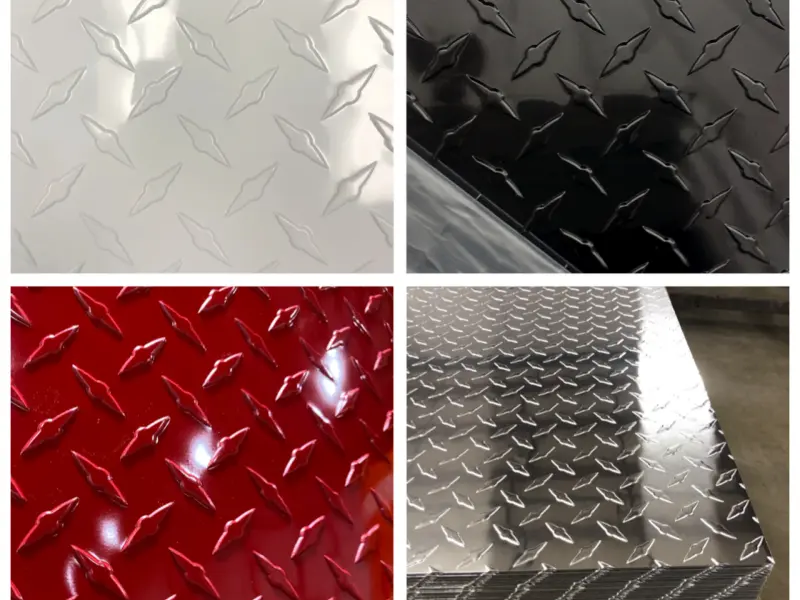
- Confirm finish: mill finish, painted, or anodized
- Confirm sheet size against the installation area
- Request a sample panel for texture and grip evaluation, if unsure
Cut-to-Size and Custom Fabrication
Checkered plate has ordered pre-cut to fit a specific installation, rather than as full standard sheets.
- Waterjet or shear cutting available for custom shapes
- Pre-drilled mounting holes can be added before shipping
- Bent or formed edges available for stair nosing or trim pieces
- Custom sizing reduces on-site cutting and installation time
3003 Aluminum Checkered Plate For Sale

3003 Aluminum Checkered Plate is a popular aluminum product for flooring, stairs, platforms, vehicle parts, toolboxes, and other fabricated products.
It has a raised surface pattern that gives the sheet a distinctive look and better surface grip than a smooth aluminum sheet.
3003 aluminum is an aluminum-manganese alloy. It offers a useful balance of strength, formability, corrosion resistance, and workability. This makes it a practical material for many indoor and outdoor projects.
The plate can be supplied in different thicknesses, widths, lengths, patterns, and tempers. Custom sizes are also available for projects that need less cutting and lower material waste.
What Is 3003 Aluminum Checkered Plate?
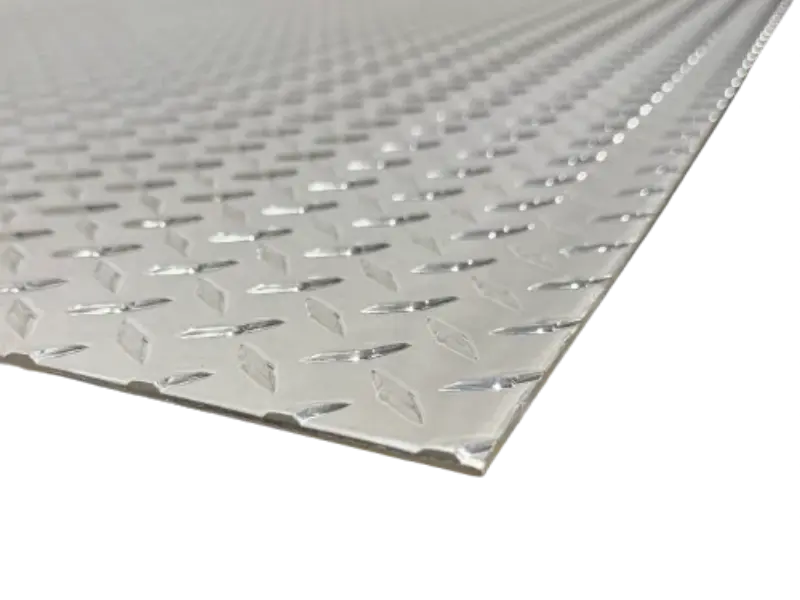
3003 Aluminum Checkered Plate is made from 3003 aluminum alloy with a raised pattern formed on one side of the sheet.
The raised design can improve surface texture while also giving the material a more industrial appearance.
Unlike a flat aluminum sheet, a checkered plate can provide additional grip for many walking and working areas.

The material has often selected when a project needs a combination of:
- Lightweight construction
- Good corrosion resistance
- Easy fabrication
- Moderate strength
- Textured surface
- Attractive metallic appearance
- Easy maintenance
The exact performance depends on the alloy, temper, thickness, pattern, and final application.
3003 Aluminum Alloy at a Glance
3003 belongs to the 3000 series aluminum alloys. Manganese is the main alloying element.
| Item | 3003 Aluminum |
|---|---|
| Alloy series | 3000 series |
| Main alloying element | Manganese |
| Density | About 2.73 g/cm³ |
| Formability | Good |
| Corrosion resistance | Good |
| Weldability | Good |
| Machinability | Moderate |
| Surface treatment | Available |
| Checkered pattern | Available |
| Typical form | Sheet / Plate |
The alloy is not normally chosen for the highest structural strength. Its main advantage is its balance of properties.
Why 3003 Works Well for Checkered Plate
A checkered plate needs more than a decorative surface.
The base material must also be suitable for cutting, bending, drilling, forming, and other fabrication processes.
3003 offers good formability while maintaining moderate strength.

This makes it suitable for products such as:
Machine access areas
Walkway panels
Truck steps
Trailer flooring
Equipment platforms
Toolboxes
Stairs
Ramps
Protective panels
3003 Aluminum Checkered Plate Specifications
The following table shows common options. Actual availability can be customized according to the project.
| Specification | Common Range |
|---|---|
| Alloy | 3003 |
| Temper | O, H12, H14, H16, H18, H24 |
| Base thickness | 0.8–10 mm |
| Width | 500–2000 mm |
| Length | 1000–6000 mm |
| Surface | Mill finish / customized |
| Pattern | 1 Bar / 2 Bar / 3 Bar / 5 Bar / Diamond |
| Shape | Sheet / Cut-to-size plate |
| Cutting | Custom available |
| Packaging | Export seaworthy packaging |
For large projects, the final specification should be confirmed before production.
Base Thickness and Overall Thickness
This is an important point when comparing aluminum checkered plates.
The base thickness refers to the thickness of the aluminum sheet before considering the raised pattern.
The overall thickness includes the raised pattern.
Therefore:
Base thickness ≠ Overall patterned thickness
For example, two products may both be described as 2 mm checkered plate, but their measurement methods may be different.

When purchasing, confirm whether the supplier quotes:
- Base thickness
- Overall thickness
- Pattern height
- Thickness tolerance
This can prevent confusion between different suppliers.
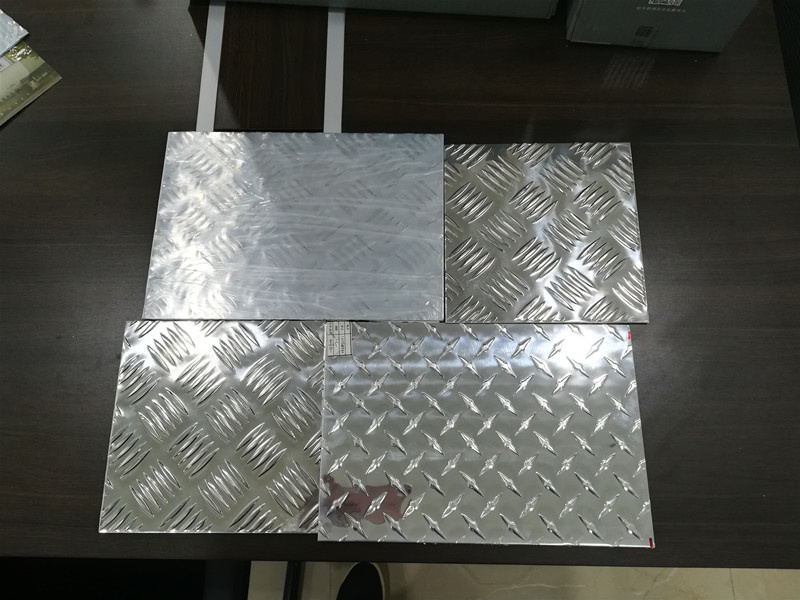
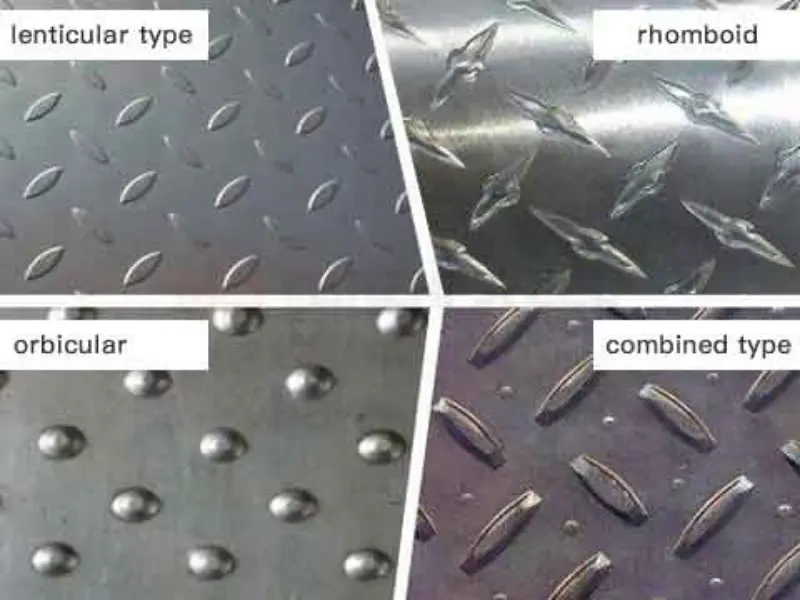
Common 3003 Checkered Plate Patterns
Different patterns have selected for different visual and functional requirements.
| Pattern | General appearance | Common consideration |
|---|---|---|
| 1 Bar | Simple lines | General flooring |
| 2 Bar | Repeated pattern | Commercial use |
| 3 Bar | Balanced texture | Industrial use |
| 5 Bar | Strong texture | Flooring and platforms |
| Diamond | Classic pattern | General tread applications |
Pattern names can vary between manufacturers and markets.
For bulk orders, it is better to confirm a physical sample or drawing before production.
1 Bar Aluminum Checkered Plate
The 1 Bar design has a relatively simple raised pattern.

It can be used when the customer wants a functional surface without a very complex visual effect.
Possible applications include:
Vehicle components
Wall protection
Equipment covers
Light flooring
Decorative panels
2 Bar and 3 Bar Patterns
2 Bar and 3 Bar designs create a more repeated surface pattern.
They can be useful for projects where appearance is also important.
These patterns may be considered for:
- Commercial interiors
- Platforms
- Vehicle components
- Stairs
- Decorative industrial panels
5 Bar Aluminum Checkered Plate
5 Bar is one of the recognizable patterns used for aluminum tread products.
The repeated raised bars create a strong visual effect.
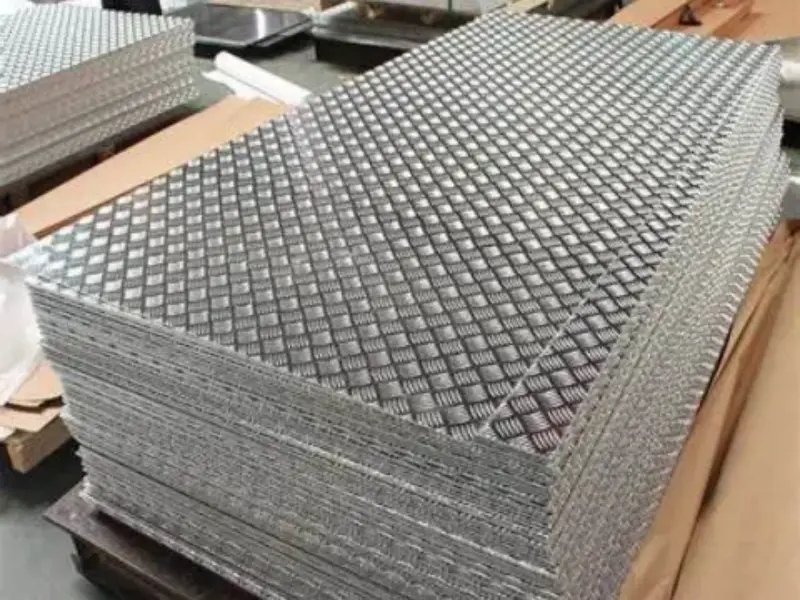
It is often considered for:
- Walkways
- Industrial floors
- Truck bodies
- Trailer floors
- Stairs
- Loading areas
- Toolboxes
The correct thickness still depends on the load and supporting structure.
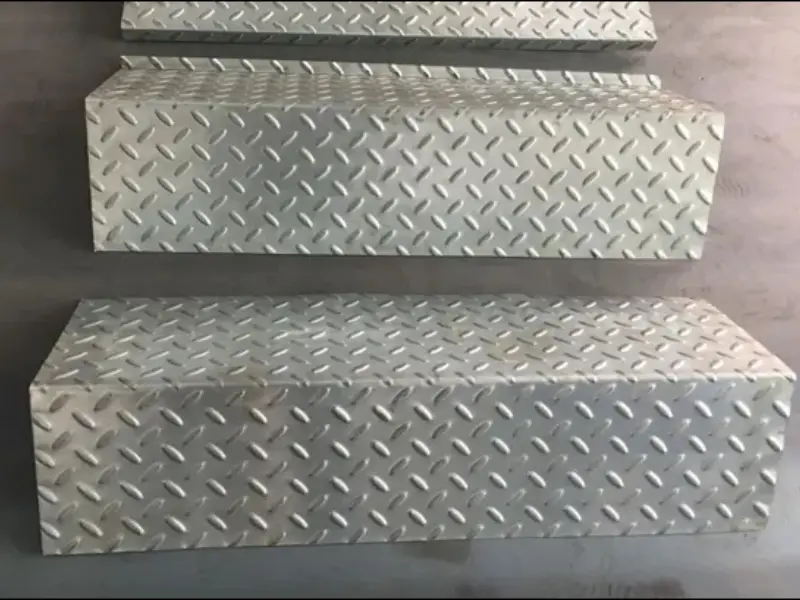
Diamond Aluminum Checkered Plate
Diamond plate has widely recognized by its raised diamond-style pattern.
It has uses for both functional and decorative purposes.
Typical uses include:
- Truck floors
- Trailer interiors
- Garage flooring
- Steps
- Ramps
- Toolboxes
- Wall panels
The diamond pattern is also popular because it gives aluminum products a recognizable industrial appearance.
3003 Aluminum Checkered Plate by Temper
Temper affects the hardness and mechanical properties of the material.
| Temper | General characteristic |
|---|---|
| O | Soft and highly formable |
| H12 | Partially hardened |
| H14 | Moderate strength and good forming |
| H16 | Higher strength |
| H18 | Hard temper |
| H24 | Common semi-hard condition |
The correct temper depends on the fabrication process.
If the plate needs considerable bending, a more formable temper may be preferred. If rigidity is more important, a harder temper may be considered.
Choosing Thickness for Different Uses


Thickness should be selected according to the actual working conditions.
| Thickness | General direction |
|---|---|
| 1.0 mm | Light panels and covers |
| 1.5 mm | Light-duty fabrication |
| 2.0 mm | General-purpose panels |
| 2.5 mm | More rigid panels |
| 3.0 mm | Flooring and equipment |
| 4.0 mm | Heavy-duty applications |
| 5.0 mm | Industrial platforms |
| 6.0 mm+ | Higher load requirements |
These are general reference points, not structural design specifications.
Load, span, support distance, and local building requirements should always be considered.
Thickness Should Match the Support Structure
A thicker plate is not automatically a better choice.

For a supported floor, the following factors work together:
Load
↓
Support spacing
↓
Plate thickness
↓
Pattern
↓
Overall floor design
For example, a 3 mm plate on closely spaced supports may perform differently from a 3 mm plate installed over a much wider span.
The structural design should determine the final thickness.
3003 vs 1100 Aluminum Checkered Plate
The 3003 and 1100 have uses in aluminum products, but their properties are different.
| Feature | 1100 | 3003 |
|---|---|---|
| Aluminum content | Very high | High |
| Strength | Lower | Higher |
| Formability | Excellent | Excellent |
| Corrosion resistance | Good | Good |
| General fabrication | Excellent | Excellent |
| Flooring applications | Possible | More suitable |
| Heavy general use | Limited | Better option |
3003 is often a better choice when moderate strength is needed without losing good formability.
3003 vs 5052 Checkered Plate
5052 is another alloy worth considering for more demanding environments.
| Feature | 3003 | 5052 |
|---|---|---|
| Alloy series | 3000 | 5000 |
| Main alloying element | Manganese | Magnesium |
| Strength | Moderate | Higher |
| Formability | Very good | Good |
| Corrosion resistance | Good | Very good |
| General applications | Wide | More demanding |
| Cost | Often competitive | Usually higher |
For general flooring, platforms, and fabricated products, 3003 can offer a good balance.
For applications requiring higher strength or more demanding corrosion performance, 5052 may be considered.
3003 vs Steel Checkered Plate
Aluminum and steel checkered plates have uses for floors and platforms.
| Feature | Aluminum | Steel |
|---|---|---|
| Weight | Lower | Higher |
| Corrosion resistance | Good | Usually requires protection |
| Handling | Easier | Heavier |
| Appearance | Metallic | Industrial |
| Maintenance | Generally low | Depends on coating |
| Vehicle use | Attractive option | Adds more weight |
| Fabrication | Easy | Strong but heavier |
For vehicles where weight matters, aluminum can provide an important advantage.


Aluminum Checkered Plate for Truck Flooring
Truck flooring needs a material that balances strength and weight.
3003 aluminum checkered plate can be used in selected truck applications where the structure is designed for aluminum flooring.
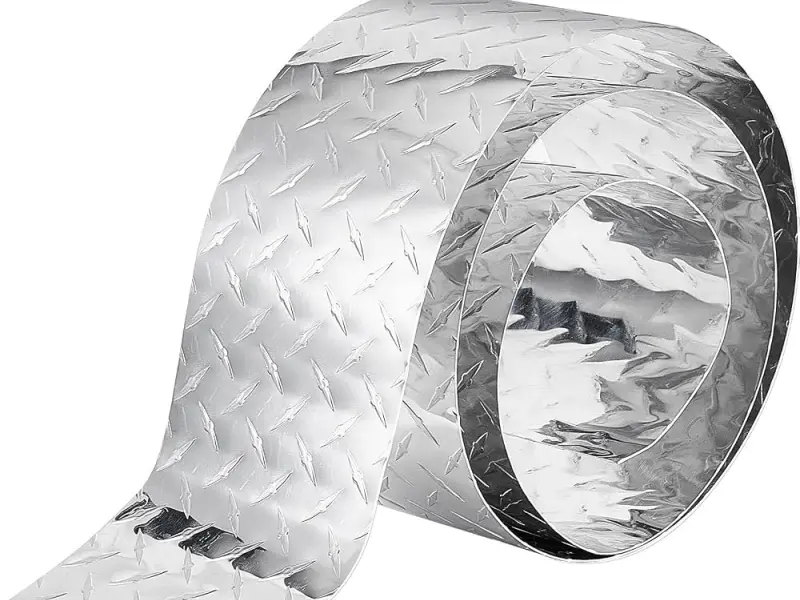
Possible areas include:
- Truck floors
- Truck steps
- Wheel covers
- Side panels
- Storage compartments
- Service areas
The plate thickness should be matched to the support frame and expected load.
3003 Aluminum Checkered Plate for Trailers
Trailer manufacturers often look for lightweight materials that are easy to fabricate.
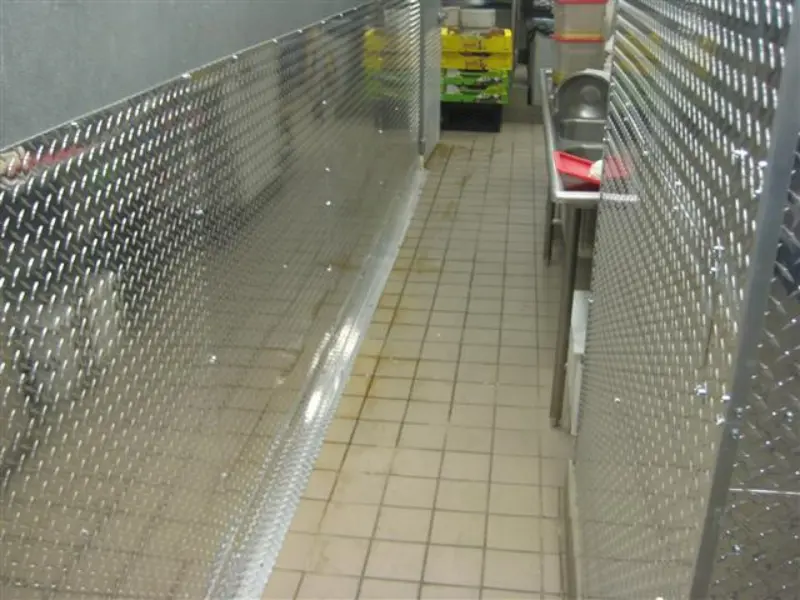
A checkered surface can also provide a textured walking surface.
Potential applications include:
- Trailer floors
- Trailer steps
- Interior protection
- Tool compartments
- Ramps
- Loading areas
For trailer production, sheet size is also important.
Large sheets can reduce the number of joints and cutting operations.
Aluminum Checkered Plate for Toolboxes
Aluminum checkered plate is widely associated with metal toolboxes.
The raised surface provides a distinctive appearance and can hide small scratches better than a very smooth surface.
It can be formed into:
- Truck toolboxes
- Workshop boxes
- Storage cabinets
- Equipment cases
- Outdoor storage containers
The final design normally combines the plate with hinges, locks, frames, and other components.
Checkered Plate for Stairs and Steps
Steps need a surface that provides good footing.
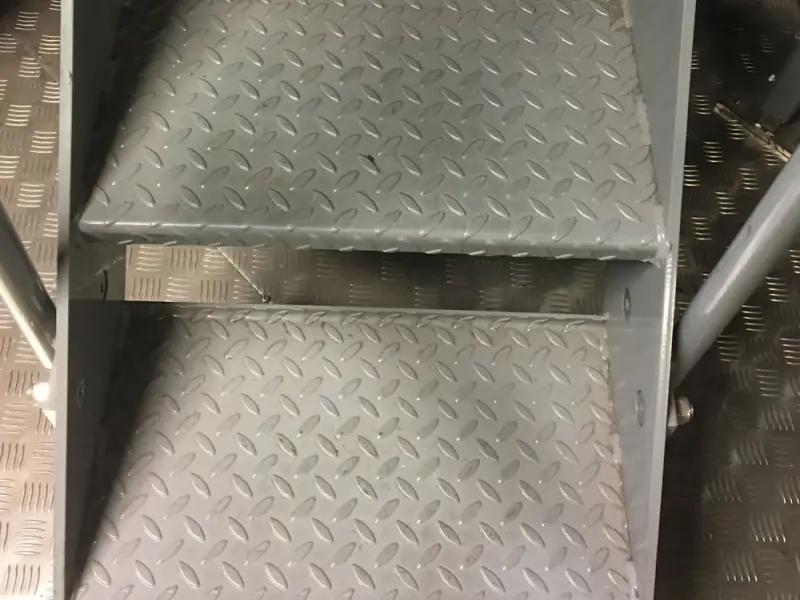
The raised pattern on aluminum tread plate creates additional surface texture.
It can be considered for:
- Industrial stairs
- Truck steps
- Trailer steps
- Service platforms
- Machine access stairs
- Workshop steps
The actual slip performance depends on the complete surface condition and environment.
Water, oil, mud, footwear, slope, and maintenance can all affect traction.
Aluminum Checkered Plate for Walkways
Walkways in factories and workshops may require a strong and easy-to-handle material.
3003 checkered plate has uses for selected walkways when the supporting structure is properly designed.
Typical locations include:
- Factory walkways
- Maintenance paths
- Equipment access areas
- Warehouse platforms
- Machine service areas
The plate thickness should be selected based on load and support spacing.
Aluminum Checkered Plate for Industrial Platforms
Industrial platforms can require larger sheets and stronger supporting frames.
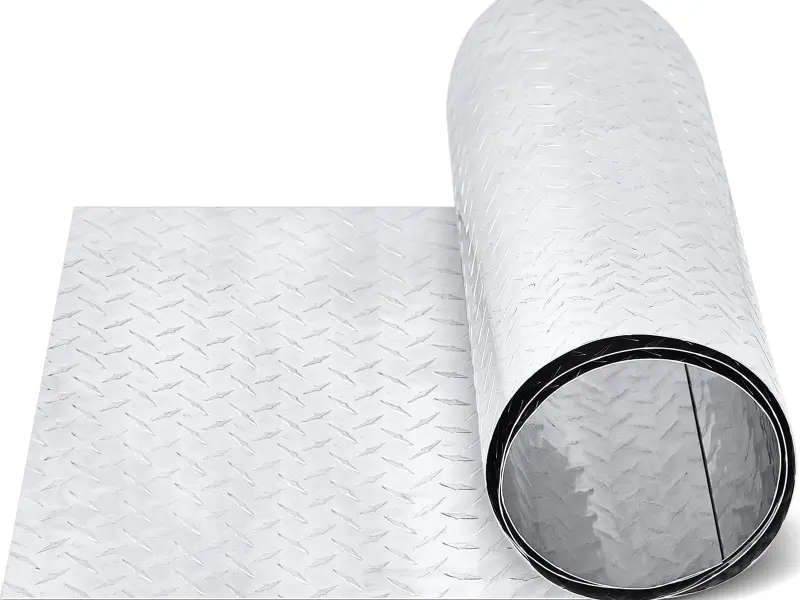
When designing such a platform, consider:
People
Equipment
Dynamic loads
Support spacing
Plate thickness
The checkered aluminum plate has treated as part of the complete platform system.
Aluminum Checkered Plate for Ramps
Ramps can benefit from a textured metal surface.
Possible applications include:
- Loading ramps
- Vehicle ramps
- Workshop ramps
- Equipment ramps
- Service ramps
The ramp angle and expected load are important.
For safety-critical ramps, the complete design should be reviewed by a qualified engineer.
Decorative Uses Beyond Flooring
3003 checkered plate does not need to be used only as a floor material.
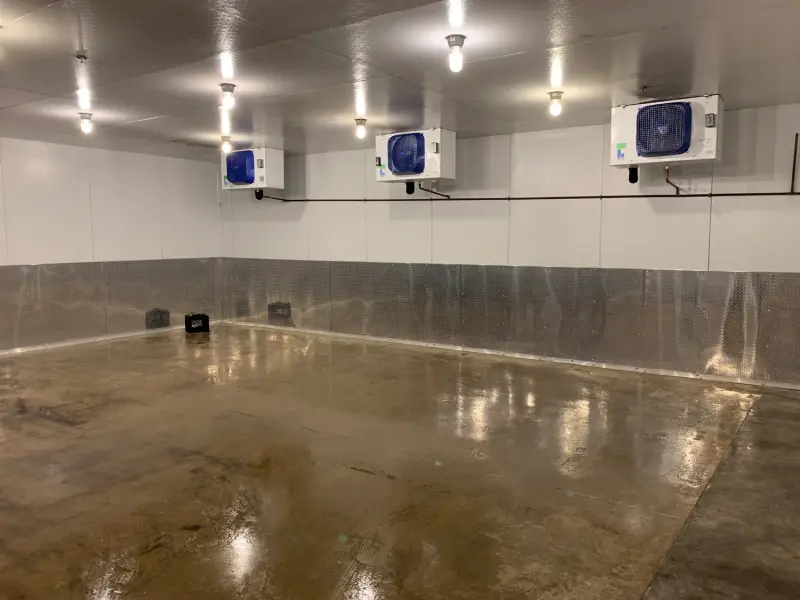
The pattern can also create a strong industrial style.
It can be used for:
- Wall panels
- Interior decoration
- Counter surfaces
- Display areas
- Furniture details
- Vehicle interiors
- Machine covers
This makes checkered aluminum useful for both functional and visual projects.
Indoor and Outdoor Use
3003 aluminum has good corrosion resistance, but the installation environment still matters.
| Condition | Indoor | Outdoor |
|---|---|---|
| Humidity | Usually lower | Can be higher |
| UV exposure | Low | Higher |
| Rain | Limited | Possible |
| Salt exposure | Usually low | May be high |
| Maintenance | Easier | More important |
| Fastener selection | Important | Very important |
For outdoor use, the complete system has design for the local environment.
Coastal Applications
Near the sea, aluminum can be exposed to salt and high humidity.
For coastal projects, check:
- Aluminum alloy
- Surface condition
- Fastener material
- Galvanic corrosion
- Drainage
- Joint design
- Cleaning requirements
The fasteners and other accessories should be compatible with the aluminum.
Processing 3003 Aluminum Checkered Plate
Common processes include:
- Cutting
- Shearing
- Sawing
- CNC cutting
- Drilling
- Punching
- Bending
- Forming
- Welding
The actual process depends on the plate thickness, temper, pattern, and final product.
Cutting and CNC Processing
For projects with many different shapes, CNC processing can improve cutting accuracy.
This can be useful for:
- Equipment panels
- Vehicle parts
- Custom flooring
- Machine covers
- Industrial components
Before CNC production, the pattern direction and plate orientation should be considered.
Bending Considerations
3003 is generally easy to form, but the exact bending performance depends on the temper and thickness.
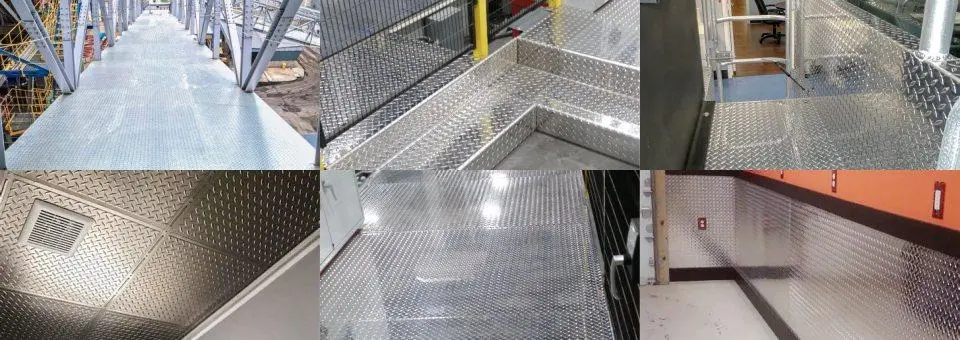
When bending checkered plate, consider:
- Bending radius
- Plate thickness
- Temper
- Pattern direction
- Tooling
- Required angle
For a new design, testing a sample before mass production is a good practice.
Drilling and Fastening
Checkered aluminum plate can be drilled for mechanical fastening.
Typical installation steps include:
Measure
→ Mark
→ Drill
Deburr
→ Install fastener
→ Inspect
When used outdoors, the fastener has applications with corrosion compatibility in mind.
Welding 3003 Checkered Plate
3003 aluminum has using suitable aluminum welding processes.
However, the welding method should be selected based on:
- Thickness
- Joint design
- Temper
- Welding equipment
- Required strength
- Surface condition
For finished checkered plate, welding can also affect the surrounding area and appearance.
Weight and Material Planning
Aluminum is lighter than steel, which can be useful for vehicles and portable equipment.

A rough material planning process can follow:
Plate area
×
Material thickness
×
Aluminum density
=
Approximate base material weight
The raised pattern also contributes to the final material weight.
For commercial orders, the supplier should provide the actual weight based on the agreed specification.
How Sheet Size Can Reduce Waste
The right sheet size can reduce unnecessary cutting.
For example:
Project dimensions
↓
Sheet layout
↓
Cutting plan
↓
Less scrap
↓
Lower material loss
This is especially useful for large orders.
Custom cutting has uses when the project uses repeated dimensions.
Standard Size or Custom Size?
Both options have advantages.
| Option | Benefit |
|---|---|
| Standard sheet | Easier to purchase |
| Large sheet | Fewer joints |
| Cut-to-size | Less cutting |
| Custom length | Better project matching |
| Custom width | Better material utilization |
The best option depends on the project design and order quantity.
How to Reduce the Total Project Cost
T
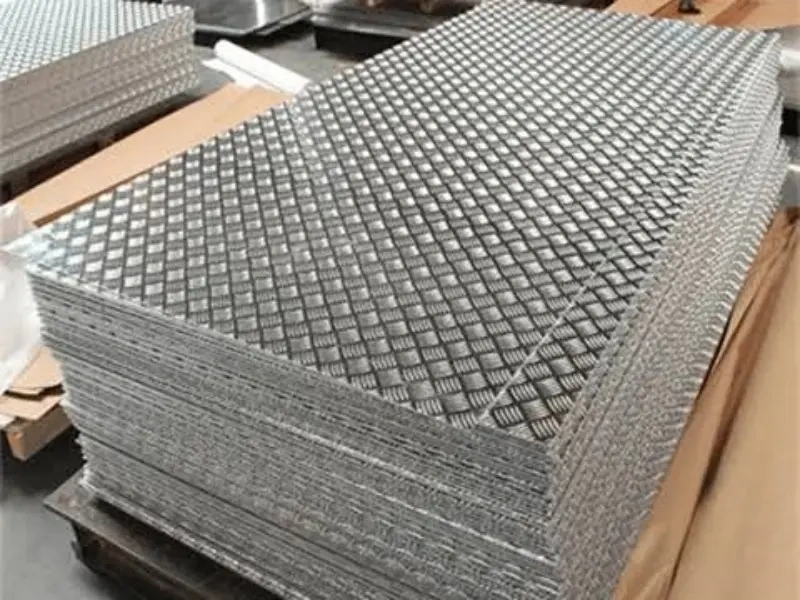
he lowest price per sheet is not always the lowest total cost.
Consider:
- Material price
- Cutting cost
- Waste
- Transport
- Installation time
- Fasteners
- Processing
- Maintenance
A suitable sheet size can sometimes reduce labor and scrap enough to offset a higher material price.
How to Compare Two 3003 Checkered Plates
When comparing suppliers, use the same specifications.
| Item | Product A | Product B |
|---|---|---|
| Alloy | 3003 | 3003 |
| Temper | H24 | H24 |
| Base thickness | 3 mm | 3 mm |
| Pattern | 5 Bar | 5 Bar |
| Width | 1500 mm | 1500 mm |
| Length | 3000 mm | 3000 mm |
| Surface | Mill finish | Mill finish |
| Tolerance | Confirm | Confirm |
| Packaging | Export | Export |
Only after the specifications are equivalent should the price become the main comparison point.
What Should Be Included in a Purchase Order?
A clear purchase order can reduce misunderstandings.
Include:
- Alloy
- Temper
- Base thickness
- Pattern
- Pattern height if required
- Width
- Length
- Quantity
- Surface finish
- Flatness requirement
- Tolerance
- Packaging
- Delivery terms
For special projects, a technical drawing can also be useful.
A Simple RFQ Template
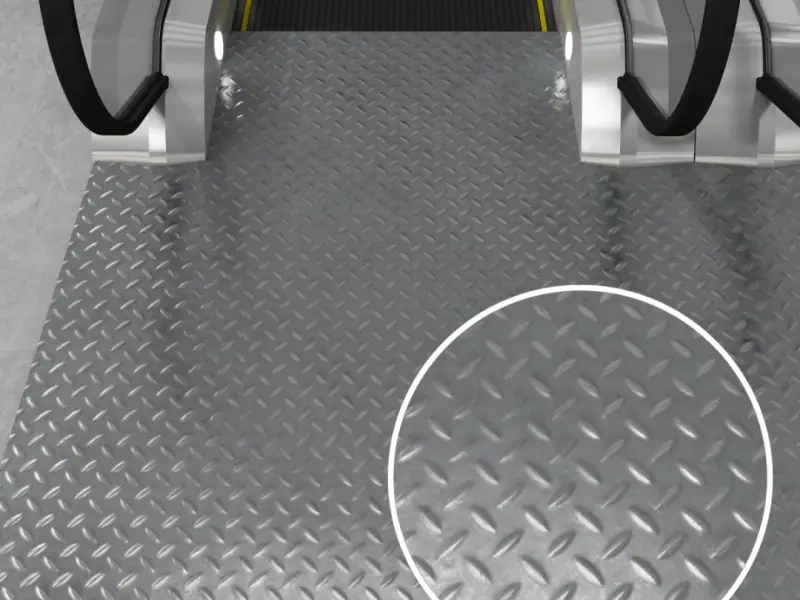
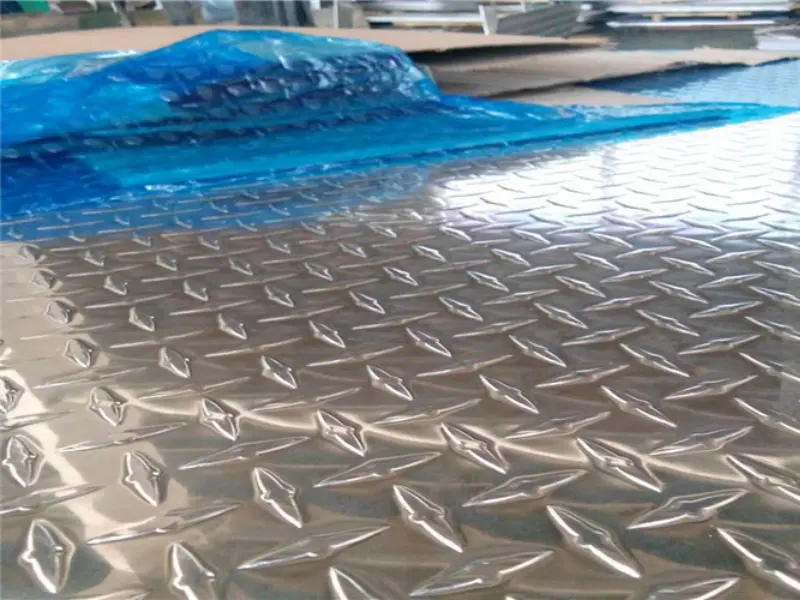
A buyer can provide the following information when requesting a quotation:
| Item | Example |
|---|---|
| Product | 3003 Aluminum Checkered Plate |
| Alloy | 3003 |
| Temper | H24 |
| Base thickness | 3.0 mm |
| Pattern | 5 Bar |
| Width | 1500 mm |
| Length | 3000 mm |
| Surface | Mill finish |
| Quantity | 10 MT |
| Application | Trailer flooring |
| Packaging | Export packaging |
| Destination | Customer port |
A detailed RFQ helps the manufacturer calculate a more accurate price.
Quality Points to Check Before Shipment
A quality inspection can include several basic checks.
Dimensions
Check thickness, width and length.
Pattern
Check pattern consistency and appearance.
Surface
Look for major scratches, dents, stains or other defects.
Flatness
Check whether the sheet is suitable for the intended application.
Mechanical Properties
Confirm that the alloy and temper match the order.
Packaging
Make sure the material is protected during transportation.
Sample Before Bulk Production
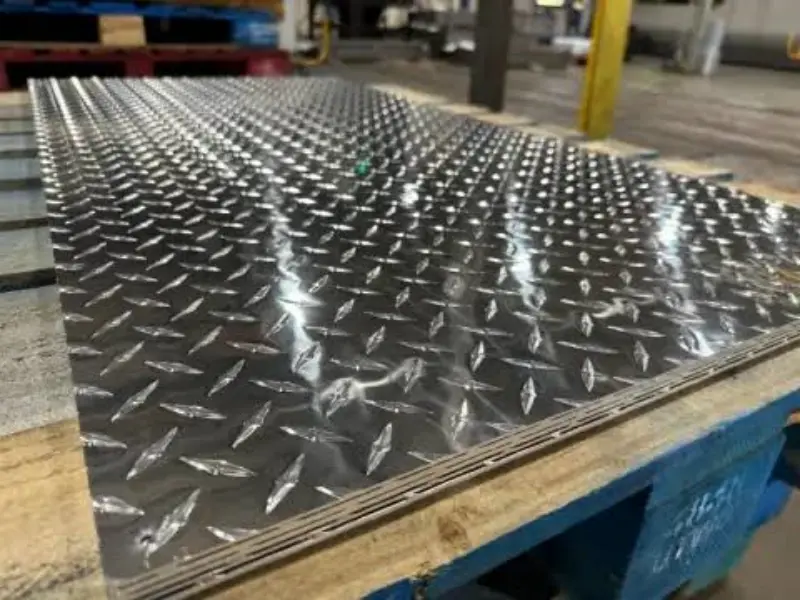
A sample can be useful when ordering a new pattern, thickness or size.
The buyer can check:
Pattern
→ Thickness
→ Surface
Dimensions
Bending
→ Cutting
→ Packaging
Once the specification has approved, the same requirements have uses for the bulk order.
Common Buying Mistakes
Choosing Only by Thickness
A thicker plate is not always necessary.
Ignoring the Pattern
Different patterns can affect appearance and processing.
Confusing Base and Overall Thickness
This can lead to incorrect comparisons.
Not Confirming Temper
Temper can affect forming and mechanical properties.
Using the Wrong Fasteners
In outdoor or coastal environments, incompatible metals can create corrosion problems.
Ordering Without Checking Sheet Layout
This can increase material waste.
When 3003 Checkered Plate Is a Good Choice

3003 is worth considering when the project needs:
Good formability
Moderate strength
Corrosion resistance
Lightweight material
Textured surface
It is especially practical for general industrial, vehicle, commercial, and fabrication applications.
When Another Alloy May Be Better
3003 is not the best option for every project.
Consider another alloy when the project requires:
- Higher strength
- Special marine performance
- Specific welding requirements
- Special mechanical properties
- Very high structural loads
5052, for example, can be considered for applications that require higher strength and corrosion resistance.
The correct material should always be selected based on the actual engineering requirements.
From Aluminum Coil to Finished Checkered Plate
Aluminum Coil
↓
Rolling
↓
Pattern Embossing
↓
Cutting
↓
Inspection
↓
Packaging
↓
Finished 3003 Checkered Plate
Production control is important for maintaining consistent thickness, pattern, surface quality, and dimensions.
Why Buy 3003 Checkered Plate in Bulk?
For manufacturers and distributors, bulk purchasing can offer several advantages.
- More stable material supply
- Consistent specifications
- Better production planning
- Custom sizes
- Reduced repeated ordering
- Easier inventory management
For large orders, it is useful to confirm production capacity and delivery schedules before placing the order.
Custom 3003 Aluminum Checkered Plate
Custom production can include:
| Custom Item | Available Option |
|---|---|
| Alloy | 3003 |
| Temper | Different tempers |
| Thickness | Custom |
| Width | Custom |
| Length | Custom |
| Pattern | Selected patterns |
| Surface | Mill or customized |
| Cutting | Custom |
| Packaging | Customer requirements |
The available range depends on the production equipment and order quantity.
3003 Aluminum Checkered Plate Selection Guide

For light panels
→ Consider a thinner specification.
For vehicle flooring
→ Compare weight, load and support spacing.
For industrial platforms
→ Check structural requirements first.
For outdoor use
→ Consider corrosion conditions and fasteners.
For decorative projects
→ Focus on pattern and surface appearance.
For large projects
→ Compare custom sizes and material waste.
For repeated manufacturing
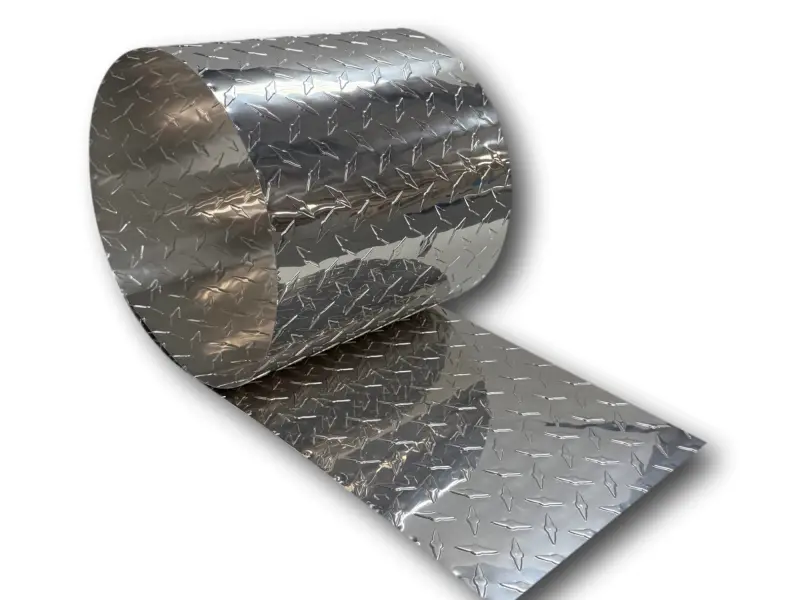
→ Consider aluminum coil and roll-forming production where appropriate.
Frequently Asked Questions
Is 3003 Aluminum Checkered Plate strong?
3003 offers moderate strength with good formability. It is suitable for many general applications, but the required thickness and support structure should be determined by the expected load.
What patterns are available?
Common patterns include 1 Bar, 2 Bar, 3 Bar, 5 Bar and diamond-style designs. Availability can vary by manufacturer.
Can 3003 checkered plate be used outdoors?
Yes, it has outdoors in suitable applications. The local climate, fasteners, drainage and installation method should be considered.
Is aluminum checkered plate lighter than steel?
Yes. Aluminum has a much lower density than steel, so an aluminum plate of comparable dimensions is generally much lighter.

What is the difference between base thickness and overall thickness?
Base thickness refers to the aluminum sheet thickness beneath the raised pattern. Overall thickness includes the raised pattern.
Can 3003 checkered plate be used for truck floors?
It can be used for selected truck flooring applications when the thickness and supporting structure are properly designed.
Can it be used for trailer floors?
Yes. It has uses for trailer floors, steps, ramps and other components where low weight and a textured surface are useful.
How can I get an accurate quotation?
Provide the alloy, temper, base thickness, pattern, width, length, quantity, surface finish and application. More complete information allows the supplier to prepare a more accurate quotation.
What thickness is best for flooring?
There is no single thickness for every floor. Load, support spacing, span, traffic and structural design should all be considered.
Can 3003 checkered plate be bent?
Yes. 3003 generally has good formability. The suitable bending radius depends on thickness, temper, equipment and pattern.
Can it be welded?
Yes. 3003 aluminum has uses using suitable aluminum welding processes. The welding method should match the material thickness and application.
Is 3003 better than 5052?
Neither alloy is universally better. 3003 offers good formability and a balanced performance for general applications. 5052 generally provides higher strength and stronger corrosion performance.
Can the plate be cut to custom sizes?
Yes. Custom width and length can be produced for suitable order quantities.