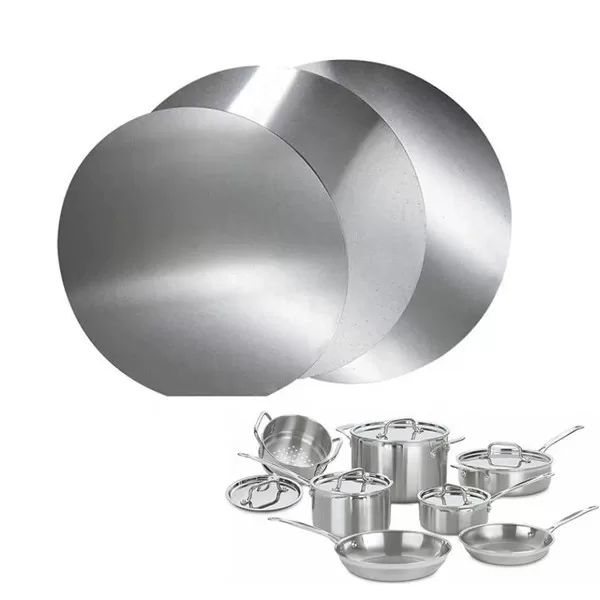
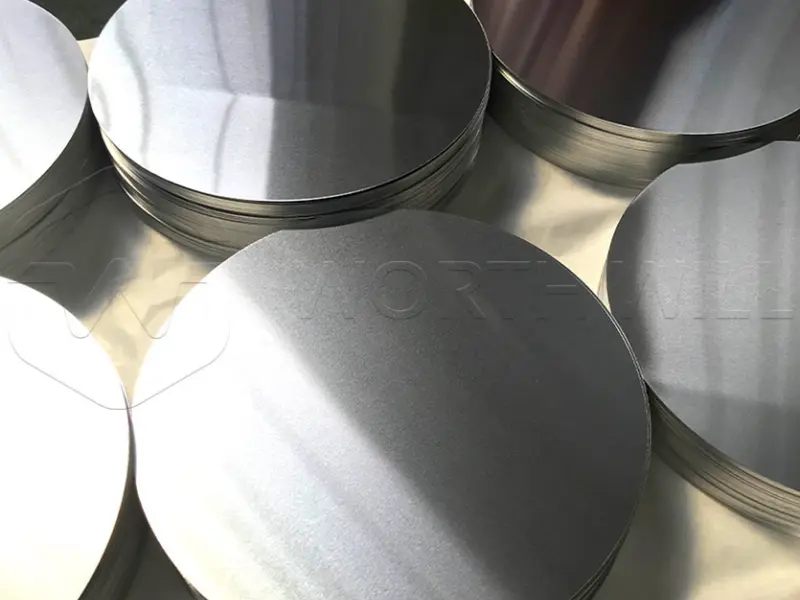
When it comes to cookware production, 1100 aluminum circle for cookware is a top choice for their strength, durability, and heat conductivity. Aluminum circles, especially those made from the 1100 alloy, are widely used in cookware manufacturing due to their unique properties that enhance cooking performance.
The trees that are slow to grow bear the best fruit.
– Molière
Why Choose 1100 Aluminum Circle for Cookware?
- High Thermal Conductivity
- The 1100 aluminum alloy has excellent thermal conductivity, allowing even heat distribution across the cookware surface. This ensures food cooks evenly, making it perfect for pans, pots, and other cooking tools.
- Pure and Safe Material
- With a high aluminum content (99.0% pure), 1100 aluminum is non-toxic and safe for food applications. It doesn’t corrode easily, making it a great choice for long-lasting cookware that remains safe over time.
- Excellent Workability
- 1100 aluminum circles are easy to press, spin, and shape into various cookware items. Their flexibility and malleability make them ideal for producing a wide range of kitchen products, including frying pans, saucepans, and stockpots.
- Lightweight and Durable
- Aluminum is known for being lightweight but strong, making it easy to handle while maintaining its structural integrity. This combination of lightness and strength is particularly beneficial for cookware, as it provides durability without the added weight.
- Affordability
- Compared to other materials, 1100 aluminum circles are affordable without compromising quality. This makes them an economical choice for manufacturers looking to produce cost-effective yet reliable cookware products.
Benefits of Buying from a Professional Aluminum Circle Factory
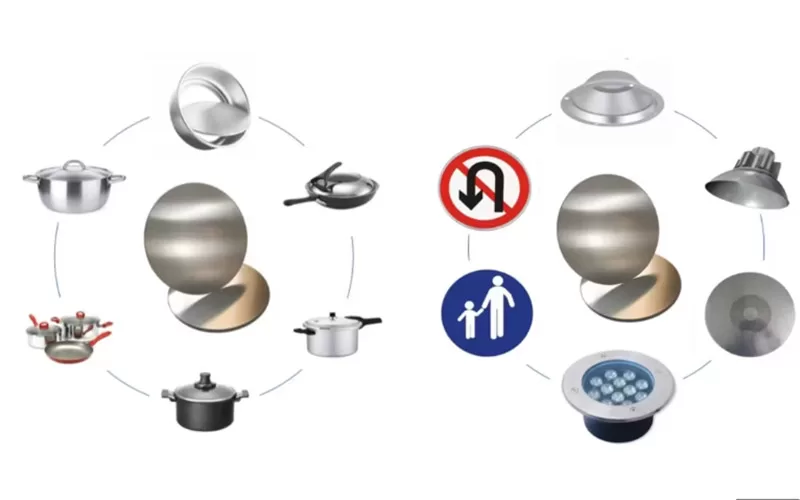
Purchasing aluminum circles directly from a reputable factory ensures you get high-quality, consistent products tailored to your specifications. Here’s why you should consider sourcing from a specialized aluminum circle manufacturer:
- Quality Control: Professional factories maintain strict quality control throughout the production process, ensuring each aluminum circle meets industry standards and provides reliable performance in cookware applications.
- Customization: Leading aluminum circle factories offer custom sizing, thicknesses, and tempering options to meet specific requirements, whether you need small circles for baking pans or larger ones for stockpots.
- Cost Efficiency: By purchasing directly from the factory, you avoid middleman costs and can often get better pricing, especially for bulk orders.
- Reliable Supply and Consistency: A professional factory can consistently supply high-quality aluminum circles in large quantities, making it easier for cookware manufacturers to maintain a stable production line.
Applications of 1100 Aluminum Circles in Cookware
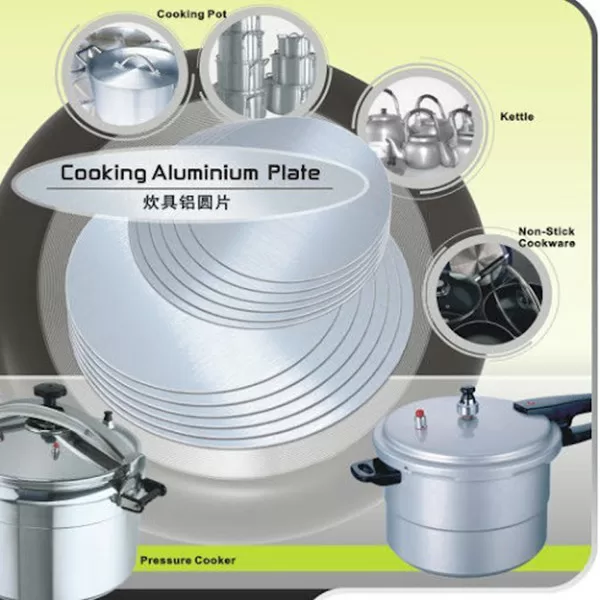
- Frying Pans and Skillets: 1100 aluminum ensures even heating, preventing hot spots and allowing food to cook uniformly.
- Saucepans and Pots: The corrosion-resistant property of 1100 aluminum is ideal for items frequently in contact with liquids.
- Baking Trays and Cake Pans: Lightweight and easy to shape, aluminum circles are widely used in baking trays and various types of baking molds.
- Pressure Cookers and Stockpots: Aluminum circles provide a durable, safe, and effective material for larger cookware.
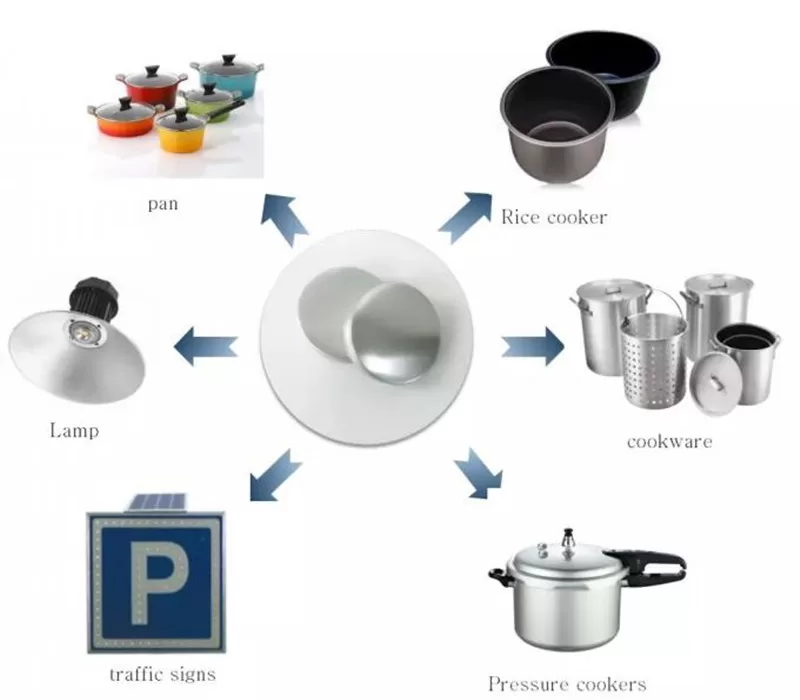
Quality from a Trusted Aluminum Circle Factory
Choosing 1100 aluminum circles from a trusted aluminum circle factory provides assurance in quality and durability for your cookware products. With exceptional workability, corrosion resistance, and thermal conductivity, 1100 aluminum circles are well-suited for a wide range of kitchen items.
Ready to enhance your cookware production? Partner with a professional aluminum circle manufacturer to get consistent, high-quality 1100 aluminum circles that elevate your product offerings.
1100 Aluminum Circle for Cookware Manufacturing
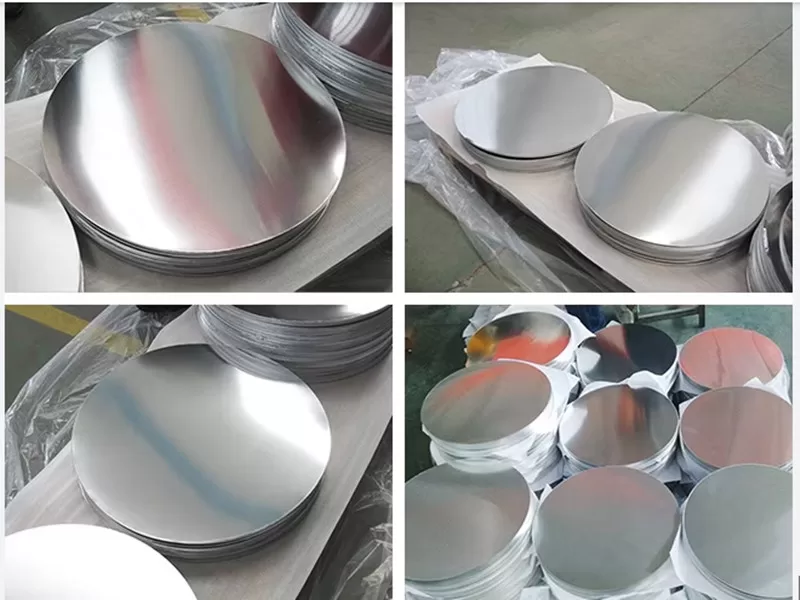
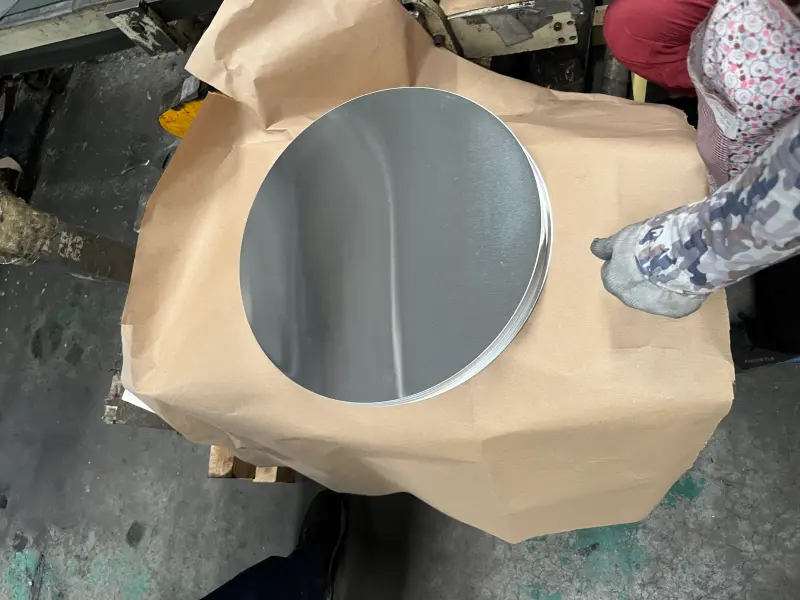
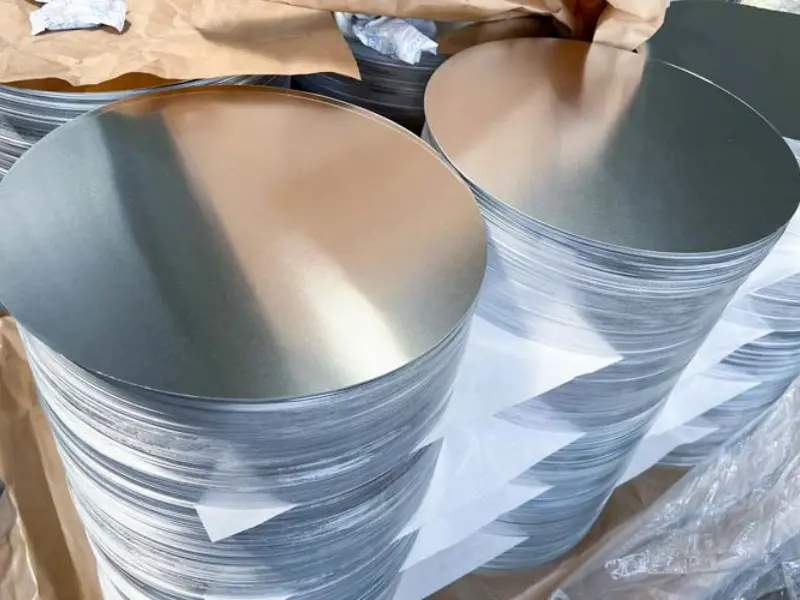
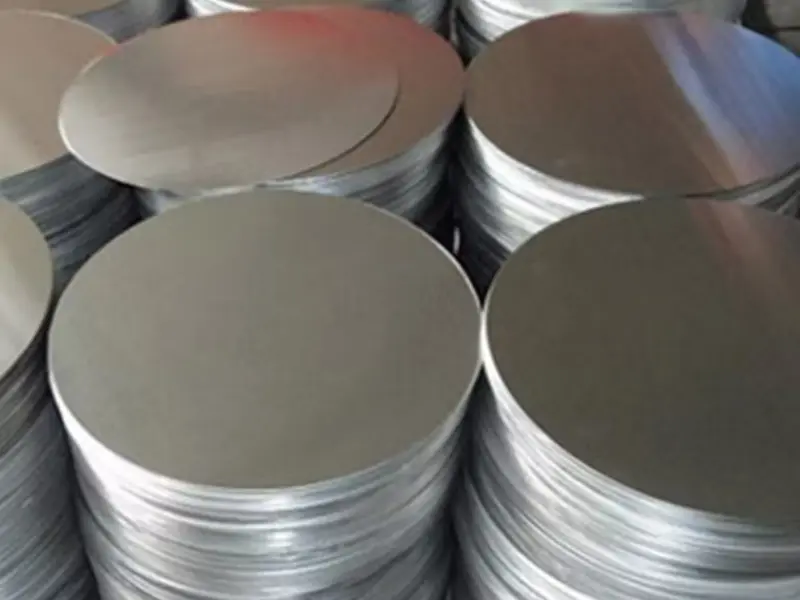
1100 aluminum circle is widely used for cookware manufacturing. It is a flat round aluminum blank made from 1100 aluminum alloy. The material is known for its good formability, corrosion resistance, thermal conductivity, and smooth surface.
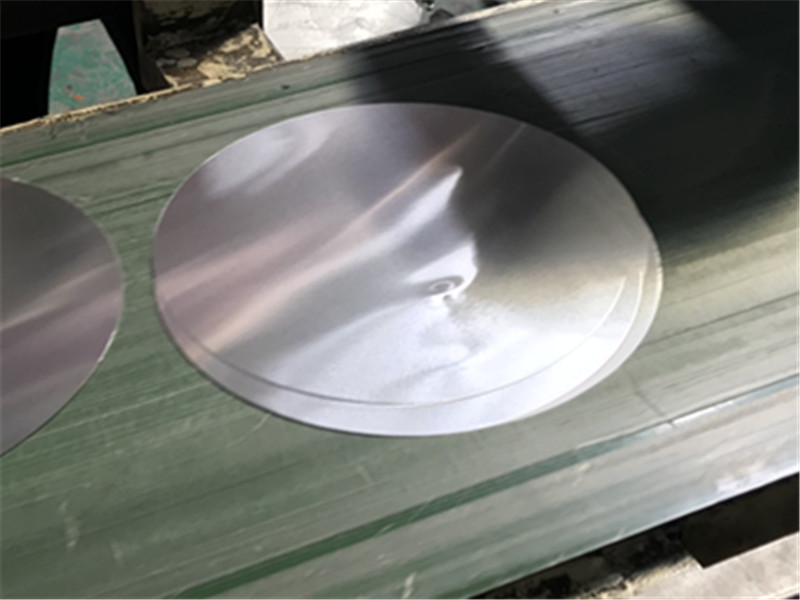
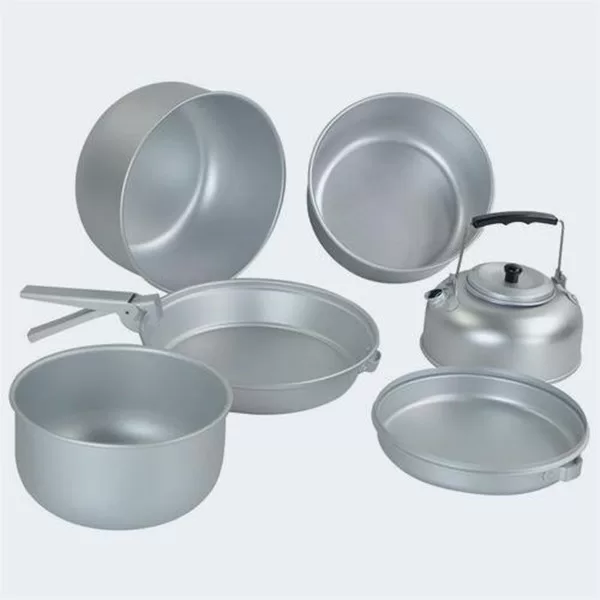
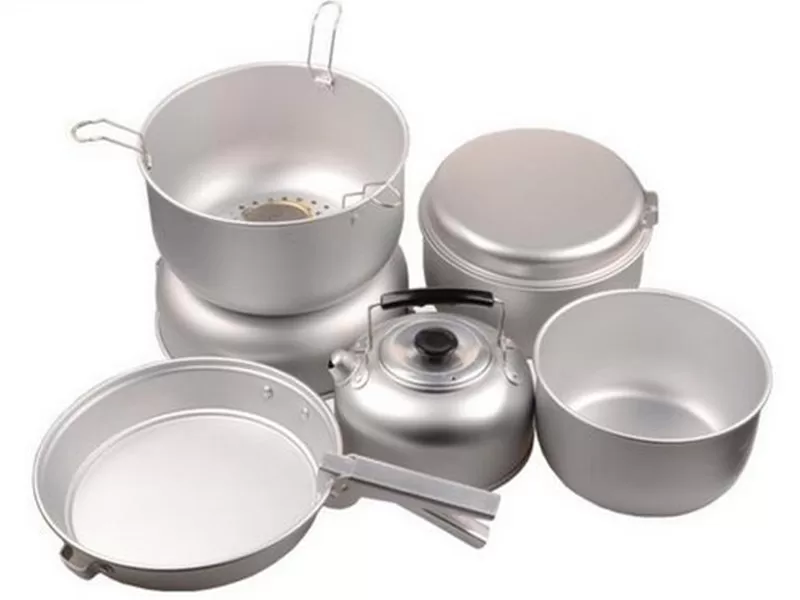
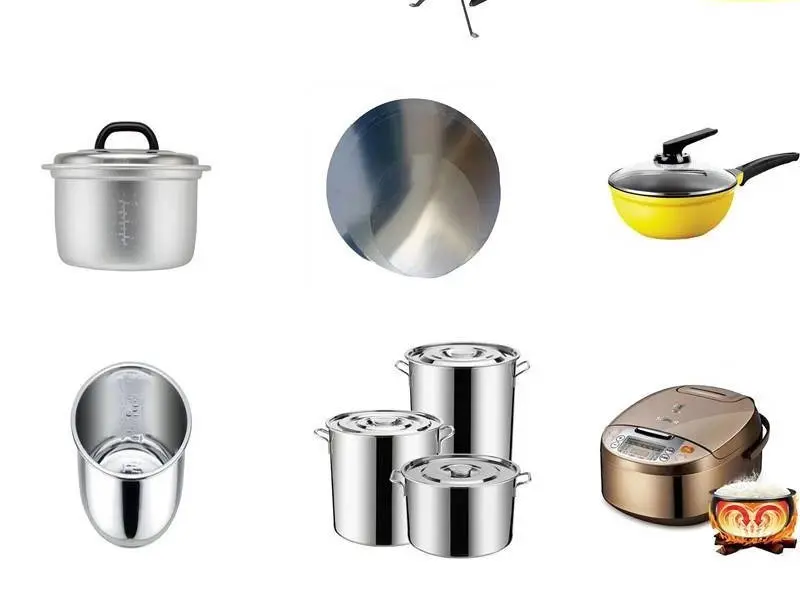
It can be used to make cooking pots, pans, trays, lids, bowls, pressure cooker parts, and other kitchen products.
For cookware manufacturers, the circle size and material condition are important. Thickness, diameter, temper, surface quality, and edge quality can all affect the forming result.
A good aluminum circle should have stable thickness, good flatness, clean edges, and a surface without serious scratches or oil marks.
Why 1100 Aluminum Is Used for Cookware
1100 aluminum has a high aluminum content. It is a commercially pure aluminum alloy with good workability.
It is softer than many 3xxx and 5xxx series alloys. This makes it suitable for deep drawing and spinning.
The material also transfers heat efficiently. This is useful for cookware products that need fast and even heat transfer.
Main Advantages
- Good deep drawing performance
- Easy to form
- Good thermal conductivity
- Good corrosion resistance
- Low material weight
- Smooth surface
- Easy to polish
- Suitable for anodizing
- Suitable for different cookware shapes
- Good machinability for common processes
For many cookware factories, the main reason to select 1100 is its balance between formability and production efficiency.
1100 Aluminum Circle Specifications
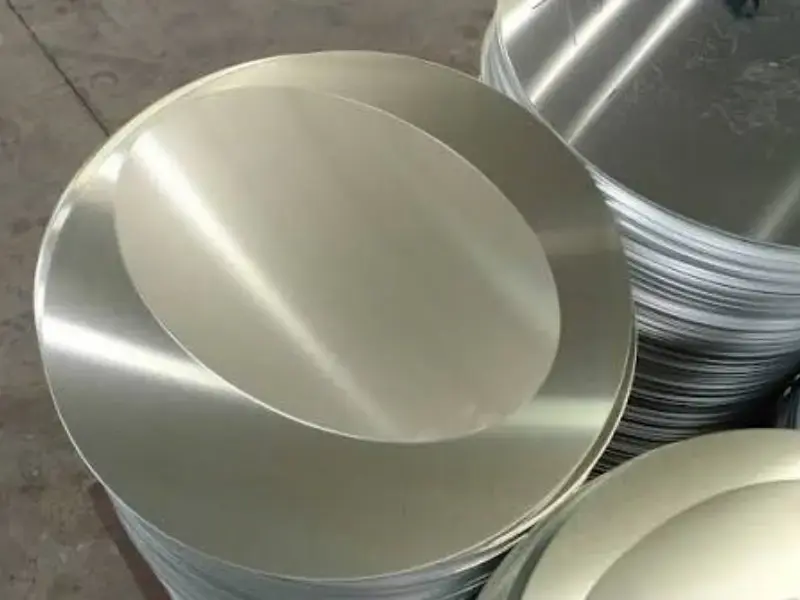
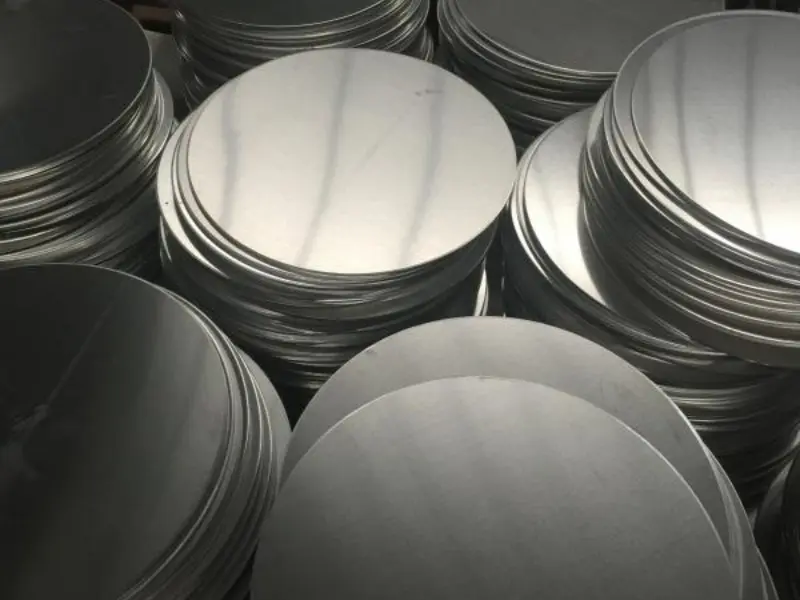
The exact specification can be adjusted according to the cookware design.
| Item | Typical Range |
|---|---|
| Alloy | 1100 |
| Temper | O, H12, H14, H24 |
| Thickness | 0.3–6.0 mm |
| Diameter | 80–1500 mm |
| Surface | Mill finish |
| Shape | Round |
| Edge | Smooth cut edge |
| Processing | Punching or cutting |
| Application | Cookware and kitchen products |
For deep drawing cookware, O temper is commonly considered because of its softer condition and good forming ability.
For products that need more strength before forming or after certain processes, other tempers may be considered.
Different 1100 Aluminum Circle Sizes
Cookware factories may need different diameters depending on the final product.
Small Aluminum Circles
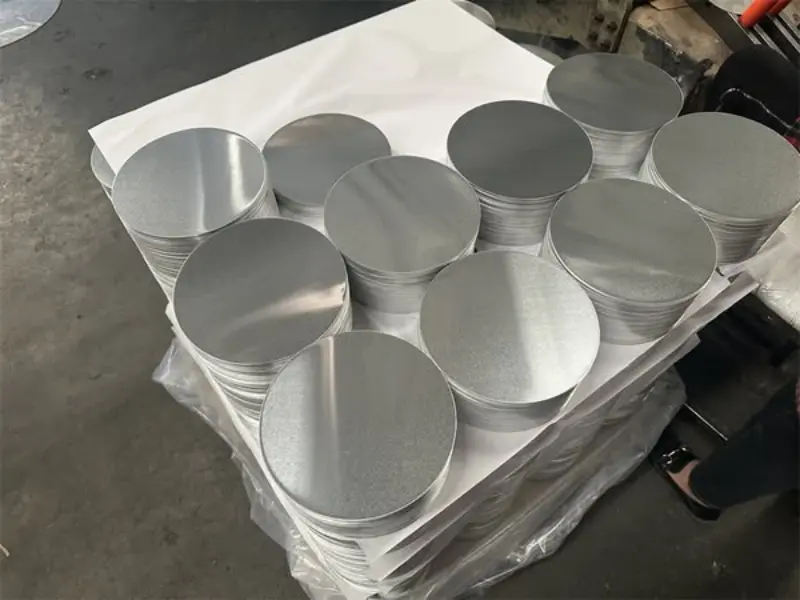
Small circles can be used for:
- Small pans
- Small lids
- Bowls
- Kitchen accessories
- Small containers
- Components
Typical diameter range:
80 mm → 100 mm → 120 mm → 150 mm → 180 mm → 200 mm
Medium Aluminum Circles
Medium sizes are common for household cookware.
Possible diameters include:
220 mm → 240 mm → 260 mm → 280 mm → 300 mm → 320 mm → 360 mm
These sizes can be used for many standard pots and pans.
Large Aluminum Circles
Large circles are useful for bigger cookware.
Common sizes may include:
400 mm → 450 mm → 500 mm → 600 mm → 800 mm+
The final diameter should be calculated according to the forming process and finished cookware dimensions.
Thickness Options for Cookware
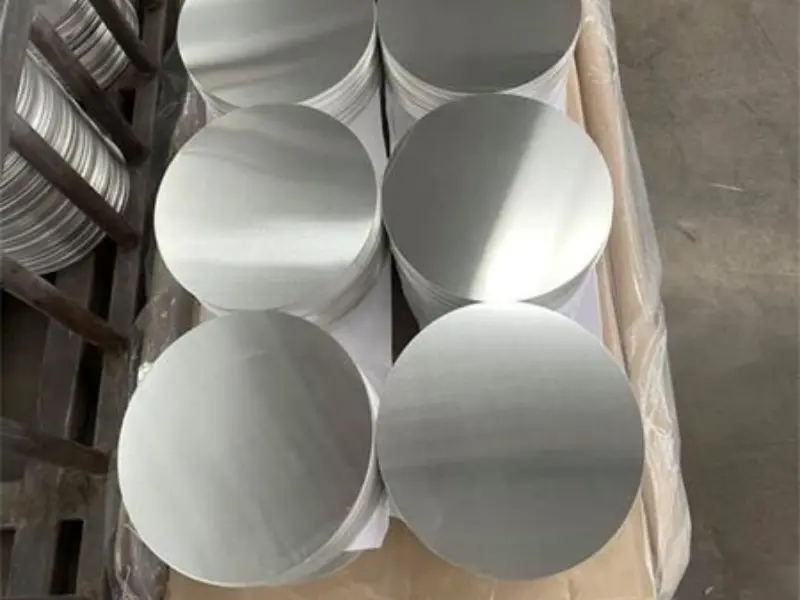
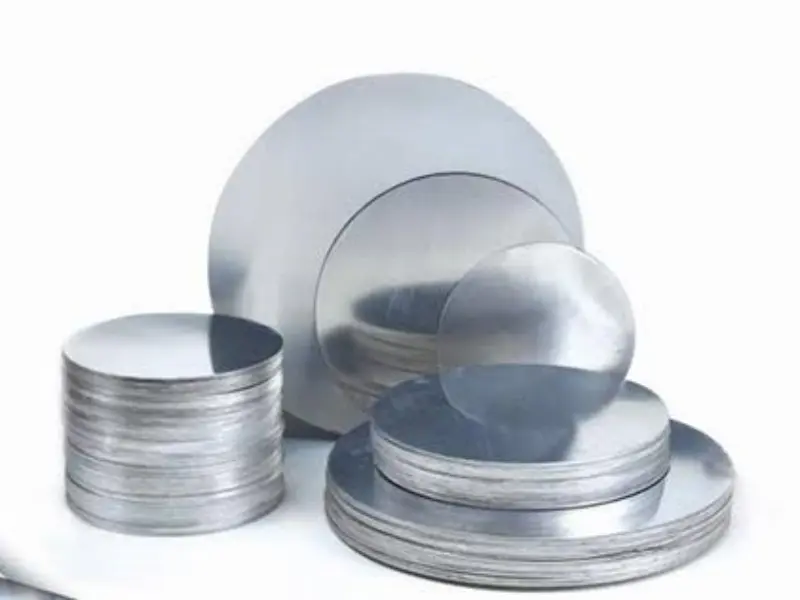
Thickness has a direct effect on cookware weight, strength, forming, and heat distribution.
| Thickness | Typical Direction | Possible Application |
|---|---|---|
| 0.5 mm | Very light | Small kitchen products |
| 0.8 mm | Light | Lids and small cookware |
| 1.0 mm | Medium-light | Pans and containers |
| 1.2 mm | Medium | General cookware |
| 1.5 mm | Medium | Pots and pans |
| 2.0 mm | Thicker | Heavy cookware |
| 2.5 mm | Heavy | Large pots |
| 3.0 mm+ | Heavy-duty | Industrial cookware |
The actual thickness depends on the cookware design.
A deeper drawing process may require a different thickness from a shallow product.
How Thickness Changes the Final Product
A thinner circle can reduce the total weight.
It can also be easier to handle during production.
A thicker circle can provide more rigidity and a stronger final product.
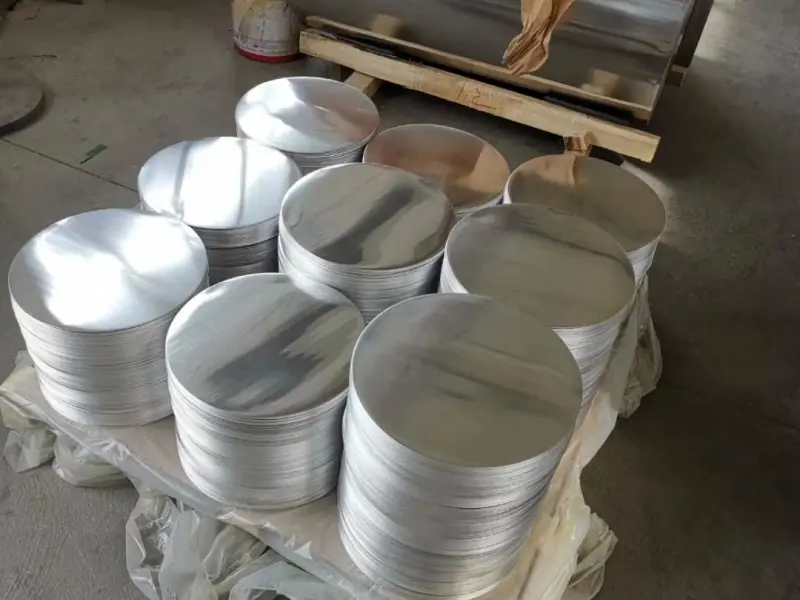
The selection can follow a simple path:
Light cookware
→ 0.8 mm
→ 1.0 mm
Standard cookware
→ 1.2 mm
→ 1.5 mm
Heavy cookware
2.0 mm
2.5 mm
3.0 mm+
The final choice has confirmed by the cookware drawing and forming method.
1100 Aluminum Circle Temper Options
The temper affects how the material behaves during forming.
1100 O Aluminum Circle
O temper means annealed aluminum.
It is soft and has good elongation.
This makes it a common choice for deep drawing.
It can be used for:
- Deep drawing cookware
- Pots
- Pans
- Bowls
- Containers
- Kitchenware
When the shape is complex, a softer material can help reduce cracking during forming.
1100 H12
H12 has higher strength than O temper.
It considered for products that need a firmer starting material.
1100 H14
H14 provides more hardness and strength.
It has uses for products that do not require very deep forming.
1100 H24
H24 provides a useful balance between strength and forming performance.
The correct temper depends on the forming depth and cookware structure.
Deep Drawing Performance
Deep drawing is one of the most important reasons to use aluminum circles for cookware.
The round blank is placed into a forming tool.
The press then forms the flat circle into a three-dimensional shape.
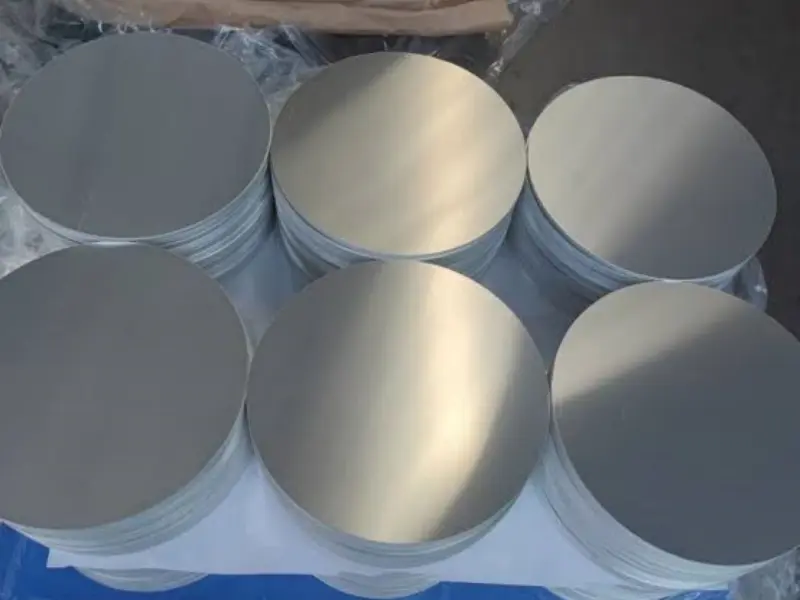
A typical process can be shown as:
Aluminum circle
↓
Positioning
↓
Deep drawing
↓
Trimming
↓
Surface treatment
↓
Coating or anodizing
↓
Final cookware
Good material quality can help reduce cracking, wrinkles, and uneven wall thickness.
What Makes a Good Cookware Circle?
A cookware blank needs more than the correct diameter.
Flatness
Good flatness helps the circle sit correctly in the forming tool.
Poor flatness can create feeding and positioning problems.
Thickness Consistency
Consistent thickness helps produce a more stable finished product.
It can also help reduce differences between batches.
Edge Quality
The cutting edge should be clean.
Heavy burrs can affect handling and forming.
Surface Quality
The surface should be free from serious:
- Scratches
- Cracks
- Oil stains
- Black spots
- Oxidation marks
- Rolling defects
This is especially important when the cookware will have a visible exterior surface.
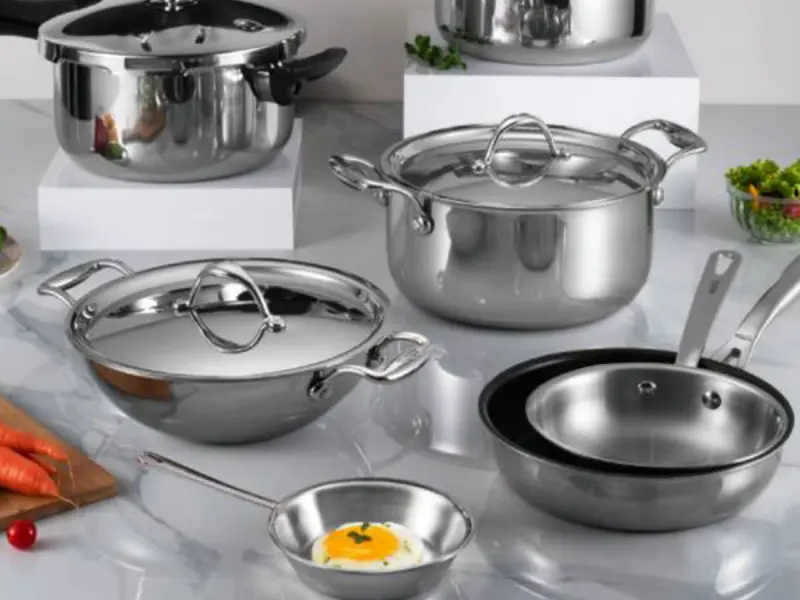
Cookware Products Made from Aluminum Circles
1100 aluminum circles have formed into many kitchen products.
Frying Pans
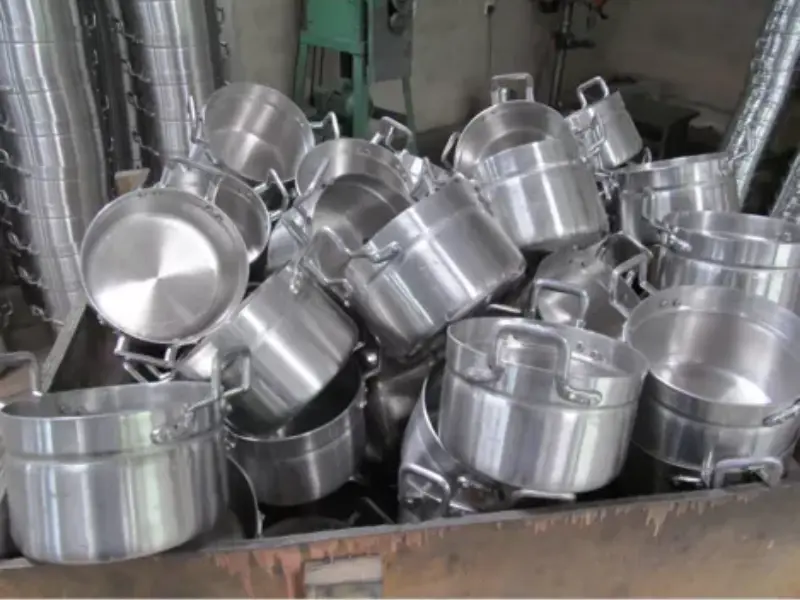
A round blank has deep drawn or pressed into a frying pan body.
The diameter and thickness depend on the final pan size.
Cooking Pots
Larger circles can be used for cooking pots.
The forming process may require more than one drawing operation for deep products.
Sauce Pans
Medium-size circles are suitable for sauce pans and small cooking vessels.
Aluminum Lids
Some cookware lids require thinner aluminum circles.
The surface has polished, anodized, or coated.
Baking Trays
Flat or shallow products have produced from aluminum circles or discs.
Bowls
The good formability of 1100 aluminum makes it suitable for bowl production.
Food Containers
Aluminum containers have produced by pressing or deep drawing.
Kitchen Accessories
Other possible products include:
- Kitchen trays
- Serving plates
- Small containers
- Covers
- Heating plates
- Kitchen components
1100 Aluminum Circle for Different Cookware Types
| Cookware Type | Typical Material Direction | Thickness Direction |
|---|---|---|
| Small frying pan | 1100 O | 0.8–1.2 mm |
| Medium frying pan | 1100 O | 1.0–1.5 mm |
| Cooking pot | 1100 O | 1.2–2.0 mm |
| Deep pot | 1100 O | 1.5–2.5 mm |
| Small bowl | 1100 O | 0.8–1.2 mm |
| Aluminum tray | 1100 O/H12 | 0.8–1.5 mm |
| Lid | 1100 O/H12 | 0.6–1.2 mm |
| Heavy cookware | 1100 O/H12 | 2.0–3.0 mm |
These values are starting points. The actual specification should be based on the final product design.
1100 Aluminum Circle vs 1050 Aluminum Circle
1050 and 1100 are both commonly used for aluminum circles.
They have similar characteristics in many forming applications.
| Feature | 1050 | 1100 |
|---|---|---|
| Aluminum content | Very high | High |
| Formability | Excellent | Excellent |
| Thermal conductivity | Excellent | Excellent |
| Corrosion resistance | Excellent | Excellent |
| Deep drawing | Good | Good |
| General cookware use | Suitable | Suitable |
| Common selection | Forming, heat transfer | Cookware, general fabrication |
The final choice can depend on the required standard, mechanical properties, and production process.
1100 vs 3003 Aluminum Circle for Cookware
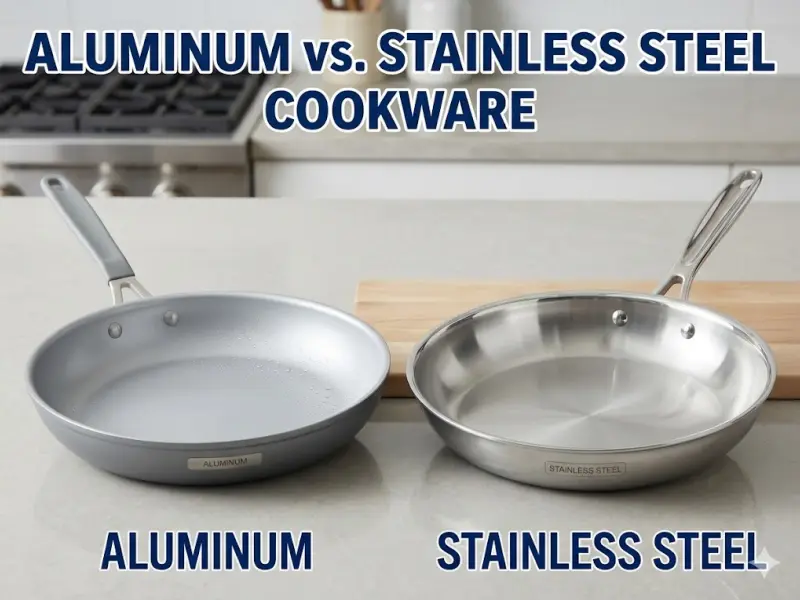
3003 contains manganese and generally offers higher strength than 1100.
1100 is softer and can be attractive for deep forming.
| Feature | 1100 | 3003 |
|---|---|---|
| Strength | Lower | Higher |
| Formability | Excellent | Very good |
| Deep drawing | Very good | Very good |
| Corrosion resistance | Very good | Very good |
| Weight | Similar | Similar |
| Typical cookware | Pots, pans, bowls | Cookware, tanks, containers |
More forming focus → 1100
More strength focus → 3003
The exact result depends on temper and forming depth.
1100 vs 3004 Aluminum Circle
3004 has higher strength and has uses for deeper or stronger formed containers.
1100 offers easier forming for many simple cookware products.
Simple forming → 1100
Higher strength formed products → 3004
For demanding cookware designs, the forming process should be tested before mass production.
Mill Finish vs Anodized Aluminum Circle
The surface treatment can change the appearance and performance.
| Surface | Appearance | Main Benefit |
|---|---|---|
| Mill finish | Natural aluminum | Cost-effective |
| Polished | Bright | Decorative |
| Anodized | Colored or metallic | Surface protection |
| Brushed | Linear texture | Modern appearance |
| Coated | Color | Decoration and protection |
Not every surface treatment is needed before forming.
For deep drawing, the forming sequence and surface treatment should be planned together.
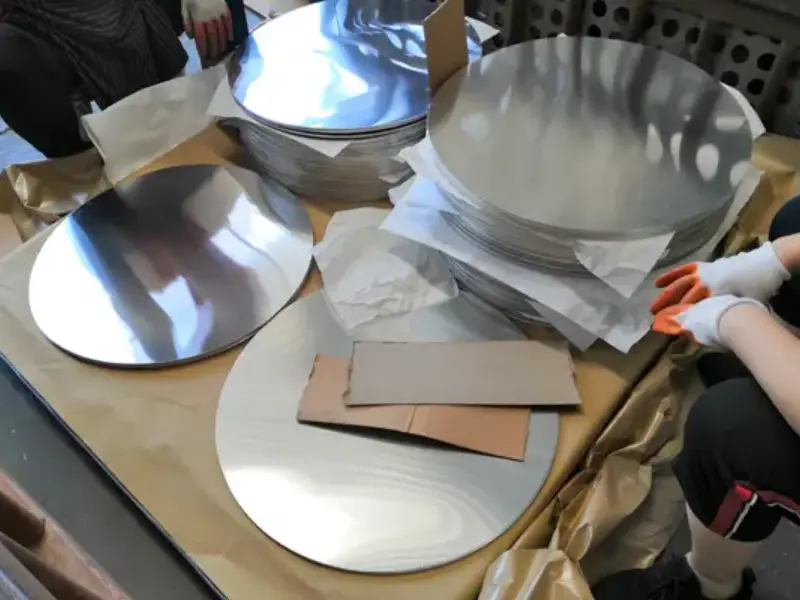

Aluminum Circle Diameter and Cookware Size
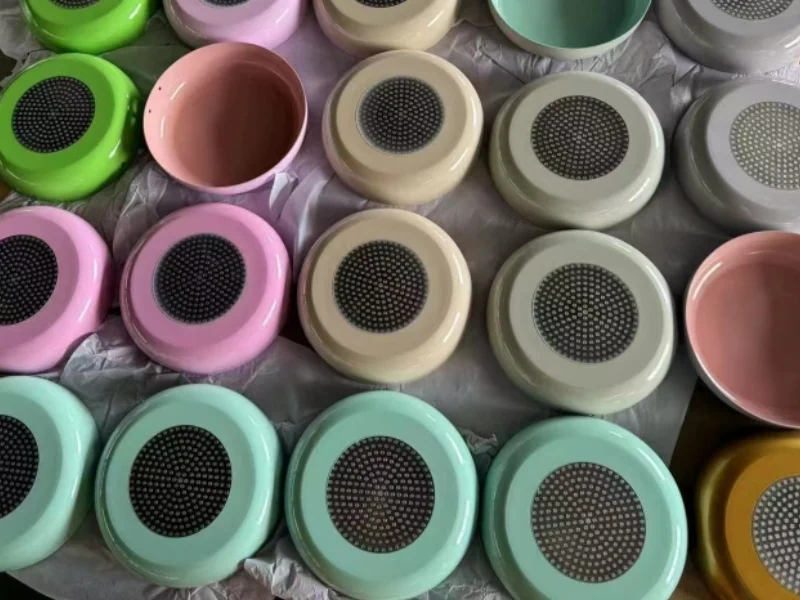
The blank diameter is related to the final cookware size.
A larger finished product normally needs a larger blank.
However, the relationship is not simply one-to-one.
Drawing depth, wall thickness, trimming allowance, and tool design all affect the required blank size.
A typical selection process is:
Finished cookware diameter
↓
Finished depth
↓
Wall thickness
↓
Drawing ratio
↓
Blank diameter
↓
Trial forming
↓
Final production size
For this reason, cookware manufacturers should confirm the blank size using the actual tooling and production process.
Surface Requirements for Cookware
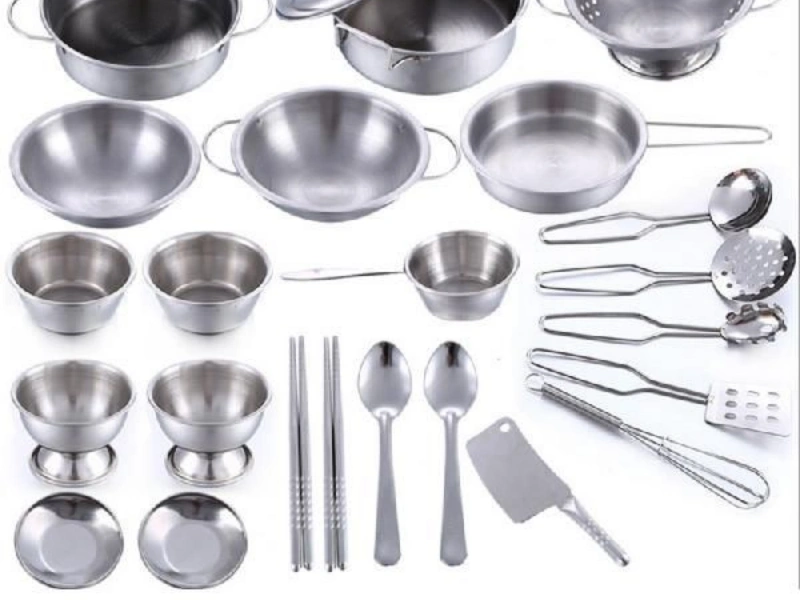
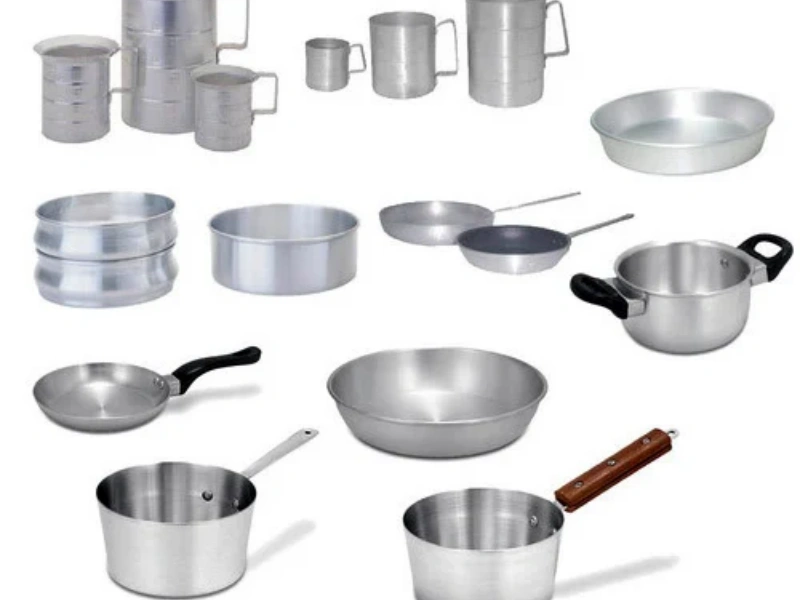
Surface quality is important for cookware.
The final product may receive different treatments.
Polishing
Polishing can create a brighter appearance.
It is often used for decorative kitchen products.
Anodizing
Anodizing can improve surface hardness and appearance.
It has use for certain aluminum cookware products.
Non-Stick Coating
The aluminum body can be used as the base for a non-stick coating system.
The coating process must be compatible with the final cookware production.
Protective Treatment
Some products require additional surface protection during transportation and storage.
The selected treatment should match the cookware production process.
Aluminum Circle Edge Quality
Edge quality is easy to overlook.
A poor edge can create problems during automatic feeding.
It can also increase the risk of scratches or handling injuries.
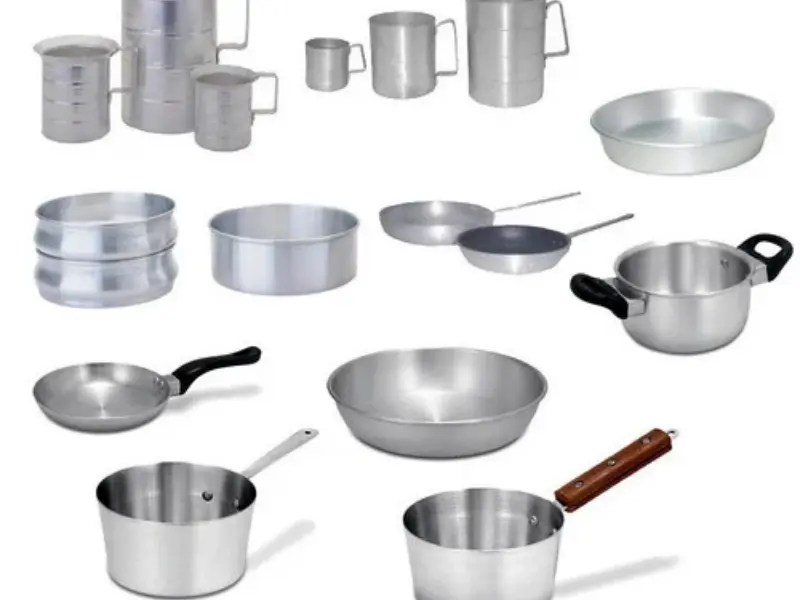
A good cookware blank should have:
- Clean circular shape
- Low burr
- Consistent diameter
- Smooth edge
- No obvious cracks
- Good flatness
For high-speed production lines, edge consistency becomes even more important.
Quality Control for 1100 Aluminum Circles
A professional inspection process can include several points.
| Inspection | Purpose |
|---|---|
| Alloy check | Confirm 1100 material |
| Temper check | Confirm O/H12/H14/H24 |
| Thickness | Check material consistency |
| Diameter | Check blank size |
| Flatness | Check forming condition |
| Edge | Check burrs and cracks |
| Surface | Check scratches and stains |
| Mechanical properties | Confirm material performance |
| Packaging | Protect product during shipping |
For large orders, samples have checked before mass production.
Common Problems During Cookware Forming
Cracking
Cracking may be related to:
- Incorrect temper
- Excessive drawing ratio
- Poor material quality
- Small forming radius
- Incorrect lubrication
Wrinkles
Wrinkles can occur when material flow is not properly controlled.
Tool design and blank holder pressure are important.
Uneven Wall Thickness
Uneven thickness can result from the forming process.
Material consistency and tooling also matter.
Surface Scratches
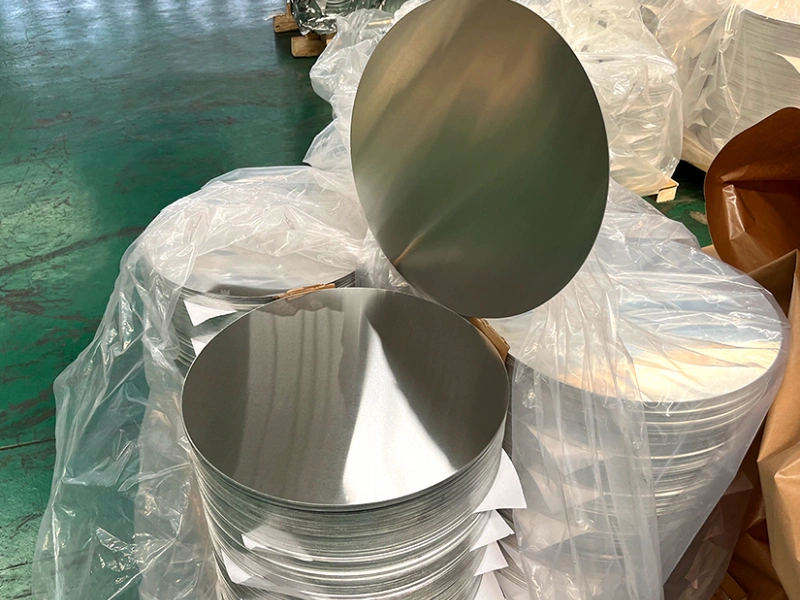
Scratches may happen during:
- Feeding
- Punching
- Forming
- Stacking
- Transportation
Clean production equipment can help reduce surface damage.
How to Order 1100 Aluminum Circles for Cookware
A clear specification makes quotation and production easier.
Buyers should provide:
- Alloy: 1100
- Temper: O, H12, H14, or H24
- Diameter
- Thickness
- Quantity
- Surface requirement
- Edge requirement
- Drawing depth
- Final cookware application
- Packaging requirement
For repeat orders, keeping the same specification helps improve batch consistency.
Custom 1100 Aluminum Circles
Custom production is useful for cookware manufacturers with different tooling.
Possible options include:
- Custom diameter
- Custom thickness
- Custom temper
- Custom surface
- Custom edge
- Custom packaging
- Special tolerance
- Large-volume production
Different cookware designs can use different blank sizes from the same alloy.
Wholesale 1100 Aluminum Circles
For wholesale purchasing, price is only one factor.
The material should also remain stable from batch to batch.
Important purchasing points include:
- Stable alloy
- Consistent temper
- Accurate diameter
- Stable thickness
- Good flatness
- Clean surface
- Low burr
- Secure packaging
- Reliable production schedule
For cookware factories, stable raw material can help reduce production adjustments.
What Affects the Price?
The price of 1100 aluminum circles can change according to several factors.
| Factor | Effect on Cost |
|---|---|
| Aluminum market price | Major factor |
| Thickness | Changes material weight |
| Diameter | Changes material consumption |
| Quantity | Large orders may reduce unit cost |
| Temper | Different processing requirements |
| Surface | Additional processing may increase cost |
| Tolerance | Tighter tolerance may require more control |
| Packaging | Special packing adds cost |
| Cutting | Different production methods affect cost |
A simple mill finish circle usually has a different price from a polished or specially processed product.
Choosing the Right Aluminum Circle

A simple selection path can help.
Cookware type
↓
Finished diameter
↓
Finished depth
↓
Blank diameter
↓
Thickness
↓
1100 alloy
↓
Temper
↓
Surface
↓
Tolerance
↓
Quantity
This approach helps match the blank with the actual production process.
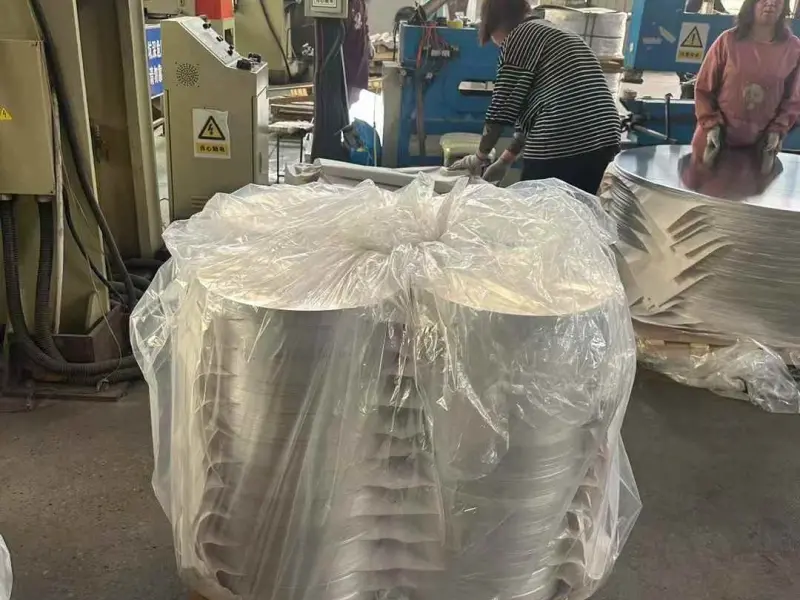
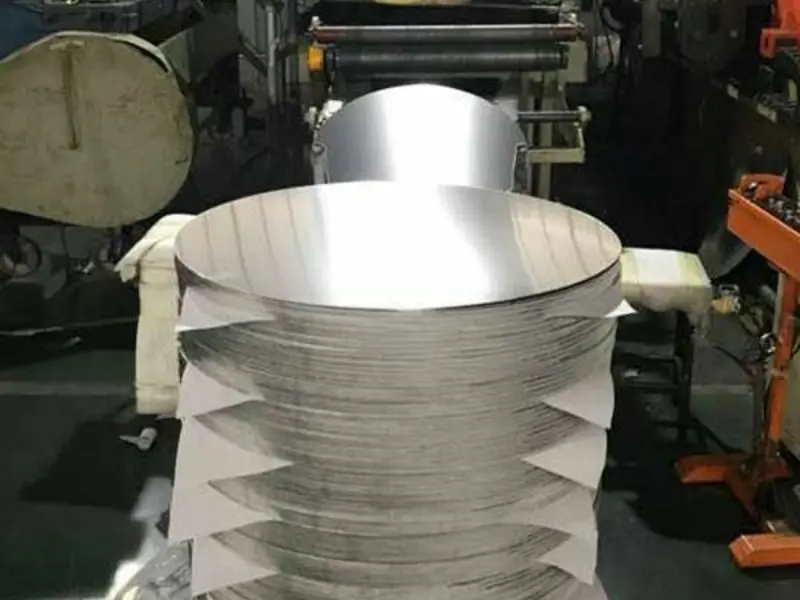
Packaging and Storage
Aluminum circles have properly protected during transportation.
Typical packaging can include:
- Waterproof paper
- Plastic film
- Wooden pallets
- Wooden cases
- Steel straps
- Corner protection
- Export packaging
The material should be stored in a dry environment.
Avoid direct contact with water.
Moisture between aluminum pieces may cause surface stains or oxidation marks.
Why Cookware Manufacturers Choose Aluminum Circles
Round aluminum blanks can simplify the first stage of cookware production.
They are already cut to the basic shape required for forming.
This can reduce material preparation work.
1100 aluminum also offers good forming performance and useful thermal conductivity.
For cookware manufacturers, the combination can provide a practical raw material for large-volume production.
Quick Selection Guide
| Requirement | Suggested Direction |
|---|---|
| Deep drawing | 1100 O |
| Simple forming | 1100 O/H12 |
| More rigidity | H12/H14 |
| Small cookware | 80–200 mm |
| Medium cookware | 220–360 mm |
| Large cookware | 400–800 mm+ |
| Light product | 0.5–1.0 mm |
| Standard cookware | 1.0–1.5 mm |
| Heavy cookware | 2.0–3.0 mm+ |
| Natural surface | Mill finish |
| Bright appearance | Polished |
| Surface protection | Anodized or suitable coating |
FAQ About 1100 Aluminum Circle for Cookware
Is 1100 aluminum good for cookware?
Yes. 1100 aluminum offers good formability, thermal conductivity, and corrosion resistance. It has uses for pots, pans, bowls, lids, trays, and other kitchen products.
Is 1100 aluminum suitable for deep drawing?
1100 in O temper can be suitable for deep drawing because the material is relatively soft and has good forming ability.
The actual forming performance depends on the drawing ratio, tool design, thickness, and production conditions.
What temper is commonly used for cookware circles?
O temper is commonly considered for deep drawing.
H12, H14, and H24 have considered for products that require different strength and forming characteristics.
What diameter aluminum circles are available?
Common diameters can range from about 80 mm to 1500 mm.
Small circles have applications for lids and small kitchen products. Larger circles have uses for pots, pans, and large containers.
What thickness is suitable for cookware?
There is no single thickness for all cookware.
Light products may use around 0.5–1.0 mm. Standard cookware may use around 1.0–1.5 mm. Heavier products may require 2.0 mm or more.
The final thickness should be based on the cookware design.
Can 1100 aluminum circles be polished?
Yes. Aluminum circles have supplied with suitable surface treatments or polished after forming.
The production sequence has considered before selecting the surface.
Can 1100 aluminum circles be anodized?
Yes, depending on the final cookware design and surface requirements.
Anodizing can change the appearance and surface properties.
What is the difference between 1100 and 3003 aluminum circles?
1100 generally offers easier forming and high aluminum content.
3003 normally provides higher strength while maintaining good formability.
The better choice depends on the final cookware design.
What is the difference between an aluminum circle and an aluminum disc?
The two terms are often used for similar round aluminum blanks.
In many markets, “aluminum circle” has commonly used for blanks intended for cookware and deep drawing.
Can the diameter be customized?
Yes. The diameter has produced according to the cookware design and forming tool.
Custom sizes are especially useful for manufacturers with special cookware shapes.
Can aluminum circles be supplied in bulk?
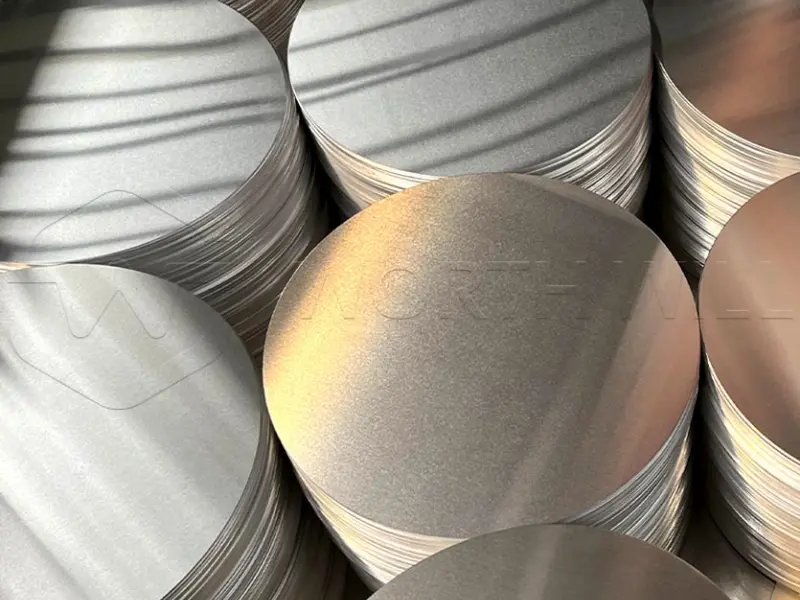
Yes. They have produced for wholesale and large-volume cookware orders.
For repeat production, alloy, temper, diameter, thickness, and tolerance should remain consistent.
How should aluminum circles be stored?
They should be stored in a dry and clean area.
Water and high humidity should be avoided. Proper packaging can also reduce surface damage during transportation.