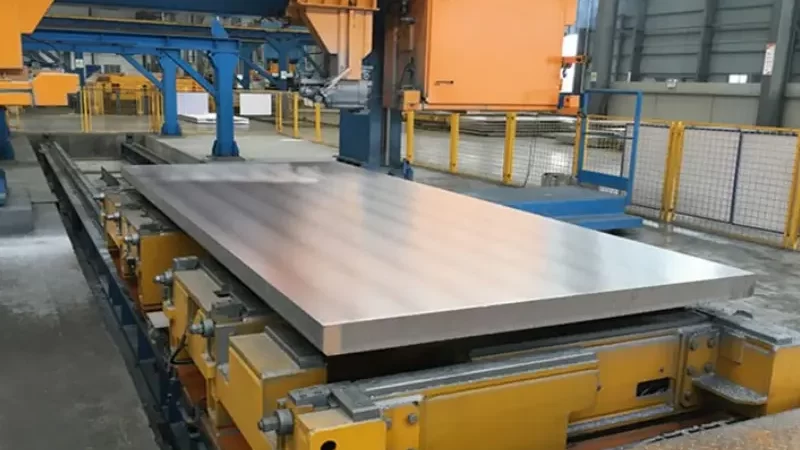
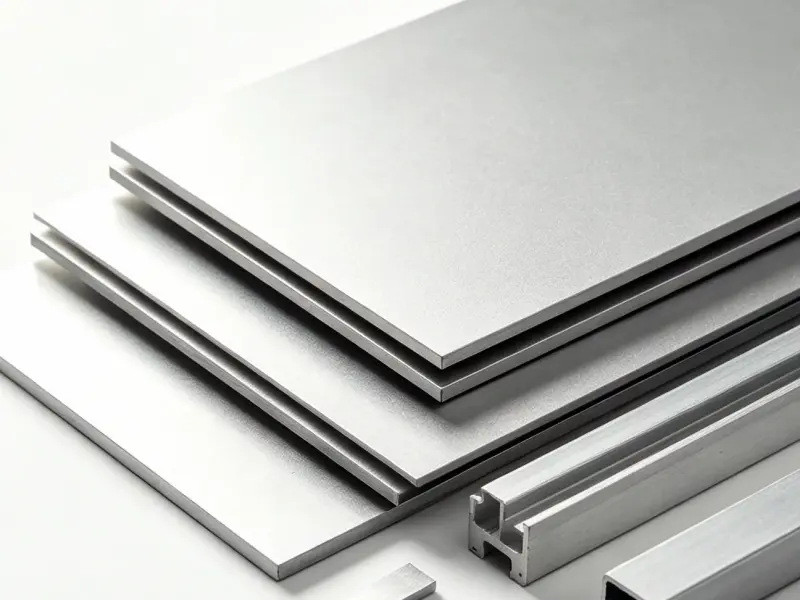
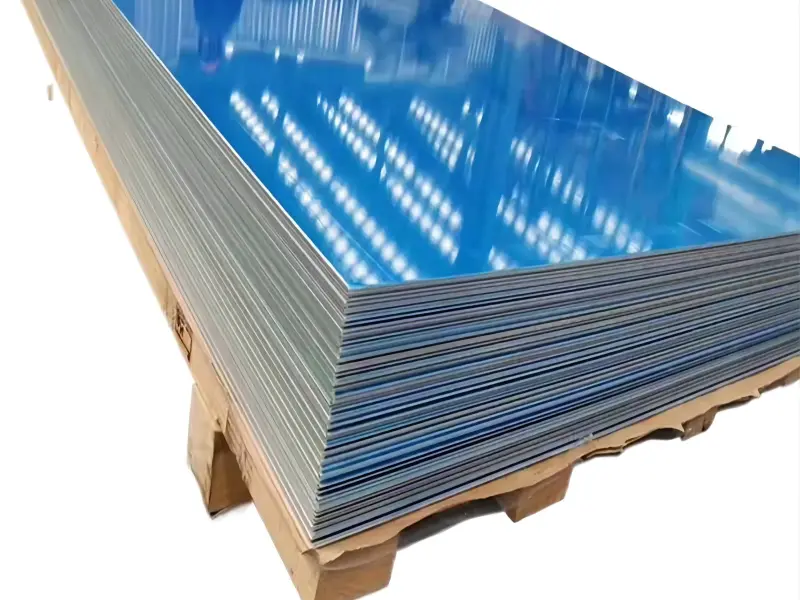
A 20mm aluminium plate is a thick, flat aluminium product used in industrial manufacturing, engineering, transport, marine equipment, and structural components.
It offers a useful combination of strength, corrosion resistance, machinability, and relatively low weight compared with many steel products.
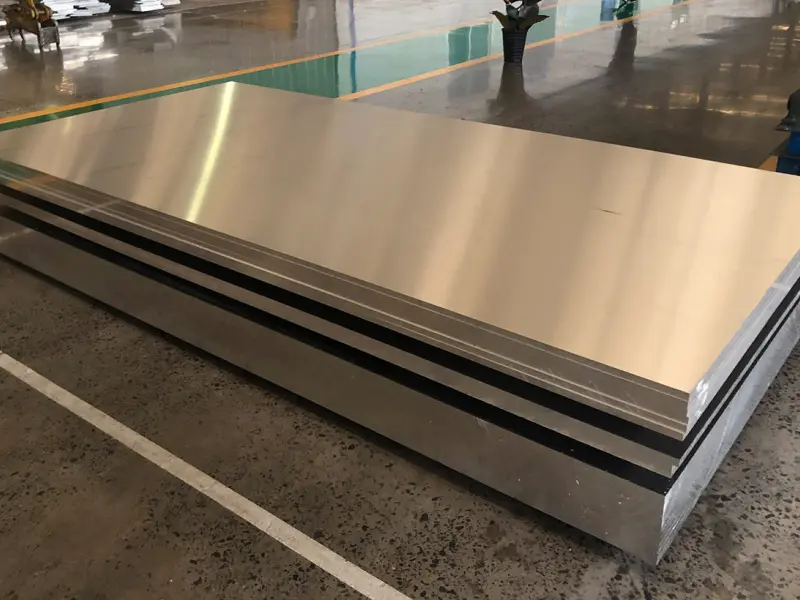
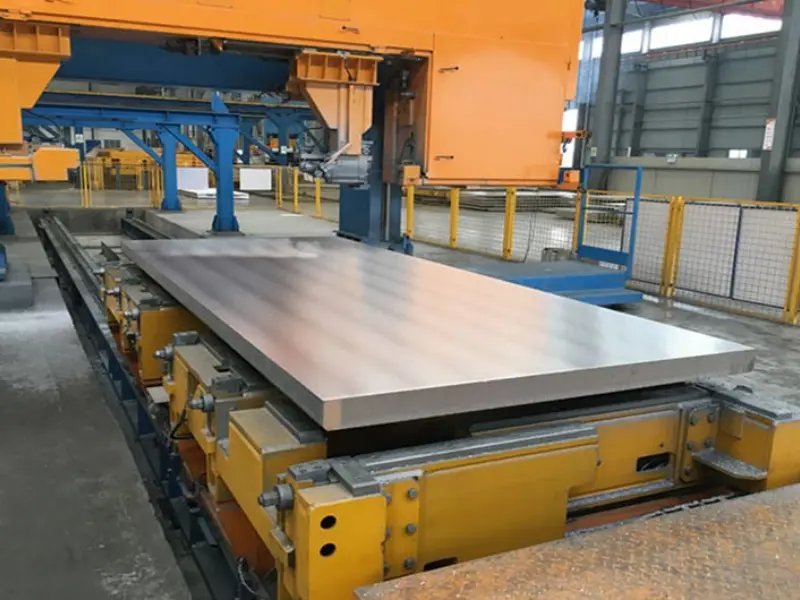
The right 20mm aluminium plate depends on the application. Some projects need excellent corrosion resistance. Others require high strength, stable machining perfo rmance, or good weldability. Common alloy options include 5052, 5083, 6061, 6082, and 7075, subject to the supplier’s available plate range.
Buyers can select different alloys, tempers, dimensions, and surface conditions. Custom cutting and machining may also be available.
What Is a 20mm Aluminium Plate?
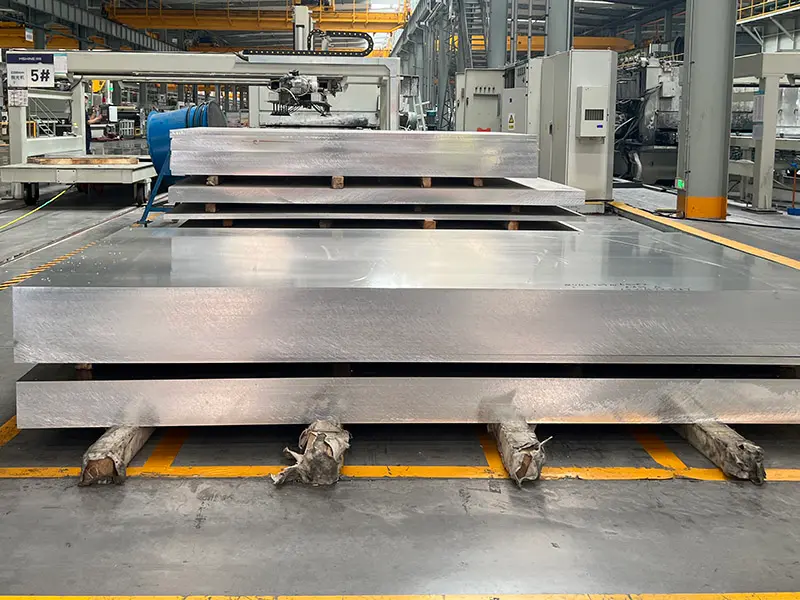
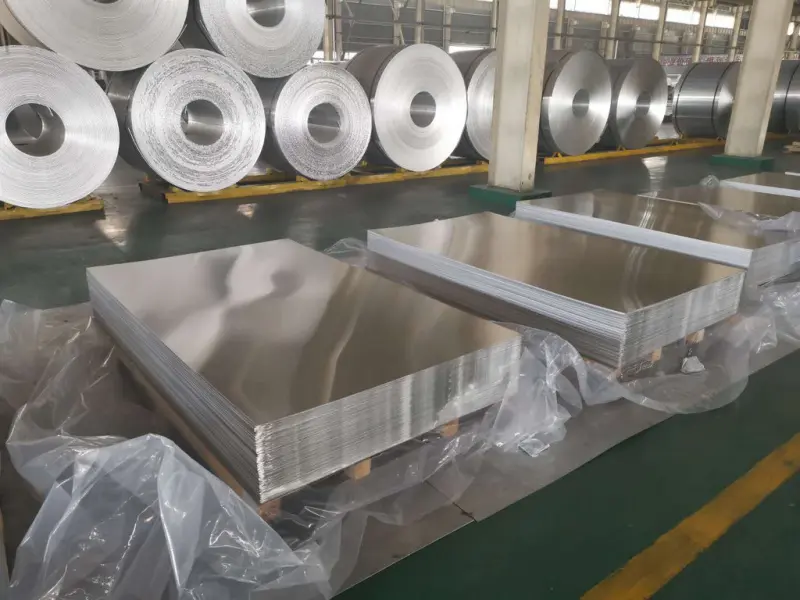
A 20mm aluminium plate is a flat aluminium product with a nominal thickness of 20 millimetres. It is approximately 0.787 inches thick.
Compared with thin aluminium sheet, a 20mm plate provides more material for machining, drilling, milling, and manufacturing thicker components. It can be supplied in standard rectangular sizes or cut to a required shape.
The term aluminium plate generally refers to thicker flat-rolled aluminium products. Exact definitions and thickness ranges may vary by market and product standard.
Basic Specifications of 20mm Aluminium Plate
| Specification | Typical options |
|---|---|
| Product | Aluminium plate |
| Nominal thickness | 20 mm |
| Thickness in inches | Approx. 0.787 in |
| Common alloys | 5052, 5083, 6061, 6082, 7075 |
| Common tempers | O, H111, H112, H116, H321, T6, T651 |
| Surface | Mill finish, machined, brushed, anodized where suitable |
| Supply form | Flat plate, cut-to-size plate, machined blank |
| Processing | Saw cutting, milling, drilling, CNC machining |
| Dimensions | Standard or customized |
| Inspection | Dimensions, surface, material certificates as agreed |
| Packaging | Protective wrapping, wooden pallets or export cases |
Not every alloy and temper is available in every size. Confirm the exact combination with the supplier before placing an order.
Is 20mm Aluminium Plate Suitable for Heavy-Duty Applications?
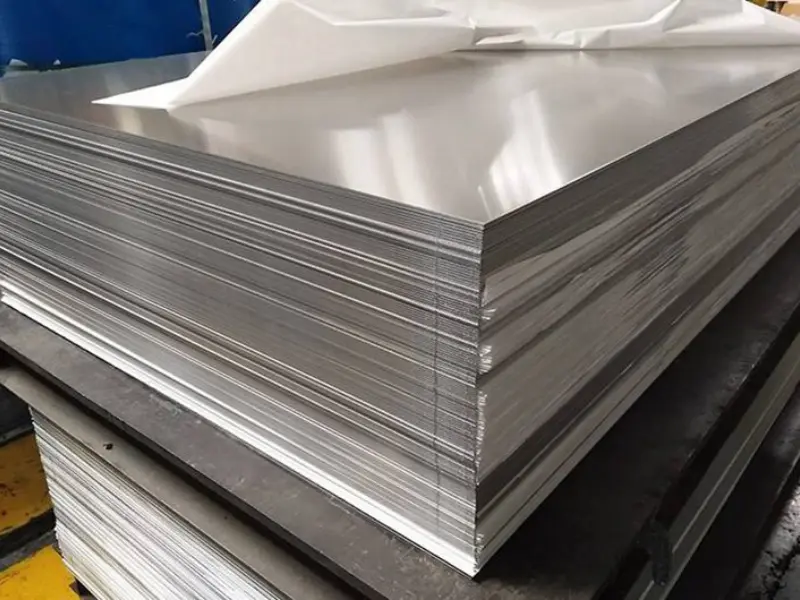
A 20mm aluminium plate can be suitable for many industrial components. It provides more thickness than a typical sheet and can be machined into brackets, mounting plates, equipment bases, and other parts.
However, thickness alone does not determine load capacity. Alloy strength, temper, plate dimensions, support conditions, holes, cut-outs, and applied loads all affect performance.
For safety-critical or load-bearing components, the design has checked against the applicable engineering requirements.
Popular Aluminium Alloys for 20mm Plate
Aluminium alloys have different strengths, corrosion resistance, weldability, and machining characteristics. Selecting the correct alloy helps control both performance and cost.
5052 Aluminium Plate
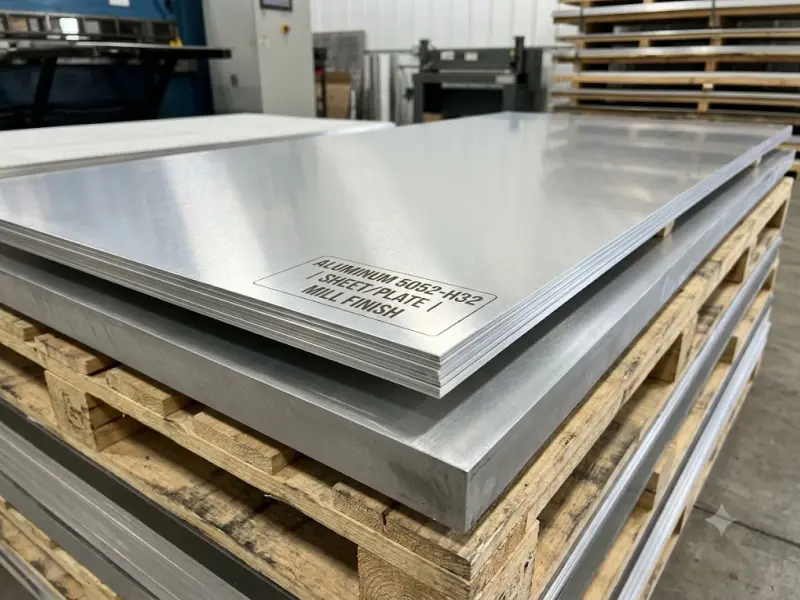
5052 is an aluminium-magnesium alloy known for good corrosion resistance and useful strength. It has often selected for fabricated equipment, panels, enclosures, and components exposed to moisture.
A 20mm 5052 aluminium plate may be suitable for:
- Industrial equipment bases and mounting parts
- Marine-related components
- Storage and transport equipment
- Machine covers and fabricated parts
- Corrosion-resistant equipment components
Common tempers include O, H32, and H34 for relevant product forms. The available temper for a 20mm plate must be confirmed with the supplier.
5052 is a useful option when corrosion resistance and fabrication are important. For higher-strength structural machining, 5083, 6061, or another alloy may be more suitable.
5083 Aluminium Plate
5083 aluminium plate has widely used in marine and heavy-duty fabricated applications. It contains magnesium and offers good corrosion resistance, including in many marine environments.
Potential applications for 20mm 5083 plate include:
- Marine equipment and vessel components
- Offshore equipment parts
- Transport structures
- Industrial machinery components
- Welded assemblies
- Corrosion-resistant base plates
Common plate tempers include H111, H116, and H321, depending on the product and specification.
5083 has often chosen for its combination of strength, weldability, and corrosion resistance. It is not a heat-treatable alloy, so its properties are achieved through alloy composition and processing rather than a T6 heat-treatment condition.
6061 Aluminium Plate
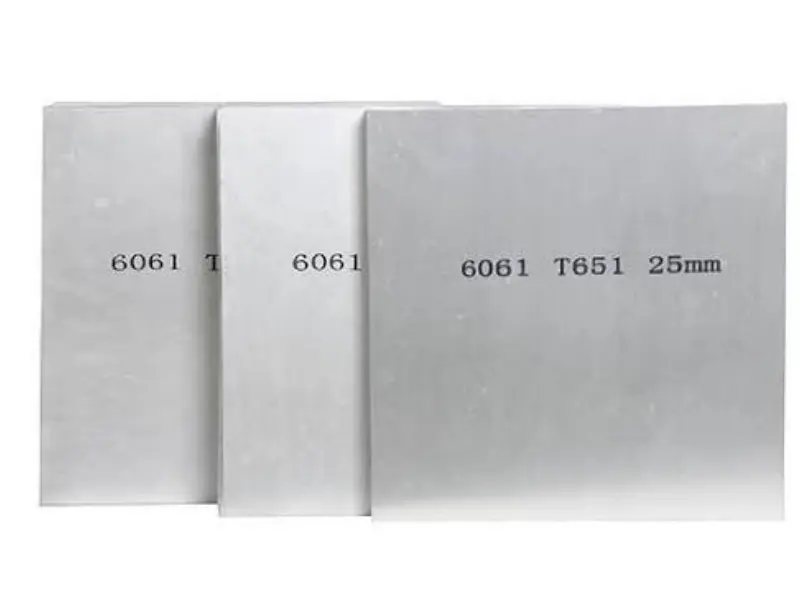
6061 is a heat-treatable aluminium-magnesium-silicon alloy. It is popular for machined parts because it offers a useful balance of strength, corrosion resistance, and machinability.
A 20mm 6061 aluminium plate can be used for:
- CNC-machined components
- Machine bases and fixtures
- Mounting plates
- Industrial brackets
- Equipment frames and supports
- Precision engineering parts
Common tempers include T6 and T651. T651 generally involves stress relief by stretching after solution heat treatment and artificial ageing. It has often selected for plate machining because residual stress can affect dimensional stability during material removal.
For precision components, ask about plate flatness, thickness tolerance, and stress-relief condition.
6082 Aluminium Plate
6082 is a medium-strength structural alloy commonly used in many markets, particularly in Europe. It offers good strength, corrosion resistance, and machining performance.
A 20mm 6082 plate may be used for:
- Structural machine components
- Support plates
- Engineering fixtures
- Transport equipment
- Industrial frames
- Machined brackets and mounting parts
Common tempers include T6 and T651 where available. The exact properties depend on the product standard, thickness range, and supply condition.
When choosing between 6061 and 6082, compare the required mechanical properties, applicable standards, availability, and machining needs.
7075 Aluminium Plate
7075 is a high-strength aluminium-zinc alloy. It is often used where strength and low weight are major design priorities.
Potential applications include:
- High-strength machined components
- Aerospace-related parts where the specification permits
- Precision tooling components
- Performance equipment
- Special-purpose industrial parts
Common tempers include T6 and T651, subject to product availability.
7075 is not usually the first choice for welded structures because its welding characteristics are more challenging than those of many other aluminium alloys. Its corrosion performance and suitability for the operating environment must also be considered.
1050 and 1060 Aluminium Plate
1050 and 1060 are commercially pure aluminium grades. They offer high aluminium purity, good electrical and thermal conductivity, and good formability.
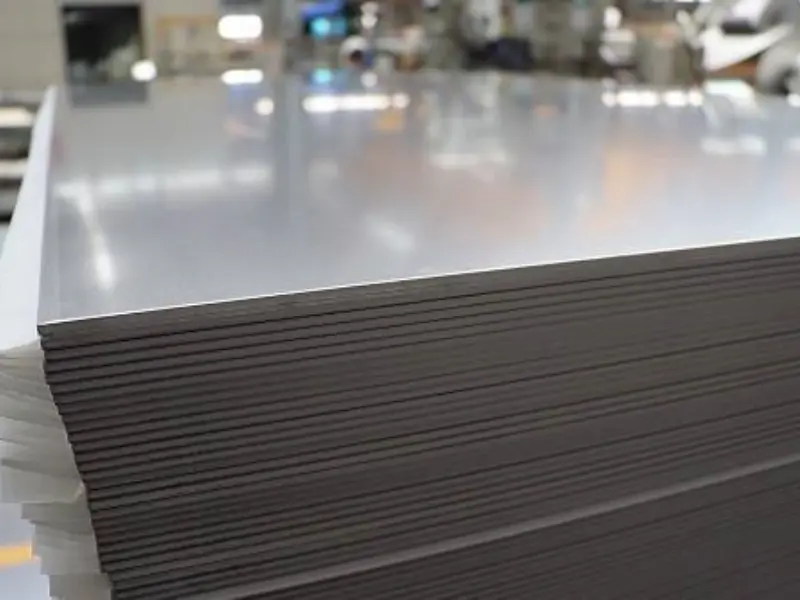
They have considered for selected electrical, thermal, chemical, and general industrial applications. However, their mechanical strength is much lower than that of 5083, 6061, or 7075.
For a 20mm plate, availability and intended use should be confirmed before selecting these grades. They are not ideal for every thick machined or load-bearing component.
Alloy Comparison Table
| Alloy | Main advantage | Typical application |
|---|---|---|
| 1050 | High purity and conductivity | Selected electrical and thermal parts |
| 1060 | Conductivity and corrosion resistance | Industrial and electrical components |
| 5052 | Corrosion resistance and formability | Fabricated equipment and marine-related parts |
| 5083 | Strength, weldability, marine corrosion resistance | Marine and welded structures |
| 6061 | Strength and machinability | CNC parts, fixtures, machine bases |
| 6082 | Structural strength and machinability | Engineering and transport components |
| 7075 | High strength | Precision and high-strength machined parts |
Aluminium Plate Tempers: What Should Buyers Know?
The temper indicates the material’s condition after processing. It affects mechanical properties, forming behaviour, and machining performance.
O Temper: Annealed Aluminium
O temper is an annealed condition. The material is generally softer and more ductile than hardened conditions.
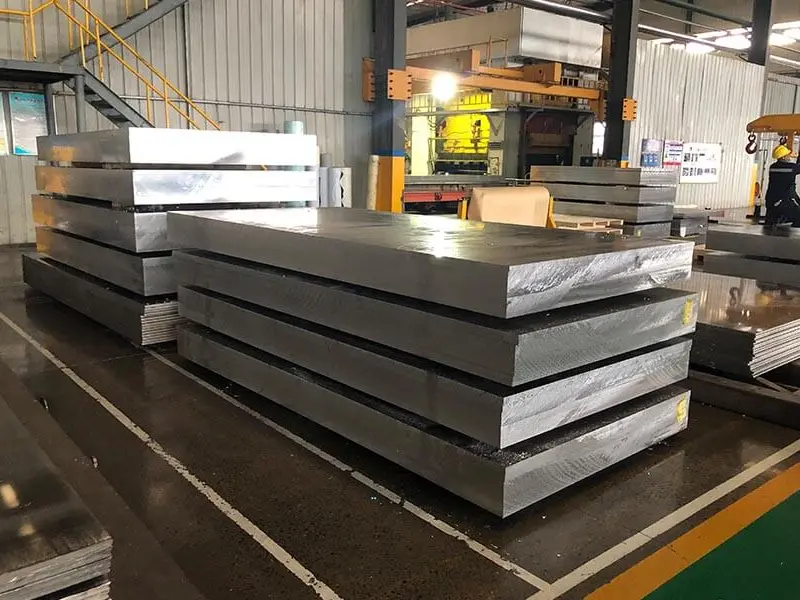
It may suit applications that require forming or higher ductility. However, it offers lower strength than many hardened tempers.
H111 and H112: Plate Conditions for Non-Heat-Treatable Alloys
H111 and H11 have applications for certain non-heat-treatable aluminium products. They have commonly associated with structural or general-purpose plate applications, depending on the alloy and applicable standard.
These conditions may be available for alloys such as 5083. Always check the supplier’s material certificate and specified mechanical properties.
H116 and H321: Marine-Related Plate Conditions
H116 and H321 have used for certain aluminium-magnesium alloy products where corrosion performance and mechanical properties are important.
They have commonly associated with specific marine plate requirements, particularly for 5xxx-series alloys. They should not be treated as interchangeable without checking the applicable specification.
For vessels or equipment operating in seawater, confirm the alloy, temper, corrosion requirements, and relevant marine standards.
T6 Temper: Heat-Treated Aluminium
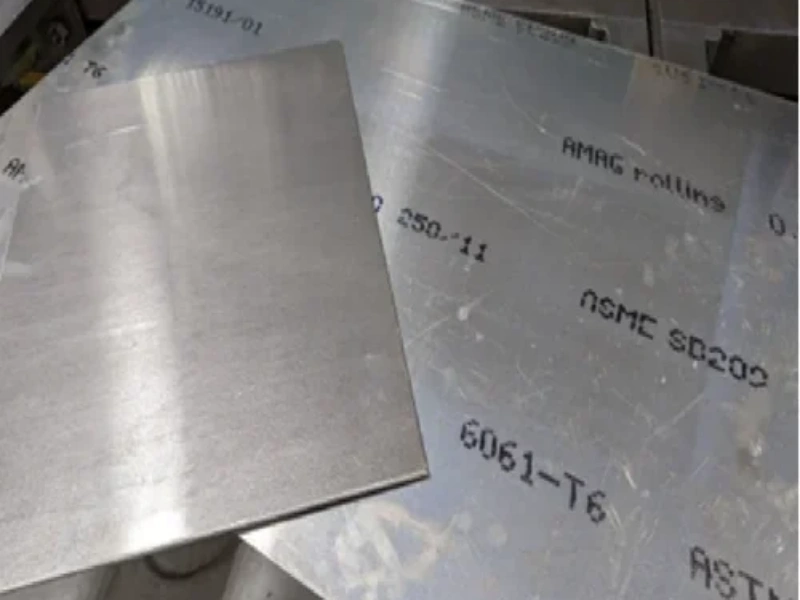
T6 indicates solution heat treatment followed by artificial ageing. It has applications with heat-treatable alloys such as 6061, 6082, and 7075 where applicable.
T6 plate has often selected when higher strength is required. However, machining large amounts of material can release residual stress and cause distortion.
T651 Temper: Stress-Relieved Plate
T651 typically includes stress relief by stretching after heat treatment and artificial ageing. It is often used for aluminium plate intended for machining.
For CNC components, 6061-T651 or a suitable 7075-T651 product may be worth evaluating. The final choice depends on strength, corrosion conditions, tolerances, and the amount of material to be removed.
Different Types of 20mm Aluminium Plate
A 20mm aluminium plate has supplied in several forms depending on the production process and intended application.
Standard Mill-Finish Aluminium Plate
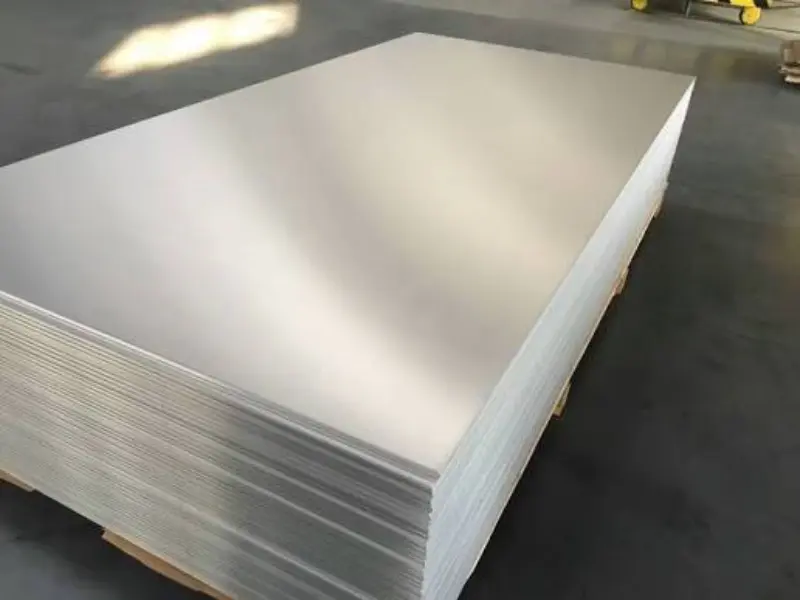
Mill-finish plate has supplied with a standard rolled surface. It is suitable for many industrial applications where the material will be machined, cut, drilled, or used without a decorative finish.
Common uses include machine parts, brackets, mounting plates, and industrial components.
Precision Aluminium Plate
Precision plate has produced or processed to meet specified requirements for thickness, flatness, and dimensional consistency.
It can be useful for tooling, fixtures, inspection equipment, and CNC machining. Buyers should request the actual tolerance values rather than relying only on the word “precision.”
CNC-Machined Aluminium Plate
A 20mm plate has machined into a component with holes, slots, pockets, threads, or shaped edges.
Common applications include equipment mounting plates, machine fixtures, automation components, and custom engineering parts.
When requesting machined plate, provide a technical drawing, material specification, tolerance requirements, and surface-finish details.
Cut-to-Size Aluminium Plate
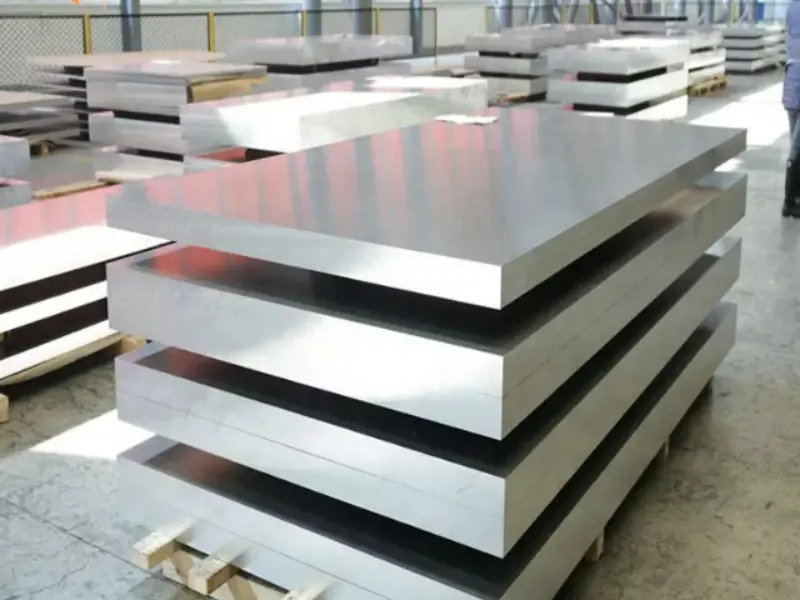
Cut-to-size plate has supplied in the dimensions required by the customer. It reduces the need for additional cutting and may reduce material waste.
Buyers can specify the finished length, width, thickness, quantity, and cutting tolerance. Depending on the supplier, saw cutting, waterjet cutting, or CNC machining may be available.
Anodized or Surface-Treated Aluminium Plate
Some aluminium plates can receive surface treatments after machining or fabrication. Anodizing may improve surface hardness and provide a decorative finish on suitable alloys.
However, anodizing is not equally suitable for every alloy or every thick-plate application. Colour uniformity, dimensions, and surface requirements have reviewed before ordering.
Applications of 20mm Aluminium Plate
The 20mm thickness is useful for parts that require a substantial amount of material while maintaining a lower weight than many steel alternatives.
CNC Machining and Precision Engineering
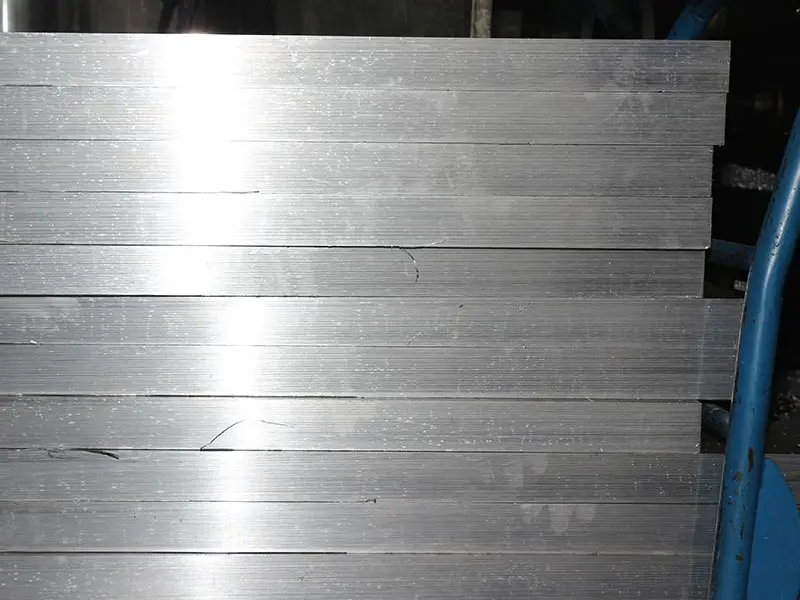
Aluminium plate has widely used as a starting material for machined components.
- Machine fixtures and locating plates
- CNC-machined brackets
- Mounting plates and support blocks
- Precision equipment components
- Inspection and testing fixtures
- Custom industrial parts
6061-T651 and 6082-T6 are common candidates for suitable machining applications. The final choice should account for strength, flatness, stress relief, and the required dimensional tolerance.
Marine and Shipbuilding Applications
Marine applications often require a combination of strength, corrosion resistance, and weldability.
- Marine equipment supports
- Vessel components
- Deck equipment parts
- Offshore equipment components
- Welded marine assemblies
- Corrosion-resistant structural parts
5083 is frequently considered for marine plate applications. The specific alloy and temper must meet the vessel design and relevant marine requirements.
Industrial Machinery and Equipment

A 20mm aluminium plate can provide a solid base for selected machines and equipment.
- Machine base plates
- Equipment mounting surfaces
- Structural brackets
- Automation system components
- Machinery support plates
- Industrial housings and frames
The plate dimensions and support arrangement are important. For large machine bases, flatness and vibration requirements may influence the material selection and machining process.
Transport and Vehicle Manufacturing
Aluminium plate can reduce component weight in transport-related products.
- Vehicle equipment mounting plates
- Trailer equipment components
- Transport machinery parts
- Storage system supports
- Special-purpose vehicle components
- Lightweight fabricated structures
For road vehicles and trailers, the plate must meet the required impact, fatigue, joining, and structural performance criteria. Not every aluminium alloy is suitable for every vehicle component.
Construction and Structural Engineering
Aluminium plate has uses in selected structural and architectural components.
- Connection plates
- Equipment support plates
- Structural brackets
- Mounting bases
- Architectural machinery supports
- Custom fabricated components
Structural applications require calculations based on the actual alloy properties, geometry, loads, and local design standards. Aluminium plate should not be selected based on thickness alone.
Moulds, Tooling, and Manufacturing Fixtures
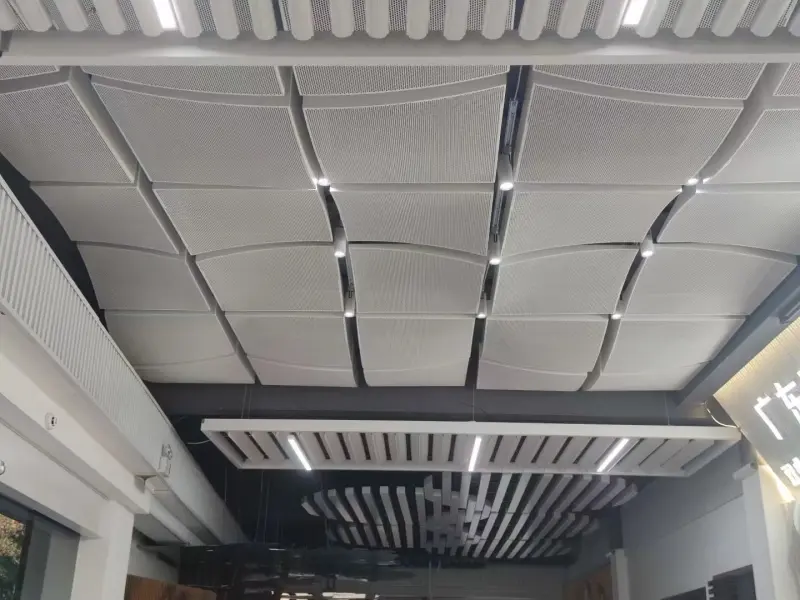
Some aluminium alloys have applications in tooling and fixture applications because they are relatively easy to machine and have lower density than steel.
- Prototype tooling plates
- Assembly fixtures
- Inspection fixtures
- Production jigs
- Machine tooling components
- Selected mould-base components
For mould applications, confirm thermal behaviour, wear requirements, dimensional stability, and the required surface finish. Aluminium is not a universal replacement for tool steel.
Electrical and Thermal Equipment
Aluminium’s electrical and thermal conductivity can be useful in selected equipment designs.
- Electrical mounting plates
- Heat-transfer components
- Equipment panels
- Thermal management parts
- Industrial electrical supports
The alloy must meet the required conductivity and mechanical properties. If the component carries electrical current or performs a safety-critical thermal function, verify the design requirements before choosing the material.
Weight of 20mm Aluminium Plate
Weight affects material cost, lifting, packaging, transport, and installation. A theoretical calculation helps buyers estimate these requirements before requesting a quotation.
For a preliminary estimate, aluminium density has taken as approximately 2,700 kg/m³. Actual density varies slightly by alloy.
Estimated weight per square metre = 0.020 m × 2,700 kg/m³ = 54 kg/m²
This estimate applies to a flat plate without additional machining or packaging.
Weight by Plate Size
| Plate dimensions | Area | Estimated weight |
|---|---|---|
| 500 × 1000 mm | 0.50 m² | 27 kg |
| 1000 × 1000 mm | 1.00 m² | 54 kg |
| 1000 × 2000 mm | 2.00 m² | 108 kg |
| 1220 × 2440 mm | 2.98 m² | 160.8 kg |
| 1250 × 2500 mm | 3.13 m² | 168.8 kg |
| 1500 × 3000 mm | 4.50 m² | 243 kg |
| 2000 × 4000 mm | 8.00 m² | 432 kg |
Values are theoretical estimates based on a density of 2,700 kg/m³. The actual weight depends on the alloy, dimensions, and tolerances.
How to Calculate Aluminium Plate Weight
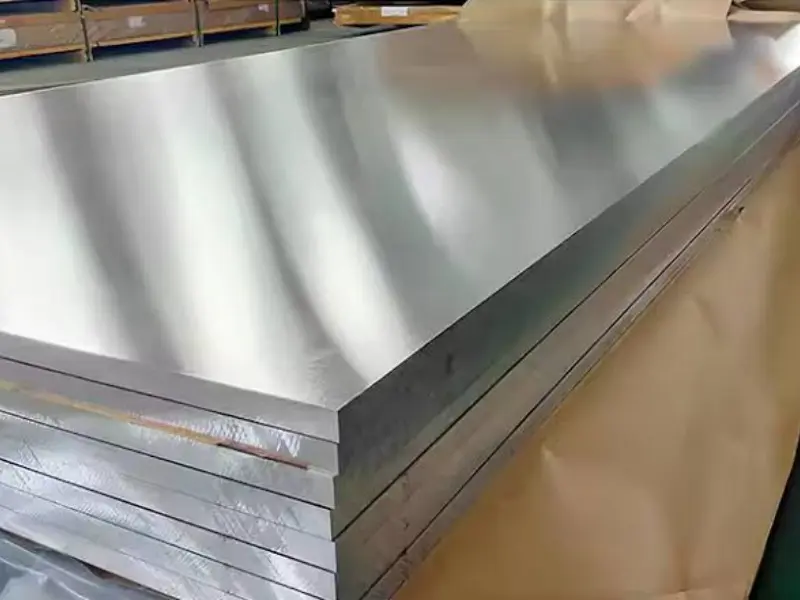
Use the following formula for a rectangular plate:
Weight (kg) = Length (m) × Width (m) × Thickness (m) × Density (kg/m³)
For example, a plate measuring 2000 × 1000 × 20 mm has a volume of 0.04 m³.
0.04 m³ × 2,700 kg/m³ = approximately 108 kg.
For commercial orders, use the supplier’s confirmed dimensions and weight information. Cut-outs, machining, and non-rectangular shapes can change the finished component weight.
20mm Aluminium Plate Compared with Other Thicknesses
The correct thickness depends on the required stiffness, component size, load, and machining allowance. A thicker plate uses more material and weighs more, but it may also provide more rigidity.
| Thickness | Approximate weight per m² | Potential applications |
|---|---|---|
| 10 mm | 27 kg | General machined parts and support plates |
| 12 mm | 32.4 kg | Equipment components and fixtures |
| 15 mm | 40.5 kg | Machine parts and mounting plates |
| 20 mm | 54 kg | Thicker machined components and industrial bases |
| 25 mm | 67.5 kg | Heavy-duty machining and structural parts |
| 30 mm | 81 kg | Thick machine components and special engineering parts |
| 40 mm | 108 kg | Large blocks and demanding machining applications |
Weights are estimates using a density of 2,700 kg/m³.
10mm vs. 20mm Aluminium Plate
A 10mm plate weighs about half as much as a 20mm plate with the same surface area. It may be sufficient for lighter components or designs with adequate support.
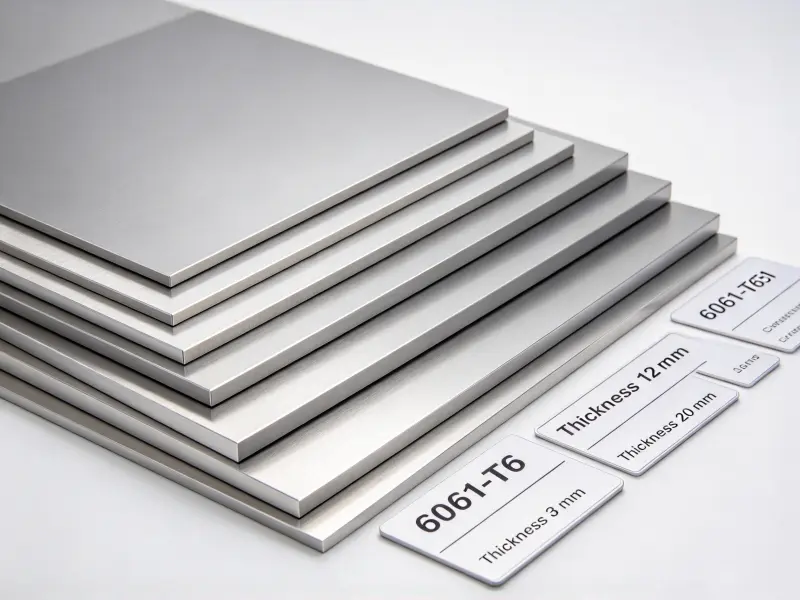
A 20mm plate provides more material for deep pockets, threaded holes, thicker mounting areas, and other machined features. The required thickness should be based on the component design and load calculations.
15mm vs. 20mm Aluminium Plate
A 15mm plate weighs approximately 40.5 kg/m², compared with 54 kg/m² for a 20mm plate.
Choose 15mm if it meets the strength, stiffness, and machining requirements. Consider 20mm when the design requires additional material depth or rigidity. Increasing thickness without a clear engineering need may add unnecessary cost and weight.
20mm vs. 25mm Aluminium Plate
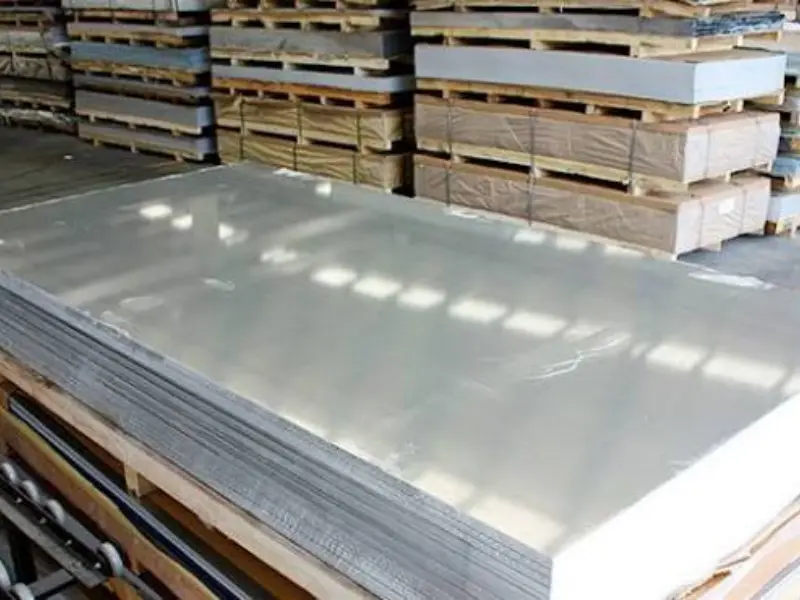
A 25mm plate weighs about 25% more than a 20mm plate of the same area. It can provide additional material for machining and may improve stiffness in some designs.
However, actual stiffness and strength depend on the alloy, component geometry, support conditions, and loading. Compare the complete design before selecting the thicker option.
Aluminium Plate vs. Steel Plate
Aluminium and steel have different advantages. The right choice depends on weight, strength, corrosion conditions, machining, and cost.
| Feature | Aluminium plate | Steel plate |
|---|---|---|
| Density | Approx. 2,700 kg/m³ | Approx. 7,850 kg/m³ for typical steel |
| Weight at equal volume | Lower | Higher |
| Corrosion behaviour | Natural oxide layer; alloy dependent | Depends on grade and protection |
| Thermal conductivity | Generally higher | Generally lower |
| Magnetic properties | Generally non-magnetic | Most common steels are magnetic |
| Machining | Often efficient with suitable tooling | Depends on steel grade and process |
| Relative material cost | Depends on alloy and market | Depends on grade and market |
Aluminium is much lighter than steel for the same volume, but it does not automatically provide the same strength or stiffness. A direct substitution requires engineering review.
6061 Aluminium Plate vs. Mild Steel Plate
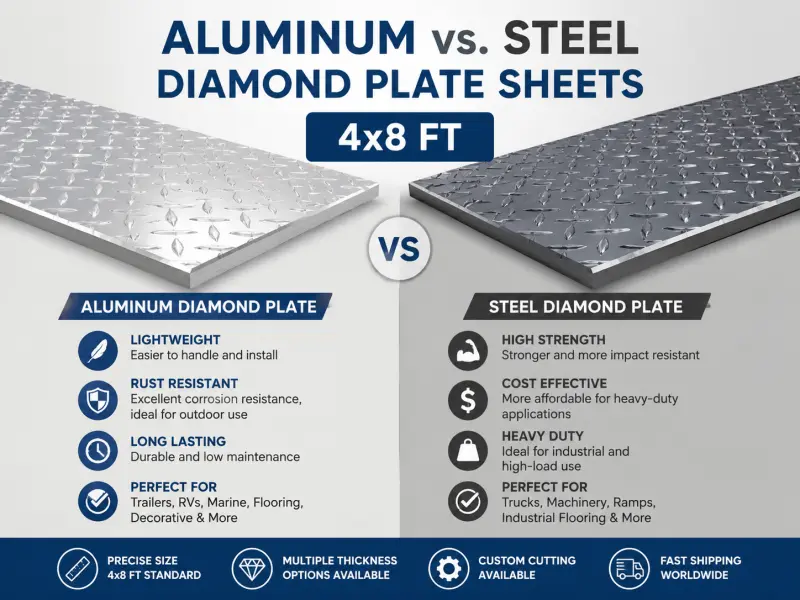
6061 aluminium plate has often considered for machined parts where low weight and good machinability are important. Mild steel may be more economical and can offer different stiffness and strength characteristics.
For a machine base or mounting plate, compare the required load capacity, deflection, vibration, corrosion protection, and total manufacturing cost. The correct material depends on the full component design.
5083 Aluminium Plate vs. Steel Plate for Marine Use
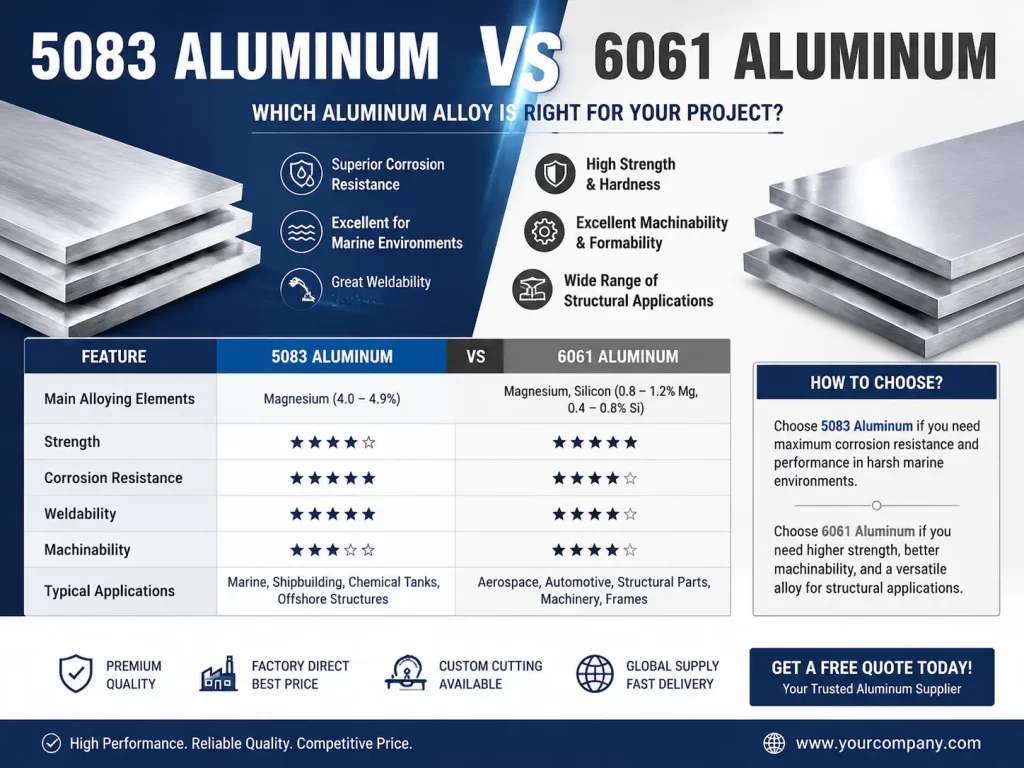
5083 aluminium plate has commonly used in marine-related applications because of its corrosion resistance and suitability for welded fabrication. Steel has selected for other reasons, including strength, availability, cost, or design requirements.
The choice should consider seawater exposure, maintenance, welding, fatigue, and the applicable marine standards.
Cutting and Machining Options for 20mm Aluminium Plate
Thick aluminium plate has supplied in a basic flat form or processed into finished blanks and components.
Saw Cutting
Saw cutting has often used to produce rectangular blanks and straight edges. It is suitable for many standard cut-to-size orders.
Confirm the cutting tolerance, edge condition, and whether the final dimensions include a machining allowance.
CNC Milling and Drilling
CNC machining can create pockets, holes, slots, threads, and complex profiles. It is useful for precision parts and repeated production.
Provide a drawing with dimensions, tolerances, surface-finish requirements, and any critical features. For large material removal, stress-relieved plate may help reduce distortion, although the result also depends on machining strategy and component geometry.
Waterjet Cutting
Waterjet cutting can produce complex shapes without the same heat input associated with some thermal cutting processes. It may be suitable for custom plate blanks and shaped components.
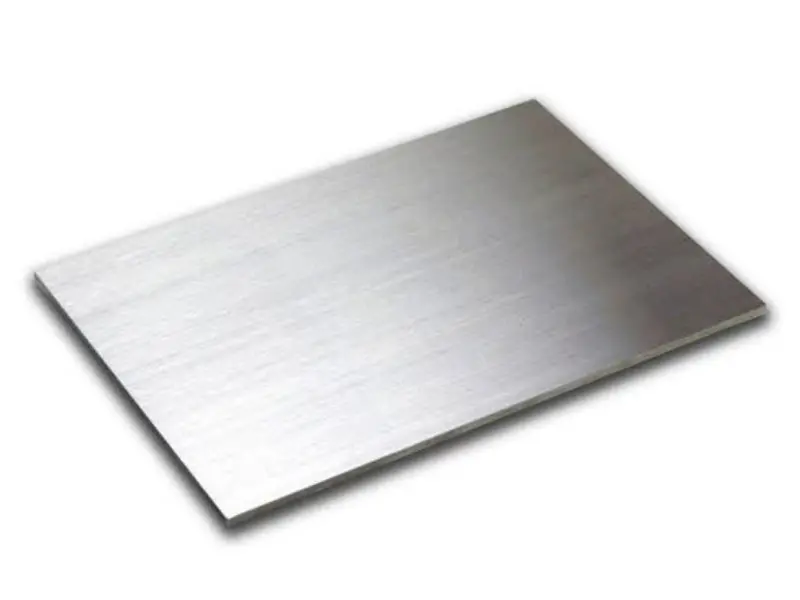
The finished edge and dimensional tolerance depend on the equipment, material, thickness, and cutting parameters. Confirm whether secondary machining is required.
What Affects the Price of 20mm Aluminium Plate?
The price of 20mm aluminium plate depends on more than thickness. Alloy, temper, dimensions, quantity, processing, and delivery terms can all affect the final quotation.
| Cost factor | How it can affect the quotation |
|---|---|
| Alloy | Different alloy compositions and supply conditions have different costs |
| Temper | Heat treatment and stress relief may affect cost |
| Dimensions | Larger or non-standard sizes may require special production |
| Quantity | Larger orders may improve production efficiency |
| Cutting | Custom dimensions can add processing charges |
| Machining | CNC work increases processing time and cost |
| Inspection | Special tests or documents may add cost |
| Packaging | Export cases and special protection may affect the total |
| Shipping | Weight, destination, and transport method affect delivery cost |
Prices change with raw material markets and supplier conditions. Request a current quotation based on the full specification rather than relying on a generic price per kilogram.
How to Order 20mm Aluminium Plate
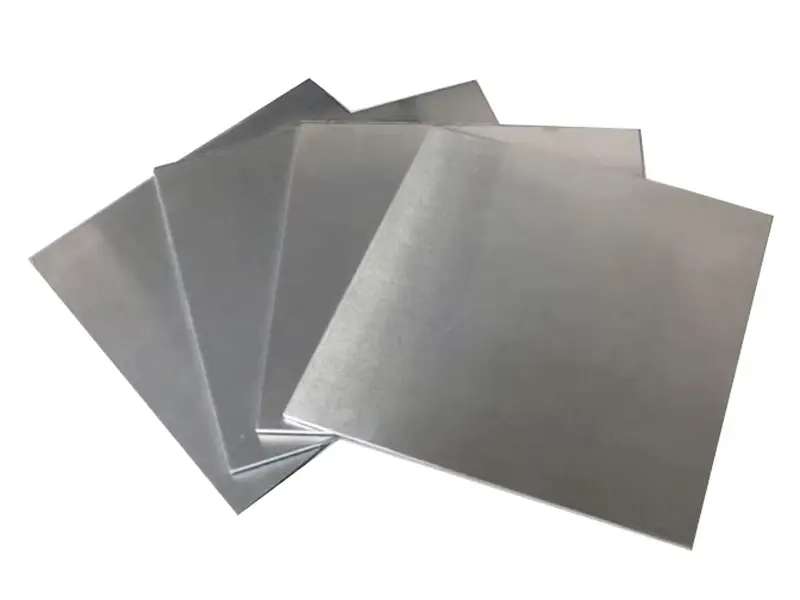
A clear purchase specification helps the supplier confirm the correct material and provide a useful quotation.
Information to Include in Your Inquiry
- Alloy: For example, 5083, 6061, 6082, or 7075
- Temper: For example, H111, H321, T6, or T651, where available
- Thickness: 20 mm
- Width and length: Standard or custom dimensions
- Quantity: Number of plates or total weight
- Processing: Saw cutting, milling, drilling, or CNC machining
- Tolerance: Thickness, flatness, and finished dimensions
- Documents: Material test certificate or inspection report, if required
- Destination: Delivery address or destination port
- Packaging: Pallets, protective wrapping, or export cases
Questions to Ask Your Supplier
Before confirming an order, ask the supplier to verify:
- Is the requested alloy and temper available in 20mm plate?
- What dimensional and flatness tolerances can be provided?
- Is the material suitable for the intended machining process?
- Can the supplier provide material certificates?
- What is the minimum order quantity?
- What are the production lead time and shipping options?
Clear communication can reduce specification errors and help prevent delays.
Frequently Asked Questions About 20mm Aluminium Plate
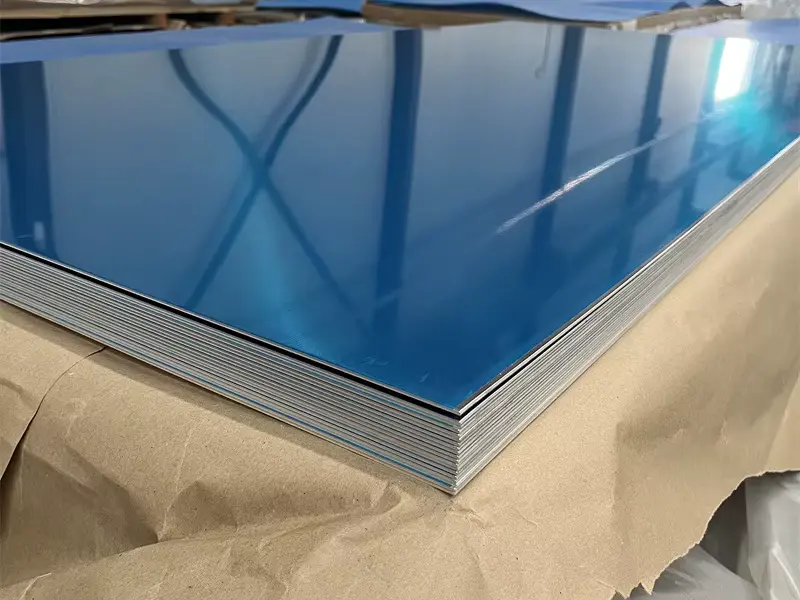
How Thick Is 20mm Aluminium Plate in Inches?
A 20mm aluminium plate is approximately 0.7874 inches thick. When ordering, specify the nominal thickness in millimetres and confirm the permitted tolerance.
How Much Does 20mm Aluminium Plate Weigh Per Square Metre?
Using an estimated density of 2,700 kg/m³, 20mm aluminium plate weighs approximately 54 kg per square metre. The actual weight varies slightly according to the alloy and dimensions.
Which Alloy Is Best for 20mm Aluminium Plate?
There is no single best alloy for every application. 5083 has often considered for marine and welded components. 6061 and 6082 are common options for machining and engineering parts. 7075 may be suitable for high-strength applications. The final selection depends on the design and service conditions.
Is 20mm Aluminium Plate Suitable for CNC Machining?
Yes. Many 20mm aluminium plates can be CNC machined. Alloy, temper, flatness, residual stress, and machining allowance affect the final result. Stress-relieved plate may be useful for precision components.
Is 20mm 6061 Aluminium Plate Strong?

6061 aluminium plate offers a useful combination of strength, corrosion resistance, and machinability. Its actual strength depends on the temper and applicable product specification. Confirm the mechanical properties before using it in a load-bearing component.
Is 5083 Aluminium Plate Suitable for Marine Applications?
5083 has applications in marine-related applications because of its corrosion resistance and suitability for welded fabrication. The correct temper and product specification depend on the environment and design requirements.
Can 20mm Aluminium Plate Be Welded?
Many aluminium alloys have welded using suitable procedures, but weldability differs by alloy. 5083 has commonly used in welded marine structures. Some high-strength alloys, such as 7075, are generally less suitable for conventional fusion welding. Confirm the welding procedure and joint design before production.
Can I Order 20mm Aluminium Plate Cut to Size?
Many suppliers offer cut-to-size aluminium plate. Provide the required dimensions, alloy, temper, quantity, tolerance, and edge requirements. Custom cutting may affect the quotation and delivery time.
What Is the Difference Between 20mm Aluminium Sheet and Plate?

The term plate has generally used for thicker flat-rolled aluminium products, while sheet usually refers to thinner products. Terminology varies by market and standard. A 20mm product has commonly sold as aluminium plate, but the exact product classification should be confirmed with the supplier.
How Do I Get a Price for 20mm Aluminium Plate?
Provide the alloy, temper, dimensions, quantity, required processing, inspection documents, and delivery destination. The supplier can then quote the material and any additional services. A complete specification is more useful than asking for a price based on thickness alone.
Request a Quote for 20mm Aluminium Plate
Looking for 20mm aluminium plate for CNC machining, marine equipment, industrial machinery, transport components, or engineering projects?
Choose the required alloy, temper, dimensions, and quantity. If you need custom cutting or machining, provide a technical drawing and tolerance requirements.
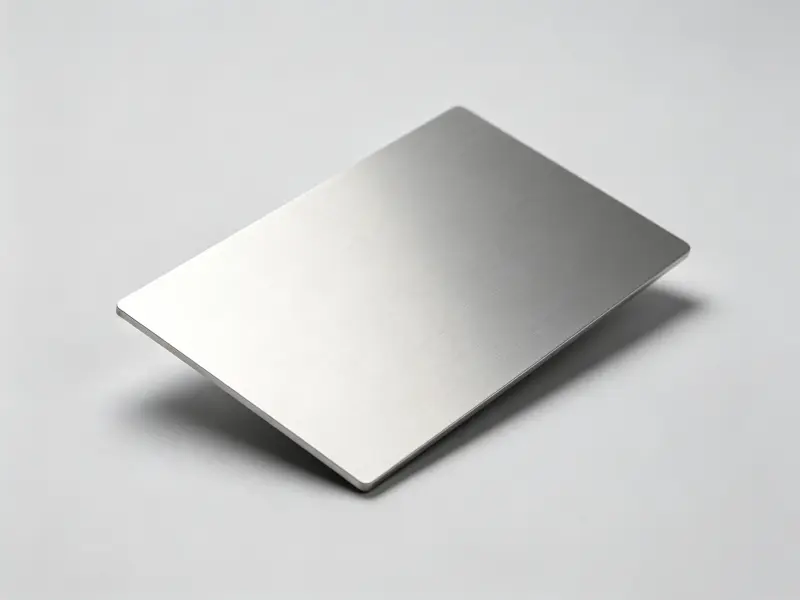
Ask for current availability, material specifications, inspection documents, packaging details, and delivery options before placing an order.
Send your 20mm aluminium plate requirements to request a product recommendation and quotation.
Error: Contact form not found.