Why Trailer Builders Pick 4×8 Aluminum Sheets
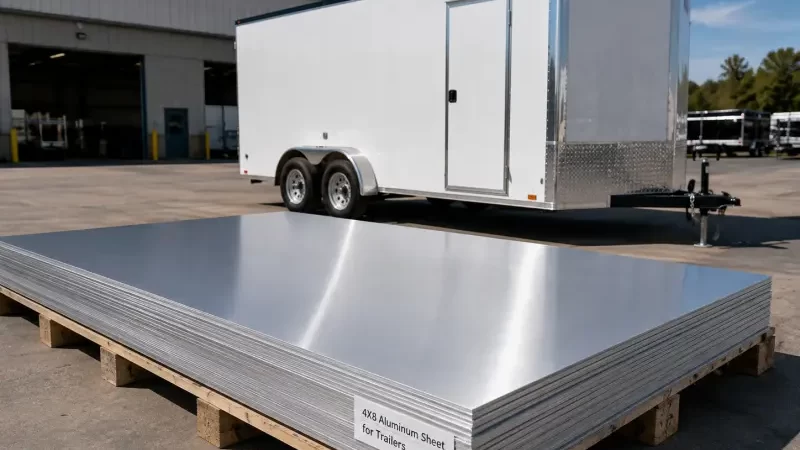
A 4×8 aluminum sheet for trailers covers a lot of ground fast. One sheet spans four feet by eight feet.
That matches the wall height and length of many cargo trailers, horse trailers, and utility boxes. You get fewer seams. For you get faster install times. You get a clean look that holds up to road grime and weather.
Aluminum does not rust.
That matters when you drive through rain, snow, and salt. It also weighs far less than steel. Less weight on the trailer frame means more payload capacity. For hot shot drivers and mobile businesses, every pound counts.
What Does “4×8” Actually Mean for Your Build
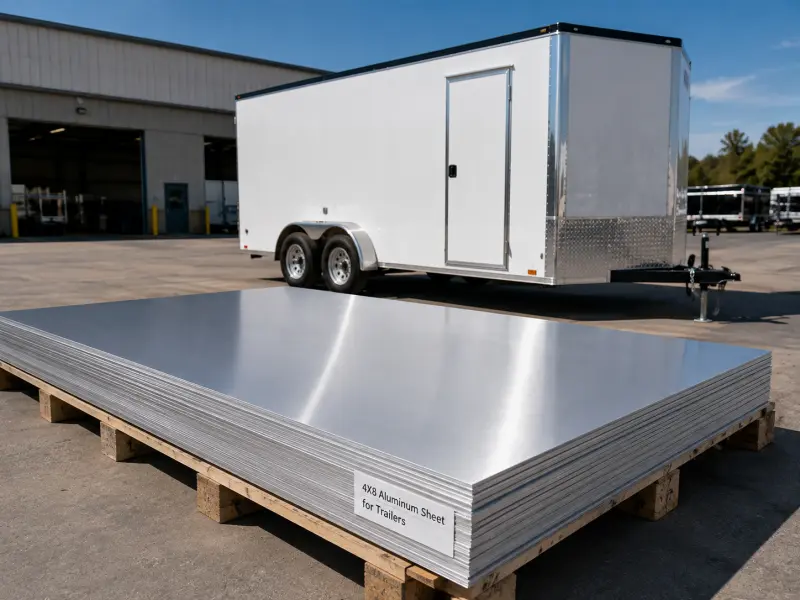
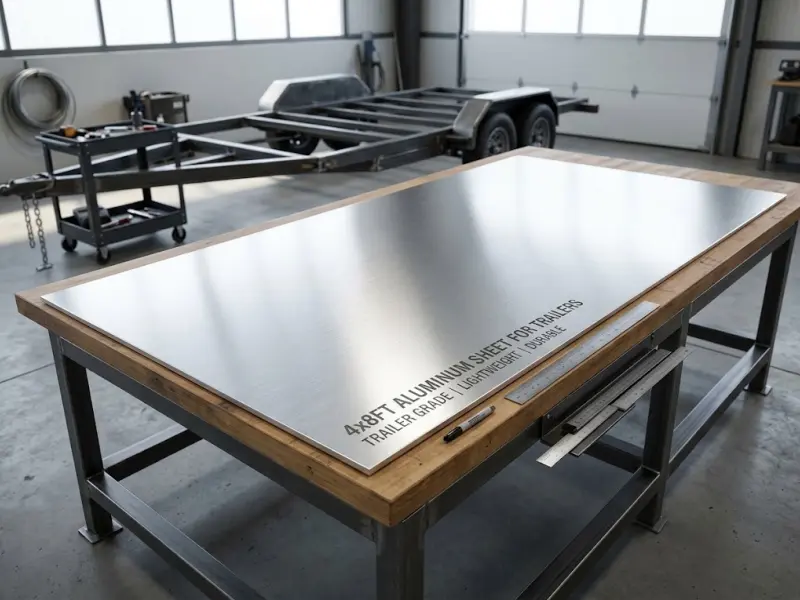
The term 4×8 refers to the sheet dimensions in feet. That equals 48 inches by 96 inches. In metric, that is roughly 1,219 mm by 2,438 mm. This size fits most trailer side walls with minimal cutting. It also stacks well on standard pallets for shipping.
| Measurement | Imperial | Metric |
|---|---|---|
| Width | 4 feet | 48 inches / 1,219 mm |
| Length | 8 feet | 96 inches / 2,438 mm |
| Common square footage per sheet | 32 sq ft | ~2.97 m² |
Some suppliers also stock 4×10 or 5×10 sheets. But 4×8 remains the industry standard because it balances coverage with easy handling.
Breaking Down 0.032 Aluminum Sheet for Trailer Projects
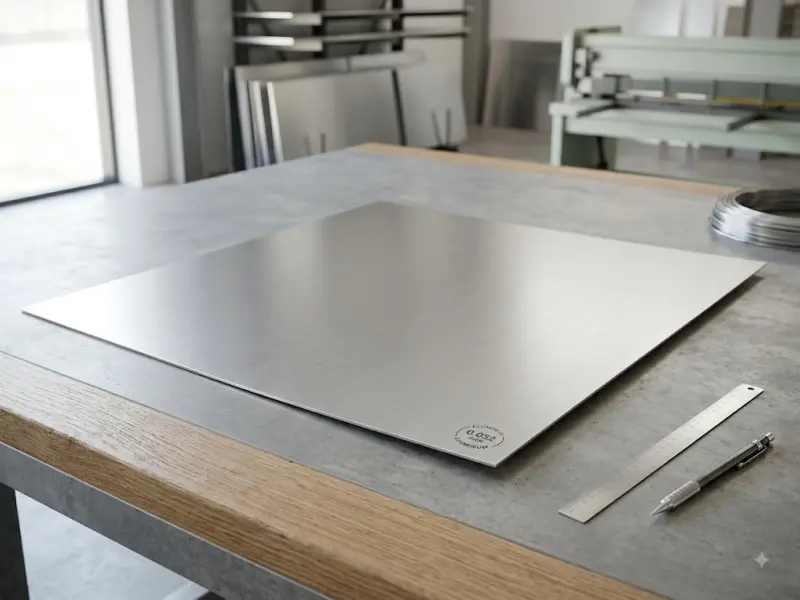
The 0.032 aluminum sheet is a workhorse in the trailer world. That thickness equals 0.032 inches, or about 0.81 millimeters. It is light enough for one person to lift and position. It is thick enough to hold its shape on straight wall panels.
Most enclosed trailers use 0.032 for side skins and roof sheets. It handles highway speeds without fluttering.
It takes rivets and screws without tearing. However, it is not the best choice for floors or ramp doors. Those areas need thicker metal to survive impact and abrasion.
| Property | 0.032 Inch Value |
|---|---|
| Thickness | 0.032 in / 0.81 mm |
| Approximate weight (3003 alloy) | ~0.87 kg/m² |
| Typical temper | H24, H14 |
| Best use | Side walls, roof skins, interior liners |
| Avoid use | Floors, ramp skins, heavy impact zones |
If you are skinning a 7-foot tall cargo trailer, two vertical 4×8 sheets stacked will give you 8 feet of coverage with one seam. That saves labor and reduces leak points.
Alloy Families Used in Trailer Construction
Not all aluminum is the same. The alloy number tells you what other metals are mixed in. For trailers, three families dominate the market.
1000 Series: Pure Aluminum
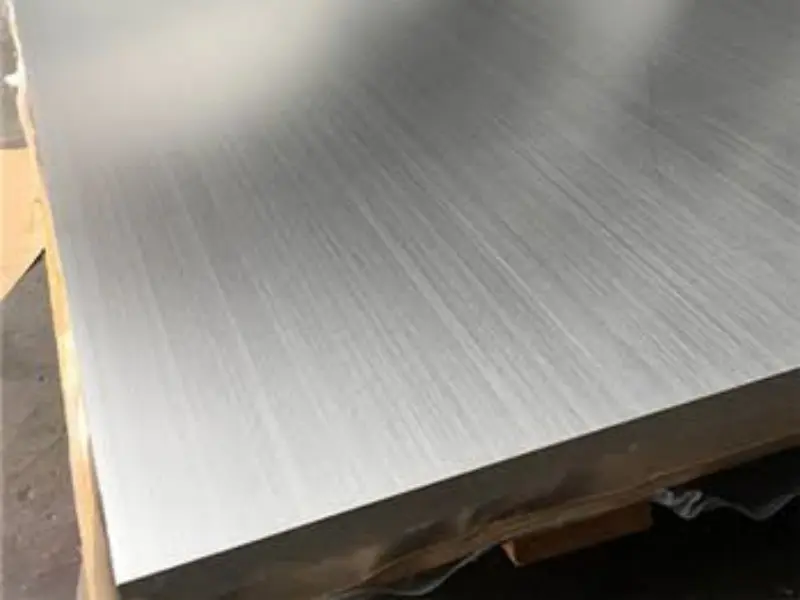
These grades are almost pure aluminum. They bend easily. They resist corrosion well. But they are soft. A stray rock can dent them.
| Grade | Purity | Strength | Best Trailer Use |
|---|---|---|---|
| 1100 | 99% Al | Low | Interior trim, decorative panels |
| 1050 | 99.5% Al | Very low | Non-structural liners |
3000 Series: Aluminum-Manganese
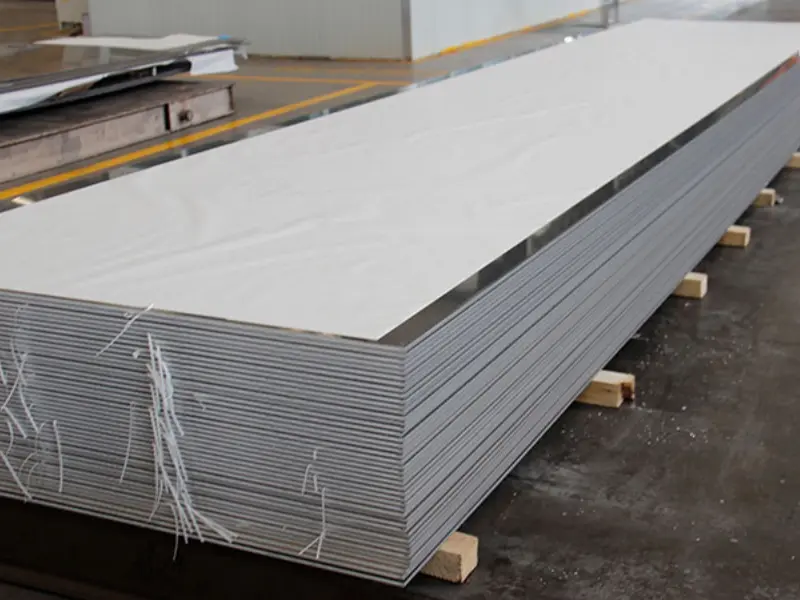
This is the most common choice for trailer skins. Manganese adds strength without making the sheet hard to form. It welds decently. It handles road salt better than pure aluminum.
| Grade | Key Element | Strength | Best Trailer Use |
|---|---|---|---|
| 3003 | Manganese | Medium | Side skins, roof sheets, fenders |
| 3004 | Manganese | Medium-High | Structural trim, reinforced corners |
| 3105 | Manganese | Medium | Painted finishes, pre-coated skins |
5000 Series: Aluminum-Magnesium
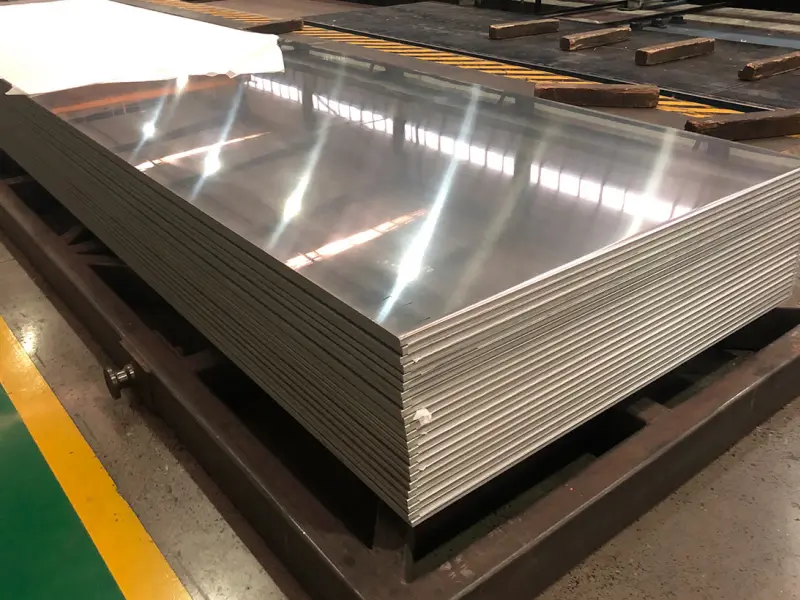
Magnesium makes the metal tougher. These alloys stand up to salt spray and heavy vibration. They cost more but last longer on boat trailers and coastal rigs.
| Grade | Key Element | Strength | Best Trailer Use |
|---|---|---|---|
| 5005 | Magnesium | Medium | Exterior trim, marine trailers |
| 5052 | Magnesium | High | Floors, ramps, heavy-duty skins |
| 5083 | Magnesium | Very high | Structural frames, special builds |
Temper States That Matter on the Road
Temper tells you how the metal was treated after rolling. It affects how much you can bend the sheet before it cracks.
| Temper | Name | Bendability | Strength | Best Use on Trailers |
|---|---|---|---|---|
| O | Annealed (soft) | Excellent | Very low | Deep curves, custom shapes |
| H12 | Quarter hard | Good | Low | Light trim, easy bends |
| H14 | Half hard | Moderate | Medium | General skin panels |
| H16 | Three-quarter hard | Limited | Higher | Flat wall sections |
| H18 | Full hard | Very limited | Highest | Rigid panels, not for bending |
| H24 | Half hard, stabilized | Moderate | Medium-High | Most popular for 4×8 trailer skins |
For a standard 4×8 side wall, H24 is the sweet spot. You can roll it over a roof bow. You can bend a 90-degree corner on a brake. But it still feels stiff when you rivet it in place.
Thickness Comparison for Every Trailer Part
One size does not fit all. The floor needs more muscle than the ceiling.
| Thickness | Inches | Millimeters | Best Trailer Location | Why |
|---|---|---|---|---|
| 0.025 | 0.025″ | 0.64 mm | Interior liners, ceiling skins | Very light, cheap, hides framing |
| 0.032 | 0.032″ | 0.81 mm | Side walls, roof skins | Industry standard, good balance |
| 0.040 | 0.040″ | 1.02 mm | Lower walls, high-wear sides | Better dent resistance |
| 0.050 | 0.050″ | 1.27 mm | Ramp doors, tail sections | Survives cargo impact |
| 0.063 | 0.063″ | 1.60 mm | Floors, wheel well boxes | Heavy duty, rigid |
| 0.080 | 0.080″ | 2.03 mm | Structural floors, custom ramps | Maximum impact protection |
| 0.125 | 1/8″ | 3.18 mm | Frame cross members, special builds | Structural grade |
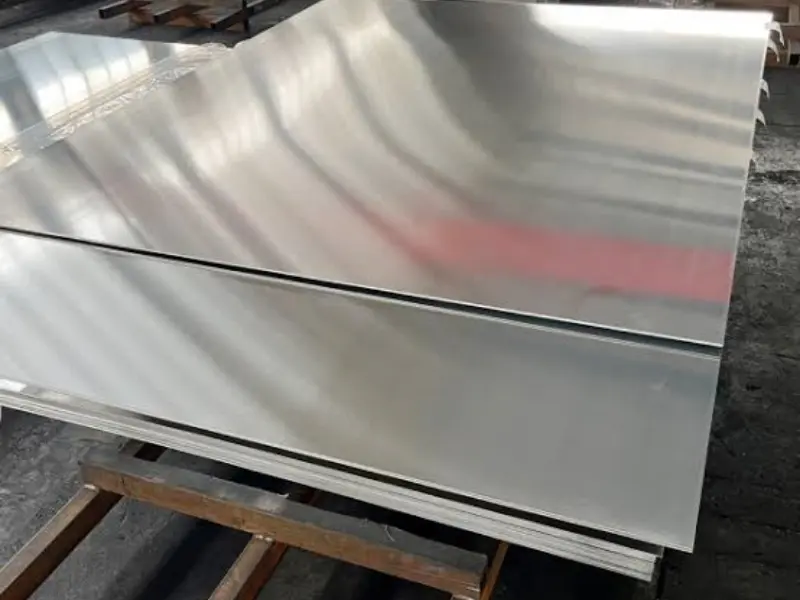
If you are building a basic enclosed cargo trailer, order 0.032 for the walls and roof. Step up to 0.050 or 0.063 for the ramp. Your back will thank you for the lighter walls, and your ramp will survive moving dollies and pallet jacks.
Sheet Types Beyond Plain Flat Stock
You can buy more than just smooth rectangles. Suppliers offer several edge and surface styles.
Mill Finish Sheets
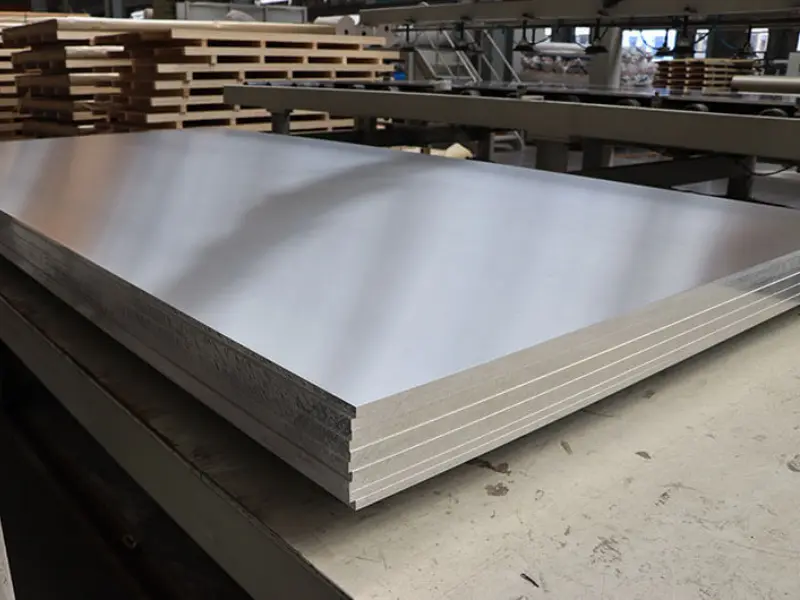
These come straight from the roll. They have a natural silver look. For they are the cheapest option. They oxidize slightly over time, forming a dull gray patina.
Pre-Painted White Sheets

These arrive with a baked white coating. They brighten the trailer interior. They save you from painting after install.
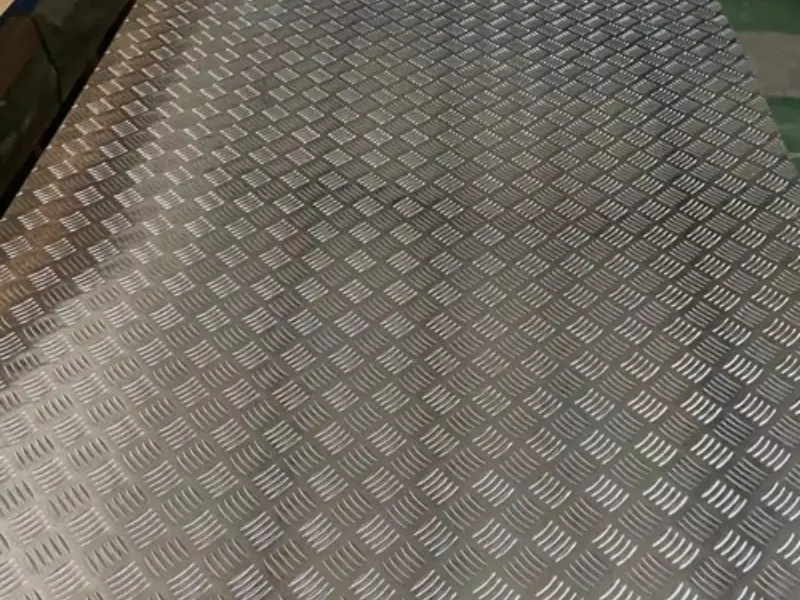
Embossed Diamond Plate
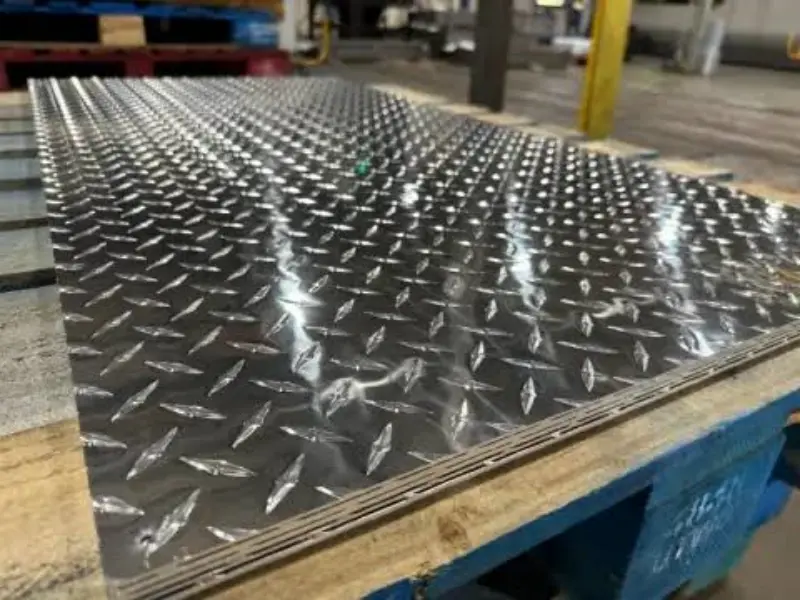
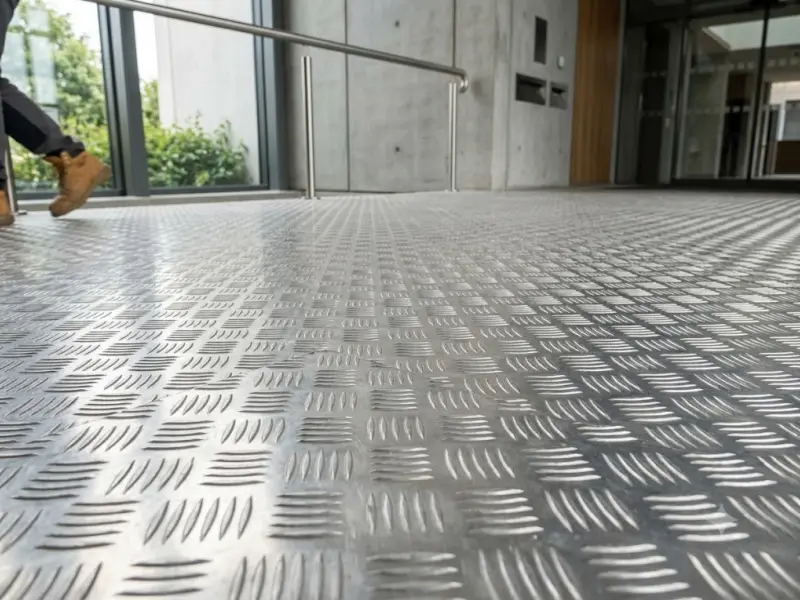
This has a raised diamond pattern. It hides scratches and dents. It adds grip on ramps and floors.
Stucco Embossed Sheets
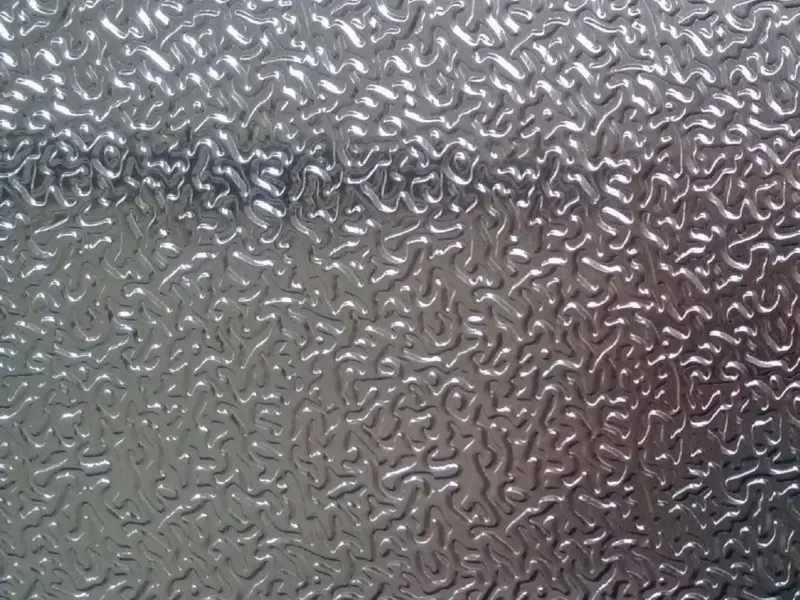
These have a textured, pebbled surface. The texture adds strength and hides minor damage. It is common on exterior skins.
| Sheet Type | Surface Look | Best Use | Cost Level |
|---|---|---|---|
| Mill finish | Smooth silver | Hidden areas, painted projects | Low |
| White painted | Smooth white | Interior walls, food trailers | Medium |
| Diamond plate | Raised diamonds | Floors, ramps, tool boxes | Higher |
| Stucco embossed | Pebbled texture | Exterior skins, fenders | Medium |
Side-by-Side: Aluminum vs Steel for Trailer Skin
Many first-time builders ask if they should use steel instead. Here is the honest breakdown.
| Factor | 4×8 Aluminum Sheet | Steel Sheet |
|---|---|---|
| Weight per sq ft (0.032″) | ~0.27 lbs | ~0.85 lbs |
| Rust resistance | Excellent | Poor (needs paint/galvanizing) |
| Dent resistance | Moderate | High |
| Ease of cutting | Easy with shear or saw | Harder, needs more power |
| Welding | Easy with MIG or TIG | Easy with MIG |
| Cost per sheet | Higher | Lower |
| Lifespan in salt | Long | Short without protection |
| Resale value of trailer | Higher | Lower |
| Magnetic | No | Yes |
Steel wins on raw toughness and price. Aluminum wins on weight, corrosion resistance, and long-term value. For a trailer that sees rain and salt, aluminum pays for itself.
Weight Savings You Can Count
Switching from steel to aluminum skin saves real weight. Here is what that looks like on a typical 20-foot enclosed trailer.
| Part | Steel Skin Est. Weight | Aluminum Skin Est. Weight | Savings |
|---|---|---|---|
| Side walls (both sides) | 340 lbs | 108 lbs | 232 lbs |
| Roof | 170 lbs | 54 lbs | 116 lbs |
| Rear door | 85 lbs | 27 lbs | 58 lbs |
| Total skin weight | 595 lbs | 189 lbs | 406 lbs |
That 400-pound savings equals two extra ATVs, three dirt bikes, or a pallet of cargo. For hot shotters, that is more paying freight per load.
Cutting and Forming Basics
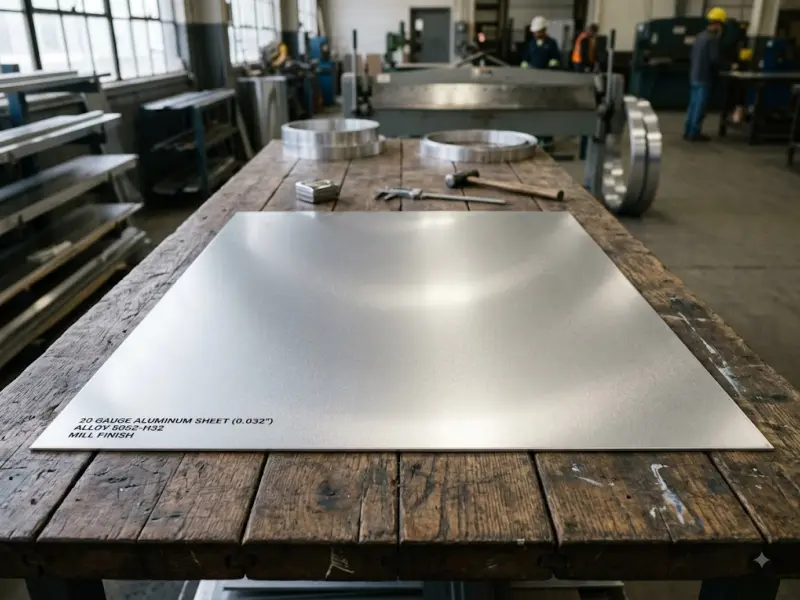
You do not need a machine shop to work with a 4×8 aluminum sheet for trailers.
Cutting Tools
- Circular saw with a fine-tooth carbide blade. Tape the cut line to reduce burrs.
- Jigsaw for curves and wheel well cutouts.
- Nibbler for tight notches around frames.
- Shear for straight factory-like cuts.
Bending Tools
- Brake press for clean 90-degree corners.
- Rubber mallet and 2×4 for gentle curves over a roof bow.
- Hand seamer for small hemmed edges.
Always wear gloves. The edges are sharp. Deburr every cut with a file or sandpaper.
How to Calculate Material Needs
Before you order, do the math. Running short delays the build. Ordering too much wastes money.
Step-by-Step Calculation
Measure each wall section in square feet. Add 10% for waste and mistakes. Divide by 32 (the square footage of one 4×8 sheet).
| Trailer Section | Height × Length | Square Feet | Sheets Needed (with 10% waste) |
|---|---|---|---|
| Left wall | 7 ft × 20 ft | 140 sq ft | 4.8 → 5 sheets |
| Right wall | 7 ft × 20 ft | 140 sq ft | 4.8 → 5 sheets |
| Front wall | 7 ft × 8 ft | 56 sq ft | 1.9 → 2 sheets |
| Roof | 8 ft × 20 ft | 160 sq ft | 5.5 → 6 sheets |
| Rear door | 7 ft × 8 ft | 56 sq ft | 1.9 → 2 sheets |
| Total | 552 sq ft | 20 sheets |
Round up every time. It is better to have one spare sheet than to pay for freight twice.
Aluminum behaves differently as the thermometer moves. Plan your build for the weather.
Seasonal Performance in Hot and Cold Climates
Summer Heat
Aluminum expands in heat. A 4×8 sheet can grow by 1/8 inch or more on a hot day. Leave a small gap at panel edges. Do not rivet sheets tight against each other.
Winter Cold
Aluminum gets stiffer in freezing temperatures. A 0.032 sheet is less forgiving if you try to bend it at 20°F. Warm the metal indoors before forming in winter.
Road Salt
Salt is the enemy of every trailer. Aluminum handles it better than steel. But magnesium-alloy sheets (5000 series) handle it best. Rinse the undercarriage and lower walls after winter drives.
Installation Checklist Before You Start
Print this list. Check off each step. It saves rework.
| Step | Task | Status |
|---|---|---|
| ☐ | Verify sheet count and alloy grade on delivery | |
| ☐ | Inspect sheets for scratches or shipping damage | |
| ☐ | Lay out sheets in order to minimize seams | |
| ☐ | Mark cut lines with a permanent marker | |
| ☐ | Deburr all cut edges | |
| ☐ | Apply butyl tape or sealant behind every overlap | |
| ☐ | Pre-drill holes to prevent sheet walking | |
| ☐ | Use aluminum or stainless fasteners only | |
| ☐ | Leave 1/8 inch gap at panel ends for expansion | |
| ☐ | Seal all roof penetrations with compatible caulk |
Sustainability and Recyclability
Old trailer skins do not need to hit the landfill. Aluminum is 100% recyclable. Scrap yards pay for clean aluminum off-cuts. A 0.032 sheet from alloy 3003 can be melted and remade into new sheet, cans, or car parts.
The recycling process uses only 5% of the energy needed to make new aluminum from ore. If you are building a green fleet or marketing eco-friendly transport, aluminum skin is a selling point.
Common Pitfalls When Ordering Sheets
Mistakes cost time and money. Here are the errors we see most often.
Ordering steel-grade thickness. A 0.032 aluminum sheet is not as rigid as 0.032 steel. Do not assume they behave the same.
Forgetting the direction of grain. Aluminum sheets have a grain direction from rolling. Bending across the grain can crack the sheet. Always bend parallel to the grain when possible.
Mixing alloys on the same trailer. 3003 and 5052 weld differently. They also expand at slightly different rates. Stick to one alloy for the skin.
Skipping the sealant. Overlapping two 4×8 sheets without tape or caulk creates a capillary gap. Water will wick in and rot the wood frame.
Using magnetic tools. Aluminum is not magnetic. Your magnetic drill guides and angle squares will not stick. Use clamps and jigs instead.
Quick Reference: Pick the Right Sheet in 60 Seconds
Use this table when you are not sure what to order.
| If Your Project Is… | Choose This Alloy | Choose This Thickness | Choose This Temper |
|---|---|---|---|
| Basic cargo trailer walls | 3003 | 0.032″ | H24 |
| Food truck interior | 3003 | 0.040″ | H24 |
| Boat trailer near ocean | 5052 | 0.050″ | H32 |
| Horse trailer roof | 3003 | 0.032″ | H24 |
| Heavy equipment hauler | 5052 | 0.063″ | H32 |
| Custom curved teardrop camper | 3003 | 0.025″ | O (annealed) |
| Race trailer with graphics | 3003 | 0.040″ | H24 |
| Flatbed stake sides | 5052 | 0.125″ | H34 |
Maintenance Timeline for Aluminum Trailer Skin
Aluminum is low maintenance. But it is not no maintenance. Follow this schedule to keep it looking professional.
| Timeframe | Task | Why It Matters |
|---|---|---|
| Monthly | Rinse off road salt and mud | Prevents pitting on lower panels |
| Every 3 months | Check rivets and screws for looseness | Vibration backs out fasteners |
| Every 6 months | Wash with mild soap and water | Restores shine, removes grime |
| Every 12 months | Inspect seams and sealant | Catches leaks before they rot wood framing |
| Every 2 years | Polish mill finish panels if desired | Removes oxidation, brightens look |
| As needed | Touch up painted or coated panels | Stops corrosion at scratches |
Frequently Asked Questions
What is the best alloy for a standard enclosed trailer?
Alloy 3003 in H24 temper is the industry standard. It offers good strength, excellent corrosion resistance, and fair price. It forms well over roof bows and takes rivets cleanly. Unless you are building for marine or heavy impact use, 3003 will handle the job.
Is 0.032 aluminum thick enough for trailer walls?
Yes, for side walls and roofs on standard cargo trailers. It has been the go-to thickness for decades. It is not thick enough for floors or ramp doors. Those areas see pallets, gravel, and steel-toed boots. Step up to 0.050 or 0.063 for high-impact zones.
Can I weld 4×8 aluminum sheets to my trailer frame?
Yes, but use the right process. MIG welding with aluminum wire works for most shops. TIG welding gives cleaner results on thin 0.032 sheets. Never weld aluminum to steel directly. Use isolation bushings or bolted connections at steel-aluminum joints.
How much does a 4×8 sheet of 0.032 aluminum weigh?
A 4×8 sheet of 3003-H24 at 0.032 inches weighs roughly 28 pounds. That is about 0.87 pounds per square foot. Two people can lift and position it. One strong person can manage it alone in calm conditions.
Do I need to paint mill finish aluminum?
No, but you can. Mill finish forms its own protective oxide layer. It will dull to a gray color over time. If you want a bright white interior or custom graphics, order pre-painted sheets or apply paint after install. Self-etching primer works best on aluminum.
What is the difference between H24 and H14 temper?
Both are half-hard. H24 goes through a partial anneal after rolling. This makes it slightly more stable during bending. H14 is simply work-hardened. For trailer skins, H24 is more common because it resists cracking at corners and roof transitions.
Can I use 4×8 aluminum sheets on a steel trailer frame?
Yes. Most trailers do exactly this. The frame is steel for strength. The skin is aluminum for weight and rust resistance. Isolate the two metals with rubber or nylon washers. This prevents galvanic corrosion where they touch.
Should I buy pre-cut sheets or full 4×8 sheets?
Full 4×8 sheets cost less per square foot. They also give you flexibility for custom layouts. Pre-cut sheets save time if you have many identical windows or doors to cut around. For one-off custom builds, full sheets are usually the better deal.
Does aluminum trailer skin affect resale value?
Yes. Trailers with aluminum skin typically sell faster and for more money than steel-skinned trailers. Buyers know aluminum will not rust through. The higher upfront material cost returns when you sell or trade the trailer.
Where should I store aluminum sheets before installation?
Keep them flat and dry. Store indoors if possible. Moisture between stacked sheets can leave water stains. If you must store outside, cover the stack with a tarp but leave air space underneath. Do not lay sheets directly on dirt or grass.
4×8 aluminum sheet for trailers 3003-H24 in 0.032 inch
A 4×8 aluminum sheet for trailers is more than just a piece of metal. It is the skin that protects your cargo, the face that customers see, and the weight savings that pays for fuel. Choosing the right alloy, temper, and thickness keeps your build strong without adding unnecessary pounds.
For most enclosed and utility trailers, thickness hits the mark. It is light, workable, and proven on highways across every climate. Upgrade to 5052 for harsh marine duty. Go thicker for floors and ramps. Match the metal to the mission, and your trailer will outlast the road.