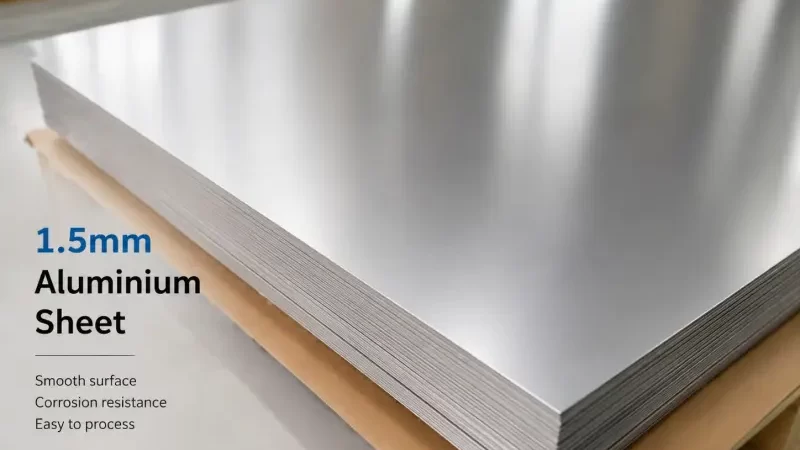
Why 1.5 mm Is a Popular Thickness Choice
A 1.5 mm aluminium sheet hits a sweet spot. It is thick enough to hold its shape under normal loads. It is thin enough to cut, bend, and carry without heavy tools. Many workshops and factories keep this size in stock because it handles a wide range of jobs.
At 1.5 mm, the sheet weighs about 4.1 kg per square meter. That is roughly one-third the weight of steel of the same size. This makes it easy to move on site and cheap to ship. Yet the metal still offers good strength for panels, covers, and light structural parts.
Builders, car restorers, sign makers, and marine engineers all reach for 1.5 mm aluminium sheet. The thickness works for walls, floors, vehicle panels, and decorative trim.
What Is a 1.5 mm Aluminium Sheet?
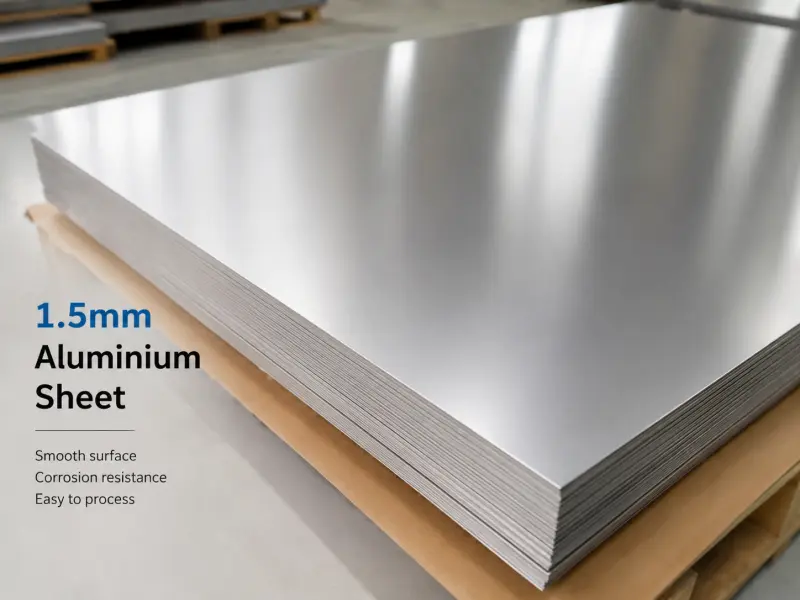
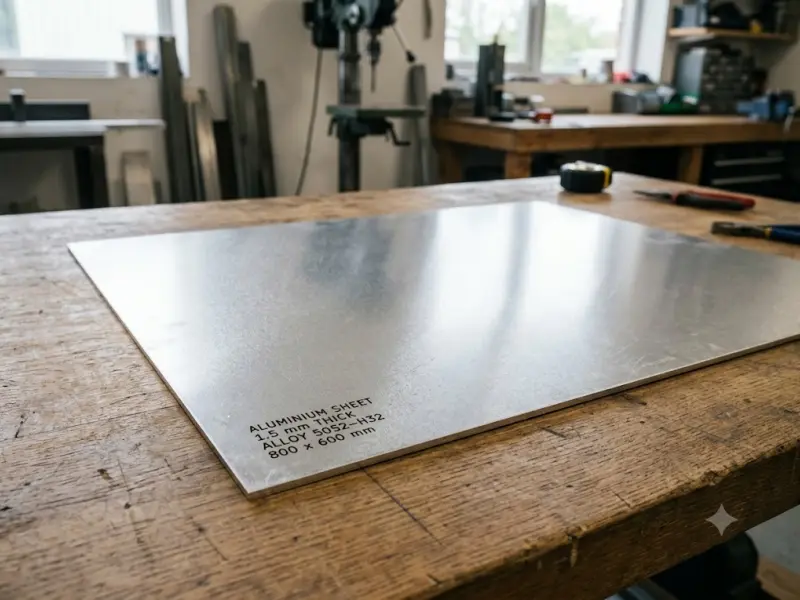
This is a flat-rolled aluminium product with a nominal thickness of 1.5 millimeters. It sits between thin foil and thick plate. In industry terms, it is still classified as sheet, not plate. Plate usually starts at 6 mm.
The sheet can be cut with standard workshop shears or a circular saw with a fine blade. It bends well in a press brake. It can be drilled, punched, and welded with common equipment. These traits make it a favorite for custom fabrication.
Most suppliers stock 1.5 mm sheet in standard widths of 1,000 mm, 1,200 mm, or 1,250 mm. Lengths often run 2,000 mm, 2,400 mm, or 3,000 mm. Cut-to-size service is widely available.
Alloy Types and How They Change the Sheet
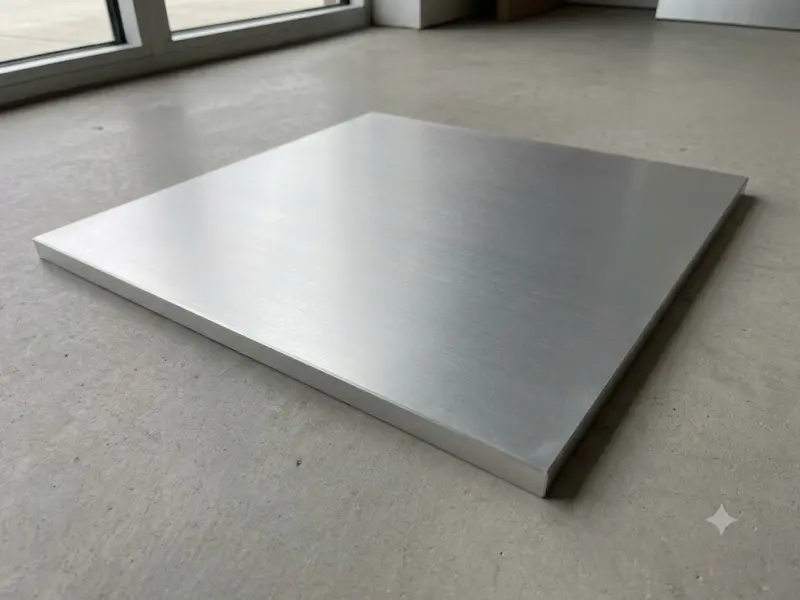
The alloy is the most important choice. It sets the strength, price, and where the sheet can be used.
1050 Alloy
This is almost pure aluminium. It contains at least 99.5% aluminium.
| Property | Value |
|---|---|
| Purity | ~99.5% Al |
| Temper | H14, H24, H18, O |
| Tensile strength | 105–145 MPa |
| Formability | Excellent |
| Weldability | Excellent |
| Cost | Low |
| Best use | Interior panels, reflectors, signs, electrical parts |
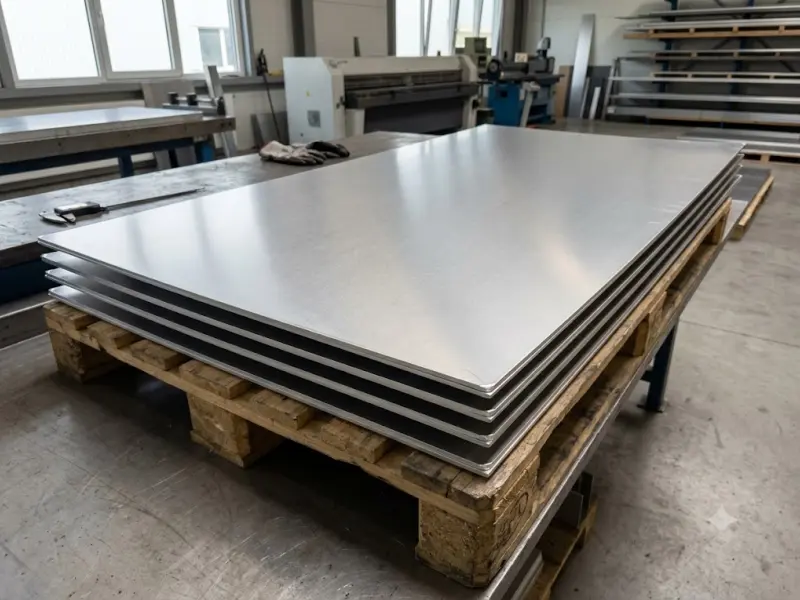
1050 is soft and easy to shape. It takes a mirror polish or anodized finish well. Do not use it for load-bearing outdoor structures. It is too soft for that.
1060 Alloy
A close cousin of 1050 with slightly higher purity.
| Property | Value |
|---|---|
| Purity | ~99.6% Al |
| Temper | H14, H24 |
| Surface | Very smooth |
| Cost | Low |
| Best use | Decorative panels, appliance skins, reflective trim |
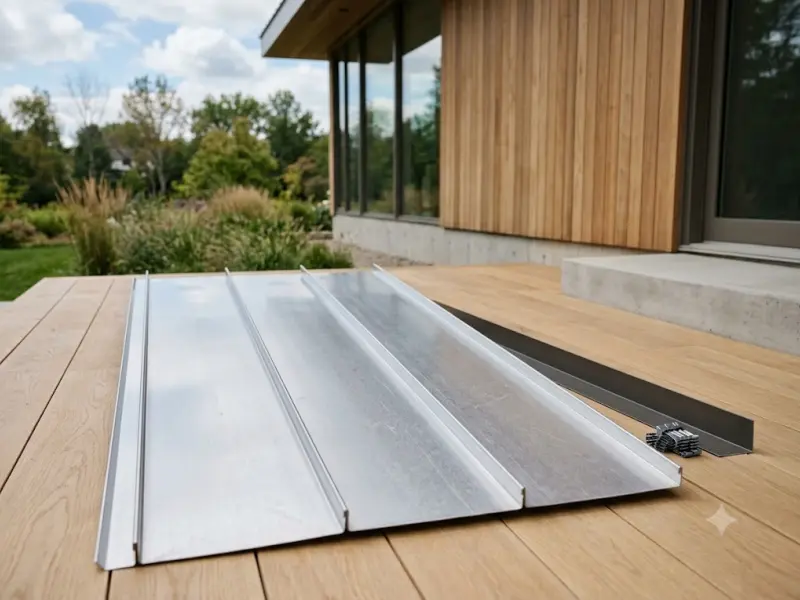
1060 is popular when the surface must look perfect. It is common in lighting fixtures and interior design.
1100 Alloy
The general-purpose pure aluminium grade.
| Property | Value |
|---|---|
| Purity | ~99.0% Al |
| Temper | H14, H24 |
| Corrosion resistance | Good |
| Weldability | Excellent |
| Best use | Chemical equipment, food handling, general sheet metal |
1100 is a safe, low-cost choice for indoor fabrication. It is slightly stronger than 1050 but still very workable.
3003 Alloy
This is the most common alloy for 1.5 mm aluminium sheet in construction. It adds manganese.
| Property | Value |
|---|---|
| Manganese | 1.0–1.5% |
| Temper | H14, H24, H22 |
| Tensile strength | ~140–180 MPa |
| Corrosion resistance | Good |
| Cost | Low to medium |
| Best use | Roofing, wall panels, fuel tanks, trailer siding |
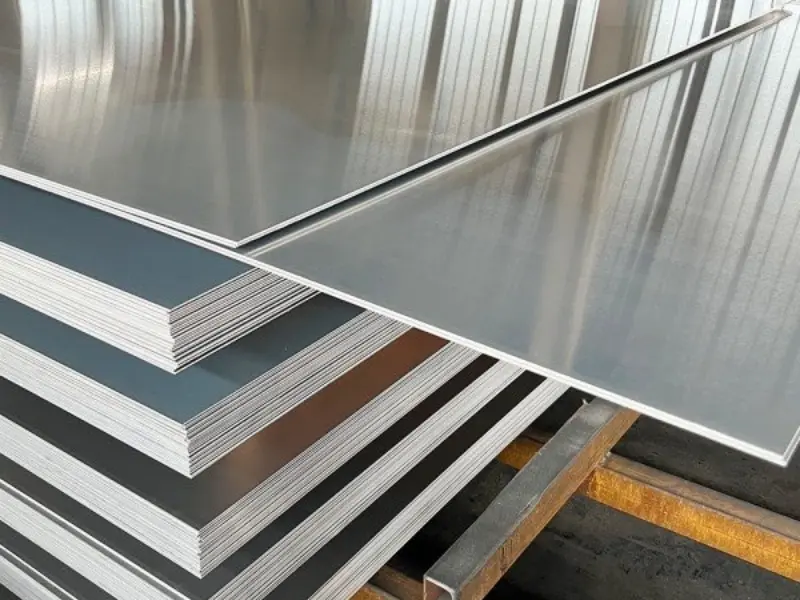
3003-H14 and 3003-H24 are the workhorses of the sheet metal world. They offer a good mix of strength and formability. They take paint and weld well.
5052 Alloy
This alloy contains magnesium. It steps up strength and salt resistance.
| Property | Value |
|---|---|
| Magnesium | 2.2–2.8% |
| Temper | H32, H34 |
| Tensile strength | 210–260 MPa |
| Corrosion resistance | Excellent |
| Cost | Medium |
| Best use | Marine parts, truck bodies, pressure vessels, heavy-duty panels |
5052 is the go-to alloy when the sheet faces rain, salt, or chemicals. It resists denting and fatigue better than 3003.
5251 Alloy
A medium-strength alloy with good ductility.
| Property | Value |
|---|---|
| Magnesium | 1.7–2.4% |
| Temper | H22, H24 |
| Tensile strength | 190–230 MPa |
| Best use | Marine structures, vehicle panels, furniture tubing, silos |
5251 sits between 3003 and 5052 in strength. It is a good pick when you need more strength than 3003 but want easier forming than 5052.
5754 Alloy
Another marine-grade option with higher magnesium.
| Property | Value |
|---|---|
| Magnesium | 2.6–3.6% |
| Temper | H111, H114, H22, H24 |
| Tensile strength | 190–260 MPa |
| Best use | Shipbuilding, fishing equipment, welded tanks, nuclear structures |
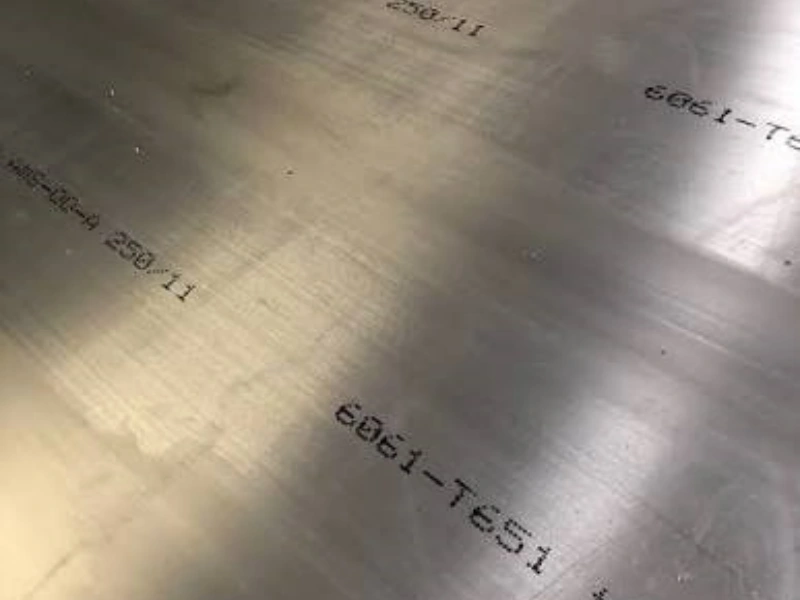
5754 is often used for tread plate. In 1.5 mm thickness, it works for floors and walkways that need extra grip.
6061 Alloy
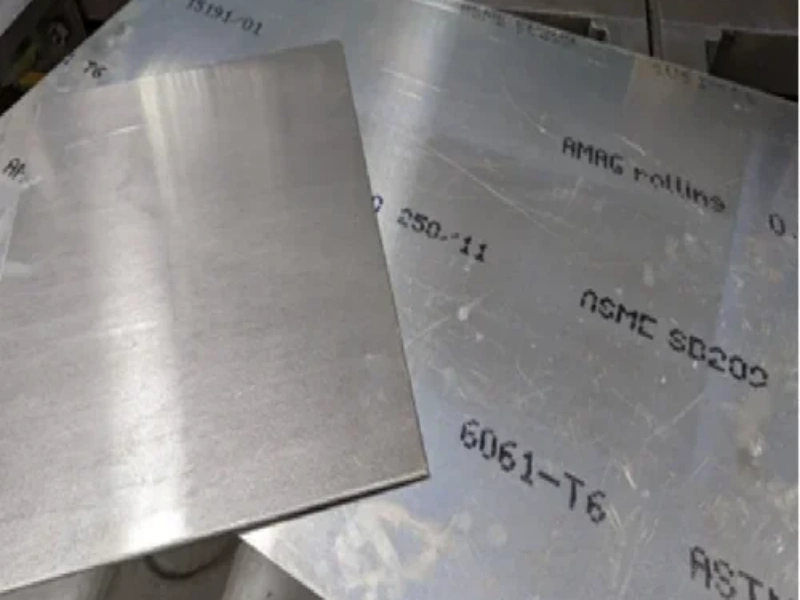
A heat-treated structural alloy. It is the strongest of the common grades.
| Property | Value |
|---|---|
| Temper | T6, T651 |
| Tensile strength | ~310 MPa |
| Machinability | Excellent |
| Formability | Lower than 3003/5052 |
| Best use | Structural framing, base plates, machine parts, automotive components |
6061-T6 is stiff and strong. It does not bend as easily as 3003. If you need tight bends, you may need to heat it or choose a softer alloy.
Alloy Comparison at a Glance
| Feature | 1050 | 3003 | 5052 | 5251 | 5754 | 6061 |
|---|---|---|---|---|---|---|
| Strength | Low | Medium | High | Medium-high | High | Very high |
| Formability | Excellent | Excellent | Good | Good | Good | Fair |
| Corrosion resistance | Good | Good | Excellent | Excellent | Excellent | Good |
| Weldability | Excellent | Excellent | Good | Good | Excellent | Good |
| Cost | $ | $$ | $$$ | $$$ | $$$ | $$$ |
| Best use | Signs, interiors | Roofing, general | Marine, trucks | Marine, vehicles | Tread plate, ships | Structure, machines |
Quick guide:
- Budget indoor jobs → 1050 or 1100
- General construction → 3003
- Marine or coastal → 5052, 5251, or 5754
- Structural load-bearing → 6061
Temper States and What They Mean
Temper tells you how hard the metal is. This affects bending, cutting, and final strength.
| Temper | Description | Hardness | Best For |
|---|---|---|---|
| O | Annealed, soft | Very low | Deep drawing, complex curves |
| H12 | Quarter hard | Low | Light forming |
| H14 | Half hard | Medium | General sheet work, roofing |
| H18 | Full hard | High | Rigid panels, minimal forming |
| H22 | Quarter hard, stabilized | Low-medium | Better flatness than H12 |
| H24 | Half hard, stabilized | Medium | Most popular for 1.5 mm sheet |
| H32 | Quarter hard, 5000 series | Medium | 5052 with good form |
| T6 | Heat-treated | Very high | 6061 structural parts |
For 1.5 mm aluminium sheet, H14 and H24 are the most common tempers. They bend well in a brake but still hold shape after installation.
1.5 mm vs. Other Thicknesses
Not every job needs 1.5 mm. Here is how this thickness compares.
| Thickness | Weight per m² | Rigidity | Typical use |
|---|---|---|---|
| 0.5 mm | ~1.35 kg | Low | Appliance skins, light trim |
| 0.8 mm | ~2.16 kg | Low-medium | Ceilings, shutters, signage |
| 1.0 mm | ~2.70 kg | Medium | General cladding, small panels |
| 1.2 mm | ~3.25 kg | Medium | Cabinet doors, vehicle trim |
| 1.5 mm | ~4.05 kg | Good | Wall panels, floors, vehicle repair |
| 2.0 mm | ~5.40 kg | Very good | Heavy panels, structural covers |
| 3.0 mm | ~8.10 kg | High | Platforms, tanks, load-bearing parts |
Why choose 1.5 mm?
- It is rigid enough for wall panels up to 1,200 mm wide without extra support.
- It can be screwed directly to a frame without sagging.
- It bends well for corners and edges.
- It costs less than 2.0 mm or 3.0 mm but offers most of the same benefits for non-structural work.
The look and protection of the sheet depend on the surface treatment.
Surface Finishes Available
Mill Finish
The raw, as-rolled surface. It has a dull silver look.
| Feature | Detail |
|---|---|
| Cost | Lowest |
| Appearance | Matte, slight rolling lines |
| Best use | Hidden parts, later painting or coating |
Anodized Finish
An electrochemical layer that hardens the surface.
| Feature | Detail |
|---|---|
| Colors | Clear, black, bronze, gold |
| Scratch resistance | Very good |
| Best use | Decorative trim, exterior cladding, signage |
Anodizing works best on 1000 and 5000 series alloys. It is less common on 3003.
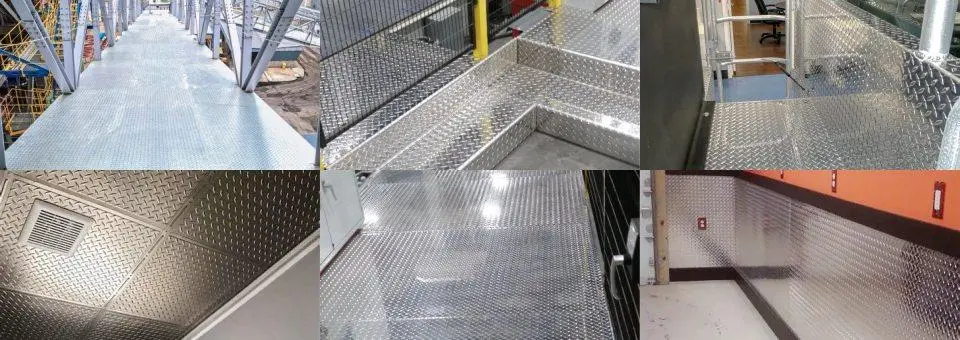
Color-Coated Finish
Paint or powder coat applied at the mill.
| Feature | Detail |
|---|---|
| Coat types | PE, PVDF, powder |
| Color range | Unlimited |
| Best use | Roofing, curtain walls, branded panels |
A 1.5 mm aluminium sheet with PVDF coating can last 20 years outdoors without fading.
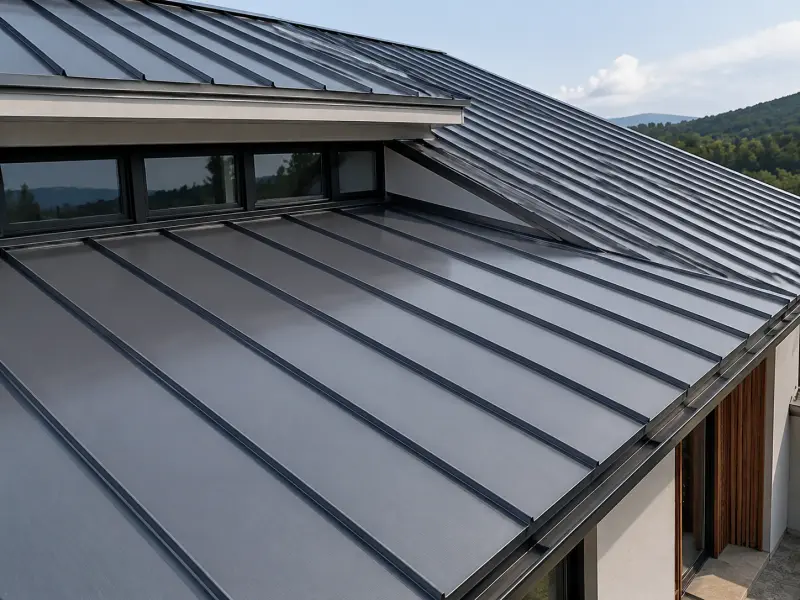
Embossed Finish
Raised patterns like stucco or diamond pressed into the surface.
| Pattern | Best use |
|---|---|
| Stucco | Roofing, insulation, anti-glare |
| Diamond | Flooring, steps, toolboxes |
| Five-bar | Heavy-duty walkways, ramps |
Embossing adds stiffness and hides scratches. A 1.5 mm embossed sheet feels as rigid as a 2.0 mm smooth sheet.
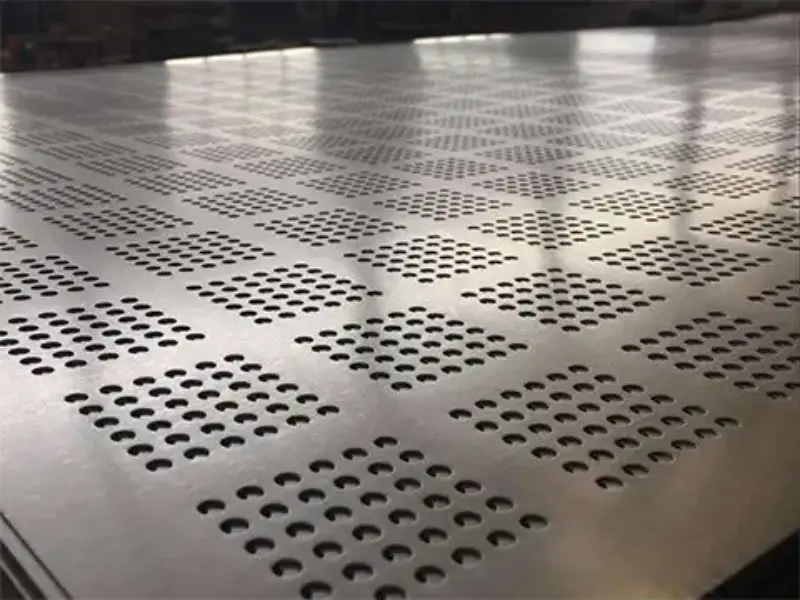
Applications That Rely on 1.5 mm Aluminium Sheet
This thickness serves many industries. Here is where it shows up most.
Building and Construction
- Wall cladding on offices and warehouses
- Soffit and fascia panels
- Ceiling tiles and suspended grids
- Flashing and trim around windows
- Gutter systems
- Curtain wall backing panels
Transportation
- Car body repair panels
- Trailer siding and roofing
- Bus interior panels
- Truck bed liners
- Boat hulls and decks
- Railway carriage trim
Industrial and Marine
- Tank and drum bodies
- Chemical handling equipment
- Food processing surfaces
- Marine hardware
- Offshore platform panels
- Fishing industry equipment
Signage and Retail
- Shop front signs
- Exhibition display boards
- Point-of-sale fixtures
- Interior column wraps
- Elevator trim panels
Home and Hobby
- Kitchen splashbacks
- Garage wall panels
- DIY toolboxes
- Model making
- Jewelry and craft projects
How to Choose the Right 1.5 mm Sheet
Ask yourself these questions before you buy.
Is the sheet for indoor or outdoor use?
→ Indoor: 1050, 1100, or 3003. Outdoor: 3003 with paint, or 5052/5754 bare.
Will it face salt water or chemicals?
→ Use 5052, 5251, or 5754. These alloys resist corrosion far better than pure aluminium.
Does it need to carry weight?
→ For light loads, 3003 is fine. For structural loads, move up to 6061-T6.
Do you need to bend it?
→ 3003-H24 bends easily. 6061-T6 is stiff and may crack in tight bends.
What finish do you want?
→ Raw look: mill finish. Color: PE or PVDF coating. Texture: embossed.
What size do you need?
→ Standard sheets are 1,000 mm × 2,000 mm or 1,200 mm × 2,400 mm. Most suppliers offer cut-to-size service.
Frequently Asked Questions
What does 1.5 mm aluminium sheet weigh?
A 1.5 mm thick aluminium sheet weighs approximately 4.05 kg per square meter. A standard 2,000 mm × 1,000 mm sheet weighs about 8.1 kg. This is roughly one-third the weight of mild steel of the same size.
Can I bend 1.5 mm aluminium sheet by hand?
Thin strips can be bent by hand or with a vice. For accurate bends, use a press brake or a bench-mounted folder. Alloys like 3003-H24 bend easily. 6061-T6 needs more force and a larger bend radius.
Which alloy is best for outdoor use?
5052, 5251, and 5754 are the best choices for outdoor and marine use. They contain magnesium, which improves resistance to salt and moisture. 3003 can be used outdoors if it is painted or anodized.
Can you weld 1.5 mm aluminium sheet?
Yes. TIG and MIG welding both work. Use 4043 filler rod for 3003. Use 5356 filler for 5052 and 6061. Clean the surface first. Remove any oxide layer with a stainless steel brush before welding.
How do you cut 1.5 mm aluminium sheet?
A circular saw with a fine-tooth blade works well. Jigsaws with metal blades are good for curves. Guillotine shears give clean straight cuts. Always wear safety glasses. The cut edges can be sharp.
Is 1.5 mm thick enough for a floor panel?
For foot traffic, yes. For light wheeled carts, yes. By forklifts or heavy machinery, no. Use 3 mm or thicker for heavy loads. If you need grip, choose an embossed tread plate in 1.5 mm.
What is the difference between H14 and H24 temper?
Both are half-hard. H24 has been stabilized with a low-temperature heat treatment after rolling. This reduces internal stress. H24 stays flatter after cutting and handles heat better than H14. For most jobs, the difference is small.
Can 1.5 mm sheet be used for vehicle body repair?
Yes. It is a common thickness for patching car and van panels. For it is easy to shape with hammers and dollies. It can be pop-riveted or welded in place. Many classic car restorers prefer 1.5 mm for floor pans and door skins.
Does aluminium sheet rust?
No. Aluminium does not rust like steel. It forms a thin oxide layer that protects the metal. In harsh environments, this layer can grow unevenly. Anodizing or painting adds extra protection.
What is the price range for 1.5 mm aluminium sheet?
Prices vary by alloy and finish. Plain mill finish 1050 or 3003 is the cheapest. Coated or anodized sheets cost more. Marine grades like 5052 and 5754 carry a premium. As a rough guide, plain sheet ranges from $3 to $8 per kg depending on alloy and order size.