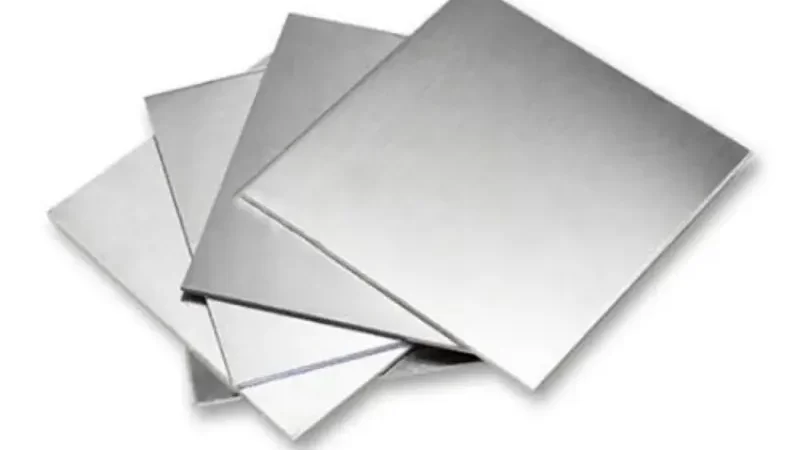
5mm Aluminium Sheet
At 5mm thick, aluminium transitions from sheet metal into structural plate territory. It is rigid enough for floor plates, machine frames, and structural panels, yet light enough to handle without crane equipment.
Where 5mm Aluminium Fits in the Thickness Range
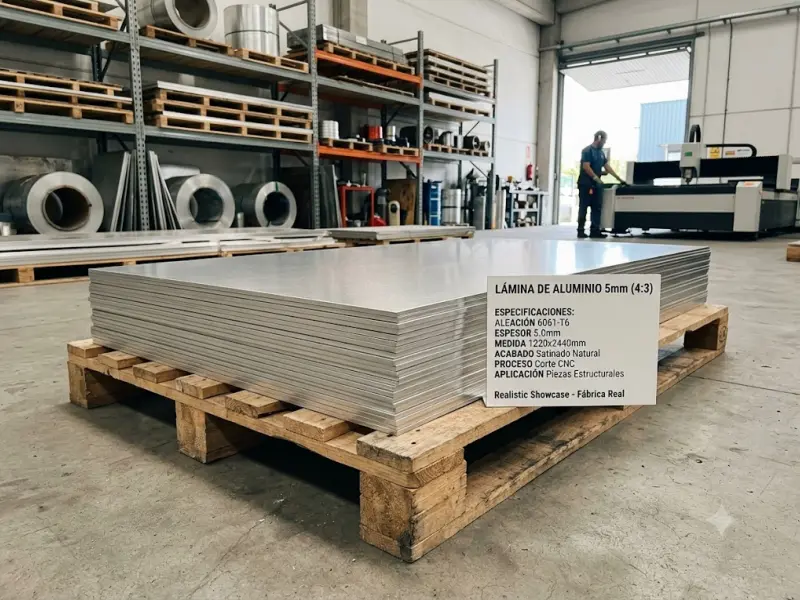
5mm sits near the boundary between heavy sheet and light plate. Different standards define this boundary differently, but in practical fabrication terms, 5mm behaves like a plate — it holds its shape under load, resists bending underfoot, and requires a press brake with enough tonnage to form it cleanly.
Thickness Comparison — What Changes as Gauge Increases
| Thickness | Weight /m² | Classification | Behaviour |
|---|---|---|---|
| 2.0mm | ~5.4 kg | Sheet | Flexible, bends by hand with leverage |
| 3.0mm | ~8.1 kg | Heavy sheet | Bends on standard press brake |
| 4.0mm | ~10.8 kg | Heavy sheet | Requires adequate press tonnage |
| 5.0mm | ~13.5 kg | Plate / heavy sheet | Rigid, structural use |
| 6.0mm | ~16.2 kg | Plate | Structural, machining grade |
| 8.0mm | ~21.6 kg | Plate | Heavy structural |
| 10mm | ~27.0 kg | Plate | Heavy industrial |
5mm aluminium at 13.5 kg/m² is heavy enough for real structural work but light enough that a 1220×2440mm sheet (a standard 4×8 ft sheet) weighs approximately 40 kg — manageable by two people without lifting equipment. Compare that to the same size 5mm steel sheet at roughly 95 kg.
Alloys Available in 5mm — Choosing the Right Grade
5mm is available in nearly every commercial aluminium alloy. The right choice depends on the environment, the load, and whether the material will be welded, machined, or formed.
1060 and 1100 — Pure Aluminium Plate
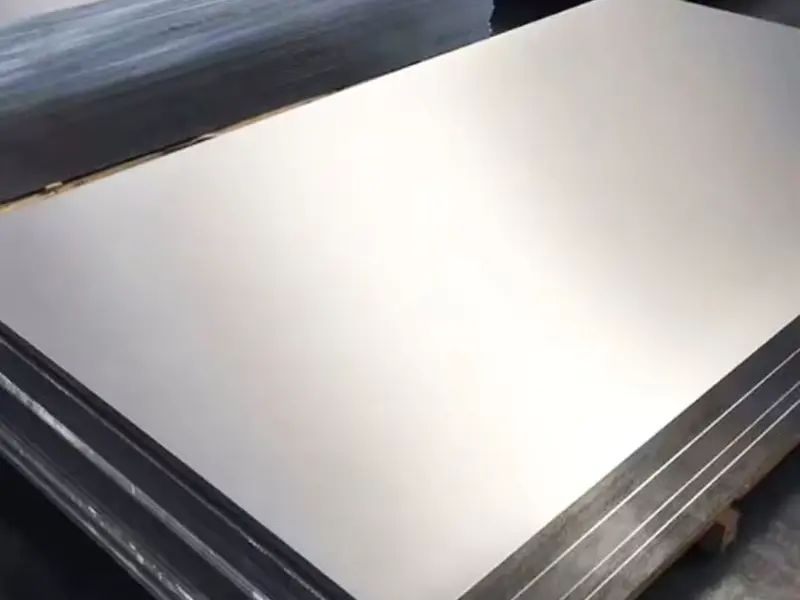
Soft, highly formable, excellent corrosion resistance. Not used for structural load. Used when the primary requirement is conductivity, reflectivity, or chemical resistance.
| Alloy | Temper | Tensile Strength | Yield Strength | Use Case |
|---|---|---|---|---|
| 1060-O | O | 70 MPa | 25 MPa | Chemical tanks, reflectors |
| 1100-H14 | H14 | 125 MPa | 115 MPa | General forming, decoration |
3003 — General Purpose Plate
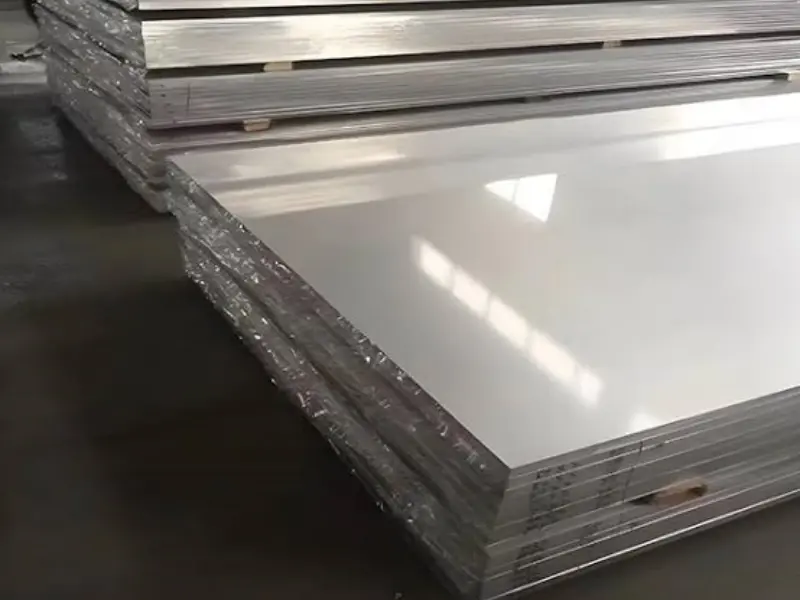
3003-H14 is the most ordered alloy for light structural and general fabrication at 5mm. Good corrosion resistance, good weldability, easy to work with standard shop equipment. Used across construction, HVAC, and light fabrication.
| Property | 3003-H14 |
|---|---|
| Tensile strength | 150 MPa |
| Yield strength | 145 MPa |
| Corrosion resistance | Good |
| Weldability | Excellent |
| Machinability | Good |
Best for: roofing panels, storage tanks, ductwork, light structural frames, chemical storage
5052 — The Outdoor and Marine Choice
5052-H32 is the go-to alloy when the plate is used outdoors, near water, or exposed to chemicals. Magnesium content raises strength and gives excellent corrosion resistance. Standard in marine fabrication, vehicle panels, and outdoor structures.
| Property | 5052-H32 | 5052-H34 |
|---|---|---|
| Tensile strength | 228 MPa | 262 MPa |
| Yield strength | 193 MPa | 214 MPa |
| Corrosion (saltwater) | Excellent | Excellent |
| Formability | Good | Moderate |
Best for: boat hull panels, marine decking, fuel tanks, outdoor structural panels, coastal buildings
5083 — Heavy-Duty Marine and Structural
5083-H116 is used where 5052 is not strong enough. Ship hulls, offshore platforms, pressure vessels, and heavy transportation equipment specify 5083 because it combines high strength with excellent weld strength retention.
| Property | 5083-H116 |
|---|---|
| Tensile strength | 303 MPa |
| Yield strength | 215 MPa |
| Corrosion resistance | Excellent |
| Weld strength retention | Very Good |
Best for: ship hull plating, offshore decking, tank fabrication, heavy transport panels
6061 — Structural Strength with Machinability
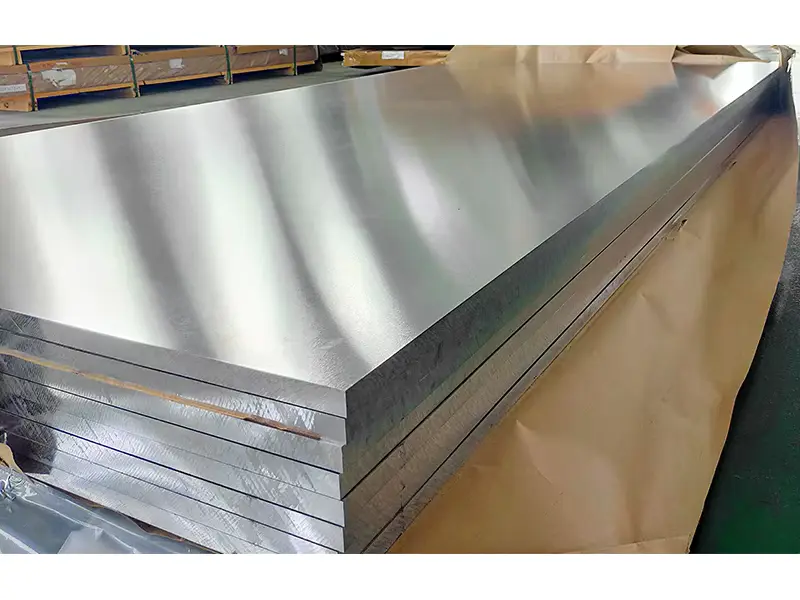
6061-T6 is the strongest common 5mm plate for general use. Heat-treated to T6 temper gives tensile strength of 310 MPa. Machines cleanly, anodizes to a clean uniform surface, and suits any application where strength, precision, or surface quality matter.
| Property | 6061-T6 | 6061-T651 |
|---|---|---|
| Tensile strength | 310 MPa | 310 MPa |
| Yield strength | 276 MPa | 276 MPa |
| Machinability | Excellent | Excellent |
| Best use | Structural panels | CNC machined parts |
T651 is T6 with stress relief by stretching — essential for machined parts where flatness after material removal matters.
Best for: structural brackets, machine frames, aerospace panels, precision machined components
7075 — Maximum Strength
7075-T6 gives the highest strength of any common 5mm plate — 572 MPa tensile. Used in aerospace primary structure and high-performance applications where strength-to-weight is critical. More expensive and harder to weld than 6061.
Best for: aerospace structure, military components, high-load mechanical parts
Full Alloy Comparison at 5mm
| Alloy | Temper | Tensile (MPa) | Weldability | Machinability | Corrosion | Best Application |
|---|---|---|---|---|---|---|
| 1060 | O | 70 | Excellent | Good | Good | Chemical, decorative |
| 3003 | H14 | 150 | Excellent | Good | Good | General fabrication |
| 5052 | H32 | 228 | Excellent | Good | Excellent | Marine, outdoor |
| 5083 | H116 | 303 | Good | Good | Excellent | Heavy marine, tanks |
| 6061 | T6 | 310 | Good | Excellent | Good | Structural, machined |
| 7075 | T6 | 572 | Poor | Good | Moderate | Aerospace, military |
Weight and Size Reference for 5mm Aluminium Sheet
Weight per Sheet — Standard Sizes
Aluminium density: 2.71 g/cm³ → 5mm sheet weighs 13.55 kg/m²
| Sheet Size | Area (m²) | Weight (kg) | Weight (lb) |
|---|---|---|---|
| 1000 × 2000 mm | 2.00 | 27.1 | 59.8 |
| 1220 × 2440 mm (4×8 ft) | 2.98 | 40.4 | 89.0 |
| 1250 × 2500 mm | 3.13 | 42.4 | 93.5 |
| 1500 × 3000 mm | 4.50 | 61.0 | 134.5 |
| 2000 × 4000 mm | 8.00 | 108.4 | 239.0 |
Standard Available Sizes
| Format | Size | Market |
|---|---|---|
| Imperial | 4 × 8 ft (1220 × 2440 mm) | North America |
| Imperial | 4 × 10 ft (1220 × 3050 mm) | North America |
| Metric | 1000 × 2000 mm | Asia |
| Metric | 1250 × 2500 mm | Europe |
| Metric | 1500 × 3000 mm | Europe, heavy fabrication |
| Custom | Any dimension | OEM cut to order |
Thickness Tolerance (ASTM B209)
| Alloy Series | Tolerance on 5mm |
|---|---|
| 1xxx, 3xxx | ± 0.15 mm |
| 5xxx | ± 0.15 mm |
| 6xxx | ± 0.18 mm |
| Precision rolled | ± 0.05 mm (on request) |
Surface Finishes for 5mm Aluminium Plate
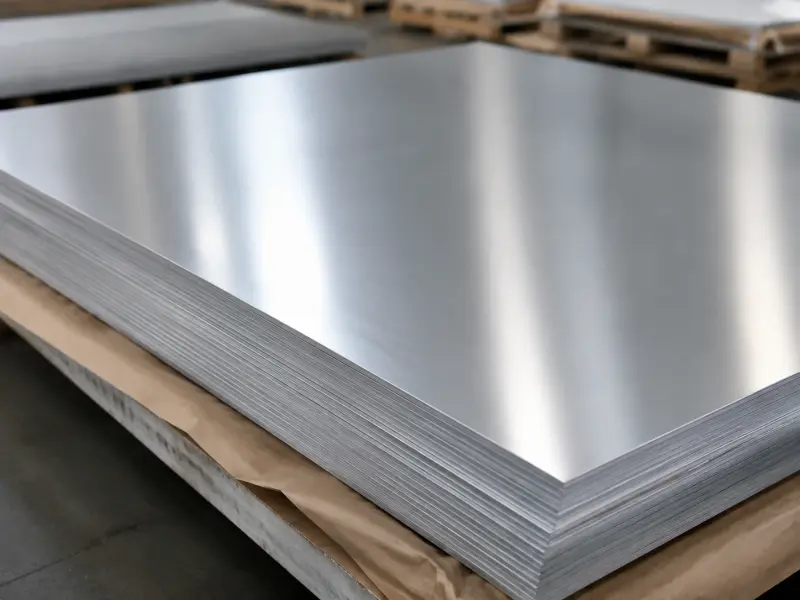
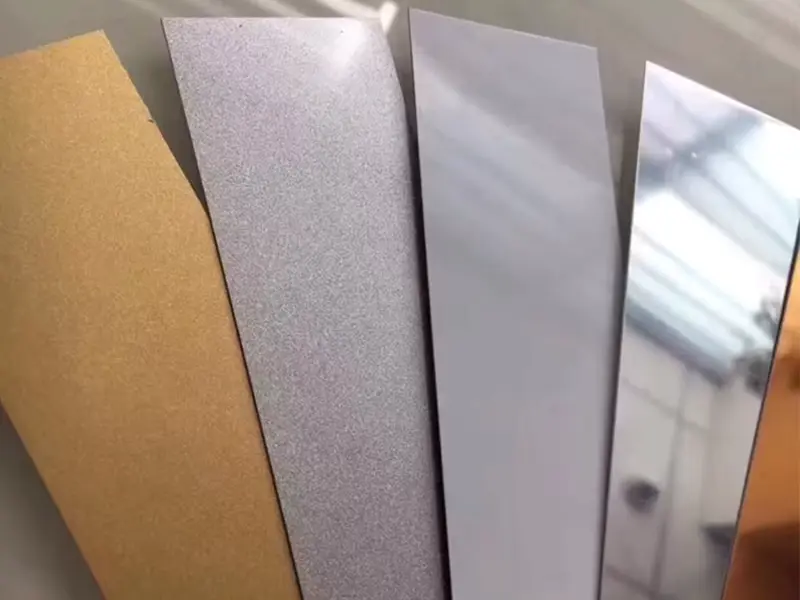
Mill Finish 5mm Aluminium Sheet
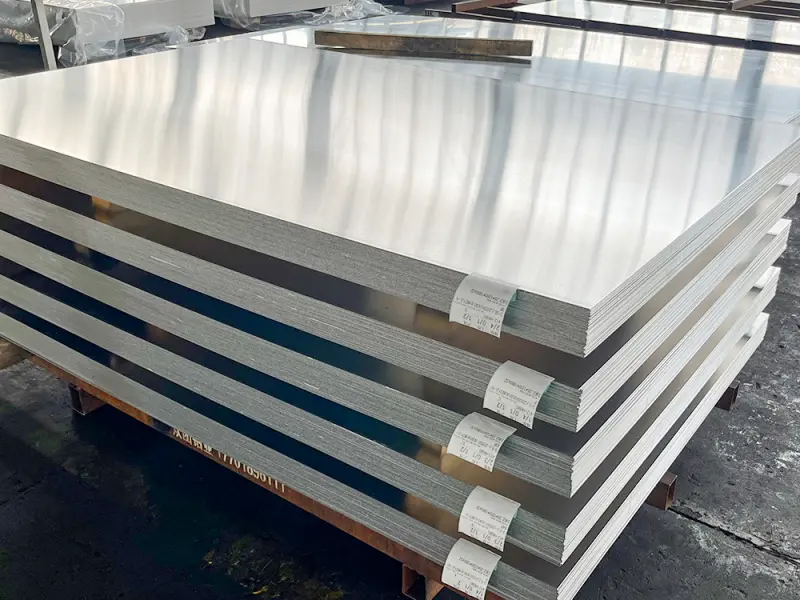
Natural surface directly from the rolling mill. Slightly rough silver appearance. Used where the plate will be machined, painted, welded, or hidden structurally. Lowest cost.
Anodized 5mm Aluminium Sheet
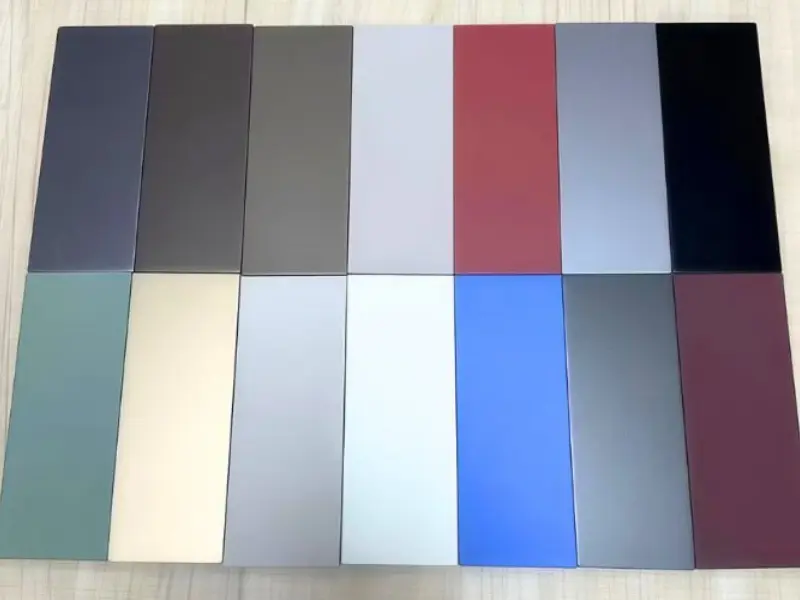
10–25 micron oxide layer. Harder surface, uniform appearance, corrosion resistant. Clear anodize keeps silver look. Black, gold, bronze available. Used in architectural panels, machine components, and applications where appearance matters.
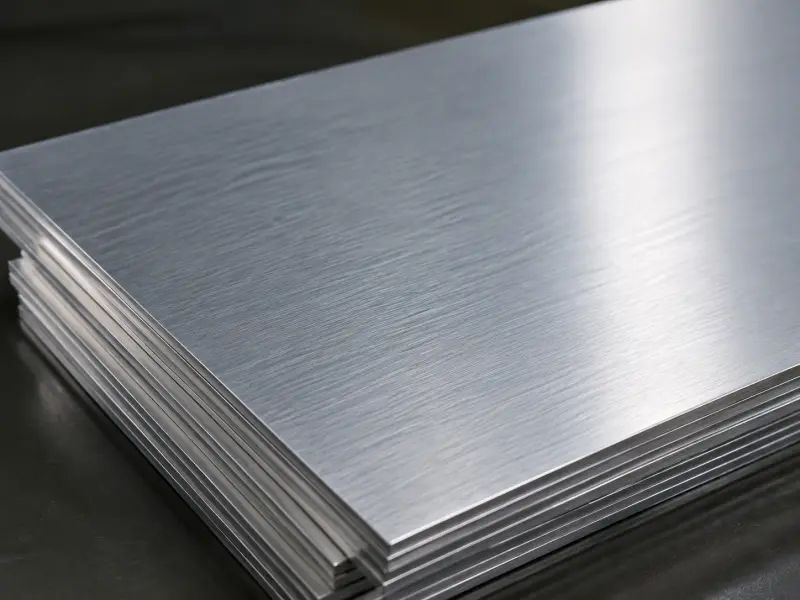
Brushed 5mm Aluminium Sheet
Fine parallel lines across the surface, usually combined with a clear lacquer. Used in interior cladding, furniture, and panels where a satin metallic look is required.
Pre-Painted (PE or PVDF)
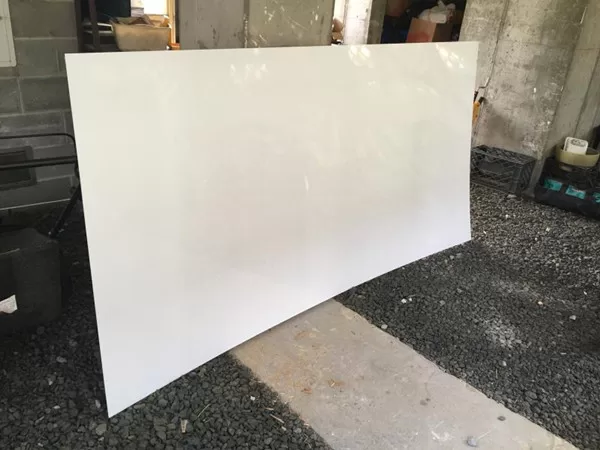
Color coating applied on a coil coating line. Useful when 5mm plate will form panels that need specific RAL colors. PVDF gives 20–25 year exterior durability. PE suits standard construction.
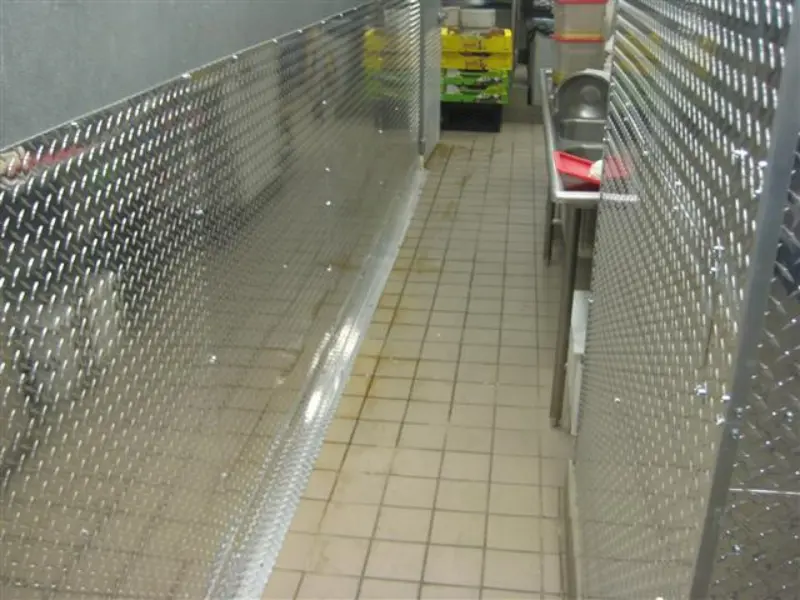
Tread Plate (Checker Plate)
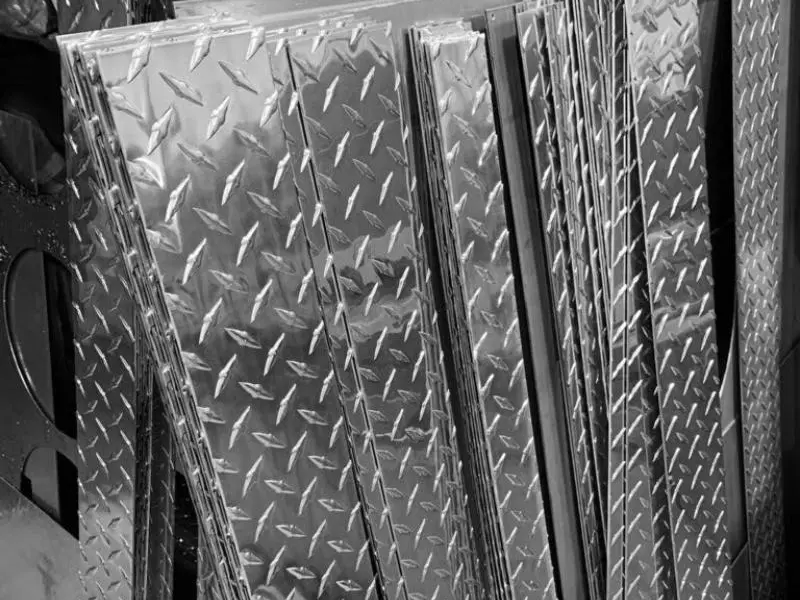
Diamond or five-bar raised pattern pressed into the surface during rolling. Provides slip resistance for floor plates, ramps, and step covers.
| Pattern | Alloy | Common Use |
|---|---|---|
| Diamond (1-bar) | 3003 / 5052 | Decorative, light-duty floor |
| Five-bar tread | 3003 / 5052 | Industrial floor, ramp, truck deck |
Applications — What 5mm Aluminium Sheet Is Used For
Structural Fabrication
5mm is the minimum thickness most fabricators consider for structural panel applications — anything that carries real load or spans unsupported.
- Machine frame side panels and sub-bases
- Equipment enclosure structural panels
- Structural bracket and gusset plate stock
- Conveyor side frames
- Industrial shelving panels rated for real load
Marine and Boat Building
5052 or 5083 at 5mm is standard for small to mid-size boat hull panels, bulkheads, and deck plating. The thickness gives adequate stiffness between frames without requiring excessively close frame spacing.
- Aluminium boat hull panel material
- Pontoon boat decking
- Marine bulkhead plating
- Dock and pier structural panels
- Offshore equipment platforms
Transportation and Vehicle Bodies
- Truck body sidewall and roof panels
- Trailer floor tread plate (5mm five-bar)
- Flatbed trailer structural panels
- RV and motorhome subframe panels
- Emergency vehicle body panels
Industrial Flooring and Access
5mm aluminium tread plate is a standard floor plate material for industrial walkways, mezzanine decks, stair treads, ramps, and access platforms.
- Mezzanine floor deck panels
- Industrial stair tread covers
- Loading dock ramp plates
- Machine access platform panels
- Manhole cover substrate
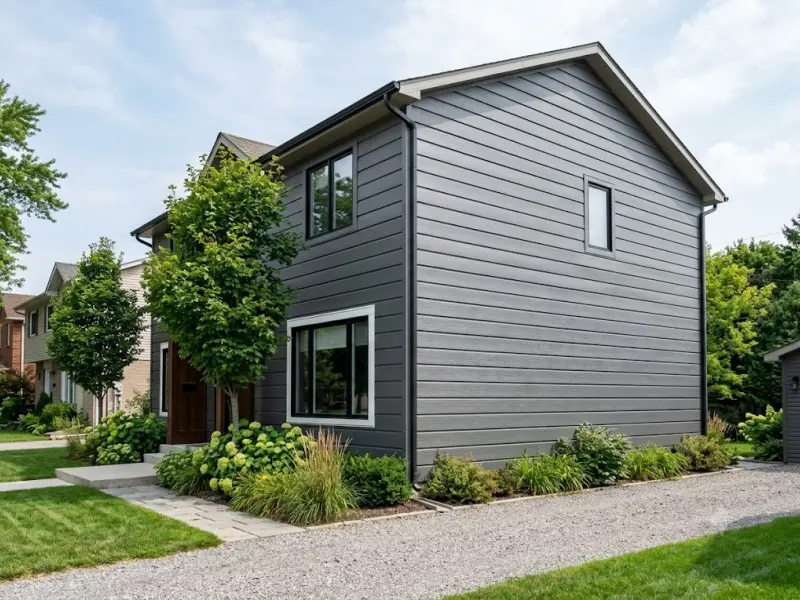
Architectural and Construction
- Curtain wall structural subframe components
- Architectural feature panel backing
- Roof edge trim and flashings at heavy-gauge
- Column cladding backing structure
- Heavy-duty access door panels
Precision Machining and Tooling
6061-T651 at 5mm is a common starting stock for CNC machined parts, jigs, fixtures, and tooling plates. The stress-relieved temper ensures the plate stays flat during and after machining.
- Jig and fixture base plates
- CNC machined bracket stock
- Tooling plate for manufacturing fixtures
- Optical equipment base plates
- Semiconductor equipment components
5mm vs 4mm — When to Step Up
| Feature | 4mm | 5mm |
|---|---|---|
| Weight /m² | 10.8 kg | 13.5 kg |
| Rigidity | Good | Better |
| Unsupported span | Shorter | Longer |
| Load capacity | Moderate | Higher |
| Cost per sheet | Lower | Higher (+20%) |
| Use case | Light structural | Heavy structural |
Choose 5mm when the panel spans more than 600mm without support, when it will be walked on by personnel or vehicles, or when it needs to resist impact or point loads.
5mm vs 6mm — When 5mm Is Enough
| Feature | 5mm | 6mm |
|---|---|---|
| Weight /m² | 13.5 kg | 16.2 kg |
| Strength difference | — | +20% |
| Cost per sheet | Base | +20–25% |
| Bending ease | Easier | Harder |
For most floor plate, structural panel, and general fabrication applications, 5mm is sufficient. 6mm is specified when load calculations show 5mm is marginal, or when impact resistance is a primary concern.
5mm Aluminium vs Steel and Other Thicknesses
5mm Aluminium vs 5mm Mild Steel
| Feature | 5mm Aluminium (5052-H32) | 5mm Mild Steel |
|---|---|---|
| Weight /m² | 13.5 kg | 39.3 kg |
| Tensile strength | 228 MPa | 400 MPa |
| Corrosion resistance | Excellent | Rusts without paint |
| Weldability | Good | Excellent |
| Machinability | Easier | Harder |
| Cost per ton | Higher | Lower |
| Lifetime maintenance | Very low | Repainting required |
Steel is stronger at the same thickness. Aluminium wins on weight, corrosion, and maintenance. For outdoor, marine, and weight-critical applications, 5mm aluminium outperforms 5mm steel over the life of the structure.
Price Reference for 5mm Aluminium Sheet
Factory Direct Price Guide (2024–2025)
| Alloy | Temper | Surface | Price /ton (USD) | Price per 4×8 ft sheet (USD) |
|---|---|---|---|---|
| 3003-H14 | H14 | Mill finish | 2,600–3,000 | USD 140–160 |
| 5052-H32 | H32 | Mill finish | 2,900–3,400 | USD 156–183 |
| 5083-H116 | H116 | Mill finish | 3,200–3,800 | USD 173–205 |
| 6061-T6 | T6 | Mill finish | 3,300–3,900 | USD 178–210 |
| 6061-T651 | T651 | Mill finish | 3,400–4,000 | USD 184–216 |
| 3003 tread plate | H14 | Diamond/5-bar | 2,800–3,200 | USD 151–173 |
Prices above are factory direct estimates at 5-ton+ orders. Local distributor pricing runs 20–40% higher.
What Affects the Price Per Sheet
→ Alloy: 6061 costs 25–35% more than 3003 at the same thickness → Temper: T651 adds 3–8% over T6 due to stretching step → Surface: tread plate adds 8–12%; anodized adds USD 300–500/ton → Custom size: non-standard cuts add 5–15% cutting charge → Order volume: below 2 tons carries a 15–25% small-order premium
Buying 5mm Aluminium from China — Practical Notes
Chinese rolling mills produce the majority of commercial-grade 5mm aluminium plate. Factory direct pricing runs 20–35% below comparable North American or European distributor pricing for the same spec.
What to Confirm Before Ordering
| Item | Detail |
|---|---|
| Alloy and temper | Must match spec exactly |
| Thickness tolerance | ± 0.15mm standard, ± 0.05mm precision |
| Width and length | Standard or custom cut |
| Surface | Mill finish, tread, anodized, painted |
| MTR (mill test report) | ASTM B209 or EN 485 compliance |
| Flatness | ≤ 3mm per 1000mm is standard |
| Edge | Mill edge or shear edge |
| Packaging | PE film, interleaved paper, wooden pallet |
Lead Time from Chinese Mills
| Product | Production Time | Sea Transit |
|---|---|---|
| Standard alloy, mill finish | 10–20 days | 18–40 days |
| Tread plate | 12–22 days | 18–40 days |
| Anodized | 20–30 days | 18–40 days |
| Custom cut or non-standard | 15–25 days | 18–40 days |
Frequently Asked Questions
What Is 5mm Aluminium Sheet Used For
5mm aluminium sheet is used for structural panels, marine hull plating, trailer floors (tread plate), machine frames, industrial floor plates, mezzanine decking, tooling blanks, and architectural cladding. It is the minimum thickness most fabricators use for structural applications and the maximum thickness most consider before switching to heavier plate.
Which Alloy Is Best for 5mm Aluminium Floor Plate
For general industrial flooring and ramps, 3003-H14 tread plate (diamond or five-bar pattern) is the most cost-effective choice. By marine decking or environments with saltwater or chemical exposure, 5052-H32 tread plate gives better corrosion resistance. For heavy-load industrial floors with forklift traffic, 5052-H32 or 5083-H116 in smooth finish is used for structural calculation accuracy.
How Much Does a 4×8 ft Sheet of 5mm Aluminium Weigh
A 4×8 ft (1220×2440mm) sheet of 5mm aluminium weighs approximately 40 kg (88 lbs), regardless of alloy (density variation between alloys is very small). This weight makes single-person handling difficult for most people — two-person handling is recommended. A standard van or pickup truck can carry multiple sheets without exceeding payload limits.
Can 5mm Aluminium Sheet Be Bent on a Standard Press Brake
Yes, but the press must have sufficient tonnage and the correct tooling. Typical requirement for bending 5mm aluminium on a 1000mm length bend: 30–60 tons depending on alloy. 3003-H14 bends more easily than 6061-T6. Minimum inside bend radius for 5mm aluminium is typically 5–8mm for 3003, 8–12mm for 5052-H32, and 10–15mm for 6061-T6. Using too tight a radius causes cracking, especially on harder tempers.
What Is the Difference Between 5mm Sheet and 5mm Plate
The terms overlap. By ASTM B209, material below 6.35mm is technically sheet. By EN standards, the boundary is different. In common usage, fabricators often call 5mm material “plate” because it behaves structurally like plate. From a buying standpoint, the terms can be used interchangeably for 5mm aluminium — just confirm thickness, alloy, and temper with the supplier regardless of what the listing calls it.
Final Notes for Buyers and Fabricators
5mm aluminium sheet is one of the most versatile products in the aluminium range. It is thick enough for real structural work across marine, transportation, industrial, and architectural applications, and light enough to handle and install without heavy equipment.
For general outdoor structural panels: 5052-H32, mill finish — the right combination of strength, corrosion resistance, and cost.
By machined components and tooling: 6061-T651 — stress relief keeps parts flat after machining.
For floor plates and ramps: 3003-H14 or 5052-H32 tread plate, five-bar pattern — standard industry spec.
Order a sample if switching suppliers. Confirm the mill test report. And compare on delivered cost — not just the per-ton mill price.