Aluminum Foil Tray is essential in the modern food industry. Whether you run a restaurant, a catering business, or a food processing plant, choosing the right packaging is a key factor for success.
Understanding the Basics: What Is an Aluminum Foil Tray?
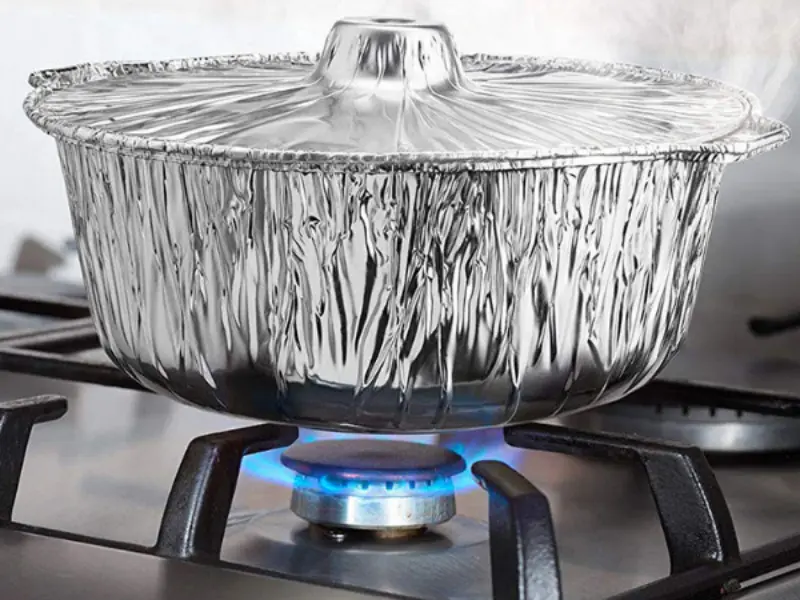
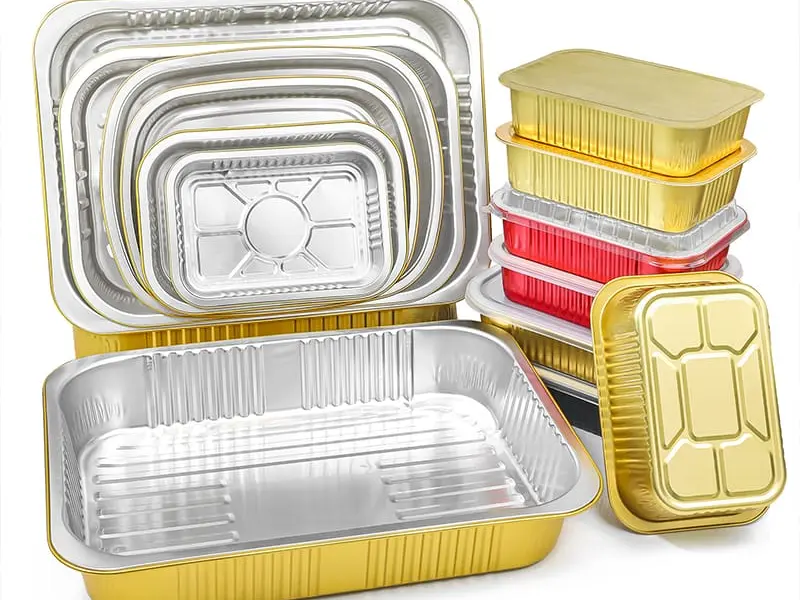
An aluminum foil tray is a food-grade container made from thin sheets of aluminum alloy. It has to hold, cook, transport, and serve food.
Defining the Product
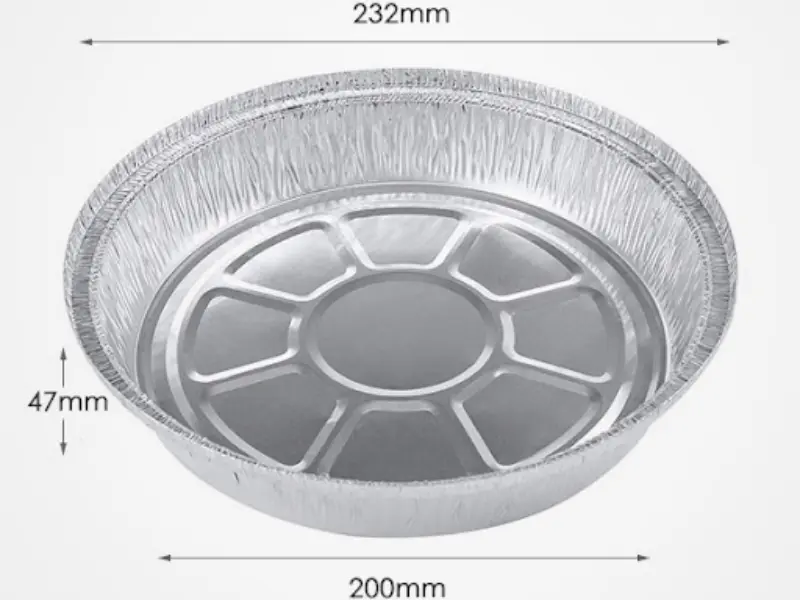
A “tray” usually refers to a shallow or deep container with a rim. While many people use the terms “aluminum tray” and “aluminum foil container” interchangeably, there is a small difference. Trays are often larger and used for serving or baking, while containers are typically smaller for individual takeaway meals.
Why Aluminum for Food Packaging?
Aluminum is the preferred material for several reasons:
- Safety: It does not react with most foods.
- Conductivity: It heats and cools very quickly.
- Barrier: It blocks light, oxygen, and moisture completely.
Key Features at a Glance
- Lightweight: Easy to handle and reduces shipping costs.
- Heat Resistant: Can withstand high temperatures in ovens and grills.
- Disposable & Recyclable: Offers convenience while being environmentally friendly.
- Hygienic: Sterile after production, ensuring food safety.
Diverse Types of Aluminum Foil Trays
The market offers various types of trays to suit different culinary needs. Understanding these types helps you choose the best fit for your business.
Disposable Aluminum Foil Trays
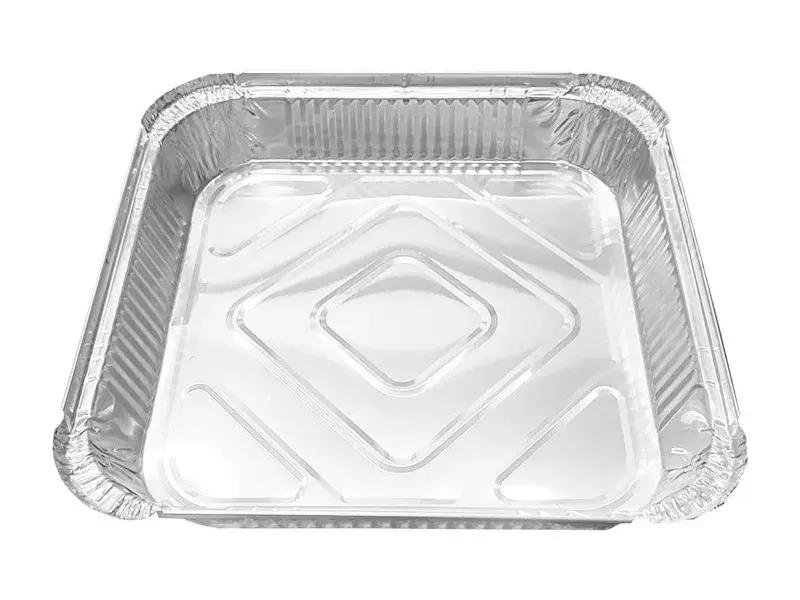
These are the most common “single-use” trays. They are thin, lightweight, and perfect for fast-food outlets or home leftovers. They eliminate the need for washing dishes, saving labor costs.
Heavy-Duty Aluminum Foil Trays
.
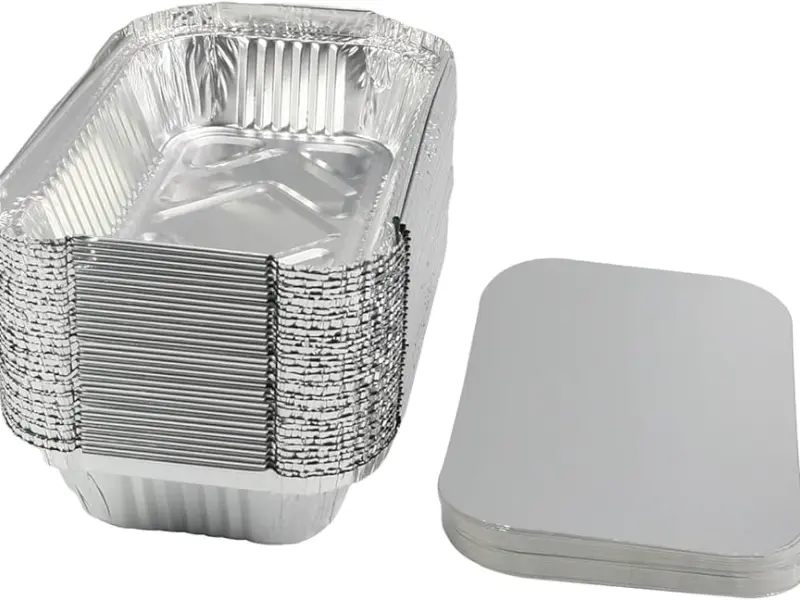
These trays use a thicker gauge of aluminum. They are much stronger and do not bend easily when filled with heavy items like large roasts or big batches of lasagna
Aluminum Foil Trays with Lids
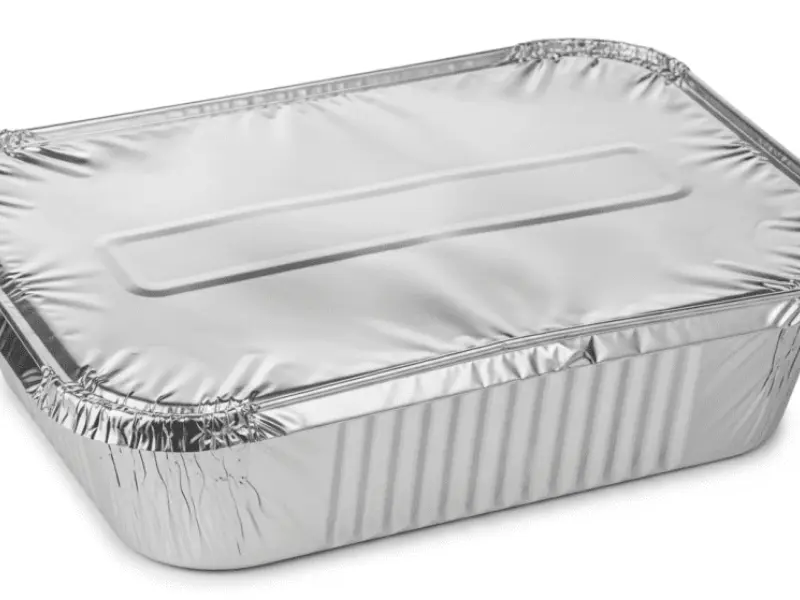
Effective delivery requires secure lids. There are two main options:
- Plastic (OPS/PET) Lids: Transparent, allowing customers to see the food inside.
- Foil-Laminated Cardboard Lids: Excellent for heat retention and can be crimped tightly around the edges.
Specialized Baking and Takeaway Trays
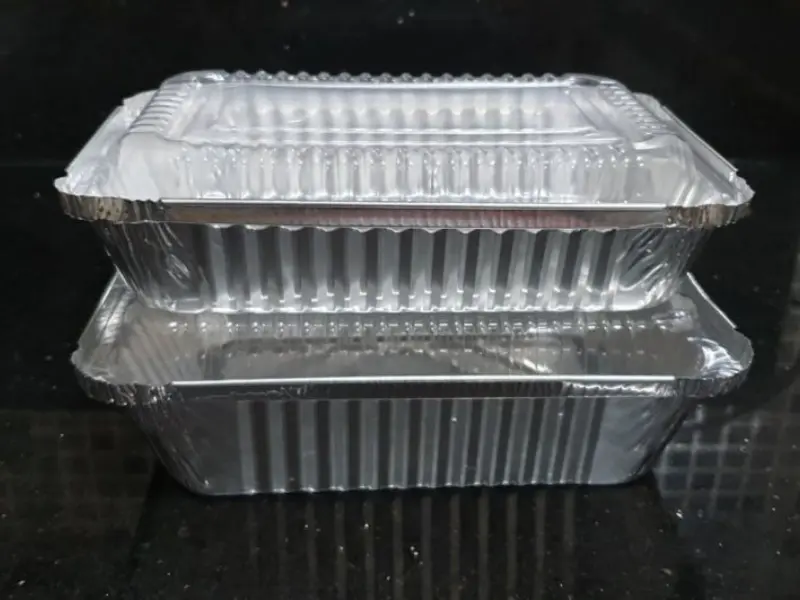
Baking Trays: Often used for brownies, pies, and cakes.
Takeaway Trays: Designed with specific compartments to keep different food items separate.
Standard Sizes and Shape Specifications
Choosing the right size prevents food waste and ensures proper portion control.
Common Size Categories
| Tray Size | Typical Capacity | Common Applications |
|---|---|---|
| Small | 100ml – 400ml | Dips, snacks, small desserts |
| Medium | 450ml – 1000ml | Single-person meals, takeaway pasta |
| Large | 1200ml – 3500ml | Family meals, catering portions |
| Extra Large | 4000ml+ | Party platters, commercial roasts |
Shape Variations
- Rectangular: The standard for catering and meal prep.
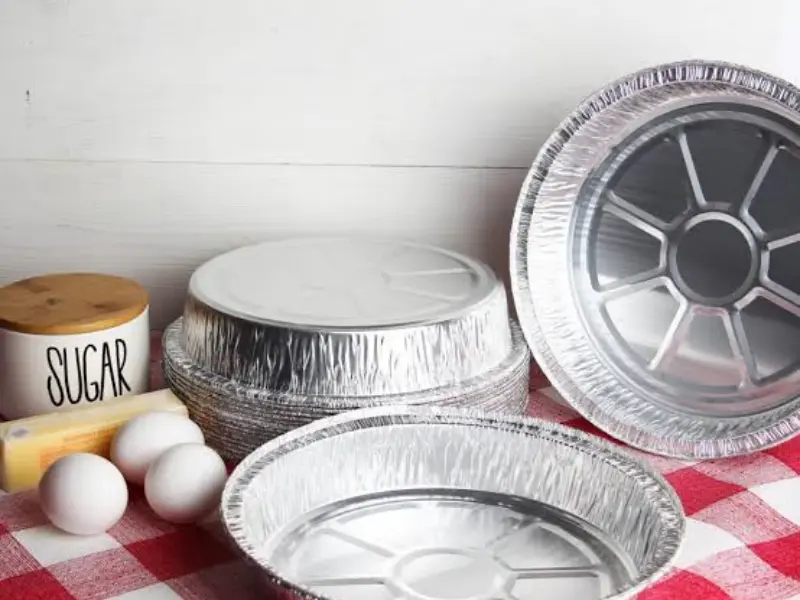
- Round: Ideal for pies, quiches, and pizzas.
- Square: Popular for baking cakes and brownies.
- Compartment Trays: Feature 2, 3, or even 4 sections for balanced meals.
Technical Specifications: Materials and Alloys
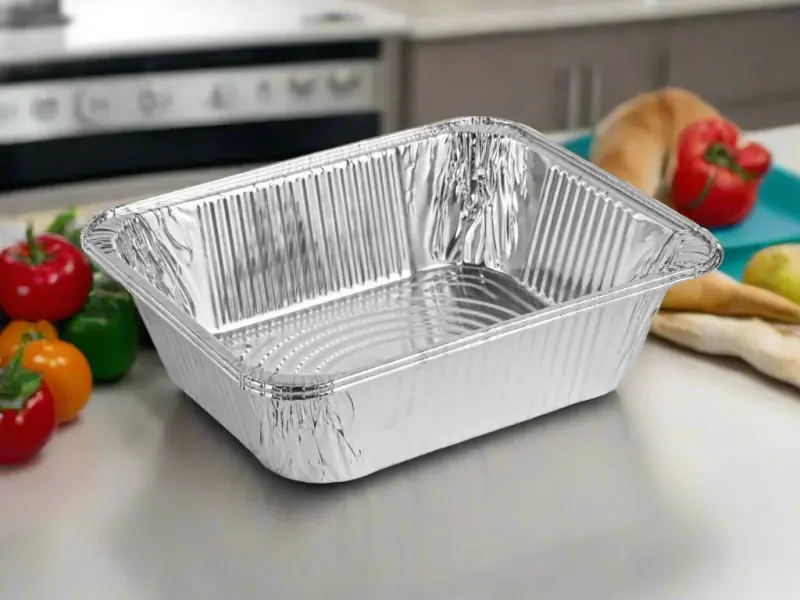
Professional buyers must understand the technical side to ensure the trays meet safety and durability standards.
Aluminum Alloys Used
The performance of a tray depends on the alloy grade:
- 8011 Alloy: The most common for household and food containers. It has good elongation and strength.
- 3003 Alloy: Contains manganese. It is stronger and more corrosion-resistant, often used for premium or heavy-duty trays.
- Temper: Usually H22 or H24 (semi-hard) to provide the necessary stiffness.
Thickness Options
Thickness is measured in millimeters (mm) or microns (μm).
| Use Case | Recommended Thickness |
|---|---|
| Light snacks / Small desserts | 0.03mm – 0.04mm |
| Standard takeaway meals | 0.05mm – 0.07mm |
| Heavy-duty / Roasting trays | 0.08mm – 0.12mm |
| Premium reusable trays | 0.15mm+ |
Surface Treatments
Most trays have a mill finish (natural silver). However, you can also find:
- Lacquered/Coated: For acidic foods (like tomato sauce) to prevent corrosion.
- Printed: Trays with logos or decorative colors on the outside.
Key Advantages of Aluminum Foil Packaging
Why should you choose aluminum over plastic or paper?
Unmatched Heat Performance
Aluminum can go from the freezer (−40∘C) directly into a hot oven (250∘C or higher) without melting or cracking. This makes it the ultimate “cook-and-serve” container.
Superior Barrier Protection
Unlike plastic, aluminum provides a 100% barrier against UV light, grease, and gases. This keeps food tasting fresh for longer periods.
Environmental Benefits
Aluminum is one of the few materials that is “infinitely recyclable.” Recycling aluminum takes only 5% of the energy required to produce primary aluminum. Using these trays helps reduce the carbon footprint of your business.
Space Efficiency
Trays are designed to be “nestable.” This means they stack tightly inside one another, taking up minimal space in your warehouse or kitchen.
Wide Range of Applications
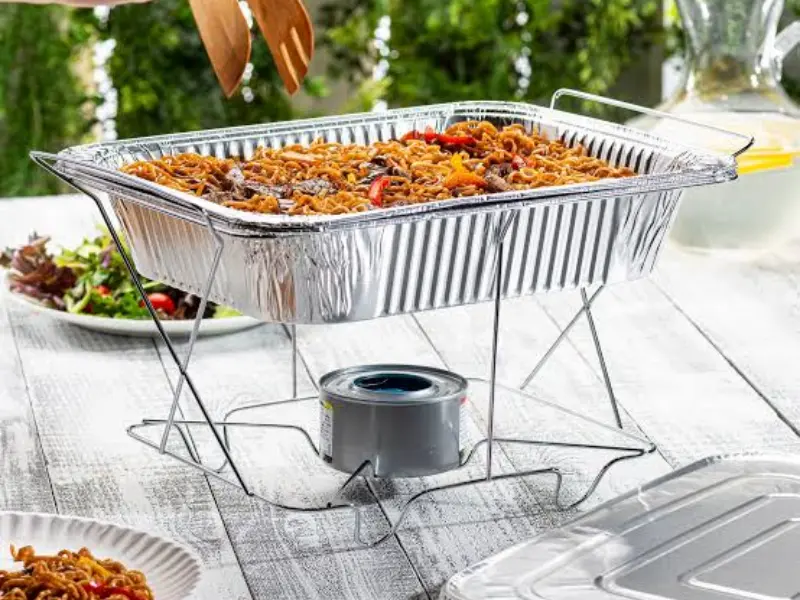
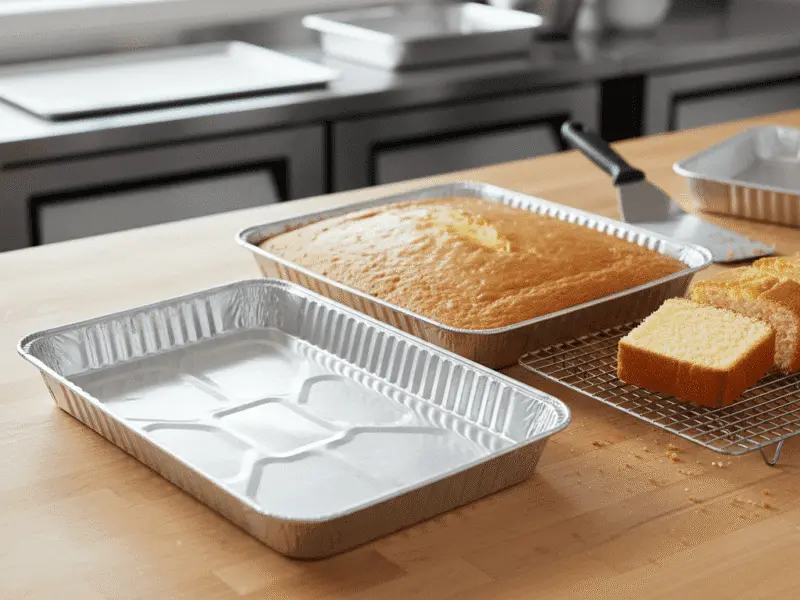
Aluminum foil trays are used in almost every sector of the food industry.
- Restaurant & Takeaway: For packing hot noodles, rice, and grilled meats.
- Bakery Industry: For baking and selling pies, tarts, and fruit cakes.
- Aviation Catering: Standard for in-flight meals due to light weight and heating ease.
- Frozen Food Industry: Ideal for ready-to-eat meals stored in supermarket freezers.
- Home Use: Perfect for meal prepping, BBQ, and holiday leftovers.
How Aluminum Foil Trays Are Manufactured
The manufacturing process is highly automated to ensure hygiene and consistency.
- Foil Rolling: Large aluminum ingots into thin foils of specific thicknesses.
- Lubrication: A food-grade lubricant to the foil to allow it to slide through the press.
- Stamping (Forming): A high-speed press uses custom molds to punch the foil into the tray shape.
- Trimming: Excess foil is removed and immediately sent for recycling.
- Quality Control: Trays are checked for pinholes, edge sharpness, and shape integrity.
- Packaging: Trays are stacked and packed into plastic bags and then into cardboard cartons.
Aluminum Foil Tray Price and Cost Guide
It fluctuates based on several market factors.
Factors Influencing Cost
- LME Aluminum Price: The global price of raw aluminum changes daily.
- Weight/Thickness: More aluminum material (0.10mm vs 0.05mm) means a higher price.
- Design Complexity: Trays with compartments or custom shapes cost more due to mold expenses.
- Lid Inclusion: Adding a lid increases the total unit cost.
Bulk Buying vs. Retail
Buying in bulk from a manufacturer typically reduces the price per piece by 30% to 50% compared to buying small packs from a local distributor.
Comparing Packaging Materials
| Feature | Aluminum Tray | Plastic (PP/PET) | Paper Packaging |
|---|---|---|---|
| Oven Safe | Yes (up to 600∘C) | No (Low melting point) | Only specific types |
| Microwave Safe | Yes (with precautions) | Yes | Yes |
| Recyclability | Excellent (100%) | Moderate to Low | High (if not greasy) |
| Heat Retention | High | Low | Medium |
| Rigidity | High | High | Low |
How to Choose the Right Supplier
When sourcing trays, especially from overseas markets like China, consider the following:
Check Certifications
Ensure the factory has FDA, SGS, or ISO certifications. This guarantees the trays are safe for direct food contact.
Evaluate Production Capacity
Can the supplier handle a large order during peak seasons? A reliable manufacturer should have multiple production lines.
Sample Testing
Always request samples before placing a bulk order. Test the tray for:
- Rim Strength: Does it hold up when filled?
- Lid Fit: Does the lid stay on securely during transport?
- Surface Quality: Is there any oil residue or sharp edges?
Sourcing Aluminum Foil Trays from China
China is the world’s leading producer of aluminum foil products. Buying directly from a Chinese factory offers significant advantages.
Why Buy from China?
- Competitive Pricing: Lower labor and raw material costs.
- Customization (OEM): Factories can emboss your logo on the bottom of the tray or create custom sizes.
- Advanced Technology: Modern high-speed presses ensure high precision.
The Import Process
Inquiry→Sample Approval→Deposit Payment→Mass Production→Quality Inspection→Shipping
Packaging and Shipping Logistics
To ensure trays arrive in perfect condition, the packaging must be robust.
- Inner Packing: Usually 100 to 250 pieces per shrink-wrapped bag.
- Outer Packing: Five-layer corrugated cardboard boxes.
- Palletization: For sea freight, boxes should be palletized and film-wrapped to prevent moisture damage.
Frequently Asked Questions (FAQ)
Are aluminum foil trays safe for acidic foods?
For highly acidic or salty foods (like lemon juice or vinegar), it has recemooned use lacquered (coated) aluminum trays to prevent the metal from reacting with the food.
Can I put an aluminum foil tray in the microwave?
Yes, but you must follow rules: Use only one tray at a time, ensure it is full of food, and make sure it does not touch the walls of the microwave.
What is the minimum order quantity (MOQ) for wholesale?
Most factories require an MOQ of 30,000 to 50,000 pieces per size, though some stock items may have lower requirements.
Can the trays be reused?
While designed to be disposable, heavy-duty trays can often be washed and reused several times before recycling.
How do I store these trays?
Store them in a cool, dry place. Humidity can sometimes cause “white rust” (oxidation) on the surface if the trays are not stored properly.
aluminum foil food tray for food service
Aluminum foil trays are an indispensable part of the food service supply chain. They offer the perfect balance of performance, convenience, and sustainability. By selecting the right alloy, thickness, and size, you can improve food quality and customer satisfaction while keeping costs low.
When looking for a supplier, focus on quality certifications and production capacity. Whether you are packaging a simple takeaway pasta or a premium frozen meal, the right aluminum foil tray makes all the difference.