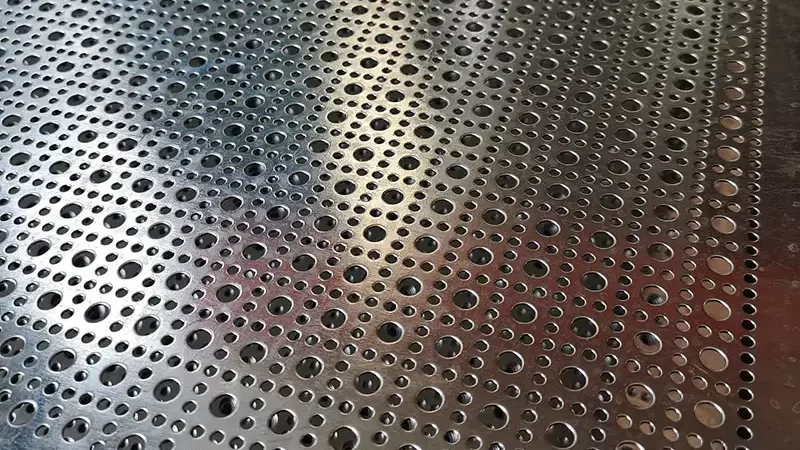
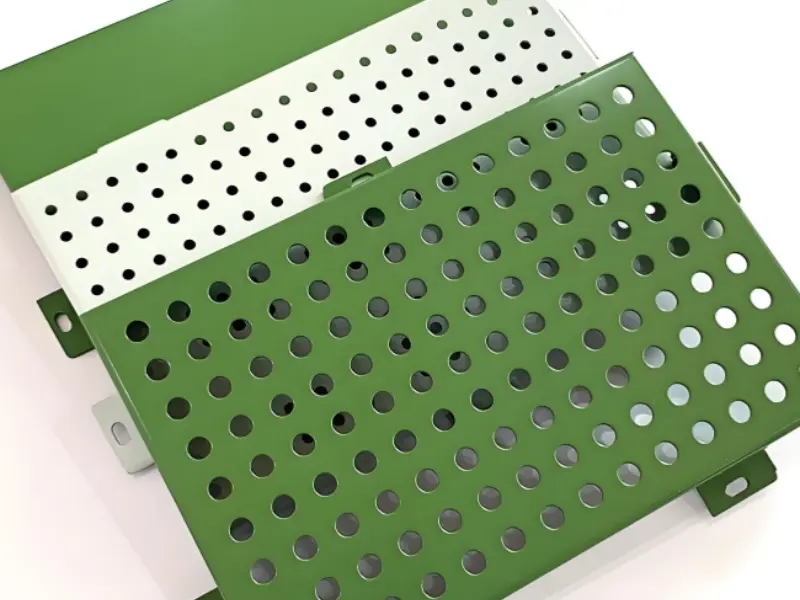
Perforated Aluminium Panel Manufacturer is a flat sheet of aluminium with punched holes in various patterns. It is lightweight, strong, and easy to work with. Factories use different hole shapes, sizes, and spacing to meet different needs.
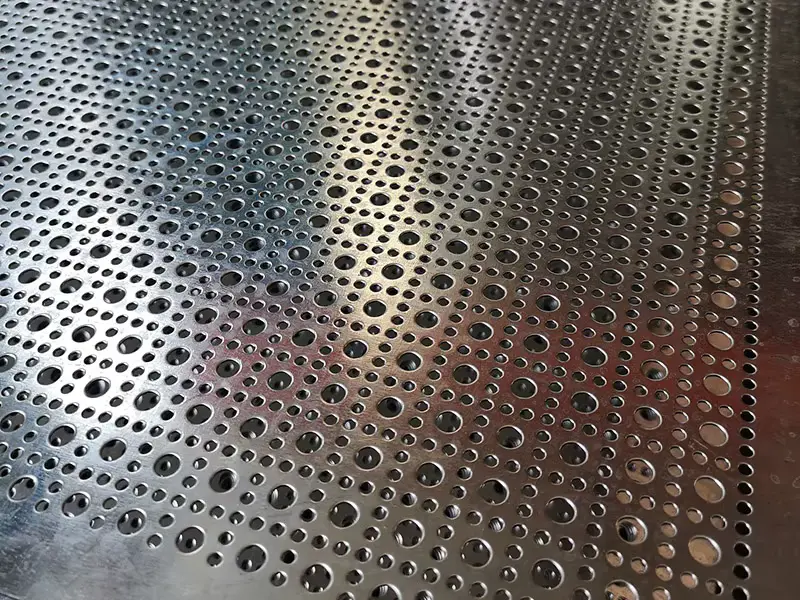
These panels serve both functional and decorative purposes. You can find them in buildings, machines, vehicles, and industrial equipment. They are also used for filtration, ventilation, and sound control.
Why Choose Aluminium Over Other Metals?
Many buyers compare aluminium with steel or stainless steel. Here is a quick comparison:
| Feature | Aluminium | Mild Steel | Stainless Steel |
|---|---|---|---|
| Weight | Light | Heavy | Medium-heavy |
| Corrosion Resistance | Excellent | Poor | Very Good |
| Cost | Medium | Low | High |
| Machinability | Easy | Medium | Harder |
| Surface Finish | Smooth, clean | Rough | Smooth |
| Recyclability | 100% | Yes | Yes |
| Best For | Architecture, outdoor | Indoor structure | Food, marine |
Alloy Types – Which One Is Right for You?
Not all aluminium is the same. The alloy type affects strength, finish, and workability. Here are the most common ones used for perforated panels:
1000 Series – Pure Aluminium
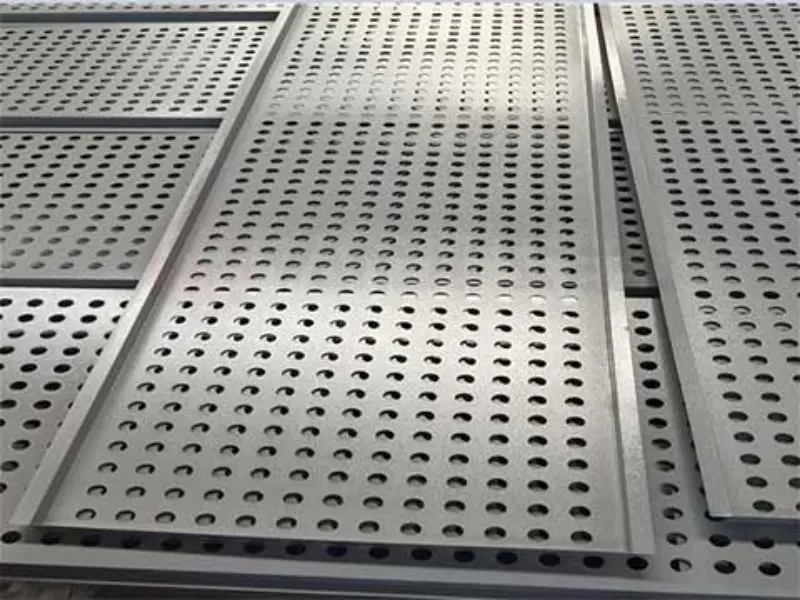
Alloy: 1050, 1060, 1100
Temper: O, H14, H24
Soft and easy to perforate
Best for decorative uses and light filtration
Low cost, high corrosion resistance
3000 Series – Manganese Alloy
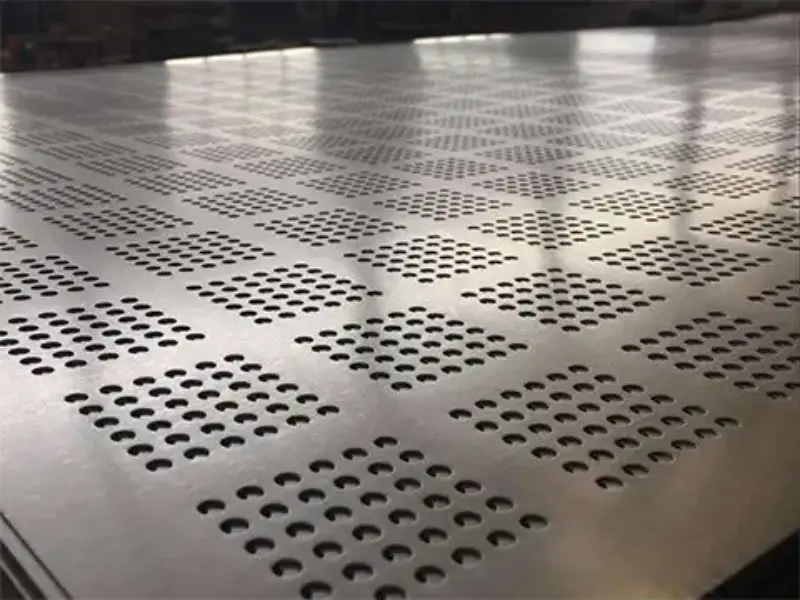
Alloy: 3003, 3105
Temper: H14, H16, H24
Better strength than 1000 series
Good formability and weldability
Popular in HVAC, ceilings, and roofing
5000 Series – Magnesium Alloy
- Alloy: 5052, 5754
- Temper: H32, H34
- Higher strength and better marine resistance
- Used in industrial and marine environments
- Slightly harder to perforate but very durable
6000 Series – Magnesium + Silicon
Alloy: 6061, 6063
Temper: T4, T6
Very strong and hard
Used in structural and load-bearing panels
Often anodized for a clean finish
| Alloy | Series | Key Feature | Common Use |
|---|---|---|---|
| 1060 | 1xxx | Pure, soft | Decoration, filters |
| 3003 | 3xxx | Moderate strength | HVAC, ceiling tiles |
| 5052 | 5xxx | Marine-grade | Outdoor, marine panels |
| 6061 | 6xxx | High strength | Structure, facade |
| 6063 | 6xxx | Smooth finish | Anodized facade panels |
Temper States Explained
The temper (or condition) of aluminium affects how stiff or soft the sheet is. This matters for bending, forming, and punching.
| Temper Code | Meaning | Best For |
|---|---|---|
| O | Fully annealed (soft) | Deep drawing, complex shapes |
| H14 | Half hard | General perforating |
| H24 | Work hardened + partial anneal | Roofing, cladding |
| H32 | Strain-hardened | Structural panels |
| T4 | Solution heat-treated | Moderate strength parts |
| T6 | Peak aged | High-strength structural use |
Panel Thickness – A Practical Guide
Thickness affects how strong, heavy, and flexible the panel is. Here is what each thickness range is good for:
| Thickness | Weight (kg/m²) | Typical Use |
|---|---|---|
| 0.5 mm | ~1.35 | Lightweight ceiling tiles, filters |
| 0.8 mm | ~2.16 | Interior wall panels, decoration |
| 1.0 mm | ~2.70 | Ventilation grilles, enclosures |
| 1.2 mm | ~3.24 | Machine guards, screens |
| 1.5 mm | ~4.05 | Facades, sunscreens |
| 2.0 mm | ~5.40 | Heavy facades, structural cladding |
| 3.0 mm | ~8.10 | Load-bearing panels, industrial use |
| 4.0 mm | ~10.8 | Heavy-duty industrial panels |
Note: Weight is approximate. Actual weight depends on hole pattern and open area percentage.
Hole Pattern Types – More Than Just Round Holes
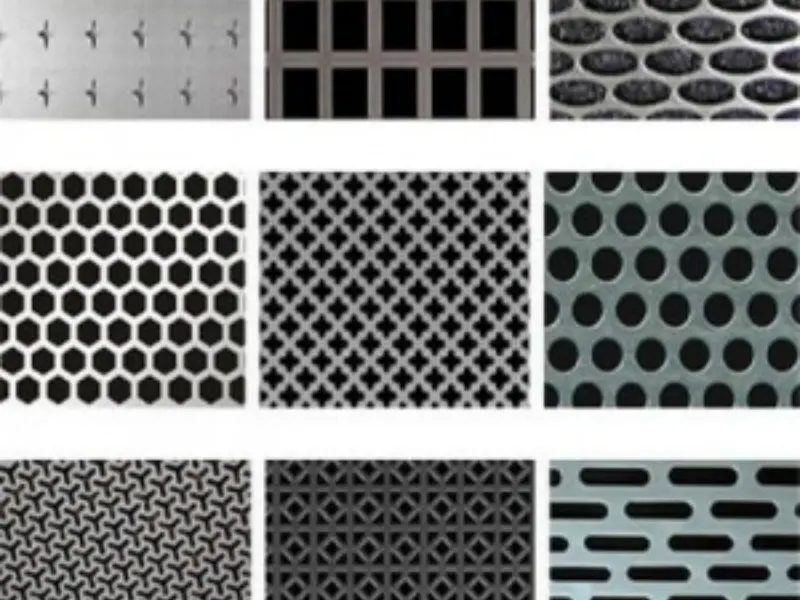
Most people think of round holes only. But there are many hole shapes available. Each has different performance and looks.
▶ Round Hole (RD)
The most common type. Clean edges, easy to produce, and cost-effective.
| Hole Diameter | Pitch (Center-to-Center) | Open Area |
|---|---|---|
| 1.0 mm | 2.0 mm | ~20% |
| 2.0 mm | 3.0 mm | ~35% |
| 3.0 mm | 5.0 mm | ~33% |
| 5.0 mm | 8.0 mm | ~35% |
| 8.0 mm | 12.0 mm | ~38% |
| 10.0 mm | 15.0 mm | ~40% |
▶ Square Hole (SQ)
Higher open area for the same sheet. Good for filtration and airflow.
| Hole Size | Pitch | Open Area |
|---|---|---|
| 3×3 mm | 5 mm | ~36% |
| 5×5 mm | 8 mm | ~39% |
| 10×10 mm | 14 mm | ~51% |
▶ Slotted Hole (SL)
Used for drainage and airflow where long openings are needed.
| Slot Size | Pitch | Common Use |
|---|---|---|
| 1×5 mm | 3×8 mm | Speaker grilles |
| 2×10 mm | 4×14 mm | Ventilation panels |
| 3×20 mm | 6×25 mm | Drainage covers |
▶ Hexagonal Hole (HX)
Strong honeycomb look. High open area with good structural strength.
| Hole Size | Open Area | Use |
|---|---|---|
| 5 mm hex | ~55% | Decoration, speaker grilles |
| 8 mm hex | ~58% | Architecture, sunscreen |
| 10 mm hex | ~60% | Industrial filters |
▶ Decorative Patterns
- Triangular holes
- Diamond-shaped holes
- Custom logo cutouts
- Wave or fish-scale patterns
- Micro-perforations (< 1 mm)
Product Types Overview
We manufacture a wide range of perforated aluminium products. Here is a quick look at the main types:
Architectural Facade Panels
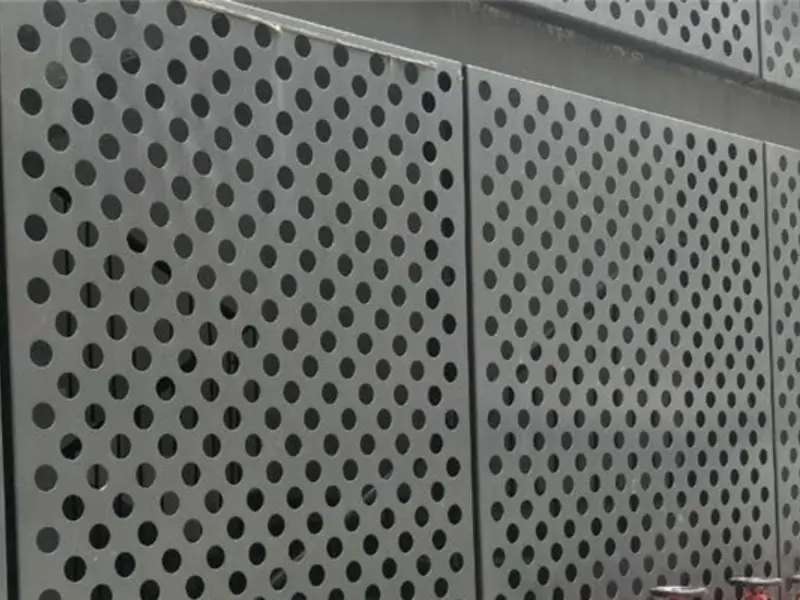
Used on the outside of buildings. They block sun, allow airflow, and improve the building’s look.
Size: Custom per project
Thickness: 2.0–4.0 mm
Alloy: 3003, 5052, 6063
Finish: Powder coat, anodized, PVDF
Perforated Aluminium Ceiling Tiles
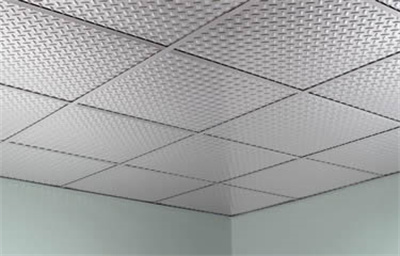
Common in airports, offices, and commercial buildings.
Feature: Sound-absorbing when backed with acoustic wool
Thickness: 0.5–1.5 mm
Standard sizes: 300×300, 600×600, 1200×600 mm
Finish: White powder coat, mill finish
Perforated Aluminium Sheet for Filters
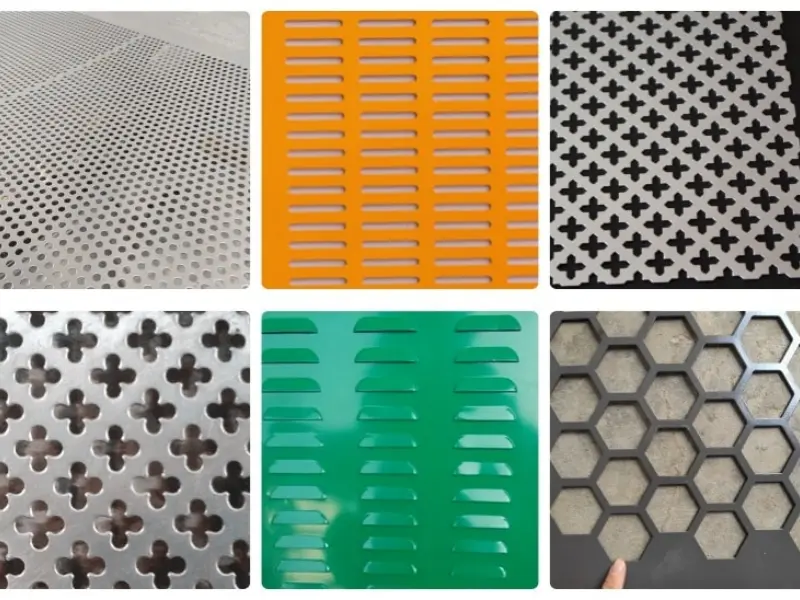
Used in air, liquid, and industrial filtration systems.
Material: 1060, 3003
Hole size: 0.3 mm – 5 mm
Precision punching for tight tolerances
Sunscreen / Louver Panels
Installed on windows and balconies to reduce solar heat.
- Alloy: 6063-T5
- Shape: Flat, curved, or angled
- Finish: Anodized or powder coated
Perforated Aluminium Composite Panel (ACP)
A sandwich panel with two perforated aluminium skins and a core.
- Core options: PE, FR, honeycomb
- Use: Facades, signage, interior
- Advantage: Very light, rigid, and flat
Noise Barrier Panels
Used along highways and railways to block traffic noise.
- Thickness: 2.0–3.0 mm
- Filled with: Mineral wool or rock wool
- Open area: 20–35%
Speaker Grille Panels
Thin, precise perforations for audio equipment covers.
- Thickness: 0.5–1.0 mm
- Hole: Round or slotted
- Finish: Anodized
Machine Guard Panels
Protect workers from moving parts. Must meet safety standards.
- Thickness: 1.5–3.0 mm
- Hole: Round or square
- Alloy: 5052 for strength
Open Area Percentage – Why It Matters
Open area is the ratio of hole space to total panel area. It affects airflow, light, and strength.
| Open Area % | Airflow | Strength | Best Use |
|---|---|---|---|
| 10–20% | Low | High | Screens, guards |
| 20–35% | Medium | Good | Facades, ceilings |
| 35–50% | High | Medium | Ventilation, filters |
| 50%+ | Very High | Lower | Decorative, grilles |
Surface Finish Options
The finish affects corrosion resistance, looks, and maintenance needs.
| Finish Type | Appearance | Durability | Best Use |
|---|---|---|---|
| Mill Finish | Raw silver | Low | Indoor, painted later |
| Anodized | Matte silver/gold/black | High | Architecture, facade |
| Powder Coat | Any RAL color | Very High | Outdoor cladding |
| PVDF Coat | Glossy/matte | Excellent | Premium facades |
| Brushed | Satin texture | Medium | Interior decoration |
Standard Sheet Sizes vs. Custom Sizes
| Type | Available Sizes |
|---|---|
| Standard Sheet | 1000×2000 mm, 1220×2440 mm, 1500×3000 mm |
| Custom Width | Up to 1500 mm |
| Custom Length | Up to 6000 mm |
| Custom Shape | L-shape, U-shape, curved, tapered |
Custom cutting is available with laser or CNC punch machines. Lead time depends on order size.
Key Applications at a Glance
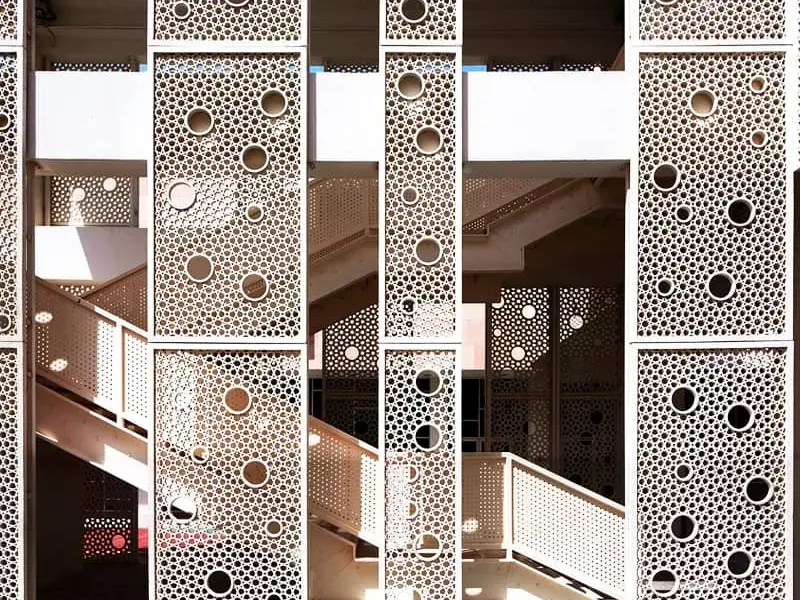
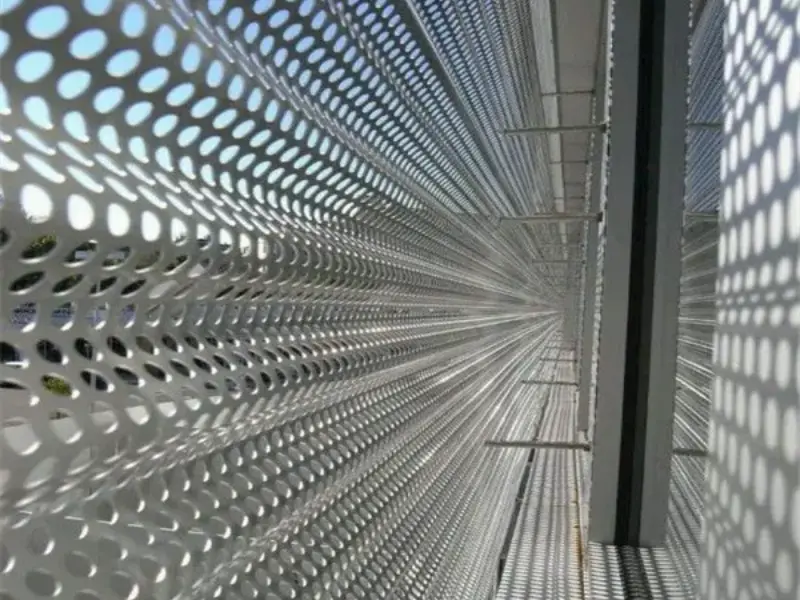
Perforated aluminium panels are used in many industries. Here are the main ones
Architecture & Construction
- Building facades and curtain walls
- Suspended ceiling systems
- Interior wall cladding
- Balcony railings and privacy screens
Industrial & Manufacturing
- Machine safety guards
- Equipment enclosures
- Heat dissipation covers
- Conveyor belt screens
Transportation
- Bus and train interior panels
- Truck body liners
- Automotive speaker grilles
- Cargo floor panels
Acoustics & Noise Control
Soundproof enclosures
Highway noise barriers
Recording studio panels
HVAC duct liners
Agriculture & Environmental
- Greenhouse ventilation screens
- Soil and compost sieves
- Irrigation pipe covers
- Wind protection barriers
Retail & Display
- Shop shelving panels
- Display stands
- Exhibition booth walls
- Point-of-sale units
Home & Interior Design
Garden screens and fences
Cabinet door inserts
Radiator covers
Stair risers
Comparing Perforated vs. Expanded vs. Wire Mesh Aluminium
Many buyers ask about the difference between these three types. Here is a clear comparison:
| Feature | Perforated Panel | Expanded Metal | Wire Mesh |
|---|---|---|---|
| Production | Punched holes | Slit and stretched | Woven or welded wire |
| Surface | Flat | Raised/angled | Flat or raised |
| Hole Shape | Round, square, custom | Diamond | Square, rectangle |
| Strength | High | Medium | Lower |
| Weight | Medium | Light | Light |
| Appearance | Clean, modern | Industrial | Soft, fine |
| Cost | Medium | Low | Medium |
| Best Use | Facades, machines | Walkways, guards | Filters, screens |
How We Set Factory-Direct Pricing
We are a direct manufacturer, not a trader. This means:
- No middleman markup
- Prices based on real material cost + production + delivery
- MOQ starts from 10 sheets for standard sizes
- Custom orders accepted from 50 kg net weight
Price Factors
| Factor | Effect on Price |
|---|---|
| Alloy grade | 5xxx and 6xxx cost more than 1xxx and 3xxx |
| Thickness | Thicker = heavier = higher material cost |
| Hole size | Smaller holes = longer punching time = higher cost |
| Open area | More holes = less material = may reduce cost |
| Surface finish | PVDF > powder coat > anodized > mill finish |
| Order quantity | Larger orders = lower unit price |
| Custom shape | Adds cutting and setup cost |
Quality Standards We Follow
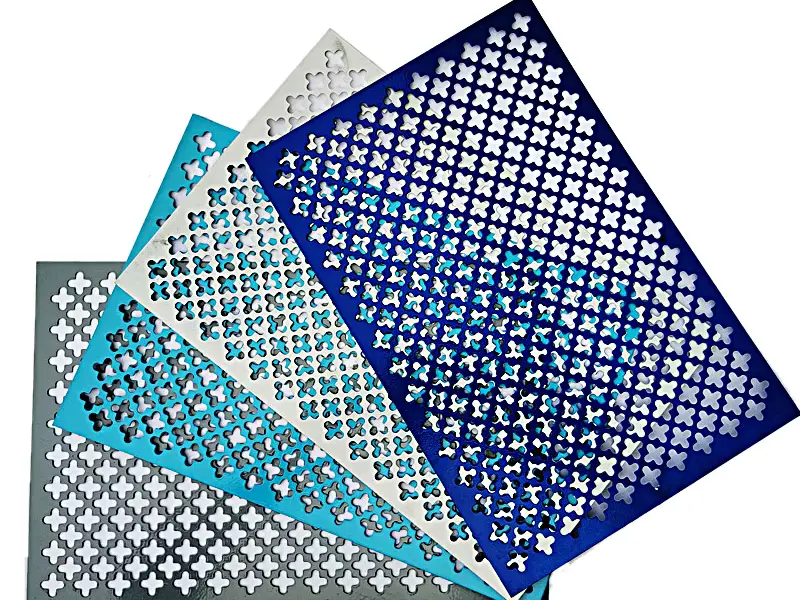
Our perforated aluminium panels meet international quality requirements:
- GB/T 3880 – Chinese national standard for aluminium sheets
- ASTM B209 – US standard for aluminium sheet and plate
- EN 485 – European standard for aluminium products
- ISO 9001:2015 – Quality management system certification
Each batch goes through:
- Dimensional check (thickness, hole size, pitch)
- Surface inspection (scratch, dent, oxidation)
- Tensile and hardness test on request
- Material test certificate (MTC) available
FAQ
What is the minimum order quantity?
For standard sizes, MOQ is 10 sheets. For custom sizes or patterns, the MOQ is based on weight — usually 50–100 kg minimum. Contact us for exact quotes.
Can you make custom hole patterns?
Yes. We can punch round, square, slotted, hexagonal, and custom decorative patterns. Send us your drawing or sample, and we will confirm feasibility and pricing.
How long does production take?
Standard stock items ship in 3–5 business days. Custom orders take 7–15 business days depending on quantity and complexity.
Do you offer sample sheets?
Yes. Small sample pieces are available free of charge. Full-size samples can be provided at cost. Shipping fee applies.
What surface finishes are available?
We offer mill finish, anodized (clear, bronze, black), powder coat (any RAL color), PVDF coating, and brushed finish. Let us know your requirement.
Can the panels be used outdoors?
Yes. Panels made from 3003, 5052, or 6063 alloy with anodized or PVDF finish are fully suitable for outdoor and marine environments.
Do you provide material test certificates?
Yes. We provide full MTC (material test certificate) with each order. The certificate includes alloy grade, temper, mechanical properties, and chemical composition.
What is the difference between anodized and powder-coated panels?
Anodizing creates a thin oxide layer on the surface. It is thinner, more natural-looking, and wear-resistant. Powder coating adds a colored polymer layer. It offers more color options and better UV protection for outdoor use.
Are your panels fire resistant?
Standard aluminium panels are non-combustible (Class A1 in EU fire classification). If you use aluminium composite panels (ACP), choose FR (fire-resistant) core instead of PE core for fire-sensitive areas.
Can you ship worldwide?
Yes. We ship by sea, air, or express courier. Most orders are shipped from our factory in China. We pack panels with wooden pallets and protective film to prevent damage.
Why Buy Directly From Our Factory?
✅ Direct pricing – No agent fees, no middlemen
✅ Full customization – Any alloy, thickness, hole, finish
✅ Fast turnaround – Stock items ship in 3–5 days
✅ Certified quality – ISO 9001, ASTM B209, GB/T 3880
✅ Worldwide shipping – Sea, air, or express
✅ Technical support – Free consultation on material selection
Get a Free Quote Today
Tell us your requirements and we will send a detailed quote within 24 hours.
📋 What to include in your inquiry:
- Panel size (width × length)
- Thickness
- Alloy and temper (if known)
- Hole pattern and size
- Surface finish
- Quantity
- Destination country
We respond to all inquiries within one business day. Samples available on request.