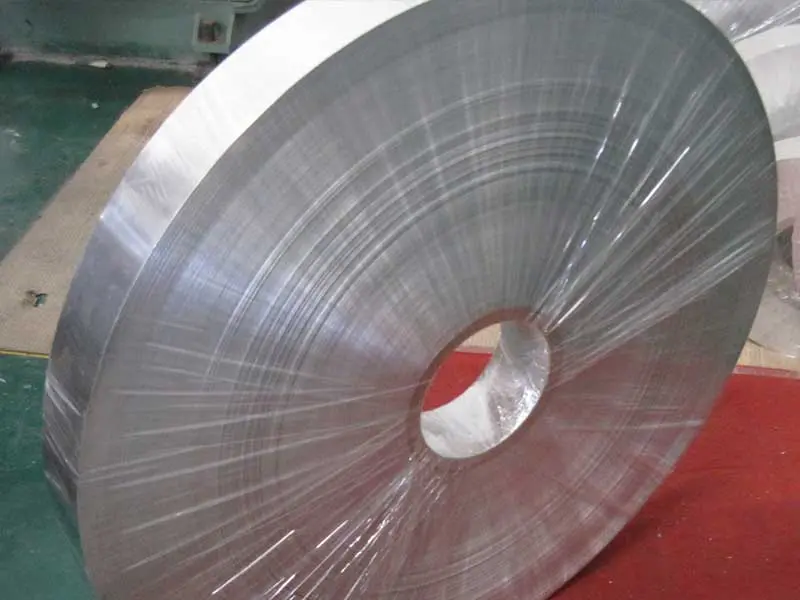
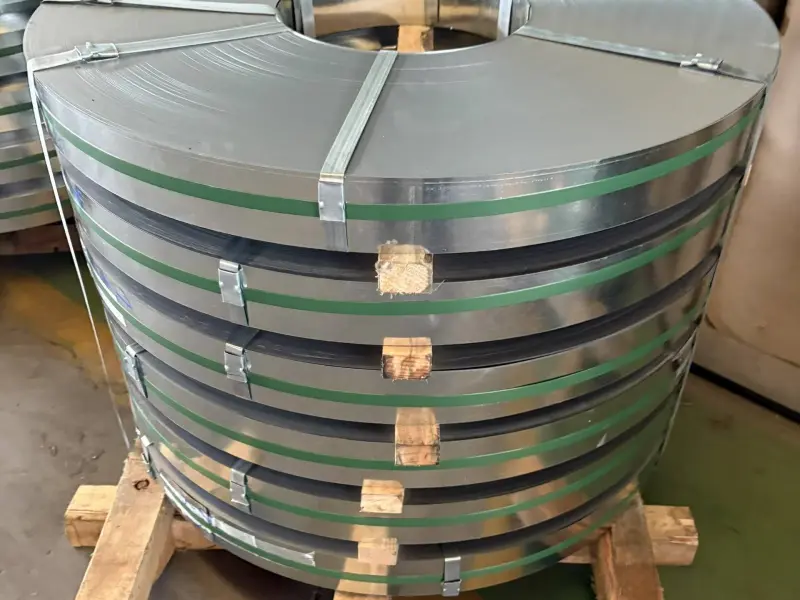
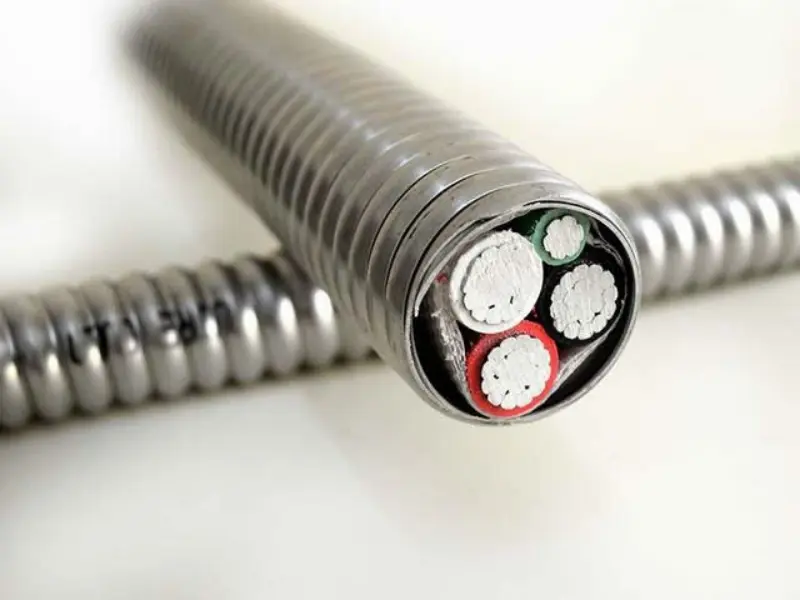
Aluminum strip for armoring cables is a metal protective layer wrapped around electrical and fiber-optic cables. It shields wires from mechanical damage, moisture, and environmental hazards. The strip wraps in a spiral pattern around the cable core, creating a flexible yet strong armor layer.
Cable manufacturers choose aluminum strips because they offer excellent strength-to-weight ratio. The material resists corrosion naturally. It also forms easily around cable contours without cracking.
Key Benefits of Aluminum Cable Armor
Lightweight Protection
Aluminum weighs one-third of steel. This reduces total cable weight significantly. Lighter cables lower shipping costs and simplify installation.
Natural Corrosion Resistance
Aluminum forms a protective oxide layer. This prevents rust in humid or coastal environments. No additional coating is needed for most applications.
Easy Forming and Bending
The strip bends smoothly during armoring machine operation. It maintains integrity through tight radius curves. This flexibility prevents damage during cable installation.
Electromagnetic Shielding
Aluminum armor blocks external electrical interference. It also provides grounding capability for safety systems.
Cost Efficiency
Aluminum costs less than copper armor. It delivers comparable protection at reduced material expense.
Aluminum Alloy Types for Cable Armoring
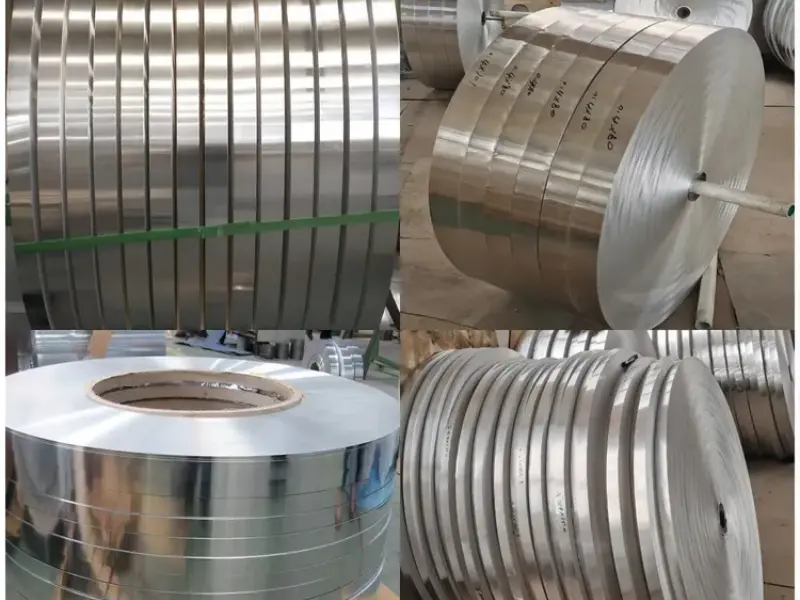
Different cable applications require specific aluminum alloys. Each alloy offers unique mechanical properties.
1000 Series: Pure Aluminum Grades
1060 Aluminum Strip
This grade contains 99.6% pure aluminum. It offers excellent electrical conductivity and corrosion resistance. The soft temper makes forming easy.
| Property | Value |
|---|---|
| Aluminum Content | ≥99.6% |
| Thickness Range | 0.2 mm – 1.2 mm |
| Width Range | 30 mm – 1250 mm |
| Temper | O, H14, H18, H24 |
| Conductivity | >30% IACS |
1100 Aluminum Strip
Similar purity to 1060 with slightly higher strength. Suitable for general-purpose cable protection where moderate forming is required.
5000 Series: Aluminum-Magnesium Alloys
5052 Aluminum Strip
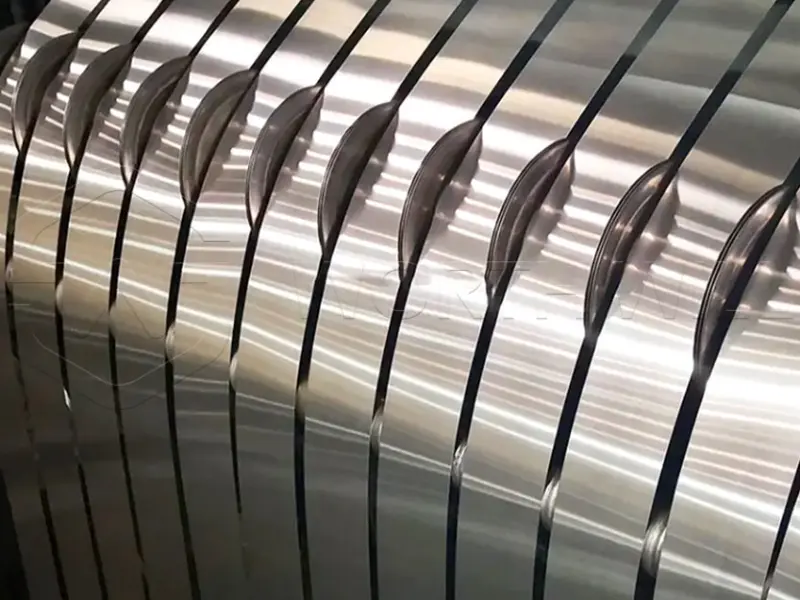
This alloy contains 2.6-3.6% magnesium. It provides superior strength compared to pure aluminum grades. The material withstands higher mechanical stress.
| Property | Value |
|---|---|
| Magnesium Content | 2.6-3.6% |
| Tensile Strength (H32) | 255-302 MPa |
| Elongation | ≥8% |
| Thickness Tolerance | ±0.03 mm |
| Earing | ≤5% |
5154 Aluminum Strip
Higher magnesium content than 5052. This grade offers enhanced seawater corrosion resistance. It suits submarine cable applications.
8000 Series: Specialized Alloys
8011 Aluminum Strip
Iron and silicon additions improve strength. This grade works well for high-speed armoring machines. It maintains dimensional stability during processing.
Temper Designations Explained
Aluminum strip temper indicates hardness and formability. Cable armoring requires specific tempers for different wrapping methods.
| Temper Code | Description | Application |
|---|---|---|
| O | Fully annealed, soft | Maximum formability, complex bends |
| H14 | Strain hardened, half hard | Balanced strength and formability |
| H18 | Full hard, high strength | Rigid armor applications |
| H24 | Strain hardened and partially annealed | Good formability with moderate strength |
| H32 | Strain hardened and stabilized | Corrosion-resistant marine cables |
Standard Dimensions for Cable Armoring Strips
Cable armoring machines accept specific strip sizes. Standard widths match common cable diameters.
Width Specifications
| Strip Width | Typical Cable Diameter | Application |
|---|---|---|
| 9.5 mm | 6-15 mm | Small control cables |
| 12.7 mm | 15-25 mm | Medium power cables |
| 19 mm | 25-50 mm | Large industrial cables |
| 25.4 mm | 50-80 mm | Heavy-duty mining cables |
Thickness Ranges
| Thickness Range | Armor Type | Protection Level |
|---|---|---|
| 0.4-0.6 mm | Light armor | Indoor installations |
| 0.6-0.8 mm | Standard armor | General outdoor use |
| 0.8-1.0 mm | Heavy armor | Underground burial |
| 1.0-2.0 mm | Extra heavy armor | Submarine or mining |
Coil Specifications
| Parameter | Standard Options |
|---|---|
| Inner Diameter | 150 mm, 200 mm, 300 mm, 400 mm, 508 mm |
| Outer Diameter | Up to 1800 mm |
| Coil Weight | 500 kg – 2500 kg |
| Edge Type | Slit edge, round edge |
Edge Types and Quality Standards
Slit Edge
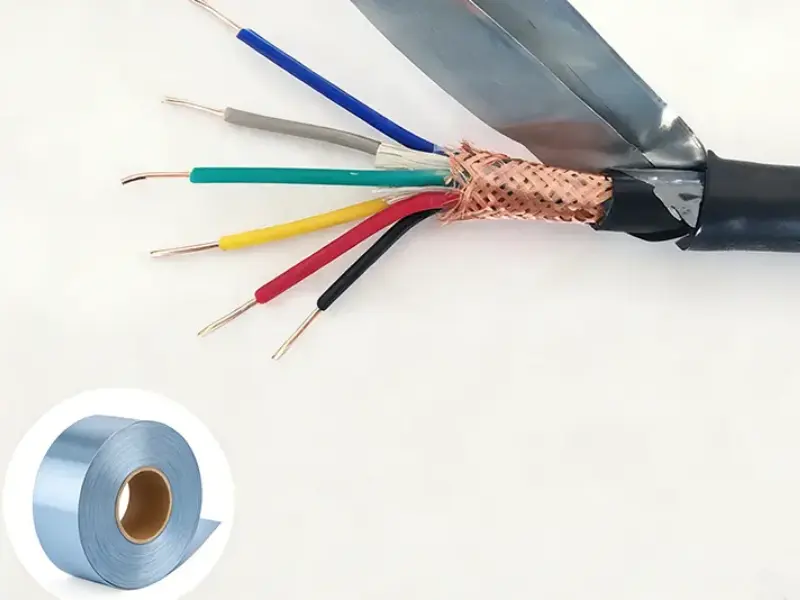
Cut directly from master coil. Clean, straight edges suit most armoring machines. Requires proper tension control during unwinding.
Round Edge
Edges deburred and rounded. Prevents scoring of cable insulation. Reduces risk of worker injury during handling.
Surface Quality
Strip surfaces must remain free from scratches, oil stains, and oxidation spots. Smooth surfaces ensure consistent wrapping tension.
Chemical Composition Standards
1060 Grade Composition
| Element | Maximum Content (%) |
|---|---|
| Aluminum | ≥99.6 |
| Silicon | ≤0.043 |
| Iron | ≤0.203 |
| Magnesium | ≤0.0013 |
| Zinc | ≤0.0093 |
| Manganese | ≤0.0104 |
| Titanium | ≤0.02 |
| Copper | ≤0.0022 |
| Vanadium | ≤0.0039 |
5052 Grade Composition
| Element | Content Range (%) |
|---|---|
| Aluminum | Balance |
| Silicon | ≤0.40 |
| Iron | ≤0.25 |
| Copper | ≤0.10 |
| Manganese | ≤0.50 |
| Magnesium | 2.6-3.6 |
| Chromium | ≤0.30 |
| Zinc | ≤0.07 |
| Titanium | ≤0.15 |
Mechanical Properties by Grade
| Grade | Temper | UTS (MPa) | Yield Strength (MPa) | Elongation (%) | Hardness (HB) |
|---|---|---|---|---|---|
| 1060 | O | 60-90 | 20-30 | 35-45 | 18-22 |
| 1060 | H14 | 95-130 | 70-90 | 15-25 | 30-35 |
| 1060 | H18 | 140-170 | 120-150 | 6-12 | 40-45 |
| 5052 | O | 170-215 | 60-80 | 18-25 | 45-55 |
| 5052 | H24 | 230-280 | 150-200 | 10-16 | 60-70 |
| 5052 | H32 | 255-302 | 180-230 | ≥8 | 65-75 |
| 8011 | O | 80-120 | 30-50 | 25-35 | 25-30 |
Applications of Aluminum Armored Cables
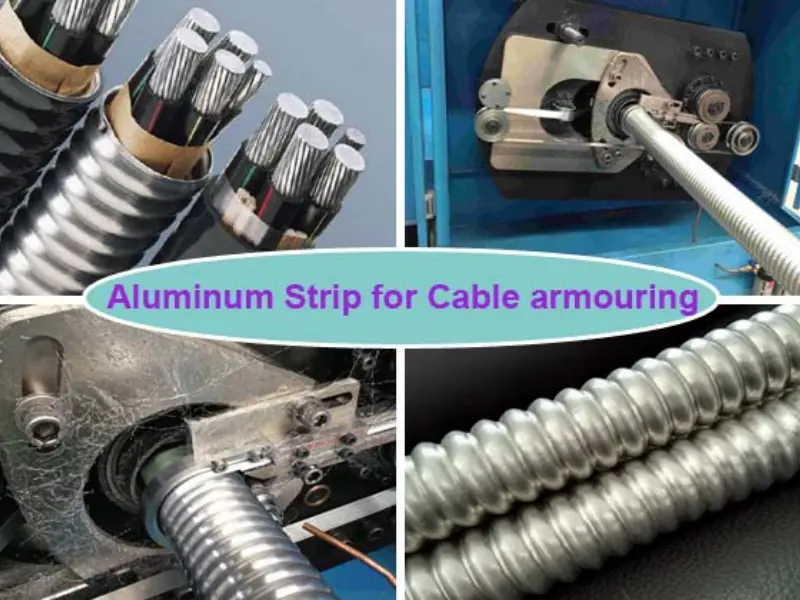
Aluminum strip armor protects cables across multiple industries:
- Power Transmission Lines — High-voltage underground cables
- Telecommunication Networks — Fiber-optic cable protection
- Mining Operations — Heavy-duty trailing cables
- Marine Installations — Submarine and dockside cables
- Railway Systems — Trackside signaling cables
- Industrial Plants — Motor supply and control cables
- Building Construction — Metal-clad (MC) cables
- Oil and Gas Facilities — Offshore platform cabling
- Renewable Energy — Wind turbine and solar farm connections
- Data Centers — High-speed communication links
Manufacturing Quality Standards
Quality aluminum strip for cable armoring meets international specifications:
- ASTM B209 — Standard for aluminum sheet and plate
- EN 485 — European aluminum and aluminum alloy standards
- IEC 60502 — Power cables with extruded insulation
- IS 3975 — Mild steel and aluminum strips for cable armoring
- ISO 9001 — Quality management systems
Packaging and Shipping
Proper packaging prevents damage during transport and storage.
Standard Packaging Options:
| Package Type | Description | Weight Capacity |
|---|---|---|
| Wooden Pallet | Export standard, no fumigation | 1000 kg per pallet |
| Wooden Case | Fumigation certificate included | 500-2000 kg |
| Eye-to-Wall | Coil axis parallel to pallet | Standard sea freight |
| Eye-to-Sky | Coil axis vertical | Space-efficient stacking |
Labeling Requirements:
- Alloy grade and temper
- Dimensions (thickness × width)
- Coil weight and length
- Production batch number
- Handling instructions
Selecting the Right Aluminum Strip
Consider these factors when choosing cable armoring material:
Cable Environment
Marine settings need 5000 series alloys for saltwater resistance. Indoor installations suit 1000 series for cost savings.
Mechanical Stress
High-tension applications require H32 or H24 tempers. Light-duty cables work with O temper for maximum flexibility.
Armoring Machine Specifications
Match strip width to machine mold sizes. Verify thickness compatibility with forming rollers.
Regulatory Requirements
Some industries mandate specific alloy grades. Check local electrical codes before ordering.
Ordering Specifications Checklist
When requesting a quote, provide these details:
- Alloy grade (1060, 5052, 8011, etc.)
- Temper designation (O, H14, H24, H32)
- Thickness and tolerance requirements
- Width and edge type
- Coil inner diameter preference
- Estimated order quantity
- Target delivery schedule
- Special surface treatment needs
Aluminum Strip for Armoring Cables: Complete Product
Aluminum strip for cable armoring delivers reliable protection across diverse applications. The material combines light weight with robust mechanical properties. Multiple alloy grades and tempers allow precise matching to project requirements.
Selecting appropriate specifications ensures optimal cable performance and longevity. Work with suppliers who provide material certifications and consistent quality control. Properly armored cables withstand harsh conditions while maintaining electrical integrity.
For specific project needs, consult technical teams to determine ideal alloy and dimension combinations. Quality aluminum armor extends cable service life and reduces maintenance costs across all installation environments.