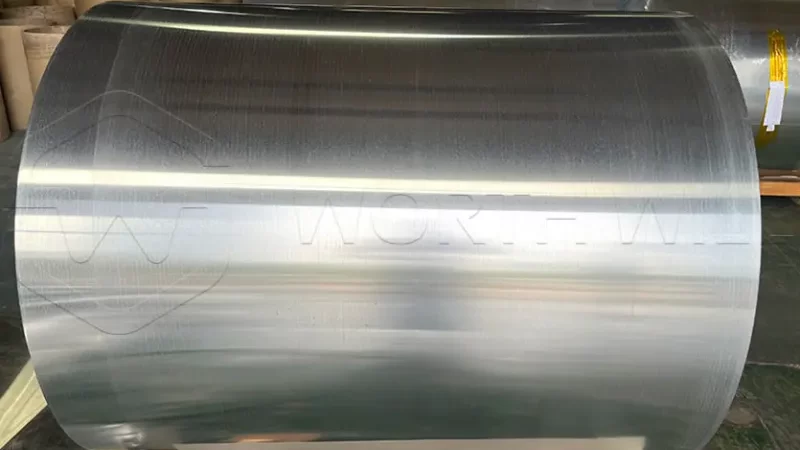
In the metal manufacturing industry, precision is everything. Knowing how to measure aluminum coil thickness and width correctly can save your business time and money. Whether you are in construction, automotive manufacturing, or packaging, even a tiny error in measurement can lead to product failure or material waste.
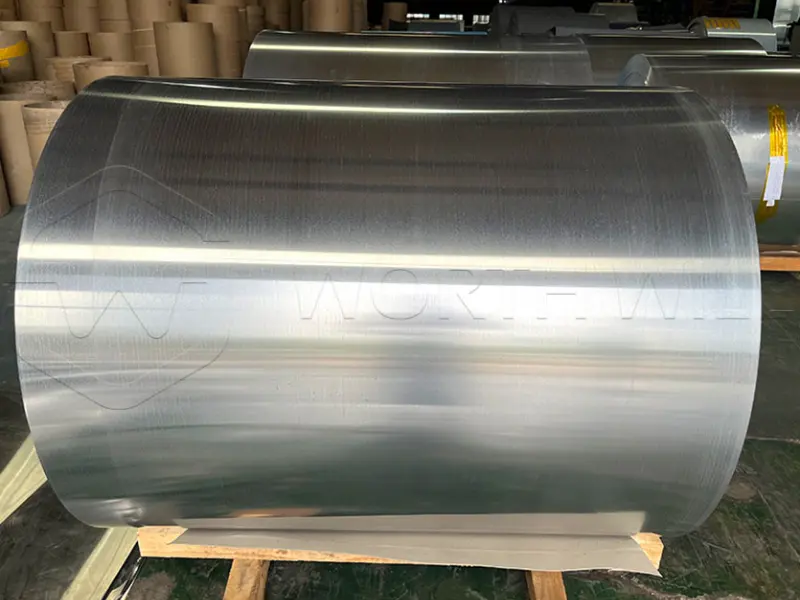
Why Accurate Measurement Matters
When you buy or process aluminum coils, the dimensions determine the weight, price, and usability of the material. If the thickness is off by just 0.01mm, the structural integrity of your final product might be compromised.
At our factory, we emphasize a “Fast, Accurate, and Effective” production process. We use high-precision sensors to ensure every coil we ship matches the customer’s request.
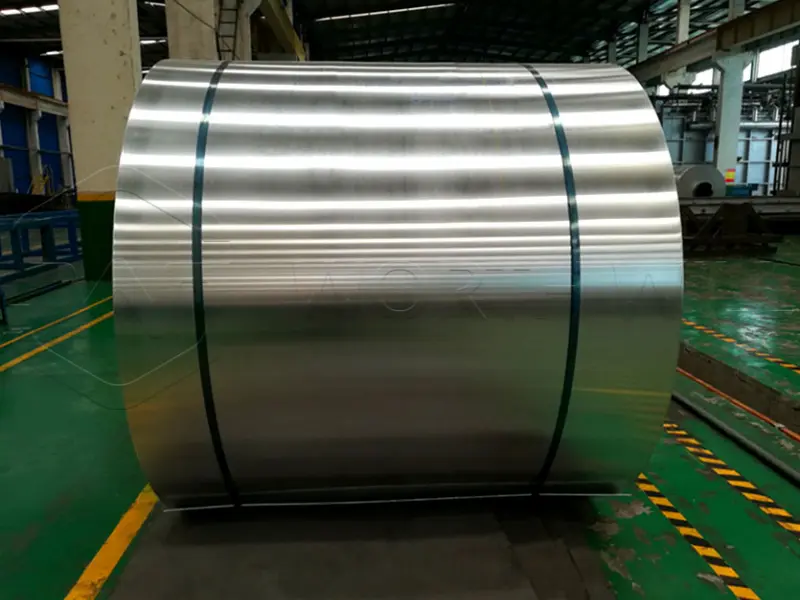
Tools Required for Measuring Aluminum Coils
To get the most accurate results, you need the right equipment. Using a standard ruler is often not enough for industrial standards.
- Digital Micrometers: The best tool for measuring thickness. It provides readings down to the micron level (μm).
- Vernier Calipers: Useful for measuring the width of smaller coils or checking the edge thickness.
- Laser Distance Meters: Used in large-scale factories for automated width measurement during high-speed production.
- Ultrasonic Thickness Gauges: Ideal for measuring thickness when you can only access one side of the material.
- Steel Measuring Tapes: Only recommended for rough width measurements on large industrial coils.
Step-by-Step: How to Measure Aluminum Coil Thickness
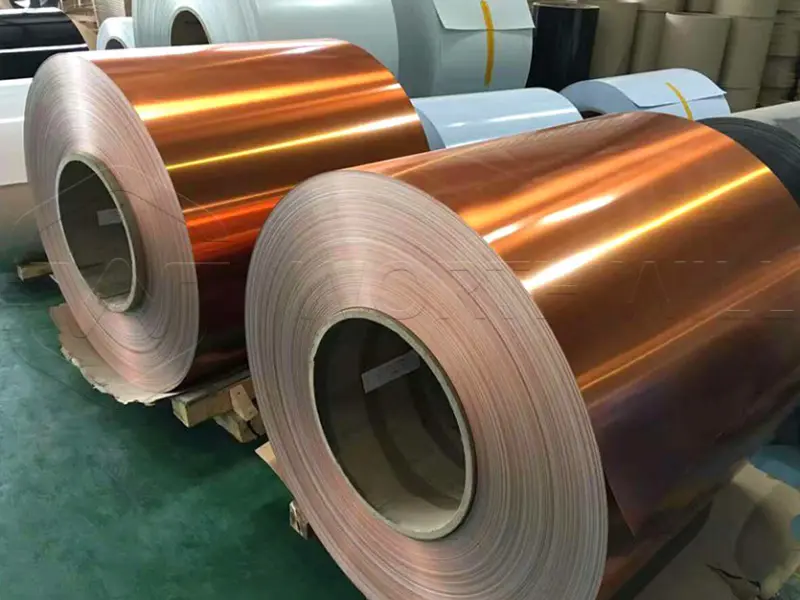
Measuring thickness (also called “gauge”) requires a delicate touch. Follow these steps for the best results:
- Clean the Surface: Ensure the aluminum surface is free from oil, dust, or metal shavings. Any debris can add “phantom” thickness to your reading.
- Zero Your Tool: If using a digital micrometer, close it completely and ensure it reads 0.000mm.
- Measure the Edges: Take a reading about 10mm to 25mm from the edge of the coil.
- Check the Center: If possible, measure the center of the sheet. Sometimes coils have a “crown,” where the center is slightly thicker than the edges.
- Average the Results: Take at least three readings at different spots and calculate the average.
Step-by-Step: How to Measure Aluminum Coil Width
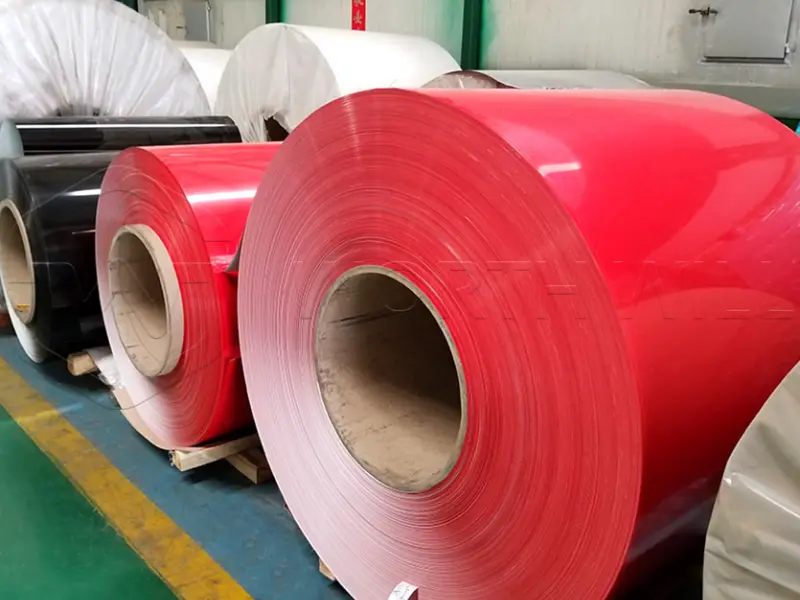
Width measurement is generally simpler but requires consistency, especially for wide-format industrial coils.
- Lay the Coil Flat: Ensure the section you are measuring is flat and not under tension or curved.
- Align the Tool: Place your measuring tape or caliper perpendicular to the edges. A diagonal measurement will result in an incorrect (wider) reading.
- Check Multiple Points: Metal can expand or contract with temperature. Measure the width at the start, middle, and end of the roll to ensure consistency throughout the entire length.
Standard Specifications for Aluminum Coils
Different industries require different “Digital Types” or specifications. Below is a table showing the common ranges we produce in our factory.
Aluminum Coil Specification Chart
| Series Type | Common Thickness Range (mm) | Common Width Range (mm) | Typical Application |
|---|---|---|---|
| 1000 Series (Pure) | 0.20mm−4.50mm | 20mm−2200mm | Electrical, Chemical Equipment |
| 3000 Series (Mn) | 0.25mm−5.00mm | 100mm−1900mm | Roofing, Cooking Utensils |
| 5000 Series (Mg) | 0.30mm−8.00mm | 500mm−2600mm | Marine, Automotive Parts |
| 8000 Series (Foil) | 0.006mm−0.20mm | 100mm−1600mm | Food Packaging, Foil |
Factors That Affect Measurement Accuracy
When learning how to measure aluminum coil thickness and width, you must be aware of external factors that can change your data:
- Temperature: Aluminum expands when heated. Always measure at a consistent room temperature (usually 20∘C or 68∘F).
- Coating Thickness: If the coil is pre-painted or has a sublimation coating, the micrometer will measure the metal plus the paint. You must subtract the coating thickness (typically 15μm to 60μm) to find the “base metal thickness.”
- Pressure: Applying too much pressure with a manual micrometer can slightly compress the material or the tool, leading to a false thin reading. Use the “ratchet stop” on the micrometer for consistent pressure.
Digital vs. Manual Measurement in the Factory
In modern manufacturing, we have moved beyond manual checks. Here is how our factory ensures accuracy:
Manual Measurement (Quality Check)
Our QC team uses hand-held digital micrometers to spot-check coils before they are packed. This ensures a human eye verifies the quality.
Digital/Automated Measurement (During Production)
During the rolling process, we use X-ray Thickness Gauges. These sensors provide real-time data:
- Real-time Adjustments: If the coil becomes too thick, the rollers adjust automatically in milliseconds.
- Data Logging: Every meter of the coil is recorded digitally, providing a full “thickness map” for the customer.
- Accuracy: These systems are accurate to within ±0.002mm.
Common Applications for Measured Aluminum Coils
Accurate measurements allow these coils to be used in high-precision industries:
- Automotive Industry: Used for heat shields and body panels where thickness directly impacts vehicle weight and safety.
- HVAC Systems: Thin-gauge coils are used for air conditioner fins; if the width is wrong, they won’t fit the assembly line.
- Construction: Used for gutters, roofing, and siding. Precise width ensures perfect interlocking between panels.
- Electronics: Used in battery casings and capacitors where even a 1% deviation in thickness can cause a short circuit.
- Food Packaging: Foil coils must be measured accurately to ensure they provide a complete barrier against oxygen and moisture.
Why Trust Our Factory for Your Aluminum Coil Needs?
When you work with us, you are partnering with a factory that values Precision, Speed, and Reliability.
- Advanced Technology: We use the latest digital sensors to ensure that when you order 0.50mm, you get exactly 0.50mm.
- Reasonable Pricing: By optimizing our production and reducing measurement errors, we eliminate waste and pass those savings on to you.
- Years of Experience: We have cooperated with international clients for over a decade. We know the tolerance standards for every major global market.
- Effective Communication: We provide detailed inspection reports with every order. You will see the exact thickness and width data before the ship leaves the port.
Summary of Tolerances
It is important to understand that no factory can hit an “absolute” zero error. However, we stay within the strictest international tolerances (such as ASTM or EN standards).
| Nominal Thickness (mm) | Typical Tolerance (±mm) |
|---|---|
| Up to 0.50mm | ±0.02mm |
| 0.51mm−1.00mm | ±0.03mm |
| 1.01mm−2.00mm | ±0.04mm |
| Over 3.00mm | ±0.05mm |
Frequently Asked Questions
What is the most accurate way to measure aluminum coil thickness?
The most accurate method is using a digital micrometer with a ratchet stop to ensure consistent pressure, or an industrial X-ray gauge during production.
Can I use a tape measure for width?
For general construction, a tape measure is fine. However, for industrial manufacturing or slit-to-size coils, you should use a long-arm vernier caliper or a laser measurement system.
Does the alloy type change the measurement?
The alloy doesn’t change the way you measure, but it does change how the metal reacts to temperature. Harder alloys (like the 5000 or 7000 series) are less likely to compress under the pressure of a micrometer compared to soft 1000 series aluminum.
Contact Us for High-Precision Aluminum Coils
Understanding how to measure aluminum coil thickness and width is the first step in quality control. If you need a supplier that takes these measurements as seriously as you do, we are here to help. Our factory combines years of experience with rapid production to give you the exact material you need for your project.
Contact our technical team today for a detailed quote and specification sheet.