Aluminum alloys are named using a four-digit system set by the Aluminum Association. Each digit tells you something specific about the alloy’s composition. Understanding this helps when comparing 5052 aluminium honeycomb core against alternatives like 5056 or 6061.
5 Series
Magnesium (Mg) is the primary alloying element
0 Modification
5 Original alloy — no major modification
Impurity limit
Controlled impurity content level
2 Variant
Second registered variant in this composition group
| Alloy | Primary Element | Mg Content | Temper | Character |
|---|---|---|---|---|
| 5052 | Magnesium + Chromium | 2.2 – 2.8 % | H18, H38 | Excellent corrosion resistance, very formable |
| 5056 | Magnesium + Chromium | 4.5 – 5.6 % | H18, H38 | Higher strength, better for thicker foil |
| 3003 | Manganese | — | H18 | Lower cost, general-purpose core |
5052 Aluminum Honeycomb Core — Sizes & Densities
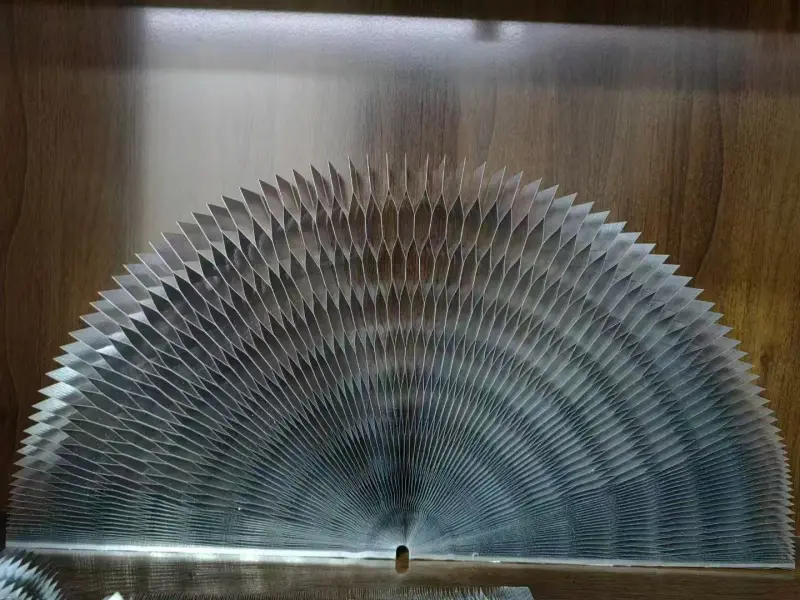
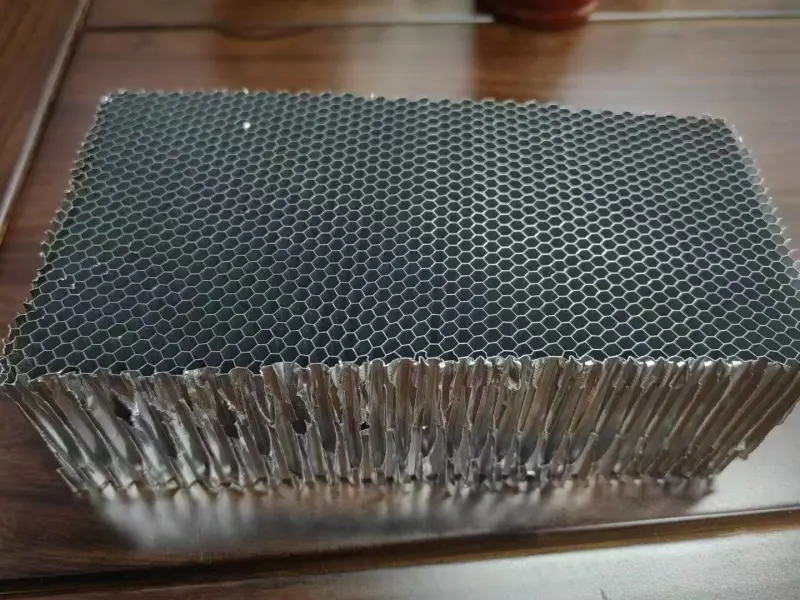
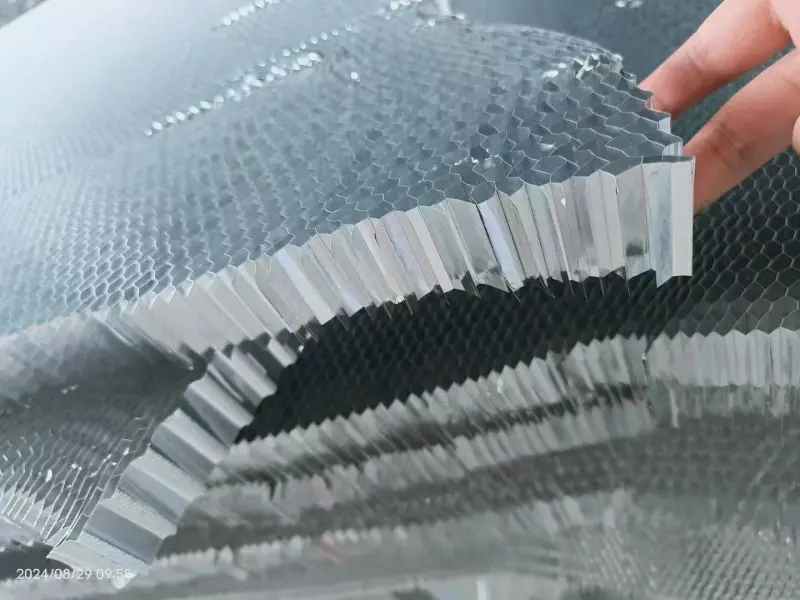
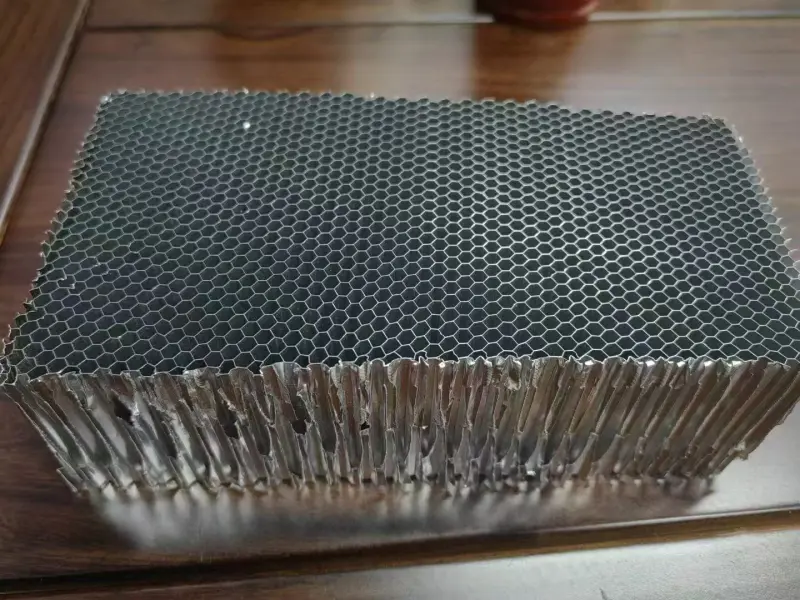
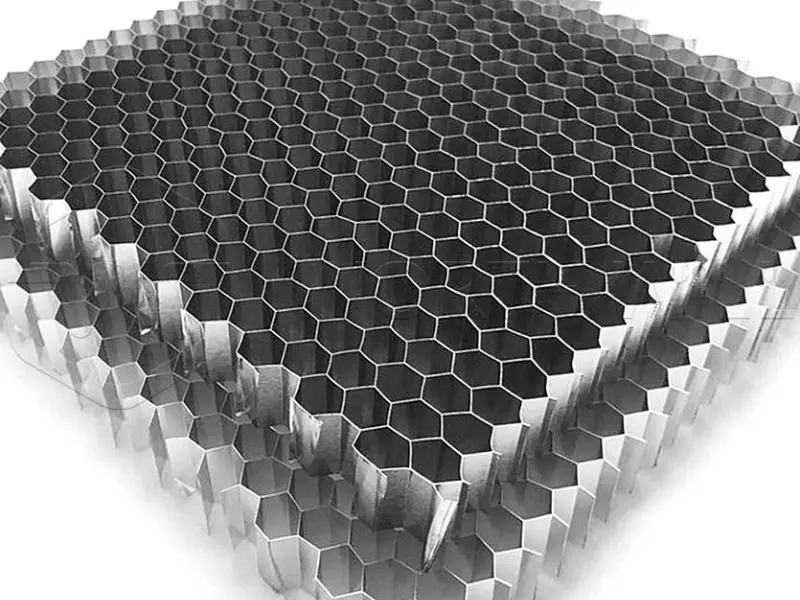
The 5052 honeycomb core is manufactured by expanding aluminium foil into a hexagonal cell structure. Key parameters are cell size, foil thickness, and core density — these three numbers define the mechanical performance of any honeycomb aluminum core.
Cell Size vs Density vs Foil Thickness
| Cell Size (mm) | Foil Thickness (mm) | Density (kg/m³) | Compressive Strength (MPa) | Best Application |
|---|---|---|---|---|
| 3.2 (⅛″) | 0.040 | ~130 | ~10.3 | Aerospace floor panels |
| 3.2 (⅛″) | 0.076 | ~192 | ~18.6 | High-load structural panels |
| 4.8 (3/16″) | 0.040 | ~82 | ~5.5 | Marine bulkheads, partitions |
| 6.4 (¼″) | 0.040 | ~54 | ~3.2 | Architectural cladding panels |
| 9.5 (⅜″) | 0.040 | ~38 | ~1.6 | Interior doors, furniture cores |
| 12.7 (½″) | 0.040 | ~29 | ~0.9 | Lightweight packaging, displays |
| 19.0 (¾″) | 0.040 | ~19 | ~0.4 | Energy absorption, fillers |
| 25.4 (1″) | 0.040 | ~14 | ~0.2 | Ultra-light non-structural fill |
Standard Core Sheet Dimensions
| Width (mm) | Length (mm) | Thickness (mm) | Notes |
|---|---|---|---|
| 1220 | 2440 | 6 – 100 | Most common stock size |
| 1500 | 3000 | 6 – 150 | Large panel / facade use |
| 1000 | 2000 | 6 – 200 | Aerospace, cut-to-size |
| Custom | Up to 4000 | 3 – 200 | OEM / project supply |
Mechanical Properties — 5052-H18 Foil
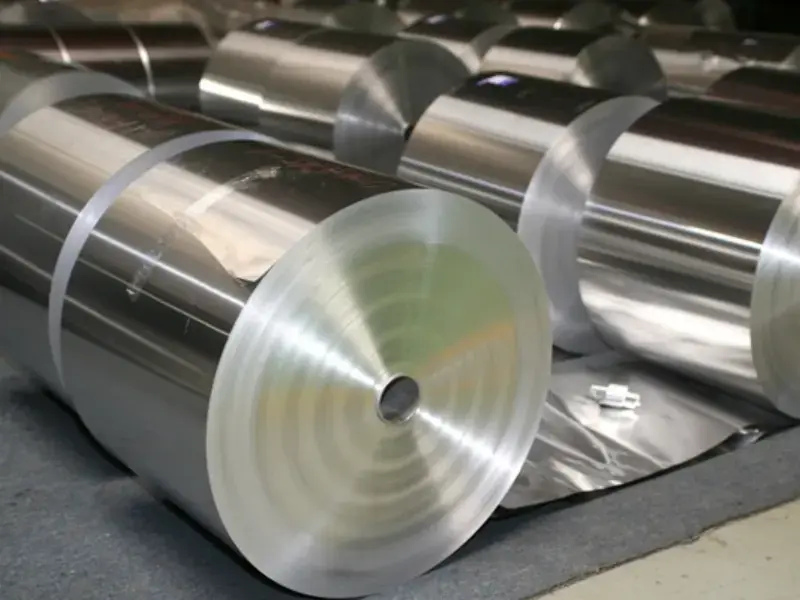
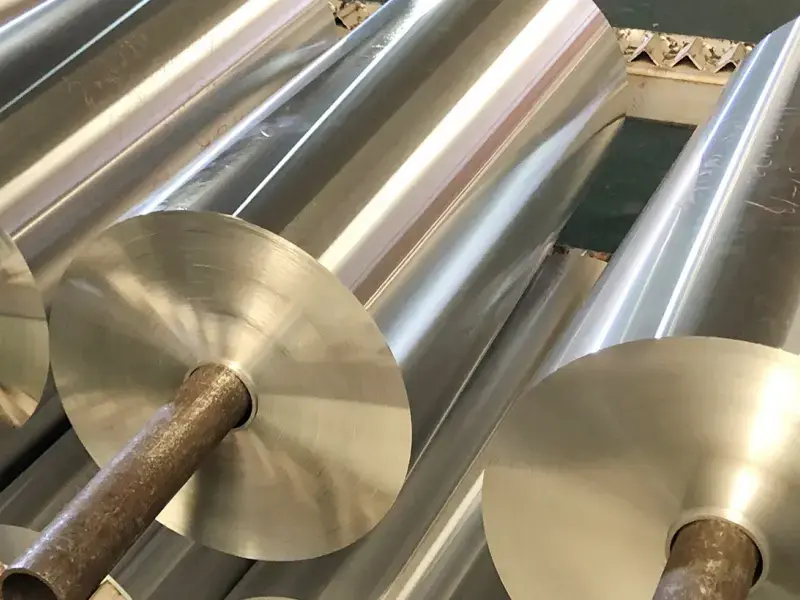
| Property | 5052 Core | Unit |
|---|---|---|
| Foil tensile strength | 260 – 290 | MPa |
| Foil yield strength | 240 – 270 | MPa |
| Elongation at break | 4 – 8 | % |
| Thermal conductivity | 138 | W/m·K |
| Operating temp range | –200 to +180 | °C |
| Corrosion resistance | Excellent (saltwater / marine grade) | |
5052 Aerospace Grade Aluminum Honeycomb Core Material
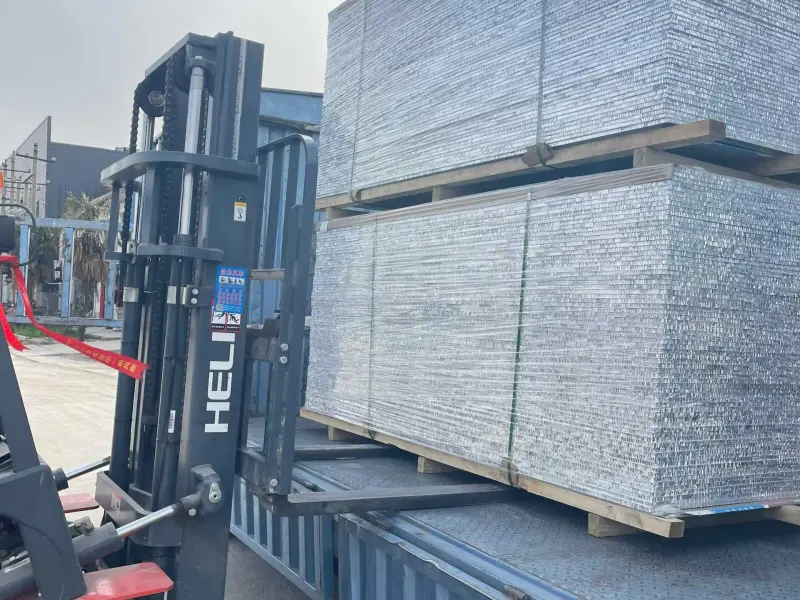
The 5052 aerospace grade aluminum honeycomb core material is a high-performance lightweight structure widely used in aerospace, rail transit, and high-end industrial applications. Compared with standard alloys, 5052 offers better corrosion resistance, higher fatigue strength, and excellent durability, making it ideal for demanding environments.
Manufactured from high-quality 5052 aluminum foil, this honeycomb core provides a perfect balance of strength-to-weight ratio, energy absorption, and long service life.
Key Features
- Excellent corrosion resistance (marine and humid environments)
- Higher strength than 3003 alloy
- Lightweight with strong structural stability
- Good fatigue resistance for long-term use
- Suitable for aerospace and defense applications
Specifications
| Parameter | Details |
|---|---|
| Alloy | 5052 Aluminum Alloy |
| Foil Thickness | 0.02 mm – 0.08 mm |
| Cell Size | 3 mm – 25 mm |
| Core Density | 25 – 80 kg/m³ |
| Surface Treatment | Mill finish / Anti-corrosion |
| Standard | Aerospace / Industrial Grade |
Applications
- Aircraft interior panels
- Aerospace sandwich structures
- High-speed train components
- Marine panels
- Cleanroom and industrial panels
5052 Aluminum Foil for Aluminum Honeycomb Core
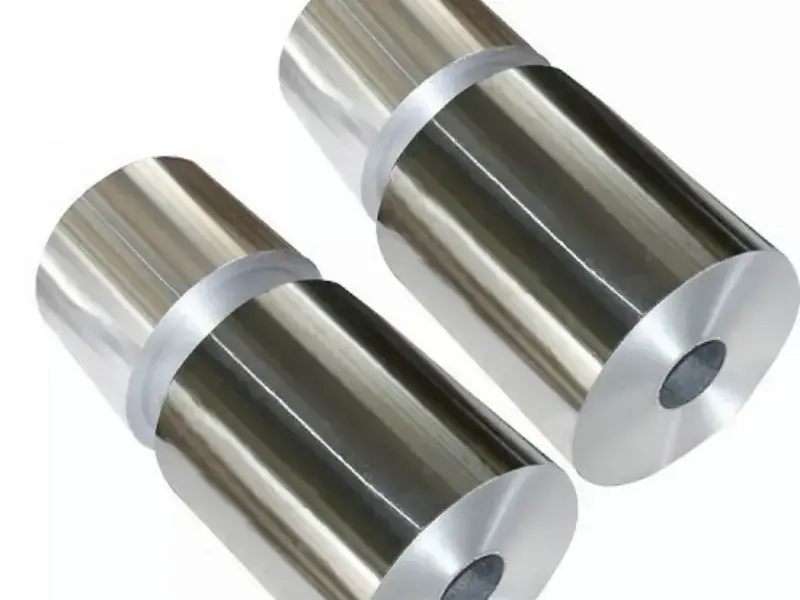
5052 aluminum foil for aluminum honeycomb core is a premium raw material used to produce high-strength, lightweight honeycomb structures.
It is widely applied in aerospace, marine, transportation, and industrial panels due to its excellent corrosion resistance, good formability, and superior mechanical performance.
Compared with standard alloys such as 3003, 5052 aluminum foil offers higher strength and better durability, making it especially suitable for harsh environments such as humid, marine, or chemically exposed conditions.
Key Features
- High strength and excellent fatigue resistance
- Outstanding corrosion resistance (especially in marine environments)
- Good formability for honeycomb expansion
- Lightweight with stable structure
- Long service life with minimal maintenance
Specifications
| Parameter | Details |
|---|---|
| Alloy | 5052 Aluminum Alloy |
| Temper | H18 / H19 |
| Thickness | 0.02 mm – 0.08 mm |
| Width | 100 mm – 1600 mm |
| Surface | Clean, oil-free, no defects |
| Tensile Strength | ≥ 200 MPa |
| Elongation | ≥ 2% |
| Standard | ASTM / GB / EN |
Applications
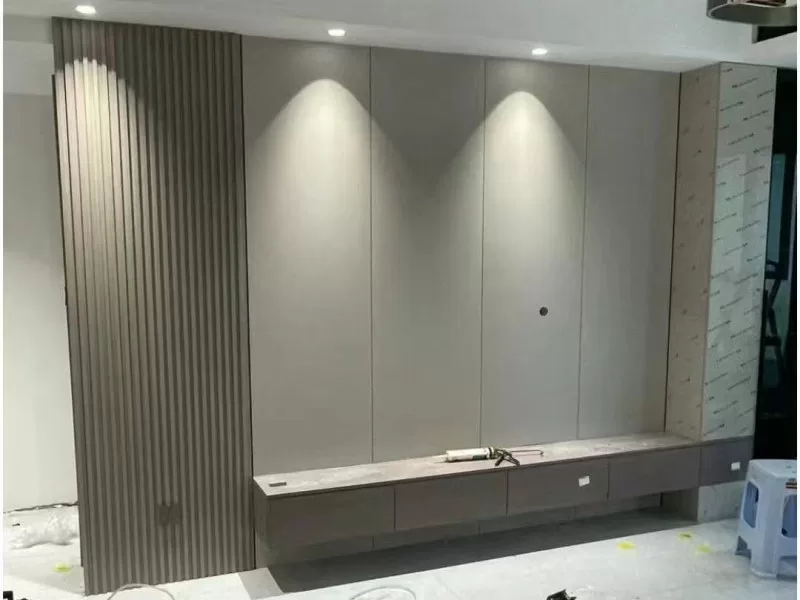
Aluminum honeycomb core production
Aerospace sandwich panels
Marine honeycomb structures
Rail transit interior panels
Architectural composite panels
Why Choose 5052 Aluminum Foil?
5052 aluminum foil is the preferred choice for high-performance honeycomb core manufacturing because it ensures:
- Strong bonding performance during core processing
- Stable cell structure after expansion
- Better resistance to environmental stress and corrosion
Manufacturing Advantage
At WORTHWILL ALUMINUM, we supply high-quality 5052 aluminum foil with:
- Strict quality control system
- Stable thickness tolerance
- Smooth surface for better adhesive bonding
- Custom sizes based on customer requirements
3003 vs 5052 Aluminum Honeycomb Core
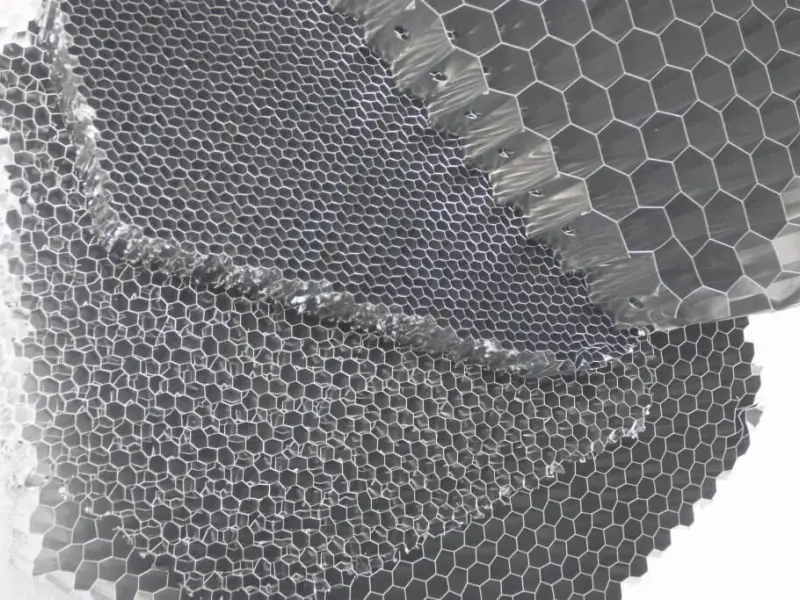
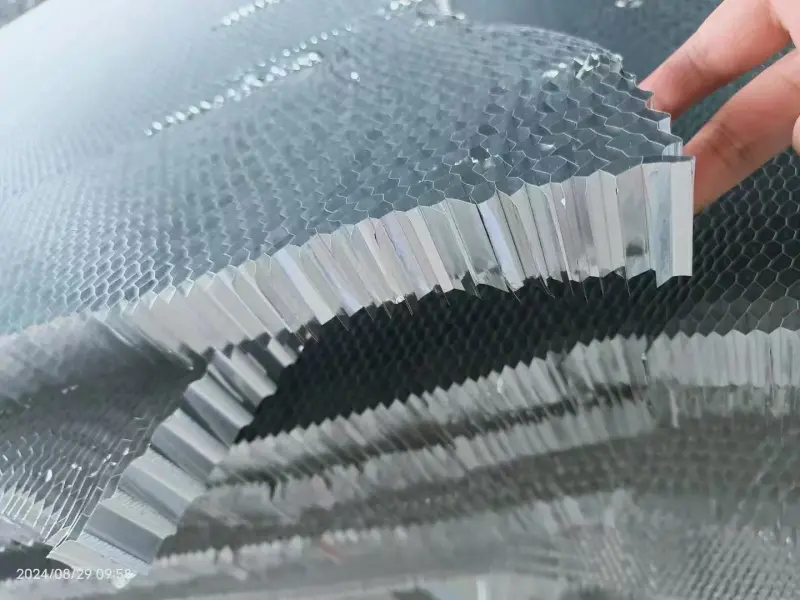
Both 3003 aluminum honeycomb core and 5052 aluminum honeycomb core are widely used in sandwich panel structures. However, they differ significantly in strength, corrosion resistance, and application scenarios.
While 3003 is a cost-effective general-purpose material, 5052 is preferred for high-performance and harsh environments.
Performance Comparison Table
| Property | 3003 Aluminum Core | 5052 Aluminum Core |
|---|---|---|
| Alloy Type | Al-Mn | Al-Mg |
| Strength | Medium | Higher |
| Corrosion Resistance | Good | Excellent |
| Fatigue Resistance | Moderate | Strong |
| Cost | Lower | Higher |
| Application Level | General Industrial | Aerospace / Marine |
Applications of Aluminum Honeycomb Core
The aluminum honeycomb 5052 core is valued for its extraordinary stiffness-to-weight ratio. It is wherever structural rigidity, light weight, and flat surface stability all matter at once.

Aircraft floor & wall panels
Helicopter rotor blades
Marine bulkheads & decking
Architectural facade panels
Clean room wall & ceiling panels
Racing car body structures
Train interior panels
Elevator cab wall panels
Satellite & spacecraft structures
High-precision optical tables
Blast & impact-resistant panels
Refrigerator & cold store walls
Compare 5052 Aluminum Stronger Than 6061?
This is a common question when choosing between alloys. The short answer: 6061 is stronger in tensile and yield strength, but 5052 outperforms 6061 in corrosion resistance and formability — which is exactly why 5052 is preferred for honeycomb foil, not 6061.
| Property | 5052-H38 | 5056-H38 | 6061-T6 |
|---|---|---|---|
| Tensile strength (MPa) | 290 | 435 | 310 |
| Yield strength (MPa) | 255 | 405 | 276 |
| Elongation (%) | 5 | 7 | 12 |
| Corrosion resistance | Excellent | Excellent | Good |
| Formability for foil | Excellent | Very good | Poor |
| Weldability | Excellent | Excellent | Good |
| Marine use | Yes | Yes | With coating |
| Typical honeycomb use | Standard core | High-strength core | Rarely used |
5052 vs 5056 Aluminum Honeycomb Core — Which to Choose?
| Factor | 5052 Core | 5056 Core |
|---|---|---|
| Strength per unit weight | Good | Better |
| Corrosion resistance | Excellent | Excellent |
| Cost | Lower | Higher |
| Availability | Very wide | More specialist |
| Best use case | Architecture, marine, general | Aerospace, defence, high-load |
💡 For most commercial and architectural projects, 5052 aluminum honeycomb core is the right choice. Only switch to 5056 aluminum honeycomb core when the specification demands higher compressive or shear strength at the same cell size and foil thickness.
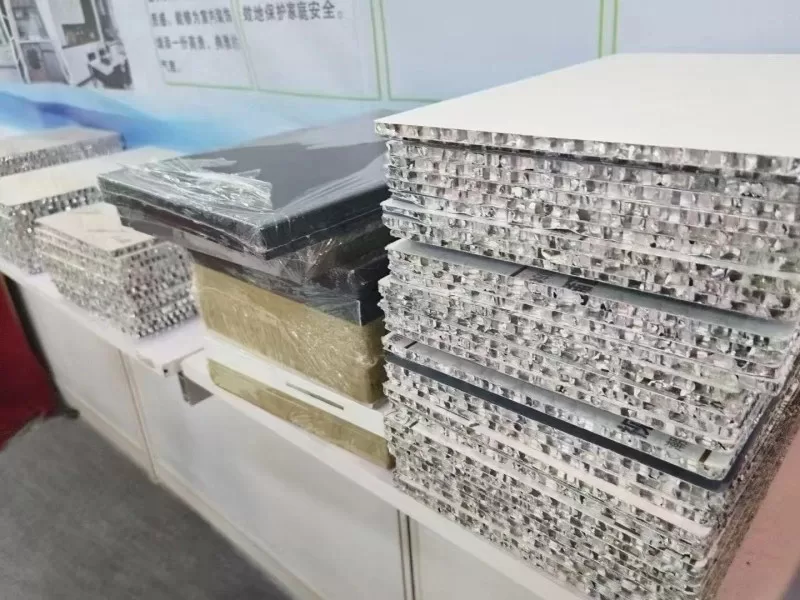
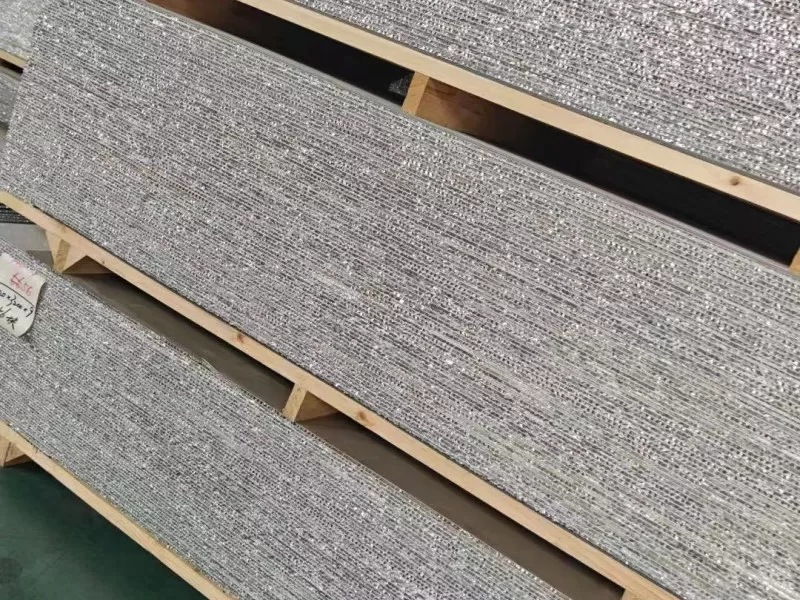
Disadvantages of Honeycomb Panels
Honeycomb panels offer exceptional performance, but they are not the right choice for every project. Here is an honest look at both sides.
✓ Advantages
- Highest stiffness-to-weight ratio of any panel
- Flat, stable surface — no warping
- Excellent thermal and acoustic damping
- Fully recyclable aluminium construction
- Wide cell size range for tunable density
- Performs from –200 °C to +180 °C
✗ Disadvantages
- Higher cost than foam or solid panel cores
- Edge damage can propagate if unsupported
- Difficult to repair once skin is delaminated
- Requires closed-edge detailing to prevent moisture ingress
- Not suitable for curved or complex 3D forms
- Specialist adhesives needed for bonding skins
| Risk | Level | Mitigation |
|---|---|---|
| Edge moisture ingress | High if open | Seal all edges with aluminium extrusion or tape |
| Skin delamination | Medium | Use correct film adhesive; apply even press pressure |
| Point load denting | Medium | Increase skin thickness or use insert plates at fix points |
| Cost vs foam core | Low risk | Justified by weight saving in most applications |
Aluminum Honeycomb Core Suppliers
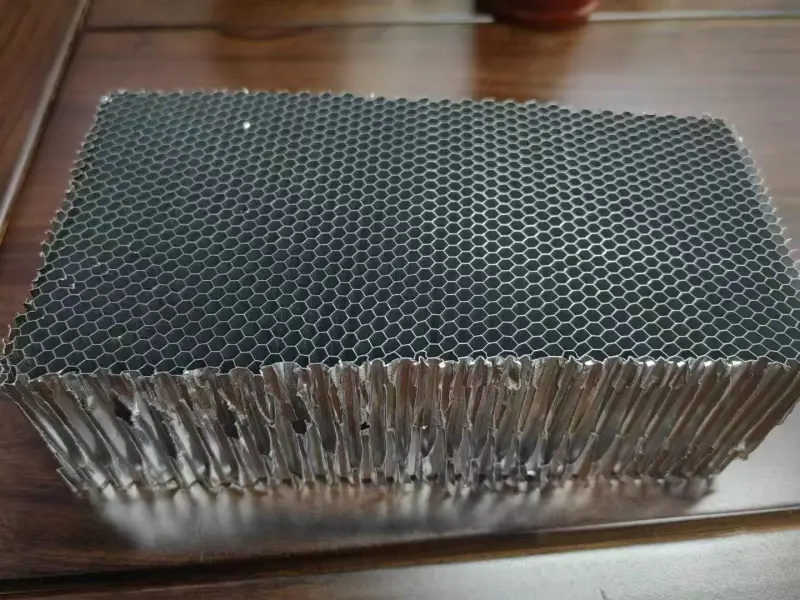
When sourcing aluminum honeycomb core suppliers, consider lead time, certifications (aerospace vs commercial grade), minimum order quantity, and whether they offer cut-to-size service.
| Supplier Type | Grade Available | MOQ | Lead Time | Best For |
|---|---|---|---|---|
| Aerospace distributor | 5052, 5056 (ASTM B209 cert.) | 1 sheet | 3 – 10 days | Defence, aircraft, certified projects |
| Architectural supplier | 5052, 3003 | 5 sheets | 5 – 14 days | Facade panels, cladding, interiors |
| Direct factory (Asia) | 5052, 5056, 3003 | 50 m² | 15 – 30 days | High-volume, cost-sensitive projects |
| Online metal supplier | 5052, 3003 | 1 sheet | 2 – 7 days | Prototyping, small batches |
What to Check Before Ordering
| Specification | What to Ask |
|---|---|
| Alloy & temper | 5052-H18 or 5052-H38 foil? (H38 is stronger) |
| Cell size & foil thickness | Both numbers are needed to define density & strength |
| Core certification | ASTM C297 (flatwise tension), ASTM C365 (compressive)? |
| Panel or bare core? | Bare core only, or bonded with aluminium / composite skins? |
| Edge treatment | Open cell, folded edge, or solid aluminium edge bar? |
5052 Aluminum Honeycomb Core
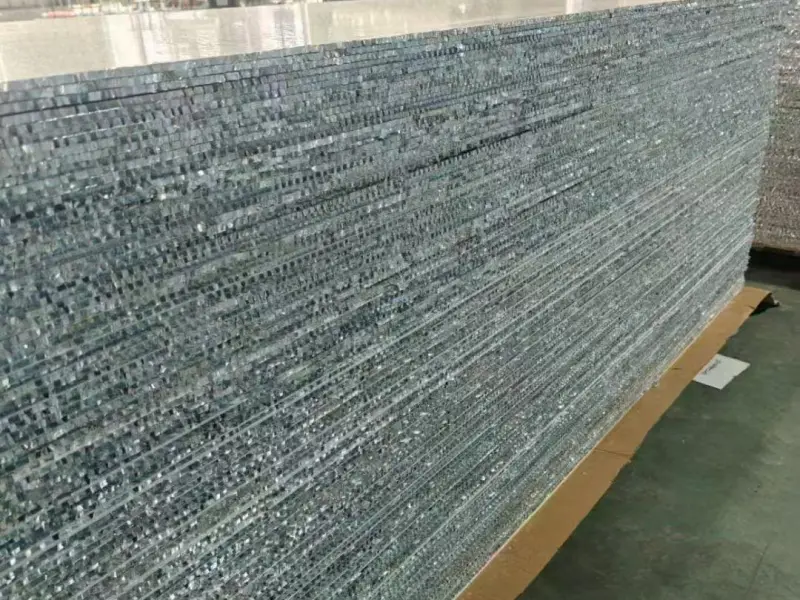
These sections are written to slot into an existing 5052 Aluminum Honeycomb Core page. They skip applications, FAQ, and product-type content already covered, and instead add new angles: cell geometry, mechanical performance, manufacturing process, and bonding methods.
Cell Size and Density Options
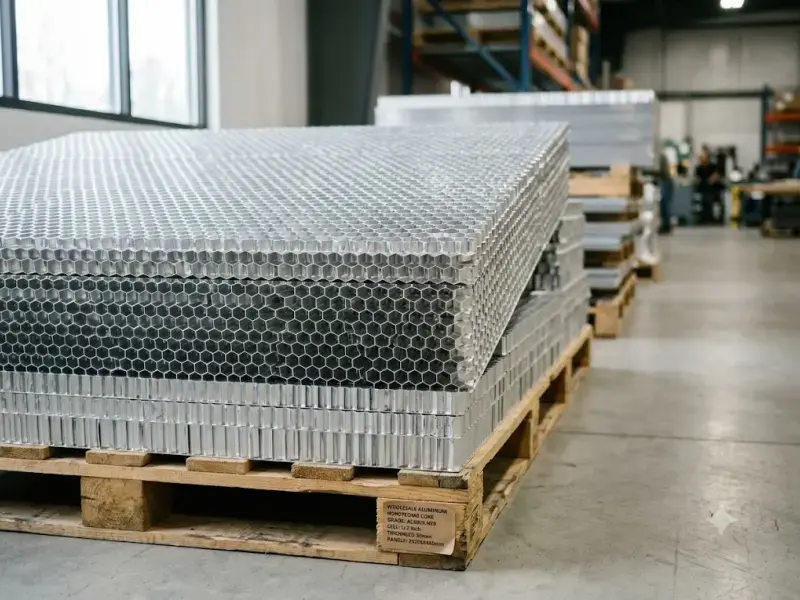
Honeycomb performance changes significantly based on how large or small each hexagonal cell is. Smaller cells generally mean higher strength but added weight.
| Cell Size (mm) | Density (kg/m³) | Typical Use |
|---|---|---|
| 3.0 – 4.0 | High density | High-strength aerospace and structural panels |
| 5.0 – 6.0 | Medium-high density | Structural panels, transportation components |
| 8.0 – 10.0 | Medium density | General panel cores, furniture, partitions |
| 12.0 – 19.0 | Low density | Lightweight panels, decorative applications |
Mid-range cell sizes around 6mm to 8mm cover most general commercial and industrial panel needs, balancing strength against weight and material cost.
How Cell Size Affects Panel Behavior
- Smaller cells resist crushing and impact better
- Larger cells reduce overall panel weight
- Foil thickness combined with cell size determines final compressive strength
Foil Thickness and Mechanical Properties
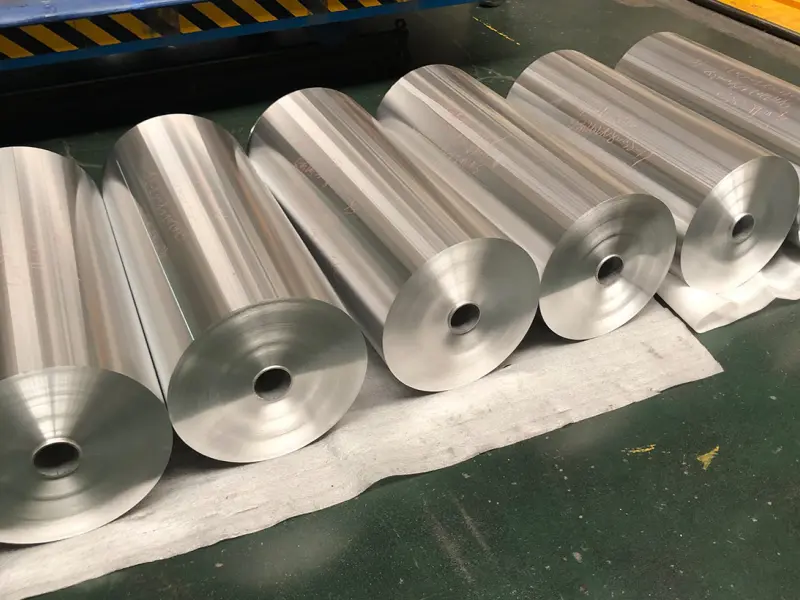
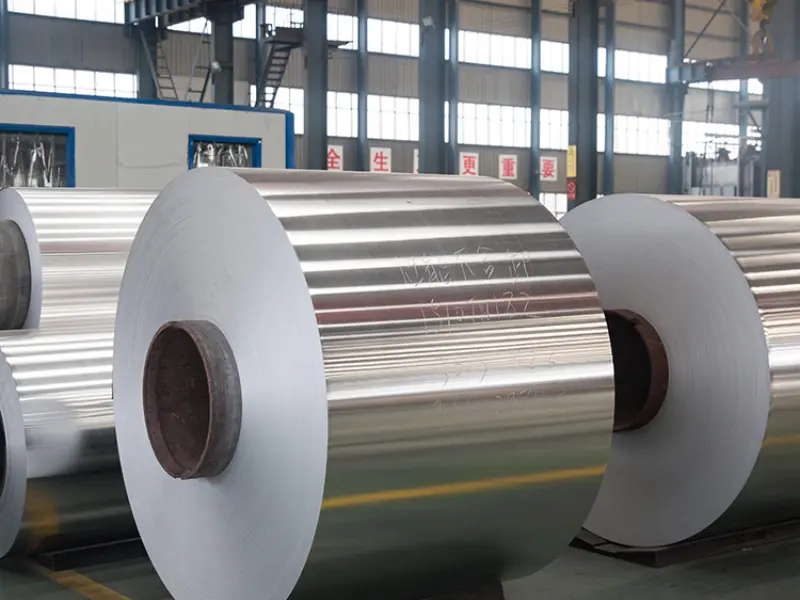
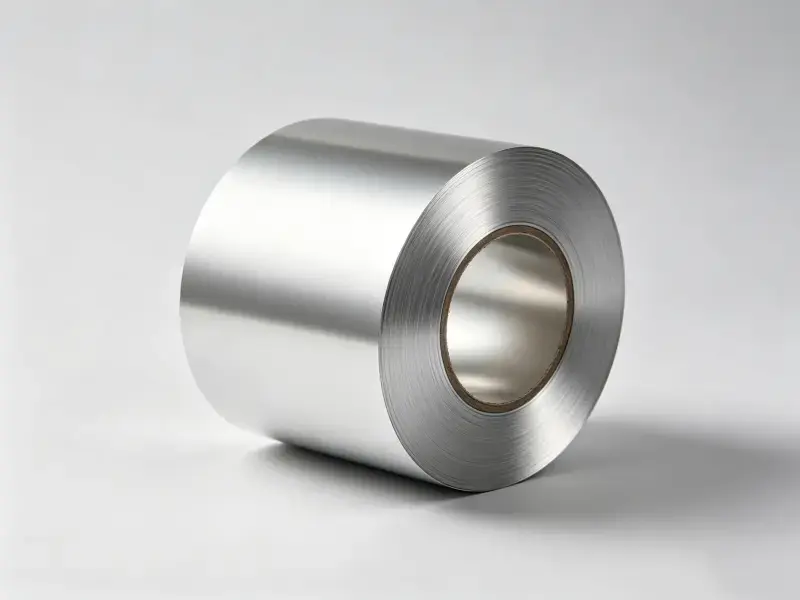
The aluminum foil used to form the honeycomb walls comes in several thickness options, each affecting core strength differently.
| Foil Thickness (mm) | Compressive Strength | Shear Strength |
|---|---|---|
| 0.03 – 0.04 | Lower | Lower |
| 0.05 – 0.06 | Moderate | Moderate |
| 0.07 – 0.08 | Higher | Higher |
| 0.10+ | Highest | Highest |
Thicker foil increases both compressive and shear strength, though it also adds weight, so the right combination of cell size and foil thickness depends on the load requirements of the finished panel.
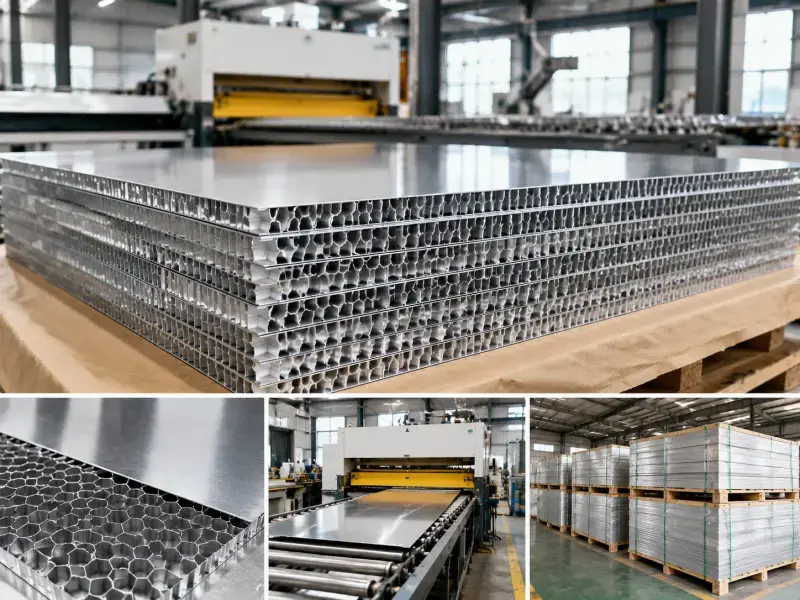
How Honeycomb Core Is Manufactured
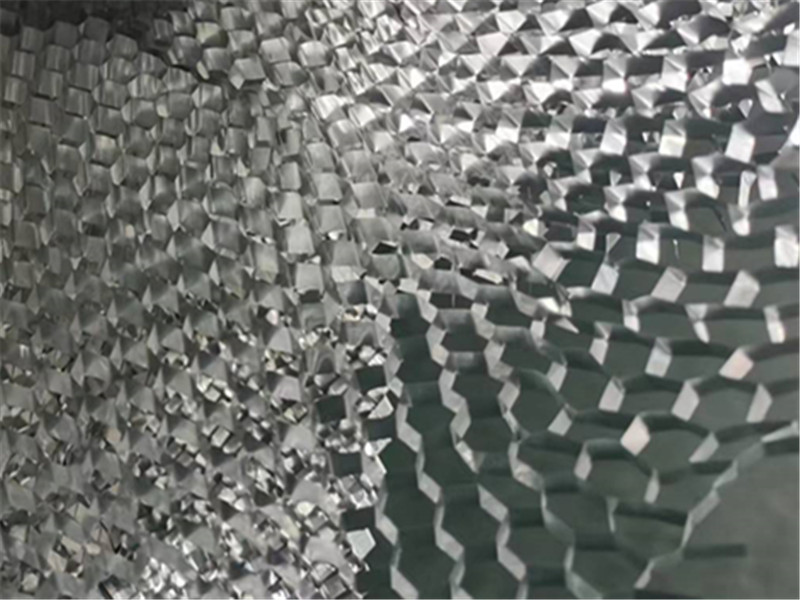
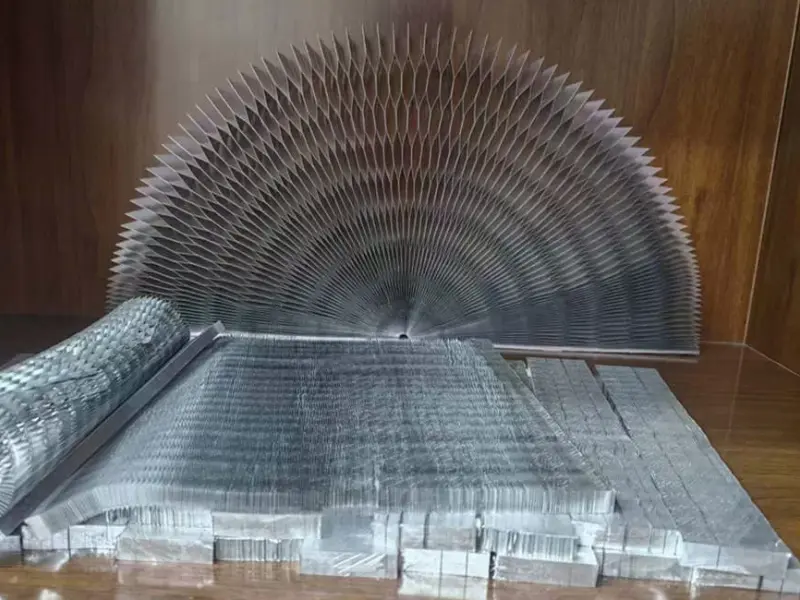
Understanding the production method explains why 5052 honeycomb holds such a consistent cell structure.
- Thin aluminum foil sheets have coated with adhesive in a strip pattern
- Sheets have stacked and bonded at the adhesive strips
- The stacked block has expanded, pulling the strips apart into hexagonal cells
- The expanded block has cut into slices at the desired core thickness
- Cores have then flattened and calibrated for consistent height
This expansion process is why honeycomb core keeps such a uniform, repeating cell pattern across the entire panel area, unlike foam or other core materials with less predictable internal structure.
5052 vs. 3003 Honeycomb Core
Both alloys appear in honeycomb production, but they serve slightly different performance goals.
| Factor | 5052 Honeycomb | 3003 Honeycomb |
|---|---|---|
| Strength | Higher | Moderate |
| Corrosion resistance | Excellent | Good |
| Cost | Slightly higher | Lower |
| Common use | Aerospace, marine, structural panels | General panel cores, lower-load applications |
5052 remains the preferred choice when strength and corrosion resistance both matter, particularly in aerospace and marine settings. 3003 offers a more budget-friendly option for general panel cores with lower load demands.
Bonding Methods for Panel Construction
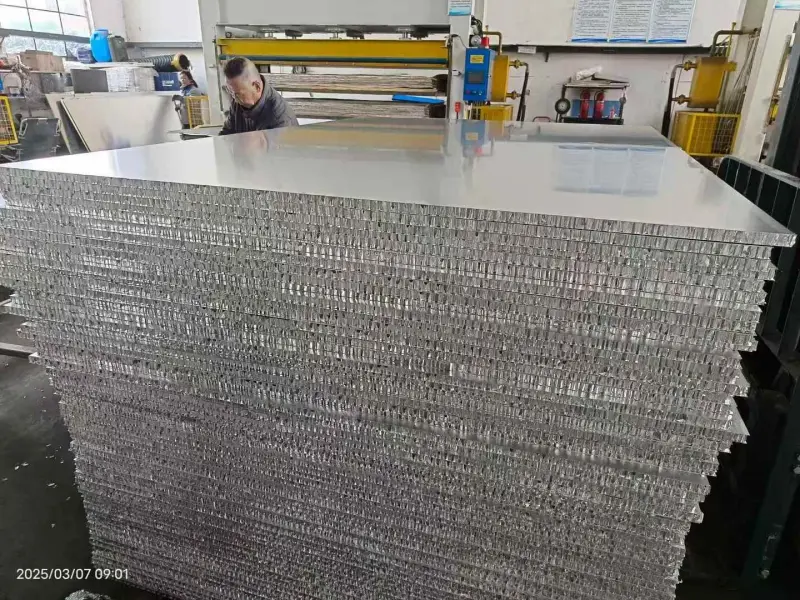
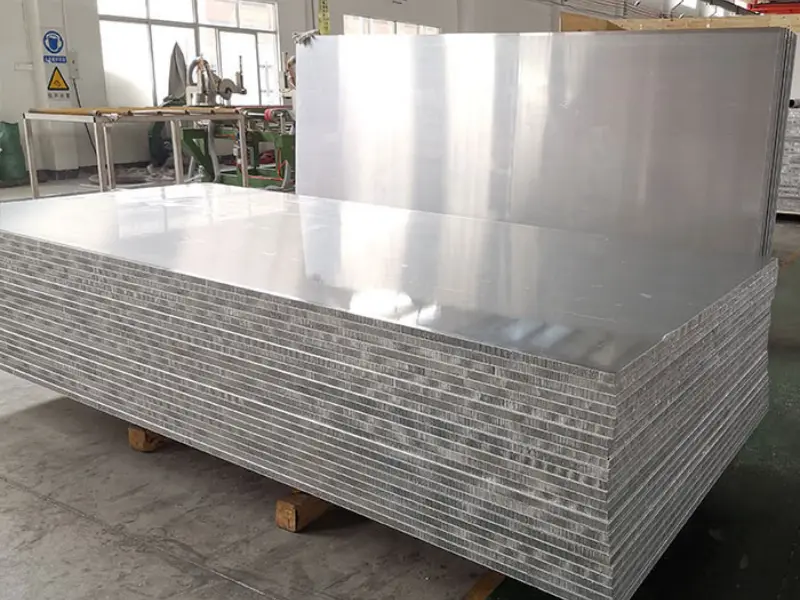
Honeycomb core rarely stands alone. It gets bonded between two face skins to form a finished composite panel.
| Bonding Method | Description | Best For |
|---|---|---|
| Epoxy Film Adhesive | Heat-cured adhesive film between core and skin | High-strength structural panels |
| Liquid Adhesive | Applied wet, cured under pressure | General commercial panel production |
| Thermoplastic Bonding | Heat-activated bonding without separate adhesive layer | High-volume manufacturing lines |
Epoxy film adhesive remains the standard for aerospace and high-performance structural panels, since it provides the most consistent, tested bond strength across the panel surface.
Weight-to-Strength Comparison
One of the biggest selling points of honeycomb core is how much strength it offers relative to its weight.
| Core Type | Relative Weight | Relative Strength |
|---|---|---|
| Solid Aluminum Sheet | Heaviest | High |
| Foam Core | Lightest | Lower |
| Aluminum Honeycomb | Very light | High |
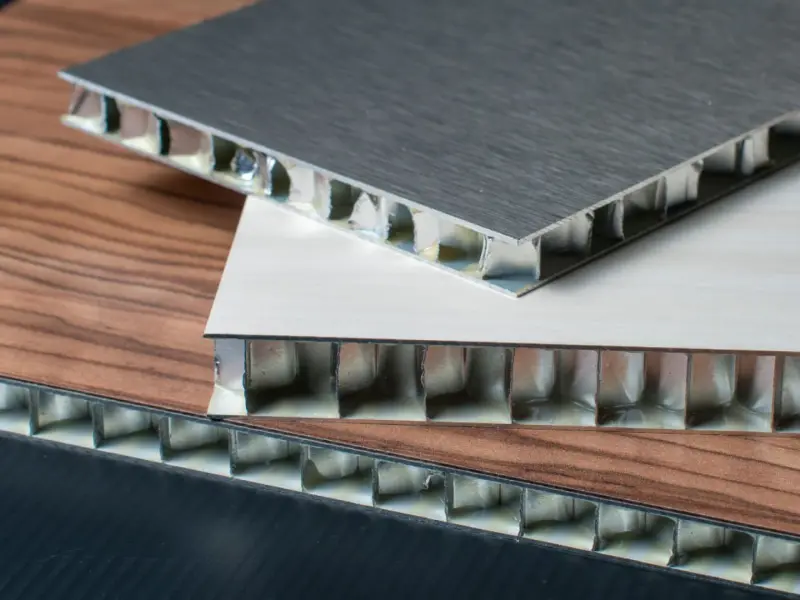
Honeycomb core often matches or exceeds the strength of much heavier solid materials, which is exactly why it dominates aerospace and transportation applications where weight savings directly affect performance and fuel efficiency.
Cutting and Machining Notes
Honeycomb core requires different handling than solid sheet metal during fabrication.
- Standard blades can crush cell walls if not sharp enough
- Specialized honeycomb cutting blades reduce cell distortion
- CNC routing works well for precise panel shaping
- Edges often need potting or sealing before use to prevent cell crushing at panel borders
Testing and Quality Standards
Buyers working with structural or aerospace-grade honeycomb often require documented testing before acceptance.
- Compressive strength test: measures resistance to crushing forces
- Shear strength test: evaluates performance under sideways force
- Cell uniformity inspection: confirms consistent cell size across the core
- Density verification: checks that core density matches the ordered specification
Standard Panel and Core Thickness Options

| Core Thickness (mm) | Common Use |
|---|---|
| 5 – 10 | Thin panels, interior partitions |
| 15 – 25 | Standard structural panel cores |
| 30 – 50 | Heavy-duty structural and transportation panels |
| 50+ | Specialty aerospace and industrial applications |
Thicker cores generally improve stiffness and load-bearing capacity, making thickness selection an important early decision in panel design.
What is the difference between 5052 and 5056 aluminum honeycomb core?

5056 has a higher magnesium content (4.5–5.6% vs 2.2–2.8% in 5052), giving it around 50% higher compressive and shear strength at the same cell size and foil thickness.
5056 aluminum honeycomb core has applications in aerospace and defence where higher structural performance is required. 5052 is the standard commercial grade — more available and lower cost.
How do I choose the right cell size for my project?
Smaller cells (3.2–4.8 mm) give higher density and strength — used in aerospace and structural panels. Larger cells (9.5–25 mm) give lower density and have applciations for lightweight architectural panels, interior doors, and non-structural applications. As a general rule: start with 6.4 mm cells at 0.040 mm foil for architectural work, and 3.2 mm at 0.076 mm foil for structural or aerospace use.
Frequently Asked Questions
What does 5052 mean in aluminum?
5052 is an aluminum alloy designation from the 5xxx series, where the primary alloying element is magnesium (Mg).
The “52” identifies the specific composition variant. 5052 contains approximately 2.2–2.8% magnesium plus a small amount of chromium, giving it excellent corrosion resistance and good formability — ideal for thin honeycomb foil production.
Is 5052 aluminum stronger than 6061?
In tensile and yield strength, 6061-T6 is stronger (tensile ~310 MPa vs ~290 MPa for 5052-H38).
However, 5052 outperforms 6061 in corrosion resistance and foil formability, which is why 5052 — not 6061 — is the standard alloy for honeycomb core foil. For honeycomb applications, formability and corrosion resistance matter more than raw strength.
What are the disadvantages of honeycomb panels?
The main disadvantages are:
(1) higher cost than foam-core or solid panels;
(2) edges must be sealed to prevent moisture getting into the open cells;
(3) if the face skin delaminates, repair is difficult;
(4) not suitable for curved or compound-curved shapes;
(5) fixing points need reinforcement inserts to spread point loads.