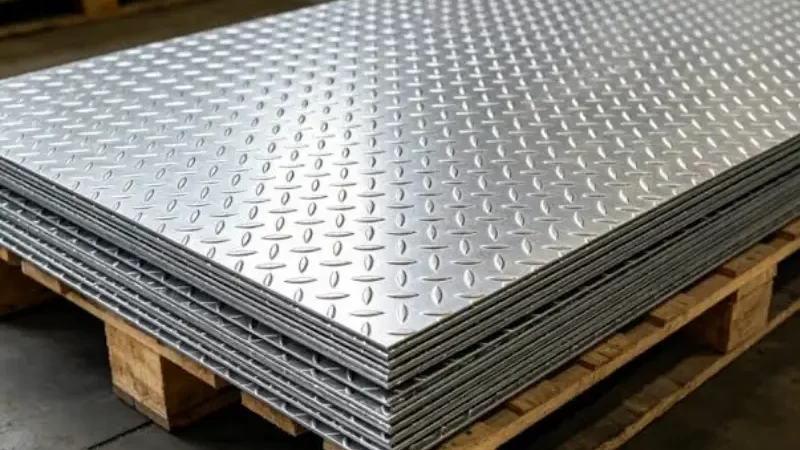
A 1/8 aluminum diamond plate is a popular choice for industrial, commercial, and transportation projects. It has a raised pattern on one side. This pattern gives the sheet a textured surface and a distinctive metal appearance.
The nominal thickness of 1/8 inch is about 3.175 mm. This size offers a useful balance between weight, rigidity, and ease of fabrication. It is often used for truck floors, trailer interiors, work platforms, toolboxes, ramps, and protective wall panels.
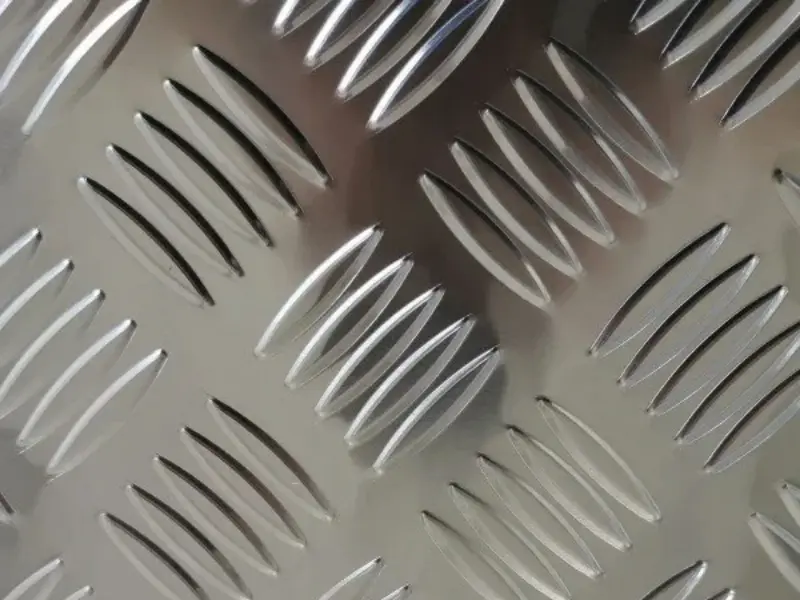
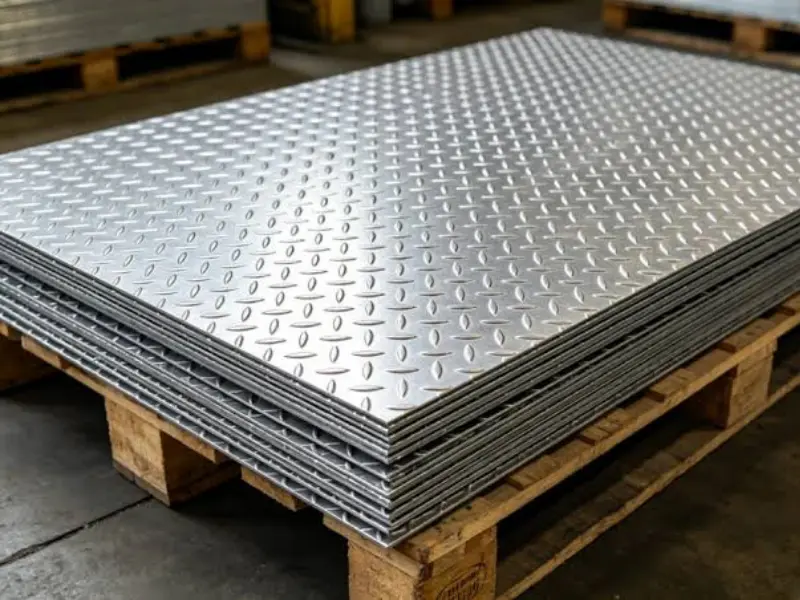
Buyers can choose different aluminum alloys, tempers, sheet sizes, and surface patterns. The right option depends on the load, working environment, forming process, and budget.
If you are sourcing 1/8 inch aluminum diamond plate for a manufacturing or construction project, it is important to check the base metal thickness, pattern height, alloy, and dimensional tolerance before placing an order.
What Is 1/8 Inch Aluminum Diamond Plate?
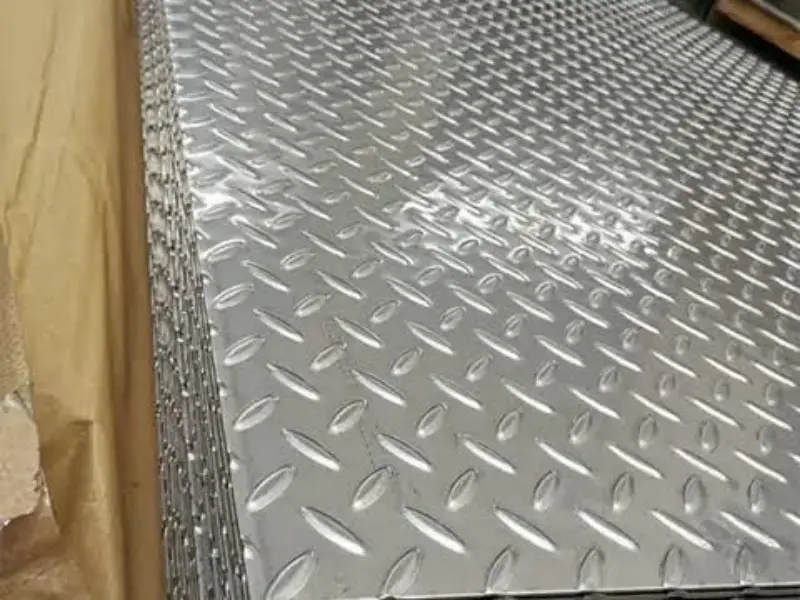
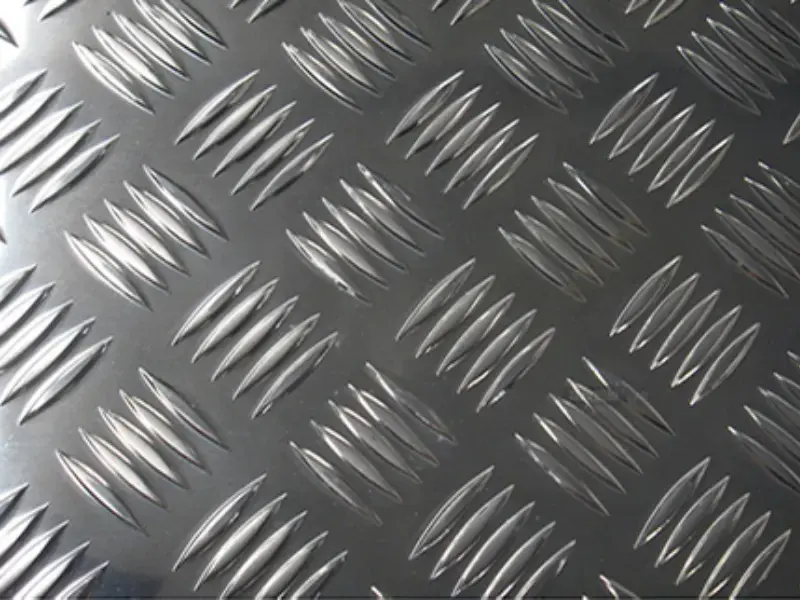
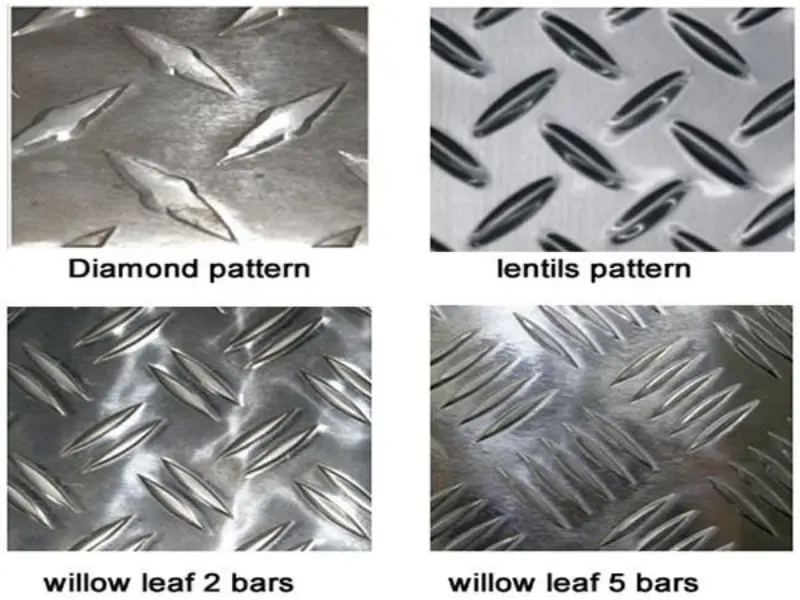
Aluminum diamond plate is also called aluminum tread plate, checker plate, or 5-bar aluminum plate.
It is a flat aluminum product with raised patterns on one surface. The raised pattern can improve surface grip and help hide minor scratches from normal use.
A 1/8 inch aluminum diamond plate has a nominal thickness of 0.125 inch, or approximately 3.175 mm. However, suppliers may quote the thickness in different ways.
Some refer to the base metal thickness, while others may describe the overall thickness including the raised pattern.
This difference matters when the sheet must fit a frame, cover, or floor system.
Basic Specifications
| Item | Typical Specification |
|---|---|
| Product name | 1/8 Aluminum Diamond Plate |
| Nominal thickness | 0.125 inch |
| Metric thickness | About 3.175 mm |
| Material | Aluminum alloy |
| Common alloys | 3003, 5052, and other available grades |
| Common tempers | H14, H22, H32, depending on alloy |
| Surface | Raised diamond, 5-bar, or other tread pattern |
| Sheet size | 4×8 ft and custom sizes, subject to availability |
| Finish | Mill finish, polished, or other specified finish |
| Processing | Cutting, drilling, bending, and fabrication |
These specifications are common purchasing options, not a guarantee that every combination is available from every supplier. Always confirm the exact material and dimensions.
Why Choose 1/8 Aluminum Diamond Plate?
The 1/8 inch thickness is suitable for many applications that need a textured aluminum surface without using a very thick plate.
A Practical Balance of Weight and Rigidity
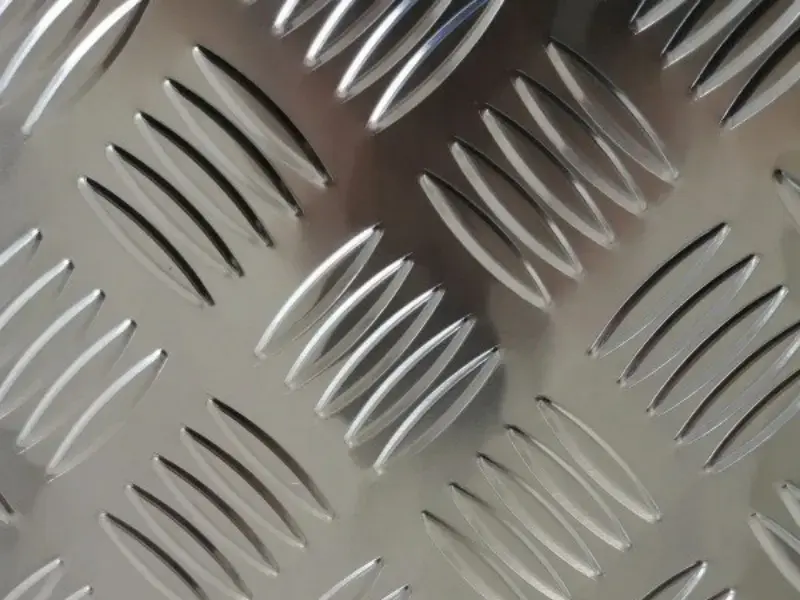
Aluminum is much lighter than steel of the same volume. This can help reduce the weight of trailers, vehicles, equipment covers, and mobile work platforms.
The 1/8 inch size can also provide useful rigidity for panels and covers. Actual performance depends on the alloy, unsupported span, mounting method, and expected load.
Textured Surface for Everyday Use
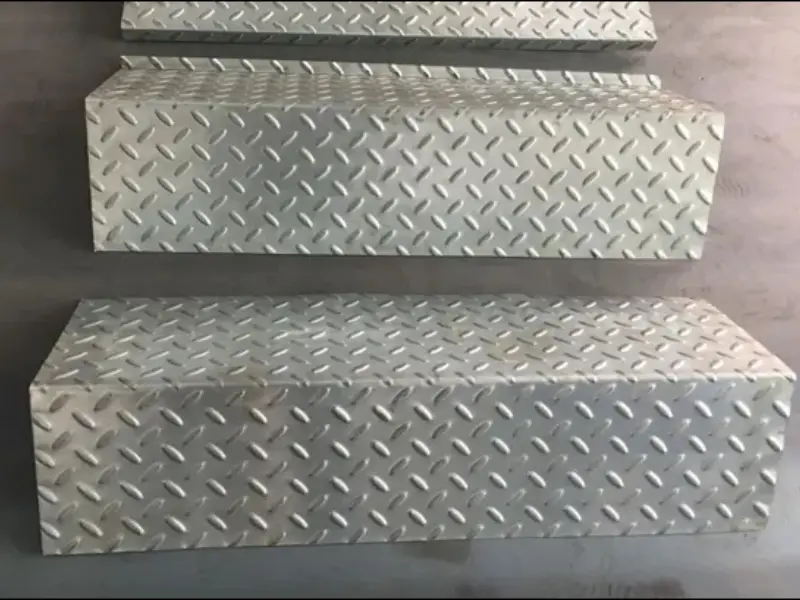
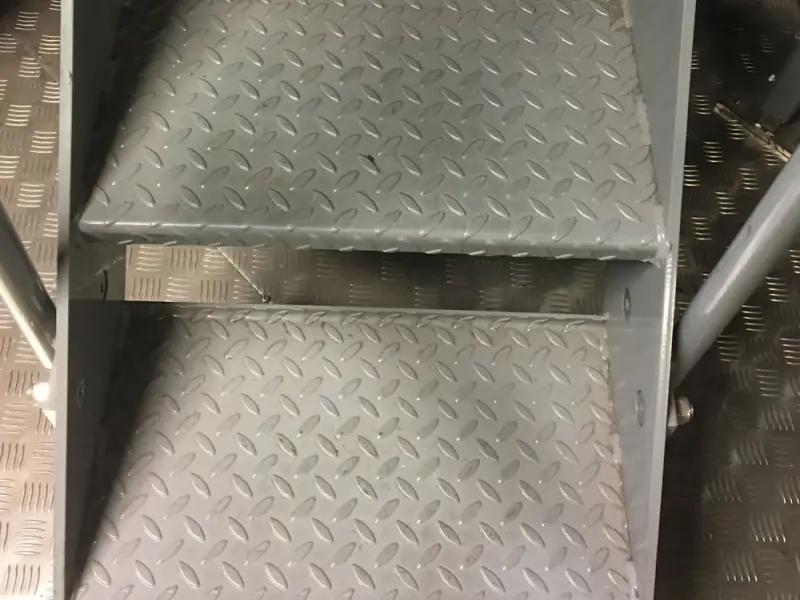
The raised pattern provides a textured surface that may improve traction compared with a smooth sheet. The result depends on the pattern, footwear, contamination, and working conditions.
For ramps, steps, and walkways, the plate should be selected according to the required slip resistance and applicable safety rules. A raised pattern alone does not guarantee a slip-proof surface.
Easy to Fabricate
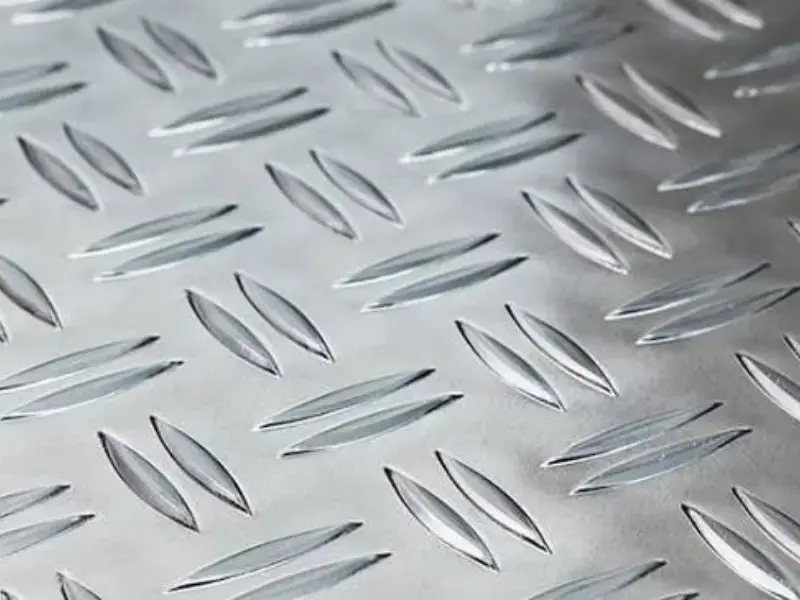
Depending on the alloy and temper, 1/8 inch aluminum tread plate can be cut, drilled, and formed using common metalworking equipment.
Fabricators can use it for custom covers, floor panels, cabinets, and protective plates. The bend radius and forming direction should be checked before production.
Suitable for Indoor and Outdoor Projects
Many aluminum alloys offer good corrosion resistance. This makes diamond plate useful in a range of indoor and outdoor applications.
For coastal areas, wet environments, or exposure to chemicals, alloy selection and maintenance are important. The installation should also prevent trapped water and galvanic corrosion between dissimilar metals.
Types of 1/8 Aluminum Diamond Plate
Different patterns and surface finishes serve different needs. The best option depends on appearance, grip, cleaning, and fabrication requirements.
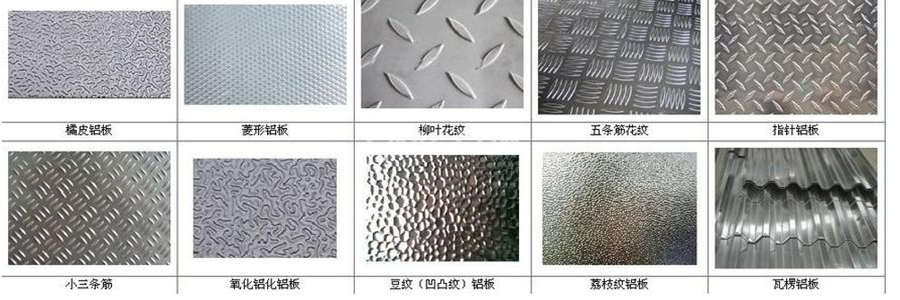
1. Five-Bar Aluminum Diamond Plate
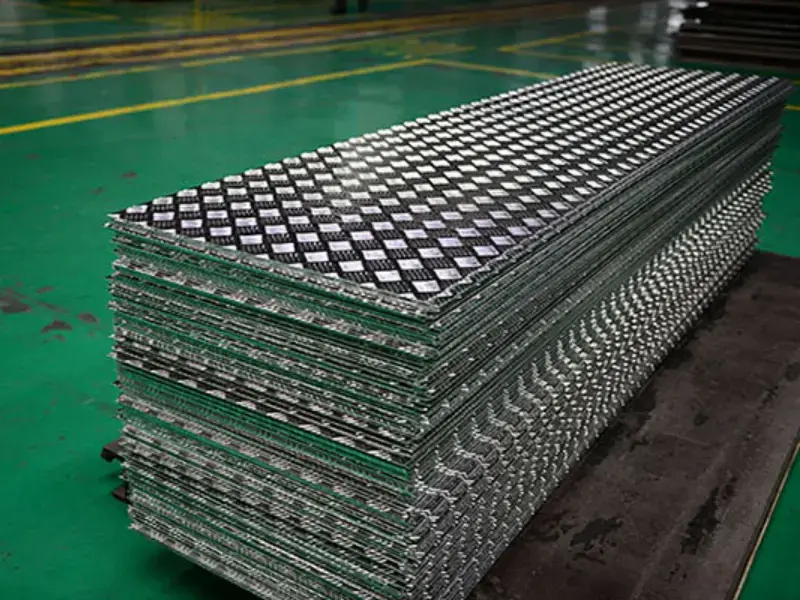
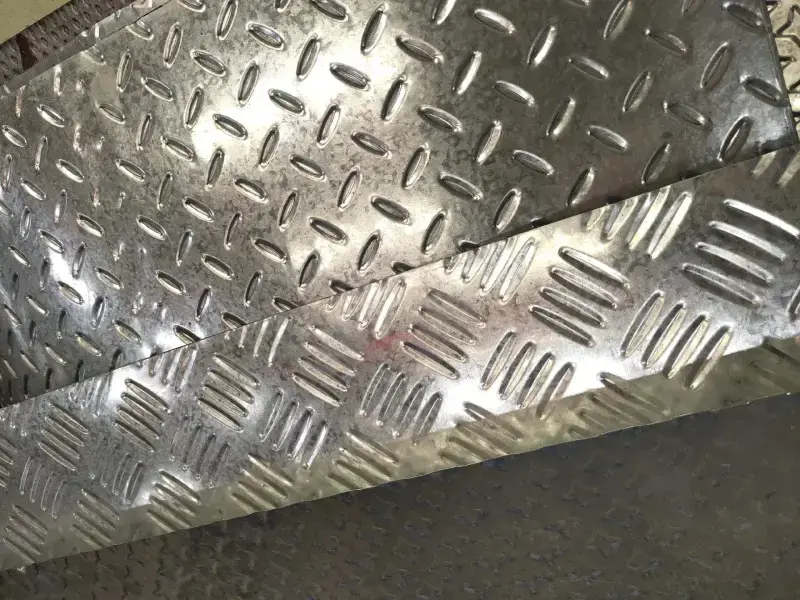
Five-bar tread plate has a repeating group of raised bars. The pattern is widely used in transportation, industrial flooring, and equipment protection.
It is a common option for buyers who need a recognizable tread pattern for large panels or fabricated parts.
Typical applications include:
- Truck and trailer floors
- Service vehicle steps
- Industrial equipment platforms
- Storage areas and access panels
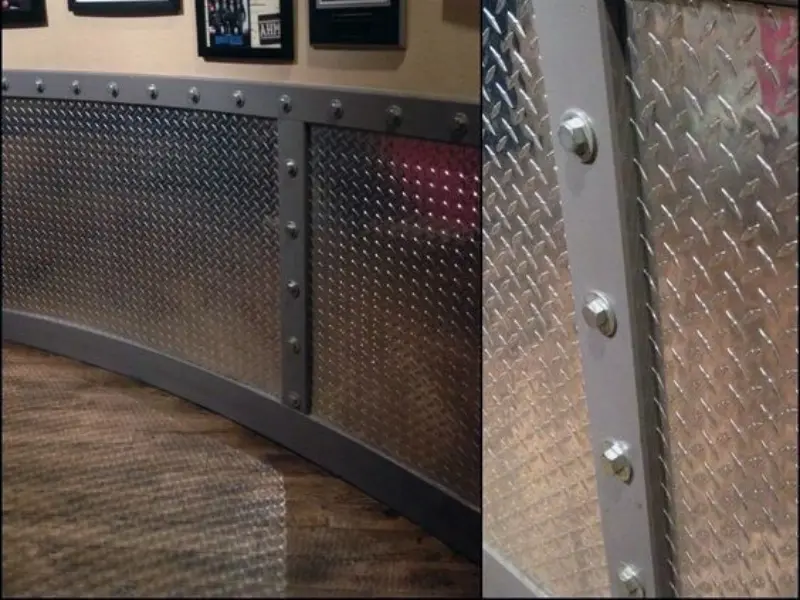
- Protective floor and wall coverings
2. Single-Diamond Aluminum Plate
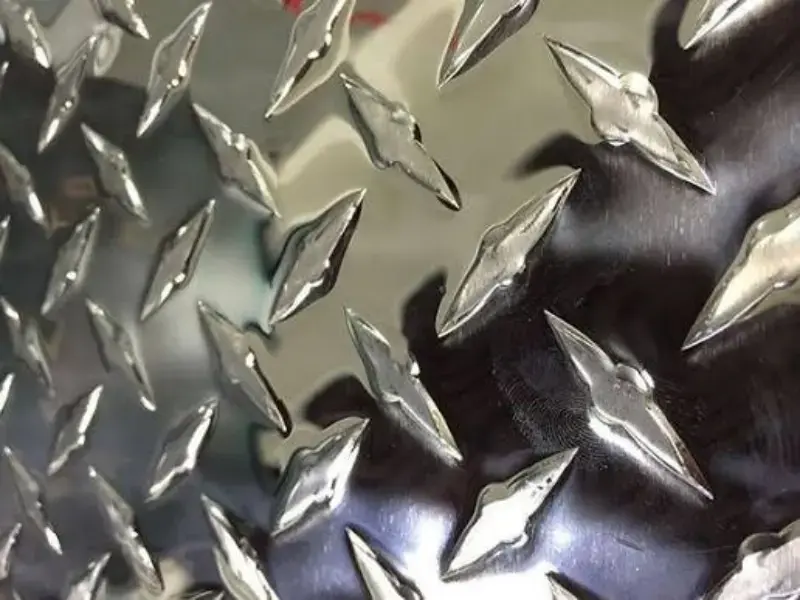
Single-diamond plate uses a repeated diamond-shaped raised pattern. It offers a distinct appearance and can be used for decorative or functional panels.
Typical applications include:
- Tool cabinets
- Workshop walls
- Vehicle interiors
- Equipment enclosures
- Decorative metal panels
3. Polished Aluminum Diamond Plate
Polished diamond plate has a brighter surface. It is often chosen for visible areas where appearance matters.
It has for custom vehicle interiors, display panels, and decorative trim. Buyers should confirm whether the product is mechanically polished, chemically treated, or supplied with another finish.
4. Mill-Finish Aluminum Diamond Plate
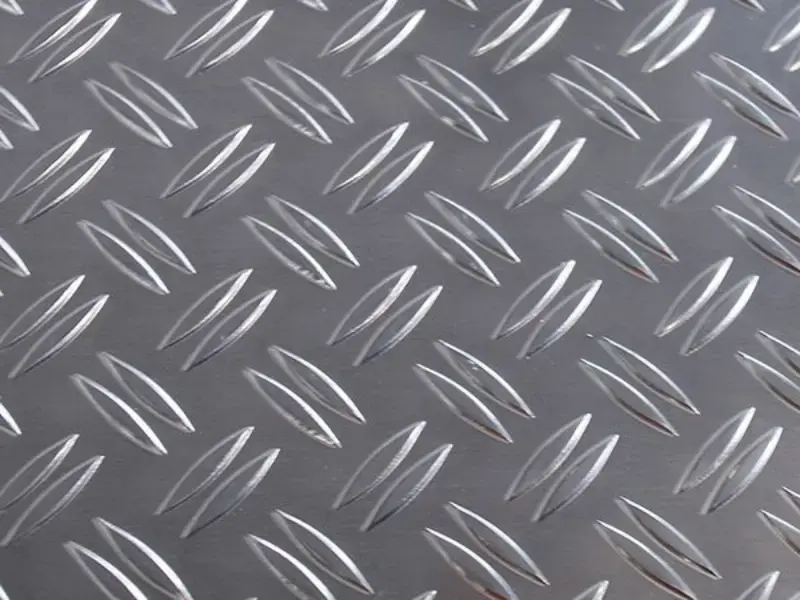
Mill-finish plate has the surface produced by the normal manufacturing process. It is a practical option for many industrial projects where a mirror-like finish is not required.
It may be suitable for floor panels, machine covers, storage areas, and fabricated parts. Minor surface variations should be evaluated against the project’s acceptance criteria.
5. Cut-to-Size Aluminum Diamond Plate
Some projects need panels smaller than a standard sheet. Cut-to-size service can reduce work at the installation site and simplify handling.
Buyers should provide the required length, width, quantity, and dimensional tolerance. For repeated parts, a cutting layout may also help reduce material waste.
Aluminum Alloys for 1/8 Diamond Plate
The alloy affects strength, formability, corrosion resistance, and cost. The pattern and thickness alone do not determine whether the product is suitable for a project.
3003 Aluminum Diamond Plate
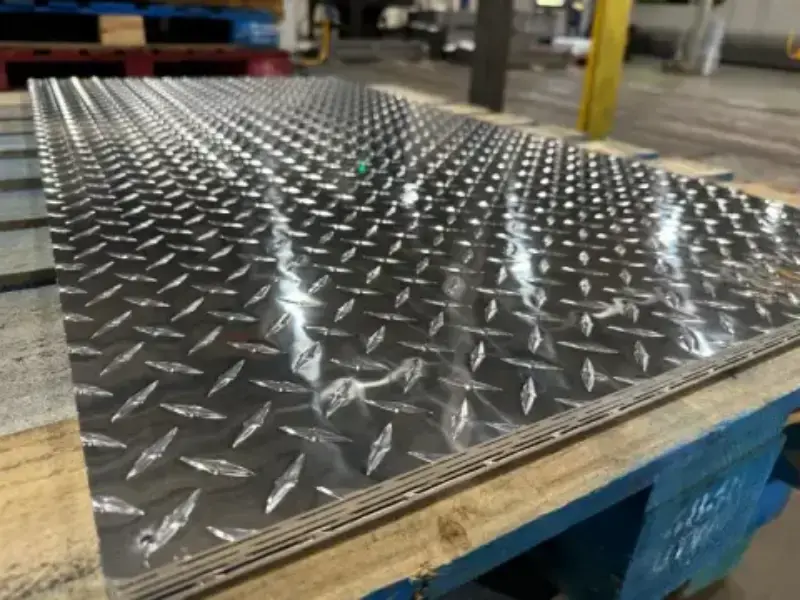
3003 aluminum has uses for general-purpose tread plate. It offers good formability and corrosion resistance for many common applications.
It can be considered for equipment covers, decorative panels, storage areas, and some vehicle interior components. The final suitability depends on the load and installation design.
5052 Aluminum Diamond Plate
5052 aluminum has often selected when a project needs higher strength than common 1xxx-series alloys and good corrosion resistance.
It may be suitable for marine-related components, vehicle panels, and industrial equipment. The exact temper has checked because mechanical properties vary by product condition.
6061 Aluminum Plate
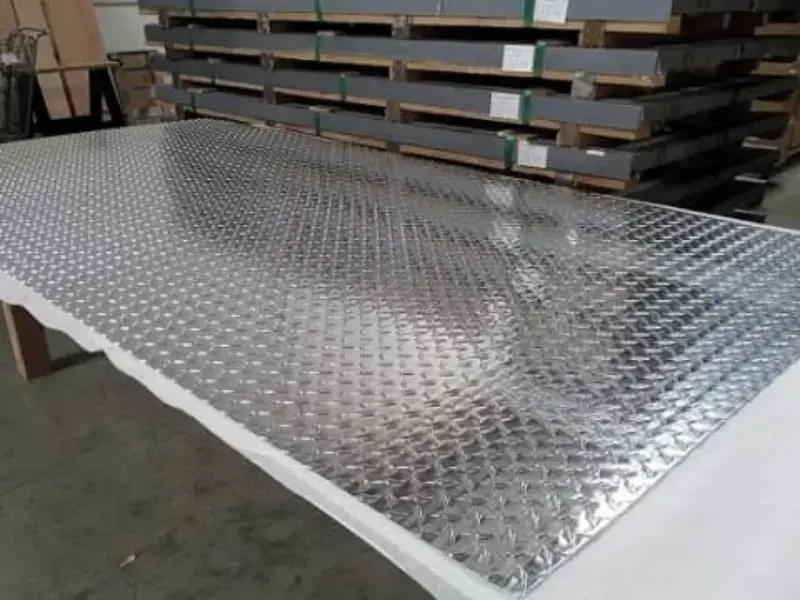
6061 is a heat-treatable alloy known for its structural applications. However, not every supplier offers 6061 in the same diamond-plate pattern or thickness.
If the project requires a raised tread pattern and specific structural properties, confirm availability and mechanical data rather than assuming a standard tread plate is equivalent to flat 6061 plate.
Alloy Comparison Table
| Alloy | Main Characteristics | Possible Applications |
|---|---|---|
| 3003 | Good formability and corrosion resistance | General tread plate, covers, panels |
| 5052 | Good corrosion resistance and higher strength than many pure aluminum grades | Vehicle components, industrial panels |
| 6061 | Heat-treatable alloy with useful structural properties | Special applications when patterned product is available |
| 1100 | High commercial purity and good formability | Certain decorative or low-load applications, if offered |
For demanding applications, ask for the applicable material standard and mechanical properties. Do not choose an alloy based only on its name.
Aluminum Diamond Plate Tempers
Temper describes the material condition after processing. It affects hardness, strength, and forming behavior.
| Temper | General Description | Selection Notes |
|---|---|---|
| O | Annealed and soft | Useful when high formability is needed, if available in the product |
| H14 | Strain-hardened and partially annealed | Commonly used for some formed sheet products |
| H22 | Strain-hardened and partially annealed | Availability depends on alloy and product specification |
| H32 | Strain-hardened and stabilized | Used for certain 5052 products and other specified alloys |
| T6 | Solution heat-treated and artificially aged | Relevant to some heat-treatable alloys, not a universal tread-plate option |
Not every alloy has supplied in every temper. A 3003-H14 product and a 5052-H32 product should not be treated as interchangeable without checking the requirements.
If the plate has bent, formed, or welded, tell the supplier about the fabrication process before choosing the temper.
Standard Sizes and Weight of 1/8 Aluminum Diamond Plate
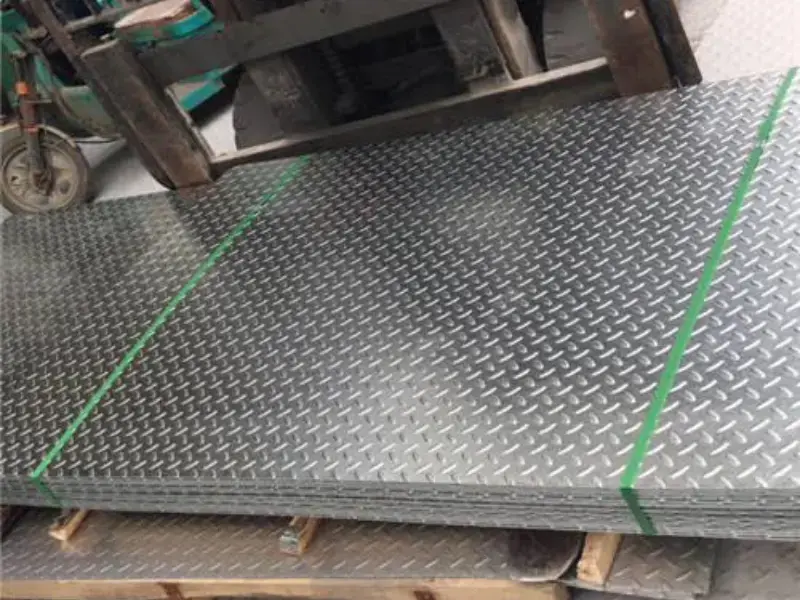
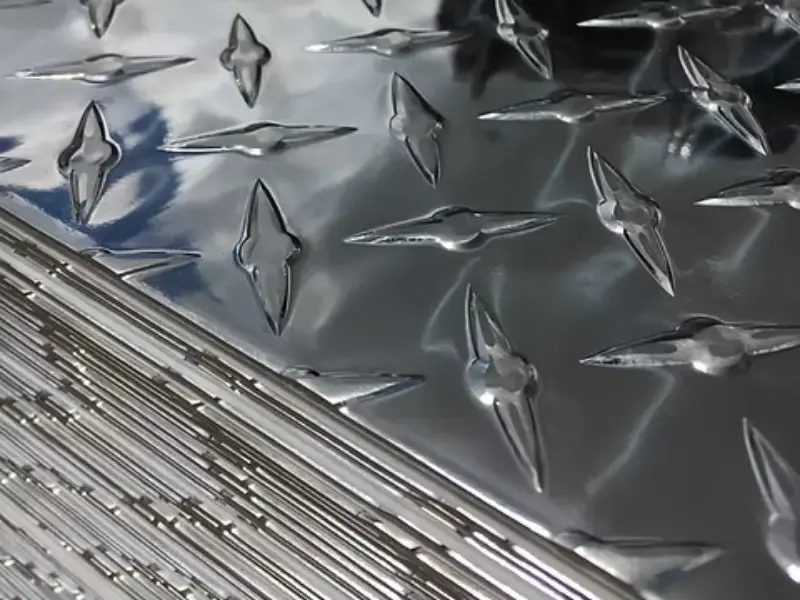
A 4×8 aluminum diamond plate is a common format for industrial and fabrication projects. Other sheet dimensions may be available depending on the supplier, alloy, and production capacity.
Common Sheet Sizes
| Sheet Size | Dimensions in Inches | Typical Use |
|---|---|---|
| 2×4 ft | 24×48 in | Small panels and repairs |
| 3×6 ft | 36×72 in | Medium-sized covers |
| 4×4 ft | 48×48 in | Square panels and equipment bases |
| 4×8 ft | 48×96 in | General fabrication and floor panels |
| Custom size | According to drawing | OEM parts and project-specific work |
Confirm the actual dimensions and tolerance before ordering. A nominal 4×8 sheet may require trimming for a particular installation.
Approximate Weight of 1/8 Aluminum Diamond Plate
The theoretical weight of a flat aluminum sheet has estimated using its base thickness and the density of aluminum.
A nominal 1/8 inch base thickness gives an approximate weight of 0.45 pounds per square foot before accounting for the raised pattern.
| Sheet Size | Area | Approximate Base-Metal Weight |
|---|---|---|
| 2×4 ft | 8 sq ft | 3.6 lb |
| 3×6 ft | 18 sq ft | 8.1 lb |
| 4×4 ft | 16 sq ft | 7.2 lb |
| 4×8 ft | 32 sq ft | 14.4 lb |
These figures are estimates based on a flat 1/8 inch aluminum sheet. Actual diamond plate may weigh more because of the raised pattern, and the exact result depends on the manufacturing specification.
For freight planning, request the supplier’s actual unit weight and packing weight.
1/8 vs. 3/16 vs. 1/4 Aluminum Diamond Plate
Choosing the correct thickness can affect cost, weight, rigidity, and ease of fabrication. A thicker plate is not automatically better for every project.
| Feature | 1/8 Inch | 3/16 Inch | 1/4 Inch |
|---|---|---|---|
| Nominal thickness | 0.125 in | 0.1875 in | 0.250 in |
| Metric equivalent | 3.175 mm | 4.76 mm | 6.35 mm |
| Relative weight | Lowest of these options | Medium | Highest of these options |
| Rigidity | Suitable for many panels | Greater for comparable conditions | Greater for comparable conditions |
| Fabrication | Often easier to handle | May require more force | May require more force |
| Typical use | Covers, light-duty panels, vehicle interiors | Heavier-duty panels and platforms | Demanding applications when the design requires it |
This is a general comparison. Actual load capacity depends on the alloy, span, support spacing, fastening, and direction of loading.
When Is 1/8 Inch the Right Choice?
Choose 1/8 inch when the project needs a relatively light tread plate and the design does not require a thicker section.
It may work well for equipment covers, cabinets, wall protection, and selected vehicle panels. For floors, ramps, or platforms, calculate the load and support conditions before deciding.
When Should You Consider a Thicker Plate?
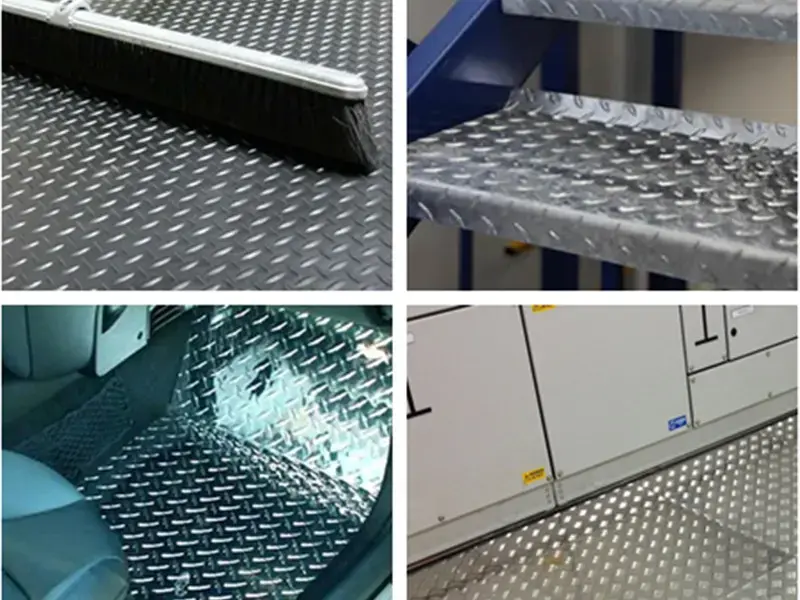
Consider 3/16 or 1/4 inch when the panel must resist greater bending or when the support spacing and expected loads require a thicker section.
A thicker plate also adds weight and material cost. The best choice should be based on the complete installation, not only on the thickness number.
Applications of 1/8 Aluminum Diamond Plate
The product has uses across transportation, manufacturing, construction, and equipment fabrication. The right alloy and thickness depend on the environment and the expected service conditions.
Truck and Trailer Applications
Diamond plate can be used in selected truck and trailer components. Its low weight compared with steel can help reduce vehicle weight, while the textured surface provides a practical finish.
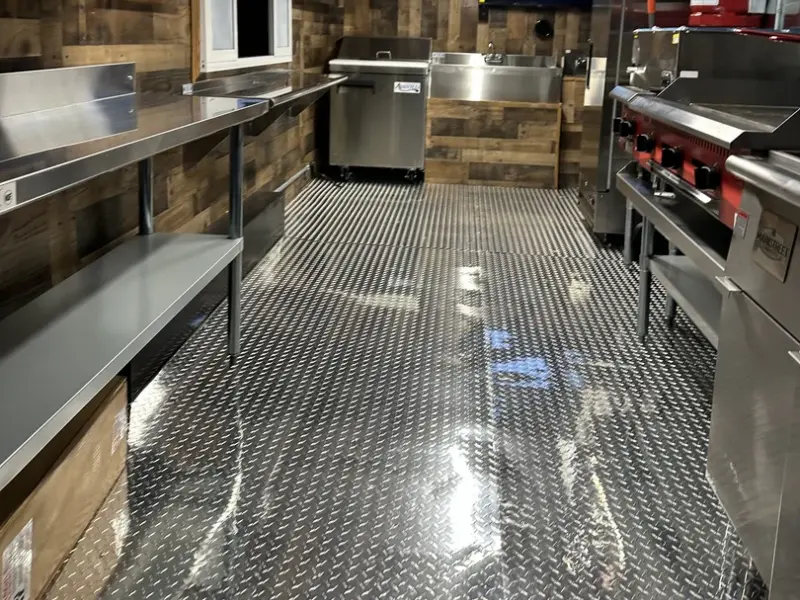
Common uses include:
- Trailer interior panels
- Truck toolboxes
- Side steps and access panels
- Protective panels around equipment
- Selected floor areas with suitable structural support
For a trailer floor or ramp, verify the load rating and support design. A 1/8 inch sheet should not be assumed suitable for every floor application.
Industrial Flooring and Walkways
Tread plate has uses in industrial spaces where a textured metal surface is useful.
Examples include:
- Equipment access areas
- Maintenance platforms
- Machine-side walkways
- Protective floor panels
- Storage and service areas
The surface pattern may improve grip, but oil, water, dust, and other contaminants can change traction. Follow the applicable safety requirements for the installation.
Toolboxes and Storage Equipment
The 1/8 inch size has considered for toolbox bodies, cabinet panels, storage compartments, and protective covers.
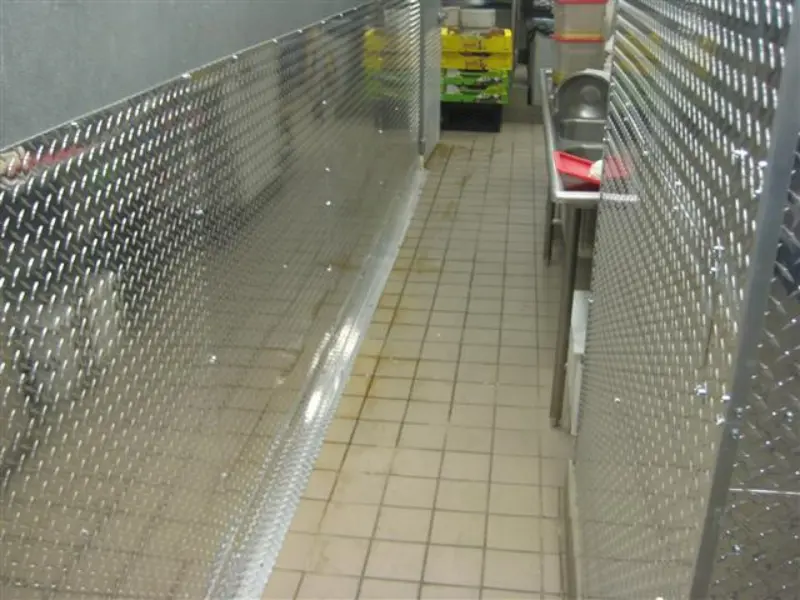
Applications include:
- Truck toolboxes
- Workshop storage cabinets
- Mobile equipment boxes
- Industrial enclosures
- Protective covers for tools and components
The final design should account for door openings, hinges, fasteners, and the stiffness of the assembled box.
Construction and Building Protection
Aluminum diamond plate has used as a protective or decorative material in certain building projects.
Possible uses include:
- Wall protection in service areas
- Access covers
- Equipment-room panels
- Stair or step coverings when approved for the application
- Decorative metal surfaces
For outdoor installations, consider drainage, fastener compatibility, and exposure to weather.
Marine and Coastal Equipment
Certain aluminum alloys, including 5052, can offer good corrosion resistance in marine-related environments. However, the suitability of a tread plate depends on the full design and exposure conditions.
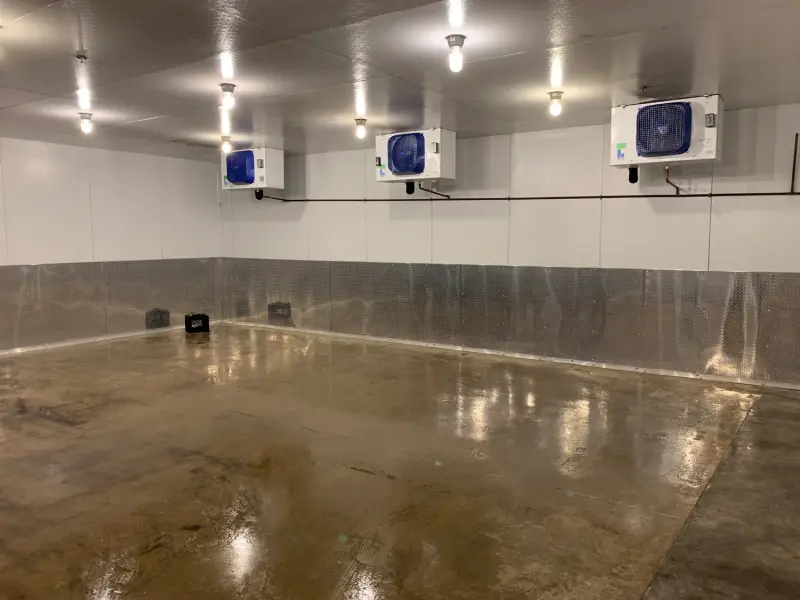
Possible applications include:
- Equipment covers
- Storage panels
- Selected deck components with proper engineering
- Protective panels on marine equipment
- Non-critical access covers
Marine use requires careful alloy selection and attention to galvanic corrosion. Confirm that the product meets the requirements for the specific vessel or installation.
Manufacturing and Custom Fabrication
Manufacturers may cut diamond plate into custom shapes for equipment and commercial products.
Examples include:
- Machine guards and covers
- Cabinet panels
- Custom brackets and plates
- Equipment access doors
- Decorative panels
- Replacement panels for existing equipment
Provide a drawing when the part needs accurate dimensions or repeated production.
How to Cut and Fabricate 1/8 Aluminum Diamond Plate
The raised pattern affects how the plate sits against a cutting or forming tool. Fabrication methods have selected according to the equipment, finish requirements, and part geometry.
Cutting
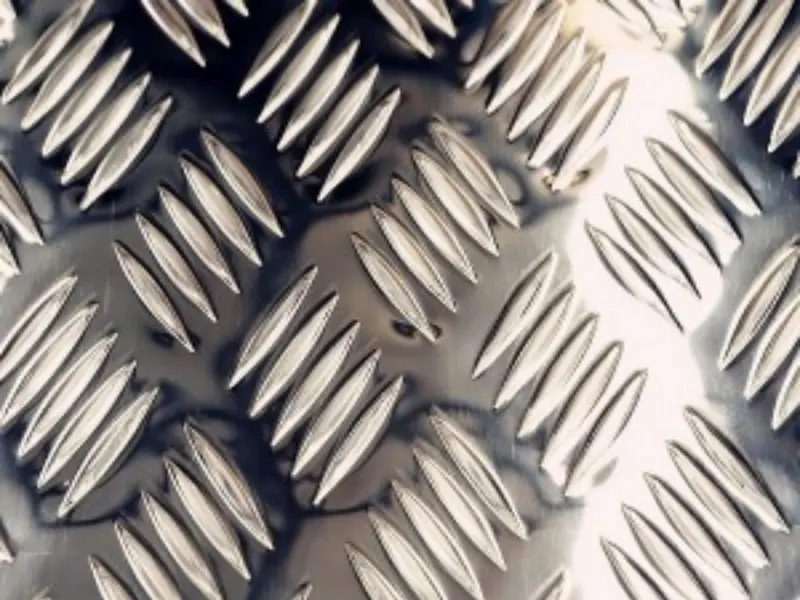
Depending on the required tolerance, aluminum diamond plate has cut with suitable shearing equipment, saws, or CNC cutting systems.
Before cutting, confirm which side should face outward. Protect the visible surface to reduce scratches during handling.
Bending
Bending depends on the alloy, temper, thickness, and bend direction. A hard temper may require a larger bend radius than a soft condition.
For production parts, test the forming setup before processing a large batch. The raised pattern can affect contact with the tooling and the final appearance.
Drilling and Fastening
Use tools and cutting conditions suitable for aluminum. Remove sharp burrs after drilling and cutting.
When joining aluminum to steel or other metals, consider corrosion protection and compatible fasteners. Outdoor and marine installations may require additional precautions.
What Affects the Price of 1/8 Aluminum Diamond Plate?
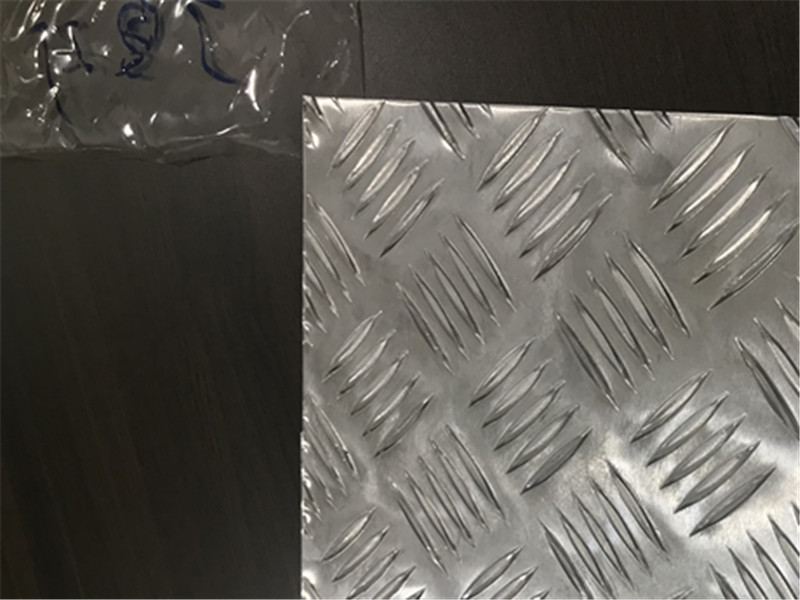

The price depends on the material, dimensions, quantity, finish, and delivery requirements. The lowest unit price is not always the lowest total cost if the sheet requires extra processing or creates more waste.
| Pricing Factor | Why It Matters |
|---|---|
| Alloy | Different grades have different material costs and properties |
| Temper | The specified condition may affect availability and processing |
| Thickness | More material generally increases weight and cost |
| Sheet size | Affects cutting yield and transport |
| Pattern | Different tread patterns may have different availability |
| Finish | Polishing or other treatments can add cost |
| Quantity | Larger orders may improve production efficiency |
| Cutting service | Custom shapes can add processing costs |
| Packaging | Surface protection and export packing may affect the quote |
| Shipping | Depends on destination, weight, and transport method |
To receive an accurate quote, provide the required alloy, temper, thickness, sheet size, quantity, finish, and destination.
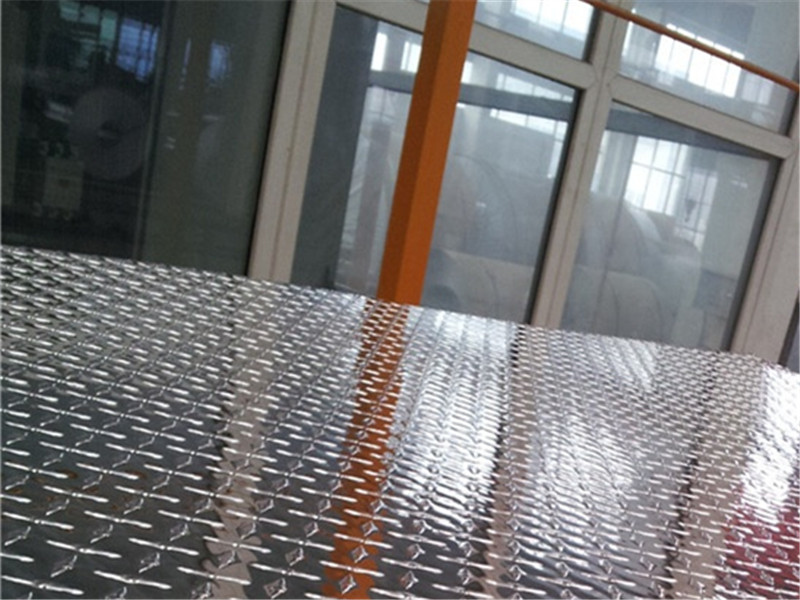
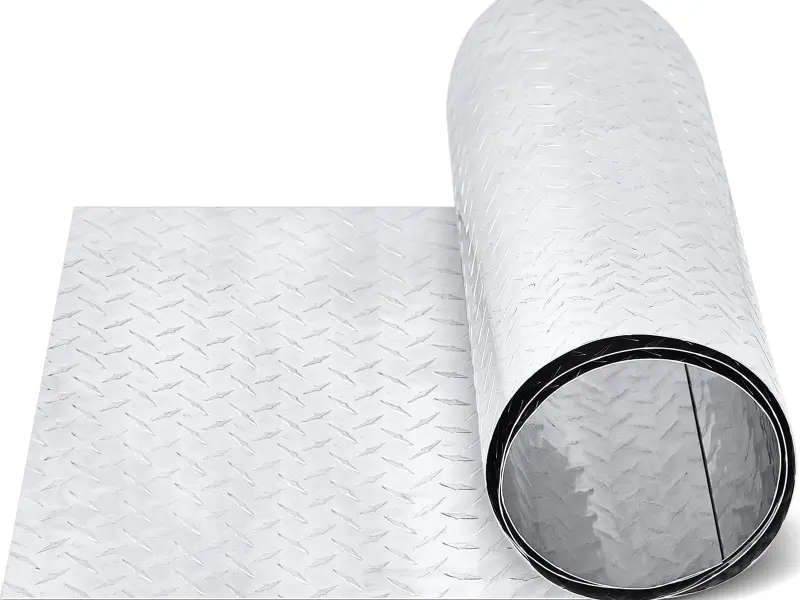
How to Choose a Reliable Aluminum Diamond Plate Supplier
A suitable supplier should understand the material specification and the intended use. This is especially important when the plate will be used in load-bearing or safety-related applications.
Before placing a bulk order, check the following:
- Confirm the base metal thickness and overall patterned thickness.
- Ask for the alloy and temper specification.
- Confirm sheet dimensions and dimensional tolerances.
- Request material documentation when required.
- Review surface quality and acceptable defects.
- Check cutting and custom-size capabilities.
- Confirm minimum order quantity and lead time.
- Agree on packing, inspection, and delivery terms.
For repeat orders, keeping the same specification helps reduce differences between batches.
Frequently Asked Questions
Is 1/8 aluminum diamond plate the same as 3 mm tread plate?
Not exactly. One-eighth inch equals 3.175 mm, while 3 mm is slightly thinner. The product specification should state the actual base thickness and clarify whether the raised pattern is included in the measurement.
How thick is 1/8 inch aluminum diamond plate?
The nominal thickness is 0.125 inch, or approximately 3.175 mm. The overall thickness including the raised pattern may be greater. Ask the supplier how the thickness is measured.
What is the weight of a 4×8 sheet of 1/8 aluminum diamond plate?
A flat 1/8 inch aluminum sheet of 4×8 feet has an estimated base-metal weight of about 14.4 pounds. A diamond plate may weigh more because of the raised pattern. Request the actual product weight for shipping and load calculations.
Is 1/8 aluminum diamond plate strong enough for a trailer floor?
It depends on the trailer design, support spacing, load, and alloy. The thickness alone does not establish a safe load rating. Have the complete floor design checked before using it for a load-bearing application.
Which alloy is best for aluminum diamond plate?
3003 is a common choice for general-purpose tread plate. 5052 has preferred when higher strength and corrosion resistance are required. The best alloy depends on the project and the product specification.
Can 1/8 aluminum diamond plate be bent?
Yes, it can be bent with suitable equipment. The required bend radius depends on the alloy and temper. Test the material before production when the part has tight bends or strict appearance requirements.
Is aluminum diamond plate suitable for outdoor use?
Many aluminum alloys offer good corrosion resistance outdoors. The best choice depends on the climate, exposure, fasteners, and installation details. Coastal and chemical environments need extra care.
Can I order 1/8 aluminum diamond plate in 4×8 sheets?
A 4×8 foot sheet is a common format, but availability depends on the supplier, alloy, and finish. Confirm the exact dimensions, thickness, quantity, and delivery requirements before ordering.
What is the difference between aluminum diamond plate and checker plate?
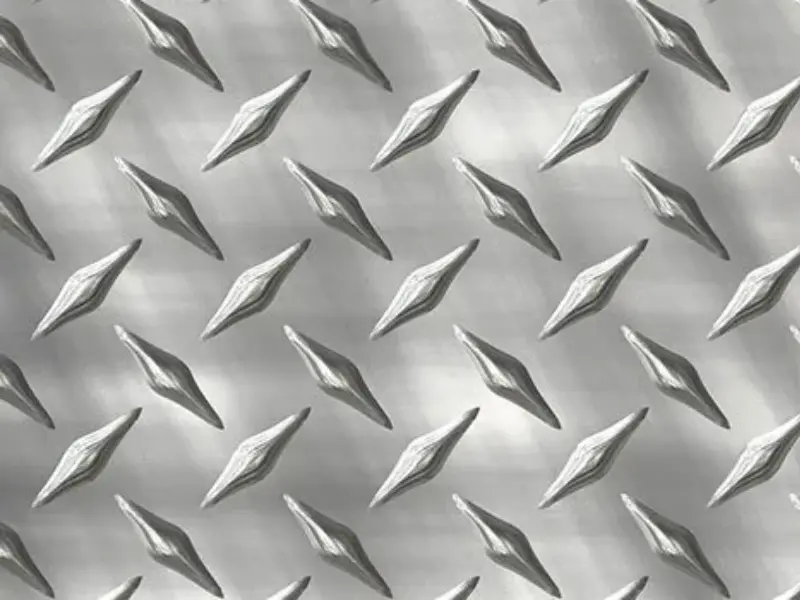
The terms have uses for patterned aluminum plate with raised features. Naming conventions vary by market and supplier. Always review the actual pattern and specification rather than relying on the product name alone.
Can aluminum diamond plate be cut to custom sizes?
Yes, many suppliers can provide cut-to-size material. Give the required dimensions, quantity, tolerance, and intended application to confirm feasibility and cost.
How do I get a price for 1/8 aluminum diamond plate?
Send the alloy, temper, thickness, pattern, sheet dimensions, quantity, finish, and delivery destination. If you need custom cutting, include a drawing or cutting list.
Request a Quote for 1/8 Aluminum Diamond Plate
Looking for 1/8 aluminum diamond plate for a trailer, toolbox, industrial project, or custom fabrication job? Send your specifications to discuss available material options.
Please include:
- Alloy and temper
- Base thickness and pattern requirements
- Sheet size or cut dimensions
- Quantity
- Surface finish
- Application and working environment
- Delivery destination
With these details, the supplier can review the requirements and provide a more accurate quotation. For custom or load-bearing parts, share the design and expected service conditions before confirming the order.
Error: Contact form not found.