Why China Is a Major Source for Road Sign Aluminum Sheet
Road Sign Aluminum Sheet Manufacturer in China. China produces more aluminum flat-rolled product than any other country. That scale gives Chinese manufacturers a cost advantage on road sign aluminum sheet that is difficult to match from other origins. Raw material, processing, surface treatment, and export logistics are all handled within a short supply chain.
Buyers from North America, Europe, the Middle East, Southeast Asia, and Australia source road sign blanks and coated aluminum sheet from Chinese factories. The combination of competitive pricing, wide product range, and large production capacity makes China the default sourcing option for high-volume traffic sign projects.
What Is Road Sign Aluminum Sheet
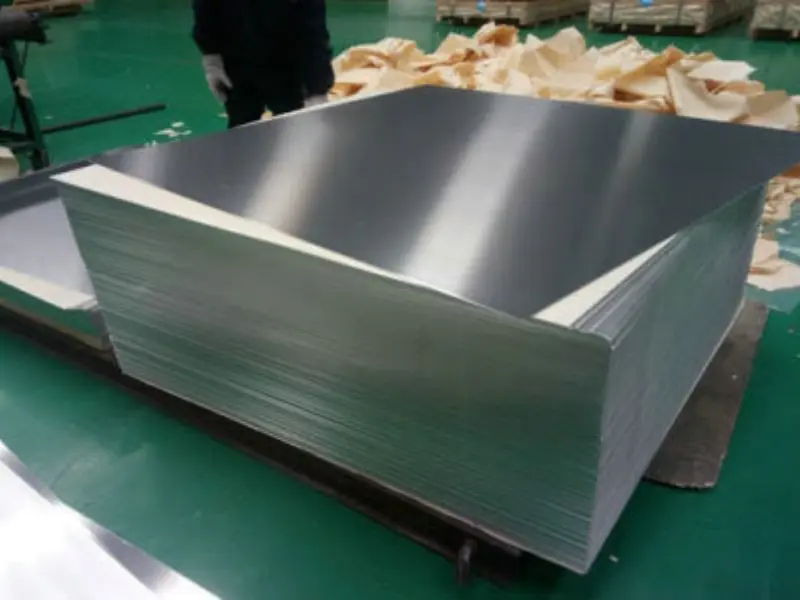
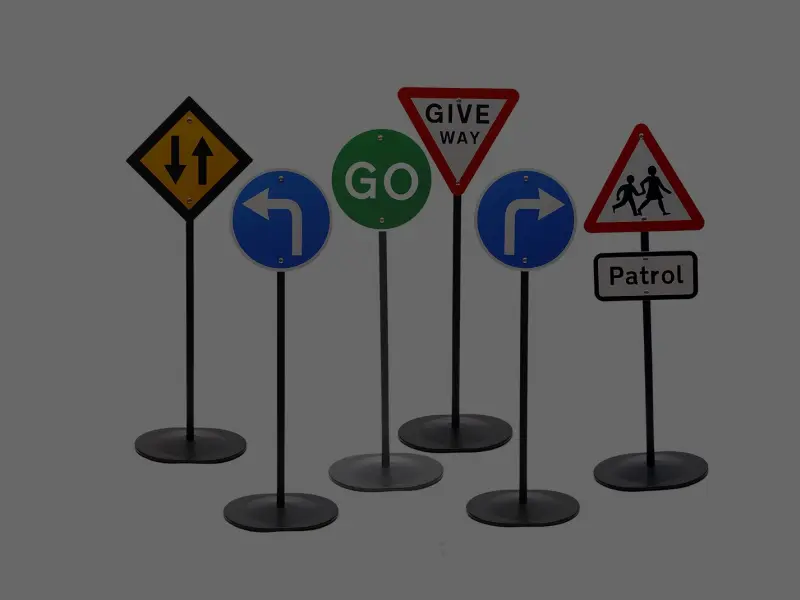
Road sign aluminum sheet is a flat aluminum blank used as the substrate for traffic and informational signs. The sheet is cut to shape, punched with mounting holes, and either coated in-house or supplied pre-coated for the sign maker to apply reflective sheeting.
The aluminum provides the rigid, flat, corrosion-resistant base that holds the sign flat and withstands wind load, UV exposure, rain, and temperature cycling over a service life of 10–15 years or more.
The right aluminum sheet for sign use needs to be flat, free of surface defects, correctly alloyed for outdoor durability, and dimensionally consistent across every sheet in a batch.
Alloy & Temper Specifications
The alloy and temper determine flatness, strength, corrosion resistance, and how well the sheet accepts reflective film or paint.
| Alloy | Temper | Yield Strength | Key Property | Typical Sign Use |
|---|---|---|---|---|
| 5052 | H32 | ~193 MPa | Excellent corrosion resistance, moderate strength | Standard traffic signs, street signs |
| 5052 | H34 | ~214 MPa | Higher strength, still formable | Highway signs, large-format signs |
| 5005 | H34 | ~152 MPa | Excellent anodizing surface, clean finish | Premium decorative signs, anodized finish |
| 3003 | H14 | ~145 MPa | Good formability, lower cost | Budget signs, indoor signage |
| 3003 | H16 | ~170 MPa | Stiffer, better flatness | Medium-duty roadside signs |
| 6061 | T6 | ~276 MPa | High strength, structural | Overhead sign structures, large highway signs |
| 1100 | H14 | ~117 MPa | Very soft, easy forming | Non-structural decorative signs |
5052-H32 is the most widely specified alloy for road sign aluminum sheet worldwide. It combines excellent outdoor corrosion resistance with enough strength for standard sign sizes and a clean surface that bonds well with reflective film adhesive.
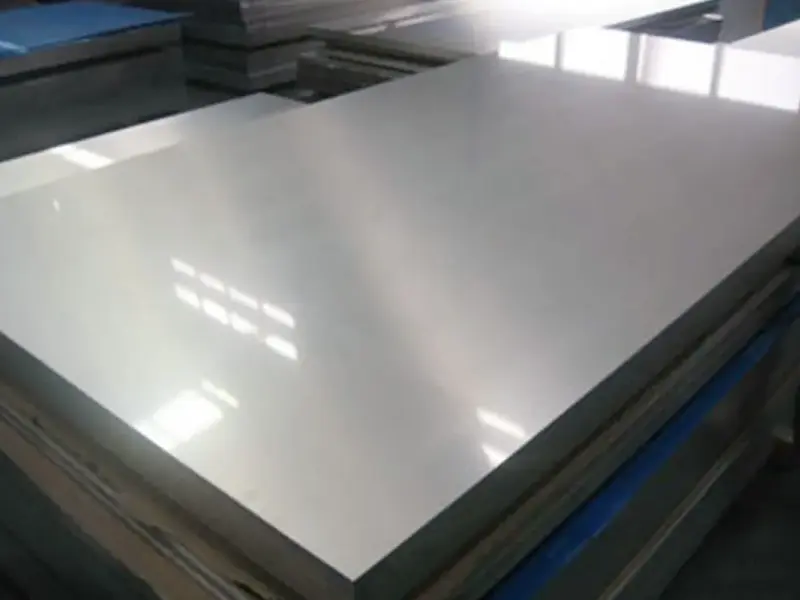
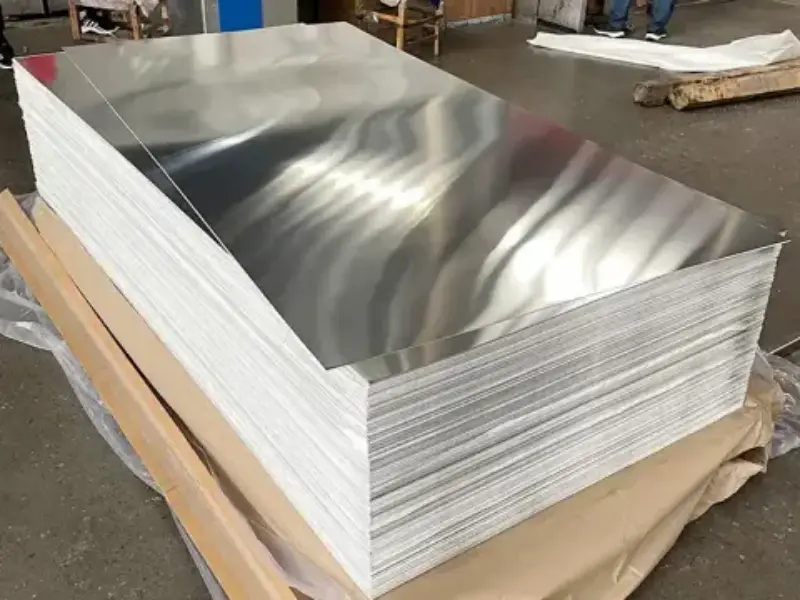
For large highway signs spanning more than 3 meters, 5052-H34 or 6061-T6 is used for the additional stiffness. For signs in coastal or high-humidity environments, the higher magnesium content of 5052 is important.
Thickness Options and What They Mean
Sign thickness is chosen based on sign size, wind load zone, and mounting method. Thicker sheet is stiffer and heavier. Thinner sheet saves weight but deflects more in wind.
| Thickness (mm) | Weight (kg/m²) | Max Recommended Sign Width | Typical Application |
|---|---|---|---|
| 1.5 mm | 4.05 | Up to 600 mm | Small street signs, parking signs |
| 2.0 mm | 5.40 | Up to 900 mm | Standard road signs, pedestrian signs |
| 2.5 mm | 6.75 | Up to 1200 mm | Medium highway signs, guide signs |
| 3.0 mm | 8.10 | Up to 1500 mm | Large guide signs, motorway signs |
| 4.0 mm | 10.80 | Up to 2400 mm | Overhead signs, large variable message sign faces |
| 5.0 mm | 13.50 | Structural use | Panel sign assemblies, cantilever sign faces |
| 6.0 mm | 16.20 | Structural use | Large highway overhead structures |
Most national traffic sign standards specify a minimum thickness of 2.0 mm for standard regulatory signs and 3.0 mm for larger guide and motorway signs. Check local standards before specifying.
Surface Finish Options from Chinese Manufacturers
The surface finish on the aluminum sheet affects how well reflective sheeting or paint bonds, and how long the sign lasts outdoors.
| Finish Type | Process | Bond Quality | Best For |
|---|---|---|---|
| Mill finish | As-rolled, no treatment | Fair — needs cleaning before film | Budget signs, painted signs |
| Degreased and cleaned | Chemical cleaning after rolling | Good | Standard sign blanks ready for film |
| Chromate conversion coated | Chemical treatment (Alodine / TCP) | Very good | Premium blanks for reflective film |
| Anodized | Electrochemical surface hardening | Excellent | Long-life signs, decorative signs |
| Painted (polyester) | Factory-applied polyester coat | Good | Pre-colored sign blanks |
| Painted (PVDF) | Factory-applied PVDF coat | Excellent | High-UV environments, premium signs |
| Pre-coated white | White primer or paint | Very good | Ready for reflective film application |
Most professional sign manufacturers prefer chromate conversion coated sheet as the substrate for retroreflective film application. The conversion coating improves adhesion of the pressure-sensitive adhesive on the film and significantly extends the bond life outdoors.
Product Types Available from Chinese Factories
Road sign aluminum sheet is not a single product. Chinese manufacturers supply several distinct formats. Each suits a different stage of the sign manufacturing process.
Plain Cut Sheet
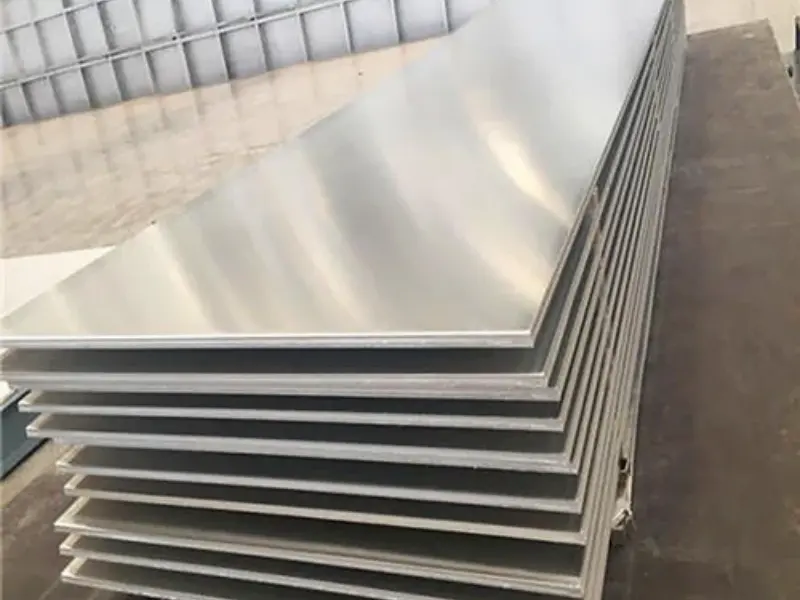
Flat aluminum sheet cut to a specified size — no holes, no forming, no coating. The sign manufacturer handles all downstream processing. This is the most flexible format. Sizes from 600×600 mm up to 1500×3000 mm or larger. Thickness from 1.5 mm to 6 mm. Supplied in bundles of 10–50 sheets depending on thickness.
Pre-Cut Sign Blanks
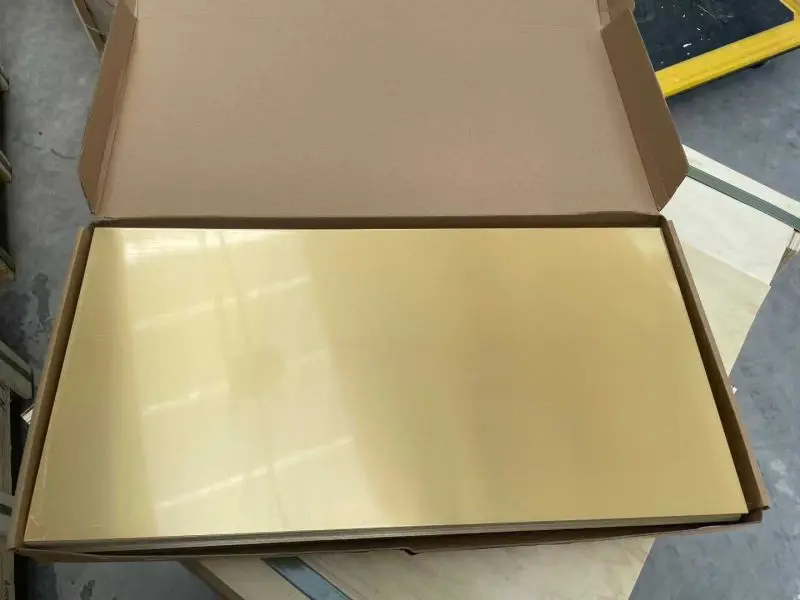
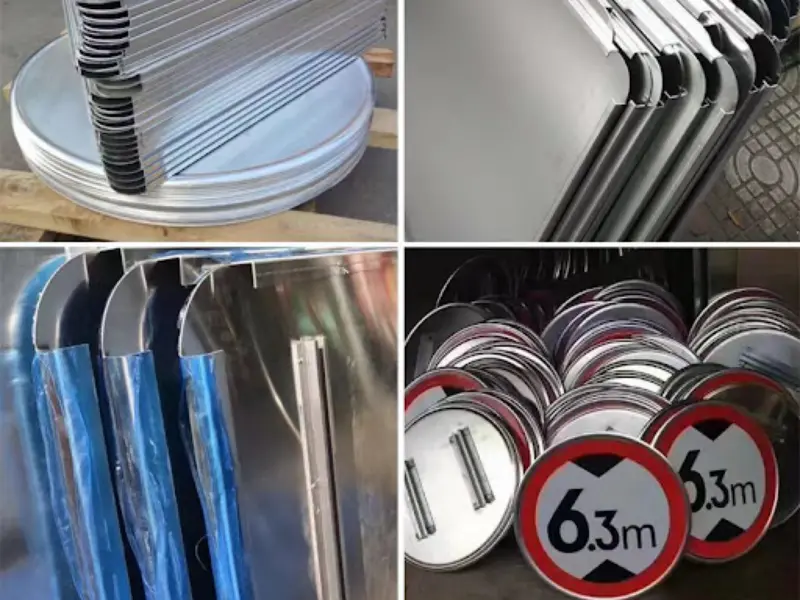
Sheets cut to common sign shapes — square, rectangle, octagon (stop sign), diamond (warning sign), triangle, and circle. Edges are either sheared flat or have a deburred finish. Some blanks come with pre-punched mounting holes in standard positions. This format saves the sign maker a full cutting and punching operation.
| Shape | Common Sizes | Typical Sign Type |
|---|---|---|
| Rectangle | 600×900, 900×1200, 1200×1800 mm | Guide signs, information signs |
| Square | 600×600, 900×900 mm | Regulatory signs |
| Octagon | 750×750, 900×900 mm | Stop signs |
| Diamond | 600×600, 750×750 mm | Warning signs |
| Triangle | 900mm, 1200mm per side | Yield signs, warning (EU) |
| Circle | Ø600, Ø750, Ø900 mm | Speed limit, prohibition signs |
| Pentagon | Custom | School zone, pedestrian crossing |
Extruded Aluminum Sign Panels
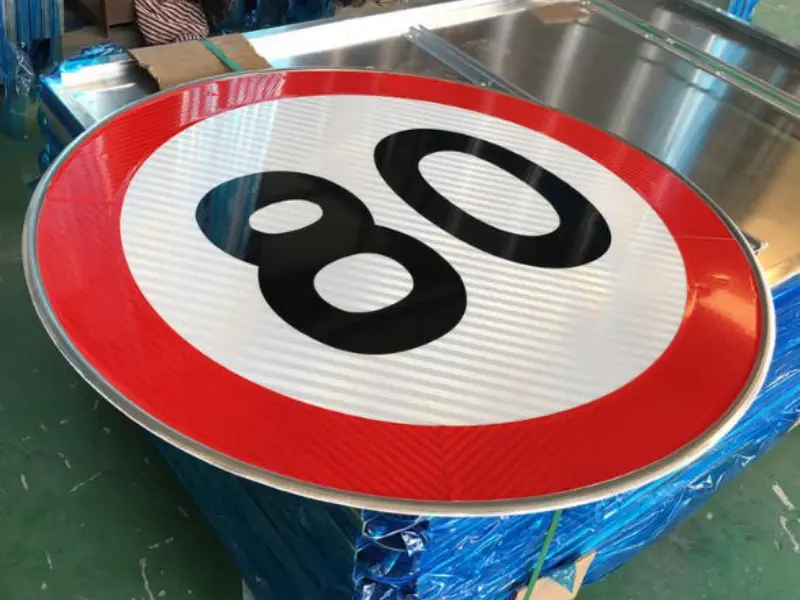
For large highway signs, individual flat sheets are not rigid enough. Extruded aluminum sign panels are used instead. These are hollow extruded profiles with internal ribs. Multiple panels are bolted side by side to form a large sign face.
- Profile width: 100 mm, 150 mm, 200 mm per panel
- Panel height: 600 mm up to 2400 mm
- Wall thickness: 2.0–3.0 mm
- Alloy: 6063-T5 or 6061-T6
- Finish: mill, anodized, or painted
- Connection: bolted flanges or interlocking tongue-and-groove
Composite Sign Panels
A sandwich construction with aluminum skins bonded to a polyethylene or mineral core — similar to aluminum composite panel (ACP). Lighter than solid aluminum of the same stiffness. Used for large-format signs where weight reduction is important.
- Total thickness: 3 mm, 4 mm, 6 mm
- Skin thickness: 0.3–0.5 mm each side
- Core: PE (standard) or mineral (fire-retardant)
- Alloy: 3003 or 5052 skin
- Surface: chromate treated, pre-painted, or PVDF coated
High-Flatness Precision Sheet
Cut sheets with very tight flatness tolerance. Standard mill sheet tolerances allow some bow and crossbow. High-flatness sheet is levelled after rolling to produce a sheet that lies flat without clamps. Important for automated sign film application machines where sheet bow causes film bubbles or misalignment.
- Flatness: ≤ 1.5 mm bow per 1000 mm
- Thickness tolerance: ±0.1 mm
- Surface: chromate coated or mill finish
- Alloy: 5052-H32 or 5052-H34
Coil Stock for Roll-to-Sheet Cutting
Aluminum coil supplied for sign manufacturers who run their own cut-to-length or blanking lines. The manufacturer cuts sheets to exact size in-house from coil. This reduces per-sheet cost and gives full control over sheet size.
- Coil width: 600 – 1600 mm
- Thickness: 1.5 – 4.0 mm
- Alloy: 5052-H32, 3003-H14
- Surface: mill finish or pre-treated
Alloy Comparison for Road Sign Use
| Feature | 3003-H14 | 5052-H32 | 5052-H34 | 6061-T6 |
|---|---|---|---|---|
| Yield strength | ~145 MPa | ~193 MPa | ~214 MPa | ~276 MPa |
| Corrosion resistance | Good | Excellent | Excellent | Good (needs coating) |
| Coastal / salt air | Acceptable | Recommended | Recommended | Needs anodizing or paint |
| Formability | Excellent | Good | Moderate | Limited |
| Weldability | Good | Excellent | Excellent | Good |
| Reflective film adhesion | Good | Very good | Very good | Good |
| Relative cost | Lowest | Standard | Standard +5% | Higher |
| Best sign application | Budget, indoor | Standard road signs | Large highway signs | Structural, overhead |
Application Areas

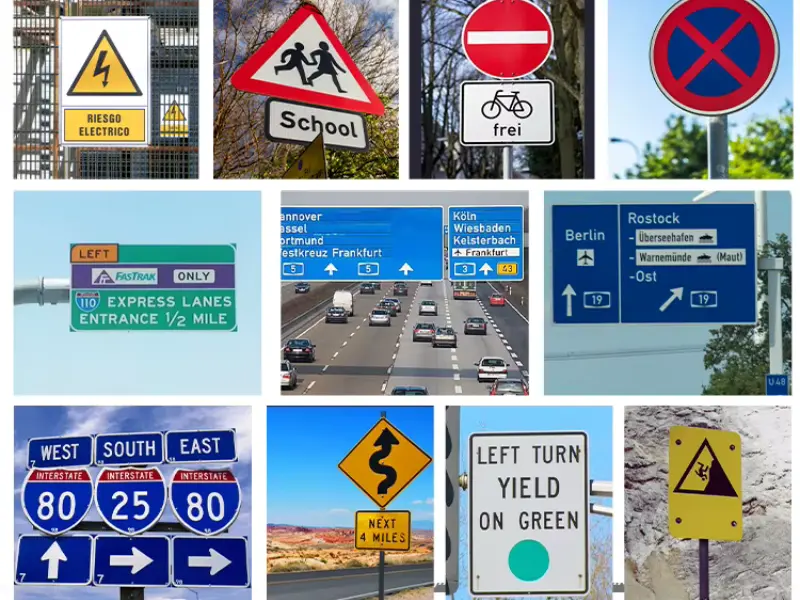
Road & Highway Traffic Signs
- Speed limit and regulatory signs
- Warning and hazard signs
- Stop and yield signs
- Guide signs and direction signs
- Motorway exit and overhead signs
- Variable message sign face panels
- Emergency services route markers
Urban Street & Pedestrian Signage
- Street name signs and house number plates
- Pedestrian crossing and crossing warning signs
- Parking regulation signs
- Bus stop and transit information signs
- Cycle lane markers and signs
- School zone warning signs
- No-entry and access restriction signs
Airport & Transport Hub Signs
- Runway and taxiway guidance signs
- Terminal direction and gate signs
- Apron and ground movement signs
- Port and ferry terminal directional signs
- Rail station platform and exit signs
Construction Zone & Temporary Signs
- Roadwork warning signs
- Detour and diversion signs
- Lane closure and merge signs
- Speed reduction signs for work zones
- Contractor identification signs
Industrial & Facility Signs
- Factory gate and access signs
- Hazard and safety warning signs
- Parking and loading zone signs
- Emergency evacuation route signs
- Logistics and warehouse directional signs
Architectural & Wayfinding Signs
- Campus and university directional signs
- Hospital and healthcare facility wayfinding
- Shopping center exterior signs
- Building entrance and address signs
- Public park and recreational facility signs
What to Check When Sourcing from a Chinese Manufacturer
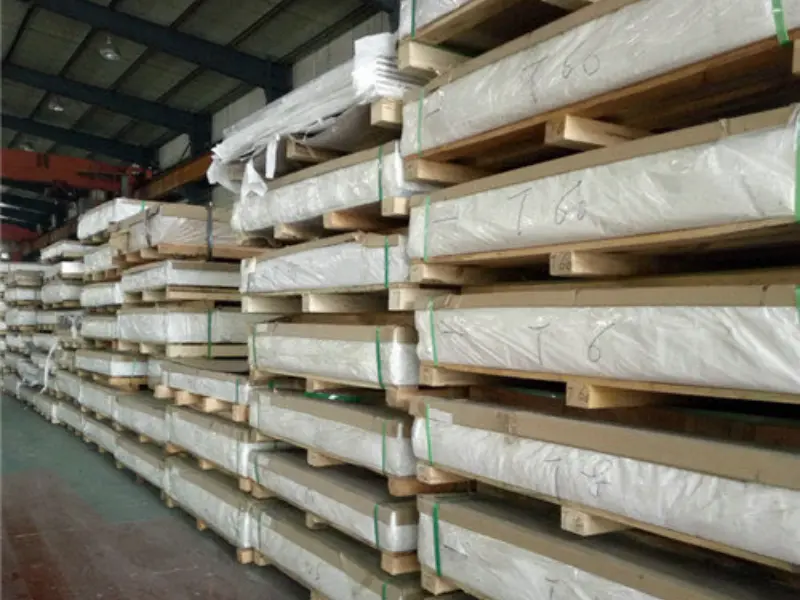
Not all Chinese suppliers produce road sign aluminum sheet to the same standard. These are the key checks before placing a bulk order.
Material Certification
Surface Treatment Quality
Flatness and Dimensional Tolerance
Packaging for Export
Typical Export Specifications Summary
| Parameter | Standard Range | Notes |
|---|---|---|
| Alloy | 5052-H32 / H34, 3003-H14, 6061-T6 | Specify per application |
| Thickness | 1.5 – 6.0 mm | ±0.1 mm tolerance available |
| Width | 300 – 1600 mm | Custom cut available |
| Length | 600 – 6000 mm | Custom cut available |
| Surface | Mill, chromate, PVDF, anodized | Per sign maker requirement |
| Flatness | Standard or high-flatness | Specify if automated film application |
| MOQ | 500 kg – 2 MT per spec | Lower on cut blanks |
| Lead time | 10 – 25 business days | Depends on surface treatment |
| Certification | ASTM B209, EN 485, ISO 9001 | On request |
| Packaging | Export standard, moisture protected | Per buyer specification |
FAQ
What alloy is best for road sign aluminum sheet?
5052-H32 is the industry standard for most road sign applications worldwide. It has excellent outdoor corrosion resistance, particularly in coastal and humid environments, good strength for standard sign sizes, and a clean surface that bonds well with retroreflective sheeting adhesives. For larger highway signs over 1.5 meters wide, 5052-H34 provides additional stiffness. For structural overhead sign frames, 6061-T6 is used.
What thickness is standard for traffic signs?
Most national traffic sign standards specify 2.0 mm as the minimum for standard regulatory and warning signs up to about 900 mm width. For larger guide signs and highway signs, 3.0 mm is the standard minimum. Some countries specify 2.5 mm as the baseline. Always check the applicable national standard — MUTCD in the US, BS 873 in the UK, EN 12899 in Europe, or the local equivalent in your market.
Can Chinese manufacturers supply pre-cut sign blanks to custom shapes?
Yes. Most mid-to-large Chinese sign aluminum sheet manufacturers have CNC shearing, laser cutting, or punch press capability. They can produce blanks in any standard sign shape — octagon, diamond, triangle, pentagon, circle — as well as custom shapes. Pre-punched mounting holes in standard positions are also available. Minimum order quantities apply for custom shapes and are typically 200–500 pieces per size.
Is chromate conversion coating available from Chinese factories?
Yes. Chromate conversion coating — also called chemical conversion coating or Alodine treatment — is widely available from Chinese aluminum sheet manufacturers. The coating improves reflective film adhesion and significantly extends the outdoor service life of the sign. If RoHS compliance is required, request TCP (trivalent chrome process) coating rather than the traditional hexavalent chromate process. Most professional Chinese sign substrate suppliers offer both options.
How do I verify the quality of aluminum sheet from a Chinese supplier?
Request a mill test certificate (MTC) for every batch. The MTC should show alloy, temper, mechanical test results (yield strength, tensile strength, elongation), chemical composition, and the applicable standard. Arrange a third-party inspection through SGS, Bureau Veritas, or Intertek at the factory before shipment. For first orders, request a sample batch of 20–50 sheets before committing to a full container. Test the surface adhesion with your reflective sheeting before approving the full order.
What is the minimum order quantity for road sign aluminum sheet from China?
MOQ varies by product type. For plain cut sheet in standard alloy and thickness, 500 kg to 2 MT is typical. For pre-cut blanks in standard shapes with standard surface treatment, 200–500 pieces per shape is common. Container-load orders (typically 20–25 MT in a 20-ft container) attract the best pricing. Full container orders ship direct and avoid consolidation surcharges.
How long does delivery take from a Chinese manufacturer?
Production lead time for standard specifications is 10–20 business days. Add 5–7 days for surface treatment if chromate or PVDF coating is required. Ocean freight from major Chinese ports to the US West Coast takes 14–18 days. To Europe it takes 25–35 days. To the Middle East or Southeast Asia it takes 10–20 days. Total door-to-door time from order confirmation is typically 6–10 weeks for ocean freight. Air freight is faster but cost-prohibitive for bulk sheet orders.
Can the manufacturer supply reflective sheeting already applied to the aluminum?
Some Chinese manufacturers offer a complete supply service — aluminum substrate plus reflective sheeting lamination — but this is less common. Most supply the aluminum substrate only, and the sign maker applies their own retroreflective film (3M, Avery Dennison, Orafol, or equivalent). For buyers who want a complete ready-to-print sign blank, ask the supplier specifically about their film application capability. Check that their film application process is certified by the film manufacturer to maintain warranty.