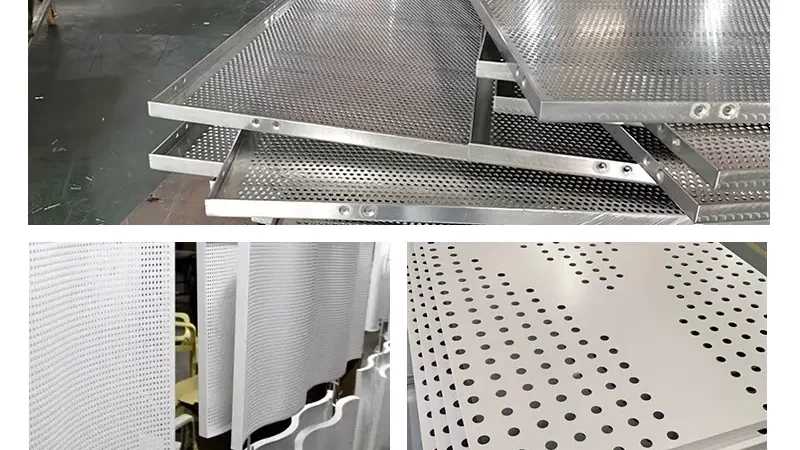
An aluminum veneer curtain wall is a non-structural exterior cladding system. Thin aluminum panels — called aluminum veneer — attach to a building’s structural frame.
The panels carry no floor or roof loads. Their job is to keep out wind and rain while giving the building a clean, modern face.
The system is widely used on office towers, shopping centers, airports, and hospitals. It is lighter than stone or concrete cladding and easier to maintain over the building’s life.
A veneer curtain wall system has three main parts:
Infill and sealing — gaskets, silicone, and thermal breaks that make the wall weathertight
Aluminum veneer panels — the visible outer skin
Sub-frame (mullion and transom grid) — the aluminum extrusion frame fixed to the structure
Aluminum Veneer vs. Other Curtain Wall Types
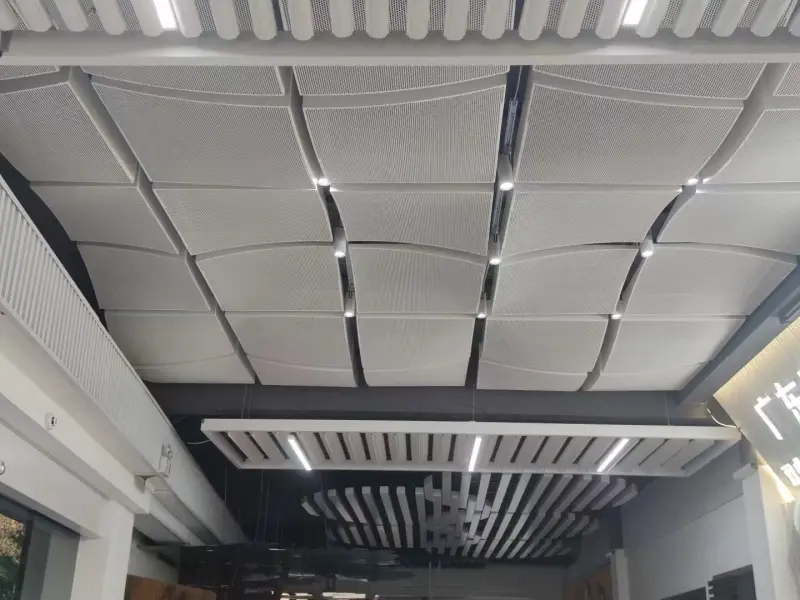
Not all curtain walls use solid aluminum veneer. The table below compares the most common systems.
| System Type | Face Material | Typical Thickness | Weight (kg/m²) | Best For |
|---|---|---|---|---|
| Aluminum veneer curtain wall | Solid aluminum sheet | 2.0 – 4.0 mm | 5 – 11 | Complex shapes, custom façades |
| Glass curtain wall | Tempered / IGU glass | 6 – 24 mm | 15 – 30 | Transparency, natural light |
| ACM (aluminum composite) | Aluminum + PE/FR core | 3 – 6 mm total | 6 – 8 | Cost-efficient flat panels |
| Stone veneer curtain wall | Granite / marble | 25 – 30 mm | 65 – 80 | Prestige, heavy-duty façades |
| Terracotta curtain wall | Fired clay | 20 – 35 mm | 40 – 60 | Natural texture, color aging |
Aluminum veneer curtain wall panels sit in a sweet spot — lighter than stone, more rigid than ACM, and easier to form into curves or 3D shapes than glass.
What Is Aluminum Veneer? — Material Basics
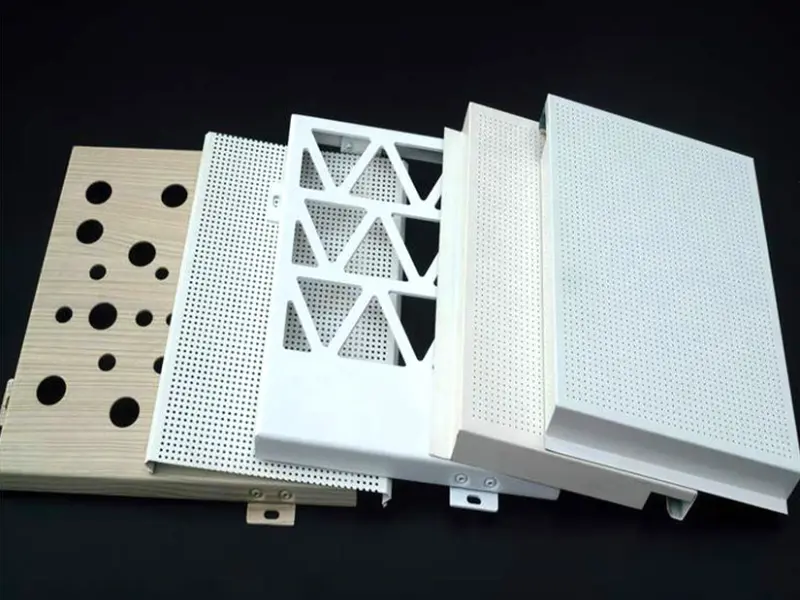
Aluminum veneer is a single-skin aluminum panel. It starts as flat aluminum sheet, then gets cut, bent, and surface-treated to form a finished façade unit.
Alloy Options
| Alloy | Series | Key Property | Common Use |
|---|---|---|---|
| 1100 | 1xxx | Soft, very workable | Simple flat panels, decorative trim |
| 3003 | 3xxx | Good strength + formability | Standard curtain wall panels |
| 5005 | 5xxx | Excellent anodizing response | Anodized architectural panels |
| 5052 | 5xxx | High corrosion resistance | Coastal and marine buildings |
| 5754 | 5xxx | Good weldability | Welded frame corners |
| 6061-T6 | 6xxx | High structural strength | Sub-frame extrusions, brackets |
Most aluminum veneer panels use 3003 or 5005. 3003 bends well for shaped panels. 5005 gives a cleaner, more uniform color after anodizing — important for high-visibility façades.
Temper Reference
| Temper | Meaning | Effect on Panel Fabrication |
|---|---|---|
| O | Fully annealed | Maximum formability for tight bends |
| H14 | Half-hard | Good flatness, standard delivery state |
| H24 | Strain-hardened + partial anneal | Balance of formability and stiffness |
| H32 | Quarter-hard (5xxx) | Slightly easier to form than H34 |
| T6 | Heat-treated (6xxx, extrusions) | High strength for sub-frame members |
How Thick Are Aluminium Curtain Walls?
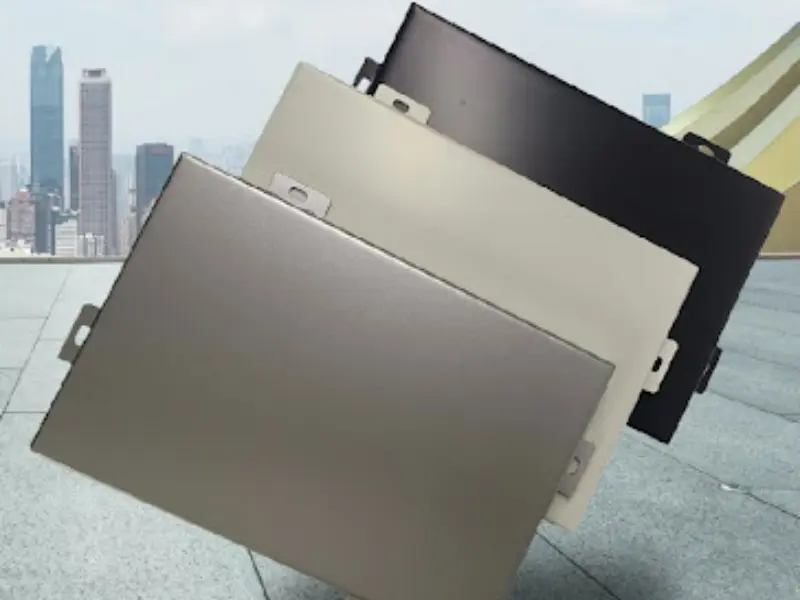
Panel thickness is one of the first decisions in any curtain wall specification. Thicker panels are flatter and stiffer — but cost more and add weight.
| Panel Thickness | Weight (kg/m²) | Flatness | Recommended Span | Typical Application |
|---|---|---|---|---|
| 1.5 mm | 4.1 | Moderate | Up to 600 mm | Interior feature walls, light-duty cladding |
| 2.0 mm | 5.4 | Good | Up to 1000 mm | Low-rise building façades |
| 2.5 mm | 6.8 | Good | Up to 1200 mm | Mid-rise curtain wall, standard commercial |
| 3.0 mm | 8.1 | Very Good | Up to 1500 mm | High-rise façades, wind-load zones |
| 4.0 mm | 10.8 | Excellent | Up to 2000 mm | Structural panels, large-format cladding |
Standard specification for most commercial curtain wall projects is 2.5 mm or 3.0 mm. Anything below 2.0 mm is not recommended for exterior use — thin panels can oil-can (buckle slightly) under wind pressure and temperature change.
Panel Types — More Than a Flat Sheet
Aluminum veneer panels come in several forms. Each suits a different façade design or installation method.
Flat Panel (Standard) The most common type. Cut and folded from flat sheet. Edges turn back 20–40 mm to form a return flange. Simple to produce and install. Used on most commercial office buildings.
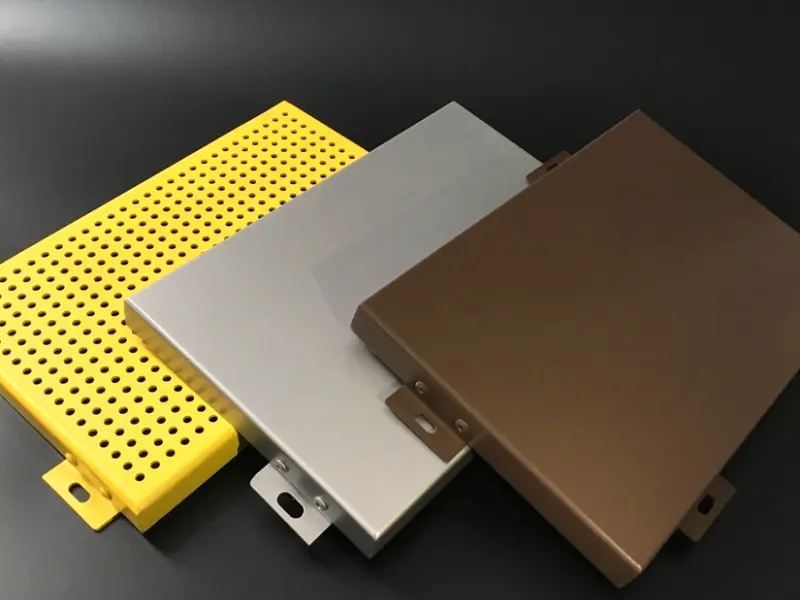
Curved Panel Rolled or press-formed into a single or double curve. Single-curve panels (bent in one direction) are straightforward. Double-curve (saddle or dome shapes) require stretch forming and cost significantly more. Common on airport terminals and cultural buildings.
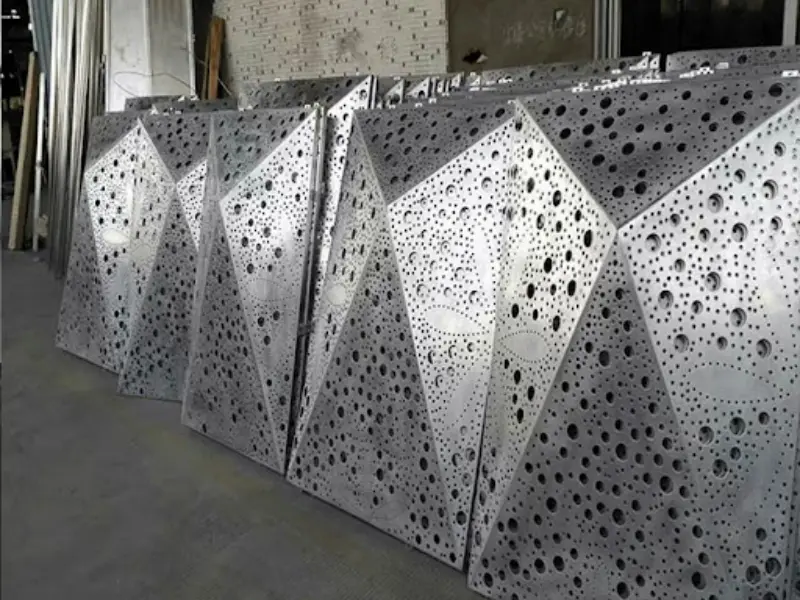
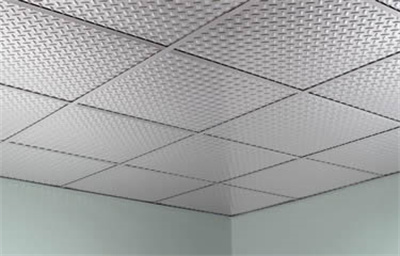
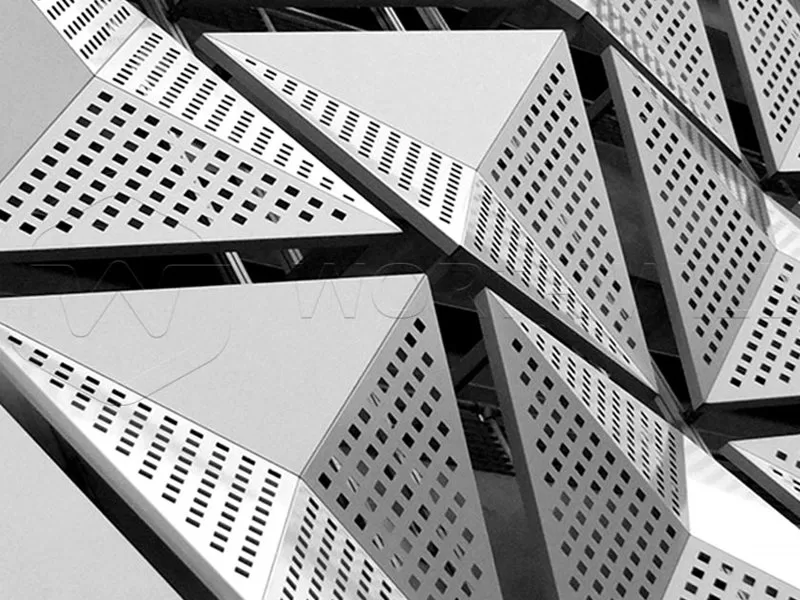
3D / Shaped Panel CNC-pressed into raised or recessed geometric patterns. Creates depth and shadow lines on the façade. Increasingly specified on retail and hospitality projects for visual interest.
3D / Shaped Panel CNC-pressed into raised or recessed geometric patterns. Creates depth and shadow lines on the façade. Increasingly specified on retail and hospitality projects for visual interest.
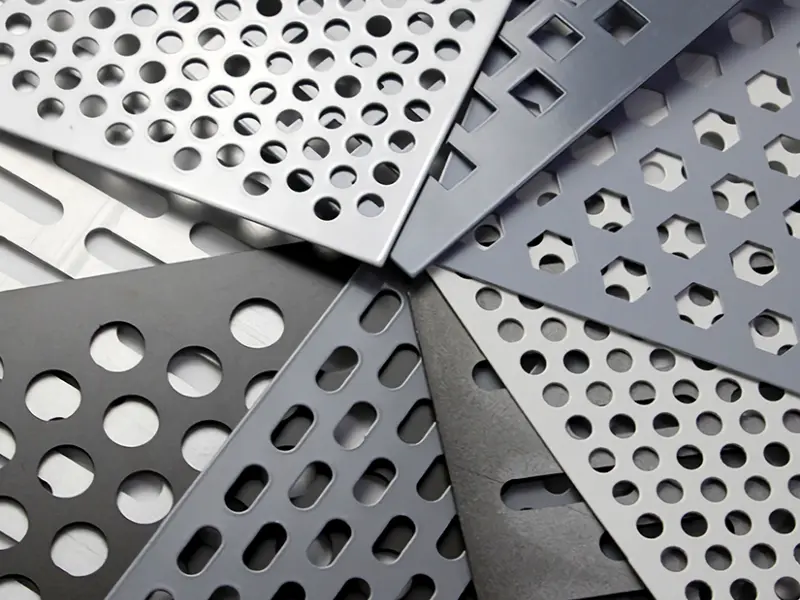
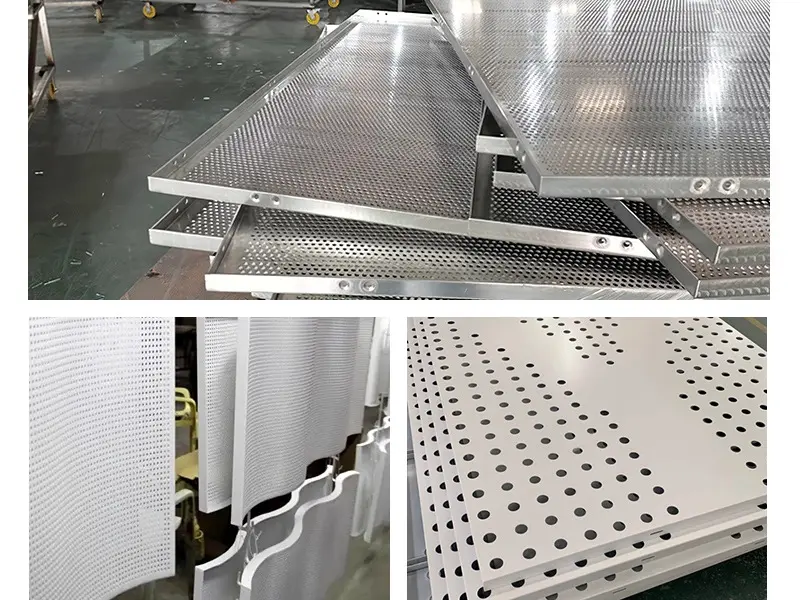
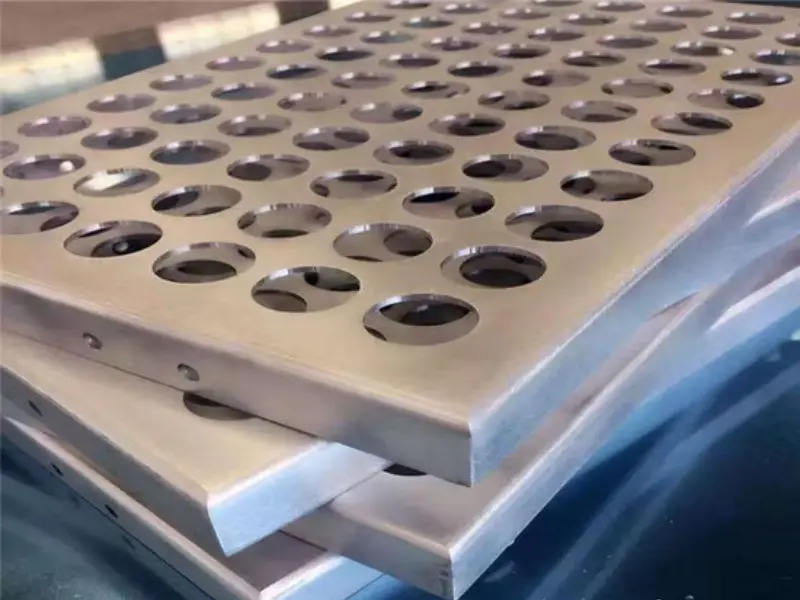
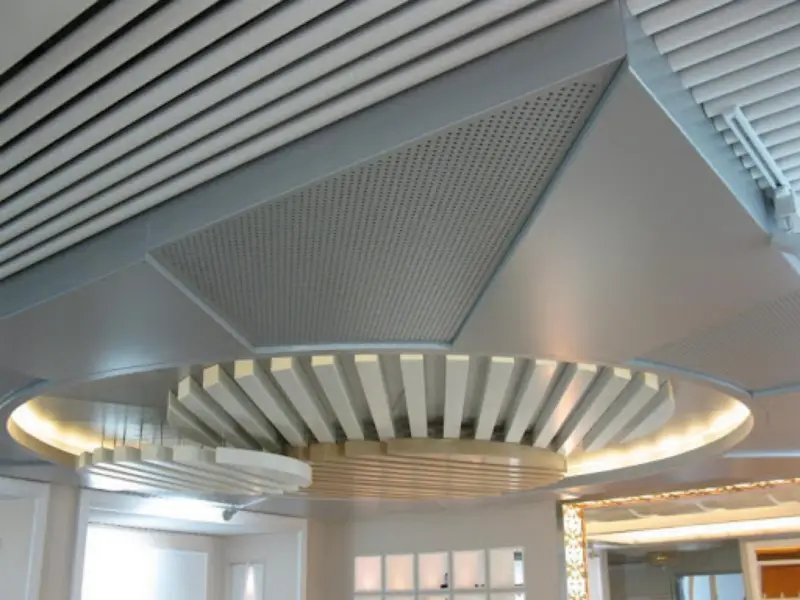
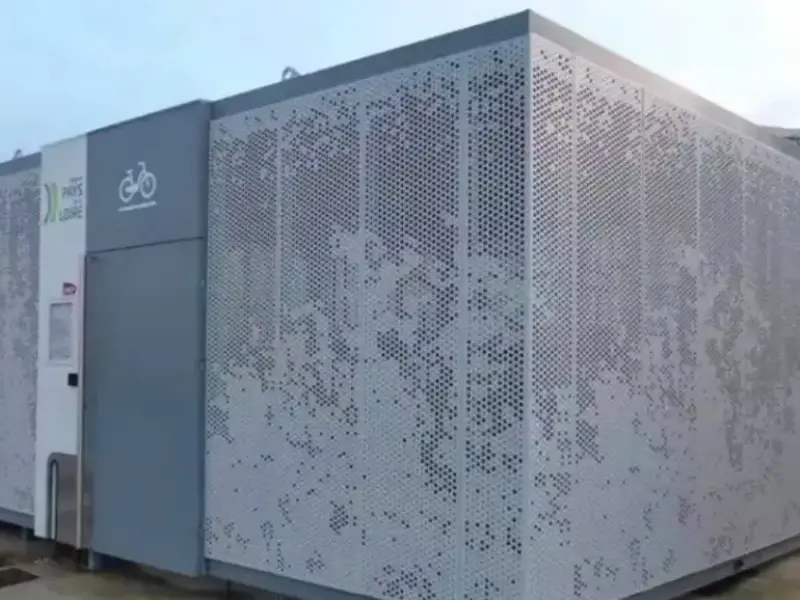
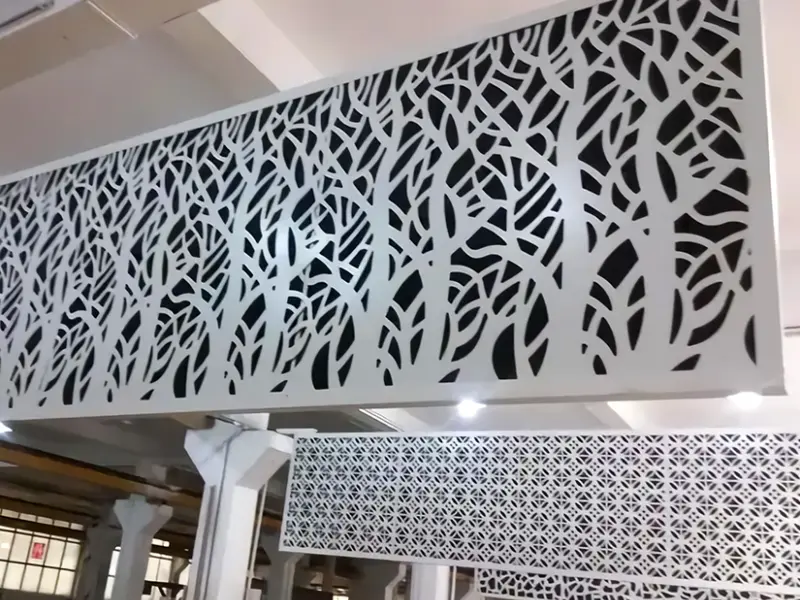
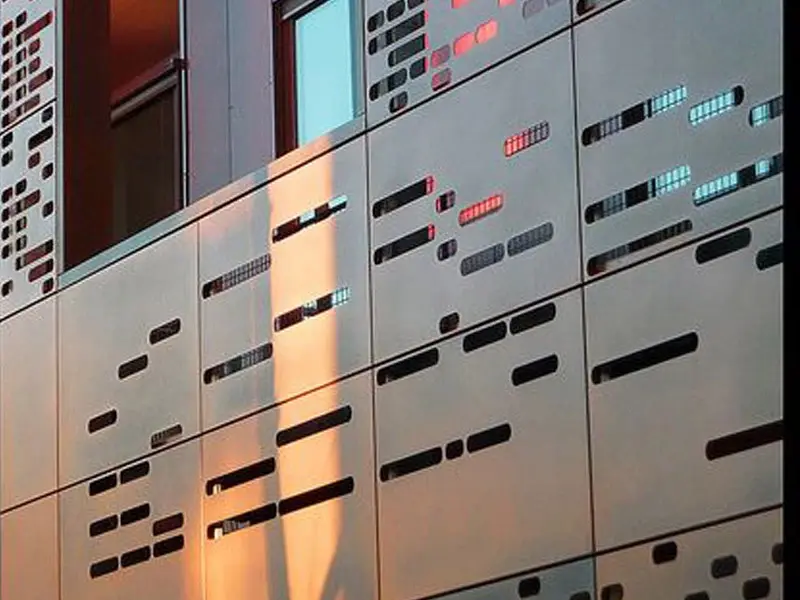
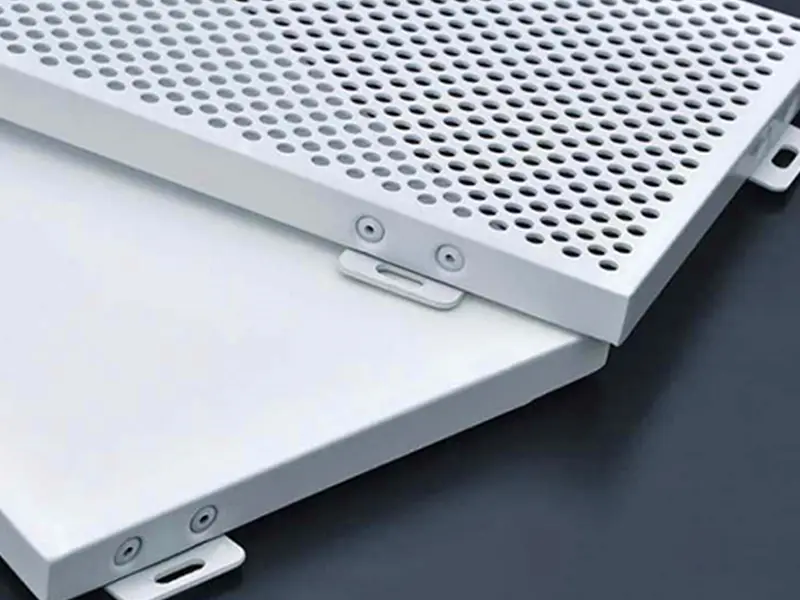
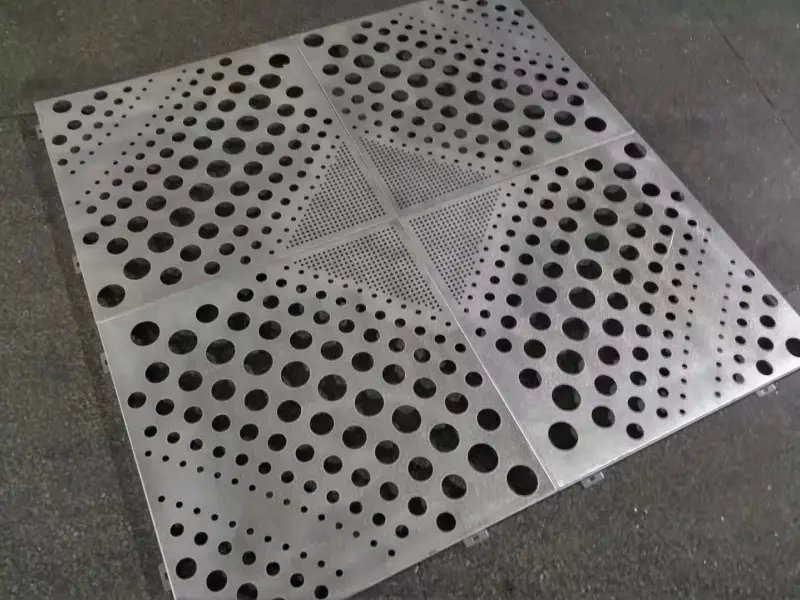
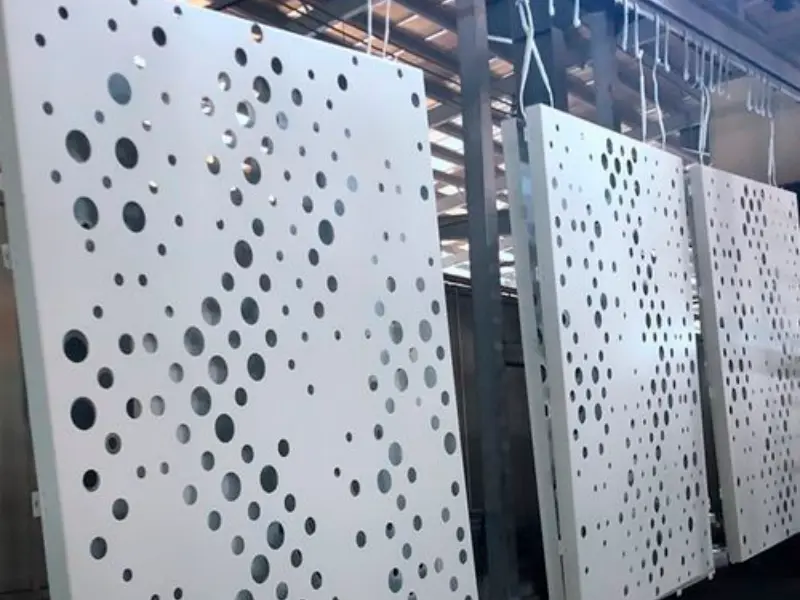
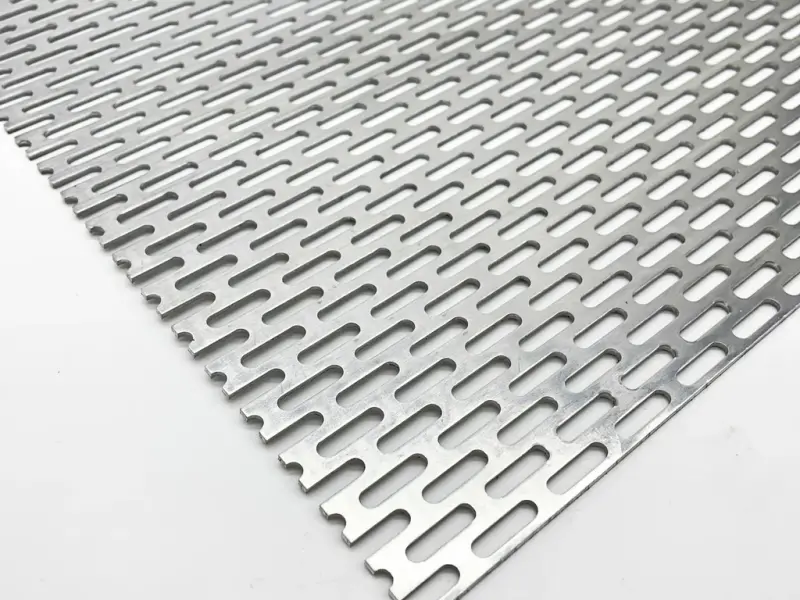
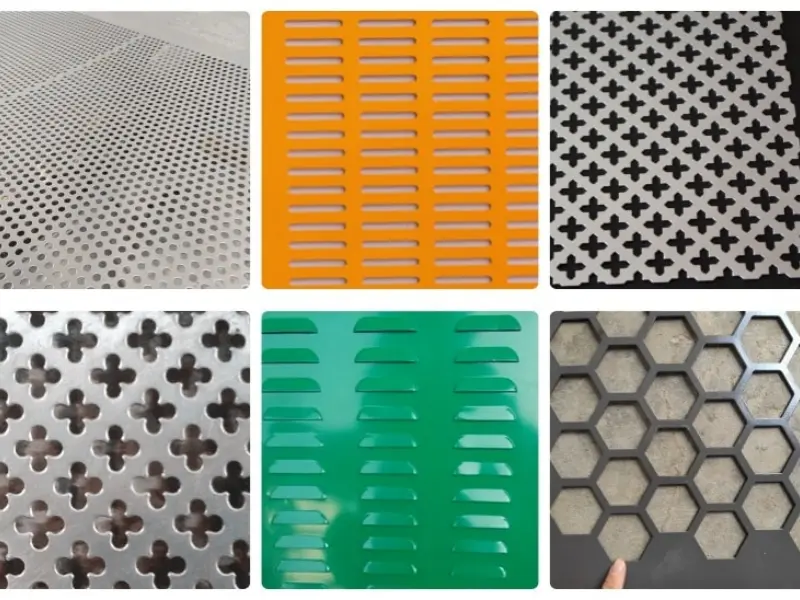
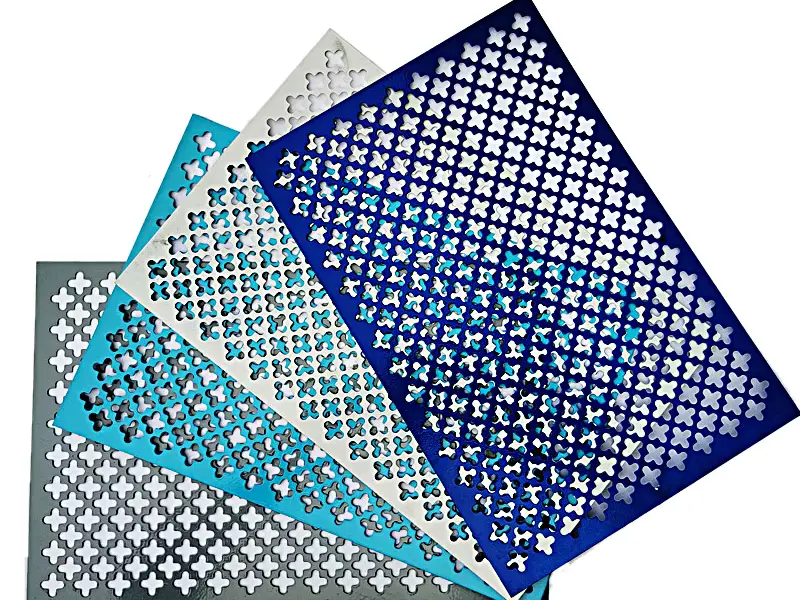
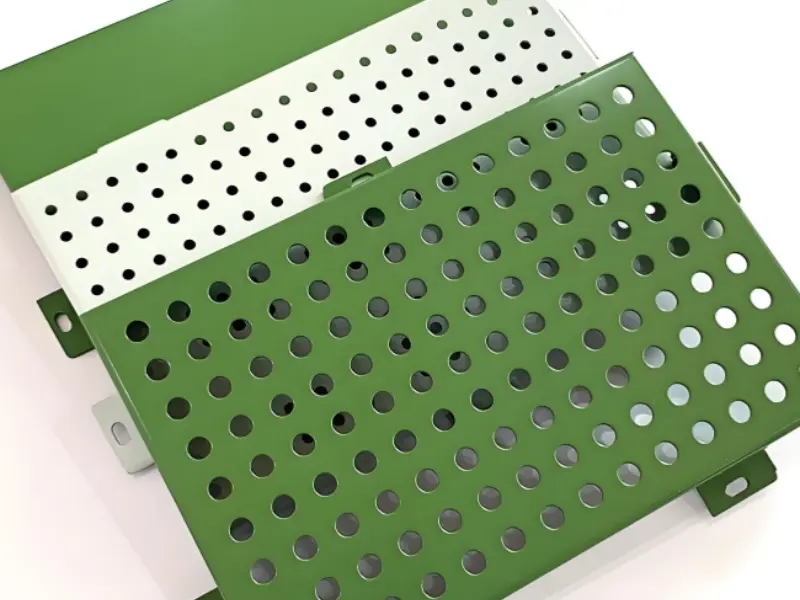
Perforated Panel Holes punched in a regular or custom pattern before surface treatment. Lets light and air through while maintaining a solid visual appearance from a distance. Used on car park façades, sunshade screens, and feature walls.
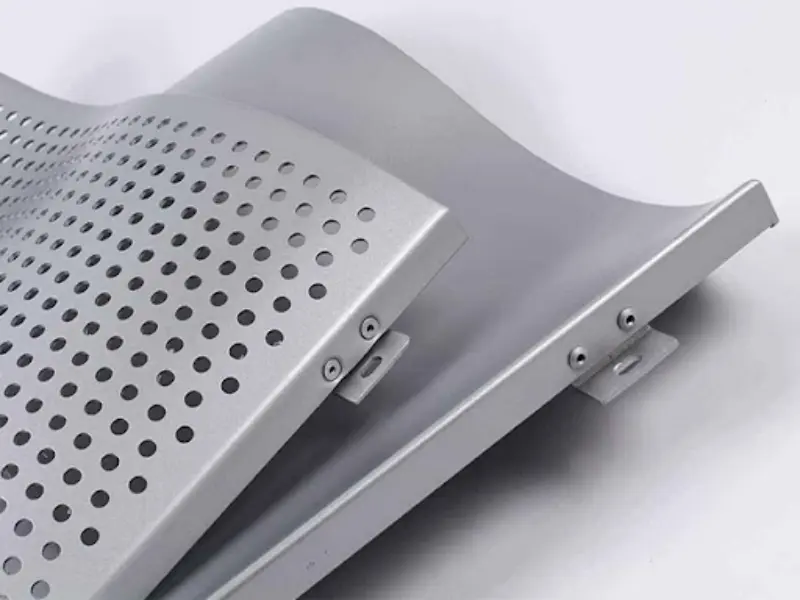
Cassette Panel (Open-Joint System) Panels with folded returns that clip onto a sub-rail without visible fixings. The joints between panels are open — typically 8–15 mm — allowing water to drain without sealant. Easier to replace individual panels compared to sealed systems.
Honeycomb-Backed Panel A thin aluminum veneer skin bonded to an aluminum honeycomb core. Gives exceptional flatness and stiffness at lower weight than solid sheet. Typical total thickness 15–25 mm. Used on premium façades where a very large panel is needed without oil-canning.
Product Type Comparison at a Glance
| Panel Type | Thickness | Weight | Shape Capability | Cost Level | Replaceability |
|---|---|---|---|---|---|
| Flat solid veneer | 2.0 – 4.0 mm | Medium | Flat only | $ | Good |
| Curved veneer | 2.5 – 4.0 mm | Medium | Single / double curve | $$ – $$$ | Moderate |
| 3D shaped veneer | 2.5 – 3.5 mm | Medium | Complex geometry | $$$ | Moderate |
| Perforated veneer | 2.0 – 3.0 mm | Medium-Low | Flat / single curve | $$ | Good |
| Cassette panel | 2.0 – 3.0 mm | Medium | Flat / slight curve | $$ | Excellent |
| Honeycomb-backed | 15 – 25 mm total | Low | Flat / mild curve | $$$ | Moderate |
Surface Finishes — Side by Side
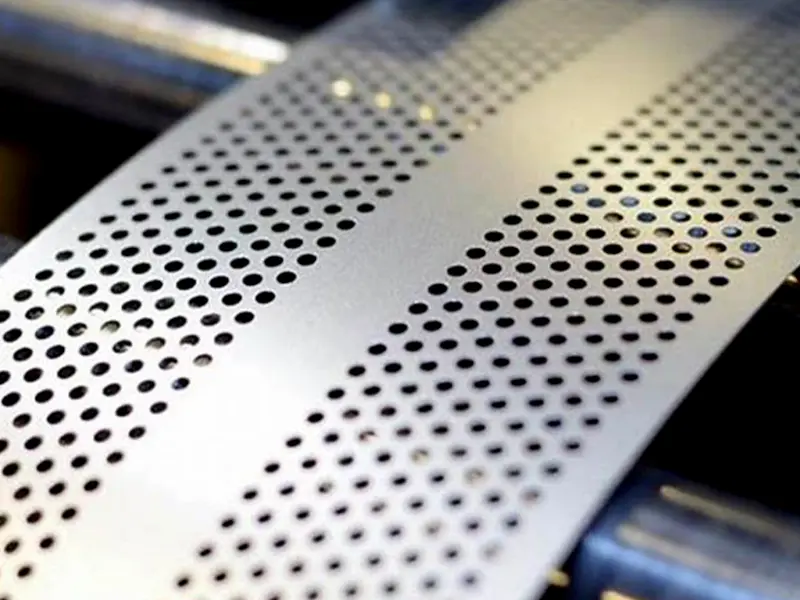
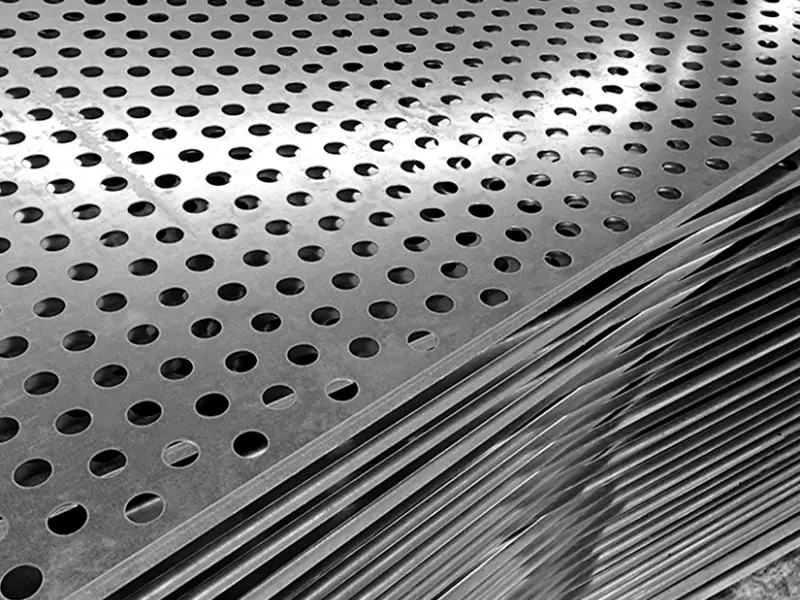
The finish determines how the panel looks and how long it holds its color outdoors.
| Finish | Appearance | UV Resistance | Warranty | Notes |
|---|---|---|---|---|
| PVDF 2-coat | Solid color, satin | Excellent | 15 – 20 yr | Industry standard for curtain wall |
| PVDF 3-coat | Metallic or mica effect | Excellent | 20 – 25 yr | Better color depth |
| Polyester powder coat | Wide color range | Good | 5 – 10 yr | Budget option; shorter service life |
| Anodized (clear) | Bright silver | Excellent | 15+ yr | Hardest surface; no paint to peel |
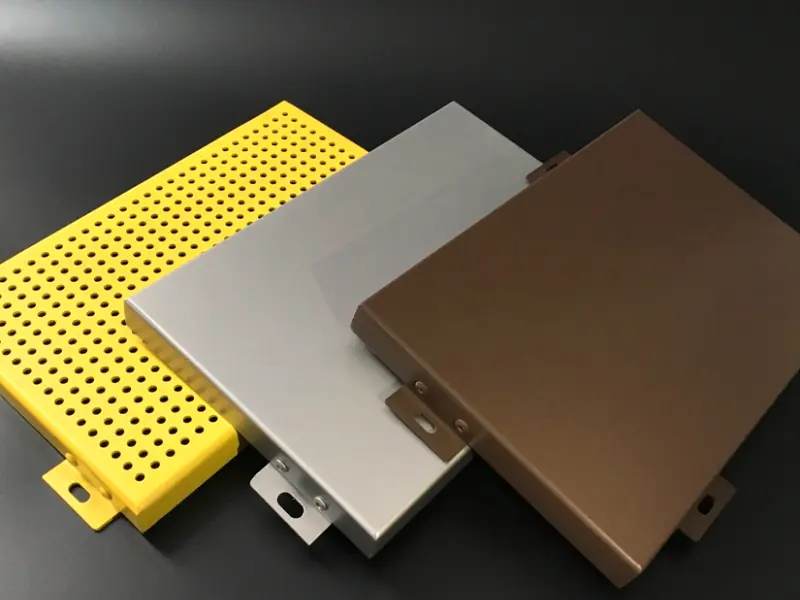
| Anodized (color) | Bronze, black, gold, champagne | Excellent | 15+ yr | Consistent metallic tone |
| Brushed + clear lacquer | Satin linear texture | Moderate | 5 – 8 yr | Interior or sheltered exterior |
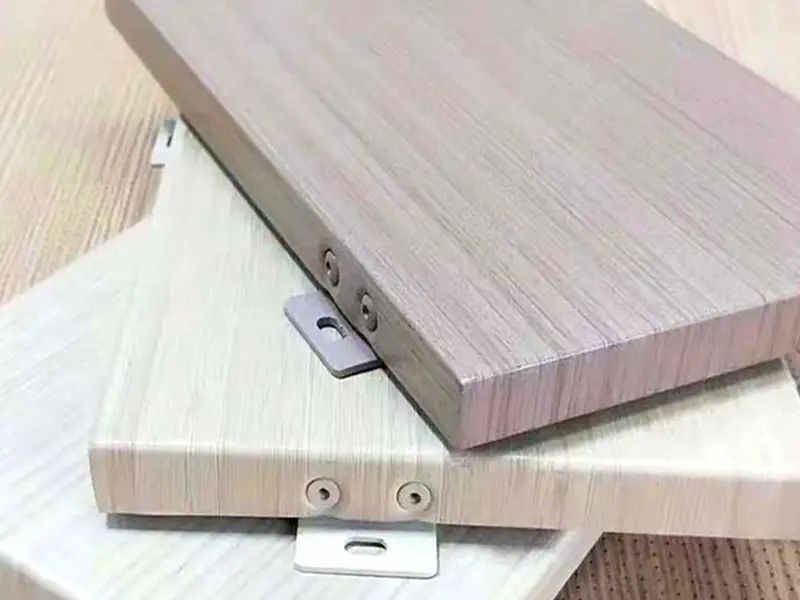
| Wood grain (transfer print) | Timber look | Good | 8 – 12 yr | Common on retail façades |
| Stone texture (print) | Granite / marble look | Good | 8 – 12 yr | Lighter than real stone |
PVDF coating is the benchmark for any external aluminum veneer curtain wall panel. It resists UV degradation, chalking, and color fade far better than standard polyester powder coat.
Veneer Curtain Wall System — How It Goes Together
Understanding the system helps you specify the right components from the start.
Sub-Frame Grid
The grid carries all panel loads back to the building structure. It consists of:
- Mullions — vertical extrusions, typically 6061-T6 aluminum
- Transoms — horizontal extrusions spanning between mullions
- Brackets and anchors — adjustable steel or aluminum connectors fixed to the slab edge or column
Grid spacing typically matches panel width and height. Common module sizes are 900×2700 mm, 1000×3000 mm, and 1200×3600 mm.
Panel Fixing Methods
| Method | Description | Visible Fixings? | Best For |
|---|---|---|---|
| Hook / clip system | Panel hooks onto sub-rail | No | Cassette panels, easy replacement |
| Concealed rivet | Blind rivet through return flange | No | Flat solid panels |
| Through-fix screw | Screw visible through face | Yes | Budget projects, industrial buildings |
| Structural silicone | Panel bonded to frame | No | Flush-joint unitized systems |
Weatherproofing
Most veneer curtain wall systems use a drained and back-ventilated cavity. Rainwater that passes the outer joint drains down through open vertical joints or weep holes at the base.
This is more durable than fully sealed systems because it removes the reliance on sealant remaining watertight for decades.
Where Aluminum Veneer Curtain Wall Is Used

- Office towers and commercial headquarters
- Shopping centers and retail façades
- Airport terminals and transport hubs
- Hotels and hospitality buildings
- Hospitals and healthcare facilities
- University and education campuses
- Sports stadiums and arenas
- Car park structures (perforated panels)
- Cultural buildings — museums, concert halls, libraries
- Residential towers (premium mid-rise and high-rise)
Application vs. Recommended Spec
| Building Type | Panel Thickness | Alloy | Finish | System Type |
|---|---|---|---|---|
| High-rise office | 3.0 – 4.0 mm | 3003 / 5005 | PVDF 3-coat | Unitized or stick |
| Retail façade | 2.5 – 3.0 mm | 3003 | PVDF or wood grain | Stick system |
| Airport terminal | 3.0 – 4.0 mm | 3003 / 5052 | PVDF, anodized | Unitized |
| Car park | 2.0 – 2.5 mm | 3003 | Powder coat | Open-joint cassette |
| Coastal building | 3.0 mm | 5052 | PVDF + anodized | Stick or unitized |
| Interior feature wall | 1.5 – 2.0 mm | 1100 / 3003 | Brushed / anodized | Direct fix |
Aluminium Curtain Wall Price — What Drives Cost?
Aluminum veneer curtain wall pricing varies widely. These are the main factors:
Order quantity — small custom orders carry higher per-unit cost than large repeat runs
Panel thickness — 3.0 mm costs roughly 30–40% more per m² than 2.0 mm
Shape complexity — flat panels are cheapest; double-curve panels can cost 3–5× more to fabricate
Surface finish — PVDF 3-coat adds 15–25% over polyester powder coat
System type — unitized systems (factory-assembled frames) cost more upfront but cut site time
Panel size — very large panels require honeycomb backing, which adds cost
Typical supply-only price range (panels + sub-frame, ex-factory):
| Spec Level | Approximate Price Range (USD/m²) |
|---|---|
| Basic (2.0 mm, powder coat, simple flat) | $45 – $70 |
| Standard (2.5–3.0 mm, PVDF, flat/cassette) | $80 – $130 |
| Premium (3.0–4.0 mm, PVDF 3-coat, shaped) | $140 – $220 |
| Honeycomb-backed, complex geometry | $200 – $350+ |
Prices exclude installation, engineering, transport, and local duties.
How to Install Aluminum Veneer Wall Panels — Overview
Full installation is a specialist trade job, but understanding the sequence helps with planning.
Step One — Survey and Set Out
Check the structural frame for plumb, level, and alignment. Mark anchor positions on slabs or columns. Any errors at this stage affect the whole façade.
Step Two — Fix Anchors and Brackets
Weld or bolt anchor plates to the structure. Fit adjustable brackets. Set brackets to the correct depth — this is where you absorb any structural tolerance.
Step Three — Install Mullions
Drop mullions onto brackets and align vertically. Fix at the designed spacing. Mullions are usually continuous over two floors with a slip joint at each slab to allow thermal movement.
Step Four — Fix Transoms
Connect horizontal transoms between mullions at panel height intervals. Check the grid is square before proceeding.
Step Five — Hang Panels
Hook or clip panels onto the sub-frame. Start from the bottom and work up. Check alignment after every two or three panels.
Step Six — Seal and Inspect
Apply silicone or fit gaskets at sealed joints. Test for water infiltration before signing off.
Frequently Asked Questions
What are aluminum curtain walls?
Definition An aluminum curtain wall is a lightweight, non-load-bearing exterior wall system. It hangs in front of the building structure like a curtain. The frame is usually aluminum extrusion. The infill can be glass, aluminum panel, or other cladding materials.
Why aluminum? Aluminum is light, corrosion-resistant, easy to extrude into complex profiles, and recyclable. It has been the dominant curtain wall frame material since the 1950s.
What is a veneer curtain wall system?
The Core Idea A veneer curtain wall system uses thin material — aluminum, stone, or terracotta — as the outer face instead of glass. The veneer panel is fixed to an aluminum sub-frame, which is anchored back to the building structure.
Key Difference from Glass Systems Glass curtain walls are transparent. Veneer systems are opaque. They are used where solid cladding is needed — around structural columns, between floors, or on walls without windows.
What is aluminum veneer?
Simple Answer Aluminum veneer is a pre-formed aluminum sheet panel used as external or internal wall cladding. It is thicker and more rigid than aluminum foil but thinner than structural aluminum plate. Standard thickness for façade use is 2.0 – 4.0 mm.
Not the Same as ACM Aluminum composite panel (ACM) has a plastic or mineral core between two thin aluminum skins. Aluminum veneer is solid aluminum all the way through — no core material.
How thick are aluminium curtain walls?
Panel Thickness The aluminum veneer panel itself is typically 2.0 – 4.0 mm thick. Most commercial projects specify 2.5 mm or 3.0 mm.
Frame Depth The mullion and transom sub-frame adds 60 – 200 mm of depth behind the panel face, depending on wind load span and thermal performance requirements.
Total System Depth From the face of the panel to the back of the anchor bracket, a typical aluminum veneer curtain wall system is 150 – 300 mm deep.
What is the difference between aluminum veneer and ACM panels?
Aluminum Veneer Solid aluminum sheet, 2–4 mm. Heavier per m². Can be shaped into complex curves and 3D forms. No core material to delaminate. Preferred for high-end and complex façades.
ACM (Aluminum Composite Material) Two thin aluminum skins (0.3–0.5 mm each) bonded to a PE or FR core. Lighter. Flatter for large panels. Less suitable for tight bends or deep 3D forming. Lower cost for simple flat applications.
Can aluminum veneer panels be used for interior walls?
Yes — Widely Used Indoors Thinner panels (1.5 – 2.0 mm) work well for interior feature walls, reception areas, lift lobbies, and retail fit-outs. Indoor panels can use lighter finishes — brushed aluminum with clear lacquer, anodized, or even transfer-printed wood grain.
What Changes Indoors No UV or weather resistance is needed. The sub-frame can be lighter. Panels can be fixed directly to a stud wall without a full ventilated cavity system.