Insulated aluminum strip is an essential material for electrical and industrial systems. With strong insulation, light weight, thermal stability, and versatile specifications, it has wide applications in motors, transformers, new energy, and many industrial applications.
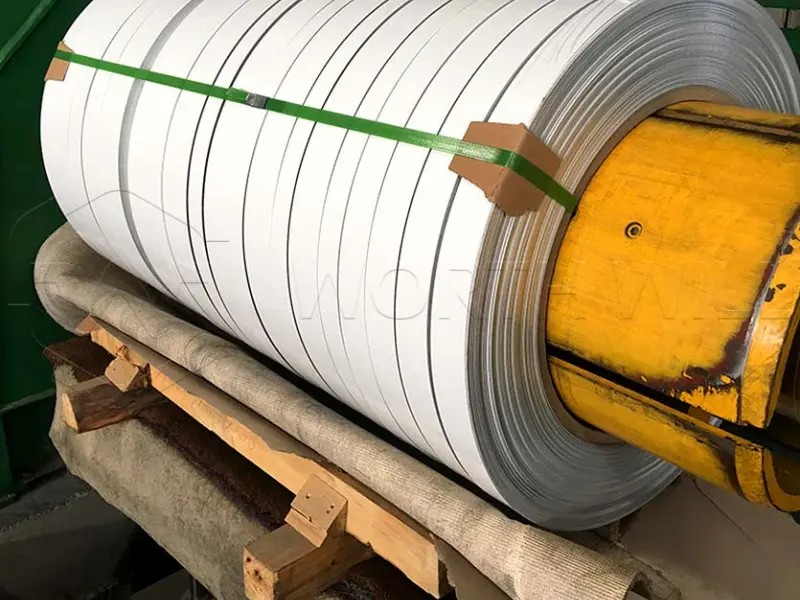
Common Specifications
Simple table with typical industrial sizes.
Insulated Aluminum Strip Specifications
| Item | Details |
|---|---|
| Alloys | 1050, 1060, 1070, 1350, 3003, 5052 |
| Thickness Range | 0.1 mm – 3.0 mm |
| Width Range | 5 mm – 800 mm |
| Insulation Type | Polyester, Polyimide, Epoxy coating, Enameled |
| Insulation Thickness | 20–200 microns |
| Temper | O, H14, H24, H18 |
| Surface Finish | Coated, painted, laminated |
| Package | Coil, strip rolls |
Performance Table (Mechanical Properties)
| Alloy | Tensile Strength (MPa) | Yield Strength (MPa) | Elongation (%) | Feature |
|---|---|---|---|---|
| 1050-O | 60–100 | 20–40 | 25–30 | High conductivity |
| 1060-H18 | 110–135 | 95–120 | 2–4 | High hardness |
| 3003-H14 | 160–180 | 140–160 | 3–8 | Corrosion resistance |
| 5052-H24 | 210–260 | 160–200 | 10–15 | Strength + flexibility |
Benefits
Using insulated aluminum strip brings multiple advantages to industrial systems:
1. Electrical Safety
The insulation layer protects wires and components from short circuits, improving system stability.
2. Lightweight and Strong
Aluminum is much lighter than copper while keeping good strength and forming ability.
3. Good Heat Management
Aluminum dissipates heat quickly, helping motors and electrical coils maintain a lower temperature.
4. Cost-Effective
Compared to copper, insulated aluminum strip offers a more affordable solution for mass production.
5. Excellent Processing Ability
- Easy slitting
- Easy bending
- Smooth coil winding
- Consistent thickness
Types of Insulated Aluminum Strip
To meet different application needs, insulated aluminum strip is available in several types.
● Polyester Insulated Aluminum Strip
Used in small motors and household appliances.
Feature: Stable coating, low cost.
● Polyimide (PI) Insulated Aluminum Strip
Used in high-temperature motors and aerospace systems.
Feature: Excellent heat resistance.
● Enameled Aluminum Strip
Used in transformers and power coils.
Feature: Strong insulation bonding.
● Laminated Insulated Aluminum Strip
Used in new energy and electric vehicle motors.
Feature: Multi-layer insulation, high durability.
Product Types of Insulated Aluminum Strip
The versatility of insulated aluminum strip stems from the variety of insulating materials that can be applied to the aluminum core. These different types cater to specific performance requirements, such as voltage ratings, temperature resistance, and mechanical strength.
Enamel Coated Insulated Aluminum Strip
This type features a thin layer of enamel (typically a specialized polymer resin) applied directly to the aluminum surface. The enamel provides excellent electrical insulation and is often very durable, resisting abrasion and chemicals. It’s for fine windings in motors and transformers where space is at a premium and high-temperature resistance. The thinness of the enamel allows for compact coil designs, maximizing the power output for a given volume.
Film Laminated Insulated Aluminum Strip
Here, a dielectric film, such as Polyester (PET), Polyimide (Kapton), or aramid paper (Nomex), is laminated onto the aluminum strip. This type offers superior mechanical strength and higher dielectric breakdown voltage compared to enamel coatings. Film laminated insulated aluminum strips are ideal for applications requiring robust insulation and resistance to physical stress, such as busbars or larger coils in industrial transformers and generators. The film can be applied in single or multiple layers for increased insulation.
Extruded Insulated Aluminum Strip
For applications demanding very high levels of electrical and mechanical protection, especially in outdoor or harsh environments, an extruded insulation layer is used. Materials like PVC (Polyvinyl Chloride) or XLPE (Cross-linked Polyethylene) are typically extruded over the aluminum strip. This method provides a thick, uniform insulation layer that is highly resistant to moisture, UV radiation, and physical damage. These strips are often found in low-voltage busbar systems, power distribution, and certain types of shielded cables.
Specifications and Technical Details
The performance of an insulated aluminium strip depends heavily on its precise specifications. These include the dimensions of the aluminum core, the thickness and type of insulation, and the overall electrical and thermal properties.
Common Dimensions of Aluminum Strip Core
The raw aluminum strip comes in various sizes to fit different power and space requirements.
| Thickness (mm) | Width Range (mm) | Typical Tolerances (mm) | Common Applications |
|---|---|---|---|
| 0.1 – 0.5 | 5 – 50 | ±0.02 – ±0.05 | Small motors, relays |
| 0.5 – 2.0 | 50 – 200 | ±0.05 – ±0.10 | Transformers, chokes |
| 2.0 – 5.0 | 200 – 500 | ±0.10 – ±0.20 | Busbars, large coils |
Insulation Thickness and Breakdown Voltage
The effectiveness of the insulated aluminum strip is directly tied to its dielectric strength, which is influenced by insulation thickness and material.
| Insulation Type | Thickness per layer (µm) | Typical Breakdown Voltage (V/µm) | Temperature Class (°C) |
|---|---|---|---|
| Enamel (Polyester) | 10 – 50 | 30 – 50 | 130 – 200 |
| PET Film | 25 – 250 | 20 – 40 | 105 – 155 |
| Polyimide Film | 10 – 100 | 50 – 70 | 200 – 240 |
| XLPE Extrusion | 500 – 3000 | 15 – 25 | 90 – 110 |
Note: Breakdown voltage can vary based on specific material composition and testing conditions.
Electrical and Thermal Properties
Beyond dimensions, the electrical and thermal properties are crucial for optimizing design.
| Property | Typical Value (Aluminum 1350) | Unit | Notes |
|---|---|---|---|
| Electrical Conductivity | 61 – 62 | % IACS (International Annealed Copper Standard) | High purity aluminum for efficiency |
| Resistivity | 0.028 – 0.030 | Ω mm²/m | Lower resistivity means better conduction |
| Thermal Conductivity | 205 – 240 | W/m·K | Aids in heat dissipation from the conductor |
| Max Operating Temperature | Varies by insulation type | °C | Depends on the insulation’s thermal class |
What Is an Insulated Aluminum Strip?
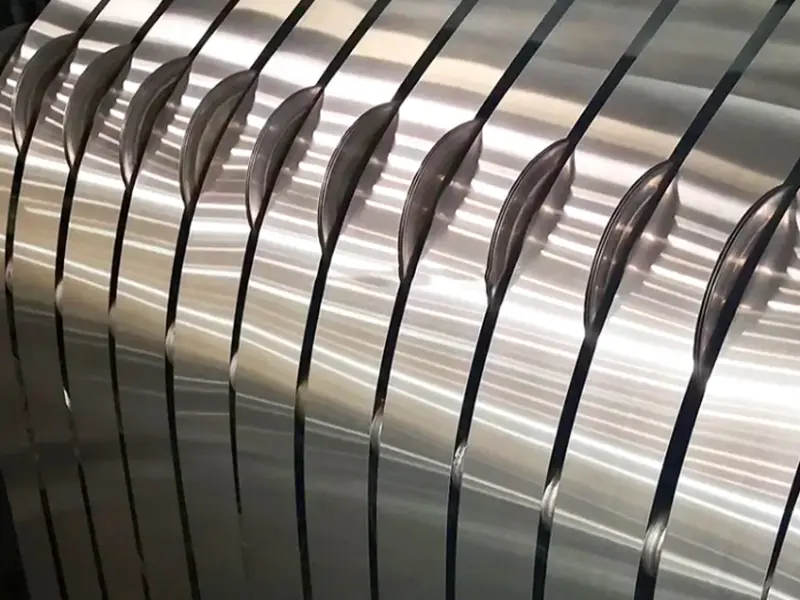
An insulated aluminium strip is a flat aluminium material coated with an electrical insulation layer on one or both sides. This product is widely used in motors, transformers, coils, new energy systems, and industrial equipment.
It combines the advantages of light weight, corrosion resistance, stable insulation, and easy processing.
Insulated aluminium strip is also called:
- Aluminum insulation strip
- Insulated Al strip
- Insulated aluminium coil strip
This product improves safety, conductivity control, and heat management in many industrial applications.
Key Features
Insulated aluminium strip offers essential performance benefits:
- Excellent electrical insulation for motors and windings
- High thermal resistance for long-term working
- Lightweight aluminum base for easy forming
- Smooth surface for stable cutting and winding
- Good corrosion resistance
- Available in many alloys and thickness options
Applications
Insulated aluminium strip is widely used across electrical, mechanical, and industrial fields.
Industrial Applications
- Motor windings
- Transformer coils
- Generator windings
- EV motor systems
- Induction coils
- New energy equipment
- Air conditioner motors
- Communication equipment
- Power distribution boxes
Consumer & General Applications
- Home appliance motors
- Lighting systems
- Cooling fans
- Industrial control units
Why Choose Insulated Aluminum Strip?
This material is preferred by many manufacturers because it provides:
- Stable insulation performance
- Long service life
- Lightweight material cost savings
- Easy slitting for small-width strips
- High thermal and mechanical stability
It is ideal for companies looking for high-efficiency, safe, and cost-effective electrical materials.
Choosing the Right Insulated Aluminum Strip
When selecting an insulated aluminium strip, consider:
- Required alloy (1050/1060/1350/3003/5052)
- Thickness and width
- Insulation material (PI, polyester, epoxy, etc.)
- Temperature resistance
- Voltage requirement
- Coil winding condition
If needed, Worthwill Aluminum can provide custom sizes, custom coating, and OEM production.