Aluminum strip for transformer is a specialized material used in electrical transformers for winding coils. These strips offer excellent conductivity, lightweight properties, and cost-effectiveness compared to copper alternatives. Understanding the right transformer aluminum strip for your application ensures optimal performance and efficiency in electrical systems.
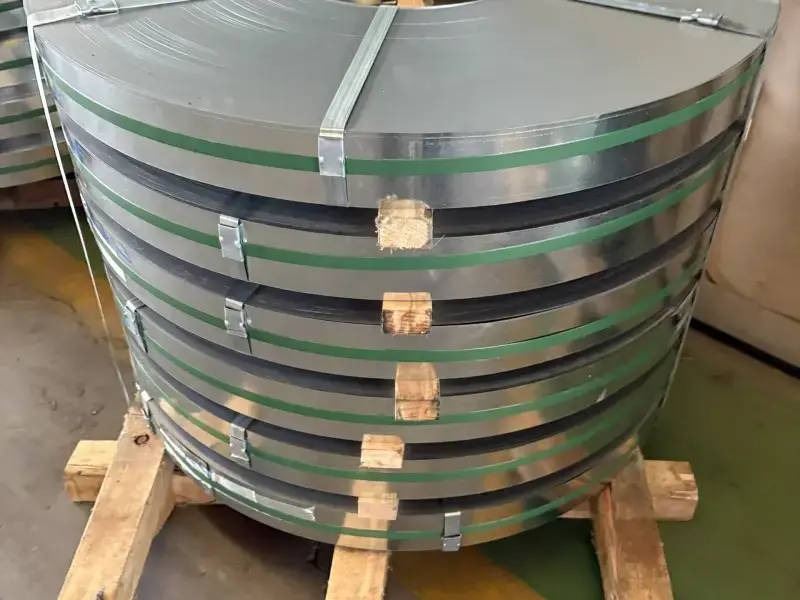
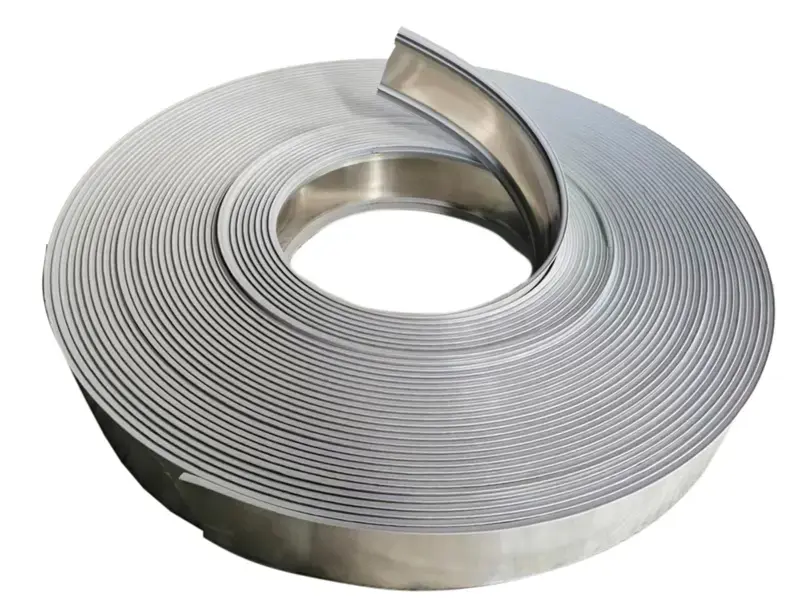
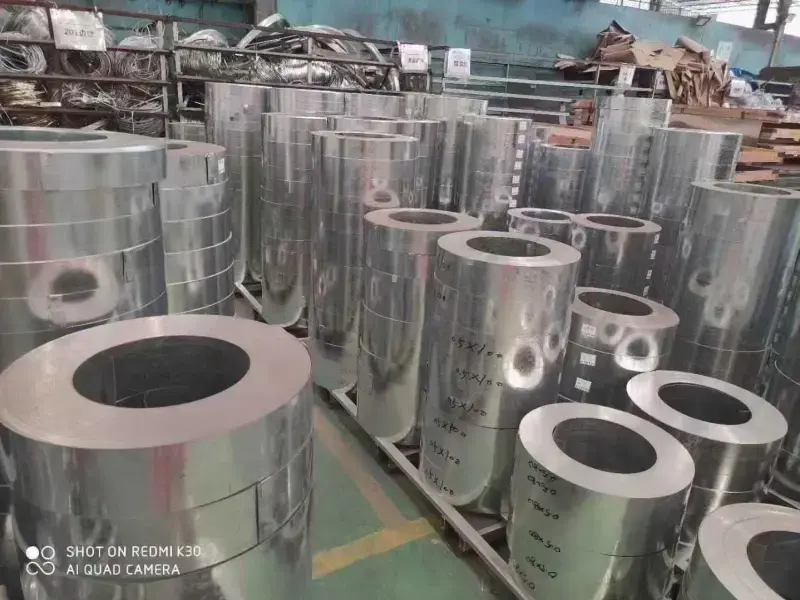
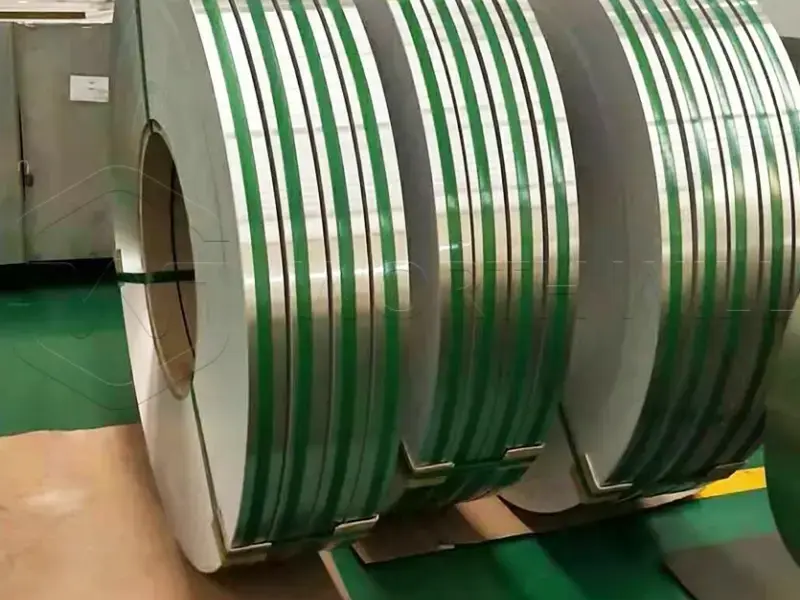
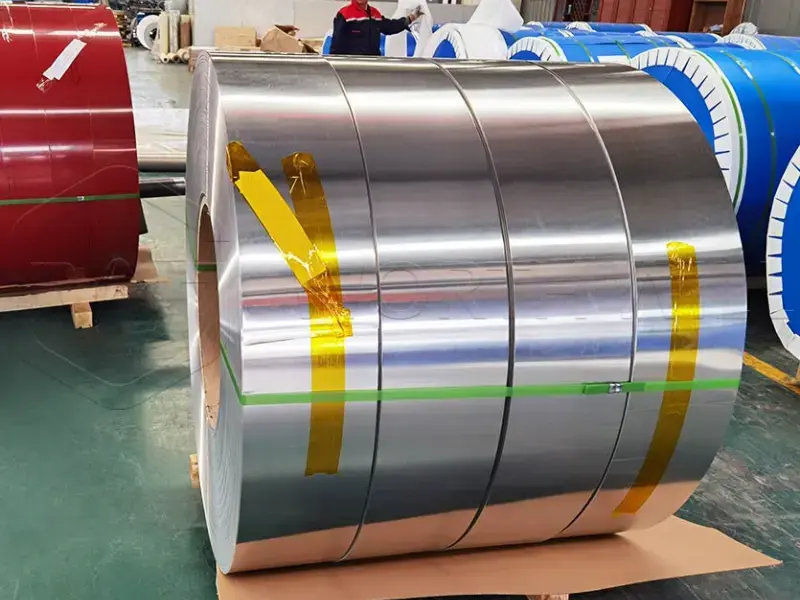
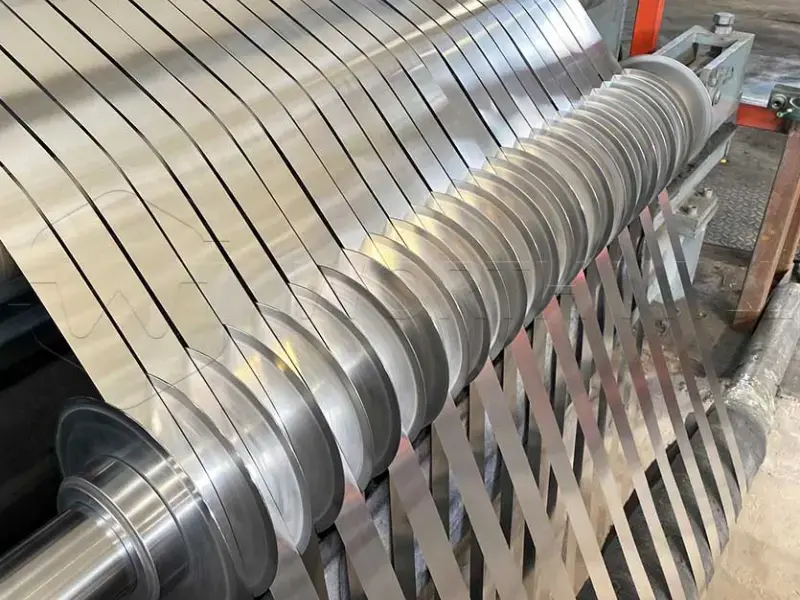
Types and Specifications of Aluminum Strips for Transformers
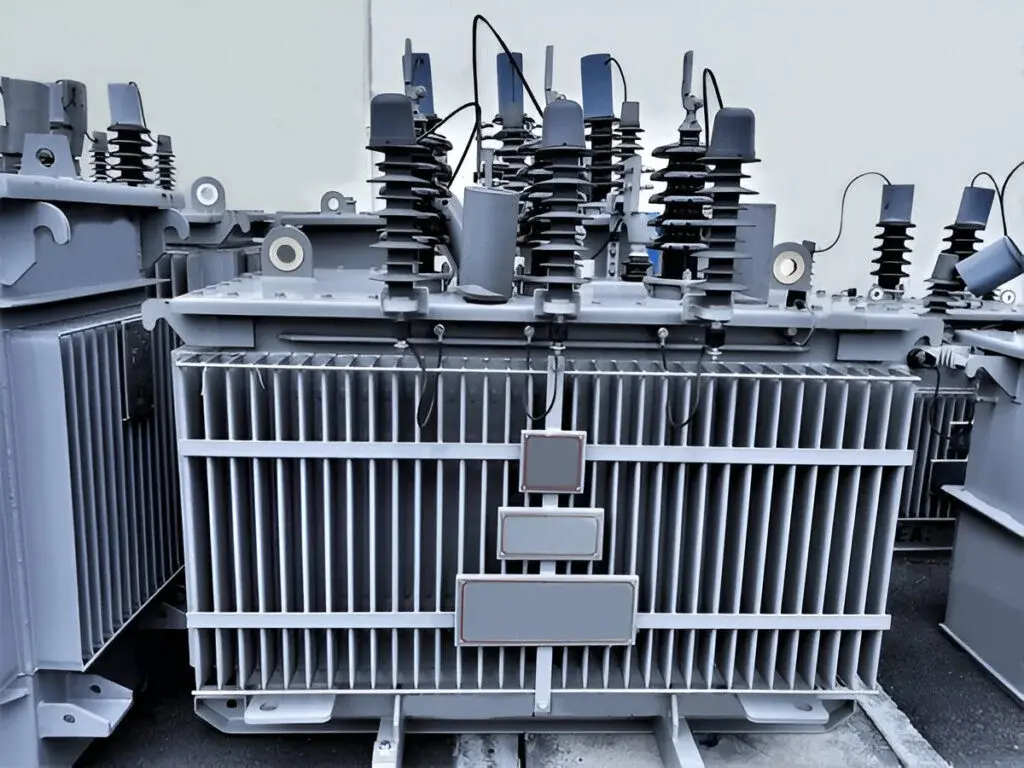
Aluminum strips for transformers are typically made from electrical grade aluminum, ensuring high purity and excellent conductivity. The specific type often depends on the required mechanical strength, conductivity, and operating environment.
Common Aluminum Strip Specifications
| Characteristic | Description | Typical Range |
|---|---|---|
| Material | Electrical Grade Aluminum (e.g., 1050, 1060, 1070) | 99.5% – 99.7% Al purity |
| Temper | Soft (O) to Half-Hard (H12/H22) | O, H12, H14, H18, H22, H24 |
| Thickness | Critical for winding design and current capacity | 0.1 mm – 3.0 mm |
| Width | Depends on transformer size and coil design | 10 mm – 1000 mm |
| Surface | Smooth, burr-free edges, often with paper interleaving | Clean, Bright |
| Conductivity | High electrical conductivity | Typically > 60% IACS |
| Tensile Strength | Mechanical strength for winding process | 60-150 MPa (depending on temper) |
Technical Specifications and Dimensions
We produce transformer aluminum strips in a wide variety of thicknesses (t) and widths (w) to fit all winding machine configurations.
Standard Dimensions and Tolerances
| Dimension Parameter | Standard Range | Manufacturing Tolerance | Typical Electrical Use |
|---|---|---|---|
| Thickness (t) | 0.2 mm−3.0 mm | ±0.01 mm−±0.03 mm | Low-voltage and high-voltage winding coils |
| Width (w) | 10 mm−1500 mm | ±0.10 mm−±0.20 mm | Small reactors to large power transformers |
| Edge Burr (b) | Less than 0.02 mm | Max 0.01 mm for premium grades | Prevents insulation puncture and short circuits |
Key Mechanical and Electrical Properties
To ensure optimal performance, all our transformer strips are supplied in the O Temper (fully annealed, dead-soft state). This temper ensures the metal has zero spring-back during winding.
| Property Name | Alloy 1050−O | Alloy 1060−O | Alloy 1070−O | Alloy 1350−O |
|---|---|---|---|---|
| Minimum Purity | 99.5% | 99.6% | 99.7% | 99.5% |
| Tensile Strength (MPa) | 60−95 MPa | 55−90 MPa | 50−85 MPa | 60−95 MPa |
| Yield Strength (MPa) | ≥25 MPa | ≥20 MPa | ≥20 MPa | ≥25 MPa |
| Elongation (%) | ≥25% | ≥30% | ≥35% | ≥25% |
| Conductivity (% IACS) | ≥61.0% | ≥61.5% | ≥62.0% | ≥61.8% |
| Resistivity at 20∘C | ≤0.02826 Ω⋅mm2/m | ≤0.02803 Ω⋅mm2/m | ≤0.02781 Ω⋅mm2/m | ≤0.02790 Ω⋅mm2/m |
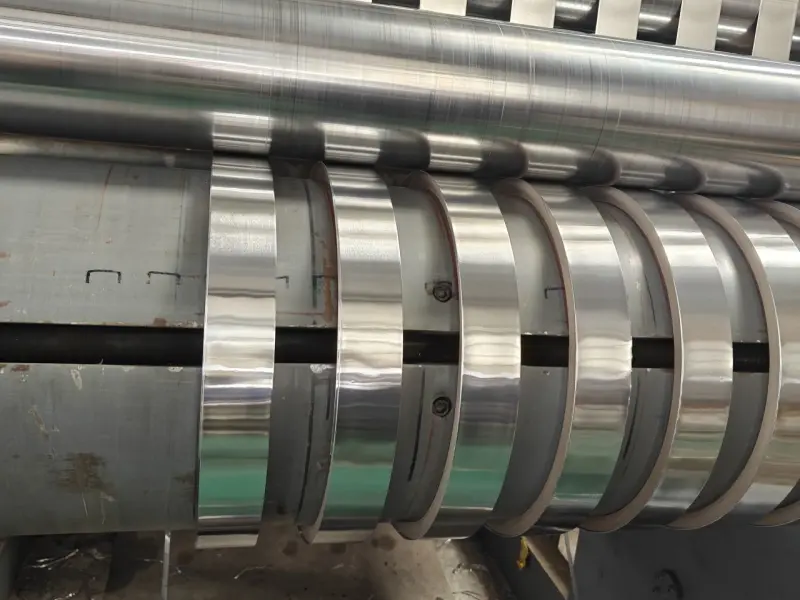
High-Performance Alloys for Electrical Conductors
Transformer windings require exceptionally high metal purity to ensure optimal electrical flow and minimal heat loss. We process specific, highly refined aluminum alloys to achieve maximum conductivity.
Alloy 1060: The Industry Standard Conductor
Alloy 1060 contains at least 99.6% pure aluminum.
- It is the most widely used grade for winding coils due to its excellent electrical conductivity of more than 61.5% IACS (International Annealed Copper Standard).
- It has outstanding thermal conductivity, which helps dissipate heat quickly during peak power loads.
- The material is highly ductile and easy to bend around rectangular or circular transformer cores.
Alloy 1070: Superior Purity for High-Efficiency Systems
Alloy 1070 increases the aluminum content to a minimum of 99.7%.
- The lower level of impurities results in a slightly higher electrical conductivity of up to 62% IACS.
- It is highly resistant to chemical oxidation and environmental corrosion, making it perfect for oil-filled transformers.
- It provides maximum flexibility, allowing for extremely tight winding radiuses without cracking.
Alloy 1350: Premium Electrical-Grade Foil
Alloy 1350 is a specialized alloy designed specifically for the electrical industry.
- It meets strict international standards for electrical conductors, including ASTM B233.
- It offers highly stable electrical resistance (ρ) and excellent mechanical stability under high electromagnetic stresses.
- It is the preferred material for heavy-duty industrial reactors and substation power transformers.
Alloy 1050: Economical Electrical Conductor
Alloy 1050 contains 99.5% pure aluminum.
- While it has slightly higher trace elements than 1060, it remains a highly reliable and cost-effective conductor.
- It provides a minimum conductivity of 61% IACS.
- It is widely used in low-voltage dry-type transformers, shielding foils, and small electrical coils.
Benefits of Using Aluminum Strip in Transformers
Choosing aluminum strip for transformer applications provides significant advantages:
While copper has historically been the material of choice for transformer windings, aluminum strip offers compelling advantages in certain contexts.
| Feature | Aluminum Strip | Copper Strip |
|---|---|---|
| Cost | Generally more cost-effective | Higher material cost |
| Weight | Significantly lighter (approx. 1/3 of copper) | Denser, leading to heavier transformers |
| Availability | Abundant global supply | Less abundant, price fluctuations |
| Conductivity | Excellent (approx. 60-61% IACS) | Superior (100% IACS) |
| Heat Dissipation | Good | Very good |
| Oxidation | Forms a protective oxide layer | Tends to oxidize more readily |
Technical Specifications Table
Key specifications for transformer aluminum strip:
| Parameter | Standard Range | Premium Grade | Notes |
|---|---|---|---|
| Conductivity | 55-62% IACS | 61% IACS min | Electrical performance |
| Tensile Strength | 80-150 MPa | 100-180 MPa | Mechanical strength |
| Elongation | 10-25% | 15-30% | Formability |
| Surface Quality | Matte/Bright | Mirror finish | Insulation compatibility |
| Flatness | ±1mm/m | ±0.5mm/m | Winding precision |
Applications of Aluminum Strip in Transformers
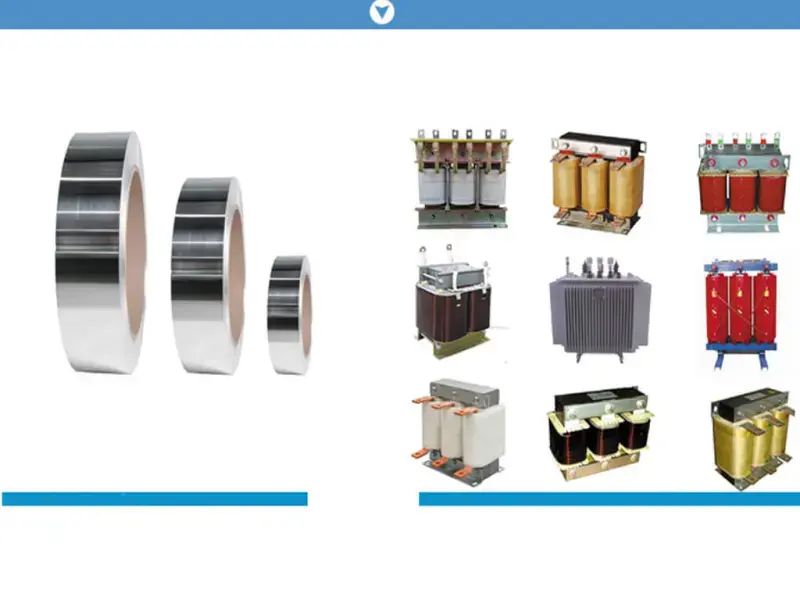
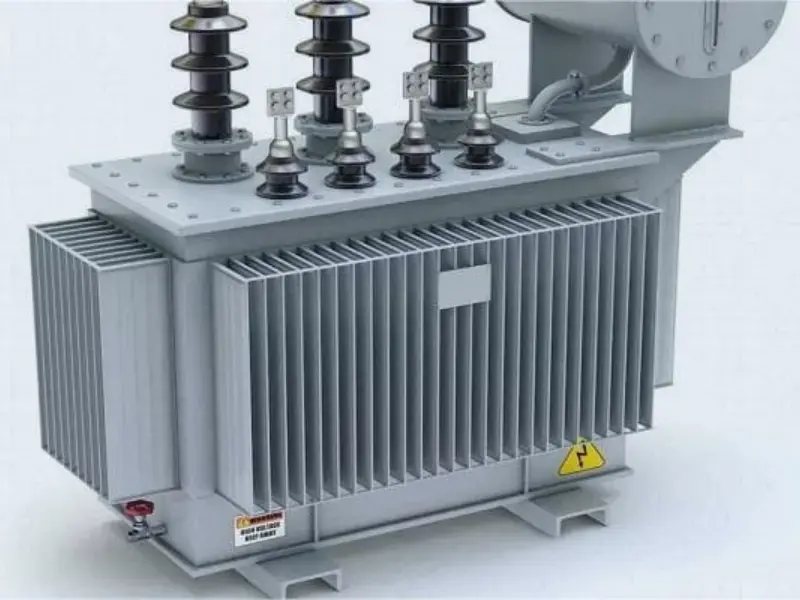
Transformer aluminum strips serve various electrical applications:
- Power transformers (large capacity)
- Distribution transformers (utility poles)
- Dry-type transformers (indoor use)
- Oil-immersed transformers (outdoor applications)
- Special transformers (furnace, rectifier)
- Instrument transformers (measurement devices)
- Auto transformers (variable voltage)
The Critical Importance of Burr-Free Edges
In transformer winding, the quality of the strip’s edge is just as important as the purity of the metal itself.
Why Edge Burr Control Matters
During the slitting process, mechanical knives cut wide aluminum coils into narrow strips. This cutting action can create tiny, sharp metal ridges along the edges of the strip. These ridges are called burrs (b).
If the burr is too large:
- It can easily puncture the thin paper or film insulation wrapped around the winding.
- This puncture causes a localized electrical short circuit.
- A short circuit leads to catastrophic transformer failure, overheating, or fires.
Our Professional Edge Conditioning Solutions
Our factory uses specialized, state-of-the-art edge trimming and conditioning machines. We offer three distinct edge profiles to guarantee maximum safety:
- Slit Edge (Standard): Clean-cut edge with minimal burrs (b<0.03 mm). This is suitable for low-voltage applications with thick interlayer insulation.
- Deburred Edge (Conditioned): The sharp metal corners are mechanically flattened or scraped away. This process reduces the burr size to less than 0.01 mm.
- Round Edge (Fully Conditioned): The edges are processed into a perfect, smooth semi-circle (arc radius r). This shape provides maximum protection against insulation tearing and is the gold standard for high-voltage transformer windings.
Types of Aluminum Transformer Strips We Manufacture
Our factory produces several variations of winding strips to meet different electrical design requirements.
Bare Aluminum Winding Strip
This is our classic, clean metal strip.
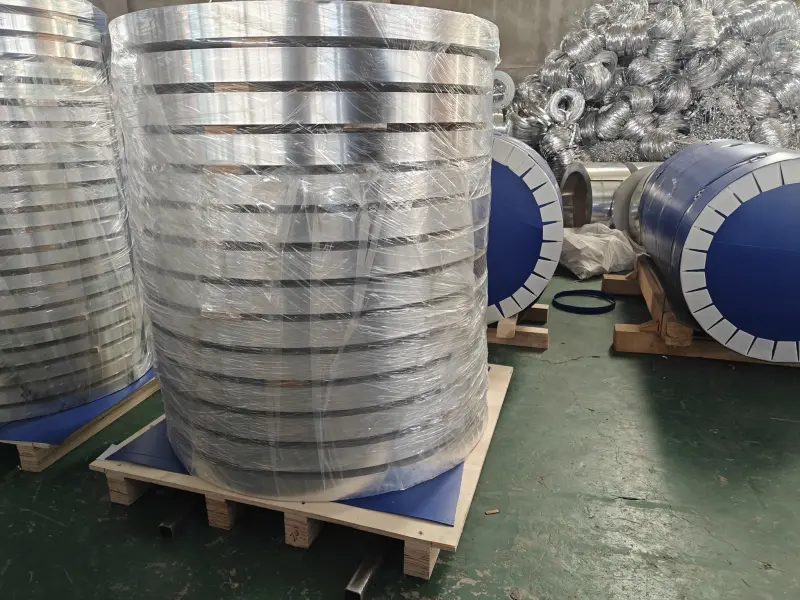
The surface is completely free of oils, grease, and dust. We use advanced chemical washing lines to ensure the metal is perfectly clean before coiling. Transformer manufacturers wind this bare strip directly with their own choice of insulating papers or Nomex sheets.
Paper-Insulated Aluminum Strip
To save you production time, we can supply aluminum strips that are pre-wrapped with electrical-grade insulating paper.
We use premium Kraft paper, thermal-upgraded paper, or Nomex paper. Our machines wrap the paper tightly and uniformly around the metal conductor. This product is ready to go straight onto your winding machines, significantly reducing your labor costs.
Polyimide Film Coated Strip
For high-temperature environments, we offer strips coated with specialized polyimide films (such as Kapton).
This ultra-thin film provides exceptional dielectric strength, allowing you to design smaller, more compact transformer coils. It can handle continuous operating temperatures of up to 220∘C without degrading or melting.
Silver-Plated Aluminum Strip
For specialized high-frequency reactors and premium power units, we can electroplate a micro-thin layer of silver (Ag) onto the aluminum strip.
This silver coating dramatically reduces electrical contact resistance at the connection terminals. It prevents localized oxidation and ensures stable, long-term electrical conductivity in harsh industrial environments.
Material Comparisons: Aluminum vs. Copper in Windings
When designing a transformer, engineers often compare aluminum and copper conductors. Understanding these physical differences can help you optimize your transformer’s cost and performance.
Conductor Material Comparison Matrix
| Physical Property | Aluminum (Alloy 1060−O) | Copper (Alloy C11000) | Design Impact |
|---|---|---|---|
| Density (g/cm3) | Approximately 2.70 g/cm3 | Approximately 8.89 g/cm3 | Aluminum is 70% lighter than copper |
| Electrical Conductivity | 61.5% IACS | 101% IACS | Aluminum requires a slightly larger cross-section |
| Tensile Strength | 80 MPa | 220 MPa | Copper is stronger under mechanical stress |
| Thermal Expansion Coefficient | 23.5×10⁻⁶/K | 16.5×10⁻⁶/K | Aluminum expands more under heat load |
| Relative Material Cost | Highly Economical ($$) | Premium / Volatile (\$$$$) | Aluminum offers massive cost savings |
Why Choose Aluminum Over Copper?
- Significant Weight Reduction: Because aluminum has a very low density, an aluminum-wound transformer weighs up to 50% less than an equivalent copper-wound unit. This makes transportation, installation, and pole-mounting much easier and cheaper.
- Massive Cost Savings: Aluminum is far more abundant and much less expensive than copper. Choosing an aluminum strip for transformer windings can reduce your raw material costs by up to 40% to 60%.
- Better Thermal Performance: Aluminum has excellent heat dissipation properties. Aluminum-wound coils run cooler under equal load conditions, extending the overall lifespan of the transformer insulation.
Selection Guide for Aluminum Strip
Choosing the right aluminum strip for transformer requires considering:
- Electrical requirements: Conductivity and current capacity
- Space constraints: Strip dimensions and winding space
- Cooling method: Oil-cooled vs dry-type applications
- Mechanical needs: Tensile strength for winding process
- Budget considerations: Cost vs performance balance
Quality Standards and Certifications
Premium transformer aluminum strip meets international standards:
- ISO 9001:2015 Quality Management
- ASTM B209 Material Standards
- ROHS Compliance
- UL Certification
- Customer-specific requirements
Manufacturing Process Overview
Our aluminum strip production ensures consistent quality:
- Melting and casting: High purity aluminum
- Hot rolling: Initial thickness reduction
- Cold rolling: Precise thickness control
- Annealing: Temperature treatment
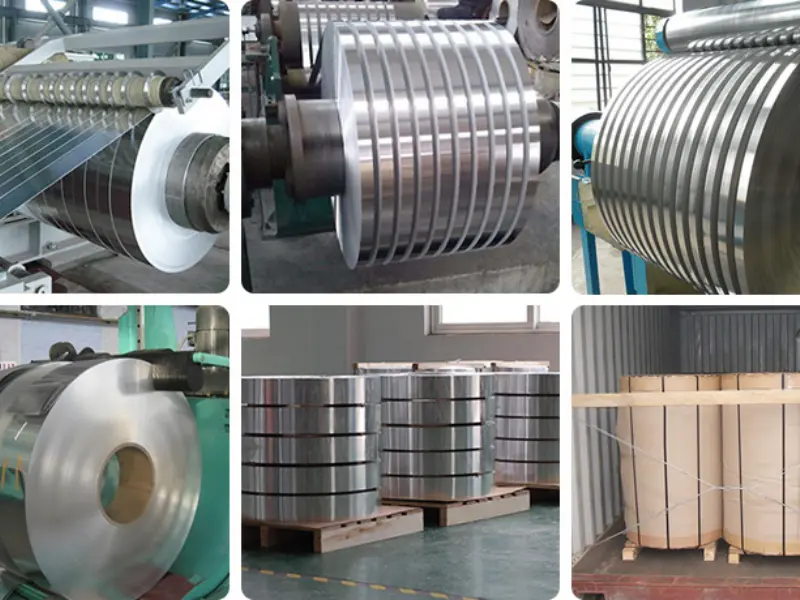
- Slitting: Width customization
- Testing: Quality verification
- Packaging: Secure shipping preparation
Price Comparison Table
Aluminum strip for transformer pricing varies by specification:
| Grade | Thickness (mm) | Price per kg | Delivery Time |
|---|---|---|---|
| Standard | 0.5-1.0 | $3.50-$4.50 | 7-10 days |
| Premium | 1.0-2.0 | $4.50-$5.50 | 10-14 days |
| High Precision | 0.2-0.5 | $6.00-$8.00 | 14-21 days |
| Custom Alloy | All ranges | Quote based | 21-28 days |
Advantages Over Copper Strips
Why choose aluminum strip for transformer over copper:
- Cost savings: Approximately 40-60% less expensive
- Weight reduction: About 50% lighter
- Availability: Better material supply chain
- Performance: Adequate for most applications
- Sustainability: Easier to recycle
Maintenance and Handling Tips
Proper care for transformer aluminum strip:
- Store in dry conditions
- Handle with clean gloves
- Avoid bending beyond minimum radius
- Keep original packaging until use
- Protect from moisture and corrosion
Industry Applications
Transformer aluminum strips serve multiple sectors:
- Electrical utilities (power generation)
- Industrial plants (manufacturing facilities)
- Renewable energy (solar and wind farms)
- Transportation (railway systems)
- Construction (building electrical systems)
- Telecommunications (power backup systems)
Why Choose Our Aluminum Strip?
Our transformer aluminum strip offers unmatched benefits:
- Consistent quality: Batch-to-batch uniformity
- Technical support: Expert application guidance
- Custom solutions: Tailored to your specifications
- Reliable delivery: On-time shipment guarantee
- Competitive pricing: Best value in the market
Manufacturing Process and Quality Control
The production of high-quality aluminum strip for transformer applications involves several precise steps. It begins with casting high-purity aluminum ingots, which are then hot-rolled into thick sheets. Subsequent cold rolling reduces the material to the desired thickness.
Annealing processes are crucial for achieving the correct temper, which dictates the strip’s flexibility and strength. Throughout the entire process, strict quality control measures are implemented to ensure the aluminum strip meets specific electrical, mechanical, and dimensional tolerances. This includes checks for purity, surface finish, thickness uniformity, and edge quality.
Every coil of aluminum strip must pass rigorous testing before it is approved for use in transformers.
Where Our Winding Strips Are Installed
Our high-quality aluminum strips are utilized by leading electrical manufacturers across many sectors:
- Dry-Type Distribution Transformers: Providing reliable power distribution in residential neighborhoods, commercial high-rise buildings, and hospital complexes.
- Oil-Immersed Power Transformers: Installed in utility substations, renewable energy farms, and heavy industrial factories.
- Industrial reactors and Chokes: Used to control power quality, filter harmonics, and protect sensitive electrical grids.
- Welding Machine Coils: Delivering stable, high-current power in heavy industrial welding equipment.
- Uninterruptible Power Supply (UPS) Systems: Ensuring continuous backup power for large data centers and telecommunication hubs.
- Instrument Transformers: Used for precise voltage and current monitoring in high-voltage power networks.
Factory Quality Control and Advanced Manufacturing
Our factory operates under strict ISO 9001 quality management systems. We ensure that every coil of aluminum strip meets the highest global standards.
Rigorous Laboratory Testing
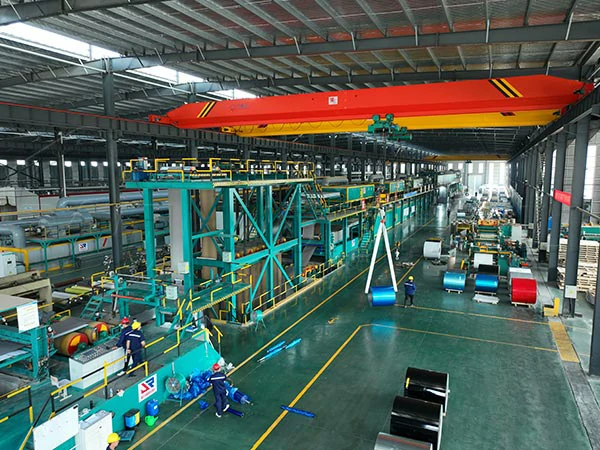
Before shipping, we test samples from every production batch in our specialized testing laboratory:
- Conductivity Testing: We use eddy-current conductivity meters to verify the metal meets or exceeds the required % IACS rating.
- Tensile and Elongation Tests: We pull the metal to ensure it is perfectly soft (O temper) and has the ductility needed for tight winding.
- Burr Measurement: We use high-magnification optical microscopes to check the edges. We guarantee that burrs are kept well below standard industrial limits.
Custom Splicing and Uncoiling Options
We can customize the physical makeup of our coils to match your machinery:
- Joint-Free Coils: We can supply continuous, single-piece strips up to 1000 kg without any welds or splices. This prevents tension drops on your winding machines.
- Custom Coil Inner Diameters (ID): We offer standard inner core sizes like 300 mm, 400 mm, and 500 mm to fit your uncoiler mandrels perfectly.
Packaging Standards for Global Shipments
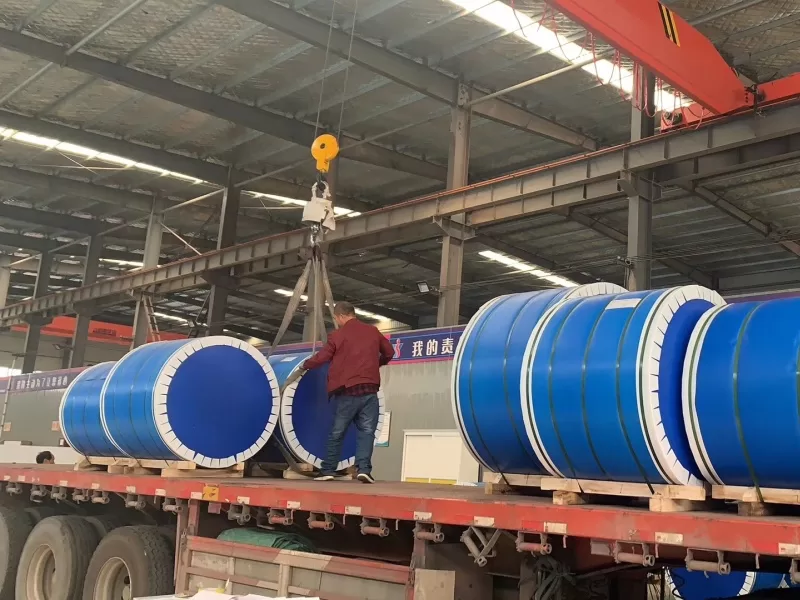
Moisture and mechanical damage are the biggest threats to electrical-grade aluminum coils during transport. We use multi-layer packaging to ensure they arrive in pristine condition.
- PE Protective Wrap: We seal each coil in a thick polyethylene plastic bag with plenty of desiccant packs. This prevents ocean humidity from causing oxidation or surface stains.
- Thick Fiberboard Protectors: We place heavy-duty cardboard rings on the inner and outer diameters of the coils to protect the delicate edges from impact during lifting.
- Sturdy Wooden Pallets: We secure the coils to fumigated wooden pallets. You can choose “Eye-to-Sky” (vertical core) or “Eye-to-Wall” (horizontal core) shipping directions based on your warehouse forklift capabilities.
Key Standards for Transformer Aluminum Strips
Adherence to international standards is vital for ensuring the reliability and interchangeability of aluminum strip for transformer components. These standards define the chemical composition, mechanical properties, and electrical characteristics.
Relevant Industry Standards
| Standard | Focus Area |
|---|---|
| ASTM B209 | General Aluminum and Aluminum-Alloy Sheet and Plate |
| EN 573 | Aluminum and Aluminum Alloys – Chemical Composition and Form of Products |
| EN 485 | Aluminum and Aluminum Alloys – Sheet, Strip and Plate |
| IEC 60100 | Specific to Electrical Conductor Materials |
These standards ensure that the aluminum strip used in transformers performs consistently and safely.
Frequently Asked Questions
Q: What is the typical conductivity of transformer aluminum strip?
A: Most aluminum strips for transformers have 61% IACS conductivity, providing excellent electrical performance.
Q: Can aluminum strips replace copper in existing transformers?
A: Yes, with proper design adjustments, aluminum strips can effectively replace copper while maintaining performance.
Q: What is the minimum bending radius for aluminum strips?
A: The minimum bending radius depends on thickness, but typically 2-3 times strips thickness for transformer-grade aluminum.
Q: How does aluminum strip cost compare to copper?
A: Aluminum strips for transformer typically costs 40-60% less than equivalent copper strips.
CoAluminum Strips for Transformer for Sale
Aluminum strips for transformer provides an optimal balance of performance, cost, and reliability for modern electrical applications. With proper selection based on technical requirements and quality standards, these strips deliver excellent results in various transformer types.
Whether you’re manufacturing power transformers, distribution transformers, or specialized electrical equipment, choosing the right transformer aluminum strips ensures efficient operation and long-term reliability. Consider all technical parameters and consult with experts to select the perfect aluminum strips for your transformer needs.