A Complete Guide to Choosing the Right Aluminum Disc Material
Choosing the correct alloy is very important when producing or purchasing an aluminum circle. Different aluminum alloys offer different strength, formability, corrosion resistance, and surface quality. The best alloy depends on how the aluminum circle will be used — cookware, lighting, traffic signs, or industrial parts.



Why Alloy Selection Matters
The alloy determines the aluminum circle’s:
- Drawing performance
- Strength and hardness
- Surface quality
- Cost
- Final product lifespan
Using the wrong alloy may cause:
- Cracking during deep drawing
- Poor anodizing results
- Uneven spinning
- Reduced durability
That is why selecting the best aluminum alloy for aluminum circles is essential.
Common Aluminum Circle Alloys
The most commonly used alloys for aluminum circles include:
| Alloy | Series | Main Feature |
|---|---|---|
| 1050 | 1xxx | High purity, soft |
| 1060 | 1xxx | Excellent formability |
| 1070 | 1xxx | Very high aluminum content |
| 1100 | 1xxx | Good corrosion resistance |
| 3003 | 3xxx | Higher strength |
| 5052 | 5xxx | Strong and durable |
What Is an Aluminum Circle?
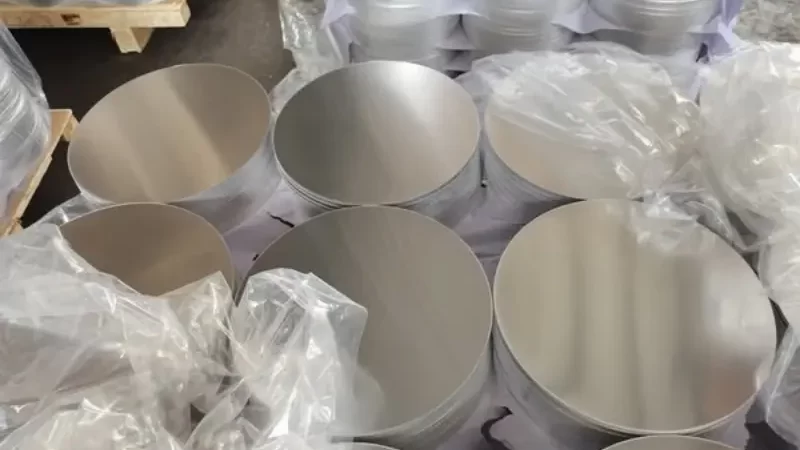
An aluminum circle (also called aluminum disc or aluminum round sheet) is a flat, round aluminum product cut from aluminum sheet or coil.
Aluminum circles are widely used because they offer:
- Light weight
- Excellent corrosion resistance
- Good thermal conductivity
- Easy deep drawing and spinning
- Smooth surface finish
They are available in different alloys, diameters, and thicknesses.
Best Alloy for Aluminum Circle by Application
1050 Aluminum Circle
| Property | Value |
|---|---|
| Aluminum content | ≥ 99.5% |
| Formability | Excellent |
| Strength | Low |
| Surface | Very smooth |
Advantages:
- Easy deep drawing
- Very good spinning performance
- Excellent thermal conductivity
- Low cost
Typical applications:
- Cookware bottoms
- Kitchen utensils
- Reflectors
- Lampshades
1050 is often considered one of the best alloys for aluminum circles used in cookware.
1060 Aluminum Circle (Most Popular)
| Property | Value |
|---|---|
| Aluminum content | ≥ 99.6% |
| Drawing ability | Excellent |
| Surface quality | Very high |
| Cost | Moderate |
Why 1060 is widely used:
- Outstanding deep drawing performance
- Smooth surface after spinning
- Stable anodizing quality
- Very low cracking rate
Applications:
- Non-stick cookware
- Pressure cooker
- Frying pans
- Lighting reflectors
- Road signs
1060 aluminum circle is the most commonly recommended alloy worldwide.
1100 Aluminum Circle
| Feature | Description |
|---|---|
| Purity | 99.0% |
| Strength | Slightly higher than 1050 |
| Formability | Very good |
Used when a balance between price and strength is required.
Applications include:
- Lamp covers
- Decorative discs
- Electrical components
3003 Aluminum Circle
| Property | Performance |
|---|---|
| Strength | Higher |
| Formability | Good |
| Corrosion resistance | Excellent |
Advantages:
- Better strength than 1xxx series
- Good corrosion resistance
- Suitable for structural use
Typical applications:
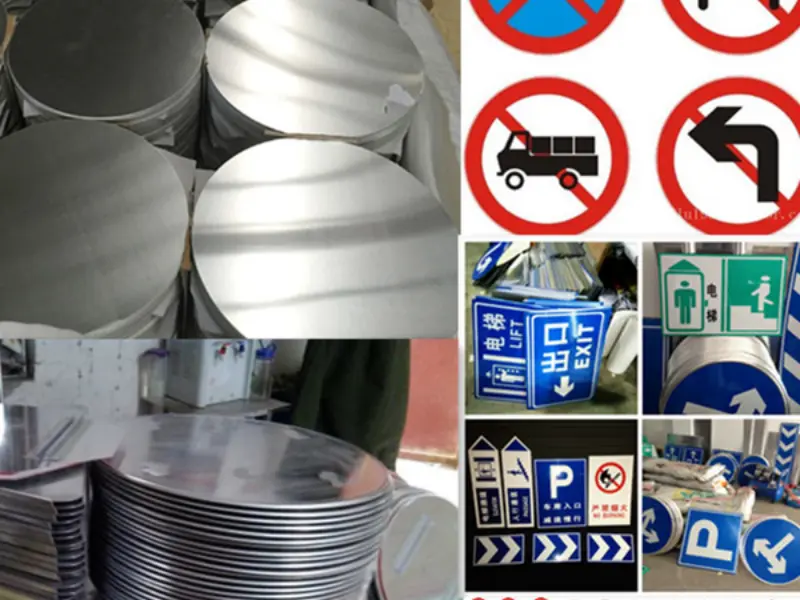
- Traffic signs
- Nameplates
- Industrial covers
- Heavy-duty cookware
3003 is suitable when higher strength is needed but deep drawing is not extremely demanding.
5052 Aluminum Circle
| Feature | Performance |
|---|---|
| Strength | High |
| Corrosion resistance | Excellent |
| Formability | Medium |
Applications:
- Marine components
- Fuel tank parts
- Pressure vessels
- Industrial equipment
5052 aluminum circles are not ideal for deep drawing but perform well in structural applications.
Alloy Comparison Table
| Alloy | Drawing | Strength | Surface | Best Use |
|---|---|---|---|---|
| 1050 | ★★★★★ | ★ | ★★★★★ | Cookware |
| 1060 | ★★★★★ | ★★ | ★★★★★ | Cookware, lighting |
| 1100 | ★★★★☆ | ★★ | ★★★★☆ | Decoration |
| 3003 | ★★★☆☆ | ★★★ | ★★★★☆ | Signs |
| 5052 | ★★☆☆☆ | ★★★★★ | ★★★☆☆ | Industrial |
Recommended Aluminum Circle Specifications
Common Diameter Range
| Diameter (mm) | Application |
|---|---|
| 80 – 150 | Small cookware |
| 160 – 300 | Pots and pans |
| 300 – 600 | Lighting |
| 600 – 1200 | Industrial |
Thickness Options
| Thickness (mm) | Typical Use |
|---|---|
| 0.5 – 1.0 | Lamp reflectors |
| 1.0 – 2.0 | Cookware |
| 2.0 – 3.0 | Pressure pots |
| 3.0 – 6.0 | Industrial parts |
Surface Finish Options
- Mill finish
- Anodized
- Brushed
- Polished
- Color coated
Smooth surface quality is critical for cookware and lighting aluminum circles.
Which Alloy Is Best for Aluminum Circle?
Best Overall Alloy: 1060 Aluminum Circle
- Excellent deep drawing
- Smooth surface
- Stable quality
- Widely available
- Cost-effective
For Cookware: 1050 / 1060
Best for Road Signs: 3003
Best for High Strength: 5052
Aluminum Circle Manufacturing Process
- Aluminum coil selection
- Precision slitting
- Punching or blanking
- Annealing (O temper)
- Surface inspection
- Packaging
High-quality aluminum circles should be:
- Fully annealed
- Burr-free edges
- Clean surface
- Consistent thickness
Applications of Aluminum Circles
- Cookware and kitchen utensils
- Frying pans and pots
- Lighting reflectors
- Traffic signs
- Electric appliance housings
- Pressure cooker bottoms
- Decorative metal discs
Supplier Recommendation
WORTHWILL ALUMINUM supplies aluminum circles with:
- Alloys: 1050, 1060, 1070, 1100, 3003, 5052
- Temper: O, H12, H14
- Diameter: 80–1200 mm
- Thickness: 0.5–6.0 mm
- Smooth surface and clean edges
- Export-standard packaging
Frequently Asked Questions
What alloy is best for aluminum circle?
For most applications, 1060 aluminum circle is the best choice due to its excellent drawing performance and surface quality.
Which alloy is best for cookware aluminum circles?
1050 and 1060 are the most commonly used alloys for cookware.
Is 3003 better than 1060?
3003 is stronger, but 1060 is better for deep drawing.
Can aluminum circles be anodized?
Yes, especially 1050, 1060, and 1100 alloys.
Final Conclusion
Choosing the correct alloy is the key to producing high-quality aluminum circles.
- 1060 – best overall choice
- 1050 – best for cookware
- 3003 – best for strength
- 5052 – best for industrial use
Understanding alloy differences helps reduce production problems and improve product quality.
