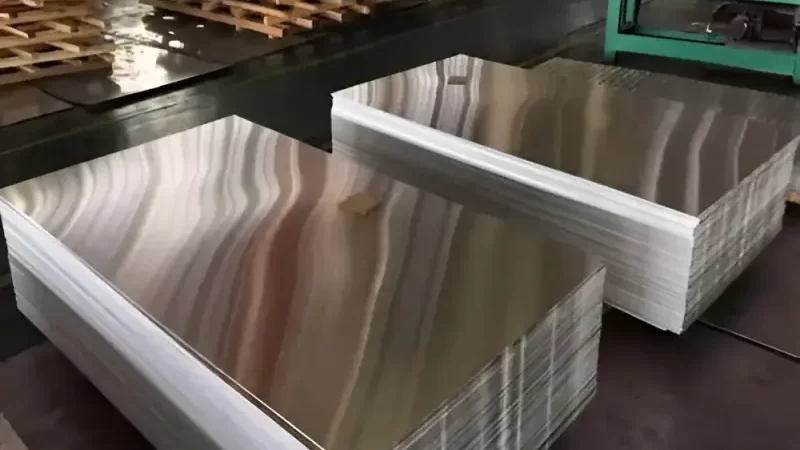
Aluminum is one of the most versatile metals in the world. From the skin of an airplane to the shiny backsplash in a modern kitchen, aluminum sheet applications are everywhere. This material is popular because it is light, strong, and does not rust easily.
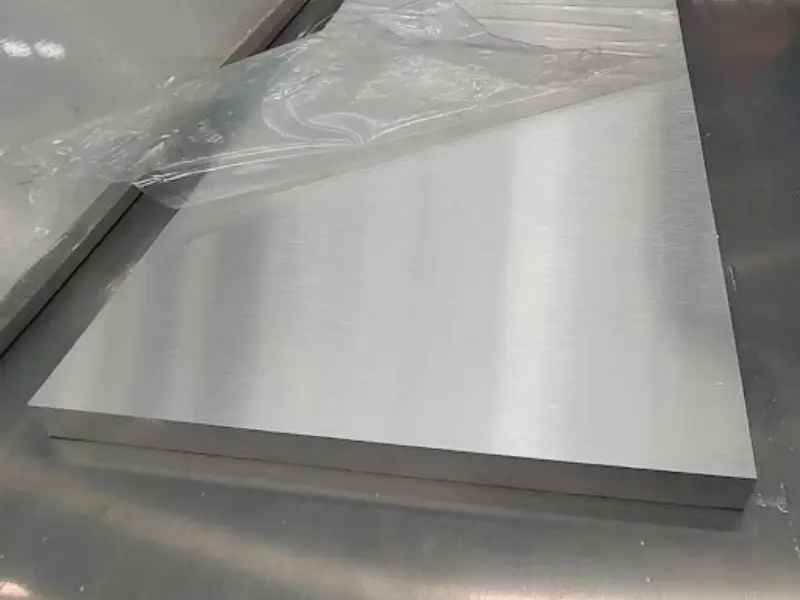
Understanding Aluminum Alloys and Tempers
Before choosing a sheet, you must understand the “recipe” of the metal. Different industries require different alloys. An alloy is aluminum mixed with other metals to make it stronger or more flexible.
Common Alloy Series for Different Uses
| Alloy Series | Main Ingredient | Primary Characteristic | Common Applications |
|---|---|---|---|
| $$1000$$ Series | Pure Aluminum | Excellent corrosion resistance | Chemical equipment, reflectors |
| $$3000$$ Series | Manganese | Moderate strength, very workable | Cookware, roofing, siding |
| $$5000$$ Series | Magnesium | High strength, marine-grade | Boat hulls, fuel tanks |
| $$6000$$ Series | Magnesium & Silicon | Heat treatable, structural | Truck frames, bridges |
What is “Temper”?
The “Temper” describes how the metal was treated. You will often see a letter and a number after the alloy name, such as $$6061-T6$$.
- $$O$$ (Annealed): The metal is at its softest state.
- $$H$$ (Strain Hardened): Strengthened through cold working (common for $$1xxx, 3xxx, 5xxx$$).
- $$T$$ (Heat Treated): Strengthened through heating and cooling (common for $$6xxx$$).
Industrial Aluminum Sheet Applications
In the industrial sector, the focus is on performance. Engineers choose aluminum because it reduces weight without losing too much strength.
1. Transportation and Automotive
The move toward electric vehicles has increased aluminum sheet applications. Lighter cars go further on a single charge.
- Body Panels: Hoods, doors, and trunks.
- Chassis Components: Structural parts for safety.
- Heat Shields: Protecting the engine from high temperatures.
- Trailer Skins: Large sheets for cargo trailers and RVs.
2. Construction and Architecture
Industrial construction uses aluminum for its ability to survive the elements.
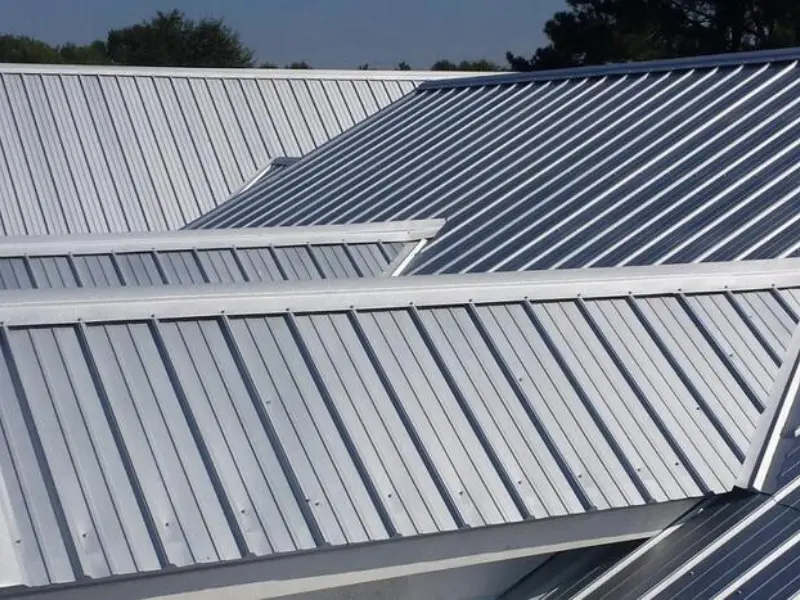
- Roofing and Siding: Resistant to rain and snow.
- HVAC Systems: Used in air ducts because it is easy to shape.
- Gutters and Flashing: Prevents water damage to buildings.
3. Marine Industry
The $$5000$$ series is the king of the sea.
- Boat Hulls: Resists salt-water corrosion.
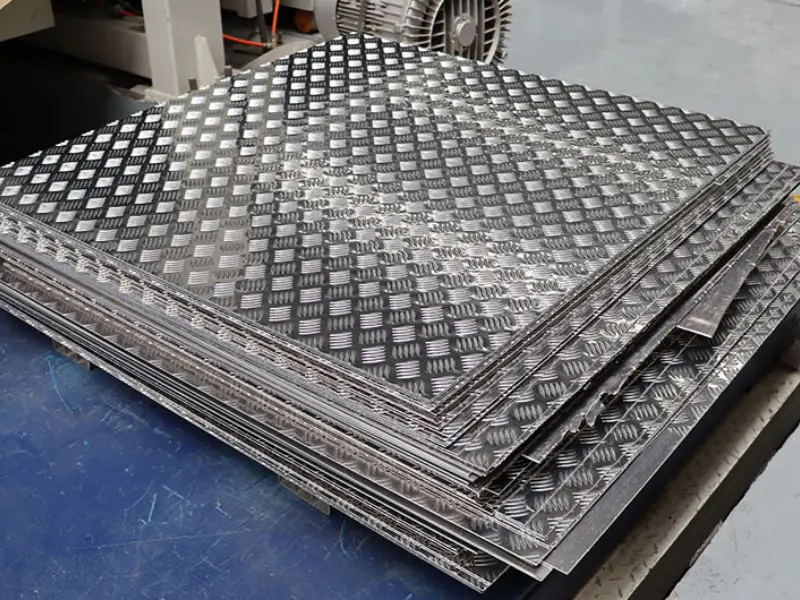
- Decks: Often uses “Diamond Plate” or “Tread Plate” for grip.
- Storage Tanks: Used for fuel and water on ships.
Decorative Aluminum Sheet Applications
In the decorative world, the look of the metal is the most important part. Aluminum can be painted, polished, or textured to match any design style.
1. Interior Design and Appliances
Modern homes use a lot of aluminum to create a “sleek” look.
- Kitchen Backsplashes: Easy to clean and heat resistant.
- Fridge Panels: Fingerprint-resistant finishes.
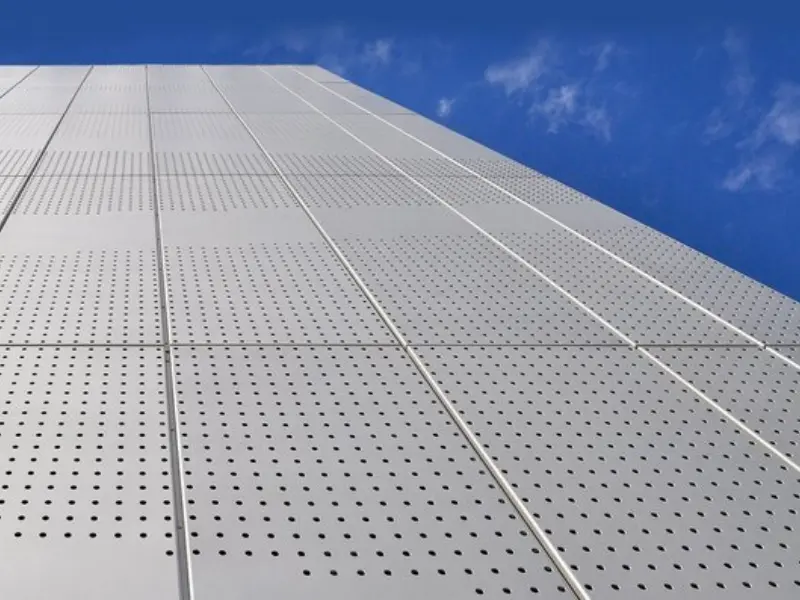
- Wall Cladding: Decorative panels for office lobbies.
- Furniture Trim: Edging for tables and chairs.
2. Signage and Advertising
Because it is easy to print on, aluminum is a top choice for sign makers.
- Sublimation Sheets: Used for high-definition photo printing (see our other guides).
- Channel Letters: The large letters on the front of stores.
- Traffic Signs: Durable and reflective for road safety.
3. Consumer Electronics
Apple and other tech companies made aluminum a symbol of luxury.
- Laptop Casings: Light and helps with cooling.
- Phone Frames: Strong enough to protect internal parts.
- Speaker Grills: Perforated sheets that look beautiful.
Technical Specifications: Digital Standards
When ordering for aluminum sheet applications, you need to provide exact dimensions. Here are the standard specifications found in the industry.
Standard Dimensional Table
| Feature | Standard Range | Digital Specification |
|---|---|---|
| Thickness | $$0.2mm$$ to $$6.35mm$$ | Gauge $$8$$ to Gauge $$32$$ |
| Width | $$914mm, 1000mm, 1219mm, 1500mm$$ | $$36”, 48”, 60”$$ |
| Length | $$2000mm, 2438mm, 3048mm$$ | $$8′, 10′, 12’$$ |
| Flatness | Commercial or Precision | $$< 5mm$$ deviation per meter |
Different Types of Surface Finishes
The surface finish determines how the sheet will perform in its specific application.
#### Mill Finish
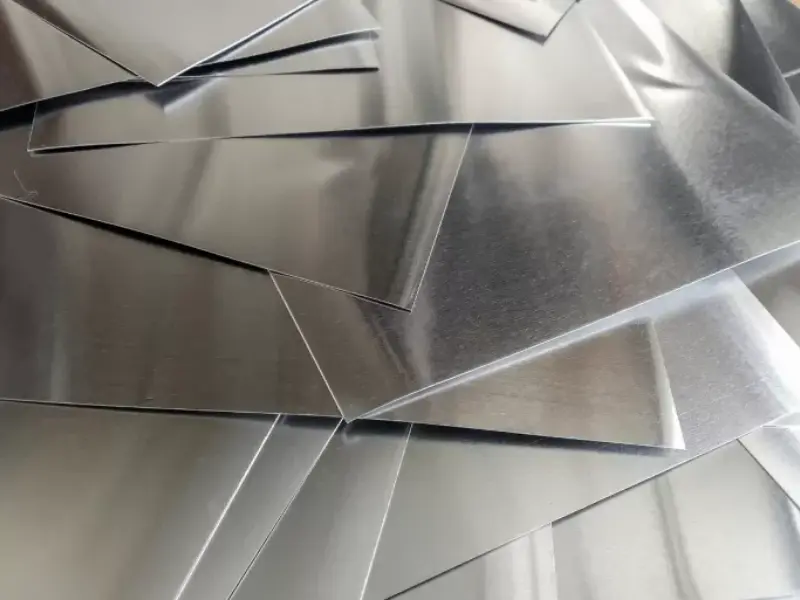
This is the “raw” state of the sheet. It is dull and may have some light scratches. It is best for industrial parts that will be hidden or painted later.
#### Anodized Aluminum
A chemical process makes the surface harder and more resistant to scratches. It also allows the metal to be dyed in colors like black, gold, or blue. This is very popular for decorative aluminum projects.
#### Brushed Finish
The metal is rubbed with an abrasive material to create a consistent “grain” or line pattern. It looks very modern and hides fingerprints well.
#### Stucco and Diamond Embossed
The sheet is pressed with a pattern.
- Stucco: Looks like orange peel. It is used in refrigerators and insulation.
- Diamond Plate: Used for flooring to prevent slipping.
Why Choose Aluminum Over Other Metals?
| Property | Aluminum | Stainless Steel | Galvanized Steel |
|---|---|---|---|
| Weight | Very Light | Heavy | Moderate |
| Rust | No | No (usually) | Can rust over time |
| Cost | Medium | High | Low |
| Conductivity | High | Low | Moderate |
Processing Techniques for Aluminum Sheets
How you handle the metal depends on the aluminum sheet applications you have in mind.
Cutting and Shaping
- Laser Cutting: Best for complex decorative shapes.
- Shearing: Best for large industrial rectangles.
- Bending: Aluminum is easy to fold without cracking if the temper is right (like $$H14$$).
Joining Methods
- TIG/MIG Welding: Common for industrial frames.
- Riveting: Used in airplanes and trailers.
- Adhesives: Used for decorative panels to keep the surface smooth.
Summary of Application Fields
To make it easy to choose, here is a list of where you will find these sheets:
- Aerospace: Wings, fuselages, and fuel lines.
- Food & Beverage: Cans, foil wrap, and commercial kitchen tables.
- Electrical: Bus bars, cable wraps, and light fixtures.
- Retail: Shelving units and display cases.
- Home DIY: Toolboxes, kickplates for doors, and garden art.
Final Thoughts: Choosing the Right Sheet
Selecting the right material for aluminum sheet applications saves money and ensures the project lasts.
- For Industrial work, focus on the alloy (e.g., $$5052$$ for water or $$6061$$ for strength).
- For Decorative work, focus on the finish (e.g., Anodized or Brushed).
- Always check the thickness ($$mm$$) to make sure the sheet is strong enough for the load it will carry.
Aluminum is a sustainable choice. It can be recycled forever without losing its quality. Whether you are building a skyscraper or a picture frame, there is an aluminum sheet that fits your needs perfectly.